Peterbald vs Sphynx: How to Tell These Hairless Cats Apart
Peterbald and Sphynx cats look almost identical, but they are two distinct breeds. We break down the genetics (dominant vs recessive gene), body type, coats, ears, temperament, care, health, and price so you can tell them apart at a glance.
Petful is reader supported. As an affiliate of platforms like Amazon and Chewy, we may earn a commission when you buy through links on this page. There is no extra cost to you.
The peterbald vs sphynx question trips up even longtime cat people, because at a glance both look like the same naked feline. They are not. The International Cat Association (TICA) recognizes them as two separate breeds with two different countries of origin, and the single fact that settles most arguments is genetics: the Peterbald carries a dominant hair-losing gene, while the Sphynx owes its bare skin to a recessive mutation. That one difference, born in St. Petersburg in 1994 versus a Canadian litter in 1966, drives almost everything else about how these cats look, feel, and behave.
- 1The Peterbald hairless trait comes from a DOMINANT gene; the Sphynx trait is RECESSIVE
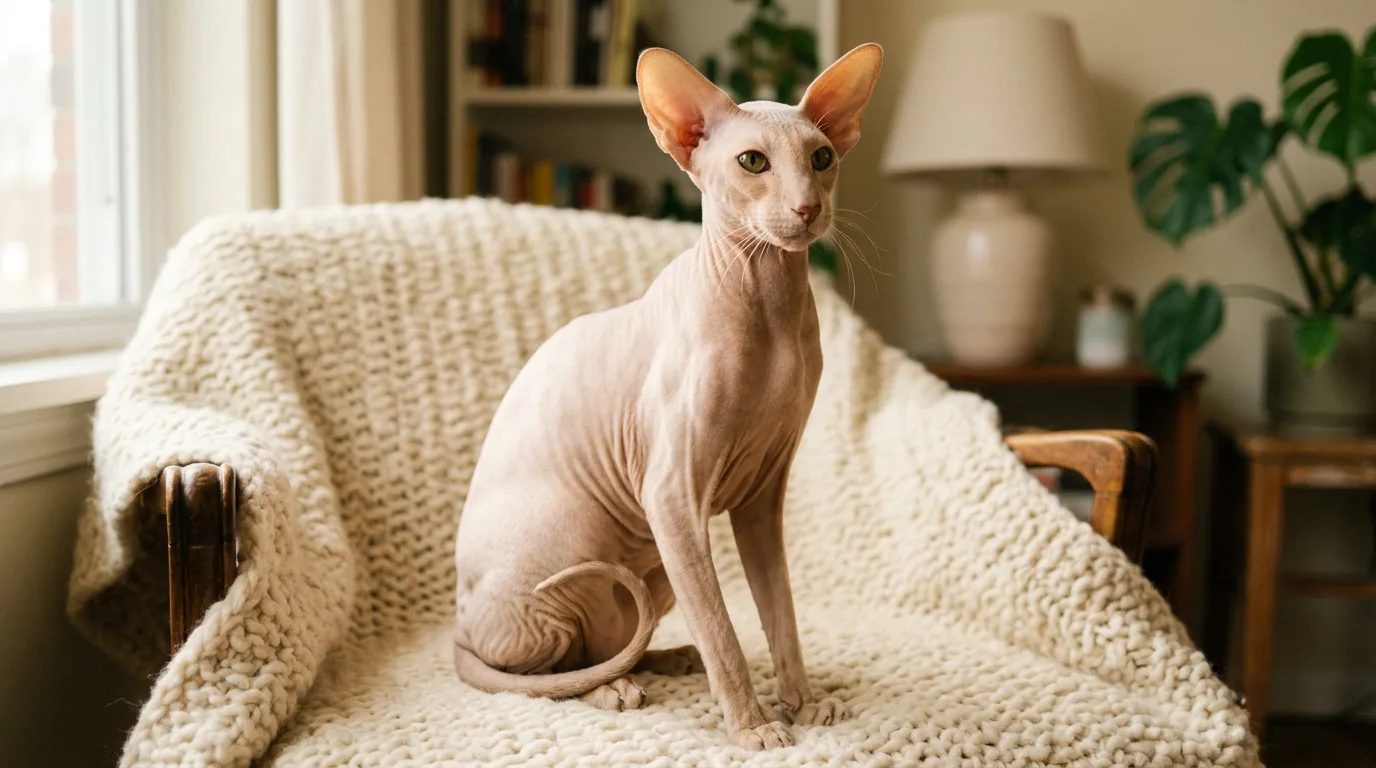
- 2The Peterbald is a slim Oriental type cat; the Sphynx is a stocky, muscular, pot bellied cat
- 3Peterbald coats range across five types (bald, flock, velour, brush, straight); Sphynx are essentially bald with peach fuzz
- 4Both need regular bathing, indoor living, and warmth, and neither is truly hypoallergenic

Sign up for expert-backed reviews and safety alerts all in one place.
Peterbald vs sphynx at a glance
Both cats turn heads, and both crave human company. But once you know what to look for, telling them apart is easy. The fastest tell is the silhouette: a Peterbald looks like a slender, large-eared greyhound of the cat world, while a Sphynx looks like a sturdy, pot-bellied little wrestler. Here is the head-to-head before we get into the details.
| Trait | Peterbald | Sphynx |
|---|---|---|
| Origin | St. Petersburg, Russia, 1994 | Ontario, Canada, 1966 |
| Parent breeds | Donskoy (Don Sphynx) x Oriental Shorthair | Natural mutation, later crossed with Devon Rex |
| Hair-loss gene | Dominant | Recessive |
| Body type | Slim, long, Oriental | Stocky, barrel chested, muscular |
| Coat types | Five (bald, flock, velour, brush, straight) | One (near-bald peach fuzz) |
| Head shape | Long triangular wedge | Modified wedge, rounded |
| Eyes | Almond shaped | Lemon shaped |
| Lifespan | 12 to 15 years | 8 to 15 years |
| Typical price | 1,500 to 3,000 USD | 1,500 to 4,500 USD |
The one difference that explains everything: the gene
Start with the genetics and the rest of the peterbald vs sphynx comparison falls into place.
The Sphynx originated in Toronto, Canada, in 1966 when a domestic cat gave birth to a naturally hairless kitten. That hairlessness is caused by a recessive mutation. Recessive means a kitten must inherit the gene from both parents to be hairless, which is why a Sphynx is, with rare exceptions, simply near-bald. Early breeders later outcrossed to Devon Rex cats to widen the gene pool and improve health.
The Peterbald is much younger. It was created in St. Petersburg, Russia, in 1994 by crossing a Donskoy (Don Sphynx) with an Oriental Shorthair. The Donskoy carries a separate, DOMINANT hair-losing gene. Because the gene is dominant, a kitten needs only one copy to be affected, and the effect comes in degrees. That is why Peterbald litters can contain kittens ranging from completely bald to fully coated, all from the same parents. TICA records the foundation pairing as an Oriental Shorthair, Radma Von Jagerhof, with a Don Sphynx named Afinguen Myth.
- A Sphynx is hairless because of a recessive gene; a Peterbald loses or keeps hair because of a dominant gene, which is why Peterbald coats vary so widely.
TICA accepted the Peterbald into championship competition in 2005, decades after the Sphynx was established. So the Sphynx is the older, more established breed, and the Peterbald is the newer Russian arrival often mistaken for it. There is one more layer worth understanding: the Peterbald gene is not only dominant, it is also incompletely expressed, meaning the same gene shows up in different strengths from kitten to kitten. Breeders cannot fully predict what a Peterbald litter will look like at birth. If you want to dig deeper into the Russian side of the family tree, our guide to Donskoy cats explains how that breed passes the trait along.

63-inch multi-level cat tree with scratch posts, hammock, plush perches, and dangling toys. Vertical territory is non-negotiable for high-energy climbing breeds like the Bengal.
Petful may earn a commission when you click through to Chewy, at no extra cost to you.
Origin stories: Canada in 1966 vs Russia in 1994
The two breeds were created on opposite sides of the world, almost 30 years apart, and that history is the cleanest way to remember which is which.
The Sphynx began by accident. In 1966 a black-and-white domestic cat in Ontario, Canada, produced a hairless kitten through a spontaneous natural mutation. Breeders worked to stabilize the trait, later outcrossing to Devon Rex to widen the gene pool. The modern Sphynx is the result of decades of careful selection from that founding mutation.
The Peterbald was created on purpose. In 1994, Russian breeders set out to combine the hairless Donskoy (a Russian breed with its own dominant hairless gene) with the sleek, elegant Oriental Shorthair. The goal was a hairless cat with the refined Oriental body and head. This is why the Peterbald looks like a hairless Siamese cousin: it literally is, by design.
Body type: slim Oriental vs stocky and muscular
If you can only look at one thing, look at the body. This is the fastest way to win the peterbald vs sphynx guessing game.
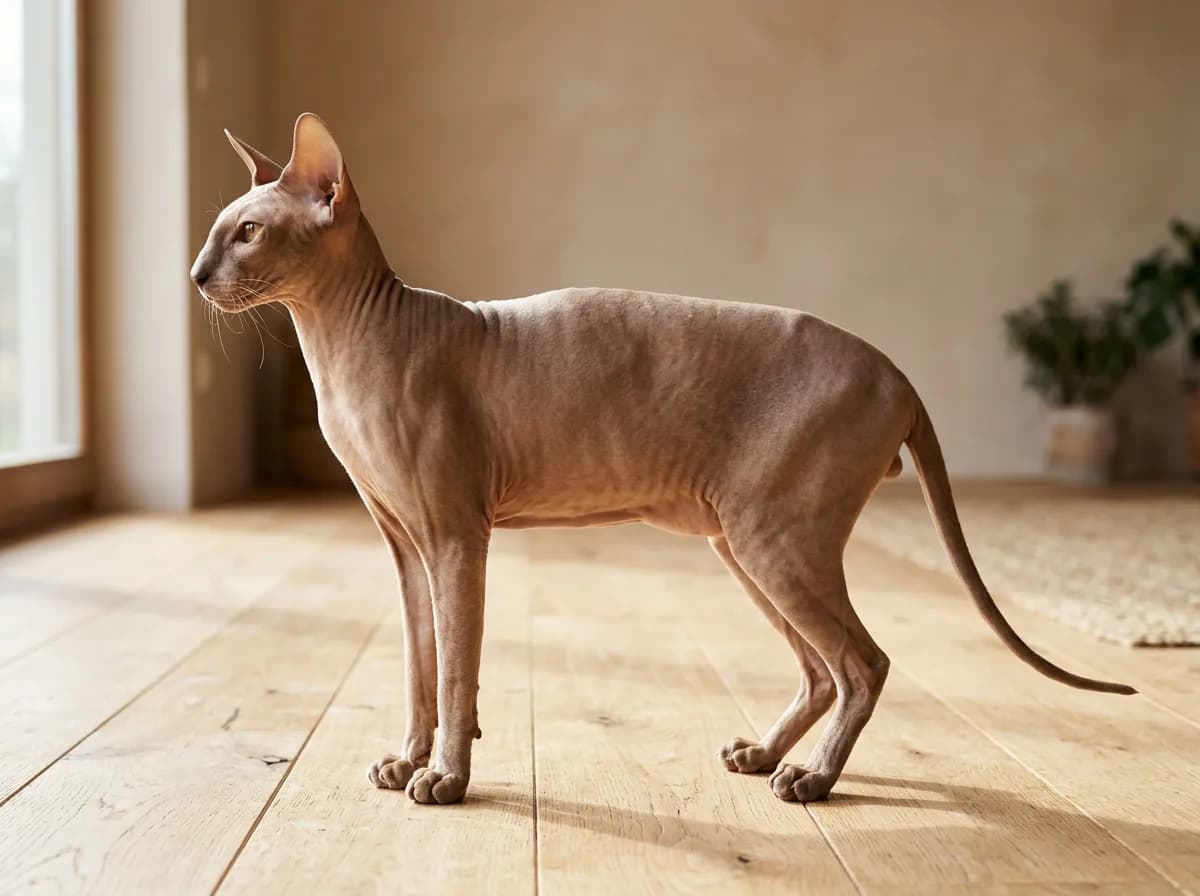
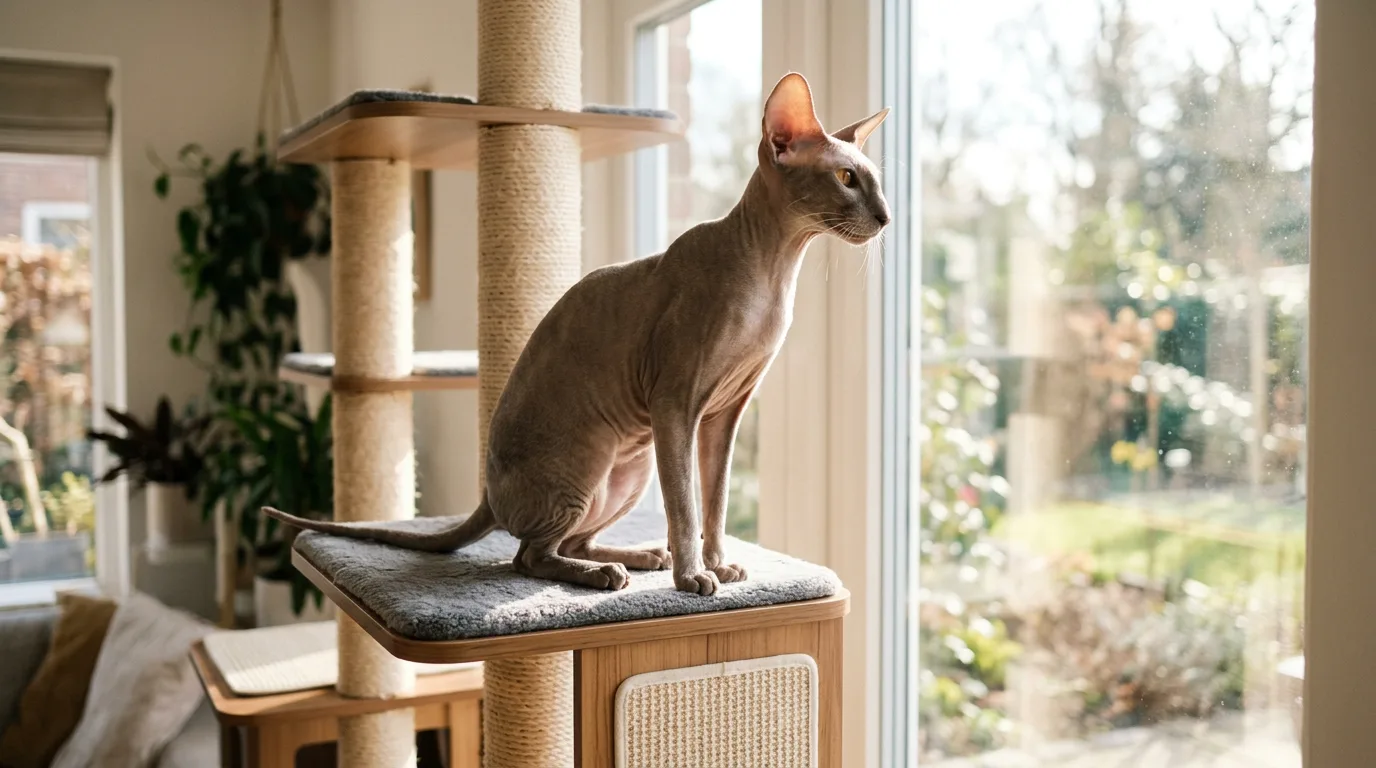
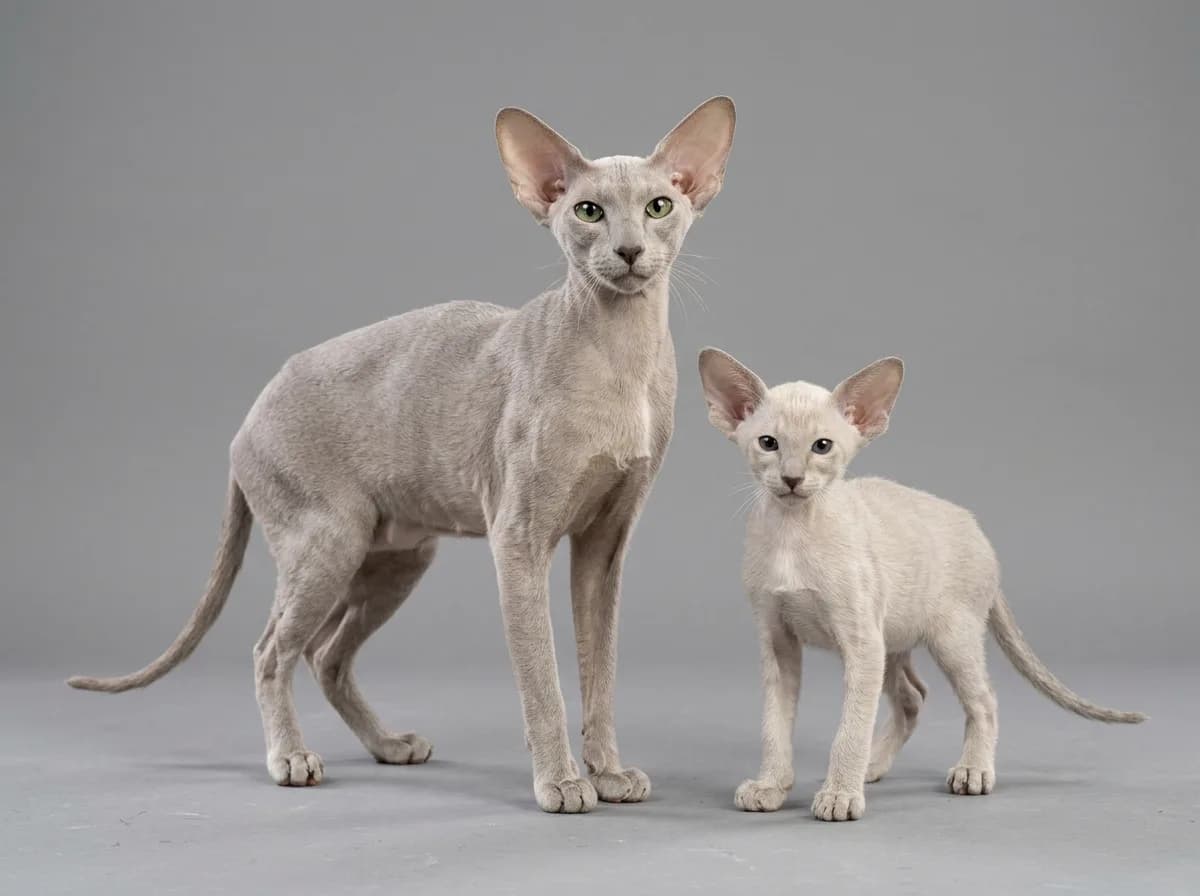
The Peterbald is built on the Oriental Shorthair blueprint. TICA describes a sturdy, long, lean body that is tubular in shape, with long straight legs and small oval feet. It is heavier-boned than a pure Oriental but lighter and longer than most cats, typically weighing 6 to 14 pounds. The overall impression is graceful and almost greyhound-like. One distinctive Peterbald detail is its front paws, which are long and oval with prominent, almost webbed toes the cat uses with surprising dexterity to grasp toys and open doors.
The Sphynx is the opposite silhouette and the opposite feel. TICA calls it a sturdy, medium-boned, athletic and highly muscular cat with a rounded, almost pear-shaped body, and the standard famously says the belly should look as though the cat just ate a large meal. Sphynx weigh roughly 6 to 14 pounds with heavier boning and a solid heft in the hand. Where the Peterbald reads as fine and elegant, the Sphynx reads as compact and muscular.
Head, ears, eyes and whiskers
The head is the second giveaway in any peterbald vs sphynx lineup.
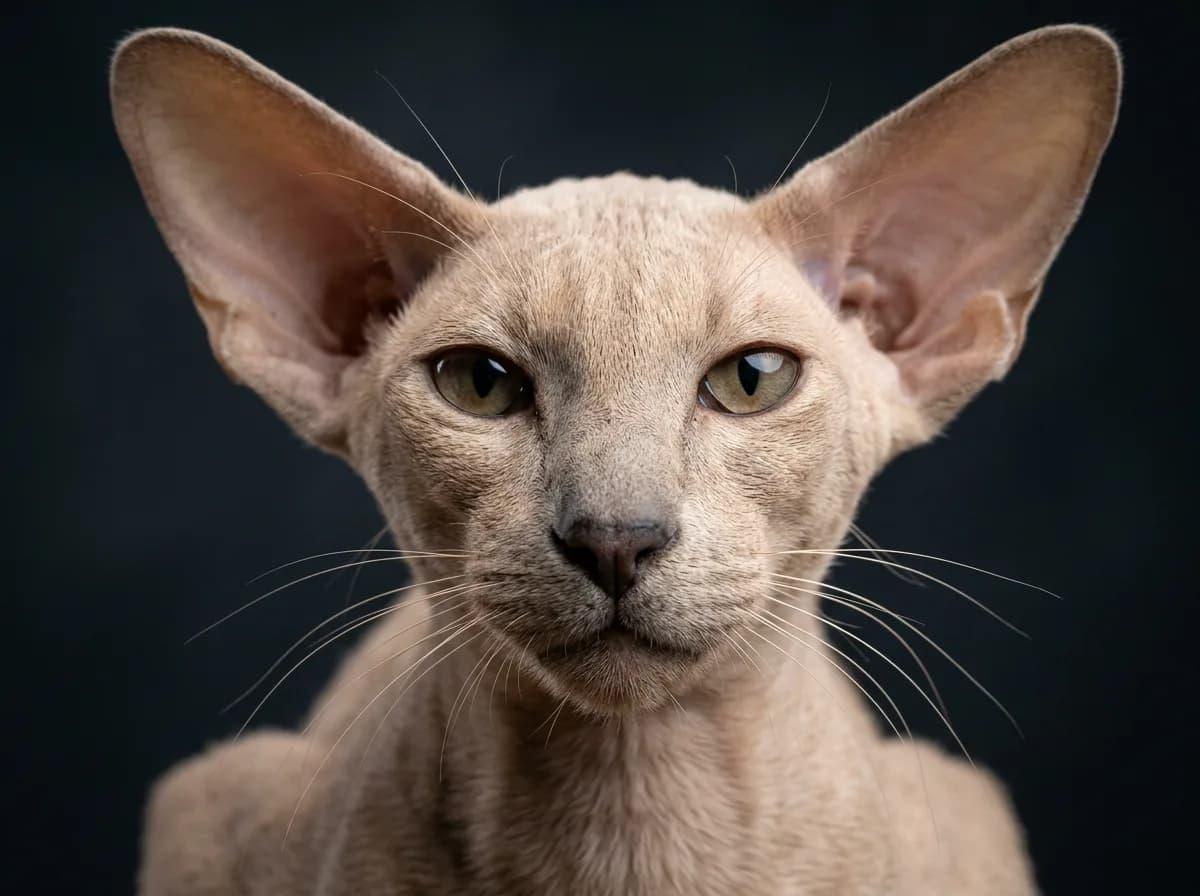
The Peterbald has a long, narrow, triangular wedge of a head with a near-flat profile. Its ears are the signature feature: oversized, wide-set, and flared so dramatically that TICA's standard notes they extend below the line of the jaw's angle. The eyes are medium, almond shaped, and set about one eye-width apart.
The Sphynx head is a modified wedge with more rounded contours and noticeably more width between the ears. The ears are large (often more than 2 to 3 inches tall) but sit more upright on a broader skull. Sphynx eyes are large and lemon shaped, with an open, sweet expression.
Whiskers are another quiet clue. Sphynx cats often have short, broken, or absent whiskers, while Peterbalds tend to keep their whiskers and can look as though they have a little mustache.
- A long narrow face with huge low-set ears and intact whiskers points to a Peterbald. A rounder, wider face with broken or missing whiskers points to a Sphynx.
Coat types: five Peterbald textures vs Sphynx peach fuzz
This is where the dominant gene really shows up. A Sphynx is functionally one coat type. A Peterbald can be any of five.
The Sphynx is not always truly bald. Most have a fine, downy covering that gives the skin a warm suede or chamois feel, like a soft peach, with a little more hair on the nose, ears, paws and tail. But the variation stops there.
The Peterbald, because of its dominant and variable gene, is born across a full spectrum. TICA recognizes these coat types:
Walnut shell clumping cat litter that excels at odor control, lasts up to 3x longer than clay, and is a top pick for multi-cat households.
Petful may earn a commission when you click through to Chewy, at no extra cost to you.
The Peterbald coat spectrum
- Bald (ultra-bald): totally hairless, often slightly sticky to the touch
- Flock: a near-invisible fuzz, like a peach or soft suede (the closest match to a Sphynx)
- Velour: a short, soft, downy coat without curl
- Brush: a wiry, kinked coat with guard hairs, unique to the breed
- Straight: a normal short coat, seen in cats that did not inherit the hair-loss trait
A Peterbald's coat is not even permanent. The coat a Peterbald is born with may change during its first two years, so a kitten born velour can become nearly bald, or the reverse. A Sphynx stays a Sphynx. For a full breed rundown beyond the comparison, see our Peterbald cat profile, and the Sphynx cat breed profile covers the Sphynx side in depth.
Temperament: vocal and athletic vs Velcro and clingy
Both breeds are affectionate to a fault, but they express it differently.
TICA describes the Peterbald as highly intelligent, aggressively affectionate, friendly and curious, and often highly vocal, following its owner from room to room. It inherits the Oriental Shorthair's talkative streak and will hold conversations with you across the house. Owners describe it as social and people-oriented but a touch more independent and active, happy to climb, explore, and play.
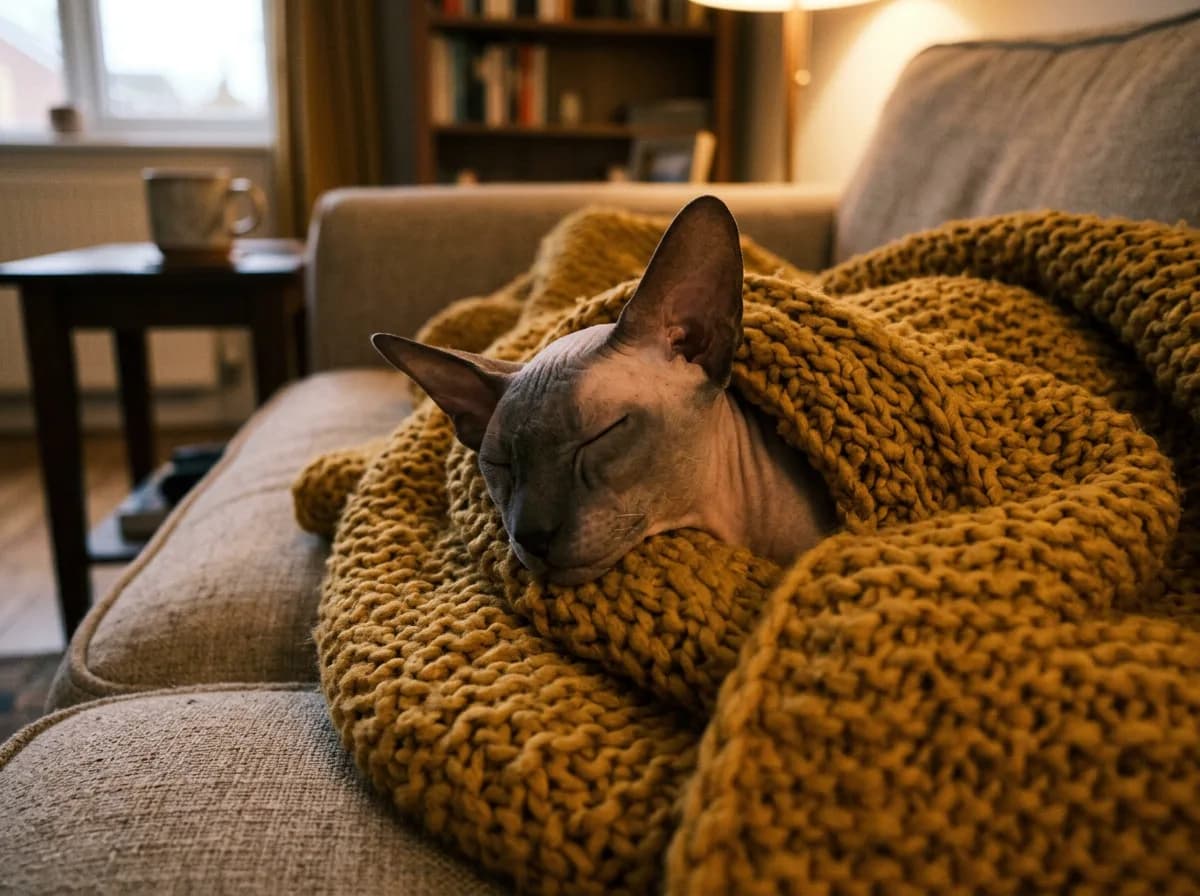
The Sphynx is the classic Velcro cat. It is extroverted, doglike, and demanding of attention, the type that will park itself on your keyboard and stay there. Sphynx tend to be a little more lap-focused than the busy, athletic Peterbald, and they are notorious heat-seekers that burrow under blankets and press against you for warmth.
Both breeds dislike being left alone for long stretches. Many owners of either cat keep a second pet for company. The practical difference is energy: a Peterbald wants vertical space, puzzle feeders, and play sessions to burn off its athletic drive, while a Sphynx is generally content to supervise your every move from the nearest warm lap.
- Choose a Peterbald if you want a chatty, busy, athletic companion. Choose a Sphynx if you want a clingy lap cat that never wants to leave your side.
If you are weighing other naked or partly-naked breeds, our guide to hairless cat breeds covers how the Peterbald, Sphynx, and other bare-skinned cats all differ.

108-oz stainless steel pet fountain with quiet pump and water-level window. Bengals are notoriously water-obsessed; a flowing fountain encourages hydration and pulls them away from sinks and toilets.
Petful may earn a commission when you click through to Chewy, at no extra cost to you.
Care, grooming and warmth
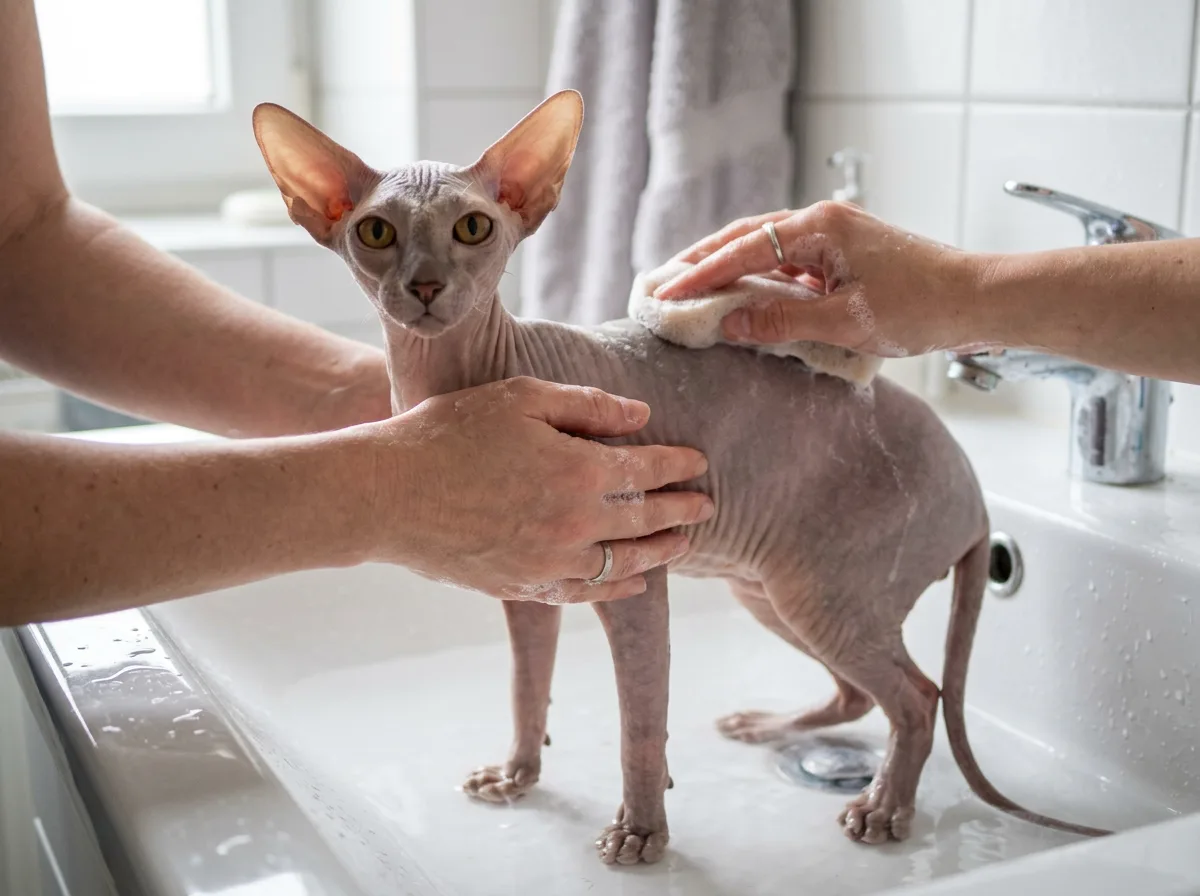
Hairless and near-hairless cats are not low-maintenance. With little or no coat to absorb skin oils, those oils build up on the skin and on your furniture. Both breeds therefore need a bath every one to three weeks with a gentle cat-safe shampoo, plus regular ear cleaning (their large ears collect wax fast) and eye care. Both must live indoors in a warm, draft-free home to avoid sunburn and chills, and many owners provide sweaters in winter and shade for sunny windows. A Peterbald's higher metabolism and the Sphynx's similarly furnace-like skin mean both burn calories fast and tend to eat more than a furred cat of the same size, so a high-protein diet matters for both.
Nail and skin care round out the routine. Because skin oils collect around the nail beds and in the folds, both breeds need their claws wiped or trimmed regularly to prevent a brown, waxy buildup. The good news for shedding-averse households is real: with little to no coat, both breeds leave almost no loose hair around the home.
- Both breeds can sunburn through window glass. Keep them out of direct, prolonged sun and ask your vet about safe skin protection.
- Cat allergies are triggered mainly by the Fel d 1 protein in saliva and skin, not by fur. A bald or nearly bald cat does not mean you will avoid a reaction. Spend time with the breed before you commit.
Health and lifespan
Both are generally healthy, long-lived cats, but they carry different watch-list conditions.
The Peterbald lives about 12 to 15 years. The conditions most often linked to it are progressive retinal atrophy (an inherited eye disease that can cause blindness), squamous cell carcinoma (a skin cancer made more likely by sun exposure on bare skin), and periodontal (gum) disease. Its delicate skin is also prone to scrapes and sunburn. For a deeper look at upkeep and vet budgeting, our Peterbald health guide goes further.
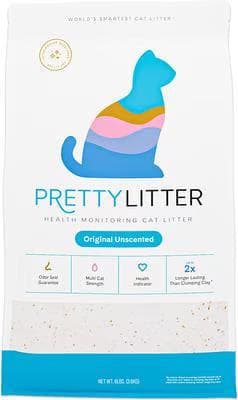
Color-changing crystal litter that flags pH shifts in your cat's urine, an early warning sign of UTIs, kidney issues, and more.
Petful may earn a commission when you click through to Chewy, at no extra cost to you.
The Sphynx lives roughly 8 to 15 years and is best known for hypertrophic cardiomyopathy (a thickening of the heart muscle), which responsible breeders screen for by ultrasound. Sphynx also face the same skin-cancer and skin-oil concerns, and some lines carry a hereditary muscle condition.
Debunking the "Down syndrome cat" myth
Search long enough and you will see hairless cats, including Peterbalds and Sphynx, called "Down syndrome cats" because of their wide-set eyes, big ears, and unusual faces. This is a myth, and it deserves a clear answer.
Down syndrome is caused by an extra copy of human chromosome 21. Cats have a completely different chromosome count and do not have chromosome 21 at all, so a cat cannot have Down syndrome. The distinctive Peterbald and Sphynx faces are simply normal, deliberate breed features, not a disorder. Some cats of any breed do have neurological or developmental conditions, but those are unrelated to the human syndrome and have nothing to do with being hairless. If a specific cat shows odd behavior or coordination problems, that is a reason to see a vet, not to apply a human diagnosis that does not exist in felines.
- Cats cannot have Down syndrome. The wide eyes and large ears of a Peterbald are intended breed traits, not signs of a disorder.
Price: why hairless cats cost so much
Neither cat is cheap. Peterbald kittens in the United States generally run 1,500 to 3,000 USD, and Sphynx kittens commonly land between 1,500 and 4,500 USD depending on lines and region. The reasons are the same for both: few breeders, small litters, demanding neonatal care for fragile hairless kittens, and high demand for a rare, striking look. The Peterbald in particular is still uncommon outside Russia, which keeps supply tight and waitlists long.
If hairlessness is the draw but the price or specific look is not, it is worth comparing the wider field. For a Peterbald-specific budget, our Peterbald cat price breakdown walks through what drives the cost, and the curly-coated Cornish Rex profile is a good option for people who want a sleek look with a little protective fur. Be wary of either breed offered well below 1,000 USD, which can signal unhealthy backyard lines; always meet the breeder and ask for health testing.
Peterbald vs sphynx: which one is right for you?
Pick the Peterbald if you want an elegant, slim, athletic cat with a wide range of possible coats, a chatty personality, and a rarer profile, and you do not mind hunting for a breeder. Pick the Sphynx if you want a sturdier, heavier lap cat with a Velcro personality and an easier breeder to find. Both will ask for regular baths, a warm home, and a lot of your attention, and neither will give you an allergy-free cat. The peterbald vs sphynx choice really comes down to body type, coat variety, and how much vocal energy you want underfoot.
Peterbalds are expensive because the breed is rare, few catteries produce them, and ethical breeders invest in genetic and health screening of the Donskoy and Oriental Shorthair lines. A pet-quality Peterbald kitten typically costs about 1,500 to 3,000 USD in the United States, with show-quality kittens higher.
They are distinct breeds. The Peterbald comes from a 1994 Donskoy and Oriental Shorthair cross in Russia, carries a dominant hair-loss gene, has a slim Oriental body, and can show five coat types. The Sphynx comes from a 1966 Canadian recessive mutation, is stocky and barrel chested, and has one near-bald coat.
Both the Peterbald and the Sphynx are exceptionally friendly and people-oriented. The Sphynx is famous as a Velcro lap cat, while the Peterbald is just as affectionate but more vocal and athletic, so the friendliest choice depends on whether you want a lap cat or a busy shadow.
Peterbald cats are generally healthy but can be prone to progressive retinal atrophy (an inherited eye disease that can cause blindness), squamous cell carcinoma (a skin cancer linked to sun exposure on bare skin), periodontal disease, and skin scrapes or sunburn from their lack of coat. They typically live 12 to 15 years.
Among the most expensive cat breeds, the Ashera tops most lists (often 75,000 USD or more), followed by the Savannah (25,000 USD and up) and the Khao Manee (around 7,000 to 11,000 USD). The Peterbald is far more affordable by comparison.
A Peterbald cat typically lives 12 to 15 years, and many reach 15 years with good indoor care, a warm environment, regular bathing, skin protection, and routine veterinary checkups.
Breeds like the Sphynx, Peterbald, Burmese and Siamese are among the clingiest, bonding intensely to their owners. Hairless breeds in particular seek out human warmth and attention, so both the Peterbald and the Sphynx rank near the top.

Coreen Saito is a pet writer and longtime shelter volunteer with more than a decade in animal rescue. She covers cat behavior, breed care, and the small, ordinary science of sharing a life with companion animals, with a particular focus on honest takes about the products and decisions that actually matter. At home in Arizona, she's outranked by Mac (a dog with the loudest opinion in the house), Rebel (a cat who governs by quiet authority), and Meri (an orange tabby who runs the late shift and the laundry basket). She writes about all three, plus the rescues that keep coming through her life, at LifeWithMinty.com.
Sign up for expert-backed reviews and safety alerts all in one place.