Peterbald Cat Price: Full 2026 Cost Guide for Buyers
A clear 2026 buyer's guide to the Peterbald cat price: what pet-quality and show kittens cost, why the breed is so pricey, first-year and monthly care budgets, adoption versus breeder, and how to find a reputable Peterbald breeder.
Petful is reader supported. As an affiliate of platforms like Amazon and Chewy, we may earn a commission when you buy through links on this page. There is no extra cost to you.
The typical peterbald cat price runs between $1,500 and $5,000 from a registered breeder, with most pet-quality kittens landing near $2,000, according to figures cross-checked against The International Cat Association (TICA) catteries and current breeder listings. That sticker is only the opening line of the budget. This rare Russian hairless breed carries a distinctive first-year setup bill and an ongoing skin-and-coat care cost that furred cats never face, so the smart move is to read the whole number before you fall for a kitten photo.
- 1A pet-quality Peterbald usually costs $1,500 to $3,000, while show or champion lines reach $3,000 to $5,000.
- 2Plan for $600 to $1,200 in first-year setup on top of the kitten, plus $100 to $300 a month ongoing.
- 3The price is high because the breed is rare, the breeding is genetically tricky, and US bloodlines are often imported.
- 4Adoption is possible but uncommon, and a low price or no health paperwork is a warning sign, not a bargain.

Sign up for expert-backed reviews and safety alerts all in one place.
Why the Peterbald Cat Price Is So High
The Peterbald is a young, scarce breed, and scarcity sets the price. It was created in 1994 in St. Petersburg, Russia, by breeder Olga Mironova, who crossed a hairless Donskoy (Don Sphynx) with an Oriental Shorthair. TICA accepted the breed for championship competition in 1997, so the entire gene pool is barely three decades old. Few catteries exist outside Russia and Eastern Europe, which means US breeders frequently import foundation cats at real expense and pass that cost on.
The genetics add another layer. The Peterbald loses its hair through a dominant gene, which is the opposite of the Sphynx, whose hairlessness comes from a recessive mutation. A dominant hair-losing gene sounds simpler, but responsible breeders still have to pair cats carefully to avoid doubling up the gene in a way that harms litter health, and to hit the coat type and conformation a buyer wants. Tight, careful breeding programs produce fewer kittens, and fewer kittens cost more.
- Outside Russia and Eastern Europe, Peterbald catteries are uncommon, so many US kittens trace to imported bloodlines that drive the price up.
Pet quality vs show quality
The single biggest swing in any peterbald cat price is the difference between pet quality and show quality. A pet-quality kitten is a healthy, well-socialized companion that simply does not meet the exact breed standard for the show ring, often because of a small cosmetic detail like coat texture or ear set. These kittens are the $1,500 to $3,000 range and make wonderful pets.
Show-quality and breeding-quality kittens come from champion bloodlines, carry the conformation a judge rewards, and can be priced from $3,000 up to $5,000 or more. Unless you plan to show or breed, you are paying for a pedigree you will never use. Most buyers should ask specifically for a pet-quality kitten and save thousands.
Coat type and color
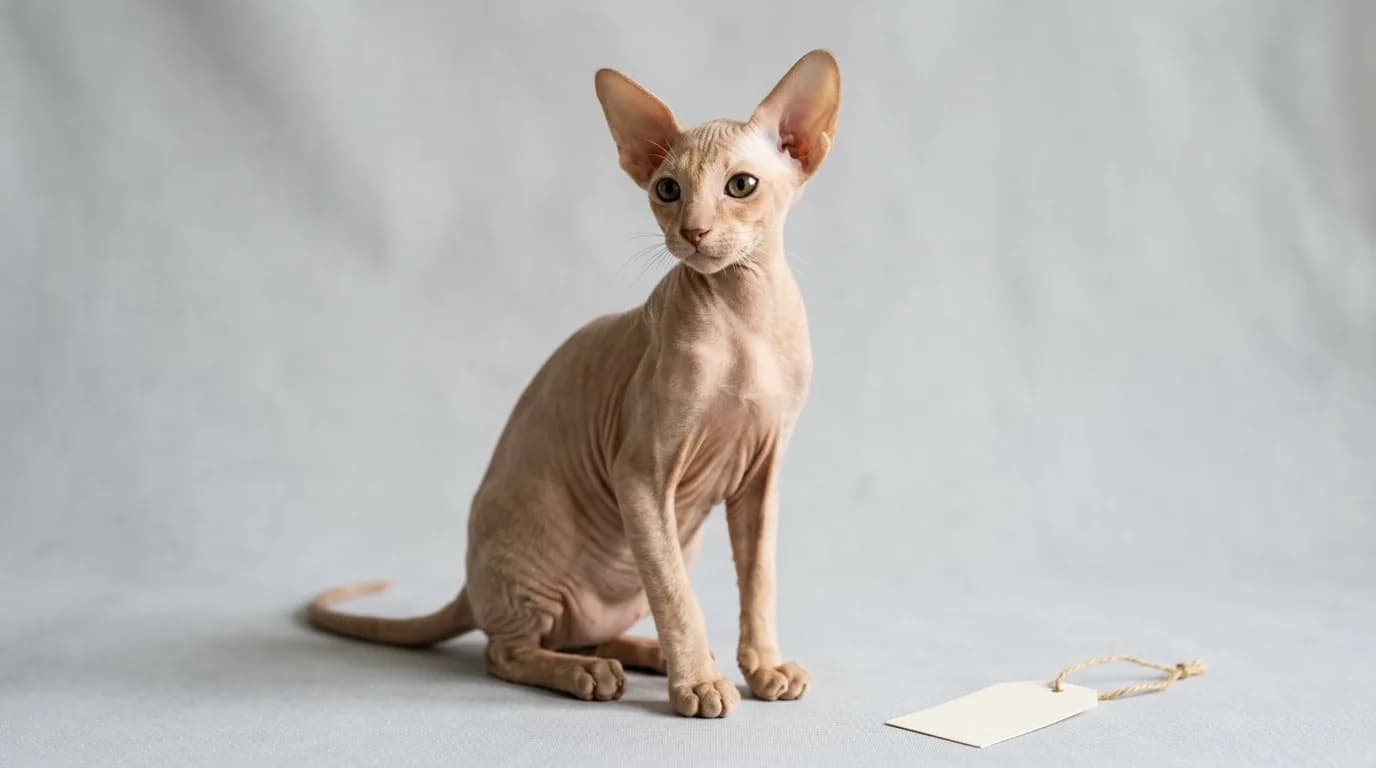
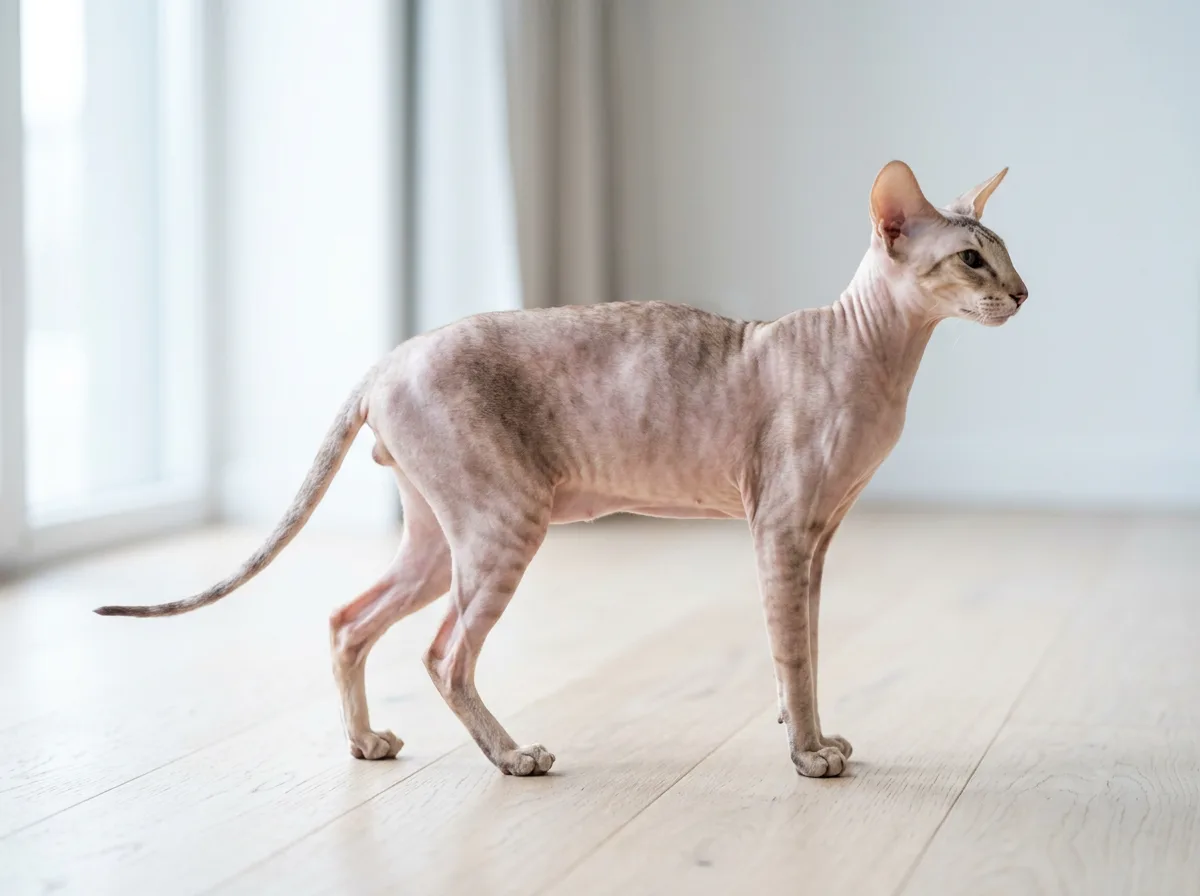
Peterbalds are not all bald. The coat runs across a spectrum: ultra bald (truly naked), flock (a soft suede-like fuzz), velour (a slightly longer plush), brush (a wiry coarse coat), and straight (a near-normal short coat on cats that carry but do not express the gene). The completely naked variants are often the most sought after and can command a premium because they are harder to produce predictably. Rare colors and striking patterns can also nudge the price upward, though coat type moves the number far more than color does.

63-inch multi-level cat tree with scratch posts, hammock, plush perches, and dangling toys. Vertical territory is non-negotiable for high-energy climbing breeds like the Bengal.
Petful may earn a commission when you click through to Chewy, at no extra cost to you.
Peterbald Cat Price at a Glance
Here is the purchase-price landscape buyers actually see in 2026, drawn from breeder listings and price guides cross-checked across multiple sources. Treat these as ranges, not promises: an individual cattery sets its own number based on bloodline, coat, and demand.
| Source / Quality | Typical Price Range | What You Are Paying For |
|---|---|---|
| Adoption or rescue | $500 to $2,500 | Rare availability, often an adult or surrendered cat, health history may be limited |
| Pet-quality from a breeder | $1,500 to $3,000 | A healthy, registered, well-socialized companion that is not show-bound |
| Top-tier or show quality | $3,000 to $5,000 | Champion bloodline, breed-standard conformation, breeding rights sometimes included |
| Imported or rare coat or color | $4,000 to $5,000+ | Imported foundation lines, ultra-bald coats, or in-demand colors |
- If you are not showing or breeding, request a pet-quality kitten. You get the same affectionate Peterbald for thousands less than a show-line cat.
A quick note on the cheapest and most expensive ends. A free or very cheap "Peterbald" with no registration papers, no health testing, and no contract is almost never a real bargain, and is sometimes not a purebred Peterbald at all. At the top, prices above $5,000 generally reflect imported show lines or breeding rights rather than anything that makes the cat a better pet.
Does the price change by location?
Yes, geography moves the peterbald cat price more than most buyers expect. Because the breed is rare, there is no even spread of catteries across the country, so where you live changes both availability and cost. Searches like "Peterbald cat price near California" and "Peterbald cat price near Texas" are common precisely because buyers in some states have to look several states away, or join a waitlist, to find a registered litter. In major metro areas with a higher cost of living and stronger demand, breeders tend to price at the upper end of the range. In regions with few or no local catteries, the practical cost climbs once you add shipping, a flight nanny to accompany the kitten, or the travel to pick the cat up in person. Importing a kitten from overseas, which some US buyers do for specific bloodlines, can add hundreds or even a few thousand dollars in transport, paperwork, and veterinary clearance on top of the cattery's price. None of this changes what makes a good cat, but it does change what you actually pay to get one home, so factor your location into the budget before you fall in love with a distant listing.
First-Year Costs Beyond the Kitten
The purchase price is the headline, but the first year is where new owners get surprised. On top of the kitten, budget roughly $600 to $1,200 for setup and initial veterinary care in year one. The Peterbald's hairless skin means a few of these line items run higher than they would for a furred cat.
One-time setup supplies
Plan for the basics before the kitten comes home. Expect about $50 to $100 for starter supplies, then individual items on top: a litter box at $8 to $25, a scoop around $10, food and water bowls near $10, a carrier at $20 to $50, a cat bed at $10 to $50, nail clippers at $5 to $20, and toys averaging about $30. None of these are unique to the breed, but skin-friendly bedding and a warm, draft-free spot matter more for a hairless cat than a furry one.
- A Peterbald gets cold easily, but never use an unregulated heating pad or space heater near bedding. Use a thermostat-controlled pet warmer or simply keep the room warm to avoid burns and fire risk.
Spay, neuter, and early vet care
Most reputable breeders sell pet-quality kittens on a spay or neuter contract, and many altered the kitten before pickup. If you handle it yourself, spay or neuter runs $70 to $500 depending on your area and clinic. Early vet care also includes a first wellness exam, a core vaccine series, deworming, and a microchip at roughly $45 to $55. Budget for diagnostics too: an X-ray can run $100 to $250 and an ultrasound $250 to $500 if anything needs investigating.
The skin and coat care budget
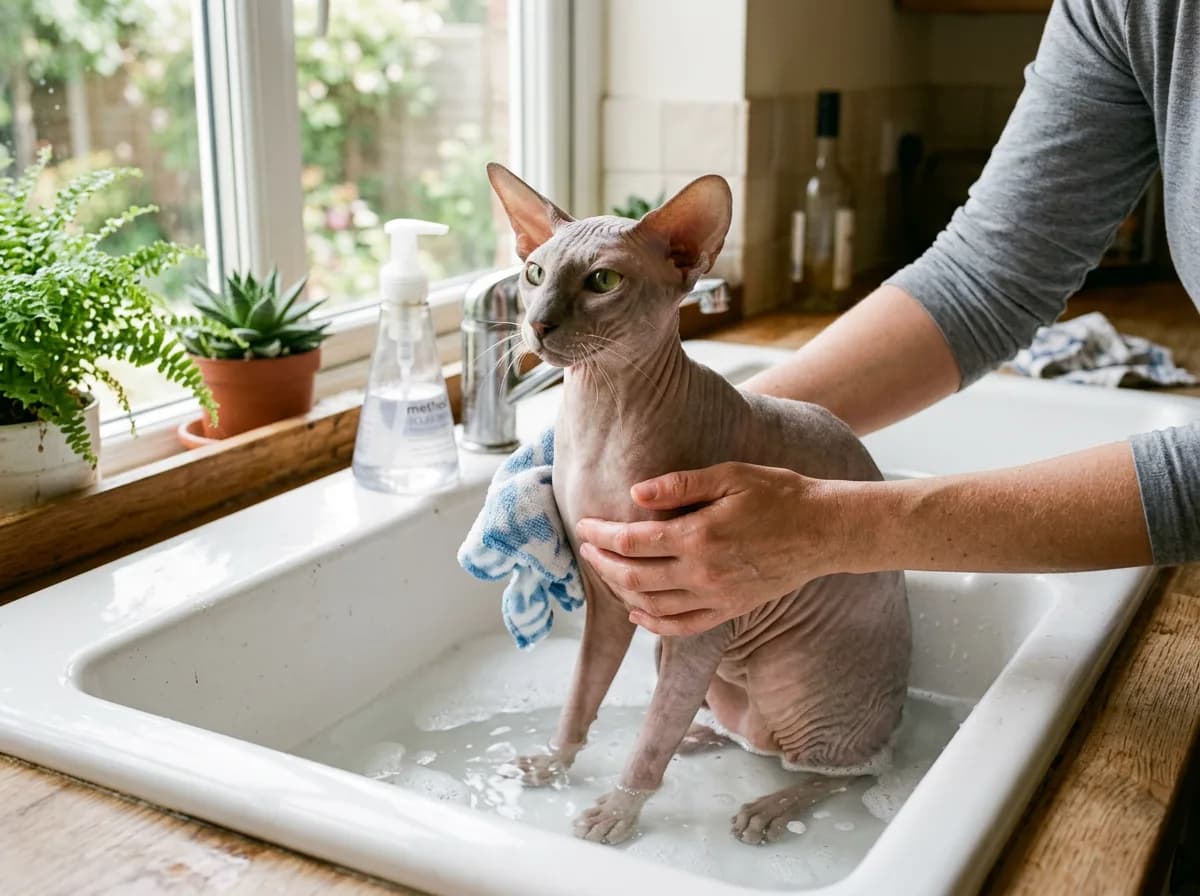
This is the line that makes the Peterbald different. Because the breed has little or no fur, the skin produces oils that normally coat the hair and instead build up on the bare skin and in the folds. That means regular baths, gentle ear cleaning to clear wax, and nail care to keep the nail beds clean. None of it is expensive on its own, but it is routine and ongoing. A bottle of gentle, vet-approved cat shampoo, unscented wipes for between-bath touch-ups, and a small grooming kit add up to a modest but real recurring cost. Sun protection matters as well: a bald cat can sunburn through a window, so this is firmly an indoor breed.
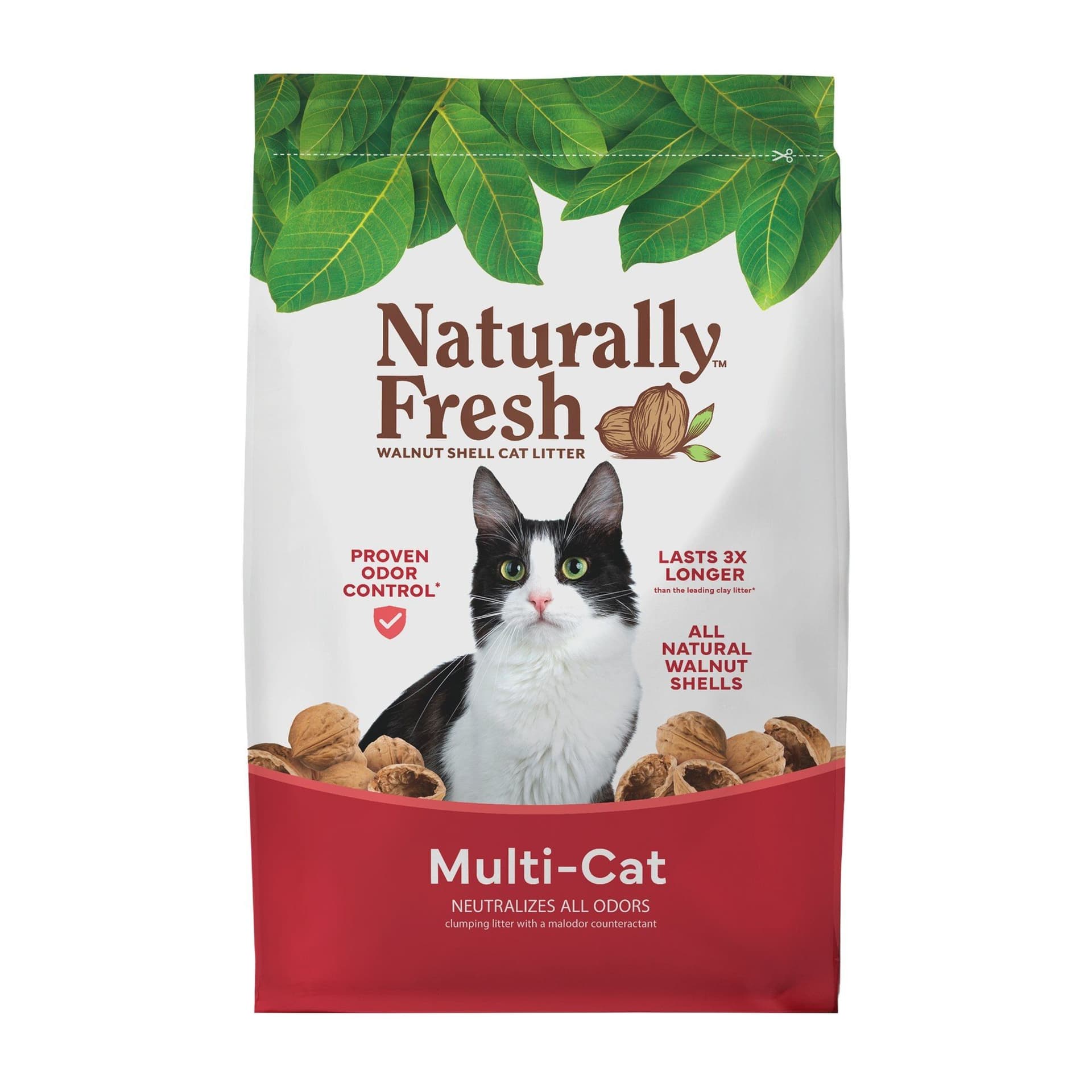
Walnut shell clumping cat litter that excels at odor control, lasts up to 3x longer than clay, and is a top pick for multi-cat households.
Petful may earn a commission when you click through to Chewy, at no extra cost to you.
How Much Does a Peterbald Cost Per Month?
Once the kitten is home and set up, the ongoing peterbald cat price settles into a monthly rhythm. Expect roughly $100 to $300 a month for a healthy adult, more in a year with a health issue. Here is how that breaks down.
| Category | Typical Monthly Range | Notes |
|---|---|---|
| Food | $50 to $100 | Higher than average; the breed's fast metabolism and warmth needs favor quality, calorie-dense food |
| Grooming supplies | $30 to $70 | Shampoo, wipes, ear cleaner, nail care for hairless skin |
| Litter and maintenance | $10 to $50 | Litter, liners, deodorizer, and scratchers |
| Routine and preventive vet | $50 to $200 | Spread annual exams, vaccines, and dental over the year |
| Pet insurance | $30 to $100 | Optional but sensible for a rarer breed |
| Enrichment and toys | $10 to $50 | This is a high-energy, attention-hungry breed |
Food deserves a word. A Peterbald burns energy to stay warm because it has no insulating coat, so it tends to eat well for its size and does best on a high-quality, protein-rich diet. That pushes the food line toward the upper end of the typical range. Pet insurance is genuinely worth pricing out: premiums of $30 to $100 a month can offset the larger vet bills that come with any pedigreed cat.
- Over a 12 to 15 year lifespan, ongoing care can total well over the purchase price. The kitten is the cheapest part of owning a Peterbald.
Adoption vs Buying From a Breeder
Adoption is the lowest-cost route on paper, running anywhere from $500 to $2,500, but Peterbalds are genuinely rare in shelters and breed rescues, so finding one takes patience. When you do, an adoption fee usually bundles spay or neuter, vaccines, and a microchip, which trims your first-year setup. The trade-off is that you may know less about the cat's lineage and early health.
Buying from a reputable breeder costs more up front but buys information and recourse: registration papers, a documented health history, a health guarantee in the contract, and a breeder who takes the cat back if your situation changes. For a young breed with a small gene pool, that paper trail has real value.
- If a seller pushes wire transfers, refuses a video call with the kitten and its mother, has no contract, and offers a Peterbald far below market with no papers, walk away. Hairless-breed scams are common.
If you want to compare the Peterbald against the more familiar bald breed before you commit, our Sphynx cat breed profile lays out how the two differ in genetics, build, and care. For the wider field, the guide to hairless cat breeds compares every bald and near-bald cat side by side, and the Donskoy cat profile covers the very breed that helped create the Peterbald. If a wavy-coated rex is more your speed, the Cornish Rex breed guide is a good next read.
How to Find a Reputable Peterbald Breeder
Start with the registries rather than a marketplace listing. TICA and the Cat Fanciers' Association (CFA) both recognize the Peterbald and maintain breeder directories you can use to find registered catteries. A registered breeder is not a guarantee of quality on its own, but it is the right starting filter.

108-oz stainless steel pet fountain with quiet pump and water-level window. Bengals are notoriously water-obsessed; a flowing fountain encourages hydration and pulls them away from sinks and toilets.
Petful may earn a commission when you click through to Chewy, at no extra cost to you.
Questions to ask before you pay
A good breeder welcomes scrutiny. Ask to see the kitten and its mother together, in person or on video. Ask what health testing the parents have had, what vaccines and deworming the kitten has received, and what is covered by the health guarantee. Confirm the kitten will be at least 12 to 14 weeks old at pickup, fully weaned and litter-trained. Read the contract for a spay or neuter clause and a return clause. A breeder who answers all of this in writing is worth the wait.
- Good catteries produce few litters and often keep a waitlist. Being patient for a vetted, healthy kitten beats grabbing the first available cat from an unknown source.
Red flags that should stop you
Be wary of any seller who has kittens available immediately and in volume, will not let you see where the cats live, has no registration or health records, pressures you to pay fast or by untraceable methods, or lists prices that are either suspiciously low or wildly above the $5,000 ceiling with no pedigree to justify it. Those are the patterns behind most hairless-cat scams.
Is the Peterbald Worth the Price?
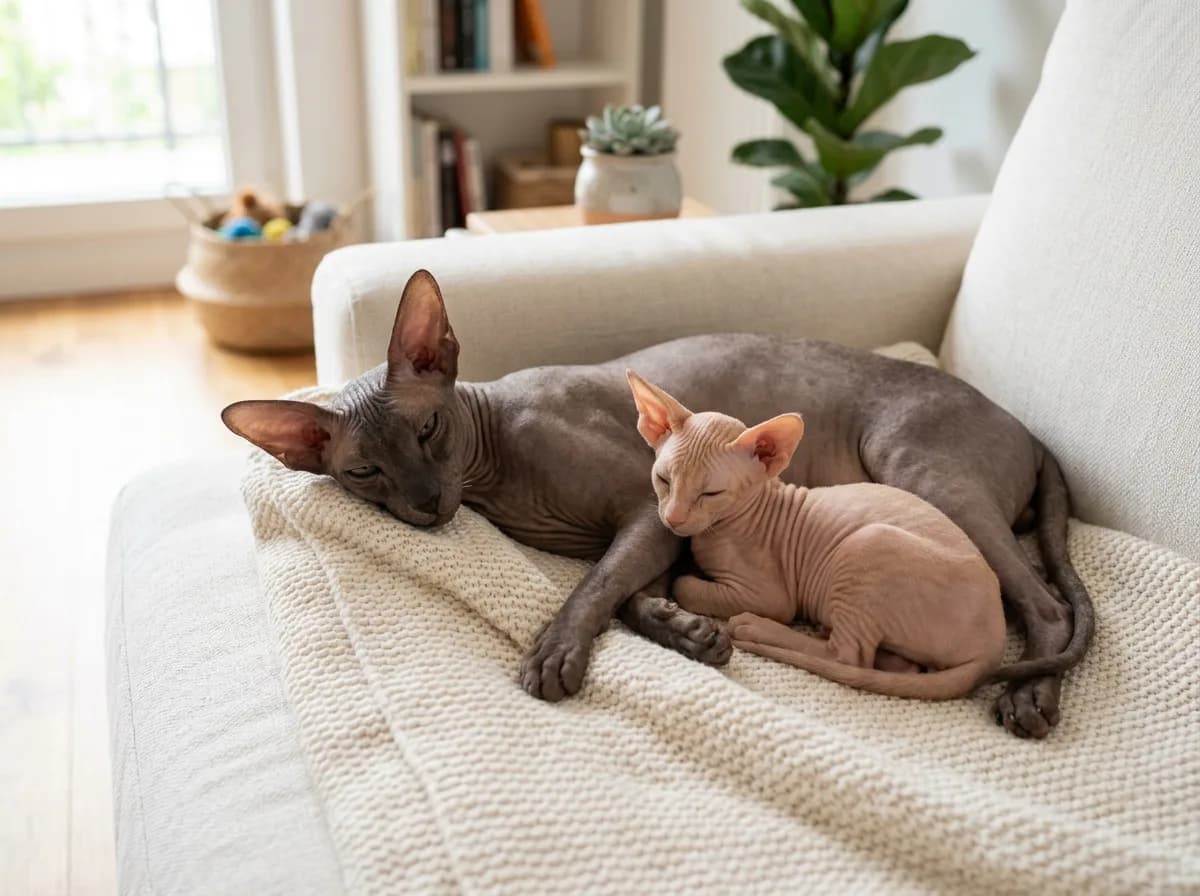
For the right owner, yes. The Peterbald is famously affectionate, almost dog-like, and bonds hard with its people. It is intelligent, playful, and social to the point that it does not do well left alone for long stretches. If you want an interactive, lap-loving companion and you can meet the warmth, bathing, and attention needs, the breed earns its cost.
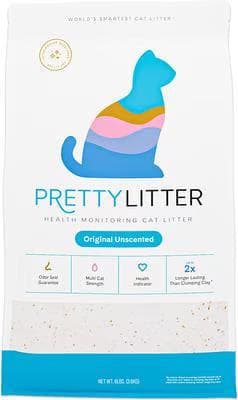
Color-changing crystal litter that flags pH shifts in your cat's urine, an early warning sign of UTIs, kidney issues, and more.
Petful may earn a commission when you click through to Chewy, at no extra cost to you.
It is the wrong cat for someone who wants a low-maintenance, independent pet, who is away from home all day, or who hoped a hairless cat would be allergy-friendly. It will not be. The honest math is that the purchase price is the small part; the time and the ongoing care are the real commitment.
- Peterbalds are not hypoallergenic. The main cat allergen, Fel d 1, comes from saliva and skin oils, not fur, so a bald cat still produces it.
Health and lifespan affect lifetime cost
A Peterbald generally lives 12 to 15 years and is considered a reasonably healthy breed, but a small gene pool means buyers should ask about a few known concerns. Reputable breeders screen for heart disease, and owners watch for skin issues tied to the bare coat and for dental and ear care needs. A healthy cat from screened parents tends to cost less over its life because it spends less time at the vet, which is one more reason the breeder you choose matters as much as the price you pay.
Debunking the "Down Syndrome Cat" Myth
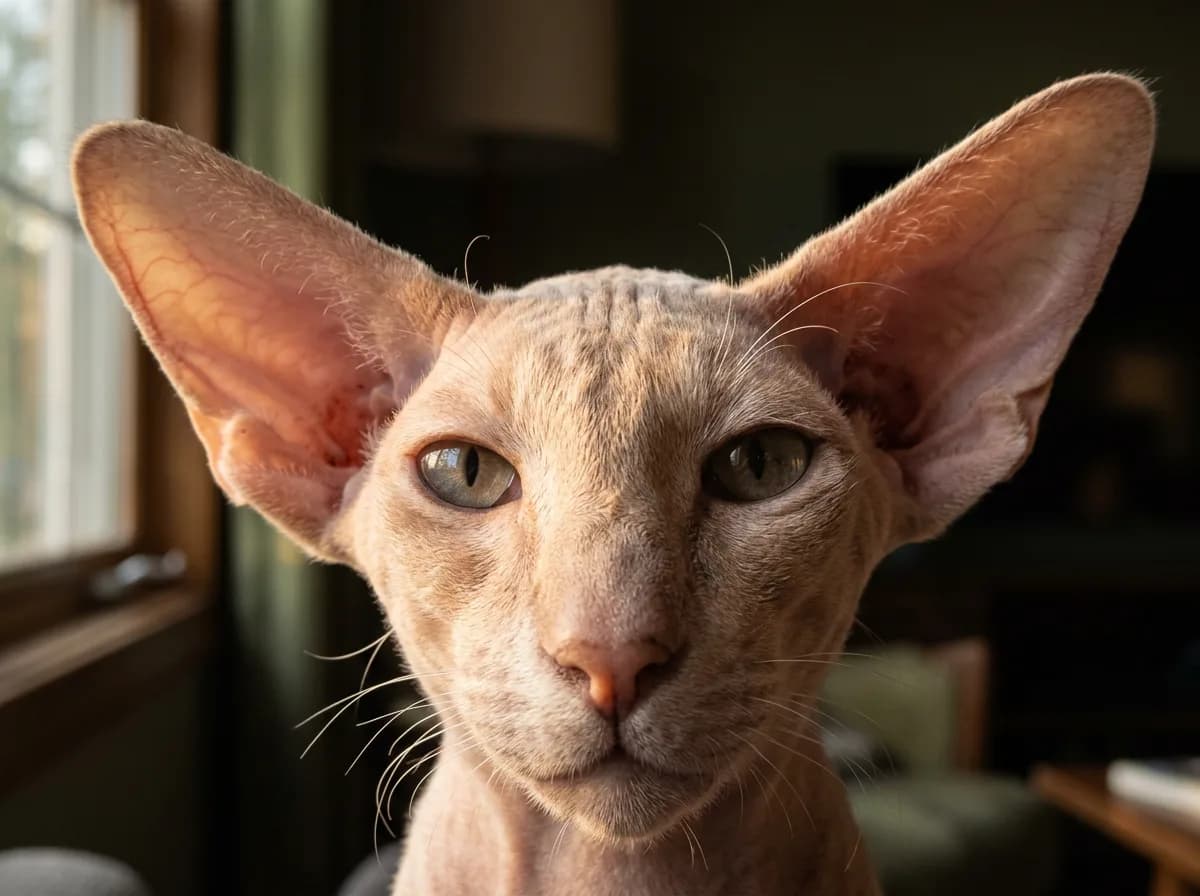
You may have seen Peterbalds and other unusual-looking cats labeled "down syndrome cats" online. This is a myth and it is worth correcting honestly. Down syndrome is a specific human chromosomal condition involving an extra copy of chromosome 21. Cats have a different number of chromosomes than humans and cannot have Down syndrome at all. The Peterbald's wedge-shaped head, very large ears, and wide-set almond eyes are simply the breed's standard features, deliberately bred for, not a sign of any disorder. Do not let a clickbait label scare you off a healthy breed, and do not let a seller use it to explain away a genuinely sick cat.
Peterbald Cost vs Other Hairless and Exotic Cats
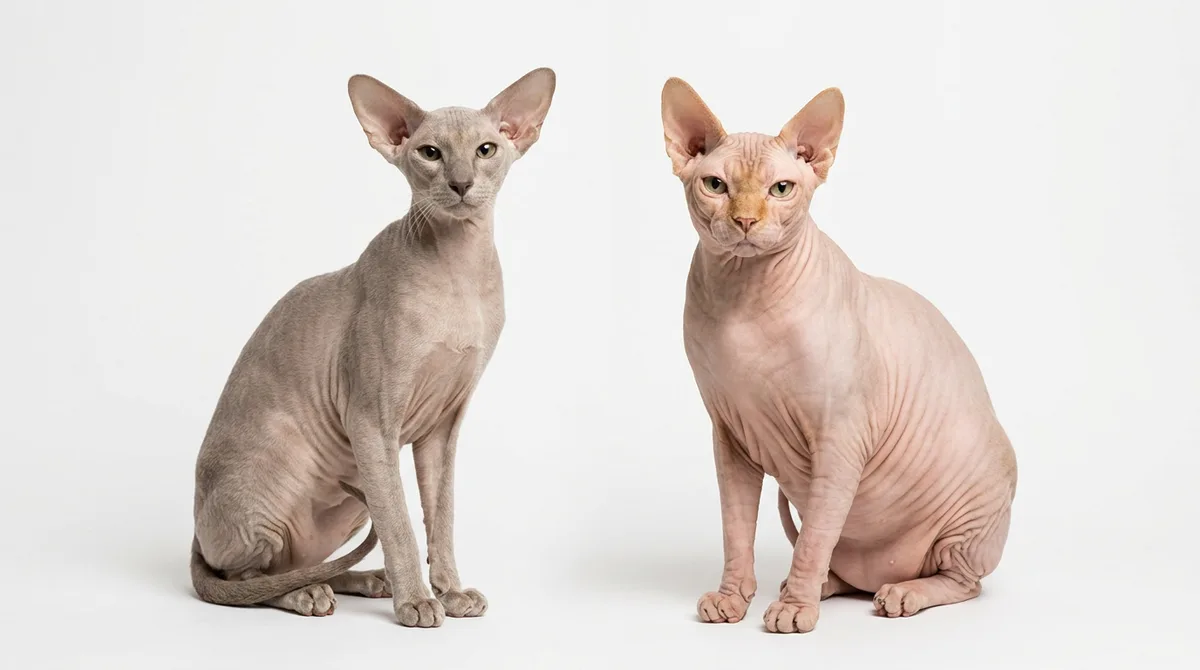
To put the peterbald cat price in context, it sits in the same neighborhood as other hairless and rare breeds. The Sphynx, the breed most people picture when they think "bald cat," lands in a similar range. The Donskoy, the Peterbald's genetic ancestor, often runs a touch lower at roughly $1,200 to $2,500. At the far extreme, the rarest engineered breeds make headlines for five-figure and even six-figure price tags, which is exactly why "what cat costs $100,000" is such a common search. The Peterbald is expensive, but it is nowhere near the top of that list, and a healthy pet-quality kitten remains attainable for a committed buyer.
- A bargain-priced hairless kitten with no papers can cost far more in vet bills later. The lowest sticker price is rarely the lowest lifetime cost.
How to Lower the Cost Without Cutting Corners
You cannot safely shrink the purchase price by buying from an unvetted source, but there are honest ways to keep the total peterbald cat price in check. The biggest lever is choosing pet quality over show quality, which can save two to three thousand dollars for a cat that will be every bit as loving on your couch. Beyond that, the savings come from the ongoing budget, not the kitten.
Ask breeders whether they have an older kitten or a retired adult available. Adults that have finished a breeding program are sometimes placed at a lower price, already altered and socialized, and they make excellent companions for a calmer household. On the care side, buy litter, food, and grooming supplies in bulk or on subscription, learn to bathe and trim nails at home rather than paying a groomer every few weeks, and keep up with preventive vet care so small problems do not become expensive ones. Comparison-shop pet insurance early, while the cat is young and healthy, because premiums rise with age and pre-existing conditions are excluded once they appear.
- If a breeder or surrendering owner offers gently used supplies with the cat, take them. A quality carrier, bed, and litter box bought once can carry through the cat's whole life and trim your first-year bill.
What you should never do to save money is skip health screening, take a kitten with no contract, or buy from a seller who will not show you the cat's living conditions. Those shortcuts trade a small upfront discount for a high risk of large veterinary bills and heartbreak later. The goal is a healthy cat at a fair price, not the lowest possible number on day one.
Frequently Asked Questions
Peterbald cats are expensive because the breed is rare and young, created only in 1994, with few catteries outside Russia and Eastern Europe. Breeders often import foundation bloodlines at real cost, the coat genetics make careful pairing essential, and small litters limit supply, all of which push the price into the $1,500 to $5,000 range.
The Ashera and the Savannah are routinely cited as the most expensive cats in the world, with top Ashera and high-generation Savannah cats selling for tens of thousands of dollars and occasionally six figures. The Peterbald is a premium breed but costs far less, typically $1,500 to $5,000.
A Peterbald cat typically lives 12 to 15 years, with some sources citing 10 to 15 years. Good genetics from screened parents, indoor living, attentive skin and dental care, and routine veterinary visits all help a Peterbald reach the upper end of that range.
The Ashera is the breed most associated with a roughly $100,000 price tag, marketed years ago as an exotic designer cat. Such figures reflect novelty and hype rather than a typical pet purchase. By comparison, a Peterbald is a fraction of that, usually $1,500 to $5,000.
The three breeds most often named as the most expensive are the Ashera, the Savannah, and the Bengal, with rare hairless breeds like the Sphynx and Peterbald also ranking high on cost lists. The Peterbald is expensive for a pet but sits well below the Ashera and high-generation Savannah.
Commonly cited among the rarest cat breeds are the Sokoke, the Kurilian Bobtail, and the Lykoi, with the Peterbald itself often included because of its small global gene pool. Rarity is exactly why Peterbalds command a premium and can be hard to find through a reputable breeder.

Coreen Saito is a pet writer and longtime shelter volunteer with more than a decade in animal rescue. She covers cat behavior, breed care, and the small, ordinary science of sharing a life with companion animals, with a particular focus on honest takes about the products and decisions that actually matter. At home in Arizona, she's outranked by Mac (a dog with the loudest opinion in the house), Rebel (a cat who governs by quiet authority), and Meri (an orange tabby who runs the late shift and the laundry basket). She writes about all three, plus the rescues that keep coming through her life, at LifeWithMinty.com.
Sign up for expert-backed reviews and safety alerts all in one place.