Peterbald Cat: The Complete Breed Guide and Profile
The Peterbald is a rare Russian hairless cat created in St. Petersburg in 1994. Learn about its dominant coat gene, five coat types, temperament, skin care, health, lifespan, cost, and how this elegant breed differs from the Sphynx.
Petful is reader supported. As an affiliate of platforms like Amazon and Chewy, we may earn a commission when you buy through links on this page. There is no extra cost to you.
The peterbald cat is one of the rarest pedigreed breeds in the world, recognized by The International Cat Association (TICA) for championship competition in 2005, roughly 11 years after the breed was created in St. Petersburg, Russia, in January 1994. Slender, elegant, and famously devoted, the Peterbald looks like a hairless cousin of the Oriental Shorthair, with a long wedge head, oversized ears, and a coat that can range from completely bald to a soft peach fuzz. This guide walks through everything a curious owner needs: where the breed came from, how its unusual coat works, what it is like to live with, and the honest answers to the questions most people ask before they fall in love with one.
- 1The Peterbald was created in St. Petersburg in 1994 by crossing a Donskoy with an Oriental Shorthair
- 2Its hairlessness comes from a DOMINANT gene, the opposite of the Sphynx, whose hairlessness is recessive
- 3Coats span five named types, from bald to brush to a fully straight coat
- 4Peterbalds are healthy, long-lived (12 to 15 years), affectionate, and need skin care rather than fur grooming

Sign up for expert-backed reviews and safety alerts all in one place.
What Is a Peterbald Cat?
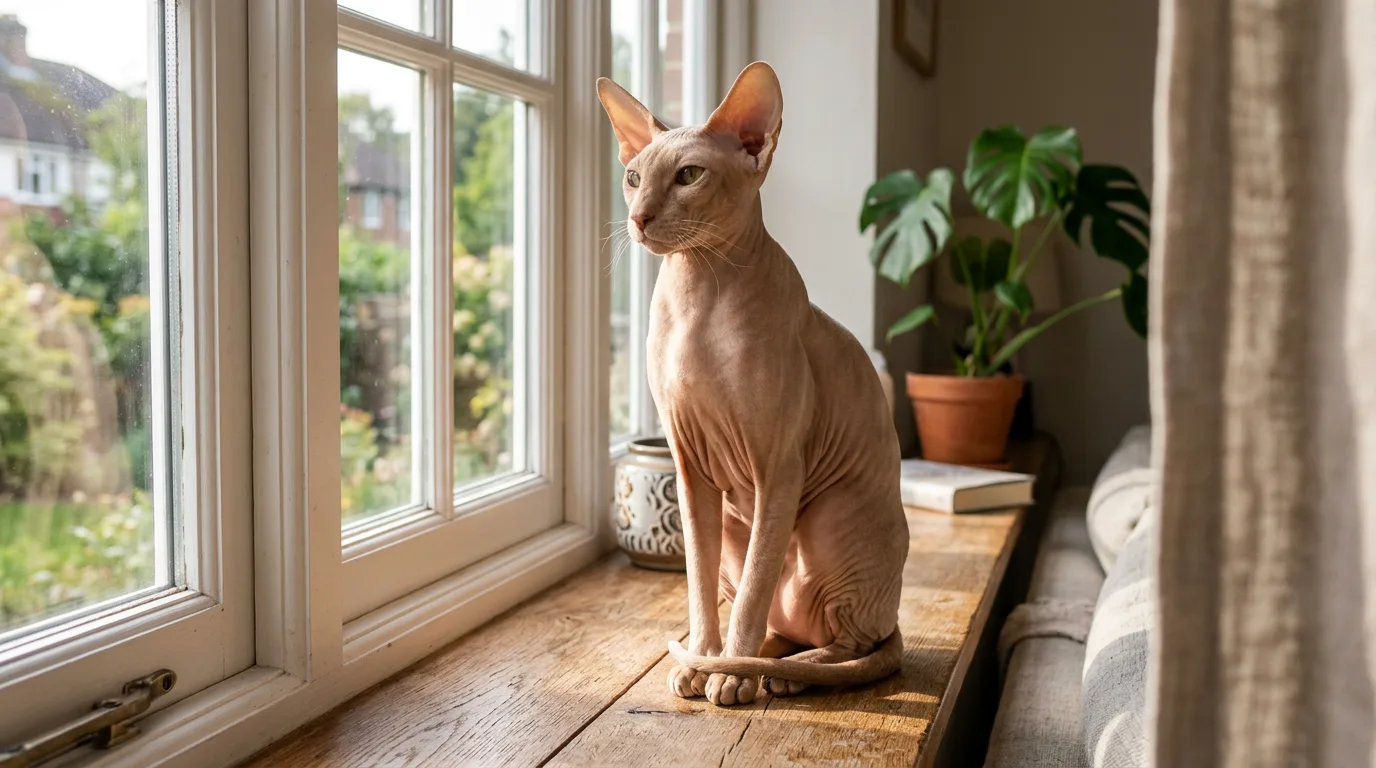
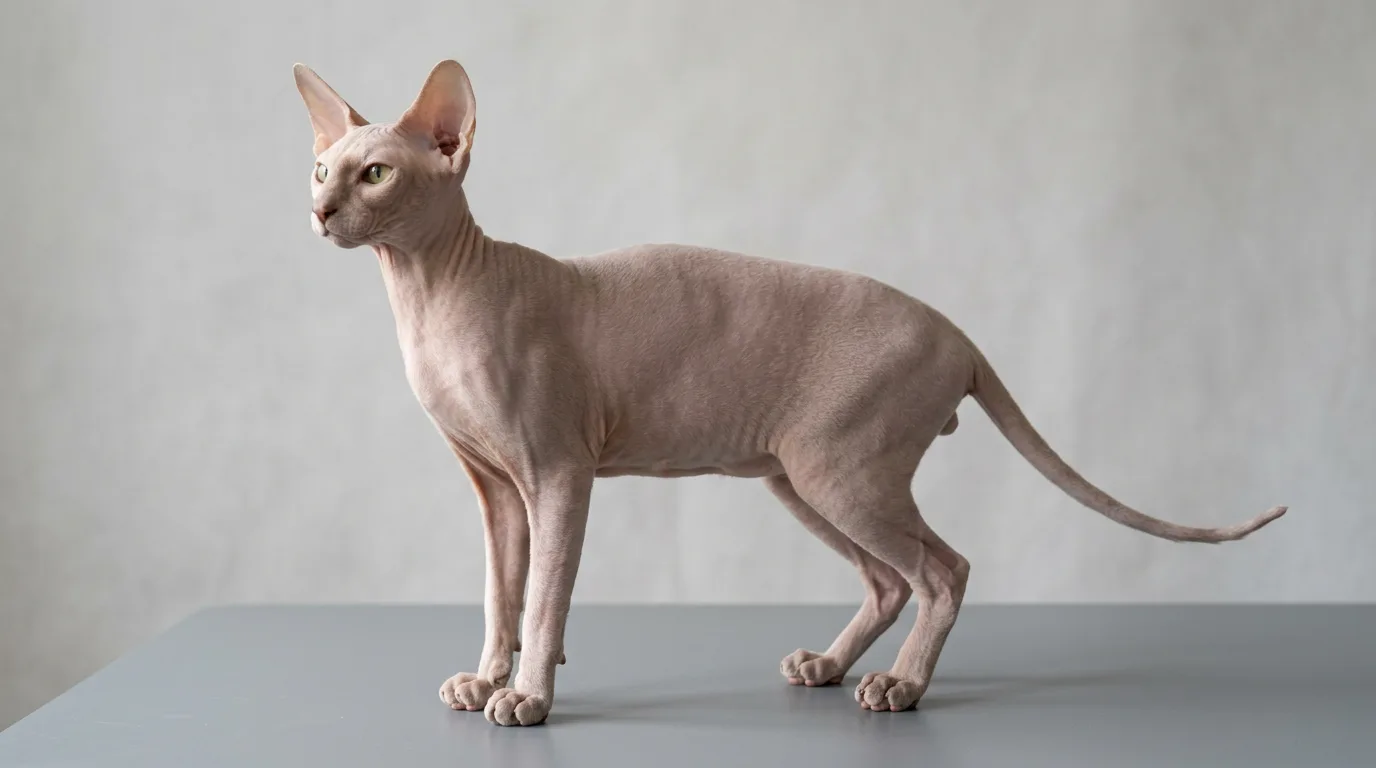
A Peterbald is a Russian hairless (or near-hairless) cat breed with the body of an Oriental Shorthair and a coat that ranges from totally bald to a fine downy fuzz. The breed is medium-sized and built for grace rather than bulk: a long, tubular, muscular body, fine bones, a triangular wedge-shaped head, very large flared ears, almond-shaped eyes, and long legs that end in narrow oval paws with webbing between the toes. According to TICA's breed standard, females typically weigh 5 to 7 pounds and males 7 to 10 pounds.
Defining Physical Traits
The name combines "Peter" (for St. Petersburg, the breed's birthplace) and "bald" (for the hairless trait). Despite the name, not every Peterbald is bald, which is one of the most misunderstood things about the breed and the first thing every prospective owner should know.
- A litter of Peterbald kittens can include bald, fuzzy, and even fully coated cats, all from the same parents.
Origin and History: St. Petersburg, 1994
The Peterbald began with a single planned mating in St. Petersburg, Russia, in January 1994. A breeder named Olga Mironova crossed a Donskoy (also called the Don Sphynx), a Russian hairless breed, with an Oriental Shorthair, a sleek, large-eared cat known for its elegant build. The Donskoy contributed the hairless gene; the Oriental Shorthair contributed the long, refined body type that gives the Peterbald its signature silhouette.
Two cats are usually credited as the founding pair: an Oriental Shorthair named Radma vom Jagerhof and a Donskoy named Afinoguen Myth. Their kittens carried the hairless trait on the elegant Oriental frame, and the look was so striking that Russian breeders formalized the new breed quickly. The Peterbald was accepted by TICA in 1997 and gained full championship competition status in 2005.
- The Peterbald inherits its dominant hairless gene from the Donskoy, not from the Sphynx, even though the two breeds look similar at a glance.
Because the breed is young and the breeding pool is small, the Peterbald remains genuinely rare, especially outside Russia and Eastern Europe. In the United States, you may need to join a waiting list with a registered breeder to find a kitten.
The Peterbald Coat Spectrum: Bald to Brush
The most fascinating thing about the peterbald cat is that its coat is not one fixed thing. Breeders and registries describe a spectrum of coat types, and a single Peterbald can even change coat over its life, sometimes losing or gaining hair as it matures. The recognized coat types are:
| Coat Type | Feel and Look | Care Note |
|---|---|---|
| Bald (ultra-bald) | Completely hairless, warm and rubbery to the touch, often slightly sticky | Needs regular bathing; most sun-sensitive |
| Flock (chamois) | A faint, almost invisible fuzz, like a peach skin | Light wiping; gentle skin care |
| Velour | Short, soft, downy hair up to about 1 millimeter, may thin with age | Occasional bathing plus light brushing |
| Brush | Wiry, slightly curly or kinked guard hairs, denser than velour | Regular combing with a fine-toothed comb |
| Straight | A normal short coat with no hairless trait expressed | Standard weekly brushing |
The hairless coat types (bald through brush) carry the breed's defining trait, while straight-coated Peterbalds look like ordinary Oriental Shorthairs and are typically used in breeding programs rather than shown as hairless cats. The straight-coated cats are vital to keeping the gene pool healthy.
The Dominant Gene: How Peterbald Hairlessness Works
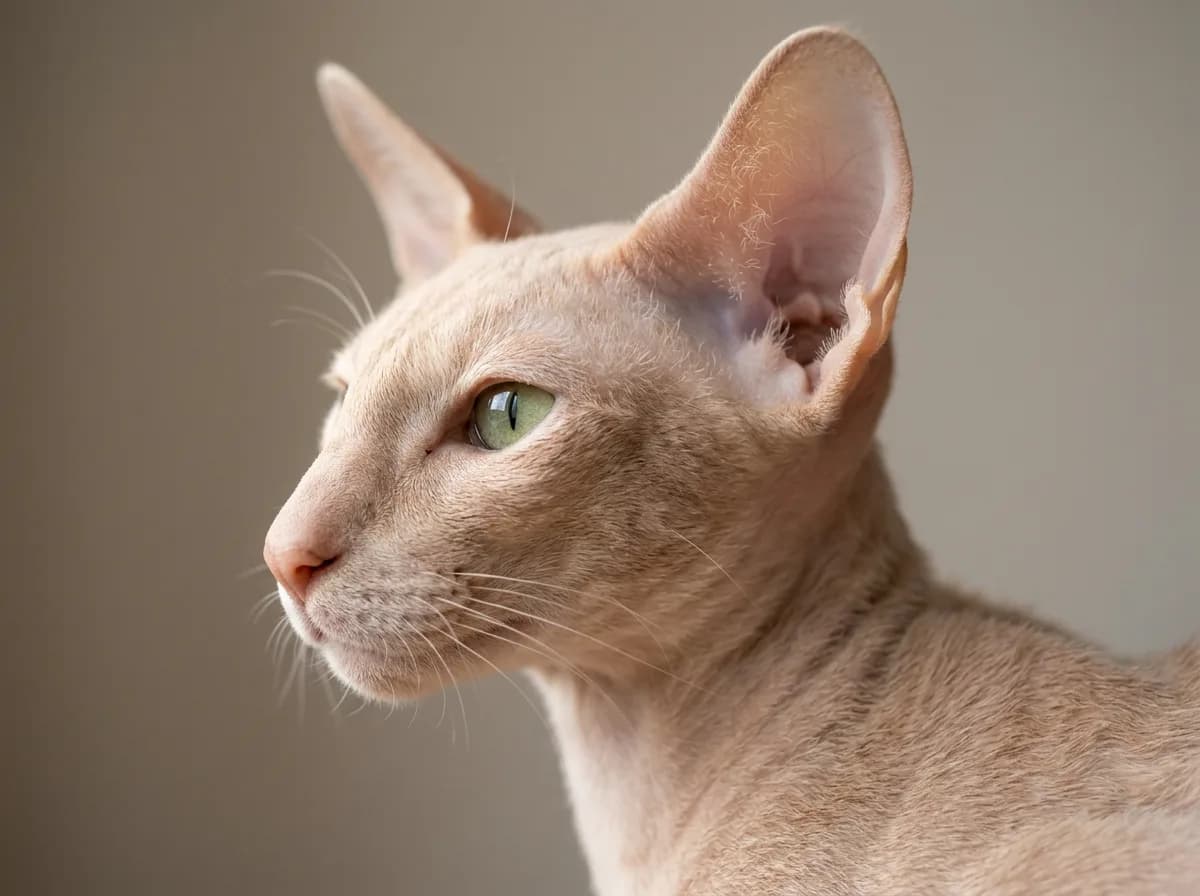
Here is the genetic detail that sets the Peterbald apart from every other hairless cat. The Peterbald's hair-losing trait is governed by a DOMINANT gene. A kitten needs only one copy of the gene from one parent to be born hairless or hair-losing. This is the opposite of the Sphynx, whose hairlessness comes from a RECESSIVE gene that requires two copies, one from each parent.

63-inch multi-level cat tree with scratch posts, hammock, plush perches, and dangling toys. Vertical territory is non-negotiable for high-energy climbing breeds like the Bengal.
Petful may earn a commission when you click through to Chewy, at no extra cost to you.
In practical terms, breeding a hairless Peterbald to a coated cat can still produce hairless kittens, because the dominant gene only needs to show up once. The gene is often described as causing progressive hair loss: some kittens are born with a velour or brush coat and then lose hair as they grow, while others are bald from birth.
- Breeders avoid mating two cats that both carry strong hairless genes, because doubling up the trait can cause health problems in kittens. Responsible breeding pairs a hairless cat with a coated one.
This dominant inheritance is why the Peterbald could be developed so quickly. It is also why the breed is not the same as a Sphynx, even though casual observers lump them together. If you want a deeper side-by-side, see our full Peterbald versus Sphynx comparison.
Temperament and Personality
Peterbalds are often called "dog-like" cats, and the comparison is fair. They are intensely people-oriented, following their owners from room to room, greeting visitors at the door, and insisting on being part of whatever you are doing. TICA describes the breed as highly intelligent, aggressively affectionate, active, athletic, friendly, and curious.
Key personality traits owners can expect:
- Strong attachment to their humans; they do not like being left alone for long stretches
- A talkative, vocal streak inherited from their Oriental Shorthair side
- High intelligence that responds well to puzzle toys, clicker training, and even leash walking
- Sociability with other pets, including cats and friendly dogs, when introduced properly
- Warm-seeking behavior; a hairless cat loves a sunny spot, a heated bed, or a warm lap
Because they are so social, Peterbalds often do best in homes where someone is around much of the day, or in a household with a second pet for company. A bored Peterbald can become anxious or destructive.
- If your household is empty for long workdays, consider adopting a Peterbald in a bonded pair so they always have a companion.
Skin and Grooming Care
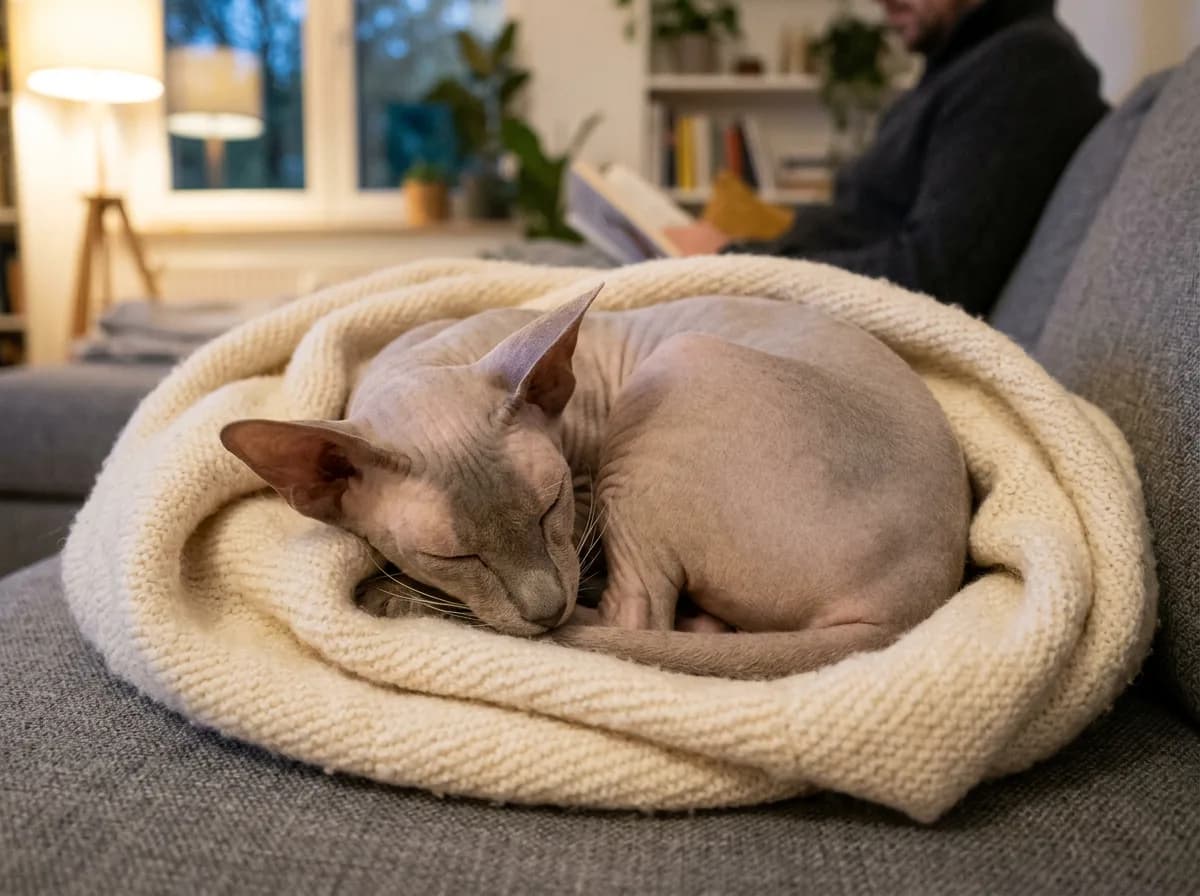
A hairless or thinly coated cat does not need brushing the way a fluffy cat does, but its skin still needs attention. Without a full coat to absorb body oils, those oils build up on the skin and can leave a slightly greasy or sticky feel, plus brown residue in skin folds and on bedding.
A practical Peterbald skin-care routine looks like this:
- Bathe bald and flock cats every one to two weeks with a gentle, cat-safe shampoo
- Wipe down the skin between baths with a damp, fragrance-free cloth
- Clean the large ears regularly, since they collect wax faster without protective hair
- Trim claws and check the webbed paws and toes for trapped grime
- Brush velour, brush, and straight coats weekly with a fine-toothed comb
Two environmental needs matter just as much as bathing. First, sun protection: exposed Peterbald skin can sunburn, so limit direct sun through windows and never use human sunscreen without a vet's guidance. Second, warmth: a hairless cat loses body heat quickly, so provide sweaters in winter, draft-free sleeping spots, and warm bedding. We cover skin issues and other concerns in depth in our Peterbald health guide.
Health Overview and Lifespan
The Peterbald is generally a healthy, hardy breed with a typical lifespan of 12 to 15 years, and many cats live longer with good care. Because the breeding pool is small and carefully managed, the breed has not accumulated a long list of inherited diseases, but a few concerns are worth knowing.
| Concern | What It Is | Owner Action |
|---|---|---|
| Skin sensitivity and sunburn | Exposed skin burns and dries out easily | Limit sun, moisturize as a vet directs, keep indoors |
| Dental disease | Some hairless lines are prone to gum and tooth issues | Brush teeth, schedule dental checkups |
| Progressive retinal atrophy (PRA) | An inherited eye condition seen in some lines | Buy from breeders who test breeding cats |
| Temperature sensitivity | Little or no coat means poor insulation | Sweaters, warm bedding, indoor living |
Feeding and Everyday Health
A Peterbald's fast metabolism and active nature mean it often eats more than a coated cat of the same size, partly to fuel the body heat it cannot trap with fur. Feed a high-quality diet, keep an eye on dental health, and schedule regular veterinary visits. Buying from a reputable breeder who screens for PRA and other issues is the single best way to start with a healthy cat.
Are Peterbald Cats Hypoallergenic?
No. The Peterbald is not hypoallergenic, and this is one of the biggest myths about hairless breeds. Cat allergies are triggered mainly by a protein called Fel d 1, which is found in cat saliva, skin, and oil glands, not in fur itself. Because Peterbalds still produce Fel d 1 and still groom themselves by licking, they can absolutely trigger allergic reactions.
Walnut shell clumping cat litter that excels at odor control, lasts up to 3x longer than clay, and is a top pick for multi-cat households.
Petful may earn a commission when you click through to Chewy, at no extra cost to you.
That said, some allergy sufferers report fewer symptoms around hairless cats. The likely reason is not less allergen but less shedding: with little or no fur to carry dander around a home, the allergen may spread less. If you have allergies, spend extended time with an adult Peterbald before committing, and never assume "hairless" means "allergy-free."
- Anyone with serious cat allergies should test their reaction to a Peterbald in person before bringing one home, ideally over several visits.
How Much Does a Peterbald Cat Cost?
Expect to pay a premium for this rare breed. A purebred Peterbald kitten from a registered breeder generally costs between roughly $1,700 and $3,000, and show-quality or rare-coat kittens can climb toward $4,000 or more. Adoption through a breed-specific rescue, when available, is far cheaper, often in the $200 to $600 range, though Peterbalds rarely turn up in shelters.
| Cost Category | Typical Range | Notes |
|---|---|---|
| Breeder kitten | $1,700 to $4,000 | Higher for show or rare coats |
| Adoption (if available) | $200 to $600 | Peterbalds are rarely surrendered |
| Initial setup supplies | $200 to $500 | Bedding, sweaters, litter box, carrier |
| Monthly food and litter | $50 to $100 | Higher appetite than average cats |
| Monthly grooming and skin care | $30 to $70 | Shampoos, wipes, ear cleaner |
| Pet insurance | $30 to $100 per month | Recommended for a rare breed |
The breed is expensive for three reasons: it is genuinely rare, litters are small, and ethical breeders invest heavily in health testing and careful pairings. For a fuller picture, including lifetime and first-year budgets, read our dedicated Peterbald price breakdown.
Finding a Peterbald: Breeders and Adoption
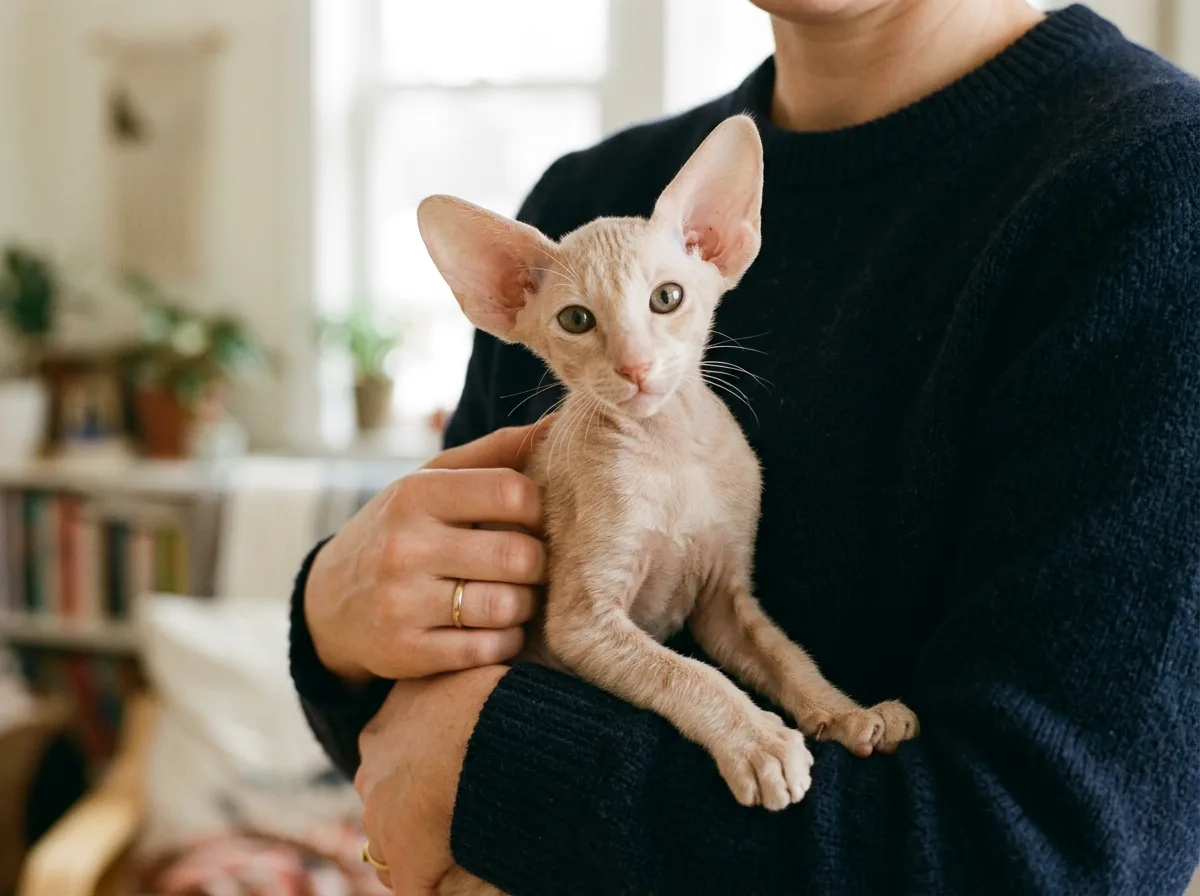
Because Peterbalds are rare, finding one takes patience. Start with TICA's breeder listings and active Peterbald breed clubs, and be prepared to join a waiting list. Warning signs of a poor breeder include no health testing, refusal to show you the parents or living conditions, and kittens released before 12 to 14 weeks of age.
Good questions to ask any breeder:
- Do you test breeding cats for progressive retinal atrophy and other inherited conditions?
- Can I meet the kitten's parents and see where the kittens are raised?
- What coat type is this kitten, and is it likely to change as it grows?
- What socialization, vaccinations, and vet care has the kitten had?
Adoption is possible but uncommon. Check breed-specific rescues and rare-breed networks, and consider that an adult Peterbald already past the coat-changing stage gives you a clearer idea of the coat you will live with. If a true hairless cat is not available near you, related breeds like the Donskoy or the partly-coated Lykoi may be easier to find. You can also browse our full overview of hairless cat breeds to compare your options.
Peterbald vs. Sphynx: How They Differ
People constantly confuse the Peterbald with the Sphynx, and while both can be bald, they are distinct breeds with different genetics and builds. The Sphynx is the famous wrinkly, stocky hairless cat with a round, sturdy body. The Peterbald is slim, elegant, and Oriental in type, with a longer wedge head and a more delicate frame.
| Feature | Peterbald | Sphynx |
|---|---|---|
| Hairless gene | Dominant | Recessive |
| Body type | Slender, tubular, Oriental | Stocky, muscular, broad-chested |
| Head shape | Long wedge | Rounded with prominent cheekbones |
| Coat range | Bald to brush to fully straight | Bald to fine peach fuzz |
| Origin | St. Petersburg, Russia, 1994 | North America, 1960s to 1980s |
| Webbed paws | Yes, pronounced | Less pronounced |
The single most important difference is genetic: the Peterbald's hairlessness is dominant and the Sphynx's is recessive, which is why crossing the two does not simply produce more of either. For everything else, including temperament and care differences, see our complete Sphynx cat breed profile, and if you like the slim build but want a curly coat instead of bare skin, the Cornish Rex is another fine-boned comparison.
- If the cat is slim with a long wedge head and huge ears, it is likely a Peterbald. If it is stocky and wrinkly, it is likely a Sphynx.
Debunking the "Down Syndrome Cat" Myth
A persistent piece of internet misinformation labels hairless and unusual-looking cats, including Peterbalds, as "Down syndrome cats." This is biologically false and should be corrected honestly. Down syndrome is a human condition caused by an extra copy of chromosome 21. Cats have a completely different chromosome structure (they have 19 pairs, not 23), so they cannot have Down syndrome at all.

108-oz stainless steel pet fountain with quiet pump and water-level window. Bengals are notoriously water-obsessed; a flowing fountain encourages hydration and pulls them away from sinks and toilets.
Petful may earn a commission when you click through to Chewy, at no extra cost to you.
What people are usually reacting to is the Peterbald's naturally unusual appearance: the wide-set eyes, large ears, and hairless skin are normal, healthy breed features, not signs of a disorder. A Peterbald that looks "different" is simply a Peterbald looking exactly as it should. If a specific cat shows genuine neurological or developmental problems, those have other explanations and deserve a real veterinary diagnosis, not a viral label.
Living With a Peterbald: Daily Life
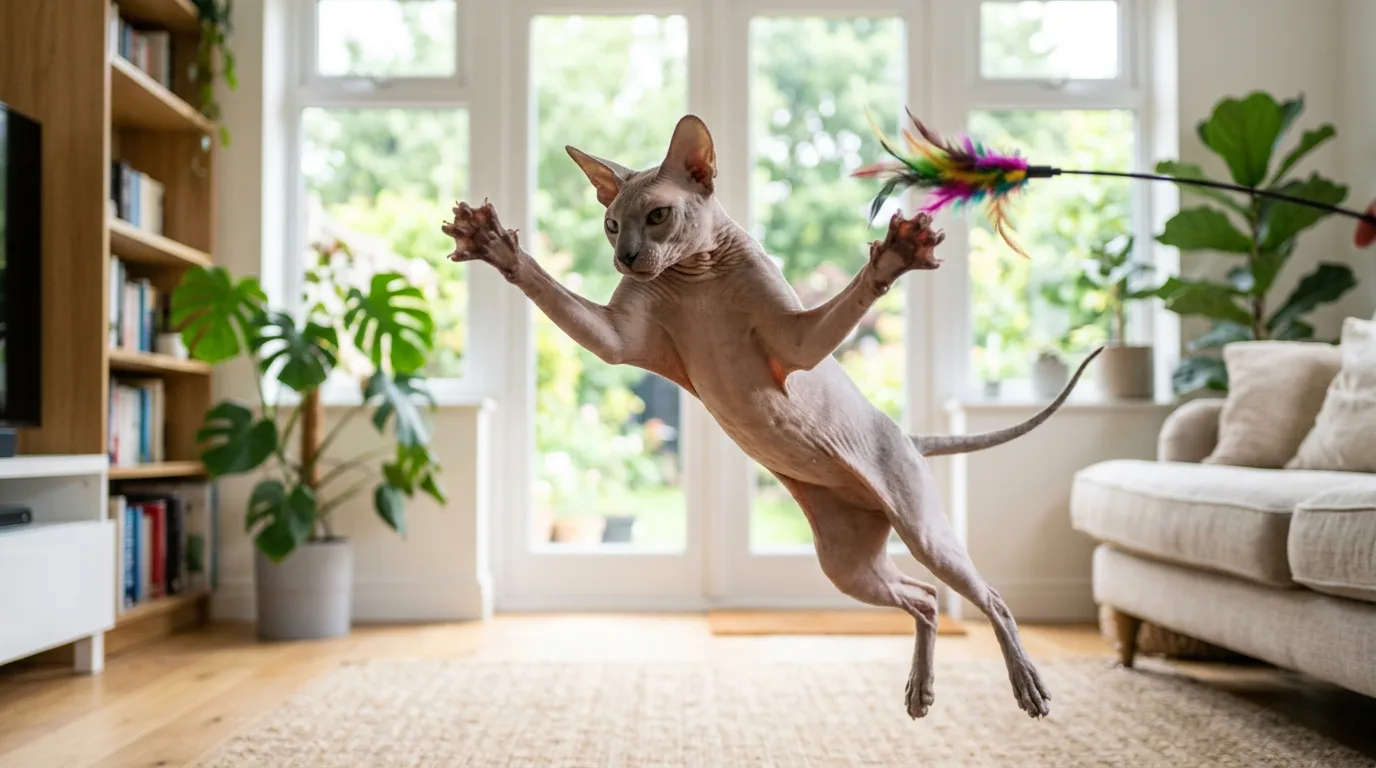
Day to day, a Peterbald is a warm, demanding, entertaining companion. They want to be near you, they will tell you their opinions, and they thrive on interaction. Set up your home to meet their needs:
- Keep the home warm and provide cozy hideaways, heated beds, or cat sweaters
- Offer plenty of vertical space, puzzle feeders, and interactive play to burn energy
- Maintain a consistent skin-care and bathing routine from kittenhood so baths are stress-free
- Plan for company, whether human presence or a second pet, to prevent loneliness
- Protect them from temperature extremes, sunburn, and outdoor hazards by keeping them indoors
In return you get a cat that bonds like few others, learns tricks, greets you at the door, and sleeps under the covers. For owners ready to meet those needs, the Peterbald is one of the most rewarding companions in the cat world.
Reading the Five Coat Types Before You Choose
The coat spectrum is not just trivia. It directly changes the daily routine you are signing up for, and it is the one variable that two littermates can differ on completely. Picking the coat type that fits your tolerance for bathing, your climate, and your allergy situation is the most practical decision a new Peterbald owner makes, so it is worth understanding each type in living terms rather than as a label.
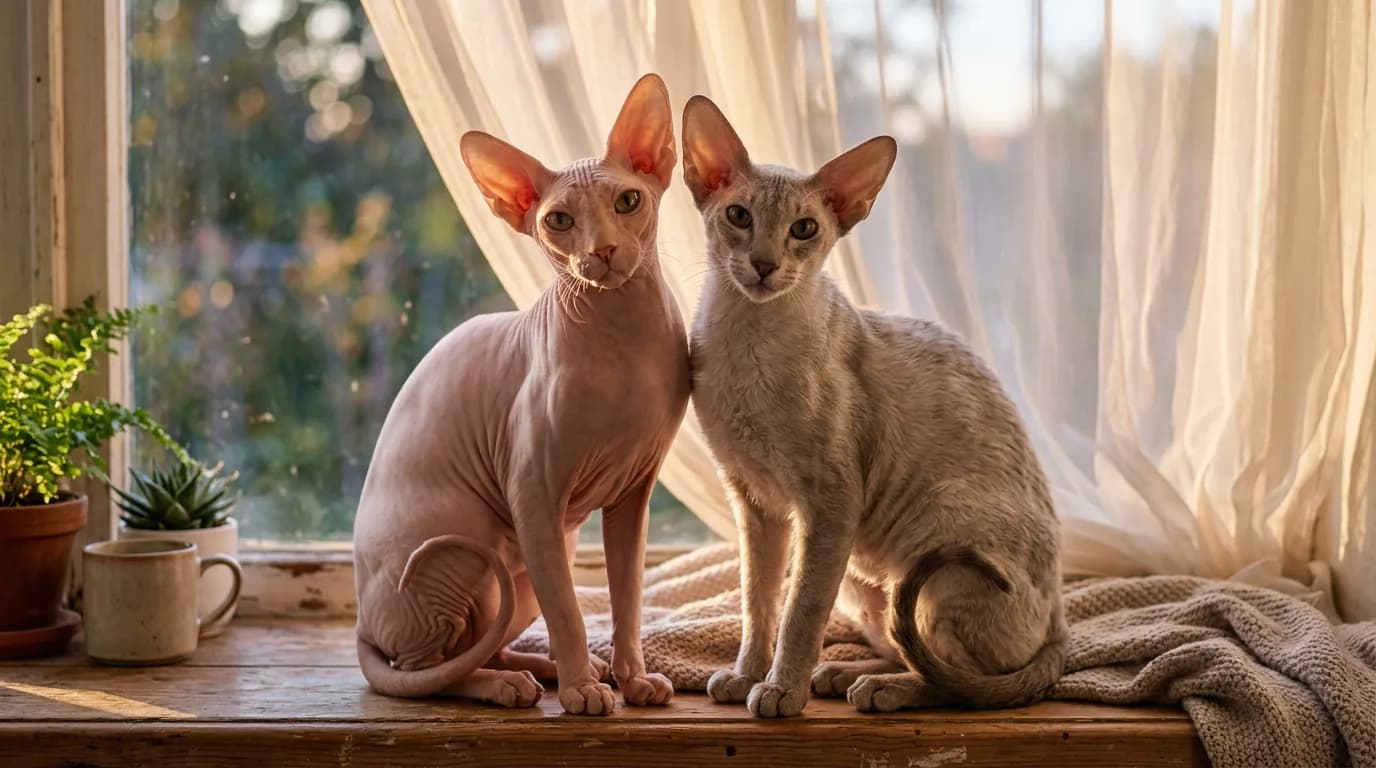
A fully bald (ultra-bald) Peterbald is the most striking and the most demanding. With no hair at all to wick away the oils the skin keeps producing, that oil sits on the surface, so a bald cat feels warm and faintly tacky and leaves a light residue on pale bedding. These cats are the most sun-sensitive of the group and the quickest to lose body heat, which is why bald owners lean hardest on bathing, wiping, and warmth. The flock (sometimes called chamois) coat sits one step over: a near-invisible fuzz that you feel more than see, a little like the skin of a peach. Flock cats produce slightly less surface oil than a true bald and usually need wiping rather than frequent full baths.
Color-changing crystal litter that flags pH shifts in your cat's urine, an early warning sign of UTIs, kidney issues, and more.
Petful may earn a commission when you click through to Chewy, at no extra cost to you.
Velour is the middle of the spectrum and often the easiest for a first-time hairless owner. The hair is soft, downy, and up to roughly a millimeter long, enough to absorb some oil on its own, and many velour cats thin out toward bald as they mature, so the coat you meet in a kitten may not be the coat you keep. A brush coat is the densest of the hairless types: wiry, slightly kinked or curly guard hairs that actually need combing, because tangles and trapped oil can build up in that texture. At the far end, a straight-coated Peterbald carries no expressed hairless trait at all and lives like any short-haired Oriental, needing only a weekly once-over. Straight coats are essential to the breeding program (more on that below) even though they are not what most buyers picture.
- If you want the dramatic bare-skin look, plan for a bald or flock cat and a real bathing routine; if you want the temperament with less upkeep, a velour or brush coat is far more forgiving.
One honest caveat for kitten buyers: because the dominant gene often causes progressive hair change, the coat type listed at eight weeks is a best guess, not a guarantee. A velour kitten can drift toward bald, and a brush coat can thin. Ask the breeder what the kitten's parents and older siblings settled into, since lineage is a better predictor than the coat on the day you visit.
The Hairless Cat Hygiene Routine, Step by Step
Owners new to hairless cats often expect less grooming and are surprised to find they have simply traded one job for another. There is no shedding to vacuum and no matting to comb out on a bald cat, but the skin itself becomes the maintenance task. The goal of the routine below is steady, low-stress upkeep rather than occasional deep cleans, because a cat that is bathed and handled from kittenhood treats the whole process as normal.
Bathing is the anchor. A bald or flock Peterbald usually needs a bath every one to two weeks with a gentle, cat-formulated shampoo; over-bathing strips the skin and actually drives the oil glands to produce more, so resist the urge to bathe weekly unless your vet advises it. Between baths, a quick wipe-down with a damp, fragrance-free cloth or an unscented pet wipe keeps the oil from accumulating in the warm folds at the neck, armpits, and groin, which is exactly where residue and the occasional blackhead tend to show up first.
Ears need their own attention, and this is the step people most often skip. Without the guard hairs that line a normal cat's ear, a hairless cat's large, open ears collect wax and debris noticeably faster, and that dark waxy buildup can look alarming within just a few days of a cleaning. Wipe the outer ear with a vet-approved ear cleaner on a cotton pad about once a week, never push anything into the ear canal, and watch for redness, a strong odor, or head-shaking that signals an infection rather than ordinary wax. The same no-coat principle applies to the eyes, which can weep slightly and benefit from a gentle wipe, and to the webbed paws, where grime can lodge between the toes.
| Task | How Often | Why It Matters |
|---|---|---|
| Full bath (bald/flock) | Every 1-2 weeks | Removes oil the skin cannot absorb without fur |
| Skin wipe-down | 2-3 times a week | Keeps folds and pressure points clean between baths |
| Ear cleaning | Weekly | Open ears collect wax fast with no protective hair |
| Nail trim and paw check | Every 2-3 weeks | Webbed toes trap grime; long nails snag bedding |
| Tooth brushing | Several times a week | Some hairless lines are prone to dental disease |
| Skin and sun check | Daily glance | Catch sunburn, dryness, or blackheads early |
Two protections sit alongside cleaning and matter just as much. Sun is the first: bare skin can burn through a sunny window, so block prolonged direct exposure and never reach for human sunscreen without a vet's sign-off, since many human formulas are toxic if the cat licks them. Warmth is the second: a hairless cat is essentially walking around without a coat, so a heated bed, a couple of well-fitted sweaters for winter, and draft-free sleeping spots are not pampering but basic care. Get these two habits right and the rest of the routine is just a few quiet minutes a week.
What "Dog-Like" Actually Means Day to Day
The "dog-like" label gets thrown at a lot of social cats, but with the Peterbald it earns its keep in specific, observable ways. This is a cat that orients its whole day around its people. It will trot to the door when you come home, supervise you in the bathroom, ride on a shoulder while you cook, and insert itself into a video call without a trace of self-consciousness. That Oriental Shorthair heritage also gives it a real voice, so expect running commentary: a chirp when you walk in, a louder opinion when dinner is late, and a conversational streak that some owners adore and a few find relentless.
The intelligence is the part that surprises people most. Peterbalds take to clicker training, learn to fetch, work out puzzle feeders quickly, and can be leash-trained with patience, which means a bored one will invent its own entertainment by opening cupboards or knocking things off shelves. Channeling that brain into daily play and training is not optional enrichment; it is how you keep a clever, demanding cat from turning destructive. The flip side of all that devotion is a genuine need for company. A Peterbald left alone for long, repeated full days can become anxious, over-vocal, or withdrawn, which is why bonded pairs and homes with someone usually around suit the breed best.
- The Peterbald's affection is a feature and a commitment: it wants to be involved in your day every day, so the breed rewards households that are home often and struggles in ones that are not.
Choosing a Reputable Peterbald Breeder
Because the breed is rare and the gene pool small, where you get your cat matters more than usual, both for the kitten's health and for keeping money out of careless or unethical breeding. A responsible Peterbald breeder is registered with a recognized body such as TICA, breeds toward the written standard, and is open about the things a poor breeder hides. Start with official breeder listings and active Peterbald clubs, expect a waiting list, and treat a breeder who always has kittens instantly available with healthy skepticism.
Two genetics points are worth raising directly, because they are specific to this breed. First, an ethical breeder pairs a hairless cat with a coated or straight-coated cat rather than doubling up two strong hairless genes, since stacking the dominant trait is linked to health problems in kittens. If a breeder brags about breeding "two bald cats for extra-bald babies," walk away. Second, a good breeder screens breeding cats for inherited issues such as progressive retinal atrophy and is candid about dental tendencies in their lines. Ask to see results, not just reassurances.
- Be wary of any breeder who refuses to show the parents or living conditions, has no health testing, releases kittens before 12 to 14 weeks, or pressures a fast deposit on a "last available" kitten.
Beyond health, judge the environment and the handoff. Kittens should be raised underfoot in a home, well socialized to people and household noise, and stay with the litter until at least 12 to 14 weeks so they are properly weaned and confident. A trustworthy breeder will ask you as many questions as you ask them, provide a written health guarantee and vet records, and stay reachable after the sale. If no ethical hairless breeder is near you, an adult Peterbald past the coat-changing stage, or a related breed like the Donskoy, is a better choice than rushing into the first available kitten. You can compare the wider field in our overview of hairless cat breeds before you commit to a waiting list.
The Bottom Line
The Peterbald is a rare, elegant, deeply affectionate breed with a one-of-a-kind coat and a dominant gene that sets it apart from the Sphynx. It is healthy and long-lived when bred responsibly, needs skin care and warmth rather than brushing, is not hypoallergenic, and comes with a premium price tag that reflects its rarity. If you want a cat that acts like a shadow, talks back, and curls into your lap for warmth, few breeds deliver like the Peterbald.
A purebred Peterbald kitten from a registered breeder typically costs between $1,700 and $4,000, with show-quality or rare-coat kittens at the top of that range. Adoption, when available, runs roughly $200 to $600, plus ongoing monthly costs of $80 to $170 for food, litter, and skin care.
Peterbalds are expensive because the breed is genuinely rare, litters are small, and ethical breeders invest in health testing and carefully planned pairings. Limited supply combined with high demand for a unique hairless breed keeps prices well above those of common cats.
The key difference is genetic: the Peterbald's hairlessness comes from a dominant gene, while the Sphynx's comes from a recessive gene. Peterbalds are also slimmer and more elegant with a long wedge head and an Oriental body, whereas Sphynxes are stockier, more muscular, and rounder in the face.
Yes. The Peterbald is one of the rarest pedigreed cat breeds, created only in 1994 with a small founding pool. Outside Russia and Eastern Europe they are uncommon, and prospective owners in the United States often join a breeder waiting list to find a kitten.
A Peterbald cat typically lives 12 to 15 years, and many reach their late teens with good care. Regular veterinary visits, dental care, skin maintenance, and a quality diet all help a Peterbald live a long, healthy life.
Among the most expensive cat breeds, the Ashera and Savannah usually top the list at thousands of dollars, followed by breeds like the Bengal, Persian, Sphynx, and the rare Peterbald. A purebred Peterbald can reach about $4,000, placing it firmly among the pricier pedigreed breeds.

Coreen Saito is a pet writer and longtime shelter volunteer with more than a decade in animal rescue. She covers cat behavior, breed care, and the small, ordinary science of sharing a life with companion animals, with a particular focus on honest takes about the products and decisions that actually matter. At home in Arizona, she's outranked by Mac (a dog with the loudest opinion in the house), Rebel (a cat who governs by quiet authority), and Meri (an orange tabby who runs the late shift and the laundry basket). She writes about all three, plus the rescues that keep coming through her life, at LifeWithMinty.com.
Sign up for expert-backed reviews and safety alerts all in one place.