Norwegian Forest Cat Colors: Every Coat Color and Pattern
A visual guide to Norwegian Forest cat colors: the full accepted color chart, the top-searched black, the common brown tabby, the breed's unique amber gene that develops with age, eye colors, and why color never affects price or health.
Petful is reader supported. As an affiliate of platforms like Amazon and Chewy, we may earn a commission when you buy through links on this page. There is no extra cost to you.
The Cat Fanciers' Association (CFA) recognizes Norwegian Forest cat colors in nearly every shade and pattern a cat can wear, and the breed standard accepts roughly 60 color-and-pattern combinations across solids, tabbies, smokes, silvers, torties, calicos, and bicolors. Only a short list is left out: the pointed (Siamese-style) pattern and the chocolate, lilac, cinnamon, and fawn colors, because those signal crossbreeding with another breed rather than the pure Norwegian landrace. That leaves the "skogkatt" (Norway's forest cat, nicknamed the "Wegie") as one of the most colorful cats you can own, from the top-searched solid black to the breed's own one-of-a-kind amber gene that warms a black coat to honey as the cat grows up.
- 1Norwegian Forest cats come in almost every color and pattern except pointed, chocolate, lilac, cinnamon, and fawn.
- 2Brown tabby with white is the most common coat; solid black is the most-searched single color.
- 3Amber is a recessive color unique to the breed that slowly turns a black cat warm reddish-gold as it matures.
- 4Eyes range through green, gold, and copper, with blue or odd eyes possible in mostly-white cats.
- 5Coat color has no effect on a Norwegian Forest cat's price, health, or personality.

Sign up for expert-backed reviews and safety alerts all in one place.
The short answer: what colors do Norwegian Forest cats come in?
Norwegian Forest cats come in nearly all colors and patterns. The accepted palette includes white, black, blue (gray), red (often called ginger), and cream as solid colors; classic, mackerel, spotted, and ticked tabby patterns in every base color; silver and golden shaded and chinchilla coats; black, blue, and cream smokes; tortoiseshell, calico, and their dilute versions; bicolor and van patterns with white; and the breed's exclusive amber and light-amber. Any amount of white is allowed and shows up across most of these combinations.
The breed does NOT come in a few specific looks, and that exclusion is deliberate. The pointed or colorpoint pattern (dark "points" on the ears, face, legs, and tail like a Siamese or Himalayan) and the colors chocolate, lilac (lavender), cinnamon, and fawn are all barred by the CFA, TICA, and GCCF breed standards, because a Wegie carrying them almost certainly has another breed somewhere in its background. A genuine Norwegian Forest cat is a natural Scandinavian breed, and the color rules exist to protect that.
- Catster's full breakdown of the CFA standard runs to 60 distinct color-and-pattern names. Most of those are combinations (for example "blue silver patched tabby and white"), not 60 separate base colors. In practice, breeders and owners talk about roughly a dozen color families, which is how this guide is organized.
Norwegian Forest cat color chart
Use this chart as a quick reference for the main color and pattern families, what each looks like, and what to know about it. Every entry below is an accepted show color under the CFA standard.

Never Scoop Again® with the Whisker Litter-Robot, the smart self-cleaning automatic litter box. Monitor visits and track weights for better overall care in the Whisker® app. Multi-cat friendly.
Petful may earn a commission when you click through to Whisker, at no extra cost to you.
| Color or Pattern | Description | Notes |
|---|---|---|
| Black | Dense coal black from root to tip, with black nose leather and paw pads | The most-searched single Wegie color; can carry the amber gene and warm with age |
| White | Pure glistening white, often with pink nose and pads | One of the rarest solids; mostly-white cats may have blue or odd eyes and occasional deafness |
| Blue (gray) | Even slate-gray, a diluted version of black | Frequently called "gray"; a popular and striking solid |
| Red (ginger) | Warm orange-red, solid or tabby | True solid red is uncommon; most reds show tabby striping |
| Cream | Soft pale buff, a diluted version of red | A gentle, sought-after pastel solid |
| Brown tabby | Coppery brown ground with dense black classic or mackerel striping | The breed's signature look; brown tabby with white is the single most common coat |
| Silver and golden | Pale silver or warm cream undercoat tipped in black (shaded, chinchilla, or tabby) | Gives a sparkling, frosted appearance; very showy |
| Smoke | Solid-looking coat (black, blue, cream) over a white undercoat that flashes when the cat moves | Black smoke is especially dramatic on the long Wegie coat |
| Tortoiseshell | Mottled black and red (and cream in dilutes) with no white | Almost always female due to the genetics of red coloring |
| Calico | White coat with distinct patches of black and red | "Dilute calico" softens those patches to blue and cream; nearly always female |
| Bicolor and van | Any solid or pattern combined with white, from a little white to a mostly-white "van" | Any amount of white is acceptable in the standard |
| Amber and light amber | A genetically black (or blue) coat that gradually turns warm reddish-gold or pale apricot | Unique to the Norwegian Forest cat; develops with age (see the amber section below) |
Black Norwegian Forest cats
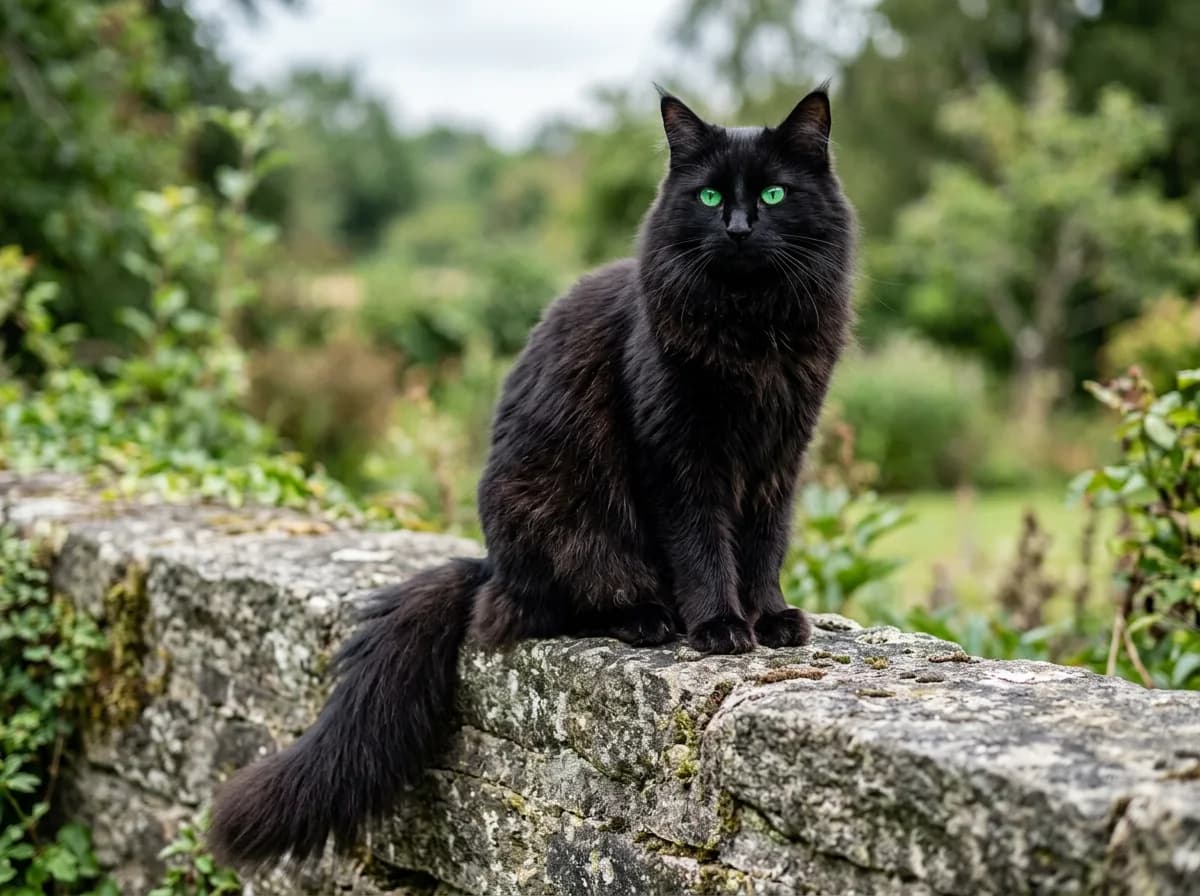
The black Norwegian Forest cat is the most-searched single color in the breed, and it is genuinely spectacular: a long, dense, water-resistant double coat in solid coal black, with a full ruff, bushy tail, and tufted ears that make the cat look even bigger than it is. Under the CFA standard, a show-quality black should be "dense coal black, sound from roots to tip of fur," with black nose leather and paw pads and no rusty or smoky cast.
There is a twist that catches many new owners off guard. A coat that looks solid black can actually be a black smoke (white roots hidden under black tips, revealed only when the fur parts) or a maturing amber (a genetically black cat carrying the amber gene). A black smoke kitten and a young amber both start out looking black, so the "true" black is the one that stays a sound, even coal color from root to tip throughout its life.
- Part the fur on the back of the neck. Solid white roots under black tips means black smoke. Roots and tips both black means a true solid black. If a "black" kitten's coat starts turning rusty or coppery over its first year or two, you likely have an amber. For a definitive answer, a feline DNA color test or a registered pedigree settles it.
Brown tabby Norwegian Forest cats (the most common color)
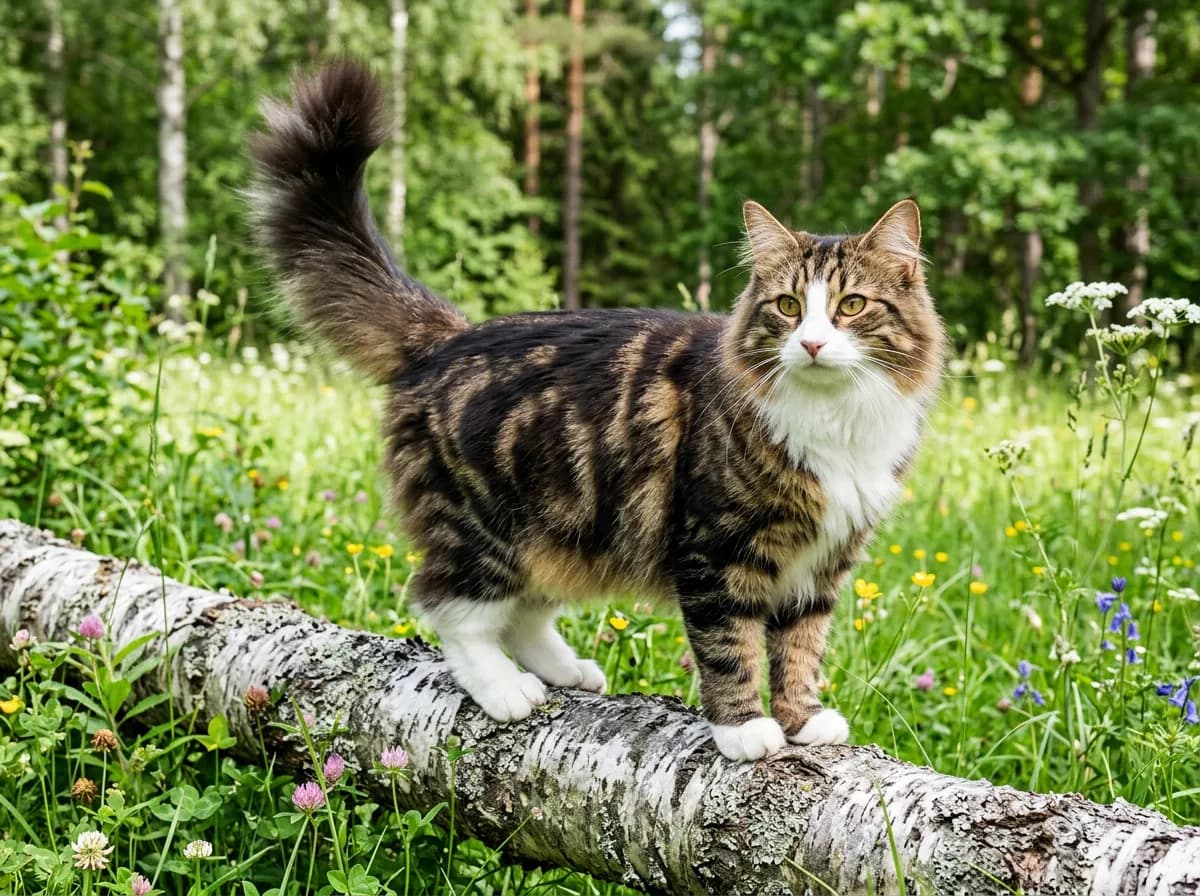
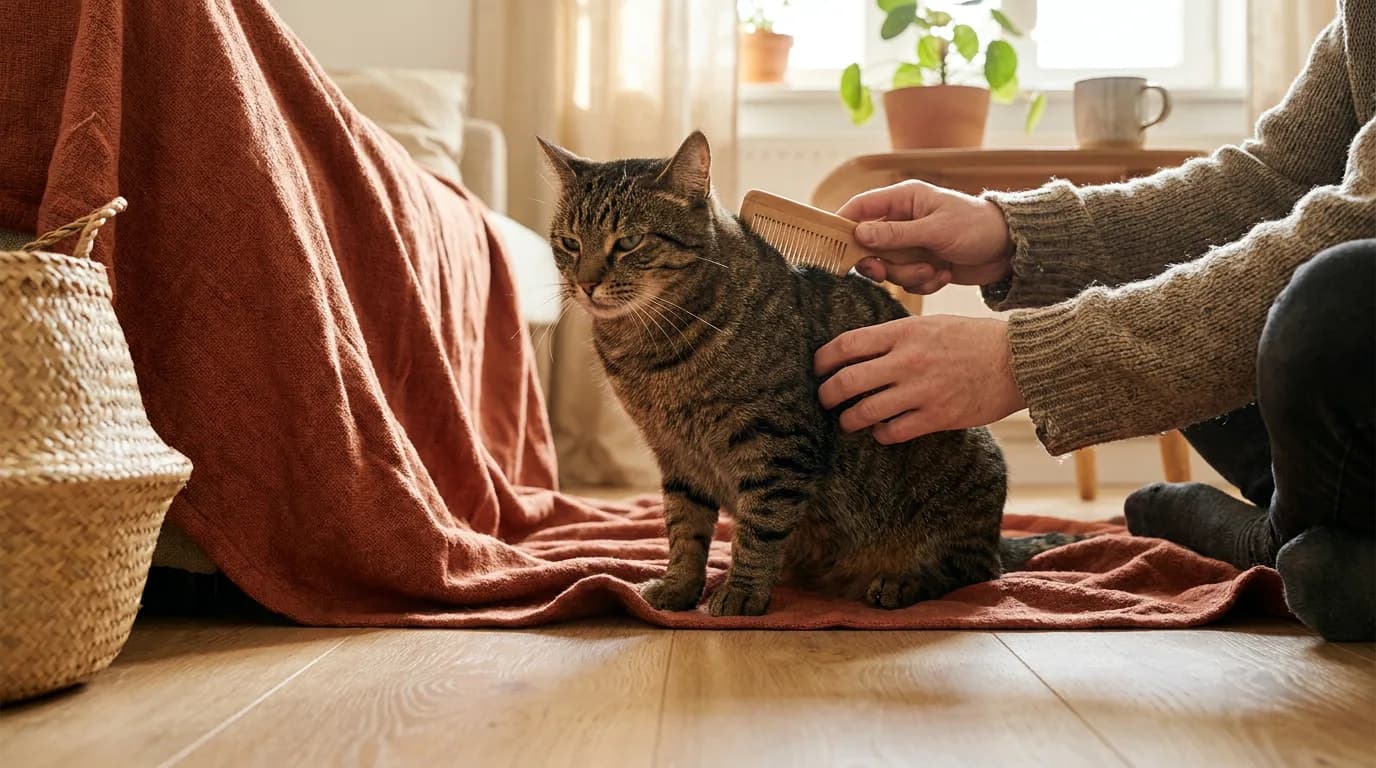
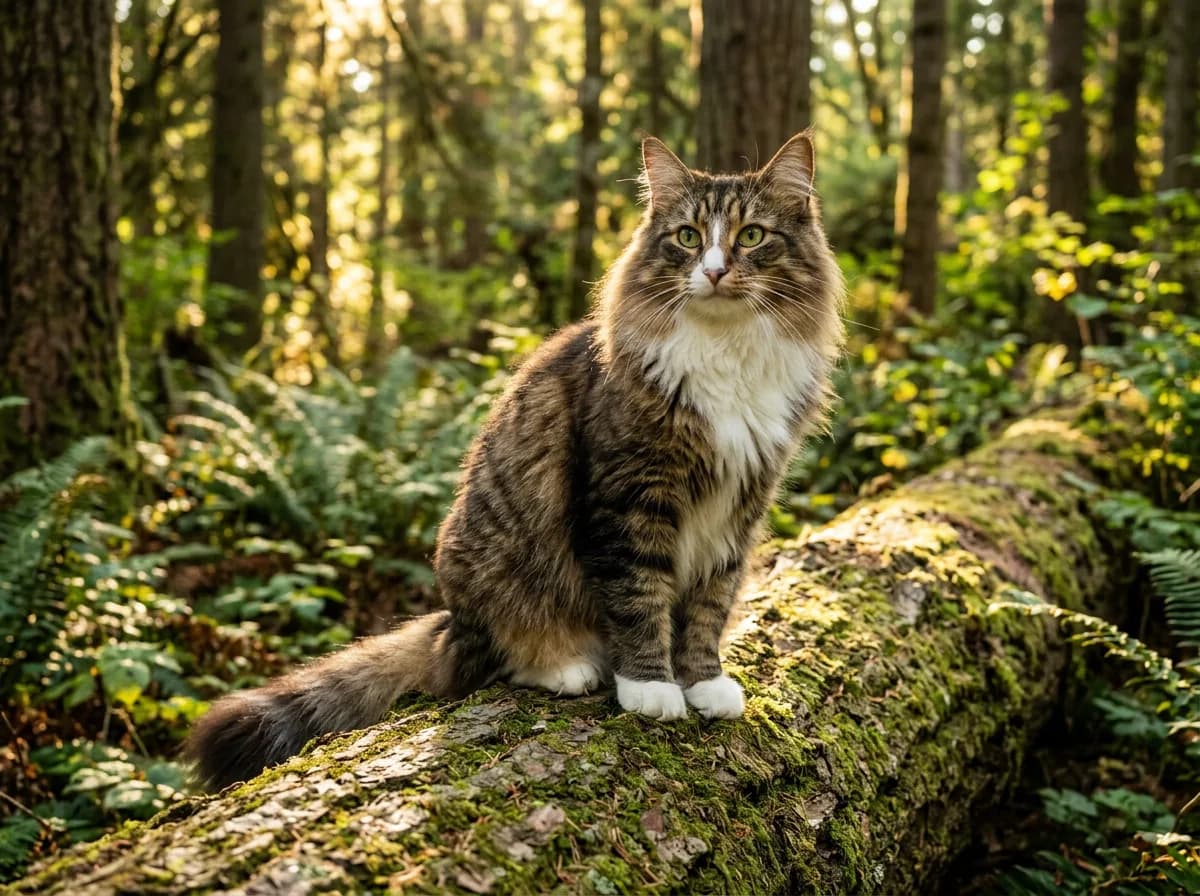
If you picture a Norwegian Forest cat in your mind, you are probably picturing a brown tabby. Brown tabby, especially brown tabby with white, is the single most common Wegie coat, and it is the look most people associate with the breed's wild Scandinavian heritage. The ground color is a warm coppery brown carrying dense black tabby markings, and the white (when present) typically shows on the chest, belly, paws, and muzzle.
Norwegian Forest cats display tabby striping in four standard patterns. Classic tabby has bold swirls and blotches with the famous "M" mark on the forehead. Mackerel tabby has narrow, vertical pencil-thin stripes down the sides like fish bones. Spotted tabby breaks those stripes into dark spots. Ticked tabby scatters the banding through individual hairs for a more uniform, agouti look. Any of these can appear in brown, silver, blue, red, or cream.

Petful may earn a commission when you click through to Chewy, at no extra cost to you.
- Like nearly all tabby cats, a tabby Norwegian Forest cat carries an "M"-shaped mark on its forehead, along with swirls on the cheeks and a dark line running down the spine. It is a hallmark of the tabby pattern, not proof of any particular breed, so the "M" alone does not confirm a cat is a Wegie.
White Norwegian Forest cats
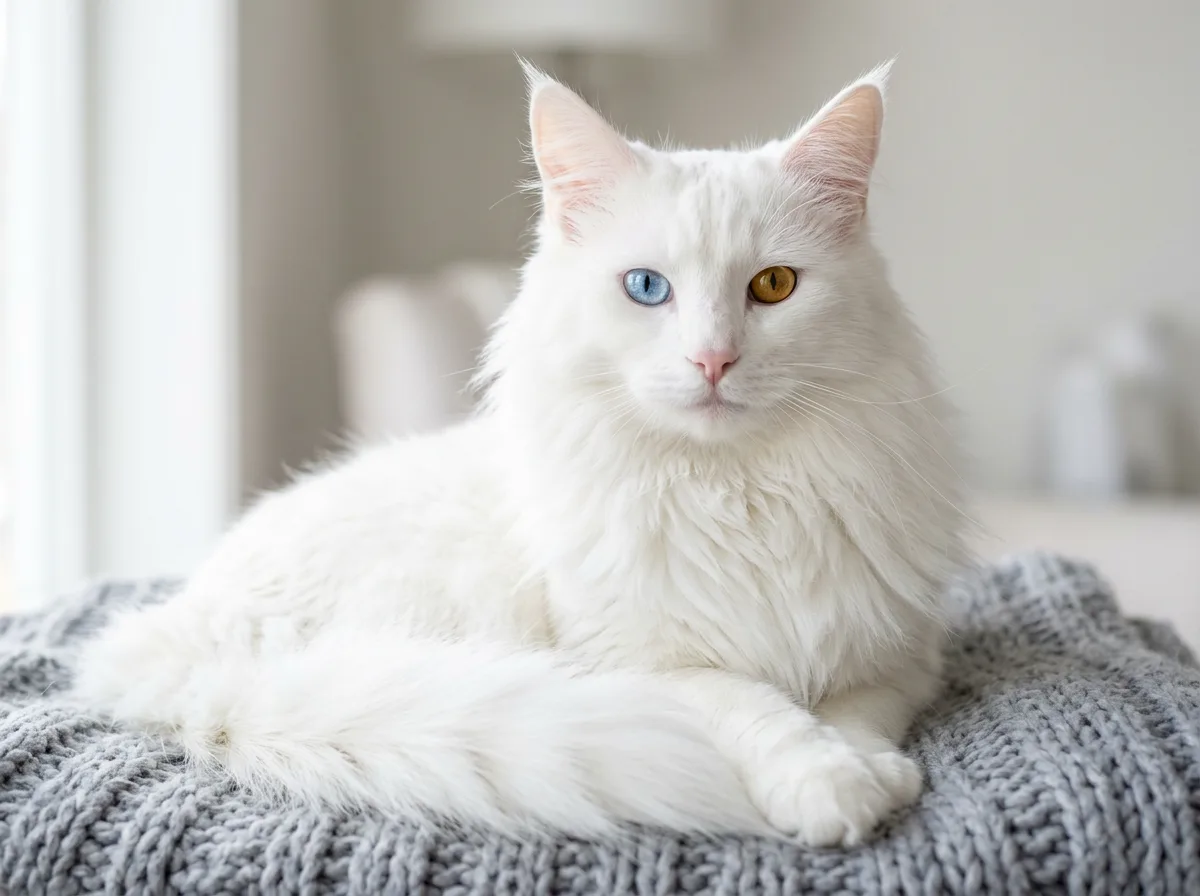
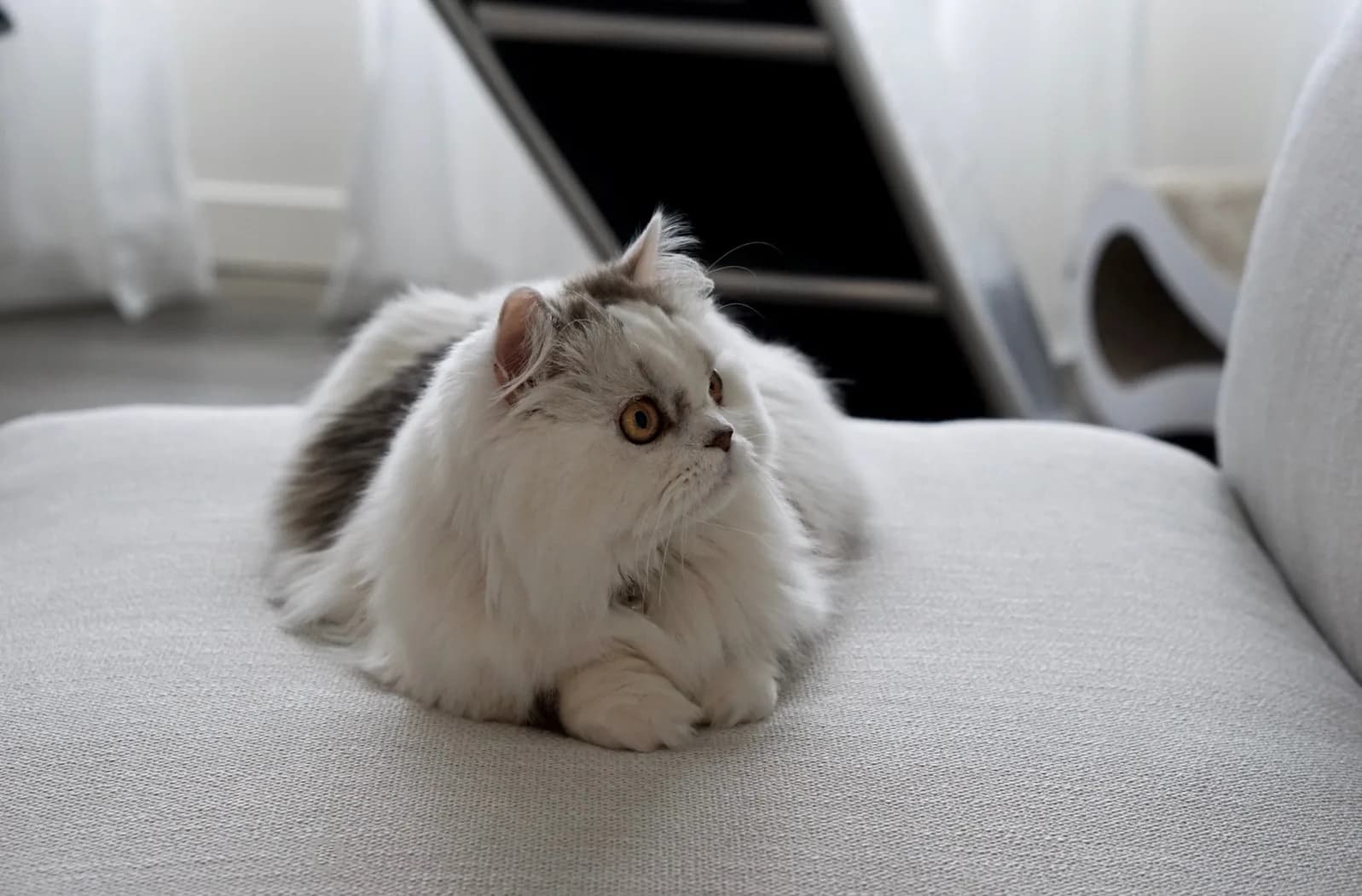
A pure white Norwegian Forest cat is one of the rarer solids and an undeniable showstopper: glistening, snowy fur with no other color, ideally with pink nose leather and paw pads. White is technically a masking gene that hides whatever color is underneath, which is why white cats are produced less predictably than the common tabbies.
Two things are worth knowing. First, mostly-white and solid-white Wegies are the cats most likely to have blue or odd-colored (one blue, one gold) eyes. Second, the same genetics that produce a white coat and blue eyes are linked to a higher chance of congenital deafness, sometimes in just one ear. A deaf cat lives a perfectly happy indoor life once you adjust (approach within sight, use vibration and light cues), but it is something a reputable breeder will have checked.
Blue (gray) Norwegian Forest cats
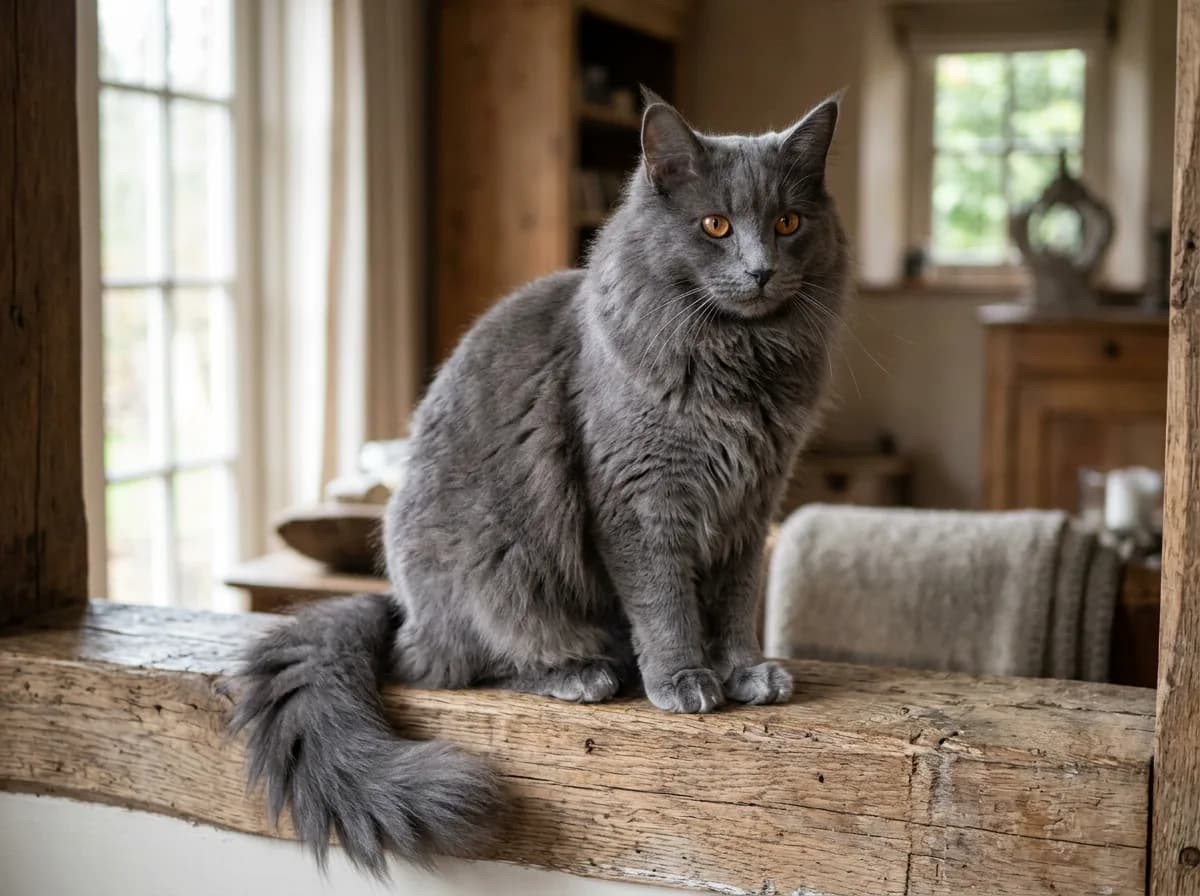
"Blue" is the cat-world name for a solid gray coat, and it is one of the most-requested Norwegian Forest cat colors. Genetically, blue is diluted black: the same gene that softens black to gray turns red into cream. A good blue Wegie is an even, sound slate-gray from root to tip, and the color looks especially plush on the breed's dense double coat. People searching for a "gray Norwegian Forest cat" are looking for exactly this.
Blue shows up well beyond the solid coat too. You will find blue tabby (gray striping on a pale ivory ground), blue smoke (gray over a white undercoat), blue-cream (the dilute tortoiseshell), and dilute calico (white with blue and cream patches). A genetically blue cat can also carry the amber gene, in which case it matures into a pale, light-amber tone instead of a true honey amber.
Red (ginger) and cream Norwegian Forest cats
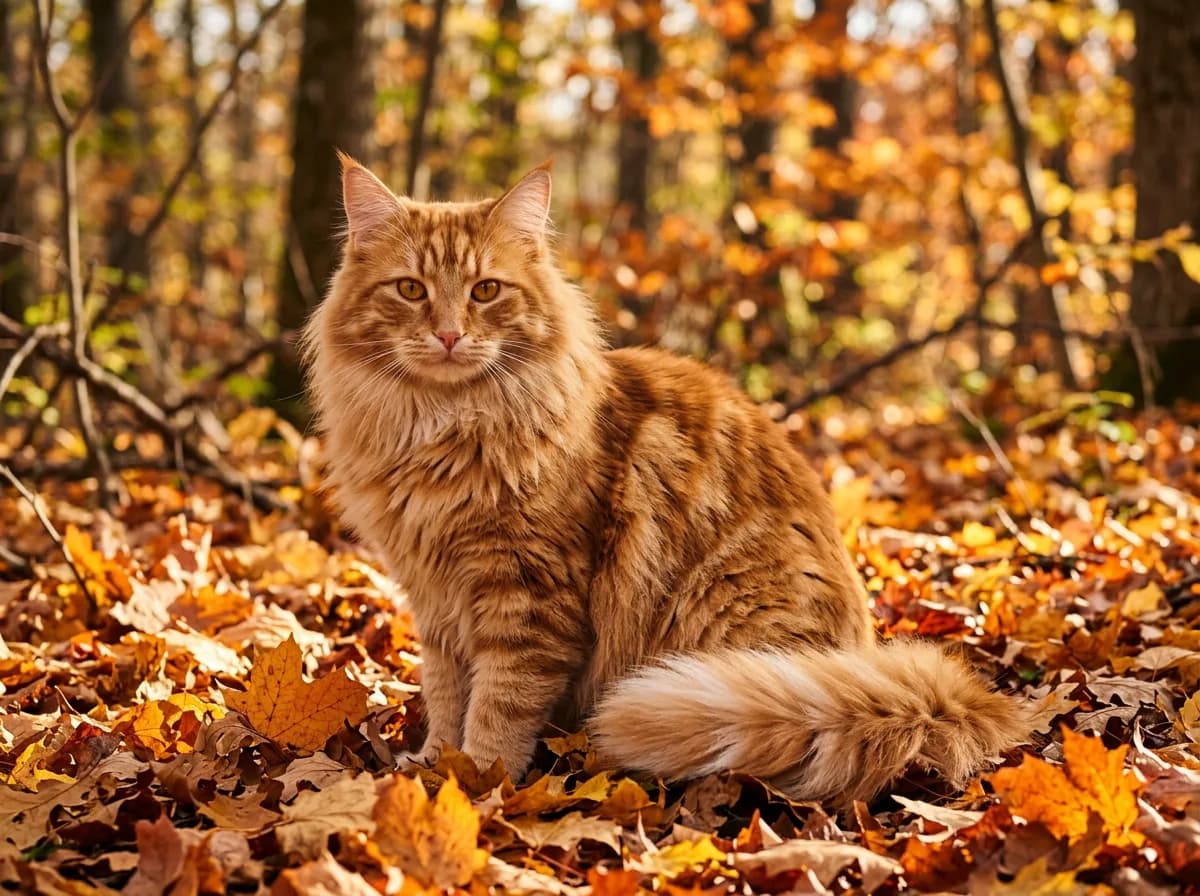
Red, commonly called ginger or orange, is a warm and eye-catching Wegie color. Almost every red cat shows at least faint tabby striping, because the genetics of red make solid, unmarked red very hard to achieve, so most "red" Norwegian Forest cats are technically red tabbies. As with all cats, the brightest, deepest reds are usually males.
Cream is red's softer sibling: a diluted red that reads as a pale, pastel buff. It is a gentle, sought-after color that looks beautiful against the breed's long coat, and like red it most often appears with subtle tabby markings rather than as a flat solid. Red and cream also combine into tortoiseshell, calico, and the various "and white" bicolor patterns.

63-inch multi-level cat tree with scratch posts, hammock, plush perches, and dangling toys. Vertical territory is non-negotiable for high-energy climbing breeds like the Bengal.
Petful may earn a commission when you click through to Chewy, at no extra cost to you.
Silver, golden, smoke, tortoiseshell, and calico
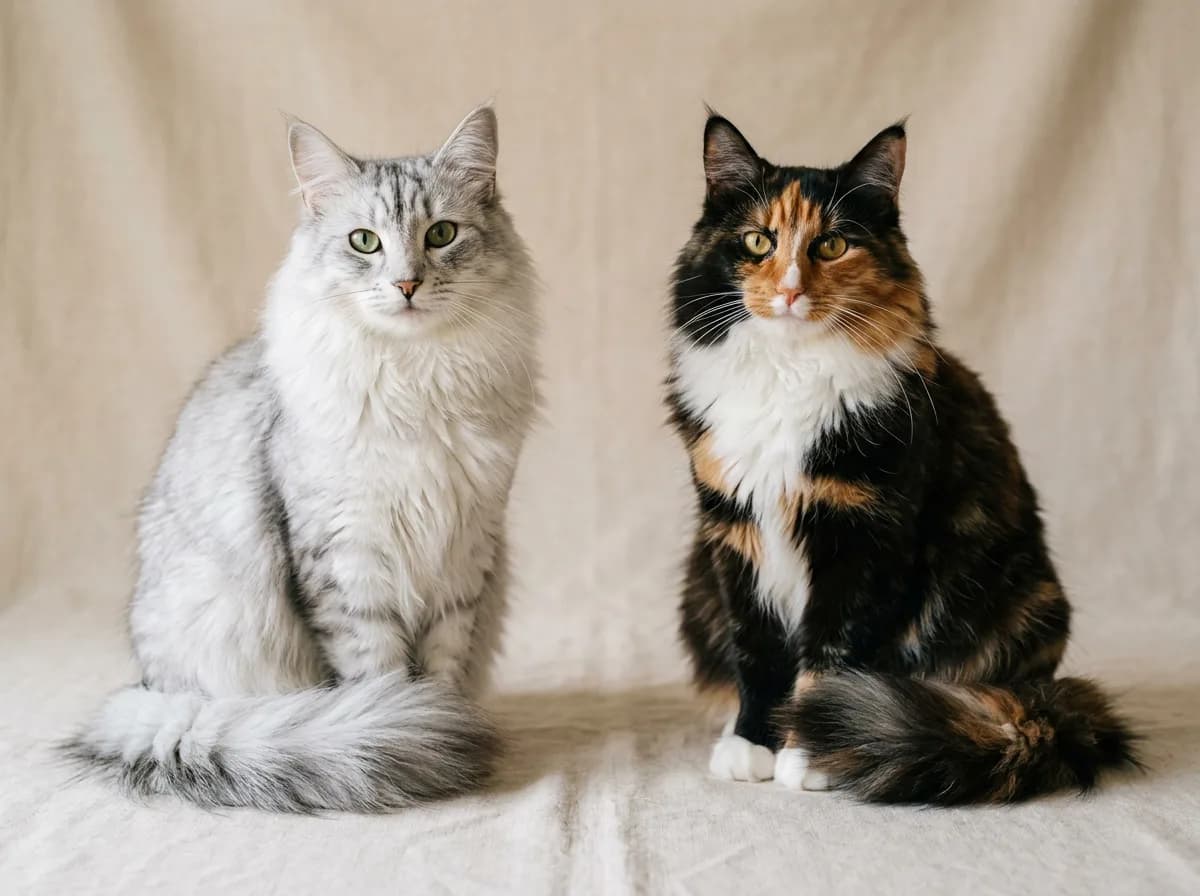
Beyond the solids and brown tabbies, the Norwegian Forest cat wears a whole gallery of mixed and tipped coats. These are some of the most dramatic looks the breed offers, and they are all show-accepted.
Silver and golden coats have a white or warm-cream undercoat with black-tipped guard hairs. The amount of tipping sets the variety: a little tipping is chinchilla, more is shaded, and full banding is a silver or golden tabby. The effect is a sparkling, frosted coat.
Smoke looks like a solid color at rest (black smoke, blue smoke, cream smoke) but hides a white undercoat that flashes through dramatically when the cat walks or is stroked. Black smoke on a long Wegie coat is especially striking.
Tortoiseshell is a mottled mix of black and red (or the dilute blue and cream, called blue-cream) with no white. Calico is that same patchwork laid over a white coat, with bold patches of black and red; the dilute calico softens to blue and cream. Because the red gene is carried on the X chromosome, tortoiseshells and calicos are almost always female.
- The gene for red (orange) coloring sits on the X chromosome. Females have two X chromosomes and can show both red and black at once, producing the tortie or calico patchwork. Males (XY) almost always come out a single color, so a male tortoiseshell is a genuine rarity.
The amber Norwegian Forest cat: the breed's signature color
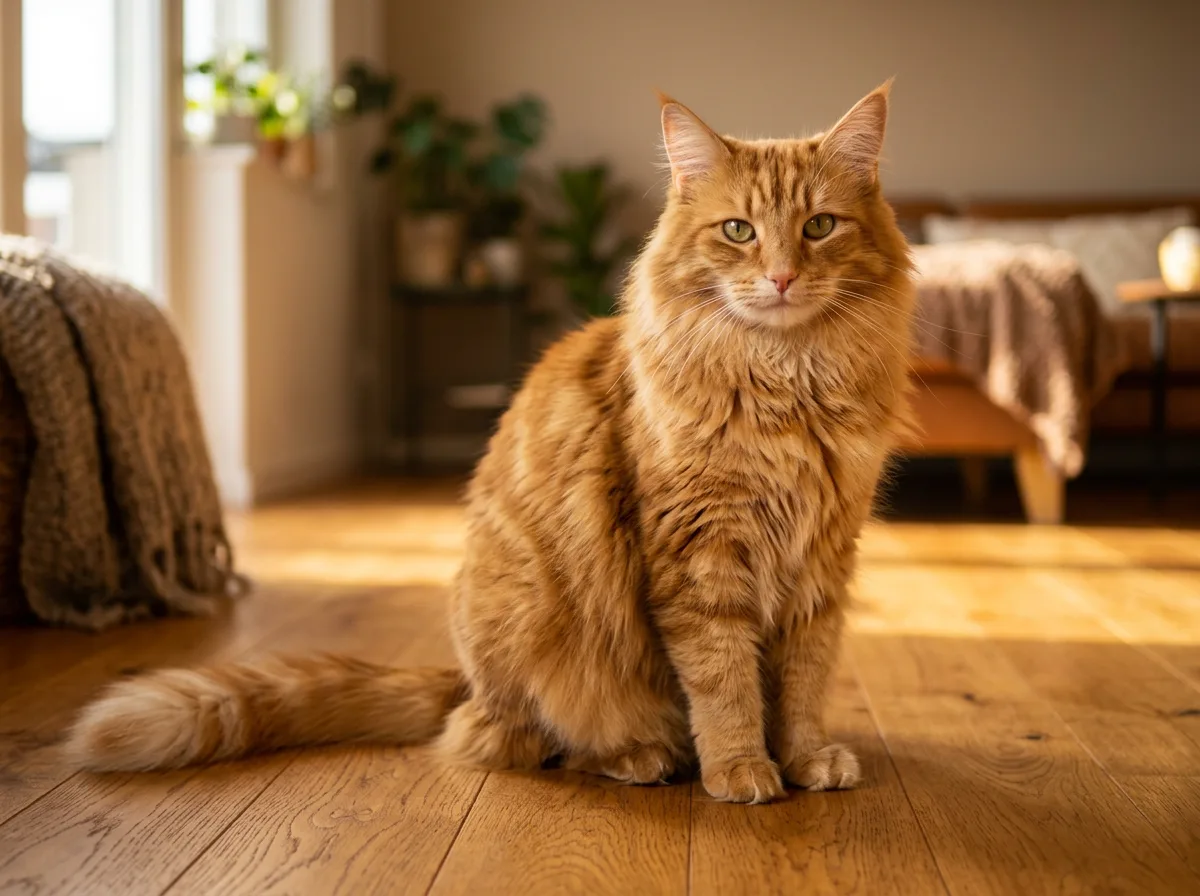
Amber is the Norwegian Forest cat's own color, found in this breed and a handful of close relatives but not in cats generally, which makes it the strongest color story the Wegie has. It is a recessive gene that gradually transforms a genetically black coat into a warm reddish-gold, honey, or apricot shade as the cat matures. An amber-gene cat is born looking like an ordinary black or dark brown tabby kitten, then slowly "turns" over its first year or two, with the body fur warming to amber while the leg, tail, and mask markings often stay darker.
The effect comes in two strengths. A genetically black cat carrying the gene becomes amber, a rich honey-chestnut. A genetically blue cat carrying it becomes light amber, a paler, softer apricot-beige. Both can be solid, tabby, smoke, or tortoiseshell, giving names like "amber tabby" or "black amber tabby." Because the color develops with age, amber kittens are routinely mislabeled as browns, which is exactly why owners post "what color is my kitten?" photos online and get told "that's a maturing amber."

108-oz stainless steel pet fountain with quiet pump and water-level window. Bengals are notoriously water-obsessed; a flowing fountain encourages hydration and pulls them away from sinks and toilets.
Petful may earn a commission when you click through to Chewy, at no extra cost to you.
- If a black or dark-brown-tabby Wegie kitten starts developing a warm, rusty, honey cast over its first year, especially on the body while the legs and tail stay darker, you are very likely watching an amber come in. It is a recessive trait, so both parents must carry the gene. A pedigree or a feline color DNA test confirms it.
Eye colors in Norwegian Forest cats
Eye color in the Norwegian Forest cat usually ties to coat color, and the typical range runs through shades of green, green-gold, gold, and copper. A deep green or brilliant green-gold is common and prized. There is no strict rule pairing a single coat color to a single eye color, but most colored coats come with one of these warm or green eyes.
The exception is white. Mostly-white and solid-white Wegies can have blue eyes, or be odd-eyed with one blue eye and one gold or green eye. As noted above, blue eyes in a white cat sometimes come paired with reduced hearing, so it is a trait responsible breeders track rather than something to worry about in a happy indoor pet.
- Every kitten is born with blue eyes that haven't developed their adult pigment yet. A Norwegian Forest cat's true eye color (green, gold, or copper) settles in over the first few months. Only in white cats does blue remain into adulthood.
Rarest versus most common Norwegian Forest cat colors
The most common Norwegian Forest cat coat is the brown tabby, and specifically brown tabby with white. It is the breed's signature look, it appears across the most litters, and it is the image most people carry of a Wegie. Tabby in general (in any base color) is the pattern you will see most often.
The rarest colors are harder to pin to one answer, but a few stand out. Solid white is genuinely uncommon. A true, fully developed amber (and especially light amber) is prized and far less common than the everyday tabby, both because it needs a recessive gene from both parents and because it takes a year or more to show. And because of the X-chromosome genetics, a male tortoiseshell or calico is one of the rarest cats of all. "Rarest" usually comes down to amber or a solid white in casual conversation, with a male tortie as the true genetic long shot.
- Some sellers market a "rare" amber, white, or smoke Wegie at a premium. Color and pattern do not change a Norwegian Forest cat's value the way health testing and pedigree do. A well-bred brown tabby from GSD-IV-tested, HCM-screened parents is worth far more than a poorly bred "rare amber" with no health clearances. Buy the breeder, not the color.
Which colors are NOT standard, and why
A real Norwegian Forest cat is a natural Scandinavian breed, and the breed standards (CFA, TICA, and the UK's GCCF) deliberately exclude a few colors and patterns because they only appear when another breed has been crossed in. These are not "bad" cats, but a Wegie wearing them cannot be shown as a purebred Norwegian Forest cat and likely has mixed ancestry.
The excluded list is consistent across registries: the pointed (colorpoint) pattern (dark points on the ears, face, legs, and tail, as in a Siamese or Himalayan), and the colors chocolate, lilac (lavender), cinnamon, and fawn. Any of these combined with white is also excluded. Some sources add sable to the chocolate group. Everything else, the entire rainbow of solids, tabbies, smokes, silvers, torties, calicos, bicolors, and amber, is fair game.
- If a breeder offers a colorpoint (Siamese-patterned) Norwegian Forest cat, or a chocolate, lilac, cinnamon, or fawn one, treat it as a sign the cat is not a purebred Norwegian Forest cat. These colors are barred by every major registry precisely because they indicate outcrossing to another breed.
Does color affect a Norwegian Forest cat's price or health?
No. A Norwegian Forest cat's color has no bearing on its health, temperament, or how long it lives, and it should not meaningfully change the price either. A black Wegie, a brown tabby, a calico, and an amber are all the same robust, gentle, family-friendly breed underneath the coat. What actually drives price is lineage and show quality, the breeder's reputation, and most of all health testing: DNA screening for Glycogen Storage Disease Type IV (GSD IV), the breed's signature genetic disease, plus heart (HCM) and hip screening. Petful’s guide to Norwegian Forest Cat price has the full breakdown.
The only color-linked health note worth repeating is the white-coat connection to congenital deafness, and even that is manageable and not a reason to avoid a white cat. Choose your kitten on the strength of its health clearances and the breeder's honesty, then pick whichever gorgeous color you love. To explore how coat color works across other breeds, see our guides to tabby cat color and pattern variations, Persian cat colors, and Siamese cat colors. If you are weighing the Wegie against another big, fluffy breed, our Maine Coon breed profile and Ragdoll breed profile are good next reads.
Nearly all of them. The breed standard accepts white, black, blue (gray), red, and cream solids; classic, mackerel, spotted, and ticked tabbies in every base color; silver and golden shaded coats; black, blue, and cream smokes; tortoiseshell, calico, and their dilutes; bicolor and van patterns with white; and the breed's exclusive amber. Only pointed, chocolate, lilac, cinnamon, and fawn are excluded.
Solid white and a fully developed amber (especially light amber) are among the rarest, since amber needs a recessive gene from both parents and takes a year or more to show. The true genetic long shot is a male tortoiseshell or calico, which is extremely uncommon because the red gene is carried on the X chromosome.
Yes, and the solid black Wegie is the most-searched color in the breed. A show-quality black is dense coal black from root to tip with black nose and paw pads. Watch for look-alikes: a black smoke hides white roots, and a young amber starts black before warming to honey with age.
Amber is a recessive color unique to the Norwegian Forest cat and a few relatives. A genetically black cat is born looking black or dark-tabby, then gradually turns warm reddish-gold or honey as it matures over its first year or two. A genetically blue cat carrying the gene becomes the paler "light amber."
Yes. "Blue" is the cat term for a solid gray coat, a diluted version of black, and it is one of the most popular Wegie colors. Gray also appears as blue tabby, blue smoke, blue-cream, and dilute calico. People searching for a "gray Norwegian Forest cat" are looking for the blue color.
Yes, and tabby is the breed's most common and iconic look. Wegies wear four tabby patterns: classic (bold swirls), mackerel (thin vertical stripes), spotted, and ticked, in brown, silver, blue, red, or cream. Like nearly all tabbies, they carry the signature "M" mark on the forehead.
Tabby-patterned Norwegian Forest cats do. The "M" on the forehead, along with cheek swirls and a dark spine line, is a hallmark of the tabby pattern shared by tabby cats of every breed. It is not proof a cat is a purebred Wegie, just proof the cat carries the tabby pattern.
No. Color and pattern do not meaningfully change a Norwegian Forest cat's price, health, or personality. Price is driven by lineage, breeder reputation, and health testing (DNA screening for GSD IV plus HCM and hip checks). Be cautious of sellers charging a premium for a "rare" color.

Coreen Saito is a pet writer and longtime shelter volunteer with more than a decade in animal rescue. She covers cat behavior, breed care, and the small, ordinary science of sharing a life with companion animals, with a particular focus on honest takes about the products and decisions that actually matter. At home in Arizona, she's outranked by Mac (a dog with the loudest opinion in the house), Rebel (a cat who governs by quiet authority), and Meri (an orange tabby who runs the late shift and the laundry basket). She writes about all three, plus the rescues that keep coming through her life, at LifeWithMinty.com.
Sign up for expert-backed reviews and safety alerts all in one place.