Manx Cat Colors: A Complete Visual Guide to Every Coat and Pattern
A complete visual guide to Manx cat colors, from black, white, blue, and orange to tabby, tortoiseshell, and calico. Learn the rarest coats, eye colors, which patterns are not standard, and why color never affects a Manx cat's price or health.
Petful is reader supported. As an affiliate of platforms like Amazon and Chewy, we may earn a commission when you buy through links on this page. There is no extra cost to you.
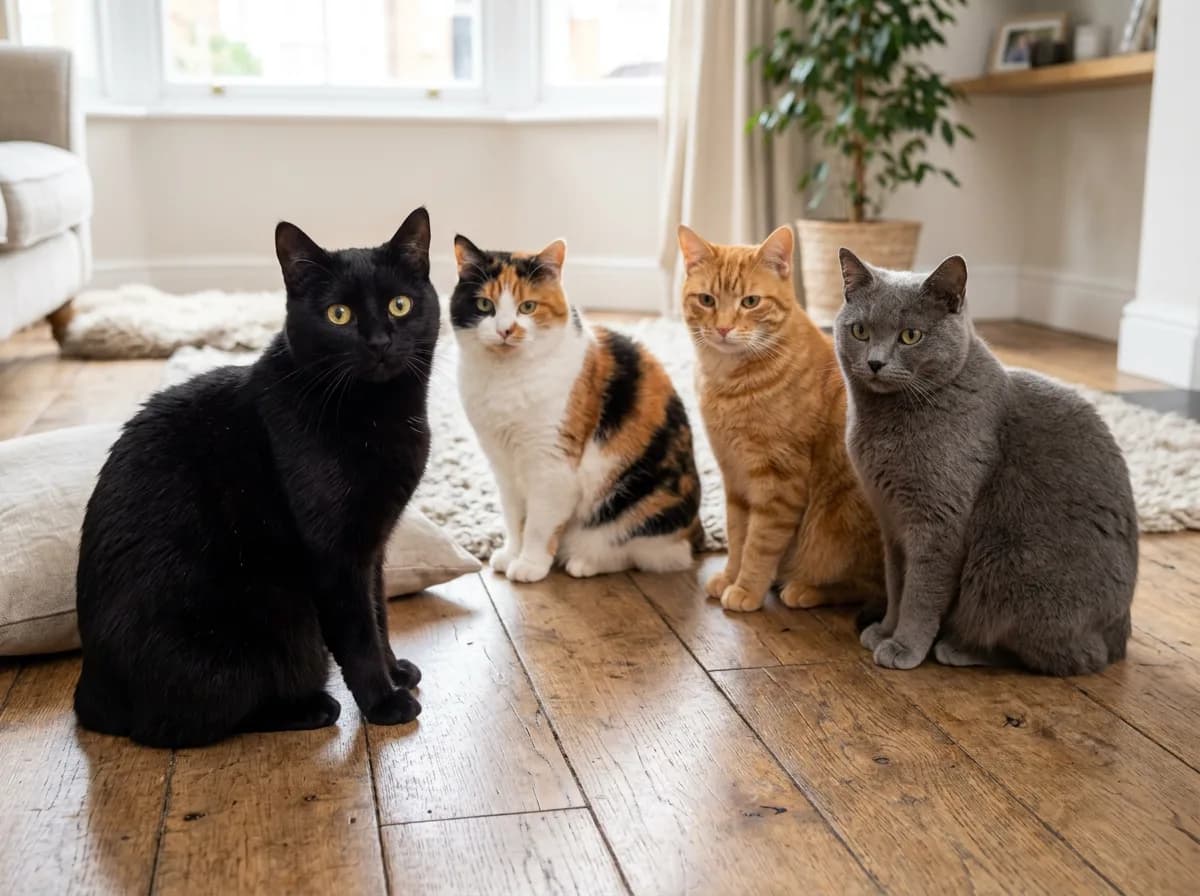
The Cat Fanciers' Association recognizes more than 40 Manx cat colors and patterns, which means this tailless breed appears in nearly every coat a cat can wear, from solid black and white to tabby, tortoiseshell, and calico. The only looks left off the official Manx palette are the colorpoint (Siamese-style) pattern and the pointed-related chocolate and lilac shades. Everything else, including the most-searched black Manx, the popular orange Manx, and silver-shaded coats, is fair game. This guide walks through each major color with what to look for, plus eye colors, the rarest versus most common coats, and why color has no effect on a Manx cat's price or health.
- 1Manx cats come in nearly every natural color and pattern except colorpoint, chocolate, and lilac
- 2The CFA recognizes 5 solid colors (white, black, blue, red, cream) plus smoke, silver, tabby, tortoiseshell, calico, and bicolor
- 3Black is the most-searched Manx color; solid white and solid red are among the rarest
- 4Eye color follows the coat, ranging from gold and copper to green, blue, or odd-eyed
- 5Coat color does not change a Manx cat's price, personality, or health risk

Sign up for expert-backed reviews and safety alerts all in one place.
What Colors Do Manx Cats Come In?
Manx cats come in almost the full spectrum of feline coat colors and patterns. Because the Manx is a natural breed rather than a color-bred one, its taillessness is the defining trait, and the coat underneath can be just about anything. The same is true of other single-mutation breeds where the signature feature is unrelated to coat, such as the hairless Sphynx. Registries describe the accepted Manx range as every solid color, the full set of tabby patterns, tortoiseshell, calico, bicolor, smoke, and silver or shaded coats. Petful’s guide to Munchkin cat colors has the full breakdown.
The Cat Fanciers' Association (CFA) groups the recognized Manx colors into solids (white, black, blue, red, and cream), smoke colors, the silver and shaded series, every tabby pattern, the tortoiseshell and calico (parti-color) class, and bicolor (any accepted color plus white). The International Cat Association (TICA) recognizes a similarly broad palette.
A sterile lubricating gel that soothes and moisturizes dry, irritated eyes and helps support the tear film in dogs and cats prone to dryness. A gentle, vet-shelf staple for everyday eye comfort.
Petful may earn a commission when you click through to Chewy, at no extra cost to you.
What you will not see in a show-standard Manx is the colorpoint (pointed) pattern of a Siamese, or the chocolate and lilac colors tied to that pointed genetic line. Those are treated as evidence of outcrossing to another breed, so they sit outside the traditional Manx standard. If you love a broad color palette, the Manx range rivals other heavily varied breeds, much like the spread documented in our Persian cat colors guide.
The reason for all this variety is simple: the Manx gene controls the tail, not the coat. That is why one tailless breed can show up as a sleek black cat, a brown mackerel tabby, a patched calico, or a smoky silver. Color and pattern are inherited completely separately from the taillessness.
Manx Cat Color Chart
Use this chart as a quick reference for the major Manx coat colors and patterns, what each one looks like, and a few notes on rarity or recognition.

Never Scoop Again® with the Whisker Litter-Robot, the smart self-cleaning automatic litter box. Monitor visits and track weights for better overall care in the Whisker® app. Multi-cat friendly.
Petful may earn a commission when you click through to Whisker, at no extra cost to you.
| Color or Pattern | Description | Notes |
|---|---|---|
| Black | Solid jet to coal black from root to tip, with copper or gold eyes | The most-searched Manx color; common and show-recognized |
| White | Pure solid white with no other color | Recognized but genuinely rare; can carry blue, gold, or odd eyes |
| Blue (Grey) | Even slate-grey, a dilute of black | Popular and recognized; sometimes searched as "grey Manx" |
| Red (Orange) | Warm ginger to deep red, usually with tabby striping | Solid red is rare; most "orange" Manx are red tabbies |
| Cream | Soft, pale buff, the dilute of red | Recognized; a softer alternative to orange |
| Tabby | Classic, mackerel, ticked, or spotted striping in brown, blue, silver, red, or cream | Extremely common; the patched (torbie) versions overlap with tortie |
| Tortoiseshell | Mottled black and red (plus cream in dilute "blue-cream") with little or no white | Very common; almost always female |
| Calico | Tortoiseshell plus large patches of white | Very common and recognized; almost always female |
| Bicolor | Any solid color or pattern combined with white | Recognized as its own class |
| Smoke | A white undercoat with colored tips (black, blue, red, or cream smoke) | Recognized; color shows when the coat moves |
| Silver / Shaded | Chinchilla silver or shaded silver, a pale coat with darker tipping | Recognized; silver tabby is striking but less common |
| Colorpoint | Pale body with darker points (Siamese-style) | NOT a standard Manx color |
| Chocolate / Lilac | Warm brown or pinkish-grey solids | NOT recognized; tied to the pointed genetic line |
Black Manx Cats
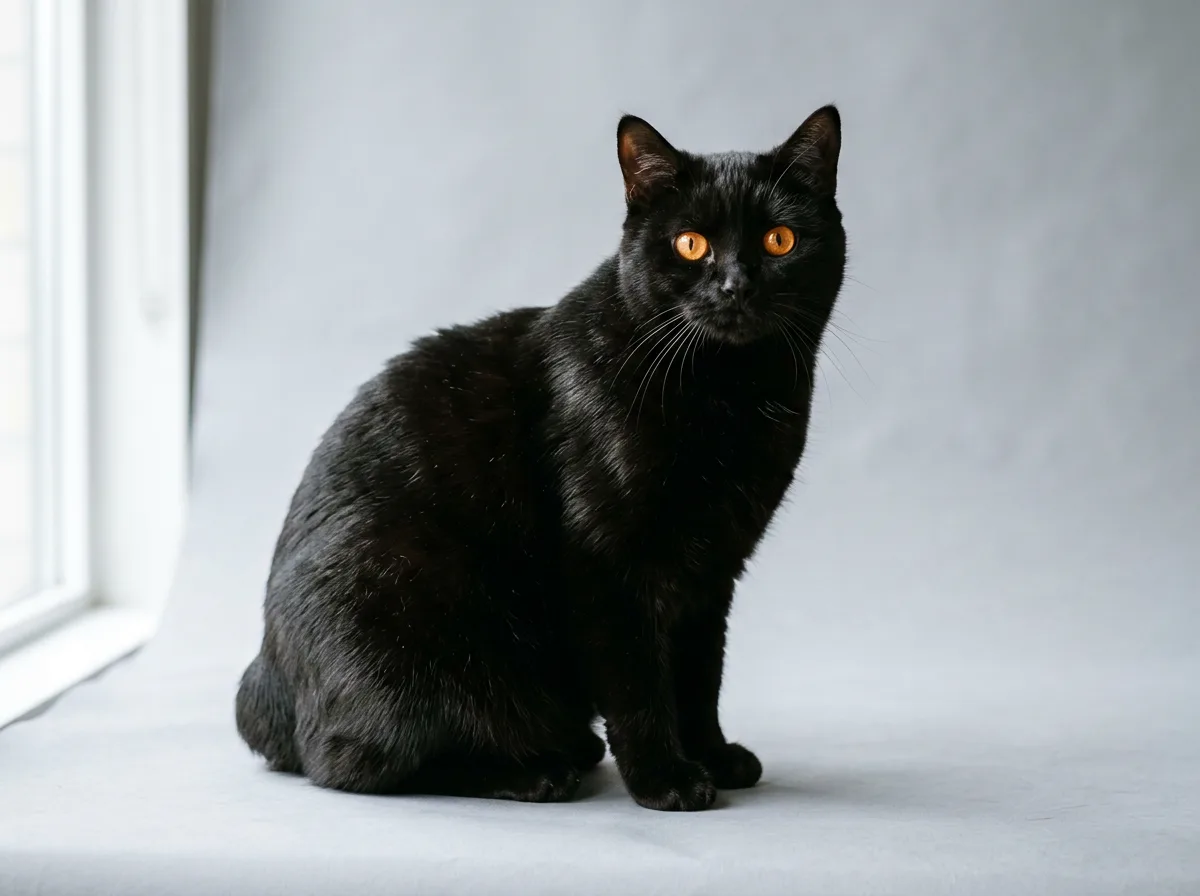
The black Manx is the single most-searched Manx color, and it is easy to see why. A solid black coat against the breed's round body, round head, and copper or gold eyes makes for a striking, almost owl-like cat. A true black Manx is black from root to tip with no rusting or white hairs. Some black coats fade slightly to a brownish cast in strong sun, but a show-quality black stays dense and even.
Black is a dominant pigment, so it is one of the more common Manx coats. Pair it with the breed's tailless rump and arched topline and you have the look most people picture first when they search for a black Manx cat.
- If your "black" Manx shows a flash of pale undercoat when it moves or grooms, it may actually be a black smoke. Part the fur at the shoulder: a solid black is dark to the skin, while a smoke has a white or silver root with black only on the outer half of each hair.
White Manx Cats
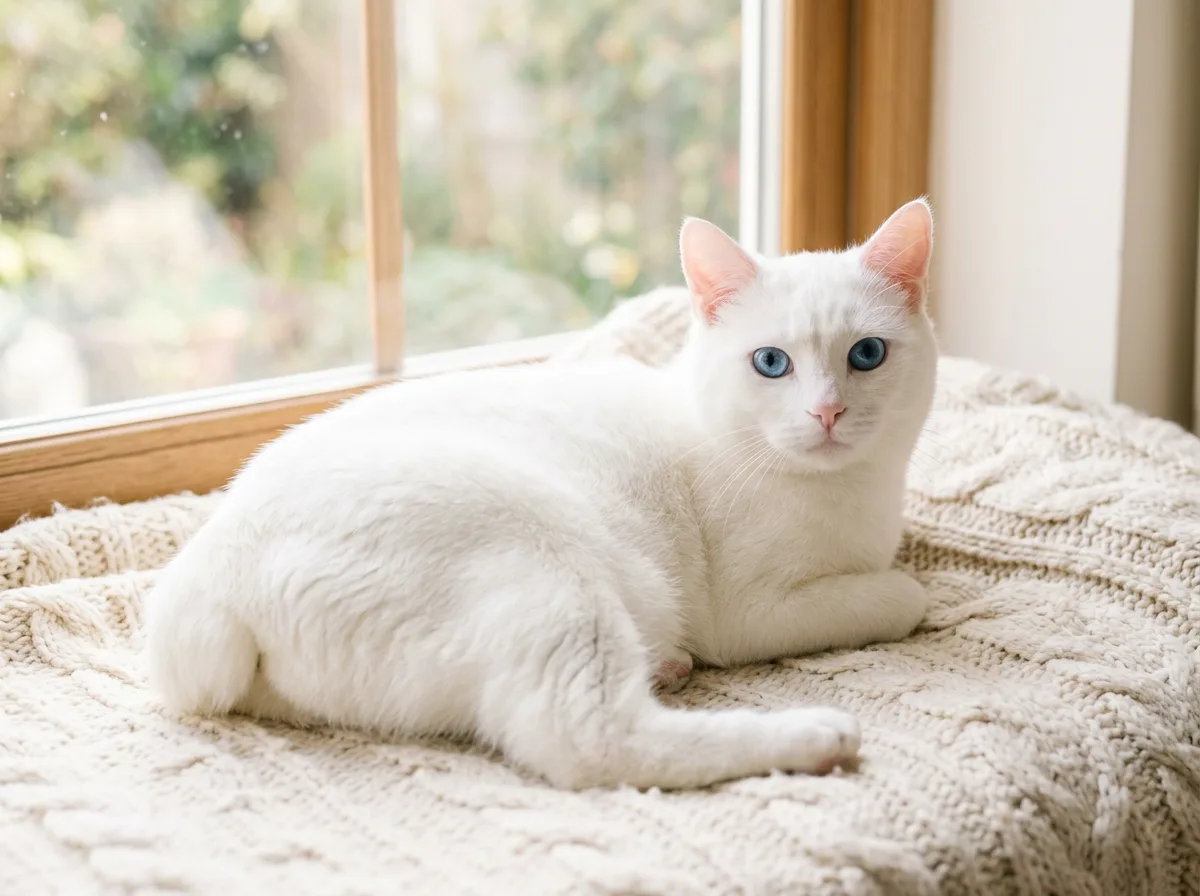
A solid white Manx is one of the rarest coats in the breed. White is a masking color, so a white Manx may genetically be any color underneath, but visibly it is pure white with no markings. White Manx cats are the coat most often singled out as rare by breeders, because producing them reliably usually takes a white parent.
White is also the coat most tied to eye color variety. A white Manx can have deep blue eyes, gold to copper eyes, or odd eyes (one blue and one gold or copper). As with white cats of any breed, blue-eyed and odd-eyed whites can carry a higher chance of congenital deafness on the blue-eyed side, so a vet hearing check is worth doing.
Blue (Grey) Manx Cats
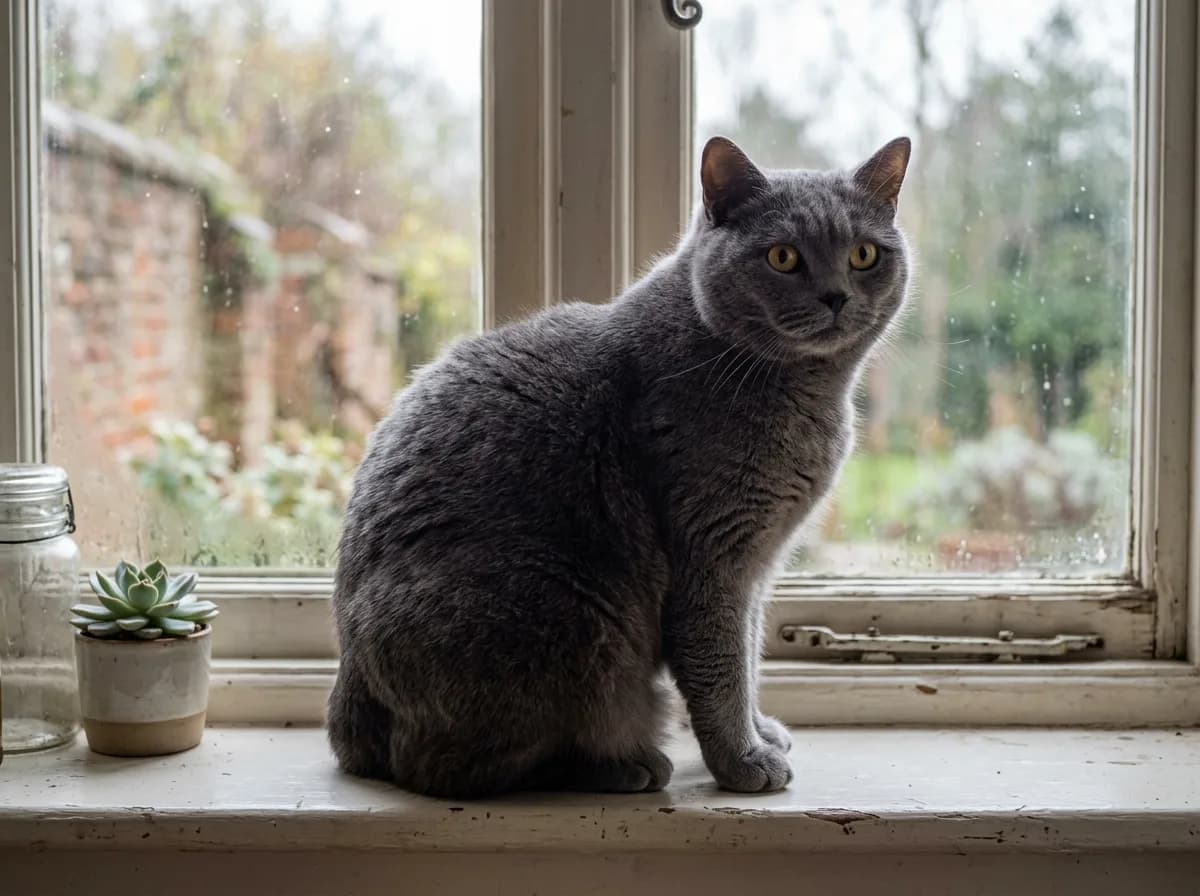
"Blue" is the cat-fancy word for an even slate grey, and it is one of the more popular Manx colors. A blue Manx is a dilute of black, meaning the same black pigment is spread out to read as soft grey. The dense Manx double coat gives blue cats an especially plush, smoky look. People often search for this coat as a "grey Manx" or "Manx cat colors grey," but blue is the correct registry term.
Orange (Red) Manx Cats
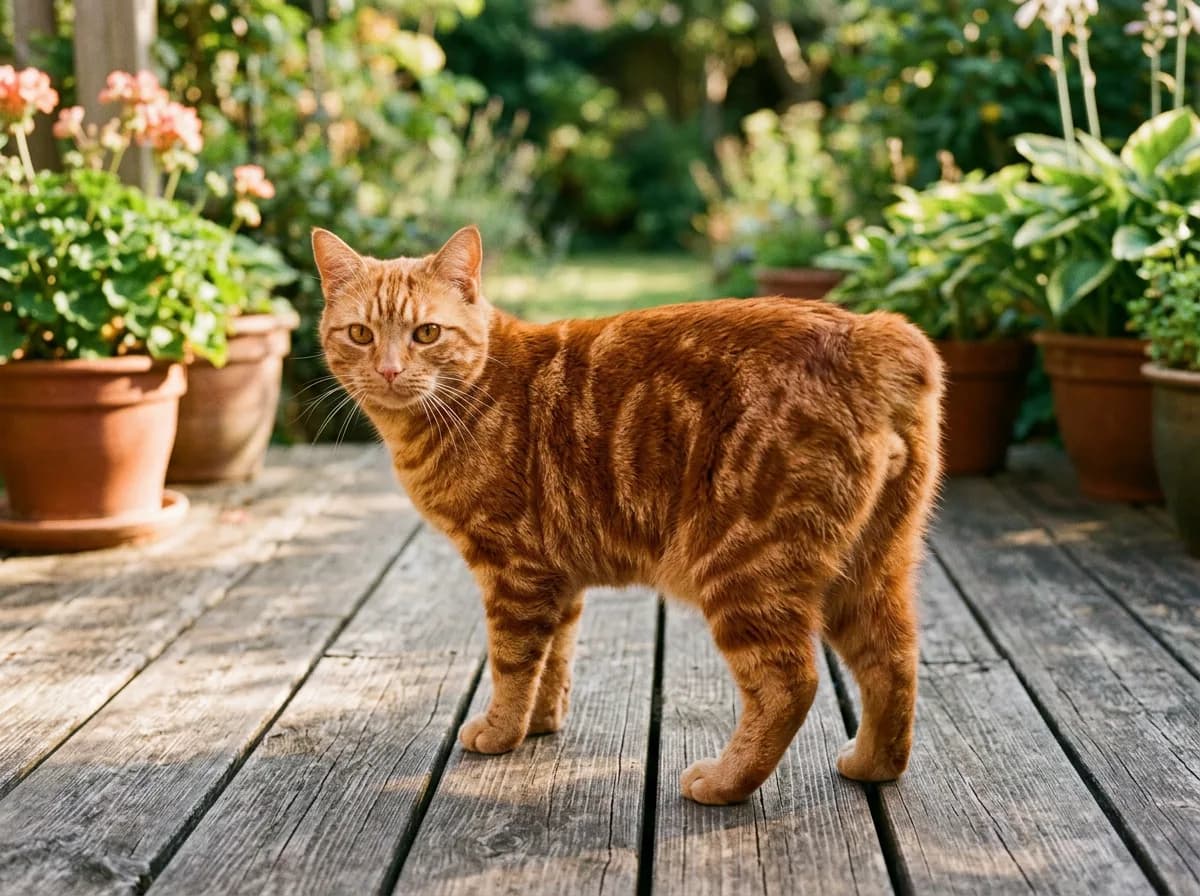
Orange Manx cats, called red in the cat fancy, are a popular and frequently searched coat. Here is the nuance most owners discover: a truly solid red Manx is rare, because the red gene almost always shows some tabby striping. So the great majority of "orange Manx" cats are actually red tabbies, with visible rings, stripes, or an "M" on the forehead. They still read as a warm ginger cat, just with pattern. Red is also a sex-linked color, which is why solid red cats skew male and are uncommon enough that breeders treat a solid red as a prize.
- The gene that makes a cat red does not fully hide the underlying tabby pattern the way black does. That is why almost every orange cat, Manx or not, shows at least faint stripes. A solid, unmarked red Manx is genuinely hard to produce.
Cream Manx Cats
A cream Manx is the dilute of red, a soft, pale buff or pastel orange. If a red Manx is a bright ginger, a cream is the muted, milky version. Cream is fully recognized and makes a gentle alternative to a vivid orange coat. Like red, cream often carries faint tabby markings, giving you a cream tabby rather than a perfectly solid cream.
Tabby Manx Cats
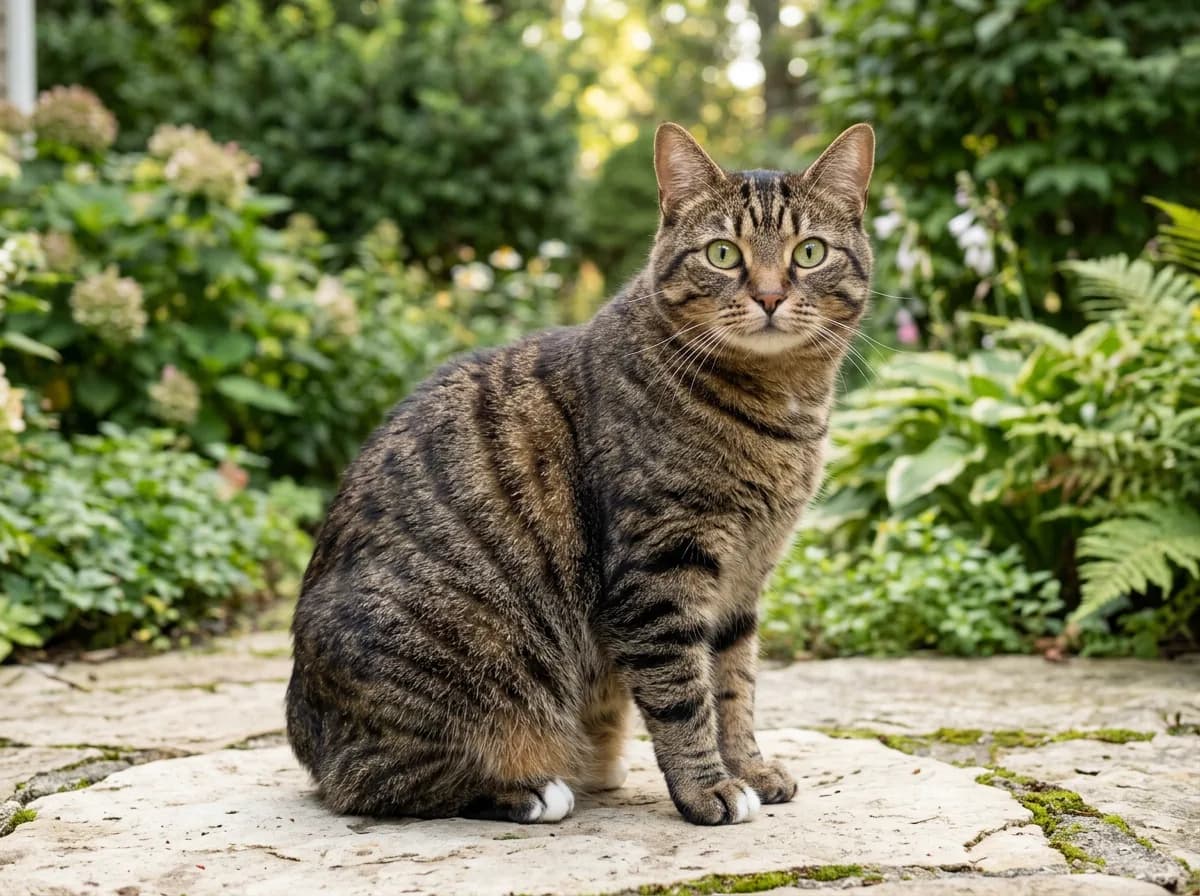
Tabby is not a single color but a family of patterns, and it is one of the most common looks in the breed. A tabby Manx can appear in four pattern types:
- Classic tabby: bold swirls and a "bullseye" on the flank.
- Mackerel tabby: narrow vertical stripes, the "tiger" pattern.
- Spotted tabby: stripes broken into spots.
- Ticked tabby: flecked, agouti hairs with little or no body striping.
Those patterns come in brown, blue, silver, red, and cream backgrounds, plus "patched" tabby (a tortoiseshell-and-tabby mix often called a torbie). Almost every tabby Manx shows the signature "M" on the forehead. Because the pattern is so widespread, tabby is one of the coats you are most likely to meet in a pet Manx. If you want to tell a classic swirl from a mackerel stripe at a glance, our guide to tabby color variations in cats breaks down each pattern in detail.

63-inch multi-level cat tree with scratch posts, hammock, plush perches, and dangling toys. Vertical territory is non-negotiable for high-energy climbing breeds like the Bengal.
Petful may earn a commission when you click through to Chewy, at no extra cost to you.
Tortoiseshell Manx Cats
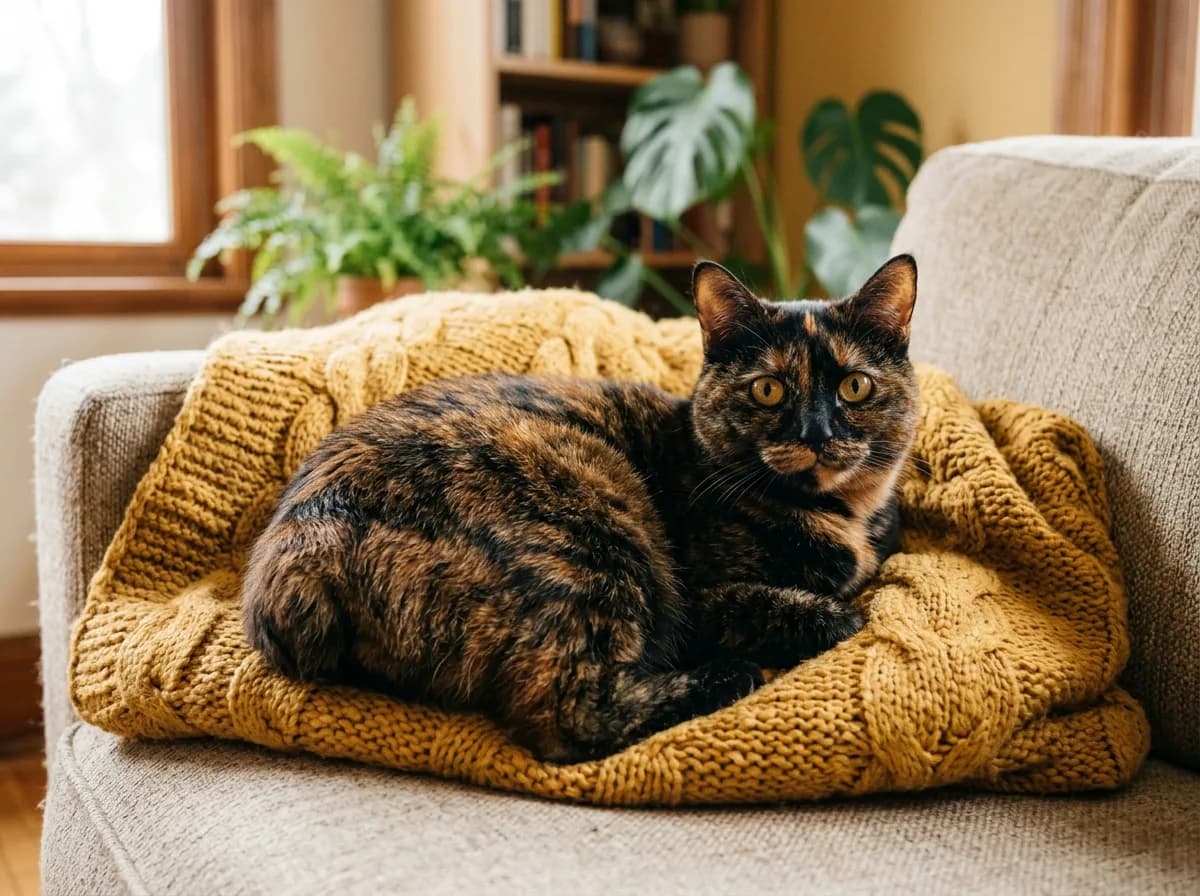
A tortoiseshell ("tortie") Manx wears a mottled, brindled blend of black and red with little or no white. The dilute version, a softer mix of blue (grey) and cream, is called blue-cream. Torties are eye-catching and very common in the breed. Because the genetics that create the two-tone coat are tied to the female X chromosome, tortoiseshell Manx cats are almost always female. A male tortie is a rare genetic anomaly and is usually sterile.
Calico Manx Cats
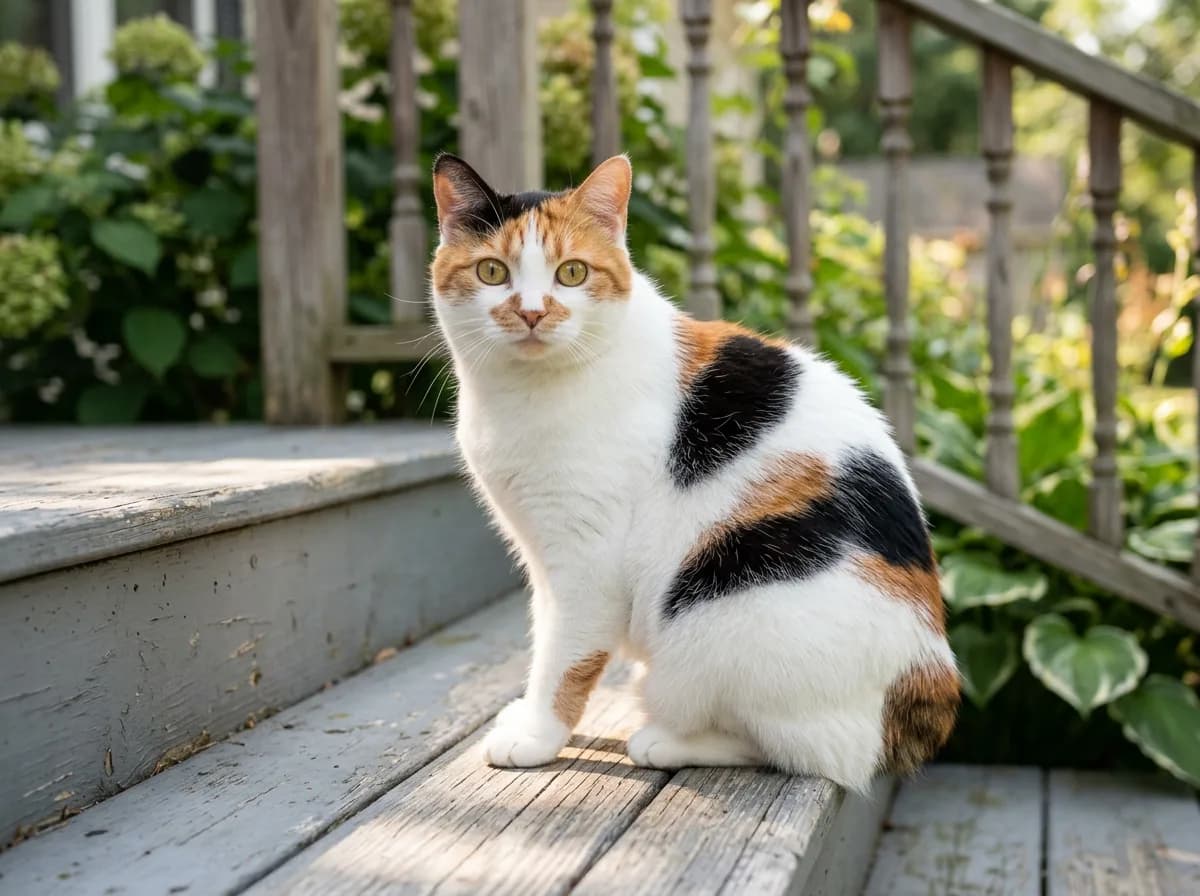
A calico Manx is a tortoiseshell plus large, distinct patches of white, the classic tricolor cat of white, black, and orange. The dilute form (white with blue-grey and cream) is a dilute calico. Calico is one of the most popular and recognizable Manx looks, and a calico Manx is one of the more searched color combinations. Like torties, calicos are almost always female for the same X-linked reason. Calico is its own recognized show class, separate from plain bicolor.
- A tortoiseshell is mottled black and red with little white. Add big white patches and it becomes a calico. A bicolor is any single solid color (or tabby) plus white, like a black-and-white "tuxedo" Manx. All three are recognized Manx looks.
Smoke, Silver, and Shaded Manx Cats
A smoke Manx looks like a solid color at rest but reveals a pale, almost white undercoat when it moves or grooms, because each hair is colored only on the outer half. Black smoke, blue smoke, red (cameo) smoke, and cream smoke are all recognized. The silver and shaded series, including chinchilla silver and shaded silver, gives a sparkling, pale coat with darker tipping. Silver tabby Manx are especially striking but are among the less common coats, and silver tabby is one of the colors breeders cite as harder to produce.
Bicolor Manx Cats
A bicolor Manx pairs any recognized solid color or pattern with white. The familiar black-and-white "tuxedo," a blue-and-white, or a red-and-white Manx all fall here. Bicolor is a recognized class of its own (calico and tortoiseshell-and-white have separate classes). The amount of white can range from a small locket to a coat that is mostly white with colored patches.
Manx Cat Eye Colors
Eye color in a Manx follows the coat rather than being a separate trait. The CFA standard describes Manx eyes as "gold to copper, odd-eyed, blue-eyed, green, or hazel as appropriate to the coat color." In practice that means:

108-oz stainless steel pet fountain with quiet pump and water-level window. Bengals are notoriously water-obsessed; a flowing fountain encourages hydration and pulls them away from sinks and toilets.
Petful may earn a commission when you click through to Chewy, at no extra cost to you.
- Most colored coats (black, blue, red, tabby, tortie, calico): gold to copper eyes.
- Silver and some tabby coats: green or hazel eyes are common and preferred.
- Solid white coats: deep blue, gold to copper, or odd eyes (one blue, one gold).
So a Manx's eyes are not chosen independently. A breeder pairs the eye color the standard expects for that coat, which is why a green-eyed silver tabby and a copper-eyed black are both correct.
- If you see a Manx with one blue eye and one gold eye, it is almost certainly a white or high-white cat. Odd eyes come from the white-spotting and dominant-white genes, not from the Manx gene, and they are perfectly healthy aside from the deafness risk linked to a blue eye.
Rarest vs Most Common Manx Colors
Among recognized Manx colors, the rarest are solid white, solid red, and silver tabby. Breeders point to these because each one usually needs a parent of that same color to reproduce reliably: solid red is sex-linked and skews heavily male, solid white needs a white parent and does not appear often by chance, and silver tabby depends on the silver inhibitor gene being present in the line.
The most common Manx coats are the tabbies (especially brown tabby), black, tortoiseshell, and calico. These appear readily in random-bred and pet Manx populations, which is why most Manx you meet at a shelter or in a pet home wear one of these coats.
- A breeder may price a rare coat like solid white or solid red a little higher, but a responsible Manx breeder sets price on health screening, tail type, and pedigree, not on coat novelty. Be cautious of any seller marketing a "rare" color as the main selling point, especially an unrecognized one like a "chocolate" or "colorpoint" Manx.
Which Colors Are NOT Standard?
Three looks fall outside the traditional Manx standard, and it is worth knowing them so you are not misled by a seller:
- Colorpoint (pointed): the pale-body, dark-points pattern of a Siamese. Not a Manx color; it signals outcrossing. The pointed look belongs to breeds like the Siamese, whose colors are defined by exactly that pattern.
- Chocolate: a warm solid brown. Tied to the pointed genetic line, so it is excluded.
- Lilac (lavender): a pinkish dove grey. Also tied to the pointed line and excluded.
The CFA standard states plainly that colors and patterns "showing evidence of hybridization (chocolate/lavender/pointed or these combinations with white) are not allowed." If you see a "chocolate Manx" or "colorpoint Manx" advertised, it points to mixed ancestry rather than a recognized Manx color.
Does Color Affect a Manx Cat's Price or Health?
No. Coat color has no bearing on a Manx cat's health, temperament, or lifespan. The breed's real health consideration is Manx Syndrome, a spine-and-tail issue tied to the Manx gene and the tail type (most associated with fully tailless "rumpy" cats), and that risk is identical whether the cat is black, orange, calico, or silver. A black Manx and a white Manx face the same odds.
Color also does not meaningfully drive price. What moves a Manx cat's cost is tail type (a show-quality tailless rumpy sits at the top of the range), pedigree, and a breeder's health screening, not whether the coat is rare or common. Color is about looks, not value or wellbeing.
- When choosing a Manx, prioritize a breeder who screens for Manx Syndrome and places kittens at 4 months or older, once they can confirm no spinal signs. A beautiful coat means nothing if the cat's spine was not screened. Color is the last thing to worry about.
Frequently Asked Questions About Manx Cat Colors
Manx cats come in nearly every natural color and pattern: solid white, black, blue (grey), red (orange), and cream, plus all tabby patterns, tortoiseshell, calico, bicolor, smoke, and silver or shaded coats. The CFA recognizes more than 40 color and pattern combinations. The only looks outside the standard are colorpoint, chocolate, and lilac.
Solid white, solid red, and silver tabby are the rarest recognized Manx colors. Each usually requires a parent of the same color to reproduce reliably, and solid red is sex-linked so it skews male and is uncommon. Solid white is the coat breeders most often single out as a rare find.
Yes. Black is the most-searched Manx color and one of the more common coats, since black is a dominant pigment. A show-quality black Manx is dense and even from root to tip, usually with copper or gold eyes. Some "black" Manx are actually black smoke, which shows a pale undercoat when the fur is parted.
Yes, orange (called red in the cat fancy) is a popular Manx coat. However, a truly solid red Manx is rare because the red gene almost always shows tabby striping, so most "orange Manx" cats are actually red tabbies with visible stripes. Cream is the softer, dilute version of red.
A calico Manx is a tricolor cat with distinct patches of white, black, and orange (a tortoiseshell plus large white areas). The dilute form is white with blue-grey and cream. Calico is a recognized Manx show class and one of the more popular looks. Like tortoiseshells, calico Manx are almost always female.
Yes, and tabby is one of the most common Manx looks. Manx tabbies appear in classic (swirled), mackerel (striped), spotted, and ticked patterns, on brown, blue, silver, red, or cream backgrounds. Almost every tabby Manx shows the signature "M" marking on the forehead.
No. Coat color does not meaningfully affect a Manx cat's price. Cost is driven by tail type (a show-quality tailless rumpy is most expensive), pedigree, and the breeder's health screening for Manx Syndrome. Color is cosmetic and has no effect on health, temperament, or lifespan.
Yes. Grey Manx cats are called "blue" in the cat fancy, an even slate grey that is the dilute of black. Blue is one of the more popular and fully recognized Manx colors, and the breed's dense double coat gives it an especially plush, smoky appearance.

Coreen Saito is a pet writer and longtime shelter volunteer with more than a decade in animal rescue. She covers cat behavior, breed care, and the small, ordinary science of sharing a life with companion animals, with a particular focus on honest takes about the products and decisions that actually matter. At home in Arizona, she's outranked by Mac (a dog with the loudest opinion in the house), Rebel (a cat who governs by quiet authority), and Meri (an orange tabby who runs the late shift and the laundry basket). She writes about all three, plus the rescues that keep coming through her life, at LifeWithMinty.com.
Sign up for expert-backed reviews and safety alerts all in one place.