The Havana Brown Cat: America's Rarest Breed Hiding in Plain Sight
The Havana Brown is one of the rarest cat breeds alive, with fewer than 1,000 individuals worldwide. Recognized by the CFA since 1964, this mahogany-coated, green-eyed cat is famously devoted, reaching out a paw to demand attention.
Petful is reader supported. As an affiliate of platforms like Amazon and Chewy, we may earn a commission when you buy through links on this page. There is no extra cost to you.
The havana brown cat is one of the most extraordinary felines recognized by the Cat Fanciers' Association (CFA) and The International Cat Association (TICA), yet fewer than 1,000 of them exist worldwide, making it one of the rarest pedigreed cat breeds on the planet. Born from deliberate crosses of Siamese cats and black domestic shorthairs in 1950s England, this breed earned its name from the rich mahogany color of a Havana cigar, and it remains the only pedigree cat whose official breed standard is defined by a single, specific color: warm, reddish-brown.
- 1The Havana Brown is one of the world's rarest cat breeds with fewer than 1,000 individuals worldwide
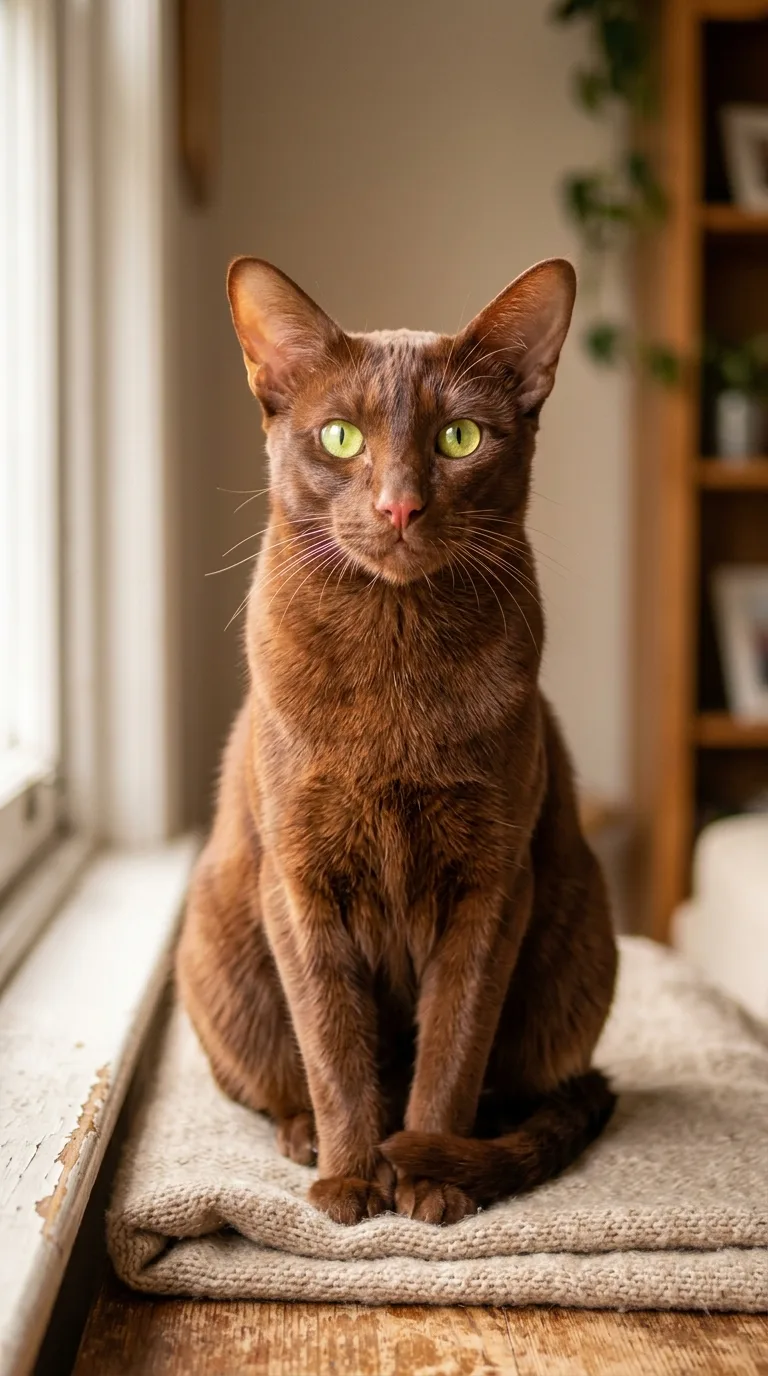
- 2The breed's mahogany-red coat is paired with striking, vivid green eyes, a combination unique among pedigree cats
- 3Originally developed in 1950s England, the CFA granted championship status in 1964
- 4Havana Browns are "velcro cats" known for reaching out with their paws to tap owners for attention
- 5Despite their rarity, they are generally healthy with a lifespan of 10-15 years

Sign up for expert-backed reviews and safety alerts all in one place.
Havana Brown at a Glance
| Trait | Details |
|---|---|
| Origin | England, 1950s |
| CFA Recognition | 1964 (Championship) |
| Weight | 6-10 lbs (males heavier) |
| Height | 12-14 inches at shoulder |
| Coat | Short, smooth, glossy |
| Coat Color | Warm mahogany (reddish-brown) only |
| Eye Color | Vivid green (required by breed standard) |
| Lifespan | 10-15 years |
| Temperament | Affectionate, intelligent, people-oriented |
| Shedding | Low |
| Rarity | Fewer than 1,000 worldwide |
| Price Range | $800-$1,500+ from registered breeders |
The Origin and History of the Havana Brown
The Havana Brown's story begins in post-World War II England, where a group of British cat breeders set out to intentionally recreate a breed that had largely vanished from cat shows. In 1920, a ruling by the governing cat fancy body declared that Siamese cats could only be registered if they had blue eyes. Because the chestnut-brown Siamese with green eyes did not meet this standard, they were quietly phased out of breeding programs. By the 1950s, the color was nearly extinct.
In 1952, a group of British breeders, including Baroness Von Ullmann, executed a deliberate breeding program: Siamese cats (seal point) crossed with black domestic shorthairs carrying the chocolate gene. The goal was to bring back the warm brown coat and vivid green eyes of the old chestnut Siamese. The first recorded kitten from this program was named Elmtower Bronze Idol, born in 1952 and considered the founding cat of the modern Havana Brown breed.
Two additional cats, Praha Gypka and further Siamese-black crosses, expanded the gene pool. In 1958, the Governing Council of the Cat Fancy (GCCF) in Britain accepted the breed under the name "Chestnut Brown Foreign." Just one year later, in 1959, the name was changed to "Havana Brown," an homage to the breed's coat color resembling the rich, warm brown of a fine Havana cigar.
American breeders imported cats from England during the late 1950s and early 1960s, and the CFA granted the Havana Brown full championship status in 1964. A pivotal moment came in 1974 when the CFA closed the Havana Brown gene pool to all outcrossing. While this preserved breed purity, it severely narrowed genetic diversity. In 1998, the CFA reversed course and approved a controlled outcrossing program, allowing crosses to certain solid-colored domestic shorthairs and select oriental breeds to rescue the gene pool from a bottleneck that threatened the breed's long-term viability.
In the United Kingdom, the breed evolved separately from the American line. The British "Havana" is considered a distinct variety by the GCCF, having more in common with the Oriental Shorthair. American Havana Browns are generally more muscular and rounded in type.
- In the United Kingdom, the Havana Brown is registered separately from the American line and is often classified under the Oriental Shorthair category. The two populations developed along slightly different lines after the gene pool split in the 1960s. American Havana Browns are generally stockier and more muscular; UK Havanas lean toward a more slender, foreign type.
What Does a Havana Brown Cat Look Like?
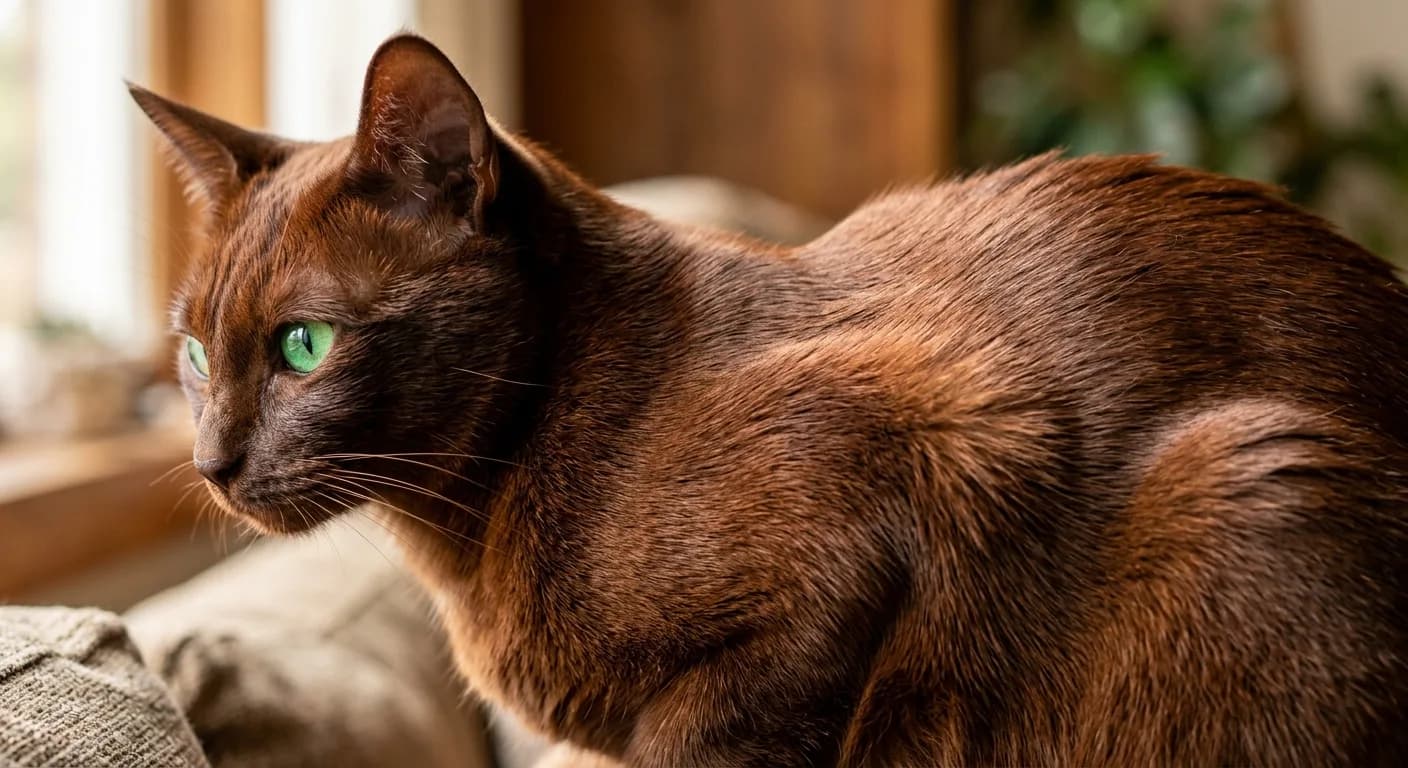
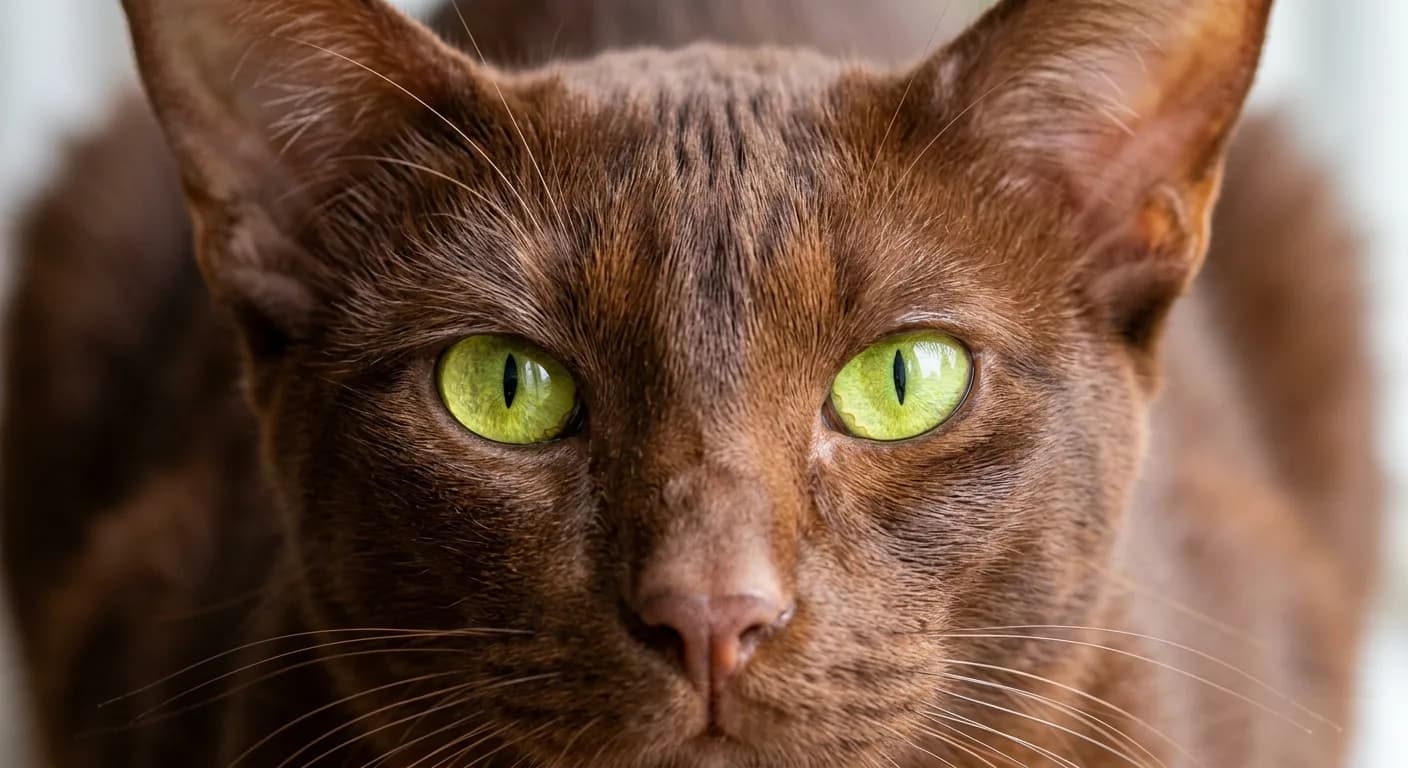
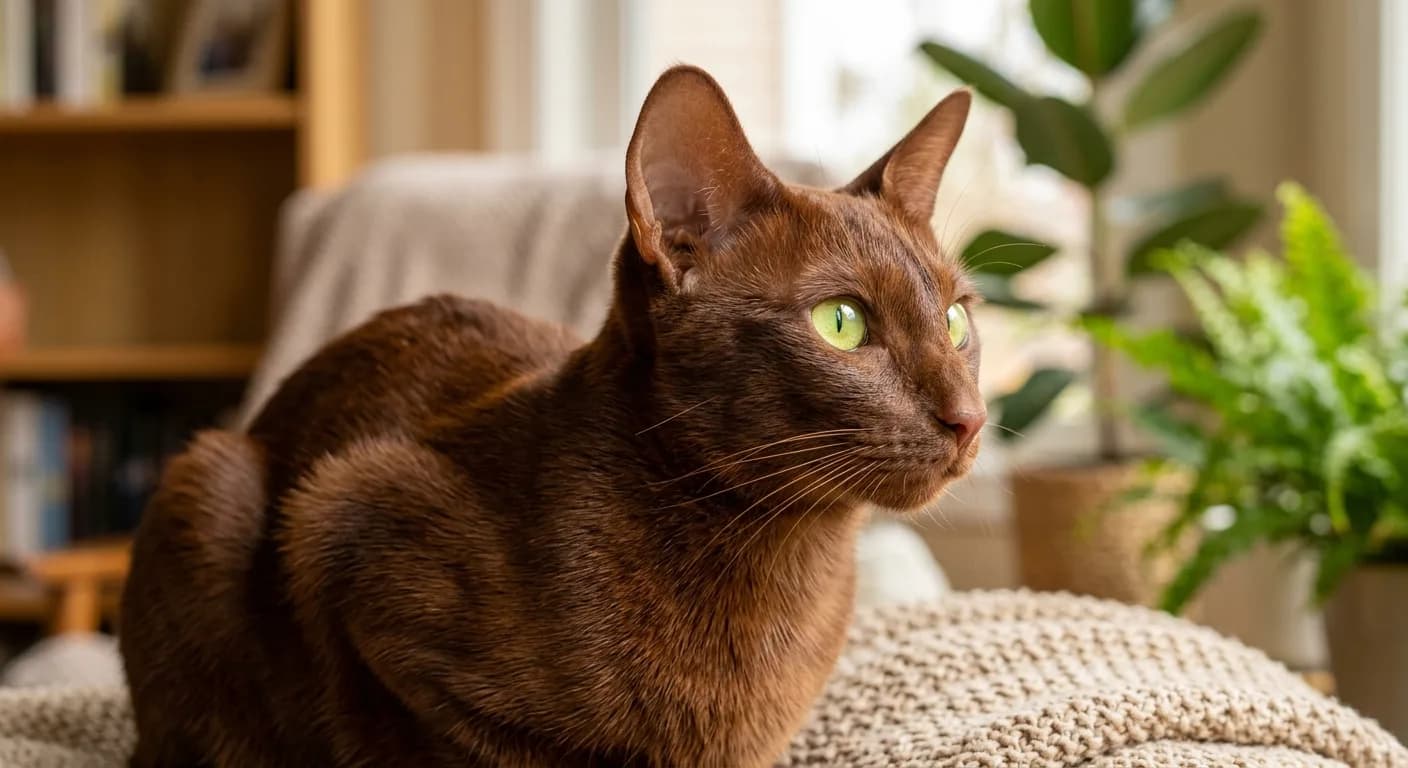
The Havana Brown's appearance is precise, distinctive, and unlike any other breed. Where many breeds allow a range of coat colors, the Havana Brown's breed standard demands one and only one: a warm, reddish-brown mahogany that the CFA describes as "rich, warm, harmonious brown, tending to red-brown (mahogany) rather than black-brown." This is not chocolate, sable, or black-brown; it is a warmer, redder hue that catches the light like polished wood.
The Eyes: The eyes are perhaps the breed's second most defining feature. They are vivid, clear, and chartreuse to vivid green in color. Kittens are born with blue eyes that shift to green as they mature; any other eye color is a disqualification in the show ring. The combination of warm reddish-brown coat and intense green eyes is not found in any other pedigreed cat.
The Body: Havana Browns are medium-sized and muscular, weighing between 6 and 10 pounds, with males typically on the heavier end. The body is firm and well-rounded, neither as lean as a Siamese nor as cobby as a British Shorthair. The neck is medium in length, the chest rounded. Legs are medium in length with compact, oval paws.
The Head and Muzzle: One of the breed's most distinguishing structural features is its muzzle. The Havana Brown has a distinctly square muzzle with a pronounced whisker break, giving the face a more rounded, gentle expression compared to the wedge-shaped Siamese head. The ears are large, round-tipped, and tilted forward, giving the cat an alert, curious expression. The nose leather is a warm rose-brown, consistent with the warm tones throughout the breed.
The Coat: The coat is short, smooth, and close-lying with a rich glossy sheen. It does not have the plush density of a British Shorthair or the silky length of a Turkish Angora. Minimal undercoat means the coat lies flat, accentuating the cat's muscular lines.
Never Scoop Again® with the Whisker Litter-Robot, the smart self-cleaning automatic litter box. Monitor visits and track weights for better overall care in the Whisker® app. Multi-cat friendly.
Petful may earn a commission when you click through to Whisker, at no extra cost to you.
- The Havana Brown's coat is often described incorrectly as chocolate or dark brown. The breed standard specifies a warm, reddish-brown mahogany, which reads distinctly warmer and more copper-tinged than either the cooler chocolate of a Havanese or the dark sable of a Burmese. Side-by-side, the difference is clear: Havana Brown reads red-brown, not black-brown.
Full-Body Structure: The Havana in Motion
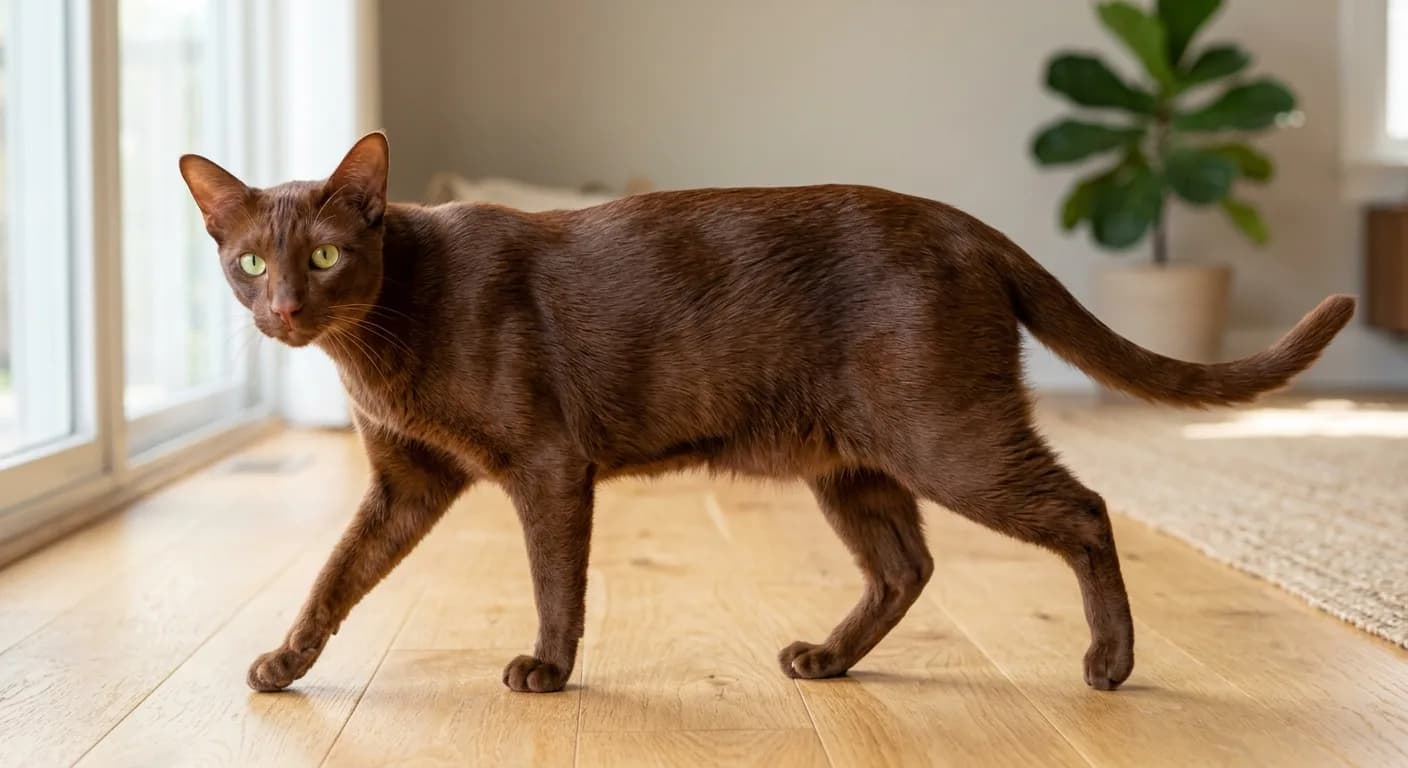
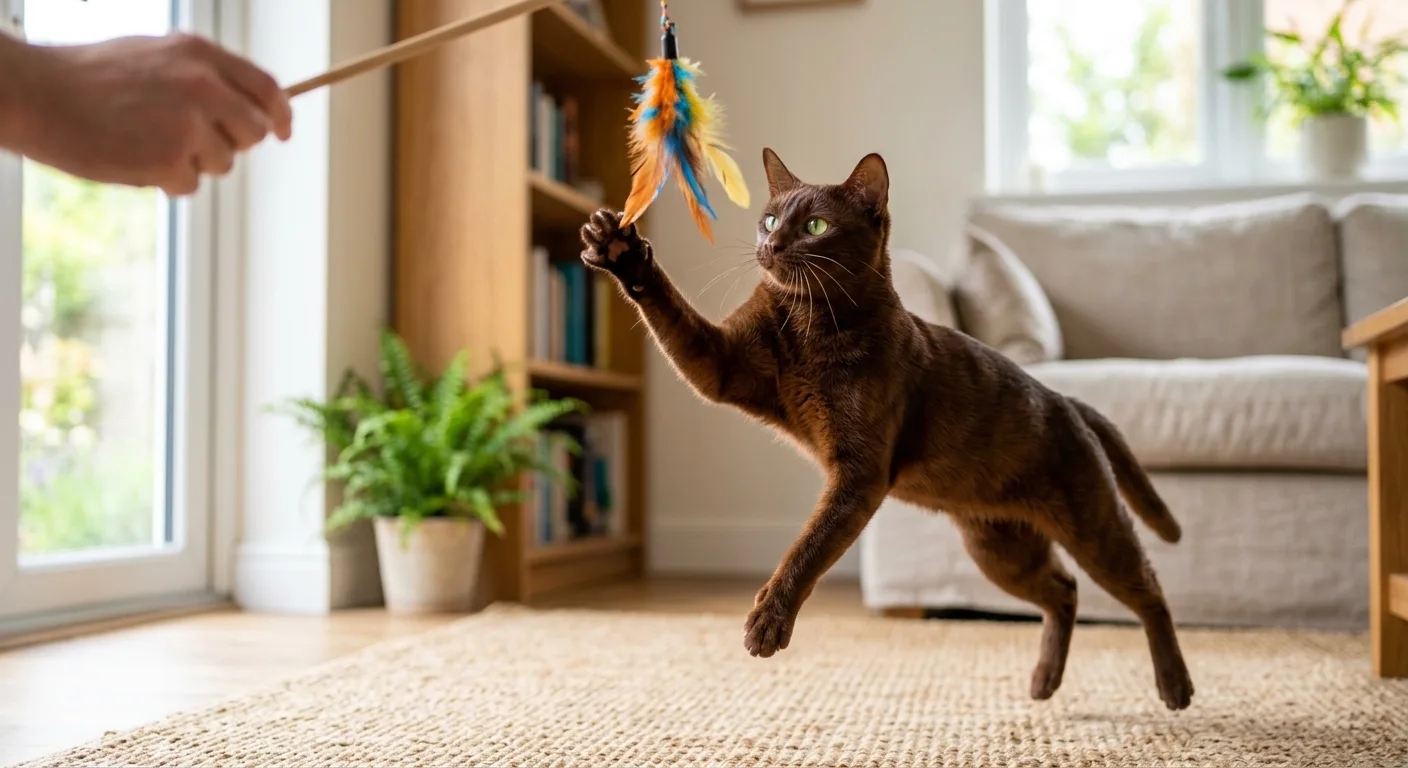
The Havana Brown is a medium-weight cat that carries its muscle lightly. When moving, the cat exhibits smooth, fluid motion with strong rear drive. Owners often describe watching a Havana Brown chase a toy as like watching a little athlete: controlled, powerful, and precise.
The tail is medium in length, neither whip-thin like a Siamese nor thick like a Maine Coon. It tapers to a moderate point. The overall silhouette in motion is balanced and athletic without being extreme in any dimension.
Havana Brown Personality and Temperament
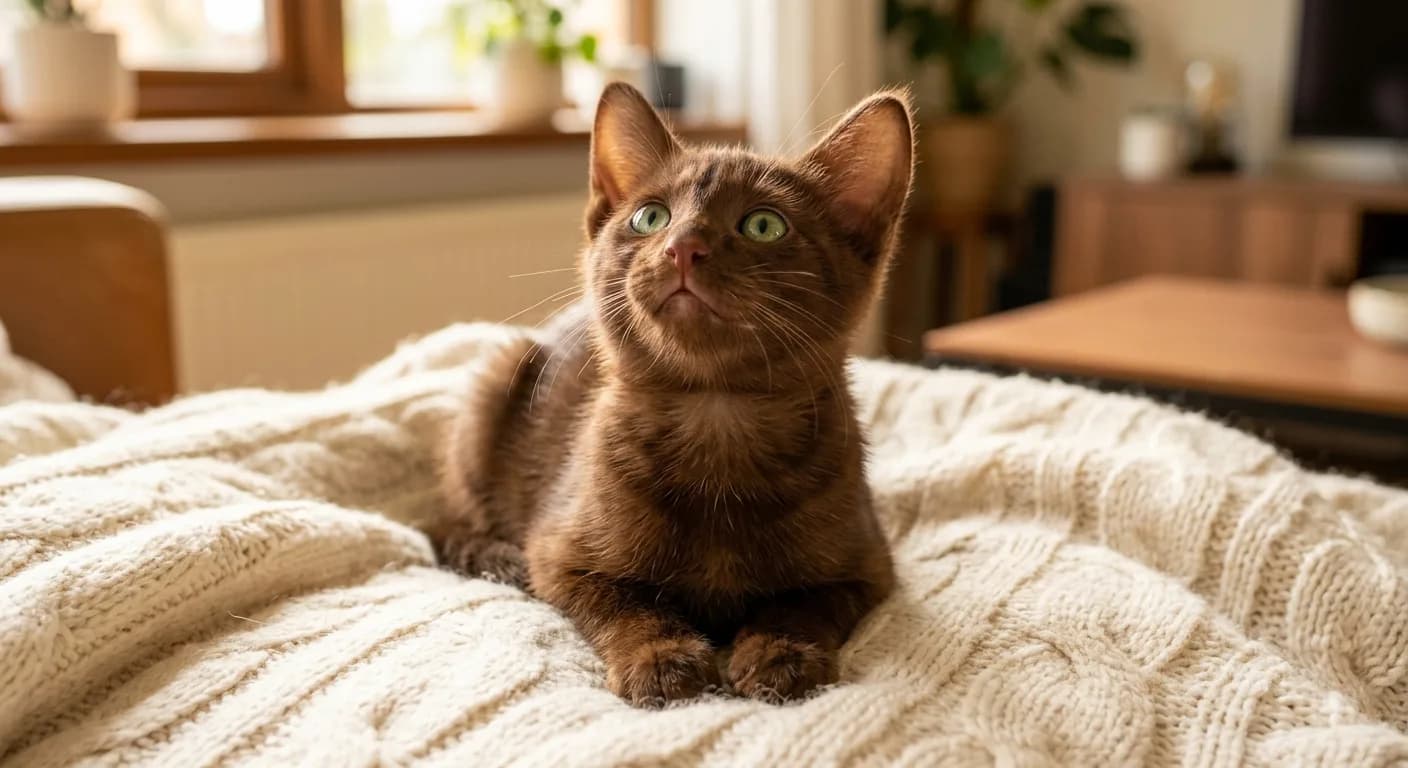
If you want an independent cat that tolerates your presence from across the room, the Havana Brown is not your breed. These cats are intensely, joyfully people-oriented. Breeders and owners consistently use the phrase "velcro cat" to describe a Havana Brown's attachment to its humans. They do not simply occupy the same space as you; they participate in whatever you are doing.
The breed's most endearing and frequently discussed behavioral quirk is the paw-reach: Havana Browns regularly extend a paw to tap their owners on the arm, face, or knee when they want attention, food, or simply to make contact. This is not a learned behavior; it appears to be hardwired into the breed, noted by owners and breeders across generations. Unlike their Siamese ancestors, Havana Browns are not particularly loud; they prefer tactile communication over vocal demands, though they will speak up in a soft, quiet voice when motivated.
- Havana Browns are known for using their paws to touch your face, hand, or arm to get attention rather than meowing insistently. Think of it as a polite tap on the shoulder. This trait is common enough that experienced Havana Brown breeders list it as a breed characteristic, not just an individual quirk.
Havana Browns are also notably curious and investigative. They explore new environments thoroughly before settling, inspect shopping bags and delivered boxes, and take a keen interest in new people. Unlike some breeds that hide from strangers, a properly socialized Havana Brown often walks up to greet guests within minutes of arrival. This confidence is part of their temperament, not simply boldness.
With Children and Other Pets: Havana Browns are adaptable and generally do well in multi-pet households. They form strong bonds with the people they live with and can warm up to dogs and other cats over time, provided introductions are handled gradually. Their moderate energy level and love of play make them good companions for children who are old enough to respect boundaries. They are not a breed that retreats; they engage.
Intelligence and Play: These are smart cats. Havana Browns learn routines quickly, respond well to puzzle feeders, and have been known to learn how to open cabinet doors. Interactive play with wand toys and feather teasers satisfies their prey drive. Without adequate stimulation, they can become destructive or develop anxiety behaviors. This is not a breed suited to long hours alone every day.
Havana Brown Grooming and Care
Grooming a Havana Brown is one of the simplest tasks in cat ownership. The short, close-lying coat requires only weekly brushing to remove loose hair and distribute skin oils. A fine-tooth comb or a rubber grooming glove works well. The breed sheds minimally, and the short coat does not mat or tangle.
Ear and Eye Cleaning: Check ears weekly for wax buildup and clean gently with a vet-approved ear cleanser and a cotton ball. The vivid green eyes should be wiped with a soft, damp cloth to remove any discharge at the corners, though Havana Browns are not particularly prone to eye discharge.
Nail Trimming: Trim nails every 2-3 weeks to prevent overgrowth and minimize furniture scratching. Provide tall, sturdy scratching posts and horizontal scratchers; the breed uses them readily.
Dental Care: Dental health deserves more attention than many owners give it. Dental disease is one of the most preventable health problems in cats. Brush the teeth at least weekly with a cat-safe toothpaste, and ask your veterinarian about professional dental cleanings as your cat ages.
- A Havana Brown's short, low-shed coat means a weekly once-over with a soft bristle brush or rubber mitt is all that is required. This makes them a practical choice for people who love cats but do not want to commit to daily grooming. The time savings versus a longhaired breed across a 12-year lifespan is considerable.
Nutrition and Feeding
Feed a Havana Brown a high-quality cat food with a named animal protein (chicken, turkey, or fish) as the first ingredient. As an obligate carnivore, the cat's diet should be predominantly protein-based with moderate fat content and minimal grain fillers. Wet food is beneficial for hydration and kidney health; many breeders recommend a combination of wet and dry food.
Calcium Oxalate Stones: Litter-Robot's research on the breed, and veterinary literature, notes that Havana Browns may have a predisposition to calcium oxalate urinary tract stones. Feed fresh water at all times (a cat water fountain encourages drinking), and discuss a urinary-supportive diet with your veterinarian if your cat shows any signs of straining or frequent litter box visits.
Portion Control: Havana Browns are not typically prone to obesity, but their playful nature does not fully substitute for appropriate portion control. Follow feeding guidelines for your cat's weight and adjust based on activity level and body condition score.
Havana Brown Health: What to Expect
The Havana Brown is generally considered a healthy breed with no single dominant genetic disease documented at the prevalence seen in some other pedigree cats. The 1998 CFA outcrossing program specifically targeted the genetic bottleneck caused by the closed stud book, and the broader gene pool has improved health robustness in recent generations.
Known and Potential Health Considerations:
- Dental disease: As with all cats, periodontal disease is common and largely preventable with consistent dental hygiene.
- Upper respiratory infections (URIs): Cats from Siamese lineage can carry a predisposition to URIs. Ensure any kitten comes from a cattery that tests for FIV, FeLV, and screens for common respiratory pathogens.
- Calcium oxalate urolithiasis: A urinary tract condition involving stone formation. Preventable with appropriate diet and hydration.
- Hemophilia: Noted rarely in the literature; a blood clotting disorder that responsible breeders screen for.
- General wellness: Annual veterinary exams, core vaccinations, and parasite prevention are the foundation of a healthy Havana Brown.
The CFA and TICA do not currently list any breed-specific genetic tests as mandatory for Havana Browns, unlike some breeds that require HCM (hypertrophic cardiomyopathy) echocardiograms. However, asking your breeder about the health history of the parents and their genetic testing practices is always prudent.
- Discuss the optimal age for spay or neuter with your veterinarian. Current research suggests that for most domestic cats, waiting until physical maturity (6-12 months) may support musculoskeletal development. For a rare breed like the Havana Brown, your breeder may have specific recommendations in your contract.
Havana Brown Lifespan
With proper care, a Havana Brown cat lives 10 to 15 years. Many well-cared-for individuals reach the upper end of this range. Factors influencing longevity include genetics, diet quality, veterinary care frequency, indoor versus outdoor living (indoor cats live significantly longer), and stress levels.
The cats in this breed are not fragile. Their medium-build, muscular frame and moderate energy level are well-suited for a long, active indoor life. Keeping them mentally stimulated with toys, puzzle feeders, and human interaction contributes to both their physical and psychological longevity.

63-inch multi-level cat tree with scratch posts, hammock, plush perches, and dangling toys. Vertical territory is non-negotiable for high-energy climbing breeds like the Bengal.
Petful may earn a commission when you click through to Chewy, at no extra cost to you.
How Rare Is the Havana Brown Cat?
The Havana Brown is, by any measure, one of the rarest cat breeds in the world. Estimates consistently place the global population below 1,000 registered individuals, and some breed club sources cite numbers closer to a few hundred active breeding cats. In any given year, the CFA registers only a small number of Havana Brown kittens, typically a fraction of even moderately popular breeds like the Siamese or Maine Coon.
The rarity is structural, not accidental. When the CFA closed the Havana Brown stud book in 1974, the breed's genetic diversity was locked in. By the time the outcrossing program was approved in 1998, the population had contracted to a critical level. Recovery has been slow. Breeding pairs are few, litter sizes modest (typically 3-5 kittens), and the pool of experienced, dedicated breeders is small. The Havana Brown does not appear on the CFA's top-10 registered breed lists.
This rarity has direct consequences for prospective owners:
- Waitlists are common. Reputable breeders frequently have waitlists of 6-12 months or more.
- Availability is geographically concentrated. Active breeders are clustered in specific U.S. regions; prospective owners may need to travel or arrange flight nanny shipping.
- Price reflects scarcity. Havana Brown kittens from registered breeders cost between $800 and $1,500 or more, reflecting the limited supply.
The rarity also means the breed is at ongoing conservation risk. Several cat fancier organizations, including TICA, have taken note of the Havana Brown's vulnerable status and advocate for responsible expansion of the gene pool through the approved outcrossing program.
- The Havana Brown is considered by some feline geneticists to be at risk of extinction as a distinct breed if the registered population does not grow. The 1998 CFA outcrossing approval was a direct response to this concern. If you are considering adding one to your family, buying from a CFA or TICA registered breeder supports the breed's survival, not just your preference for a beautiful cat.
How Much Does a Havana Brown Cat Cost?
For detailed pricing information, cost breakdowns, and what to expect from breeders, see our dedicated guide: Havana Brown cat price guide.
In brief: reputable breeders charge $800 to $1,500 for pet-quality kittens. Show-quality kittens from champion lineage can exceed $2,000. The price is a reflection of the breed's rarity, the limited number of registered breeders, the cost of health testing, and the small number of kittens produced per year. Rescuing a Havana Brown is theoretically possible but practically rare; breed-specific rescues for Havana Browns are nearly nonexistent due to the small population.
Finding a Havana Brown Kitten or Cat
The first and most important step is finding a CFA or TICA registered breeder who health tests their breeding cats and participates in the breed's conservation effort through the CFA's outcrossing program. Red flags in any breeder include unwillingness to show health testing documentation, multiple litters available simultaneously, and no waitlist.
For Havana Brown kittens, expect:

108-oz stainless steel pet fountain with quiet pump and water-level window. Bengals are notoriously water-obsessed; a flowing fountain encourages hydration and pulls them away from sinks and toilets.
Petful may earn a commission when you click through to Chewy, at no extra cost to you.
- A thorough application or interview process
- A waitlist of months, not weeks
- A spay/neuter agreement for pet-quality kittens
- Health guarantee documentation
- Vaccination and deworming records
- Microchipping
The Havana Brown Breed Club and the CFA's breeder referral service are the most reliable starting points. TICA's breeder registry is a secondary option.
If you are considering adoption, contact breed-specific cat rescues and general purebred cat rescues, though expect a long search. Given the breed's global population of under 1,000, availability through rescue channels is limited.
- Ask any breeder: (1) Are your cats CFA or TICA registered? (2) What health testing do you perform on breeding cats? (3) Can I see the parents or health documentation? (4) What is your policy if I can no longer care for the cat? A reputable breeder answers all four confidently and invites follow-up questions. Breeders who resist these questions are a red flag.
Havana Brown vs. Burmese: Know the Difference
New owners and even experienced cat enthusiasts sometimes confuse the Havana Brown with the Burmese, particularly the sable Burmese. Here is how to tell them apart:
| Trait | Havana Brown | Burmese |
|---|---|---|
| Coat Color | Warm reddish-brown (mahogany) | Sable (dark brown, cooler tone) |
| Eye Color | Vivid green (required) | Gold to yellow |
| Body Type | Medium, muscular, moderate | Medium, compact, rounded |
| Head Shape | Round with square muzzle | Rounded, no muzzle break |
| Origin | England, 1950s | Burma, ancient lineage |
| Rarity | Extremely rare | Moderately common |
| Vocal Level | Soft, quiet | Moderately vocal |
| CFA Recognition | 1964 | Long established |
The most reliable visual distinction: look at the eyes. A Burmese will have gold or yellow eyes; a Havana Brown will have vivid green. The coat color is also a tell; the Burmese sable reads as darker and cooler, while the Havana Brown's mahogany has an unmistakable warm, reddish undertone. For a full comparison of related breeds, see our Burmese cat breed profile.
Havana Brown Cats and Other Pets
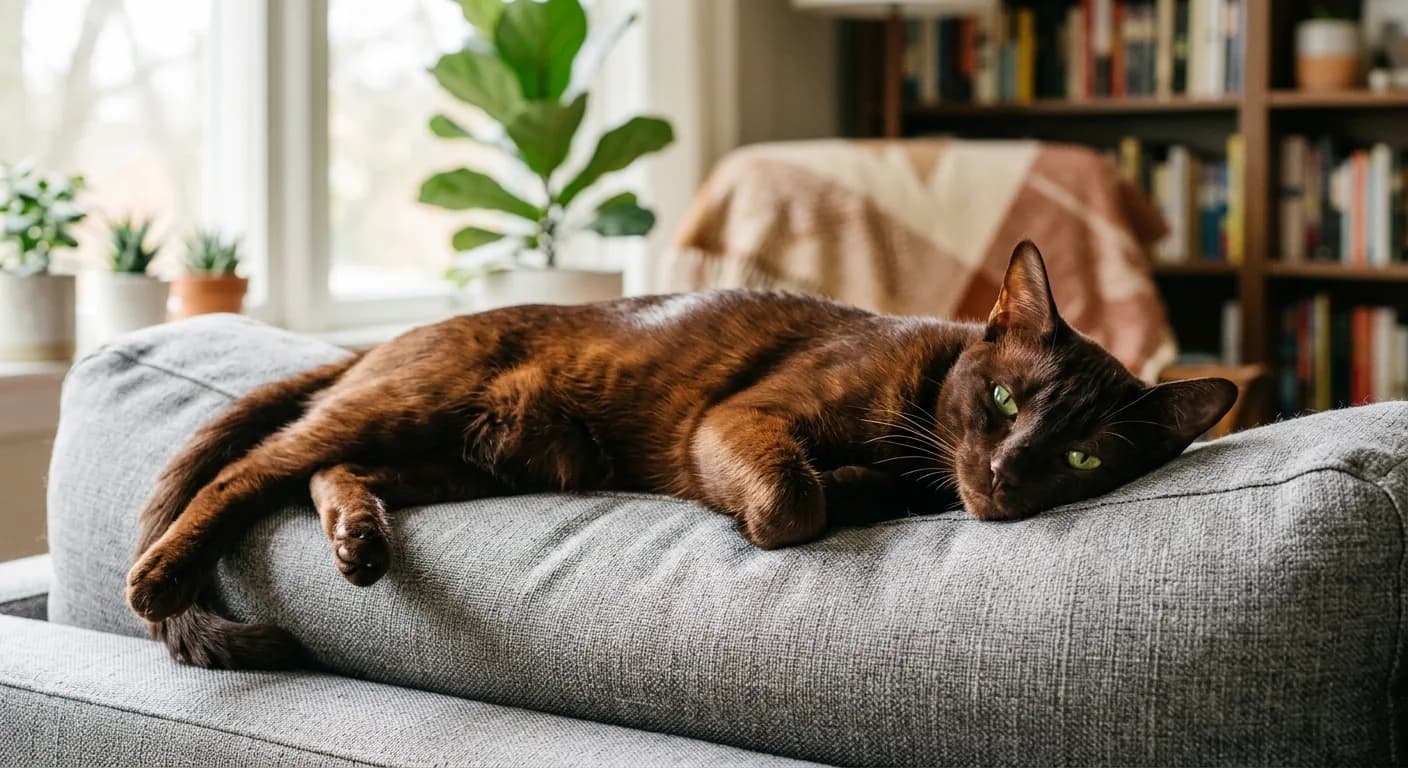
Havana Browns are social enough to adapt to multi-pet households, but they do best with gradual, well-managed introductions. They are not the cat that automatically dominates or shrinks from other animals; they approach new companions with curiosity and reasonable confidence.
With other cats: Provided introductions follow a slow approach (scent-swapping first, visual introduction through a barrier, then direct contact), most Havana Browns accept feline companions. They may prefer another active, people-oriented breed over a very sedentary or aloof one.
With dogs: Dog-savvy Havana Browns can coexist well with dogs, particularly calm or cat-tolerant breeds. Their confident temperament means they are less likely to flee and trigger a chase response, but they do not appreciate rough handling.
With children: They are generally patient and playful with respectful older children. Very young children who cannot yet read feline body language should be supervised, as with any cat.
For more on building a multi-cat household, explore our cat breeds category.
The Havana Brown and the Siamese Connection
Understanding the Havana Brown's Siamese ancestry explains several of the breed's traits. The Siamese contributed the breed's intelligence, curiosity, and strong desire for human interaction. However, breeders have successfully moderated the Siamese's famously loud voice and high-strung energy into something warmer and more manageable in the Havana Brown.

Color-changing crystal litter that flags pH shifts in your cat's urine, an early warning sign of UTIs, kidney issues, and more.
Petful may earn a commission when you click through to Chewy, at no extra cost to you.
The black domestic shorthair crosses contributed body substance, coat density, and the recessive chocolate gene that produces the breed's distinctive mahogany color. The chocolate gene (b/b genotype) combined with the non-agouti allele produces the solid warm brown that defines the breed. This specific genetic combination is what makes breeding true Havana Browns technically demanding and the breed inherently rare.
For a deep dive into the Siamese's influence on modern cat breeds, see our Siamese cat breed profile.
- The Havana Brown's coat color results from the homozygous chocolate gene (b/b) combined with the non-agouti gene. The specific warm, reddish-brown hue that distinguishes the breed from a cooler chocolate brown requires both of these recessive genes to be expressed together. This genetic requirement is part of why producing correctly colored Havana Browns is challenging even for experienced breeders.
Is a Havana Brown Cat Right for You?
The Havana Brown is a genuinely special cat for the right household. They thrive in homes where someone is present for much of the day, where they receive consistent attention and interaction, and where their intelligence is engaged through play and environmental enrichment. They are not well-suited to households where they would be left alone for 10-hour stretches five days a week without a companion animal.
They are an excellent fit for:
- Single adults or couples who want a deeply interactive, affectionate companion
- Families with older children who understand how to engage respectfully with cats
- Multi-pet households with calm dogs or sociable cats, provided introductions are managed
- People who want a low-maintenance coat but a high-engagement personality
They are a poor fit for:
- Owners who want an independent, low-interaction cat
- Very busy households where the cat would be frequently alone
- Those unwilling to commit to the waitlist and vetting process a rare breed demands
Frequently Asked Questions About the Havana Brown Cat
Havana Brown kittens from reputable CFA or TICA registered breeders typically cost between $800 and $1,500 for pet-quality kittens. Show-quality kittens from champion bloodlines can exceed $2,000. The price reflects the breed's extreme rarity, limited number of active breeders, and the health testing required of responsible breeding programs. See our full Havana Brown price guide for a detailed breakdown.
The Havana Brown is one of the rarest cat breeds in existence. Estimates place the global population at fewer than 1,000 registered individuals, with some sources suggesting the number of active breeding cats is far lower. The CFA's 1974 stud book closure created a genetic bottleneck that the 1998 outcrossing program has been slowly addressing, but the population remains critically small.
With proper care, Havana Brown cats live 10 to 15 years. Many individuals in the upper range of this lifespan remain active and healthy well into their senior years. Factors such as indoor-only living, quality nutrition, regular veterinary care, and a low-stress environment all support longevity.
Havana Browns are exceptional pets for the right owner. They are deeply affectionate, intelligent, curious, and people-oriented. Their hallmark behavior, reaching out with a paw to tap owners for attention, is charming to most people. They do require consistent companionship and mental stimulation; they are not well-suited to long daily periods alone. For engaged, interactive owners, they are outstanding.
Among the rarest pedigree cats recognized by major cat registries, the Havana Brown is consistently listed alongside the Sokoke (a semi-wild breed from Kenya) and the Kurilian Bobtail (a Russian island breed with very limited breeding stock outside Russia). Other frequently cited ultra-rare breeds include the Serengeti, the Minskin, and the American Wirehair. Rankings vary by source and year.
The cost of a Havana Brown kitten reflects supply and demand at an extreme. With fewer than 1,000 individuals worldwide and only a small number of registered breeders active in any given year, litters are scarce. Add to that the cost of health testing, genetic screening, the CFA or TICA registration process, and the breeders' decades of breed preservation work, and the price makes sense. Waitlists of 6-12 months or more are common.
Generally yes. Havana Browns are confident, social, and curious enough to adapt to multi-pet households when introductions are managed gradually. They typically coexist well with other cats and dog-savvy individuals. Their confident temperament makes them less prone to stress-triggered aggression or hiding. Supervised, patient introductions over 2-4 weeks yield the best results.
No cat is truly hypoallergenic; all cats produce the Fel d 1 protein responsible for most human allergies. Havana Browns have a short, low-shedding coat that deposits less hair around the home, which some allergy sufferers find reduces their symptoms compared to heavy-shedding breeds. However, there is no scientific evidence that Havana Browns produce less Fel d 1 than other breeds. People with severe allergies should spend time with the individual cat before committing.
The CFA breed standard for the Havana Brown recognizes only one color: a warm, reddish-brown mahogany described as tending to red-brown rather than black-brown. This is one of the defining characteristics of the breed. TICA recognizes both the traditional mahogany and a lavender (dilute) variant in some competitive categories, but the CFA holds to the single mahogany standard. There are no tabby, pointed, or bicolor Havana Browns in the show-accepted standard.
Havana Browns are relatively quiet compared to their Siamese ancestors. They have a soft, pleasant voice and will use it when motivated, but they prefer tactile communication, specifically their signature paw-reach behavior, to loud vocalizing. Experienced owners often describe them as the ideal balance: expressive and communicative without being demanding or noisy.

Kristine Lacoste has been researching dog and cat breeds for nearly a decade and has observed the animals up close at dog shows in both the United States and the United Kingdom. She is the author of the book One Unforgettable Journey, which was named as a finalist for a Maxwell Award from the Dog Writers Association of America, and was host of a weekly pet news segment on the National K-9 Academy Radio Show. In addition, she was the New Orleans coordinator for Dogs on Deployment, a nonprofit that helps military members and their pets, for 3 years. Kristine has researched and written about pet behaviors and care for many years. She holds a bachelor’s degree in psychology, another bachelor’s degree in English and a Master of Business Administration degree.
Sign up for expert-backed reviews and safety alerts all in one place.