Australian Shepherd: Size, Temperament, Cost, and Care
Meet the Australian Shepherd beyond the coat colors. Compare adult size, temperament, exercise and grooming needs, health questions, and a practical ownership budget before choosing your dog.
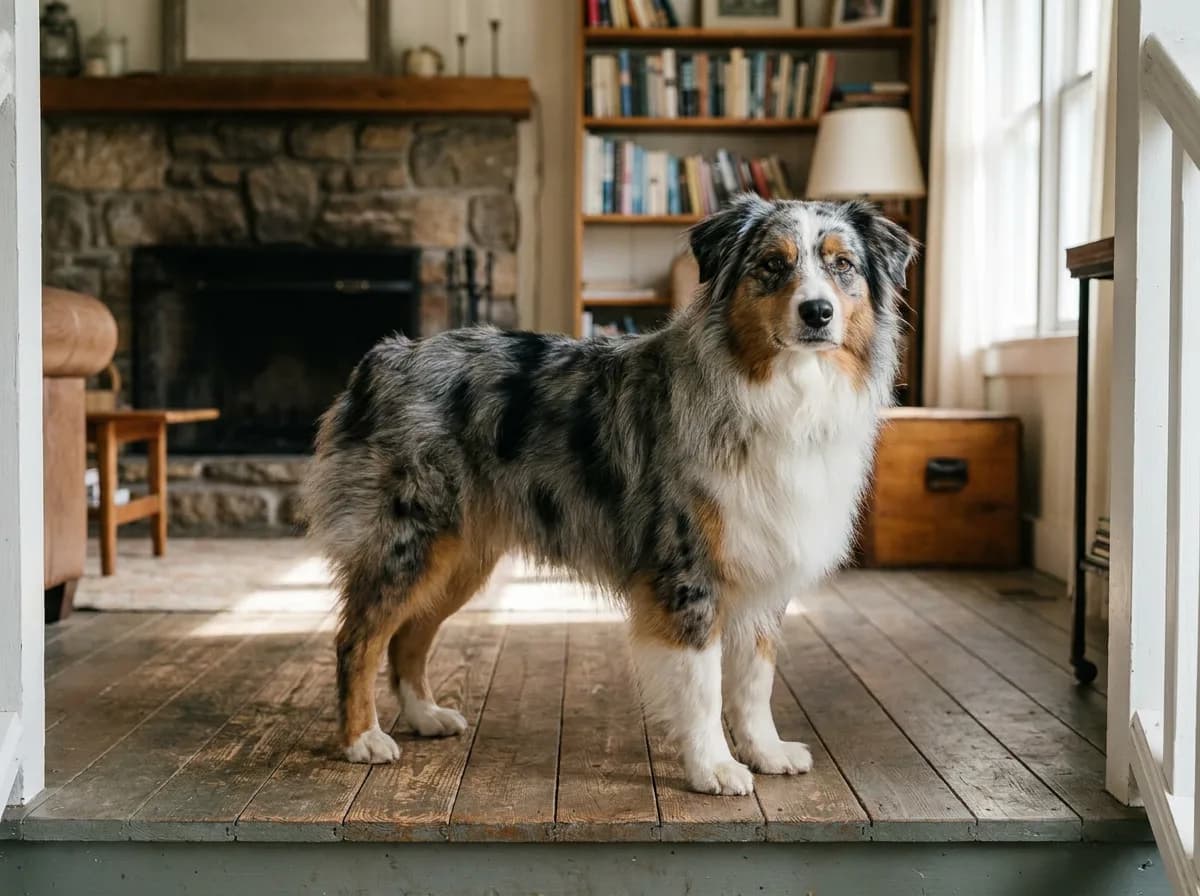
Blue merle Australian Shepherd standing on a wooden floor in a living room.
Petful is reader supported. As an affiliate of platforms like Amazon and Chewy, we may earn a commission when you buy through links on this page. There is no extra cost to you.
An Australian Shepherd can be an affectionate, capable family companion when daily training and activity are part of your life. This medium-sized herding dog is a demanding choice if you want a pet who mainly entertains themselves. Before choosing an Aussie, compare the dog's working instincts with your ordinary weekday, including the hours you are away.

Sign up for expert-backed reviews and safety alerts all in one place.
What is an Australian Shepherd?
The Australian Shepherd is an intelligent working dog in the herding group, developed into its modern form in the United States. Despite the name, its history involves European herding dogs and livestock routes through Australia before its development on American ranches, according to the American Kennel Club breed profile.
An adult is generally 18–23 inches tall at the shoulder and about 40–65 pounds, with a commonly cited lifespan of 12–15 years. Those ranges describe the breed, not a promise about a particular puppy. The practical question is whether you want to spend time teaching a dog who notices movement, learns routines, and may try to organize the household.
- 1The Australian Shepherd belongs to the herding group and needs daily exercise plus purposeful mental work.
- 2Choose the individual dog's temperament and health history before choosing a coat color.
- 3Plan for training, quiet rest, grooming, and help on days you cannot provide normal care.
A breed standard cannot tell you whether a dog will enjoy crowded outings or settle during your workday. Meet adult relatives when possible, and ask what the puppy's current daily routine actually looks like.
How big do Australian Shepherds get?
The Australian Shepherd's physical characteristics include a balanced body slightly longer than tall. Males generally stand 20–23 inches at the shoulder; females generally stand 18–21 inches. The Australian Shepherd Club of America gives those preferred height ranges and notes that females are usually smaller. Adult weight varies with frame and body condition, so a smaller healthy Aussie should not be fed toward the top of a breed chart.
| Measure | Useful reference | What it means at home |
|---|---|---|
| Male adult height range | 20–23 inches at the shoulder | Measure the dog standing, not sitting or including the head. |
| Female adult height range | 18–21 inches at the shoulder | Individual males and females can overlap in size. |
| Overall adult weight range | About 40–65 pounds | Check body condition with your veterinarian rather than chasing a target weight. |
| Typical lifespan reference | 12–15 years | This is a broad breed guide, not an individual survival prediction. |
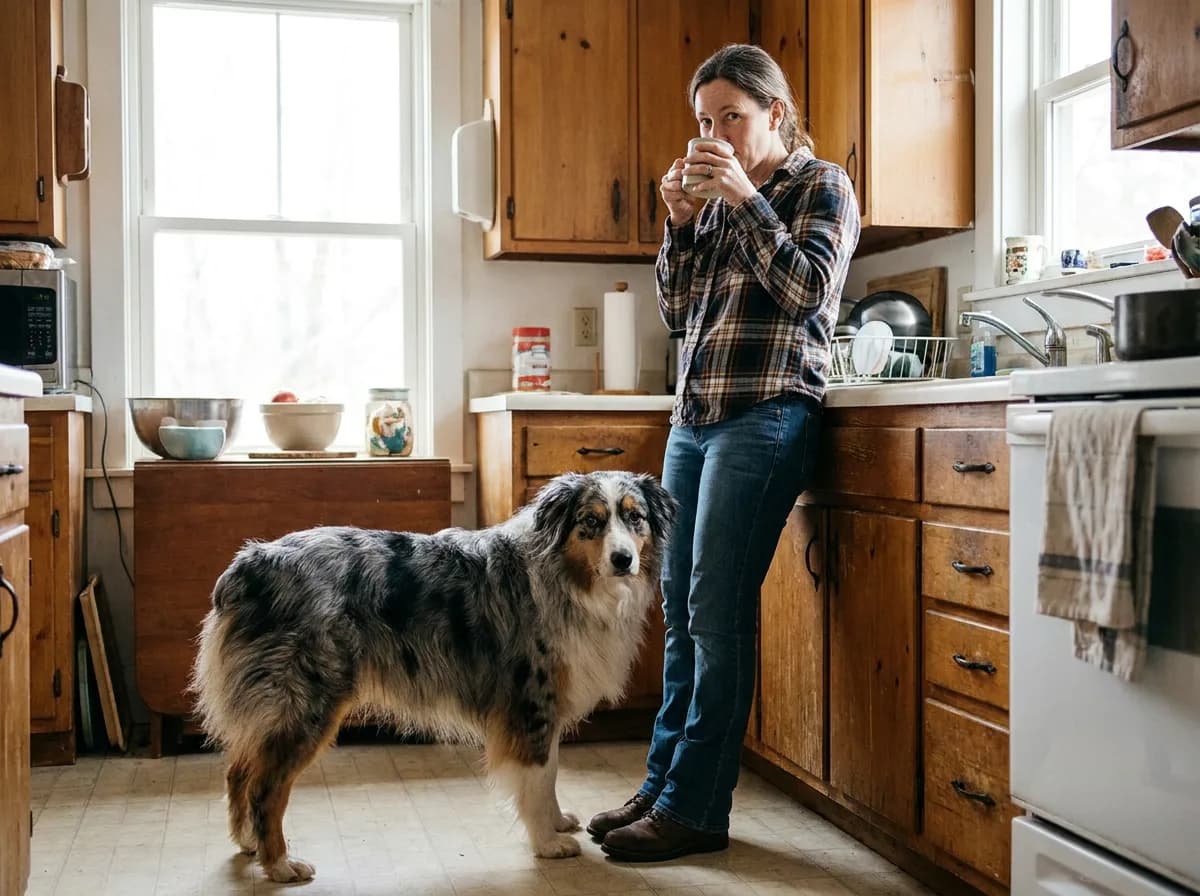
For equipment, take the dog's actual measurements before ordering. A crate should allow comfortable standing, turning, and lying down; its size label alone is not a fit test. The Frisco Heavy Duty Fold & Carry Single Door Crate, X-Large is one option to compare against those measurements. It may be more space than a smaller Aussie needs. Introduce any crate gradually as a comfortable resting place, and arrange toilet and movement breaks.
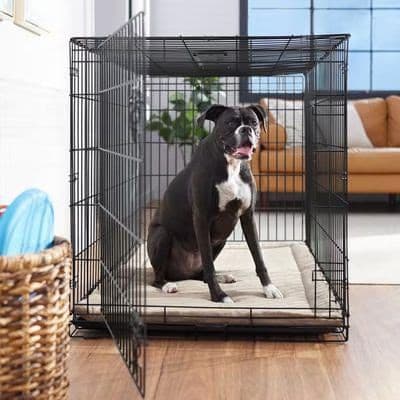
Petful may earn a commission when you click through to Chewy, at no extra cost to you.
Australian Shepherd temperament and personality
Aussies often combine close attention to their people with a strong interest in movement and activity. The ASCA ownership guide describes intelligence, trainability, and sometimes reservation with strangers. A dog can be deeply affectionate at home without wanting every visitor to touch them.
That temperament rewards clear, consistent teaching. Decide how visitors should enter, where the dog can rest, and what polite behavior looks like before an excited puppy starts rehearsing their own version. For example, reward four feet on the floor during greetings instead of sometimes inviting jumping and sometimes scolding it.
“Aussie rage syndrome” is not an explanation for normal barking, herding, or adolescent frustration. Rare idiopathic aggression refers to aggression with no identified cause; it cannot be diagnosed from a breed label or an online description. The Merck Veterinary Manual distinguishes this from more common fear, conflict, and pain-related aggression.
- With sudden onset aggression, prevent access to the situation that triggered the episode and contact your veterinarian.
- Write down what happened immediately beforehand, including handling, food, sleep, and nearby people or animals.
- Ask whether a veterinary behavior referral is appropriate. Avoid deliberately recreating the incident to record it.
Is an Australian Shepherd a good family dog?
Yes, an Aussie can be a good house dog for an engaged household that can provide activity, supervision, and predictable rest. A securely fenced yard can make management easier, but it does not replace a daily job or training. A first-time owner can succeed with preparation and support; an experienced owner can still choose a dog whose needs exceed their available time.
Use a real week as the test. In the example schedule below, exercise alone occupies seven to ten and a half hours, plus short training sessions. In the budgeting example later, recurring care totals $3,240 per year. Both are planning examples to adjust, not minimums that guarantee a happy dog. Identify who provides that time and money before bringing one home.
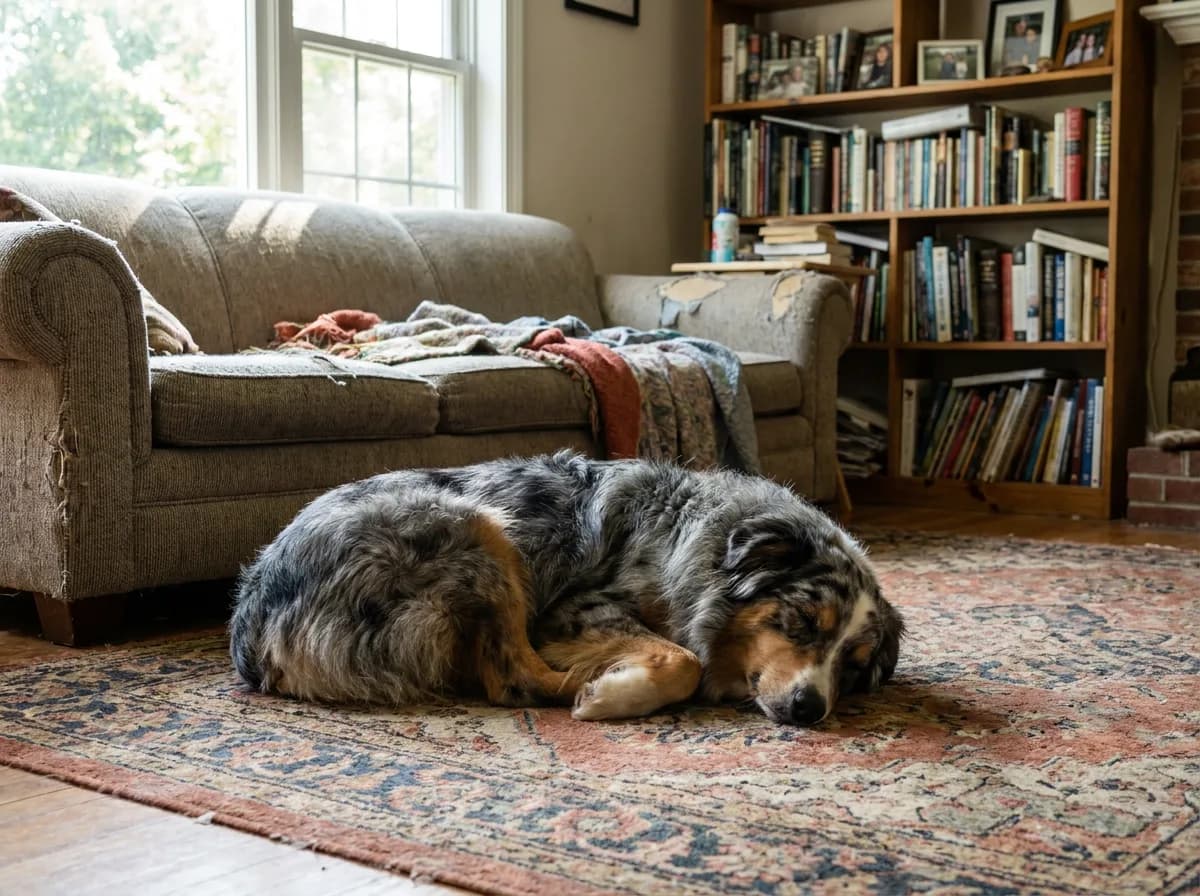
Young children need adult supervision around any dog. Set clear household boundaries:
- Interrupt running, squealing games that invite chasing or heel nipping with a barrier and an alternative activity.
- Give the Aussie a retreat that children leave alone.
- Teach children not to disturb eating or sleeping dogs; do not expect a child to train the dog.
A clearly defined resting spot helps the family practice those boundaries. Compare the sleeping surface of the FurHaven Velvet Waves Orthopedic Sofa Bed, Large with your dog's stretched-out length. The bolsters take up some space. A bed gives you somewhere to reward settling; it does not itself resolve anxiety or make a painful dog comfortable enough to skip a veterinary examination.
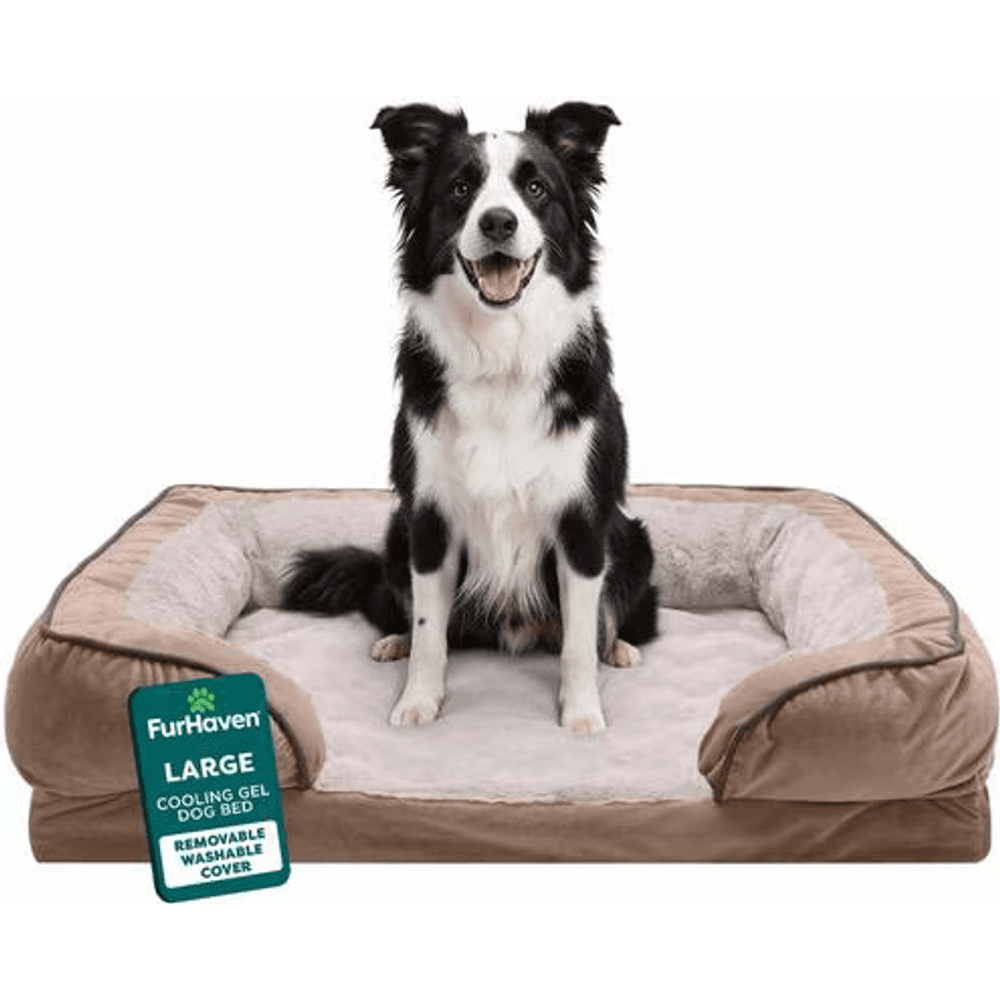
An orthopedic sofa bed with three bolstered sides for dogs who like to rest their head and joints against a cushion. The supportive foam base cradles hips and elbows, a comforting spot for an older or shaky dog to settle.
Petful may earn a commission when you click through to Chewy, at no extra cost to you.
Australian Shepherd lifespan and health
The AKC's Australian Shepherd ownership overview lists a typical 12–15 year lifespan. This broad reference cannot predict an individual dog's future. Maintain veterinary care and ask about the family's health history rather than accepting a breeder's assurance that a puppy will reach a particular age.
There is not a representative, current all-Aussie mortality dataset in the evidence used for this guide that establishes one leading cause of death. Naming cancer or another disease as the answer without that population evidence would overstate what we know. Breed health concerns and a dog's actual diagnosis are also different questions.
The United States Australian Shepherd Association health program discusses screening for orthopedic and eye conditions, including hip dysplasia and collie eye anomaly. A DNA panel cannot replace every examination or structural evaluation. Review the actual results with your veterinarian, especially when a seller describes a dog simply as “health tested.”
- The MDR1 gene mutation can affect sensitivity to certain drugs. Share the genetic test result with every veterinary practice caring for your dog. MDR1 drug sensitivity does not mean all heartworm preventives are unsafe: Washington State University confirms that Heartgard Plus is safe for affected dogs when used at labeled doses.
Drug choice, formulation, and dose matter. Washington State University's MDR1 guidance explains which medications need special consideration. Do not stop prescribed parasite protection or substitute a livestock preparation because of a general online warning about ivermectin-sensitive dog breeds. Have the veterinarian interpret your dog's result and medication list.
The other major genetic distinction is a double merle pairing. The Australian Shepherd Health & Genetics Institute explains the hearing and eye risks when puppies inherit merle variants from both parents. Coat appearance alone cannot establish the complete breeding risk. This is a question to resolve before a deposit, not after choosing a photograph.
Feeding an Australian Shepherd
Feed for life stage, body condition, and workload. A working adult and a mostly home-based companion may need different portions even when they weigh the same. Measure food, count training rewards, and review weight changes with your veterinarian. The dog food for Australian Shepherds guide covers food-selection considerations in more detail. A breed name on a package is less useful than a suitable nutritional adequacy statement and a feeding plan that fits the individual dog.
Exercise, training, and dog sports for an Aussie
Australian Shepherds are high maintenance mainly because they need your participation. Physical activity matters, but so do learning, sniffing, and opportunities to disengage. A long session of frantic ball chasing does not teach a dog how to relax when the game ends.
For a healthy adult, try planning two daily activity periods and several brief lessons around ordinary routines. The following schedule is an example to discuss and adapt to the individual dog's fitness, weather, health, and recovery. It is not an exercise prescription for puppies, seniors, or dogs with medical conditions.
- Morning: A 30–45 minute outing with walking, sniffing, and a few easy training repetitions.
- Later in the day: Another 30–45 minutes of suitable movement or a supervised activity the dog enjoys.
- Between outings: Two five-minute lessons on a useful skill, such as recall, loose-leash walking, or going to a mat.
- Weekly calculation: Those outings total seven to ten and a half exercise hours. The short lessons add about 70 minutes across seven days.
Make the weekly exercise hours visible on your calendar. If travel, school pickup, or a late shift regularly removes one session, arrange help in advance. A fenced yard can host training games, but leaving the dog outside alone does not fill the same role. Watch whether the routine produces a dog who can eat, rest, and recover comfortably, rather than one who becomes increasingly frantic.
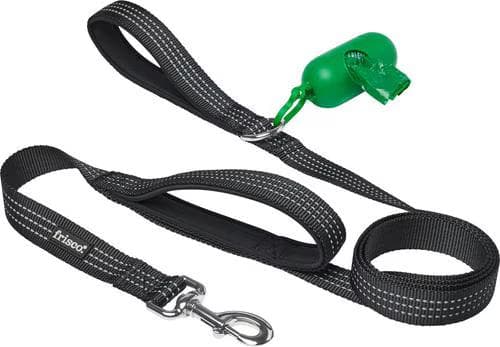
For neighborhood practice, the Frisco Traffic Leash with Dual Padded Handles, 6-ft offers a shorter handle for briefly managing close passing situations. Keep comfortable slack when possible, use suitable fitted walking equipment, and create distance when your dog is overwhelmed. Equipment supports teaching; it does not teach loose-leash walking for you.
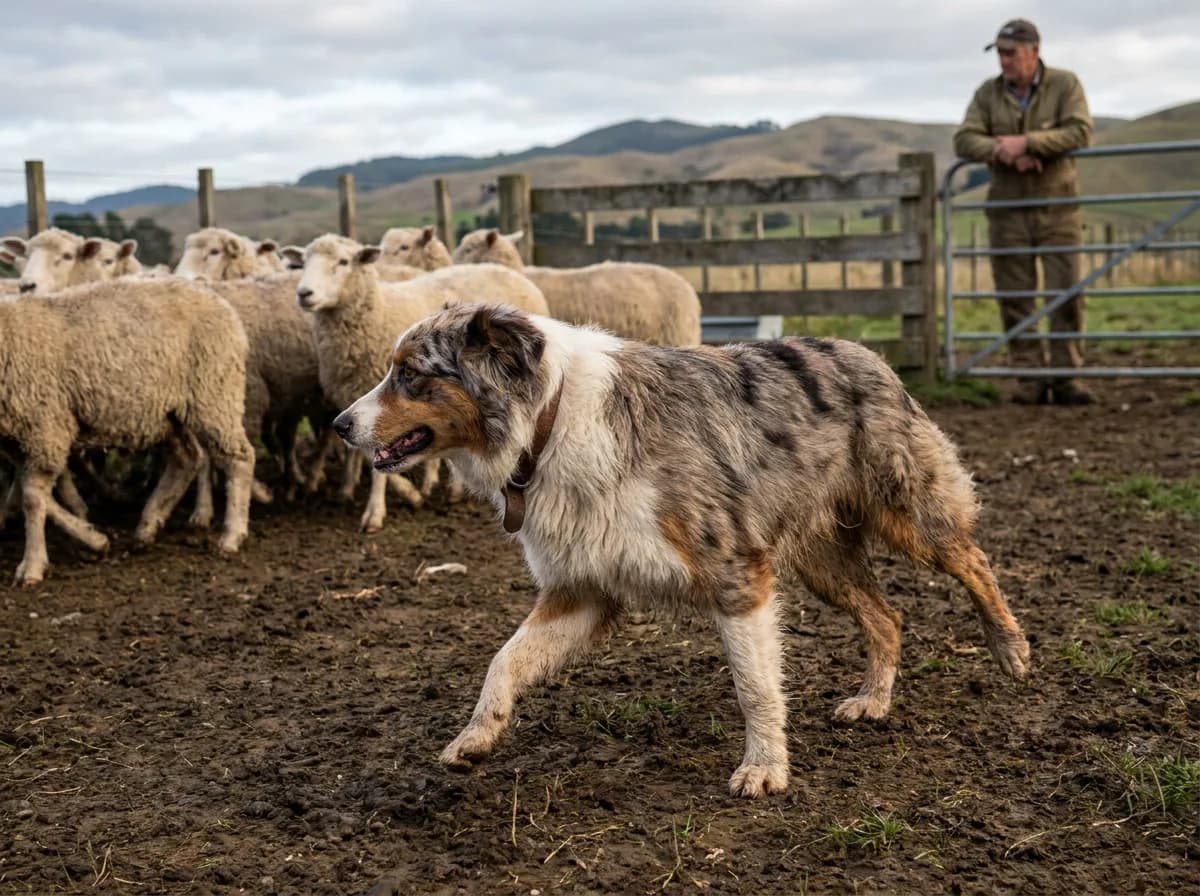
Dog sports offer structured learning, but the right starting point is a foundation class. Ask instructors about safe progression before agility jumps or sustained athletic work. Scent games and introductory rally exercises can provide tasks without needing livestock. Herding should involve an experienced instructor and appropriately managed animals, not practice on neighborhood pets.
- With dog toys and puzzles, supervise unfamiliar items, start at an easy level, and remove pieces the dog tries to swallow.
- Rotate a few useful activities instead of continually making every task harder.
- End before the session becomes a test that leaves the dog frustrated.
At what age do Aussies calm down?
There is no birthday when every Aussie becomes calm. Maturity can improve impulse control, but an adult still needs an appropriate routine, and habits rehearsed through adolescence do not automatically disappear. Look for progress in specific behaviors, such as resting while you cook or waiting at the door, instead of waiting for energy to vanish.
Petful may earn a commission when you click through to Chewy, at no extra cost to you.
Teach settling as a skill alongside exercise. Begin after an ordinary outing, in a quiet room with few distractions. Reward a moment of relaxed behavior, release the dog before frustration builds, and increase duration gradually. If restlessness changes suddenly, disrupts sleep, or persists despite a suitable routine, discuss it with your veterinarian rather than simply adding harder exercise.
Small rewards make brief lessons easier to repeat. Zuke's Mini Naturals Chicken Recipe treats, 10-oz pouch are one option if chicken suits your dog's diet. Use small portions and account for treats in daily food intake. Part of the dog's regular meal can also work as a training reward.
Do Australian Shepherds bark a lot?
An Aussie may bark a lot, especially when alerting, excited, frustrated, or reacting to movement. Breed tendencies cannot predict your future dog's noise level. Ask a breeder or rescue how that particular dog responds to doorbells, passing dogs, being separated from people, and settling after activity.
The useful first step is to identify the situation, not demand silence in every context. Keep a short record of what starts the barking and what happens afterward. Closing a view of a busy sidewalk may prevent repeated window patrols while you teach a different response. Reward quiet attention at a distance the dog can manage. Persistent distress when left alone needs assessment; it should not be assumed to be stubbornness.
What an Australian Shepherd costs
The purchase price is only one part of ownership. Good Dog's Australian Shepherd price guide gives a $1,500–$2,500 marketplace reference for puppies; that is not a national average or a quote for every breeder. Adoption costs and what they include need separate checking.
As an editable planning example, $2,000 for acquisition, $400 for setup, and $270 a month for recurring care total $5,640 in the first year. The same monthly assumptions produce a yearly ownership cost of $3,240 after setup. These are arithmetic assumptions, not collected vendor prices, and exclude emergencies and inflation. Replace them with local quotes in our Australian Shepherd price and ownership budget.
- 1Example first year cost: $2,000 acquisition + $400 setup + 12 × $270 recurring care = $5,640.
- 2Example yearly ownership cost after setup: $3,240, before emergencies or price changes.
- 3Confirm local care costs and a backup caregiver before committing.
Mini, toy, and teacup Australian Shepherds
Those labels need clarification before you compare dogs or prices. “Mini Australian Shepherd” may refer to a Miniature American Shepherd, but an advertisement is not enough to establish registry identity. “Toy” and “teacup” are not size categories in the standard Aussie breed standard. Ask for the dog's registered breed, registry, parents' sizes, and health records. Our Miniature American Shepherd profile explains the smaller breed and its background; a smaller body does not remove herding instincts.
For an adult Miniature American Shepherd, the AKC gives a broad size range of 13–18 inches at the shoulder and 20–40 pounds. That is smaller than the standard Australian Shepherd ranges above, but it is not a guarantee for a puppy sold as a mini, toy, or teacup. Establish the registered breed before using either size reference.

Small, soft chicken-recipe rewards for short adult-dog training sessions. Portion into tiny pieces and include treats in the daily calorie budget.
Petful may earn a commission when you click through to Chewy, at no extra cost to you.
Australian Shepherd vs. Border Collie
Both breeds can suit owners who enjoy teaching an active herding dog. Neither is a shortcut to an easy companion because of intelligence. Compare the individual dogs' sensitivity, interest in movement, recovery after excitement, and ability to settle, as well as physical size. Our Australian Shepherd vs. Border Collie comparison looks at those differences in detail. Meet adult dogs from the lines you are considering; a breed-level description does not rank every dog's working style or trainability.
Australian Shepherd vs. Australian Cattle Dog
The Australian Shepherd and Australian Cattle Dog are different herding breeds. The AKC describes the Cattle Dog as compact and muscular; Blue Heeler and Queensland Heeler are names for that breed. Those names do not describe a blue merle Australian Shepherd. Start by confirming which breed the records identify rather than choosing from a similar-sounding advertisement.
Both need engaged owners who will teach everyday skills and manage herding behavior. A shorter-looking coat or smaller frame does not tell you which individual will settle more comfortably in your home. Ask about the adult dog's daily activity, responses to moving people or animals, and experience being left alone. Read our Australian Cattle Dog profile for that breed's own background and care, then compare the actual dogs you could bring home.
Male vs. female Australian Shepherds
Neither sex is consistently the better family choice. Males tend to be larger, but sex alone does not reliably tell you which puppy will be cuddly, independent, protective, or easier to teach. Ask about the individual dog and the temperaments of related adults.
If you already have pets, discuss the proposed match with the breeder or rescue rather than choosing from a general “boys versus girls” description. Reproductive management also affects daily life for intact dogs. Discuss the timing and individual tradeoffs of spaying or neutering with your veterinarian; it is not a substitute for choosing a compatible temperament or teaching household skills.
Are Australian Shepherds an aggressive breed?
An Australian Shepherd is not automatically aggressive because it is a herding dog, and no breed label guarantees safety. There is no single universal “aggressive dog list.” Housing and insurance restrictions vary, so check the exact written terms that apply to your situation before adopting.
For behavior, look at the dog's history and context. Growling, lunging, guarding, or biting deserve a safety plan and professional assessment, not reassurance that “Aussies are just protective.” The Merck behavior guidance emphasizes identifying medical contributors and the situations that provoke aggression. Keep people and other animals safely separated from known triggers while arranging help.
Australian Shepherd coat, colors, and grooming
The breed's recognized colors include black, red, blue merle, and red merle, with permitted white markings and tan points. A black tricolor coat combines black with white and tan; a red tricolor coat uses red-brown pigment with white and copper points. Black-and-white or black-and-tan descriptions refer to markings, not separate Australian Shepherd breeds.
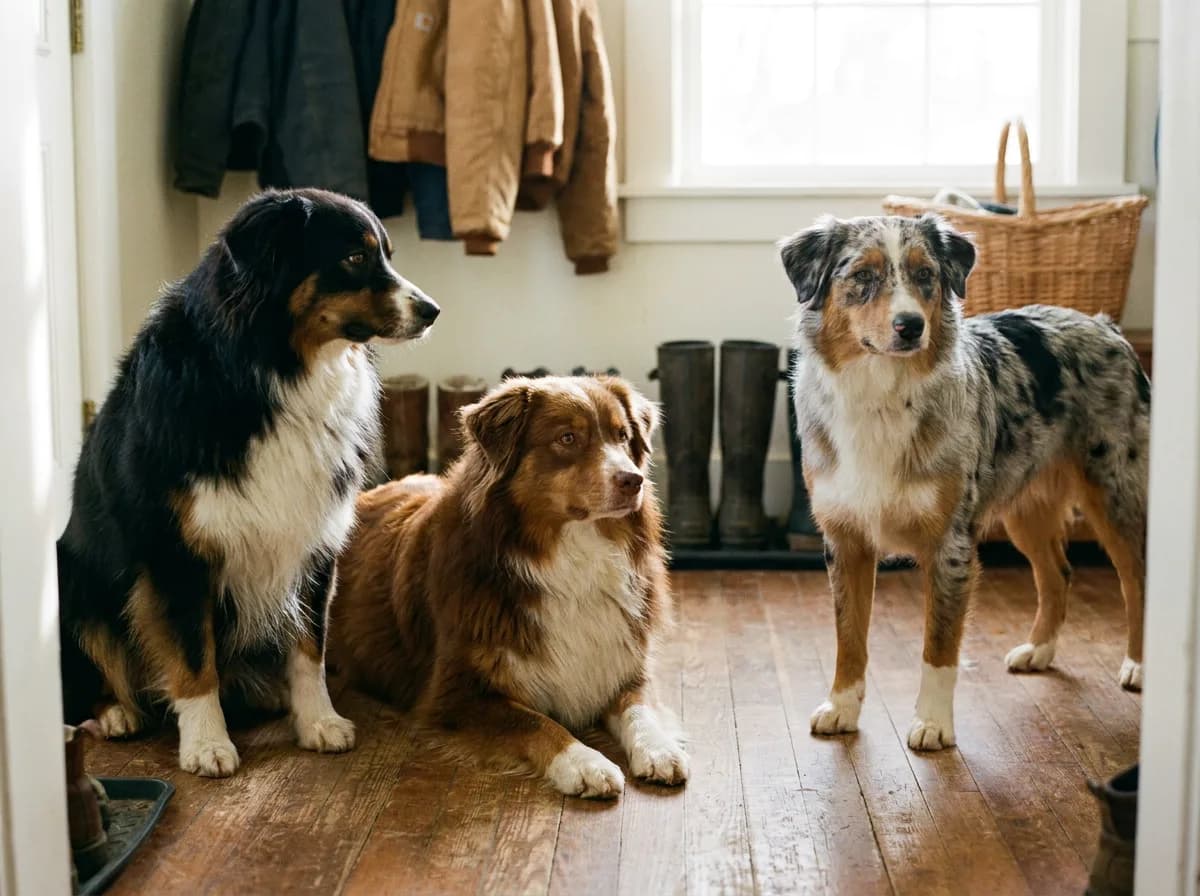
Aussie pictures can help you compare appearance, but photographs cannot prove pedigree. Coat length and fullness vary. A dog advertised as a short-haired Australian Shepherd may have a less abundant coat, immature coat, grooming changes, or mixed ancestry. Ask about parentage and records rather than treating a shorter coat as proof of a special variety.
An Aussie's double coat makes grooming more involved than a quick surface brushing: work through the outer coat to reach loose undercoat without scraping the skin. The ASCA grooming guide recommends a slicker brush and suitable undercoat tool, used gently. Pay attention to tangles behind the ears and in feathering, and stop if brushing hurts. Tight mats or irritated skin need help, not forceful pulling.
- Check that a comb can pass through the area without snagging.
- Schedule nail care and inspect ears and skin during the same quiet routine.
- Ask a groomer to demonstrate technique if you cannot reach the undercoat comfortably.
Routine shaving is not a solution to shedding. Grooming should leave the dog comfortable and manageable, rather than chase a perfectly fluffy photograph.
Blue merle Australian Shepherds
Blue merle describes a pattern of darker patches against a lighter gray background. It does not identify a different personality, activity level, or care category. Our blue merle Australian Shepherd guide explains the appearance and pattern in more detail. For a puppy purchase, the parents' health and breeding records matter more than how dramatic the markings look.
- A double merle pairing can produce puppies at risk of deafness and vision loss. Ask the breeder how the parents' merle status was established; a photograph is not a substitute for appropriate genetic guidance.
Red and red merle Australian Shepherds
Red Australian Shepherds have red-brown pigment; red merle adds a mottled pattern. Shade and markings can differ noticeably between dogs. Our red Australian Shepherd guide compares those appearances. Choose between individual dogs based on temperament, health records, and your home, rather than expecting a red coat to make an Aussie calmer or easier to train. Lighting can also change how coat color appears in sales photographs.
How to find an Australian Shepherd puppy or rescue
Begin with fit and documentation before discussing color or paying a deposit. An Australian Shepherd puppy needs frequent care and patient teaching. An adult from a responsible rescue or breeder may offer more information about settled size and daily behavior, although adjustment to a new home still takes time.
Ask the person placing the dog to explain a normal day, including rest, handling, visitors, and time apart. Request health results by the dog's registered name or identification, not a cropped screenshot labeled “clear.” For MDR1, obtain the actual result that can go into your veterinary record. Ask how merle status informed the mating and how hearing or vision concerns were assessed.
- Read the contract, including return arrangements if the placement fails.
- Discuss any bite history, resource guarding, escape behavior, or difficulty being left alone openly.
- Arrange your first veterinary visit and bring the medical records you receive.
For a puppy, use WebVet's puppy vaccine schedule to prepare questions for that visit, then follow the plan your veterinarian sets for your location and circumstances. Registration, a vaccination record, and a genetic test each tell you different things; none alone is a complete health guarantee.
What are the pros and cons of Australian Shepherds?
The strongest advantage is an enthusiastic partner for people who enjoy doing things with their dog. The main drawback is the continuing need to organize that partnership. Use these tradeoffs to decide whether the breed fits, rather than counting advantages against disadvantages as though every household values them equally.
- Reward: Trainability can make shared hobbies enjoyable. Commitment: Consistent teaching is needed for everyday behavior too.
- Reward: An active companion can suit an outdoorsy routine. Commitment: Poor weather and busy workweeks still require a care plan.
- Reward: A close family bond can be deeply enjoyable. Commitment: Time apart and calm visitor greetings need deliberate practice.
- Reward: Coat patterns offer considerable variety. Commitment: Shedding and grooming continue regardless of color.
If the routine sounds appealing as an ordinary week, meet suitable adults and investigate health records. If it only sounds manageable during a holiday, choose a dog whose needs fit the life you actually have.
Australian Shepherd FAQs
Yes. Expect hair around the home and a recurring brushing routine. Start with weekly undercoat brushing and adjust to the coat; heavier seasonal shedding may require more frequent sessions. A twice yearly coat blow is a useful expectation for some dogs, not a fixed schedule for every Aussie.
Some can, if you can meet the daily exercise commitment outside and manage shared entrances, toilet trips, and rest. Noise and neighbor tolerance matter as much as floor space. Ask specifically about barking and being left alone, and confirm the lease allows the dog before you commit.
Request the parents' hip and elbow evaluation reports, current specialist eye examination results, and relevant DNA reports, including the MDR1 genetic test. A hip evaluation certificate and a DNA panel answer different questions. Match each result to the named dog and ask your veterinarian to interpret anything unclear.
Some do, but compatibility should be assessed individually. Herding and heel nipping can distress another pet even when the dog is not trying to injure them. Use barriers, supervised introductions, and cat-only escape spaces. An early socialization plan helps prepare a puppy but cannot guarantee safe coexistence.
A registered Miniature American Shepherd is a distinct breed, not the standard Australian Shepherd. Because sellers use the mini label inconsistently, ask which separate breed registry and exact registered breed the paperwork names. Do not infer identity from the dog's size or an advertisement alone.
A merle to merle pairing can produce puppies inheriting merle variants from both parents, with serious hearing and eye risks. Double merle deafness or visual impairment cannot be ruled out because a puppy looks attractive in a photograph. Responsible mating decisions require appropriate genetic knowledge and testing, not color preference.

Carol Bryant is the founder FidoseofReality.com and SmartDogCopy.com. A pet product expert, Carol is the Past President of the Dog Writers Association of America (DWAA) and winner of Best Dog Blog. A dog lover of the highest order is how Gayle King introduced Carol when she appeared with her Cocker Spaniel on Oprah Radio’s Gayle King Show to dish dogs. She helps pet, animal, and lifestyle brands achieve copywriting and content marketing success using well-trained words that work and is well-known in the pet industry.
Sign up for expert-backed reviews and safety alerts all in one place.