Bernese Mountain Dog: Size, Temperament, Lifespan, Cost
A Bernese Mountain Dog can be a devoted family companion, but size, shedding, health risks, and cost matter. Use this guide to assess the breed's care needs and your household's readiness.
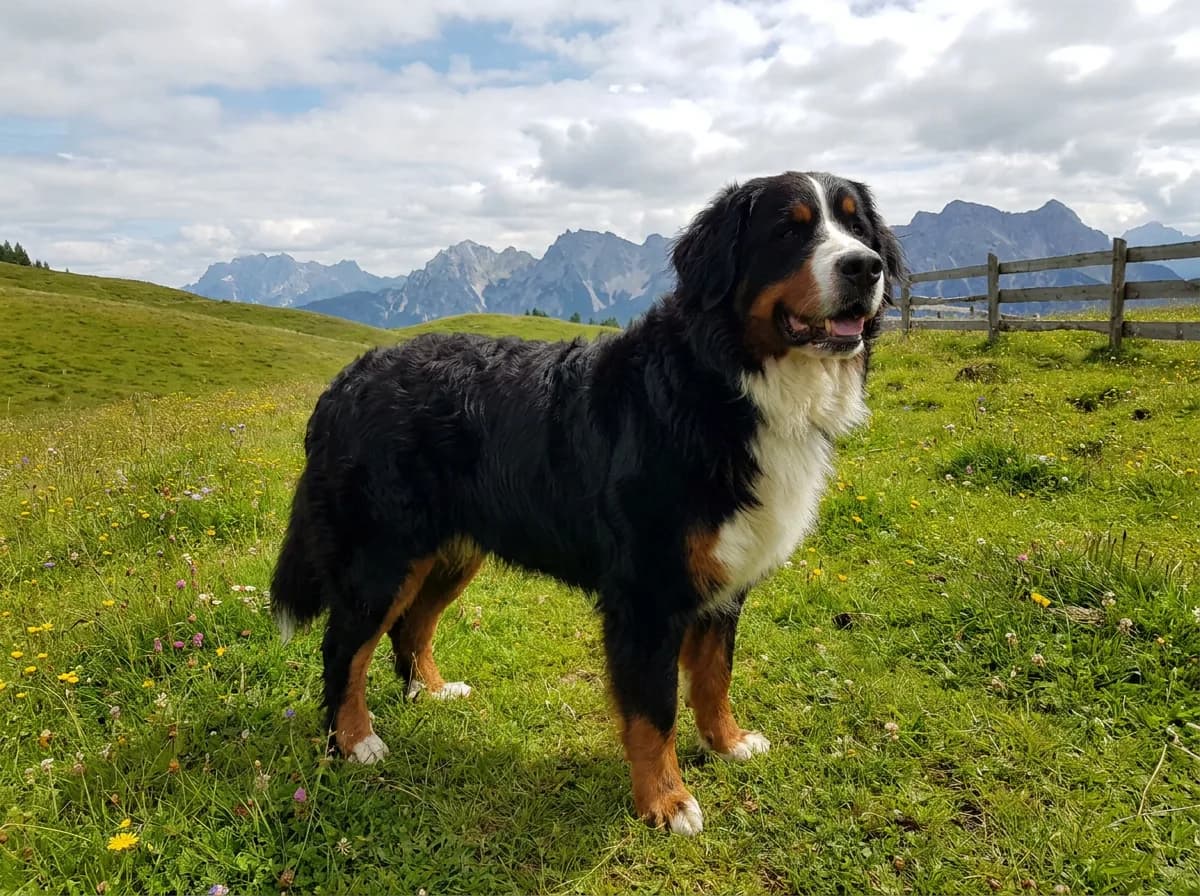
Bernese Mountain Dog standing in a green pasture with mountains in the distance.
Petful is reader supported. As an affiliate of platforms like Amazon and Chewy, we may earn a commission when you buy through links on this page. There is no extra cost to you.
The Bernese Mountain Dog can be a wonderful family companion if you want a large, affectionate dog and can handle the hair, training, heat precautions, and expense. The harder consideration is time together: the breed's commonly cited lifespan is seven to ten years, with cancer among its major health concerns.
Look beyond the puppy photographs. Your daily routine needs room for a powerful adult, and your budget needs to cover care even when your dog becomes ill. This guide helps you decide whether those commitments suit your household before you choose a puppy or meet a rescue dog.

Sign up for expert-backed reviews and safety alerts all in one place.
What Is a Bernese Mountain Dog?
A Bernese Mountain Dog is a large Swiss working breed from the canton of Bern, part of the Sennenhund family of farm dogs. Also called a Berner, it has a thick tricolor coat and typically weighs about 70 to 115 pounds as an adult. Today, its main job is usually family companionship.
- 1American Kennel Club classification: Working Group.
- 2Typical adult weight: 70 to 115 pounds, with males generally larger.
- 3Commonly cited lifespan: seven to ten years.
- 4Best fit: a household with time, cool indoor space, and a realistic large-dog budget.
- 5Main tradeoffs: heavy shedding, physical size, and significant health risks.
The breed's history helps explain its appeal. The Bernese Mountain Dog Club of America describes a Swiss farmer's companion and watchdog, with cart pulling and moving cattle among its historical uses. This was a versatile farm helper, rather than a specialist expected to herd large flocks all day.
That heritage is a useful guide to activities, not a promise about an individual dog. A Berner may enjoy learning a task with you while having little interest in an unfamiliar visitor. Choose a companion whose observed behavior fits your life, not just one whose breed description sounds right.
How Big Do Bernese Mountain Dogs Get?
Adult Berners are substantial dogs. The AKC's breed history gives these typical male and female ranges. Shoulder height is measured to the withers, not the top of the head; adult weight also depends on frame and body condition.
| Sex | Shoulder height | Typical adult weight |
|---|---|---|
| Male | 25–27.5 inches | 80–115 pounds |
| Female | 23–26 inches | 70–95 pounds |
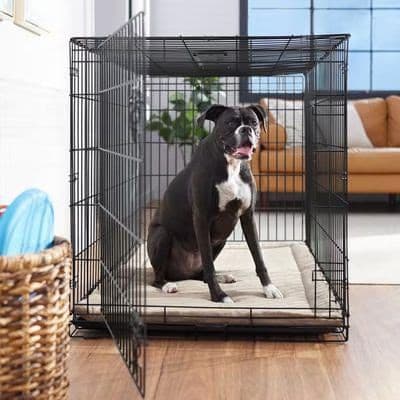
Petful may earn a commission when you click through to Chewy, at no extra cost to you.
Before buying equipment, measure the actual dog and the usable interior space. A crate should allow comfortable standing, turning, and lying down. The Frisco Heavy Duty X-Large Wire Crate is one option to compare against those measurements; the X-Large label alone does not establish a fit for every adult Berner.
Our Bernese Mountain Dog size guide explains growth, measuring, and the difference between a large frame and excess weight. Avoid feeding a puppy toward the top of a weight chart. A healthy body condition matters more than reaching a particular number.
Is a Bernese Mountain Dog a Good House Dog?
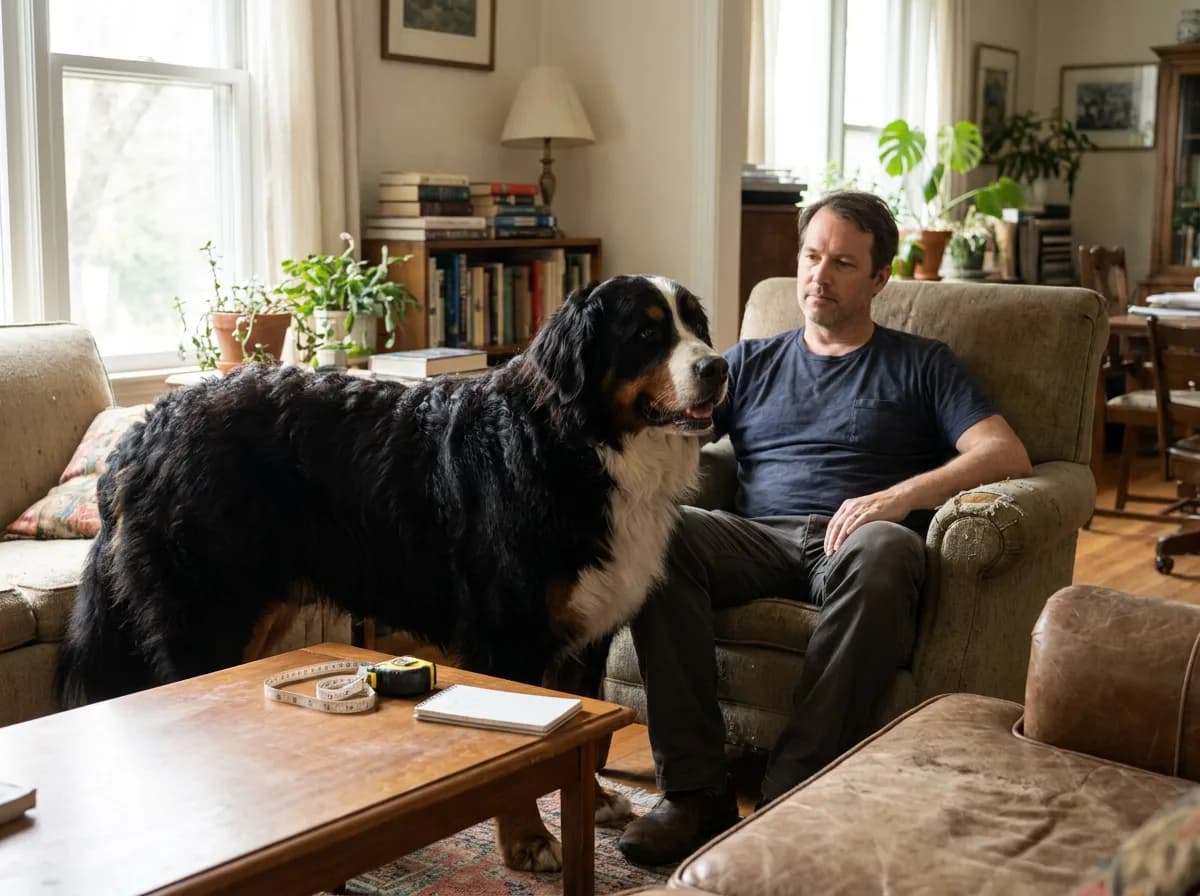
Yes, a Berner can be a good house dog when the household provides companionship, training, daily activity, and cool resting space. Indoor calm is something to develop through routine, rather than a substitute for exercise. Heat tolerance, access to toilet breaks, and your ability to move a large dog matter more than having an enormous yard.
Walk through an ordinary weekday before committing:
- Getting outside: Can you take the dog out reliably, including during bad weather and your busiest workdays?
- Moving around: Is there room to pass a sleeping adult without stepping over it, and can you manage stairs if mobility changes?
- Resting safely: Can the dog sleep away from children's play and household foot traffic?
- Getting help: Who can transport or assist the dog if you are unavailable?
A yard can make toilet trips easier, but it cannot provide human company or teach manners. If work routinely keeps everyone away for long stretches, include a reliable care arrangement before deciding that the breed fits.
Try a simple home check using the adult dog's measurements, or the expected range if you are considering a puppy. Mark out a bed-sized space with towels, then walk the routes between the kitchen, doors, and your usual seating. Check whether the car can accommodate a safely restrained dog as well as the people who normally travel in it.
- Move the resting place if it blocks a doorway or forces people to step over the dog.
- Discuss household rules for furniture and bedrooms before the puppy arrives.
- Identify a backup toilet route or helper if your usual access becomes difficult.
- Ask a rescue about stair use and car loading for the particular adult you are considering.
Male or female: choose the individual
Neither sex guarantees an easier family companion. Male Berners are generally larger, which matters for handling and space, but assess temperament from the individual dog's behavior and history. Ask the breeder or rescue how that dog responds to children, visitors, handling, and time alone.
Bernese Mountain Dog Temperament and Personality
Berners are generally affectionate, people-oriented dogs, sometimes reserved with strangers. That combination can suit a family wanting a close companion without a dog that greets every passerby enthusiastically. The AKC's family-fit overview emphasizes early training and socialization alongside the breed's gentle reputation.
With children, plan for the dog's size as well as its intentions. A friendly adolescent can knock a toddler over while turning around. An adult should supervise interactions, and children need to leave the dog alone while it sleeps, eats, or retreats to its resting place.
With other dogs, introduce the individuals carefully instead of assuming their breeds guarantee compatibility. Give each dog space and separate valuable food or toys during the adjustment period. With visitors, reward calm choices without requiring the Berner to accept petting. When meeting a prospective dog, look for behavior you can actually observe:
- Does the dog recover after a mild surprise?
- Can it disengage from excitement with the handler's help?
- Does it approach willingly, or need more distance and time?
- What does the current caregiver report about life outside the meeting?
Bernese Mountain Dog Pros and Cons
The Bernese Mountain Dog's strongest attraction is a close family bond. Its main drawbacks are the work and resources attached to a large body and heavy coat, plus the possibility of losing that companion sooner than you hoped. A gentle reputation does not erase those practical demands.
- Often affectionate and gentle with children when interactions are supervised.
- Can enjoy walks, learning tasks, and quiet time with the same household.
- Large enough for people who specifically want a substantial companion.
- Heavy seasonal shedding and regular coat maintenance.
- Large equipment, transport, food, and handling requirements.
- Heat precautions and a comparatively short typical lifespan.
- Health screening reduces uncertainty but cannot guarantee a healthy dog.
Are Bernese Mountain Dogs aggressive? Aggression is not the breed standard's intended temperament, but no breed is incapable of biting. Fear, pain, guarding, and stressful handling can change behavior. Take a growl seriously as a signal to create space; seek professional help with persistent or sudden behavior changes.
A defined resting area can help everyone respect boundaries. Measure your dog's stretched-out sleeping position before considering the FurHaven NAP Orthopedic Bed in Jumbo. A comfortable bed is household equipment, not a treatment for an unexplained limp or difficulty standing.
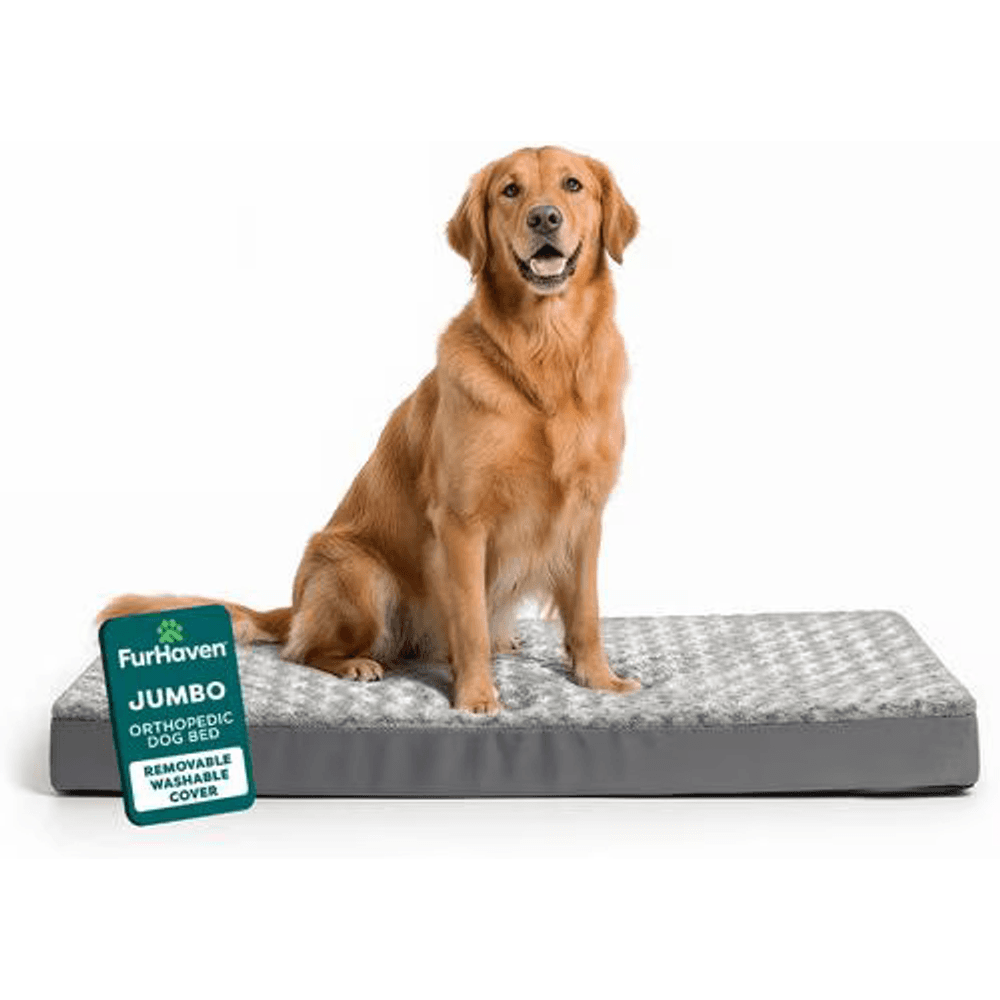
A plush orthopedic foam mattress that cushions aging joints and pressure points, giving a stiff or trembling senior dog warm, supportive rest.
Petful may earn a commission when you click through to Chewy, at no extra cost to you.
Are Bernese Mountain Dogs High Maintenance?
Yes, Berners are high maintenance in coat care, household cleaning, and the logistics of a large dog. Their exercise plan also needs adjustment for age, fitness, and weather. They do not need constant strenuous activity, but they do need a dependable routine that survives a busy week.
Separate the jobs so none quietly disappear:
- Coat care: Work through the coat in manageable sections and check friction areas, including behind the ears and around the legs.
- Everyday handling: Practice brief, rewarded sessions for paws, ears, mouth checks, and grooming while the dog is comfortable.
- Movement: Provide walks and suitable play, changing duration and intensity when the dog tires or conditions deteriorate.
- Home care: Wash bedding and keep floors clear enough for secure footing and easy cleaning.
If professional grooming is part of your plan, obtain a quote for a Berner before bringing one home. A large dog that cannot tolerate brushing or drying may need gradual handling training as well as an appointment. Paying for grooming does not remove the need to notice tangles, skin changes, or discomfort between visits.
For dental care, a dog-specific option such as the Petsmile Rotisserie Chicken Toothpaste and Toothbrush can support a routine your veterinarian recommends. Introduce the brush gradually and stop if the mouth seems painful; brushing does not replace an examination of dental disease.
Bernese Mountain Dog Appearance and Coat
The typical Berner has rust and white trim on a jet black base, with a thick, moderately long coat that may be straight or slightly wavy. The BMDCA breed standard describes the markings and proportions. This double coat combines an outer layer with an undercoat; a seasonal shed can leave much of that loose undercoat around your home.
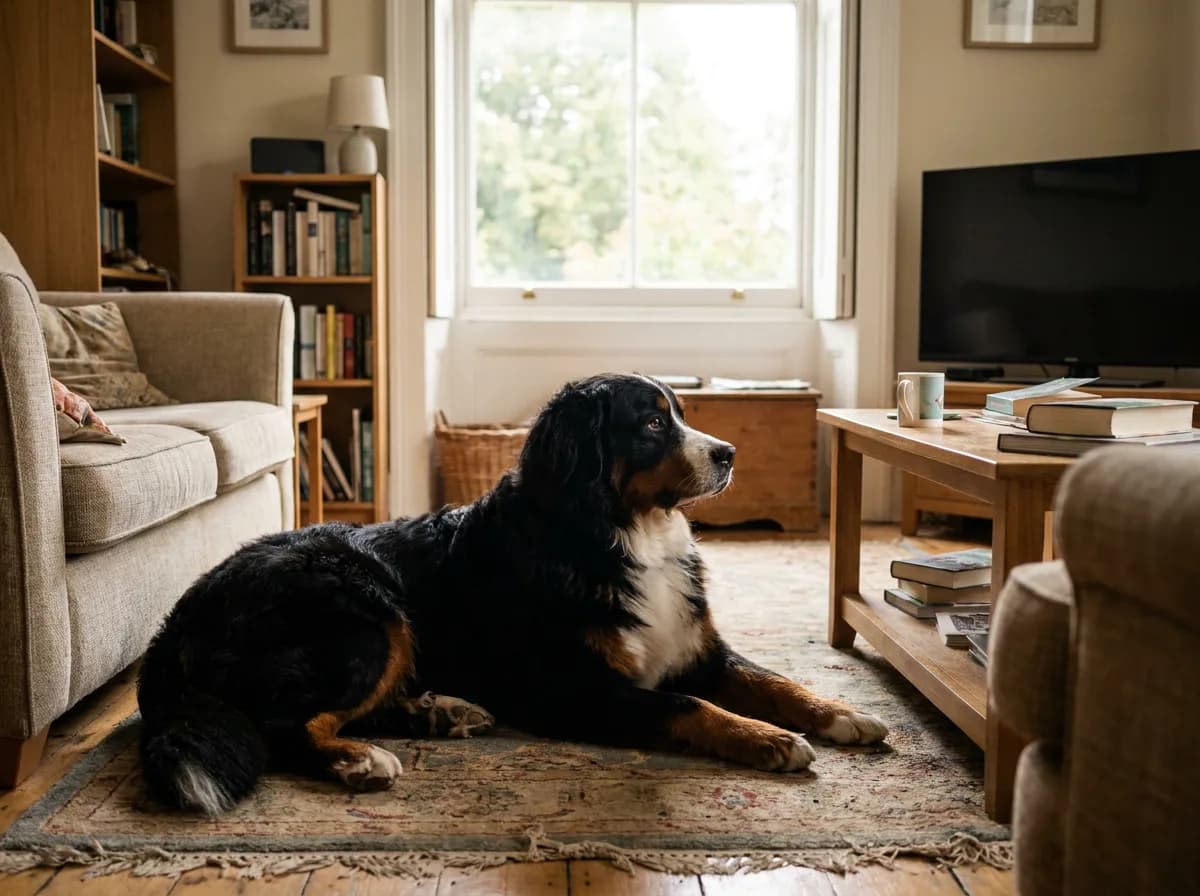
Coat photographs are useful for understanding appearance, but they cannot establish pedigree. A black-and-white dog without visible rust, or a dog advertised as a white Bernese Mountain Dog, deserves questions about parentage and records. Unusual markings alone neither prove a crossbreed nor establish a special recognized variety.
Check more than a flattering photograph before paying a deposit:
- Request the parents' identities and relevant registration information.
- Ask whether the picture shows the current coat, a puppy coat, or a recent clip.
- Request veterinary records if a change in coat or skin is being explained as normal.
- Meet the dog or arrange a credible live interaction before making a purchase decision.

Do Bernese Mountain Dogs Bark a Lot?
Bernese Mountain Dogs can bark to alert the household, but whether yours barks a lot depends on the individual dog and its surroundings. Visitors, dogs outside a window, boredom, and difficulty being alone can produce very different patterns. Find the trigger before choosing a response.

VOHC-accepted 4.2-ounce pet toothpaste paired with a dual-ended toothbrush.
Petful may earn a commission when you click through to Chewy, at no extra cost to you.
For a dog barking at passing traffic, moving the resting spot away from the window may help more than repeatedly saying “quiet.” Reward the dog for noticing a sound and returning attention to you. For barking during absences, record what happens: pacing, frantic vocalizing, and distress call for a different plan than a brief response to a delivery.
The American Veterinary Society of Animal Behavior recommends reward-based training. Avoid trying to suppress every warning sound with punishment; you still need to understand what makes the dog uncomfortable.
Bernese Mountain Dog Lifespan and Health Problems
The commonly cited Bernese Mountain Dog lifespan is seven to ten years, but individual lives fall on either side. In a historical Swiss cohort, median survival was 8.4 years and cancer was prominent among recorded deaths. Those findings are not a forecast for an individual puppy or a current U.S. cancer probability.
Histiocytic sarcoma is one of the breed's important cancer concerns. The BMDCA health-testing guidance describes a risk test that informs breeding decisions, not a certificate that a puppy will avoid cancer. Our Bernese Mountain Dog lifespan guide explains the evidence and its limits in more detail.
- Breeder health screening should include identifiable results for both parents and a discussion of family health and longevity. Ask what any histiocytic sarcoma risk result can and cannot tell you. No screening panel guarantees that a puppy will remain healthy.
Ask about hip dysplasia in dogs and other orthopedic screening when reviewing the parents' records. Persistent lameness needs veterinary attention; our bone cancer guide explains one possible cause without treating every limp as cancer.
Unproductive retching, marked distress, or a swollen abdomen can signal dog bloat and GDV, short for gastric dilatation-volvulus. Seek emergency veterinary care rather than waiting to see whether it passes.
How Much Does a Bernese Mountain Dog Cost?
The price of a Bernese Mountain Dog is only one part of the commitment. Acquisition, initial equipment, food, routine veterinary care, prevention, insurance, grooming, and help while you are away all belong in a first-year budget. Your local quotes and care choices determine the useful total.
For illustration, a $3,000 acquisition cost plus $600 in setup and $410 per month in recurring expenses totals $8,520 for the first year. These are editable planning assumptions, not a market average or a guaranteed minimum. Emergency treatment, deductibles, and inflation are additional.
Use the complete worksheet in our Bernese Mountain Dog price guide to replace each figure. Consider the lifespan and health section alongside that budget: a shorter life does not make the commitment less expensive or remove the need for funds when illness occurs.
Bernese Mountain Dog Mixes
A Bernese Mountain Dog mix may combine familiar markings with very different size, coat, or behavior. The name of a cross tells you the claimed parent breeds; it does not tell you which traits a puppy will inherit. A photograph cannot confirm that claim.
Use the proposed pairing to guide questions, rather than predict a personality:
- Golden Retriever mix: Ask how both parents behave around people, dogs, and everyday handling.
- Great Pyrenees mix: Discuss the parents' size, barking, guarding behavior, and containment needs.
- German Shepherd mix: Ask about confidence, arousal, training history, and health screening on both sides.
- Australian Shepherd mix: Ask about activity, sensitivity to movement, and the routine the puppy is likely to need.
For an adult rescue, its foster or previous home may provide more useful information than a guessed breed label. Ask for specific examples: walking near other dogs, staying alone, accepting grooming, and responding to visitors. Plan around that observed dog rather than a hoped-for blend of the easiest traits.
Petful may earn a commission when you click through to Chewy, at no extra cost to you.
Bernedoodle: The Bernese Mountain Dog Poodle Mix
The Bernedoodle is a Bernese and Poodle cross. Coat care, shedding, and adult size vary, especially when different Poodle sizes or generations are involved. A curly coat does not guarantee freedom from allergens, and a low-shedding dog can still need substantial grooming.
Our Bernedoodle guide covers that cross in detail. If a listing says “Bernese mountain doodle,” ask which dogs are actually in the pedigree and compare their health records, rather than treating the wording as a separate established breed.
Are Mini Bernese Mountain Dogs Real?
Mini, miniature, and toy Bernese Mountain Dog are marketing labels, not recognized size varieties in the Berner breed standard. A seller may use one for crossbred downsizing or for an unusually small dog. Ask for the actual parent breeds and records before assuming what you are being offered.
- A mini Berner is not a recognized variety. Crossbred downsizing can change coat, behavior, health risks, and size. A small purebred is also possible; neither a label nor a photograph settles parentage.
If the proposed puppy has a Poodle parent, our mini Bernedoodle guide is the relevant starting point. Do not assume that a smaller puppy is a way to obtain every Berner trait with none of the coat care or health uncertainty.
Before paying a premium, request a written explanation of the cross, the parents' adult measurements, and the basis for any size estimate. Treat a precise adult-weight guarantee cautiously, especially if the seller will not identify the parents.
Bernese Mountain Dog Puppies
A Bernese Mountain Dog puppy needs the same patient teaching as a smaller puppy, with more urgency around habits that become difficult in a powerful adult. Start with toilet routines, calm greetings, comfortable handling, and walking without pulling. Reward the behavior you want while it is happening.
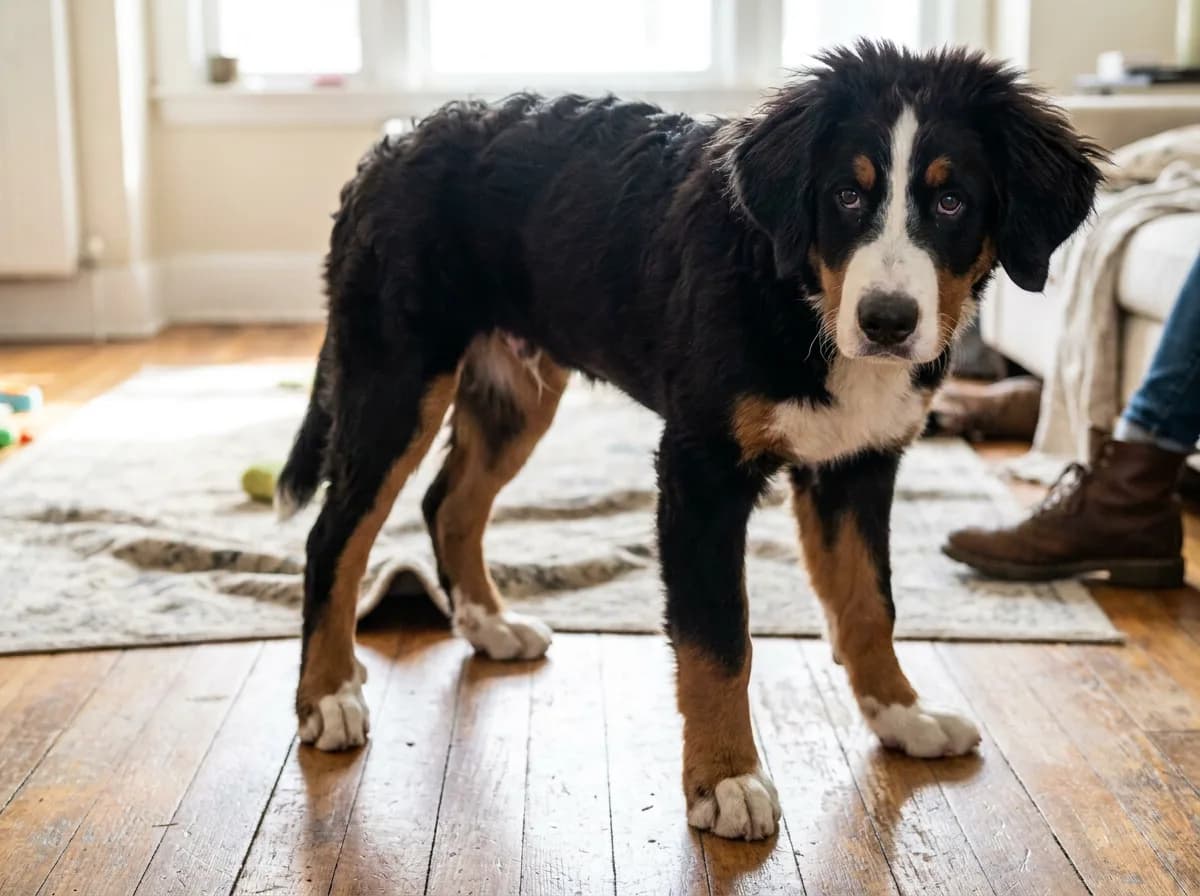
Socialization means helping a puppy feel safe around everyday experiences, not arranging endless greetings. Discuss local disease risks and suitable puppy classes with your veterinarian. The AVSAB puppy socialization statement supports safe early exposure rather than waiting until the entire vaccination course is finished.
Build confidence in small steps:
- Let the puppy observe a visitor from a comfortable distance before approaching.
- Pair a brief touch of a paw or brush with a reward, then stop before struggling begins.
- Practice short, easy separations with a safe resting area and a predictable return.
- Keep lead practice simple, rewarding slack in the leash rather than waiting for a pulling contest.
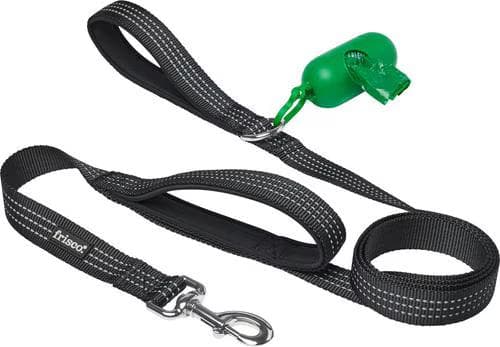
The Frisco six-foot Traffic Leash with Dual Padded Handles offers a standard lead and a closer handhold. Check the attachment and condition before use, and use training to manage pulling rather than relying on an extra handle to overcome it.
Joint-safe exercise means matching activity to the puppy's development, not applying a universal minutes-per-month formula. Ask your vet about repetitive jumping, forced running, and when to introduce demanding activities. Give the puppy secure footing and chances to pause instead of expecting it to keep pace with an adult hiking schedule.
Feeding a Bernese Mountain Dog
Choose food for the dog's life stage and nutritional needs, rather than the most impressive breed name on a bag. A growing Berner needs a complete diet suitable for large-breed puppy growth. The AAHA nutrition guidelines emphasize lean growth and avoiding excessive calcium in large and giant puppies.
Ask your veterinary team to review the food's nutritional adequacy statement, starting portion, and your puppy's condition. Do not add calcium or growth supplements to a complete diet without veterinary direction. Our guide to large-breed dog food explains why growth nutrition needs special attention. For recipe and portion comparisons, see our guide to the best dog food for Bernese Mountain Dogs.
Make the feeding plan easy for everyone at home to follow:
- Write down the daily allowance and divide it into the agreed meals.
- Set aside food used for training so rewards do not quietly become an extra meal.
- Record the exact food and portion when a sitter takes over.
- Review portions when activity, body condition, or the food itself changes.
Keep the bag information or a clear photograph of it. “One scoop” is difficult for a veterinarian to interpret without the scoop size and food's calorie density. A short, accurate feeding record is more useful than guessing from the dog's appetite alone.
Finding a Bernese Mountain Dog: Breeders, Rescue, and the Parent Club
Start with the Bernese Mountain Dog Club of America for breed-specific rescue information and regional connections. Adoption availability changes, so focus on the dog's needs and the organization's process rather than expecting a particular age or appearance immediately.
For a puppy, ask the breeder to identify both parents and explain their recommended health testing. Review the actual results and family history with your veterinarian if the meaning is unclear. A registration certificate answers a different question from a health record.
Keep a written set of questions for either route:
- What is known about relatives' ages and causes of death?
- What veterinary care and records come with the dog?
- How has the dog lived, and what handling or household experiences are familiar?
- What support and return arrangements apply if the placement does not work?
- Can you discuss concerns without being pressured to pay immediately?
For a rescue dog, ask what is confirmed, what is reported by a previous owner, and what remains unknown. Honest gaps are easier to plan around than confident claims without records. Take the information home and review it before committing.
Your Berner Readiness Check
Give yourself one point for each item you can describe concretely today. This is a household planning checklist, not a validated suitability test or a cancer-risk score. It is meant to reveal work still needed before you commit.
- Health and lifespan: You have read the health discussion, understand the uncertainty, and have identified a veterinary practice and emergency option.
- First-year budget: You have replaced the cost worksheet's assumptions with local quotes and decided how to cover unexpected bills.
- Heat intolerance: You have cool indoor accommodation and an alternative to strenuous outings during hot or humid weather. Save WebVet's dog heatstroke warning signs and response guide before you need it.
- Grooming and daily care: Someone has agreed to the coat-care routine, toilet breaks, exercise, and care cover when the household is away.
- Sourcing: You can name the records and questions you will use with a breeder or breed rescue, and you are prepared to walk away if important answers are missing.
A score of five means you have addressed these five planning tasks, not that any dog is guaranteed to fit. A lower score tells you which arrangements to finish. Share the checklist with your household, breeder, or rescue contact so that the decision rests on the same expectations.
Bernese Mountain Dog FAQs
Yes. Expect loose hair throughout the year, often with a heavier twice-yearly blowout. A weekly brushing routine may need to become daily during those periods. If hair on clothing or furniture would be a continuing source of frustration, spend time in a Berner household before deciding.
There is no short-coated variety in the breed standard. A “short-haired Berner” may be clipped, young, a different breed, or have a crossbred coat. Ask about its age, grooming history, and parent records; coat length alone cannot establish ancestry.
There is no reliable adult weight range for the label alone. Mini Berner size depends on the actual parents, their sizes, and crossbreed variation. Ask the seller to explain the estimate and budget for a dog larger than the advertised expectation if its ancestry is uncertain.
Some do, particularly around food, drinking, or exertion, but the breed standard describes a comparatively dry mouth. Individual dogs vary. Sudden excessive saliva or drooling with distress deserves veterinary attention; do not dismiss it as a breed habit or an ordinary consequence of hot weather.
Yes. Start with a mat in a quiet area and reward brief moments of relaxed behavior. Increase duration gradually and practice when the dog's needs are met. If pacing or restlessness is new, investigate discomfort or distress rather than treating every failure to settle as a training problem.

Kristine Lacoste has been researching dog and cat breeds for nearly a decade and has observed the animals up close at dog shows in both the United States and the United Kingdom. She is the author of the book One Unforgettable Journey, which was named as a finalist for a Maxwell Award from the Dog Writers Association of America, and was host of a weekly pet news segment on the National K-9 Academy Radio Show. In addition, she was the New Orleans coordinator for Dogs on Deployment, a nonprofit that helps military members and their pets, for 3 years. Kristine has researched and written about pet behaviors and care for many years. She holds a bachelor’s degree in psychology, another bachelor’s degree in English and a Master of Business Administration degree.
Sign up for expert-backed reviews and safety alerts all in one place.