Animals That Mate for Life: A Scientific Look at Monogamous Species
Which animals mate for life? A sourced look at 25 species by bond type (genetic, social, or seasonal), the famous myths like penguins and lobsters, what happens when a mate dies, and whether dogs, cats, rabbits, and pet birds pair for life.
Petful is reader supported. As an affiliate of platforms like Amazon and Chewy, we may earn a commission when you buy through links on this page. There is no extra cost to you.
If you have ever wondered which animals mate for life, the honest answer is: fewer than the greeting cards suggest, and more than the cynics claim. Swans, wolves, bald eagles, beavers, gibbons, prairie voles, and albatrosses all form pair bonds that can last for decades, and the science behind those bonds is stranger and more interesting than the romantic version.
This guide to animals that mate for life covers 25 species with the bond type behind each one, the famous examples that turn out to be myths, what happens when a partner dies, and whether the dog, cat, rabbit, or bird in your home pairs for life. Every claim is tied to a primary source, from Cornell Lab of Ornithology life histories to DNA paternity studies.
- 1Roughly 90 percent of bird species and only 3 to 9 percent of mammal species live in pairs, so most animals that mate for life are birds.
- 2Social monogamy (sharing a territory and raising young together) is common; genetic monogamy (never breeding with anyone else) is rare and has been confirmed by DNA testing in only a handful of species.
- 3Swans, bald eagles, Canada geese, albatrosses, wolves, coyotes, and beavers form genuine long-term pair bonds; penguins, lobsters, and gibbons are the most repeated myths.
- 4When a mate dies, most bonded animals search, then eventually re-pair. Dogs and cats never pair-bond; rabbits, doves, and parrots do.

Sign up for expert-backed reviews and safety alerts all in one place.
What animals mate for life? The short answer
What animals mate for life? Mute swans, bald eagles, Canada geese, sandhill cranes, Laysan albatrosses, gray wolves, coyotes, beavers, prairie voles, gibbons, and Kirk's dik-dik all do. Most of these lifelong pair bonds are socially monogamous, meaning the pair shares a territory and raises young together, while true genetic monogamy has been confirmed by DNA testing in only a few species.
Which animals take only one mate for life? Put another way, what animals mate for life with one mate and never breed with anyone else? That confirmed list is short, because it requires paternity testing of every offspring:
- Kirk's dik-dik, a small East African antelope: a 1997 Royal Society study combined radio tracking with DNA typing and found no offspring sired outside the pair.
- California mouse: DNA fingerprinting of wild litters found every pup was fathered by the female's social mate, which made it the first mammal confirmed as genetically monogamous.
- Black vulture: DNA fingerprinting at a Pennsylvania roost found no extra-pair young, and pairs were seen attacking birds that strayed.
- Urban coyotes in Chicago: six years of genetic sampling found no evidence of polygamy in any litter, and pairs stayed together until one partner died.
- Diplozoon paradoxum, a fish parasite: two juveniles fuse into a single body and stay physically joined for life, the only animal for which "one mate for life" is anatomical.
For every other species on this page, "mate for life" means a long-term social pair bond. That is what most readers mean by the phrase, and it is what field biologists actually measure. The list also includes sea creatures that mate for life, such as seahorses and French angelfish, which are covered in the fish section below.
25 animals that mate for life at a glance
What are 25 animals that mate for life? Mute swans, bald eagles, golden eagles, ospreys, red-tailed hawks, Canada geese, sandhill cranes, Laysan albatrosses, Atlantic puffins, rock pigeons, common ravens, American crows, barn owls, great horned owls, black vultures, monk parakeets, gray wolves, coyotes, beavers, prairie voles, white-handed gibbons, titi monkeys, Kirk's dik-dik, Western Australian seahorses, and clownfish. This twenty-five species list covers every profiled animal in the sections below, and the fish section adds a few honorable mentions that did not make the cut.

304 food-grade stainless steel pet water fountain, 101 oz. The circulating, filtered water encourages cats to drink more, which supports urinary tract and kidney health.
Petful may earn a commission when you click through to Chewy, at no extra cost to you.
Each entry in the table carries a bond type label. Genetic means DNA testing has confirmed exclusive breeding. Social means a lasting pair that shares territory and parenting but is not always sexually exclusive. Seasonal means the pair lasts one breeding season and may or may not re-form. Where a species is widely misdescribed, the notes say so, and every classification is expanded with its source in the group sections that follow.
The 25-species bond-type comparison table below classifies every animal by bond type: social monogamy, genetic monogamy, or seasonal pairing, and flags the famous examples that are myths.
| # | Animal | Group | Bond type | What the evidence shows |
|---|---|---|---|---|
| 1 | Mute swan | Bird | Social, lifelong | Divorce rare, usually after nest failure; survivors re-pair |
| 2 | Bald eagle | Bird | Social, lifelong | Returns to the same nest yearly; survivor takes a new mate |
| 3 | Golden eagle | Bird | Social, lifelong | Same territory and nest sites for years |
| 4 | Osprey | Bird | Social, lifelong | Pairs reunite at the same nest each spring |
| 5 | Red-tailed hawk | Bird | Social, multi-year | Monogamous; often keeps the same mate for years |
| 6 | Canada goose | Bird | Social, lifelong | Very low divorce; pairs stay together year-round |
| 7 | Sandhill crane | Bird | Social, lifelong | Unison calls and dancing maintain the bond |
| 8 | Laysan albatross | Bird | Social, lifelong | Reunites after months apart; divorce rises in poor-food years |
| 9 | Atlantic puffin | Bird | Social, lifelong | Same burrow and partner each year |
| 10 | Rock pigeon | Bird | Social, long-term | Long-term pairs raising several broods a year |
| 11 | Common raven | Bird | Social, lifelong | Pairs for life and defends a year-round territory |
| 12 | American crow | Bird | Social, lifelong | Grown offspring stay to help raise the next brood |
| 13 | Barn owl | Bird | Social, lifelong | Usually pairs for life |
| 14 | Great horned owl | Bird | Social, multi-year | Pairs stay together for years on one territory |
| 15 | Black vulture | Bird | Genetic | DNA fingerprinting found no extra-pair young |
| 16 | Monk parakeet | Bird | Social, lifelong | Monogamous; pairs share communal stick nests |
| 17 | Gray wolf | Mammal | Social, lifelong | One breeding pair per pack; large packs may add a second breeder |
| 18 | Coyote | Mammal | Genetic | Chicago study found no extra-pair pups in any litter |
| 19 | Beaver | Mammal | Social, likely genetic | Lifelong pair shares lodge and dam; Eurasian data support genetic monogamy |
| 20 | Prairie vole | Mammal | Social | Oxytocin-driven bond; some litters have extra-pair fathers |
| 21 | White-handed gibbon | Mammal | Social | Myth flag: extra-pair mating documented in the wild |
| 22 | Coppery titi monkey | Mammal | Social | Separated partners show measurable stress |
| 23 | Kirk's dik-dik | Mammal | Genetic | DNA typing found no offspring sired outside the pair |
| 24 | Western Australian seahorse | Fish | Genetic (within pairs) | Pairs stayed together across broods; many other seahorses are seasonal |
| 25 | Clownfish | Fish | Social, lifelong | Breeding pair per anemone; male becomes female if she dies |
Do animals really mate for life? Social vs. genetic monogamy
The mate for life meaning depends on which of three things a biologist is measuring, and that difference explains most of the arguments about monogamous animals. What animals are monogamous depends on the definition you pick:
- Social monogamy: a male and female share a territory, a nest or den, and the work of raising young for years or for life. This is what nearly every "mates for life" claim actually describes.
- Genetic monogamy: every offspring the pair raises is genetically theirs. Only DNA testing can prove it, and it is rare.
- Seasonal monogamy (also called serial monogamy): the pair stays exclusive for one breeding season, then separates. Many ducks and most penguins fall here, which is why they cause so much confusion.
How many animals mate for life? In birds, roughly 90 percent of species are socially monogamous, largely because chicks that must be fed in the nest need two parents; the figure comes from the ornithologist David Lack and is repeated in the standard review of extra-pair paternity in birds. In mammals, a 2013 survey of 2,545 species published in Science found about 9 percent socially monogamous, and the classic earlier estimate was 3 to 5 percent. Mammal mothers nurse their young, so a resident father adds less to survival than a bird father does.
DNA testing in the 1990s changed the picture. That same review found extra-pair young in about 90 percent of the socially monogamous bird species examined, averaging about 11 percent of chicks per nest. So do most animals mate for life? Socially, many birds do; genetically, very few animals of any kind do.
What animal is 100% monogamous? By the genetic standard, the strongest cases are the ones already listed: Kirk's dik-dik, the California mouse, the black vulture, Chicago's coyotes, and Diplozoon. A 2015 study of Eurasian beaver colonies also found genetic relationships consistent with monogamy. Beyond that handful, "100 percent" is a claim no honest biologist makes.
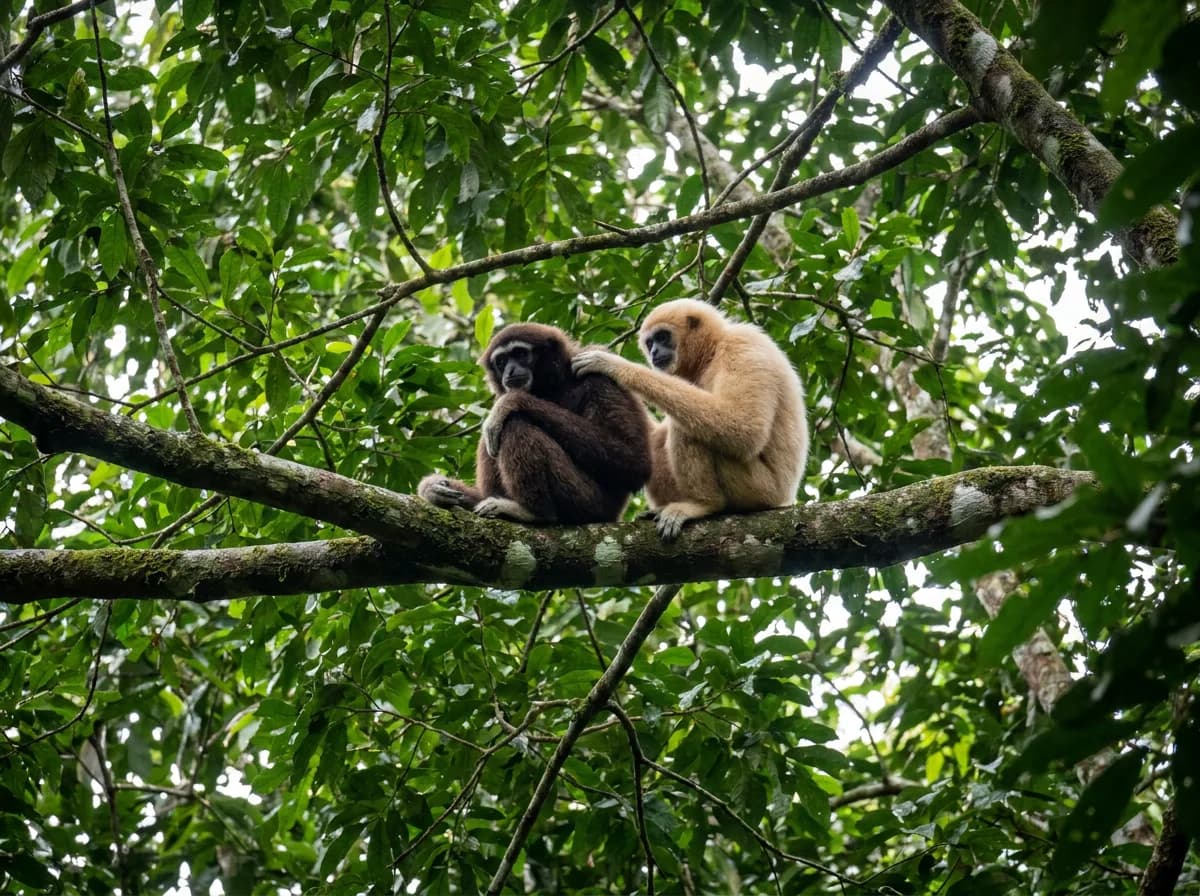
Gibbons show why the distinction matters. For decades they were called the monogamous ape because they live in tidy male-female pairs with their offspring. Then a field study in Thailand's Khao Yai National Park documented extra-pair copulations in white-handed gibbons. The social pair bond is real; the sexual exclusivity was an assumption. Psychologist David Barash of the University of Washington built a career on this point: extra-pair mating is the rule in socially monogamous animals, not the exception. If you want a non monogamous animals list for comparison, the famous exceptions sit in the mammals section: bonobos, elephants, lions, and most deer and antelope pair only for a season or not at all.
- Penguins: most species re-pair each season. Only about 15 percent of emperor penguin pairs reunite the next year, which makes the lifelong-penguin story a seasonal pairing myth. Lobsters: a female stays with a male for about two weeks after molting, then leaves, and the male takes the next female. Gibbons: the "monogamous ape" is socially paired, but extra-pair mating has been documented in the wild. Social bonds are real in all three; sexual exclusivity is the part that was assumed.
Birds that mate for life
Birds that mate for life dominate every list of animals that mate for life, and the reason is practical rather than romantic. Eggs must be incubated and helpless chicks must be fed, so a male that stays and works raises more surviving young than one that leaves. Which birds mate for life in the lifelong sense, though, is a shorter list than the "90 percent" figure implies. Here are the most searched species, each with its bond type.
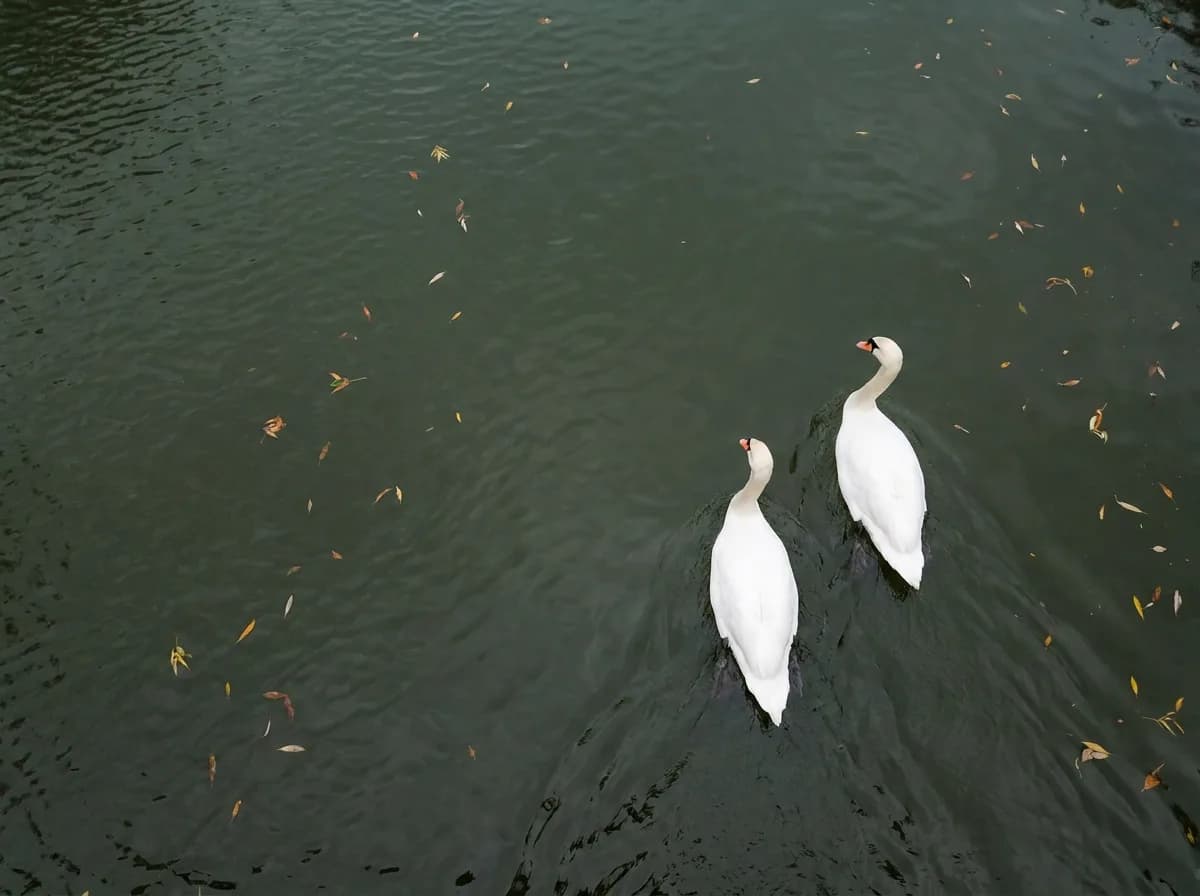
Do swans mate for life?
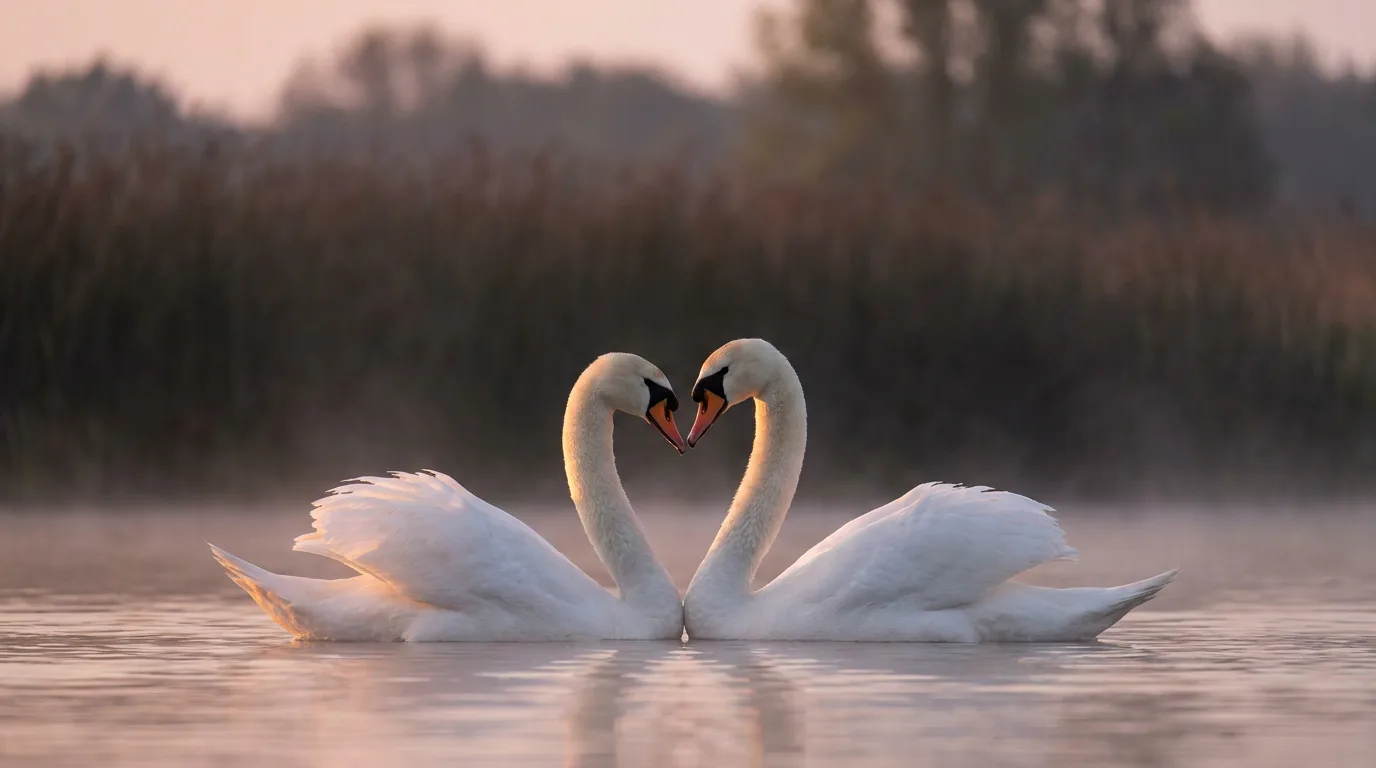
Yes, and swans are the best-supported example on this page. Mute swan pairs usually stay together for life, and according to the Cornell Lab of Ornithology's Mute Swan life history, divorce is rare and usually follows a failed nesting attempt. A swan pair defends the same stretch of water year after year, and both parents guard the cygnets. Trumpeter swans form a mated pair at three to four years old and may stay bonded for life, and black swans follow the same pattern. Bond type: social, with divorce documented but uncommon.

360-degree Wi-Fi pet camera so you can watch your cat's resting breathing rate and behavior from your phone and catch worrying changes early.
Petful may earn a commission when you click through to Chewy, at no extra cost to you.
Do bald eagles mate for life?
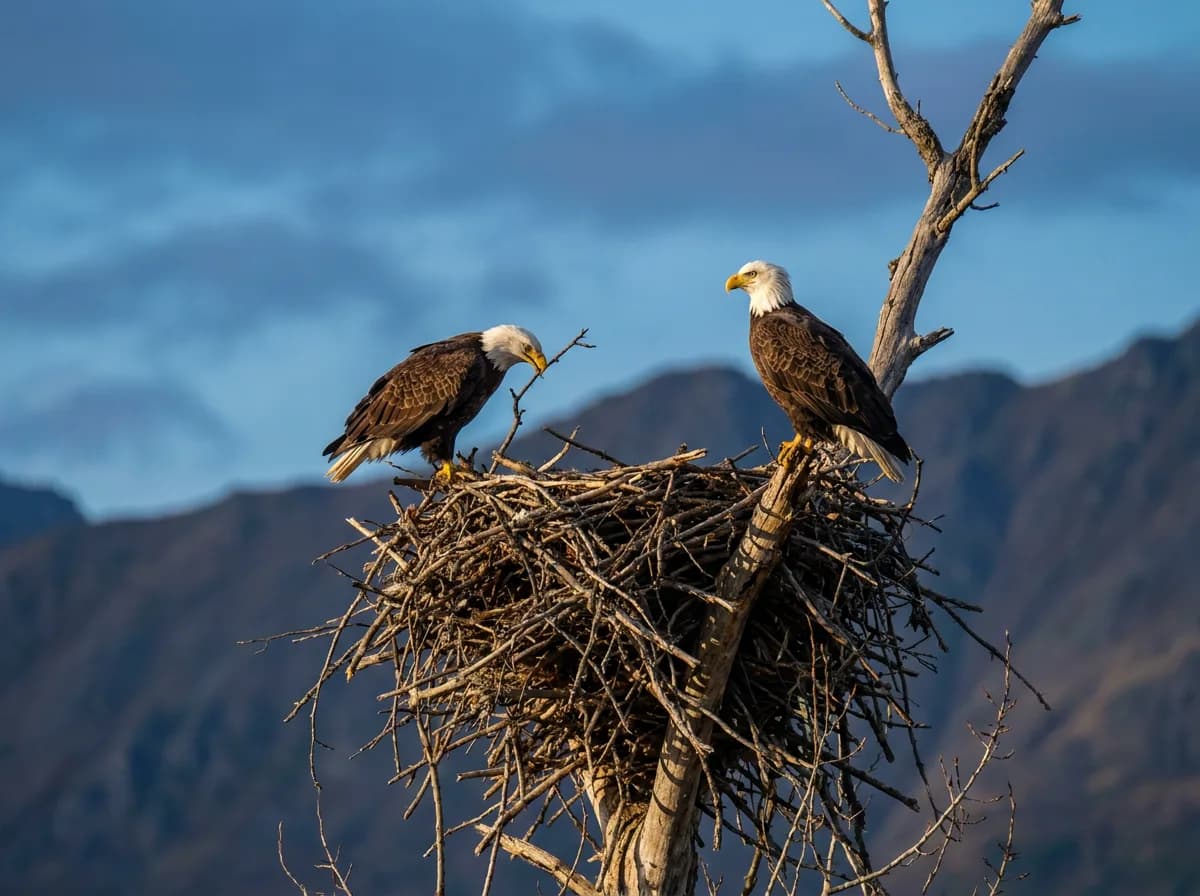
Yes. The U.S. Fish and Wildlife Service describes bald eagles as generally mating for life, returning to the same nest each year and adding to it until it becomes one of the largest nests of any bird. If one partner dies, the survivor accepts a new mate, which is why a famous nest can stay active for decades with different birds. Do bald eagles mate for life in the genetic sense? Paternity has not been widely tested, so the honest label is social monogamy with strong site fidelity. The same pattern holds for golden eagles and ospreys, and for the most searched hawk mate for life question: red-tailed hawks are monogamous and often keep the same mate for years, and ospreys usually reunite at the same nest each spring.
Do geese mate for life? (And what about ducks?)
Geese yes, ducks mostly no, and the two get confused constantly:
- Canada geese mate for life with very low divorce rates, stay together year-round, and a widowed goose will eventually take a new mate, per the Cornell Lab's Canada Goose life history. Bond type: social, lifelong.
- Mallards are seasonally monogamous. Pairs form in autumn and winter, and the male leaves once incubation begins, so a hen usually has a different drake the next year. Do ducks mate for life like geese? No.
- Wood ducks and most other dabbling ducks follow the mallard pattern of a new pair each season.
Albatrosses and puffins: the long-distance couples
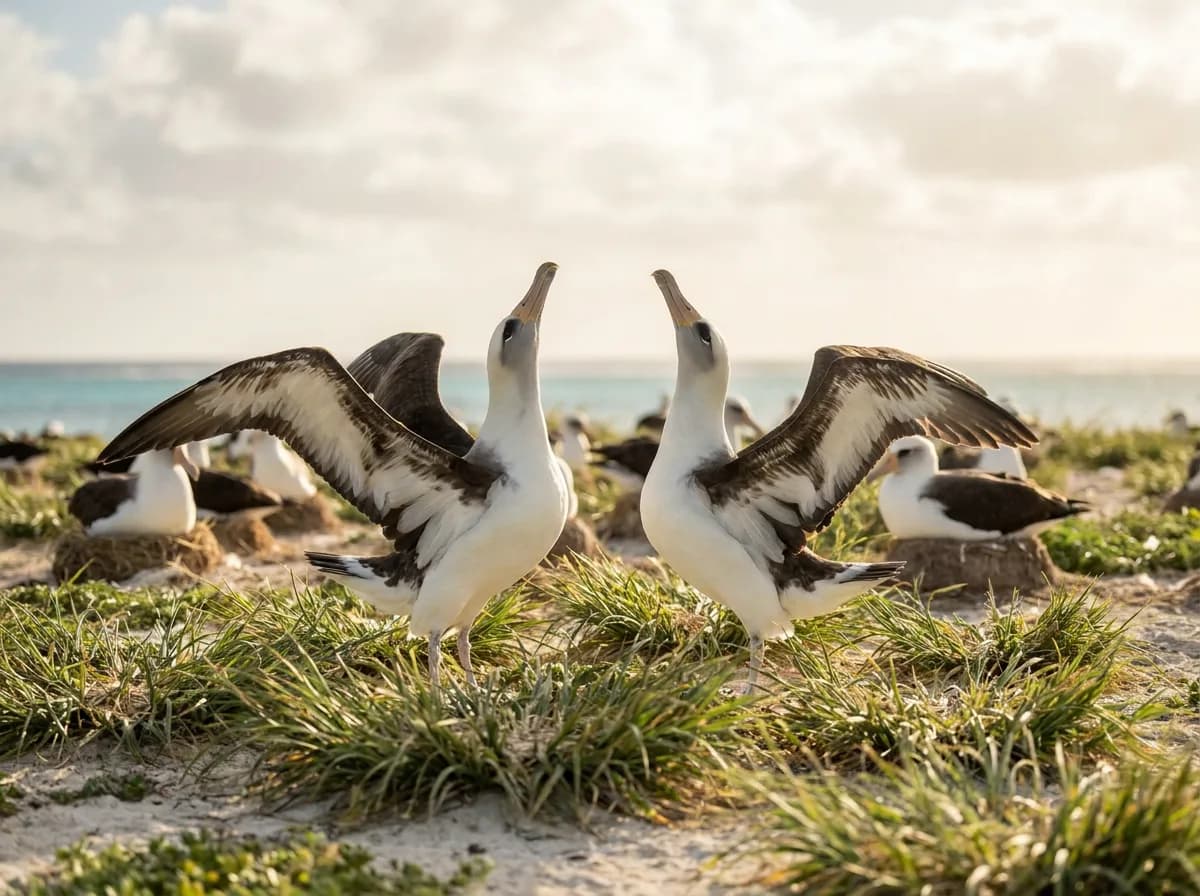
Do albatross mate for life? Yes, and they are the clearest case of a bond that survives months apart. A Laysan albatross pair reunites on the same patch of colony each winter, confirms the bond with a ritual dance, and shares incubation of a single egg, according to the Cornell Lab's Laysan Albatross life history. The best-known individual, a female named Wisdom banded on Midway Atoll in 1956, has raised chicks with more than one partner over her seventy-plus years, because albatrosses re-pair when a mate dies or fails to return. Albatross divorce is also real: a 2021 Royal Society study of black-browed albatrosses found that divorce rates, normally a few percent, rise in years of unusually warm sea water when foraging is poor. Do puffins mate for life? Atlantic puffins return to the same burrow and the same partner each year. Bond type for both: social, long-term.
Cranes, doves, and pigeons
Do cranes mate for life? Sandhill cranes form pairs that last for years, often for life, and they announce the bond with unison calls and dancing. Do pigeons mate for life? Rock pigeons form long-term pairs and can raise several broods a year. Do doves mate for life? For wild mourning doves the answer is "sometimes": the Cornell Lab notes that pairs are monogamous within a season and some stay together through winter into the next year, so the bond type is seasonal to multi-year. Turtle doves follow the same pattern. Pet ringneck doves, covered in the pets section, bond far more tightly than their wild cousins.
Do cardinals mate for life?
Northern cardinals are socially monogamous, and the Cornell Lab notes that pairs often stay together through the year and may remain together for several seasons. Some pairs do split between seasons, and DNA studies of songbirds in general show extra-pair young are common, so the honest label for cardinals is social monogamy that often lasts multiple years rather than a guaranteed lifelong bond. Blue jays form long-term pairs on the same pattern. Do all birds mate for life? No: most small songbirds pair for a single season, and do hummingbirds mate for life? Not at all. A male ruby-throated hummingbird plays no part in nest building or chick care and moves on after mating.
Crows, ravens, and owls
Do crows mate for life? American crows form long-term pairs, and grown offspring often stay for years to help raise the next brood. Do ravens mate for life? Common ravens pair for life and defend a territory year-round. Do owls mate for life? Great horned owl pairs stay together for years and often reuse the same territory, and barn owls usually pair for life. Bond type for all four: social, long-term.

A concentrated tap-water conditioner for aquarium setup and routine water changes.
Petful may earn a commission when you click through to Chewy, at no extra cost to you.
Do penguins mate for life?
Mostly no, and this is the most repeated myth on the internet. Emperor penguins are faithful within a season, but a study in The Auk found that only about 15 percent of emperor penguin pairs reunite the next year, and king penguins re-pair with the same partner less than a third of the time. The reason is timing: a bird that arrives at the colony first cannot afford to wait for last year's partner, per the Australian Antarctic Program. Smaller species that nest on land, such as gentoo, Adelie, and Magellanic penguins, return to the same nest site and often the same mate, so fidelity is higher there. The "penguins propose with a pebble" story is a real behavior seen in gentoo and Adelie penguins, but the pebble is nest material, not a lifelong promise. Bond type: seasonal for emperors and kings, social and multi-year for many burrow and ground nesters.
Parrots, black vultures, and the birds that never pair
Do parrots mate for life? Many do. Monk parakeets are monogamous and build shared stick nests, and large parrots such as macaws and cockatoos form pair bonds that can last decades, which is exactly why a bonded pet parrot grieves a lost companion. Do vultures mate for life? Black vultures not only pair for life but, as the DNA study above showed, are genetically monogamous and physically punish extra-pair attempts. At the other extreme, hummingbirds, most grouse, and wild turkeys form no pair bond at all: the male displays, mates, and leaves.
Mammals that mate for life (and famous ones that do not)
What mammals mate for life? Only a small minority, and the famous exceptions are almost all in one family: the dogs. Which mammals mate for life comes down to species where a resident father raises pup survival enough to be worth the cost, so wolves, coyotes, foxes, and beavers dominate the list. Here are the searched species, followed by the mammals people assume are monogamous but are not.
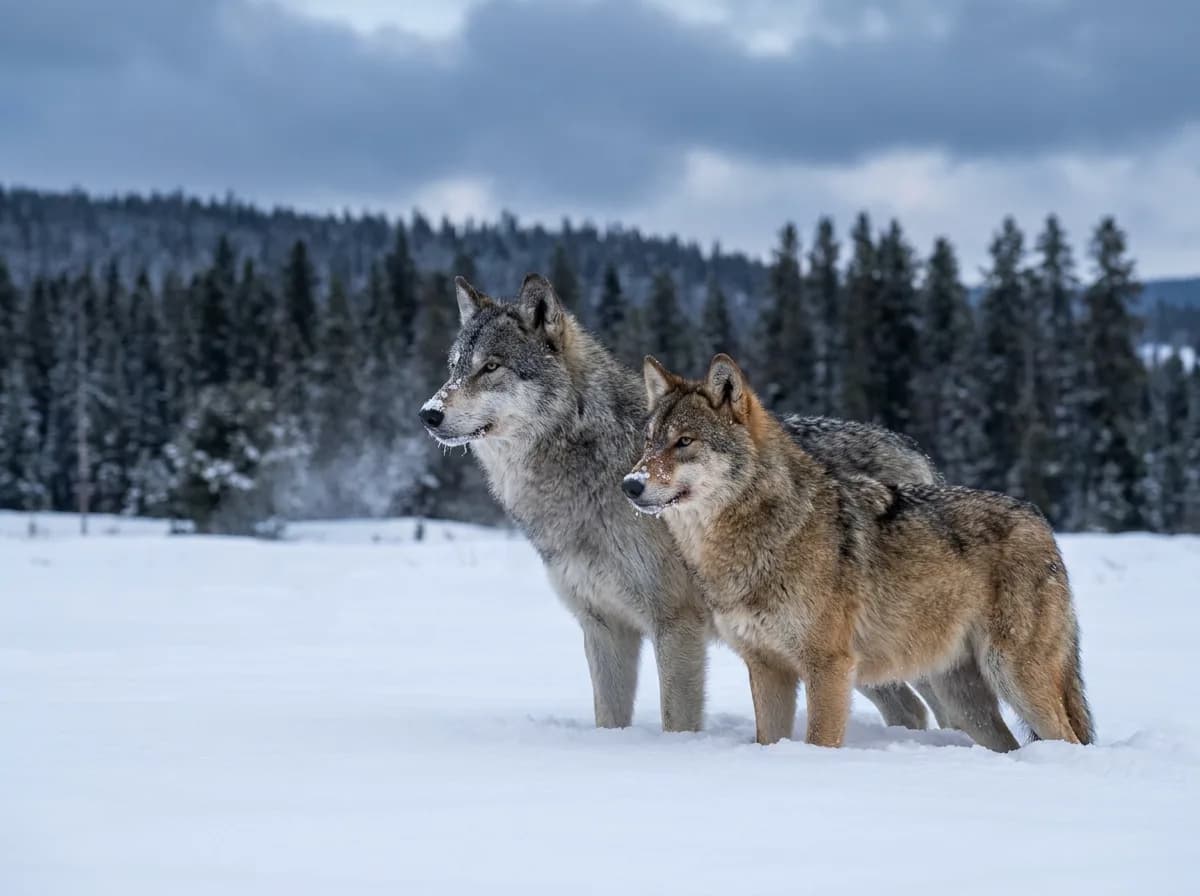
Do wolves mate for life?
Yes, in the social sense. A gray wolf pack is a family: one breeding pair and their offspring from several years, as wolf biologist L. David Mech laid out in his 1999 paper that retired the "alpha wolf" idea. The wolf pair stays together until one dies, and the U.S. Fish and Wildlife Service confirms that only the breeding pair normally reproduces. Do wolves cheat on their mates? Genetic pedigrees of the reintroduced Yellowstone wolves show that large packs occasionally have a second breeding female, so wolves are socially, not perfectly genetically, monogamous. Bond type: social, lifelong.
Do coyotes mate for life? Yes, and the evidence is stronger than for wolves. The Chicago study cited above tracked coyote pairs for up to ten years and found no extra-pair pups in any litter, despite living at high density in a city. Bond type: genetic. The U.S. Fish and Wildlife Service notes that both parents raise the pups, which is the payoff that keeps the pair together.
Do foxes mate for life?
Red foxes form a socially monogamous pair that shares a den and raises the kits together, and the pair often persists across years. Genetics tell a more complicated story: a long-term DNA study of urban foxes in Bristol, England, found that many cubs were sired by males outside the pair, including neighboring dominant males. Arctic foxes and fennec foxes follow the same socially paired pattern. Bond type: social, with frequent extra-pair mating.

Compare coverage choices for your pet, then request a quote directly on Lemonade.
- Check a price for your pet
- Review available coverage choices
- See the terms before you decide
Eligibility, waiting periods, limits and exclusions apply.
Petful may earn a commission when you click through to Lemonade, at no extra cost to you.
Do beavers mate for life?
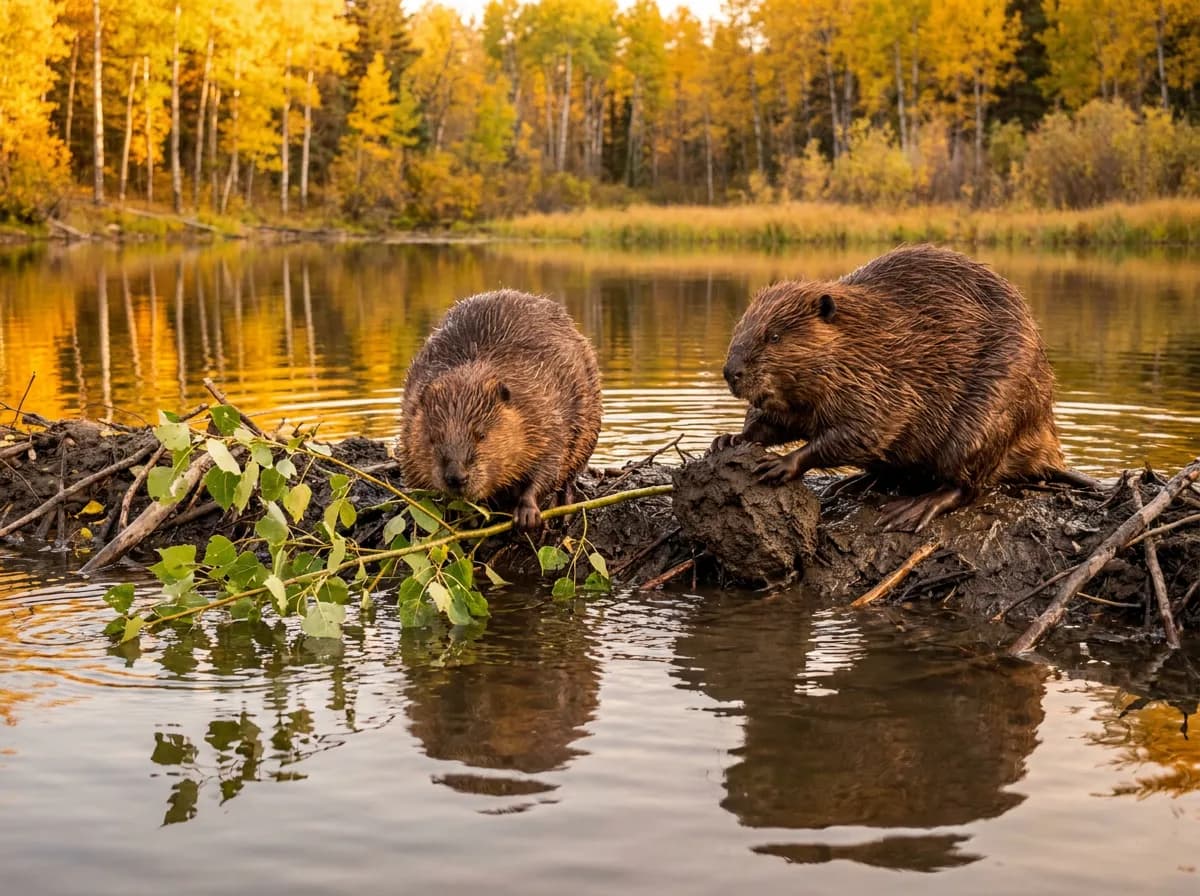
Yes. Beavers are among the most stable mammal pairs in North America. According to the Smithsonian's National Zoo, a beaver pair mates for life, shares a lodge with two generations of kits, and works together on the dam and food cache that get the family through winter. The Eurasian beaver study cited above found colony genetics consistent with monogamy, so beavers may belong on the short genetic list as well. Bond type: social, likely genetic.
Prairie voles and the chemistry of pair bonds
Do voles mate for life? Prairie voles do, and they are the reason scientists understand pair bonding at all. After mating, a prairie vole pair shares a nest, huddles, and jointly raises pups, and a landmark review in Nature Neuroscience traced that behavior to oxytocin and vasopressin receptors in the brain's reward circuits. Their close relative the meadow vole lacks those receptor patterns and is promiscuous. Field studies show even prairie voles are not perfect: a 2008 study in Animal Behaviour found some litters with extra-pair fathers, yet socially monogamous pairs still raised more surviving pups. The U.S. Fish and Wildlife Service profile covers the species. Bond type: social.
Gibbons, titi monkeys, and Kirk's dik-dik
Do gibbons mate for life? Socially, yes: a gibbon pair holds a territory and sings duets for years, with the extra-pair caveat described earlier. Coppery titi monkeys of South America form pair bonds so strong that separated partners show measurable stress, and imaging work at the California National Primate Research Center found brain changes in bonded males similar to those in prairie voles. Kirk's dik-dik, the tiny antelope, remains the best genetic case among hoofed mammals. Do primates mate for life in general? Very few do; a 2013 analysis in PNAS argued that primate monogamy evolved mainly where a resident male could protect infants from being killed by rival males.
Famous mammals that do not mate for life
Several of the most searched "do X mate for life" questions have a flat no:
- Do lions mate for life? No. A pride's females mate with whichever coalition of males currently holds the pride, and the National Zoo notes that takeovers happen every few years.
- Do tigers or snow leopards mate for life? No. Adult tigers are solitary, and males and females meet only to mate. Big cats that mate for life do not exist.
- Do elephants mate for life? No. Asian elephants live in female-led family herds, and adult bulls roam between herds during musth.
- Do deer mate for life? No. White-tailed deer bucks compete for multiple does during the autumn rut and play no part in raising fawns.
- Do gorillas mate for life? No. A western lowland gorilla group is one silverback with several females.
- Do otters mate for life? No. Male sea otters hold territories and mate with multiple females, and river otters are similar.
- Do dolphins mate for life? No. Male bottlenose dolphins form alliances that cooperate to herd females, the opposite of a pair bond, per NOAA Fisheries.
- Do orcas or whales mate for life? No. Killer whales stay with their mother's pod for life but mate outside it, and humpback whales form no lasting bonds at all.
Fish, reptiles, and insects that pair for life
Sea animals that mate for life are rarer than birds, but the few that do include the strangest pair bonds in nature. Which animal has only one mate for life, in the most literal sense? It is a flatworm, and it is on this list.
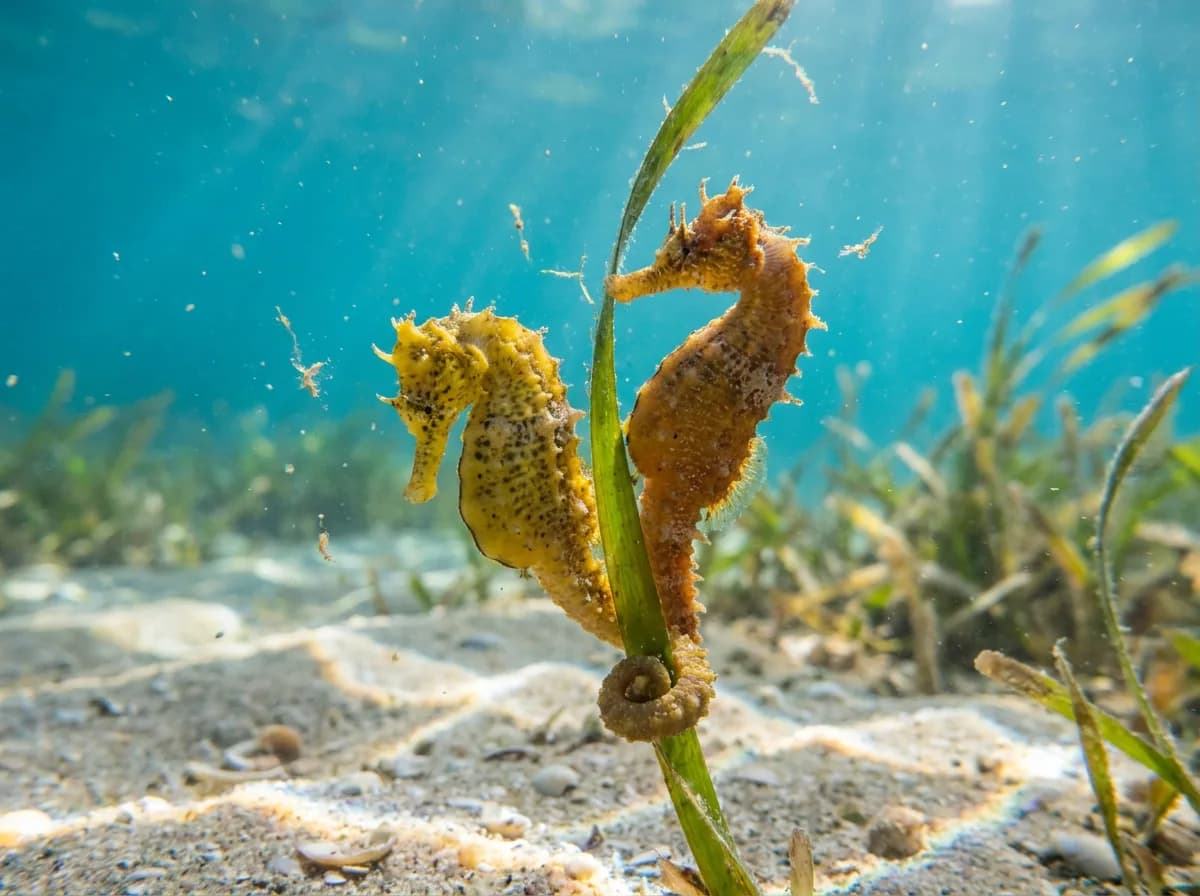
- Do seahorses mate for life? Many species pair for a breeding season and greet each other every morning with a color change and a tail-linked dance, and the male carries the eggs in his pouch. A DNA study of the Western Australian seahorse found pairs that were genetically monogamous and stayed together across breeding cycles. Bond type: social to genetic, depending on species.
- Do clownfish mate for life? Yes, with a twist. A clownfish anemone holds one breeding pair plus smaller non-breeders, and research published in Nature showed the rank order is enforced by size. If the female dies, the male changes sex and becomes the new female, and the largest non-breeder becomes her mate. The pair is lifelong; the roles are not.
- French angelfish travel and defend a reef territory as a pair, according to the Florida Museum of Natural History, which is why they are so often photographed in twos.
- Diplozoon paradoxum, a gill parasite of carp and minnows, is the answer to "which animal has only one mate for life." Two larvae meet on a fish, fuse at the midsection, and live as a single joined organism for the rest of their lives, an arrangement documented in the CABI Compendium.
- Deep-sea anglerfish males bite onto a female and permanently fuse to her tissue, and a 2020 Science paper showed their immune systems evolved to allow it. Some species carry several fused males, so it is lifelong attachment rather than monogamy.
- Shingleback lizards of Australia reunite with the same partner each spring for up to two decades, the best-documented pair bond in reptiles00115-7), though DNA work found occasional extra-pair young.
- Termite kings and queens found a colony together and remain the sole reproductive pair for years; the University of Florida entomology department notes a Formosan termite queen can live and lay for more than a decade with the same king.
- Do turtles mate for life? No. Female sea turtles mate with several males, and the Sea Turtle Conservancy notes clutches often have multiple fathers. Do sharks mate for life? No; the Florida Museum describes shark mating as brief encounters with no bond, and koi and most aquarium fish spawn in groups.
If you keep a pair of angelfish or clownfish, the reproduction mechanics behind these bonds are covered in Petful's guide to how fish mate, and parents choosing a first tank can start with getting pet fish for children.
What happens when a mate dies?
What actually happens when a bonded partner dies is better documented than the broken-heart myth suggests. What animal dies if its mate dies? Despite the popular story, there is no documented species in which a healthy survivor reliably dies of grief. What the evidence does show is a period of visible searching and disruption followed, in most species, by a new pair bond:
- Swans and geese call and search for a missing partner, sometimes for days, and may skip a breeding season, but Cornell Lab life histories for the mute swan and the Canada goose both record that widowed birds take new mates.
- Bald eagles re-pair, and the U.S. Fish and Wildlife Service notes the survivor often keeps the original nest with the new partner.
- Albatrosses may return to the colony and wait through a season or two for a partner that never comes back before courting again, which is part of why Wisdom has had several mates.
- Wolves and coyotes replace a lost breeder from outside the pack, and the family continues; a pack that loses both breeders can dissolve.
What animals mate for life even after death? None in the literal sense, but the grief behavior is genuine and matters most for pet owners. A bonded dove, lovebird, parrot, or rabbit that loses its partner may sit puffed up, call repeatedly, and stop eating for a day or more. A bird or rabbit that stops eating needs a veterinarian quickly, because small animals cannot go long without food. Companionship, extra attention, and in time a new compatible partner are the standard advice, and Petful's guide to pet doves that pair for life walks through that recovery.
Do pets mate for life? Dogs, cats, rabbits, and pet birds
The pet-owner version of this question gets ignored by every wildlife listicle, so here it is directly. Among common companion animals, the pair bonders are the birds and the rabbits; the dogs and cats never pair-bond at all, although both can form deep bonds with a housemate.
- Do dogs mate for life? No. Dogs are descended from a pair-bonding wolf, but domestication removed the pair bond entirely. A female in heat will accept several males, as VCA Animal Hospitals explains, and a male plays no role in raising puppies. The loyalty dogs show is directed at their human family, not a mate.
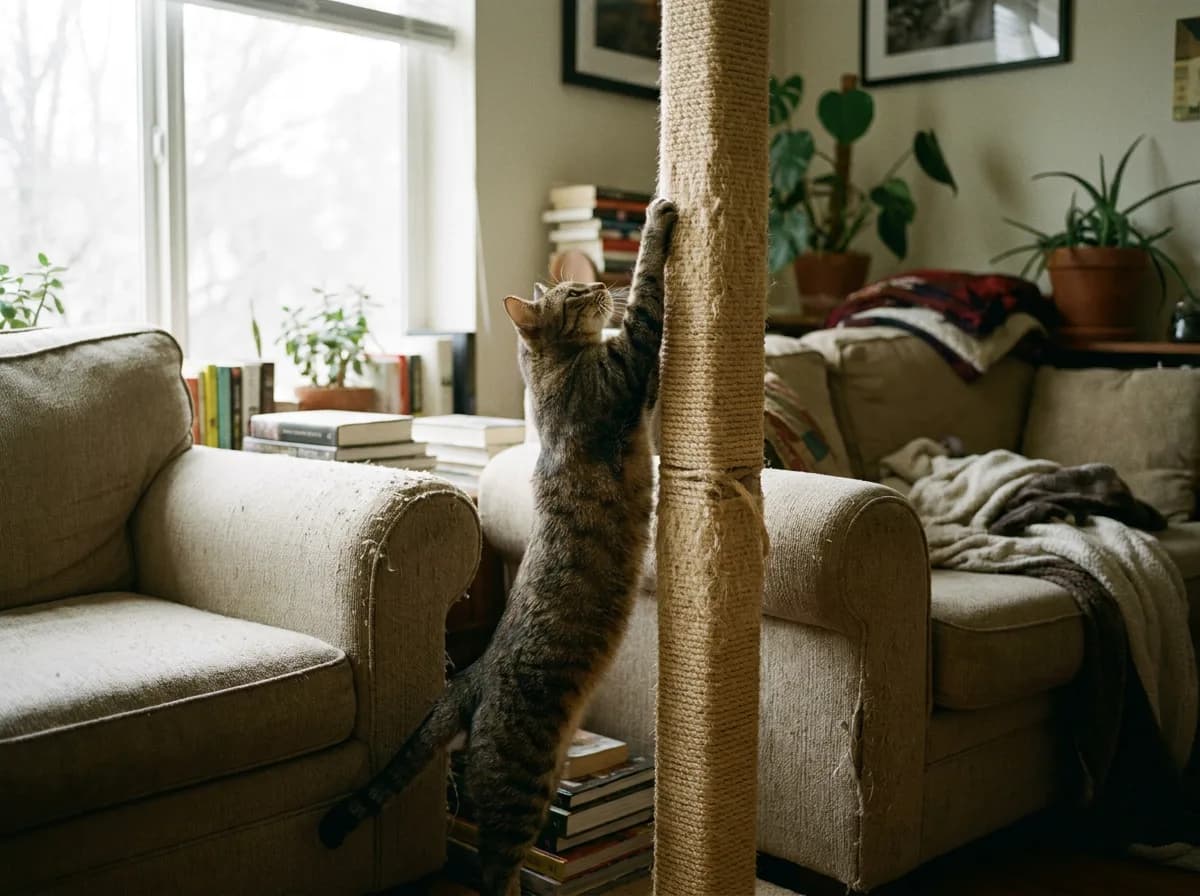
- Do cats mate for life? No. A queen in heat mates with multiple toms, and because each mating triggers ovulation, one litter can have several fathers. Cats do form lasting bonds with a feline housemate, though, which is why separating a bonded pair is so hard on them; see Petful's guide to keeping bonded cats together.
- Do rabbits mate for life? Wild rabbits do not, but a bonded pair of neutered domestic rabbits will groom, sleep, and eat together for life, and the House Rabbit Society treats bonding as a deliberate process because a badly matched pair can fight seriously. A rabbit that loses its bonded partner often grieves visibly.
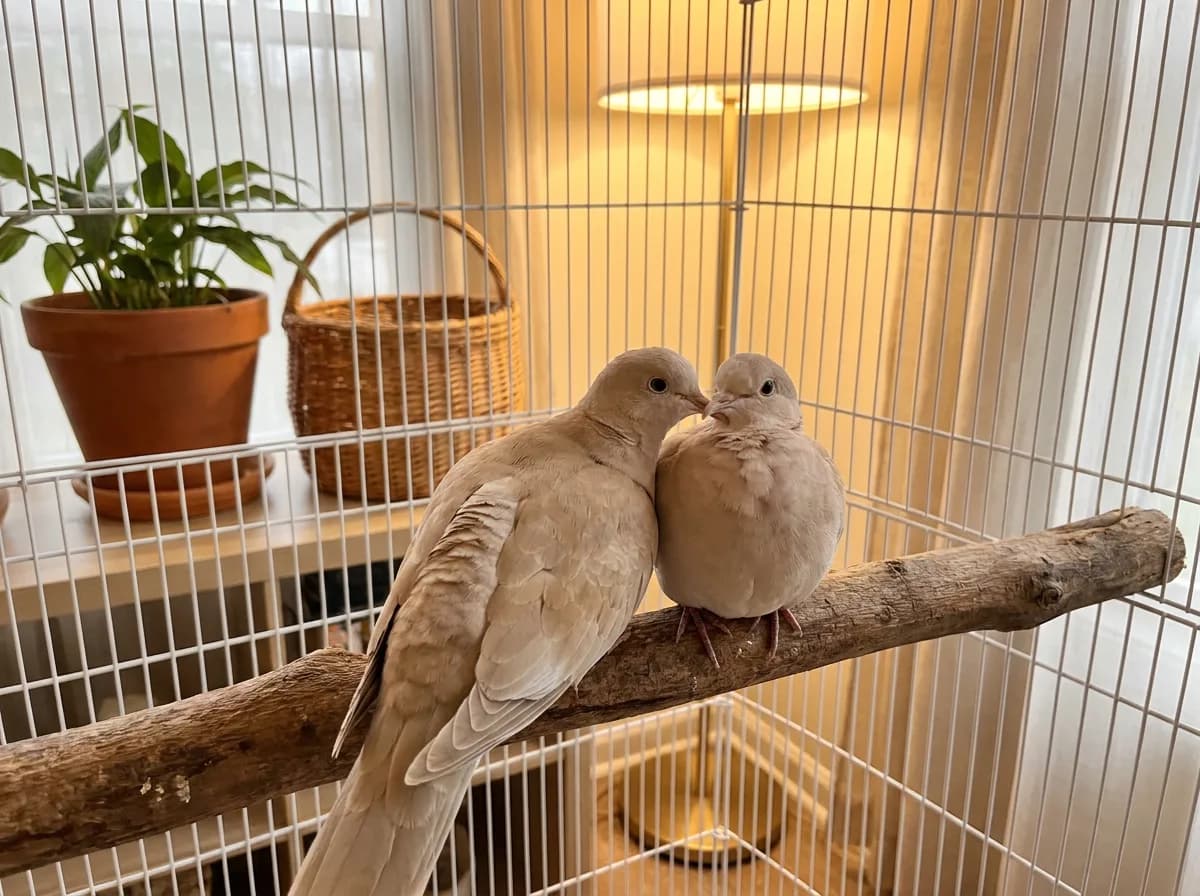
- Do doves mate for life? Pet ringneck doves form one of the tightest pair bonds of any companion animal, preening and nesting together year-round. Petful's guide to pet doves covers pairing, housing, and what to do when one bird is lost.
- Do lovebirds mate for life? Yes, when kept as a pair, and so do cockatiels, budgies, and parrots. Lovebirds are named for the bond, and cockatiels, budgies (parakeets), and larger parrots all pair strongly; a single bird usually transfers that bond to its owner instead. Petful's guide to parrots as pets explains what that commitment means over a bird's long life.
- Do ferrets mate for life? No. Ferrets are induced ovulators like cats and form no pair bond, though they enjoy the company of other ferrets.
- If you keep a bonded pair, plan for the pair rather than the individual: house them together, take both to vet visits when you can, and never rehome one without the other. Pet doves and lovebirds should be paired early and kept in a cage sized for two. Bonded cats should move, board, and recover from surgery together. Bonded rabbits need a slow, supervised introduction before they ever share a space. Petful's guides to pet doves, bonded cats, and parrots as pets cover each case in detail.
Frequently asked questions about animals that mate for life
No documented species reliably dies when its mate dies. Bonded swans, geese, eagles, and wolves search and call for a missing partner, sometimes skip a breeding season, and then re-pair. The real risk is in pets: a bonded dove, lovebird, or rabbit that stops eating after losing its partner can decline within a day or two, so a bird or rabbit that stops eating needs a veterinarian quickly, along with extra companionship while it recovers.
No. The lobster myth comes from a sitcom joke, not biology. A female American lobster moves into a dominant male's shelter, molts, and mates while her new shell is soft. She stays for about two weeks until the shell hardens, then leaves, and the male mates with the next female in line. Lobster biology is summarized by the University of Maine's Lobster Institute (umaine.edu/lobsterinstitute).
Many socially monogamous animals do. DNA testing of nestlings found extra-pair paternity in about 90 percent of socially monogamous bird species studied, averaging roughly 11 percent of chicks, and extra-pair young have been found in red foxes, prairie voles, and even some wolf packs. The exceptions confirmed by DNA testing, such as Kirk's dik-dik, the California mouse, black vultures, and Chicago's urban coyotes, are the only animals that can honestly be called genetically monogamous.
About 90 percent of bird species are socially monogamous, at least for a breeding season, and a smaller share pair for life. Among mammals, the classic estimate is three to five percent of mammals, and a 2013 survey of 2,545 species in Science put social monogamy at about 9 percent. Across fish, reptiles, and invertebrates the figure is far lower, and genetic monogamy is rare in every group.
Pair bonds evolve where two parents raise more surviving young than one. Biparental care is the main driver in birds, because eggs must be incubated and chicks fed in the nest. Territory defense is the second: a bonded pair of wolves, beavers, or ravens can hold a food-rich territory that a single animal could not. In mammals, monogamy tends to appear where females live far apart or where a resident male protects infants from rival males, and hormones such as oxytocin and vasopressin lock the bond in place once it forms.

Sarah Blakemore has been researching and writing about pet care and pet behaviors since 2007. She has cared for many pets over the years and has volunteered with several animal shelters around the world.
Sign up for expert-backed reviews and safety alerts all in one place.