SpotOn vs. Halo: Which GPS Dog Fence Wins in 2026?
SpotOn vs. Halo, compared head-to-head. We break down GPS accuracy, subscription costs, tree-cover reliability, and training to help you pick the right GPS dog fence for your property in 2026.
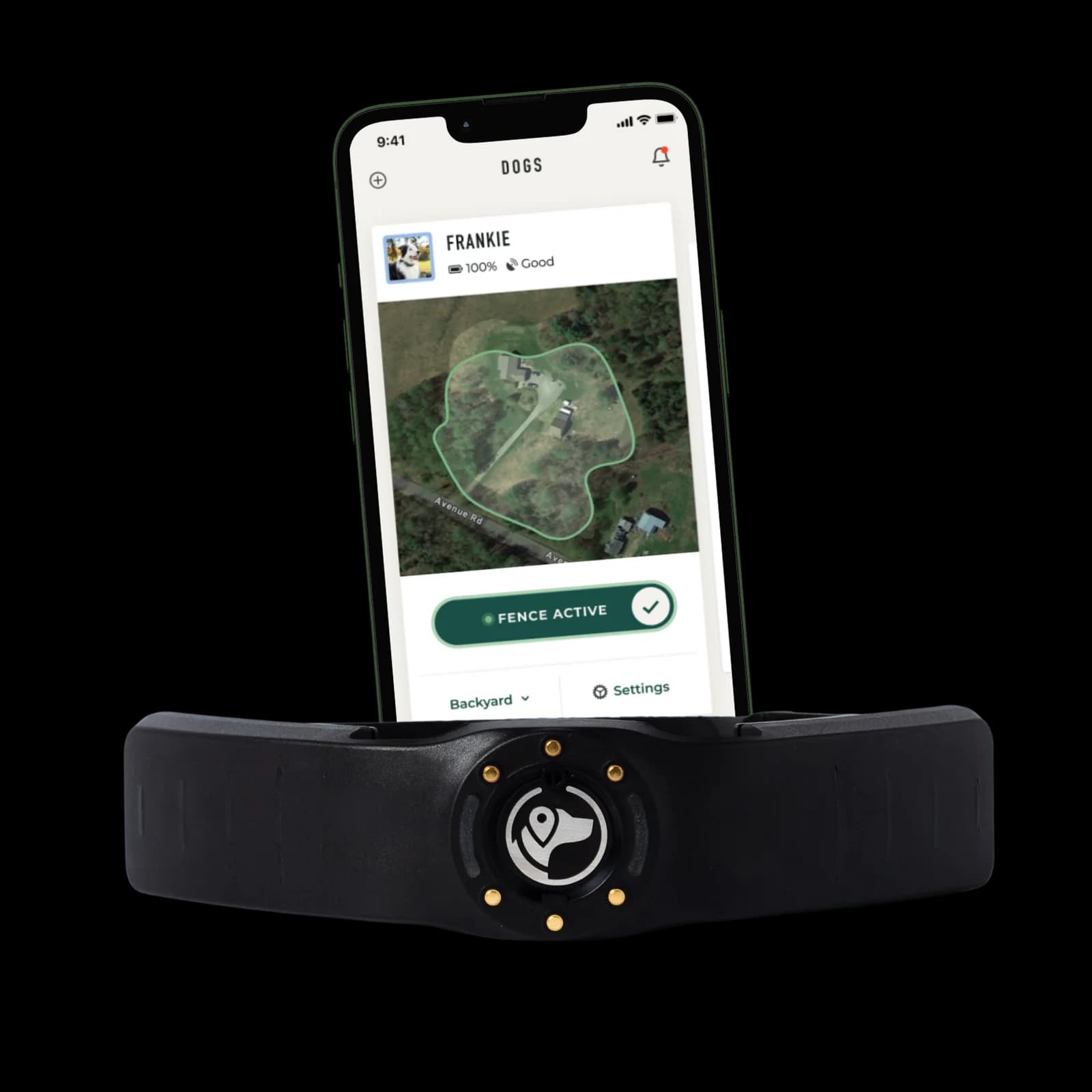
SpotOn vs. Halo is the GPS dog fence matchup most owners agonize over, so we compared both using official specs and available third-party testing. If you are comparing SpotOn vs. Halo, you are looking at the two most talked-about GPS dog fences on the market, and they genuinely solve the problem in different ways. SpotOn is built around premium GPS accuracy and subscription-free containment. Halo bundles guided training into a more suburban-friendly, lower-upfront-cost package. This comparison breaks the two down dimension by dimension, accuracy, cost, battery, training, range, app, and support, so you can match the right system to your property and your dog. Our pick for most owners is SpotOn, but there is one situation where Halo makes more sense, and we will be straight about it.
Searches for spoton vs halo and halo vs spoton have climbed fast, and for good reason: these are the two systems most cross-shopped in the category. Below we settle the spoton vs halo question dimension by dimension rather than declaring a vague tie.
- 1SpotOn wins overall on the specs that decide a virtual fence: GPS accuracy, tree-cover reliability, and subscription-free containment.
- 2Halo's one clear advantage is upfront price, it costs a few hundred dollars less to buy (roughly $375 to $475).
- 3The catch: Halo requires a monthly subscription for containment, so over a few years the cost gap narrows or disappears.
- 4Both Halo and SpotOn use modern GPS technology and can access a large network of satellites to help improve location accuracy
- 5SpotOn takes a different approach, using a dual-frequency antenna and receiver system designed to maximize GPS signal filtering and precision. SpotOn also features the largest GPS antenna available in a dog fence collar today, approximately five times larger than the antennas used by many competing systems, which helps the collar receive and process satellite signals more effectively.
- 6Halo highlights a 0.6-meter accuracy figure that it attributes to Swift Navigation, a GPS technology company. While this sounds impressive, it is important to understand that Swift Navigation is a GPS correction provider, not the GPS hardware itself. We'll explain what this means and how it impacts real-world performance later in this article.
- 7Bottom line: SpotOn for accuracy, large or wooded property, and no recurring fees; Halo if a lower upfront price is the deciding factor.
Petful may earn a commission if you click on our links and make a purchase. This comes at no extra cost to you and helps us continue providing trusted pet product reviews.
Check Price on SpotOn Exclusive - $75 Off
Sign up for expert-backed reviews and safety alerts all in one place.
SpotOn vs. Halo at a Glance
Both of these are premium GPS systems, which means neither is a cheap impulse buy and both reward a little homework before you commit. The good news is that the decision usually comes down to a small number of factors that are easy to weigh once you know your own situation: how much land you have and what is on it, how much you care about the lowest possible upfront price versus the lowest long-term cost, and whether you want app-based training or a human trainer in your corner. Work through those, and the winner for your specific case becomes clear.
Here is the head-to-head on the specifications that actually change how the fence performs and what it costs over time.
| Feature | SpotOn GPS Fence | Halo Collar 5 |
|---|---|---|
| Subscription for containment | Not required | Required (Pack plan from ~$9.99/mo) |
| Upfront price | About $924 to $999 ($924 with SpotOn's $75 coupon) | About $524 to $599 |
| Stated accuracy | Under 5 ft (SpotOn official) | 0.6 m / about 2 ft (Halo's claim, via its Swift Navigation corrections; needs a live connection) |
| GPS hardware | Dual-band, dual-feed antenna and receiver system | Dual-frequency (dual-band) antenna and receiver |
| Tree-cover performance | SpotOn emphasizes wooded-area optimization | Halo cites drift prevention + AI obstacle filtering |
| Custom fences | Unlimited, overlapping allowed, Keep Out Zones, Off-grid Mode | Limited by plan tier |
| Min / max property size | 1/3 acre up to very large acreage | About 900 sq ft (30 x 30 ft) minimum, up to large properties |
| Battery life | 33+ hrs tracking, 40+ extended battery life mode | Up to 48 hrs |
| Training | Built-in training in the app. Tone, vibration, 30 levels of optional static, voice + free trainer consultation | Cesar Millan app program |
| Collar weight | .84 lbs Fits 10 to 26 in necks, with a strap extender for x-large dogs | .24 lbs 8 inches to 30.5 inches |
| Return policy | 90 days | 90 days with a $25 fee |
| Warranty | 1 year + accident forgiveness | 1 year limited |
- Both are strong, modern systems with 151-satellite, dual-band GPS and solid published accuracy. SpotOn's real advantages are practical: no required subscription, overlapping fences with Keep Out Zones, a low 1/3-acre minimum, and flexibility on large or oddly shaped properties. Halo's advantage is concentrated in a lower upfront price. Match the pick to your property and budget.
Accuracy: Both Strong, With Different Strengths
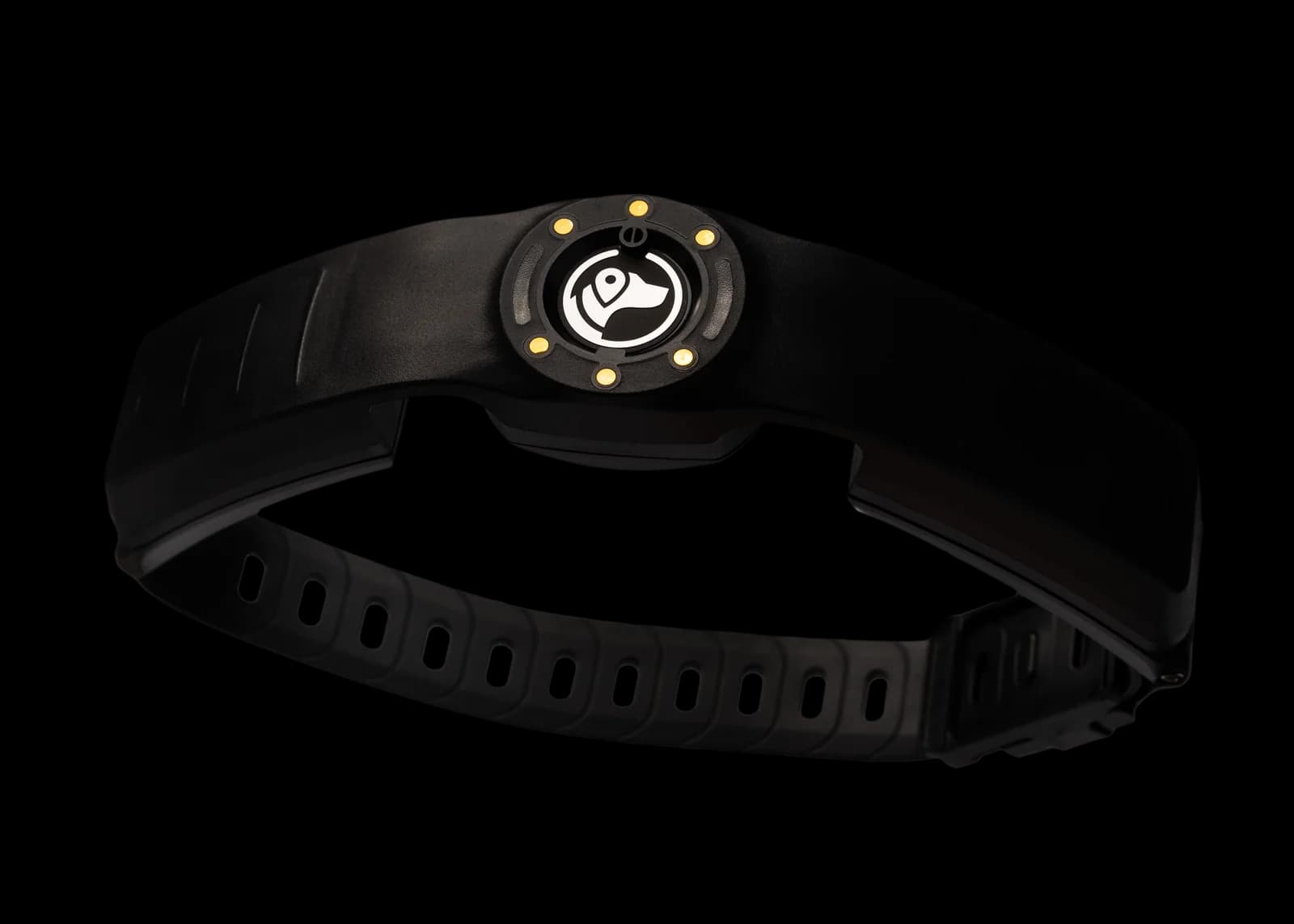
Where buyers should focus is real-world fit. SpotOn's materials emphasize performance under heavy tree cover and on large or irregular rural properties, where it supports overlapping fences and a 1/3-acre minimum. Halo's materials emphasize drift prevention and AI obstacle filtering tuned for suburban yards, along with its training program. For a wooded or sprawling property, SpotOn's large-acreage flexibility is the practical edge; for a standard suburban lot, both perform well.
On third-party validation specifically, Halo cites a 0.6-meter figure tied to its Swift Navigation correction service (a connectivity-dependent vendor claim rather than an independent lab test). SpotOn publishes its own accuracy testing and lab data. A careful buyer should read both as manufacturer-presented performance claims and weigh the spec that matters most for their property, accuracy under their specific conditions, rather than a single headline number.
Accuracy is the whole game with a virtual fence, because a boundary that drifts is a boundary with holes. Both systems now use serious hardware here. SpotOn's Nova Edition uses a dual-band, dual-feed active antenna with access to 151 satellites and states accuracy under 5 feet. Halo Collar 5 also uses dual-frequency L1+L5 GPS across 151 satellites, and Halo cites accuracy within about 0.6 meters (roughly 2 feet), a figure Halo attributes to its Swift Navigation correction service. On paper, both are well ahead of older single-band systems.
SpotOn commissioned Spirent, one of the world's leading GPS and GNSS testing laboratories. Spirent provides positioning and navigation testing services for industries including aerospace, automotive, telecommunications, defense, and companies such as NASA, Garmin, Qualcomm, Toyota, and Lockheed Martin. In Spirent's head-to-head testing, SpotOn's GPS fence was found to be the most accurate system tested.
Halo promotes a 0.6-meter accuracy claim tied to its Precision+ feature and partnership with Swift Navigation. However, Swift Navigation is not an independent testing laboratory. It is a GPS correction service provider whose technology powers the Precision+ feature itself.
In simple terms, Swift Navigation's Skylark network works like a GPS "helper service." A network of fixed ground stations continuously measures GPS errors caused by atmospheric conditions and satellite variations, then sends correction data to connected devices over the internet. Those correction packets can improve positioning accuracy when the device maintains an active cellular or Wi-Fi connection.
SpotOn takes a different approach. Rather than relying on a paid cloud-based correction service, SpotOn's collar was engineered around a large dual-feed antenna and dual-frequency GNSS receiver designed to maximize GPS performance directly on the device. Because the collar receives more satellite data and processes multiple frequencies simultaneously, it can resolve the common GPS errors locally without depending on continuous correction data being streamed from a third-party network. In simple terms, SpotOn's technology doesn't need a 3rd party to correct its errors.
For consumers, the practical takeaway is that terms like "Precision+" and "Swift Navigation" describe how Halo attempts to improve GPS accuracy, not independent proof that the system is more accurate. The strongest evidence available today comes from published third-party testing, and SpotOn is the manufacturer that has published Spirent test results for public review.
We put the collar through its paces in our SpotOn Nova collar review.
For an open lot, both will reliably contain a properly trained dog. On wooded or very large property, SpotOn's overlapping fences, Keep Out Zones, and very-large-property support are the bigger practical differentiators than any small gap in stated accuracy.
Best for large or wooded properties: SpotOn. Both are accurate on paper; SpotOn's edge is real-world fit on big or tree-heavy lots, not a higher accuracy number.
Cost: Cheaper Upfront vs. No Subscription
There is one more cost wrinkle worth understanding. With Halo, the subscription is not just a convenience fee, on the lower tiers it gates how many fences you can save and which features you can use, so the practical experience of the product changes with your plan. With SpotOn, the optional subscription only adds live tracking and notifications on top of a fence that already works for free, so a buyer who never subscribes still gets the full containment product. That structural difference, paying to keep the fence on versus paying only for extras, is the real story behind the sticker prices, and it is why we frame the cost comparison around lifetime ownership rather than the day-one receipt.
This is the comparison that surprises most buyers, and it is the one place Halo has a real edge. Halo costs a few hundred dollars less to buy (roughly $375 to $475). But containment requires an ongoing monthly subscription, so the lifetime cost climbs the longer you own it. SpotOn costs more upfront, around $999, but the containment fence runs with no required subscription, so there is no recurring fee just to keep the fence working.
| SpotOn | Halo Collar 5 | |
|---|---|---|
| Upfront hardware | ~$924 | ~$549 |
| Required subscription (36 mo) | $0 | ~$360 (at ~$9.99/mo) |
| Estimated 3-year total | ~$924 | ~$909 |
Over three years the gap narrows to almost nothing, and the longer you keep the system, the more the no-subscription model favors SpotOn. If you only weigh the sticker price, Halo wins. If you weigh lifetime cost, it is close to a wash, and SpotOn pulls ahead after year three.
- Halo is genuinely the better choice if a lower upfront price is the deciding factor for your budget right now. That is the one place it clearly beats SpotOn. Just go in knowing the monthly fee is the trade, and that it erases most of the savings within about three years.
Cost winner: Halo on upfront price, SpotOn on lifetime cost.
Check Price on SpotOn Exclusive - $75 OffBattery Life and Charging
Halo edges SpotOn on raw battery numbers, up to 48 hours versus SpotOn's 33-plus hours with tracking enabled. SpotOn narrows the gap with a 40-plus hour extended mode and an approximately 1-hour fast recharge, so in daily use both comfortably cover a full day with an overnight charge. The nod on headline runtime goes to Halo.
Battery winner: Halo, narrowly.
Training and Ease of Setup
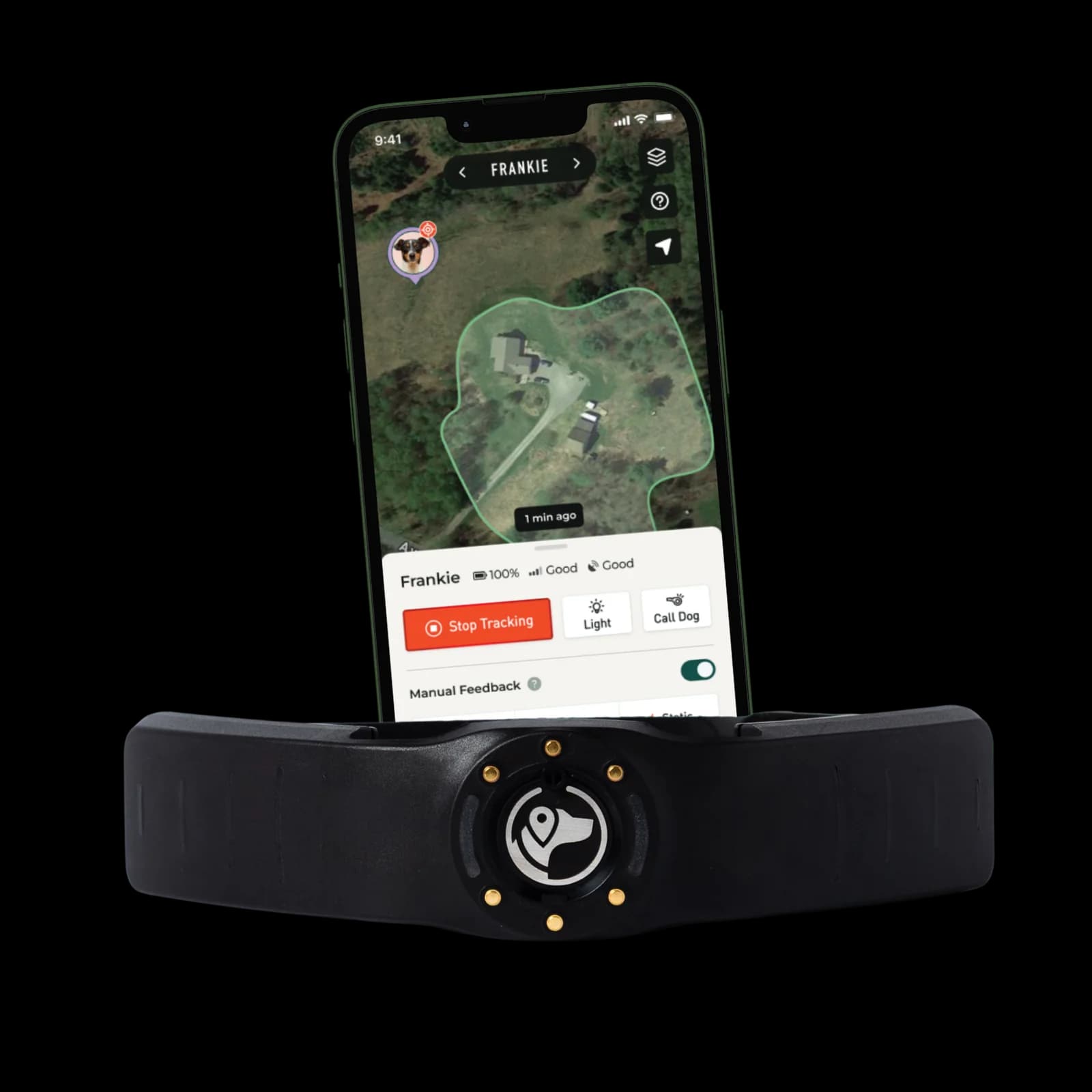
It is worth being specific about what each training approach gives you. Halo's in-app program is structured into guided modules: you follow on-screen steps, the app tracks your progress, and the Cesar Millan content coaches you through introducing the boundary over a couple of weeks. It is genuinely good for a first-time owner who wants a clear, self-paced path and does not want to schedule a call. SpotOn combines its own built-in app training with a free live consultation: you get a session with a certified trainer who can look at your specific property, your specific dog, and tailor the plan, which tends to matter more for a stubborn, high-drive, or previously failed dog where a generic program has already come up short. Neither is universally better. A confident owner with an easygoing dog will likely be happy with a self-paced app program from either brand. An owner with a known escape artist or a nervous rescue often gets more from a live trainer consultation that can adapt the plan, which is where SpotOn's free session stands out.
Halo's headline feature is its built-in training program developed with Cesar Millan, delivered through the app. For an owner who wants structured, in-app coaching, that is a real draw. SpotOn answers with its own built-in app training developed with a certified trainer, plus multiple correction modes, custom voice cues, and a free one-on-one consultation, which many owners find more personal and tailored to their specific dog and property.
Both teach the boundary the same fundamental way, with escalating tone, vibration, and optional static cues. The difference is delivery: Halo packages training into the app with Cesar Millan content; SpotOn includes built-in app training plus a free certified-trainer consultation. Neither is objectively better; both include app-based training, so it comes down to whether a free live trainer consultation matters for your dog.
Training winner: Even, by preference.
Range, Coverage, and Property Type
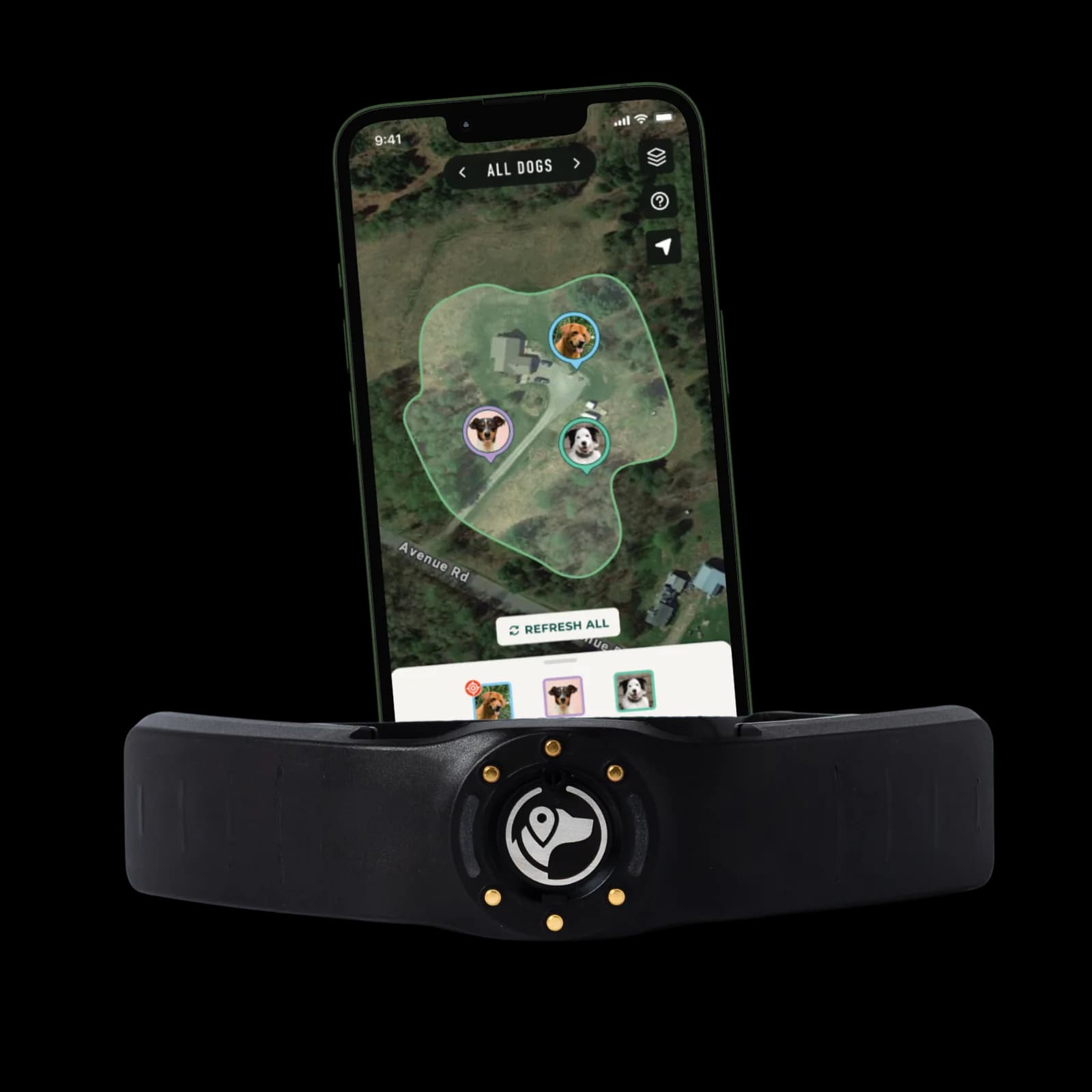
The overlapping-fence capability deserves a callout because it is easy to overlook on a spec sheet and important in practice. SpotOn lets you build multiple fences that overlap, so you can create a large perimeter fence and then layer Keep Out Zones inside it (around a garden, a pool, a chicken coop, or a steep drop) without those zones punching a hole in the outer boundary. Halo's basic tier does not allow overlapping and caps you at five fences total, so a property with several no-go areas can exhaust the allowance quickly. For a simple rectangular yard this never comes up. For a working property or a place with hazards, it is a meaningful flexibility gap.
SpotOn supports properties from a 1/3-acre minimum to very large acreage (SpotOn describes its fences as working on land 'as vast as you need,' in 'any shape or size'), with overlapping fences and up to 1,200 fence posts for precise, oddly shaped boundaries. Halo handles large properties too, but the basic tier caps you at five fences with no overlapping, and its drawing tools are less granular. For rural acreage, farms, and multi-property households, SpotOn is the more capable system. For a single standard suburban lot, either works.
Range winner: SpotOn.
Check Price on SpotOn Exclusive - $75 OffSpotOn Pros and Cons
- Strong GPS accuracy with a dual-band, dual-feed antenna and 151 satellites
- No required subscription to run the containment fence
- Unlimited, overlapping custom fences on very large acreage with Keep Out Zones
- Low 1/3-acre minimum property size
- Free one-on-one certified trainer consultation
- 90-day return with no fee, plus accident forgiveness
- Higher upfront price (about $999)
- Heavier collar than Halo
- Premium features like live tracking still need an optional plan
Halo Pros and Cons
- Lower upfront price
- Built-in Cesar Millan training program in the app
- Up to 48-hour battery life
- Lighter collar, easier on smaller dogs
- Cites about 0.6 m accuracy via its Swift Navigation correction service (a connectivity-dependent figure, not an independent lab test)
- Requires a Pack membership subscription for containment
- Fewer fences and no overlapping on lower plan tiers
Which Should You Choose?
Choose SpotOn if: you have a large, rural, or wooded property, your dog is an escape artist, you want dependable boundary performance on large or tree-heavy land, or you would rather pay once than carry a monthly subscription.
Choose Halo if: a lower upfront price is the deciding factor for your budget, you have a standard suburban yard, and you want the structured in-app training program.
For most owners who care about a dependable boundary that holds where it matters, SpotOn is the system we recommend. Halo is the value pick if upfront cost is the priority and your yard is simple and open.
New to the category? Start with our roundup of the best GPS dog fences of 2026 for the full field, or read how to
keep an escape-artist dog in the yard if containment is your main worry.
Check Price on SpotOn Exclusive - $75 OffSpotOn vs. Halo FAQs
For accuracy, tree-cover reliability, large or rural properties, and avoiding a monthly subscription, yes, SpotOn is the stronger system, and both now use dual-frequency 151-satellite GPS with strong published accuracy. Halo's one clear advantage is a lower upfront price, which makes it the better value pick for a simple suburban yard on a tighter budget.
Halo is cheaper to buy, roughly $524 to $599 versus about $924 - $999 for SpotOn. However, Halo requires a monthly subscription for containment, so over about three years the total cost of ownership is close to even, and SpotOn becomes cheaper the longer you own it.
Cesar Millan partnered with Halo on its built-in training program, so the Halo Collar is the GPS fence most associated with his methods. That training integration is one of Halo's main selling points. SpotOn takes a different approach, pairing buyers with a certified trainer for a free one-on-one consultation.
The pros: strong GPS accuracy with a 151-satellite dual-band antenna, no required subscription, unlimited overlapping fences on very large acreage, and a free trainer consult. The cons: a higher upfront price of about $999, a heavier collar, and premium features like live tracking still requiring an optional plan.
Both now use dual-frequency, 151-satellite GPS, so both are far more accurate than older systems. SpotOn states accuracy under 5 feet and emphasizes wooded-area performance; Halo cites about 0.6 meters (roughly 2 feet), a figure tied to its Swift Navigation correction service that sharpens accuracy only with a live connection. For a heavily wooded or very large property, SpotOn's overlapping fences and large-acreage support are the bigger practical advantage.
For owners who prioritize GPS accuracy, subscription-free containment, and large-property coverage, SpotOn is the most common upgrade pick over Halo. The right answer still depends on your property and budget: Halo remains competitive on upfront price and in-app training for simple suburban yards.
The Verdict: SpotOn for Most, Halo for Budget
Between SpotOn and Halo, SpotOn is the system we recommend for most owners, mainly for how it fits real property: no required subscription, overlapping fences and Keep Out Zones, a low 1/3-acre minimum, and support for very large acreage. Halo is genuinely strong too, with dual-frequency 151-satellite GPS, its own cited 0.6 m accuracy figure, up to 48-hour battery, and a lower upfront price, which makes it the better value for a simple suburban yard. If long-term flexibility and no recurring fee matter most, SpotOn is the pick.
Check Price on SpotOn Exclusive - $75 Off
Coreen Saito is a pet writer and longtime shelter volunteer with more than a decade in animal rescue. She covers cat behavior, breed care, and the small, ordinary science of sharing a life with companion animals, with a particular focus on honest takes about the products and decisions that actually matter. At home in Arizona, she's outranked by Mac (a dog with the loudest opinion in the house), Rebel (a cat who governs by quiet authority), and Meri (an orange tabby who runs the late shift and the laundry basket). She writes about all three, plus the rescues that keep coming through her life, at LifeWithMinty.com.
Sign up for expert-backed reviews and safety alerts all in one place.

A Final Word (Disclaimer)
At Petful, our review integrity is paramount; we never exchange special treatment in our reviews for monetary or material rewards.
Nonetheless, when our readers click through to online merchants (including Chewy or Amazon), we receive a referral commission. This supports the running of our free blog, and we appreciate your backing.