Best Dog Food for Bernedoodles: Feeding Tiny, Mini, and Standard Sizes
Tiny, mini, and standard Bernedoodles need individual feeding plans. Compare JFFD recipes by growth eligibility, then calculate portions using current weight, daily calories, and the exact food.
Petful is reader supported. As an affiliate of platforms like Amazon and Chewy, we may earn a commission when you buy through links on this page. There is no extra cost to you.
Sponsored by JustFoodForDogs. We may earn a commission from purchases made through links in this article.
The best dog food for Bernedoodles matches the individual dog's life stage and expected adult size. “Tiny,” “mini,” and “standard” can describe a size category, but they do not tell you which nutritional adequacy statement to choose or how many grams to serve. A small puppy still needs growth nutrition, while an adult needs a portion based on its own calorie allowance.
JustFoodForDogs offers fresh recipes that fit different life stages. Current Chicken & Rice and Fish & Sweet Potato cover growth, including large-size growth. Beef & Russet Potato and Turkey & Whole Wheat Macaroni are adult-maintenance options. Use those distinctions first, then work through ingredients, meal quantities, and a feeding routine that fits your household.

Sign up for expert-backed reviews and safety alerts all in one place.
Choose Food by Expected Adult Size
For a growing Bernedoodle, start with expected adult weight and the food's growth adequacy statement. Size names are not feeding instructions. A breeder's description can provide useful background, but the actual nutritional decision requires a clearer estimate of how large the puppy may become and a check of the exact recipe label.
Petful's guide to Bernedoodle sizes explains the size descriptions you may encounter. Keep those descriptions separate from the threshold used on dog food labels: large-size growth refers to dogs expected to weigh 70 pounds or more as adults. A puppy can need that eligibility long before it approaches that weight.
- 1Check the life-stage statement before comparing flavors or package sizes.
- 2Use expected adult weight to assess a puppy's growth eligibility.
- 3Use an individual daily calorie target to calculate measured portions.
The two weight questions serve different purposes. Expected adult weight helps determine which growth statement is appropriate. Current measured weight, along with age, body condition, activity, and veterinary guidance, helps determine today's feeding amount. Do not use a predicted adult weight as though it were the puppy's current portioning weight.
| Owner's information | What it establishes | What still needs checking |
|---|---|---|
| Tiny or Mini size name | A general size description | Expected adult weight, current life stage, and individual portion |
| Standard size name | A general size description | Whether expected adult weight reaches the large-size growth threshold |
| Expected adult weight below 70 pounds | The puppy is not expected to reach the label's large-size threshold | Growth adequacy still matters |
| Expected adult weight of 70 pounds or more | Large-size growth eligibility is relevant | The exact recipe statement and individual feeding allowance |
| Uncertain adult size | The estimate needs clarification | Discuss expected size with the veterinarian and select appropriate growth coverage |
If adult size is uncertain, bring the information you have to the veterinarian rather than trying to make the size name do more work than it can. Parent sizes, previous weight records, and the puppy's development can help inform that conversation. Continue updating the feeding record as the puppy grows.
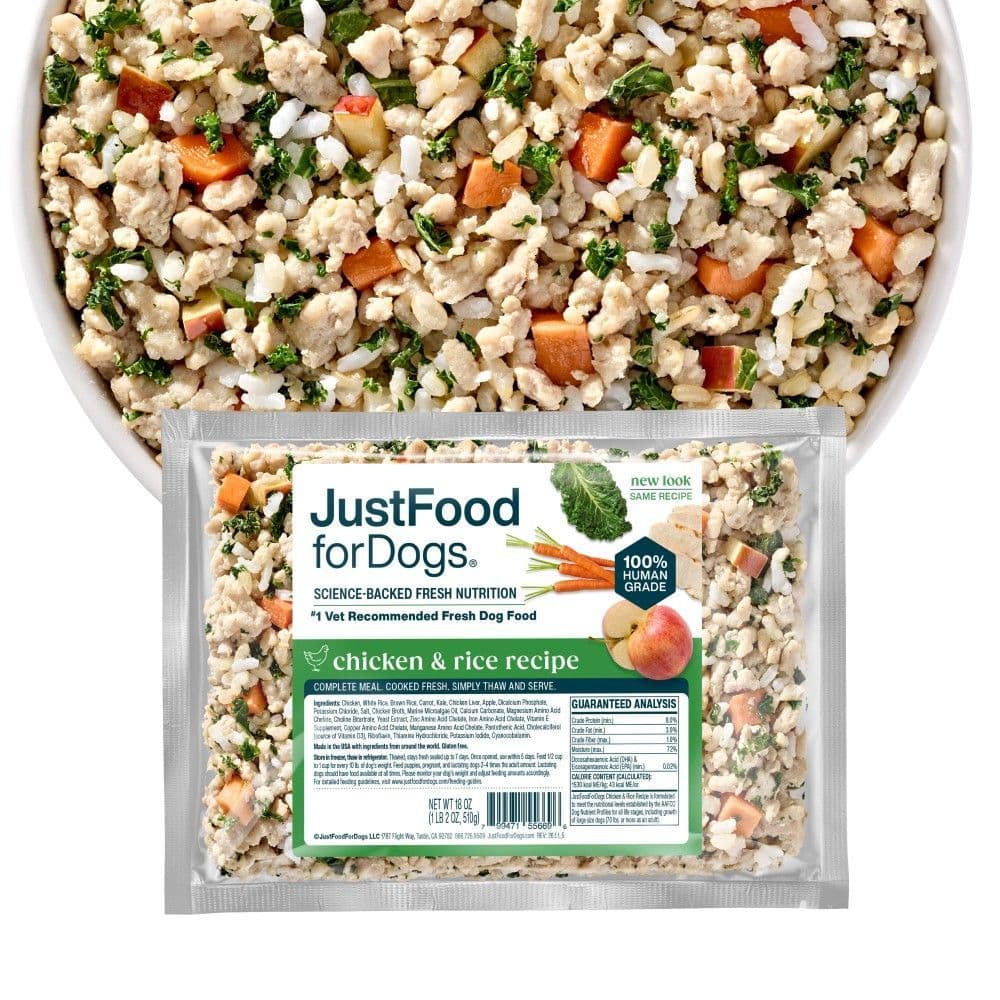
Check the current Chicken & Rice recipe, portions and ordering options.
Petful may earn a commission when you click through to JustFoodForDogs, at no extra cost to you.
The same size-first approach applies to the other popular Poodle cross; see WebVet’s guide to the best dog food for Goldendoodles.
Gather these details before choosing food:
- Current age and measured weight.
- Expected adult weight, if the dog is still growing.
- The exact current food and amount served.
- Treats, chews, and other meal extras.
- Any dietary instructions already provided by the veterinarian.
Chicken & Rice is a grain-inclusive JFFD option with a current statement covering all life stages, including large-size growth. Its energy density is 1,530 kcal/kg. That gives you the information needed to convert an established calorie allowance into grams, without assigning one scoop size to every Bernedoodle.

If you are considering homemade dog food for a Bernedoodle, the same nutritional questions still apply. Cooking familiar meat, rice, or vegetables does not establish that the resulting meal is complete. A homemade main diet needs appropriate formulation for the dog's life stage, with the specified ingredients, quantities, and supplements followed accurately. Recreating the visible ingredients in a commercial recipe does not recreate its nutrient balance.
JFFD Options for Bernedoodle Puppies
The best dog food for Bernedoodle puppies must support growth. That applies to a tiny puppy as well as one expected to become a large standard adult. Feeding a smaller portion of adult-maintenance food does not turn it into puppy food, and feeding a larger portion does not correct a missing growth claim.
Current JFFD Chicken & Rice and Fish & Sweet Potato both cover all life stages, including growth of large-size dogs expected to reach 70 pounds or more as adults. Beef & Russet Potato and Turkey & Whole Wheat Macaroni have adult-maintenance statements. This is a decision about individual recipe eligibility, rather than a blanket rule that every food from the brand suits every puppy.
Before buying a puppy's food, check:
- The exact recipe and product format.
- Whether the adequacy statement includes growth.
- Whether large-size growth coverage is appropriate.
- The current calorie density.
- The feeding instructions and storage requirements.
Compare the two growth-qualified recipes
Chicken & Rice supplies 1,530 kcal/kg and contains chicken, white and brown rice, vegetables, and the other ingredients in its complete formulation. Fish & Sweet Potato supplies 922 kcal/kg. Its current fish blend includes cod, pollock, and haddock, so it should not be described as a single-species cod food.
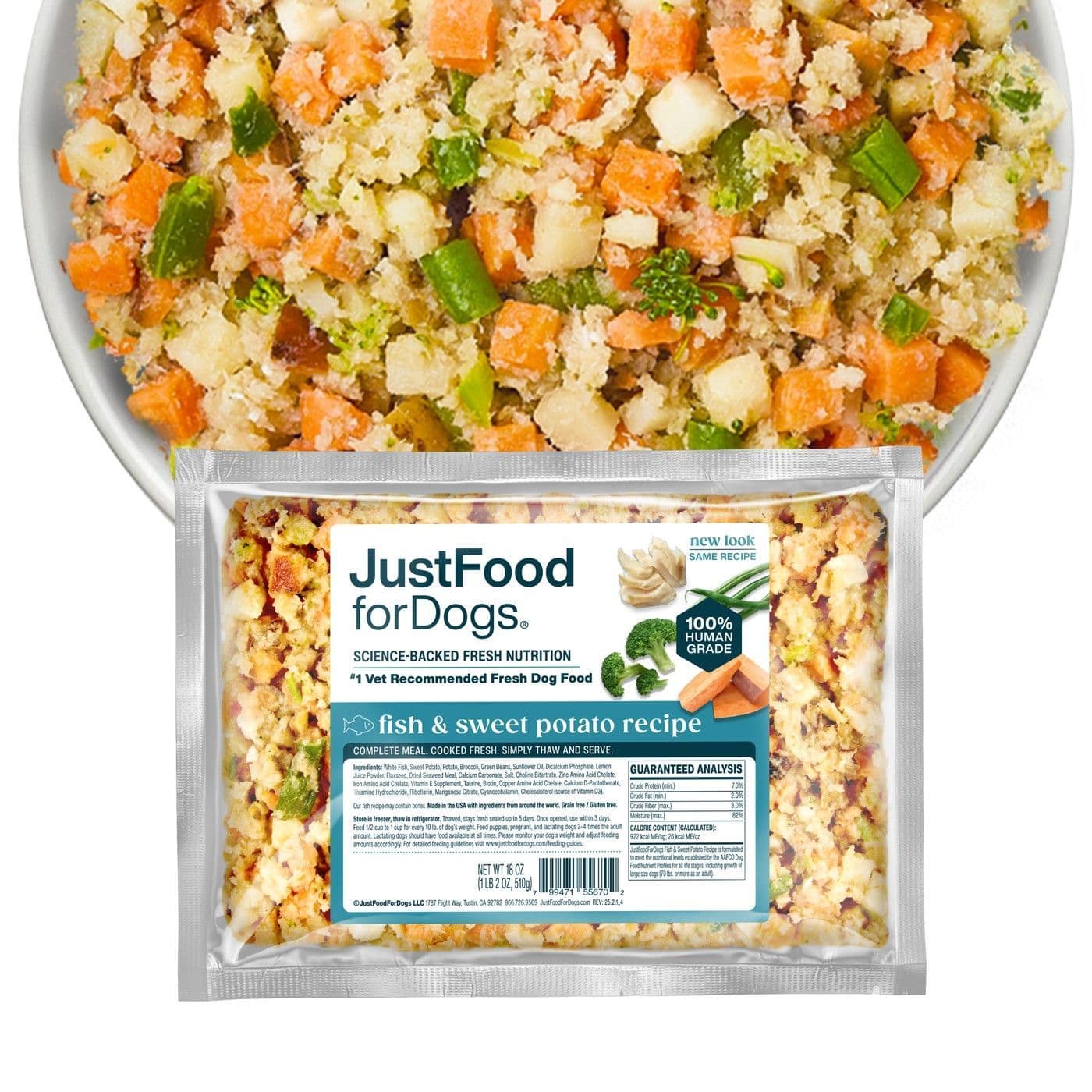
Check the current Fish & Sweet Potato recipe, portions and ordering options.
Petful may earn a commission when you click through to JustFoodForDogs, at no extra cost to you.
That calorie difference matters when preparing the bowl. If a feeding plan assigns 400 calories to a portion of the day's meals, Chicken & Rice supplies them in approximately 261 grams. Fish & Sweet Potato requires approximately 434 grams. Those are equivalent-calorie examples, not a daily recommendation for every Bernedoodle puppy.
The current Chicken & Rice recipe information lets you review its adequacy statement, ingredients, and calories together. Choose a recipe that fits the puppy, then calculate the amount. Picking a food because its bowl looks fuller reverses that process and can create misleading comparisons.

Make the first feeding plan easy to update
When a puppy arrives home, ask for the exact food name, quantity, meal schedule, and any recent feeding changes. “A scoop twice a day” leaves too much unknown if the scoop size and recipe are not identified. Record the starting routine so you can distinguish a deliberate transition from an accidental change in calories.
Keep a simple growth feeding record:
- Date and current measured weight.
- Daily calorie allowance and who established it.
- Recipe name and kcal/kg.
- Daily grams and the amount assigned to each meal.
- Rewards and other food outside meals.
A puppy's feeding plan should not remain unchanged simply because the same recipe still fits. As weight and development change, the amount may need adjustment. Ask the veterinarian when to reassess and bring the record to those appointments. It is easier to evaluate a known intake than to reconstruct weeks of approximate bowlfuls.
For a mini Bernedoodle puppy, use the same process rather than assuming that “mini” means a fixed small ration. Our mini Bernedoodle guide gives background on this size description. The food decision still depends on growth adequacy, expected adult weight, and the individual puppy's current needs.
Avoid feeding toward a predicted adult number
An adult-weight estimate is not a target to reach quickly. Do not increase meals simply because a puppy is smaller than the size description led you to expect. Likewise, do not restrict a puppy to keep it within a preferred category. Discuss growth and body condition with the veterinarian and use that assessment to guide changes.
Practical questions to ask include:
- Is the current growth pattern appropriate for this puppy?
- Does the recipe cover the expected adult size?
- Should the daily calories or meal schedule change?
- When should weight and body condition be checked again?
These questions turn a vague size concern into a feeding decision. They also help keep nutrition separate from expectations about how a mixed-breed puppy will eventually look.
JFFD Options for Adult Bernedoodles
After growth is complete, adult-maintenance recipes can enter the comparison. Beef & Russet Potato and Turkey & Whole Wheat Macaroni are two JFFD options in that category. Chicken & Rice and Fish & Sweet Potato can also remain relevant when their formulations fit the adult dog's needs.
An adult Bernedoodle's portion still depends on the individual. A smaller dog and a larger dog might eat the same recipe, but their measured quantities can differ considerably. Even similarly sized adults can have different calorie needs because activity, body condition, and other circumstances affect the feeding assessment.
The current energy densities are:
- Chicken & Rice: 1,530 kcal/kg.
- Fish & Sweet Potato: 922 kcal/kg.
- Beef & Russet Potato: 1,559 kcal/kg.
- Turkey & Whole Wheat Macaroni: 1,741 kcal/kg.
Choose ingredients and quantities together
A recipe's main protein can help organize the comparison, but it does not describe the entire formulation. Read the full ingredient list if your dog has a known restriction or a history that makes particular ingredients relevant. Do not infer an allergy from Bernese Mountain Dog or Poodle ancestry.
Beef & Russet Potato has a current feeding-trial adult-maintenance statement and supplies 1,559 kcal/kg. That makes it a candidate for an adult whose needs fit the recipe. It does not make it an appropriate complete main food for a younger housemate that is still growing.
The Beef & Russet Potato product details provide the exact information to bring into that comparison. Review the recipe alongside the dog's current food history and feeding allowance, rather than treating a new flavor as an automatic improvement.
Decide why the adult recipe needs to change
- Finding a formulation that fits an established ingredient restriction.
- Choosing a different calorie density or practical portion quantity.
- Moving from a puppy feeding plan to an adult plan.
- Selecting a food that fits the household's preparation and storage routine.
If the current complete food suits the dog and the reason for changing is simply preference, keep the transition and measurement process just as careful. A change between two suitable foods can still change the daily calories if you reuse the old gram amount without checking.
Think through a shared household
Two Bernedoodles can simplify shopping by eating the same suitable recipe. That only works when it fits both dogs' life stages and individual needs. A puppy and an adult should not share an adult-maintenance food merely because buying one recipe is convenient.
If separate recipes are needed, make the distinction visible:
- Use a labeled daily container for each dog.
- Write the exact recipe beside its portion amount.
- Keep meal bowls identifiable.
- Supervise feeding so you know which dog ate which food.
- Record extras separately for each dog.
The same approach helps when two adults eat one recipe but different amounts. A large dog's leftover meal is not automatically an appropriate extra for the smaller dog. Count it as food intake, and consider whether the household setup needs adjusting if one dog repeatedly finishes the other's bowl.
Make calorie density a practical comparison
Turkey & Whole Wheat Macaroni is an adult-maintenance recipe supplying 1,741 kcal/kg. It is a grain-inclusive option with a higher calorie density than the other three recipes in this comparison. At a fixed calorie allowance, that means fewer grams to serve, store, and transport.
For example, 500 calories require approximately 287 grams of Turkey & Whole Wheat Macaroni or 542 grams of Fish & Sweet Potato. The larger Fish portion does not mean it supplies more calories. The smaller Turkey portion does not mean it supplies too little. The calorie allowance is the common basis for comparing them.
Consider how the daily quantity fits your routine:
- How much food must be thawed each day?
- How many meals will that quantity supply?
- Can the dog consistently eat the planned amount?
- Will an opened package be used within its handling window?
- Can another caregiver follow the same measurements?
Those questions are particularly useful when comparing food for a tiny adult and a much larger standard adult. The recipe may be shared, while the storage and portioning needs differ.
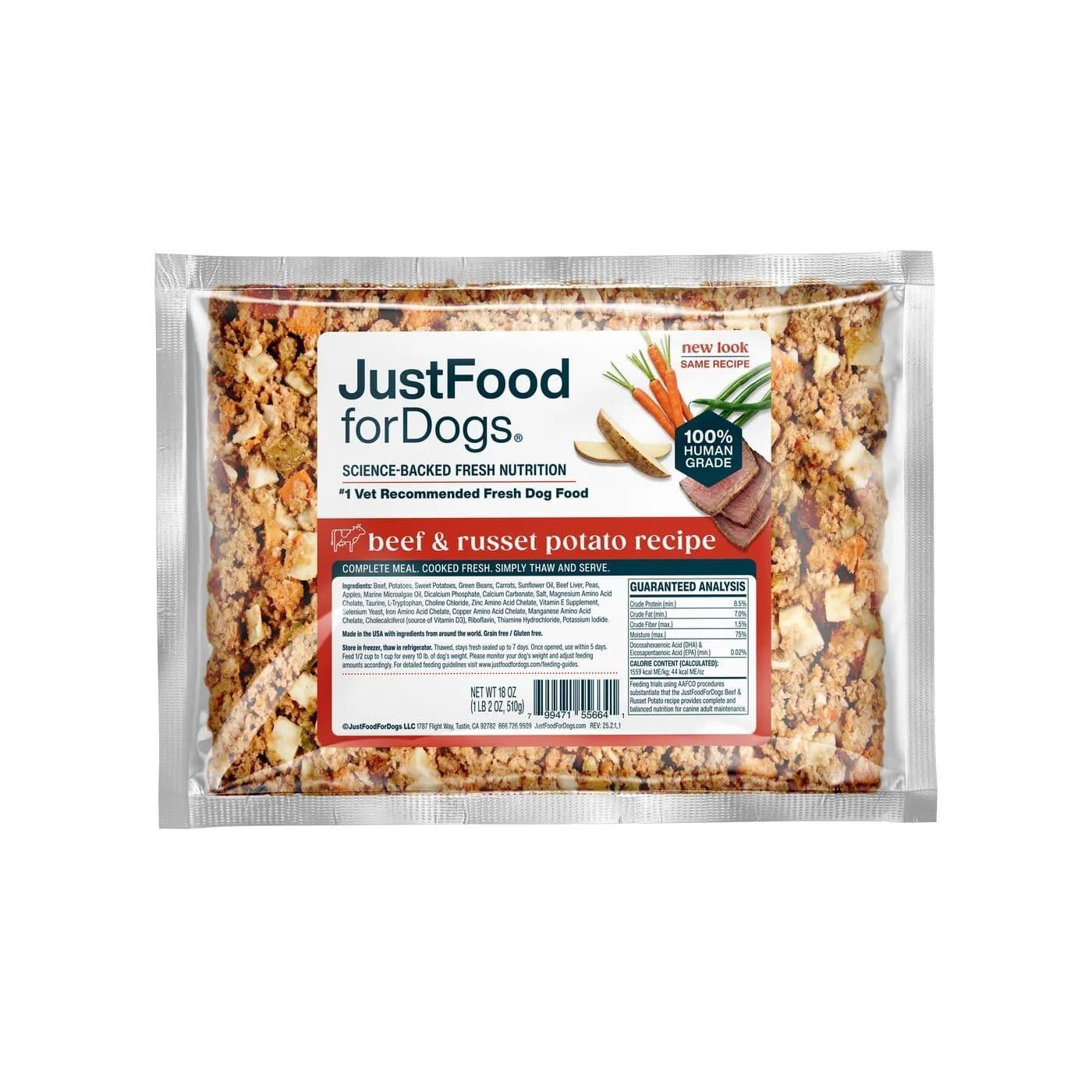
Check the current Beef & Russet Potato recipe, portions and ordering options.
Petful may earn a commission when you click through to JustFoodForDogs, at no extra cost to you.
Portions for Tiny, Mini, and Standard Dogs
The best dog food for mini Bernedoodles does not come with one universal mini serving size. Begin with current measured weight and life stage, then establish an individual daily calorie allowance. The AAHA nutrition and weight management guidelines describe calorie calculations as starting estimates that require adjustment for the animal.
A useful portion record keeps the inputs visible. If a veterinarian supplies a calorie target, record it with the date and the exact food. If you begin with a calculated estimate, identify it as an estimate and establish how it will be reassessed. Neither should be treated as a permanent number independent of the dog's response.

Build two separate records
Consider an illustrative household with two healthy adult Bernedoodles. Their veterinarian-set allowances are 600 and 1,200 calories daily. Those numbers are assumptions for the example, not recommended targets for all small and large Bernedoodles. Each dog's actual target needs its own assessment.
If 10 percent is reserved for treats and other extras, the complete meals provide 540 and 1,080 calories. Using Chicken & Rice at 1,530 kcal/kg, those meal allocations require approximately 353 and 706 grams daily. If the adults' plan uses two equal meals, the amounts are about 177 and 353 grams per meal, allowing for rounding.
| Input | Smaller dog's record | Larger dog's record |
|---|---|---|
| Current measured weight and life stage | Record the actual weight; adult in this example | Record the actual weight; adult in this example |
| Daily calorie allowance | Example veterinarian-set target: 600 calories | Example veterinarian-set target: 1,200 calories |
| Treat calories | 60 calories reserved | 120 calories reserved |
| Complete-food calories | 540 calories | 1,080 calories |
| Eligible recipe and recipe kcal/kg | Chicken & Rice: 1,530 kcal/kg | Chicken & Rice: 1,530 kcal/kg |
| Individual grams per day | About 353 grams | About 706 grams |
| Two equal meals, if appropriate | About 177 grams each | About 353 grams each |
| Reassessment | Review weight, body condition, and intake | Review weight, body condition, and intake |
The calculation is meal calories divided by recipe kcal/kg, multiplied by 1,000. This produces daily grams. Divide that daily amount among the dog's planned meals. Use a scale with the empty bowl zeroed so the measurement represents food rather than the combined weight of food and bowl.
The example doubles one allowance to make the arithmetic clear. It does not mean a dog twice another dog's weight always needs exactly twice the calories. Individual energy needs are not established by comparing two dogs' appearance, and a tiny dog's food should not be calculated as a guessed fraction of a standard dog's bowl.
Convert the portion when the recipe changes
Keep the calorie allowance separate from the food's gram amount. If the smaller example adult's meals still need to supply 540 calories, changing the recipe changes the amount weighed. Using current energy densities, its alternatives would be:
- Chicken & Rice: approximately 353 grams daily.
- Fish & Sweet Potato: approximately 586 grams daily.
- Beef & Russet Potato: approximately 346 grams daily.
- Turkey & Whole Wheat Macaroni: approximately 310 grams daily.
These are four alternative ways to supply the same meal calories, not quantities to combine in one day's menu. Choose the eligible recipe that fits the dog, then use its own number. If you deliberately combine complete foods, calculate the calories assigned to each and weigh them separately.
For an adult whose plan fits Turkey & Whole Wheat Macaroni, write down the new gram amount before replacing the previous recipe. Keeping the old scoop or container filled to the same level can substantially change intake when calorie density differs.
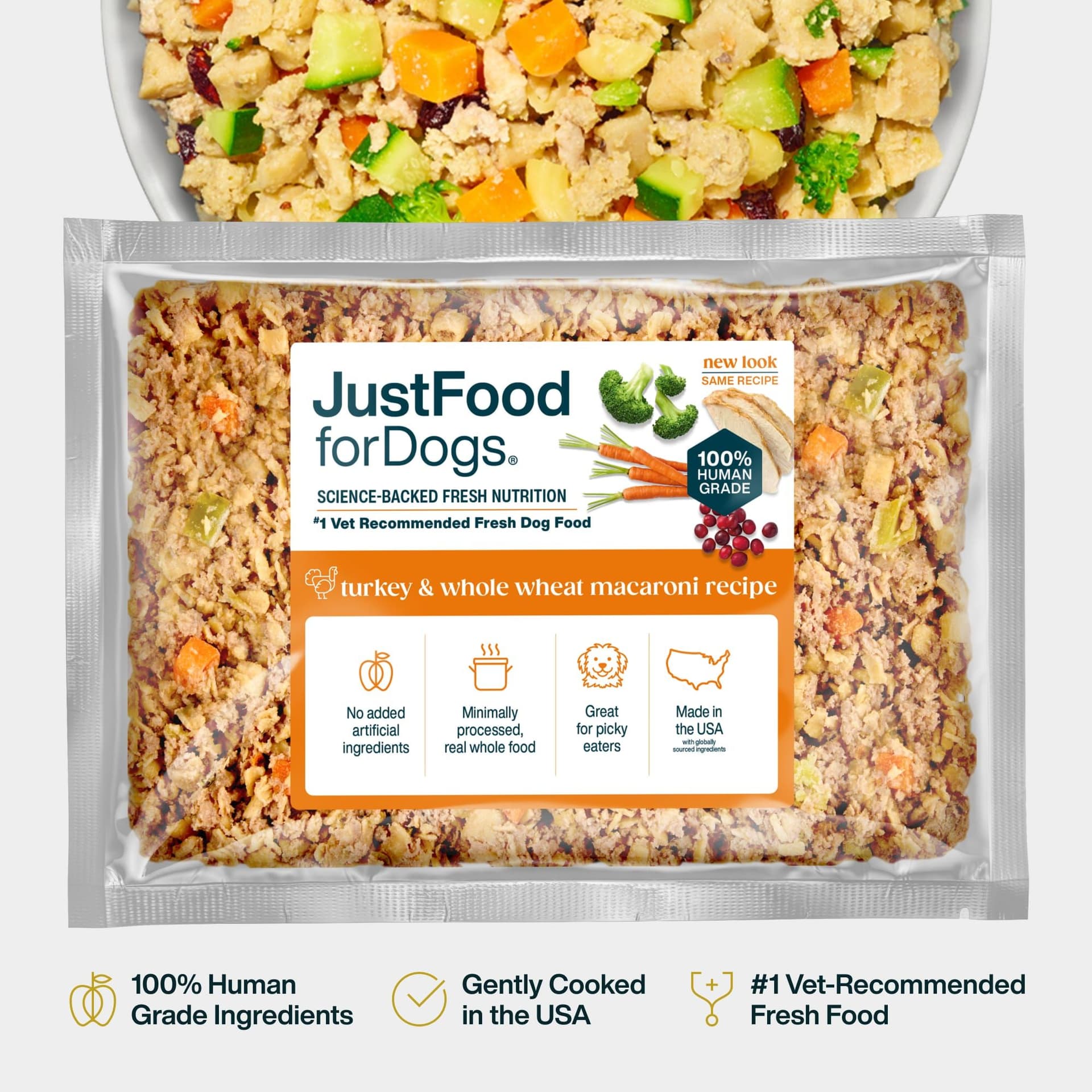
Check the current Turkey & Whole Wheat Macaroni recipe, portions and ordering options.
Petful may earn a commission when you click through to JustFoodForDogs, at no extra cost to you.
Account for extras without shrinking nutrition
AAHA recommends that complete and balanced food supply at least 90 percent of daily calories, with treats and other extras generally limited to no more than 10 percent. Count all the extras together. Training rewards, chews, bits used with medication, and food offered while cooking do not each have a separate allowance.
For the smaller example dog, the 10 percent ceiling is 60 calories. If a training session uses 45 calories, only 15 remain for other extras under that plan. The same treat can therefore use a larger share of a smaller dog's allowance than of a larger dog's allowance.
A practical daily routine is:
- Confirm each dog's calorie and food allowances.
- Put planned extras in a separate container for each dog.
- Measure the complete meals after accounting for those extras.
- Ask every caregiver to use the same containers.
- Record any additional food that was actually offered.
If rewards come from the measured complete food, set them aside before dividing meals. They remain part of that day's food allowance. Do not give the training portion and then serve the original full meal as though nothing had been removed.
Check the plan against the dog's actual intake
Record what the dog eats, not only what you put down. If one Bernedoodle regularly leaves food and another finishes it, the written portions no longer describe either dog's intake. Feeding separately or supervising meals may be needed to understand the pattern before adjusting calories.
Useful observations include:
- Which dog ate each measured portion.
- Whether leftovers are frequent or occasional.
- Whether treats changed appetite for meals.
- Measured weight over time.
- Veterinary assessment of body condition.
A coat can make visual size comparisons difficult, so ask the veterinarian to demonstrate how to assess your dog's condition appropriately. Do not assume that a fluffy outline represents body fat, or that a slimmer appearance after grooming proves weight loss. Use consistent measurements and assessment rather than appearance alone.
For puppies, the same record supports growth reassessment, but the adult examples should not be reused as puppy targets. Keep growth eligibility, current intake, and the puppy's changing needs together. The purpose of measuring is to make adjustments informed and reproducible.
Food Allergies and Digestive Changes
Finding the best dog food for a Bernedoodle with a sensitive stomach begins with understanding the individual problem. “Sensitive stomach” can describe an owner's observation, but it does not identify the cause. Record the food, amount, recent changes, and symptoms before deciding that one ingredient must be responsible.
The same caution applies to ancestry. A Bernedoodle is not automatically allergic to chicken because it has Poodle or Bernese Mountain Dog ancestry. A fish-based recipe is not automatically hypoallergenic. The full ingredient history and the dog's actual response matter more than a general breed claim.
Prepare a complete food history:
- Current and recently used main recipes.
- Treats, chews, toppers, and supplements.
- Foods used with medication.
- The timing of symptoms and recent changes.
- What happened during any previous diet trials.
If your veterinarian recommends an elimination diet, follow the specific food and extra-food instructions. Petful's guide to a dog allergy food trial explains why a controlled approach matters. Continuing assorted treats while changing only the main food can make the result difficult to interpret.
Our Bernedoodle health guide provides broader context for health concerns. Persistent digestive changes, itching, or recurring problems deserve individual assessment. A new recipe should not be presented as a treatment merely because it is fresh or uses a different protein.
When evaluating an ordinary recipe change, keep the process manageable:
- Choose a nutritionally suitable food for the dog's life stage.
- Follow a consistent transition and portion plan.
- Avoid introducing several new extras simultaneously.
- Record relevant changes in intake and symptoms.
- Ask how to proceed if symptoms persist.
If a restriction has already been diagnosed, review every ingredient in the proposed food with the veterinary team. The protein named on the front of the package does not describe everything inside. That is particularly important when deciding whether a recipe fits a structured trial or a longer-term management plan.
Switching, Meal Timing, and Storage
A successful change requires a plan for both calories and handling. Begin by recording the old and new foods, their energy densities, and how the daily allowance will be divided during the transition. Follow the manufacturer's gradual-transition guidance and any individualized instructions from your veterinarian.
Equal spoonfuls are not necessarily equal-calorie substitutions. For example, 100 calories are approximately 65 grams of Chicken & Rice or 108 grams of Fish & Sweet Potato. If the goal is to replace the same calorie contribution, the weights should differ. Calculate the portions before mixing rather than guessing from bowl volume.
Make the meal schedule clear
Choose the meal schedule with the dog's age and circumstances in mind. A growing puppy's plan should not be copied from a mature adult solely because they share the same recipe. Ask the veterinarian how to divide the daily allowance, then write down the quantity for each meal.
Make the instructions specific:
- Recipe and daily gram amount.
- Number of meals and grams per meal.
- Food set aside for training.
- Permitted treats and extras.
- Storage dates and handling instructions.
For two Bernedoodles, identify whose instructions are whose. A caregiver should not need to remember which dog receives the smaller scoop or whether one container holds breakfast versus the whole day. Clear portions reduce both accidental double feeding and missed meals.
Match package use to the recipe
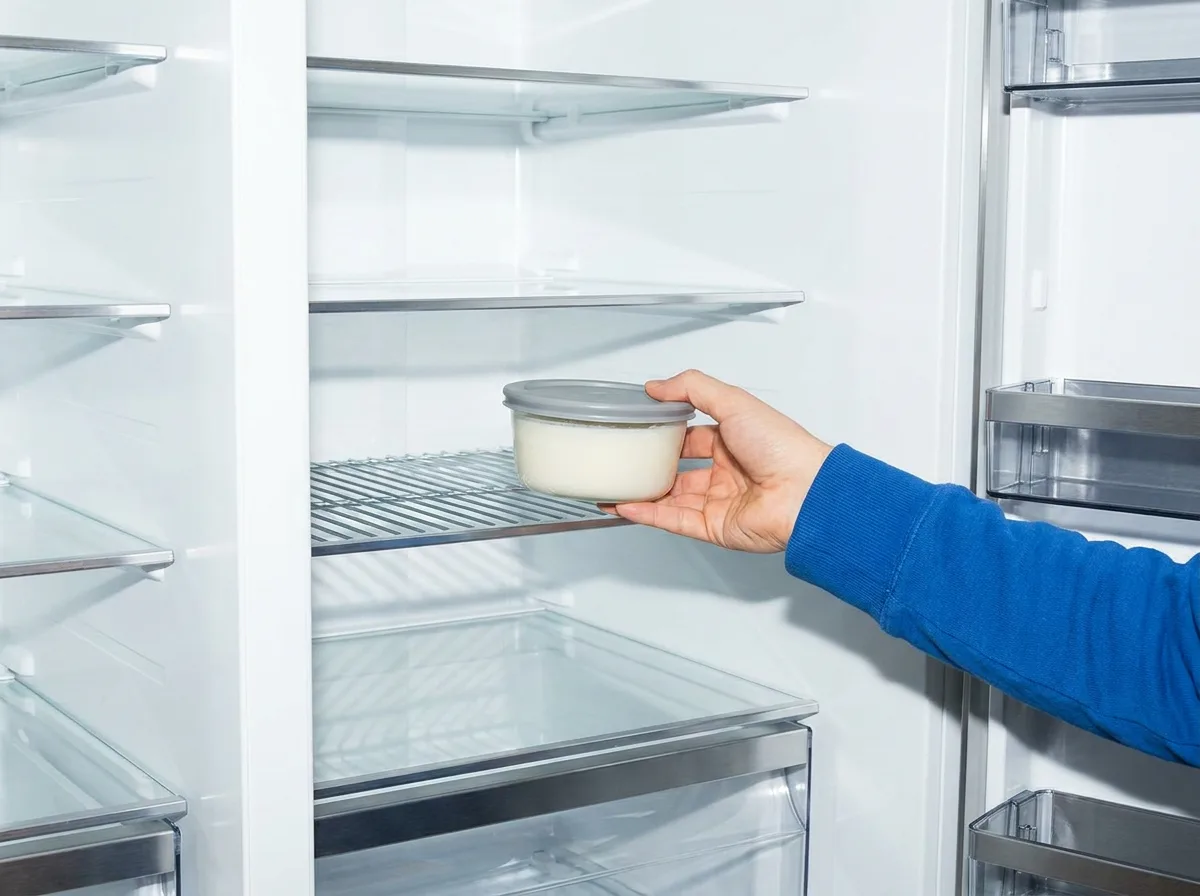
The current JustFoodForDogs FAQ distinguishes fish-based meals from other proteins. Fish & Sweet Potato can be refrigerated for five days when sealed and thawed, or three days after opening. The other fresh-frozen proteins discussed here have general guidance of seven days sealed and thawed, or five days opened.
Follow the actual package instructions, including a shorter limit if one is specified. Opening a package does not extend its earlier storage deadline. Record both thawing and opening dates, then use whichever applicable limit comes first. Thaw food in the refrigerator according to the manufacturer's instructions.
A practical routine includes:
- Thawing only what you expect to use within the allowed period.
- Keeping opened food covered and refrigerated.
- Using clean utensils and washing bowls after meals.
- Matching package size to daily consumption.
- Planning temperature-controlled transport for meals away from home.
This is a different purchasing decision for a tiny adult and a standard adult. A small dog may consume an opened package slowly, making the shorter fish window especially relevant. A larger dog may use food quickly but need more freezer space and a dependable thawing rotation.
Estimate feeding days before ordering a large quantity. Divide package grams by the dog's daily grams from that recipe, while also checking the opened-food deadline. A package that mathematically contains several days of meals is only practical if those portions can be used within the handling instructions.
Why can't dogs eat rotisserie chicken?
Rotisserie chicken is not a substitute for a complete dog food. Seasoning may include onion or garlic, and you should avoid cooked bones. The prepared bird also does not provide a reliable basis for reproducing a balanced recipe. Even plain meat is not a complete meal when used as the dog's ongoing main diet.
If you want to offer a small amount of suitable plain chicken, discuss its place in the feeding plan and remember that extras count toward daily calories. Do not assume that a store-bought seasoned bird is equivalent to the chicken in a formulated commercial recipe. The complete formulation, ingredient amounts, and preparation are different.
Are Bernedoodles a one-person dog?
Attachment and relationships vary among individual dogs; a size category or food choice does not establish that a Bernedoodle will bond with only one person. Our Bernedoodle temperament guide covers that broader behavior question. For meals, the useful household decision is consistency: every caregiver should follow the same portion, reward, and storage instructions.
Frequently Asked Questions
Use current weight and life stage to establish an individual daily calorie target with veterinary guidance. Subtract planned extras, then divide the meal calories by recipe kcal/kg and multiply by 1,000 to obtain grams per day. Divide that daily quantity among the planned meals. Reassess as a puppy grows or an adult's weight, condition, or routine changes.
There is no universal Bernedoodle allergen. Food allergy requires an individual diagnosis, and persistent symptoms need assessment. Do not assume chicken allergy from breed ancestry or from one episode of digestive upset. Bring a complete list of meals, treats, chews, and supplements to the veterinarian, and follow any recommended food trial consistently.
No. Use expected adult weight and the food's growth adequacy statement. “Mini” is a size description, not a nutritional guarantee. If the adult-size estimate is uncertain, discuss it with the veterinarian and choose appropriate growth coverage. Separately calculate the current portion from the puppy's age, weight, condition, and feeding assessment.
Choose food whose statement includes large-size growth when the puppy is expected to reach 70 pounds or more. Current JFFD Chicken & Rice and Fish & Sweet Potato include that coverage. The puppy's present weight does not need to be near 70 pounds for the statement to matter, and expected adult size does not set today's meal quantity.
Do not use these adult-maintenance recipes as the puppy's complete main diet. Current Beef & Russet Potato and Turkey & Whole Wheat Macaroni statements cover adult maintenance. Choose growth-qualified food for the puppy's meals, and keep adult-housemate bowls separate if necessary. A similar calorie amount does not make an adult recipe nutritionally interchangeable with puppy food.
Do not assume equal scoops fit both dogs. Each needs an individual daily calorie target, and you should weigh portions using the exact recipe's energy density. Even if both eat the same suitable food, calculate their quantities separately. Use labeled daily containers if several people feed them, and account for treats independently for each dog.

Coreen Saito is a pet writer and longtime shelter volunteer with more than a decade in animal rescue. She covers cat behavior, breed care, and the small, ordinary science of sharing a life with companion animals, with a particular focus on honest takes about the products and decisions that actually matter. At home in Arizona, she's outranked by Mac (a dog with the loudest opinion in the house), Rebel (a cat who governs by quiet authority), and Meri (an orange tabby who runs the late shift and the laundry basket). She writes about all three, plus the rescues that keep coming through her life, at LifeWithMinty.com.
Sign up for expert-backed reviews and safety alerts all in one place.
A Final Word (Disclaimer)
At Petful, our review integrity is paramount; we never exchange special treatment in our reviews for monetary or material rewards.
Nonetheless, when our readers click through to online merchants (including Chewy or Amazon), we receive a referral commission. This supports the running of our free blog, and we appreciate your backing.