Royal Canin Dog Food Review: Is It Actually Good for Your Dog?
Our Royal Canin dog food review scores Medium Adult 7.6/10. Why vets keep recommending it despite by-product meal and brewers rice, and who should skip it.

BVMS, MRCVS
Veterinarian · BVMS, MRCVS
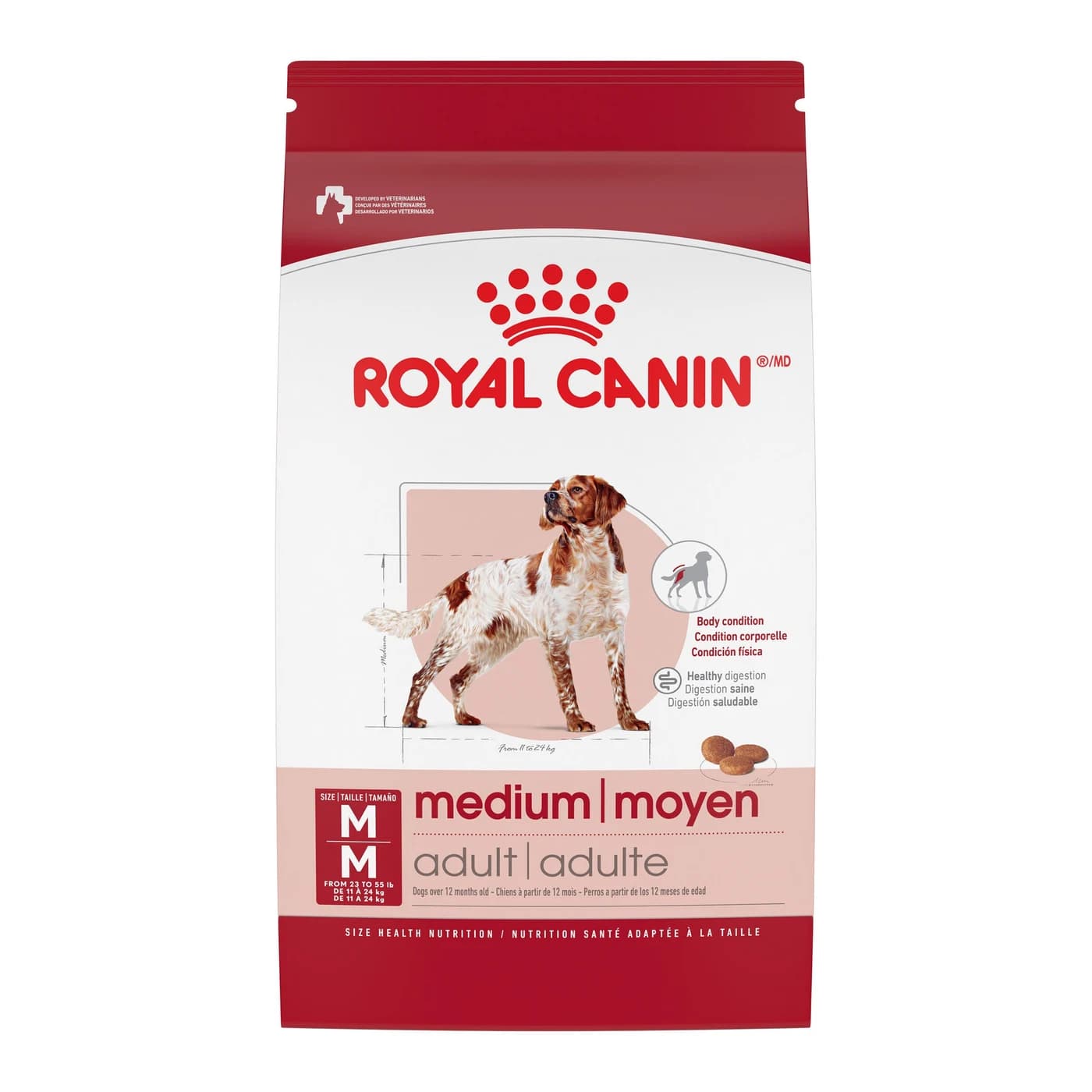
Royal Canin
Size Health Nutrition Medium Adult
Precision nutrition wrapped in an ingredient list nobody brags about. Brewers rice and by-product meal fund feeding trials, guaranteed EPA and DHA, and a 4.7-star bowl record. Label romantics should walk away; outcome shoppers get one of the most tested kibbles money can buy.
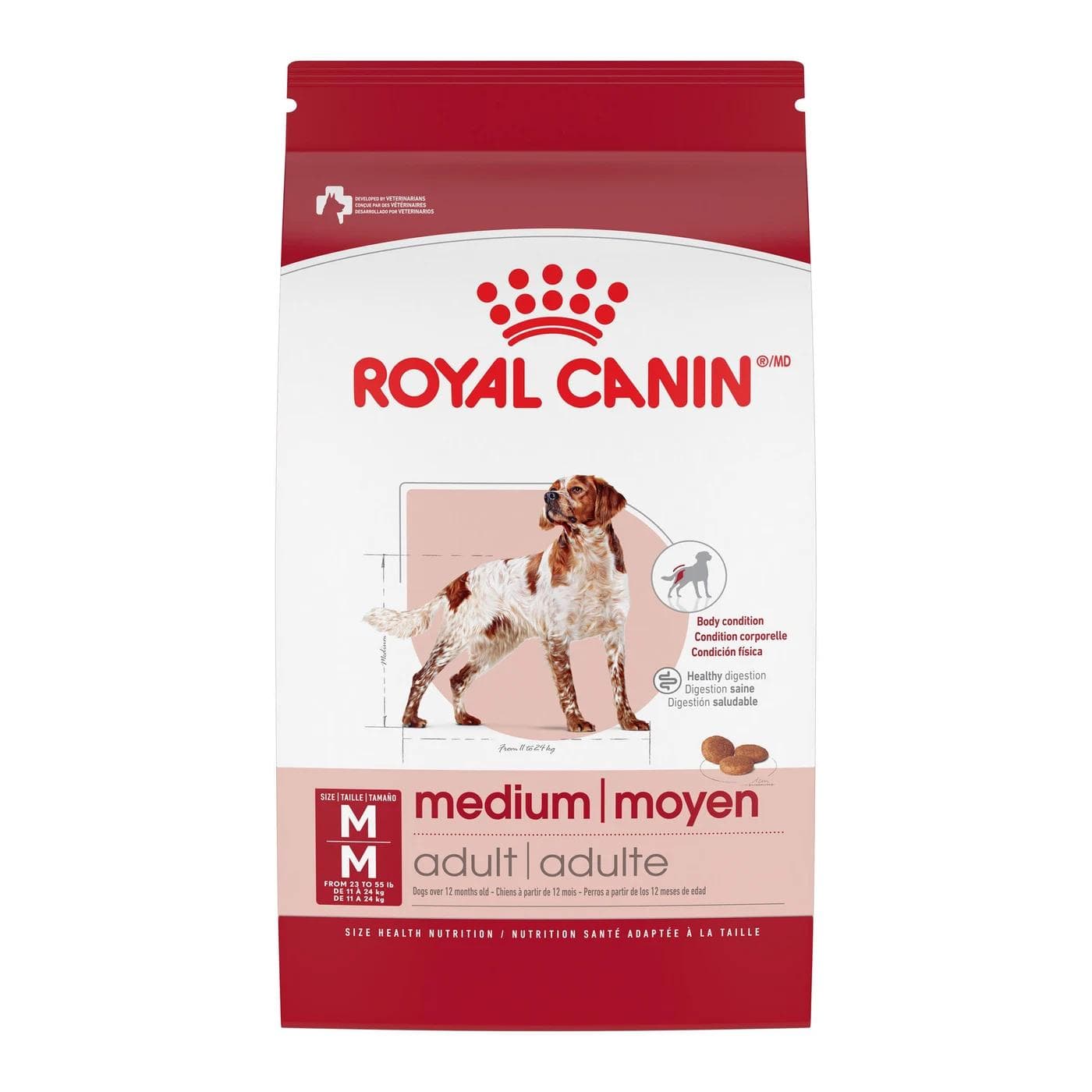
Precision nutrition for 23-55 lb dogs from the most science-heavy brand in the aisle. Vets recommend it; ingredient-readers wince at the deck. Both are reacting to the same food.
Petful may earn a commission when you click through to Chewy, at no extra cost to you.
Petful is reader supported. As an affiliate of platforms like Amazon and Chewy, we may earn a commission when you buy through links on this page.
Quick Verdict
Precision nutrition wrapped in an ingredient list nobody brags about. Brewers rice and by-product meal fund feeding trials, guaranteed EPA and DHA, and a 4.7-star bowl record. Label romantics should walk away; outcome shoppers get one of the most tested kibbles money can buy.
Score Breakdown
Tap any (i) for sourcesPros
- Medium-breed adults (23-55 lb, roughly 1-7 years) whose owners want feeding-trial-tested maintenance nutrition
- Dogs that gain weight easily and do better on a gentler 340 kcal cup
- Owners who trust outcome data and WSAVA-style screening over label aesthetics
- Households avoiding pulse-heavy grain-free diets during the FDA's DCM inquiry
- Picky eaters that walk away from denser, richer kibbles
Cons
- You want a named muscle meat leading the ingredient list
- Your dog has a diagnosed chicken, wheat, or corn sensitivity
- You feed a sporting or working dog that needs more than 12% fat
- Farm-level sourcing transparency is a dealbreaker for you
- You are budget-first: Purina Pro Plan and Taste of the Wild run about $1.50 less per pound
- 1Royal Canin Medium Adult scores 7.6/10: elite nutritional science and a clean modern safety record, dragged down by the least glamorous ingredient deck in its price class.
- 2The deck opens with brewers rice and chicken by-product meal, yet the finished food delivers 25.7% dry-matter protein with EPA and DHA individually guaranteed.
- 3Royal Canin clears every WSAVA screening question, runs AAFCO feeding trials, and has not been recalled since the industry-wide melamine event of 2007.
- 4At $2.75-$3.65 per pound it prices above Hill's and Purina Pro Plan; the premium buys research infrastructure and size-specific engineering, not prettier ingredients.
No dog food splits the room like this one, and any honest Royal Canin dog food review has to explain that split before scoring a single bag. Veterinarians recommend Royal Canin about as reliably as they recommend heartworm prevention. Ingredient-label readers, meanwhile, flip the bag over and find brewers rice first, chicken by-product meal second, and no named muscle meat anywhere in the deck. Both camps are looking at the same product and reaching opposite verdicts.
We ran Royal Canin Size Health Nutrition Medium Adult, the brand's core kibble for dogs 23–55 pounds, through our six-criterion rubric and landed at 7.6/10. That number hides the most polarized scorecard we have published: a perfect 10 for scientific integrity sitting next to a 3.6 for ingredient quality. This review explains why both numbers are correct, and which one should drive your decision.
Royal Canin Medium Adult review: our verdict (7.6/10)
Our overall score is a weighted average of six criteria, and Medium Adult is the first food we have tested where the gap between its best and worst criterion exceeds six points. What this food does inside a dog is close to exceptional. What its label looks like is not. The 7.6 is not a compromise between those facts; it is an accounting of them.
Nutritional adequacy, our heaviest criterion at 25% of the total, comes in at 9.2/10. This is a textbook adult-maintenance formulation: 23% protein and 12% fat as fed, precisely pitched for dogs that have finished growing and are not running field trials. EPA and DHA are individually guaranteed on the analysis panel, which most maintenance kibbles never commit to, and the 340 kcal per cup density is deliberately gentle for the weight-prone middle of the dog population. Royal Canin runs company-level AAFCO feeding trials across its portfolio, though this particular recipe's adequacy statement is formulation-based ("formulated to meet" AAFCO adult-maintenance profiles) rather than feeding-tested, digested, and measured.
Ingredient quality is where the bag stops smiling: 3.6/10, weighted at 20%. Brewers rice leads the deck, chicken by-product meal follows, and wheat plus corn protein meal sit inside the top five. There is no named muscle meat at any position. We will walk through why each of those ingredients is more defensible than it sounds, but a rubric that scores decks has to score this one low, and we do.
The remaining criteria pull the food back up. Sourcing and transparency earns 8.0/10 (20% weight): manufacturing happens in Mars-owned plants, with US dry recipes made domestically, though origin granularity trails boutique brands that name farms and fisheries. Scientific and brand integrity is a straight 10/10 (15%): full alignment with WSAVA's manufacturer-screening questions, board-certified veterinary nutritionists on staff, owned research facilities, real feeding trials, and an effectively clean modern US recall record. Palatability lands at 8.3/10 (15%) on the strength of size-tuned kibble geometry, published calorie data, and a 4.7-star average across 1,812 Chewy ratings, while environmental responsibility takes 6.0/10 (5%) for Mars-level sustainability programs that are directionally real but still heavy on pledges.
- Adult maintenance dry food for medium breeds 23–55 lb, ages 1–7; 23% protein and 12% fat as fed; 3,616 kcal/kg and 340 kcal per cup; $61.99 for the 17-lb bag ($3.65/lb) at Chewy; rated 4.7/5 across 1,812 reviews.
Run the weighted math and you get 7.6/10: the highest score we could give a food this cosmetically unappealing, and the lowest we could give one this rigorously proven. If that tension annoys you, good. It is the entire Royal Canin story, and resolving it is what the rest of this review is for.
See today's Chewy price and available bag sizes for Royal Canin Medium Adult.
Petful may earn a commission when you click through to Chewy, at no extra cost to you.
Nutrients first, ingredients last: how Royal Canin actually formulates
Royal Canin began in 1968 when Jean Cathary, a French veterinarian, started treating skin and coat problems by feeding patients a cereal-based ration he cooked up himself, then closed his practice to make food full time, according to the brand's own history. The company has been part of Mars since the early 2000s, but the founding logic never changed: start from the animal's nutrient requirements and work backward to ingredients. That is the exact inverse of how most premium pet food is designed today, where the marketing photo of deboned chicken comes first and the nutritionist reconciles the numbers afterward.

The nutrient-first position has more institutional support than most shoppers realize. The WSAVA Global Nutrition Guidelines warn that "the ingredient list gives no information on the quality of the ingredients and can be very misleading on the overall quality of the food," and steer owners toward questions about who formulates the diet, how it is tested, and where it is made. WSAVA does not endorse or certify any brand, a nuance worth stating plainly. But its screening questions are the de facto standard veterinarians use, and Royal Canin answers every one of them the way the guidelines want: full-time credentialed nutritionists, a standing AAFCO feeding-trial program, company-owned plants, published research.
Royal Canin formulates for the nutrient profile on the bench, not the ingredient photo on the bag.
Size is the other half of the philosophy. Medium Adult is not a marketing size band; it is a formulation target for dogs 23–55 pounds, ages 1–7, with kibble geometry scaled to medium jaws and a calorie density pitched at medium-breed metabolism. A 40-pound dog is not a big Chihuahua or a small Great Dane: it carries different growth history, different orthopedic load, and a different tendency to gain weight than either extreme. Where a brand like ORIJEN answers every question with more meat (see our ORIJEN Original review), Royal Canin answers with more measurement.
You do not have to prefer that answer. Plenty of thoughtful owners want their dog's food to look like food, and this one never will. But the philosophy explains the deck you are about to read: every unglamorous ingredient below is there because it hits a nutrient spec at a cost that funds the testing apparatus around it.
Ingredients: the current deck, top to bottom
Here is the full current deck, verbatim from the label: brewers rice, chicken by-product meal, oat groats, wheat, corn protein meal, chicken fat, natural flavors, dried plain beet pulp, fish oil, calcium carbonate, vegetable oil, potassium chloride, monocalcium phosphate, salt, choline chloride, vitamins (vitamin E, vitamin C, biotin, pantothenate, vitamin A, riboflavin, niacin, B12, B6, B1, vitamin D3, folic acid), rosemary extract, preserved with mixed tocopherols and citric acid, hydrolyzed yeast, trace minerals (zinc proteinate, zinc oxide, manganese proteinate, ferrous sulfate, manganous oxide, copper sulfate, sodium selenite, calcium iodate, copper proteinate), L-lysine, and magnesium oxide.

Brewers rice at position one is the single most criticized choice on this label. It consists of the small kernel fragments left over when whole rice is milled, which makes it a by-product by any definition, and nutritionally it is mostly highly digestible starch. Royal Canin uses it because it is a consistent, gentle carbohydrate that cooks predictably in extrusion and produces firm stools, not because it builds muscle. Calling it filler is not quite right, since it supplies real energy, but nobody should pretend it is there for any reason other than efficient calories.
Chicken by-product meal at position two carries the protein load for the whole formula. Under AAFCO ingredient definitions, chicken by-product meal is the rendered, ground clean parts of the carcass: necks, feet, viscera, frames, and undeveloped eggs, explicitly excluding feathers (see AAFCO's consumer guidance on pet food). Rendered down, it is a concentrated protein source in the 60% range that also brings organ-derived minerals and amino acids that muscle meat alone does not. Nutritionists tend to shrug at it; shoppers tend to recoil; both reactions are reasonable from where each side stands.
- "Chicken by-product meal" is an AAFCO-defined rendered ingredient (necks, feet, organs, frames, never feathers); it is genuinely nutrient-dense, and it is also exactly where Royal Canin loses every ingredient-beauty contest on paper.
Positions three through five are oat groats, wheat, and corn protein meal. Oat groats are the whole oat kernel minus the hull, the most intact grain in the deck, contributing soluble fiber alongside starch. Wheat is a straightforward energy grain and a genuine exclusion for the minority of dogs sensitive to it.
Corn protein meal is the one worth pausing on. It is a concentrated plant protein in the 60% range that boosts the crude protein number at low cost, with an amino acid profile weaker in lysine than animal protein. Royal Canin quietly acknowledges that weakness at the bottom of the deck, where supplemental L-lysine patches the exact hole corn protein leaves.
The back half of the deck is stronger than the front. Chicken fat is a named animal fat and a rich source of linoleic acid, and together with the hydrolyzed "natural flavors" coating that follows it, it is the palatant system that makes picky dogs treat this plain-looking kibble like a delicacy. Dried plain beet pulp is a moderately fermentable fiber with decades of digestibility research behind it, and hydrolyzed yeast contributes mannan-oligosaccharides that function as prebiotics, matching the gut-health claims on the bag. Fish oil is the load-bearing ingredient of the whole formula: it is what lets Royal Canin guarantee EPA and DHA individually on the analysis panel rather than gesturing at a vague omega number.
The mineral and preservation choices are quiet quality tells. Zinc, manganese, and copper appear partly as proteinates, the chelated forms with better bioavailability that cheaper formulas skip. Preservation is handled by mixed tocopherols, citric acid, and rosemary extract, with no BHA, BHT, or ethoxyquin anywhere on the label. These bottom-of-deck decisions cost real money and buy zero marketing value, which tells you who this label was written for.
Precision nutrition for 23-55 lb dogs from the most science-heavy brand in the aisle. Vets recommend it; ingredient-readers wince at the deck. Both are reacting to the same food.
Petful may earn a commission when you click through to Chewy, at no extra cost to you.
Just as telling is what the deck omits. There are no peas, no lentils, no potatoes, and no legume concentrates, which places this formula outside the ingredient pattern at the center of the FDA's grain-free cardiomyopathy inquiry. There are no artificial colors and no anonymous "meat meal" of unstated species. And there is no named muscle meat at all, which remains the honest, unfixable core of the ingredient-quality critique.
Ingredient Analysis
Fragmented grain with minimal nutrition beyond starch
Unnamed-fraction rendered protein; digestibility varies batch to batch
Digestible grain carbohydrate source
Digestible grain carbohydrate source
Concentrated plant protein that inflates the protein number without animal amino-acid profile
Named fat source supplying essential fatty acids
Palatant; composition undisclosed
Fermentable fiber that supports stool quality
Named fat source supplying essential fatty acids
Vitamin, mineral, or preservation component
Full Ingredient List (from label)
Brewers Rice, Chicken By-Product Meal, Oat Groats, Wheat, Corn Protein Meal, Chicken Fat, Natural Flavors, Dried Plain Beet Pulp, Fish Oil, Calcium Carbonate, Vegetable Oil, Potassium Chloride, Monocalcium Phosphate, Salt, Choline Chloride, Vitamins[Dl-Alpha Tocopherol Acetate (Source Of Vitamin E), L-Ascorbyl-2-Polyphosphate (Source Of Vitamin C), Biotin, D-Calcium Pantothenate, Vitamin A Acetate, Riboflavin Supplement, Niacin Supplement, Vitamin B12 Supplement, Pyridoxine Hydrochloride (Vitamin B6), Thiamine Mononitrate (Vitamin B1), Vitamin D3 Supplement, Folic Acid], Rosemary Extract, Preserved With Mixed Tocopherols And Citric Acid, Hydrolyzed Yeast, Trace Minerals[Zinc Proteinate, Zinc Oxide, Manganese Proteinate, Ferrous Sulfate, Manganous Oxide, Copper Sulfate, Sodium Selenite, Calcium Iodate, Copper Proteinate], L-Lysine, Magnesium Oxide.
Nutrition by the numbers
The guaranteed analysis is compact, but it converts into a clear picture. Moisture is capped at 10.5%, so dry matter is 89.5% of the bag, and the calorie math below uses the label's own 3,616 kcal/kg metabolizable energy figure.
| Measure | As fed (guaranteed) | Dry matter basis* | Share of calories* |
|---|---|---|---|
| Crude protein | 23.0% min | 25.7% | ~24% |
| Crude fat | 12.0% min | 13.4% | ~30% |
| Estimated carbohydrate (NFE) | ~45% | ~50% | ~46% |
| Crude fiber | 3.4% max | 3.8% | n/a |
| Moisture | 10.5% max | n/a | n/a |
| EPA | 0.13% min | 0.15% | n/a |
| DHA | 0.05% min | 0.06% | n/a |
| Total omega-3 fatty acids | 0.39% min | 0.44% | n/a |
*Our calculations, assuming roughly 6% ash; carbohydrate estimated by difference since AAFCO labels do not declare it.
Against AAFCO's adult-maintenance minimums of 18% protein and 5.5% fat on a dry matter basis, Medium Adult clears both bars comfortably at 25.7% and 13.4%. Those are deliberately moderate numbers. This formula is not chasing ORIJEN's 38%-protein territory, and it should not: a five-year-old, 40-pound house dog has no physiological use for sled-dog macros, and the moderate profile is exactly what an adult-maintenance feeding trial validates.
The omega-3 line deserves more attention than it gets. Most maintenance kibbles either skip omega-3 guarantees entirely or lump them into one number; Royal Canin guarantees EPA at 0.13% and DHA at 0.05% separately, which matters because each is independently testable in a lab. Guarantees are accountability, not decoration: a state feed official can pull a bag and verify them. Skin, coat, and joint support claims ride on these two fatty acids, and here they are contractual.
Calorie density is the most practically useful number on the bag. At 3,616 kcal/kg, one level 8-ounce cup weighs about 94 grams and delivers 340 kcal, noticeably gentler than the 400 to 450 kcal cups common among high-protein premium kibbles. For the feeding math, Royal Canin publishes a full grid: a 40-pound dog at moderate activity gets 2 5/8 cups a day, about 247 grams or 0.54 pounds of food. That gentleness is a feature, not weakness; medium breeds drift into obesity on dense kibble measured with optimistic cups, and this formula gives owners margin for error.

- Measure by weight, not by eye; one level cup here is about 94 grams and 340 kcal, a 40-pound dog at moderate activity needs just 2 5/8 cups a day, and freehand pouring is the most common source of silent weight gain we see in medium breeds.
One practical note from the label that owners routinely skip: Royal Canin specifies a full seven-day transition onto this food, mixing 25% new with 75% old for two days, then 50/50, then 75/25, reaching 100% only on day seven. It reads like boilerplate, but with a formula this deliberate about fiber and prebiotics, the slow ramp is what protects the stool quality the brand gets recommended for.
Two honest limitations round out the numbers. Fat at 12% as fed is enough for maintenance and not enough for sporting, working, or pregnant dogs, who need a denser formula by design. And roughly 46% of calories arrive from carbohydrate, a number that is entirely normal for extruded kibble and entirely fair game for critics who think adult dogs deserve more of their calories from animal protein.
Nutritional Analysis
| Nutrient | As-Fed (GA) |
|---|---|
| Crude Protein | 23% min |
| Crude Fat | 12% min |
| Crude Fiber | 3.4% max |
| Moisture | 10.5% max |
The case against Royal Canin: fillers, glutens, and a courtroom
The critics' case deserves to be made at full strength, because parts of it are right. Dog Food Advisor rates Royal Canin's closely related adult dry line 3 of 5 stars, "recommended with reservations," on the grounds that a by-product meal is the dominant animal protein. Dogs Naturally Magazine goes much further, scoring Royal Canin dry lines as low as 1.2/10 over grain load and synthetic nutrients. Strip the rhetoric and the core complaint stands: you are paying premium money for rice fragments, rendered by-products, and two protein-boosting plant concentrates.
The allergy version of the complaint holds up less well. In the peer-reviewed literature on confirmed canine food allergies, the most common triggers are beef, dairy, and chicken, with wheat mid-list and corn comparatively uncommon (Mueller et al., BMC Veterinary Research). Grain-sensitive dogs exist and this is the wrong food for them, but the average dog is far more likely to react to the chicken in this deck than to the wheat. Meanwhile the grain-inclusive, pulse-free recipe sits safely outside the diet pattern flagged in the FDA's investigation into diet-associated dilated cardiomyopathy, which centered on grain-free foods heavy in peas, lentils, and potatoes.
- all three sit in the top five ingredients, and an elimination-diet dog needs a completely different protein path.
Then there is the courtroom. In Moore v. Mars Petcare, dog and cat owners alleged that marketing veterinary diets as "prescription" products, Royal Canin Veterinary Diet among them, misled consumers into paying premium prices for foods containing no actual drug, and the Ninth Circuit revived those claims in 2020. The suit targets the marketing and pricing of the separate prescription channel, not the safety or formulation of retail foods like Medium Adult. It still lands a legitimate bruise on the brand halo: a company this fluent in scientific authority should not have needed a federal appeals court to police how it labels that authority.
Compare current Chewy pricing, autoship savings, and shipping.
Petful may earn a commission when you click through to Chewy, at no extra cost to you.
The ingredient list is the cheapest thing about this food, and the testing behind it is the most expensive.
Weigh it all and the case against Royal Canin turns out to be narrow: real aesthetic and philosophical objections, a genuine exclusion for specific allergies, and a marketing lawsuit on an adjacent product line. What the record does not contain is evidence of dogs harmed by this formula. Our 3.6/10 ingredient score already prices the entire critique in, and nothing in the critics' file beyond that number survives contact with the outcome data. That asymmetry, loud criticism and quiet outcomes, is why the vet camp keeps winning this argument in exam rooms.
Who makes Royal Canin, and the recall record
Royal Canin is a standalone division of Mars, Incorporated, headquartered for the US market in St. Charles, Missouri, and it manufactures its US dry recipes domestically in company-owned plants. The newest is a $450 million, 450,000-square-foot facility in Lewisburg, Ohio, opened in 2025 as the brand's largest dry pet food factory in the world, built to produce the entire North American dry kibble portfolio and certified LEED Silver. Owning the plants matters: it is a core WSAVA screening question, and it is what separates brands that control their process from brands that rent someone else's.
The quality apparatus behind those plants is unusually documented. Royal Canin states that it analyzes 100% of incoming raw materials before acceptance, retains samples for two years, runs ten distinct quality controls during manufacturing, and performs around half a million laboratory analyses worldwide every year. The soft spot in the transparency story is granularity, and it shows up right on the retail spec sheet, where sourcing reads simply "Various." A brand this proud of its process could tell shoppers much more about where ingredients originate, and boutique competitors increasingly do.
The recall record has two entries, both old, and we would rather you hear them from us than from a comment section. In 2006, Royal Canin recalled canned veterinary-channel foods after a supplier's vitamin premix delivered excess vitamin D3. In 2007, it recalled several dry recipes made with melamine-contaminated rice protein concentrate from a Chinese supplier, one chapter of the industry-wide contamination event that remains the largest pet food recall in US history (both are documented in the peer-reviewed recall literature).
Since 2007, the FDA's recall database shows no Royal Canin recalls at all, a nineteen-year clean run that even reached through July 2026, when a sibling Mars brand recalled canned food while Royal Canin stayed untouched. You can track any future events on our pet food recalls page.

- No Royal Canin recalls since the industry-wide melamine event of 2007; the 2006 vitamin D3 recall involved veterinary-channel canned food only, and both were supplier-ingredient failures rather than plant failures.
Two decades without a recall is not luck at Royal Canin's production volume; it is the visible output of the testing regime described above. Recalls will eventually touch every large manufacturer, and the fair questions are how rarely and how they respond. On both, this brand's record is about as good as industrial pet food gets.
Who it's for (and who should skip it)
The bullseye owner is easy to describe: you have a healthy adult dog between 23 and 55 pounds, you care more about measurable outcomes than label poetry, and you want the food chosen the way your veterinarian would choose it. Weight-prone dogs are the strongest fit of all, because the 340 kcal cup and published feeding grid make portion control forgiving in a way dense premium kibbles are not. Picky medium dogs are the sleeper fit: the size-tuned kibble and palatant system are a large part of that 4.7-star, 1,812-review record. Mind the age window as well, since this formula is built for years 1–7, after which Royal Canin expects medium dogs to move to a senior recipe with recalibrated calories and minerals.

It also suits households that want out of the grain-free question entirely. With oats, wheat, and rice instead of peas and lentils, this recipe sits outside the FDA's DCM inquiry pattern, which is exactly where many owners want to wait while that science resolves. If your dog is settled on a grain-free formula like the one in our Taste of the Wild High Prairie review, that is a conversation to have with your vet rather than a reason to panic.
Check availability and the latest Chewy price before you buy.
Petful may earn a commission when you click through to Chewy, at no extra cost to you.
Skip Medium Adult if your dog has a diagnosed chicken, wheat, or corn sensitivity, full stop. Skip it for sporting and working dogs that need more than 12% fat, and skip it if a deck without named muscle meat is something you cannot un-see, because Royal Canin will never reformulate its way into label beauty. Budget shoppers should look at our Purina Pro Plan Adult Chicken & Rice review, which buys the same WSAVA-aligned science philosophy for $1.52 less per pound, and our full dry dog food reviews hub ranks every food we have tested on the same rubric.
Price and how it compares
Royal Canin prices Medium Adult like the premium product it claims to be, and bag size changes the math dramatically. The 17-lb bag runs $61.99 at Chewy, or $3.65 per pound, while the 4-lb bag costs a punishing $6.63 per pound and the 40-lb bag drops to $2.75. That is a 2.4x spread from smallest to largest bag, one of the widest we have tracked, so once your dog is established on this food the 40-lb bag is the only rational buy.
In daily terms the sticker is friendlier than the per-pound number suggests. A 40-pound dog at moderate activity eats about 0.54 pounds a day here, which works out to roughly $1.99 per day on the 17-lb bag and about $1.50 on the 40-lb bag, with a 17-lb bag lasting almost exactly a month. The gentle calorie density does some quiet budget work too: you are metering out 340 kcal cups rather than free-pouring 450 kcal ones.
| Food | Price per lb | Verdict context |
|---|---|---|
| Royal Canin Medium Adult | $3.65 (17 lb) / $2.75 (40 lb) | This review, 7.7/10 |
| [ORIJEN Original](https://www.petful.com/reviews/dry-dog-food/orijen/orijen-original/) | $4.56 | Ingredient-first flagship |
| [Hill's Science Diet Adult Chicken & Barley](https://www.petful.com/reviews/dry-dog-food/hills-science-diet/adult-chicken-barley/) | $2.49 | Closest scientific rival |
| [Blue Buffalo Life Protection Adult](https://www.petful.com/reviews/dry-dog-food/blue-buffalo/life-protection-adult-chicken-brown-rice/) | $2.27 | Label-friendly mid-market |
| [Purina Pro Plan Adult Chicken & Rice](https://www.petful.com/reviews/dry-dog-food/purina-pro-plan/adult-chicken-rice/) | $2.13 | The science-camp value play |
| [Taste of the Wild High Prairie](https://www.petful.com/reviews/dry-dog-food/taste-of-the-wild/high-prairie-bison-venison/) | $2.11 | Grain-free counterpoint |
The table exposes the awkward truth in Royal Canin's pricing: at 17-lb-bag prices it costs more than every WSAVA-aligned rival while carrying the humblest ingredient deck on the list. You are not paying for what is in the bag; you are paying for the research program, the half-million annual lab analyses, and the size-specific engineering wrapped around it. Whether that is a fair trade is a values question, but at $2.75 per pound in the 40-lb bag, the premium over Hill's shrinks to about a quarter per pound and the decision gets much easier.
- Buy Royal Canin Medium Adult for what it does, trial-tested nutrition, easy weight control, and a bowl that actually gets emptied, not for how the label reads; buy the 40-lb bag once your dog is settled on it, and put the savings toward a kitchen scale.
Our verdict stands at 7.6/10. Royal Canin Medium Adult is the strongest possible argument that a dog food should be judged by what it demonstrably does rather than what it romantically lists, and the least persuasive bag you will ever pick up in the process. Feed it with confidence; just do not expect to enjoy reading it.
- Formulated by veterinary nutritionists and substantiated with AAFCO feeding trials, not formulation software alone
- EPA (0.13%) and DHA (0.05%) individually guaranteed on the label, rare in maintenance kibble
- Gentle 340 kcal per cup makes weight control genuinely easier in medium breeds
- Meets every WSAVA manufacturer-screening criterion: staff nutritionists, owned plants, published research, feeding trials
- No recalls since 2007, backed by roughly 500,000 lab analyses per year across company-owned facilities
- 4.7/5 stars across 1,812 Chewy ratings, with kibble sized and shaped for medium jaws
- Brewers rice, a rice-milling by-product, is the first ingredient
- No named muscle meat anywhere in the deck; chicken by-product meal carries the protein
- Wheat and corn protein meal in the top five rule it out for grain-sensitive dogs
- Retail spec sheets list origin only as 'Various'; sourcing detail trails boutique competitors
- Costs $1.16 to $1.52 more per pound than Hill's and Purina Pro Plan at the 17-lb size
- Modest 12% fat will underfuel highly active or working dogs
For most healthy adult dogs, yes. Royal Canin formulas are built by veterinary nutritionists, validated in AAFCO feeding trials, and manufactured in company-owned plants backed by roughly 500,000 lab analyses a year. The trade-off is ingredient glamour: brewers rice and chicken by-product meal lead the deck. Dogs with wheat, corn, or chicken sensitivities, and owners who insist on named muscle meat first, should look elsewhere. The outcomes are excellent; the optics are not.
No single food is healthiest for every dog, and anyone claiming otherwise is selling something. The strongest evidence-based shortlist comes from WSAVA-style screening: brands that employ full-time veterinary nutritionists, run feeding trials, own their plants, and publish research. Royal Canin, Hill's Science Diet, and Purina Pro Plan all clear that bar. The healthiest choice within those brands is the formula matched to your dog's life stage, size, body condition, and medical history.
It depends on what you are optimizing. If ingredient quality is your metric, ORIJEN Original runs fresh named meats through the top of its deck and is the strongest kibble we have reviewed on that axis. If you want Royal Canin's style of science at a lower price, Purina Pro Plan Adult Chicken & Rice delivers feeding-trial-backed nutrition for $2.13 per pound. Neither beats Royal Canin at its own specialty: size-calibrated, trial-tested maintenance formulas.
They are closer than any other rivalry in pet food, and both meet every WSAVA screening criterion. Hill's Science Diet Adult lists whole chicken first and costs about $2.49 per pound, roughly a dollar less than Royal Canin Medium Adult. Royal Canin counters with size-specific kibble engineering, individually guaranteed EPA and DHA, and a gentler 340 kcal per cup. Pick Hill's for value and a prettier label, Royal Canin for size precision and palatability.
Twice, and not since 2007. In 2006, Royal Canin recalled some canned veterinary-channel foods over excess vitamin D3 traced to a supplier's premix. In 2007, it recalled several dry recipes containing melamine-contaminated rice protein concentrate during the industry-wide contamination event. FDA records show no Royal Canin recalls in the nearly two decades since, a cleaner modern run than most major brands can claim.
Because it is built the way veterinary medicine wants food built: board-certified nutritionists formulate to nutrient targets, recipes are substantiated in AAFCO feeding trials rather than on paper alone, plants are company-owned, and research gets published. Vets also see the outcomes in practice: consistent stools, stable weight, and dogs that reliably eat it. The ingredient list matters less to clinicians than the nutrient profile and the testing behind it.
At $3.65 per pound in the 17-lb bag, you pay a premium over Purina Pro Plan ($2.13) and Hill's ($2.49) for comparable science. Whether that is worth it comes down to fit: the 340 kcal cup, medium-jaw kibble, and guaranteed omega-3s earn the spread for weight-prone medium breeds and picky eaters. Buy the 40-lb bag at $2.75 per pound and most of the premium disappears, roughly $1.50 per day for a 40-pound dog.

Sign up for expert-backed reviews and safety alerts all in one place.
Also worth considering
Strong alternatives we reviewed in the same dry dog food category.
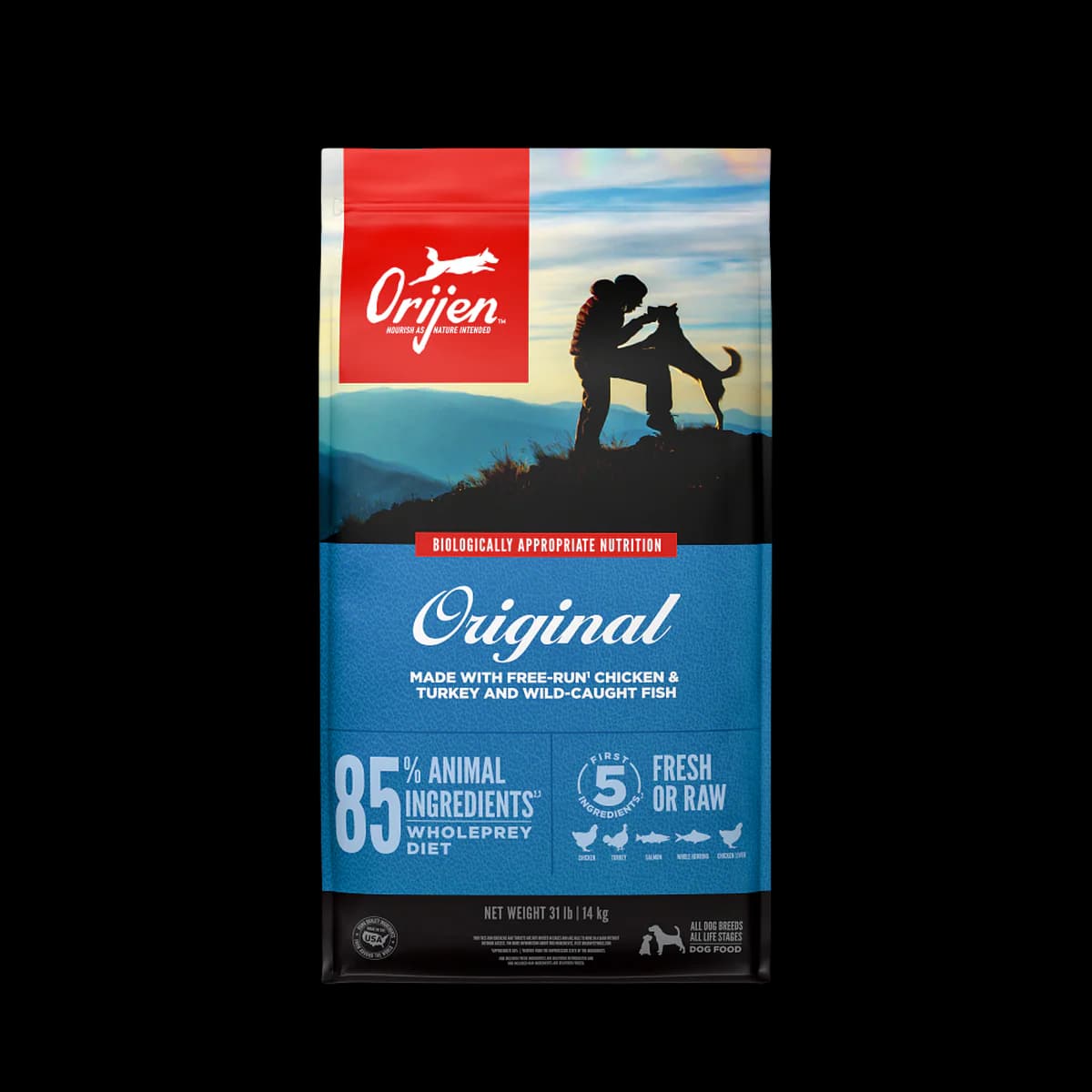
ORIJEN
Original Grain-Free High-Protein
ORIJEN Original earns 8.3/10: the first 11 ingredients are all animal, protein hits 38% as fed, and no US recall is on record. Trade-offs: premium price, six legumes in a grain-free design, 473 kcal per cup. Best for active adult dogs; skip it for sedentary or overweight ones.
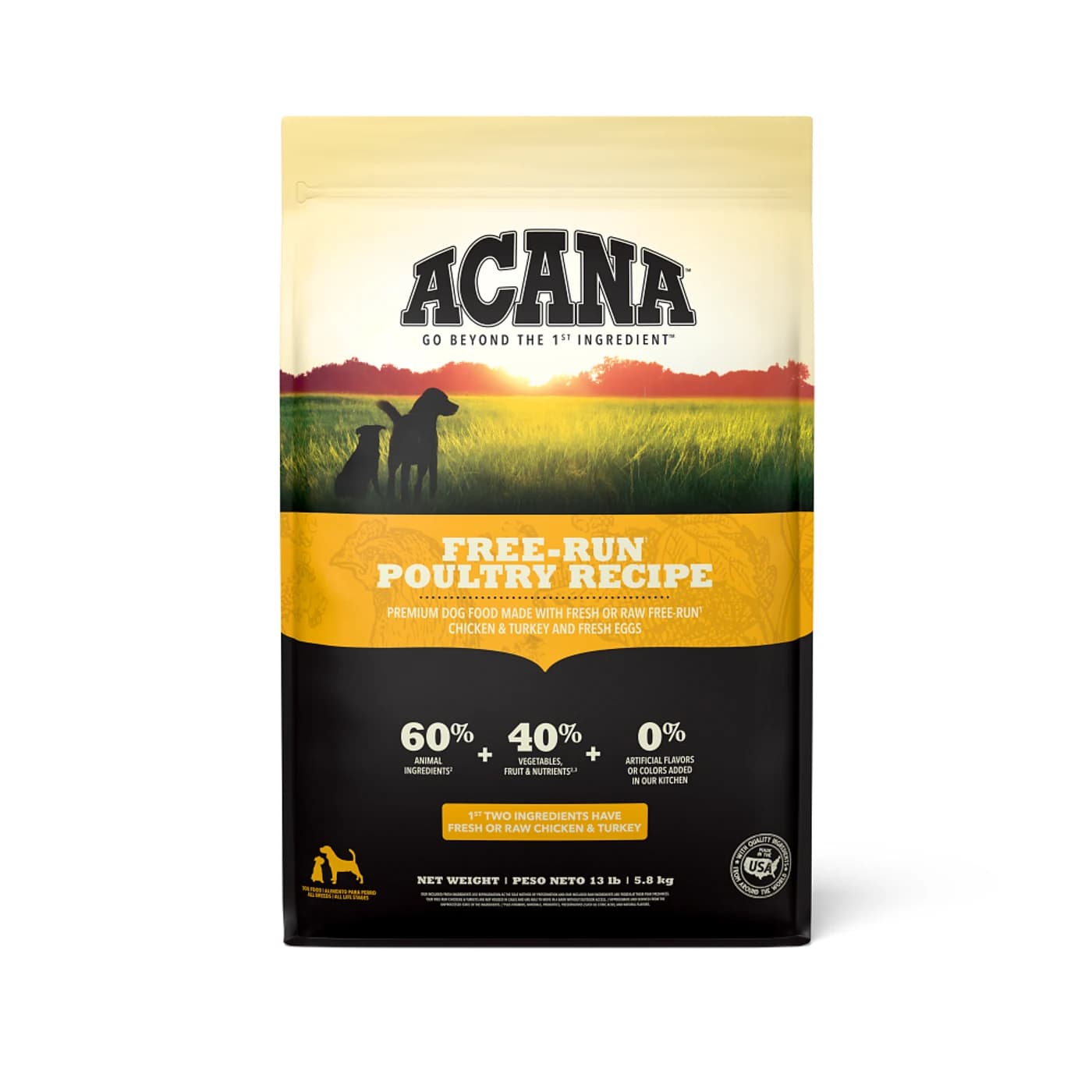
ACANA
Free-Run Poultry
ACANA Free-Run Poultry earns 8.1/10: three named poultry proteins up top, rare starch and sugar disclosure, ORIJEN's own Kentucky kitchen, and a clean US recall record at $3.20/lb. The ceiling is a legume block at positions 4-6, sitting higher in the deck than ORIJEN allows.
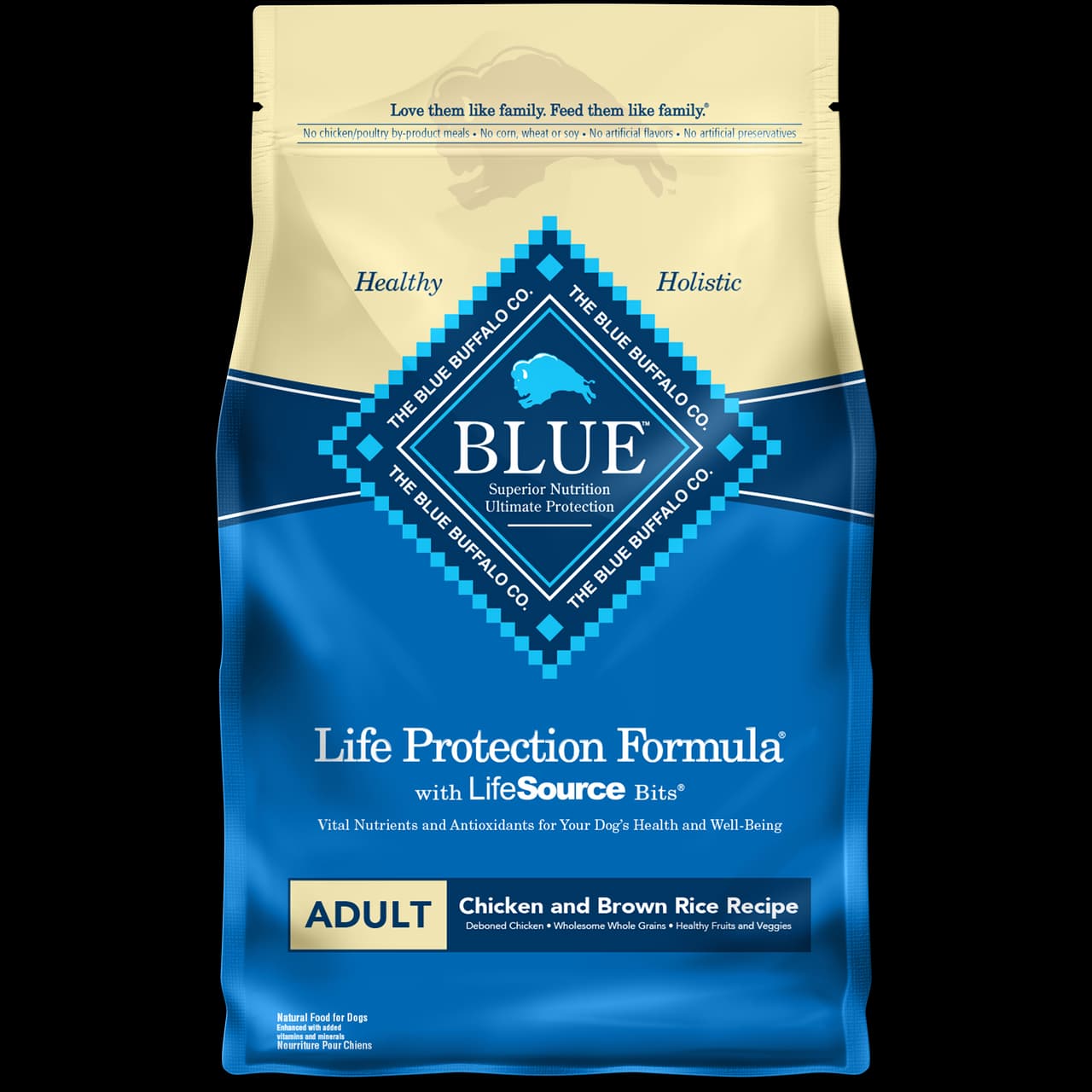
Blue Buffalo
Life Protection Formula Adult Chicken & Brown Rice
A genuinely strong grain-inclusive kibble led by real deboned chicken at a fair mid-tier price, scoring 8.1/10, with a single legume flag and a recall history worth knowing.
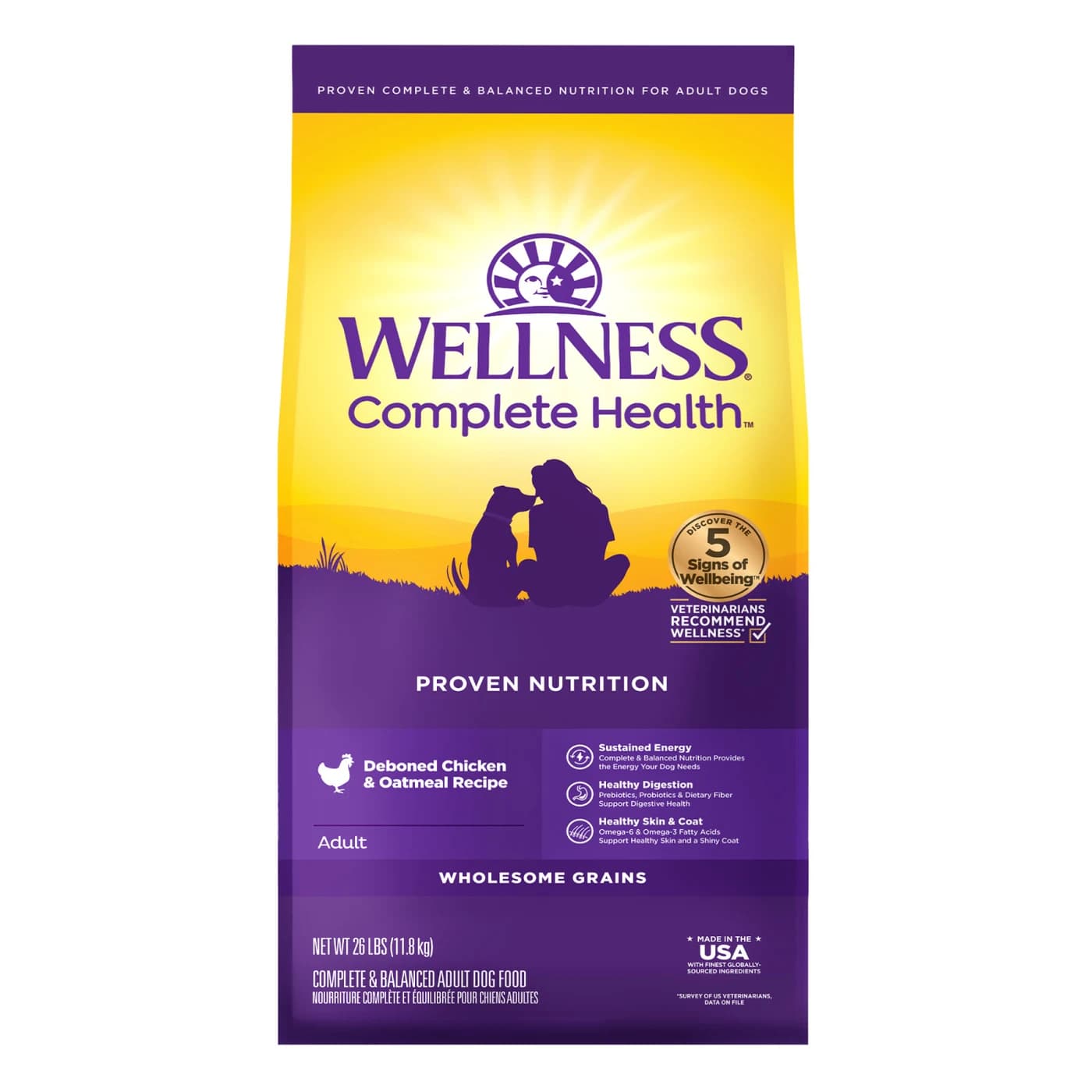
Wellness
Complete Health Adult Deboned Chicken & Oatmeal
The sensible middle of the premium aisle: chicken and chicken meal lead a grain-inclusive deck, and the panel guarantees probiotics, taurine, glucosamine and omegas that most rivals only imply. Watch the 427 kcal/cup calorie density and the vague sourcing story. 7.8/10.
Jump to Section
Specifications
- Brand
- Royal Canin
- Manufacturer
- Royal Canin USA (Mars Petcare)
- Made In
- USA
- Food Form
- dry
- Life Stage
- adult maintenance
- Price
- $3.65/lb
Don't Guess When It Comes To Your Pet's Care
Sign up for expert-backed reviews and safety alerts all in one place.