Taste of the Wild High Prairie Review: Is It Safe? (2026)
Dr. Pippa Elliott, BVMS MRCVS, scores Taste of the Wild High Prairie 7.2/10: ingredients, protein and fat, the legume DCM concern, recalls, and who it suits.


Veterinarian · BVMS, MRCVS
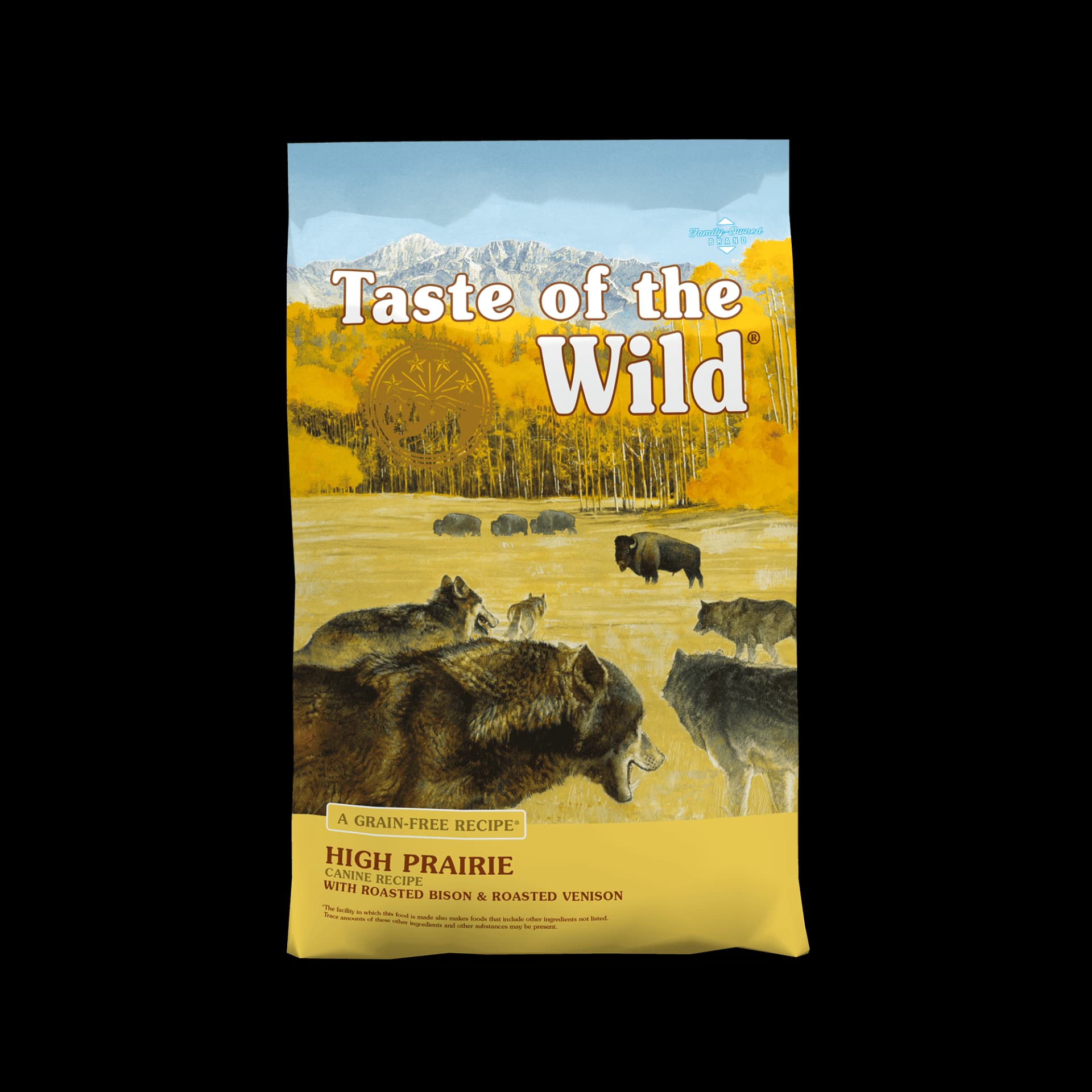
Taste of the Wild
High Prairie Grain-Free Roasted Bison & Venison
A protein-rich, highly palatable grain-free kibble that punches above its mid-tier price, held back by thin sourcing transparency and two legumes in the top 10 that place it in the FDA's grain-free DCM spotlight.
Petful is reader supported. As an affiliate of platforms like Amazon and Chewy, we may earn a commission when you buy through links on this page.
Quick Verdict
A protein-rich, highly palatable grain-free kibble that punches above its mid-tier price, held back by thin sourcing transparency and two legumes in the top 10 that place it in the FDA's grain-free DCM spotlight.
Score Breakdown
Tap any (i) for sourcesPros
- Three named whole-protein sources in top 5
- Grain-free formulation
- Competitive mid-tier pricing
Cons
- Legume-heavy (2 legumes in top 10)
- No on-staff veterinary nutritionist
- High in fat and calories (370 kcal/cup)
- 1Taste of the Wild High Prairie scores 7.2 out of 10 in our six-part scorecard.
- 2It is a protein-rich, grain-free kibble led by buffalo and rounded out with lamb meal and chicken meal, plus roasted bison and venison further down the label, with standout nutritional adequacy (8.4/10) and palatability (9.1/10).
- 3It loses ground on sourcing transparency (5.8/10) and brand integrity (5.8/10), and it carries two legumes, peas and pea flour, in its top 10.
- 4That places it inside the FDA's grain-free DCM conversation, so it is a good everyday choice for many active dogs but not the right pick for every household.
Taste of the Wild High Prairie review: our verdict (7.2/10)
Taste of the Wild High Prairie earns 7.2 out of 10. It is a highly palatable, high-protein grain-free kibble that delivers premium-sounding ingredients at a competitive price. It scores well on nutritional adequacy (8.4) and palatability (9.1), and lower on sourcing and transparency (5.8), scientific and brand integrity (5.8), and environmental responsibility (5.5). For an active adult dog with no poultry allergy, it is a solid mid-tier pick.
Here is how the score breaks down across our six weighted dimensions:
- Nutritional Adequacy: 8.4/10 (25% of the score)
- Ingredient Quality: 7.2/10 (20%)
- Sourcing and Transparency: 5.8/10 (20%)
- Scientific and Brand Integrity: 5.8/10 (15%)
- Palatability and Transparency: 9.1/10 (15%)
- Environmental Responsibility: 5.5/10 (5%)

The pattern is clear. The food is excellent where dogs vote with their appetite and where the guaranteed analysis is concerned, and it is average where the brand is asked to prove its work.
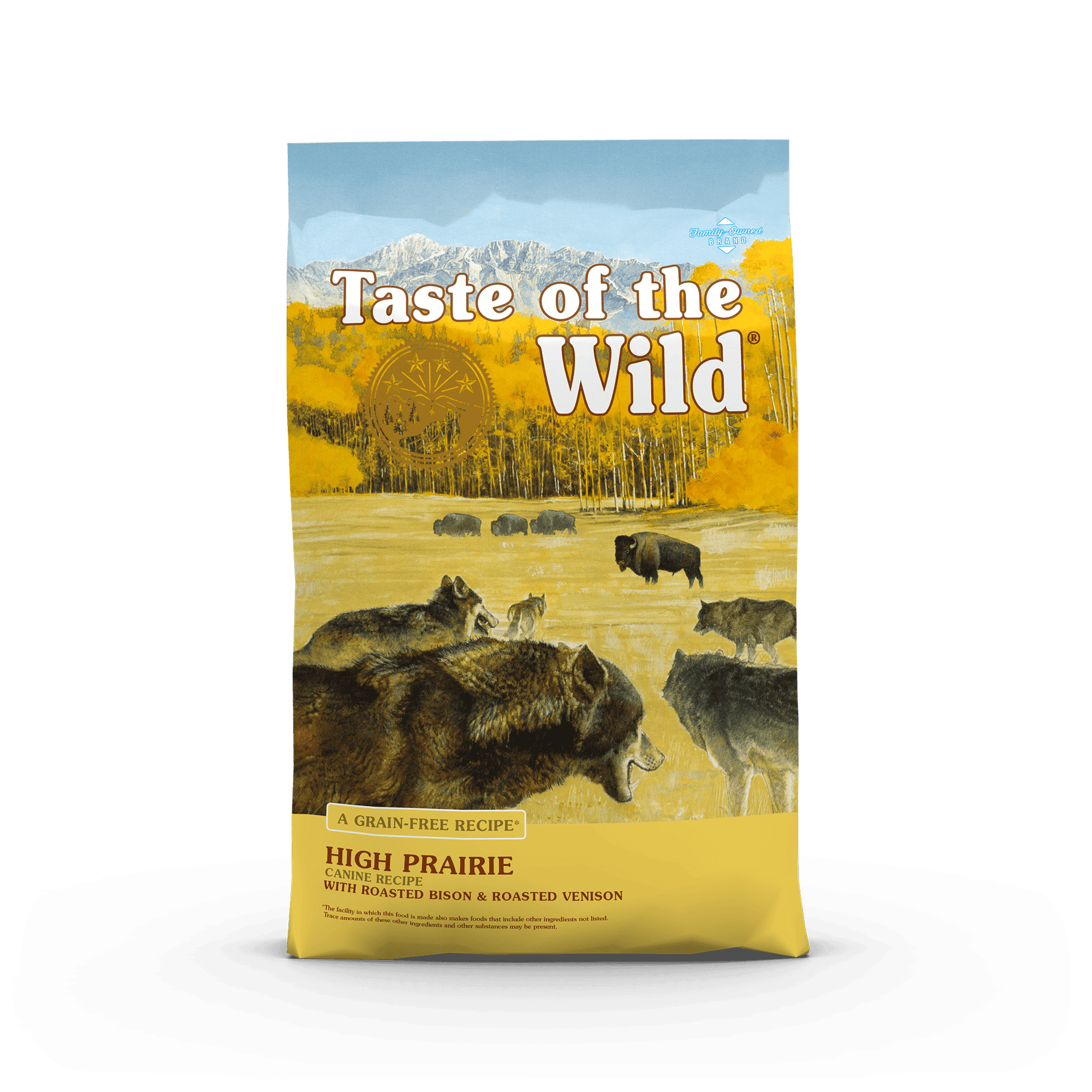
See the current Chewy price and available bag sizes.
Petful may earn a commission when you click through to Chewy, at no extra cost to you.
Two 5.8 scores on transparency and integrity are not failing grades, but they are the reason this is a 7.2 and not an 8.5.
The good: three named proteins in the top five (buffalo, lamb meal, and chicken meal), high protein, strong palatability, grain-free, and a fair price.
The not-so-good: two legumes in the top 10, hidden chicken meal, limited nutritionist transparency, and a high calorie load.
What makes High Prairie different: roasted bison and venison
What sets Taste of the Wild High Prairie apart is its novel-protein backbone. Roasted bison and venison join buffalo as a prey-inspired protein story you rarely see in mid-tier kibble, although on the label they actually sit further down at positions nine and ten, not in the top five.
The three named proteins in the top five are buffalo, lamb meal, and chicken meal, which is why ingredient quality scores 7.2/10. The roasting step on the bison and venison is a genuine flavor driver and helps explain the 9.1/10 palatability score, the highest mark on the whole card.
- Buffalo sits at position one, while the roasted bison and venison on the front of the bag actually appear at positions nine and ten. The prey-inspired story is real, but the top five is built on buffalo, lamb meal, and chicken meal.
Beyond the marketing, the recipe does several useful things:
- It adds a proprietary blend of K9 Strain probiotics after the cooking step, so the live cultures survive the high heat of extrusion.
- It includes omega-3 and omega-6 fatty acids for skin and coat, dried chicory root as a prebiotic fiber, and chelated minerals, which are bound to amino acids to improve absorption.
- It also folds in tomatoes, blueberries, and raspberries as antioxidant sources, plus dried egg and ocean fish meal for additional protein and fats.
On paper, this is a thoughtfully built formula.
Vet note: "Roasted bison and venison" sounds exotic, but buffalo and bison are the same animal, so the buffalo at position one and the roasted bison at position nine are closely related. The novelty is real for a dog that has never eaten these proteins, yet this is not a limited-ingredient diet. With buffalo, lamb meal, chicken meal, ocean fish meal, beef, egg, and smoked turkey all on the label, it is a multi-protein food, not a single-novel-protein elimination diet.
Ingredients: what the label really tells you
The Taste of the Wild High Prairie ingredients list is long, led by named proteins, and opens with buffalo, lamb meal, chicken meal, sweet potatoes, peas, pea flour, chicken fat, egg product, roasted bison, and roasted venison. The top three are quality animal proteins. The two red flags are peas (position five) and pea flour (position six), both legumes, plus chicken meal at position three, which makes this a poultry source despite the bison-and-venison name.

Start with the wins. Buffalo, lamb meal, chicken meal, and ocean fish meal are all real protein sources, and the meat meals matter because they are rendered, water-removed, and therefore concentrated protein by weight. Roasted bison, roasted venison, beef, egg, and smoked turkey deeper in the list add to the named-protein story. For a kibble at this price, that is a strong animal-protein foundation.
A grain-free kibble with a bison-and-venison protein profile. Mid-tier sourcing and limited published nutritionist involvement.
Petful may earn a commission when you click through to Chewy, at no extra cost to you.
Now the cautions. Sweet potatoes form the grain-free carbohydrate base, which is fine on its own. The concern is the two legumes.
Peas at position five and pea flour at position six are two pea-based ingredients, and listing the same base crop in more than one form, here whole peas and pea flour, is a practice sometimes called ingredient splitting. Legumes like these can help lift the overall protein percentage on the label without adding meat, and their amino acid profile is not equal to meat, so the headline protein number can look richer than the meat content alone would suggest.
- Chicken meal sits at position three, so this is not a safe choice for a dog with a confirmed poultry allergy, even though the bag foregrounds bison and venison.
There is also a practical allergy point. Chicken meal at position three means this is not a safe choice for a dog with a confirmed poultry allergy, even though the bag foregrounds bison and venison. Further down the list you will find canola oil, tomato pomace, dried egg, smoked turkey, and beef meal, all common and acceptable inclusions.

Ingredient Analysis
Named whole-protein source in top 5
Concentrated named-species protein meal
Concentrated named-species protein meal
Legume - FDA 2019 DCM investigation context
Legume - FDA 2019 DCM investigation context
Named whole-protein source
Named whole-protein source
Full Ingredient List (from label)
Buffalo, Lamb Meal, Chicken Meal, Sweet Potatoes, Peas, Potatoes, Pea Protein, Roasted Bison, Roasted Venison, Ocean Fish Meal, Beef, Canola Oil, Tomato Pomace, Egg Product, Smoked Turkey, Beef Meal, Natural Flavor, Dried Chicory Root, Tomatoes, Blueberries, Raspberries, Yucca Schidigera Extract, Dried Lactic Acid Bacteria (Lactobacillus acidophilus, Bifidobacterium animalis, Lactobacillus reuteri), Vitamin E Supplement, Iron Proteinate, Zinc Proteinate, Copper Proteinate, Ferrous Sulfate, Zinc Sulfate, Copper Sulfate, Potassium Iodide, Thiamine Mononitrate, Selenium Yeast, Pyridoxine Hydrochloride, Vitamin B12 Supplement, Niacin, d-Calcium Pantothenate, Vitamin A Supplement, Vitamin D3 Supplement, Riboflavin Supplement, Ascorbic Acid, Biotin, Folic Acid, Menadione Sodium Bisulfite Complex, Sodium Selenite
Nutrition by the numbers
On a dry-matter basis, Taste of the Wild High Prairie dog food delivers about 35.6% protein, 20% fat, and roughly 31% carbohydrate, with about 422 kcal per cup. The guaranteed analysis lists 32% protein, 18% fat, 4% fiber, and 10% moisture as fed. By calories, fat supplies about 42.1% of the metabolizable energy, protein about 30.8%, and carbohydrate about 27.0%. That is a high-protein and notably high-fat profile.
| Macro | Guaranteed analysis (as fed) | Dry-matter basis | Share of calories |
|---|---|---|---|
| Protein | 32% | ~35.6% | ~30.8% |
| Fat | 18% | ~20% | ~42.1% |
| Carbohydrate | not listed | ~31% | ~27.0% |
| Fiber | 4% | ~4.4% | not listed |
| Moisture | 10% | not listed | not listed |
We convert to a dry-matter basis because that is the only way to compare a dry food fairly against a wet or fresh diet, which carry far more water. Once you strip the moisture out, the High Prairie numbers line up closely with what Dog Food Advisor reports for the same recipe, around 36% protein and 20% fat, so the food is doing what the bag promises.
The standout figure is fat. At roughly 42.1% of calories, fat is the dominant energy source here. That is fantastic fuel for a working or highly active dog, and it is a big part of why dogs find the food so palatable.
For a couch-companion dog, a senior, or an easy-keeper, that same energy density at about 422 kcal per cup makes overfeeding and weight gain easy. Measure portions and weigh your dog, do not free-feed.
- With fat supplying roughly 42.1% of calories and about 422 kcal packed into every cup, overfeeding is easy for sedentary dogs, seniors, and easy-keepers. Measure portions and weigh your dog rather than free-feeding.
The formula is labeled complete and balanced for all life stages under the AAFCO Dog Food Nutrient Profiles, which is the baseline a complete diet must meet. That earns the strong 8.4/10 nutritional adequacy score.
Nutritional Analysis
| Nutrient | As-Fed (GA) | Dry Matter |
|---|---|---|
| Crude Protein | 32% min | 35.6% |
| Crude Fat | 18% min | 20.0% |
| Crude Fiber | 4% max | 4.4% |
| Moisture | 10% max | — |
| Carbohydrates (est.) | — | 33.0% |
Energy Distribution
Metabolizable Energy (ME) by macronutrient
Processing Method
Grain-free, legumes and the FDA DCM question
The main thing critics point to when they ask what is wrong with Taste of the Wild dog food is its grain-free, legume-heavy design. In its June 27, 2019 update, the FDA named Taste of the Wild among the brands most frequently reported in cases of diet-associated dilated cardiomyopathy (DCM), a serious heart-muscle disease, with 53 reported cases tied to the brand. High Prairie carries two legumes, peas and pea flour, in its top 10 ingredients, which is a central reason our sourcing and integrity scores sit at 5.8.
- High Prairie carries two legumes, peas and pea flour, in its top 10 ingredients, the dietary pattern at the center of the FDA's investigation into diet-associated DCM. The FDA has not established that these diets cause DCM and has not requested any recalls, but at-risk breeds deserve a vet conversation first.
Here is the balanced picture. The FDA opened its investigation in July 2018 after a rise in DCM reports in breeds not usually predisposed to it, and the cases clustered around grain-free diets rich in peas, lentils, and other pulses. That is the pattern this recipe fits.
But the science is not settled. The FDA has stated it has not established that these diets cause DCM, the mechanism is still unknown, and the agency has not requested any recalls. The AVMA echoes that the link is a correlation under study, not a proven cause. Researchers continue to look at taurine, pulse content, and nutrient bioavailability as possible factors.

High Prairie is not a dangerous food, and millions of dogs eat it without issue.
So the honest read is this: High Prairie is not a dangerous food, and millions of dogs eat it without issue. The legume load plus limited published nutritionist oversight is a transparency and caution flag, not a safety verdict. If your dog belongs to a breed flagged in DCM reports, such as a Golden Retriever, Doberman, or Great Dane, the WSAVA Global Nutrition Guidelines and most board-certified veterinary nutritionists currently suggest favoring a tested, often grain-inclusive, diet until the data is clearer. Talk to your vet first.
Who makes it and recall history
Taste of the Wild is made by Diamond Pet Foods, a family-owned manufacturer operated by Schell and Kampeter, Inc., based in Meta, Missouri. Diamond produces the food in its own US facilities. The brand's most significant recall came in 2012, when Diamond recalled multiple brands, including Taste of the Wild, over potential Salmonella contamination tied to its Gaston, South Carolina plant. There has been no active recall in the past 90 days.
Compare today's Chewy price, deals, and shipping.
Petful may earn a commission when you click through to Chewy, at no extra cost to you.
- Diamond's 2012 Salmonella event at its Gaston, South Carolina plant spanned multiple brands, including Taste of the Wild, and the CDC linked it to dozens of human illnesses across multiple states. Diamond has had no comparable event since, and there is no active recall today.
That 2012 event is worth understanding because it shaped the brand's reputation. The contamination at the Gaston facility was linked by the CDC to dozens of human Salmonella illnesses across multiple states, which is unusually serious for a pet-food recall because it crossed into human health. Diamond expanded the recall across several of its brands as a result.
Since then, Diamond has had no comparable event, and Taste of the Wild has no active recall today. You can confirm the current status any time on our dog food recall tracker.
The recall history, combined with sourcing claims that are marketing-led rather than third-party verified, and limited public information about a board-certified nutritionist on staff or a documented WSAVA-aligned testing program, is why scientific and brand integrity lands at 5.8/10. None of this means the food is unsafe. It means the brand is asking you to take more on trust than the most transparent competitors do.
Who it's for (and who it's not)
Taste of the Wild High Prairie is best for healthy, active adult dogs that thrive on a high-protein, high-fat grain-free diet and have no poultry allergy. It is formulated to AAFCO nutrient profiles for all life stages, so it can technically feed puppies too. But the high fat and roughly 422 kcal per cup make it a poor match for sedentary, senior, or overweight dogs, and large-breed puppies need extra caution.
- Choose High Prairie for a healthy, active adult dog with no poultry allergy that does well on rich, meat-forward food. Skip it for sedentary, senior, or overweight dogs, and for at-risk breeds whose owners want to sidestep legume-heavy grain-free diets while the DCM question stays open.
The puppy question deserves care, because Taste of the Wild High Prairie puppy searches are common. "All life stages" under AAFCO does include growth, but feeding a large-breed puppy, one that will mature past about 70 pounds, requires controlled calcium and the specific AAFCO statement that the food is suitable "including growth of large size dogs." If the bag does not carry that large-size-dog growth language, do not use it for a large-breed pup, and check with your veterinarian. The high calorie density also makes careful portioning important for any growing dog.
Best for:

- Active, healthy adult dogs that do well on rich, meat-forward food
- Owners who want named novel proteins without a fresh-food price tag
- Dogs that need a grain-free option for a non-DCM-related reason
Not the right fit for:
Check availability and the latest Chewy price before you buy.
Petful may earn a commission when you click through to Chewy, at no extra cost to you.
- Dogs with a poultry allergy (the chicken meal at position three rules it out)
- Sedentary, senior, or overweight dogs (high fat and calories)
- At-risk breeds whose owners want to sidestep legume-heavy grain-free diets while the DCM question is open
- Anyone who wants documented board-certified veterinary nutritionist oversight
Price and how it compares
At about $2.11 per pound, Taste of the Wild High Prairie is competitively priced for a grain-free kibble with named meats. The popular Taste of the Wild High Prairie 28 lb bag runs about $59 (recently $58.99) at major retailers like Chewy, which puts it among the better value-per-pound numbers in the premium-kibble tier. Against fresh, cooked diets it is dramatically cheaper, and against other meat-first kibbles it sits mid-pack.
| Option | Format | Rough price per pound | Protein (dry-matter) | Notable |
|---|---|---|---|---|
| Taste of the Wild High Prairie | Grain-free kibble | ~$2.11 | ~35.6% | Roasted bison and venison, 2 top-10 legumes |
| The Farmer's Dog | Fresh, cooked | varies by dog's weight | varies | Human-grade, vet-formulated, refrigerated |
| Freshpet Select | Fresh, refrigerated | higher than kibble | varies | Refrigerated rolls and bags |
| WSAVA-aligned grain-inclusive kibble | Kibble | ~$2.50 and up | ~25-30% | Often named nutritionist and feeding trials |
The value math depends on your priorities. If budget matters and your dog is active and not at higher risk of DCM, High Prairie is a lot of named-meat nutrition for the money. If you want maximum transparency and a gentler grain-inclusive formulation, the premium is worth weighing.
For the fresh alternative, see our cost breakdown of fresh food like The Farmer's Dog and our take on whether fresh dog food is worth it. For another refrigerated option in the same comparison, our review of Freshpet covers the trade-offs. Expect to pay several times more per day for any of these than for High Prairie, in exchange for more transparency and lighter processing.
- Water buffalo is the number-one ingredient, with lamb meal and chicken meal close behind for three named animal proteins in the top three
- High dry-matter protein near 35.6% and the highest score on our card for palatability (9.1/10)
- Grain-free with no corn, wheat, or soy, plus added K9 Strain probiotics, omega fatty acids, and chelated minerals
- Strong nutritional adequacy (8.4/10), formulated to AAFCO all-life-stages profiles
- Competitive mid-tier price around $2.11 per pound, roughly $59 for the 28 lb bag
- Made in the manufacturer's own US facilities with no active recall in the past 90 days
- Two legumes (peas and pea protein) sit in the top 10, the dietary pattern flagged in the FDA's grain-free DCM investigation
- Limited published board-certified nutritionist involvement and no documented WSAVA-aligned testing (sourcing and integrity both 5.8/10)
- Hidden chicken meal at position three makes it unsuitable for poultry-allergic dogs despite the bison-and-venison branding
- High fat and calorie density (about 422 kcal/cup) is not ideal for sedentary, senior, or overweight dogs
- The all-life-stages claim may not cover large-breed puppies, so confirm the large-size-dog growth statement on the bag
- Maker Diamond Pet Foods has a salmonella recall history (2012) and sourcing claims are marketing-led, not third-party verified
The main Taste of the Wild controversy centers on its grain-free, legume-rich recipes and a 2012 salmonella recall. In its June 27, 2019 update, the FDA named the brand among those most frequently reported in cases of diet-associated dilated cardiomyopathy (DCM). Critics also point to limited public information about board-certified nutritionist involvement. None of this proves the food is harmful, but it is why transparency-focused reviewers, including us, dock points.
Taste of the Wild is above average for its price. It leads recipes with named meats and meat meals, scores well on protein and palatability, and is made in the maker's own US plants. We rate High Prairie 7.2/10. It is held back from a top score by two legumes in the top 10, hidden chicken meal, and limited published nutritionist oversight, rather than by any single bad ingredient.
For most healthy adult dogs, Taste of the Wild is not bad. It meets AAFCO nutrient profiles and is highly palatable. The caveats are real, though. The legume-heavy grain-free design sits inside the FDA's open DCM investigation, the calorie density is high, and the chicken meal rules it out for poultry-allergic dogs. Dogs of at-risk breeds should eat grain-free legume diets only after a conversation with your veterinarian.
Taste of the Wild High Prairie is a grain-free dry dog food built around buffalo, with roasted bison and roasted venison further down the label, plus sweet potatoes as the carbohydrate base. It is made by Diamond Pet Foods, formulated to AAFCO all-life-stages standards, and delivers about 32% protein and 18% fat as fed, which is roughly 35.6% protein and 20% fat on a dry-matter basis. It is one of the brand's best-selling recipes.
There is no single brand every dog should avoid, because the right food depends on your dog. As a rule, be cautious with brands that will not name a board-certified veterinary nutritionist, do not run AAFCO feeding trials, use vague ingredient sourcing, or have a pattern of recalls. The WSAVA Global Nutrition Guidelines provide a checklist of questions to ask any manufacturer before you buy.
No food is the single healthiest for every dog. The AVMA and veterinary nutritionists agree the best diet is the one matched to your dog's life stage, body condition, and health, ideally chosen with your vet. Look for a complete and balanced AAFCO statement, a named nutritionist, transparent sourcing, and feeding-trial testing. For some dogs that is a fresh cooked diet, and for others it is a well-formulated kibble.
Yes, Taste of the Wild is good for many dogs. It is a complete and balanced, protein-rich food made with named meats, and most dogs do well on it. It suits active adults better than sedentary or overweight dogs because of its high fat and calories. If your dog is a breed at higher risk of DCM, talk to your veterinarian before choosing this or any legume-heavy grain-free recipe.
Taste of the Wild is made by Diamond Pet Foods, a family-owned company run by Schell and Kampeter, Inc., headquartered in Meta, Missouri. Diamond manufactures the food in its own US facilities. The same company also produces several other brands, which is why a single plant issue, such as the 2012 salmonella event, can trigger a multi-brand recall.
Yes. In 2012, Diamond Pet Foods recalled multiple brands, including Taste of the Wild, after potential Salmonella contamination at its Gaston, South Carolina facility, an outbreak the CDC linked to dozens of human illnesses. That remains the brand's most significant recall. There has been no active recall in the past 90 days. You can track current pet food recalls on our dog food recall tracker.
Taste of the Wild High Prairie is grain-free and contains two legumes, peas and pea flour, in its top 10 ingredients, the dietary pattern named in the FDA's investigation into diet-associated DCM. In its June 27, 2019 update, the FDA listed Taste of the Wild among the most frequently reported brands. The important caveat is that the FDA has not established that these diets cause DCM, and no recall has been requested. If your dog is at higher risk, ask your veterinarian.

Sign up for expert-backed reviews and safety alerts all in one place.
Also worth considering
Strong alternatives we reviewed in the same dry dog food category.
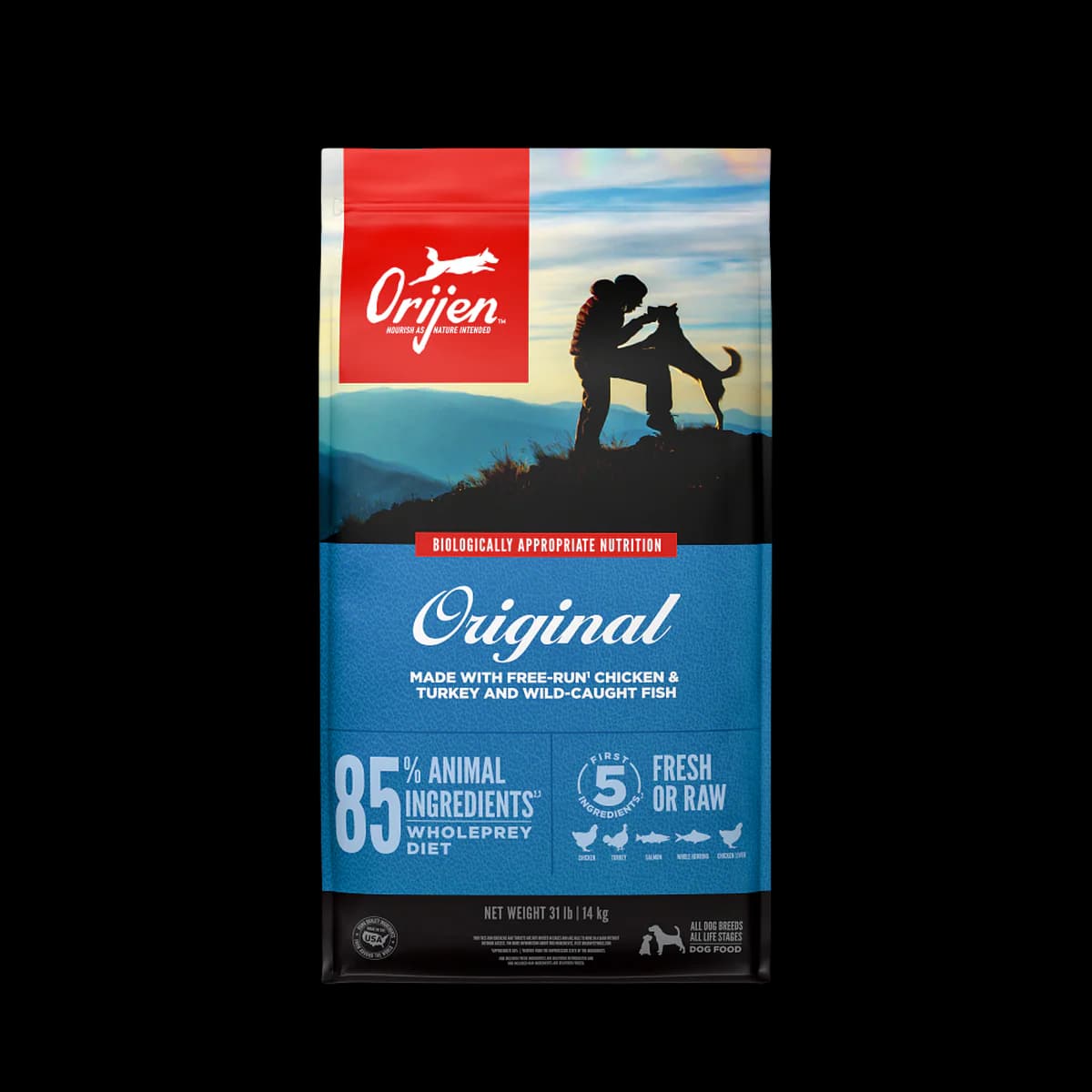
ORIJEN
Original Grain-Free High-Protein
ORIJEN Original earns 8.3/10: the first 11 ingredients are all animal, protein hits 38% as fed, and no US recall is on record. Trade-offs: premium price, six legumes in a grain-free design, 473 kcal per cup. Best for active adult dogs; skip it for sedentary or overweight ones.
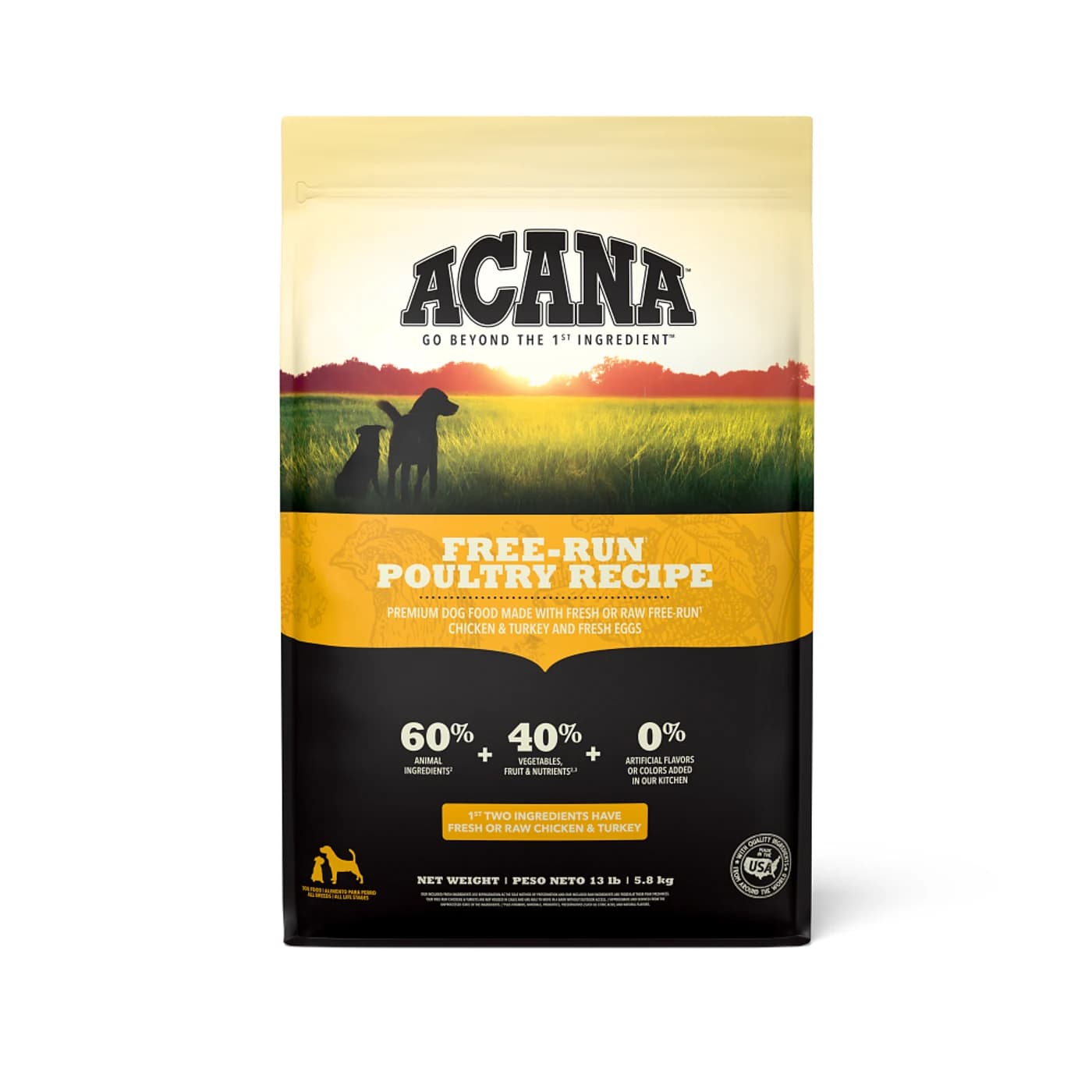
ACANA
Free-Run Poultry
ACANA Free-Run Poultry earns 8.1/10: three named poultry proteins up top, rare starch and sugar disclosure, ORIJEN's own Kentucky kitchen, and a clean US recall record at $3.20/lb. The ceiling is a legume block at positions 4-6, sitting higher in the deck than ORIJEN allows.
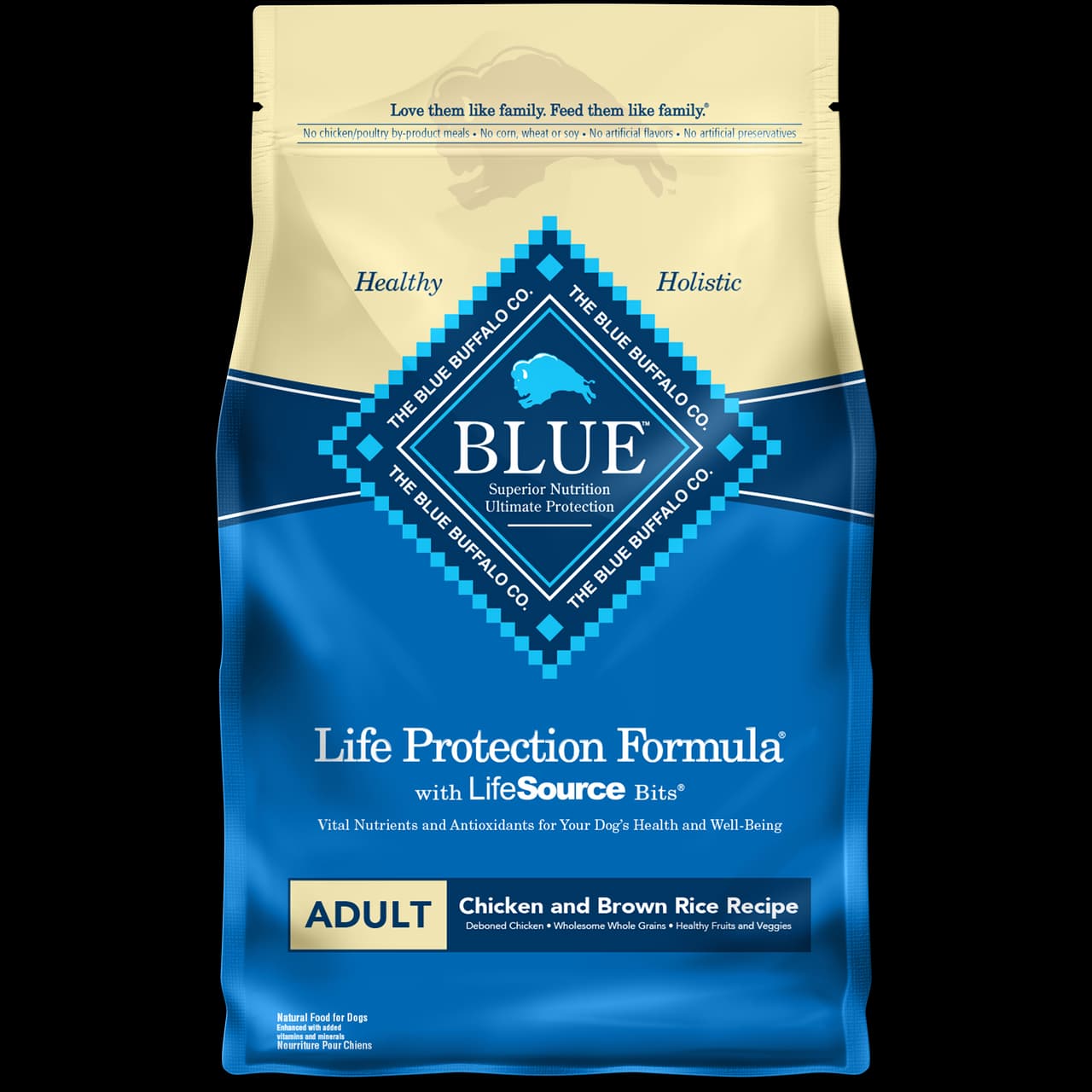
Blue Buffalo
Life Protection Formula Adult Chicken & Brown Rice
A genuinely strong grain-inclusive kibble led by real deboned chicken at a fair mid-tier price, scoring 8.1/10, with a single legume flag and a recall history worth knowing.
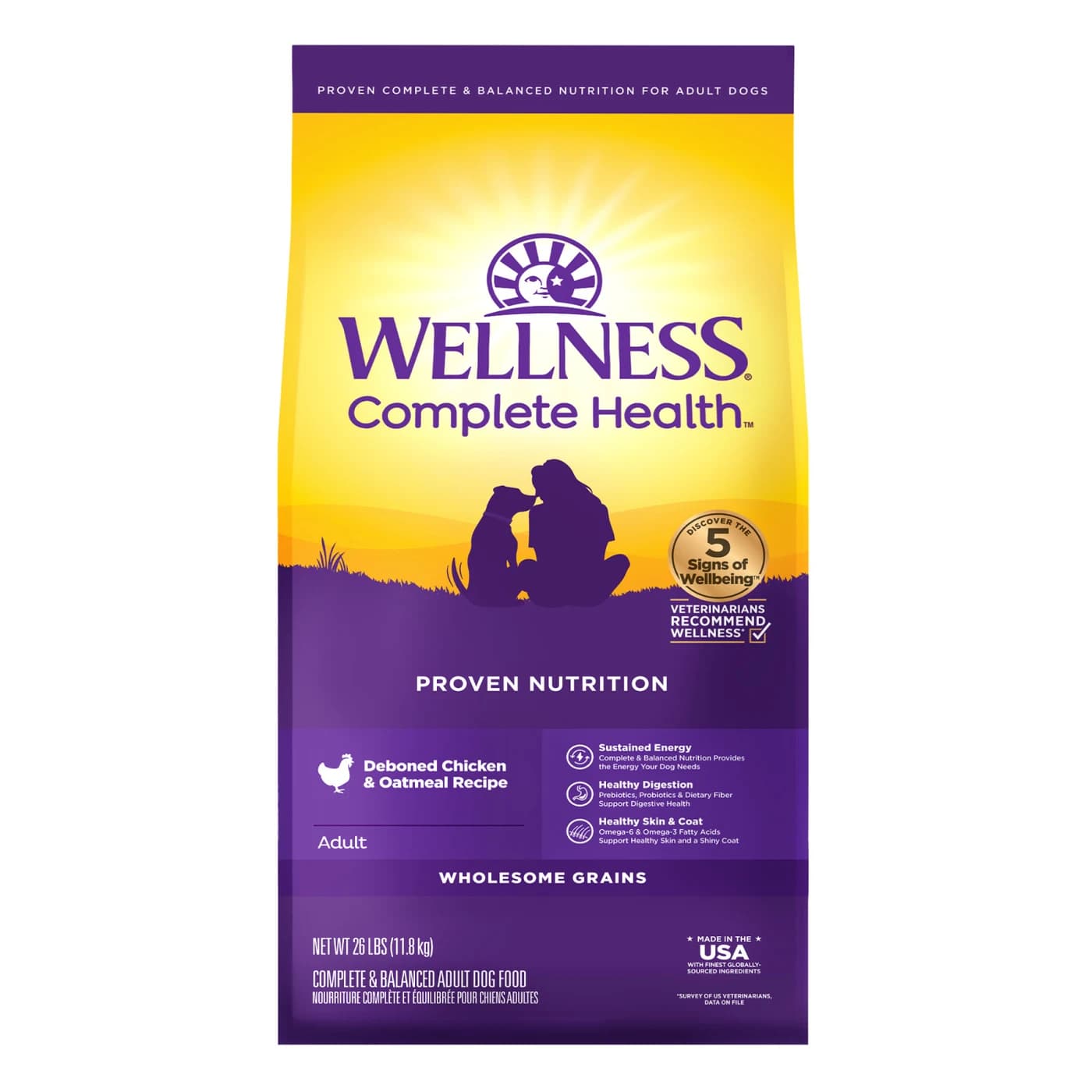
Wellness
Complete Health Adult Deboned Chicken & Oatmeal
The sensible middle of the premium aisle: chicken and chicken meal lead a grain-inclusive deck, and the panel guarantees probiotics, taurine, glucosamine and omegas that most rivals only imply. Watch the 427 kcal/cup calorie density and the vague sourcing story. 7.8/10.
Jump to Section
Specifications
- Brand
- Taste of the Wild
- Made In
- USA
- Food Form
- dry
- Life Stage
- all life stages
- Price
- $2.11/lb
Don't Guess When It Comes To Your Pet's Care
Sign up for expert-backed reviews and safety alerts all in one place.