ACANA Dog Food Review: Is ORIJEN's Cheaper Sibling Really Good?
Our vet-grade ACANA dog food review tests Free-Run Poultry: 29% protein, a legume-heavy deck, a clean recall record, and $3.20/lb value vs ORIJEN.

BVMS, MRCVS
Veterinarian · BVMS, MRCVS
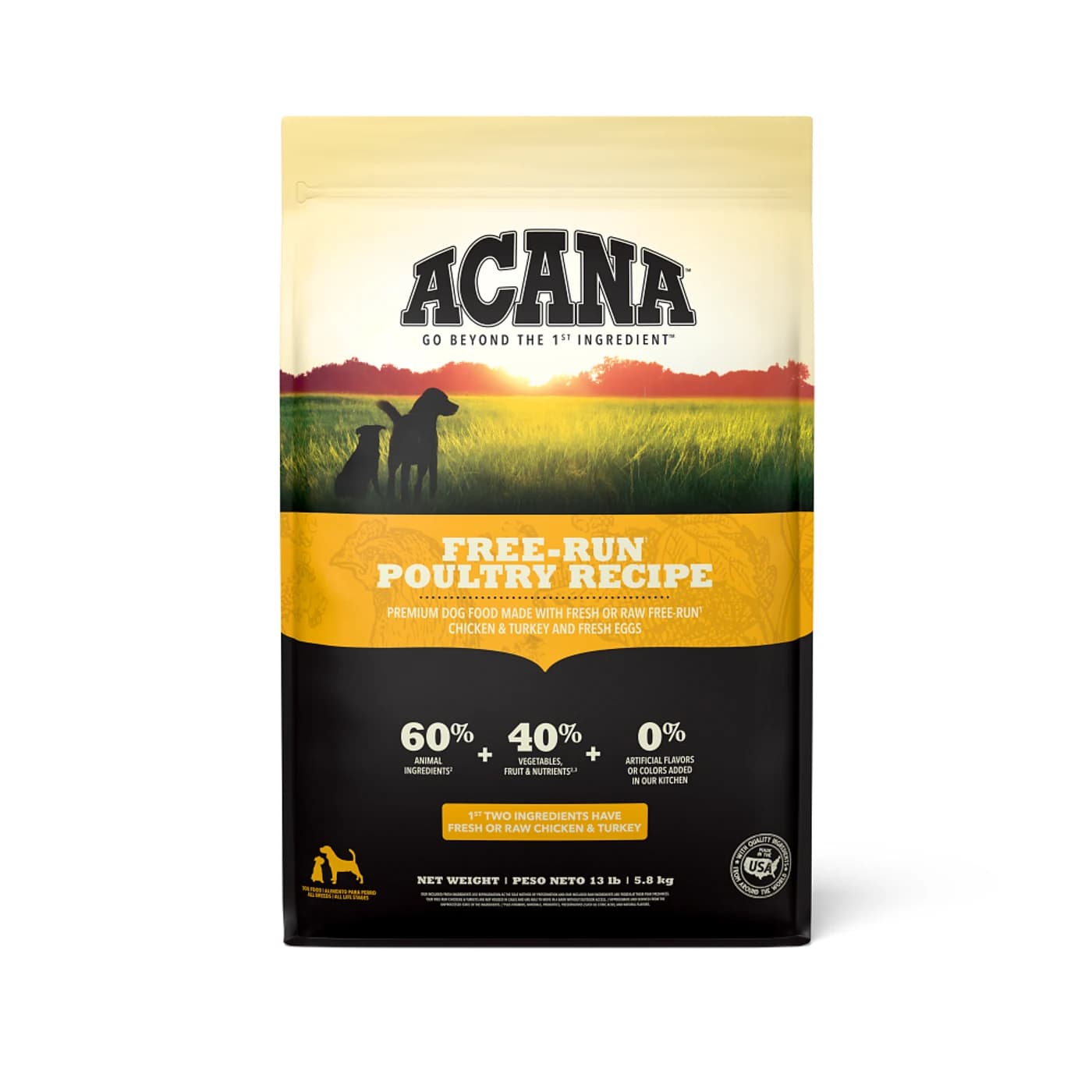
ACANA
Free-Run Poultry
ACANA Free-Run Poultry earns 8.1/10: three named poultry proteins up top, rare starch and sugar disclosure, ORIJEN's own Kentucky kitchen, and a clean US recall record at $3.20/lb. The ceiling is a legume block at positions 4-6, sitting higher in the deck than ORIJEN allows.
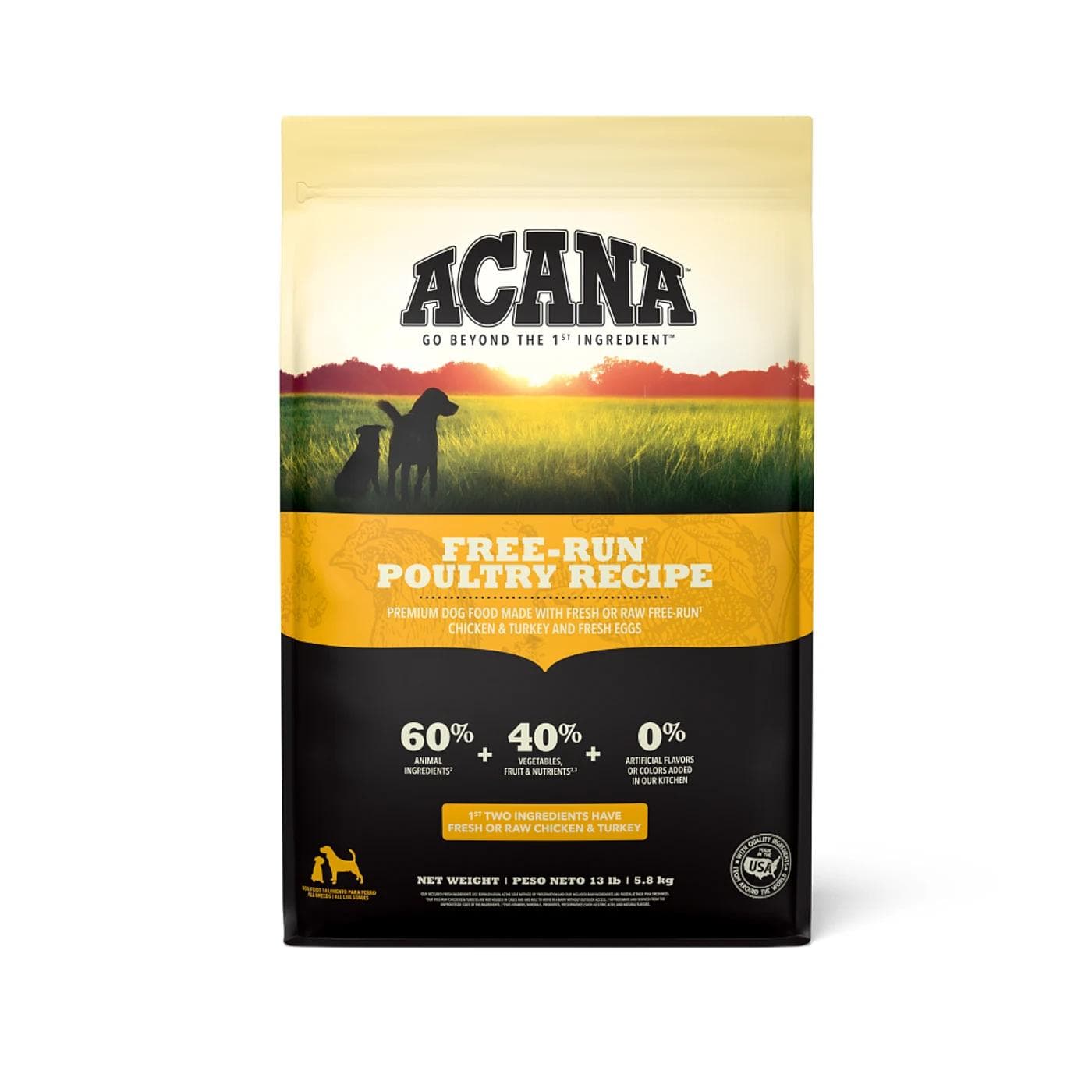
Named chicken, turkey, and chicken meal lead a 60% animal-ingredient recipe from the same Kentucky kitchen as ORIJEN, at a friendlier price. The legume-forward grain-free deck is the trade-off to know about.
Petful may earn a commission when you click through to Chewy, at no extra cost to you.
Petful is reader supported. As an affiliate of platforms like Amazon and Chewy, we may earn a commission when you buy through links on this page.
Quick Verdict
ACANA Free-Run Poultry earns 8.1/10: three named poultry proteins up top, rare starch and sugar disclosure, ORIJEN's own Kentucky kitchen, and a clean US recall record at $3.20/lb. The ceiling is a legume block at positions 4-6, sitting higher in the deck than ORIJEN allows.
Score Breakdown
Tap any (i) for sourcesPros
- Active adult dogs and sporting breeds that can earn a 396 kcal/cup recipe
- Owners who want ORIJEN-style sourcing and transparency at $1.36 less per pound
- Multi-dog or puppy-plus-adult households that need one all-life-stages formula
- Label readers who value published starch, sugar, and omega guarantees
Cons
- Your dog is a breed predisposed to DCM, or your vet advises against legume-rich grain-free diets
- You have a low-activity or easy-gaining dog that needs a leaner kibble
- You want feeding-trial-validated nutrition from a WSAVA-aligned research program
- You are budget-first: grain-inclusive vet staples start at $2.13/lb
- 1ACANA Free-Run Poultry scores 8.1/10: ORIJEN's kitchen, sourcing story, and transparency at 70% of the price, with a legume-forward deck as the tradeoff.
- 2Chicken, turkey, and chicken meal lead the ingredient list, but whole red lentils, pinto beans, and green peas sit at positions 4-6, higher than ORIJEN places them.
- 3The 29% protein, all-life-stages recipe publishes dietary starch (23% max) and sugar (2% max) caps that almost no competitor discloses.
- 4No US recall in the brand's history, and the 2018 heavy-metals class action ended with the courts siding with Champion on appeal in 2021.
Almost every shopper who searches for an ACANA dog food review arrives carrying the same question: is this ORIJEN's cheaper sibling done right, or a diluted copy trading on a famous name? After scoring ACANA Free-Run Poultry against the same six vet-grade criteria we apply to every food in our dry dog food reviews, our answer is a qualified yes. It earns 8.1/10: genuinely excellent poultry sourcing, rare label transparency, and the same Kentucky kitchen that makes ORIJEN, at $3.20 per pound instead of $4.56. For active dogs whose owners read labels, it is one of the strongest grain-free buys we have tested.
The qualification matters, though. This grain-free deck leans on legumes earlier and harder than ORIJEN's does, and that single architectural choice is what separates a very good food from an elite one. Below we walk the full ingredient list, the numbers behind the 29% protein claim, the FDA's DCM file (in which Acana was the most-named brand), the courtroom record, and the price math. By the end you will know whether paying 70 percent of ORIJEN's price buys 90 percent of ORIJEN's food.
ACANA Free-Run Poultry review: our verdict (8.1/10)
Our scorecard weighs six criteria, and Free-Run Poultry posts one of the more polarized lines we have recorded. It scores 9.0 or better on three criteria and still cannot crack 8.5 overall, because the criterion where it stumbles is the one most shoppers care about: what is actually in the bag, and in what order.
Here is the breakdown:
- Nutritional Adequacy: 8.5/10 (25% of the score). A 29% protein, all-life-stages recipe with guaranteed DHA and EPA, plus published starch and sugar caps. The deduction mirrors the one we made for ORIJEN: at 396 kcal per cup, this is a rich food that punishes casual portioning in sedentary dogs.
- Ingredient Quality: 6.0/10 (20%). Chicken, turkey, and chicken meal are an excellent, fully named poultry trio. But whole red lentils, whole pinto beans, and whole green peas occupy positions 4-6, and five more legume-derived entries follow. This is the score's ceiling, and we explain it ingredient by ingredient below.
- Sourcing & Transparency: 9.0/10 (20%). Made in Champion's own DogStar Kitchens in Kentucky, the same plant that produces ORIJEN, with a regional sourcing program that is documented rather than merely claimed.
- Scientific & Brand Integrity: 9.0/10 (15%). No US recall in brand history, and the 2018 heavy-metals class action ended with courts siding with Champion at summary judgment and again on appeal.
- Palatability & Transparency: 9.0/10 (15%). Calories published both per kilogram and per cup, starch and sugar guarantees almost nobody else prints, and a 4.6-star average across 845 Chewy ratings.
- Environmental Responsibility: 5.5/10 (5%). A believable regional-sourcing narrative, but very little published environmental measurement behind it.
See today's Chewy price and available bag sizes for ACANA Free-Run Poultry.
Petful may earn a commission when you click through to Chewy, at no extra cost to you.
Multiply each criterion by its weight and the recipe lands at 8.1/10. What earns the score is everything around the recipe: the kitchen, the safety record, the disclosure habits, the palatability. What caps it is the recipe's own spine. A grain-free formula that seats three legumes immediately behind its named meats cannot score elite on ingredient quality, no matter how good the meats are.
- 29% protein, 17% fat, 3475 kcal/kg (396 kcal per cup), all-life-stages AAFCO profile including large-breed growth, made in Auburn, Kentucky, $3.20/lb in the 25-lb bag, 4.6 stars across 845 Chewy ratings.
The obvious benchmark is our ORIJEN Original review, and we will keep it in frame throughout. ORIJEN runs 85% animal ingredients and 38% protein, and pushes its legumes down to positions 12-17. ACANA runs 60% animal ingredients and 29% protein, with legumes at 4-6. Same philosophy, same plant, meaningfully different execution.
Champion's DogStar kitchen and what free-run actually means

Most premium pet food brands do not make their own food; they hire contract manufacturers and inherit whatever else runs on those lines. Champion Petfoods is one of the exceptions. It runs its own plants, NorthStar Kitchens in Alberta and DogStar Kitchens in Auburn, Kentucky, and US recipes for both ACANA and ORIJEN have come out of DogStar since early 2016. When you buy this bag you are buying the same building, the same supplier map, and the same quality-control regime as the $4.56/lb flagship.
That "we make it ourselves" posture has been stress-tested in court, which is worth something. In a 2018 class action, a buyer alleged the packaging claims (biologically appropriate, fresh regional ingredients, never outsourced) were misleading; the Seventh Circuit affirmed judgment for Champion in 2021, finding no evidence a reasonable jury could call those representations false. We cover the details in the recall section below. Few premium brands have had their marketing language survive that level of adversarial review.
Now the name on the bag. "Free-Run Poultry" sounds like a pasture, and it is not one. ACANA's own product page defines the term plainly: the chickens and turkeys "are not housed in cages and are able to move in a barn without outdoor access." Free-run means open-barn housing, full stop. It is not free-range, it is not organic, and ACANA names no third-party welfare auditor for the claim.
Free-run buys the chickens a barn without cages. It does not buy them a door.
There is still substance behind the label. The recipe is built on roughly 60% animal ingredients (fresh or raw chicken, turkey, eggs, organs, and fish) balanced with 40% vegetables, fruit, and botanicals, and the poultry arrives fresh to the Kentucky plant. But note the fine print on the same bag: "Made in the USA using quality ingredients from around the world." The sourcing story is regional-first, not regional-only, and Champion is honest about that in a way its fans sometimes are not. That candor is a real part of why sourcing and transparency scores 9.0 here.
Ingredients: the current deck, top to bottom
The deck opens exactly the way a poultry recipe should. Chicken is first, turkey is second, and chicken meal is third. Two fresh named meats plus a named, rendered concentrate: because meal has already had its water removed, that third slot quietly does much of the heavy lifting behind the 29% protein guarantee. There is no anonymous "poultry meal," no by-product meal, and no soy, corn, wheat, or tapioca anywhere in the list.

Then the deck turns. Positions 4 through 6 are whole red lentils, whole pinto beans, and whole green peas. This is the legume block, and its placement is the single most important fact in this review. In ORIJEN Original, the equivalent block does not start until position 12. Here it starts at position 4, immediately behind the meats, which means legumes almost certainly displace a meaningful share of what would otherwise be animal inclusion.
The legume block is not buried in the back half of this deck. It starts at ingredient four.
Positions 7 through 9 recover well: chicken liver (a nutrient-dense organ and a palatant), chicken fat (a named fat source), and catfish meal, a named fish concentrate that supports the omega-3 guarantees alongside fish oil at position 16. Then comes the second legume wave: whole chickpeas at 10, whole green lentils at 11, whole yellow peas at 12, and lentil fiber at 13. Add pea starch at position 19 and this recipe lists eight separate legume-derived entries.
That structure has a name: ingredient splitting. Lentils appear three ways (red, green, fiber) and peas three ways (green, yellow, starch). Ingredients are declared by pre-cooking weight in descending order, so dividing one crop into several entries keeps each individual entry below the meats. No single legume outranks turkey, but the combined total is unpublished, and the splitting pattern is exactly how a formulator keeps it that way. We flagged the same pattern in our Taste of the Wild High Prairie review; ACANA executes it with better meats up top, but executes it all the same.
- this deck lists lentils three ways and peas three ways; no single entry outranks the poultry, but the combined legume total is unpublished and almost certainly larger than any one line suggests.
The rest of the list is genuinely strong. Turkey giblets (liver, heart, gizzard) at 14 and chicken heart at 18 add organ variety; whole eggs at 15 add a highly digestible protein. Freeze-dried chicken and freeze-dried turkey appear at positions 34-35, a coating trick borrowed from ORIJEN that plainly helps drive the 4.6-star palatability record. Whole pumpkin, collard greens, apples, and pears contribute fiber and micronutrients, dried chicory root is a prebiotic, and the tail carries turmeric, sarsaparilla root, althea root, rose hips, and juniper berries: botanical garnish at trace inclusion, harmless and mostly cosmetic.
A classic label-reading trick applies here too: salt sits at position 20, and because salt rarely exceeds roughly 1 percent of a dry recipe, everything listed after it (the vitamins, the freeze-dried coating, the botanicals, the probiotics) is present in fractions of a percent. That is normal for kibble, but it recalibrates the bag art. The apples, pears, and pumpkin are garnish by weight, not groceries.
Three dried probiotic fermentation products close the deck (Lactobacillus acidophilus, Bifidobacterium animalis, Lactobacillus casei), and unlike most brands ACANA guarantees the payload: 1 million CFU per pound. Preservation is handled with mixed tocopherols, citric acid, and rosemary extract rather than BHA or BHT. Taken ingredient by ingredient, there is nothing cheap here; even the legumes are whole-food inclusions rather than refined flours, aside from that pea starch. The 6.0 is not about what the legumes are. It is about where they sit.
Named chicken, turkey, and chicken meal lead a 60% animal-ingredient recipe from the same Kentucky kitchen as ORIJEN, at a friendlier price. The legume-forward grain-free deck is the trade-off to know about.
Petful may earn a commission when you click through to Chewy, at no extra cost to you.
Ingredient Analysis
Named whole-protein source at position 1
Named whole-protein source at position 2
Named meat meal, a concentrated protein source
Legume in a grain-free style deck; the pattern named in FDA's DCM inquiry
Legume in a grain-free style deck; the pattern named in FDA's DCM inquiry
Legume in a grain-free style deck; the pattern named in FDA's DCM inquiry
Named organ inclusion, nutrient-dense
Named fat source supplying essential fatty acids
Named meat meal, a concentrated protein source
Legume in a grain-free style deck; the pattern named in FDA's DCM inquiry
Full Ingredient List (from label)
Chicken, Turkey, Chicken Meal, Whole Red Lentils, Whole Pinto Beans, Whole Green Peas, Chicken Liver, Chicken Fat, Catfish Meal, Whole Chickpeas, Whole Green Lentils, Whole Yellow Peas, Lentil Fiber, Turkey Giblets (Liver, Heart, Gizzard), Eggs, Fish Oil, Natural Chicken Flavor, Chicken Heart, Pea Starch, Salt, Vitamin E Supplement, Dried Kelp, Whole Pumpkin, Mixed Tocopherols (Preservative), Zinc Proteinate, Calcium Pantothenate, Collard Greens, Whole Apples, Whole Pears, Vitamin A Acetate, Vitamin D3 Supplement, Riboflavin, Folic Acid, Freeze-Dried Chicken, Freeze-Dried Turkey, Copper Proteinate, Dried Chicory Root, Turmeric, Sarsaparilla Root, Althea Root, Rose Hips, Juniper Berries, Citric Acid (Preservative), Rosemary Extract, Dried Lactobacillus Acidophilus Fermentation Product, Dried Bifidobacterium Animalis Fermentation Product, Dried Lactobacillus Casei Fermentation Product.
Nutrition by the numbers
The guaranteed analysis reads 29% protein minimum, 17% fat minimum, 6% fiber maximum, and 12% moisture maximum, at 3475 kcal/kg and 396 kcal per 8-oz cup. Converting to dry matter and estimating the carbohydrate fraction (using a typical 7% ash figure, since ash is not published) gives the fuller picture:
| Nutrient | As fed (guaranteed) | Dry matter | Share of calories |
|---|---|---|---|
| Crude protein | 29% min | 33.0% | ~29% |
| Crude fat | 17% min | 19.3% | ~42% |
| Carbohydrate (estimated) | ~29% | ~33% | ~29% |
| Crude fiber | 6% max | 6.8% | n/a |
| Moisture | 12% max | n/a | n/a |
Calorie shares use modified Atwater factors. Roughly 42 percent of calories come from fat and 29 percent from protein: a high-octane profile closer to a sporting-dog ration than a maintenance kibble, though a step below ORIJEN's 38%-protein density. The estimated one-third dry-matter carbohydrate load is the arithmetic shadow of that legume block, and it is ordinary for grain-free kibble even if the marketing suggests otherwise.
What is not ordinary is the second half of the panel. ACANA publishes guarantees most labels simply omit:
| Published guarantee | Value |
|---|---|
| Dietary starch | 23% max |
| Sugars | 2% max |
| EPA | 0.1% min |
| DHA | 0.1% min |
| Omega-6 fatty acids | 2.4% min |
| Omega-3 fatty acids | 0.5% min |
| Calcium / phosphorus | 1.2% min / 1% min |
| Glucosamine | 600 mg/kg min |
| Total microorganisms (probiotics) | 1,000,000 CFU/lb min |
A printed starch ceiling and sugar ceiling are close to unicorns on US dog food labels; pairing them with guaranteed DHA and EPA (not just generic omega-3) is rarer still. This disclosure habit is a large part of why palatability and transparency scores 9.0. If every brand published starch this way, comparing carbohydrate quality would stop being detective work.
Two of those guarantees deserve translation. The 600 mg/kg glucosamine floor sounds therapeutic but is not: a 60-lb dog eating three cups a day (about 340 grams) takes in roughly 200 mg, a fraction of the 1,000 mg-plus daily doses joint supplements deliver, so treat it as a bonus rather than arthritis care. The probiotic line is more meaningful, because a printed CFU floor promises viable cultures at feeding time, not just a strain name buried in the ingredient list.
The adequacy statement matters too. Per ACANA's product page, the recipe is formulated to meet AAFCO Dog Food Nutrient Profiles for all life stages, including growth of large-size dogs (70 lb or more as an adult). Two readings of that sentence are both true. Generously: one bag can legally feed the puppy, the adult, and the pregnant female, with calcium (1.2% minimum, a 1.2:1 calcium-to-phosphorus floor) formulated inside the large-breed growth window. Skeptically: "formulated to meet" means the recipe was built to a nutrient spreadsheet, not validated through AAFCO feeding trials, and Champion publishes no trial data for this formula.
- 396 kcal per cup is sporting-dog fuel; for a 50-lb couch dog even the label's less-active range (about 1 2/3 to 2 1/4 cups) can be too generous, so weigh portions with a gram scale and recheck body condition at two weeks.
The feeding chart tells you who ACANA thinks this food is for. An active 44-66 lb dog gets 2 1/2 to 3 1/2 cups; a less-active one drops by nearly a third. The brand's own transition guidance is blunt about the richness, advising a 5-7 day switch because digestive systems need time to adapt "to the richer nutrient levels in ACANA." Believe the label on both counts.

Nutritional Analysis
| Nutrient | As-Fed (GA) |
|---|---|
| Crude Protein | 29% min |
| Crude Fat | 17% min |
| Crude Fiber | 6% max |
| Moisture | 12% max |
The grain-free question: DCM, legumes, and the FDA's 2019 list
There is no honest ACANA review without this section. In July 2018 the FDA opened an investigation into a potential link between certain diets and canine dilated cardiomyopathy (DCM), a heart-muscle disease that historically clustered in genetically predisposed breeds but was being reported in atypical ones. In its June 27, 2019 update, the agency named the brands appearing most often in the 515 DCM reports it had received between January 2014 and April 2019. Acana topped that list with 67 reports, ahead of Zignature at 64 and Taste of the Wild at 53.
The pattern in those reports is uncomfortable reading next to this ingredient deck. More than 90 percent of the named products were grain-free, and 93 percent contained peas and/or lentils. Free-Run Poultry is a grain-free recipe with eight legume-derived entries, three of them at positions 4-6. Whatever the eventual science says, this formula sits squarely inside the studied profile, and pretending otherwise would be marketing, not review. Taurine, the amino acid at the center of many DCM case workups, is not among this label's guarantees either, which is typical for dog food but worth knowing.
Context cuts the other way too, and it deserves equal weight. The FDA has never established a causal link between these diets and DCM, never requested a recall, and never advised healthy dogs off grain-free food; report counts are raw tallies, not rates adjusted for how many dogs eat each brand, and Acana's huge grain-free market share plausibly inflated its position on the list. The agency held a scientific forum in 2020, noted that DCM appears to be a complex, multifactorial disease, and in December 2022 announced it would stop issuing routine public updates absent meaningful new science. That is where the record stands today.
- the FDA named Acana in 67 of 515 DCM reports (2014-2019), the most of any brand, but it never established causation, never requested a recall, and stopped routine public updates in December 2022.
So what should a careful owner actually do? If your dog is a Doberman, Great Dane, boxer, cocker spaniel, or another breed with known DCM predisposition, we would run this choice past your veterinarian first, and the WSAVA selection guidelines give you the questions to ask any brand: who formulates the diet, and is it validated by feeding trials? If you want the taurine-and-trials paper trail, a research-heavy formula like the one in our Purina Pro Plan Adult Chicken & Rice review is the conservative default. And if you simply want this recipe without the question mark, ACANA sells grain-inclusive poultry siblings that swap the legume block for oats, sorghum, and millet.
Who makes ACANA, and the recall record
Champion Petfoods was founded in 1985 by Reinhard Muhlenfeld in Alberta, Canada, and spent three decades building a reputation as the premium, self-manufacturing outsider behind ORIJEN and ACANA. The independence chapter closed on February 28, 2023, when Mars Petcare completed its acquisition of Champion. ACANA now shares a corporate parent with Royal Canin, Iams, Eukanuba, and Nutro, plus the Banfield and VCA hospital networks.
Post-acquisition formulation chatter is a fixture of ACANA social threads, mostly aimed at European "Classics" lines. For this recipe, we verified the current US deck and guaranteed analysis against Chewy and ACANA's own page in July 2026, and it is as described above: judge the bag in front of you, not the discourse. Mars ownership cuts both ways in any case: fans lose the founder-led story, but gain the food-safety infrastructure of the world's largest pet food company.
The safety record is the strongest single line on ACANA's resume. As of July 2026, no ACANA recipe has ever been recalled in the United States, a claim you can check against the FDA's recall database and our own pet food recall tracker. For a brand this size, across a decade of US manufacturing and a change of ownership, zero recalls is genuinely uncommon.
Compare current Chewy pricing, autoship savings, and shipping.
Petful may earn a commission when you click through to Chewy, at no extra cost to you.
- as of July 2026 ACANA has never been recalled in the US; if your dog has a sensitive history, verify current status in the FDA database or our recall tracker before each new bag.
The one blemish worth explaining is litigation, and it resolved in Champion's favor. Starting in 2018, class actions alleged that trace heavy metals and BPA in Champion foods made packaging claims like "biologically appropriate" misleading. A Wisconsin federal court granted Champion summary judgment, and in June 2021 the Seventh Circuit affirmed: the metals at issue occur naturally in ingredients, Champion adds no BPA, and unrebutted expert testimony put the alleged levels below any harm threshold for dogs. Courts do not certify a food as excellent, but surviving discovery intact is a real integrity signal, and it anchors the 9.0 we award there.
Environmental responsibility is the quieter weakness. The regional-sourcing narrative implies a short, lower-impact supply chain, and the Kentucky kitchen does source American poultry. But Champion publishes no meaningful environmental reporting: no emissions data, no packaging-recyclability roadmap, no third-party sustainability audit we could locate. Against a 5% weight it barely moves the total, but 5.5/10 is what an unmeasured story earns.
Who it's for (and who should skip it)

Free-Run Poultry is built for dogs that work for a living, or at least play like it. The 42-percent-of-calories fat load and 396 kcal cups reward high output, and the all-life-stages formulation (including large-breed growth) makes it a legitimate single-bag answer for multi-dog households running a puppy and two adults on one recipe. The 4.6-star average across 845 Chewy ratings says picky eaters mostly cooperate, which matches the freeze-dried coating trick.
Choose it if:
- Your dog is an active adult, a sporting breed, or a working dog that genuinely burns this calorie density.

- You want the Champion kitchen, sourcing map, and disclosure habits but ORIJEN's $4.56/lb does not fit the budget.
- You feed multiple life stages from one bag and want large-breed growth covered.
- You are rotating proteins within a brand: the parallel red-meat and fish ACANA decks make that easy.
Skip it if:
- Your dog is a DCM-predisposed breed, or your vet has advised against legume-rich grain-free diets. This is the deciding issue for a meaningful minority of readers.
- Your dog is sedentary, spayed or neutered with an easy-gain metabolism, or already overweight. A leaner kibble like the one in our Hill's Science Diet Adult Chicken & Barley review is easier to portion honestly.
- You want feeding trials and a published research program behind the adequacy statement rather than formulation to profiles.
- You are optimizing dollars per pound: the gap to a grain-inclusive staple like the one in our Blue Buffalo Life Protection review buys a lot of vet visits.
Check availability and the latest Chewy price before you buy.
Petful may earn a commission when you click through to Chewy, at no extra cost to you.
One honest middle path: owners sold on ACANA's sourcing but wary of the legume block can move to the brand's grain-inclusive poultry recipes and keep almost everything this review praises.
Whichever camp you land in, respect the transition. Champion's own feeding directions call for a gradual 5-7 day switch specifically because digestive systems need time to adapt to the recipe's richer nutrient levels, mixing in more ACANA each day until day 7 is a full bowl. Rushing that window on a food that draws 42 percent of its calories from fat is the most common self-inflicted reason a premium kibble gets blamed for soft stool.
Price and how it compares
ACANA's pricing punishes small bags severely. At Chewy, the 4.5-lb bag runs $5.34/lb, the 13-lb bag $3.85/lb, and the 25-lb bag $79.99, or $3.20/lb; the 50-lb two-bag bundle holds the same $3.20/lb. The small bag costs 67 percent more per pound than the large one, so the 25-lb bag is the only rational steady-state buy for any dog big enough to finish it fresh.
The per-day math is friendlier than the sticker. A 25-lb bag holds roughly 39,400 kcal, or about 99 cups, which works out to roughly $0.80 per cup. An active 60-lb dog eating around 3 cups daily costs about $2.40 a day; a 25-lb dog closer to $1.20. That is premium territory, but well under the fresh-food subscriptions it competes against for the same wallet.
| Food (our review) | Price per lb | Recipe style |
|---|---|---|
| [Taste of the Wild High Prairie](https://www.petful.com/reviews/dry-dog-food/taste-of-the-wild/high-prairie-bison-venison/) | $2.11 | Grain-free |
| [Purina Pro Plan Adult Chicken & Rice](https://www.petful.com/reviews/dry-dog-food/purina-pro-plan/adult-chicken-rice/) | $2.13 | Grain-inclusive |
| [Blue Buffalo Life Protection Chicken & Brown Rice](https://www.petful.com/reviews/dry-dog-food/blue-buffalo/life-protection-adult-chicken-brown-rice/) | $2.27 | Grain-inclusive |
| [Hill's Science Diet Adult Chicken & Barley](https://www.petful.com/reviews/dry-dog-food/hills-science-diet/adult-chicken-barley/) | $2.49 | Grain-inclusive |
| **ACANA Free-Run Poultry (this review)** | **$3.20** | **Grain-free** |
| [ORIJEN Original](https://www.petful.com/reviews/dry-dog-food/orijen/orijen-original/) | $4.56 | Grain-free |
Two comparisons frame the value. Against the vet staples, ACANA costs 28 to 52 percent more per pound and buys you named-meat density, starch disclosure, and the Champion kitchen, but not their feeding-trial validation. Against its own sibling, the arithmetic flips: per point of guaranteed protein, ACANA works out to about 11 cents per pound versus ORIJEN's 12, so the protein you do get is priced slightly better than the flagship's.
So, does $3.20 buy 90 percent of ORIJEN at 70 percent of the price? On everything surrounding the food, close to it: same plant, same sourcing philosophy, same disclosure standards, same clean recall record. On the food itself, no. ORIJEN carries 85% animal ingredients to ACANA's 60%, 38% protein to ACANA's 29%, and holds its legumes at arm's length while ACANA seats them at the head table. You are getting roughly three-quarters of the meat for 70 percent of the money, packaged with 100 percent of the operational excellence.
- ACANA Free-Run Poultry is the best-executed version of the grain-free legume pattern we have tested, ORIJEN's kitchen at 70 percent of the price; buy the 25-lb bag for an active dog with your vet's blessing, and skip it if DCM risk sits anywhere on your radar.
That is the verdict an honest scale gives: 8.1/10, elite operation, compromised architecture. If the legume placement bothers you as much as it bothered our rubric, the fix is one shelf over, either up to ORIJEN or across to ACANA's grain-inclusive lines. For everything else on the shelf, our dry dog food reviews hold the rest of the field to the same six criteria.
- Three named poultry proteins (chicken, turkey, chicken meal) lead the deck
- Publishes dietary starch and sugar maximums plus guaranteed EPA and DHA (0.1% each)
- Made in Champion's own DogStar Kitchens in Kentucky, the same plant as ORIJEN
- All-life-stages AAFCO profile, including growth of large-breed puppies
- Clean US recall record across the brand's entire history
- 4.6-star average across 845 Chewy ratings
- Legume block (whole red lentils, pinto beans, green peas) starts at position 4 of the deck
- Grain-free legume pattern sits at the center of the FDA's DCM inquiry, and Acana was the most-named brand in 2019
- Formulated to AAFCO profiles rather than validated through feeding trials
- At 396 kcal per cup, it is easy to overfeed sedentary or easy-gaining dogs
- Limited published environmental reporting behind the regional-sourcing story
- Costs 28% to 52% more per pound than grain-inclusive vet staples
Yes, with one structural caveat. ACANA Free-Run Poultry scores 8.1/10 on our vet-grade rubric: three named poultry proteins lead the deck, the label publishes starch and sugar caps almost no competitor discloses, it is made in Champion's own Kentucky kitchen, and the brand has never been recalled in the US. The caveat is the legume block at positions 4-6, which keeps this grain-free recipe on the FDA's DCM radar.
There is no universal top five: the healthiest food is the one that fits your dog's life stage, activity, and health history, carries an AAFCO adequacy statement, and comes from a maker with strong quality control. Among dry foods we have scored, ORIJEN Original leads for animal-ingredient density, ACANA Free-Run Poultry delivers similar sourcing for less money, and Purina Pro Plan and Hill's Science Diet stand out for feeding-trial validation.
Mostly because of the grain-free DCM question, not ingredient quality. Acana was the most-named brand in the FDA's 2019 DCM report file (67 of 515 reports), and this recipe carries the exact legume-heavy, grain-free pattern the agency studied. Champion also publishes no feeding trials for this formula, which matters to vets who follow WSAVA's selection guidelines. Many vets are comfortable with Acana's grain-inclusive lines for healthy, active dogs.
It depends on the job. For maximum animal protein with legumes pushed far down the deck, ORIJEN Original is the stronger version of the same philosophy at $4.56/lb. For research-backed, feeding-trial-validated nutrition at a lower price, Purina Pro Plan ($2.13/lb) and Hill's Science Diet ($2.49/lb) are the safer defaults. For a similar recipe without the DCM question, ACANA's own grain-inclusive poultry lines answer it directly.
Nothing from a safety-record standpoint: no US recall has ever been issued, and the 2018 heavy-metals lawsuit ended in Champion's favor on appeal. The legitimate criticisms are structural. Whole red lentils, pinto beans, and green peas sit at positions 4-6 of this grain-free deck, the formula is formulated to AAFCO profiles rather than feeding-trial tested, and 396 kcal per cup is too rich for sedentary dogs.
No. As of July 2026, ACANA has never been recalled in the United States, a record that spans the brand's launch, the move to Kentucky manufacturing in 2016, and the Mars acquisition in 2023. Being named in the FDA's DCM investigation was not a recall: the agency requested no market action. Still, confirm current status against the FDA's recall database before relying on any review, including ours.
Same maker, different architecture. Both come from Champion Petfoods, owned by Mars since 2023, and both US lines run through the same DogStar Kitchens in Kentucky. ORIJEN Original carries 85% animal ingredients and 38% protein with legumes down at positions 12-17. ACANA Free-Run Poultry carries 60% animal ingredients and 29% protein with its legumes at positions 4-6, and costs $1.36 less per pound.

Sign up for expert-backed reviews and safety alerts all in one place.
Also worth considering
Strong alternatives we reviewed in the same dry dog food category.
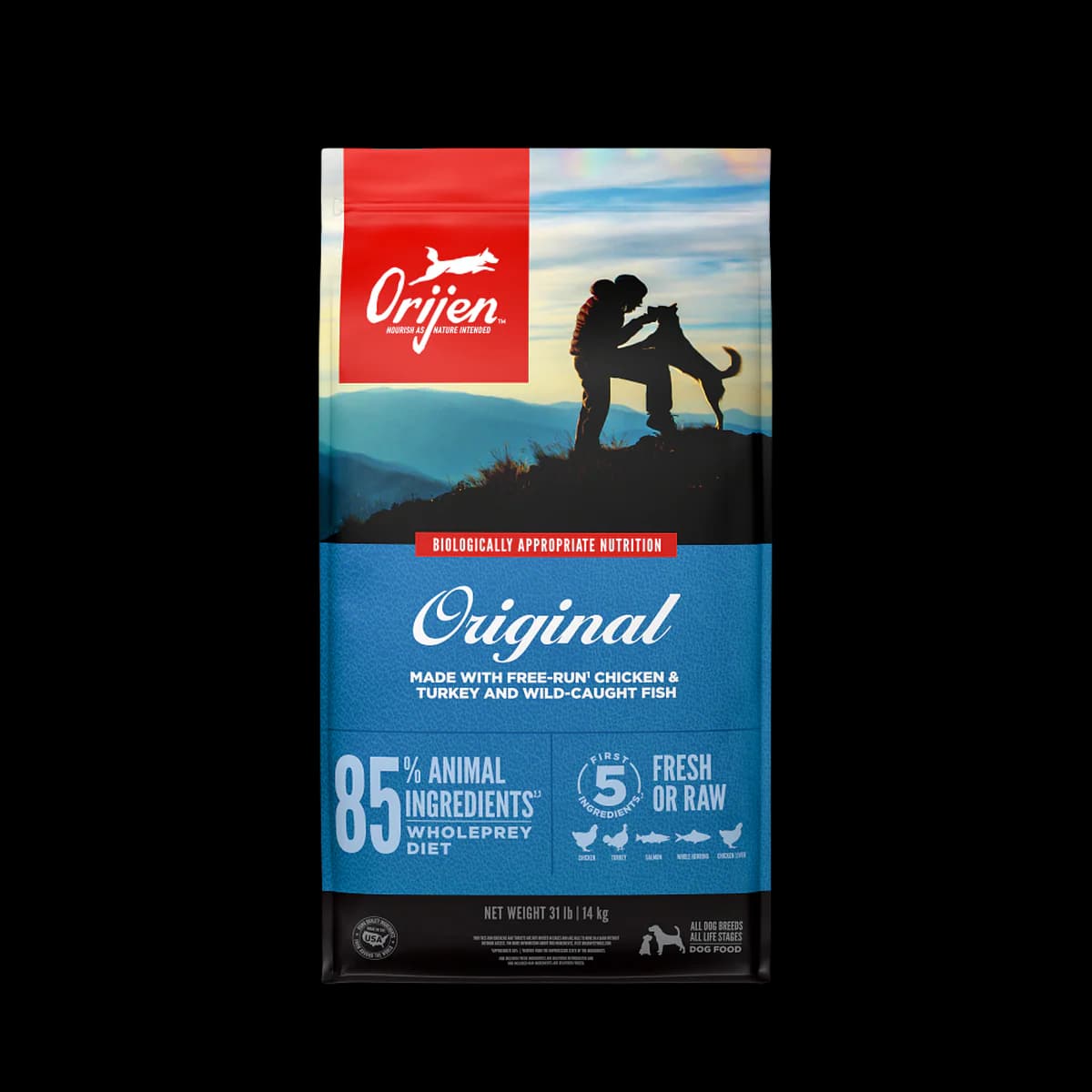
ORIJEN
Original Grain-Free High-Protein
ORIJEN Original earns 8.3/10: the first 11 ingredients are all animal, protein hits 38% as fed, and no US recall is on record. Trade-offs: premium price, six legumes in a grain-free design, 473 kcal per cup. Best for active adult dogs; skip it for sedentary or overweight ones.
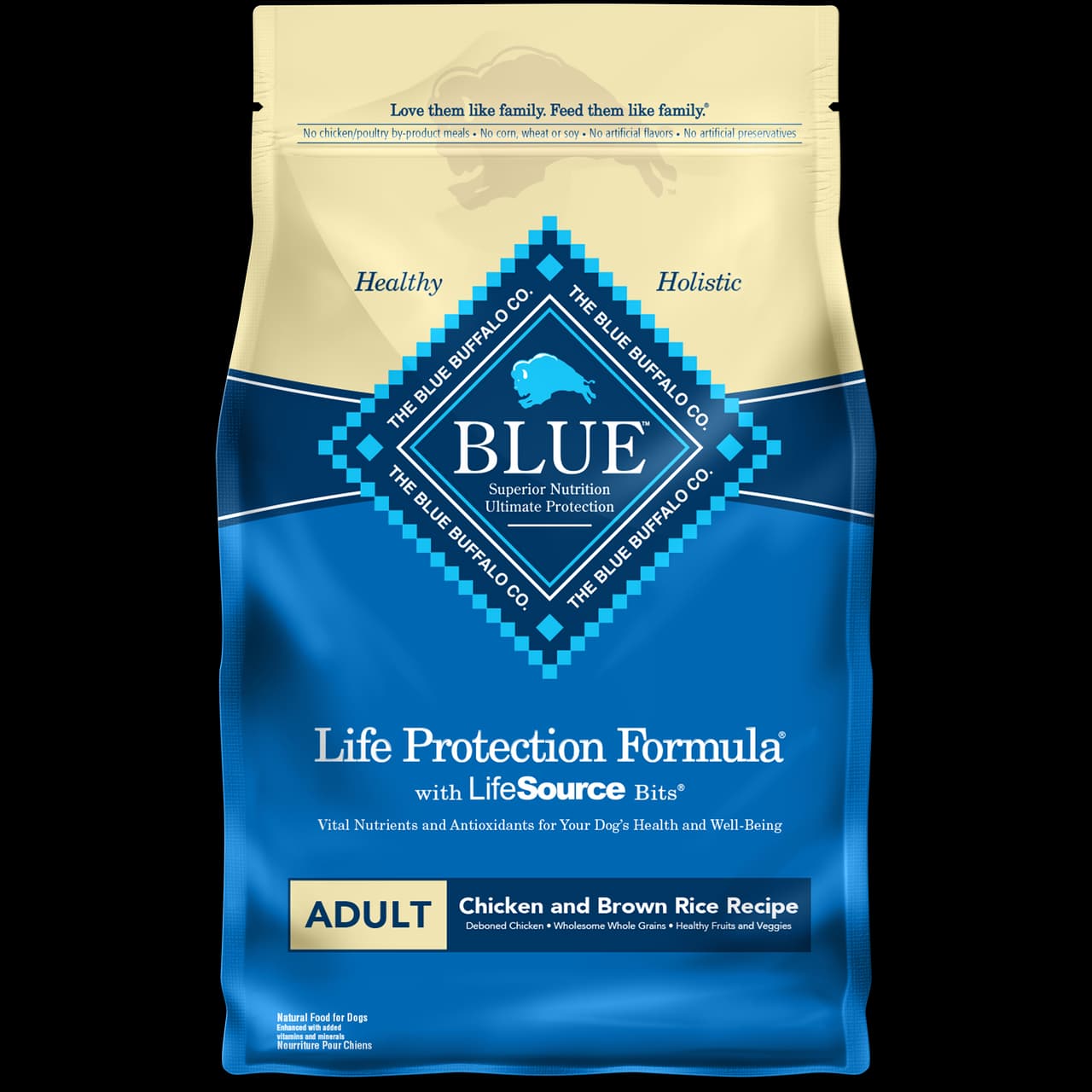
Blue Buffalo
Life Protection Formula Adult Chicken & Brown Rice
A genuinely strong grain-inclusive kibble led by real deboned chicken at a fair mid-tier price, scoring 8.1/10, with a single legume flag and a recall history worth knowing.
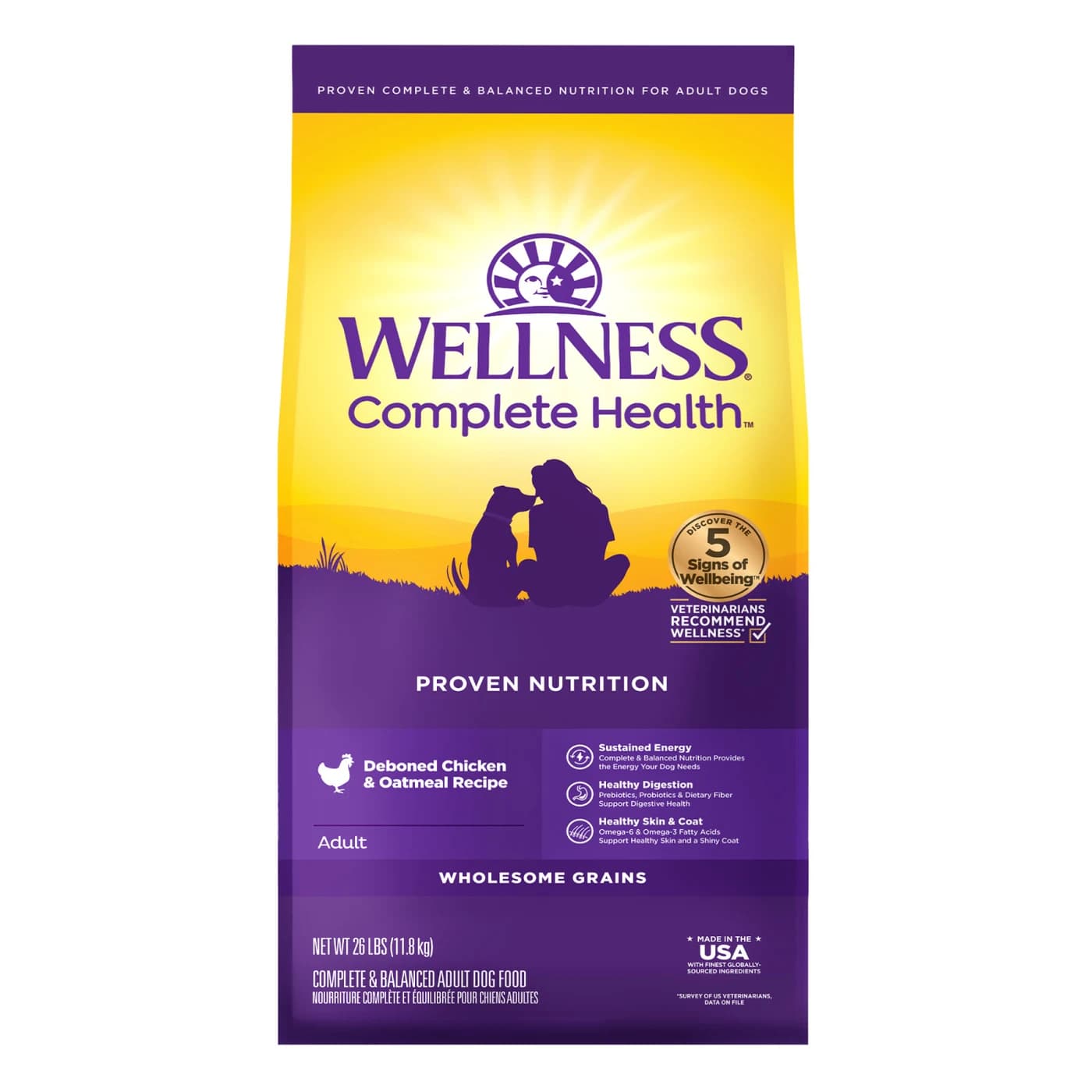
Wellness
Complete Health Adult Deboned Chicken & Oatmeal
The sensible middle of the premium aisle: chicken and chicken meal lead a grain-inclusive deck, and the panel guarantees probiotics, taurine, glucosamine and omegas that most rivals only imply. Watch the 427 kcal/cup calorie density and the vague sourcing story. 7.8/10.
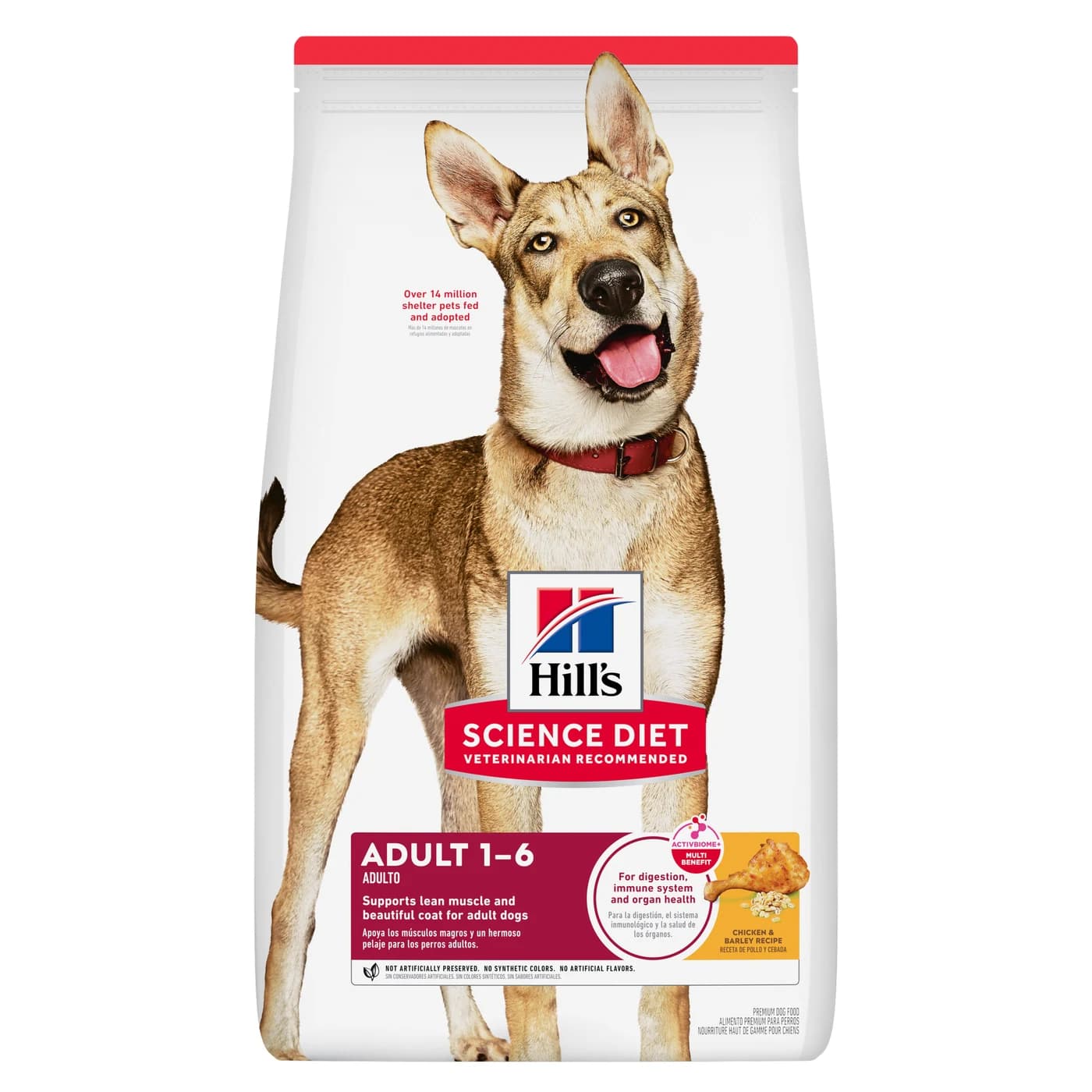
Hill's Science Diet
Adult Chicken & Barley Recipe
A vet-channel adult-maintenance kibble with gold-standard AAFCO feeding-trial backing and elite brand integrity, held back by a grain-heavy, soy-flagged ingredient deck and leaner-than-average protein.
Jump to Section
Specifications
- Brand
- ACANA
- Manufacturer
- Champion Petfoods (Mars Petcare), DogStar Kitchens, Kentucky
- Made In
- USA
- Food Form
- dry
- Life Stage
- all life stages
- Price
- $3.20/lb
Don't Guess When It Comes To Your Pet's Care
Sign up for expert-backed reviews and safety alerts all in one place.