Hill's Science Diet Dog Food Review: Adult Chicken & Barley (2026)
Our vet rates Hill's Science Diet Adult Chicken & Barley 7.8/10. See the WSAVA-backed science, the grain and soy ingredient flags, and who it is for.


Veterinarian · BVMS, MRCVS
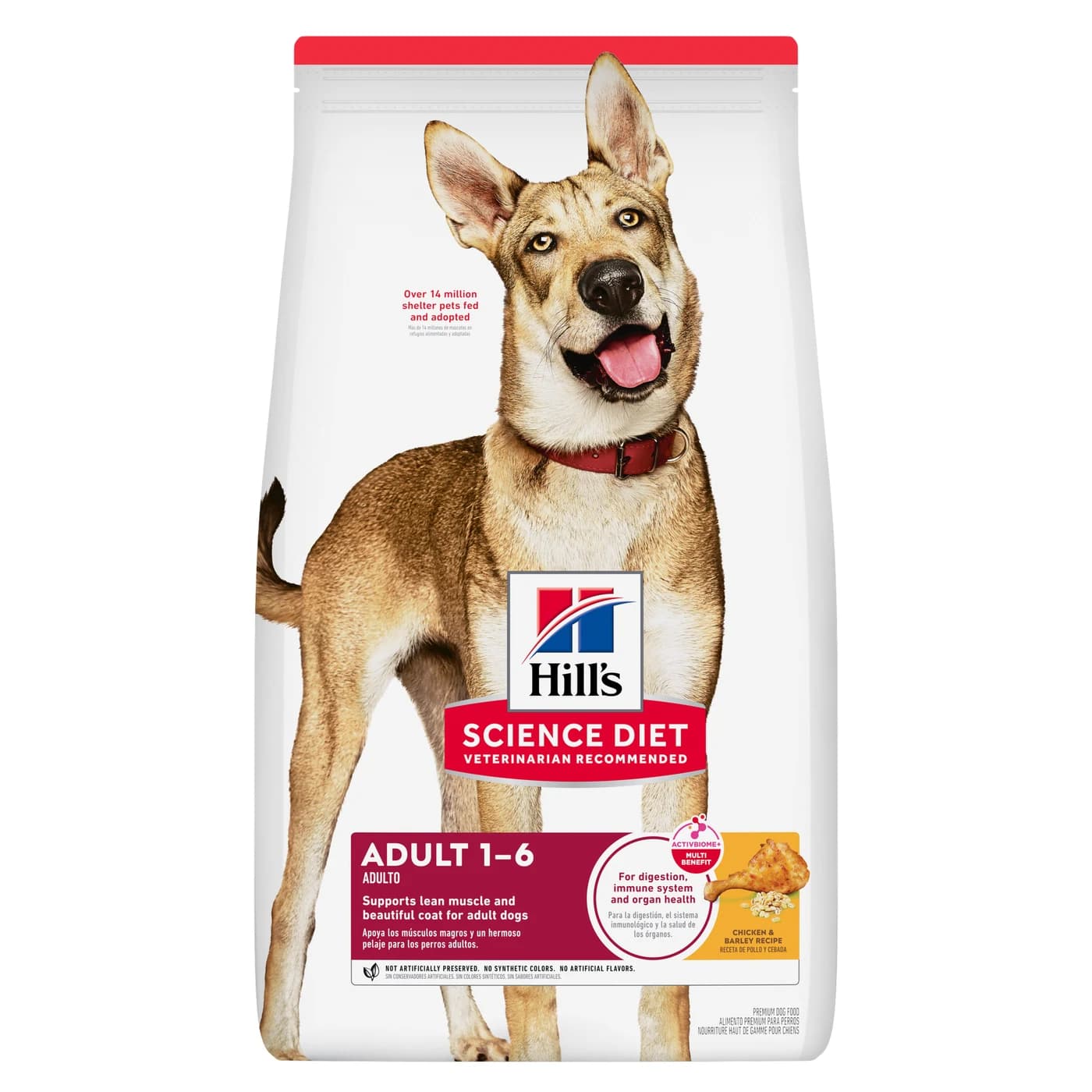
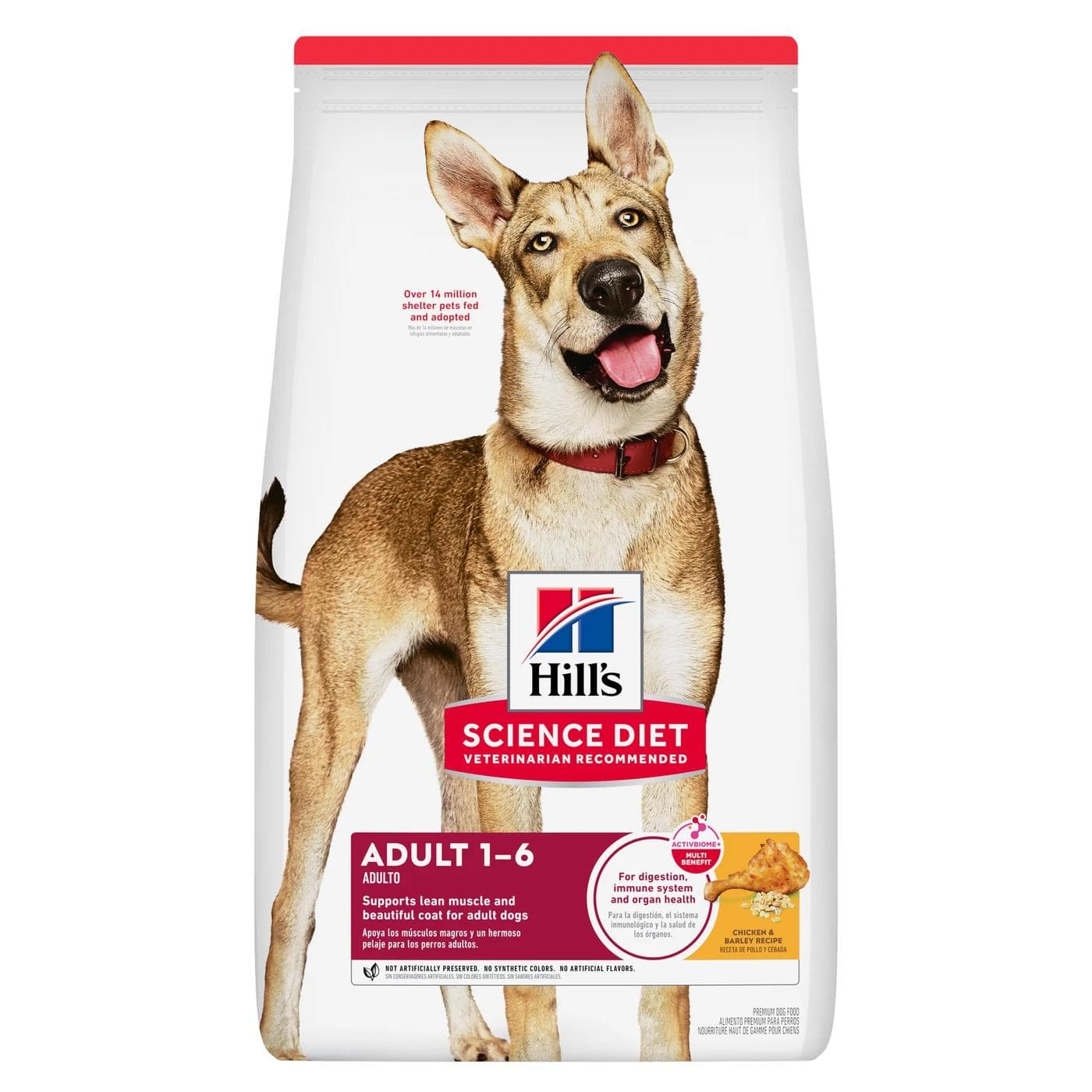
Hill's Science Diet
Adult Chicken & Barley Recipe
A vet-channel adult-maintenance kibble with gold-standard AAFCO feeding-trial backing and elite brand integrity, held back by a grain-heavy, soy-flagged ingredient deck and leaner-than-average protein.
Petful is reader supported. As an affiliate of platforms like Amazon and Chewy, we may earn a commission when you buy through links on this page.
Quick Verdict
A vet-channel adult-maintenance kibble with gold-standard AAFCO feeding-trial backing and elite brand integrity, held back by a grain-heavy, soy-flagged ingredient deck and leaner-than-average protein.
Score Breakdown
Tap any (i) for sourcesPros
- Backed by AAFCO feeding trials
- PhD veterinary nutritionists on staff
- Meets WSAVA guidelines
Cons
- Contains soybean meal and soybean oil
- Heavy grain content
- Not grain-free
- 1This Hill's Science Diet dog food review puts the Adult Chicken & Barley recipe through Petful's six-point dry-food scorecard, and it lands at 7.8 out of 10.
- 2That is a "Good" tier result built on two very different halves: an almost perfect record on science and brand integrity, and a much weaker showing on raw ingredient quality.
- 3- Score breakdown: Strong on nutritional adequacy (9.0/10) and brand integrity (9.7/10), held back by ingredient quality (4.8/10).
- 4- The headline strength: the recipe is substantiated by AAFCO feeding trials, not just a spreadsheet formulation, and Hill's employs PhD and board-certified veterinary nutritionists in-house.
Hill's Science Diet Dog Food Review: Our 7.8/10 Scorecard
Petful scores every dry dog food on six weighted dimensions, and this Hill's Science Diet dog food review is no exception. Here is exactly how the Adult Chicken & Barley recipe earned its 7.8.
- Nutritional Adequacy (25% weight): 9.0/10. Complete and balanced for adult maintenance, substantiated by AAFCO feeding trials.
- Ingredient Quality (20% weight): 4.8/10. Named chicken leads, but grains dominate the top of the list and two soy ingredients draw red flags.
- Sourcing & Transparency (20% weight): 7.9/10. Hill's publishes sourcing standards and owns its manufacturing, though not every ingredient is farm-to-bowl traceable.
- Scientific & Brand Integrity (15% weight): 9.7/10. One of the highest brand-integrity scores in our database, earned through on-staff nutritionists, feeding trials, and published research.
- Palatability & Transparency (15% weight): 8.5/10. Clear labeling, well-documented guaranteed analysis, and strong real-world acceptance.
- Environmental Responsibility (5% weight): 6.5/10. Stated sustainability commitments, with room to improve on full supply-chain disclosure.
The math is what makes this food interesting. A 4.8 on ingredients would sink a lot of brands, but the elite scores on adequacy and integrity pull the weighted average back up to a respectable 7.8. In other words, this is a food that is built and tested better than it reads on the back of the bag.

Is Hill's Science Diet Good for Dogs?
Yes, Hill's Science Diet Adult Chicken & Barley is a good food for most healthy adult dogs, with one honest caveat. It is one of the few mainstream brands that meets the World Small Animal Veterinary Association's recommendations for choosing a pet food, and its adult formulas are validated through AAFCO feeding trials rather than formulation alone. The caveat is ingredient quality: the recipe leans heavily on grains and includes soy, so it will not satisfy owners chasing a meat-first label.
That tension is exactly why so many pet parents search for an honest take. The bag carries a veterinary halo and a premium-ish price, yet the ingredient list reads more modestly than boutique competitors that cost the same or less. Both things are true at once, and a good review has to hold them together instead of picking a side.
See the current Chewy price and available bag sizes.
Petful may earn a commission when you click through to Chewy, at no extra cost to you.
This is a food that is built and tested better than it reads on the back of the bag.
Here is the framing we use throughout this review. There are two separate questions hiding inside "is it good?" The first is whether the food is nutritionally sound and safe, which is a science question. The second is whether the ingredients are premium, which is a quality and value question. Hill's wins the first decisively and loses the second to pricier, meatier rivals.
What Makes This Recipe Different: The WSAVA Test
The single biggest differentiator for Hill's is not an ingredient. It is the company behind the bag and the way the food is validated.
The WSAVA test, in plain terms. The World Small Animal Veterinary Association recommends that pet owners choose a brand that employs a full-time qualified nutritionist (a PhD in animal nutrition or a board-certified veterinary nutritionist), owns its manufacturing plants, runs AAFCO feeding trials, and publishes peer-reviewed research. Hill's checks all four boxes. That is why this recipe earns a 9.7/10 for brand integrity, among the highest in our dry-dog-food database.
Most pet food companies "formulate to meet" AAFCO nutrient profiles. That means a recipe is shown on paper to hit minimum nutrient levels. AAFCO recognizes a second, more rigorous path: an actual feeding trial in which dogs eat the food for a defined period while their health is monitored (AAFCO, "Understanding Pet Food").
Feeding trials are widely regarded by veterinary nutritionists as the gold standard because they test whether the nutrients in the bowl are actually digestible and bioavailable, not just present. Hill's Science Diet Adult Chicken & Barley is substantiated this way: the bag's AAFCO statement reads that "animal feeding tests using AAFCO procedures substantiate" that the recipe provides complete and balanced nutrition for adult maintenance (Hill's Science Diet Adult Chicken & Barley product page).
- This recipe's AAFCO statement is the feeding-trial version: dogs actually ate the food for a defined period while their health was monitored. Most brands only show on paper that a recipe hits minimum nutrient levels.
This is also where the "do vets recommend Hill's Science Diet" question gets answered. Veterinarians tend to recommend brands that meet the WSAVA selection criteria because those companies invest in the research and quality control that reduce the risk of a nutritional problem (WSAVA Global Nutrition Guidelines). Hill's, Purina, and Royal Canin dominate vet recommendations for that reason, not because of marketing alone.
One practical nutritional note sets this recipe apart from its rivals: it is leaner. At 20% protein and 11.5% fat as-fed, Hill's Science Diet Adult Chicken & Barley delivers less protein and noticeably less fat than many adult kibbles, which often run 26% protein or higher. For a lower-activity adult dog prone to weight gain, that leaner profile is a feature, not a flaw.
The Ingredient Question: Grains and Two Soy Flags
This is where Hill's Science Diet adult dog food loses points, and it is worth being specific about why.
The first ingredient is chicken, a named animal protein, which is a green flag in our system. But look at what follows. Ingredients two through five are cracked pearled barley, brown rice, brewers rice, and whole grain wheat, with whole grain corn right behind at position six.
Then chicken meal (a concentrated, named protein source, and a second green flag) appears at position eight, followed by chicken fat. All told, it is a grain-inclusive recipe of chicken, whole grains, and a vitamin and mineral premix.

So four of the top five ingredients by weight are grains. That is the core reason ingredient quality scores just 4.8 out of 10. It is not that grains are dangerous or that they are "just fillers," a myth we unpack below. It is that the protein in this bag is doing a lot of plant-sourced lifting, and meat is not as dominant as the chicken-forward marketing implies.
The two genuine red flags are soybean meal (position eleven) and soybean oil (position thirteen). Soy draws a flag for two reasons. First, soy is one of the more common canine food sensitivities, so it is an ingredient we want owners of itchy or sensitive dogs to notice. Second, soy is a legume, and legumes sit at the center of an ongoing FDA safety question we cover in the next section.
- This recipe contains both soybean meal (position eleven) and soybean oil (position thirteen). Soy is one of the more common canine food sensitivities, so owners of itchy or sensitive dogs should take note before switching.
To be fair to Hill's, soybean meal is a legitimate, digestible plant protein with a complete amino acid profile, and soybean oil is a real source of omega-6 fatty acids. These are not junk ingredients. They are simply cheaper protein and fat sources than more meat would be, and that is part of how Hill's hits a mid-tier price while funding its research operation. If you want the meat-forward, ingredient-scrutiny end of the market instead, our look at premium kibble and ingredient scrutiny shows how the boutique tier is judged on the same lens.
Ingredient Analysis
Named whole-protein source in top 5
Concentrated named-species protein meal
Full Ingredient List (from label)
Chicken, Whole Grain Wheat, Whole Grain Sorghum, Whole Grain Corn, Cracked Pearled Barley, Chicken Meal, Pork Fat, Soybean Oil, Oat Meal, Soybean Meal, Flaxseed, Dicalcium Phosphate, Lactic Acid, Iodized Salt, Potassium Chloride, Choline Chloride, vitamins (Vitamin E Supplement, L-Ascorbyl-2-Polyphosphate, Niacin Supplement, Thiamine Mononitrate, Vitamin A Supplement, Calcium Pantothenate, Riboflavin Supplement, Biotin, Vitamin B12 Supplement, Pyridoxine Hydrochloride, Folic Acid, Vitamin D3 Supplement), Taurine, minerals (Ferrous Sulfate, Zinc Oxide, Copper Sulfate, Manganous Oxide, Calcium Iodate, Sodium Selenite), Mixed Tocopherols for freshness, Natural Flavors
Reading the Macros: Leaner Protein and Lower Fat
Guaranteed analysis only tells you part of the story, because it is reported "as-fed," with moisture still in the food. To compare foods fairly you convert to a dry-matter basis and a caloric (metabolizable energy) basis. Here is the full picture for Hill's Science Diet Adult Chicken & Barley.
A vet-channel adult-maintenance kibble backed by AAFCO feeding trials. Leaner protein and fat than many competitors at a comparable price.
Petful may earn a commission when you click through to Chewy, at no extra cost to you.
- Guaranteed analysis (as-fed): 20% crude protein, 11.5% crude fat, 4% crude fiber, 10% moisture, plus 2.5% omega-6 fatty acids and added vitamin E (400 IU/kg) and vitamin C (85 mg/kg).
- Dry matter basis: with moisture removed, the recipe works out to roughly 22.2% protein, 12.8% fat, 4.4% fiber, and about 53.9% carbohydrates. That carbohydrate figure is high, which is the direct consequence of those four top-five grains.
- Metabolizable energy (share of usable calories): about 20.7% of calories from protein, 29.0% from fat, and 50.3% from carbohydrates. Just over half the energy in this food comes from carbohydrate, and a bit under a third comes from fat.
What does that mean for a real dog? This is a moderate-protein, moderate-fat, carbohydrate-forward maintenance diet. It is well suited to a typical adult companion dog with average activity, and the leaner protein and fat make it a sensible pick for dogs that gain weight easily. It is not built for a sporting dog, a working dog, or a young, high-drive adult that burns through calories, which is where a higher-protein formula earns its keep.
- The leaner profile (20% protein, 11.5% fat as-fed) makes this a sensible choice for adult dogs of average or lower activity that gain weight easily. Sporting, working, and high-drive dogs need a higher-protein formula instead.
The 2.5% omega-6 fatty acid minimum, supported by added vitamin E, is a small but genuine plus for skin and coat maintenance in adult dogs, though it is a lighter, maintenance-level amount rather than the elevated doses you will find in skin-and-coat-targeted formulas. If you are comparing this extruded kibble against minimally processed options, our take on whether is fresh pet good for dogs walks through how cooking method changes the nutritional conversation.

Nutritional Analysis
| Nutrient | As-Fed (GA) | Dry Matter |
|---|---|---|
| Crude Protein | 20% min | 22.2% |
| Crude Fat | 11.5% min | 12.8% |
| Crude Fiber | 4% max | 4.4% |
| Moisture | 10% max | — |
| Carbohydrates (est.) | — | 54.3% |
Energy Distribution
Metabolizable Energy (ME) by macronutrient
Processing Method
Who It's For (and Who It's Not For)
Matching the food to the dog matters more than any single score. Here is our honest read on fit.
It's a strong fit for:
- Healthy adult dogs of average activity.
- Dogs whose owners specifically want a vet-recommended and feeding-trial-backed diet.
- Multi-dog households that value consistency and wide availability.
- Owners managing a dog's weight who benefit from the leaner protein and fat profile.
- Owners who trust the veterinary channel and want science over marketing.
It's not the right pick for:
- Dogs with a known or suspected soy sensitivity, because the recipe contains both soybean meal and soybean oil.
- Grain-free households, or owners who want meat as the clear majority of the bag.
- High-performance dogs that need 26% protein or more.
- Puppies and pregnant or nursing dogs, which need a growth or all-life-stages formula, not this adult-maintenance recipe.
Hill's makes a separate Sensitive Stomach & Skin line for digestive and skin issues, but this particular Chicken & Barley recipe is a general adult-maintenance formula, not a sensitivity diet, so a dog reacting to soy or another ingredient here should be moved to a different recipe under veterinary guidance.

If kibble itself is what you are reconsidering, it is worth weighing fresh-food alternatives to kibble for the "who it's not for" crowd, since the trade-off there is higher cost and refrigeration in exchange for minimal processing.
Is Hill's Science Diet Adult Chicken & Barley Grain-Free? The FDA DCM Context
No, this recipe is decidedly not grain-free, and that is actually a point in its favor right now.
In June 2019 the U.S. Food and Drug Administration published an update naming the dog-food brands most frequently reported in cases of canine dilated cardiomyopathy (DCM), a serious heart condition. The cases skewed heavily toward grain-free diets that used peas, lentils, and other legumes as main ingredients (FDA, "FDA Investigation into Potential Link between Certain Diets and Canine Dilated Cardiomyopathy"). The agency has been careful to say it has not established a causal link, and it has not issued a recall over DCM. As of its later communications, the FDA noted it did not have enough new data to provide a further public update.
Because Hill's Science Diet Adult Chicken & Barley is a grain-inclusive recipe built on barley, rice, wheat, and corn, it sits outside the central pattern the FDA flagged. That is a meaningful safety reassurance for owners who have followed the DCM story and want to avoid a legume-heavy grain-free formula.
- Use the FDA's DCM findings as the starting point for a conversation with your own vet. This grain-inclusive recipe sits outside the central pattern the FDA flagged, but your vet should make the final diet call.
Compare today's Chewy price, deals, and shipping.
Petful may earn a commission when you click through to Chewy, at no extra cost to you.
There is a nuance worth stating plainly, because we flag soy in this very recipe. Soy is a legume, and our scorecard downgrades it. But the FDA's signal centered on pulses such as peas and lentils used as primary ingredients in grain-free diets, not on soy used in a grain-inclusive food.
The presence of soybean meal at position eleven does not put this recipe in the high-concern grain-free DCM category. If your dog has any heart history, the American Veterinary Medical Association's reporting on the FDA's DCM investigation is a useful starting point for a conversation with your own vet.
Why Are Grains Like Barley, Wheat and Corn So High? Grains Are Not Just Fillers
The most persistent myth in dog food is that grains are cheap filler with no nutritional value. That is not what the science says.
Whole grains like barley, rice, and corn provide digestible carbohydrate for energy, plus fiber, B-vitamins, and some protein. Healthy dogs digest cooked grains efficiently, and true grain allergies are uncommon compared with reactions to animal proteins. Corn, despite its bad reputation, is a digestible source of energy, linoleic acid, and antioxidants when properly cooked.
Grains earn their place; they just take up more of this bag than premium shoppers want.
So why do they rank so high here? Barley is the second ingredient, just behind chicken, and rice, wheat, and corn fill out most of the rest of the top of the list. Hill's formulated this recipe to a specific nutrient and calorie target at a specific price, and grains are an efficient, consistent way to hit those numbers.
The honest critique is not that the grains are harmful. It is that a meat-forward dog would rather see more animal protein and fewer plant carbohydrates at the top of the list, and at $2.49 per pound there are competitors that deliver exactly that.
That is the balanced verdict on the ingredient deck: nutritionally sound and digestible, but plant-heavy in a way that costs real points on quality. Grains earn their place; they just take up more of this bag than premium shoppers want.
How It Compares: Royal Canin and Purina Pro Plan
The three brands vets recommend most often are Hill's, Royal Canin, and Purina Pro Plan, and they share a philosophy. All three employ qualified nutritionists, own their plants, and use feeding trials. They differ on ingredient strategy and macros. Figures below are each manufacturer's published guaranteed analysis and vary by specific recipe.

How It Compares At a Glance
| Food | Price/lb | First Ingredient | Protein / Fat (as-fed) | Petful Notes |
|---|---|---|---|---|
| Hill's Science Diet Adult Chicken & Barley | $2.49 | Chicken | 20% / 11.5% | Leaner macros; AAFCO feeding trials; grain-inclusive; two soy flags |
| Royal Canin Adult (typical dry) | ~$2.90 | Often a grain or chicken by-product meal | ~23% / ~12% | Breed- and size-specific lines; precise formulation; also feeding-trial backed |
| Purina Pro Plan Adult (Chicken & Rice) | ~$2.10 | Chicken | ~26% / ~16% | Highest protein of the three; live probiotics; strong value |
The quick read: Purina Pro Plan gives you the most protein and arguably the best value, Royal Canin gives you the most precise breed- and size-specific engineering, and Hill's gives you the leanest macros plus the strongest brand-integrity record. If protein content is your priority, see how Purina Pro Plan stacks up in our full breakdown, where it edges Hill's on raw numbers.
Check availability and the latest Chewy price before you buy.
Petful may earn a commission when you click through to Chewy, at no extra cost to you.
None of the three is "best" in the abstract. Hill's wins for a weight-watching adult dog and an owner who values the research pedigree. Purina wins for an active dog that needs more protein per dollar. Royal Canin wins when a specific breed, size, or therapeutic need calls for a tailored formula.
Recalls & Brand Integrity: What the Complaints Actually Say
A fair review has to address the recall question head-on, because it drives a lot of the online complaints.
Hill's most significant recent recall was in 2019, when the company voluntarily recalled certain canned (wet) dog foods due to elevated vitamin D, which can be toxic at high levels. The issue was traced to a vitamin premix supplier error, and the FDA documented the recall and Hill's corrective action (FDA recall notice). It was a serious event that generated lawsuits and lasting consumer frustration, which is why you still see it referenced in "Hill's dog food complaints" searches years later.
- The 2019 vitamin D recall involved canned (wet) products, not the dry Science Diet kibble reviewed here. There has been no recent dry-SKU recall for this line.
Two facts keep it in context. First, the 2019 recall involved canned products, not the dry Science Diet kibble reviewed here, and there has been no recent dry-SKU recall for this line. Second, the response, a voluntary recall, a traced root cause, and a published correction, is the kind of transparency the WSAVA criteria reward. A brand that owns its plants and investigates failures publicly is generally a safer long-term bet than one that outsources and stays quiet.
That is the brand-integrity story in full: a real recall in the company's history, handled openly, against a backdrop of feeding trials, on-staff nutritionists, and published research that very few competitors match. It is the reason this recipe scores 9.7/10 on integrity even after the recall is accounted for.
The Verdict
Hill's Science Diet Adult Chicken & Barley earns 7.8 out of 10, and it is one of the clearest "buy it for what it is, not what it isn't" foods we score. What it is: a feeding-trial-validated, vet-recommended, leaner-than-average maintenance kibble from the most research-credentialed brand in the category. What it isn't: a meat-forward, premium-ingredient bag.
- You are paying a mid-tier price for a feeding-trial-validated, vet-recommended diet from the most research-credentialed brand in the category. At that same price point, meat-forward competitors put more animal protein at the top of the list.
If you have a healthy adult dog of average activity, value the veterinary research pedigree, and want a safe, consistent, grain-inclusive maintenance diet at a fair price, this is a defensible, evidence-backed choice. The science behind the bowl is genuinely excellent.
If you are shopping primarily on ingredient quality, want higher protein, or are avoiding soy and grains, your money goes further elsewhere. For budget shoppers weighing value tiers, our rundown of budget kibble options covers cheaper picks that still clear the safety bar. The right answer depends on which question matters more to you: how the food is made and tested, or what is in it.
- Substantiated by AAFCO feeding trials, the gold-standard adequacy method, not formulation alone
- PhD and board-certified veterinary nutritionists on staff; meets all four WSAVA selection criteria (brand integrity 9.7/10)
- Grain-inclusive recipe sits outside the FDA's grain-free DCM concern pattern
- Named chicken is the first ingredient, with chicken meal as a concentrated second protein
- Moderate protein (20%) and lean fat (11.5%), a real plus for weight-prone, lower-activity adults
- Added glucosamine (300 mg/kg) for joint maintenance
- Widely available and vet-channel recommended at a mid-tier $2.49 per pound
- Ingredient quality scores just 4.8/10: four of the top five ingredients are grains
- Two soy red flags (soybean oil and soybean meal), a common sensitivity and a legume
- At 20% protein as-fed, on the leaner side for very active, working, or high-drive dogs
- Carbohydrate-forward, with about 48.8% of calories from carbohydrate
- Contains corn, wheat, and soy, so it is wrong for sensitive-stomach or grain-free households
- Sourcing is good but not fully farm-to-bowl traceable (7.9/10)
- A 2019 canned-line vitamin D recall remains in the brand's recent history
It is good for most healthy adult dogs, not bad. Hill's Science Diet Adult Chicken & Barley scores 7.8/10 in our system, with elite marks for nutritional adequacy (9.0) and brand integrity (9.7), offset by a lower ingredient-quality score (4.8) driven by grains and soy. It is nutritionally sound and feeding-trial validated; the main knock is ingredient premiumness, not safety.
Yes. Veterinarians frequently recommend Hill's because it meets the WSAVA criteria for a trustworthy brand: it employs qualified nutritionists (PhD and board-certified), owns its manufacturing, runs AAFCO feeding trials, and publishes research. Those quality-control investments lower the risk of a nutritional problem, which is the same reason Purina Pro Plan and Royal Canin are also vet favorites.
Hill's, Purina, and Royal Canin are consistently the most veterinary-recommended brands, and which sits at "number one" depends on the survey and the region. All three meet the WSAVA selection criteria. There is no single official ranking, so the honest answer is that Hill's is among the top recommended brands rather than the undisputed number one.
No, it is not grain-free; it is built on barley, rice, wheat, and corn. The FDA's 2019 DCM investigation focused on grain-free diets high in peas and lentils, so this grain-inclusive recipe sits outside that central concern. The FDA has not established a causal link or issued a DCM recall. The recipe does contain soy, which we flag, but soy was not the primary ingredient pattern the FDA highlighted.
Grains are not just fillers. Whole grains provide digestible energy, fiber, B-vitamins, and some protein, and healthy dogs digest cooked grains well. They rank high here because barley is the second ingredient and rice, wheat, and corn follow close behind, and because Hill's formulated the recipe to specific nutrient and price targets that grains hit efficiently. The fair critique is that the food is more plant-forward than premium shoppers want, not that the grains are harmful.
Yes. In 2019 Hill's voluntarily recalled certain canned dog foods because of elevated vitamin D traced to a supplier premix error, documented by the FDA. That recall involved canned products, not the dry Science Diet kibble reviewed here, and there has been no recent dry-SKU recall for this line. The transparent, traced response is part of why the brand still scores well on integrity.
All three are vet-recommended, feeding-trial-backed brands that meet WSAVA criteria. Purina Pro Plan typically offers the most protein (around 26%) and strong value; Royal Canin offers the most breed- and size-specific precision; Hill's offers the leanest macros (20% protein, 11.5% fat) and one of the strongest brand-integrity records. The best pick depends on your dog's activity level and your priorities.
It depends on what you value. Hill's has the stronger research pedigree: on-staff nutritionists, feeding trials, and published studies that Blue Buffalo has historically not matched to the same degree. Blue Buffalo often leads with more named meat and no corn, wheat, or soy in many recipes, which appeals to ingredient-first shoppers. For science and vet backing, Hill's wins; for ingredient label, Blue Buffalo often looks better.
Hyperlipidemia (high blood fat) is usually managed with a low-fat therapeutic diet prescribed by a veterinarian, not a standard adult-maintenance food. At about 11.5% fat as-fed, Hill's Science Diet Adult Chicken & Barley is moderate, not a low-fat prescription formula. Hill's and other brands make prescription low-fat diets for this condition. Always work with your vet, because hyperlipidemia can signal an underlying disorder that needs treatment beyond diet.
For the right buyer, yes. You are paying a mid-tier price for a feeding-trial-validated, vet-recommended diet from the most research-credentialed brand in the category, which is real value if science and safety are your priorities. If you judge value purely by ingredient quality, similarly priced or cheaper competitors deliver more meat and no soy, so the per-pound price is harder to justify on the label alone.
There is no single healthiest dog food, because the right diet depends on the individual dog's age, breed, activity, and health. The most defensible choices are complete-and-balanced foods substantiated by AAFCO feeding trials from brands that meet WSAVA criteria, such as Hill's, Purina Pro Plan, and Royal Canin. The healthiest food is the appropriate one your dog thrives on, confirmed by good body condition and vet checkups.
The least healthy foods are those that do not carry an AAFCO complete-and-balanced statement for your dog's life stage, lack any veterinary nutritionist oversight, and make claims without feeding-trial or formulation substantiation. Rather than naming a single brand, focus on what to avoid: no AAFCO statement, no qualified nutritionist behind the recipe, and no transparency about manufacturing or sourcing.

Sign up for expert-backed reviews and safety alerts all in one place.
Also worth considering
Strong alternatives we reviewed in the same dry dog food category.
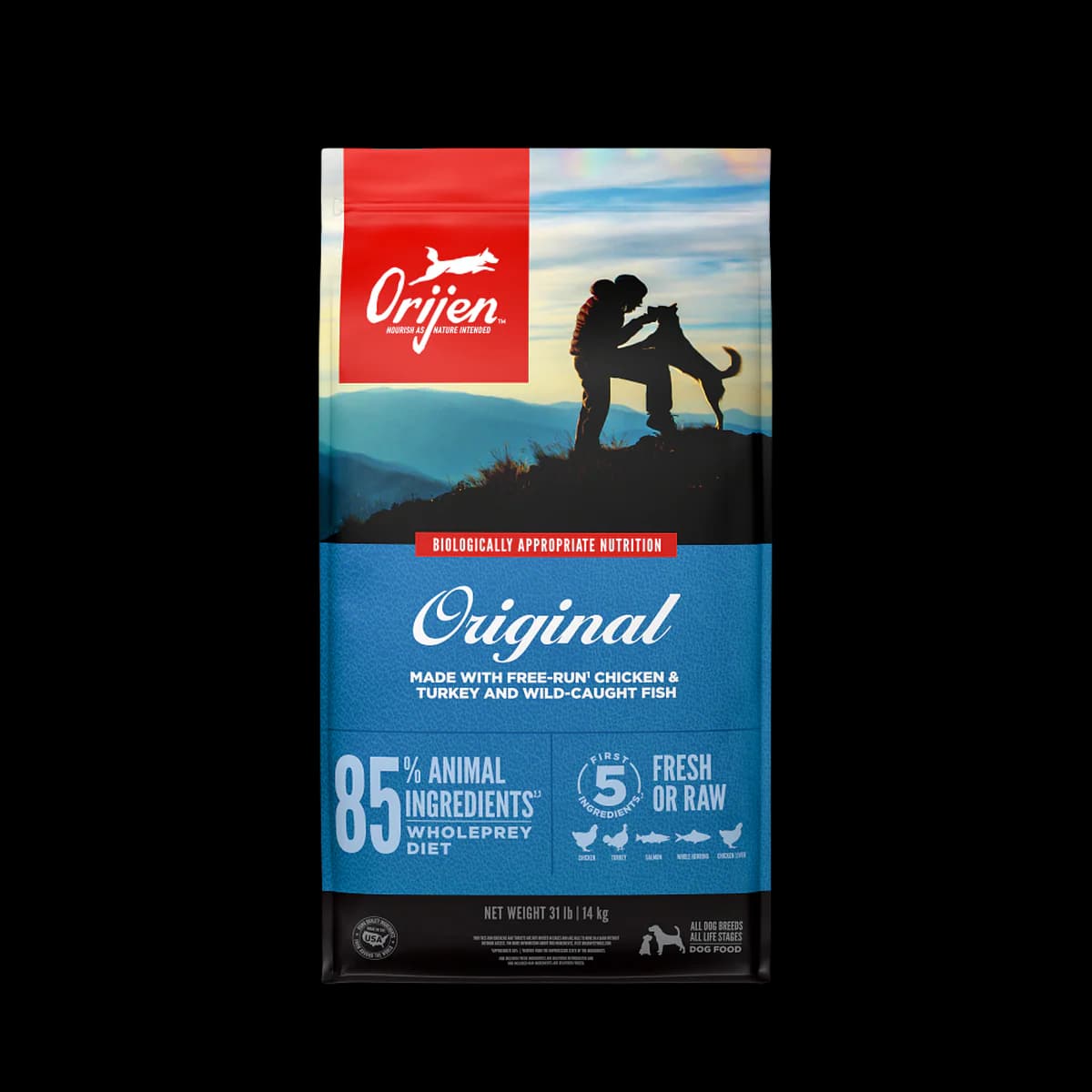
ORIJEN
Original Grain-Free High-Protein
ORIJEN Original earns 8.3/10: the first 11 ingredients are all animal, protein hits 38% as fed, and no US recall is on record. Trade-offs: premium price, six legumes in a grain-free design, 473 kcal per cup. Best for active adult dogs; skip it for sedentary or overweight ones.
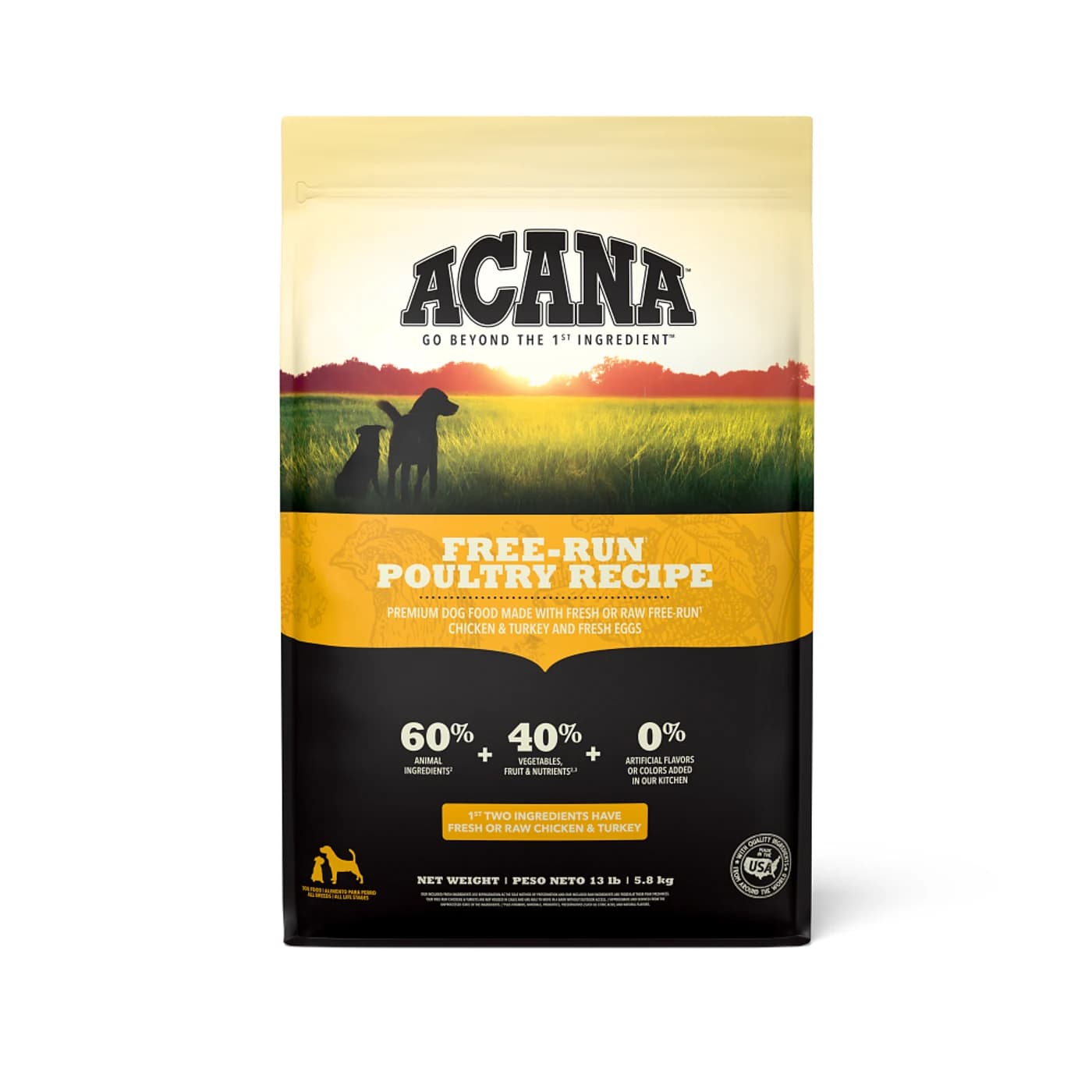
ACANA
Free-Run Poultry
ACANA Free-Run Poultry earns 8.1/10: three named poultry proteins up top, rare starch and sugar disclosure, ORIJEN's own Kentucky kitchen, and a clean US recall record at $3.20/lb. The ceiling is a legume block at positions 4-6, sitting higher in the deck than ORIJEN allows.
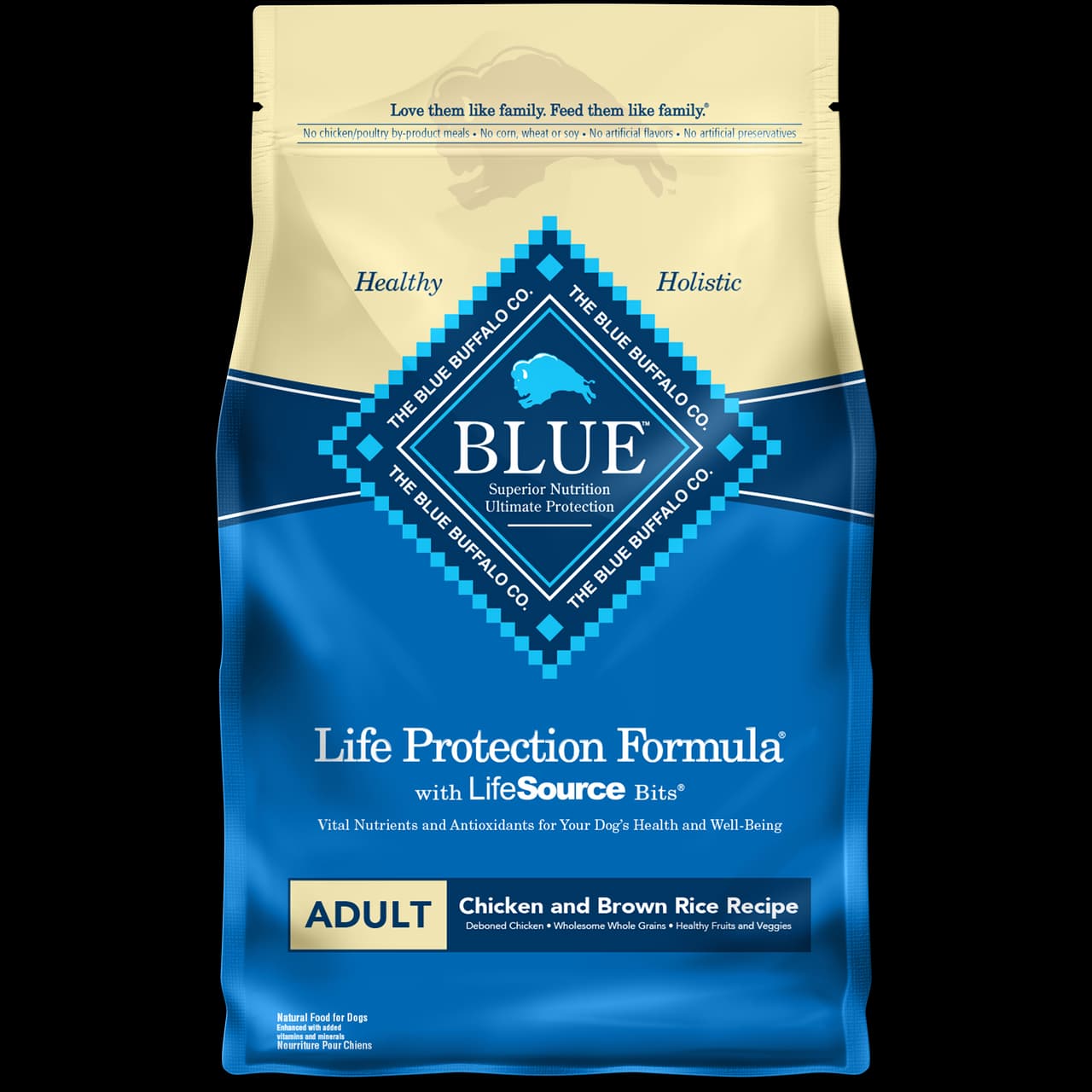
Blue Buffalo
Life Protection Formula Adult Chicken & Brown Rice
A genuinely strong grain-inclusive kibble led by real deboned chicken at a fair mid-tier price, scoring 8.1/10, with a single legume flag and a recall history worth knowing.
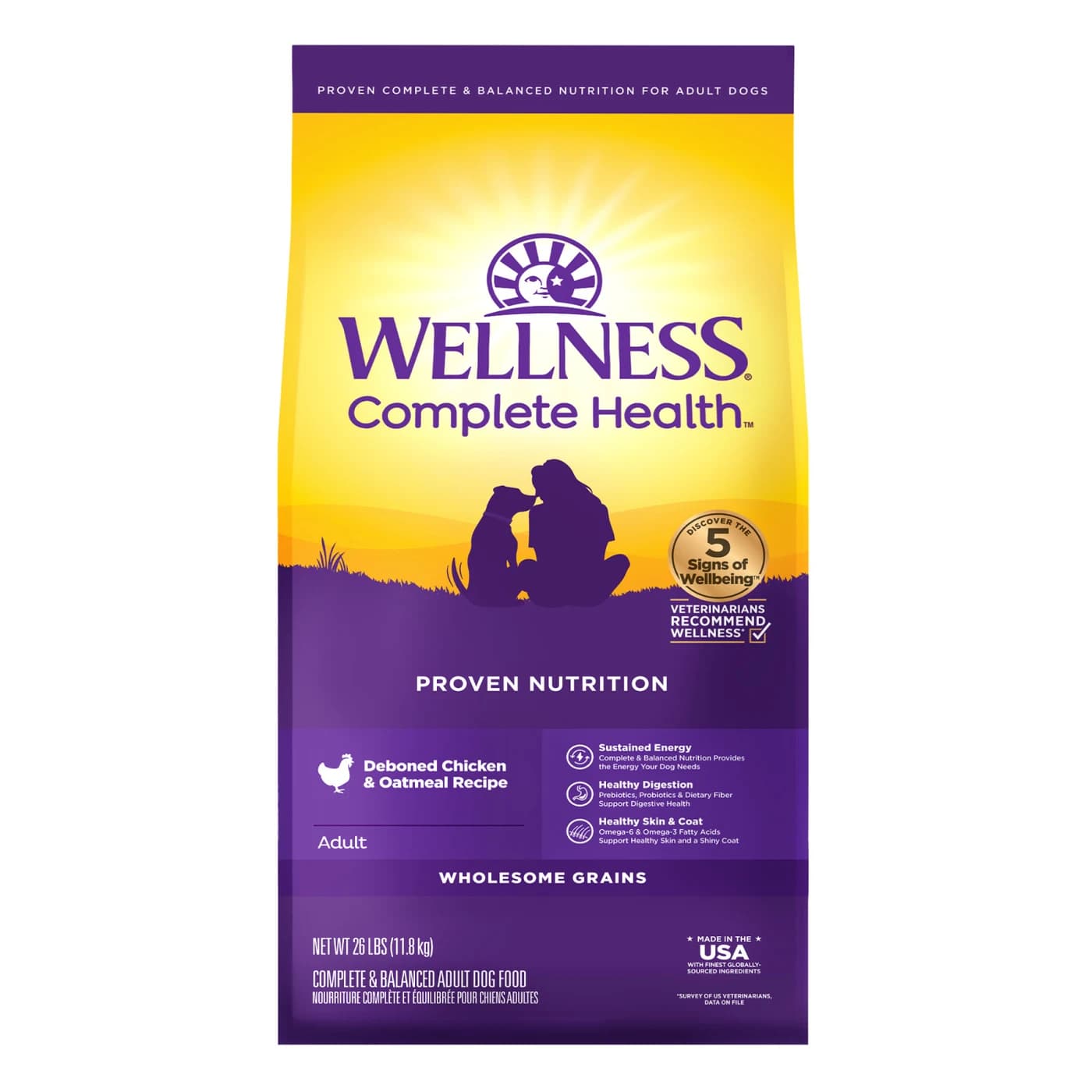
Wellness
Complete Health Adult Deboned Chicken & Oatmeal
The sensible middle of the premium aisle: chicken and chicken meal lead a grain-inclusive deck, and the panel guarantees probiotics, taurine, glucosamine and omegas that most rivals only imply. Watch the 427 kcal/cup calorie density and the vague sourcing story. 7.8/10.
Jump to Section
Specifications
- Brand
- Hill's Science Diet
- Made In
- USA
- Food Form
- dry
- Life Stage
- adult maintenance
- Price
- $2.49/lb
Don't Guess When It Comes To Your Pet's Care
Sign up for expert-backed reviews and safety alerts all in one place.