Best Cat Carriers: Our Top Picks for Every Trip
The best cat carrier depends on the trip. Compare our top picks for soft airline, hard travel-safety, backpack, and budget carriers, plus how to measure your cat and meet airline size rules.
Petful is reader supported. As an affiliate of platforms like Amazon and Chewy, we may earn a commission when you buy through links on this page. There is no extra cost to you.
A good cat carrier is one of those purchases that looks simple until you are standing in the pet aisle, staring at a dozen boxes, bags, and backpacks that all promise to keep your cat safe and calm. The frustrating truth is that there is no single best model for every cat and every trip. A carrier that is perfect for a five minute ride to the clinic can be completely wrong for a five hour flight, and the one that slides neatly under an airplane seat may be far too flimsy for a Maine Coon who fights being handled. Before you spend a dime, it helps to accept that you are not shopping for the best carrier in the abstract. You are shopping for the best carrier for the specific way you and your cat actually travel.
Here are our top four picks, each built for a different kind of trip:
- Best soft airline carrier: Sherpa Original Deluxe, $69.99, flexes to fit under the seat on most major airlines.
- Best hard travel carrier: Frisco Travel Safety Carrier, $58.99, belts into the back seat for real crash protection.
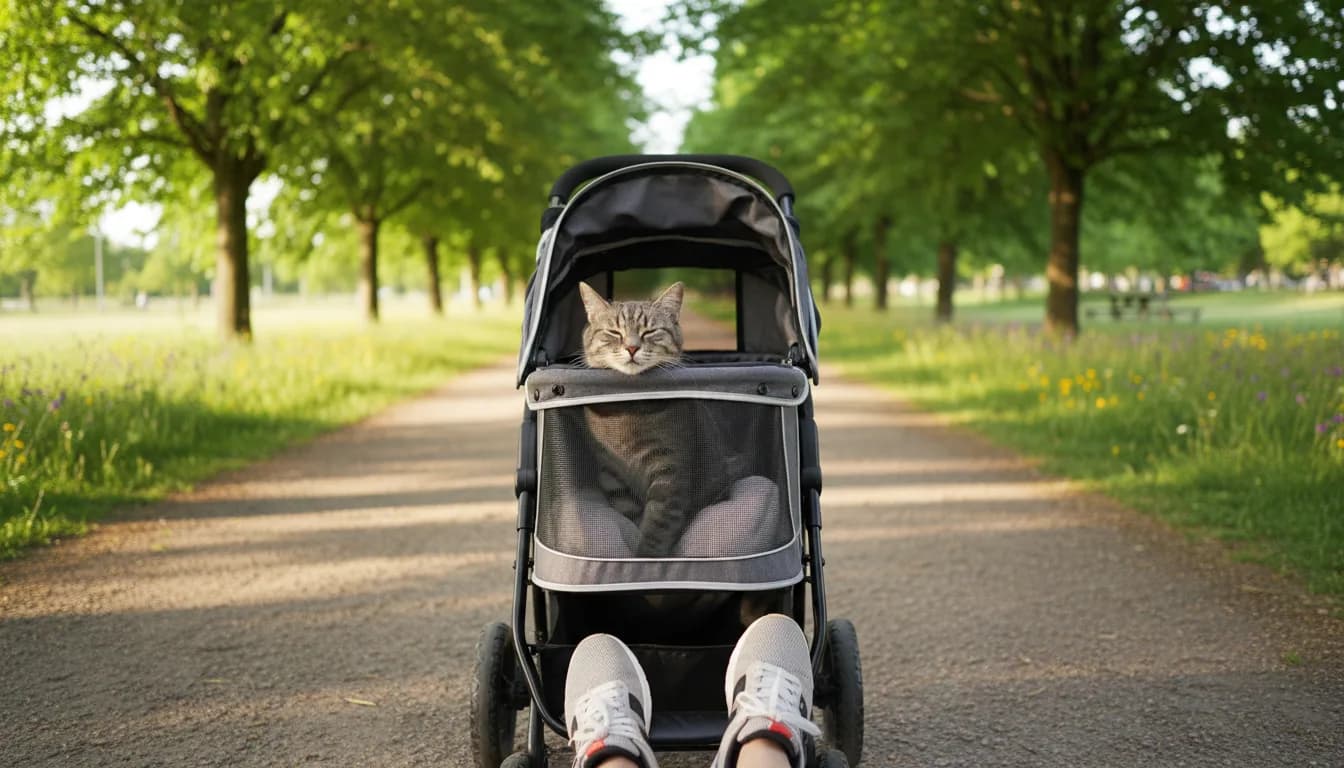
- Best backpack: PetAmi Deluxe, $39.99, hands-free with mesh panels and an interior safety tether.
- Best budget airline pick: Petsfit Airline Approved, $39.94, the under-seat essentials without the premium price.

Sign up for expert-backed reviews and safety alerts all in one place.
Our top cat carrier picks at a glance
- 1Best soft airline carrier: the Sherpa Original Deluxe flexes to fit under the seat on most major airlines.
- 2Best hard travel carrier: the Frisco Travel Safety Carrier anchors to your seat belt for real crash protection.
- 3Best backpack: the PetAmi Deluxe keeps your hands free with mesh panels and an interior safety tether.
- 4Best budget airline pick: the Petsfit Airline Approved covers the under-seat essentials for about forty dollars.
- 5Measure your cat first, then choose a carrier about one and a half times their length for comfortable standing room.
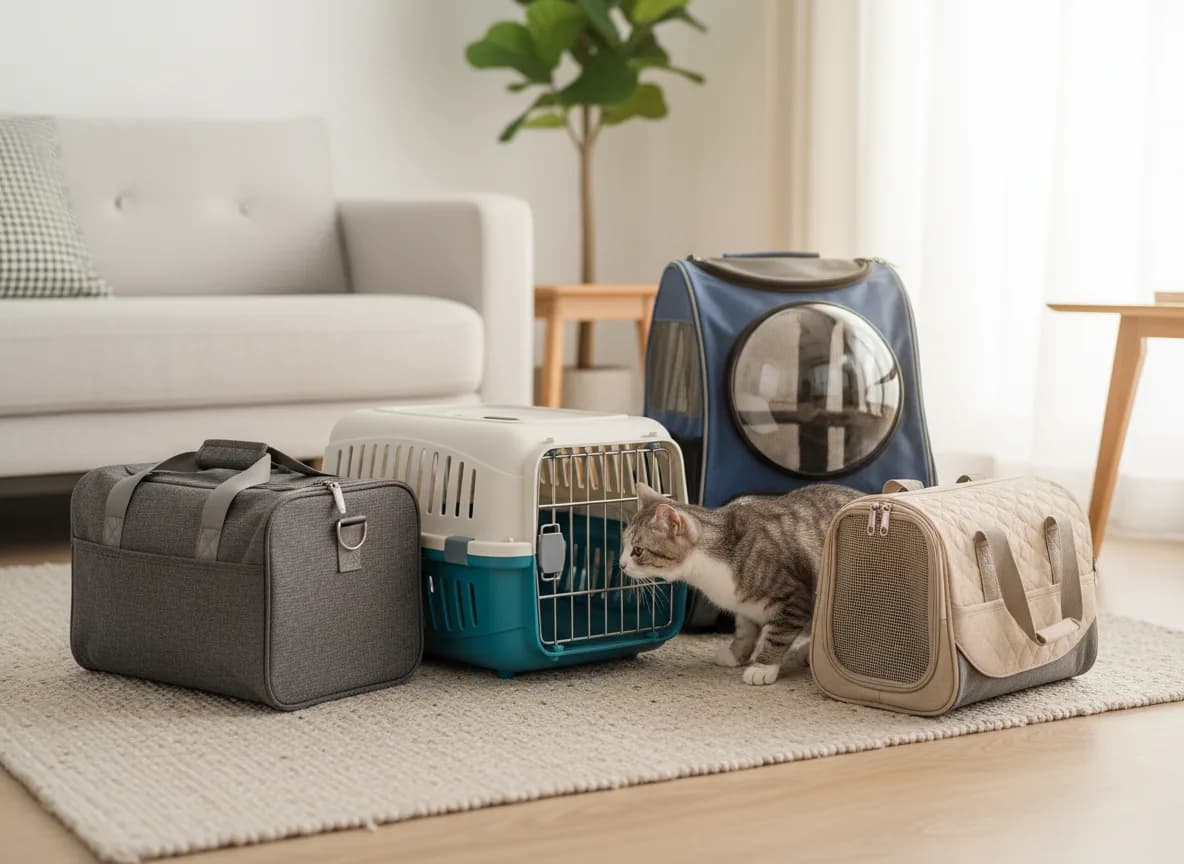
That is why we sorted this guide by need instead of by brand. Think honestly about what you will really use a carrier for, because each job rewards a different design. Annual vet visits reward a rigid shell with a top that pops off, so your veterinarian can work without dragging a scared cat through a tiny door. Air travel rewards a soft, squishable bag sized to slide under the seat in front of you and light enough to carry through a long terminal. Backcountry walks and city errands reward a ventilated backpack that frees your hands, and a tight budget rewards a no nonsense carrier that clears the airline hurdle without the premium price tag. Pick the wrong category and even an expensive carrier will disappoint you and stress your cat.
So what is the best cat carrier to buy? The honest answer is that it depends on the trip, and that is not a cop out, it is the whole point. The best cat carrier depends entirely on where you and your cat are going. For flying, a soft airline carrier that flexes to fit under the seat wins, and our pick there is the Sherpa Original Deluxe at around seventy dollars. For the car, a hard travel safety carrier that resists a crash wins, and we chose the Frisco Travel Safety Carrier at around fifty nine dollars. For hands free outings, a ventilated backpack like the PetAmi Deluxe wins for about forty dollars. And when money is tight, a budget airline carrier such as the Petsfit gets the job done for roughly forty dollars. Buy for the trip you take most often and you will never regret the purchase.
If you only make one trip a year, that trip is almost certainly to the clinic, and the best cat carrier for vet visits is a hard sided model with a removable top. When the top lifts off, your vet examines your cat right in the familiar base instead of pulling it out through a cramped front door, which lowers stress for everyone in the room and makes the whole appointment faster. If you fly a few times a year, prioritize a soft carrier sized to your specific airline instead. If you are building an outdoor routine with a confident cat, start with a backpack. Most cat parents eventually own two carriers, one sturdy box for the clinic and one soft bag or pack for everything else, and that is a completely reasonable, budget friendly way to shop.
| Pick | Type | Price | Best for |
|---|---|---|---|
| Sherpa Original Deluxe | Soft-sided airline carrier | $69.99 | Flying, plus versatile road trips and vet runs |
| Frisco Travel Safety Carrier | Hard-sided travel-safety carrier | $58.99 | Car travel, crash protection, escape artists |
| PetAmi Deluxe Backpack | Backpack carrier | $39.99 | Hands-free walks, hikes, and short outings |
| Petsfit Airline Approved | Budget soft-sided airline carrier | $39.94 | Occasional flyers on a budget |
Best soft-sided airline carrier: Sherpa Original Deluxe
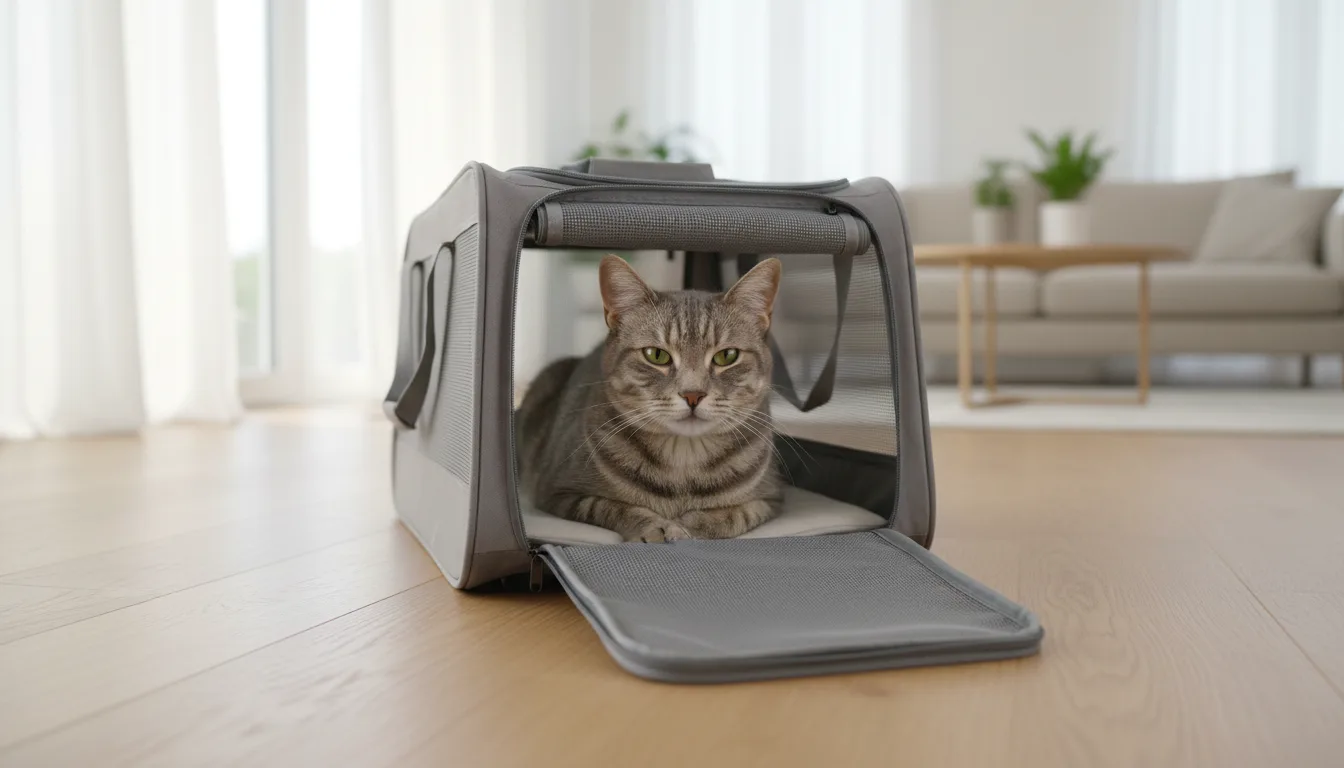
The Sherpa Original Deluxe is our top pick for flying, and it has earned that spot over years of real use in airports across the country. It is a soft sided carrier built on a padded, flexible frame that holds a cozy den shape while still squishing down to fit tight spaces. Mesh ventilation panels wrap three sides, so air keeps moving and your cat can see out, which quietly cuts the panic that solid walled boxes so often trigger. The base is lined with a soft, washable faux lambskin pad that gives your cat something familiar to knead into and settle on. At around seventy dollars it is not the cheapest option on the shelf, but the build quality, the zippers that actually last, and the long airline track record make it worth the premium for anyone who flies more than once.
Who is it for? Cat parents who fly, plus anyone who wants one versatile carrier that also handles road trips and vet runs without complaint. The Deluxe is engineered to fit under the seat on most major United States airlines, and its long standing Guaranteed On Board reputation backs that up, though you should always confirm the current dimensions with your own airline before you book. Top and side zippered openings make loading far easier than a single front door, and a rear seatbelt loop lets you strap it safely into the car. Spring loaded frame corners let you press the carrier down that last critical inch to clear a stubborn under seat gap. The main watch out is size: a cat much over fifteen or sixteen pounds may feel cramped, and truly large cats are better served by a hard model or an extra large bag.
One more reason the Sherpa Original Deluxe stands out: the spring loaded frame lets you press the corners down to clear a tight under seat gap, then springs back to full shape for the flight. The faux lambskin base pad is machine washable, so a stressed accident is a quick fix rather than a ruined carrier. A seasonal mesh flap lets you close off ventilation in cold weather and open it fully when it is warm.
- Spring loaded frame compresses to clear tight under seat gaps
- Mesh ventilation on three sides keeps air moving and panic down
- Machine washable faux lambskin pad
- Rear seatbelt loop for the car
- Premium price around seventy dollars
- Cats over about fifteen pounds may feel cramped
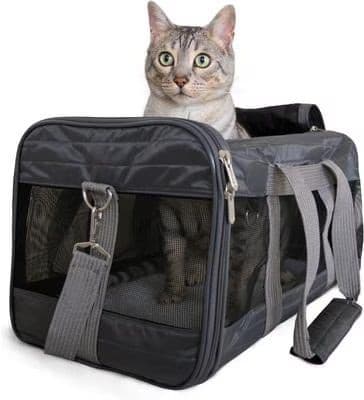
An airline-approved soft-sided carrier with mesh ventilation windows, a top-rated travel pick for cats and small dogs.
Petful may earn a commission when you click through to Chewy, at no extra cost to you.
Best hard-sided travel-safety carrier: Frisco Travel Safety Carrier
The Frisco Travel Safety Carrier is built for the drive, not the flight, and that focus is exactly why we recommend it. It is a hard sided plastic shell designed around car safety, using a crash tested style construction with reinforced walls and a strap routing system that anchors it directly to your vehicle's seat belt. In a sudden stop or a collision, a rigid shell protects your cat in a way that a soft bag simply cannot, because a fabric carrier folds and lets your cat absorb the force. The latches are reinforced and stay firmly locked even when a frightened, powerful cat throws its full weight against the door. At around fifty nine dollars, it is fairly priced for genuine structural protection rather than the mere appearance of it.
This is the carrier for frequent car travelers, multi cat households, road trip families, and anyone whose cat has already escaped a flimsier bag. Here is what the hard shell buys you, and what it costs.
- Chew and claw proof walls: the hard shell resists a determined cat's teeth and claws in a way no fabric bag can match.
- Steady airflow: ventilation slots run along both sides and the top, so air keeps moving even on a warm drive.
- Wipes clean in seconds: after a car sickness accident, the whole shell rinses and wipes down without a trip to the washing machine.
- Vet friendly removable top: the top half unlatches and lifts away, so your veterinarian can open it from above without a struggle.
- Real trade offs: it is heavier and bulkier than a soft carrier, will not compress to fit under an airplane seat, and takes up more closet space between trips.
But for the back seat, where the majority of cat travel injuries actually happen, it delivers exactly the structure you want between your cat and a hard stop.
A practical note on the Frisco Travel Safety Carrier: it comfortably fits most small to mid size cats up to roughly the fifteen pound range, which covers the majority of household cats. Two door access, one on the front and one on the top, means you can load your cat whichever way keeps it calmest, and your vet can open the top for an exam. The rigid shell and reinforced latches are what make that crash focused design worth the price for regular drivers.
- Reinforced latches and rigid shell for genuine crash protection
- Strap routing anchors to the seat belt
- Top half lifts away for easy loading
- Wipes clean in seconds
- Heavier and bulkier than a soft carrier
- Will not compress to fit under an airplane seat
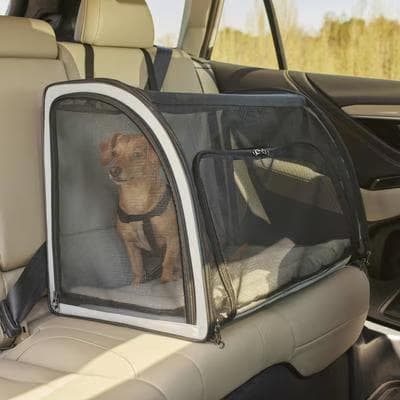
Soft-sided travel safety carrier that keeps a stressed cat secure and well-ventilated on the way to the vet, with mesh panels for airflow and a seat-belt loop.
Petful may earn a commission when you click through to Chewy, at no extra cost to you.
Best cat carrier backpack: PetAmi Deluxe
The PetAmi Deluxe Backpack Carrier answers a question more and more cat parents are asking: how do I bring my cat along with my hands free? At around forty dollars, it is an affordable and genuinely fun way to turn a neighborhood stroll, a patio brunch, or a low stress walk into the vet into a shared outing. It carries your cat on your back or your chest, with wide padded shoulder straps that spread the weight and a chest clip that keeps the load from shifting as you move. A structured internal frame keeps the bag from collapsing inward, so your cat gets a stable pocket of space rather than a sagging sack pressing in on all sides.
Ventilation is where this pack really shines. Breathable mesh windows wrap the sides and the back panel, and the design adds airflow holes so a nervous cat never feels sealed in. It is best suited to calm, confident cats and short trips, not a full day of errands or a cat who paces and cries the whole way. Any backpack traps more body heat than an open topped carrier, so keep outings short in warm weather, avoid direct midday sun, and offer water whenever you stop. Inside, a safety leash tether clips to your cat's harness so it cannot leap out the moment you open the top. For the price, it is one of the easiest ways to safely widen a bold cat's world without spending on a specialty brand.
Worth knowing about the PetAmi Deluxe Backpack Carrier: an interior safety tether clips to your cat's harness so it cannot leap out when you open the top, a small but genuinely important detail on a wearable carrier. PetAmi also offers expandable versions with a pop out side pod for cats who want more room to stretch on longer sits. Mind the weight limit, since it is built for cats up to roughly the mid teens in pounds, not for large or heavy cats.
- Hands free carrying with padded straps and a chest clip
- Breathable mesh windows on the sides and back
- Interior safety tether clips to a harness
- Structured frame keeps a stable pocket of space
- Best for calm cats and short outings only
- Traps more body heat in warm weather
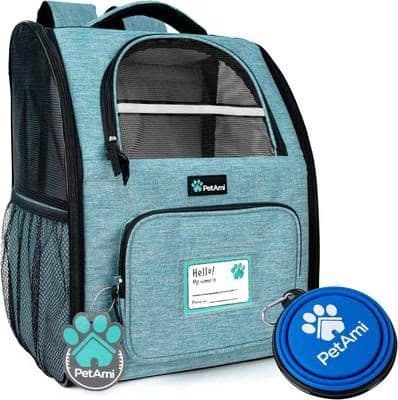
A ventilated backpack carrier that keeps your cat secure and close, ideal for walks, vet trips, and travel.
Petful may earn a commission when you click through to Chewy, at no extra cost to you.
Best budget airline carrier: Petsfit Airline Approved
If the Sherpa stretches past your budget, the Petsfit Airline Approved Carrier delivers most of what actually matters for around forty dollars. It is a soft sided carrier sized to meet the under seat rules of many major airlines, with a flexible top that compresses to squeeze into tight cabin spaces. You are not paying for a marquee name, but you still get mesh panels on multiple sides, sturdy self locking zippers, and a frame that holds its shape trip after trip instead of caving in on your cat. A washable fleece pad comes tucked in the base, so your cat has a warm, familiar surface from the very first outing.
This is the pick for occasional flyers and budget minded shoppers who do not want to gamble on the cheapest no name bag on the marketplace. The Petsfit includes a rear seatbelt loop so you can secure it in the car, plus a small pocket for treats and paperwork. It is not as plush or as heavily reinforced as pricier carriers, so daily heavy duty use will wear it out faster, and a very large cat may find it snug. But for a carrier you pull out only a handful of times a year, the value is genuinely hard to beat, and it clears the same under seat airline hurdles as bags that cost twice as much. When you fly rarely, that is exactly the math that makes sense.
The detail that makes the Petsfit Airline Approved Carrier punch above its price is the self locking zippers, which stay put instead of creeping open the way cheap bag zippers do, so a determined paw cannot work its way out. Paired with mesh on multiple sides and a washable fleece pad, it delivers the essentials that actually matter for flying. For an occasional flyer who does not want to spend seventy dollars, that is exactly the right amount of carrier for around forty.
- Self locking zippers a paw cannot work open
- Meets many airline under seat rules at a budget price
- Washable fleece pad included
- Rear seatbelt loop and document pocket
- Lighter build wears faster under heavy daily use
- Snug for very large cats
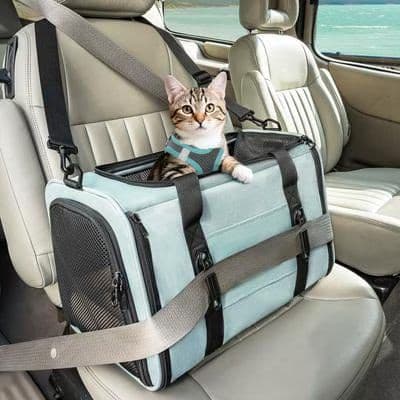
An airline-approved soft-sided carrier with patent safe buckles and mesh ventilation panels, sized for cats and small dogs.
Petful may earn a commission when you click through to Chewy, at no extra cost to you.
How we chose these cat carriers
Our picks are not ranked by how loud a brand shouts, they are ranked by the things that actually protect and calm a cat. Safety and containment came first in our weighting, because a carrier that pops open in a crash or lets a panicked cat claw its way out has failed at its only real job. From there we looked at ventilation, since airflow keeps a cat cooler and far less stressed, then ease of loading, because a carrier you cannot get your cat into is one you will quickly grow to dread. Airline compliance, size range across small and large cats, and honest value for the price rounded out the scorecard. Every carrier here had to earn its place on more than one of those measures, not just one flashy feature on the box.
- Safety and containment first: a carrier that pops open in a crash or lets a panicked cat claw out has failed at its only real job.
- Ventilation: airflow keeps a cat cooler and far less stressed.
- Ease of loading: a carrier you cannot get your cat into is one you will quickly grow to dread.
- Airline compliance: flying picks had to meet real under seat limits, not just claim to.
- Size range: honest fit across small cats and large ones, judged by internal dimensions and weight ratings.
- Value: the price had to match what the carrier actually delivers, not the marketing on the box.
Finally, we lean on evidence rather than packaging copy. We cross reference low stress handling guidance from feline veterinary groups like the American Association of Feline Practitioners, because they study what actually keeps cats calm during handling and transport. And we weigh independent crash test findings from the Center for Pet Safety over any manufacturer's claim of being crash tested, since that nonprofit has repeatedly shown that a carrier marketed as safe can still fail under real impact. When a brand's marketing and the independent testing disagree, we trust the testing, and we tell you plainly when a whole category still lacks solid third party data.
Types of cat carriers: hard, soft, backpack, and sling
Cat carriers come in four main shapes, and each one solves a different travel problem. A hard sided cat carrier is the rigid plastic box most of us picture, with a wire or plastic grille door and a shell that keeps its form no matter what. A soft sided cat carrier is a padded fabric bag, lighter and far more flexible, that squishes to slide under seats and tuck into small spaces. Then come two newer, going out together styles: the cat carrier backpack, worn on your shoulders like a hiking pack, and the sling cat carrier, worn across your torso like a messenger bag so a small cat rides against your body. Knowing what each shape is genuinely good at saves you from paying for features you will never actually use.
The hard sided design wins on protection, security, and cleaning, while the soft sided design flips every one of those strengths in favor of portability. Here is how the two stack up.
- Hard sided strengths: the walls shrug off chewing, claws, and impact, and the best models split at the seam so the entire top lifts off for stress free vet access.
- Hard sided durability: it holds up to years of use and disinfects easily after an accident.
- Hard sided costs: bulk and weight, since a hard sided carrier is heavier to carry and harder to store between trips.
- Soft sided strengths: light, packable, gentle against your cat's body, and flexible enough to meet the strict under seat space that airlines demand.
- Soft sided weaknesses: durability and protection, because a determined cat can eventually work through mesh, and a soft sided bag offers far less crash resistance in the car.
The two wearable styles serve narrower but very real purposes. A cat carrier backpack frees both of your hands for hiking, city walking, and travel days when you are already juggling luggage, and the good ones ventilate well and give your cat a window to watch the world go by. A sling cat carrier keeps a small, calm, well socialized cat pressed close to your body for short errands and comforting contact, though it offers the least structure and the least security of any type, so it is a poor choice for a squirmy or anxious cat. Most households end up owning two carriers, a sturdy box for the vet and a soft bag or backpack for everything else, and there is nothing wrong with that. The goal is simply to match the shape to the trip so the carrier works with your cat instead of against it.
| Type | Best for | Pros | Watch-outs |
|---|---|---|---|
| Hard-sided | Vet visits, car travel, escape artists | Rigid crash protection, removable top, wipes clean easily | Heavy and bulky, harder to store, will not fit under an airplane seat |
| Soft-sided | Air travel, occasional trips, vet runs | Lightweight, packable, flexes to fit under the seat | Less crash protection, mesh can be chewed through over time |
| Backpack | Hikes, city walks, hands-free travel days | Frees your hands, strong ventilation, window views for the cat | Warmer inside, best for calm cats and short outings |
| Sling | Short errands with a small, calm cat | Keeps your cat close, comfortable, low profile | Least secure and structured, little room to move, not for anxious cats |
If you want a proven example of each style, our picks map cleanly onto the types: the Frisco Travel Safety Carrier shows what a well-built hard shell looks like, the PetAmi Deluxe is the backpack done right, and the FurryFido Classic Reversible sling covers short errands with a small, calm cat for about twenty dollars.
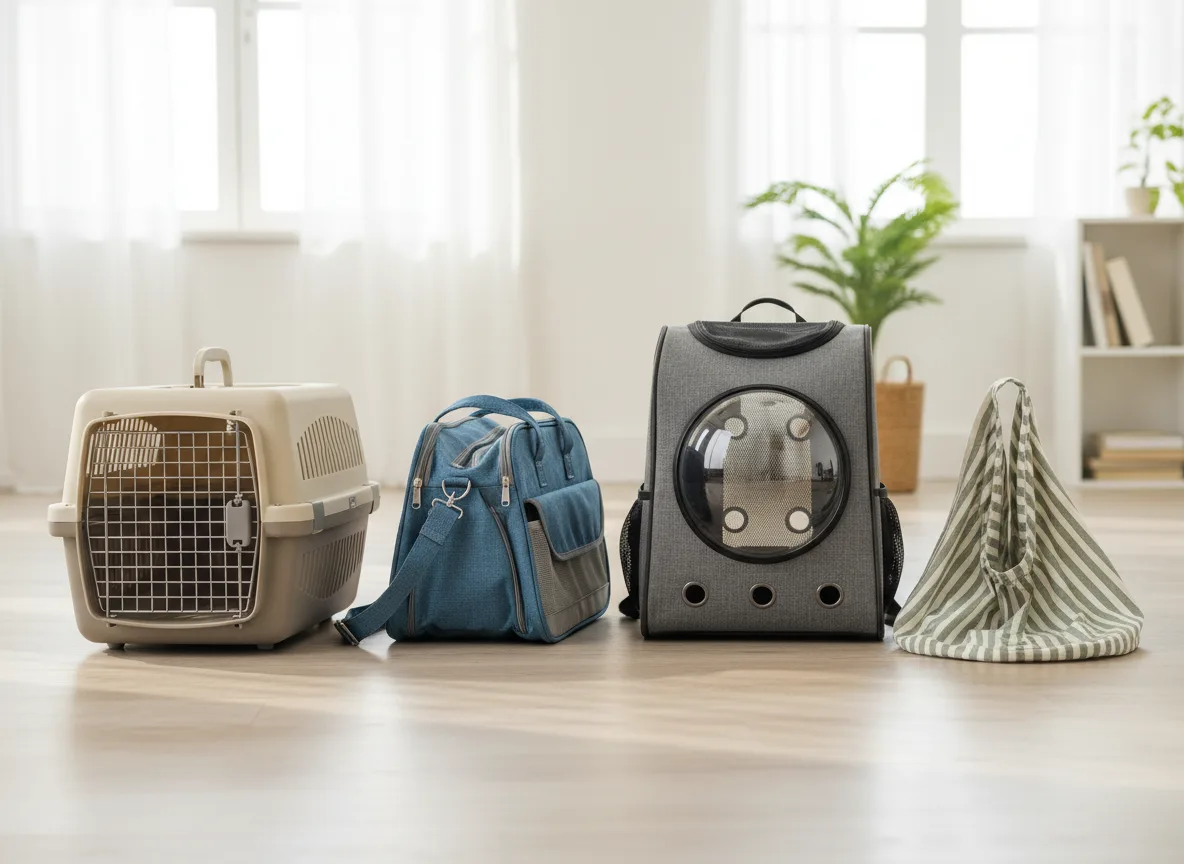
Hard-sided vs. soft-sided: which do cats prefer?
Do cats prefer hard or soft carriers? The honest answer is that most cats do not care about the material itself. What a cat actually cares about is feeling secure, hidden, and stable, so a carrier that feels like a safe den, dark, snug, and not swaying underfoot, will calm your cat whether it is molded plastic or padded fabric. That said, the two materials do create genuinely different experiences.
- What a hard sided carrier feels like: more solid and enclosed, with a stable floor that does not shift or sway underfoot.
- What a soft sided carrier feels like: warmer and cozier, with padded walls that give a little and move with your body as you carry it.
- The tradeoff in one line: stability and enclosure on one side, warmth and softness on the other, and neither answer is wrong for every cat.
The right pick is the one your individual cat settles into fastest, which sometimes takes a little trial and error to discover.
A hard sided carrier gives your cat a rigid, stable floor that does not shift or bounce underfoot, and a lot of cats find that solid footing deeply reassuring. Its walls block out the frightening sights and sounds of a busy waiting room, it protects far better in a crash, and it cannot be clawed or chewed open by a panicking escape artist. The downside is that a bare plastic box can feel cold, echoey, and clattery, and cheaper ones let in too much light and noise. The fix is easy and cheap: line the base with a familiar smelling blanket, drape a towel over the top to create an instant den, and most cats relax within a few minutes.
A soft sided carrier is lighter, warmer, and more forgiving against a cat's body, and the padded walls can feel almost like a hug, which some anxious cats clearly prefer.
- The only realistic flying choice: a soft carrier flexes to compress into the under seat space where a rigid box never would fit.
- The stability catch: a soft bag sways and shifts as you walk, and some cats dislike that constant motion intensely.
- The security catch: it offers less crash protection and less containment for a strong, determined cat who wants out.
- The real lesson: comfort comes less from hard versus soft and much more from fit, familiarity, and how calmly you carry the thing.
Choose the type that suits the trips you actually take, then make the inside smell like home, and your cat's preference will usually follow.
What cat carriers do vets recommend?
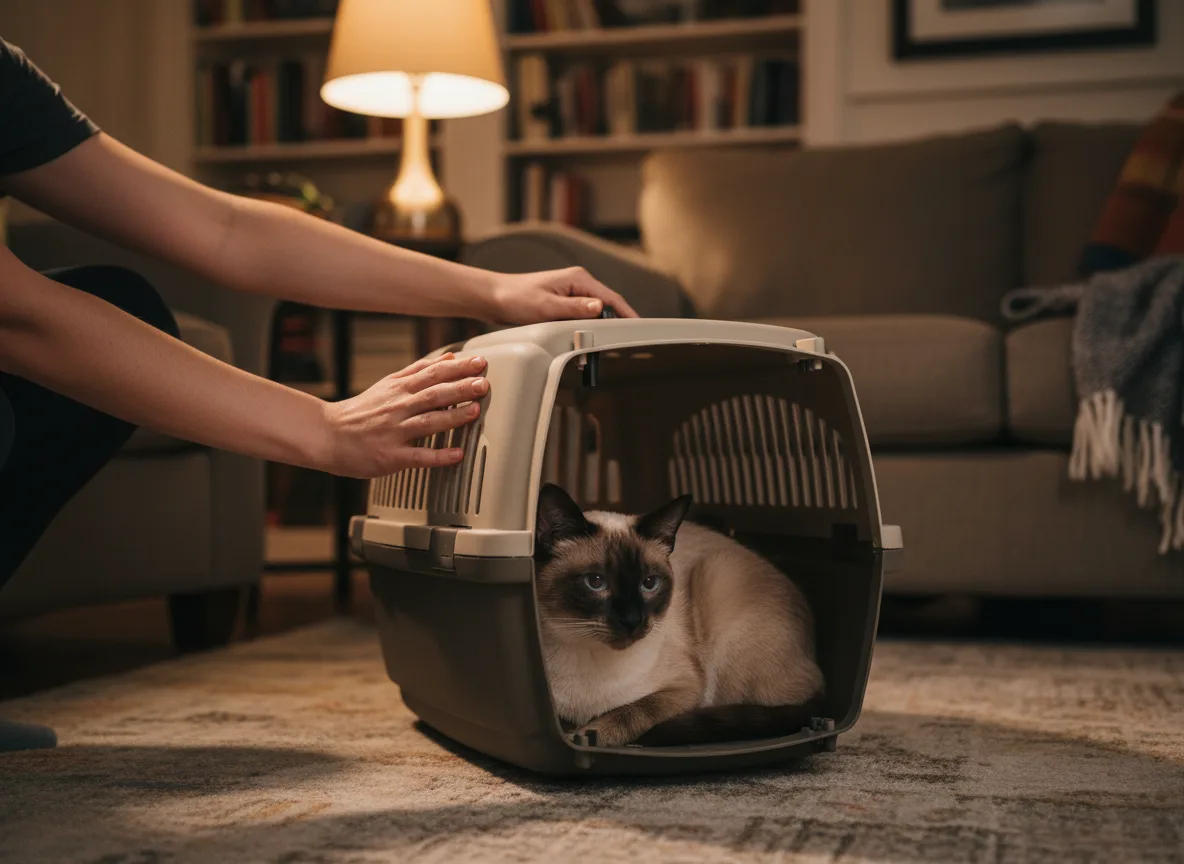
What cat carriers do vets recommend? Ask almost any small animal veterinarian and you will hear a remarkably consistent answer: a sturdy hard sided carrier with a removable top and a wide, easy door. The logic is simple and it is all about lowering stress. When the top lifts cleanly off, your vet can examine, vaccinate, listen to the heart, and even draw blood while your cat stays nestled in the familiar base, instead of being hauled out through a cramped front opening. That one feature, a removable top, does more to reduce a cat's fear at the clinic than almost any other design choice you can buy, and it makes the whole visit faster and safer for everyone involved.
The American Association of Feline Practitioners, better known as the AAFP, has built much of its cat friendly and low stress handling guidance around exactly this idea. Its recommendations favor carriers that open from the top, so a frightened cat can be lifted gently rather than dragged, and that come apart quickly when a cat simply refuses to leave the base on its own. Easy top loading matters for the same reason on the way in: lowering a cat down into a carrier from above is far calmer than shoving it head first through a front hatch, and it avoids the tug of war that teaches cats to hate the carrier in the first place. Clinics that follow AAFP handling principles will often ask you specifically to bring a top opening carrier for precisely this reason.
- A rigid hard sided box with latches that genuinely hold: structure and containment are the baseline every veterinarian asks for.
- A removable top that unclips in seconds: no screwdriver required, so your vet can examine your cat right in the familiar base instead of dragging it out.
- A door large enough for your hand and your cat together: loading and unloading should never be a squeeze.
- Leave it out at home, and bring a pheromone towel: a carrier your cat sees daily is not a red flag, and a lightly sprayed towel draped over it blocks dogs and strangers in the waiting room.
The Petmate Two Door Top Load Kennel is the textbook version of what vets ask for: a rigid shell, spring-loaded latches, and a top door that lets your cat be lifted out gently instead of dragged, all for around fifty dollars.
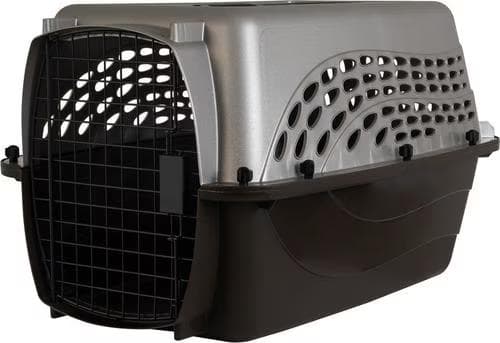
Petful may earn a commission when you click through to Chewy, at no extra cost to you.
How to size a cat carrier (and pick for a big cat)
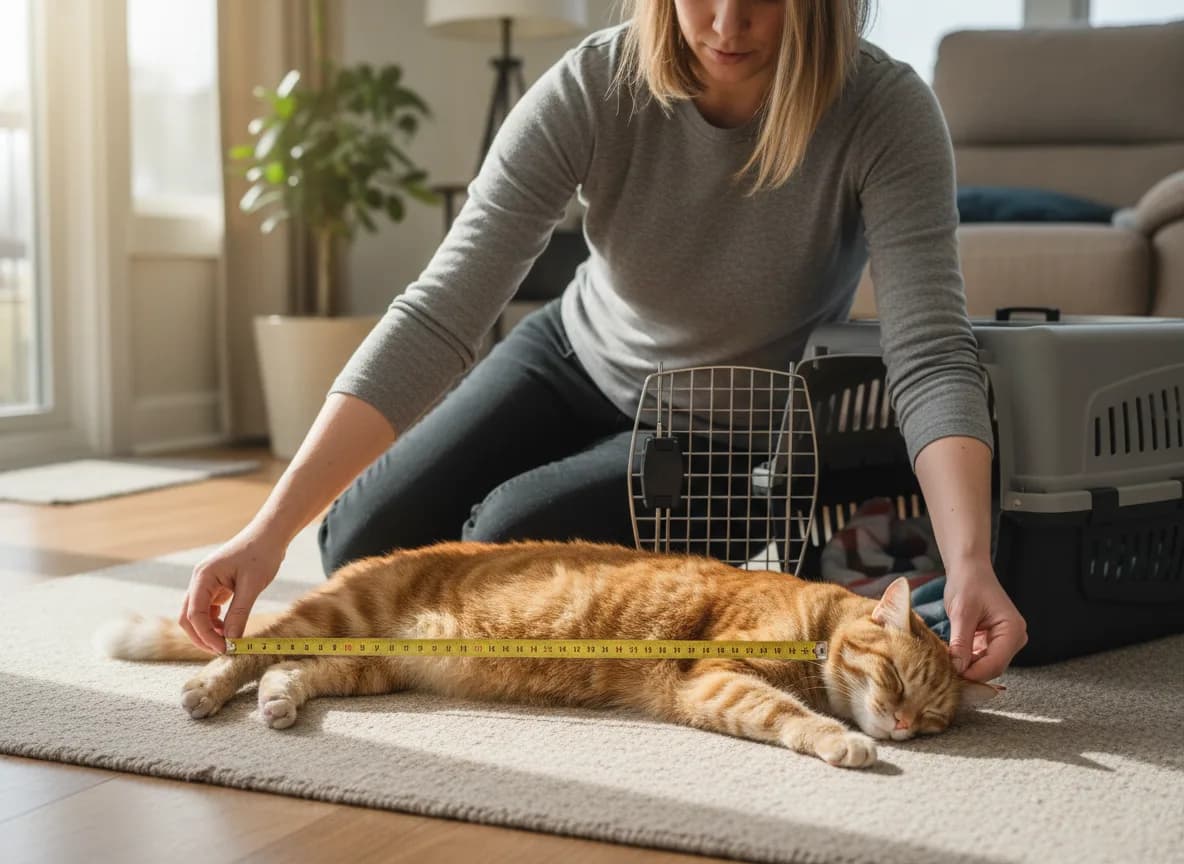
Sizing is where a lot of shoppers go wrong, and it is genuinely easy to get right. Before you add anything to your cart, measure your cat with a soft tape or even a piece of string you mark and then lay against a ruler. Take the length from the tip of the nose to the base of the tail, not the tip of the tail, and take the height from the floor to the top of the head or the tips of the ears while your cat is standing normally. Write down those two numbers along with your cat's current weight. Those measurements tell you far more than the vague small, medium, and large labels stamped on the outside of the box, which vary wildly from one brand to the next.
- Measure your cat's length: from the tip of the nose to the base of the tail, not the tail tip, using a soft tape or a marked piece of string.
- Measure the height: from the floor to the top of the head or the ear tips while your cat is standing normally.
- Note the current weight: these three numbers beat every vague small, medium, and large label a brand prints on the box.
Should a cat be able to stand up in carrier? Yes, and this is the single most important sizing rule, so it is worth stating plainly: your cat needs room for three specific motions, and you should check each one.
- Stand up fully: without hunching or ducking its head against the ceiling of the carrier.
- Turn around in a complete circle: without getting wedged against the walls at any point.
- Lie down stretched out on its side: with room to spare, not curled tight out of necessity.
- If even one motion is cramped: the carrier is too small, and your cat will spend the entire trip uncomfortable and tense.
This stand, turn, and lie down standard is not only about comfort, either. It is the same baseline that airlines and in cabin pet rules use, so meeting it keeps you compliant for flights too.
For the actual target dimensions, a reliable rule of thumb is to choose a carrier about one and a half times the length of your cat, and tall enough to clear the ears when your cat is sitting upright. That extra length gives your cat room to shift and reposition over a long trip without ever feeling boxed in, while still staying snug enough to feel secure and denlike. Bigger is not automatically better, though, and this genuinely surprises people. In a cavernous carrier, a cat slides and tumbles during turns and hard stops, which feels less safe and can make car sickness worse. The sweet spot is cozy with a little room to reposition, never echoing and empty.
- Quick tip: measure your cat before you click buy. Length from nose to tail base, height at the shoulder, and current weight beat every small, medium, or large label a brand prints. Two minutes with a tape measure saves a return and a carrier your cat refuses to enter.
Big cats need extra thought, because they outgrow standard carriers faster than most owners expect.
- Know who needs one: a Maine Coon, a Ragdoll, a Savannah, or just a solidly built domestic shorthair can easily need a large cat carrier rated for its real length and weight.
- Trust numbers, not labels: always check the manufacturer's weight rating and the internal dimensions, never the marketing label or the biggest number printed on the shelf tag.
- For truly oversized cats: the largest cat carrier in a hard sided product line usually delivers the most stable, chew proof, standable room.
- For calmer giants who fly: extra large soft bags work well when the trip demands under seat flexibility rather than maximum structure.
Whatever you choose for a big cat, re measure at least once a year, since weight shifts over time and an aging cat's joints appreciate the extra space to settle into.
For a genuinely big cat, our hard-sided pick comes in a size built for the job: the Frisco Travel Safety Carrier in Large keeps the same crash-focused shell and reinforced latches with the extra length and headroom a fifteen-plus-pound cat actually needs.
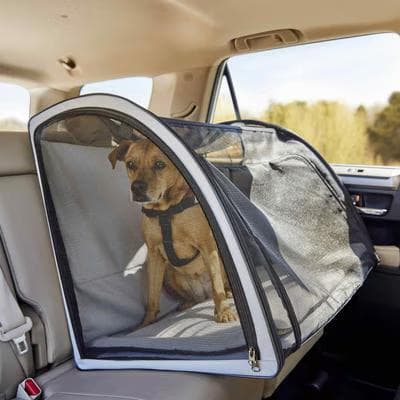
Petful may earn a commission when you click through to Chewy, at no extra cost to you.
Sizing for kittens and senior cats
Kittens complicate sizing because they grow so fast. A carrier that fits a twelve week old kitten perfectly can be hopelessly small within a few months, so it rarely makes sense to buy tiny. The smarter move is to size for the adult cat your kitten will become, using the expected adult weight and length for its breed as your target, and simply add a folded blanket or a snug liner so the space does not feel cavernous while your kitten is still small. If you are unsure how big your kitten will get, plan on one upgrade and treat the first small carrier as a short term training tool rather than a long term purchase.
Senior and arthritic cats deserve the opposite kind of attention. As cats age, jumping and climbing get painful, so a carrier they have to climb up and into becomes a real barrier and a source of stress. Look for a low, wide door that lets an older cat step in at floor level rather than hoist itself over a high lip, which is far gentler on stiff hips and elbows. A top that removes fully lets you lift a senior cat in and out without asking it to bend or twist. Add thicker, softer bedding to cushion sore joints on the ride, and your older cat will travel far more comfortably.
Airline-approved cat carriers and in-cabin rules
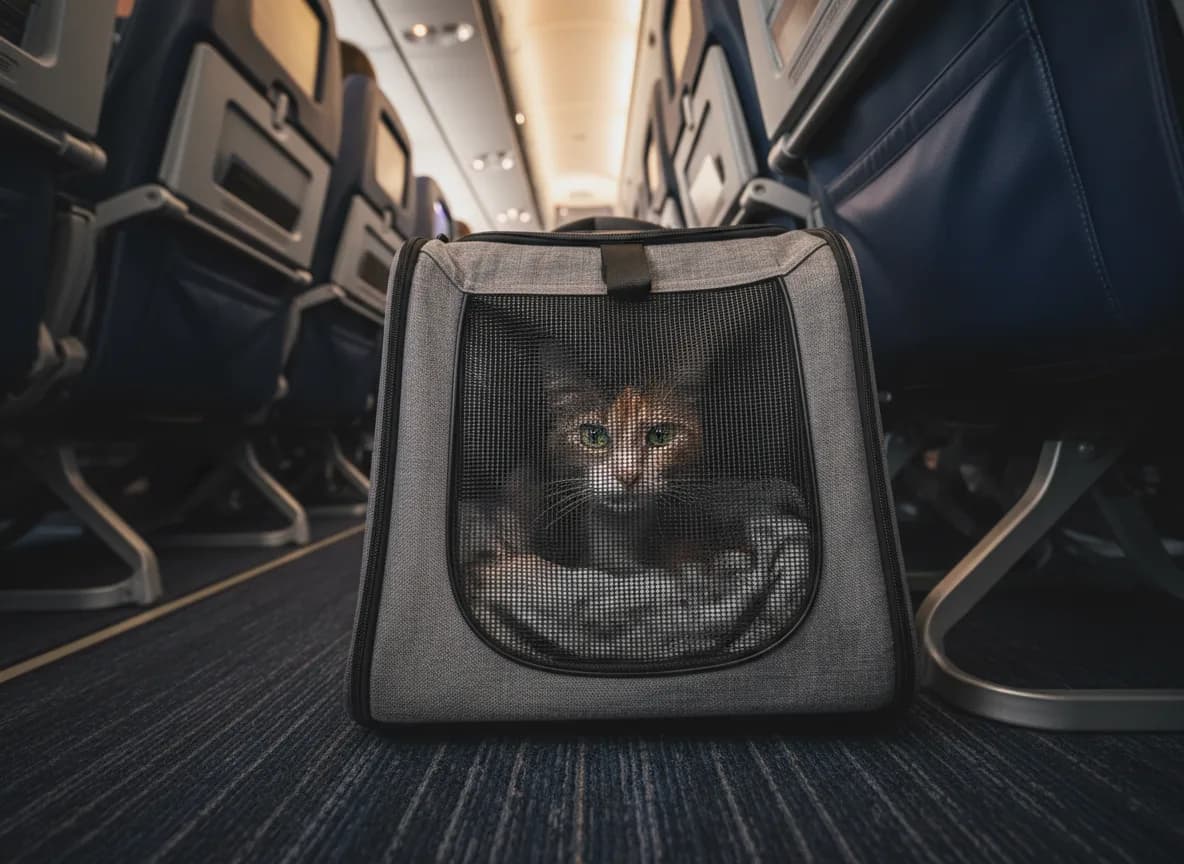
Flying with a cat starts and ends with the carrier, and the rules are stricter and fussier than most first time flyers expect. An airline approved cat carrier has to be soft enough to flex and small enough to slide under the seat in front of you, because that under seat gap is the only place an in cabin pet is permitted to ride for the whole flight. Your cat is never allowed on your lap, in an overhead bin, or in an empty seat beside you. And here is the part that trips travelers up: there is no single universal size that every airline accepts, so a carrier that clears one airline's gate can be turned away at another's.
Under seat dimensions typically hover somewhere around eighteen inches long by eleven inches wide by eleven inches high for soft carriers, but treat that as a ballpark and never as a guarantee. The exact maximum changes by airline and even by aircraft, since the space under a bulkhead row or certain window seats can be smaller than a standard row. A carrier that fits perfectly beneath one airline's seat can be an inch too tall for another's stricter height limit. Before you book, look up your specific airline's current pet policy, pay special attention to the height number because that is the dimension carriers most often fail, budget for a one way pet fee that commonly runs around one hundred and twenty five dollars, and then measure the actual bag rather than trusting the box. A soft, collapsible top is a real advantage here, since a squishable carrier can compress that last stubborn inch to fit where a rigid box never could.
- There is no universal size. The same carrier can pass one airline and fail another, and height is the number that most often fails. Confirm your airline’s current pet policy and measure the actual bag, not the box, before you book.
The airport itself adds another step at the TSA security checkpoint, and it catches people off guard. You cannot send your cat through the X ray machine, so at security you remove your cat from the carrier, carry it through the metal detector in your arms or on a harness and leash, and place the empty carrier flat on the belt to be screened. That means your flight approved cat carrier needs an opening you can actually manage one handed while holding a squirming, frightened cat, plus enough ventilation mesh that your cat breathes easily through long lines, gate waits, and taxi delays. A carrier with a top zip and generous mesh makes that checkpoint moment dramatically less stressful for both of you.
Carrier features that fly well
- A soft, flexible top that compresses: a squishable carrier can press down that last stubborn inch to fit under the seat where a rigid box never could.
- Your specific airline's under-seat dimensions: limits differ by airline and even aircraft, and height is the dimension carriers most often fail, so check before you book.
- Ventilation mesh on three or more sides: your cat needs to breathe easily through long lines, gate waits, and taxi delays.
- A padded shoulder strap and a document pocket: you will haul this through long terminals, and some airlines and destinations require health paperwork on hand.
- An interior leash clip for the TSA checkpoint: your cat comes out of the carrier at security, and a clip to the harness stops a spooked bolt across the concourse.
Both of our airline picks are shaped and sized for this exact routine: the Sherpa Original Deluxe if you fly more than once a year, and the Petsfit Airline Approved if you want the under-seat essentials at a budget price. Always confirm the current numbers with your airline before you book.
An airline-approved soft-sided carrier with mesh ventilation windows, a top-rated travel pick for cats and small dogs.
Petful may earn a commission when you click through to Chewy, at no extra cost to you.
In-cabin vs. cargo, and the paperwork you need
One airline decision matters more than any other: in cabin versus cargo. For a cat, in cabin is strongly preferred, full stop.
- Why in cabin wins: riding under the seat in front of you keeps your cat in a pressurized, temperature controlled space for the whole flight.
- You stay connected: you can talk to your cat, monitor it, and keep it calm from takeoff all the way to landing.
- Why cargo is a last resort: the hold is loud, dark, and subject to temperature and handling risks that cats tolerate poorly.
- When cargo is even on the table: only when a cat is simply too large to fit an in cabin carrier and travel is unavoidable.
Because most cats fit the in cabin size limits, the practical goal is almost always to book a carrier that qualifies for the cabin and skip the hold entirely.
The other thing that catches travelers off guard is paperwork and timing, and both punish anyone who waits until the last minute.
- Health certificate: flying across state lines, and especially internationally, usually requires one from your veterinarian, issued within a set window before departure.
- Rabies vaccination proof: carry current documentation, and check whether your destination adds its own import rules on top of the airline's.
- Start weeks ahead, not the night before: certificates expire and vets book up, so this is never a last minute errand.
- Book the pet spot immediately: airlines cap the number of pets allowed in the cabin per flight, often to just a few.
Reserve your cat's in cabin spot the moment you book your own seat, because once that limit fills, your cat cannot fly with you no matter how perfect the carrier is.
For a carrier that works for both cats and dogs on a flight, see our guide to the best airline approved carriers.
What to look for in a cat carrier
Once you have settled on a type, a handful of features separate a carrier you will trust for years from one you will replace by next spring. Judge any carrier, hard or soft, against this checklist before you buy.
- Secure latches and lockable zippers: self locking latches on a hard shell, lockable zippers with a clip or toggle on a soft bag, so a clever paw cannot work them open mid trip.
- A front door AND a top opening: lower a calm cat in from above, lift a nervous one out gently at the vet, no tug of war required.
- Ventilation on three or more sides: steady airflow keeps your cat cooler and lets it see out, which measurably lowers stress.
- A wipeable or machine washable base pad: frightened cats have accidents, and a liner you can rinse or wash saves the carrier from smelling like a bad memory.
- A seatbelt loop or strap routing system: non negotiable if the carrier will ever ride in a car; do not skip it to save a few dollars.
- Weight matched to how far you carry: a heavier hard shell is fine for a curbside vet drop but punishing across a mile long airport terminal.
- Reflective trim and a clear ID label: visibility in low light plus your name, phone number, and your cat's microchip number for a fast reunion.
- These are the two features buyers most often regret leaving off. Without a seatbelt loop the carrier rides loose in the car, and without a top opening every vet visit starts with a tug of war through the front door.
The last item is worst case planning, and it is worth the sixty seconds it takes. Reflective trim or a visible color helps drivers and searchers spot the carrier in an accident or an evacuation, and a labeled ID tag or pocket means a stranger who finds an escaped cat can reach you fast. Together these small touches turn a plain box into genuine safety gear.
Common cat carrier mistakes to avoid
A carrier is a safety device, not a throwaway accessory, and most carrier regrets trace back to the same five avoidable mistakes. Here is what trips people up.
- Buying only on price: the cheapest no name bag hides split prone zippers, tearing mesh, and latches that pop in a hard stop; judge latches, ventilation, and straps, not the shelf number.
- Sizing up too big: in a cavernous carrier a cat has nothing to brace against, so it slides and tumbles through every turn, which feels unsafe and can trigger car sickness.
- The carrier only appears on vet day: that teaches your cat the box always means something scary; leave it out year round as furniture and loading gets dramatically easier.
- Not securing it in the car: a loose carrier becomes a projectile in a crash; always thread the seat belt through the loop and set it on the back seat.
- Skipping ventilation in warm weather: any enclosed carrier heats up fast in sun or a parked car; choose mesh on multiple sides and offer water on longer outings.
None of these mistakes take money to avoid, just a little forethought. Dodge all five and even a modest forty dollar carrier will do exactly what it is supposed to do: keep your cat safe, contained, and as calm as the trip allows.
Getting your cat into the carrier
Knowing how to get a cat in a carrier is honestly half the battle of any trip, and the secret is that almost all of the real work happens long before travel day. Cats fight the carrier because, in their experience, it only appears right before something frightening, so the box itself becomes a warning sign that a car ride or a vet visit is coming. Break that association and loading gets dramatically easier, sometimes to the point where your cat strolls in on its own. We will keep this section short and link out to our full step by step guide for the deep version, but the core approach comes down to a handful of simple, patient habits you can start today.
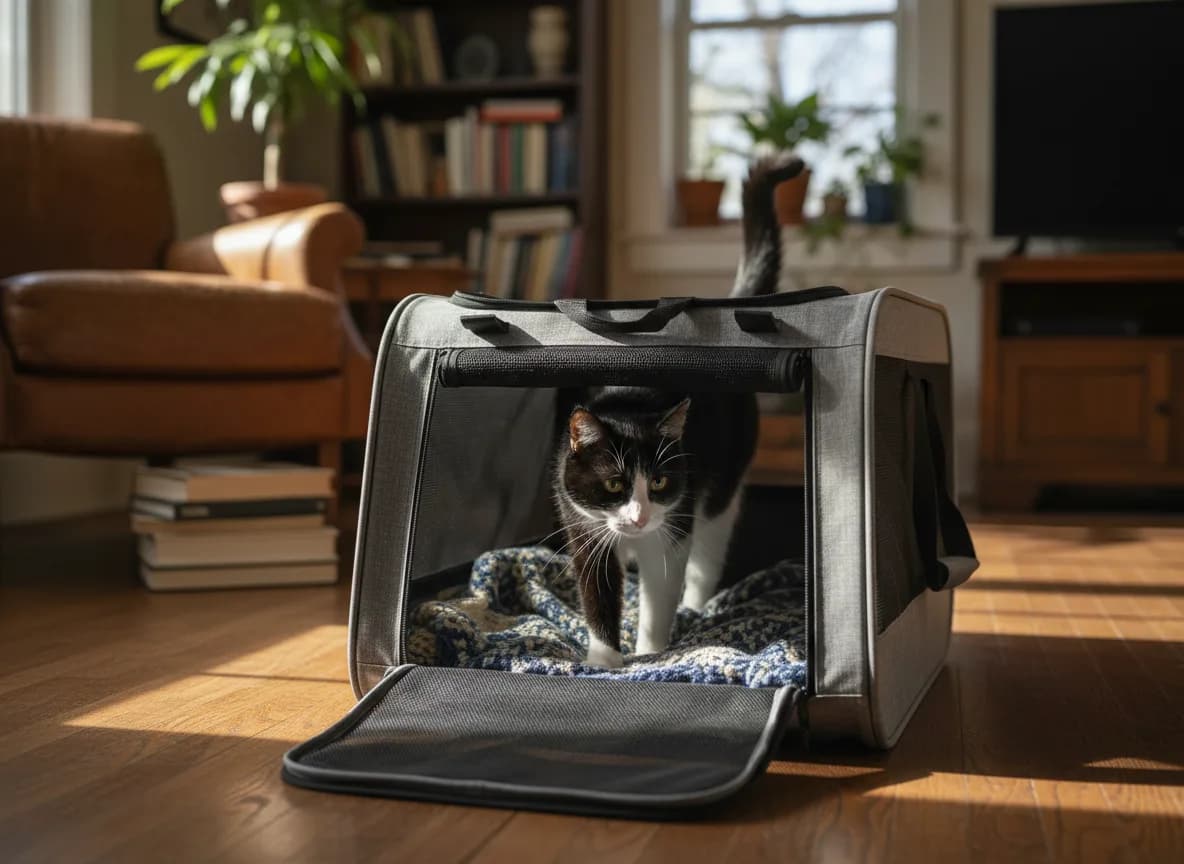
The first and most powerful habit is to leave the carrier out as a permanent piece of household furniture, not something that only emerges from the closet on clinic morning. Set it in a room your cat already likes to hang out in, take the door off entirely or prop it wide open, and toss a familiar smelling blanket or an unwashed t shirt inside. Add a few treats or a favorite toy so poking around inside actually pays off for your cat. When the carrier becomes just another cozy napping spot your cat sees every single day, its power to scare quietly evaporates.
- Step 1, leave the carrier out year round: make it permanent furniture in a room your cat likes, with the door removed or propped wide open, so its power to scare quietly evaporates.
- Step 2, make it pay off: add a familiar smelling blanket, scatter treats, and toss in a favorite toy so poking around inside is always rewarding.
- Step 3, feed progressively deeper inside: start meals near the carrier, then just inside the opening, then at the back, until your cat walks in willingly to eat.
- Step 4, rehearse days before travel: practice gently closing the door for a minute or two, then pick the carrier up and carry your cat around the house so the motion and latch click feel familiar.
- Step 5, load smart on travel day: use a small room with the door shut so there is nowhere to bolt, and lower your cat in rear end first through a top loading opening.
On travel day
On travel day itself, technique matters as much as preparation, and a calm load sets the tone for the entire trip that follows.
- Load from a small, calm room with the door shut: a startled cat has nowhere to bolt when the walls are close.
- For a top loading carrier: lower your cat in rear end first, which is far easier and calmer than a nose first push.
- For a front door model: back your cat in gently rather than forcing the head forward into the opening.
- If your cat is truly panicking: stop and reset rather than fighting, and lean on the full acclimation guide for the patient, multi week version.
Forcing a terrified cat in even once can undo weeks of progress and teach it to fear the carrier all over again, so a few minutes of patience genuinely pays off on every trip that follows.
For the full method step by step, read our guide on how to get a cat in a carrier. If the trip itself is the problem, our advice on traveling with an anxious cat walks through calming a nervous traveler.
Car and travel safety for cat carriers
A loose carrier is one of the most overlooked hazards in cat travel, and it is the step people skip most often. In a crash, or even during an ordinary hard braking moment, an unsecured carrier becomes a fast moving projectile, and your cat riding inside it absorbs the full force of the stop against the plastic or fabric walls. Securing the carrier to the vehicle is not an optional nicety if you actually care about your cat's safety, it is the whole reason to use a carrier in the car at all. The reassuring news is that, once you know the method, locking a carrier down takes about ten seconds and quickly becomes automatic.
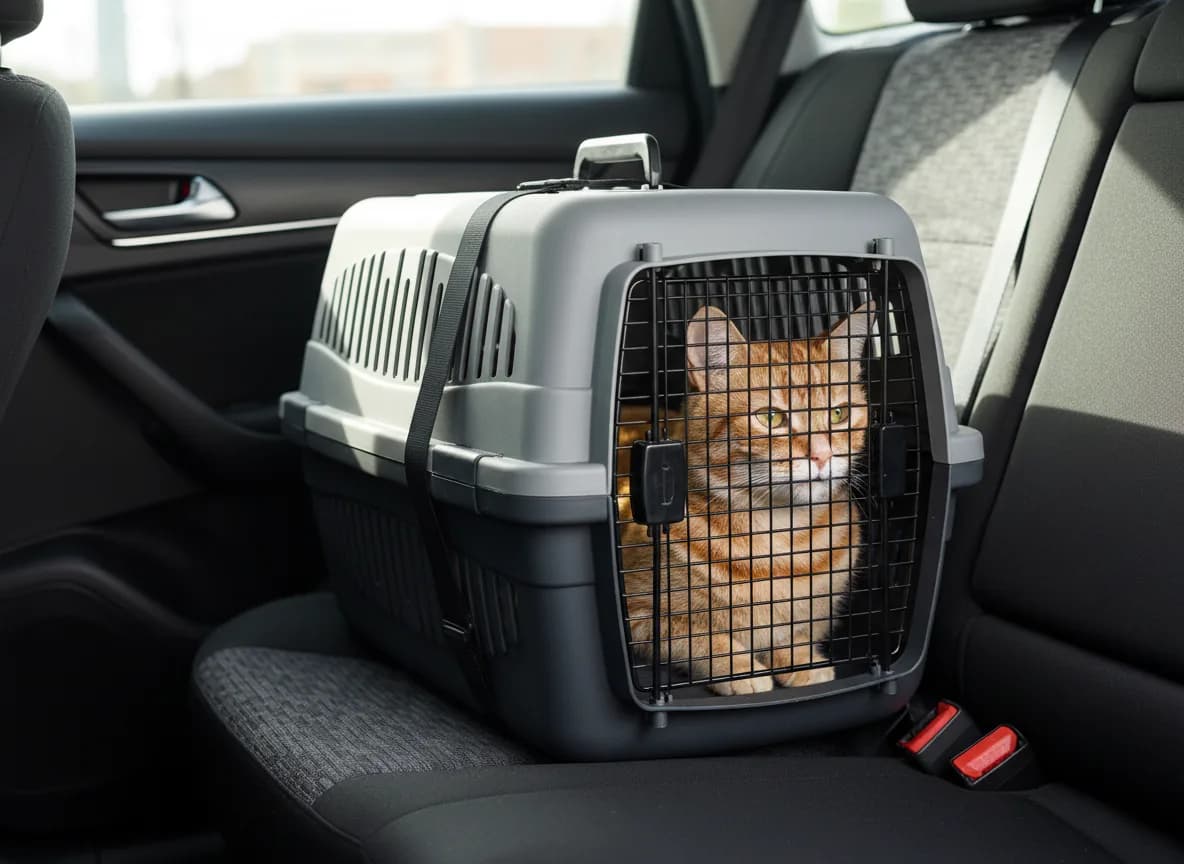
The simplest anchoring method is a seatbelt loop, which is a reinforced fabric strap sewn onto the back of many carriers that the vehicle's seat belt threads straight through. You feed the shoulder belt through the seatbelt loop, buckle it as normal, and the carrier is held firmly in place through turns, stops, and lane changes. It is worth knowing that not every carrier advertised as safe actually performs under real impact: the Center for Pet Safety, an independent nonprofit that crash tests pet travel products, has repeatedly found that many popular carriers fail in testing even when they are marketed as protective. That is why a genuine strap routing system, tested and clearly described by the maker, beats a carrier simply set loose on the seat every single time.
- A deploying airbag can strike a carrier on the front passenger seat with enough force to injure or kill your cat. Secure the carrier on the back seat with the seat belt threaded through its strap loop.
The safest spot in the car
Placement matters just as much as the strap. The safest spot for a cat carrier is on the back seat, secured with the seat belt or a dedicated tether, and never on the front passenger seat where a deploying airbag can slam into it with lethal force. Keep the carrier up on the seat rather than down in the footwell when you can, unless the footwell braces it snugly and well clear of any airbag. Hard sided models with a dedicated strap routing system, like the Frisco Travel Safety Carrier, give you the most protection in this exact scenario, which is why we recommend one for regular drivers. Whatever you drive and however short the trip, a properly secured carrier is what turns a routine errand into a genuinely safe ride for the cat coming along.
Soft-sided travel safety carrier that keeps a stressed cat secure and well-ventilated on the way to the vet, with mesh panels for airflow and a seat-belt loop.
Petful may earn a commission when you click through to Chewy, at no extra cost to you.
Heading out on a longer drive? Our guide to traveling with cats in the car covers the full road-trip routine.
Cat carrier accessories that actually help
The carrier is only half the setup. A few inexpensive accessories do a surprising amount to turn a stressful trip into a calm one, and every item below earns its place by lowering your cat's stress in a specific, practical way.
- Washable liner or familiar smelling blanket: a pad that already smells like home tells your cat's nervous system the strange box is safe territory; keep two so one is always clean.
- Calming pheromone spray: spritz the bedding about fifteen minutes before loading so the spray dries and only the calming scent remains, mimicking the facial pheromones cats use to mark safe spaces.
- Well fitted harness and leash: at the TSA checkpoint your cat comes out of the carrier, and a harness stops a bolt across the terminal; it also secures roadside stops.
- Collapsible water bowl: folds flat in a pocket and lets you offer water at rest stops, because a dehydrated, overheated cat gets stressed fast on long trips.
- Light towel draped over the carrier: turns any model into an instant den, blocking the dogs, strangers, and moving scenery that spike a cat's anxiety.
How to clean and maintain your cat carrier
A clean carrier is not just about tidiness, it directly affects whether your cat will willingly get inside, because a carrier that still smells of a past accident reads as a threat rather than a refuge. Build these habits into every trip.
- Wipe hard shells with pet safe disinfectant: clean the interior and door after any accident and give a quick wipe after routine outings; skip harsh citrus or pine scented cleaners cats dislike.
- Machine wash soft liners and pads: remove the base pad after any accident and check whether the whole soft carrier is machine washable, since many are.
- Air dry everything completely: trapped moisture in padding and seams breeds the musty odor that puts a cat off for weeks; give it a full day in a ventilated spot.
- Check zippers, latches, and seams monthly: work every fastener and feel for cracks or loosening, and replace a carrier with a broken latch rather than trusting it one more trip.
- Store it out in the open: keeping the carrier out as furniture keeps it aired out and stops it becoming the scary object your cat only sees on trip day.
Frequently asked questions about cat carriers
How far in advance you get your cat used to a new carrier depends on the cat. Start at least one to two weeks before travel, and longer if your cat already fears the carrier. Leave the carrier out as everyday furniture, feed meals inside it, and in the days before the trip practice closing the door and carrying your cat around the house. A confident cat may only need a few days to get used to a new carrier, but earlier is always calmer.
To clean a cat carrier after an accident, empty it first, then clean it based on its material. For a hard shell, wipe it down with a pet safe disinfectant, rinse, and dry it fully. For a soft carrier, remove the liner and machine wash it, spot clean the fabric with a pet safe cleaner, and air dry everything before the next trip. Drying the carrier fully after an accident is what stops a lingering odor from setting in.
The best kind of carrier for long journeys is a roomy hard sided model, because interior room and stability matter more than how small it packs down. A hard sided carrier with a removable top gives your cat the space to stand, turn, and lie down over many hours, plus a stable floor that does not sway or bounce with the road. Add a secure strap system, a familiar smelling blanket, and planned stops every two to three hours for water and a litter break, and even a long road trip stays comfortable and low stress for your cat.
Can two cats share one carrier? As a rule, no. Even bonded cats should travel in separate carriers, because a frightened cat can lash out at its companion, and two cats crowded together cannot stand, turn, and lie down comfortably. Sharing also doubles the weight you carry and makes airline compliance impossible. The only real exception is a pair of very young kittens, and even then only for short trips.
One more pick worth knowing for marathon travel days: the Petsfit Expandable Airline-Approved Carrier unzips into an extra stretch-out chamber once you are through security or parked for the night, which turns a long journey from cramped into genuinely comfortable.
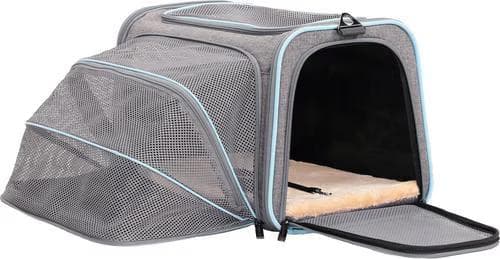
Petful may earn a commission when you click through to Chewy, at no extra cost to you.
Is it okay to leave a cat in a carrier overnight?
Is it okay to leave a cat in a carrier overnight? Only in a genuine pinch, and only with real care, because a carrier is designed for transport, not for housing.
- Know the overnight crating limit: most cats should not be confined to a carrier for more than about six to eight hours before they need to stretch, move, and use a litter box.
- If an emergency forces it: a home emergency, a disaster evacuation, or a long journey may leave no choice, so use the largest carrier you own.
- Provide water and litter access: keep both close by, ideally by letting your cat out into a small, fully secured room whenever it is safe to do so.
- For anything longer than one night: set up a bathroom or a proper crate with room to walk, a litter box, fresh water, and bedding instead.
A carrier can get a cat through one hard night, but it should never become the place a cat lives.
What to use instead of a cat carrier?
What to use instead of a cat carrier? In a true emergency, when there is genuinely no carrier on hand, a few household items can safely stand in for a short trip. A sturdy hard sided box, such as a thick plastic storage tote with plenty of air holes drilled into the lid and a towel laid inside, can hold a cat for a quick ride as long as the lid is firmly secured and cannot pop off. Another workable trick is a top loading laundry basket with a second basket flipped over and zip tied or bungeed on top, which gives good ventilation and a see through feel that keeps a cat calmer. Treat both of these as genuine stopgaps, never real substitutes, because a pillowcase, a cardboard box, or a loose cat in your arms is dangerous in a moving car. Buy a proper carrier as soon as you possibly can.

Coreen Saito is a pet writer and longtime shelter volunteer with more than a decade in animal rescue. She covers cat behavior, breed care, and the small, ordinary science of sharing a life with companion animals, with a particular focus on honest takes about the products and decisions that actually matter. At home in Arizona, she's outranked by Mac (a dog with the loudest opinion in the house), Rebel (a cat who governs by quiet authority), and Meri (an orange tabby who runs the late shift and the laundry basket). She writes about all three, plus the rescues that keep coming through her life, at LifeWithMinty.com.
Sign up for expert-backed reviews and safety alerts all in one place.