Best Cat Backpacks: Carriers Tested by Need
The best cat backpack depends on your cat and your plans. Compare our top bubble and mesh picks, learn how to size and ventilate one, and see whether a cat backpack can fly.
Petful is reader supported. As an affiliate of platforms like Amazon and Chewy, we may earn a commission when you buy through links on this page. There is no extra cost to you.
A good cat backpack turns a nervous trip to the vet or a curious stroll around the block into something your cat can actually tolerate, and it frees your hands for keys, treats, and doors along the way. These packs look like an ordinary daypack from the outside, but inside they hold a ventilated, padded space built to keep a cat secure while you walk, ride the bus, or wait in a lobby. The right one depends on your cat and your plans. Someone doing short everyday walks wants something light and breathable, while a household with a 20-pound tom needs a roomier shell that will not pinch. Budget matters too, because prices swing from about $36 to $125 without a huge jump in real-world safety.
Here are our top four picks, each built for a different kind of cat and trip:
- PetAmi Deluxe Backpack Carrier: the PetAmi Deluxe Backpack Carrier balances mesh ventilation, an interior tether, and an easy price near $40.
- Travel Cat The Fat Cat Bubble Backpack: Travel Cat's The Fat Cat Bubble Backpack fits cats up to about 25 pounds with a premium bubble window.
- Frisco Bubble Backpack Carrier: the Frisco Bubble Backpack Carrier delivers the panoramic look for around $36.
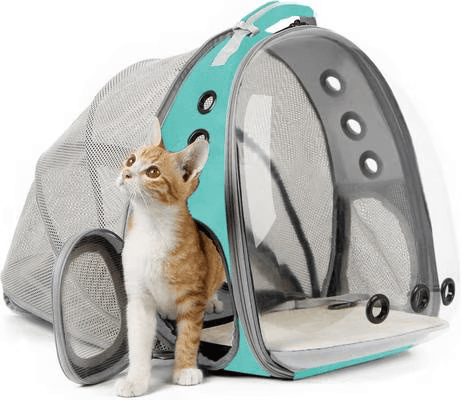
- Halinfer Breathable Bubble Backpack: the Halinfer Breathable Bubble Backpack adds an expandable back panel and mesh on multiple sides.

Sign up for expert-backed reviews and safety alerts all in one place.
Our top cat backpack picks at a glance
- 1Best overall and budget: the PetAmi Deluxe Backpack Carrier balances mesh ventilation, an interior tether, and an easy price near $40.
- 2Best for big cats: Travel Cat's The Fat Cat Bubble Backpack fits cats up to about 25 pounds with a premium bubble window.
- 3Best budget bubble window: the Frisco Bubble Backpack Carrier delivers the panoramic look for around $36.
- 4Best ventilation: the Halinfer Breathable Bubble Backpack adds an expandable back panel and mesh on multiple sides.
- 5One sizing rule for any cat backpack: your cat should stand up, turn around, and lie down inside, so match the pack's weight capacity and interior length to your cat before you buy.
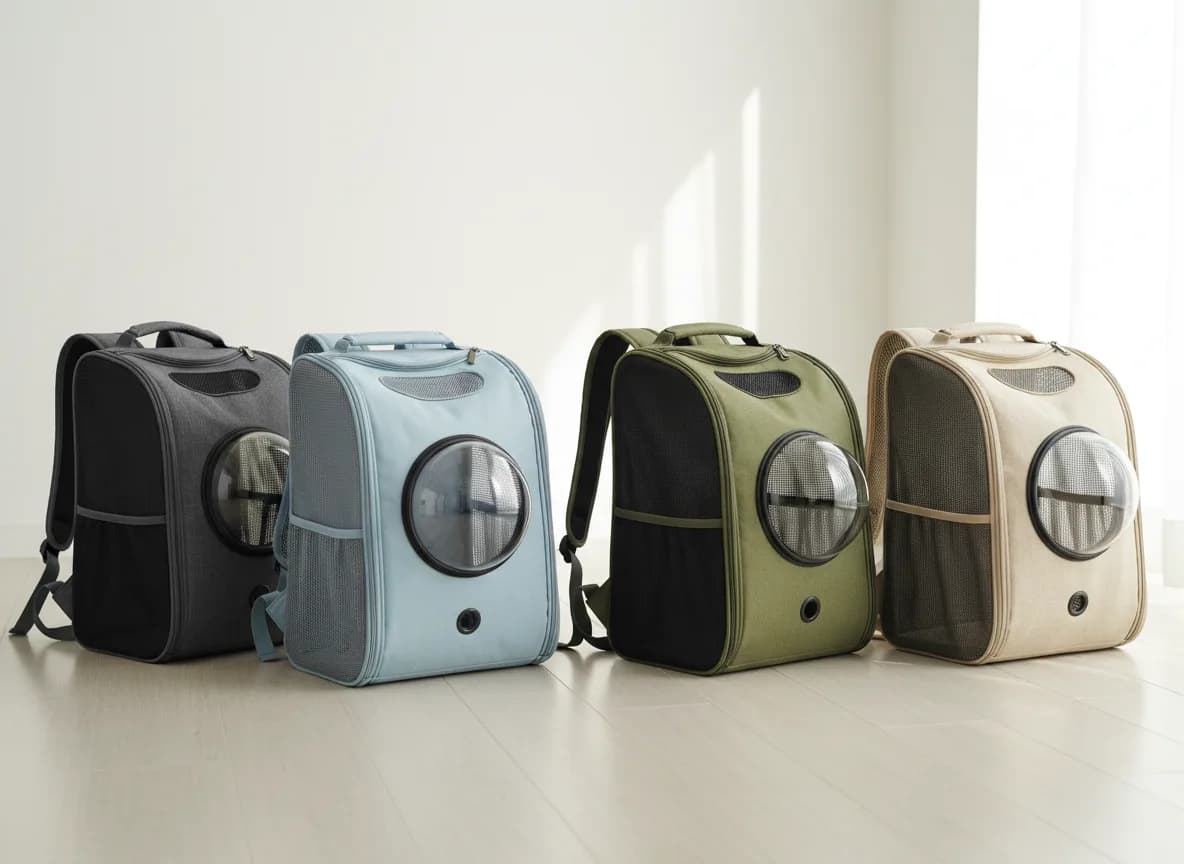
We sorted the field by need instead of crowning a single winner, because the best cat backpack for a shy senior is not the best one for a bold adventurer who wants a bubble window and a view. Below you will find our top overall value, a big-cat pick, a budget bubble option, and the most breathable design for warm days. Every recommendation leans on the same non-negotiables: real ventilation, a structured shape, and an interior tether that clips to a harness so a spooked cat cannot bolt. Read the quick picks first, then use the how-to-choose and sizing sections to match a pack to your specific cat.
Best overall cat backpack: PetAmi Deluxe Backpack Carrier
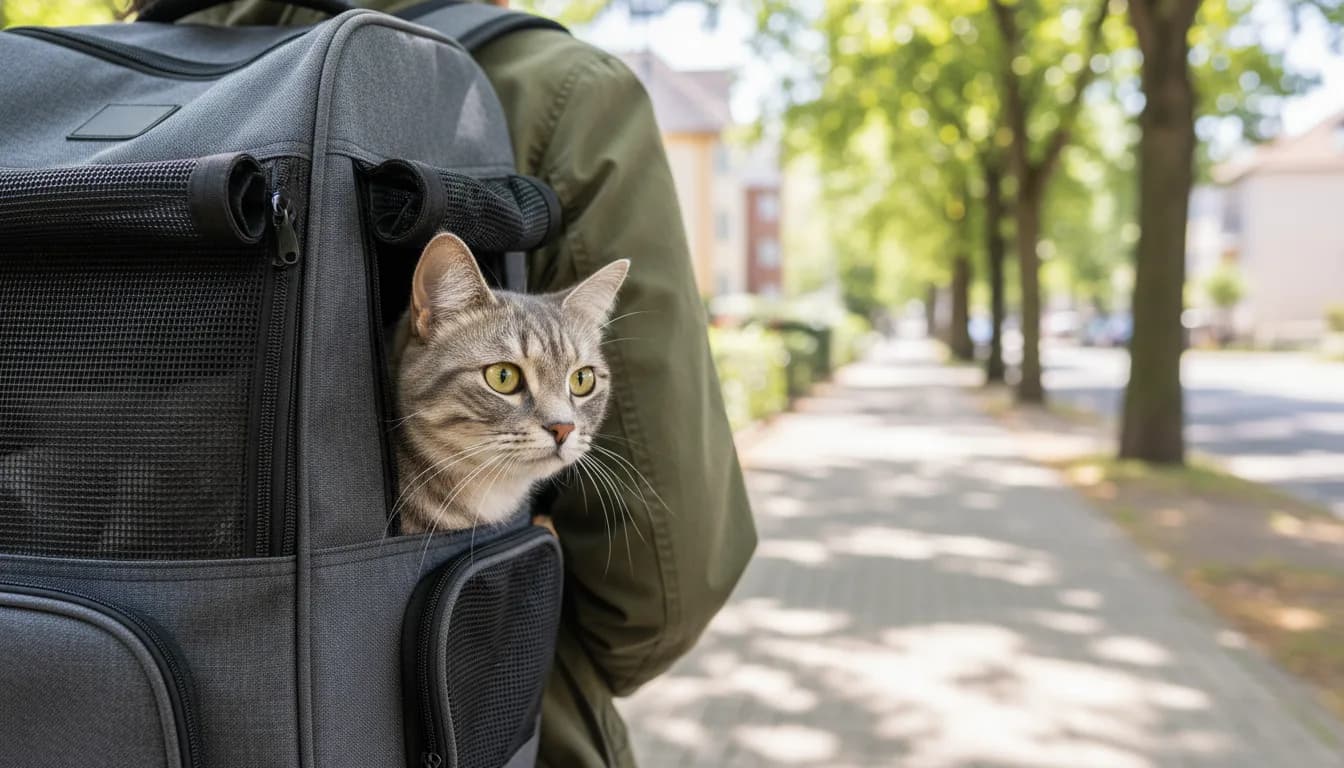
The PetAmi Deluxe Backpack Carrier is the pack we point most first-time owners toward, because it does the important things well and asks for about $40 to do them. Mesh panels wrap three sides, so air moves through instead of pooling, and your cat gets a clear line of sight without the greenhouse effect of a fully sealed bubble. A soft, sherpa-lined pad sits on the floor of the cabin, which gives a cat something to grip instead of sliding around on bare fabric. It is rated for cats up to roughly the mid-teens in pounds, which covers the majority of house cats comfortably, and the structured panels hold their shape so the walls do not press in on your cat while you walk.
Inside sits the feature we care about most: an interior safety tether that clips to your cat's harness and stops a startled escape the second you unzip the door. The two-way zippers tuck into a small pocket so curious paws cannot work them open, and the padded shoulder straps plus a chest clip spread the load across your body rather than digging into your shoulders. It is not a fashion object, and the mesh, while breathable, blocks less of the outside world than some cats prefer, so a very shy cat may want the extra walls a bubble pack provides. For everyday walks, vet runs, and travel practice, though, the balance here is genuinely hard to beat at the price.
Cleaning is straightforward, because the base pad lifts out and the interior wipes down after the inevitable accident. Owners of very large cats sometimes wish for another inch of headroom, and the tallest cats will feel the ceiling, which is exactly why our big-cat pick exists. But for a typical 8-14 pound cat, the PetAmi hits the value sweet spot: enough ventilation, a real tether, a frame that holds, and a price that does not sting if your cat decides backpack life is not for them. If you want one pack that covers most situations without overthinking it, start here and let your cat tell you whether to spend more later.
- Excellent price near $40 for the feature set
- Breathable mesh on three sides
- Built-in interior safety tether
- Tuck-away zippers, padded straps, and a chest clip
- Tight on headroom for the largest cats
- Mesh offers less of a view than a bubble window
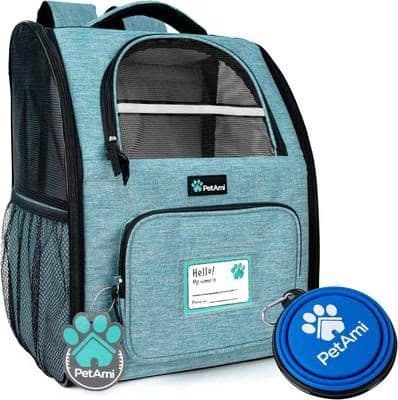
A ventilated backpack carrier that keeps your cat secure and close, ideal for walks, vet trips, and travel.
Petful may earn a commission when you click through to Chewy, at no extra cost to you.
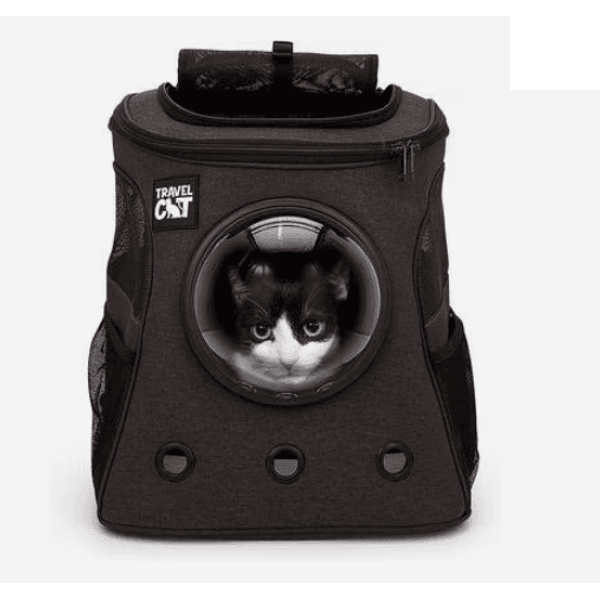
Best for big cats: Travel Cat The Fat Cat Bubble Backpack
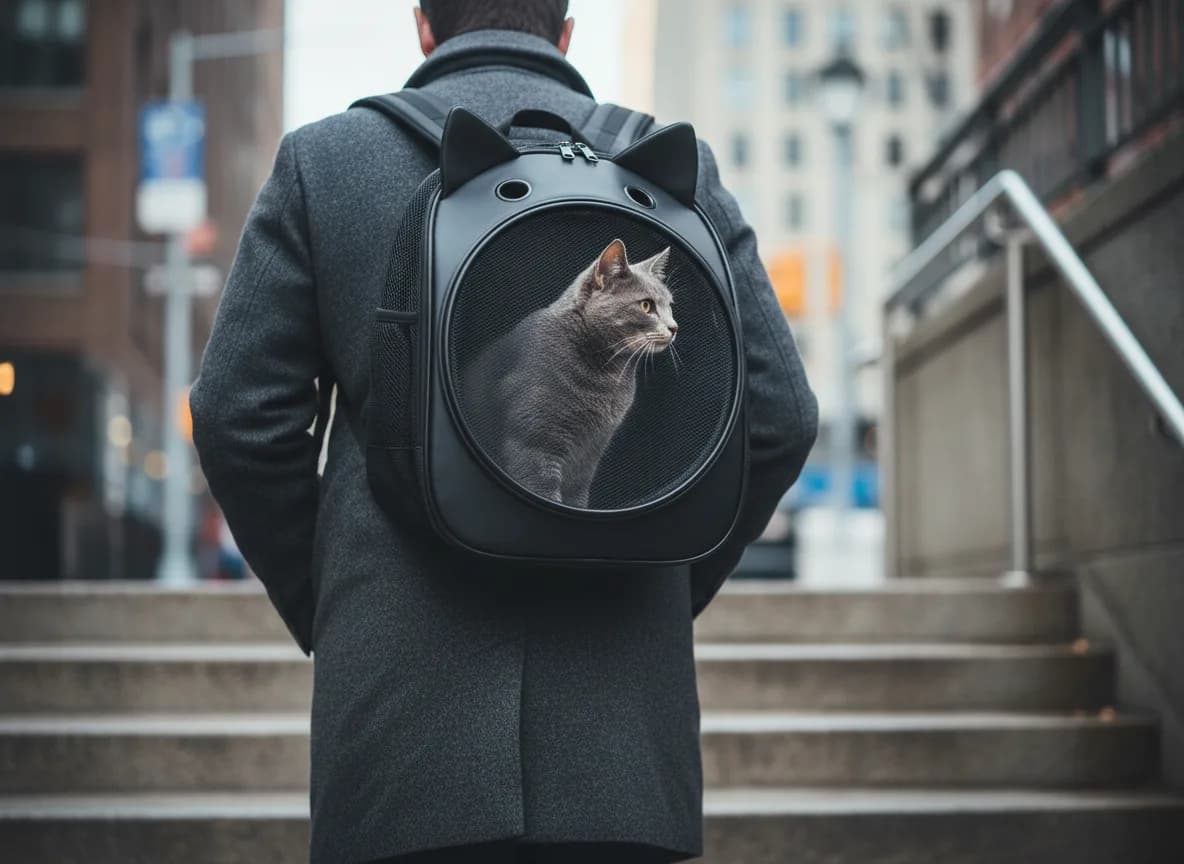
Most bubble backpacks quietly assume a small cat. The Fat Cat from Travel Cat is the rare pack built for the other end of the scale, with a roomier shell rated for cats up to about 25 pounds. That extra volume matters, because a cramped cat is a stressed cat, and a large or long-bodied breed like a Maine Coon or a big domestic shorthair simply will not settle into a standard pod. The signature feature is a large, crystal-clear bubble window that gives a confident cat a panoramic view of the sidewalk, the park, or the airport gate, which is a real draw for the social cats who genuinely like to watch the world go by.
Travel Cat builds this one to a premium standard, and the roughly $125 price reflects sturdier materials, a more supportive frame, and thoughtful touches like removable padding and multiple ventilation mesh panels around the bubble. That last point deserves attention, because any bubble traps warmth, and a bigger cat generates more body heat inside a bigger cabin. The mesh side vents help, and the bubble itself pops off and swaps for a mesh panel when the weather turns warm. An interior tether clips to the harness, the straps are padded for the heavier loads a big cat brings, and the base is firm enough that the pack stands on its own while your cat climbs in.
This is not the pack to buy on a whim, and a petite cat will look lost inside it. But if your cat is bigger than the usual carrier comfortably fits, the alternatives thin out fast, and a too-small pod is not a place to save money. The Fat Cat earns its price by solving a real problem for large-cat households: room to sit up and turn around, a view for the curious, ventilation you can adjust, and a build that will survive years of trips. For a 15-25 pound cat who tolerates outings, this is the pick, and the cost buys space you cannot fake in a smaller shell.
- Fits large cats up to about 25 pounds
- Roomy cabin with a premium bubble window
- Multiple mesh vents plus a swappable panel
- Supportive frame and padded straps for heavier loads
- Premium price near $125
- Oversized and heavy for a small cat
Petful may earn a commission when you click through to Chewy, at no extra cost to you.
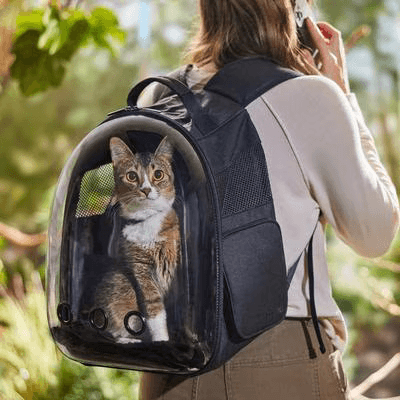
Best budget bubble backpack: Frisco Bubble Backpack Carrier
If your cat wants the bubble-window experience and your budget does not stretch to a premium pack, the Frisco Bubble Backpack Carrier is the easy answer at around $36. Frisco is Chewy's house brand, and this pack keeps the parts that make bubble packs fun (a clear front dome and a curious cat's-eye view) while trimming the price to something closer to an impulse buy. It suits smaller and average cats up to roughly the low teens in pounds, and it works well as a starter pack to learn whether your cat even likes the bubble format before you commit real money. The dome pops off and a mesh panel takes its place, so you are not locked into the sealed look on a warm afternoon.
For the money, the essentials are here. There are air holes around the bubble and mesh side panels for ventilation, an interior tether to keep a startled cat from leaping out, and reflective strips for low-light walks. The frame is lighter and less rigid than the pricier packs, so it can feel a bit floppy when empty and offers a little less crash protection, and the zippers, while functional, are not the lockable, vault-style pulls you get higher up the range. None of that makes it unsafe for calm, everyday use. It simply means this is a value pack that hits the important marks rather than a lifetime heirloom you will hand down.
We like the Frisco as a low-risk way into backpack walks. Buy it, spend two weeks acclimating your cat, and you will know quickly whether the bubble style is a hit or a bust without having spent a fortune. If your cat loves it and you start doing longer or more frequent outings, you can graduate to a sturdier pack later and keep this one as a spare or a second-cat pack. For occasional trips, photo walks, and cats on the smaller side, the price-to-feature ratio here is honestly hard to argue with, and it lowers the stakes of finding out what your cat thinks.
- Bubble-window look for around $36
- Swappable mesh panel and side vents
- Interior tether and reflective strips
- Low-risk way to test the format
- Lighter, less rigid frame
- Basic zippers without a secure lock
Petful may earn a commission when you click through to Chewy, at no extra cost to you.
Best ventilation: Halinfer Breathable Bubble Backpack
The Halinfer Breathable Bubble Backpack tries to solve the biggest complaint about bubble packs, which is trapped heat, and it does so cleverly for about $48. The headline feature is an expandable back panel that unzips and folds out to give your cat extra floor space when you are parked at a cafe or a friend's house, turning a snug travel pod into a roomier lounge. Just as important, the design layers mesh across multiple sides so air keeps moving even with the clear dome in place. For owners who worry about airflow, and anyone walking in a warmer climate, that combination of a big vented surface and an expandable footprint is the standout reason to pick this one.
The rest of the pack is well thought out for the price. An interior safety tether clips to the harness, the shoulder straps are padded with a chest clip to steady the load, and the bubble dome swaps for a mesh cover when you want maximum breathability. The expandable panel is a feature you will use more than you expect, because the hardest part of any outing is the waiting, and a cat with room to shift and stretch stays calmer than one wedged into a fixed pod. The trade-off is that the extra panel and mesh add a little bulk and a few more seams to keep clean, and the expanded section needs a flat, safe surface to rest on.
If ventilation is your top priority, whether because your cat runs hot, your summers are long, or you simply want the most air you can get around a bubble, the Halinfer is our pick. It is not the cheapest and not the most premium, but it lands in a smart middle where the airflow and the expandable space punch above the $48 tag. Pair it with short walks in the warm months and longer, more relaxed sits in the shade, and it becomes a versatile everyday pack for cats who need to stay cool and comfortable rather than merely contained.
- Expandable back panel adds lounging space
- Mesh on multiple sides for strong airflow
- Swappable dome and mesh cover
- Interior tether, padded straps, and a chest clip
- Extra panel adds bulk and seams to clean
- Expanded section needs a flat, safe surface
Petful may earn a commission when you click through to Chewy, at no extra cost to you.
What to look for in a cat backpack
The four packs above cover most cats, but the right choice comes down to a handful of features that separate a safe, usable backpack from a stressful one. Whether you stick with our picks or shop around, run any pack you are considering through this checklist first. These are the details that matter once a real cat is inside and the door of the pack is the only thing between calm and chaos. Our overall pick, the PetAmi Deluxe Backpack Carrier, ticks most of these boxes for around $40 if you would rather not shop the whole field.
- Secure, lockable zippers: Cats are escape artists, so look for two-way zippers that clip or tuck into a pocket. A pull a paw can nudge open is a bolt risk waiting to happen.
- Ventilation on multiple sides: Air should move through the whole cabin, not just one window. Mesh panels, or a bubble with generous air holes, keep the space breathable in every season, and the Halinfer Breathable Bubble Backpack is the clearest example here.
- An interior safety tether: A short leash inside that clips to your cat's harness is the single best anti-escape feature, and every pick here has one, including the PetAmi Deluxe. Never rely on the zipper alone at an open door.
- A structured frame that will not collapse: The walls should hold their shape when the pack is full and upright. A floppy shell presses on your cat and offers no crash protection.
- The right weight capacity for your cat: Every pack lists a maximum weight and interior size. Match it to your actual cat, and give a big or long cat room to stand and turn.
- Padded straps and a chest clip: A loaded pack rides your back for the whole trip. Wide, padded shoulder straps and a chest or sternum clip keep the weight stable and off your neck.
- An easy-clean base: Accidents happen. A removable, wipeable pad or a base you can wash means one nervous trip does not ruin the pack for good.
How to size a cat backpack
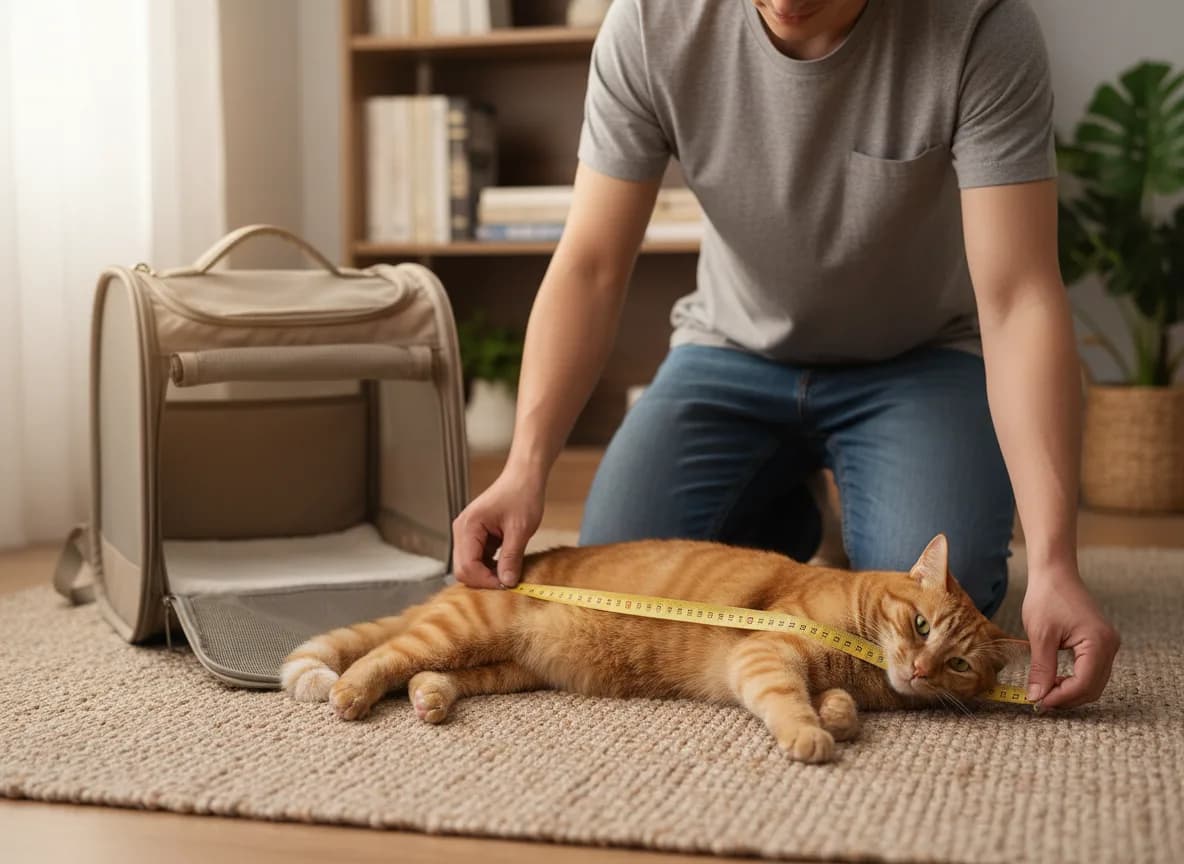
Fit is where most backpack regret comes from. A pack that is too small forces a cat to hunch, which reads as a threat and turns a short trip into a fight, while a pack that is far too big lets a cat slide around with nothing to brace against. The goal is a cabin where your cat can stand up, turn around, and lie down without folding in on itself. That takes two numbers, weight and length, and a minute of checking before you buy. The simple sizing rule is to measure your cat against the pack's weight capacity and interior length before you commit, so the shell fits the cat you actually have rather than an average cat on a label.
- Check the weight first: Weigh your cat and read the pack's max weight capacity, then leave a margin. A cat near the top of the rating feels cramped, so size up to something like The Fat Cat if you are close.
- Measure your cat, then the pack: Measure your cat's length from nose to tail base, then compare it to the pack's interior dimensions, not its outside size. Padded walls steal real space.
- Leave room to turn around: Add a few inches beyond your cat's length so there is space to pivot and settle. If your cat cannot turn in place, the pack is too small.
- Before you buy any cat backpack, measure your cat nose to tail base, weigh them, and check the pack interior length and weight capacity. Two minutes with a tape saves a return and a pack your cat refuses to enter.
Big cats and small cats fail fit in opposite directions. A large cat needs a genuinely roomy shell, which is why an oversized pick like The Fat Cat exists, because forcing a 20-pound cat into a standard pod is neither safe nor kind. A petite cat has the opposite problem: a cavernous pack lets a small body tumble around, so a snugger cabin with a grippy pad actually feels more secure. Buy for the cat you have, not the average cat the label imagines.
Ventilation and heat safety in a cat backpack
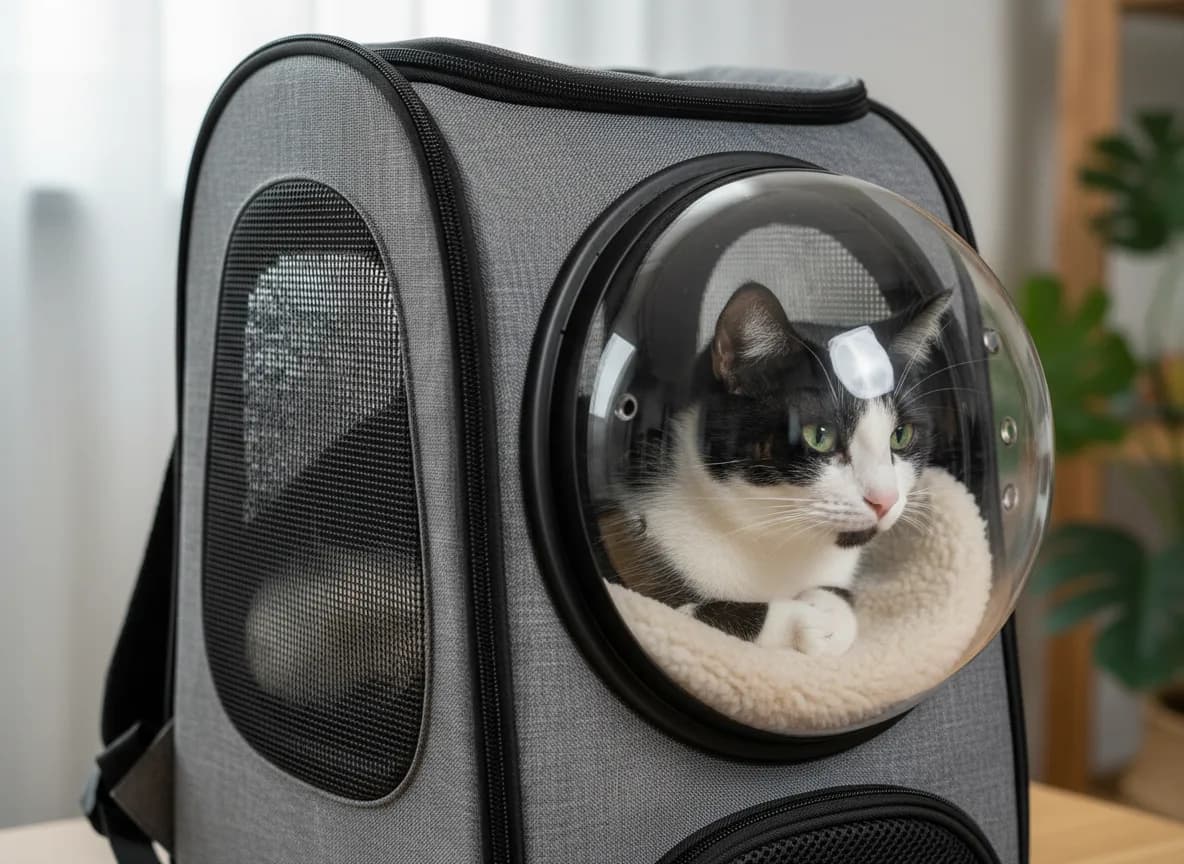
The single biggest downside of the bubble-window style is heat. A clear plastic dome behaves like a tiny greenhouse, letting sun in and trapping the warm air your cat exhales, and a cabin that feels fine at the start of a walk can climb several degrees within minutes on a sunny day. Cats do not sweat the way people do, and they tend to show overheating late, so real heat and ventilation safety inside a sealed pod is something you manage actively rather than assume is fine.
Ventilation is the fix, and it starts with airflow you can see and feel. Choose a pack with ventilation mesh on more than one side, or a bubble that pops off and swaps for a mesh panel, and actually open that vent when the weather is warm. Every pack in our lineup offers a mesh option for exactly this reason, and the Halinfer Breathable Bubble Backpack is built around airflow with a swappable mesh cover. In hot months, keep walks short, stick to shade, and skip the bubble entirely in favor of the mesh cover so warm air has somewhere to escape.
- A sealed bubble pack behaves like a tiny greenhouse. Never leave your cat in a backpack inside a parked car, keep warm-weather walks short and shaded, and choose ventilation mesh over a closed bubble when it is hot.
A few hard rules keep a warm day from turning dangerous. Never leave a cat in a backpack inside a hot parked car, where the temperature spikes fast and turns deadly within minutes even with the windows cracked. Watch for open-mouth panting, drooling, or a cat pushing against the walls, and end the outing at the first sign. When in doubt, treat a cat backpack like any sealed space in the sun: fine for a short, shaded, well-ventilated trip, and a poor choice for a long midday walk in the heat.
Bubble vs. mesh cat backpacks
Neither style is universally better, and the honest answer is that they suit different cats and different weather. A bubble window gives a big, clear view that confident, curious cats love and that makes for great photos, while a mesh backpack trades some of that spectacle for lighter weight and far better airflow. The best pick depends on your cat's temperament and the climate you walk in more than on which style simply looks nicer online.
| Type | Best for | Pros | Watch-outs |
|---|---|---|---|
| Bubble window | Views, photos, curious confident cats | Panoramic view, sturdy | Traps heat, heavier |
| Mesh | Warm weather, nervous cats, breathability | Full mesh panel, cooler airflow, lighter | Less rigid, less of a view |
If your cat is bold and loves to watch the world, and you mostly walk in mild weather, a bubble pack is a treat. If your cat runs nervous, or you live somewhere warm, or you just want the lightest and most breathable option, mesh is the safer everyday choice. Plenty of packs, including several in our lineup, split the difference with a bubble that pops off and a mesh panel that snaps into its place, like the budget Frisco Bubble Backpack, which is the closest thing to having both.
Are cat backpacks safe? What vets say
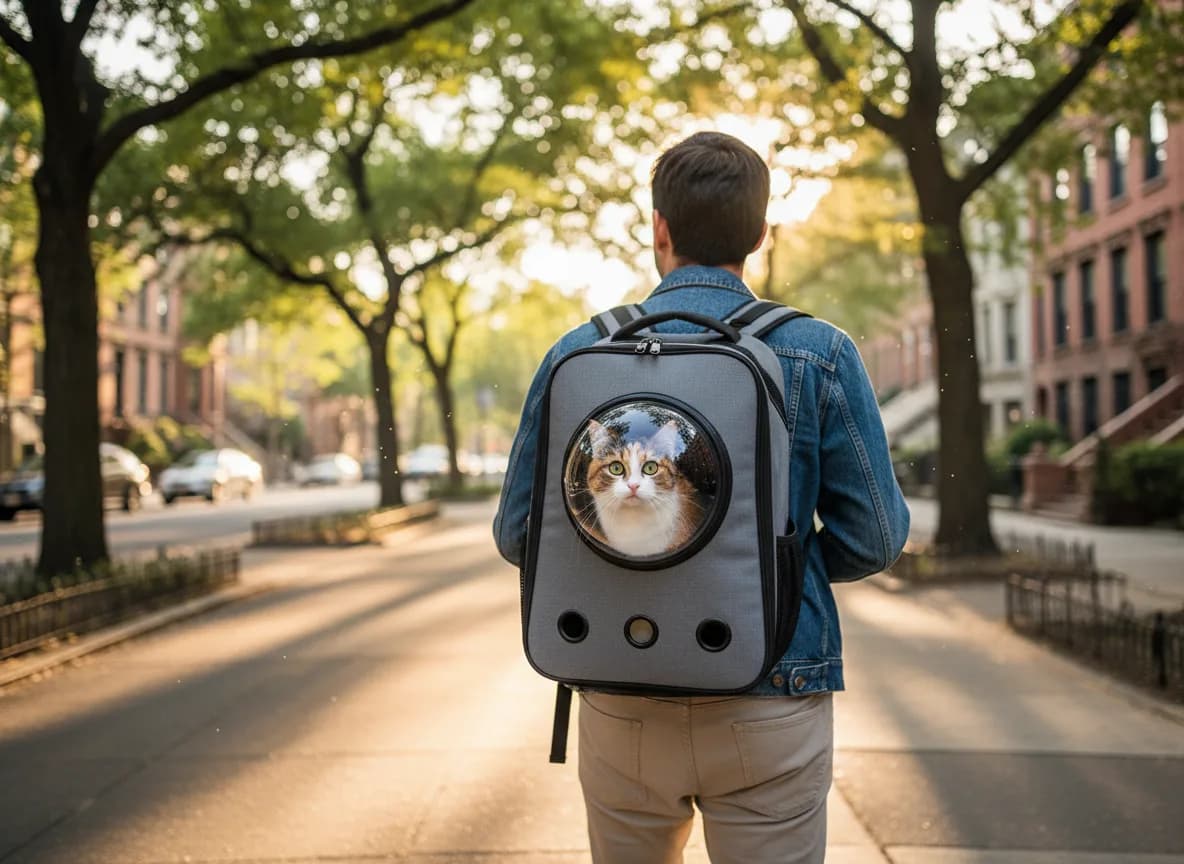
Yes, backpack carriers are ok for cats, as long as the cat is calm and the pack has good ventilation. Cat backpacks are generally safe for the right cat used the right way, and plenty of veterinarians are fine with them as a carrier alternative, especially for low-stress vet visits where a familiar pack beats a dreaded hard crate. Safety comes down to a few conditions being met rather than the format itself being good or bad. A calm, acclimated cat in a well-ventilated pack with an interior tether clipped to a harness is in a reasonable, secure spot. For a truly fearful patient, pair the pack with our tips on getting a scared cat to the vet.
The caveats are real, though, and worth stating plainly. A panicky cat who has never been trained to the pack can overheat, thrash, or hurt itself trying to escape, and a sealed bubble on a hot day is a genuine hazard rather than a cute accessory. Vets who raise concerns usually point at ventilation, duration, and temperament, not the backpack concept itself. The pack is a tool, and like any tool it is safe within its limits and risky outside them.
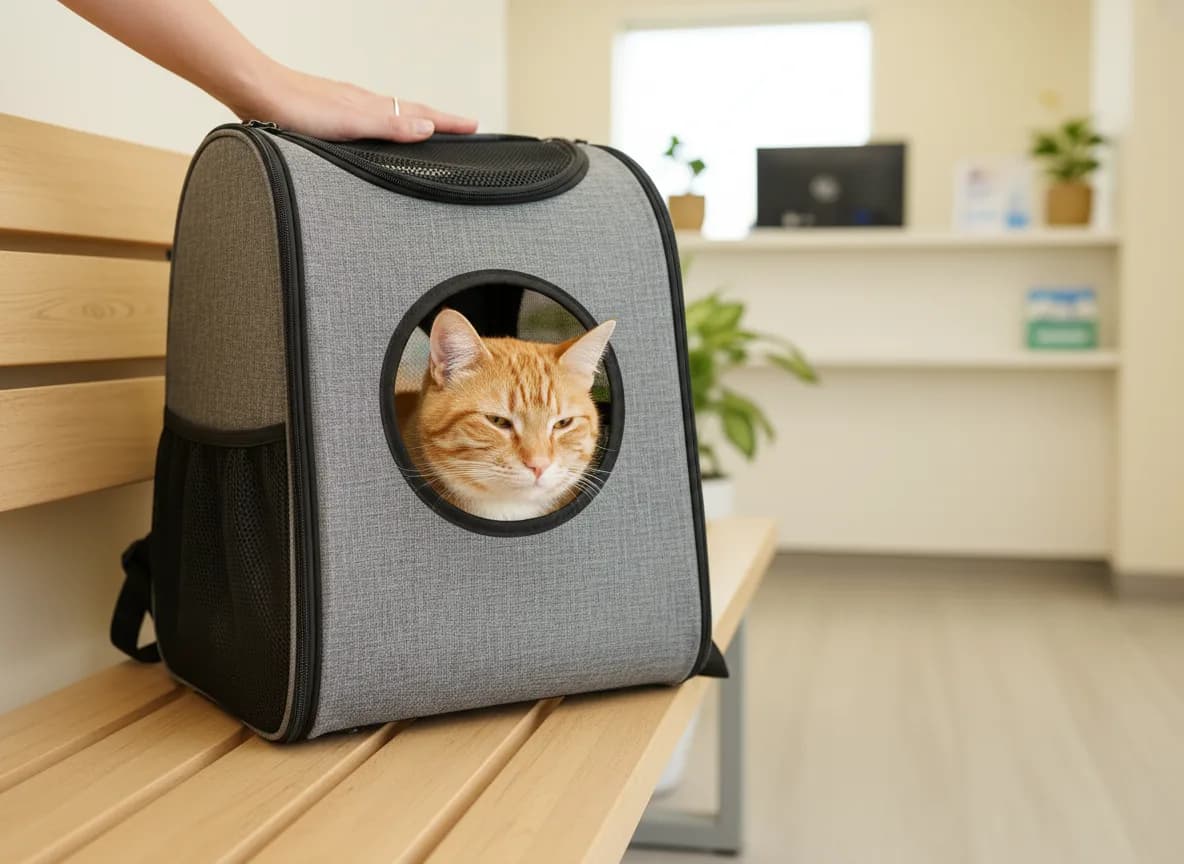
So the honest answer is a qualified yes. Use a backpack for a calm cat you have acclimated over time, keep outings short and cool, always clip the interior tether to a harness, and choose real ventilation over a fully sealed look. Skip it for a fearful cat, a cat with breathing issues, a very young kitten or frail senior, or any long, hot outing. Ask your own vet if your cat has a specific health condition, since that is the one judgment a guide cannot make for you. And if your cat runs anxious, our realistic guide to traveling with an anxious cat is worth reading before any trip.
Do cats like being carried in a backpack?
Some cats genuinely like being carried in backpacks, and plenty of others never do. Whether a cat enjoys a backpack depends almost entirely on the individual cat and how carefully it was introduced. Some cats, especially bold, curious, people-oriented ones, take to a pack quickly and seem to relish the moving view, riding along with relaxed ears and even a purr. Others never warm to it, and no amount of coaxing will change a cat who would simply rather stay home. Both reactions are completely normal, and neither one means you did something wrong.
Acclimation is the variable you actually control. A cat that has had weeks to explore the pack as furniture, eat meals inside it, and take short, calm trips is far more likely to tolerate and even like it than a cat zipped in cold on day one. Rushing the process almost guarantees a bad first impression, and cats remember bad first impressions, so the patience you spend early pays off for the entire life of the pack.
Read your cat rather than the marketing photos. Signs of comfort include a relaxed body, normal ears, kneading or settling in, slow blinks, and calm breathing. Signs of stress include flattened ears, a puffed tail, dilated pupils, panting, constant vocalizing, drooling, or frantic attempts to get out. A comfortable cat rides quietly and curiously. A stressed cat is telling you clearly to end the trip, and the kind move is to listen and try again more slowly, or not at all.
Will a cat backpack fly? Airline rules
A cat backpack can fly, but only sometimes, and the details trip up a lot of hopeful travelers. Almost every US airline requires an in-cabin pet to ride in a soft-sided carrier that fits fully under the seat in front of you, and the published under-seat dimensions are strict and vary by airline and aircraft. A soft, squishable backpack that compresses to fit can be a great option. A rigid bubble pack that will not flex usually cannot. For most fliers the airline reality check on flying comes down to one thing: a soft, airline-approved mesh cat backpack that collapses to the under-seat size is the only realistic option for travel by plane.
Bubble packs are where most airline plans fall apart. The hard dome that makes them fun on a walk is exactly what keeps them from squashing down to under-seat height, so many bubble models fail carry-on rules even when their footprint looks small enough. Before you count on flying with any pack, measure it against your specific airline's under-the-seat allowance, confirm the pet reservation (cabins cap the number of animals per flight), and pay the pet fee in advance.
- Before you buy a backpack for flights, measure it against your exact airline's under-seat allowance, and remember that a soft carrier which squishes flat clears security far more often than a rigid bubble. Call the airline to confirm the in-cabin pet limit and pay the pet fee in advance.
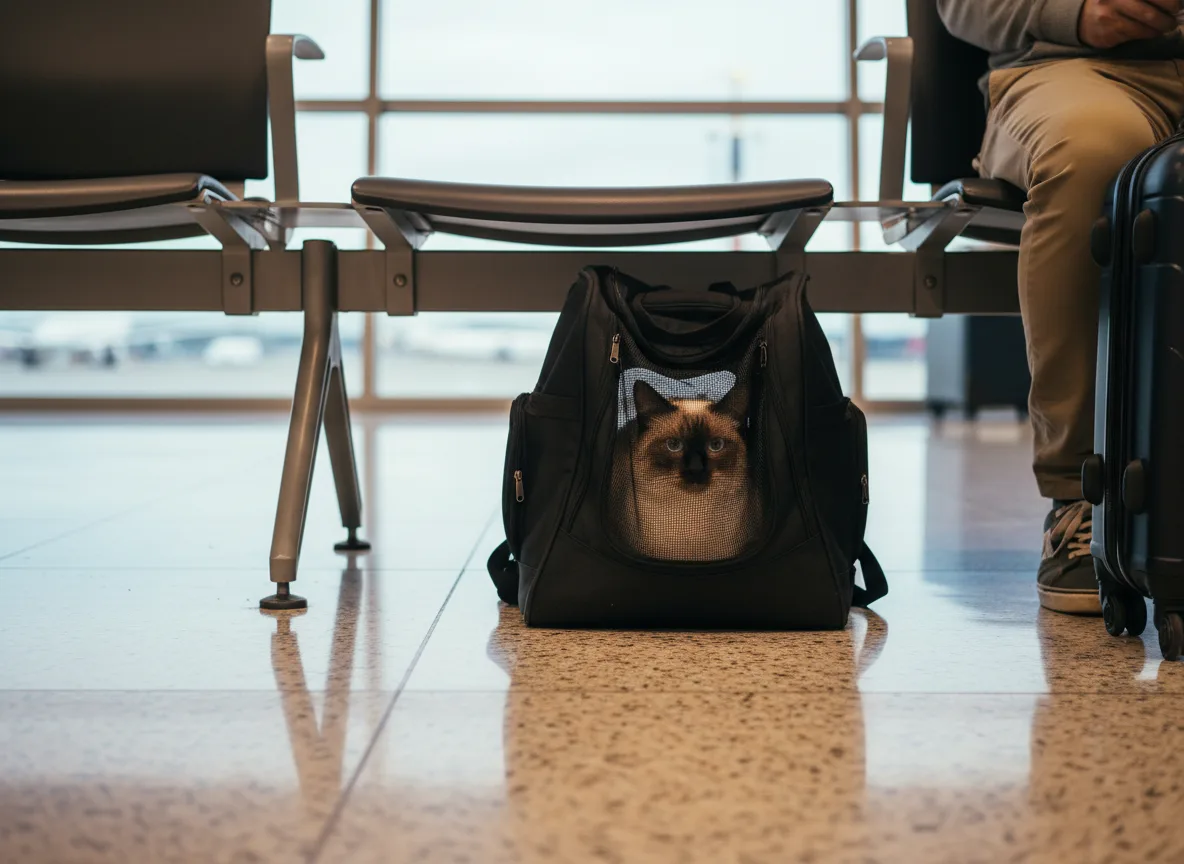
Then there is the security line. At the checkpoint, TSA requires you to take your cat out of the carrier and carry it through the metal detector while the empty pack rides the X-ray belt, which is a fresh reason to have a harness and the interior tether habit already locked in. A calm, acclimated, harnessed cat makes that TSA moment survivable. If any of this sounds like more than your cat can handle, a purpose-built soft airline carrier, not a backpack, is the smarter buy for flying.
Getting your cat used to a backpack
Acclimation is the whole ballgame with a cat backpack, and it deserves more than the quick version here. This is the short summary, and the walkthrough below plus our linked how-to guide cover the full routine. The one rule that matters most: start days before you actually need the pack, not the morning of the vet appointment. Leave the pack out as a normal piece of furniture and let curiosity, not force, do the early work for you. If your cat is new to wearing one, get comfortable with cat leashes and harnesses first, because every safe backpack trip starts with a well-fitted harness.
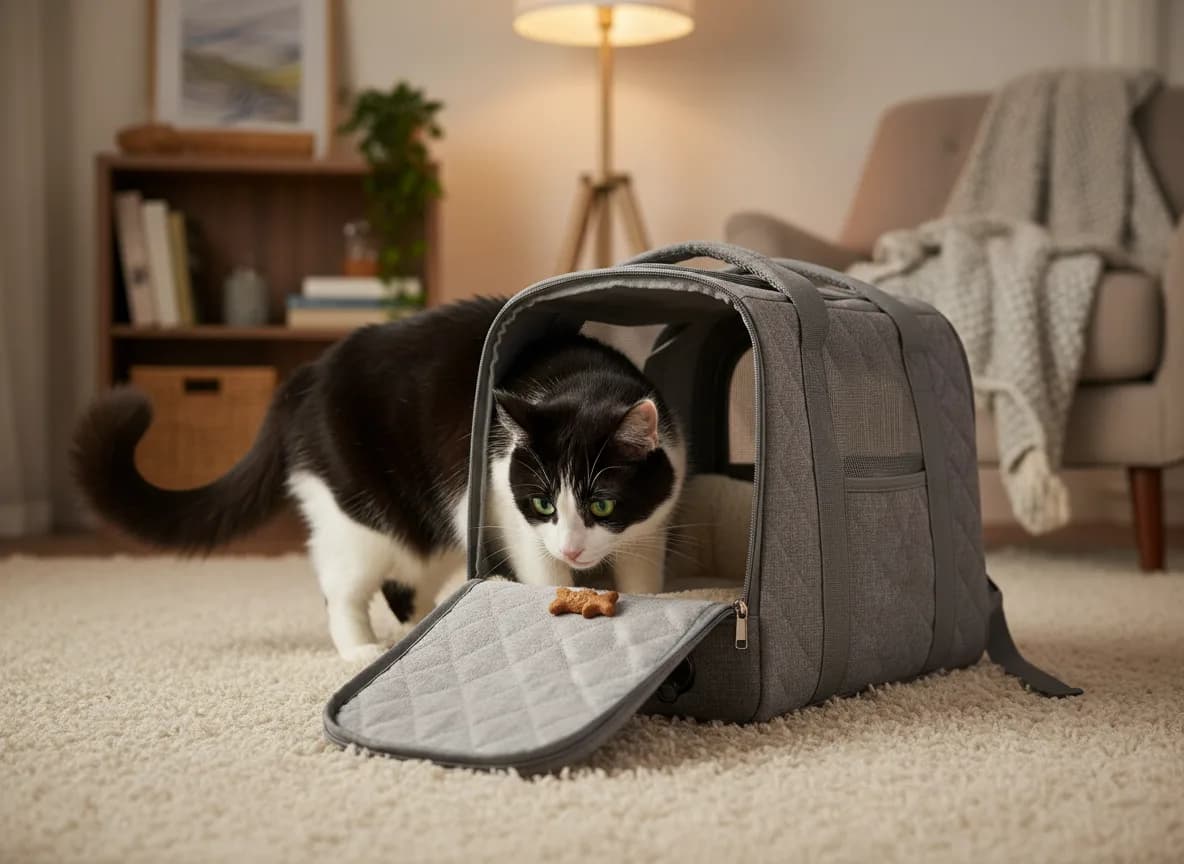
- Make it furniture: Leave the pack open on the floor for several days so your cat can sniff, climb in, and claim it with zero pressure. Familiar smells beat a strange object.
- Feed the good stuff inside: Drop treats, toys, and eventually whole meals into the open pack so your cat builds a positive association with going in on its own terms.
- Practice short zipped sits indoors: Once your cat enters happily, zip the pack for a minute or two at home, then let your cat out and reward the calm. Slowly stretch the time.
- Take a first quiet walk: Clip the harness to the interior tether and try a short, calm trip somewhere quiet, keeping it brief and boring on purpose so nothing spooks your cat.
- Build up duration gradually: Add a few minutes each outing. Back off a step if your cat shows stress, and never rush to a long trip before the short ones go well.
For the full step by step, read our guide on how to get a cat in a carrier, and see our main cat carrier guide to compare a backpack with hard and soft carriers.
Cat backpacks vs. carriers vs. strollers
Whether cats prefer backpacks or carriers depends on the trip, since backpacks free your hands while a hard carrier adds crash protection. A backpack is not always the right carrier, and it helps to know where it sits against the alternatives. A hard-sided carrier offers the most crash protection and the easiest cleanup, which makes it the vet's classic pick, but it is bulky and keeps a hand occupied. A soft-sided carrier is lighter and more flexible, and it is usually the better bet for air travel because it squashes under the seat. A backpack's real edge is that it frees your hands and rides on your body, which is ideal for walks, transit, and hikes where carrying a box gets old fast. For the full breakdown of every style, see our guide to choosing a cat carrier.
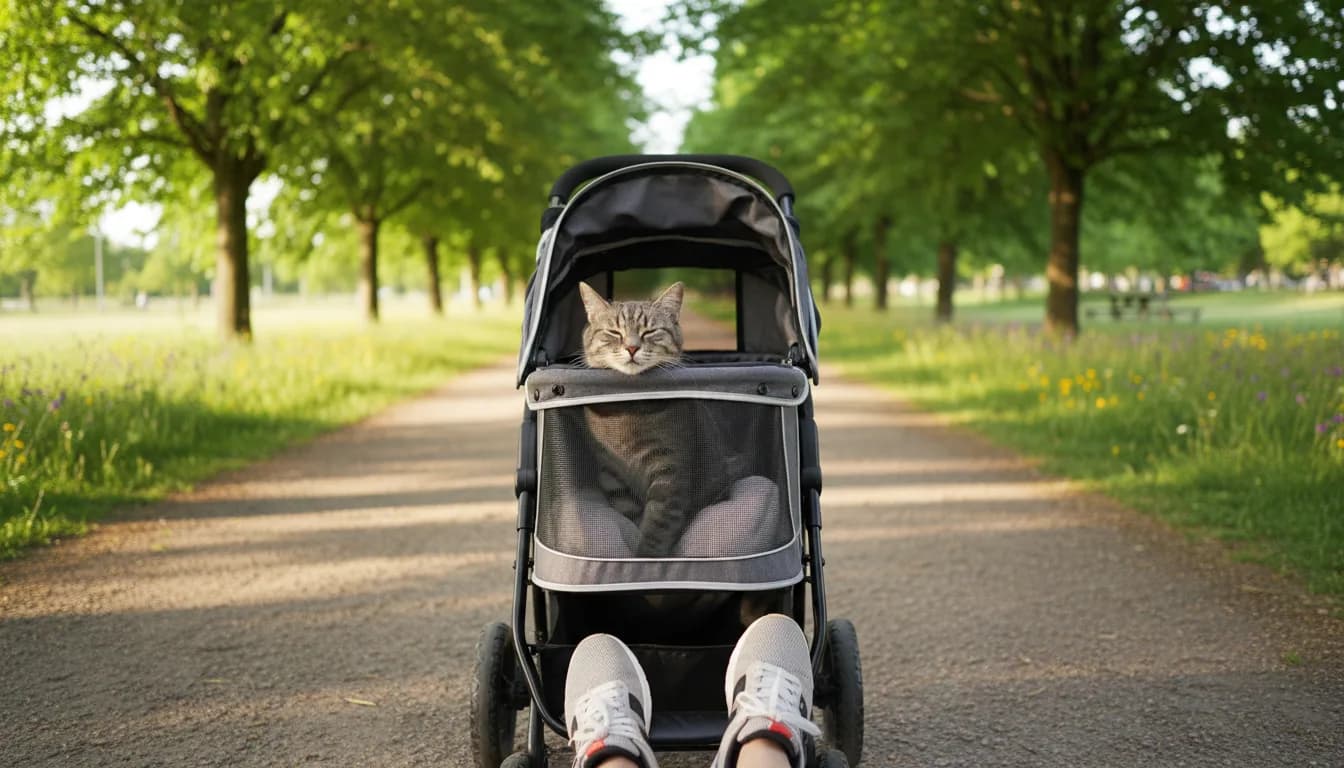
Strollers solve a different problem again. If you want your cat outside for long, relaxed stretches, or you are managing a senior cat, a heavy cat, or more than one cat at once, a cat stroller carries the weight for you and offers far more room and airflow than any pack. The trade-off is that a stroller is bulky, useless on stairs or narrow trails, and no help at all on a plane. Many adventure-cat households own both: a backpack for quick, hands-free trips and a stroller for the long, leisurely outings. Our cat stroller guide covers that side in depth, and for longer drives see our guide to traveling with cats in the car.
Frequently asked questions about cat backpacks
How much weight a cat backpack can hold depends on the pack, but most models are rated for cats between about 10 and 18 pounds, with a few big-cat models like The Fat Cat handling up to roughly 25 pounds. The number to trust is the manufacturer's stated maximum weight, and you should leave a margin below it rather than buying right at the limit. A cat at the very top of a pack's rating tends to feel cramped, which means more stress and less airflow, so if your cat is close to the ceiling, size up to the next model instead of squeezing in.
To clean a cat backpack, start by emptying the pack and remove the pad or base insert, which on most quality packs lifts right out for washing. Shake out fur and litter, then spot-clean the shell and mesh with warm water and a mild, pet-safe soap, working stains gently so you do not fray the mesh. For accidents, an enzyme cleaner breaks down odor better than plain soap and discourages repeat marking. Let every part air-dry completely before you reassemble, since trapped moisture breeds smell and mildew. Avoid the washing machine and dryer unless the label specifically says the pack is machine-safe, because heat and agitation can warp the frame and cloud a bubble dome.
Yes, you can take your cat hiking in a backpack, but it is the advanced version of backpack use and not a day-one activity, and many adventure cats do it happily. Build up to it with plenty of acclimation and short local walks first, and make sure your cat is fully harnessed and clipped to the interior tether before you hit a trail. Choose a well-ventilated pack, carry water and a collapsible bowl, watch closely for heat stress on exposed climbs, and keep early hikes short and shaded. Skip it entirely in hot weather or if your cat shows stress, and never let your cat loose in unfamiliar terrain where a spook could send it bolting into the brush.
How much a cat backpack costs comes down to build quality more than looks, and the realistic range runs about $35 to $130. Budget packs like the Frisco Bubble Backpack Carrier land near $36 and cover the essentials without a lockable zipper or a rigid frame. The middle of the market, where most owners should shop, sits around $40 to $50 and buys better ventilation and a structured shell, which is where the PetAmi Deluxe Backpack Carrier lives. Premium models such as The Fat Cat run about $125 and pay for room, tougher materials, and adjustable airflow. Spend your money on ventilation and structure rather than on the size of the bubble.
How long a cat can stay in a backpack depends on the individual cat, the temperature, and how well acclimated they are. Keep the first sessions to 15 or 20 minutes, and treat 30 to 60 minutes as a normal ceiling once your cat rides calmly. Short outings should stay the rule in warm weather, because a closed cabin heats up faster than the air around it. On any longer trip, plan a stretch break in a safe, fully enclosed space so your cat can move, drink, and reset. End the outing early at the first sign of panting, drooling, or restlessness.
Yes. Your cat needs a harness in a backpack because the interior safety tether clips to the harness, and that tether is the one thing standing between a startled cat and an open door at the vet or on a sidewalk. Use a fitted harness that sits snugly across the chest, never a collar, which can slip over the head or tighten dangerously under sudden pressure. Introduce the harness at home several days before the first trip so it already feels normal, then clip the tether every single time you load the pack, including short trips you think will be uneventful.
A young kitten can use a cat backpack once they are steady on their feet and fully vaccinated, which is usually somewhere around four to six months, and it is worth asking your vet before the first real outing. The bigger issue is fit rather than age: a kitten slides around inside a cabin built for an adult cat, so look for a snug interior and a grippy pad instead of the roomiest shell on the shelf. A mid-size pack like the PetAmi Deluxe Backpack Carrier works well. Keep the first outings very short and quiet.

Coreen Saito is a pet writer and longtime shelter volunteer with more than a decade in animal rescue. She covers cat behavior, breed care, and the small, ordinary science of sharing a life with companion animals, with a particular focus on honest takes about the products and decisions that actually matter. At home in Arizona, she's outranked by Mac (a dog with the loudest opinion in the house), Rebel (a cat who governs by quiet authority), and Meri (an orange tabby who runs the late shift and the laundry basket). She writes about all three, plus the rescues that keep coming through her life, at LifeWithMinty.com.
Sign up for expert-backed reviews and safety alerts all in one place.