Clumping vs Non Clumping Cat Litter: Which Is Better?
Clumping litter forms scoopable clumps, while non-clumping litter absorbs and is changed in full. Here is how each handles odor, dust, kittens, cost and automatic boxes, so you can choose.
Petful is reader supported. As an affiliate of platforms like Amazon and Chewy, we may earn a commission when you buy through links on this page. There is no extra cost to you.
Clumping vs non clumping cat litter comes down to how waste leaves the box. Clumping litter forms hard clumps you scoop out daily, so it is the easier, lower-waste choice for most healthy adult cats. Non-clumping litter absorbs liquid and gets dumped in full, which suits young kittens, cats recovering from surgery, and anyone sensitive to dust or clay.
Below, we compare the two types on scooping, odor, dust, tracking, kitten safety and monthly cost, then match each one to a real household. The examples come from documented label features and Chewy catalog details, not hands-on testing.

Sign up for expert-backed reviews and safety alerts all in one place.
Compare clumping vs non clumping cat litter
If you are weighing clumping or non clumping cat litter, the table sets the two side by side on the criteria owners ask about most. Read it as a starting point; your cat's age, health and box type decide the rest. A widely stocked clumping example is Dr. Elsey's Ultra Unscented Clumping Clay Cat Litter, 40-lb bag, about $22.99 at Chewy at the time of writing.
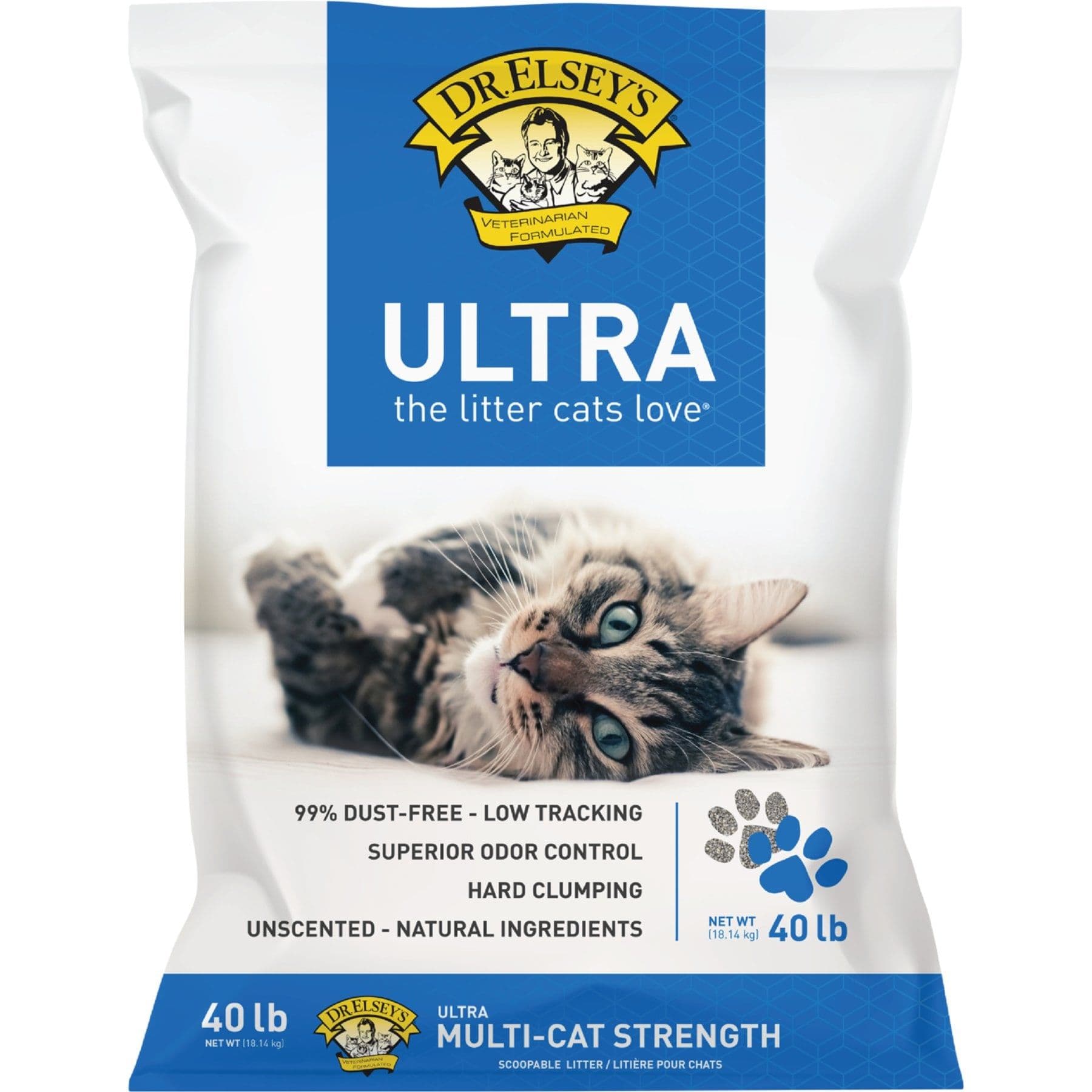
Chewy lists strong clumps that do not break apart, heavier low-tracking granules, and no perfumes or deodorants, which makes it a clean example of how clay clumping litter behaves.
Petful may earn a commission when you click through to Chewy, at no extra cost to you.
| Litter type | Scooping | Odor control | Dust | Tracking | Kitten safety | Monthly cost | Box type |
|---|---|---|---|---|---|---|---|
| Clumping litter (clay, corn, wheat) | Scoop clumps daily, top up | Strong when scooped daily, because urine leaves the box | Clay can be dusty; corn and low-dust clay much less | Fine granules track more | Best avoided until kittens stop eating litter, often around 3–4 months | Lower per month for most single-cat homes | Standard, high-sided and most automatic boxes |
| Non-clumping litter (clay, paper, pine pellets, crystals) | Remove solids, dump and replace in full | Good at first, then fades as the litter saturates | Paper and pine pellets are very low dust | Larger pellets track less | Usual choice for young kittens and recovery | Cheap bags, but you replace more litter | Standard boxes and sifting pellet systems |
- 1Clumping litter forms hard clumps you scoop out daily, so it is the easier, lower-waste choice for most healthy adult cats; non-clumping litter absorbs liquid and gets dumped in full, which suits young kittens, cats recovering from surgery, and anyone sensitive to dust or clay.
- 2Compare cost per pound, then multiply by the pounds added per month, because a cheap bag that gets dumped weekly can cost more than a pricier clumping bag.
- 3A senior cat with asthma usually does best on a low-dust litter, and an automatic box owner needs a fast, hard clumping litter.
- 4Switch litter gradually over about a week, mixing old and new, so your cat keeps using the box.
The short version: clumping wins on convenience and waste, non-clumping wins on safety for small or healing cats and on dust when you choose paper or pine.
How clumping cat litter works
What is clumping cat litter? It is a litter that binds urine into a solid lump you can lift out with a scoop, leaving the rest of the box clean. Most clay clumping cat litter uses sodium bentonite clay, which swells as it absorbs liquid and sticks to itself. Plant-based clumping litter, such as corn or wheat, uses natural starches to do the same job.
Dr. Elsey's Ultra Unscented Clumping Clay Cat Litter, 40-lb bag is a clean example of how this clumping litter behaves. Chewy lists it as a medium-grain clay with strong clumps that do not break apart, heavier low-tracking granules, and no perfumes or deodorants. It sells for about $22.99 at Chewy at the time of writing, in the $20–50 band. For a veterinary overview of the type, WebVet has a guide to clumping cat litter.
How does clumping litter work in daily use? You scoop clumps and solids once or twice a day, then top up with fresh litter to keep a depth of about 2 to 3 inches. Because urine leaves the box every day, ammonia smell stays low.
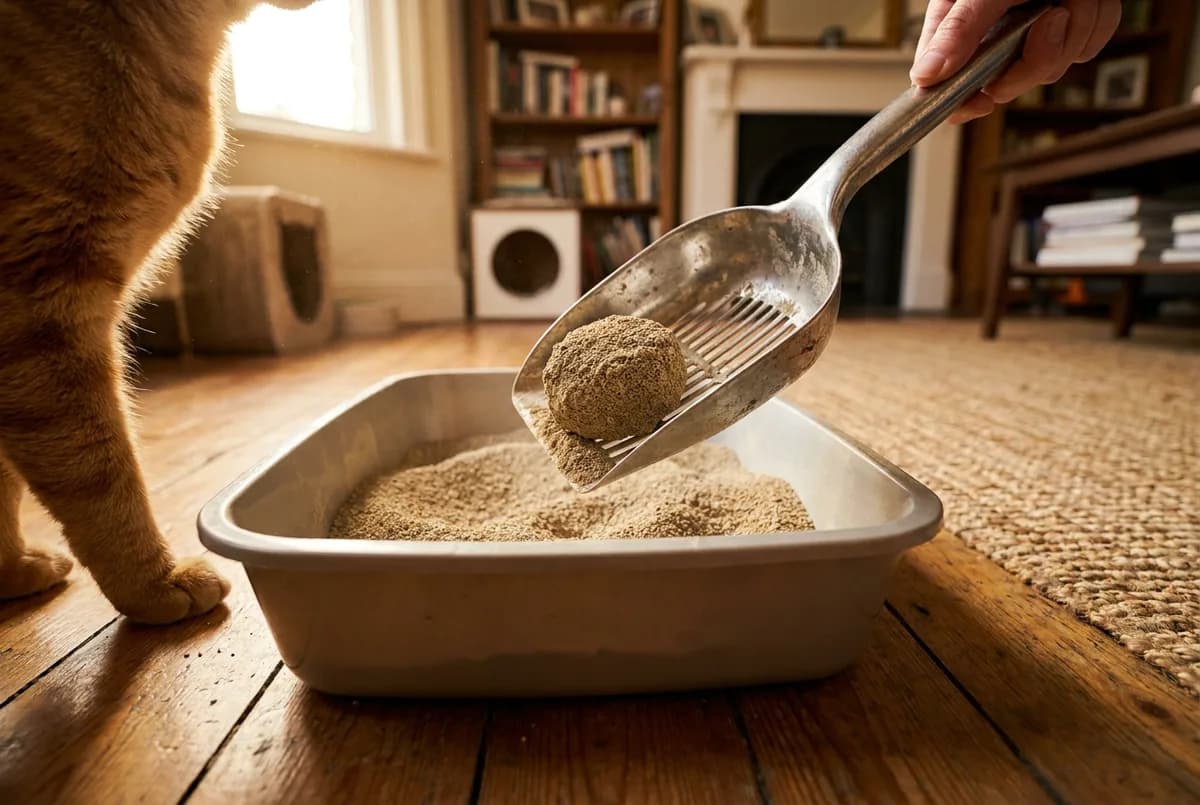
A hard clumping cat litter matters more than most labels admit. Soft clumps crumble on the scoop and leave wet fragments behind, which is where odor builds. A fast clumping cat litter forms the clump before urine reaches the bottom of the box, so less sticks to the pan.
- Clay based clumping cat litter: sodium bentonite, heavy, strong clumps, the most common type
- Corn and wheat clumping litter: lighter, plant based, usually lower dust
- Scooping routine: daily scoop, regular top-up, full change every few weeks
Why don't people like clumping cat litter?
People who dislike clumping cat litter usually cite dust, weight and tracking. Clay clumping litter is heavy to carry, fine granules stick to paws and spread across floors, and some formulas raise visible dust when poured. Choosing a low-dust clay or a lighter corn formula solves most of these complaints.
How non-clumping cat litter works
Non-clumping litter absorbs urine into the granules instead of binding it into a lump, so the only thing you scoop is feces. It is usually made of plain clay, recycled paper pellets, pine pellets or silica crystals. Over a week the litter keeps soaking up liquid until it is saturated, and at that point you dump the whole box, wash it and refill it.
Tidy Cats Non-Clumping Instant Action Odor Control Cat Litter, 20-lb shows the non clumping clay cat litter end of the group. Chewy describes a low-tracking, low-dust clay with moisture-activated odor control and no clumping, at about $7.39 for a 20-lb bag at the time of writing, under $20.
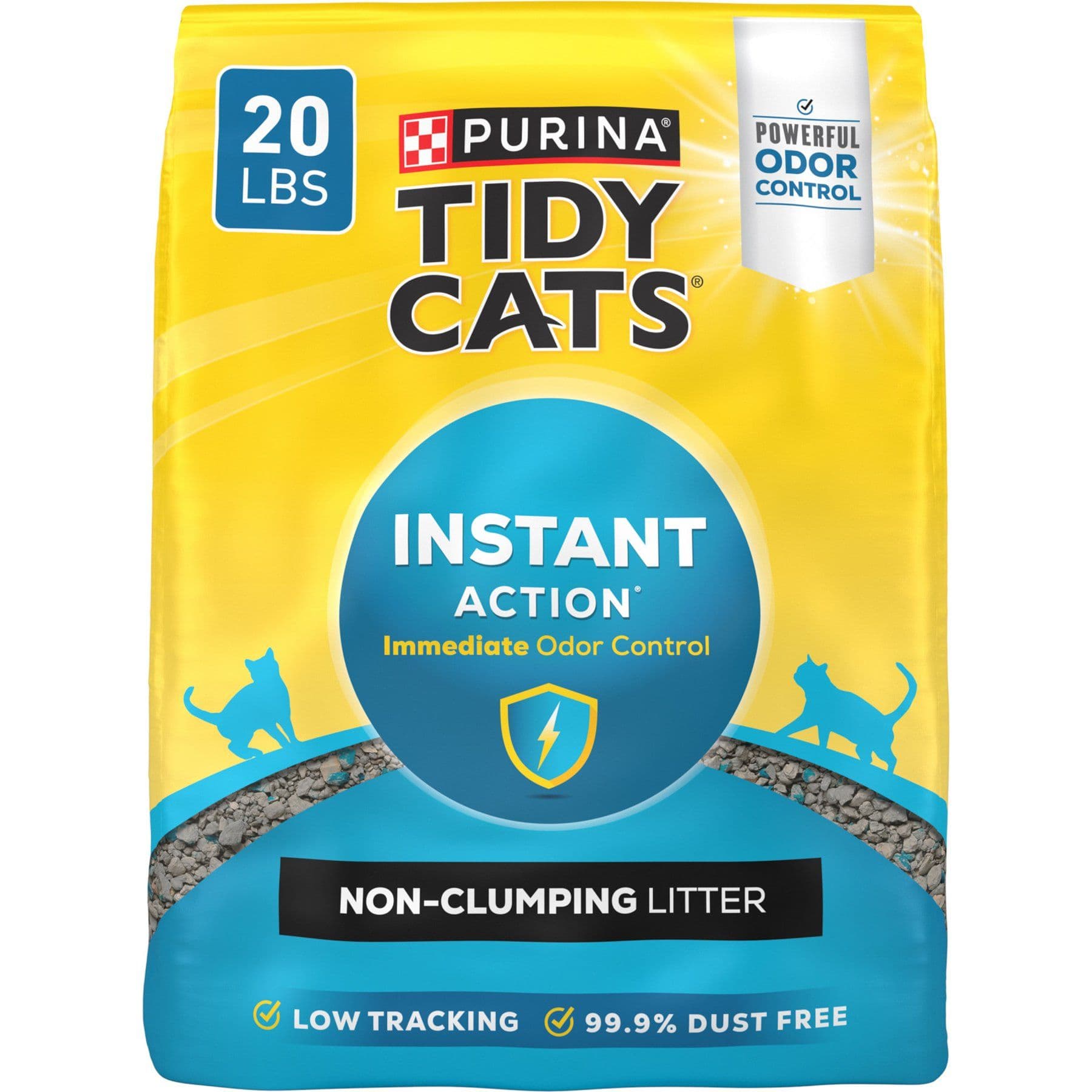
Chewy describes a low-tracking, low-dust clay with moisture-activated odor control and no clumping, the budget end of the non-clumping group.
Petful may earn a commission when you click through to Chewy, at no extra cost to you.
How to use non clumping litter well:
- Pour a shallower layer, about 2 inches, so urine reaches the base and you can see when it is saturated
- Remove solids daily with a scoop
- Dump, wash and refill the box about once a week for one cat, more often for two
- Stir the litter between changes to spread moisture and slow odor
Non clumping cat litter benefits include a lower bag price, nothing that swells if swallowed, and soft pellets gentle on paws.
Why do shelters use non-clumping litter?
Shelters use non-clumping litter because it is cheap per bag, safe for kittens of any age, and easy to manage at scale. Staff can dump and sanitize whole boxes between animals instead of scooping dozens of boxes, which also helps with disease control. Paper and pellet options are low dust, which matters in rooms housing many cats with sensitive airways.
What are the downsides of using non-clumping cat litter?
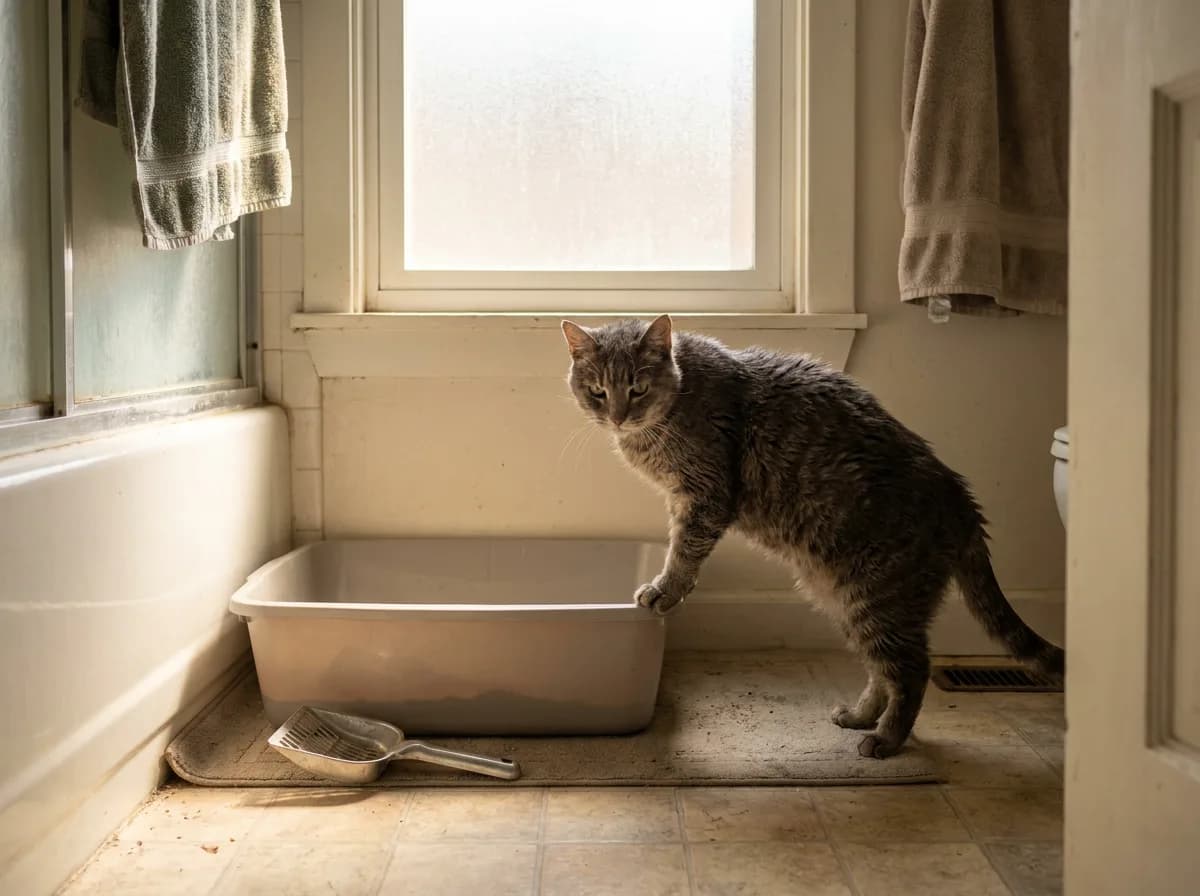
The main downsides of using non-clumping cat litter are odor and waste. Urine stays in the box until the next full change, so ammonia smell builds after a few days, especially with more than one cat. You also throw away more litter overall, since clean granules get dumped along with soiled ones.
Why would anyone get non-clumping litter?
People get non-clumping litter for kittens still learning the box, for cats after surgery, for dust-sensitive or asthmatic cats when they choose paper or pine, and for tight budgets on a single bag. Some cats simply prefer the feel of pellets underfoot.
Why is tidy cat litter not clumping anymore?
If Tidy Cats litter is not clumping, check the label first: Tidy Cats sells both clumping and non-clumping lines, and the non-clumping bags, like the one above, are designed not to clump. With a clumping formula, poor clumps usually mean the litter is too shallow, has absorbed humidity in storage, or is too old and saturated. Store bags sealed and keep 2 to 3 inches in the box.
Dust, tracking and odor: which type wins
Odor, dust and tracking depend on material as much as on clumping, and World's Best Cat Litter Scoopable Multiple Cat Clumping Formula, 28-lb shows that clumping does not have to mean clay. Chewy lists a compressed corn formula that clumps on contact, is free of silica dust and is described as 99% dust-free, at about $34.95 at the time of writing, in the $20–50 band. More plant-based options are in our best natural cat litter roundup.
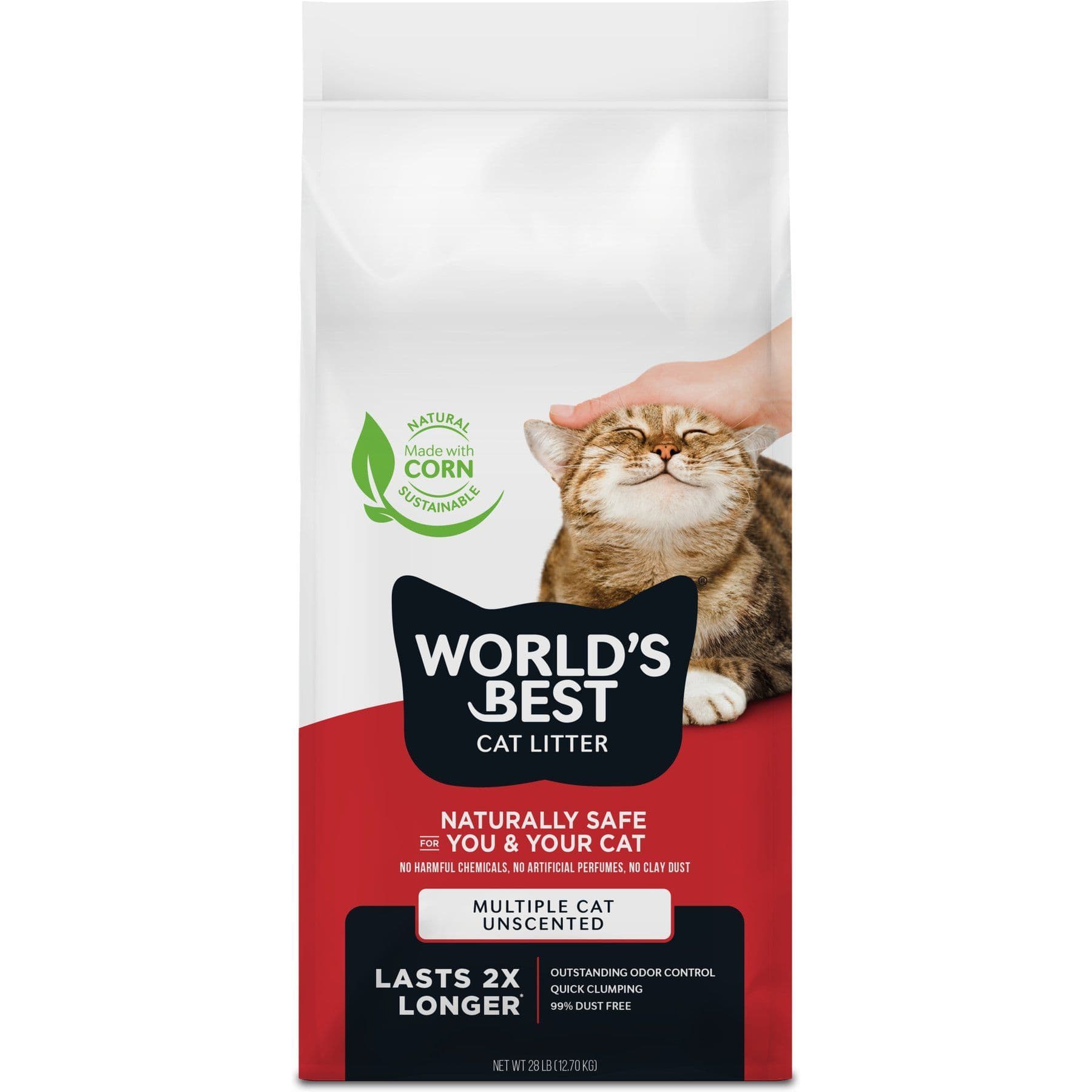
Chewy lists a natural corn formula that clumps on contact, is free of silica dust, and is described as 99% dust-free, showing that clumping does not have to mean clay.
Petful may earn a commission when you click through to Chewy, at no extra cost to you.
Neither type wins every category. Odor control favors clumping, because daily scooping removes urine before ammonia builds. Dust and tracking depend more on the material than on whether it clumps: fine clay is the dustiest and tracks the most, while corn, paper and pine pellets are lighter on both. For specific low-odor options, see our guide to the best cat litter for odor control.
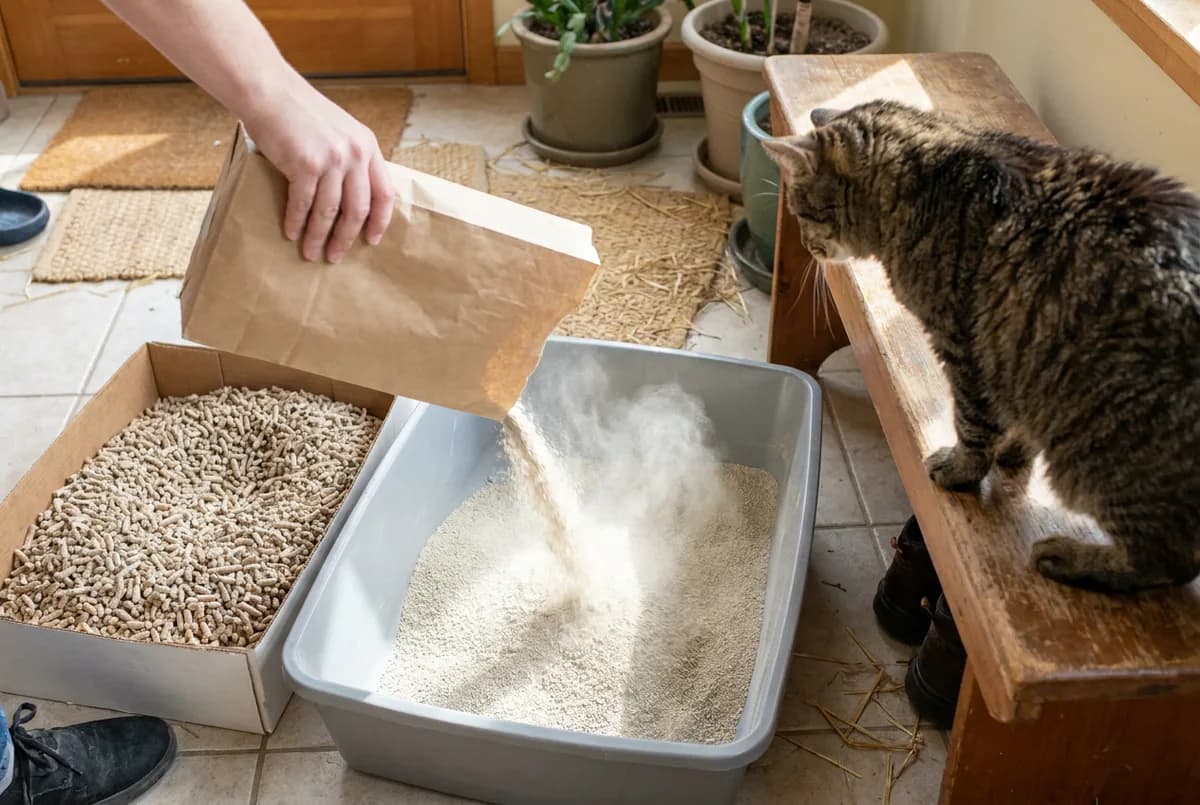
How the materials compare on scooping and odor, dust and tracking:
- Clay clumping: best scooping and odor control; most litter dust unless labeled low dust; fine granules track
- Dust-free cat litter clumping options (corn, wheat, low-dust clay): good clumps, far less dust, moderate tracking
- Non clumping crystal cat litter (silica): strong odor absorption and low dust, but sharp-edged crystals some cats dislike
- Paper and pine pellets: the most reliable dust-free non clumping cat litter, and large pellets track least
If you want clumping litter that doesn't track, look for heavier granules or plant-based formulas, and put a litter mat at the box exit. WebVet's guide to low-dust cat litter covers options for dust-sensitive homes.
What's bad about clumping litter?
What's bad about clumping litter is mainly dust, weight and swallowing risk. Fine clay can raise dust that irritates sensitive airways, it tracks on paws, and young kittens who eat litter could swallow material that swells. Is clumping cat litter bad for cats in general? No: for most healthy adult cats it is safe, and low-dust formulas reduce the airway concern.
Kittens, seniors and post-surgery cats
Fresh News Unscented Non-Clumping Paper Cat Litter, 25-lb bag is the kind of soft litter often used for kittens and recovering cats. Chewy lists soft, low-tracking pellets made from 100% recycled paper with baking soda, described as 99% dust-free, at about $22.99 at the time of writing, in the $20–50 band.
Non clumping cat litter for kittens is the usual starting point, because young kittens explore by mouth and may swallow clumping litter that swells. Is clumping litter safe for kittens? Most guidance suggests waiting until kittens stop eating litter, often around 3 to 4 months, before moving to clumping cat litter. Our full answer on whether clumping litter is safe for kittens covers the signs to watch for, and WebVet explains non-clumping litter for kittens.
When can kittens use clumping litter, then, and is clumping litter bad for kittens before that point? The risk is ingestion, not the litter touching their paws. Once a kitten uses the box without nibbling or playing in it, clumping cat litter for kittens is generally fine, and you can make the switch gradually.
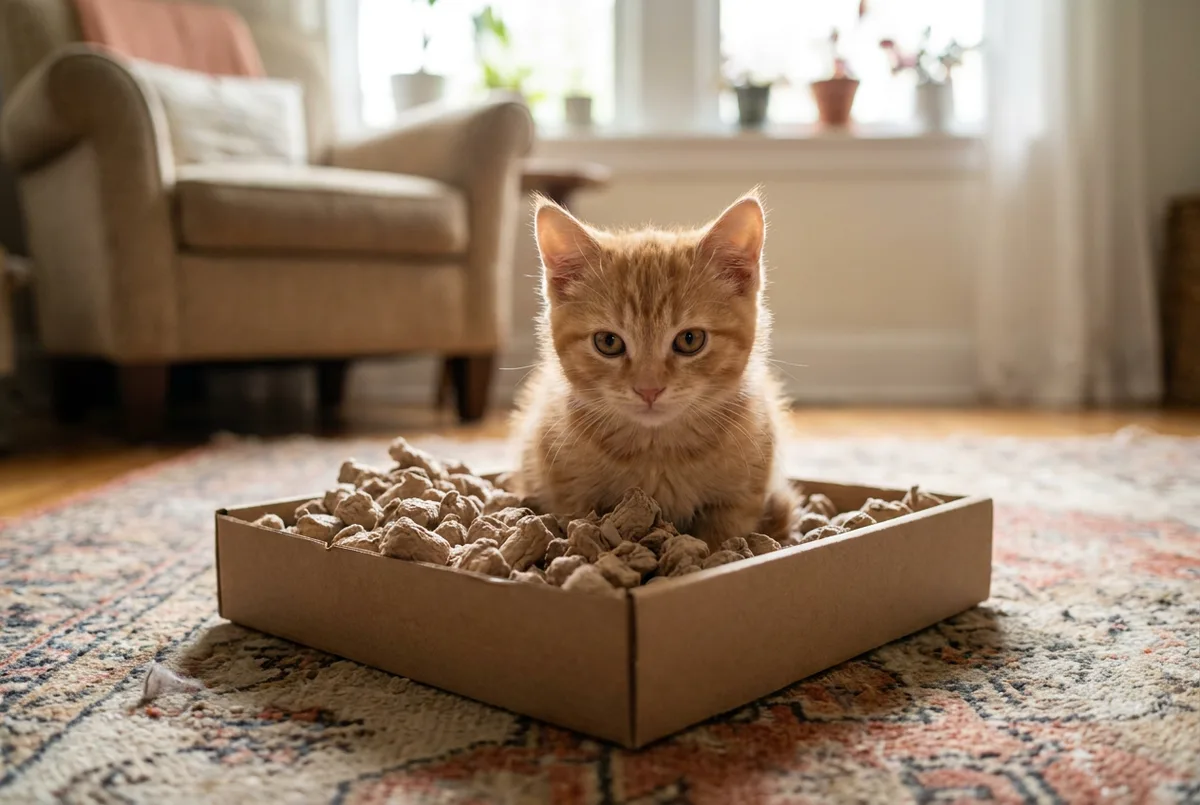
Other cats who often do better on non-clumping or low-dust litter:
- Post-surgery cats: soft paper pellets keep fine granules out of incisions, for example after a spay or neuter
- Senior cat with asthma: dusty clay can trigger coughing, so paper, pine or a dust-free corn clumping litter is a safer default
- Senior cats with stiff joints: a low-entry box and soft litter matter as much as the litter type
- Ask your veterinarian which litter to use after surgery and how long to keep it, because the answer depends on the procedure. For very young kittens or cats with breathing problems, confirm the litter choice at the next visit.
Do vets recommend clumping litter?
Many vets do recommend clumping litter for healthy adult cats, because daily scooping lets you spot changes in clump size or number, which can be an early sign of kidney disease, diabetes or urinary problems. They often suggest non-clumping litter instead for young kittens, cats after surgery and some cats with asthma. The Cornell Feline Health Center is a good source on these conditions.
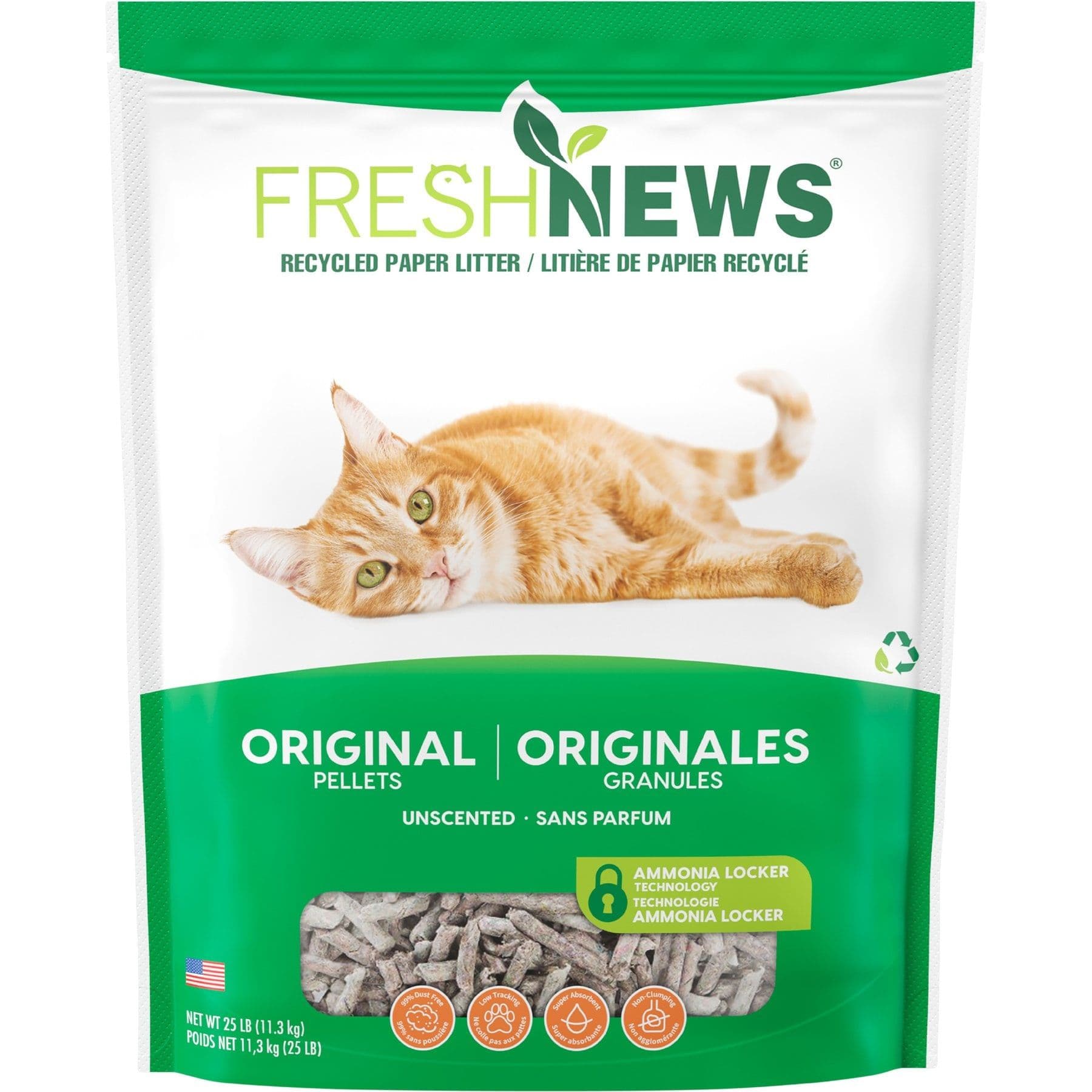
Chewy lists soft, low-tracking recycled paper pellets described as 99% dust-free, the usual non-clumping choice for kittens, post-surgery cats and dust-sensitive homes.
Petful may earn a commission when you click through to Chewy, at no extra cost to you.
Monthly cost, flushing and how often to change litter
The bag price is misleading. The cheapest non clumping cat litter can cost more per month than a clumping clay, because you dump the whole box each week. Work out the cost per pound, then multiply by the pounds added per month in your home.
- Divide the bag price by its pounds to get cost per pound. Then weigh or estimate how many pounds you add per month, counting top-ups and full changes. Multiply the two for your monthly cost.
Worked example for one cat, using Chewy prices at the time of writing and example monthly use (your own numbers will differ):
- Dr. Elsey's clay clumping, 40 lb at $22.99: about $0.57 per pound; at roughly 10 lb a month, about $5.75
- Tidy Cats non-clumping clay, 20 lb at $7.39: about $0.37 per pound; at roughly 20 lb a month with weekly dumps, about $7.40
- World's Best corn clumping, 28 lb at $34.95: about $1.25 per pound; corn is lighter and goes further, so at roughly 7 lb a month, about $8.75
- Fresh News paper, 25 lb at $22.99: about $0.92 per pound; at roughly 20 lb a month, about $18.40
So non-clumping clay usually has the lowest bag price, but a large 40-lb bag of clumping clay often costs less per month, because you only remove the used clumps instead of replacing the whole box.
Can clumping litter be flushed? We advise against it. Most municipalities and litter manufacturers advise against flushing cat litter, since clay swells in pipes, and a septic system or water treatment plant is not built for cat waste. Bag used litter, put it in the trash, and check local rules.
How often to change clumping box contents: scoop daily and do a full change every 2 to 4 weeks. How often to change non clumping litter: about once a week for one cat.
How often should you dump clumping litter?
Dump clumping litter completely and wash the box every 2 to 4 weeks for one cat, and closer to every 1 to 2 weeks with several cats. Daily scooping keeps the rest clean in between, but small crumbs still build up, so a full change resets odor.
Which litter for which household
Is clumping cat litter better? For most homes, yes. This household decision list gives one verdict per situation:
- Kitten under about 3 to 4 months: non-clumping paper pellets until the kitten stops eating litter
- Multi-cat home: a hard clumping litter scooped twice daily; see the best cat litter for multiple cats
- Senior cat with asthma: low-dust paper, pine or corn, never dusty clay
- Automatic box owner: a fast, hard clumping litter the rake can sift; compare models in our best cat litter boxes guide
- Tight budget: clumping clay in a large bag, judged by monthly cost rather than bag price
If you use an automatic box, check the manufacturer's approved litter list first. Most self-cleaning units need clay or a plant-based litter that forms firm clumps, not pellets or crystals unless the unit is designed for them.
Silica crystals control odor well but cost more than clay and do not form scoopable clumps. Pellets work best in a sifting box that lets sawdust or soaked paper fall through, and for most homes that prefer non-clumping litter, paper or pine pellets are the practical choice.
Mixing the two types does not work as a permanent setup, but mixing clumping and non-clumping litter for a week is how you switch litter gradually. International Cat Care and the ASPCA's cat care guidance both stress slow changes to the box.
Where to go for specific litter picks
This guide explains the two types. For brand-by-brand comparisons, start with our best cat litters roundup, which also covers what cat litter to stay away from, such as heavily scented or very dusty formulas.
Clumping vs non clumping questions
These answer the common follow-ups not covered above.
You can mix them short term, but not as a long-term setup. Mixing clumping litter with non-clumping pellets weakens the clumps, so urine spreads and odor builds. The useful exception is a switch: blend old and new over about a week, adding more of the new litter each day, so your cat accepts the change.
It is best not to. Most municipalities and manufacturers advise against flushing cat litter because clay swells in pipes and cat waste can carry parasites that water treatment is not designed to remove. A septic system is especially vulnerable to clogs. Bag used litter, put it in the trash, and check your local rules.
Kittens use clumping litter safely once they stop eating or playing in it, often around 3 to 4 months old. Before that, non-clumping litter such as soft paper pellets avoids the risk of swallowing material that swells. Switch gradually, watch the kitten for a few days, and ask your vet if you are unsure about timing.
Some clumping litter is dusty, mainly fine clay formulas. Clay dust rises when you pour or scoop, which can bother cats and people with sensitive airways. Dust-free clumping options exist: corn and wheat formulas and clays labeled low dust produce far less. Pouring slowly, close to the box, reduces dust further.
Yes, most automatic box models are built for clumping litter. The rake or sifting drum needs firm, fast-forming clumps to separate waste from clean litter, so a hard clumping litter works best. Avoid soft clumps, pellets and crystals unless the manufacturer lists them, and check the recommended litter depth for your unit.
Switch litter gradually over about 7 days. Mix old litter with the new type, starting with roughly one quarter new and increasing the share each day until the box is all new litter. Keep the box in the same place, watch that your cat still uses it, and slow down if you see avoidance or accidents.
Often, yes, after the first few days. Non-clumping odor builds because urine stays in the box until the next full change, while clumping litter lets you scoop it out daily. Remove solids daily, stir the litter, and change the litter completely about once a week for one cat to keep smell down.

Coreen Saito is a pet writer and longtime shelter volunteer with more than a decade in animal rescue. She covers cat behavior, breed care, and the small, ordinary science of sharing a life with companion animals, with a particular focus on honest takes about the products and decisions that actually matter. At home in Arizona, she's outranked by Mac (a dog with the loudest opinion in the house), Rebel (a cat who governs by quiet authority), and Meri (an orange tabby who runs the late shift and the laundry basket). She writes about all three, plus the rescues that keep coming through her life, at LifeWithMinty.com.
Sign up for expert-backed reviews and safety alerts all in one place.