What Colors Can Dogs See? A Clear Guide
Dogs are not colorblind and they do not see only black and white. They see a blue-and-yellow world where red and green fade into muddy neutrals. Here is what colors dogs can see, why their vision works that way, and the simple toy tips that follow.
Petful is reader supported. As an affiliate of platforms like Amazon and Chewy, we may earn a commission when you buy through links on this page. There is no extra cost to you.
If you have ever wondered what colors can dogs see, the short answer is that dogs see a real, if narrower, world of color. They are not stuck in black and white, and they are not fully colorblind either. Dogs see mostly in shades of blue and yellow, and they struggle to tell red and green apart. Understanding that palette changes how you pick toys, plan training, and think about the world through your dog's eyes.
This guide walks through exactly which colors dogs perceive, why their vision works the way it does, how it stacks up against human sight, and the practical, buy-the-right-toy tips that actually matter day to day.

Sign up for expert-backed reviews and safety alerts all in one place.
The Quick Answer on Dog Color Vision
Dogs are dichromatic. That means their eyes contain two types of color-detecting cells, called cones, while humans have three. With two cones instead of three, a dog's color world is built almost entirely around two hues: blue and yellow. Everything a dog sees is some blend, brightness, or muddying of those two anchors.
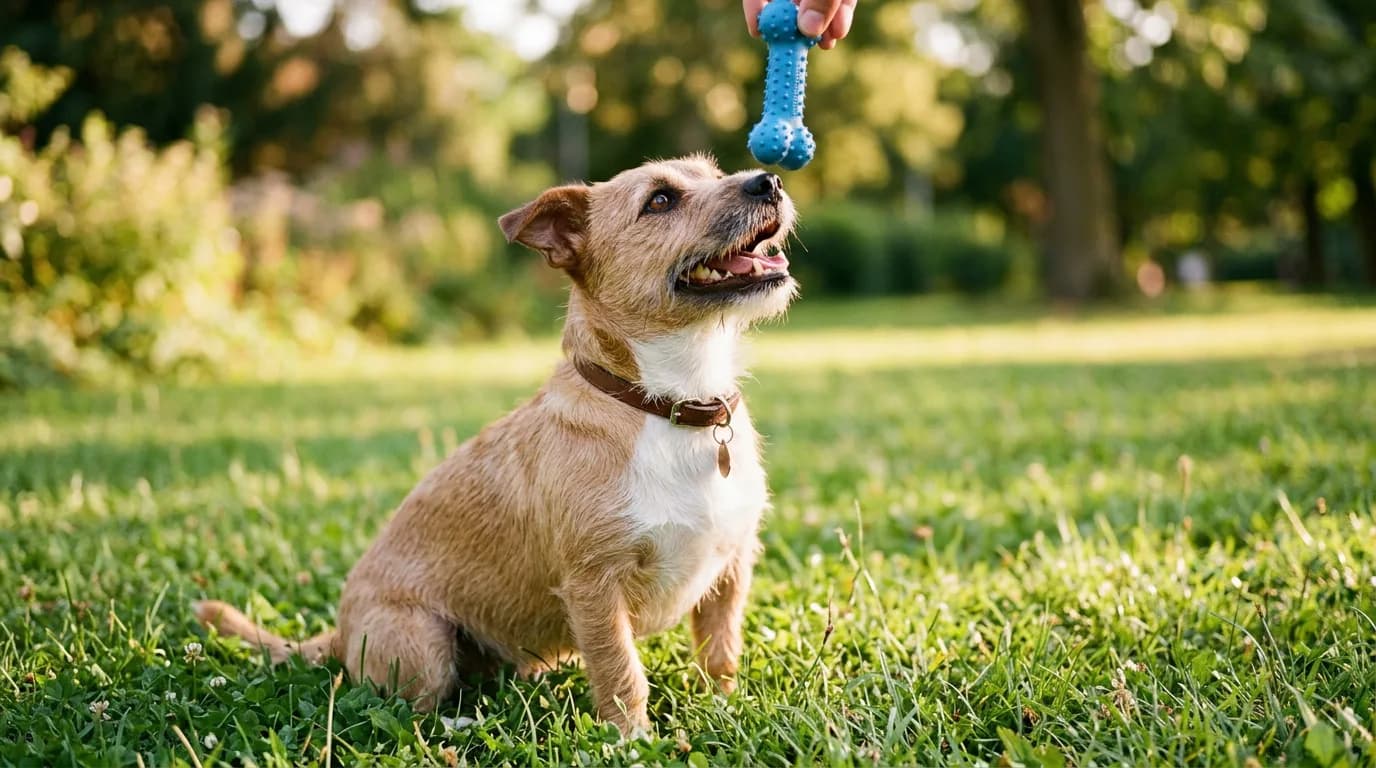
The everyday takeaway is simple. A blue ball on green grass pops for your dog. A red ball on that same grass nearly disappears into a dull, grayish-brown blur. Your dog is not being stubborn when it runs right past a bright red toy in the yard. It genuinely cannot see the color the way you do.

360-degree Wi-Fi pet camera so you can watch your cat's resting breathing rate and behavior from your phone and catch worrying changes early.
Petful may earn a commission when you click through to Chewy, at no extra cost to you.
- 1Dogs see the world mainly in blue and yellow, not black and white
- 2Red and green look like muddy gray, brown, or dark tones to a dog
- 3Choosing blue or yellow toys makes them far easier for your dog to spot
The Myth of Black and White
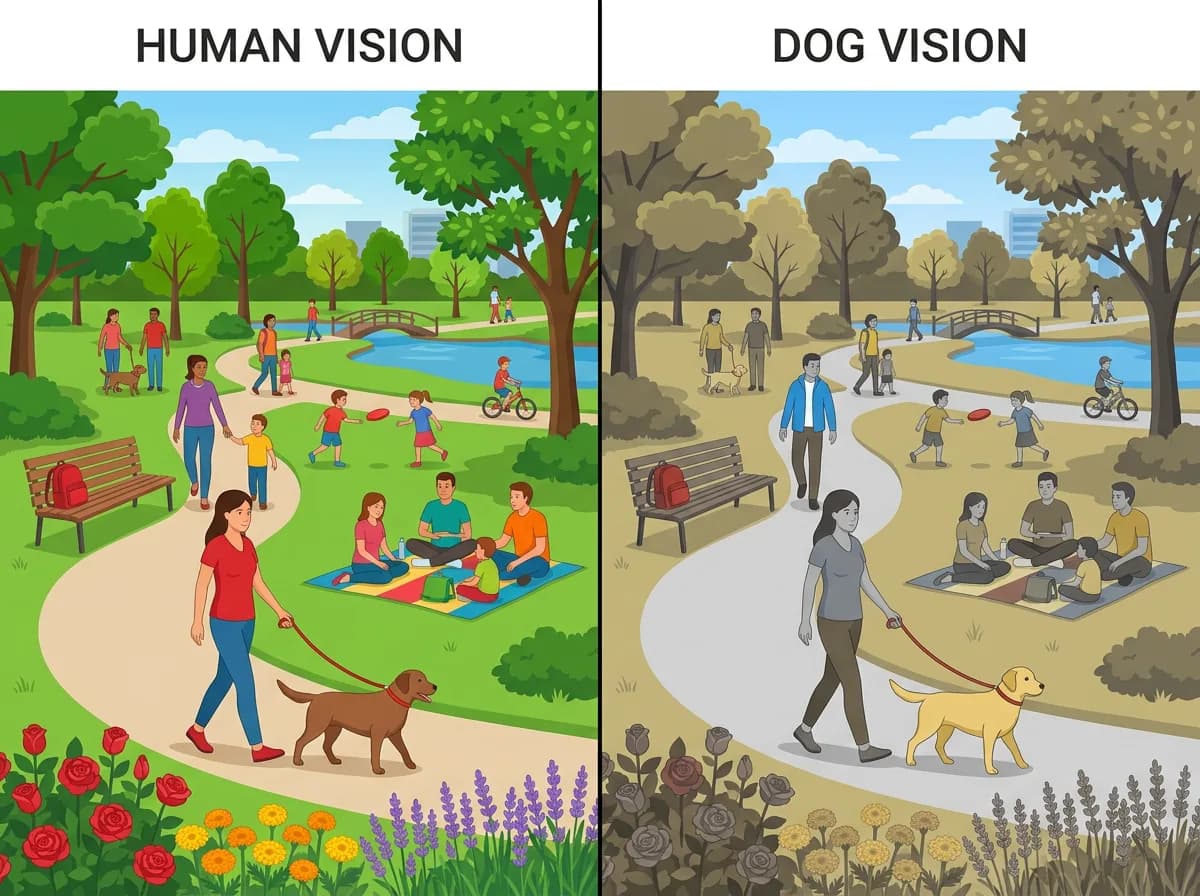
For decades, a popular belief held that dogs saw only in black, white, and shades of gray. It shows up in old movies, cartoons, and casual conversation. It is also wrong.
The myth likely stuck around for two reasons. First, early assumptions about animal vision leaned pessimistic, and no one had tested it carefully. Second, dogs clearly do not react to color the way people do, so it was easy to assume they saw no color at all. Modern research on canine retinas settled the question: dogs have functioning color vision, just a reduced version of ours. Veterinary sources, including VCA Animal Hospitals, describe a dog's normal color vision as most similar to a person who has red-green color blindness.
So the black-and-white idea is a myth, but it contains a grain of truth. Dogs do see a flatter, less saturated world than we do, and a big chunk of the human rainbow collapses into a narrow band for them.
What Colors Can Dogs See Clearly
When people ask what colors can dogs see with any real clarity, the honest map looks like this. Blue and yellow are the standouts. Everything else is either a variation of those two or a color that fades into a dull neutral.
Here is how the main colors of the human spectrum translate into dog vision.
| Human color | What a dog likely sees | Everyday example |
|---|---|---|
| Blue | Clear, vivid blue, the easiest color for dogs to detect | A blue toy stands out sharply on grass or snow |
| Yellow | Well seen, including yellow-green shades | A yellow tennis ball reads bright and obvious |
| Red | Dark brownish-gray or nearly black | A red ball can vanish against green grass |
| Orange | Muddy yellow or dull brown | An orange cone looks washed out and dim |
| Green | Yellowish or grayish, low contrast | Green grass looks like a pale, flat backdrop |
| Purple | Looks like blue, since dogs cannot see the red in it | A purple toy reads as plain blue to a dog |
Blue is a dog's best color
Blue sits right in the sweet spot of canine vision. It is vivid, high-contrast, and easy for a dog to lock onto against almost any background. If you only remember one color rule, make it this one: when in doubt, go blue.

A sterile lubricating gel that soothes and moisturizes dry, irritated eyes and helps support the tear film in dogs and cats prone to dryness. A gentle, vet-shelf staple for everyday eye comfort.
Petful may earn a commission when you click through to Chewy, at no extra cost to you.
Yellow is a strong second
Yellow, and the yellow-greens next to it, come through clearly for dogs too. This is part of why classic yellow tennis balls have stayed so popular. On many surfaces they are genuinely easy for a dog to see and track.
Red and green are the trouble colors
Reds, oranges, and deep greens are where dog vision falls short. Because dogs lack the cone that detects red light, these colors lose their punch and slide toward gray, brown, or a dim yellowish smear. A red toy on a green lawn is close to a worst-case scenario for a dog trying to use its eyes alone.
Why Dogs See Color the Way They Do
The reason comes down to the cells at the back of the eye. The retina holds two kinds of light-sensing cells: cones, which handle color and fine detail in bright light, and rods, which handle dim light and motion.
Humans have three cone types, tuned roughly to red, green, and blue light. Blending signals from all three gives us the full rainbow. Dogs have only two cone types, tuned to blue and yellow wavelengths. With one fewer channel, whole ranges of color that we separate easily get merged together for a dog.
But dogs did not lose out entirely. They trade some color range for other strengths. Dogs have a much higher concentration of rods than we do, which is a big part of why they see so well in low light and detect the smallest movement across a field. Evolution favored a hunter that could work at dawn and dusk and catch the flick of a rabbit in the brush over one that could tell a red apple from a green one.
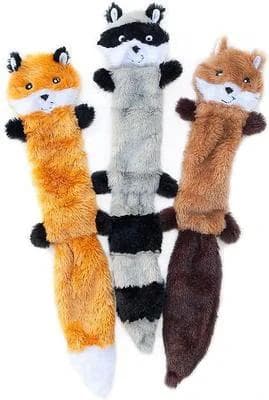
No-stuffing squeaky plush toys that satisfy a dog's urge to shake and carry prey, with no stuffing to shred and scatter.
Petful may earn a commission when you click through to Chewy, at no extra cost to you.
- Cones are the color and detail cells that work best in bright light. Rods are the low-light and motion cells. Dogs have fewer cone types than humans but far more rods, so they trade a wider color range for stronger night vision and motion detection.
How Dog Vision Compares to Human Vision
Color is only one piece of the picture. A few other differences shape how your dog experiences the world.
- Sharpness: Dogs have lower visual acuity than people. A common estimate puts typical dog eyesight around 20/75, meaning a dog sees at 20 feet what a person with sharp vision sees at 75. Details that look crisp to you look softer to your dog.
- Night vision: Dogs win here. More rods plus a reflective layer behind the retina, called the tapetum lucidum, let dogs see far better than we can in dim light. That reflective layer is what makes a dog's eyes glow in a photo.
- Motion: Dogs are excellent at spotting movement. A still object can be easy to miss, while the same object in motion snaps into focus. This is why a tossed toy often gets a faster reaction than one sitting on the ground.
- Field of view: With eyes set more to the sides of the head, most dogs take in a wider panorama than humans do, trading some depth perception for broader peripheral awareness.
Put together, your dog sees a world that is a little blurry and a little muted on color, but bright at night, alive with motion, and wide across the horizon. It is not a worse world. It is a differently tuned one.
Does Coat Color Look Different to Dogs Too?
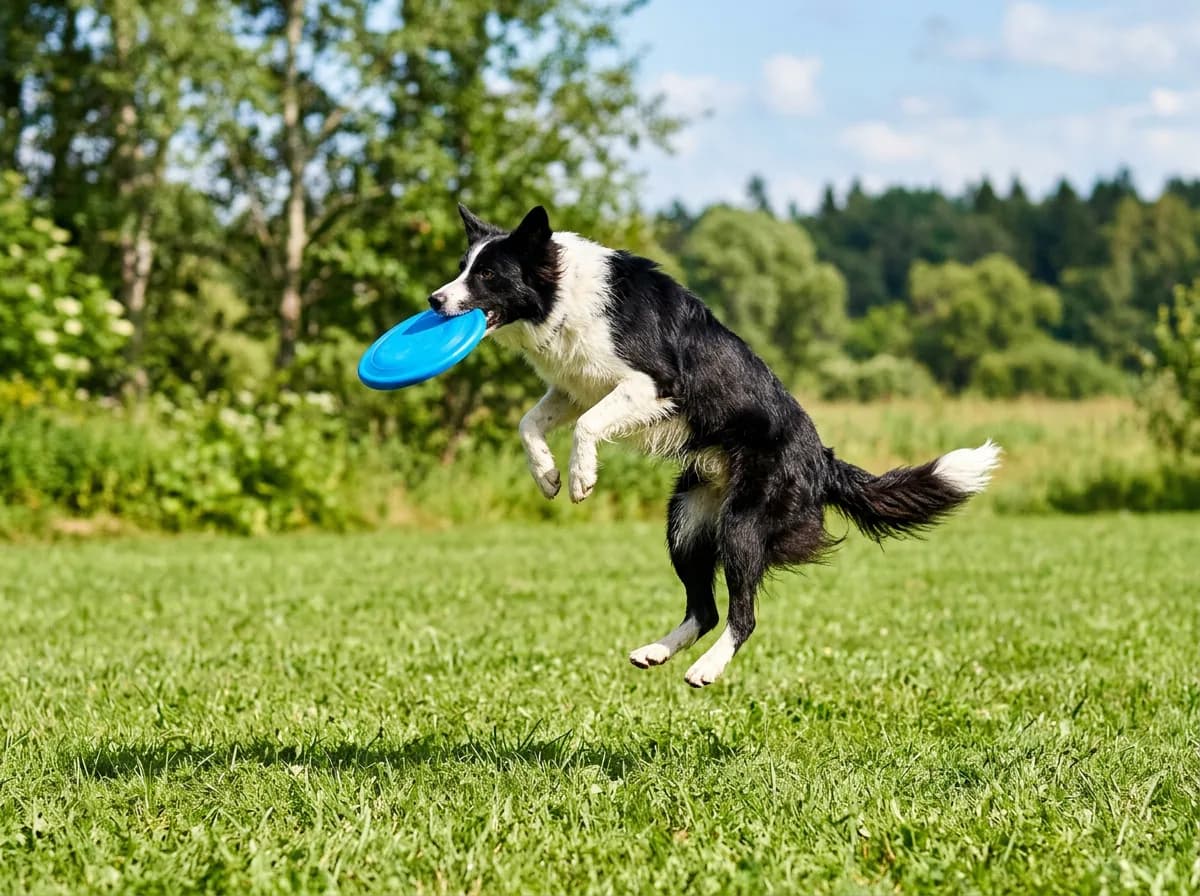
Owners often ask a fun follow-up: if dogs see mostly blue and yellow, what do other dogs look like to them? Coat colors that read as rich mahogany, deep red, or chocolate to us shift toward muted browns and grays in a dog's eyes. A striking red coat, like the one on a Rhodesian Ridgeback, is far more vivid to us than it is to another dog. The same goes for the warm tones on a chocolate Labrador; much of that richness simply flattens out in canine vision. Dogs recognize each other through scent, body language, and movement far more than through coat color anyway, so the muting hardly matters to them.

A durable rubber dog toy that can be stuffed with treats and selected by the manufacturer's size guide; supervise use and retire it when damaged.
Petful may earn a commission when you click through to Chewy, at no extra cost to you.
Practical Color Tips for Dog Owners
This is where dog color vision stops being trivia and starts being useful. Small choices about color make training easier and playtime more rewarding.
- 1Pick blue or yellow toys so your dog can actually see them
- 2Skip red and green items that vanish against grass and dirt
- 3Lean on contrast and movement, not a rainbow of colors, for training cues
Choose toys your dog can see. Blue and yellow toys are the easy winners. A blue fetch toy against green grass or white snow gives your dog maximum contrast to work with. If your dog keeps losing a toy outdoors, check its color before you assume a training problem.
Rethink the red ball. The classic red rubber ball is one of the hardest colors for a dog to find on a lawn. It is not that your dog is bad at fetch. The toy is nearly invisible to it. Swap in a blue or yellow version and watch the search time drop.
Use contrast for training. When you set up agility gear, targets, or feeders, think in terms of light versus dark and blue versus yellow rather than a spread of colors your dog cannot separate. Contrast does the work that color variety cannot.
Lean on motion. Because dogs track movement so well, a gentle toss or roll often engages a dog faster than a stationary object. Pair a high-contrast color with motion and you get the best of both.
Do not overthink safety gear color for the dog's sake. A high-visibility vest in blaze orange is for the humans and drivers who need to see your dog, not for your dog's own vision. Choose it for other people's eyes, and choose your dog's toys for your dog's eyes.
A maze-pattern slow-feeder bowl that makes fast eaters work for each bite, reducing the gulping and swallowed air that trigger regurgitation and vomiting. Holds up to 4 cups.
Petful may earn a commission when you click through to Chewy, at no extra cost to you.
The Bottom Line on Dog Color Vision
Dogs are not colorblind in the black-and-white sense, and they are not seeing the full rainbow either. They live in a blue-and-yellow world where red and green fade into muddy neutrals, backed up by superb night vision and motion tracking. Once you know that, a lot of everyday dog behavior makes more sense, and a few simple color swaps can make your dog's toys and training instantly clearer to it.
Frequently Asked Questions
Does a Dog's Color Vision Change With Age?
A dog's core palette of blue and yellow is set by the cone cells it is born with, and that two-color system stays the same for life. What does change is clarity. Newborn puppies open their eyes at around two weeks old, and it takes several more weeks for their vision to sharpen, so very young pups lean heavily on scent and touch rather than sight. At the other end of life, many senior dogs develop nuclear sclerosis, a normal bluish-gray hardening of the lens that gently dulls contrast and can make already-muted colors look even flatter. Cataracts are a separate, more serious clouding of the lens that can block light and blur sight further. Age never adds new colors to a dog's world, but it can quietly wash the existing ones out.
- Nuclear sclerosis is a normal aging change that mildly softens vision and rarely needs treatment. Cataracts look similar to an owner but can meaningfully impair sight. A veterinarian can tell them apart with a simple eye exam, so a cloudy-looking eye is always worth a check.
Signs Your Dog May Have a Vision Problem
Because dogs rely so heavily on smell, memory, and motion, fading eyesight often stays hidden until something in the environment changes. Watch for these signals:
- Bumping into furniture, especially after you rearrange a room or in low light
- Hesitating at stairs, curbs, or doorways it used to handle with ease
- Startling when you approach quietly from the side
- A cloudy, bluish, or hazy look to one or both eyes
- New reluctance to chase a favorite toy it once loved
None of these point to a color problem specifically, but together they can flag cataracts, progressive retinal atrophy, or other conditions that are best caught early. Vision loss is usually gradual, and dogs compensate so well that owners miss it. If a few of these signs show up at once, book an exam with your veterinarian, or a veterinary ophthalmologist, before assuming your dog is simply slowing down.
Related on Petful
- Labrador Colors: The Complete Guide
- German Shepherd Colors: The Complete Guide
- Merle Dog Guide: Genetics, Breeds, and Health
- The 20 Smartest Dog Breeds, Ranked by Intelligence
Dogs see blue best of all. It is the most vivid, highest-contrast color in a dog's spectrum. Yellow, including yellow-green shades, is a strong second. These two hues are the easiest for a dog to detect and track, which is why blue and yellow toys are the smart default.
Dogs read affection through calm body language and routine rather than words. Slow blinks, a relaxed and open posture, gentle petting in spots your dog enjoys, calm time together, and a soft, warm tone of voice all read as love to a dog. Consistency and safety matter more to your dog than any single gesture.
Grass looks like a pale, washed-out yellowish or grayish backdrop to a dog rather than the vivid green you see. Because dogs cannot pick up green strongly, a lawn reads as low-contrast and flat, which is exactly why a red toy can disappear against it while a blue toy stands out.
Dogs do not truly avoid a color out of dislike, but red and green are the colors they struggle most to see. On grass or dirt these colors blend into dull neutrals, so a dog may seem to ignore a red or green object simply because it cannot spot it, not because it is avoiding it.
In dog language, love is shown through trust and comfort signals: relaxed eye contact and slow blinks, a loose wagging body, leaning against you, seeking closeness, and staying calm in your presence. Meeting your dog's needs and keeping a predictable routine communicates care more clearly than any single motion.
Many dogs strongly dislike citrus (lemon, orange, and grapefruit), vinegar, strong chili or hot pepper, and concentrated cleaning products or fresh mint. Because a dog's sense of smell is far more sensitive than ours, these scents can be overwhelming, which is why some deterrent sprays use citrus notes.
Dogs do not feel guilt the way people do, but they do offer appeasement signals when they sense you are upset: lowered head, tucked tail, flattened ears, avoiding eye contact, and moving slowly toward you. These behaviors are meant to calm the situation and restore peace rather than to apologize in a human sense.

Coreen Saito is a pet writer and longtime shelter volunteer with more than a decade in animal rescue. She covers cat behavior, breed care, and the small, ordinary science of sharing a life with companion animals, with a particular focus on honest takes about the products and decisions that actually matter. At home in Arizona, she's outranked by Mac (a dog with the loudest opinion in the house), Rebel (a cat who governs by quiet authority), and Meri (an orange tabby who runs the late shift and the laundry basket). She writes about all three, plus the rescues that keep coming through her life, at LifeWithMinty.com.
Sign up for expert-backed reviews and safety alerts all in one place.