How to Express Dog Anal Glands Safely: A Vet's Guide
A veterinarian explains how to express dog anal glands safely at home with the external method only, what normal and abnormal fluid look like, how often dogs really need it, what groomers and vets charge, and when to stop and call the vet.

BVMS, MRCVS
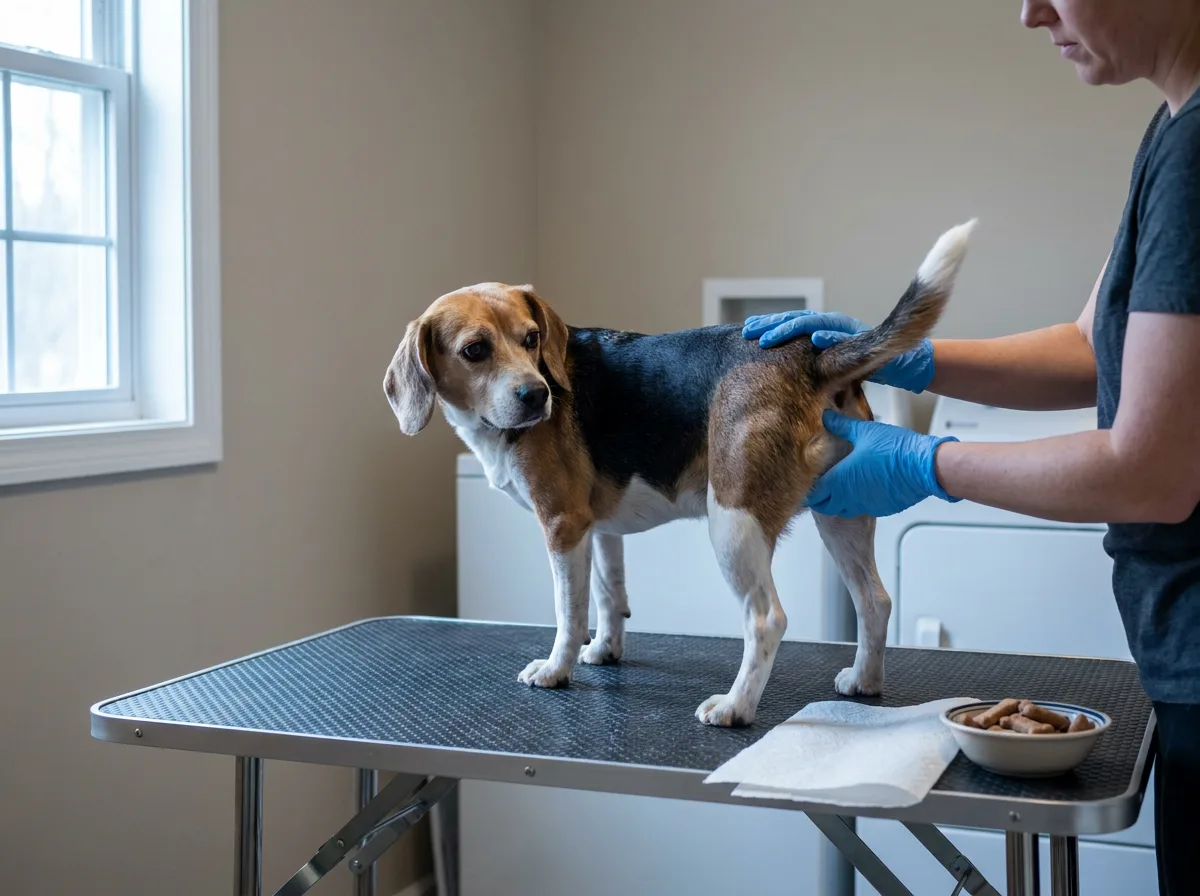
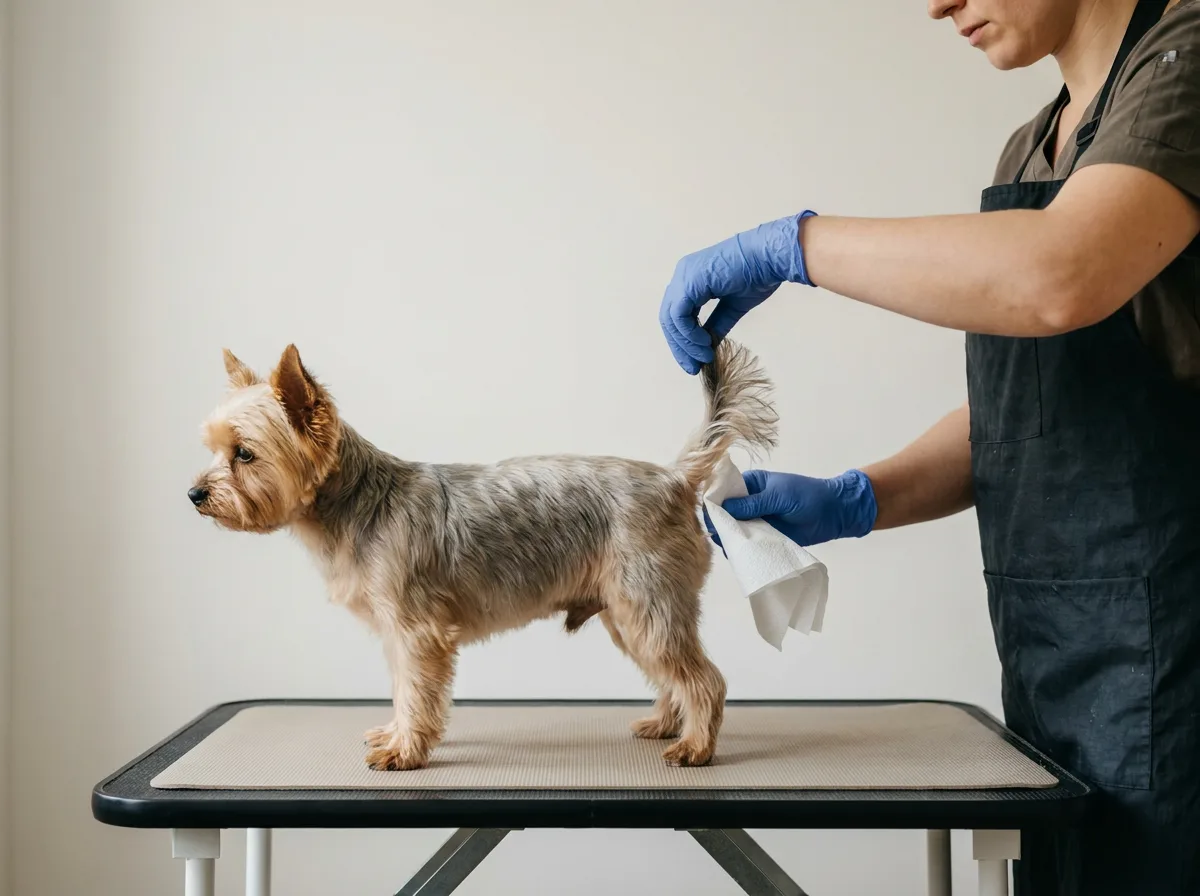
A beagle stands on a grooming table in a laundry room while a person in blue gloves steadies its raised tail from behind, with a folded paper towel and a bowl of treats on the table.
Petful is reader supported. As an affiliate of platforms like Amazon and Chewy, we may earn a commission when you buy through links on this page. There is no extra cost to you.
If your dog is scooting, licking under the tail, or trailing a fishy smell through the house, you may be wondering how to express dog anal glands at home. The honest answer is that many owners can, but only with the external method, only when the glands actually need it, and only until the first sign that something is wrong. This guide walks you through that safe version step by step, shows you what normal and abnormal fluid look like, and tells you what a groomer or veterinarian charges so you can decide whether to do it yourself at all.
I have expressed thousands of anal sacs in practice. The technique is simple; the judgment (when the glands are full, when to stop, and when the job belongs to a professional groomer or vet) is what this guide is really about.

Sign up for expert-backed reviews and safety alerts all in one place.
Should You Express Your Dog's Anal Glands at Home?
- 1Use the external method only at home; internal expression is a veterinarian or groomer technique
- 2Express only when the sacs are full and your dog shows signs, never on a calendar schedule
- 3Stop on blood or pus, swelling, heat, or pain, and call your veterinarian the same day
- 4If you are unsure who should do the job, a groomer costs about the price of a bath and a vet visit rules out disease
Yes, you can express your dog's glands yourself, with one firm condition: use the external method only. In external anal gland expression you press gently on the skin beside the anus. In internal expression a gloved, lubricated finger goes inside the rectum to pinch each sac against the thumb. That technique empties stubborn sacs more completely, which is exactly why a veterinarian or trained groomer uses it, and why the rule here is external only at home. WebVet's vet team gives a parallel walkthrough in how to express dog anal glands safely at home, useful as a second opinion before you try it.
Some sources, including the AI summary at the top of search results, walk owners through the internal method. This guide does not, for a practical reason: inside the rectum you cannot see what you are pressing on. An impacted sac wall is thin and inflamed, a finger at the wrong angle can rupture it, and a dog in pain can bite the person restraining it. PetMD's veterinary guidance says the internal technique should not be performed at home without a veterinarian's explicit instruction. Knowing how to express dogs' glands externally covers the majority of healthy dogs, and most groomers work the same way.
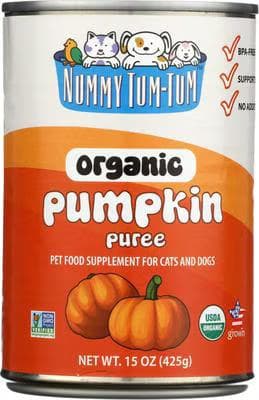
Pure USDA-organic pumpkin puree, no fillers or additives. Adds gentle soluble fiber to firm up loose stool and settle a mildly upset stomach. A simple vet-favorite topper.
Petful may earn a commission when you click through to Chewy, at no extra cost to you.
Here is the owner vs groomer vs vet decision aid I use with clients, so you can see at a glance who should do the job for your dog, from first-time scooting to blood or pus in the fluid.
| Your dog's situation | Who should do it | Why |
|---|---|---|
| Healthy glands, no scooting, no smell | Nobody | Sacs that empty on their own during bowel movements do not need help, and squeezing them can irritate the ducts |
| First time you have ever seen scooting or a fishy smell | Groomer or vet technician first, then you | Watch a professional do the external method once, confirm the fluid is normal, and learn how full is full for your dog |
| Small, anxious, or wriggly dog | Groomer or vet | A dog that will not hold still needs a second pair of trained hands and a table; a home attempt often ends in a bite or a bruised sac |
| Glands that fill again within a few weeks | Veterinarian | Repeat filling points to a cause (soft stool, allergies, weight, a narrow duct) that expression alone will not fix |
| Any blood, pus, swelling, heat, or pain | Veterinarian, same day | These are signs of infection or abscess, and pressure on an infected sac can rupture it |
If you land in the owner row, the supplies are modest: disposable gloves, a lubricant such as petroleum jelly, paper towels, and unscented grooming wipes for cleanup afterward. Lay out the disposable gloves, paper towels, and grooming wipes (a thick unscented option such as Earth Rated Unscented Dog Grooming Wipes holds up to the job) before you start, and plan the session for just before a bath so any stray fluid washes straight out of the coat instead of lingering on it.
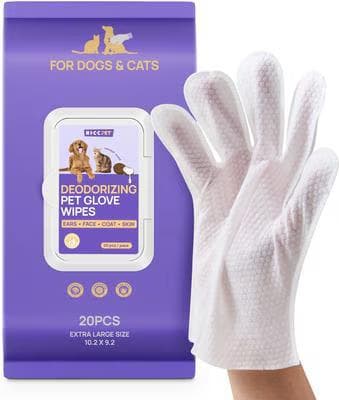
Petful may earn a commission when you click through to Chewy, at no extra cost to you.
Signs Your Dog's Anal Glands Need Expressing
How do you tell if a dog's glands are full? You will usually notice behavior before you notice the glands. VCA Animal Hospitals lists scooting as the most common first sign, followed by licking or biting, often at the base of the tail rather than the anus itself. The classic symptoms of blocked anal glands in dogs are:
- Scooting or dragging the bottom along carpet or grass
- Licking or chewing under the tail or at the tail base
- A sudden fishy or metallic smell, sometimes left on a couch or bed
- Straining or discomfort during bowel movements
- Turning suddenly to look at or chase the hindquarters
Scooting has other causes too (tapeworms, allergies, a dirty coat), so read our guide to why dogs scoot their butts before you assume it is the glands.
How do I know if my dog's anal glands need to be expressed without squeezing them? Lift the tail and look at the skin at roughly the four and eight o'clock positions beside the anus. Full sacs make the area look slightly puffy, and a light fingertip touch (no pressure inward) may find a firm pea-to-grape sized swelling on one or both sides. Redness, heat, or a dog that flinches at a light touch are signs of infection, not full glands: stop checking and read the stop rules below.
How to Express Dog Anal Glands Externally, Step by Step
This is the external method, the only version of expressing dogs' anal glands that belongs at home. Read every step first, and plan for a two-person job: the AKC's vet-reviewed guide recommends one person to steady the dog and one to work. If a video on how to express anal glands on a dog showed a finger going inside, that was the internal technique, not what follows. Internal expression stays a veterinarian or groomer technique because nobody can see the sac wall inside the rectum, and a trained pair of hands with proper restraint lowers the risk of rupture or a bite.
Handling a reluctant dog matters as much as hand position. Watch body language throughout, and treat sitting down hard, spinning, a tail tucked tight, a growl, or a snap as stop signals: end the session, stay calm, and book a groomer or vet rather than restraining harder or muzzling and pushing on.
- Set up where cleanup is easy. Bathroom or laundry room, dog standing on a non-slip mat or in the tub. Do this before a bath, not after, so any fluid on the coat gets washed away.
- Glove up and lubricate. Pull on disposable gloves and put a little petroleum jelly or water-based lubricant on your thumb and forefinger. Have paper towels within reach.
- Have your helper steady the dog. One arm under the belly to stop sitting, the other hand at the collar. Calm talk, no wrestling.
- Lift the tail and find the four and eight o'clock hand position. Picture the anus as a clock face. The sacs sit just below the midline, at four and eight o'clock. Rest your thumb on one side and forefinger on the other, about a finger's width out from the opening.
- Hold a paper towel over the anus with your free hand. The fluid sprays, and it smells worse than anything else you will meet in dog care.
- Apply gentle inward and upward pressure. Press the thumb and forefinger toward each other and slightly up toward the anus, as if milking a small grape. You are squeezing the sac toward its opening, not pushing into the body.
- Watch for fluid, then stop. A small amount of thin, tan-to-brown, foul-smelling fluid on the towel means it worked. Two or three gentle attempts is the limit. If nothing comes, or it will not come easily, stop. Never increase the pressure.
- Clean and check. Wipe the area with an unscented grooming wipe, look at the fluid on the towel (see the next section), and give your dog a treat.
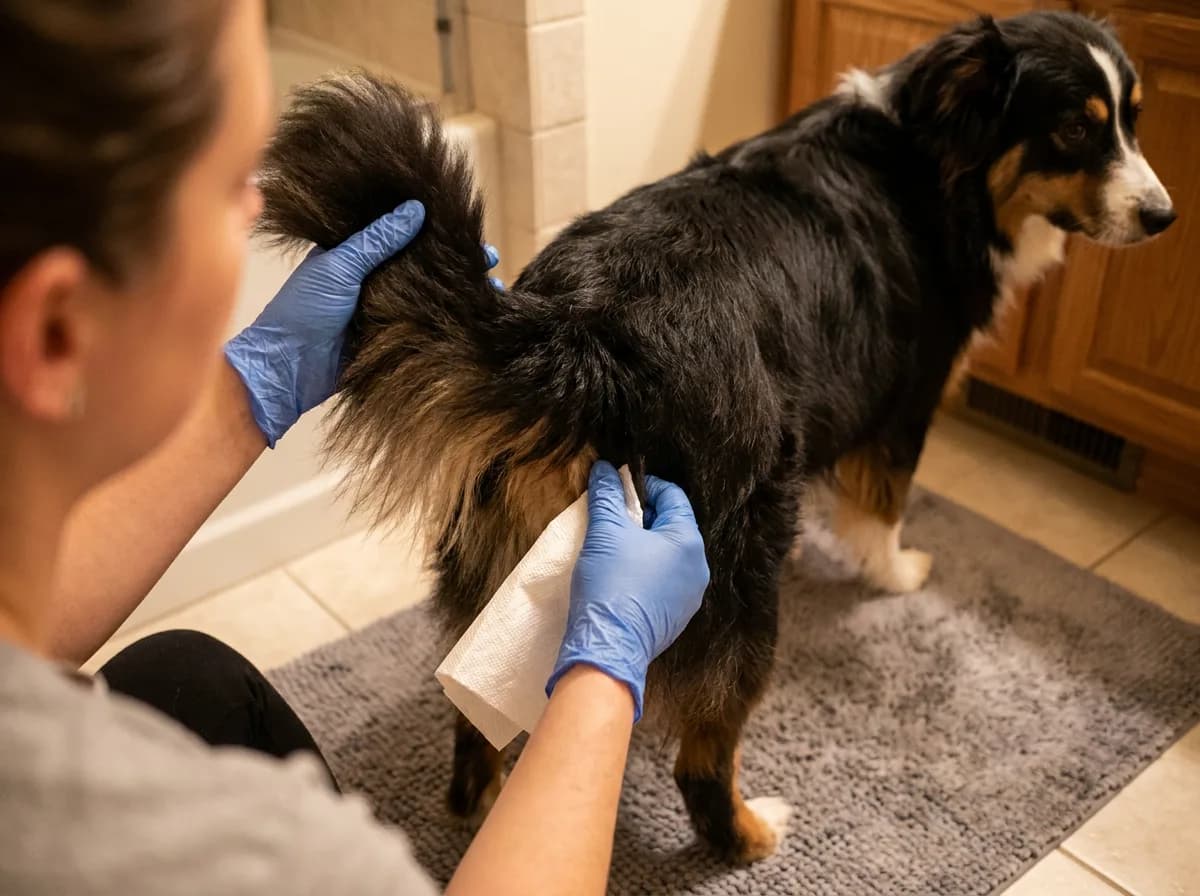
Stop rather than push harder because a sac that will not empty externally is usually impacted. The Merck Veterinary Manual describes impacted secretion as thick, pasty, and brown, expressible only as a thin ribbon under a large amount of pressure. That pressure is not for owners; your veterinarian can express it internally or infuse a softening solution.
You may see a dog anal gland expressor sold online. Canine anal expression does not need a device (see the FAQ for why).
What to Expect After Expressing
Do dogs feel relief after glands are expressed? Most do, often immediately. A dog that has been scooting for days typically stops within a day, carries the tail normally, and loses interest in licking. Expression should feel odd but not painful; if your dog cries out, snaps, or sits down hard on the tail, the sac is inflamed and this is now a vet visit.
Expect a lingering smell for a few hours, mild pinkness beside the anus, and occasionally a little fluid on bedding as the duct settles; deodorizing wipes such as HICC PET Deodorizing Glove Wipes or a bath handle the smell. What you should not see is swelling, fresh blood, or a dog that seems worse the next day.
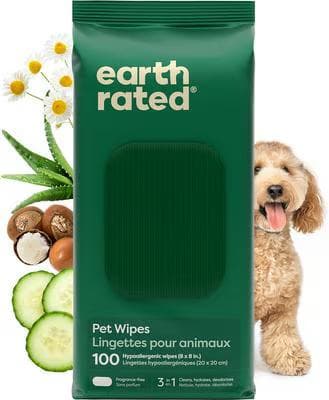
Petful may earn a commission when you click through to Chewy, at no extra cost to you.
What Normal and Abnormal Anal Gland Fluid Looks Like
What comes out when dog glands are expressed, and what do dog anal glands look like when they are healthy? The sacs are two small pouches you cannot normally see; what you judge is the fluid. Normal secretion is a thin tan-brown fluid, sometimes yellowish or slightly grainy, with a strong fishy or musky smell, a teaspoon or less per sac. That is a normal result and you are done.
Abnormal secretion is different in texture and color before it is different in smell. Thick gray or blood-tinged fluid, a pasty or gritty paste, green or yellow discharge, or anything that looks like pus means the sac is impacted or infected. Compare what is on your paper towel against both samples in the photo below before you decide whether to finish at home or stop and call the vet.
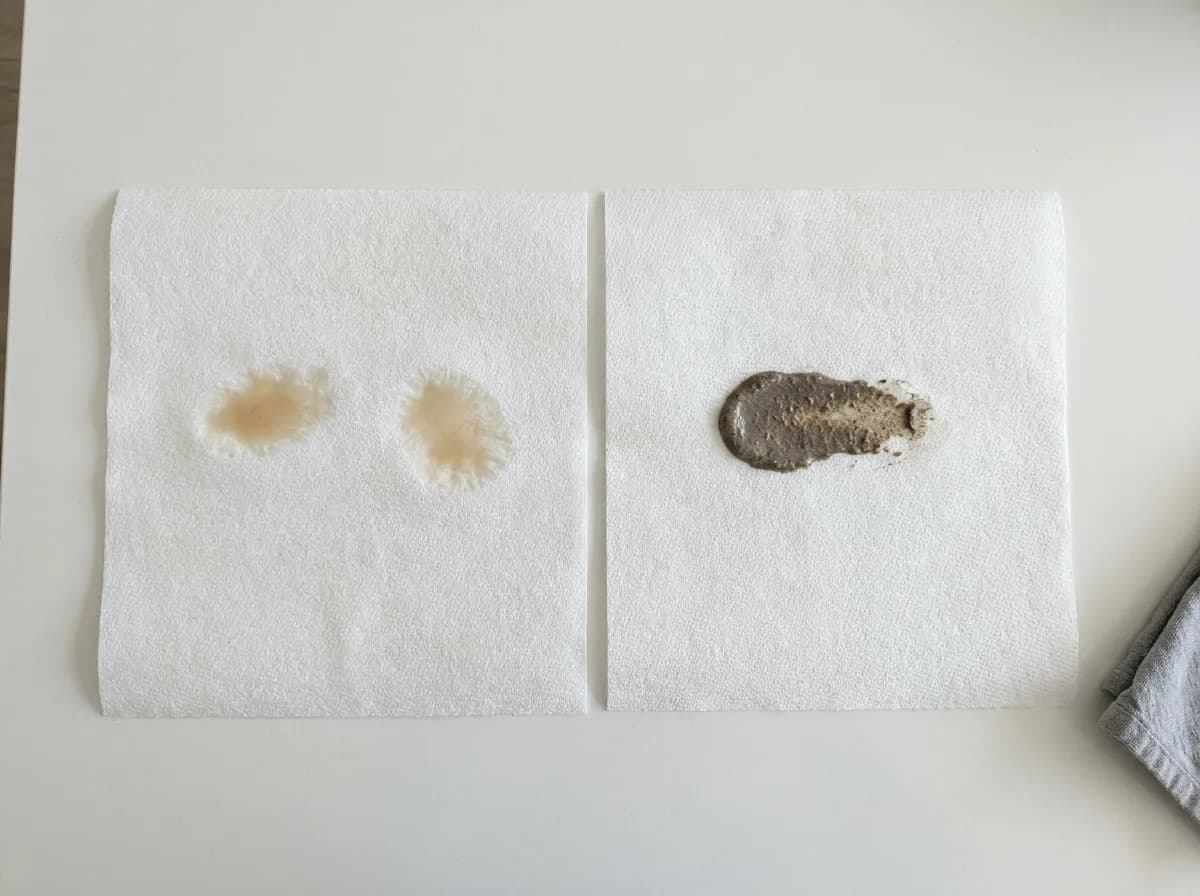
- Normal: thin, tan to brown, foul-smelling, small volume, flows with light pressure
- Impacted: thick, pasty, gray-brown or gritty, comes slowly or not at all
- Infected: yellow, green, or cloudy, sometimes blood-streaked, often with heat and swelling
- Abscessed: bloody or blood-tinged pus, an open sore beside the anus, a dog in obvious pain
Dog anal gland discharge that appears with no expressing at all is a different question. A dog expressing glands on the couch after a fright is a startle release and usually harmless, while daily leaking means overflowing sacs that need a vet to find the cause (the FAQ covers both).
How Often Do Dog Anal Glands Need Expressing?
Do all dogs need their anal glands expressed? No, and this is the point most owners get wrong. Healthy anal sacs empty a little with every firm bowel movement, and a dog whose sacs are not emptying on their own is the only dog that needs help. PetMD's veterinary reviewers note that most dogs never need their anal sacs expressed at home, and VCA reserves routine expression for dogs with recurring problems.
So how often do dogs' anal glands need to be expressed when they do have trouble? The AKC's vet-reviewed guidance matches what I see in practice: affected dogs are often expressed every four to eight weeks. Some small breeds settle into every few weeks; others need it two or three times a year once their stool firms up. How often to express dog glands is your dog's answer, not a calendar's: let the signs set the interval, and if it shrinks to a couple of weeks, stop expressing and book a vet visit, because something is keeping the sacs from draining.
Expressing healthy sacs on a schedule is not harmless: repeated squeezing of an empty sac irritates the duct lining and can leave a dog that used to manage alone dependent on the routine.
How to Keep Your Dog's Anal Glands From Filling Up
How do I stop my dog's glands from filling up? Aim at the three causes the Merck Veterinary Manual and VCA name: soft stool that does not press on the sacs during a bowel movement, poor muscle tone in overweight dogs, and stool changes from diarrhea or constipation. Fix those and many dogs go from monthly expression to none.
Fiber, Food, and Weight
What can I give my dog to express his glands? The most reliable answer is a firmer, bulkier stool, which comes from dietary fiber. A firm stool presses on both sacs as it passes and does the job for you. Practical ways to get there:
- Add a fiber source your veterinarian approves, such as plain canned pumpkin, psyllium husk, or a small amount of cooked green beans or oat bran
- Switch to a food with a higher crude fiber percentage if stools are consistently soft; ask your vet about a fiber-response or gastrointestinal diet before chasing the best dog food for anal gland issues on your own
- Treat any ongoing diarrhea, because a week of loose stool leaves both sacs full
- Get an overweight dog to a lean body condition, since Merck links reduced natural expression to the poor muscle tone of obese dogs
Can food cause anal gland issues in dogs? Indirectly, yes: chronically soft stool from a diet, or an allergy that inflames the skin around the anus, both keep the sacs from emptying. Homemade food to help dog express glands is the same idea in a different wrapper (fiber, moisture, and a recipe balanced by a veterinary nutritionist), and home remedies such as warm compresses ease soreness but do not empty a sac. How to help dog express glands naturally comes down to stool quality, not compresses.

Get a free quote in 90 seconds. Coverage for vet emergencies like obstruction surgery and allergic reactions.
- AI-powered claims paid in minutes
- Cancel anytime, no fees
- Covers accidents and illnesses
Petful may earn a commission when you click through to Lemonade, at no extra cost to you.
Does Pumpkin Help Dogs Express Their Glands?
Pumpkin helps some dogs, and it is the fiber source I reach for first because it is cheap, palatable, and hard to overdo. The honest caveat: plain canned pumpkin is more than 90 percent water and only about 3 percent fiber, so its effect is gentle. For a dog with mildly soft stool, a spoonful per meal of plain canned pumpkin such as Nummy Tum-Tum Pure Organic Pumpkin often firms things enough for the sacs to empty. For a dog with a narrow duct or a true impaction, no amount of pumpkin will do it. Our pumpkin for dogs guide gives amounts by body size (roughly 1 to 2 teaspoons per meal for small and medium dogs, 1 tablespoon for large dogs) and explains when to choose a stronger fiber instead.
Probiotic and pumpkin chews marketed for anal gland support work on the same principle, firmer stool, and none replaces expression for a sac that is already impacted.
How Much Does Anal Gland Expression Cost and Where to Go
If you would rather not do this yourself, and many owners reasonably decide that, it is one of the cheapest services in pet care. Where can I get my dog's anal glands expressed? A grooming salon, a veterinary technician appointment, or a full veterinary exam. A search for anal gland expression near me or dog gland expression near me will show all three; the price differences below tell you which to pick. The table sets the dated groomer, vet and vet-with-exam cost ranges side by side, checked September 30, 2026, with what each option actually includes, so you can compare the cost of a routine groom add-on with a full exam.
| Option | Reported range | What you get |
|---|---|---|
| At home | Under $10 in gloves, lubricant, and wipes | External method only; no check of what is causing full sacs |
| Groomer | About $7 to $20 as a bath or groom add-on, more as a standalone visit | External expression by trained hands, usually with the dog already on a table |
| Vet technician visit | About $25 to $50 | External or internal expression by a technician, sometimes plus a short tech appointment fee |
| Vet with exam | About $50 to $100 | Internal expression plus a veterinarian looking for infection, impaction, allergies, or a mass |
These are reported ranges, not a quote, and prices vary by region. As of September 30, 2026, the sources behind them are live: The Groom Room lists external-only expression as a $15 add-on to a groom (its standalone visit costs more); Dehart Veterinary Services lists dog expression at $30 on its 2026 price list; PAWS Veterinary Center lists internal expression at $39 plus a $22 technician fee; West Coast Animal Hospital lists $46 to $56 by weight with an $85 exam on top; and PetMD reports $25 to $50 for a technician. The groomer, vet, and vet-with-exam brackets match the ranges Vetnique's veterinary team published in 2026.
Which to choose? A groomer is right for a healthy dog with occasional full sacs and normal fluid; chain salons such as Petco and PetSmart list dog gland expression as a low-cost bath add-on, so the dog gland expression cost at Petco or a local salon is often close to free with a groom. Book the vet with exam the first time your dog has the problem, whenever the fluid is abnormal, or when the interval keeps shrinking, because the exam finds the cause. An abscess, by contrast, can run to several hundred dollars in drainage, antibiotics, and rechecks, which is where pet insurance earns its premium: routine expression is usually a wellness item, but abscess and infection treatment fall under illness coverage on most accident-and-illness plans.
Because repeat anal gland visits and an occasional abscess add up over a dog's life, some owners budget for them with an accident and illness policy such as Lemonade Pet Insurance; check how a plan treats conditions that started before enrollment.
Stop and Call the Vet If You See This
Home expression is for healthy sacs. The moment any of the following appears, the job changes from grooming to medicine, because pressure on an infected sac can rupture it.
- Stop if the fluid is bloody, blood-tinged, green, yellow, or looks like pus. Stop if you see a swelling, a red or hot area, or an open sore beside the anus. Stop if your dog cries, snaps, or cannot tolerate a light touch under the tail. Stop if nothing comes out after two or three gentle tries. Stop if the glands filled again within two weeks of the last expression. Stop if you feel a firm lump rather than a soft, movable sac. In every one of these cases, do not try again tomorrow: call the vet the same day.
What the vet is looking for is anal sac disease in dogs: impaction that needs internal expression or flushing, infection (sacculitis) that needs antibiotics, an abscess that may need lancing and drainage, or, rarely, a tumor. Infected anal glands in dogs and a ruptured anal gland dog abscess are not home-treatment conditions, whatever a home remedy page promises. Our companion guide to anal sac disease in dogs covers each problem, the breeds and body types most prone to them, and when surgery becomes the right answer.
Anal Gland Expression in Cats
Cats have the same two sacs and, according to the Merck Veterinary Manual, impaction is their most common anal sac problem too. The difference is frequency: cat secretion tends to be thinner and empties more completely on its own, so anal gland expression in cats is rarely needed. Do cats need their anal glands expressed? Only when a cat scoots, licks obsessively under the tail, strains, or shows swelling beside the anus, and most of those cats are better handled by a veterinarian, because cats resent the restraint far more than dogs do.
If you are here for your cat, this is the handoff point: our dedicated cat anal glands guide takes over from here and covers how to recognize a full or infected sac, how often cats actually need expression, and what treatment looks like.
Frequently Asked Questions About Expressing Dog Anal Glands
Stop the attempt. A dog that sits, spins, growls, snaps, or tucks the tail hard is telling you either that the sac hurts or that the restraint is frightening, and neither improves with persistence. Do not muzzle and push on; a painful sac is often an inflamed one. Instead, book a groomer or vet, who has a table, a second pair of trained hands, and the option to express internally if the sac is too full to empty from outside.
No. Devices sold as an expressor tool are rigid, and a rigid edge cannot feel where the sac ends and inflamed tissue begins. Gloved fingers are safer because your fingertips sense resistance and let you stop before you bruise or rupture the sac wall. The only equipment the external method needs is gloves, lubricant, and paper towels; anything more is marketing.
Routine expression is usually not covered by accident-and-illness policies, which treat it as wellness care unless an optional wellness add-on includes it; Nationwide's plan restrictions, for example, exclude it unless there is an active anal gland condition. Abscess treatment may be covered, along with infection, impaction, and surgery, because those are illnesses. Read your policy's exclusions before you assume either way.
Two reasons. A one-off puddle after a fright, a loud noise, or a scuffle is a fear or startle release: the sacs empty involuntarily, the smell is dramatic, and nothing is wrong. Repeated leaking on furniture without any fright means overfull sacs that overflow because they are not emptying during bowel movements, and that dog needs a vet to check for soft stool, a narrow duct, or early infection rather than more frequent squeezing at home.
Before the bath. Express first, standing in the tub or on a washable mat, so any fluid that sprays onto the coat or skin is washed away rather than left to dry and smell. After expressing, rinse the area under the tail with warm water and mild dog shampoo, dry it, and check once more for any swelling or blood now that the coat is clean.
BVMS, MRCVS
Dr. Pippa Elliott, BVMS, MRCVS, is a veterinarian with nearly 30 years of experience in companion animal practice. Dr. Elliott earned her Bachelor of Veterinary Medicine and Surgery from the University of Glasgow. She was also designated a Member of the Royal College of Veterinary Surgeons. Married with 2 grown-up kids, Dr. Elliott has a naughty Puggle named Poggle, 3 cats and a bearded dragon.
Sign up for expert-backed reviews and safety alerts all in one place.