Best Dog Ear Cleaner: Vet-Approved Solutions and Wipes
Choose a dog ear cleaner by the job: routine wax, moisture, or outer-ear dirt. Compare five options, their label limits, and the signs that call for a veterinary examination.

BVMS, MRCVS
Petful is reader supported. As an affiliate of platforms like Amazon and Chewy, we may earn a commission when you buy through links on this page. There is no extra cost to you.
The best dog ear cleaner matches the job your dog's ears actually need. Virbac Epi-Otic Advanced is our first choice to discuss with your veterinarian for routine cleansing. ZYMOX Ear Cleanser offers another maintenance option, while Vet's Best Wash + Dry separates washing from drying. Wipes suit the visible outer ear; a medicated flush needs a more specific reason to use it.
A painful, red, smelly, or discharging ear changes that decision. Before buying a stronger cleaner, get veterinary advice about what is causing the problem. These recommendations compare product labels and veterinary guidance, with clear limits for each pick. They do not come from a hands-on product trial, and no bottle earns a promise to suit every dog.

Sign up for expert-backed reviews and safety alerts all in one place.
Which dog ear cleaner is right for your dog?
For an otherwise comfortable dog whose veterinarian recommends routine cleaning, a dog-specific liquid cleanser is a sensible starting point. Choose a wipe when the task is removing light dirt from the accessible ear flap. Choose a drying product only when moisture management belongs in your dog's care plan. Pain, persistent odor, repeated head shaking, or abnormal discharge call for veterinary diagnosis before product selection.
That is the useful answer to “What is the best ear cleanser for dogs?” The best choice depends on the location of the dirt, the condition of the skin, and whether your dog already uses an ear medication. A highly rated bottle cannot answer those questions. Start with the cleaning job, then compare products that actually perform it.
- 1Routine cleaning and veterinary diagnosis solve different problems.
- 2Liquid cleansers, outer-ear wipes, drying products, and medicated flushes have different roles.
- 3Choose the exact formulation your veterinarian recommends and follow its own directions.
Use this decision guide before comparing the five picks:
- Routine wax in comfortable ears: Ask about a maintenance cleanser such as Epi-Otic Advanced or ZYMOX Ear Cleanser. A familiar brand name is less useful than knowing which specific formula you need.
- Light dirt on the visible ear flap: A suitable wipe may be enough. The ability to wrap a wipe around a finger does not make it a tool for reaching into the canal.
- Ears that need a plan after swimming or bathing: Discuss whether a wash-and-dry product is appropriate. Tell your veterinarian how often your dog gets wet and what you currently use afterward.
- New symptoms or recurring ear trouble: Arrange an examination. Describe what changed, when it started, and whether any cleaner or medication has already been applied.
For example, an owner replacing a recommended routine cleanser should compare the same purpose and label instructions. An owner seeing thick material for the first time has a different problem: deciding whether cleaning is appropriate at all. Putting both dogs into the same “best overall” category would hide the decision that matters most.
An over-the-counter ear cleaning solution can be useful without being a treatment. Online reviews, including Reddit discussions, can describe someone's experience but cannot establish the right formula for your dog. Compare a liquid wash, drops, spray, or foaming kit by its actual directions and intended use, rather than assuming the delivery format makes it more effective. Our picks below favor clearly identified products with a defined cleaning role.
The comparison below puts that distinction beside every product. The suggested use is the reason to consider a pick, not a diagnosis or an instruction to start treatment. Check the current package and your dog's care plan before ordering, especially if a retailer displays several similarly named versions together.
| Product | Best fit to discuss with your veterinarian | Important limitation |
|---|---|---|
| Virbac Epi-Otic Advanced | Routine liquid cleansing | Does not replace diagnosis or prescribed treatment |
| ZYMOX Enzymatic Ear Cleanser | Maintaining noninfected ears | Different product from ZYMOX Otic or Ear Solution |
| Vet's Best Ear Relief Wash + Dry | A two-step washing and drying routine | Manufacturer says it does not treat yeast or ear infections |
| Dechra TrizULTRA + Keto Flush | A veterinarian-directed antifungal flushing plan | Ketoconazole content does not make it the default routine choice |
| Pet MD Aloe Vera & Eucalyptus Ear Wipes | Accessible outer-ear cleanup in dogs over 12 weeks | Wipes cannot flush the ear canal |
Our dog ear cleaner picks
Each of our five picks has a specific fit and an important limitation. The order starts with routine care and then explains alternatives for a different cleaning task. A product's place here does not mean it cleans better in every situation, treats more conditions, or is safe to substitute for something your veterinarian prescribed.
Virbac Epi-Otic Advanced: routine cleansing
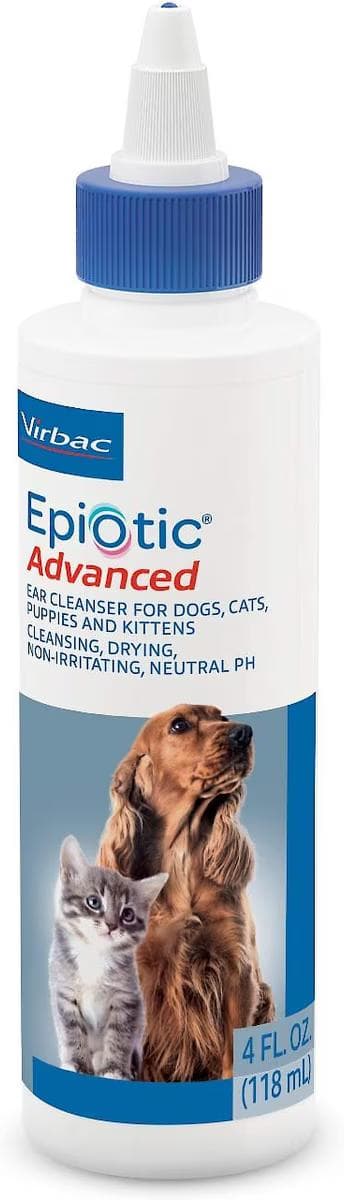
Virbac Epi-Otic Advanced is our leading option for an owner seeking a straightforward routine liquid cleanser. Its clear maintenance purpose makes it easier to match to a veterinarian's instructions than an unfamiliar bottle with broad claims about odor, itching, and infection. The selected product is the 4-fluid-ounce bottle.
Virbac lists routine ear cleansing in dogs, cats, puppies, and kittens among the product's uses. That species and life-stage labeling is useful information, but an age-appropriate label does not tell you whether a particular ear needs cleaning today. Read the manufacturer's Epi-Otic product information alongside the directions supplied with your bottle.
- Why consider it: The intended task is clear: routine cleansing. It is a practical candidate when your veterinarian has advised a maintenance cleaner without requesting a different formulation.
- What to check: Confirm the full product name, the bottle size, and the cleaning schedule. Do not assume another Virbac ear product has identical instructions.
- Reason to choose differently: If the task is only wiping a small amount of dirt from an outer ear flap, a liquid cleansing session may be unnecessary. If the ear is painful, product comparison should wait.
Choose this because its role matches your dog's plan, not because “advanced” implies stronger treatment. Our recommendation is based on intended use and label clarity. We have not measured how quickly it removes wax against the other products, and we are not assigning a clinical success rate. Those distinctions help keep an everyday grooming purchase separate from a medical treatment decision.
Petful may earn a commission when you click through to Chewy, at no extra cost to you.
ZYMOX Ear Cleanser: ongoing ear hygiene
ZYMOX Enzymatic Ear Cleanser is a maintenance choice for dirty, noninfected ears. That last distinction is central to the recommendation. The brand also sells Otic and Ear Solution products, including versions with hydrocortisone; those are different formulations with different directions. Look for “Ear Cleanser” when shopping for this pick.
The manufacturer's cleanser page describes use for noninfected ears and after a completed Ear Solution course. Separately, ZYMOX's product guidance says not to add other ear preparations before or during Ear Solution use. A shared logo does not make the products interchangeable or mean they should be applied together.
- Why consider it: It offers a clearly identified maintenance product for an owner whose veterinarian recommends that role, including a plan for care after treatment has ended.
- What to check: Match the full name and formulation to your instructions. A search result for “ZYMOX dog ear drops” can lead to something other than this cleanser.
- Reason to choose differently: If you are currently following a no-precleaning treatment protocol, adding a cleanser is the wrong purchasing decision unless your veterinarian changes the plan.
The practical advantage here is a distinct maintenance option within a sometimes confusing range. It is not evidence that enzymes outperform every other cleaning formulation. Keep the treatment bottle and the maintenance instructions separate, and ask which product starts when if both appear on your veterinarian's written plan.
Distinguish ZYMOX Ear Cleanser from Otic treatment before shopping: the similar names describe different roles. The cleaner-versus-medication distinction matters both when placing an order and when following the care plan at home. If the name on the package differs from the recommendation, pause and confirm the intended product instead of assuming it is a substitute.
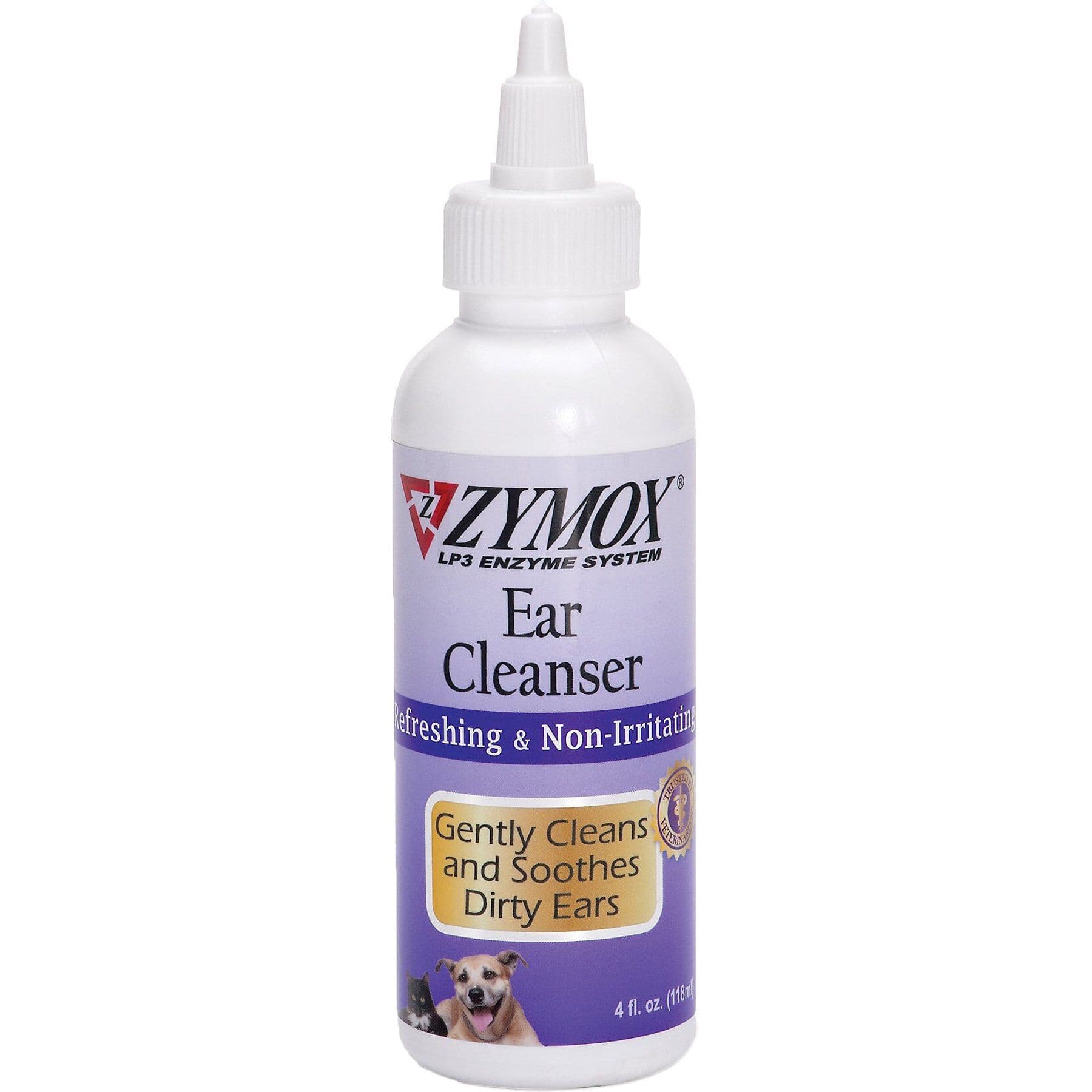
An ear cleanser for routine maintenance of non-infected ears. This is the cleanser, not the Zymox hydrocortisone treatment.
Petful may earn a commission when you click through to Chewy, at no extra cost to you.
Vet's Best Ear Relief Wash + Dry: after water exposure
Vet's Best dog ear cleaner in this comparison is the Ear Relief Wash + Dry combo pack. It contains two products with different jobs: a wash followed by a drying step. Consider it when your veterinarian wants moisture management included in an otherwise appropriate ear-care routine, rather than simply because your dog enjoys swimming.
The manufacturer labels both formulas alcohol-free. Its directions place Dry after cleaning and describe applying a thin layer at the ear opening. The same page explicitly says these ear-care products have no antimicrobial, antifungal, or antibacterial ingredients and are not intended to treat ear or yeast infections.
In practical terms, Vet's Best Wash + Dry does not treat an infection. Cleaning away some debris or changing the ear's smell is not evidence that yeast or bacteria have been controlled. If symptoms are the reason you are shopping, arrange an examination rather than using the two-step format as a treatment trial.
- Why consider it: The two-step format distinguishes washing from drying. That can make sense when both actions are part of the advice you have received.
- What to check: Read each bottle's directions separately. “Wash” and “Dry” are not two sizes of the same liquid, and the second bottle is not a replacement for the first.
- Reason to choose differently: If your dog needs only a simple maintenance cleanser, a two-product routine adds an extra step. If you suspect infection, this combination does not address the need for diagnosis and treatment.
The alcohol-free claim applies to these exact Wash + Dry formulas. Do not transfer it to every ear product carrying the Vet's Best name. This is also a useful example of why “natural” and “infection treatment” should not be treated as synonyms when comparing labels.
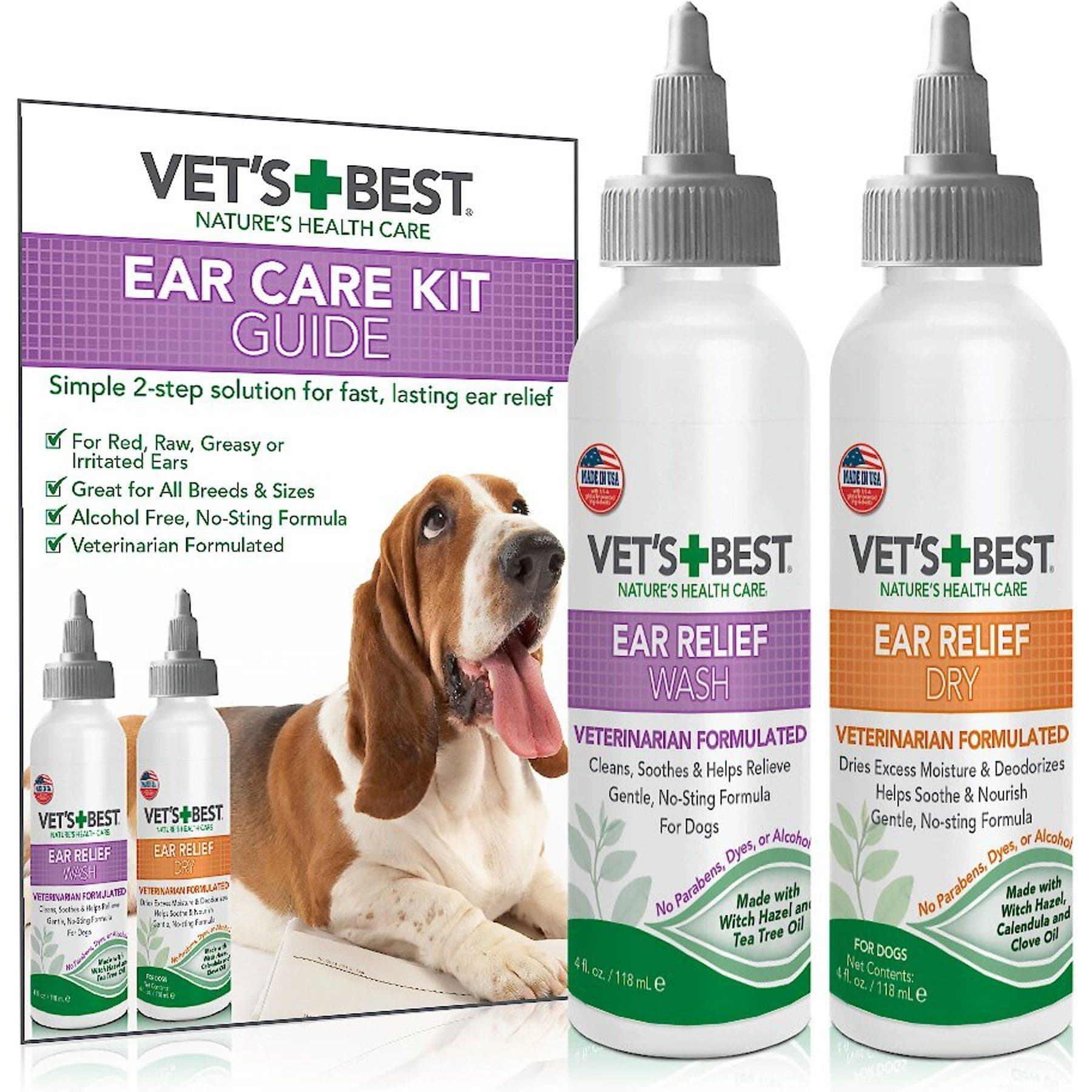
A two-step wash and drying formula for routine ear care. Follow both product labels and ask your veterinarian before use in painful ears.
Petful may earn a commission when you click through to Chewy, at no extra cost to you.
Dechra TrizULTRA + Keto Flush: a veterinarian-directed option
TrizULTRA + Keto Flush belongs in a different part of the comparison. Dechra identifies 0.15% ketoconazole and tris-EDTA in the formula and describes its use in patients with conditions that would respond to those ingredients. It is therefore a product to match to a veterinary plan, rather than our default suggestion for a comfortable dog's occasional ear cleanup.
The Dechra product information provides the relevant formulation details. An antifungal ingredient does not establish which organism, if any, is causing your dog's symptoms. Nor does an available-over-the-counter listing tell you whether this flush is suitable for the condition of that dog's ear.
- Why consider it: Your veterinarian has recommended this specific formulation and explained its role in the cleaning or treatment plan.
- What to check: Confirm the exact product name, frequency, relationship to other ear products, and the point at which you should report a lack of improvement.
- Reason to choose differently: You are only seeking routine hygiene, or you are choosing it because an undiagnosed ear smells yeasty. Neither establishes a reason to use ketoconazole.
Its inclusion helps distinguish a targeted flush from an ordinary maintenance purchase. It should not be read as a recommendation to escalate from a routine cleanser whenever cleaning seems unsuccessful. For a closer look at the medical decision, see our guide to ear cleaners for yeast and infections.
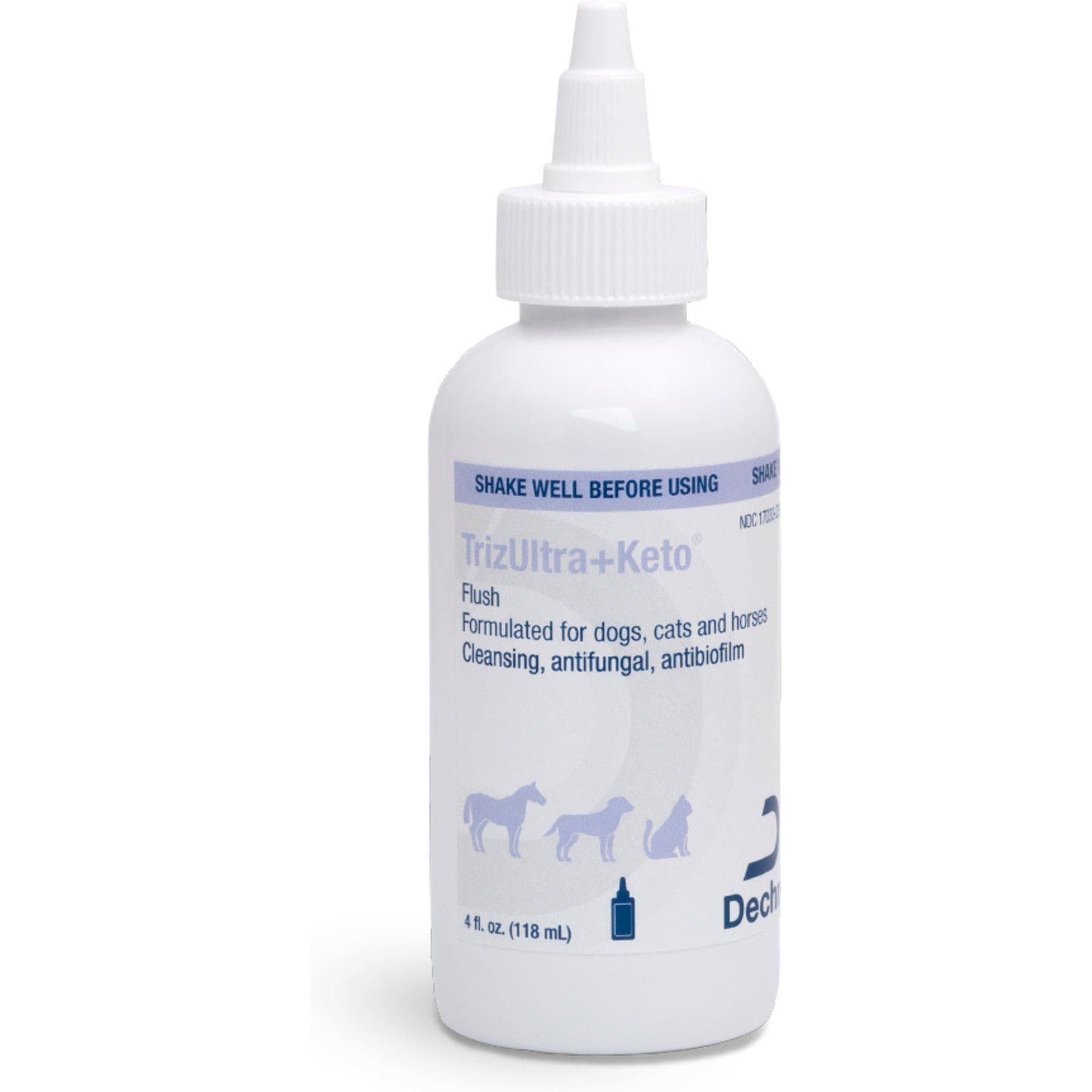
A ketoconazole-containing ear flush to discuss with your veterinarian when routine cleaning is not enough. Use only as directed for your dog.
Petful may earn a commission when you click through to Chewy, at no extra cost to you.
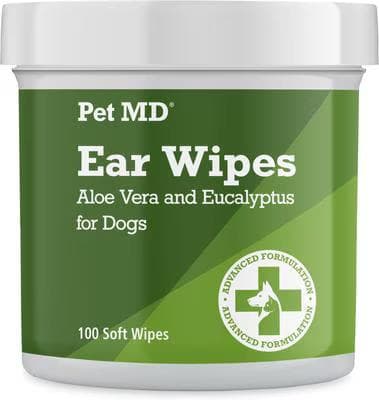
Pet MD Ear Wipes: accessible outer-ear cleanup
Pet MD Aloe Vera & Eucalyptus Ear Wipes are a convenient choice for wiping dirt from the visible, accessible part of the ear. Their useful distinction is format: a ready-moistened pad for a surface task. They are not a way to flush material out of the deeper ear canal, even if a finger can reach partway into the opening.
The manufacturer's directions specify dogs over 12 weeks of age and accessible ear surfaces. The ingredient list includes fragrance and benzyl alcohol as well as aloe and eucalyptus. Those details matter more than assuming that a plant ingredient or a soft pad makes a product suitable for every sensitive dog.
- Why consider them: Your dog's outer-ear skin needs a light cleanup, your dog meets the age labeling, and the product fits the advice you have received.
- What to check: Confirm that the dirt is on an accessible surface. Stop if your dog is uncomfortable rather than trying to scrub until a pad comes away completely clean.
- Reason to choose differently: You need canal cleansing, your puppy is too young for the label, or the formula is unsuitable for your dog's skin history.
Brown material should not be diagnosed by color alone. Its location, amount, recurrence, and any accompanying discomfort affect the next step. Our comparison of dog ear wipes explains the differences between pads and finger wipes and when visible debris needs more than surface cleaning.
Petful may earn a commission when you click through to Chewy, at no extra cost to you.
What vet-approved should mean for your dog
A vet-approved dog ear cleaner should make the decision clearer: what it is for, which dog it might suit, and when to stop and seek advice. Veterinary authorship cannot substitute for examining your individual dog's ears. These recommendations offer that distinction, rather than a universal instruction to buy one bottle and use it on a fixed schedule.
When asking your own veterinarian about a product, bring the exact name or a photograph of the label. “The ZYMOX bottle” or “a natural wash” leaves room for a meaningful mix-up. A helpful recommendation should identify the intended job and tell you how the product relates to anything already being applied.
- Ask what you are cleaning: Is this routine maintenance, accessible outer-ear dirt, or part of managing a diagnosed condition?
- Ask which formulation to buy: Match the full name, not just the brand, packaging color, or a retailer's suggested alternative.
- Ask how to judge the routine: Confirm the schedule and the changes that mean you should call the practice instead of cleaning again.
- Ask about other ear products: Tell the veterinarian about prescribed drops, leftover treatments, wipes, and home remedies as well as the proposed cleanser.
You do not need to buy several products to ask these questions. Take the names you are considering to an appointment, or contact the practice about replacing a product it already recommended. The result should be a specific plan you can follow, not a cupboard of overlapping bottles. That is more useful than choosing by star ratings or treating “professional” as a guarantee of suitability.
Sensitive ears, ingredients, and natural claims
For sensitive ears, choose by the dog's history and the complete formulation. “Natural,” “gentle,” and “alcohol-free” describe different things. None proves that a product will be comfortable on damaged skin, and a product intended for routine hygiene should not be used to investigate why an ear has become sore.
VCA's ear-cleaning guidance advises veterinary assessment before cleaning red, inflamed, or painful ears and warns that peroxide and alcohol can irritate the canal. If your dog flinches, cries, or suddenly avoids having an ear touched, pause the cleaning attempt and contact the veterinarian. Do not try another formula immediately to see whether it stings less.
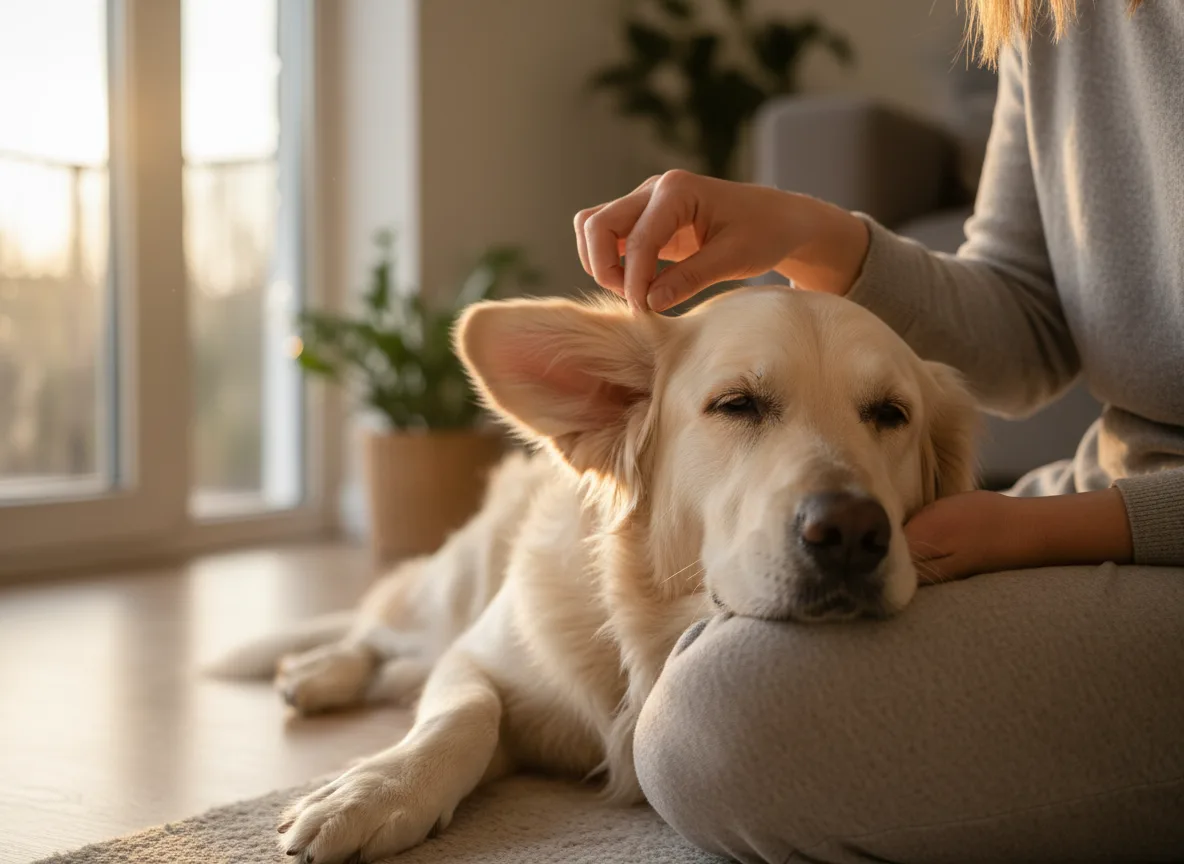
- Stop routine cleaning if an ear is painful, red, or inflamed. Contact your veterinarian to assess it before applying another cleaner or trying to remove more material.
Read ingredient claims in the context of the exact product:
- Alcohol-free: Confirm the statement for that formulation. A brand can sell an alcohol-free wash and a wipe with a different ingredient list.
- Plant ingredients: Aloe, eucalyptus, tea tree oil, or chamomile on a label do not establish that the whole formula suits a dog with a previous skin reaction.
- Medicated ingredients: Ask what an antifungal or other active ingredient contributes to your dog's plan. More active ingredients do not automatically make a better routine cleaner.
- Fragrance: Consider the dog's known tolerances. A pleasant scent is a purchasing preference, not evidence that an ear problem has resolved.
The same scrutiny applies to organic or probiotic claims and to ingredients such as aloe vera or salicylic acid. None establishes a universally safe or allergy-friendly formula. If you are looking for natural ways to clean your dog's ears, start with the ear's condition and the labeled purpose. An allergic dog needs an individual plan, not a guarantee inferred from one ingredient.
If you think your dog reacted to a cleaner, save the packaging and record which product was used and when. That gives the veterinarian something more precise to assess than “an ear wash.” Include whether other products were used at the same time. Avoid switching repeatedly between formulations, because that makes the history harder to explain.
For an owner specifically seeking an alcohol-free option, Vet's Best Wash + Dry has that manufacturer description. The remaining questions still matter: whether two steps are needed, whether the ingredient list fits the dog's history, and whether the ear is healthy enough for routine cleaning.
Wax and moisture: choose the right cleaning job
The most effective ear cleaner for dogs is one that addresses the intended cleaning task without obscuring a medical problem. A wipe can remove accessible surface dirt but cannot stand in for a canal-cleaning liquid. A drying step targets a different practical need from removing wax. A medicated flush introduces another decision again: whether its active ingredients have a role in the dog's veterinary plan.
Think about what prompted you to shop. Are you replacing an established maintenance product, preparing for the routine your veterinarian recommended after swimming, or reacting to a sudden change? The first two give you a defined job to match. The third should prompt a discussion of the change before choosing a formula on the assumption that it is simply more wax.
- For an established routine: Compare intended use, instructions, and product identity before bottle size or price.
- For a water-related routine: Clarify whether your dog needs cleaning, drying, or both, and how the routine fits frequent swims or baths.
- For new or rapidly returning material: Describe it to your veterinarian rather than repeatedly using extra cleaner or a stronger-looking product.
Words such as “wax-removing,” “drying,” and “otic” are clues to investigate, not a complete selection system. “Otic” simply refers to the ear; it does not tell you that a product treats infection. Read the purpose statement and directions, and compare the specific role with the plan you were given.
You may also see “ceruminolytic,” a term for breaking down ear wax, or “micellar,” which describes a formulation approach. A drying agent addresses moisture; it does not automatically remove the underlying cause of recurring debris. Ask what a proposed solution contributes to your dog's routine before adding a separate ear dryer or switching away from a cleanser already recommended.
For straightforward routine cleaning, Epi-Otic Advanced is the first option in this comparison. If you need separate washing and drying steps, the relevant comparison changes to the Wash + Dry format. Neither conclusion requires buying the most complicated product. The useful measure is whether the product lets you carry out the correct task clearly and consistently.
- A larger bottle may cost less per ounce, but that is not helpful if your dog uses little cleanser and you discard much of it at expiry. A wipe count and a liquid volume also measure different things; they do not reveal an equivalent number of cleaning sessions. Start with the format and size that suit the agreed routine, check the current price, and avoid stocking several alternatives before you know whether you need them. Keep a photograph of the chosen label for accurate repeat purchases.
When an infection changes the product decision
An ear cleaner for infection should be chosen within a veterinary plan. Discharge color and odor do not reliably tell an owner whether yeast, bacteria, or another problem is responsible. VCA explains that an ear examination and microscopic assessment help identify the problem and direct treatment. Repeated episodes also warrant attention to an underlying cause.
This is why a routine cleanser, an antifungal flush, and an ear treatment should not occupy the same shopping category. You cannot safely choose the best antibiotic for a dog ear infection without a vet identifying the cause. If you need to clean an ear infection in dogs, or clean yeast-related debris from your dog's ears, follow the specific veterinary plan. A cleanser does not establish the diagnosis, and selecting an antibiotic by smell or an online claim can miss the problem that actually needs treatment.
- Use our guide to ear cleaners for yeast and infections to understand those product roles before discussing options with your veterinarian.
- If you are considering treating the problem yourself, read why suspected ear infections need veterinary care before adding leftover drops or another home treatment.
Keep a short record of products already used and the timing of symptoms. That history is useful at the appointment. Do not use a temporary change in smell after cleaning as proof that the cause has been identified or that the ear no longer needs assessment.
Should you make a cleaner at home?
A homemade dog ear cleaner is not our recommended substitute for a suitable labeled product. Kitchen ingredients do not give you a validated ear-care formulation, and an online recipe cannot tell you whether a dog's eardrum or inflamed canal makes a proposed mixture inappropriate. “Natural” yeast-remedy claims also leave the diagnosis unresolved.
Our guide to homemade dog ear cleaners looks specifically at vinegar, peroxide, oils, and other common suggestions. Use it to understand why a recipe's popularity is not a reason to put it in your dog's ear. If the concern is recurring odor or discharge, spend the next step clarifying the cause with your veterinarian rather than changing the recipe's proportions.
Cleaning dog ears at home does not require making the solution at home. Natural ways to clean a dog's ears still need the same attention to formulation and ear health. Before deciding what to use, review the home remedies in the linked guide: DIY recipes involving apple cider vinegar, hydrogen peroxide, or witch hazel are not interchangeable with formulated ear drops. They may irritate unhealthy tissue, and an unknown ear drum condition adds another concern, especially when the goal is treating yeast.
- Avoid treating household vinegar or peroxide as interchangeable with a commercial ear-care formula.
- Do not combine a homemade mixture with an existing ear medication unless your veterinarian specifically directs the plan.
How to use your selected cleaner safely
Use the instructions for the exact product, together with your veterinarian's advice. A liquid cleanser, a drying cream, and an outer-ear wipe do not share one application method. Before opening the bottle, confirm which step you are performing and whether another ear product is due that day.
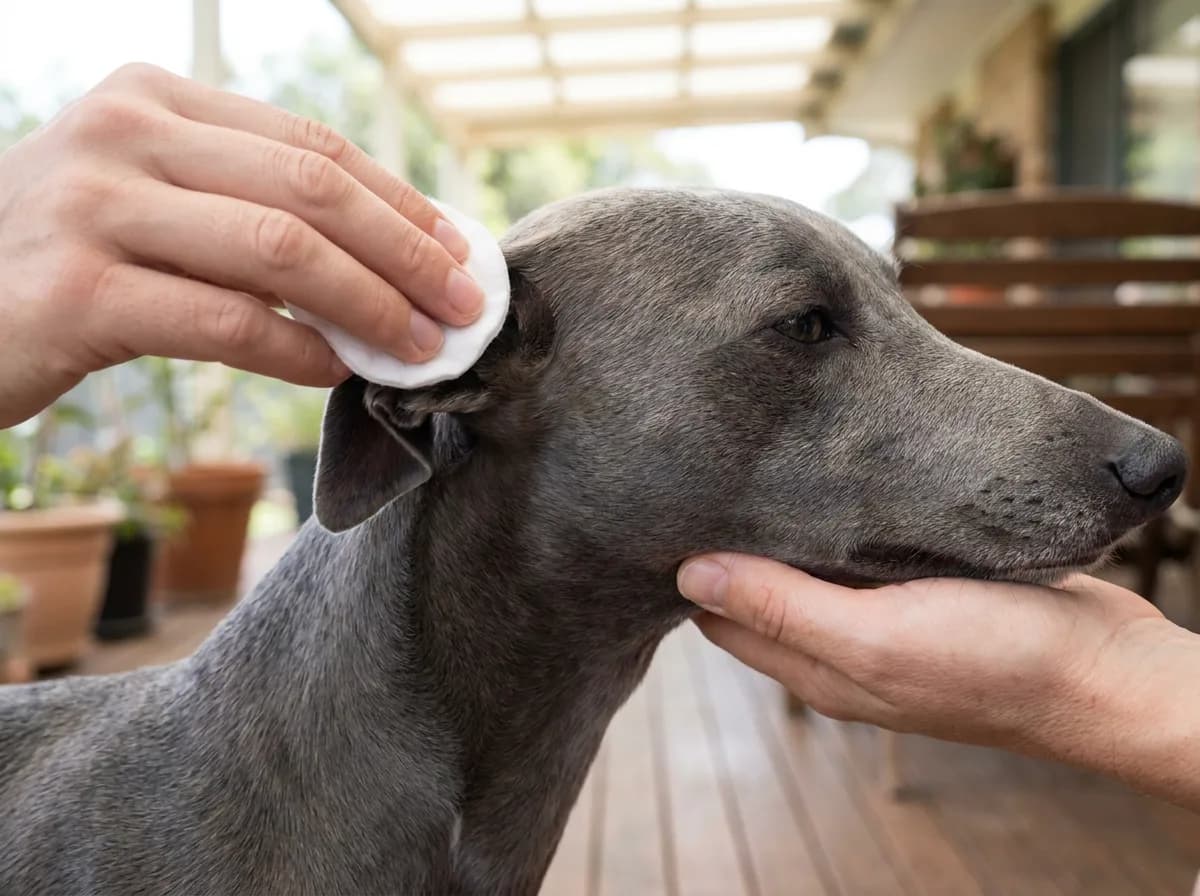
Our step-by-step guide to cleaning a dog's ears explains positioning, gentle handling, and removing accessible debris. Cornell's veterinary guidance also explains why cleaning can matter within some treatment plans. That does not override a particular medication's no-precleaning instructions.
For safely cleaning dogs' ears at home, the distinction is between wiping visible wax and trying to flush or probe inside the canal. Smelly dog ears need attention to the cause; getting rid of the smell temporarily does not show that cleaning has resolved the problem. The linked guide explains how to apply a cleaner and remove accessible material. Do not pull ear hair, attempt to remove deep wax, or improvise a way to clean without the recommended solution. Breed differences, including a French bulldog's upright ears, do not remove the need for gentle handling and individual advice.
Before you begin, prepare a small, practical setup:
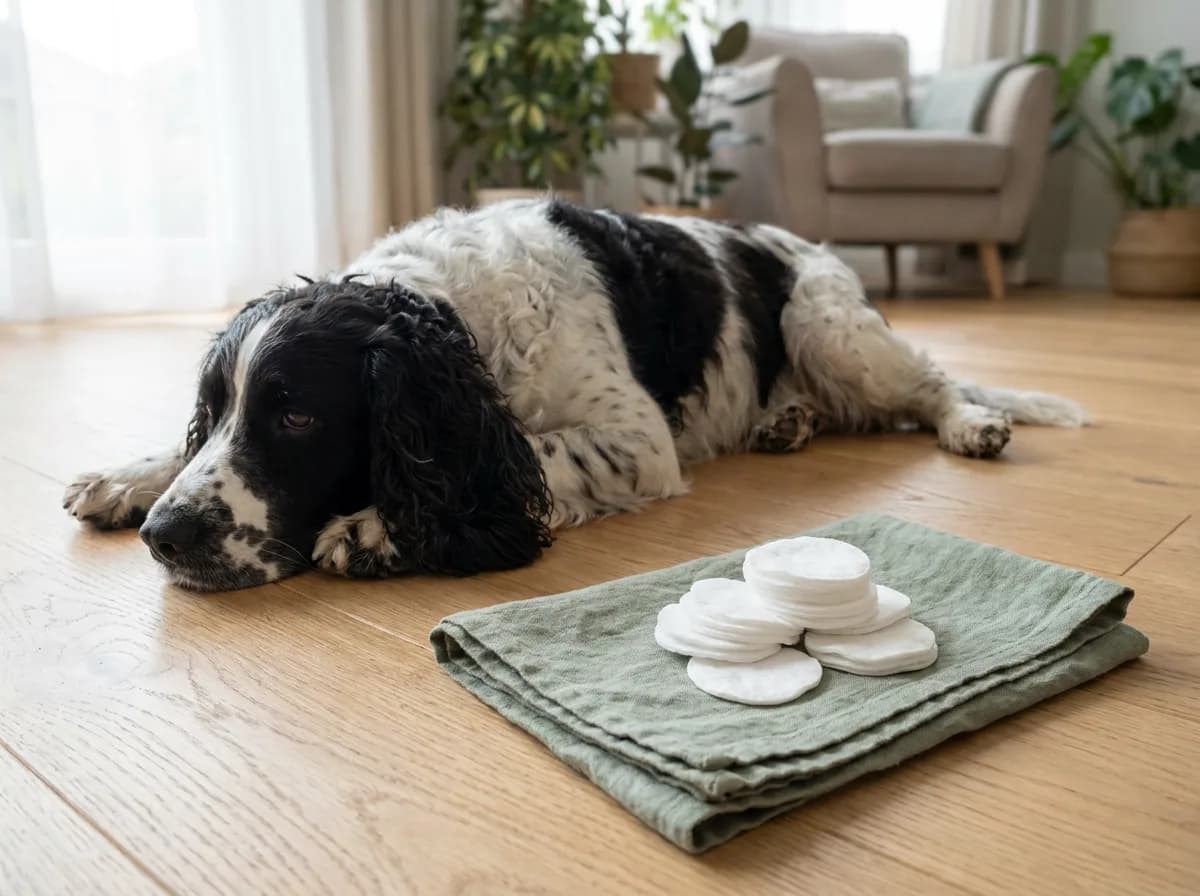
- Put the correctly identified product, clean cotton pads or gauze, and a towel within reach.
- Read the current directions rather than relying on what you remember from a different bottle.
- Keep cotton-tipped swabs and other probing tools out of the ear canal.
- Stop if handling causes discomfort, and ask the practice how to proceed.
A brief written routine is especially useful when several people care for the same dog. Record which product to use, when to use it, and who last performed the task. That prevents one person from repeating a cleaning simply because they did not know another person had already done it. Keep treatment directions separate from the dog's ordinary grooming routine so that an old schedule does not continue after the plan changes.
How we compared these ear-care products
This comparison uses manufacturer product information to establish each formulation's intended role and primary veterinary guidance to define the medical boundaries. It does not report personal product testing, a laboratory comparison, or results from treating dogs. The recommendations are judgments about fit for a stated task, with the relevant limitation beside each pick.
The selection questions were consistent across the products:
- Identity: Can an owner distinguish the exact formula from similarly named products?
- Purpose: Is it a routine cleanser, an accessible-surface wipe, a wash-and-dry combination, or a targeted flush?
- Use limits: Are age labeling, ingredient concerns, and treatment-sequencing issues clear enough to make a useful decision?
- Practical fit: Does the format solve the task the owner is trying to complete, without adding unnecessary products or steps?
We have not ranked scent, bottle handling, dog acceptance, or cleaning speed because those would require an appropriate hands-on comparison. Likewise, retailer ratings cannot establish what will work for a particular medical condition. Use the product distinctions to narrow a conversation with your veterinarian and to identify the right item when buying a replacement. A more specific choice is more useful than a confident-sounding claim that one cleaner is best for every dog.
Frequently asked questions
Check the expiry date on the bottle and follow the manufacturer's instructions; replace the bottle when it is expired rather than guessing whether it is still suitable. A normal appearance or smell does not establish that an old product remains within its labeled shelf life. If the date is unreadable, the container is damaged, or you no longer have the original packaging, contact the manufacturer before using it. Keep the product name and batch details available when you ask. For a dog on a veterinary ear-care plan, confirm the replacement is the same formulation instead of substituting a similarly named treatment. Buying a size you can reasonably use within the labeled period is a more useful saving than keeping an oversized bottle indefinitely.
No. Dogs with clean healthy ears may not need a regular cleaning product. Ask your veterinarian for an individual cleaning schedule based on your dog's ear history and current condition. A label allowing frequent use is not an instruction to clean every dog that often. Checking ears and applying cleaner are separate actions, and extra cleaning can irritate the canal.
Do not combine ear cleaner with prescribed ear drops without checking both the product instructions and your veterinarian's directions. Some ear-care plans include cleaning, while certain products follow a no-precleaning protocol. ZYMOX's guidance, for example, separates Ear Solution use from later maintenance with Ear Cleanser. Ask which bottle to use, in what order, and when; do not infer compatibility from a shared brand name.
No. A natural dog ear cleaner is not automatically gentle. Natural ingredients do not establish that the complete formula suits an irritated ear canal or a dog with a previous reaction. Review the exact ingredient list and the dog's history with your veterinarian. If the ear is sore, do not use a “gentle” label as a reason to keep experimenting. The cause of the discomfort matters more than the marketing category.
Use the same ear cleaner for a dog and a cat only when the exact species labeling supports both animals. The species labeling of the selected products differs, so check the current package before use. Some cleansers in this comparison are labeled for multiple species, including dogs and cats, while other choices are dog-only products. Do not transfer the recommendation just because the packaging looks similar or both animals need ear care. Each animal also needs its own assessment if the ear is painful, itchy, or discharging. Follow the label and the advice for that particular pet.
BVMS, MRCVS
Dr. Pippa Elliott, BVMS, MRCVS, is a veterinarian with nearly 30 years of experience in companion animal practice. Dr. Elliott earned her Bachelor of Veterinary Medicine and Surgery from the University of Glasgow. She was also designated a Member of the Royal College of Veterinary Surgeons. Married with 2 grown-up kids, Dr. Elliott has a naughty Puggle named Poggle, 3 cats and a bearded dragon.
Sign up for expert-backed reviews and safety alerts all in one place.