Best Calming Treats for Cats: 2 Safer Options
Compare a lickable calming treat and a daily probiotic powder for cats, including evidence limits, format differences, stressor fit, safety questions, and when to call a veterinarian.

BVMS, MRCVS
Petful is reader supported. As an affiliate of platforms like Amazon and Chewy, we may earn a commission when you buy through links on this page. There is no extra cost to you.
The best calming treats for cats are not the products with the loudest promises. They are ingestible options that fit the cat's stress pattern, are easy to give consistently, and are used only after medical causes of a behavior change have been considered. Our two picks are Feliway Happy Snack, a lickable treat, and Purina Calming Care, a daily probiotic powder.
These products are not interchangeable. A lickable puree can support a pleasant routine around a predictable event, while a daily powder requires consistent use and may take weeks to show its full effect. Neither replaces environmental changes, behavior work, prescribed medication, or veterinary care when those are needed.

Sign up for expert-backed reviews and safety alerts all in one place.
What is the best calming treat for a cat?
- 1The two ingestible options in this guide are a lickable puree treat and a daily probiotic powder.
- 2Feliway Happy Snack may fit a food-motivated cat and a positive pre-event routine.
- 3Purina Calming Care may fit a cat whose veterinarian recommends consistent daily nutritional support and whose household can wait up to six weeks for the full effect.
- 4Neither product diagnoses or treats the cause of anxiety, and neither replaces veterinary care.
There is no single best calming product for every cat. The two exact ingestible options here answer different needs, and each is an adjunct, not a diagnosis. The most suitable choice depends on whether the concern is a predictable event, an ongoing pattern, a learned fear, tension with another animal, pain, illness, or a change in the home. It also depends on what the cat will reliably consume without creating more stress.
For a cat who enjoys puree and needs a positive association with a carrier, grooming tool, visitor routine, or another manageable event, Feliway Happy Snack is the closer match. It is a true treat rather than a diffuser or garment. Its manufacturer describes it as a complementary snack made with chicken and alpha-casozepine, a milk-derived ingredient. It should be judged as a palatable supportive treat, not as a sedative or a substitute for prescribed situational medication.
For a cat with a more persistent pattern, Purina Calming Care offers a different approach. It is a probiotic supplement containing Bifidobacterium longum BL999 and is given as one packet daily. The label says it may take up to six weeks for full effect. That makes it a poor last-minute travel purchase but a potentially practical addition to a veterinarian-guided long-term plan. The correct branch may also be neither product. A cat who suddenly hides, stops eating, urinates outside the litter box, becomes aggressive, vocalizes unusually, or resists touch may be painful or ill. Start with the clinical picture, not the shopping category. Petful's broader guide to cat anxiety signs and treatment explains how fear, stress, medical problems, and behavior can overlap.
How we chose the best calming treats for cats
This is an intentionally short list. Many pages about calming treats mix edible products with pheromone diffusers, sprays, collars, pressure garments, oils, and prescription drugs. Those options may belong in a broader calming plan, but calling all of them treats makes the comparison less useful.
We limited the roundup to the two exact ingestible cat-calming products currently available through Petful's offer inventory. We then compared them on the factors that can genuinely change a reader's decision:
- Format: A lickable supplemental treat and a daily probiotic powder create different routines.
- Administration: The product must be acceptable to the cat and realistic for the caregiver to give without force.
- Timing: A daily powder that may take six weeks for full effect is not equivalent to a snack used around a positive training session.
- Evidence: Manufacturer claims, consumer surveys, ingredient research, and controlled product studies are not the same level of evidence.
- Safety: Food allergies, calorie intake, pregnancy or breeding status, concurrent medications, chronic disease, and worsening signs can change the decision.
- Best-fit stress pattern: Predictable mild stress and persistent anxiety-like behavior call for different plans.
- Limits: Neither product should mask pain, urinary disease, loss of appetite, cognitive change, or severe fear.
We did not conduct hands-on product testing, and we do not infer effectiveness from star ratings or promotional copy. The discussion below uses current manufacturer directions, veterinary guidance, and published research where available. Formulas and labels can change, so check the package you receive and follow your veterinarian's instructions.
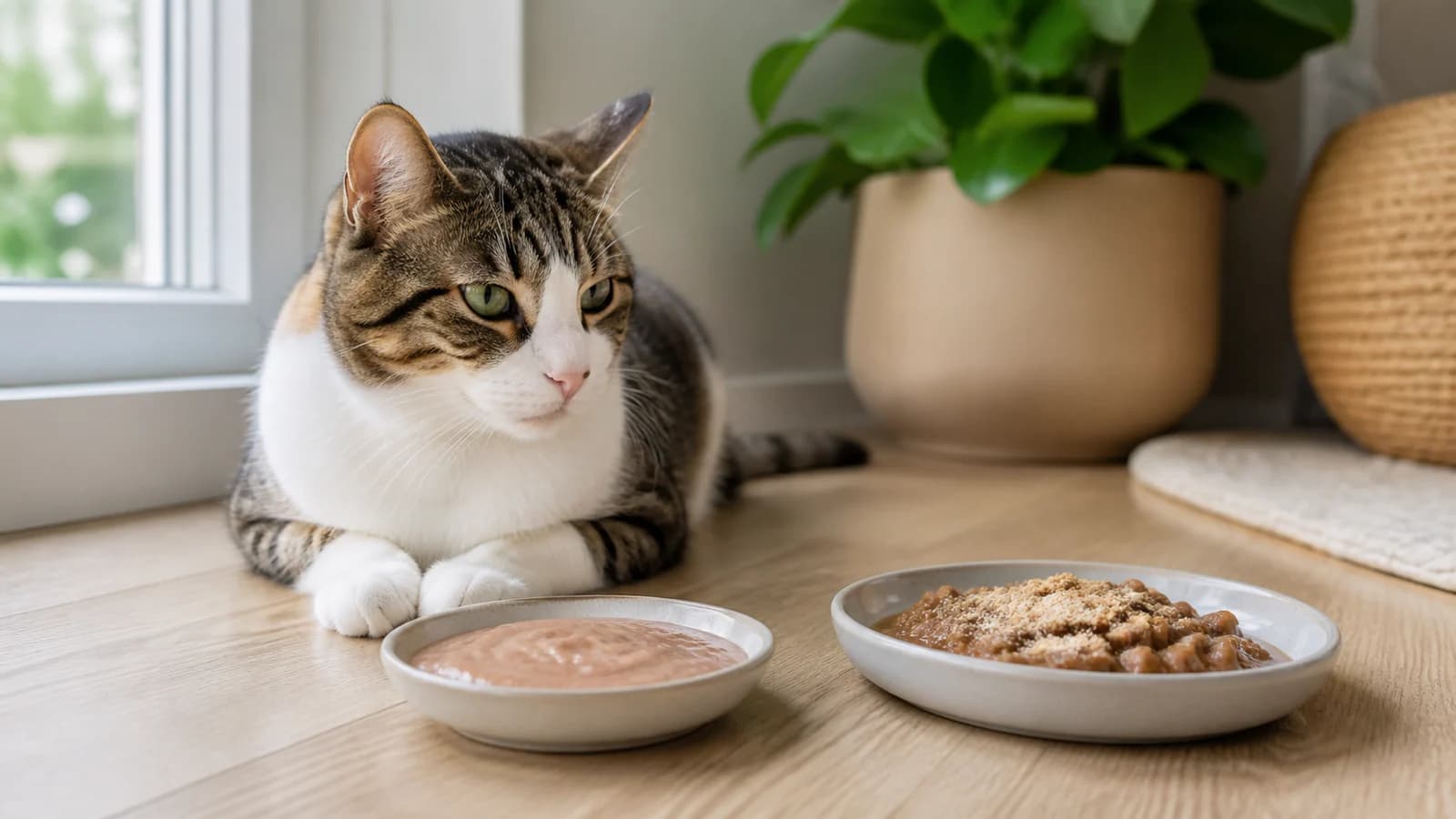
This honest two-option slate does not pad the roundup with diffusers or pressure garments mislabeled as treats. A pheromone diffuser affects the environment. A pressure garment is worn. A prescription medication has a pharmacologic effect and requires veterinary direction. A treat or supplement is eaten. These categories may be combined in a treatment plan, but they should not be represented as equivalent products.
The use-case framework separates predictable situational stress from chronic or medically driven behavior change. It is also a lickable versus daily powder comparison and a situational versus persistent anxiety decision. Those boundaries matter because the category, timing, administration burden, and reason for the behavior can all change which option is appropriate, or whether shopping should stop in favor of veterinary care.
 Sponsored
Need a prescription or refill for your cat?
A licensed vet at Dutch can assess your cat over video and prescribe treatment when it's appropriate, delivered to your door.
Use code Pets30
Plans start at $11/month · covers up to 5 pets
- Licensed vets in most states
- Rx for 150+ conditions
- 4.7 on Trustpilot
Our two cat-calming ingestible options
| Product | Best for | Format | Routine | Evidence boundary | Main limitation |
|---|---|---|---|---|---|
| Feliway Happy Snack | Food-motivated cats and positive associations around predictable, manageable events | Lickable chicken puree with alpha-casozepine | Offer during a calm, positive interaction; follow the package limit | Manufacturer palatability and caregiver survey data plus ingredient-level research, not proof that this exact snack treats feline anxiety | Contains chicken and milk-derived protein; effect and timing are not established like a prescription drug |
| Purina Calming Care Cat | Consistent daily support within a longer-term plan | Daily powder with Bifidobacterium longum BL999 and vitamin E | One packet daily or as directed by a veterinarian | A small controlled cat study supports selected stress-related outcomes, but it does not establish a universal anxiety treatment | May take up to six weeks for full effect and requires reliable daily intake |
The table is a format-and-stressor matcher, not a claim that the two products have been proven head to head. They have different ingredients, instructions, evidence bases, and practical roles. Choosing between them should begin with the behavior you are trying to change and the time available, then move to diet fit and veterinary guidance.
Feliway Happy Snack: lickable situational option
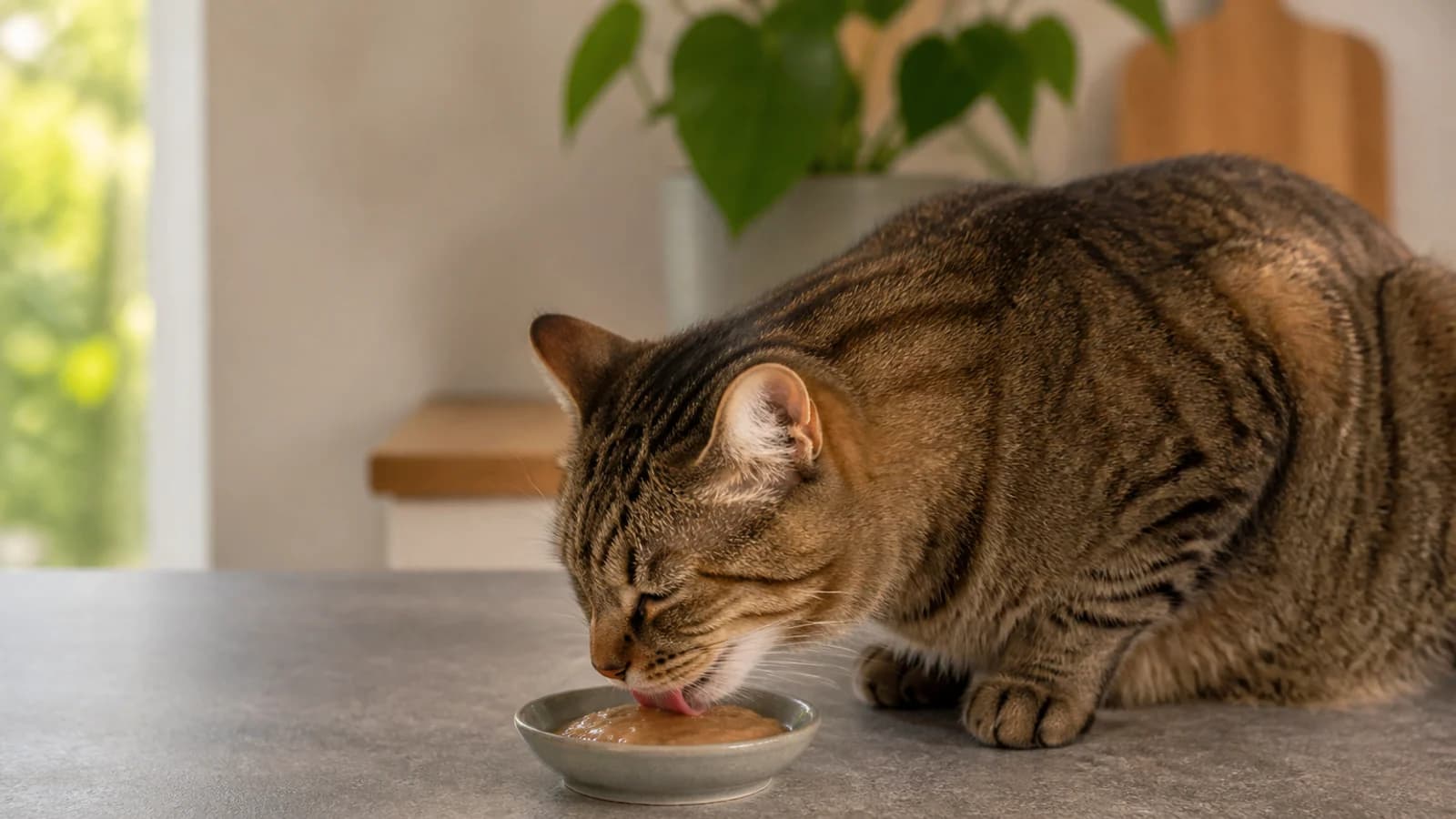
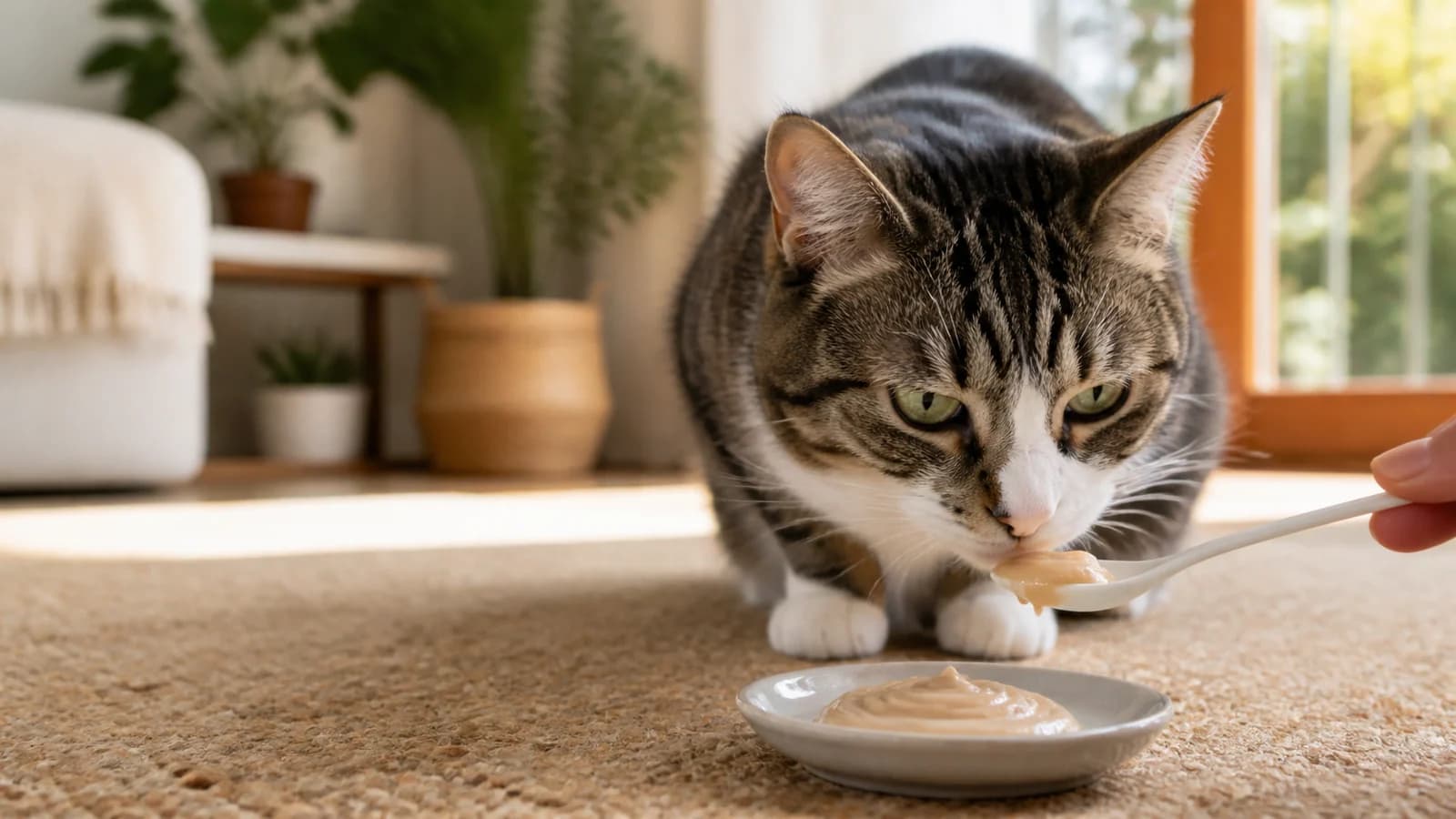
Feliway Happy Snack is the only conventional treat in this two-product slate. It is a single-serve lickable puree made with real chicken. The manufacturer says it contains alpha-casozepine, a peptide derived from milk protein, and is intended for intermittent or supplemental feeding rather than as complete nutrition.
That format has a useful behavioral advantage even before considering the calming ingredient. A highly palatable food can help create a positive association when it is offered at a low-stress point in carrier training, cooperative care, or visitor preparation. The treat should follow voluntary approach and calm behavior. It should not be used to lure a terrified cat into a situation that immediately overwhelms them.
What the evidence can support
Feliway reports that 86% of cats enjoyed the product and that 74% of caregivers noticed their cats were happier after 30 days. Those figures come from manufacturer-reported palatability and caregiver observations. They are useful for understanding acceptance, but they do not tell us how the snack compares with a placebo in cats diagnosed with a specific anxiety disorder.
Alpha-casozepine has been studied in cats in other formulations. In a randomized, partly blinded placebo-controlled veterinary-visit study of 60 cats, the main statistically significant finding was the absence of sweaty paws in the high-dose alpha-casozepine group. Other outcomes, including fecal cortisol metabolites, did not show a clear significant benefit. A separate study of a complete diet containing both alpha-casozepine and L-tryptophan found differences in selected open-field behaviors, but the combination product and study conditions do not prove that Happy Snack will produce the same result.
That distinction matters. Ingredient research can make a product plausible, but it does not establish the dose, onset, or clinical effect of this exact snack. Happy Snack is most defensible as a palatable supportive tool that may contribute to a calm routine. It should not be described as an anti-anxiety medication.
Who may find this format useful
This pick may suit a cat who:
- Readily accepts lickable chicken treats.
- Benefits from food-based positive reinforcement.
- Needs carrier training or cooperative-care practice carried out in small, comfortable steps.
- Has a predictable mild stressor that allows preparation rather than forced exposure.
- Will not eat powder consistently on regular meals.
- Has no chicken allergy or dietary restriction that rules the product out.
It may also be practical when the caregiver needs to observe whether the full serving was eaten. With a powder mixed into a meal, leftovers can make the dose uncertain. A cat who willingly finishes a small puree serving gives clearer administration feedback.
Important limitations and cautions
The current U.S. manufacturer page says each tube contains about 11.6 calories and advises no more than two tubes daily. Those calories count. A small cat receiving two tubes could get more than 20 extra calories, so the rest of the daily food may need adjustment. Treats and toppers should remain a small portion of the overall diet unless a veterinarian has designed a different plan.
Happy Snack contains chicken and is not appropriate for a cat with a chicken allergy or a strict food-elimination trial. Because alpha-casozepine is milk-derived, caregivers should show the complete label to the veterinarian if the cat has a known food sensitivity or a medically restricted diet. The manufacturer also advises consulting a veterinarian before use when the cat takes medication.
Do not put medication into the snack unless the prescribing veterinarian confirms that the medication may be mixed with food and the cat will consume the entire amount. Some drugs must not be crushed or opened. A cat can also develop an aversion to a favorite treat if it repeatedly hides a bitter medicine.
How to use it without increasing stress
Offer the puree in the way the cat already prefers, such as from a shallow dish, spoon, lick mat, or food bowl. Direct feeding from the tube is optional and should never involve restraining the cat's head. Keep the first sessions easy and end while the cat is still comfortable.
For carrier practice, place the open carrier in the home as a normal resting option. Begin with the treat well outside it. Over several sessions, move the dish closer only while the cat remains relaxed. Progress to the entrance, then inside the carrier. Closing the door, lifting the carrier, and taking a car ride are separate training steps.
The goal is not to prove the snack can overpower fear. The goal is to make a manageable training step predict good things. If the cat freezes, crouches tightly, pants, struggles, growls, lashes out, or refuses a normally loved food, the session is too difficult. Back up rather than offering more product.
- True lickable treat rather than a diffuser or garment
- Convenient for food-based positive reinforcement
- Easy to see whether a full serving was eaten
- Manufacturer allows direct feeding, a dish, or mixing with food
- Contains chicken and milk-derived alpha-casozepine
- Manufacturer survey results do not prove treatment of an anxiety disorder
- Approximately 11.6 calories per tube must be counted
- Not a sedative or reliable substitute for veterinary situational medication
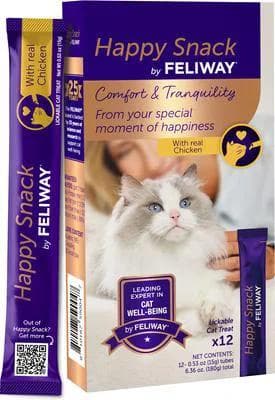
Lickable chicken-puree cat treats infused with the calming Feliway pheromone to create a positive, reassuring moment and ease everyday feline stress.
Petful may earn a commission when you click through to Chewy, at no extra cost to you.
Purina Calming Care: daily powder format
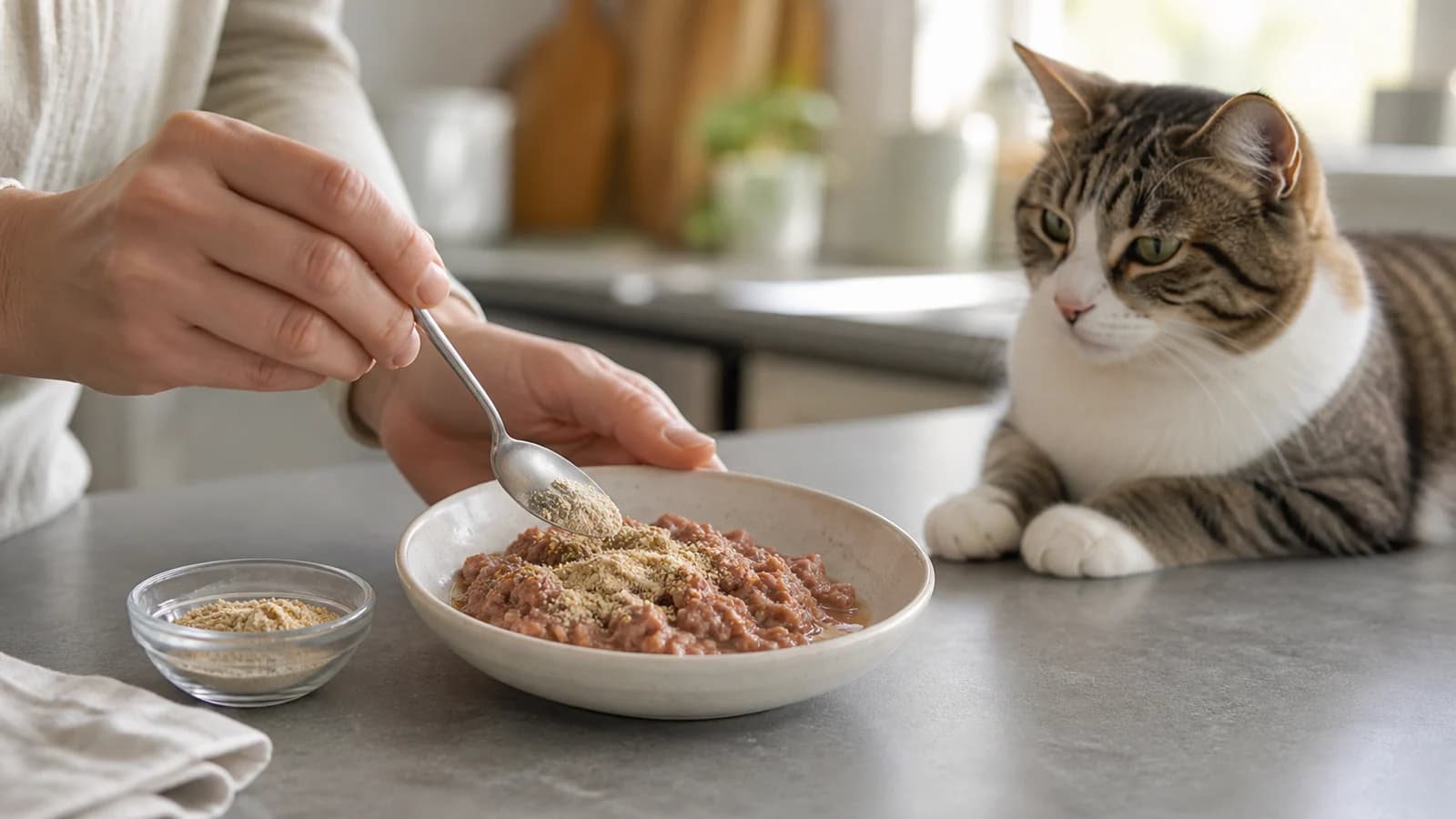
Purina Pro Plan Veterinary Supplements Calming Care for cats is not a treat in the ordinary sense. It is a flavored probiotic powder supplied in daily packets. It belongs in this guide because it is ingested and is commonly considered by readers searching for calming treats, but its dosing routine and expected timeline are closer to a daily supplement.
The current product label lists Bifidobacterium longum BL999 at 1 billion colony-forming units per 1-gram packet, plus 100 IU of vitamin E. Inactive ingredients include liver flavor and maltodextrin. Directions say to administer one packet daily or as directed by a veterinarian and warn that full effect may take up to six weeks.
What the evidence can support
A randomized placebo-controlled study reported in the 2021 ACVIM Forum research abstracts enrolled 24 cats with chronic subclinical feline herpesvirus type 1 infection. After a period of supplementation and experimentally induced housing stress, cats receiving BL999 were less likely to show abnormal serum cortisol concentrations or sneezing. During cage housing, they were also more likely to reach toward scorers and less likely to pace. The cats consumed at least 75% of the supplements, and the researchers reported no obvious vomiting or diarrhea.
Those findings are relevant, but the limits are just as important. This was a small study in cats with a particular infectious history under controlled housing changes. It does not establish that the supplement will resolve every household behavior described as anxiety. The report was a conference abstract rather than a large body of independent trials, and Purina personnel were among the authors. Results involving cortisol, pacing, social approach, and sneezing cannot be translated into a promise for travel, aggression, house soiling, or separation-related behavior in an individual pet.
Purina's label appropriately describes the product as assistance in managing cats that exhibit anxious behaviors. That wording supports an adjunct role. It does not support replacing a medical workup, environmental changes, a behavior plan, or prescription treatment.
Who may find this format useful
This pick may suit a cat who:
- Reliably eats a full measured meal containing powder.
- Has an ongoing concern rather than a one-time event tomorrow.
- Can follow the same daily routine for several weeks.
- Has been examined or discussed with a veterinarian before starting the supplement.
- Needs a non-drug adjunct within a broader environmental or behavior plan.
- Does not have a dietary restriction that conflicts with the flavoring or other ingredients.
It is less suitable for a grazer in a multi-cat home when the caregiver cannot confirm which cat ate the packet. It may also be impractical for a cat who detects powder in food and refuses the meal. Protecting normal food intake is more important than forcing a supplement trial.
Important limitations and cautions
The label recommends a veterinary examination before use. It also says to stop administration and consult a veterinarian if the condition worsens or does not improve. Safe use has not been proven in pregnant animals or animals intended for breeding.
Because the full effect may take up to six weeks, do not buy this powder the day before a flight and assume it will control severe travel fear. A veterinarian can help create a pre-travel plan that may include carrier acclimation, environmental management, nausea prevention, and appropriately prescribed medication when indicated.
Probiotics are strain-specific. Evidence for BL999 cannot automatically be applied to every Bifidobacterium longum product, and evidence for a different probiotic cannot be used to promise the same effect from BL999. Storage and expiration instructions matter because live microorganisms may lose viability when handled incorrectly.
How to give it consistently
Follow the current package and veterinary directions. Mix the packet into a small portion of food that the cat reliably finishes before offering the rest of the meal. This can make intake easier to verify. Do not repeatedly withhold meals to make a reluctant cat consume the supplement.
In a multi-cat home, feed the supplemented portion separately and watch the intended cat finish it. Record the start date, any missed days, appetite, stool quality, vomiting, behavior, and the specific outcome you are tracking. A daily impression such as "seemed calmer" is less useful than a defined measure such as time spent hiding after a visitor arrives or the number of pacing episodes during a known routine change.
- Cat-specific daily probiotic supplement
- Label identifies the BL999 strain and amount
- Small controlled cat study supports selected stress-related outcomes
- Packets make daily portions straightforward
- May take up to six weeks for full effect
- Requires reliable daily food intake
- Evidence does not cover every cause or expression of anxiety
- Safe use in pregnant or breeding animals has not been proven
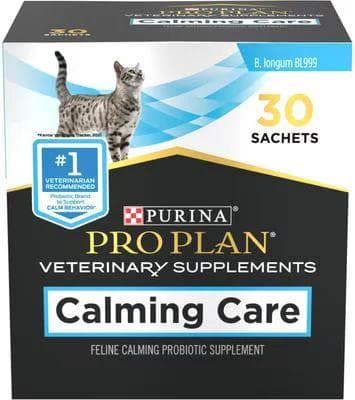
A vet-recommended probiotic supplement (B. longum BL999) that helps cats manage anxious behaviors and stay calm during stressful events and routine changes.
Petful may earn a commission when you click through to Chewy, at no extra cost to you.
Do calming cat treats really work?
Calming cat treats may help some cats as one part of a plan, but "work" needs a specific definition. A product might improve willingness to approach a carrier, reduce pacing during a predictable change, or make a positive training routine easier. That is different from curing an anxiety disorder, sedating a cat for travel, ending inter-cat conflict, or treating pain.
Evidence also has levels, so onset expectations should follow the exact formulation and label rather than a generic promise. A palatability percentage tells us how many cats ate a product. A caregiver survey records perceptions but can be influenced by expectations and natural variation. An ingredient study may not use the same dose or formulation as the product on the shelf. A randomized placebo-controlled trial offers stronger evidence, but its population and outcomes may still differ from the reader's cat.
For these two picks, the most defensible expectations are:
- Feliway Happy Snack: A palatable lickable treat that can support positive associations and contains an ingredient studied in other feline formulations. Evidence does not establish a drug-like onset or reliable control of diagnosed anxiety.
- Purina Calming Care: A daily BL999 powder with a small controlled feline study supporting selected behavioral and physiologic stress outcomes. It requires weeks, consistency, and a broader plan.
A useful response should be observable and meaningful. Sleeping more is not automatically an improvement if the cat is lethargic, ill, or withdrawn. Fewer vocalizations may not be positive if the cat has simply stopped engaging. Look for voluntary recovery and normal behavior: eating, grooming, playing, resting in ordinary places, using the litter box normally, approaching familiar people, and exploring without hypervigilance.
If a product appears to help, the underlying environmental work should continue. If it does not help after the label's appropriate trial period, reassess the diagnosis and plan rather than stacking more over-the-counter products.
What veterinarians consider before recommending a calming product
What do vets recommend for calming cats? Veterinarians do not start with a brand. They start with the cat, the behavior, the timeline, the environment, current medications, and veterinary contraindications. The same outward sign can have very different causes, so the recommendation may be environmental change, behavior modification, a specific ingestible, a prescribed medicine, diagnostic testing, or no calming product at all.
A cat hiding after a move may be responding to unfamiliar territory. A cat hiding and refusing food may be sick. A senior cat vocalizing at night may be painful, hypertensive, hyperthyroid, cognitively impaired, or losing vision or hearing. A cat urinating outside the box may have lower urinary tract disease, arthritis that makes the box difficult to enter, resource conflict, or an unsuitable litter-box setup.
A useful veterinary history includes:
- When the behavior began and whether onset was sudden or gradual.
- The exact triggers, frequency, duration, and recovery time.
- Appetite, thirst, elimination, sleep, grooming, movement, and weight changes.
- Household changes, including people, pets, construction, odors, furniture, and schedules.
- All foods, treats, supplements, medications, and flea products.
- Videos taken from a safe distance when the behavior occurs naturally.
- What has already been tried and whether it changed the sign.
The physical examination and any recommended testing help separate a primarily behavioral problem from pain or disease. Once medical needs are addressed, the plan may combine environmental changes, gradual behavior modification, an ingestible supplement, pheromones, and prescribed medication. Severe or complex cases may benefit from a board-certified veterinary behaviorist.
Professional feline guidance emphasizes meeting environmental needs: safe places, multiple separated resources, opportunities for play and predatory behavior, predictable positive human interaction, and respect for the cat's sense of smell. These are not optional background details. They often determine whether a supplement trial has a fair chance.
Choosing by format, timing, and stress pattern
The clearest way to choose is to match the product to the situation instead of matching the cat to a marketing phrase.
If the stressor is predictable and mild
A food-motivated cat may benefit from Happy Snack as part of preparation for a visitor, grooming session, carrier exercise, or other event that can be broken into small steps. Begin before the cat is distressed. Pair the snack with voluntary calm behavior and stop before fear escalates.
This is not the right plan when the event is unavoidable and the cat has previously panicked, injured themselves, or become impossible to handle safely. Ask the veterinarian about a formal situational plan well in advance.
If the concern is ongoing
Purina Calming Care better fits a consistent daily routine because its label says full effect may take up to six weeks. Use that time to implement environmental changes and collect objective baseline and follow-up observations. Do not wait six weeks without veterinary contact if the cat is deteriorating.
Persistent anxiety-like behavior needs a cause-based plan. The supplement is one variable, not the diagnosis.
SponsoredVet care that's always there
Unlimited video calls and messaging with licensed vets for less than a typical vet visit. One membership covers up to five pets.
Use code Pets30
Plans start at $11/month · covers up to 5 pets
- Licensed vets in most states
- Rx for 150+ conditions
- 4.7 on Trustpilot
If administration itself causes stress
Choose neither until the delivery problem is solved. Chasing, restraining, force-feeding, or repeatedly contaminating a favorite meal can damage trust and reduce food intake. A veterinarian may recommend a different format or a behavior plan that avoids daily conflict.
If the main problem is environmental
Correct the environment first. Add safe elevated resting places, distribute food, water, litter boxes, scratching areas, and resting spaces, and give each cat ways to avoid unwanted interaction. Keep routines predictable and introduce changes gradually. A supplement cannot compensate for one cat guarding the only litter box or blocking access to food.
Travel, hyperactivity, and predictable stress
The best calming treats for cats for travel are not last-minute substitutes for preparation. Travel combines carrier confinement, movement, unfamiliar sounds, odors, handling, and sometimes nausea. A cat who refuses the usual favorite food when the carrier appears is already showing that food alone may not be enough.
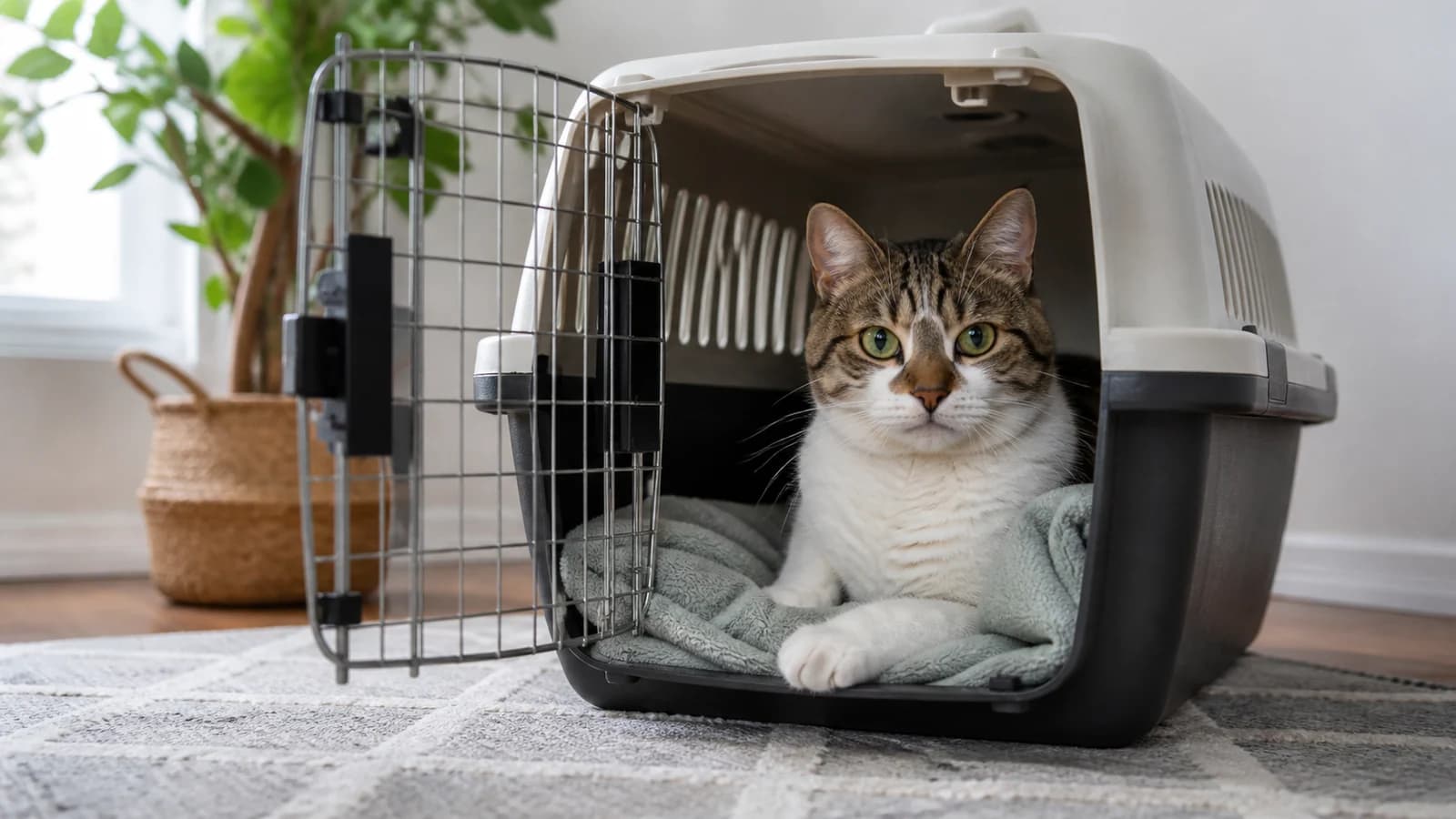
Build a travel plan in layers:
- Leave the carrier open in a familiar room with comfortable bedding.
- Reward voluntary investigation without immediately closing the door.
- Practice brief door closures, lifting, and stationary car sessions separately.
- Add very short drives only after the earlier steps are comfortable.
- Secure the carrier in the vehicle and never let the cat roam loose.
- Ask the veterinarian about nausea, severe fear, and prescribed pre-visit medication before the trip.
Happy Snack may function as the reward for a cat who will eat during these low-intensity steps. Purina Calming Care requires a daily lead-in and is not a rescue intervention during panic. Neither should be offered while the vehicle is moving if doing so requires opening the carrier or creates a choking or escape risk.
"Hyper" is another imprecise label. A young cat racing after rest may be expressing normal play. A bored cat may need hunting-style play, climbing, food puzzles, and predictable attention. Sudden agitation, sleeplessness, weight loss, increased appetite, vocalization, or restlessness in an older cat may signal illness. Do not use a calming product to suppress activity before understanding it.
For fireworks, construction, guests, or another predictable stressor, create distance and choice. Set up a quiet safe room before the event, close escape routes, provide familiar bedding and resources, use background sound if it helps, and let the cat hide. A treat can support the routine, but it should not be used to pull the cat out of a safe hiding place. Questions about what cats experience when their people leave, how long they can be alone, or whether they miss a caregiver belong to the more specific cat separation anxiety guide. Those decisions involve attachment, absence patterns, enrichment, and care planning rather than choosing a calming treat alone.
When not to rely on a calming treat
- Seek veterinary help rather than relying on a calming product when behavior changes suddenly, the cat strains or has trouble urinating, stops eating, has breathing difficulty, collapses, has a seizure, may have contacted a toxin, appears painful, becomes disoriented, or poses an immediate injury risk. A male cat repeatedly entering the litter box but producing little or no urine may have a life-threatening urinary obstruction and needs emergency care.
Anxiety is a description of an emotional state, not a complete diagnosis. Red-flag behavior changes include sudden hiding, aggression, house soiling, restlessness, clinginess, withdrawal, or resistance to handling, especially when appetite, urination, breathing, mobility, or awareness also changes. Cats often conceal pain and illness, so these signs require cause-based veterinary assessment rather than simply adding another calming product.
Prompt veterinary assessment is also appropriate when:
- The cat eats much less than usual or misses meals.
- Vomiting, diarrhea, constipation, coughing, sneezing, or weight change accompanies the behavior.
- A previously social cat withdraws or a tolerant cat suddenly lashes out.
- Overgrooming creates thin hair, broken skin, or sores.
- House-soiling starts abruptly or is accompanied by frequent small urinations.
- Fear prevents normal eating, drinking, sleeping, elimination, or movement through the home.
- Conflict between cats causes stalking, blocking, injury, or chronic hiding.
- The cat is a senior with new nighttime vocalization, pacing, or disorientation.
- The product seems to cause vomiting, diarrhea, itching, facial swelling, unusual weakness, or worsening behavior.
Do not give human sleep aids, cannabis products, essential oils, or another pet's medication. Cats metabolize many substances differently from people and dogs. "Natural" does not mean safe, effective, or appropriate with the cat's medical history.
How to use a cat-calming ingestible safely
Start with the exact current label. Product names and packaging can look similar even when ingredients, species, or directions differ. Confirm that the item is intended for cats, check the expiration date and package integrity, and store it as directed.
Then apply these safeguards:
- Ask before combining products. Give the veterinarian a full list of prescriptions, over-the-counter supplements, diets, and treats.
- Protect appetite. Mix powder into a small portion first. If the cat refuses it, offer normal food rather than allowing prolonged fasting.
- Count calories. Happy Snack is a treat and contributes to daily energy intake.
- Respect allergies and diet trials. Chicken flavor or milk-derived protein can invalidate a strict elimination plan or conflict with a known sensitivity.
- Use one new variable at a time. Starting three calming aids together makes benefits and adverse effects difficult to identify.
- Separate cats for dosing. In a multi-cat home, confirm that the intended cat consumes the product and housemates do not steal it.
- Do not improvise doses. More product is not necessarily more effective and can add calories or adverse effects.
- Record the lot and start date. This helps if a formula changes or a reaction must be reported.
- Stop and seek advice when signs worsen. Do not keep escalating a supplement while the cat deteriorates.
Pregnant or breeding cats, kittens, cats with chronic disease, and cats receiving medication deserve individual veterinary advice. Happy Snack's U.S. page says kittens should be fully weaned and older than 12 weeks before foods are introduced. Purina's label says safe use in pregnant or breeding animals has not been proven. Those are product-specific cautions, not interchangeable rules.
Non-ingestible alternatives are a separate category
Pheromone diffusers, structured behavior work, and prescription medications are not calming treats. They belong in separate decision categories even when a veterinarian combines them with an ingestible option.
- Pheromone diffusers and sprays release synthetic analogues of feline chemical signals into the environment and do not enter the cat's food. Petful's Feliway diffuser review compares Classic, MultiCat, and Optimum by use case and explains the evidence limits. A diffuser may be used alongside an ingestible product when the veterinarian agrees, but each intervention should have a defined purpose.
- Behavior modification changes the cat's emotional response through careful exposure, distance, choice, and reinforcement. Flooding, punishment, spray bottles, forced handling, or trapping a fearful cat near a trigger can intensify fear and damage trust.
- Prescription medication may be appropriate for severe situational fear or ongoing anxiety disorders. Medication is not a failure and should not be compared with an over-the-counter treat as though one is simply stronger. A veterinarian selects it based on the diagnosis, health history, timing, safety, and behavior plan.
How to tell whether the product is helping
Choose one or two measurable outcomes before starting. Avoid a long list that makes any ordinary fluctuation look like success.
Possible measures include:
- Minutes spent hiding after a visitor enters.
- Willingness to approach or enter an open carrier.
- Number of pacing episodes during a predictable routine change.
- Time required to resume eating or play after a mild stressor.
- Frequency of urine marking, after urinary disease has been excluded.
- Ability to rest in ordinary locations rather than remaining hypervigilant.
Record a baseline for several days when possible. Keep the environment and training plan consistent, note each dose actually consumed, and use the label's realistic timeline. Happy Snack can be assessed as part of repeated positive sessions. Purina Calming Care needs consistent daily use, with the label warning that full effect may take up to six weeks.
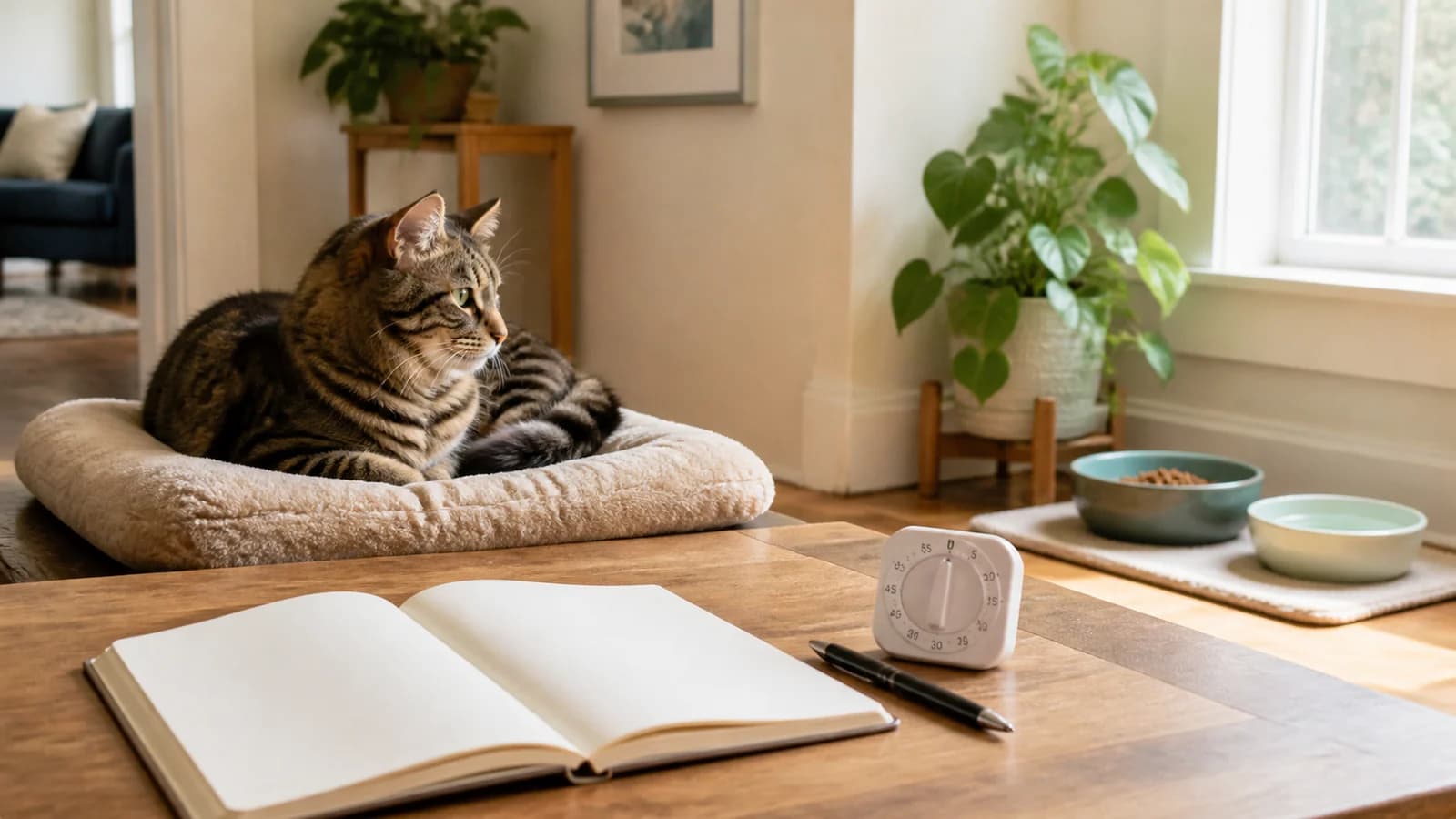
Look for function, not just stillness. A cat who is comfortable should be able to choose normal behaviors. Improvement might include voluntary approach, softer body posture, normal grooming, play, eating, resting, and faster recovery. Excessive sleepiness, wobbliness, weakness, vomiting, appetite loss, or social withdrawal is not a desirable calming effect.
Share the log and videos with the veterinarian. If there is no meaningful improvement, confirm that the product was consumed, the trial was long enough, the trigger was correctly identified, and environmental needs were met. Then revise the plan rather than assuming the cat needs a larger amount.
Common calming-treat mistakes
Shopping before identifying the behavior
"Anxious" can describe hiding, aggression, house soiling, vocalization, pacing, overgrooming, or refusal to enter a carrier. Those signs do not all have the same cause. Define the actual behavior and rule out illness before choosing a product.
Expecting sedation
Neither pick is presented as a sedative. If a cat needs medication for safe travel or veterinary handling, arrange that plan with the clinic in advance. Do not test an unfamiliar prescription or supplement for the first time while already on the road unless the veterinarian specifically directs it.
Calling every calming aid a treat
Diffusers, sprays, collars, garments, powders, complete diets, and prescription drugs are different formats. This roundup includes one literal lickable treat and one ingestible powder because both answer the edible-product search intent. The distinction is part of the recommendation, not a technicality.
Forcing administration
A daily struggle can become a new predictor of fear. If the cat resists, ask about another delivery method. Do not chase, scruff, or force the mouth open for an optional supplement.
Changing several things at once
Beginning a diffuser, supplement, new diet, new litter, and training plan on the same day makes the result hard to interpret. Urgent welfare needs should be corrected immediately, but optional additions can usually be introduced in a deliberate sequence.
Ignoring environmental resources
No calming treat can fix a home where a cat cannot safely reach food, water, litter, scratching areas, or resting places. The Feline Veterinary Medical Association recommends multiple separated resources, safe places, play opportunities, predictable positive interaction, and an environment that respects feline senses.
Frequently Asked Questions
The best calming treat for a cat depends on the stress pattern and the cat's ability to take the product comfortably. Feliway Happy Snack is a lickable puree that may support positive associations around predictable, manageable events. Purina Calming Care is a daily probiotic powder that may take up to six weeks for full effect. Neither replaces a veterinary evaluation, environmental changes, behavior work, or prescribed treatment when needed.
Do calming cat treats really work for every cat and every cause? No, but some ingestible products may help selected cats as adjuncts, and the evidence differs by formulation. Feliway Happy Snack has manufacturer palatability and caregiver survey data plus ingredient-level research, while Purina Calming Care has a small controlled feline study supporting selected stress-related outcomes. Neither cures every anxiety-like behavior, and response should be measured by voluntary normal function rather than sedation.
Vets recommend calming cats by identifying the behavior, ruling out pain or illness, correcting environmental needs, and then choosing support that fits each cat's trigger, health, diet, and ability to take it safely. Depending on the case, that may include behavior modification, a carefully selected ingestible, pheromones, or prescribed medication. Sudden, severe, painful, urinary, appetite-related, or dangerous changes need veterinary care rather than a shopping trial.
The practical answer is to choose the format that matches the timeline, confirm it fits the cat's diet and medical history, and define what improvement should look like. If signs are sudden, severe, worsening, or interfering with normal eating, elimination, rest, or safe handling, skip the shopping experiment and contact the veterinarian.
BVMS, MRCVS
Dr. Pippa Elliott, BVMS, MRCVS, is a veterinarian with nearly 30 years of experience in companion animal practice. Dr. Elliott earned her Bachelor of Veterinary Medicine and Surgery from the University of Glasgow. She was also designated a Member of the Royal College of Veterinary Surgeons. Married with 2 grown-up kids, Dr. Elliott has a naughty Puggle named Poggle, 3 cats and a bearded dragon.
Sign up for expert-backed reviews and safety alerts all in one place.