Cat Anxiety: Signs, Causes, and How to Help
Learn how to recognize cat anxiety, rule out urgent and medical problems, calm an anxious cat, improve the home environment, and work with a veterinarian on treatment.

BVMS, MRCVS
Petful is reader supported. As an affiliate of platforms like Amazon and Chewy, we may earn a commission when you buy through links on this page. There is no extra cost to you.
Cat anxiety can look dramatic, but it is often quiet: a cat stays under the bed, stops playing, overgrooms, watches every movement, or begins avoiding the litter box. Those changes deserve attention because fear, pain, illness, and environmental stress can look alike. The safest first step is to notice the pattern, rule out urgent problems, and give the cat more control while arranging veterinary care when needed.
This veterinary-authored guide explains how to recognize an anxious cat, what may be driving the behavior, how to make the home feel safer, and where behavior support or medication may fit. It cannot diagnose an individual cat. A sudden or severe change should be treated as health information, not labeled as a personality problem.

Sign up for expert-backed reviews and safety alerts all in one place.
What is cat anxiety?
Fear is a normal response to something a cat perceives as a threat. Anxiety is the anticipation that something threatening may happen, even when the trigger is not present yet. Stress describes the body and brain responding to a challenge. In daily life, the three can overlap. A cat may fear the vacuum, become anxious when the cupboard containing the vacuum opens, and remain physiologically stressed after the noise stops.
Anxiety is not stubbornness, spite, or an attempt to control a person. Cats use distance, stillness, hiding, vigilance, scent marking, and defensive behavior to protect themselves. A behavior becomes concerning when it is intense, persistent, difficult to recover from, or interferes with eating, elimination, sleep, play, social contact, or veterinary care.
The Merck Veterinary Manual's overview of feline behavior problems distinguishes fear from anticipatory anxiety and describes avoidance, crouching, lowered ears, hiding, vocalization, spraying, freezing, and displacement grooming among possible signs. No one sign proves anxiety. Context, duration, recovery, physical health, and change from that cat's usual behavior matter more than a single snapshot.
Signs of anxiety in cats
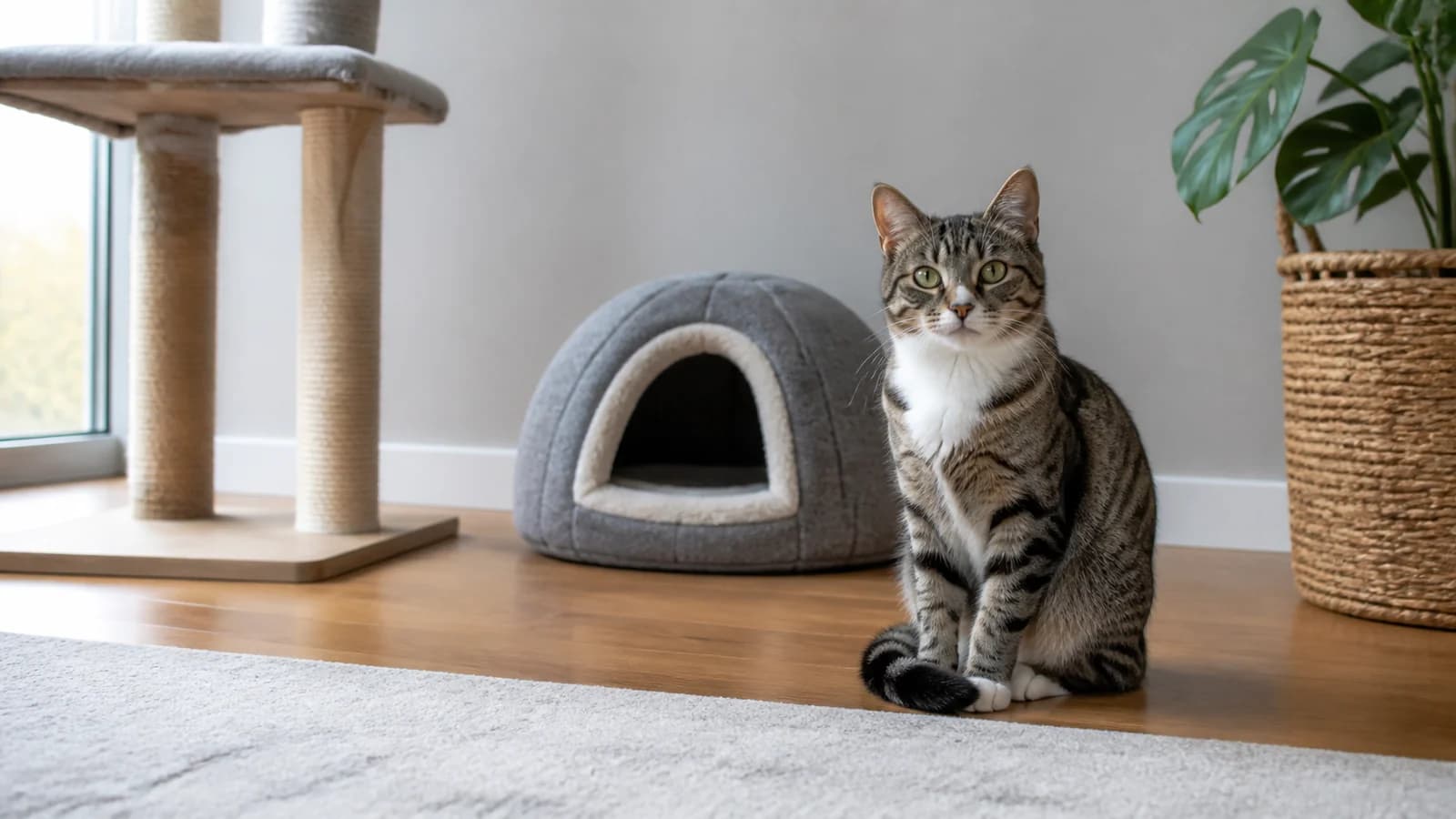
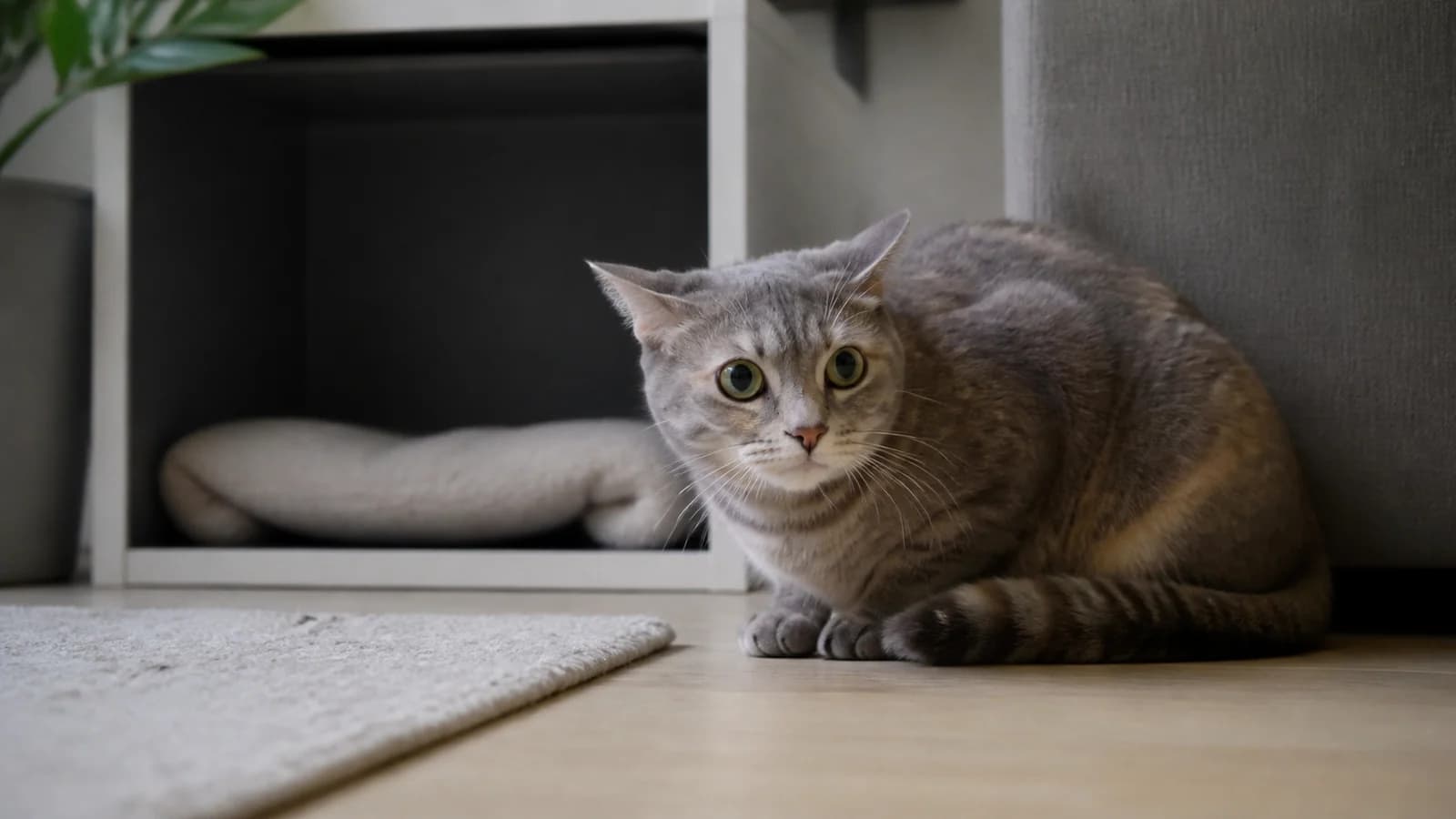
Cat anxiety symptoms range from subtle body-language shifts to disruptive behavior. Watch the whole cat and compare what you see with the individual's normal posture. Pupils, for example, change with lighting as well as arousal. A tail flick can signal irritation in one context and hunting focus in another. The central safety rule is to recognize subtle anxiety signs while asking a veterinarian to rule out pain or illness when behavior changes.
- 1Subtle anxiety signs can include hiding, freezing, scanning, crouching, overgrooming, appetite changes, urine marking, and reduced play.
- 2Sudden change needs an exam because pain and illness can mimic a behavior problem.
- 3Read several body-language signals together and note how long the cat takes to recover.
Possible cat anxiety signs include:
- Hiding more often, choosing unusually inaccessible places, or refusing to emerge for normal activities
- Crouching low, tucking the limbs or tail, leaning away, freezing, or trying to escape
- Turning or flattening the ears, widening the eyes, changing whisker position, or repeatedly scanning the room
- Becoming unusually clingy, restless, vigilant, irritable, or withdrawn
- Hissing, growling, swatting, biting, or redirecting aggression toward another pet or person
- Overgrooming, hair pulling, repetitive licking, or another behavior that appears difficult to interrupt
- Eating less, eating only at quiet times, vomiting, or changing drinking habits
- Urinating or defecating outside the box, urine marking, visiting the box repeatedly, or avoiding it
- Sleeping differently, vocalizing more, playing less, or losing interest in normal exploration
- Panting, drooling, trembling, pacing, or becoming immobile during an intense event
The AAHA behavior management guidelines emphasize standardized observation and early assessment of fear and distress. That approach is useful at home too: describe exactly what the cat did, what happened immediately before it, and how quickly normal behavior returned. “Hid for 40 minutes after construction started” is more useful than “was anxious all day.”
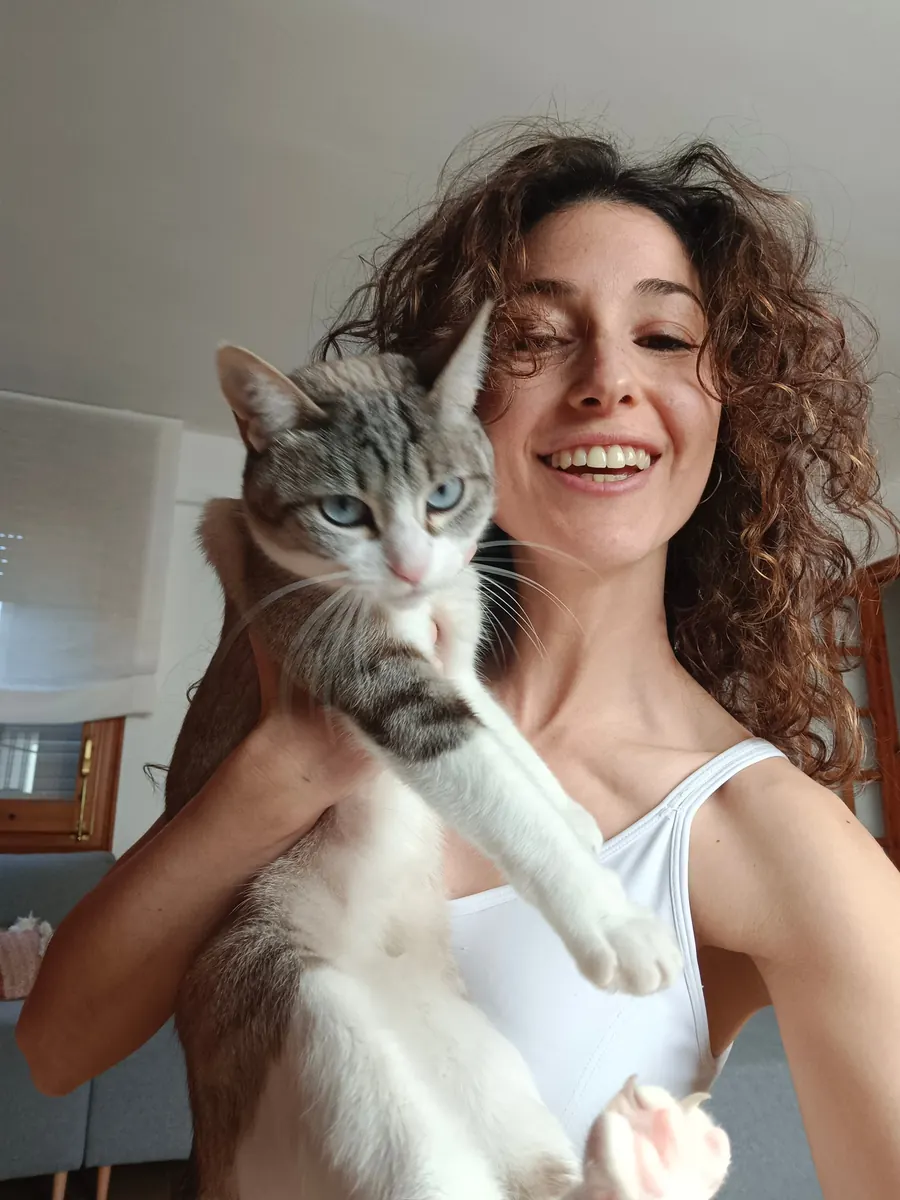
 Sponsored
Want a vet's help with your cat's anxiety or behavior?
Talk to a licensed vet at Dutch over video, often the same day. They can recommend treatment and prescribe it when it's appropriate.
Use code Pets30
Plans start at $11/month · covers up to 5 pets
- Licensed vets in most states
- Rx for 150+ conditions
- 4.7 on Trustpilot
When cat anxiety needs a veterinarian
Start with safety. Urgent red flags include breathing difficulty, severe pain, urinary trouble, toxin exposure, collapse, seizure, or other neurologic signs. Anxiety should never be used to explain those signs away. Cats often hide illness, and a new behavior change may be the first visible clue, so a behavior label must not delay emergency care or a prompt veterinary examination.
Seek emergency veterinary help for:
- Open-mouth breathing, blue or very pale gums, collapse, or severe weakness
- Repeated straining to urinate with little or no urine, especially in a male cat
- A seizure, sudden loss of balance, marked disorientation, or inability to walk normally
- Suspected toxin exposure, serious trauma, uncontrolled bleeding, or severe pain
- Repeated vomiting with weakness, a swollen painful abdomen, or rapidly worsening distress
- Aggression or panic that creates an immediate risk of serious injury and cannot be safely contained
Arrange a prompt appointment for a sudden change in appetite, litter-box use, grooming, sleep, sociability, vocalization, or tolerance of touch. Pain, dental disease, urinary disease, skin problems, gastrointestinal illness, hyperthyroidism, high blood pressure, sensory decline, cognitive change, and other medical conditions can alter behavior. Medical and behavioral problems can also occur together.
| Situation | What it may look like | Best next step |
|---|---|---|
| Emergency | Breathing trouble, collapse, inability to urinate, seizure, toxin exposure, severe pain, or uncontrollable dangerous behavior | Contact an emergency veterinarian now |
| New medical problem | Sudden appetite, elimination, movement, grooming, sleep, or social change without an obvious harmless trigger | Schedule a veterinary exam promptly |
| Predictable situational stressor | A repeatable response to visitors, noise, carrier handling, construction, or another known event, followed by recovery | Reduce exposure, record the pattern, and discuss a prevention plan with the veterinary team |
| Chronic behavior pattern | Hiding, vigilance, overgrooming, conflict, or avoidance that persists or affects daily function | Book an exam and behavior assessment, then combine environmental and learning support |
Use this four-branch anxiety triage to decide whether to seek urgent care, schedule an exam, change the environment, or track a predictable trigger; it cannot diagnose the cause. The branches separate an emergency, a new medical problem, a predictable situational stressor, and a chronic behavior pattern. When you are unsure which situation fits, call a veterinary clinic and describe observable signs. A short video taken from a safe distance can help if filming does not intensify distress.
Use a seven-day trigger log
A seven-day trigger and response log, or trigger diary, turns a vague impression into a useful history for a veterinary appointment. For seven consecutive days, note the trigger, the cat's body language, how long the reaction lasted, what helped, and what happened afterward. Include appetite and elimination because changes there can move the situation from behavior support to medical assessment rather than a behavior-only plan.
Record these fields once or twice daily and after any event:
- Date, time, room, people, animals, noises, smells, and activities present
- The first observable sign, such as ear rotation, freezing, hiding, pacing, or leaving
- Intensity on a simple 0 to 5 scale that you define consistently
- Duration and recovery time before eating, grooming normally, playing, or resting
- Appetite, water intake, urination, stool, vomiting, mobility, and sensitivity to touch
- What you tried and whether the cat moved closer, stayed the same, or withdrew
- A seven-day trigger log should capture the trigger, body language, intensity, duration and recovery, appetite, elimination, and the cat's response to each intervention. Bring the log, relevant videos, medication and supplement names, and a timeline of household changes to the veterinary appointment.
Do not repeatedly recreate a frightening event to make the record more complete. Observe naturally occurring patterns. If the cat's condition worsens during the week, stop logging and contact the veterinary team sooner.
Common causes of anxiety in cats
Cat stress and anxiety usually reflect an interaction among temperament, early experience, physical health, learning history, and the current environment. Sometimes the trigger is obvious. Other times several small pressures accumulate until the cat loses the ability to cope.
Common contributors include:
- Pain, illness, impaired vision or hearing, cognitive decline, or medication effects
- Inadequate early socialization or a past frightening experience
- Unfamiliar people, animals, smells, objects, noises, or handling
- Moving, remodeling, construction, schedule changes, or a new baby or pet
- Conflict between cats, including staring, blocking, chasing, or guarding resources
- Too few or poorly placed litter boxes, feeding stations, resting places, scratching areas, or hiding sites
- Unpredictable punishment, forced handling, or being cornered without an escape route
- Boredom, lack of hunting-style play, or no opportunity to climb, hide, scratch, and observe
- A frightening association with a carrier, car ride, grooming task, or veterinary visit
Look for pressure that removes choice. One cat stationed in a hallway may silently block another from food or the litter box. A hiding box with only one opening may become a trap if another cat guards the exit. A friendly visitor who repeatedly reaches under the bed may turn a safe retreat into another source of threat.
How to calm an anxious cat right now
How can I destress my cat during a non-emergency event? Reduce demands, make escape possible, and provide a safe space with familiar water, litter, bedding, and a hiding option. Calm does not mean holding the cat still. It means lowering the intensity enough for the cat to choose a safer behavior and begin recovering. Keep people and pets from following the cat into the retreat.
Try these immediate steps:
- Stop approaching, reaching, staring, or trying to pull the cat from hiding.
- Reduce the trigger if possible by closing a curtain, moving people or pets away, lowering sound, or ending handling.
- Give the cat a quiet room or open retreat with water, a litter box, bedding, and a hiding place.
- Move slowly, turn partly sideways, speak softly if speech helps, and let the cat set the distance.
- Place familiar food or a favored toy nearby only if the cat is able to eat or play. Refusal is information, not disobedience.
- Keep children and other animals away until the cat's posture and routine return toward normal.
Avoid spraying water, shouting, scruffing, chasing, blocking the exit, or forcing exposure. Punishment can add fear to the original trigger and damage trust. Flooding, which means holding the cat in a frightening situation until the response stops, can worsen anxiety and should not be attempted at home.
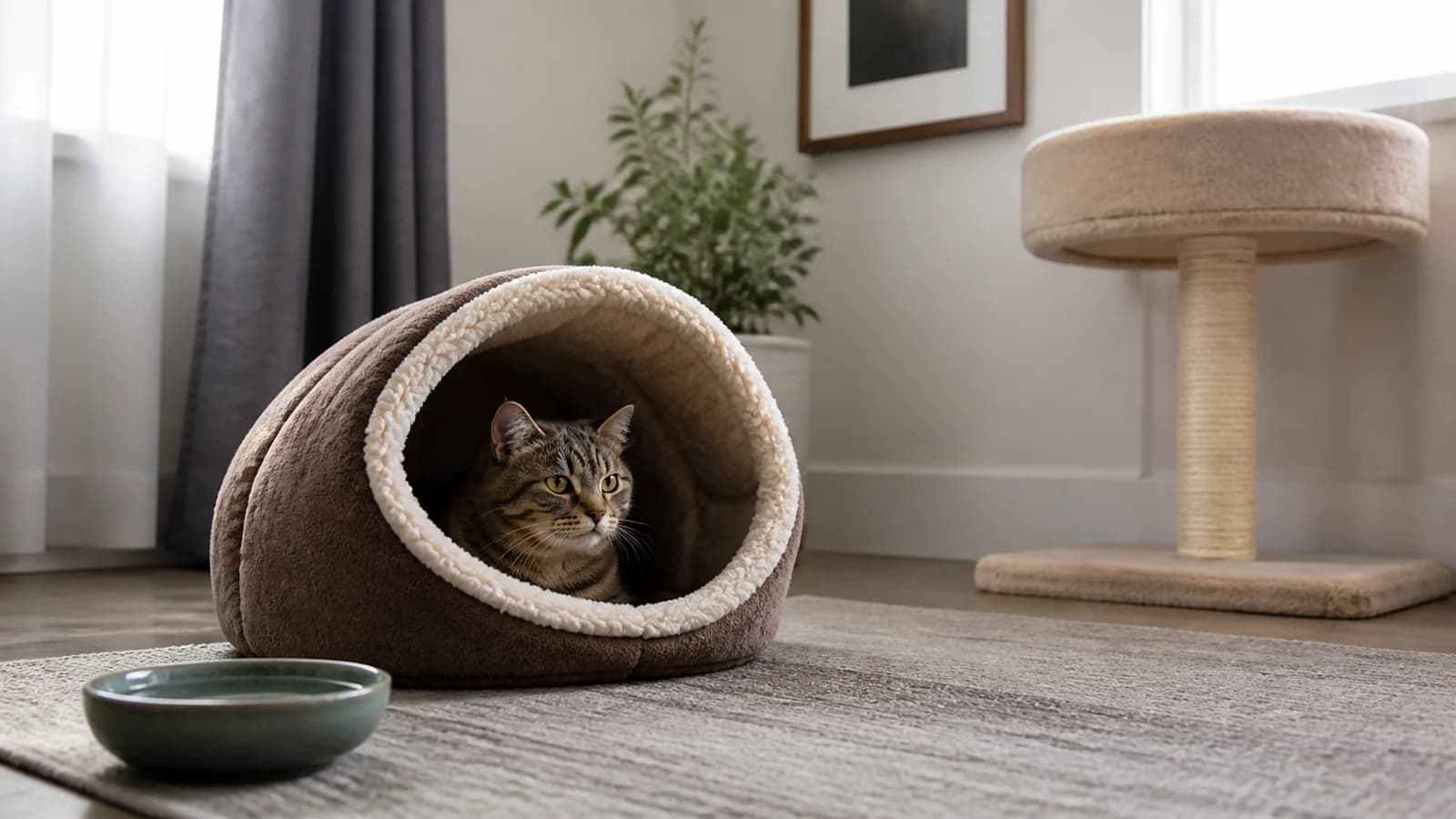
Environmental changes that reduce cat stress
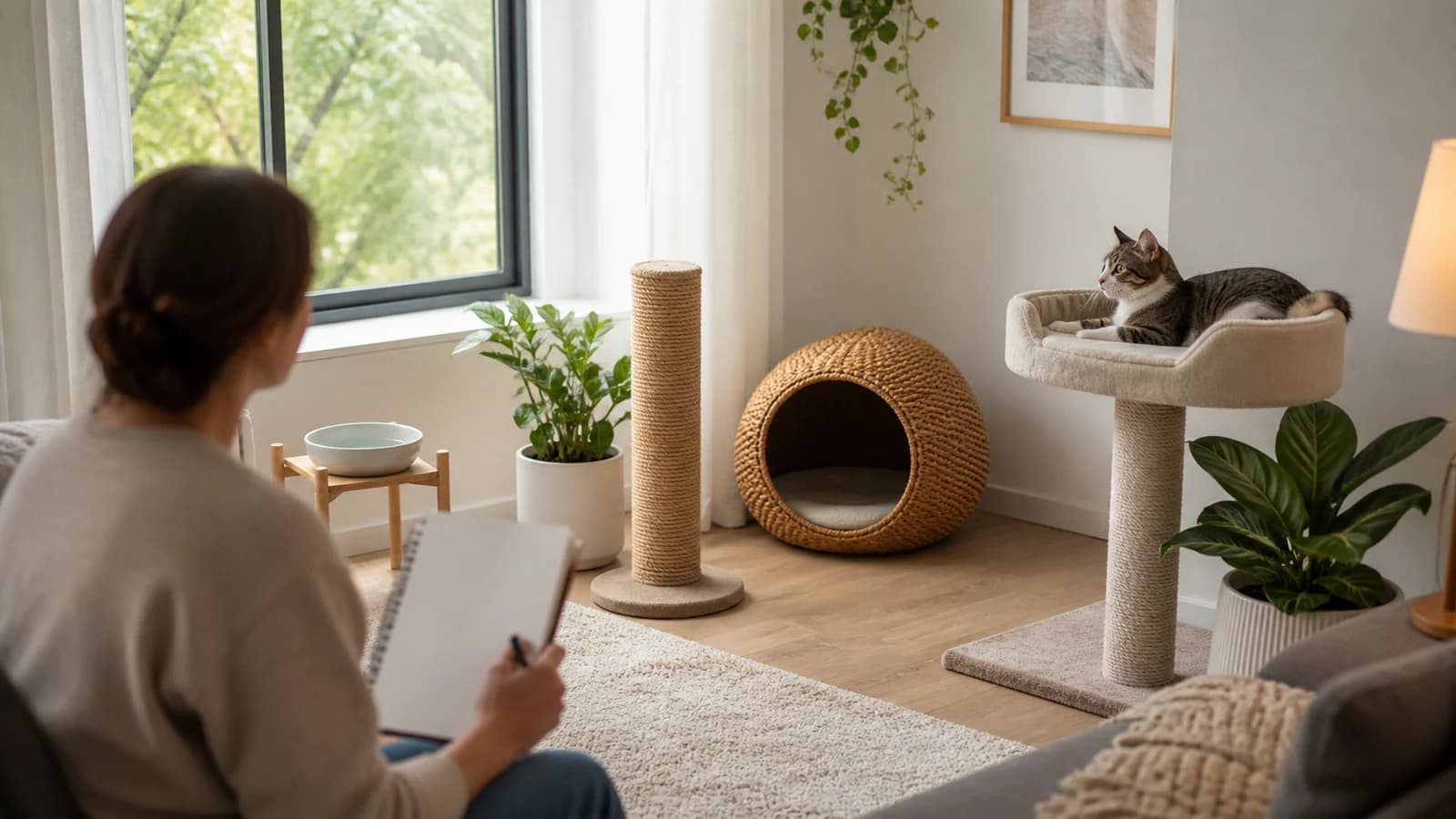
Long-term improvement often begins with the home. Resource distribution means placing food, water, litter boxes, scratching areas, hides, and resting sites so one cat or one busy corridor cannot control them all. The AAFP and ISFM environmental needs guidelines organize a healthy feline environment around safe places, separated key resources, opportunities for play and predation, predictable positive human interaction, and respect for a cat's sense of smell.
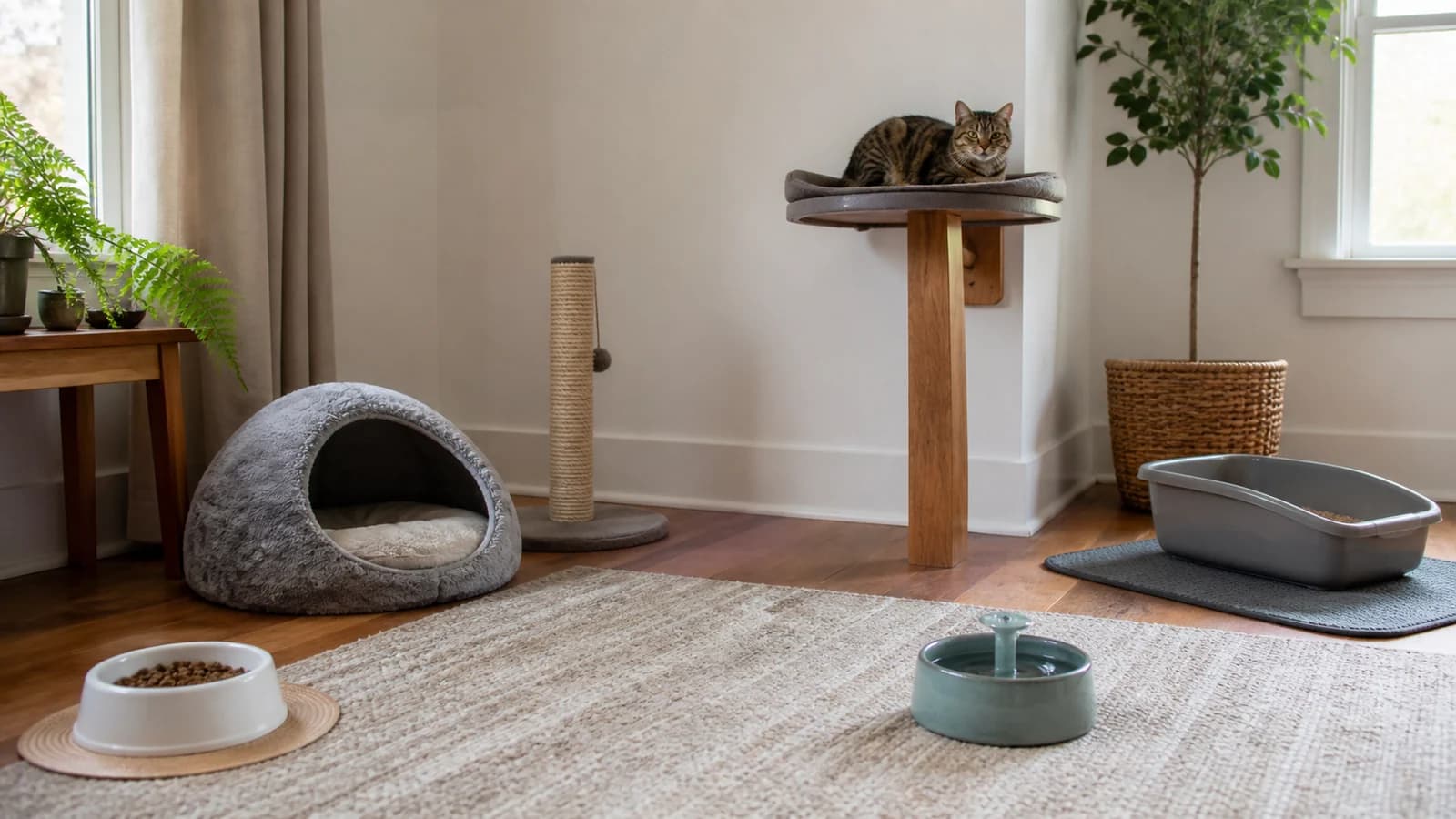
Create a practical resource map of the home:
- Offer at least one dependable hiding option that no person or pet routinely invades.
- Add elevated resting and observation places so the cat can choose height as well as distance.
- Separate food, water, litter, sleep, scratch, and play areas instead of clustering every need in one corner.
- In a multi-cat home, duplicate and distribute resources so one cat cannot control access to all of them.
- Keep litter boxes clean, easy to enter, and placed where a cat can see an exit.
- Provide scratching surfaces in the orientations and locations the cat actually uses.
- Use short, predictable play sessions that mimic searching, stalking, chasing, and catching.
- Preserve familiar bedding and scent during gradual changes. Avoid strong fragrances around core resources.
The goal is not to buy the most equipment. It is to create options. A cardboard box on a shelf can be more valuable than an elaborate bed placed in a noisy passageway. The peer-reviewed overview Environmental Enrichment: Practical Strategies for Improving Feline Welfare connects appropriate environmental opportunities with prevention and management of behavior and stress-associated health problems.
How to treat cat anxiety
Treatment for cat anxiety depends on the cause, severity, predictability, medical findings, and the cat's ability to recover. A complete plan may combine management, environmental enrichment, behavior modification, and medication. Behavior modification uses carefully controlled exposure, distance, choice, and reinforcement to change the cat's emotional response while the animal remains able to eat, play, explore, or disengage. Removing every trigger forever is rarely realistic, but preventing overwhelming exposure is important while new skills are being learned.
Start with management. Change distance, timing, barriers, routes, and resource access so the cat is no longer rehearsing panic or conflict. Then work below the threshold at which the cat can notice a trigger and still eat, play, explore, or disengage.
Two common learning tools are:
- Desensitization: Present a very mild version of the trigger and increase intensity only while the cat remains comfortable.
- Counterconditioning: Pair the mild trigger with something the cat values, such as food, play, or access to a preferred place.
For example, carrier work may begin with the carrier open in a familiar room, bedding inside, and no attempt to close the door. The cat receives valued experiences near it. Door movement, brief closure, lifting, and motion are separate later steps. If the cat freezes, flees, refuses a normally valued reward, flattens the ears, or becomes agitated, the step is too difficult.
The Merck Veterinary Manual advises gradual desensitization and counterconditioning only when the cat is calm enough to learn. It also warns against positive punishment. A qualified trainer using reward-based methods may help with implementation, while a board-certified veterinary behaviorist is especially valuable for severe, dangerous, complex, or treatment-resistant cases.
SponsoredVet care that's always there
Unlimited video calls and messaging with licensed vets for less than a typical vet visit. One membership covers up to five pets.
Use code Pets30
Plans start at $11/month · covers up to 5 pets
- Licensed vets in most states
- Rx for 150+ conditions
- 4.7 on Trustpilot
Building confidence through choice and predictable routines
How to make an anxious cat more confident begins with many low-pressure opportunities for the cat to succeed. Confidence grows from control and repetition, not from being forced to “face the fear.” Give the cat a choice to approach, pause, or retreat, and keep the consequence of each safe choice predictable.
Useful confidence-building practices include:
- Feed, play, clean litter boxes, and offer social time on a reasonably predictable schedule.
- Teach a simple voluntary behavior, such as touching a target or stepping onto a mat, using small rewards.
- Let the cat initiate touch and end the interaction before body language shifts toward irritation.
- Place routes and perches so the cat can move through shared rooms without passing close to a person or pet.
- Introduce one environmental change at a time and pair it with familiar routines.
- End training while the cat is still engaged. Several 30-second sessions can be more productive than one long session.
Progress is not perfectly linear. A noise, illness, visitor, or household change can temporarily lower tolerance. Return to an easier step rather than increasing pressure. Track recovery time as well as visible reaction. A cat who still startles but resumes normal activity in two minutes instead of twenty is making meaningful progress.
The 3-3-3 rule and realistic adjustment periods
What is the 3-3-3 rule for cats? It is a popular adoption heuristic: roughly three days to decompress, three weeks to learn the household routine, and three months to feel more settled. It is not a medical rule, a deadline, or a validated way to diagnose anxiety. Some cats explore within hours. Others need many months, especially after illness, repeated moves, poor socialization, or frightening experiences.
Use the idea to lower expectations, not to delay care. During the first days, provide a quiet base room with all essential resources and avoid forced introductions. Over the next weeks, expand access at the cat's pace and keep interactions predictable. Over the following months, continue observing eating, elimination, play, grooming, sleep, social behavior, and recovery from surprises.
A newly adopted cat who does not eat, cannot urinate, repeatedly vomits, struggles to breathe, appears painful, or becomes progressively less responsive should not wait for a three-day milestone. Contact a veterinarian.
Choosing a calming aid by trigger and severity
What is the best calming aid for cats? There is no single answer. Match the format to the problem and use it as one part of a plan. Environmental control and medical assessment matter more than the label on a product, and no single cat anxiety treat can resolve an unsafe environment or untreated illness.
Consider the decision in layers:
- For a mild environmental change, start with a safe room, routine, separated resources, and gradual exposure.
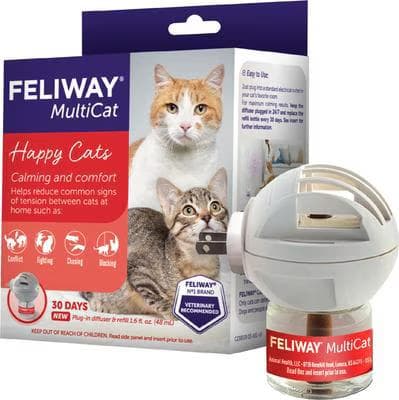
- For household scent stress, the Feliway Classic starter kit may be a reasonable adjunct. For inter-cat tension, the Feliway MultiCat starter kit is the closer product match. Response varies, and the environment still needs work.
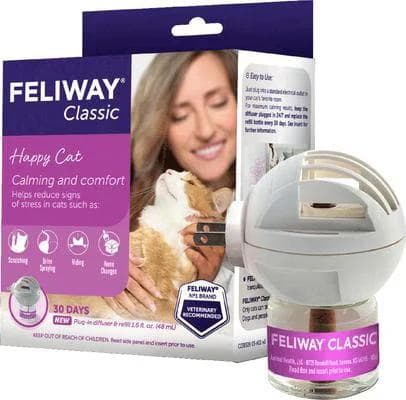
A plug-in feline pheromone diffuser intended for routine environmental support; use it as directed and not as a substitute for veterinary or behavior care.
Petful may earn a commission when you click through to Chewy, at no extra cost to you.
Petful may earn a commission when you click through to Chewy, at no extra cost to you.
- For a cat who will reliably accept food, a veterinarian may discuss an appropriate calming diet, supplement, powder, or treat. Check ingredients, calories, medical conditions, and interaction risks. Purina Calming Care is the current daily supplement format in Petful's approved offer set.

A vet-recommended probiotic supplement (B. longum BL999) that helps cats manage anxious behaviors and stay calm during stressful events and routine changes.
Petful may earn a commission when you click through to Chewy, at no extra cost to you.
- For a brief predictable event, ask the veterinarian whether a situational plan should include practice, transport changes, or prescription support given before the trigger.
- For chronic or severe anxiety, repeated aggression, self-injury, persistent appetite or elimination change, or major welfare impairment, seek a diagnostic and behavior plan rather than rotating through products.
Our dedicated Feliway review examines Classic, MultiCat, and Optimum by intended use and evidence limits. For ingestible formats, see the safety-first guide to calming treats for cats. Do not combine products casually, and never give a cat a human anxiety medicine or another animal's prescription.
Can catnip help an anxious cat?
Can catnip help cat anxiety? It may give some cats a pleasant short activity, but catnip is not a dependable treatment for cat anxiety. Sensitivity to catnip is inherited, so some cats show little response. Among responders, exposure may produce rolling, rubbing, play, vocalization, quiet enjoyment, or a burst of excitement. An already aroused cat could become more stimulated rather than soothed.
If your healthy cat has used catnip comfortably before, a small amount during a relaxed activity may be enjoyable. Do not introduce it for the first time in the middle of panic, conflict, travel, or a veterinary emergency. Stop if the cat becomes agitated, aggressive, nauseated, or unable to settle. Catnip should not replace an exam, environmental changes, or a treatment for persistent anxiety.
Medication for cat anxiety
Cat anxiety medication is not a one-size-fits-all sedative. Veterinarians choose options according to whether the trigger is occasional or ongoing, how quickly support is needed, other medical conditions, current drugs and supplements, administration feasibility, and the behavior plan. Some medicines are used before predictable events. Others are given consistently and may take time to provide full benefit.
Medication can lower fear or arousal enough for a cat to eat, rest, travel safely, or participate in gradual behavior work. It does not teach a new emotional response by itself. Medication monitoring continues with the veterinary team and may include appetite, alertness, coordination, elimination, sleep, behavior, and other possible effects. Report concerning changes promptly and never alter or stop a prescribed drug without the veterinarian's direction.
- Every veterinary prescription should be individualized for the cat, the trigger, other health conditions, and the behavior plan. Environmental work continues while the veterinary team monitors benefits and adverse effects. Never use a person's medication, change a dose, or stop a prescribed medicine without veterinary guidance.
Before the appointment, write down every medication, supplement, diet, pheromone, and calming product the cat receives. Ask how to give the prescribed product, when to give it relative to the trigger, what improvement should look like, which adverse signs require a call, and when to reassess. If the plan is for a predictable stressful event, the veterinarian may recommend a trial on a quiet day so the response is known before the actual event.
Cat anxiety pills can be genuinely helpful, but ease of administration matters. Repeated wrestling may outweigh a product's benefit. Tell the veterinary team if pilling is difficult so it can consider the formulation and handling plan. Do not crush, split, compound, or mix a medicine into food unless the prescriber says that is appropriate for that exact product.
Predictable stressors: visitors, noise, carriers, and travel
Prepare before a predictable trigger. For visitors, give the cat a protected room before the doorbell rings. For construction or fireworks, close curtains, reduce sound where practical, and move core resources away from vibration and traffic. For handling, divide the task into tiny voluntary steps and reward calm participation.
Carrier and car distress need their own gradual plan. Leave the carrier accessible between trips, build positive associations while the cat is calm, and ask the clinic about low-stress arrival options. For detailed transport decisions, read Petful's guide on whether to travel with an anxious cat.
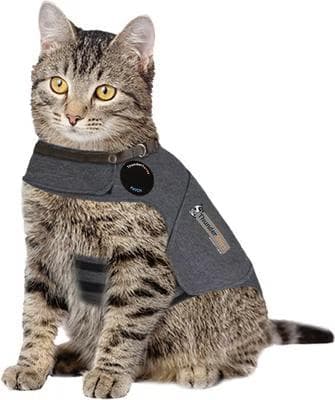
The ThunderShirt Anxiety Vest for Cats may be tolerated by some cats during a short predictable event, but it should never restrict breathing or movement. Introduce any garment when the cat is calm, pair it with rewards, supervise use, and remove it if the cat freezes, falls, struggles, pants, or becomes more distressed.
Petful may earn a commission when you click through to Chewy, at no extra cost to you.
When anxiety happens only during separation
Absence-related distress has a narrower pattern than broad cat anxiety. People using the phrase separation anxiety in cat behavior usually mean vocalization, elimination, destructive behavior, agitation, or inability to settle specifically around a person's departure or absence. Cameras can help establish timing, but the same signs can also have medical or environmental causes.
This article does not duplicate that diagnosis and treatment pathway. If the behavior reliably begins before or after a caregiver leaves, use Petful's dedicated guide to cat separation anxiety and bring the timing record to a veterinarian. Do not assume getting another cat will solve absence-related distress. A second cat can add conflict and resource pressure if the match or introduction is poor.
What improvement looks like
The goal is not a cat who never startles. Healthy cats notice change and protect themselves. Improvement means the response is less intense, recovery is faster, daily activities resume, and the cat has more safe choices.
Track practical outcomes:
- The cat emerges sooner after a trigger and returns to eating, grooming, play, or sleep.
- Hiding remains available but is chosen less urgently or for shorter periods.
- The cat can observe a mild trigger at a comfortable distance without freezing or fleeing.
- Appetite, litter-box use, coat care, and social contact become more consistent.
- Inter-cat staring, blocking, chasing, or guarding decreases.
- Handling or carrier steps can advance without loss of food interest or relaxed posture.
- The caregiver can identify early signs and intervene before the cat becomes overwhelmed.
If progress stalls, revisit the medical assessment, trigger control, resource layout, and difficulty of the training steps. Persistent anxiety is not a failure by the cat or caregiver. It is a reason to refine the plan with the veterinary team or seek a veterinary behaviorist.
Frequently Asked Questions
Signs of cat anxiety can include hiding, crouching, freezing, scanning, flattened or turned ears, avoidance, unusual clinginess, vocalization, aggression, overgrooming, appetite change, urine marking, litter-box avoidance, reduced play, pacing, or a slow recovery after a trigger. Read several signs together and compare them with the cat's normal behavior. A sudden change, pain, inability to urinate, breathing trouble, collapse, or other physical sign needs veterinary attention rather than a behavior label.
Reduce the trigger, stop approaching or restraining the cat, provide a quiet retreat with water and a litter box, and let the cat choose distance. Use slow movement and predictable routines. Once the cat is calm, address safe places, separated resources, play, and gradual reward-based exposure. Do not punish, chase, or force contact. Persistent, severe, or sudden anxiety needs a veterinary exam because pain or illness can look like a behavior problem.
Sources
BVMS, MRCVS
Dr. Pippa Elliott, BVMS, MRCVS, is a veterinarian with nearly 30 years of experience in companion animal practice. Dr. Elliott earned her Bachelor of Veterinary Medicine and Surgery from the University of Glasgow. She was also designated a Member of the Royal College of Veterinary Surgeons. Married with 2 grown-up kids, Dr. Elliott has a naughty Puggle named Poggle, 3 cats and a bearded dragon.
Sign up for expert-backed reviews and safety alerts all in one place.