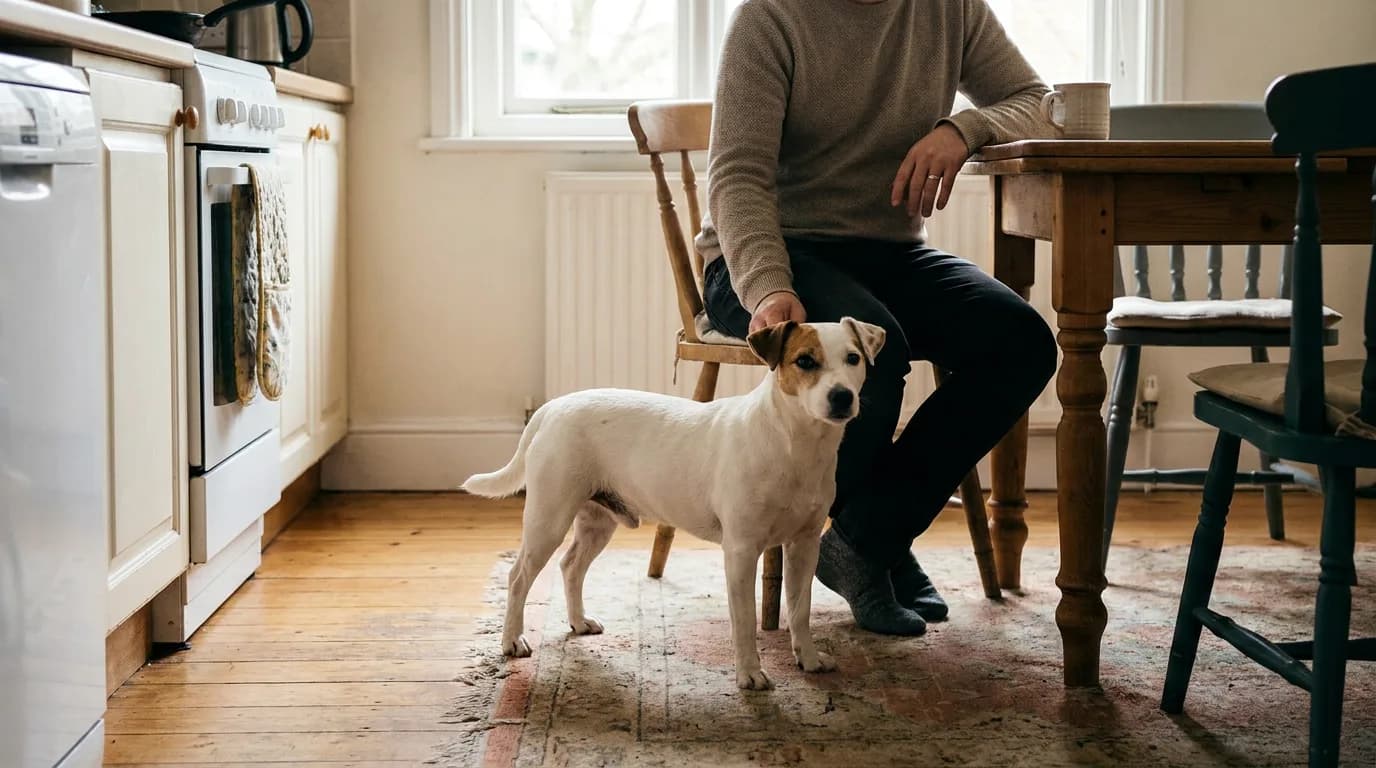
Jack Russell Terrier: Size, Temperament and Care
Understand Jack Russell size, coat textures and markings, then use practical questions about behavior, daily routines and care to decide whether this active terrier fits your household.
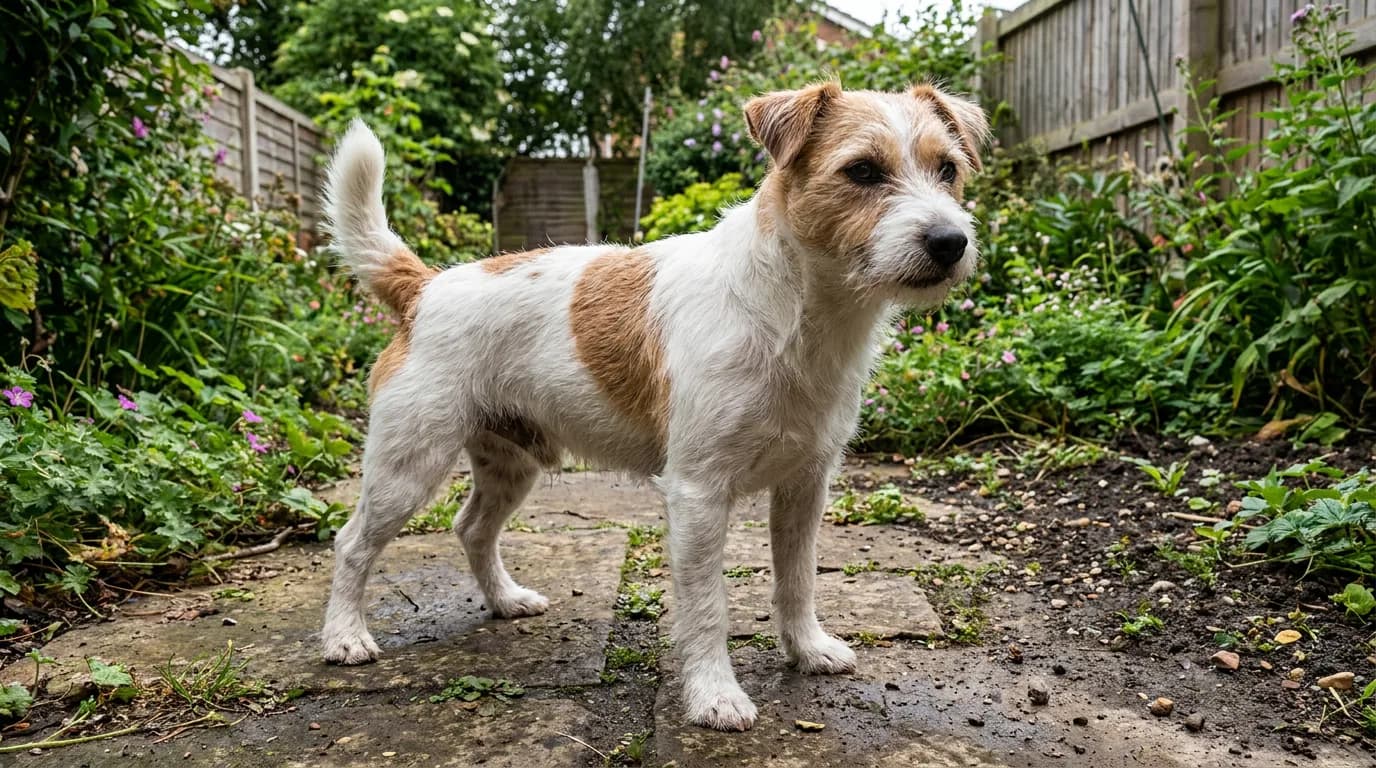
Jack Russell Terriers combine a compact frame with an active working-terrier heritage.
Petful is reader supported. As an affiliate of platforms like Amazon and Chewy, we may earn a commission when you buy through links on this page. There is no extra cost to you.
The Jack Russell Terrier is a small, active working terrier known for persistence, curiosity and a strong interest in its surroundings. Under the Jack Russell Terrier Club of America standard, adults stand 10 to 15 inches at the withers. Smooth, broken and rough coats give these dogs distinctly different appearances.
The more useful question is whether your household can make room for the dog’s activity, training and management needs. Start by understanding the name, then look at the individual dog’s behavior, your daily routine and the arrangements you can realistically maintain.

Sign up for expert-backed reviews and safety alerts all in one place.
Which Jack Russell does this guide describe?
This guide uses the Jack Russell Terrier Club of America, or JRTCA, as its main reference for the Jack Russell. Other organizations use related names and different standards, which explains why otherwise credible breed guides sometimes publish different dimensions.
“Jack Russell” is also used casually for dogs whose registration or ancestry is unknown. A shelter description, a family nickname and a registered breed designation do not necessarily mean the same thing. When a distinction matters, ask which organization’s paperwork or standard the description refers to.
Registry names and standards
How many types of Jack Russells are there?
There are three types of Jack Russell by breed name: the Jack Russell Terrier (JRTCA in the US, FCI internationally), the Parson Russell Terrier and the Russell Terrier (both AKC), each with its own height standard. Within the Jack Russell itself there are three coat types, smooth, broken and rough, which describe the coat rather than separate breeds.
For example, the JRTCA Jack Russell and the American Kennel Club’s Russell Terrier have different height standards. The AKC Parson Russell Terrier has its own proportions and ideal heights. The Fédération Cynologique Internationale, or FCI, also publishes a Jack Russell Terrier standard used internationally.
| Name and organization | Height reference | Weight reference | How to use the distinction |
|---|---|---|---|
| JRTCA Jack Russell | 10 to 15 inches at the withers | None given in the standard | The main size reference used in this guide. |
| AKC Russell Terrier | 10 to 12 inches | Proportionate to height; no figure in the standard | Do not substitute this range for the JRTCA standard. |
| AKC Parson Russell Terrier | Ideal: 14 inches for males and 13 inches for females | Usually 13–17 lb in hard working condition | These are named ideal heights, not a universal Jack Russell range. |
| FCI Jack Russell Terrier | Ideal: 25 to 30 centimeters | 1 kg per 5 cm of height: about 5 kg (11 lb) at 25 cm, 6 kg (13 lb) at 30 cm | An international standard with its own proportions and weight guidance. |
The dimensions above come from the JRTCA standard, the AKC Russell Terrier profile, the AKC Parson Russell Terrier standard and the FCI Jack Russell Terrier standard.
When reviewing a puppy description or adoption listing, separate three questions:
- What name does the current caregiver use?
- What registration or ancestry information is actually available?
- What does the individual dog need, regardless of the label?
A purebred description should be supported by the relevant records. Appearance alone cannot establish registration, and a missing pedigree does not tell you whether a dog will fit your home. Similarly, choosing between a Russell and a Parson on temperament requires more than comparing their names.
What the working history explains
The Jack Russell’s origins lie in English working terriers associated with Reverend John Russell and fox hunting. The FCI identifies England as the country of origin and Australia as the country of development for its recognized Jack Russell type. Those statements describe different parts of the breed’s development.
That working background helps explain why a small dog can be persistent, alert and interested in pursuing moving animals. It gives context for the behavior you may need to manage, rather than a script that every Jack Russell follows.
For a companion home, the useful translation is practical: provide worthwhile activities, teach everyday skills and arrange the environment so the dog cannot repeatedly practice unwanted pursuits. A supervised food activity such as the Outward Hound Nina Ottosson Lickin' Layers puzzle gives that working persistence an indoor job; its two-cup capacity is not a serving size, so use food from the dog's planned allowance.
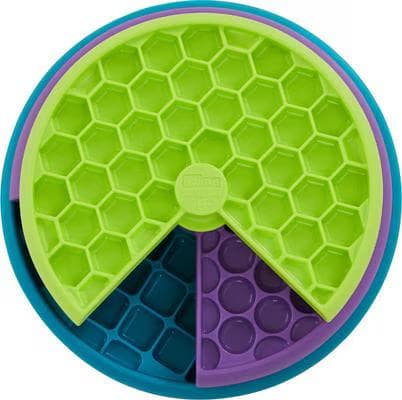
Petful may earn a commission when you click through to Chewy, at no extra cost to you.
Jack Russell size and proportions
How big do Jack Russell terriers get?
Most adults stand 10 to 15 inches at the withers under the JRTCA standard and weigh roughly 9 to 18 pounds. The FCI standard gives an ideal weight of 1 kg for every 5 cm of height, about 5 kg (11 lb) for a 25 cm dog and 6 kg (13 lb) for a 30 cm dog, and Battersea's breed guide lists 4 to 8 kg (9 to 18 lb). Height is measured at the top of the shoulders, not the top of the head.
Use one standard at a time. The JRTCA standard gives height but no weight, so do not pair its 15-inch upper limit with the FCI weight ratio and present the result as a universal rule. Frame and body condition still decide an individual dog's healthy weight.
How big is a full grown Jack Russell Terrier?
A full-grown Jack Russell is typically 10 to 15 inches tall and around 11 to 17 pounds. The AKC Parson Russell standard puts a dog in hard working condition at 13 to 17 pounds with ideal heights of 14 inches for males and 13 for females, and VCA lists 9 to 15 pounds for shorter 10- to 12-inch dogs.
Is a Jack Russell a small or medium dog?
Small. The FCI classifies the Jack Russell in its Small Terriers section, and Battersea lists the breed as small at 4 to 8 kg. Its exercise needs are closer to a much larger dog's, so plan the day around activity rather than size.
- 1Height: 10 to 15 inches at the withers (JRTCA); the FCI ideal is 25 to 30 cm.
- 2Weight: about 1 kg per 5 cm of height (FCI), roughly 11 to 13 pounds for a 25 to 30 cm dog.
- 3Parson Russell Terrier: usually 13 to 17 pounds at an ideal 13 to 14 inches (AKC).
Measure at the withers
Have your dog stand naturally on a level floor, with the feet comfortably underneath the body. The height endpoint is the withers, at the top of the shoulders. Measuring to an upright ear or a raised head adds height that does not belong in the breed measurement.
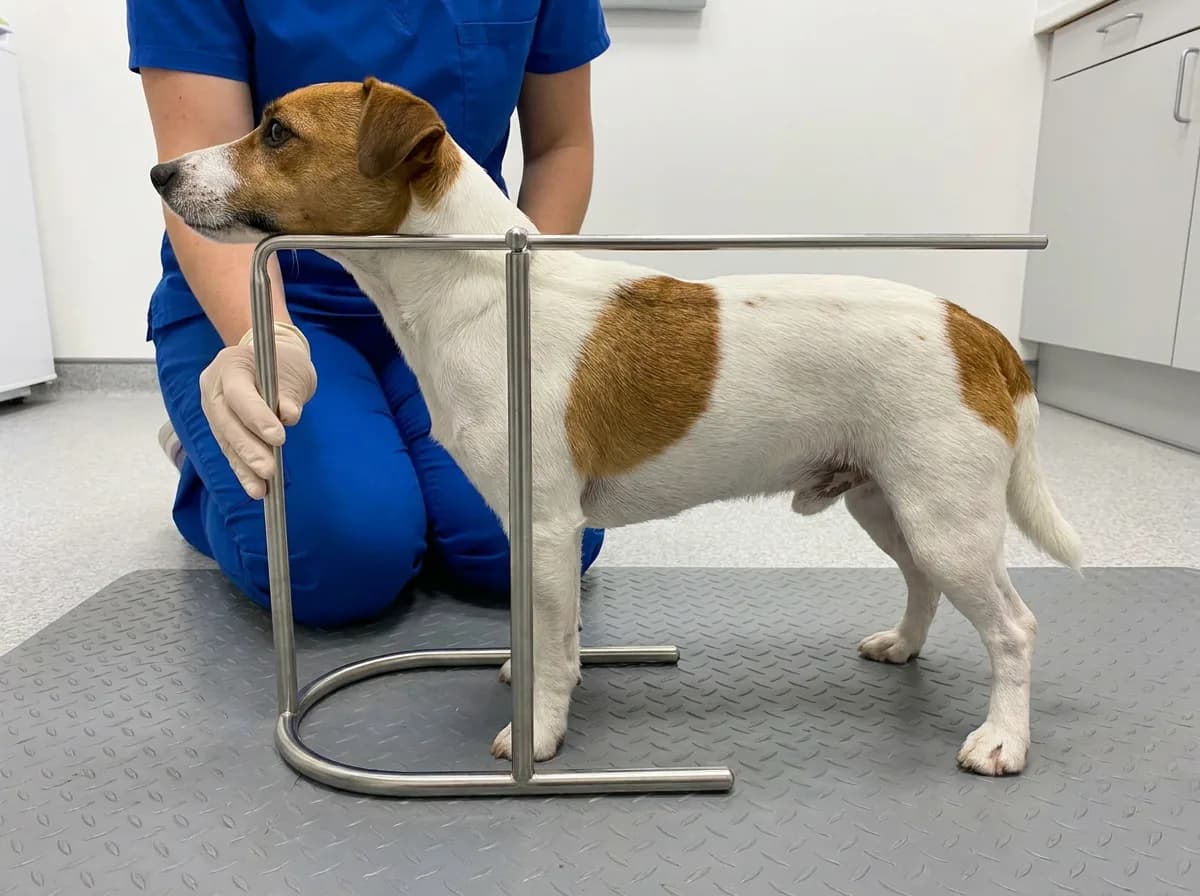
For a useful record, note:
- The date and whether the dog is still growing.
- Height measured at the withers.
- Current weight from a suitable scale.
- Chest and neck measurements when choosing wearable equipment.
These measurements answer different questions. Height helps you understand proportions, while chest and neck measurements help with harness sizing. A dog at the shorter end of the height range can still need a different harness size from another equally tall dog.
The Frisco Padded No Pull Dog Harness, Black, Small is one option to compare with your dog’s measurements and the current product chart. “Small” identifies this particular variant, not the correct size for every Jack Russell. The product name also does not guarantee that a dog will stop pulling.
Shorty, long-legged and miniature labels
“Shorty” and “short-legged” describe an appearance people may use when discussing Jack Russells. “Long-legged,” “large” or “tall” can describe another individual’s proportions. None of those words, on its own, tells you which standard the dog meets.
Small, shorty, long-legged and miniature are descriptions, so use them without inventing separate standardized breeds: none is a size class in the JRTCA standard. Ask for actual adult measurements when available, and for a puppy, ask what is known about its parents, since an adult size prediction remains a prediction.
If you are choosing equipment or arranging your home, work from the dog’s current dimensions. A tall Jack Russell may need a different sleeping space from a shorter dog, while a compact dog may still reach an unexpectedly high surface. Labels are a starting point for questions, not a substitute for looking at the dog in front of you.
Smooth, broken and rough coats
Jack Russells have three recognized coat textures: smooth, broken and rough. Coat texture is separate from color. A white background and colored markings can appear with different textures, so a brown patch does not tell you whether the dog has a broken or rough coat.
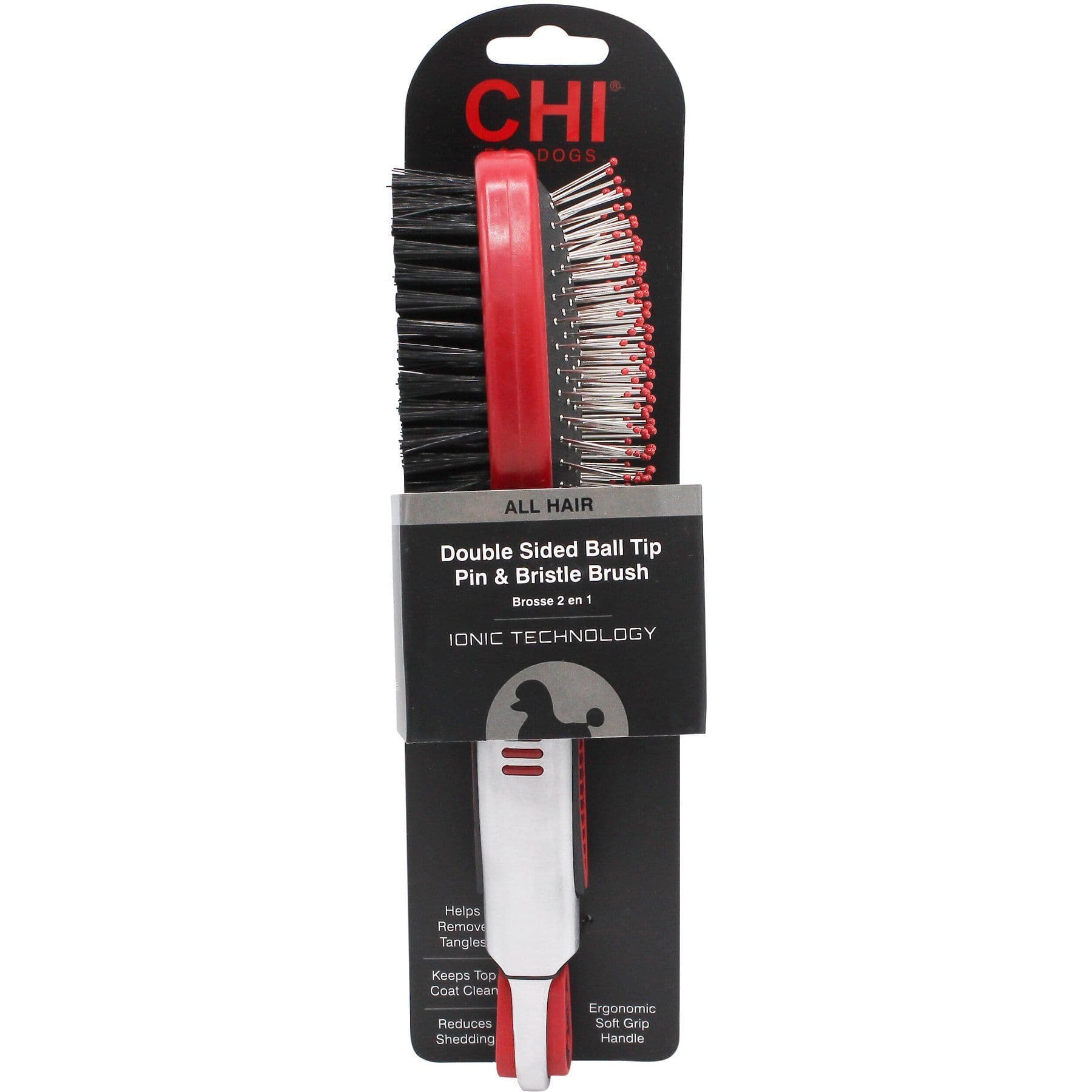
Ball-tip nylon pins work through tangles on one side while bristles smooth the coat and lift loose hair on the other. Ergonomic grip, with CHI ionic technology to reduce static.
Petful may earn a commission when you click through to Chewy, at no extra cost to you.
The JRTCA’s coat guide distinguishes them by trace hair, meaning the longer hair that creates furnishings around areas such as the face and body. Look at the distribution of that hair rather than deciding from one whiskery patch. Descriptions such as wire-haired, long-haired, hairy or fluffy Jack Russell are commonly used informally. They can help someone describe what they see, but they do not add extra formal coat categories.
For everyday brushing, the CHI Double Sided Ball Tip Pin & Bristle Dog Brush offers two surfaces to consider with a groomer. Whether either side suits your dog depends on the coat and handling tolerance. It is not a complete rough-coat grooming or hand-stripping kit.
Smooth coat
A smooth coat has close hair without the longer trace hair that creates obvious furnishings. The outline is comparatively sleek, with no pronounced beard or shaggy eyebrows. Short hair still needs checking and routine care.
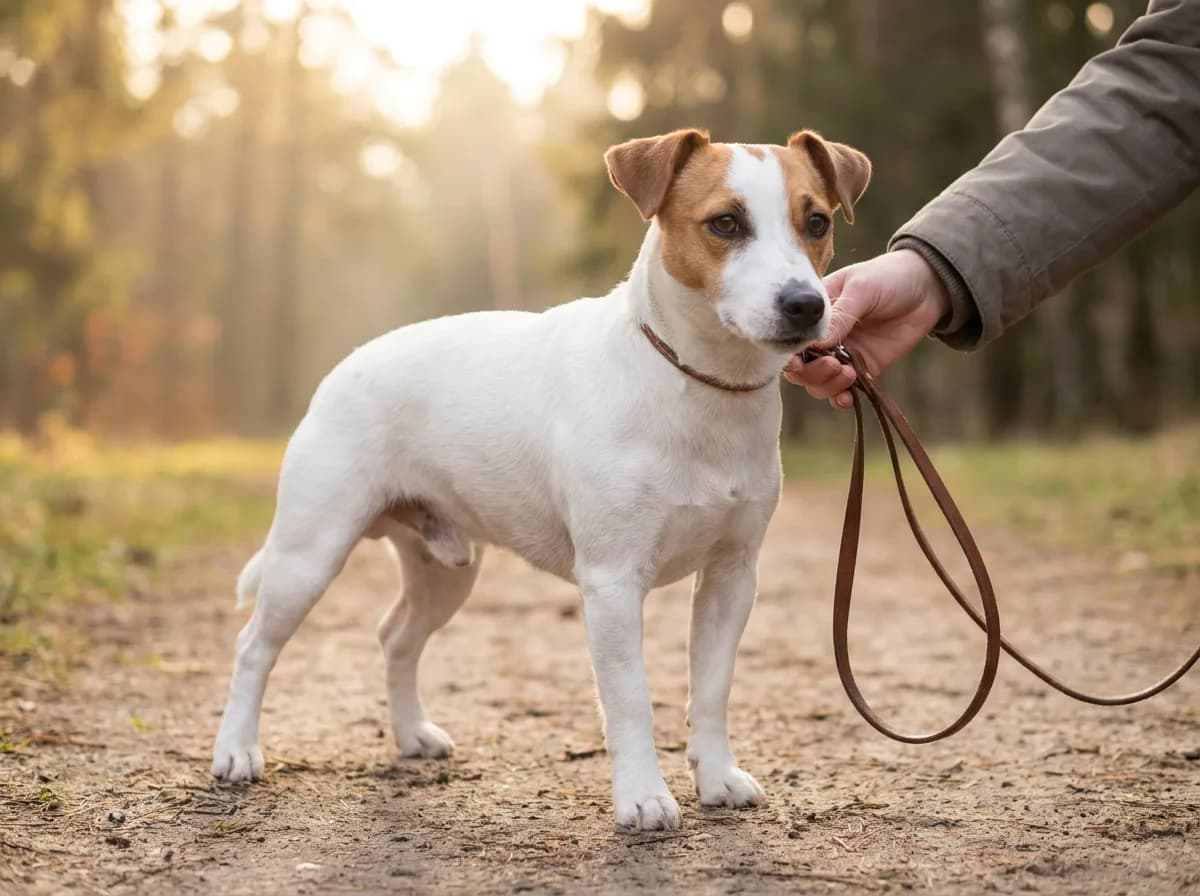
When looking at a short-haired Jack Russell puppy, distinguish what is visible now from a confident prediction about the mature coat. Ask the breeder or current caregiver what is known about the parents and how the puppy’s coat has changed.
A smooth appearance is also not a grooming exemption. Run your hands gently over the dog during ordinary care so you notice debris, sensitive areas or a change from its usual coat. The aim is comfortable maintenance, not making a naturally smooth dog look polished at every moment.
Broken coat
A broken coat has some trace hair, but less extensive furnishings than a rough coat. A dog may have noticeable facial hair while much of the body remains relatively close. This middle category can look less dramatic than the word “broken” suggests.
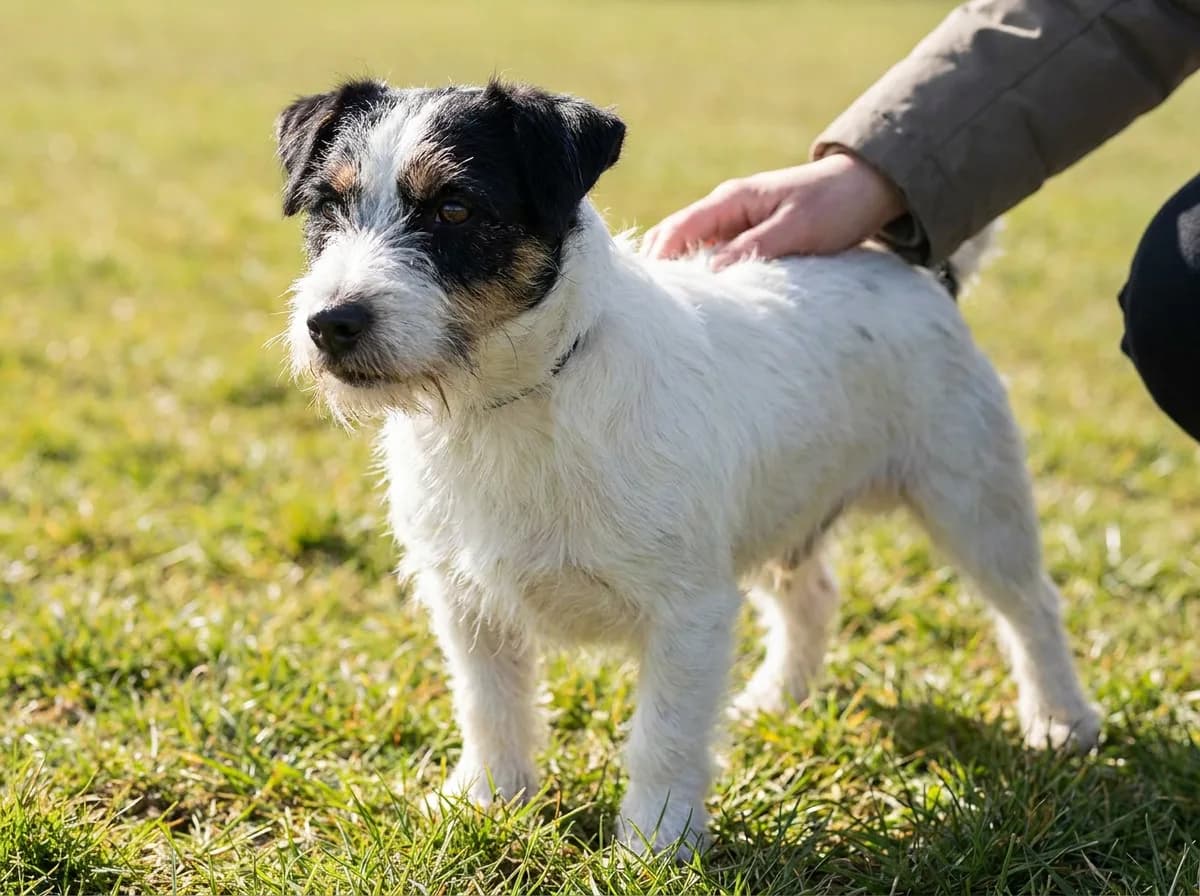
To compare a broken coat with a rough coat, examine the whole dog:
- How much longer hair appears around the muzzle?
- Are the furnishings limited or widespread?
- Does the body retain a relatively close outline?
- Has recent grooming changed the appearance?
A single photograph may not settle a borderline description. If the purpose is choosing grooming tools, let the groomer examine the actual coat rather than insisting on a category first. The practical question is what care this hair needs.
Rough coat
A rough coat has longer, more extensive furnishings. The muzzle and body look more textured, and the outline is less sleek than a smooth coat. The JRTCA describes the intended texture as harsh rather than woolly.
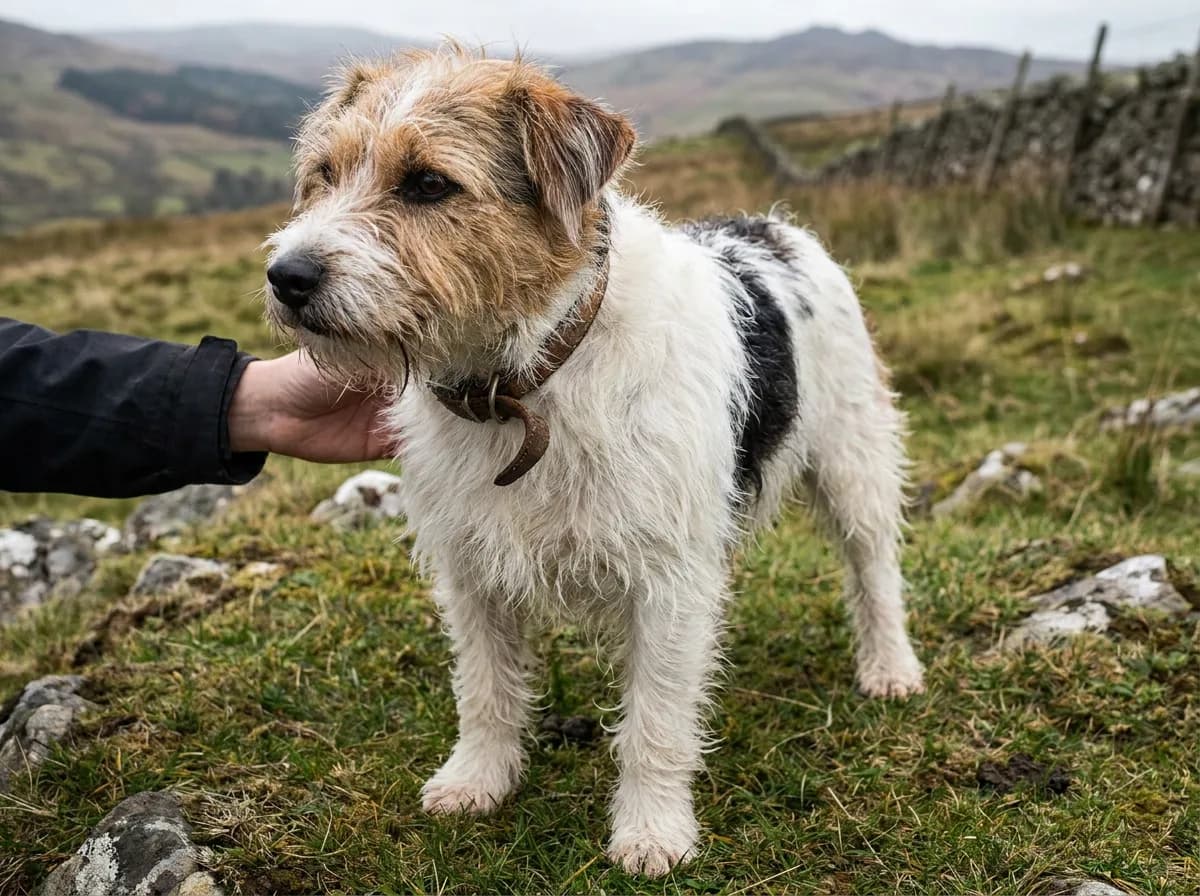
This is often the appearance someone means by a wire-haired or long-haired Jack Russell. “Fluffy” can be a visual impression, but it should not lead you to assume a soft, woolly texture or a different breed.
Before requesting a grooming service, explain whether you want routine pet maintenance or preparation for a particular presentation standard. Ask what the groomer proposes to do and why. Coat identification should help you agree on suitable care, not encourage unnecessary work simply because another rough-coated dog was groomed differently.
Jack Russell colors and markings
The JRTCA standard calls for white to account for more than 51 percent of the coat, with tan, black or brown markings. That makes white predominance part of the named standard. The placement and combination of colored patches can vary considerably. White-predominant markings describe color; smooth, broken and rough describe coat texture.
Can Jack Russell terriers be black and tan?
Yes, as markings on a white dog. The JRTCA standard allows tan, black or brown markings on a coat that is more than 51 percent white, and the AKC Parson Russell standard lists white with black or tan markings, or a tri-color combination. A black-and-tan Jack Russell in standard terms is a white dog with black and tan patches; a dog described as brown may likewise be brown and white.
Black and black-and-tan Jack Russells
A Jack Russell that is mostly or entirely black, or black and tan with little white, does not meet the JRTCA standard, which faults too much color (less than 51 percent white); the FCI standard also requires white to predominate. A dog sold as a black Jack Russell Terrier is usually one of two things:
- A white tricolor or black-and-white dog with large dark patches that look solid in photographs.
- A mix whose other parent contributed the dark coat.
If a seller offers an all-black purebred, ask for registration papers and photos of both parents.
Use clear descriptions when comparing photographs:
- White with tan or brown patches.
- White with black patches.
- White with both black and tan markings.
- All white, when no colored patches are visible.
An all-white appearance does not, by itself, establish ancestry or registration. The same applies to a black-and-white Jack Russell puppy or one with prominent brown markings. A photograph can show visible color; it cannot verify a pedigree.
What is the rarest Jack Russell color?
No registry publishes color counts, so there is no official rarest color. Among standard colors, brown markings are the least widely recognized: the JRTCA allows tan, black or brown markings, while the FCI standard names only black and/or tan. A Jack Russell with brindle markings or less than 51 percent white falls outside the JRTCA standard, so a "rare" color is more often a sign of mixed ancestry than a premium trait.
Keep texture separate throughout the discussion. A brown-and-white dog can be smooth, broken or rough. Choosing a favorite pattern tells you what you like looking at; identifying the coat tells you something different about its appearance and maintenance.
Living with Jack Russell energy and instincts
Jack Russell Terrier temperament is often described with words such as active, persistent and alert. Those traits can make an engaged companion for someone who enjoys training and shared activities. They can also create friction when the household expects a small dog to occupy itself quietly for most of the day.
What are the downsides of owning a Jack Russell?
The main downsides are noise, digging, chasing and the time they demand:
- Exercise: Battersea says the breed needs at least an hour a day and gets bored quickly without it.
- Barking and digging: Battersea notes they can be vocal when frustrated and that digging is a favorite activity.
- Prey drive: VCA warns they may not tolerate small animals and may chase moving objects.
- Time alone: VCA rates their tolerance of being left as limited.
What are the downsides of having a Jack Russell Terrier?
The bigger commitment is how long the routine lasts. Battersea gives a 12- to 16-year lifespan, so the daily hour of activity, the training and the barking management continue well into your next decade. Homes with rabbits or other small pets, close neighbors or long workdays feel those downsides most.
- 1Plan for daily activity, learning and rest.
- 2Make household arrangements around the individual behavior you actually observe.
- 3Ask what the current caregiver knows and what has not been tested.
The following table turns a breed description into questions about your home. Use observed behavior as the starting point, choose a household arrangement you could sustain, and ask the current caregiver for examples.
| Observed behavior | Household arrangement | Question for the current caregiver |
|---|---|---|
| Barks at passing people or sounds | Manage the view and choose a quieter resting place | What starts the barking, and what helps the dog settle? |
| Pursues wildlife or moving animals | Secure boundaries and controlled outdoor access | What happens when the dog notices cats, squirrels or other animals? |
| Digs along edges or in particular areas | Inspect boundaries and supervise outdoor activity | Where and when does digging happen? |
| Moves away during particular handling | Use predictable care and teach comfortable participation | Which grooming or handling tasks are easy or difficult? |
| Has little experience staying alone | Arrange support while building the skill gradually | What duration has actually been observed, and how was it assessed? |
| Enjoys some dogs but avoids others | Plan introductions and separate resting resources | Which interactions have gone well, and in what setting? |
Barking, digging and chasing
Barking, digging and chasing call for practical management decisions, especially with close neighbors or shared walls. Visitors, movement outside, play and being left alone are different contexts, so treat each one separately.
Do terriers bark a lot?
Yes, many terriers bark a lot, and Jack Russells are typically vocal. Battersea says they can be vocal, especially when frustrated or unsettled, and may bark more when restricted, such as on a lead; VCA rates the breed's barking level as moderate. Note what sets your dog off, because a trigger you can manage is easier to change than barking in general.
Notice the sequence rather than only the noise. Where was the dog? What happened immediately beforehand? Did the dog settle when the event ended? These observations help you discuss the behavior accurately and choose an arrangement that addresses the trigger.
For a practical first assessment:
- Check whether the dog spends time watching a busy window or fence line.
- Ask whether barking occurs during company, isolation or both.
- Look for places where digging could compromise a boundary.
- Identify routes where wildlife or other animals are hard to avoid.
- Decide who will supervise outdoor time and respond consistently.
Chasing is especially important because a dog can be attentive indoors and still become intensely interested in a moving animal outside. Prey drive describes that pursuit-related interest; it is not a promise that training will remove it.
A secure garden can support activity, but it should be inspected as part of the dog’s environment. A boundary that worked for a previous dog may have gaps, climbable objects or accessible edges that matter to this one. Plan controlled access before relying on the space.
Children, dogs and small pets
A Jack Russell may live successfully with children or other dogs, but breed membership does not certify that arrangement. Ask about the individual dog’s observed interactions, handling preferences and history. “Has seen children” is different from “has comfortably lived with children of a similar age.”
Are Jack Russells aggressive dogs?
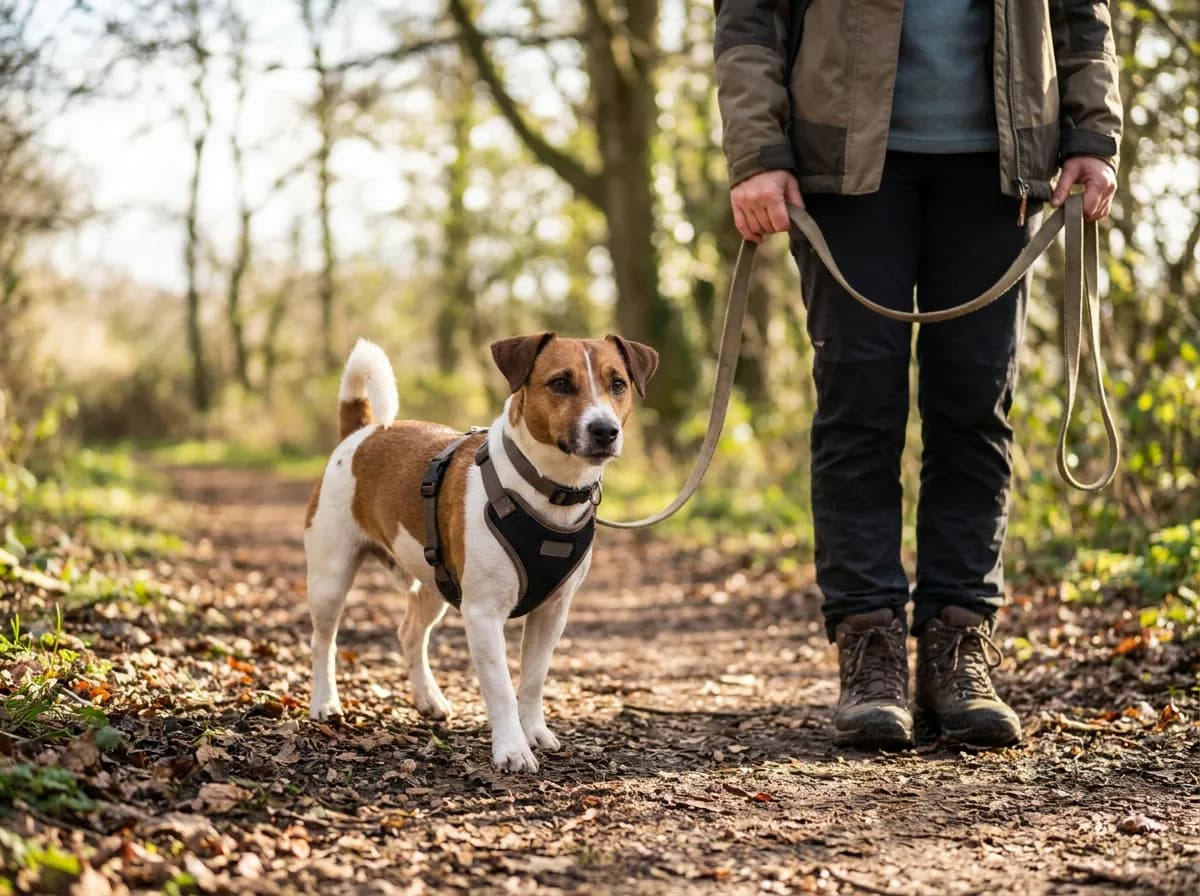
Not as a rule. The FCI standard describes the breed as bold and fearless, friendly but quietly confident. Battersea notes Jack Russells can find some interactions with other dogs challenging and may nip when excited or frustrated if they have not learned impulse control, so careful, positive socialization from a young age matters more than the breed label. On walks where you meet other dogs, a securely fitted harness such as the Frisco Padded No Pull Dog Harness, Small helps you keep control; check it against chest and neck measurements and the current size chart, since Small is one variant, not a breed-wide size.
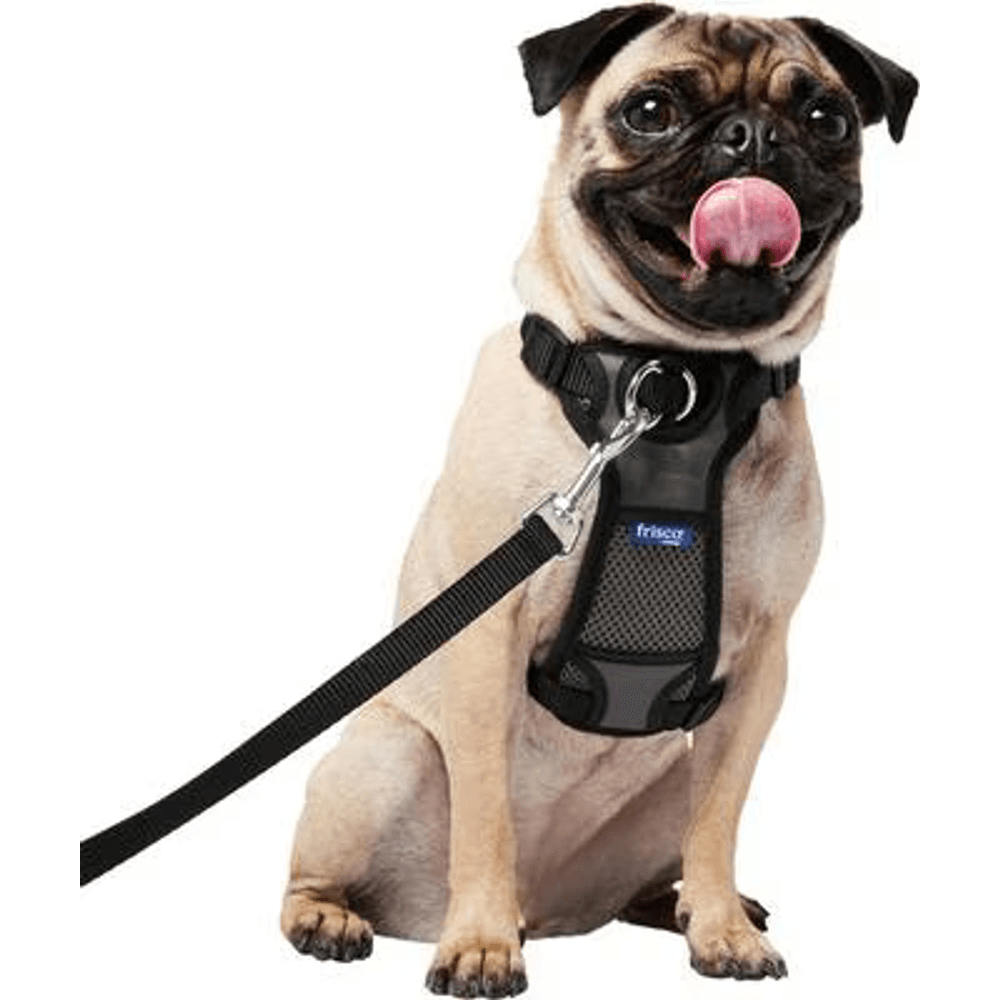
A padded dog harness to assess against your dog's chest measurements and the current size chart. Check secure adjustment and comfortable movement.
Petful may earn a commission when you click through to Chewy, at no extra cost to you.
For a household with children, establish:
- An adult who actively supervises interactions.
- A resting place where the dog is not disturbed.
- Rules against grabbing, chasing or picking up the dog unexpectedly.
- A way to separate dog and children when supervision is unavailable.
- A plan for teaching both the child and dog appropriate interaction.
What is the best companion dog for a Jack Russell Terrier?
The best companion dog for a Jack Russell Terrier is usually a sociable dog of similar size whose play can pause, rather than a second high-drive terrier. Battersea notes Jack Russells can find some interactions with other dogs challenging, so a calm, tolerant partner gives the best odds. Ask the rescue or breeder how introductions should be arranged and whether the dogs can rest separately.
What is the best companion dog for a Jack Russell?
Match the individual dogs on four points:
- Size close enough that rough play cannot injure either dog.
- A play style that tolerates chasing but lets the Jack Russell disengage.
- Comfort sharing toys, food and resting places, or a plan to separate them.
- Energy that fits your routine, since two active dogs double the exercise plan.
Cats and small pets require their own assessment. A history with one resident cat does not establish safety with unfamiliar cats or smaller animals. Discuss secure separation and what is known about chasing before placement. If the household cannot maintain the necessary arrangement, that is a real fit issue, even when the dog is otherwise appealing.
Housing and time alone
Is a Jack Russell a good house dog?
Yes, a Jack Russell is a good house dog for an active household. It suits a house or an apartment when someone can provide at least an hour of exercise a day (Battersea) and manage barking and time alone, which VCA rates as a limited tolerance. A large property does not automatically provide engagement, and a smaller home is not automatically unsuitable.
For apartment living, practical details matter:
- Can you reach an outdoor toileting area reliably?
- How much activity passes the windows or front door?
- Is there a quiet place for rest?
- What happens when your workday or commute runs late?
- Can you provide appropriate activity without relying on unrestricted running?
Do dogs get sad when you leave?
Many dogs do get sad or anxious when you leave. The RSPCA says research suggests eight out of 10 dogs find it hard to cope when left alone; some bark, toilet indoors or destroy things, while others sit quietly and worry, which is easy to miss. VCA rates Jack Russells' tolerance of time alone as limited, so ask what has actually been observed during absences.
Build alone-time skills gradually, using the dog’s response to guide the next step. If you observe sustained distress, seek appropriate professional help instead of simply extending the absence. Arrange practical cover while you work on the skill. A midday visitor can meet some needs, but it does not automatically make a longer period comfortable for every dog.
Build a day with exercise, learning and rest
An adaptable day for a Jack Russell combines exercise, learning, enrichment and rest. Include physical activity, opportunities to investigate and short sessions that teach useful skills. The goal is a dog whose needs are met across the day, rather than one expected to stay busy until it becomes exhausted.
Choose intensity according to age, health, conditioning and the individual dog’s response. Running with an owner and participating in dog sports are possible activities for some adults, but neither should be the automatic starting point for a puppy, a newly adopted dog or an unconditioned companion.
Think in terms of different jobs for different activities:
- Walking provides movement and access to the outside world.
- Sniffing allows exploration at the dog’s pace.
- Training builds a specific useful skill.
- Appropriate toys or food activities provide another kind of engagement.
- Rest gives the dog time without another task to perform.
This distinction helps when a day feels unbalanced. Adding another fast game may not address difficulty settling after an already stimulating outing. Changing the type or timing of an activity can be more useful than repeatedly increasing its intensity.
An adaptable example day
The following is an example to adapt, not a prescribed timetable. Start with what the dog already knows, then change one part at a time so you can see how the routine works.
- Morning: Offer a toileting opportunity and an outing suited to the dog. Include time to investigate rather than treating the whole walk as a march.
- After the outing: Provide a comfortable place to settle. Keep the transition predictable instead of immediately starting another exciting game.
- Later in the day: Practice one useful skill in a short session, or offer a suitable supervised food activity.
- Afternoon or evening: Choose another appropriate outing or shared activity, allowing for the day’s conditions and the dog’s response.
- Before bed: Keep the final routine straightforward, including toileting and a familiar resting arrangement.
The Outward Hound Nina Ottosson Lickin’ Layers Interactive Puzzle Game & Slow Feeder is one optional food activity to consider. Its two-cup capacity describes the product, not a serving recommendation. Use food from your dog’s planned allowance and stay present while the dog learns how to interact with it.
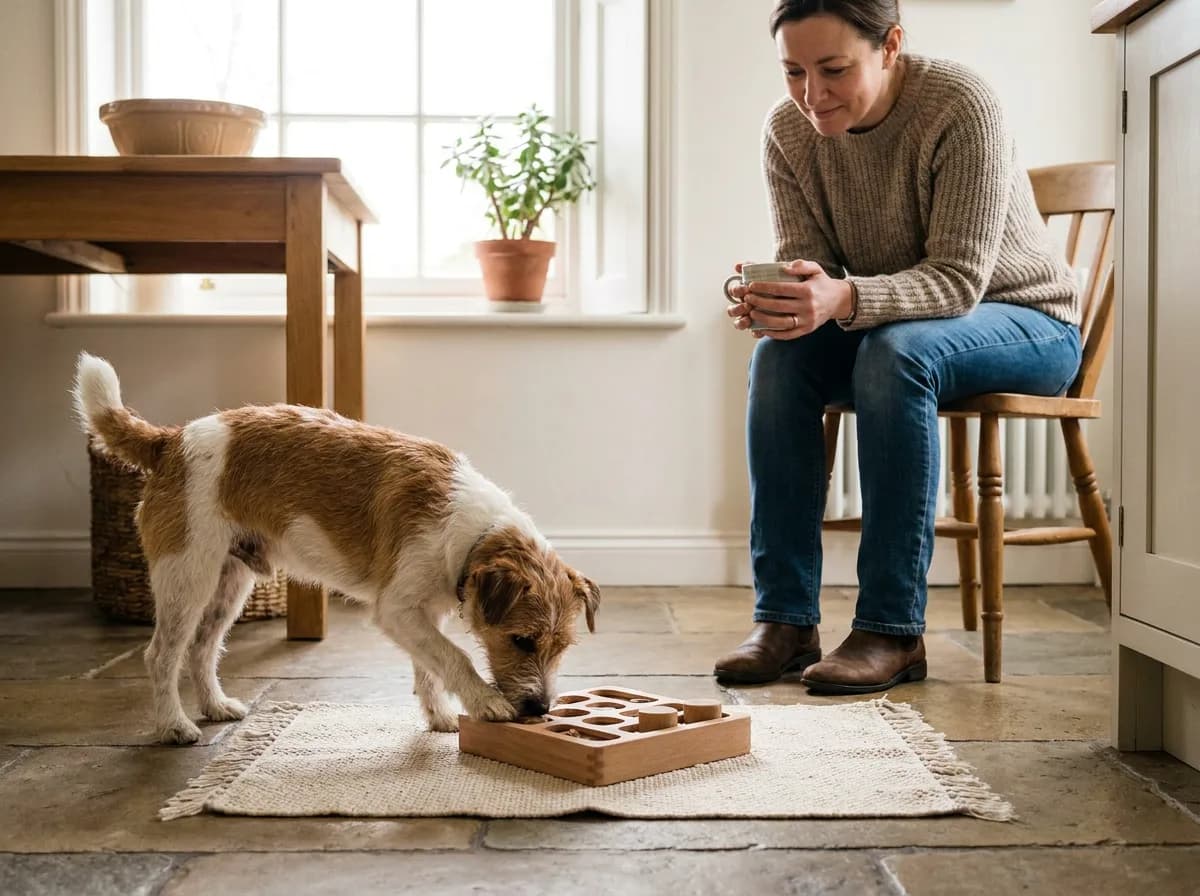
Keep the first attempt easy enough for the dog to understand. If the activity leads mainly to chewing the object, frustration or guarding it from another pet, stop and reconsider the setup. A puzzle is useful only when the way your dog uses it makes sense for the household.
Record a few observations while establishing the routine. Was the dog able to rest afterward? Did a busy route leave it more unsettled than a quieter outing? Was the evening activity comfortable, or had the day already been demanding? Those observations are more informative than comparing your schedule with another owner’s total exercise time.
For dog sports, first ask about suitable introductory work, the dog’s readiness and how the activity is taught. For running, discuss readiness with your veterinarian and build from the dog’s existing conditioning. There is no benefit in treating enthusiasm at the start as proof that every duration or surface is appropriate.
Training a puppy or newly adopted adult
Puppy and adult Jack Russell training should focus on useful everyday skills. These terriers learn quickly and persist at activities they find rewarding, which is not the same as following your priorities. Training makes the desired behavior understandable and worthwhile.

Soft chicken-recipe training bits that can be divided for small rewards. Count treats within your dog's daily food allowance.
Petful may earn a commission when you click through to Chewy, at no extra cost to you.
How smart are Jack Russell Terrier dogs?
Very. Battersea calls the breed very smart and highly trainable, and VCA describes it as intelligent and driven but needing consistent control. That intelligence shows up as persistence, so a bored Jack Russell may turn destructive, as Battersea warns.
Are Jack Russells one of the smartest dog breeds?
Jack Russells are not one of the smartest dog breeds in obedience rankings; they sit mid-table. Stanley Coren's The Intelligence of Dogs ranks the Jack Russell Terrier 46th, in the average working and obedience tier of breeds that learn a new command in about 25 to 40 repetitions (ranking summary). The list measures obedience learning, not the drive and problem solving owners notice at home.
For Jack Russell puppies, start with skills that make ordinary life easier. A newly adopted adult may need many of the same lessons in a new setting. Do not assume that a familiar cue means the same thing to the dog as it does to you.
Choose a small number of initial priorities:
- Responding to a name or attention cue in a quiet setting.
- Toileting opportunities and reinforcement for the desired location.
- Settling on a comfortable resting spot.
- Comfortable introduction to a harness and lead.
- Brief, gentle handling that prepares for routine care.
- Returning toward you in a safe, controlled space.
Positive reinforcement means making a useful consequence follow the behavior you want to encourage. Rewards can include suitable food, play or access to something the dog enjoys. The best choice depends on the dog and the task, rather than a claim that one reward works for every terrier.
For an optional food reward, Blue Buffalo Blue Bits Tasty Chicken Recipe Soft-Moist Training Dog Treats may suit dogs for whom the ingredients and texture are appropriate. Account for reward food in the overall feeding plan. A treat can be part of practice; it does not guarantee a training result.
Make the lesson clear before making it difficult. If a puppy can respond in a quiet room but not beside a moving squirrel, the difference in surroundings matters, so return to an easier version and build gradually. A simple practice sequence is useful:
- Decide exactly what successful behavior looks like.
- Choose a setting where the dog can notice you.
- Reward the behavior promptly.
- Repeat a few successful attempts.
- End before the dog loses interest or becomes frustrated.
Household consistency also matters. If one person encourages jumping during greetings and another wants four feet on the floor, the dog receives different lessons. Agree on the result and the response before expecting reliability.
When a lesson repeatedly fails, review the setup, the clarity of the cue and the value of the reward. “Stubborn” is a description of your experience, not an explanation of what the dog understands. A qualified trainer using reward-based methods can help turn a vague frustration into a specific teaching plan.
Choose equipment for the dog in front of you
Start with the job the equipment needs to do. A harness supports controlled walking, a resting place supports downtime, and a suitable activity item gives the dog something appropriate to investigate. Buying more equipment does not resolve an unclear routine.
Check the actual dog and the actual product together:
- Does the size chart match current measurements?
- Can the dog move comfortably?
- Can you use and inspect the item reliably?
- Does it suit the dog’s way of interacting with it?
- Will it remain suitable as a puppy grows or an adult’s needs change?
A useful setup is one you can maintain. Keep essential walking equipment where everyone can find it, agree on how it should fit, and make checking it part of the routine.
Harness fit and secure walks
The best harness for a Jack Russell Terrier is one that fits the individual dog and suits its movement and walking arrangements. Breed, weight and a “small dog” label are insufficient on their own. Follow the manufacturer’s measurement instructions, then assess the fit on the dog.
Look at the harness while the dog stands and moves. A strap position that seems acceptable in a still photograph may shift during walking. Check for rubbing, twisting, interference with movement or excessive looseness, and ask for help if you are uncertain.
Before relying on a new setup outdoors:
- Introduce it calmly in a secure place.
- Check every fastening and attachment point.
- Confirm that the adjustment remains where you set it.
- Watch how the harness moves as the dog changes direction.
- Reassess the fit as a puppy grows or body condition changes.
Do not deliberately create a frightening escape test. The purpose is to identify obvious problems while the environment remains controlled. If the dog has a known history of backing out of equipment, discuss an appropriate arrangement with a knowledgeable professional.
Lead handling and route choice remain important after you select a harness. Give yourself room to respond to wildlife, unfamiliar dogs or busy traffic. A well-chosen product supports management; it does not replace teaching or make every environment suitable.
Supervised enrichment
Choose Jack Russell toys and enrichment items according to how your dog uses them. A dog that gently investigates an object needs a different assessment from one that immediately tries to dismantle it. Product size and construction matter, but your observations complete the picture.
Supervision means being available to intervene, rather than placing an item nearby and assuming it is suitable. Inspect it before and after use, remove damaged pieces, and follow the manufacturer’s use and cleaning instructions.
For a household with several animals, offer food activities in separate, comfortable spaces. That makes it easier to see whether each animal understands the task and prevents competition from becoming part of the activity. Store food-filled items after the session rather than leaving their contents unaccounted for.
Grooming and everyday care
Jack Russell Terriers shed. A smooth coat is not a nonshedding coat, and a rough or broken coat should not be presented as hypoallergenic. Choose the coat you can comfortably maintain without expecting its texture to guarantee an allergy-free home.
Everyday care is also a chance to notice changes. A familiar routine makes it easier to recognize when the dog reacts differently to touch or when a particular area needs attention.
Shedding and brushing
The amount of hair you notice depends on the individual coat, the care routine and the surfaces in your home. Dark upholstery can make pale shed hair particularly visible. Grooming can help collect loose hair, but an empty brush is not a reasonable measure of success.
Select tools for the actual coat. A slicker brush is not automatically the right choice for every Jack Russell simply because it is sold for dogs. Ask a groomer to demonstrate suitable pressure and explain which areas the tool should address.
Keep a routine manageable:
- Work where the dog can stand or rest comfortably.
- Begin with an area the dog accepts easily.
- Check the skin and coat rather than repeatedly brushing one spot.
- Pause if the dog becomes uncomfortable.
- Ask for help with a resistant or sensitive area.
For broken and rough coats, discuss maintenance with someone familiar with those textures. Show the groomer what you can manage at home and explain the appearance you want to retain. That gives them a clearer basis for recommending a service than an unspecified request to “make the coat easier.”
Bathing, nails and routine care
Routine care for a Jack Russell covers bathing, nails, feet, ears and teeth.
How often should I bathe a Jack Russell?
About every three months, or sooner after a muddy outing. The ASPCA recommends bathing a dog at least once every three months, more often for dogs that spend a lot of time outdoors or have skin problems. Brushing between baths does most of the coat work, and recurring itch or odor is a reason to see your veterinarian rather than bathe more often.
Use suitable canine products according to their directions, and ask your veterinarian about recurring irritation rather than trying progressively more frequent baths. Keep coat care separate from treating a skin problem.
Other routine tasks deserve their own plan:
- Check feet after outings and notice anything caught around the toes.
- Arrange nail care at a frequency suited to the individual dog.
- Introduce mouth and dental-care handling gradually.
- Look at the ears during ordinary care without assuming they need a fixed cleaning schedule.
- Tell the groomer or veterinarian when a previously easy task becomes uncomfortable.
Teach participation in small steps. Briefly touching a paw and rewarding calm acceptance is different from restraining the dog for a full unfamiliar procedure. Keeping routine care predictable can make it easier to notice when the dog’s response changes.
Lifespan and health questions to discuss
Battersea’s Jack Russell guide gives a practical lifespan range of 12 to 16 years. Use that as an expectation for long-term planning, not a prediction for a particular dog.
Think about the commitment across those years. Your work, housing and family circumstances may change while the dog still needs daily care. A workable plan includes both ordinary support and someone who can help when your normal routine is disrupted.
An expectation, not a prediction
Health history, current condition and circumstances say more about an individual dog's life expectancy than its sex or a "miniature" label.
For an older Jack Russell, adapt to the dog you have now rather than expecting the routine that suited it years earlier. Changes in comfort, mobility, sensory responses or willingness to take part deserve attention. Do not dismiss a new difficulty as merely stubborn behavior or inevitable old age.
Make observations specific:
- Which activity has changed?
- When did you first notice the difference?
- Is the change consistent or occasional?
- Does it affect walking, rest, eating or handling?
- What does your veterinarian recommend monitoring?
This record helps you describe the issue without trying to diagnose it yourself. It also makes later discussions clearer than a general statement that the dog is “slowing down.”
Ask for the actual health records
Battersea identifies concerns including patellar luxation, inherited coordination conditions and lens luxation in its breed guidance. These are reasons to ask informed questions about veterinary history and relevant screening, not a prediction that every Jack Russell will develop them.
For a puppy, ask what testing or examinations were completed for the parents and what the records show. For an adopted adult, ask for the available medical history and any continuing care instructions. The amount of information available may differ, but the distinction between documented and unknown should remain clear.
Useful questions include:
- Which records will accompany the dog?
- Which results belong to this dog, and which belong to its parents?
- What tests or examinations were performed, and when?
- Has a veterinarian recommended any follow-up?
- Is there a condition that affects daily care or expected costs?
A statement such as “health checked” is a starting point for that conversation, not a complete record. Ask your veterinarian to help interpret documents and establish an appropriate care plan. Avoid treating a list of possible breed conditions as a reason to buy supplements or attempt preventive treatment without guidance.
Meeting a Jack Russell before you decide
A meeting is an opportunity to learn about an individual, not an audition in which every behavior must be perfect. Ask the current caregiver to describe ordinary days as well as showing you the dog in the moment.
A rescue setting, a breeder’s home and your own home can produce different behavior. One lively greeting does not tell you how the dog rests later, while one quiet meeting does not prove it needs little activity.
- Ask about time alone, handling tolerance and interactions with other animals. Separate documented observations from assumptions, and identify what remains unknown before agreeing to placement.
Use a few concrete requests:
- Ask to hear about a typical walk, including difficult moments.
- Find out where the dog usually sleeps and rests.
- Ask which handling tasks it accepts comfortably.
- Discuss its experience with the kinds of people and animals in your home.
- Clarify what support is available after placement.
- Ask what would make the caregiver recommend a different home.
For Jack Russell puppies for adoption, some adult behavior and size questions will remain unanswered. An older dog may have a more observable history, although the quality of that history varies. Neither age group removes the need for teaching and adjustment.
If you are considering a Jack Russell Terrier rescue, the JRTCA rescue page directs readers to Russell Rescue. Ask the organization about its current process and the particular dog rather than assuming a fee, availability or placement policy.
Before deciding, compare what you learned with your actual household plan. A known difficulty may be manageable if you have the time, setup and support it requires. An attractive dog with needs you cannot realistically meet is a different situation. Be honest about both the arrangements you can make and the uncertainties you would be taking on.
Adoption and the cost of ownership
The amount needed to bring home a Jack Russell is only one part of the financial commitment. Acquisition fees, initial equipment, veterinary care, training support and continuing everyday costs answer different budgeting questions.
For acquisition figures and a fuller breakdown, use our Jack Russell price and ownership costs guide. It separates the initial price from the costs that continue after the dog arrives.
When comparing a puppy price or a local adoption offer, ask what is included and what you will need to arrange separately. Compare the actual offer, the available records and your continuing budget before making a commitment.
Jack Russell mixes and related terriers
A Jack Russell Terrier mix can be a good companion when the individual dog fits the household. A cross name alone does not establish adult size, coat, activity level or comfort with other animals, and there is no universally best Jack Russell mix.
Our Jack Russell mixes guide covers named crosses and the variation to consider. Use it to explore common mix descriptions without assuming that a mixed puppy will combine only your favorite traits from each parent.
What dog is similar to a Jack Russell Terrier?
The Parson Russell Terrier and the Russell Terrier are the closest, since the FCI standard traces the Jack Russell to the fox-working terriers Reverend John Russell developed in 1800s England and the AKC recognizes those two related breeds with their own standards. The Rat Terrier is another comparison people often make; our Rat Terrier versus Jack Russell guide treats it directly.
Jack Russell questions
Neither sex is better overall, and individuals vary more than the sexes do. The AKC Parson Russell standard sets ideal heights of 14 inches for males and 13 for females, so males run slightly larger. Choose by the individual dog's observed behavior and how it gets on with any resident dog.
If you already have a dog, the pairing matters more than sex alone. Ask the rescue or breeder how the two dogs have met, and plan a gradual introduction with separate resting spaces, since Battersea notes Jack Russells can find some interactions with other dogs challenging. Spay or neuter timing is a separate question for your veterinarian.
Some form their strongest bond with one person, but that is a preference rather than a breed rule. Everyone in the household can build a relationship through shared walks, meals and play. Growling or blocking access to a favorite person calls for qualified help, not pride.
Many show a clear favorite, often the person who shares the activities they enjoy most. Let other household members take over some walks, games and meals so the bond spreads. Treat guarding a person as a training issue rather than a sign of affection.
Yes. Cornell's winter safety guidance explains that cold tolerance varies with age, size, health and coat thickness, and a small smooth-coated terrier sits at the vulnerable end. Shivering, lifting paws or reluctance to keep walking mean it is time to head somewhere warm and dry.
No. In Stanley Coren's obedience-based ranking the Border Collie is first and the Jack Russell Terrier is 46th, in the average tier. Battersea still describes the breed as very smart and highly trainable; its intelligence shows more in persistence than in instant obedience.

Coreen Saito is a pet writer and longtime shelter volunteer with more than a decade in animal rescue. She covers cat behavior, breed care, and the small, ordinary science of sharing a life with companion animals, with a particular focus on honest takes about the products and decisions that actually matter. At home in Arizona, she's outranked by Mac (a dog with the loudest opinion in the house), Rebel (a cat who governs by quiet authority), and Meri (an orange tabby who runs the late shift and the laundry basket). She writes about all three, plus the rescues that keep coming through her life, at LifeWithMinty.com.
Sign up for expert-backed reviews and safety alerts all in one place.