German Shorthaired Pointer: Temperament, Size, Care and Breed Guide
German Shorthaired Pointers are athletic, people-focused sporting dogs. Compare adult size, temperament, exercise, grooming, health, training and daily household fit.

Petful is reader supported. As an affiliate of platforms like Amazon and Chewy, we may earn a commission when you buy through links on this page. There is no extra cost to you.
The German Shorthaired Pointer is a medium-to-large sporting dog developed for versatile field work. Adults generally span about 21 to 25 inches and 45 to 70 pounds, with males more often occupying the upper part of those ranges. A short coat does not mean a low-effort dog. Daily movement, scent work, training, companionship, secure management and preventive care are core needs.
Use the profile as a household-fit test. The important question is not whether GSP facts sound appealing, but whether the home can meet the adult dog need for movement, scent work, companionship, boundaries and recovery every ordinary day.
- 1Plan for an athletic sporting dog that also needs to learn how to rest indoors.
- 2A fenced yard supports management but does not replace guided exercise or training.
- 3Choose the individual dog with attention to health, behavior and source records.
- 4Budget for adolescence, backup care and changing senior needs.

Sign up for expert-backed reviews and safety alerts all in one place.
German Shorthaired Pointer at a glance
A German Shorthaired Pointer, often called a GSP dog, combines athletic build, a short dense coat and a people-oriented working style. The useful breed profile starts with household fit rather than appearance. Most adults need meaningful exercise and mental work every day, then deliberate practice settling indoors.
The short coat may suggest simplicity, but the time commitment is driven by the working brain and athletic body. Before choosing the breed, picture an ordinary wet Tuesday, not only a weekend hike. The dog still needs safe movement, training and a way to settle when weather, work or illness changes the plan.
A household fit scorecard should test the work rest balance on routine days: who provides exercise, where recall is practiced safely, how the dog settles during work hours and what happens when weather cancels a run. Those answers reveal more than a list of GSP dog traits because they connect the German Shorthaired Pointer profile to the home that must support it.
- Time for guided exercise on workdays
| Daily reality | Promising fit | Pause and reconsider |
|---|---|---|
| Activity | Guided exercise and scent work fit most days | The dog is expected to self-exercise in a yard |
| Indoor life | Calm behavior will be taught and rewarded | High energy is punished after needs are missed |
| Management | Leashes, fencing and pet introductions are planned | Recall will be tested around traffic or wildlife |
| Care | Nails, ears, teeth, skin and weight are checked | The short coat is assumed to mean no care |
| Budget | Training, veterinary care and backup help are affordable | Only food and purchase price are budgeted |
What an ordinary weekday with a GSP looks like
The honest fit test is not a perfect hiking weekend. It is a rainy workday when the household is tired. A workable routine might include a purposeful morning walk with sniffing and a few recall repetitions, a planned midday break, and a longer evening activity followed by quiet time. The exact schedule can change, but the dog should not spend every weekday waiting for one huge outing.
Movement is only one part of that day. Meals can become search games, short training sessions can rehearse leash manners or place behavior, and rest should be protected. If every activity raises arousal, the dog may return home fitter but not calmer. Families should decide who covers each need before bringing home an athletic adolescent, including backup plans for illness, travel and unusually long workdays.
Exercise is more than backyard access
A secure yard is useful for bathroom breaks, play and management, but it cannot direct the quality of a dog's experience. Many GSPs will patrol a fence, dig, chase movement or wait at the door instead of exercising meaningfully alone. Guided outings allow the owner to adjust pace, protect the dog from heat and traffic, and combine movement with communication.
Variety also matters. Brisk walking, hiking, retrieving, swimming where safe, scent searches and conditioned running challenge the body in different ways. A healthy adult may enjoy vigorous work, yet the workload should rise gradually after inactivity. Puppies, seniors and dogs with pain or disease need a different plan. Exercise succeeds when the dog returns able to recover and settle, not when exhaustion is used as the only behavior strategy.

Petful may earn a commission when you click through to Chewy, at no extra cost to you.
Teaching the off switch
Calm behavior is easier to build before the dog is frantic. Choose a mat or bed in a low-traffic area, reward voluntary pauses there and keep early repetitions brief. After a moderate outing, offer water, reduce household stimulation and reinforce lying down, soft muscles and slower breathing. Over time, the location becomes a predictable cue for recovery.
Owners sometimes add more exercise whenever a young GSP becomes restless. That can create an increasingly conditioned athlete without improving self-regulation. Look at sleep, access to interesting smells, frustration, separation and the clarity of household rules before simply adding mileage. A dog that cannot relax despite an appropriate routine may benefit from a veterinarian and a reward-based trainer checking for pain, anxiety or an unrealistic environment.
Living with a German Shorthaired Pointer
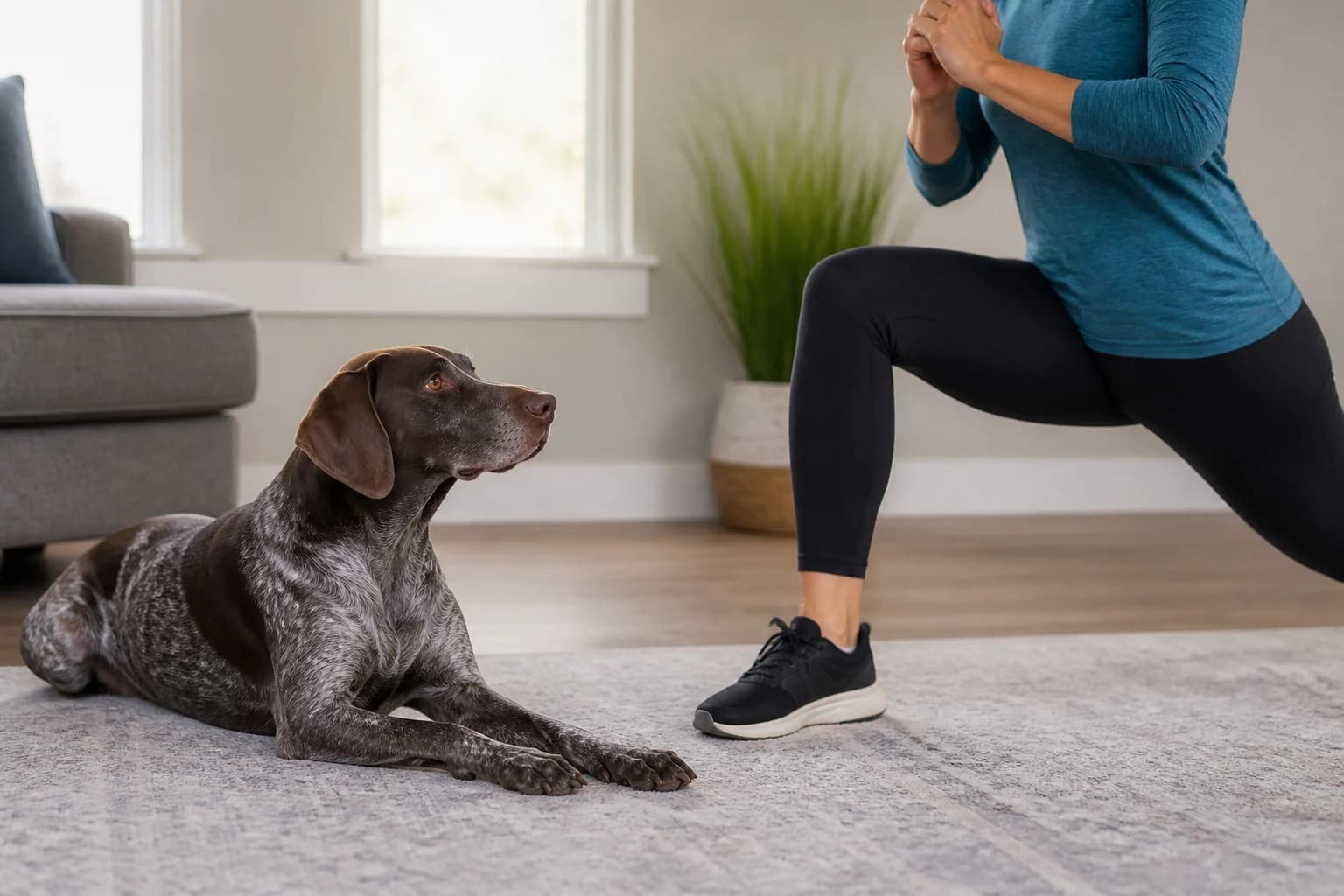
Living successfully with a GSP depends on a work-rest balance. Owners need time for outdoor activity, reward-based training, safe recall practice and calm recovery. A fenced yard can help management, but it does not replace interaction, guided exercise or teaching the dog what to do inside the home.
A house dog is not the same as an inactive dog. Many GSPs can relax indoors after their needs are met and calm behavior has been taught. Repeated pacing, stealing, jumping or destructive chewing often means the routine, management or recovery period needs adjustment, although pain and distress should also be ruled out.
Useful German Shorthaired Pointer facts describe both the athlete and the off-duty companion. German Shorthaired Pointers can share a home successfully when movement, scent work, boundaries and sleep are predictable. A German Shorthaired Pointer mix may inherit some, all or few of these tendencies, so assess the individual dog instead of treating the breed name as a behavioral guarantee.
- Secure management around roads and wildlife
Training priorities for the first months together
Recall deserves early attention because the breed's nose and speed can carry a dog away quickly. Begin indoors, pay generously for turning toward the handler and practice on a long line in safe open areas before considering freedom. Loose-leash walking, waiting at doors, trading found objects and moving to a mat are equally practical skills.
Keep criteria clear and change one difficulty at a time. A dog that responds in the kitchen has not failed when wildlife appears outdoors; the environment changed dramatically. Management closes that gap while learning catches up. Gates, leashes and secure fencing prevent high-consequence mistakes. Punishment around return can poison recall, so even an inconvenient comeback should lead to safety, reinforcement and a calmer plan for the next repetition.
GSPs with children
Affection does not remove the risks created by speed, size and excitement. A young pointer can knock over a toddler without intending harm, and a child can frighten a resting dog by climbing, hugging or taking an object. Use barriers and adult supervision, give the dog a child-free resting place, and teach children to invite rather than force contact.
Watch the dog's body rather than waiting for a growl. Turning away, lip licking, freezing, leaving and refusing food can all signal discomfort. End the interaction while everyone is still safe. Families should also plan for play dates, meals and door arrivals, when arousal rises. A known history with children is useful but does not guarantee comfort with every age, noise level or situation.
For food-based calm enrichment, one supervised option is the KONG Classic Dog Toy, Large.
Cats, small pets and prey drive
Pointing and chasing behavior can be powerful, particularly outdoors. Some GSPs live peacefully with a familiar cat, while others cannot safely share space with small animals. Introductions should begin with physical separation, scent information and controlled visual access. A leash and escape routes for the cat are more responsible than allowing a chase to reveal the answer.
Progress means loose body language, the ability to disengage and reliable response to the handler. Staring, stalking, trembling, whining or explosive pursuit call for more distance. Never assume that tolerance of one resident animal transfers to rabbits, poultry or unfamiliar cats. When risk remains high, permanent separate zones may be the kindest household arrangement.
Apartment and smaller-home realities
Square footage is not the only measure of suitability. An apartment owner with access to safe trails, a realistic daily schedule and strong indoor routines may meet the breed's needs better than a yard owner who expects self-entertainment. The practical questions involve elevators, shared hallways, noise, bathroom access, storage for wet gear and the ability to reach exercise areas in poor weather.
Plan how the dog will pass neighbors and other animals without pulling or jumping. Use rugs on slick floors and protect a predictable sleeping zone from constant traffic. Building rules, breed restrictions and weight limits should be checked in writing before acquisition. If adequate activity depends on a single fragile arrangement, such as one dog walker with no backup, the housing plan is not yet resilient.
family fit and temperament
Many German Shorthaired Pointers are affectionate and social with their families. They can be exuberant, mouthy or physically intense, especially when young. Supervision around children, thoughtful dog introductions and secure separation from small pets are more reliable than assuming every individual will match a breed stereotype.
Family fit improves when adults manage greetings and children learn to avoid hugging, climbing on or disturbing a resting dog. Because a young GSP can move quickly and enthusiastically, gates and leashes protect good interactions while training catches up. Compatibility with another dog is an individual assessment, not a breed guarantee.
- Reward-based recall and settle training
- Outdoor space can support management, but a GSP still needs guided activity, scent work, training and practice settling with the family.
Alone time and companionship
A people-oriented working dog may struggle when a full workday of isolation begins suddenly. Build alone time in small, uneventful increments while the dog is calm. Use a safe confinement area, return before distress escalates and vary departure cues so keys or shoes do not always predict a long absence. Cameras can reveal pacing, vocalizing or failure to eat that the owner never sees.
Exercise before departure can help, but it does not cure separation-related distress. Dogs that panic may injure themselves or become worse with repeated forced exposure. A veterinarian can rule out medical contributors and help coordinate an individualized plan. Daycare is not automatically suitable either; social intensity, rest and the facility's supervision practices must fit the particular dog.

Petful may earn a commission when you click through to Chewy, at no extra cost to you.
Coat, ears, nails and teeth
The short coat simplifies brushing but does not eliminate care. A light weekly pass removes loose hair and creates a chance to feel the skin. After swimming or field activity, check between toes, around armpits and under equipment for debris or irritation. Persistent odor, sores, painful lumps or bald areas need veterinary attention rather than stronger grooming.
Floppy ears should be observed for redness, discharge, swelling and head shaking. Nails affect traction and posture, so small regular trims are often easier than waiting for overgrowth. Tooth brushing with dog-safe toothpaste is worth teaching gradually. The best routine is one the dog accepts willingly because cooperative care makes changes easier to notice early.
For travel hydration, compare the capacity of the Frisco Silicone Collapsible Travel Bowl with Carabiner, Teal, Small (1.5 cup).
Travel and outdoor safety
A restrained travel setup protects the dog and driver. Measure the dog and vehicle rather than assuming any crate or harness is safe in every position. Carry identification, current contact details, water and a basic medical record. At a new destination, keep the leash attached until fencing, gates and wildlife risks have been checked firsthand.
Conditioning must match the trip. A dog active at home can still be unprepared for heat, altitude, rough terrain or repeated long days. Paw protection, rest opportunities and weather-aware route choices matter. Never leave a dog in a vehicle where temperature can rise. Hunters and hikers should also plan visibility, legal access, parasite prevention and the nearest open veterinary facility before setting out.
Choosing a breeder, rescue or adult dog
The source should make important facts easier to verify, not harder. A breeder can provide registered parent identities, relevant screening records, a written contract, veterinary information and a return commitment. A rescue can separate known history from estimates, describe behavior observed in foster or shelter care and disclose medical work completed. Neither source can guarantee a perfect personality.
Meeting an adult dog can reduce uncertainty about size and some current behavior, but stress and environment still affect what the buyer sees. Ask how the dog handles rest, restraint, visitors, other animals, transport and being left. Then compare those observations with the household's actual routine. Walking away from a poor fit protects both dog and family.
daily exercise and training
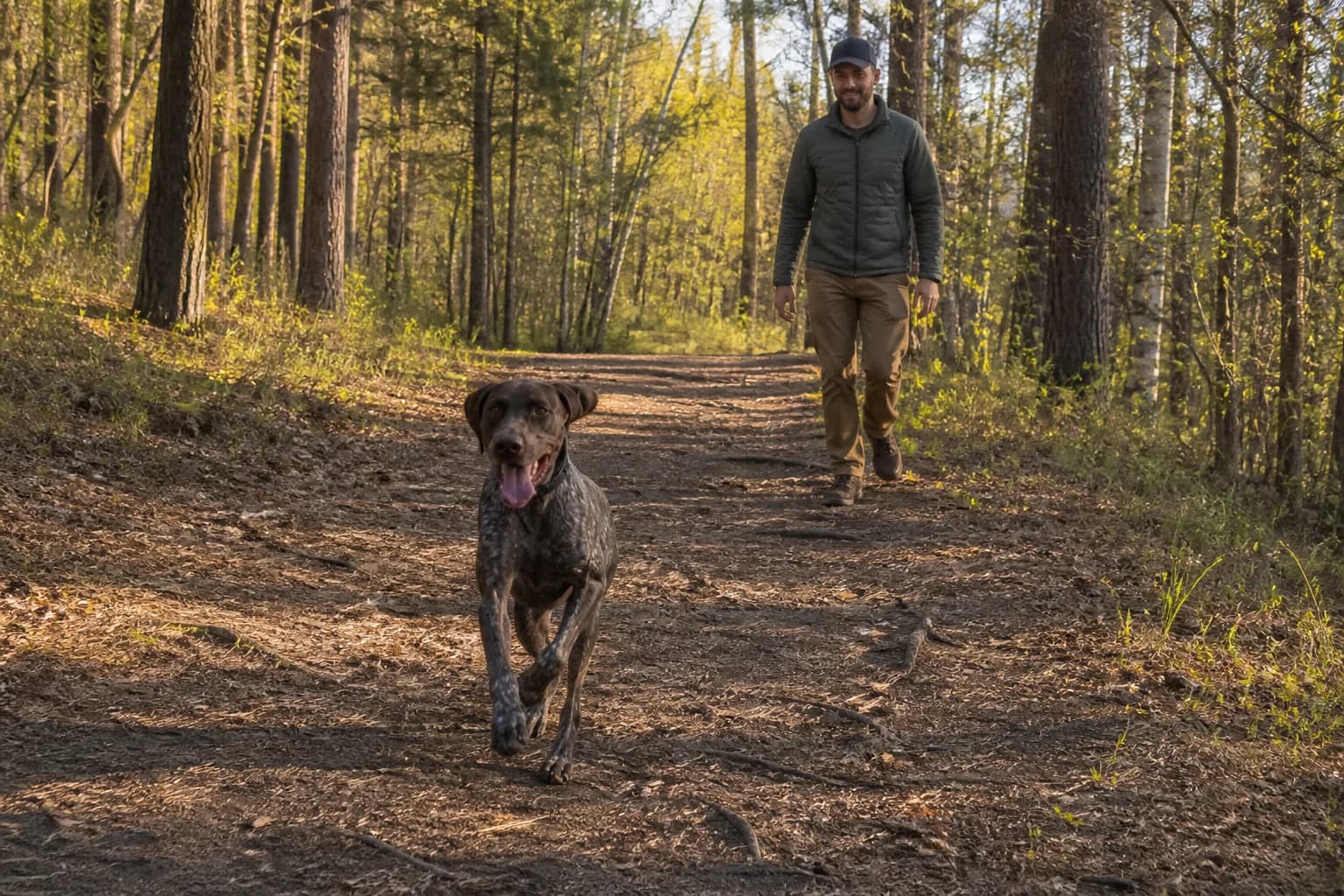
A healthy adult commonly needs a substantial daily combination of brisk walking, running, retrieving, scent work and short training sessions. The right amount changes with age, conditioning, weather and health. Puppies should not be pushed through repetitive forced mileage, and every dog benefits from recall, leash skills, place training and an off switch.
Conditioning should progress gradually. A dog that can sprint in a field is not automatically prepared for distance running, hot-weather work or repetitive jumping. Build duration on forgiving surfaces, carry water, watch recovery and use sniffing or training on lighter days so exercise remains sustainable.
- A plan for children and small pets
A final household-fit decision
Score the home on time, management, training interest, exercise access, other animals, children, finances and backup care. A promising answer is specific: who takes the morning outing, where recall is practiced, how the dog rests during meetings and what happens during a family emergency. A vague promise to be more active after adoption is not yet a plan.
Breed tendencies help identify questions; they do not predict every individual. A lower-energy adult may thrive where a field-bred adolescent would overwhelm the same people. Health, early experience and learning all shape daily life. The best GSP home is not the most athletic one on paper, but the one able to adjust responsibly while keeping safety, companionship and recovery intact.
Sleep and recovery are daily needs
An active dog still needs long periods of undisturbed rest. Overtired adolescents can look more impulsive, mouthy and unable to listen, which tempts owners to add stimulation when the better answer is a protected nap. Place beds away from door traffic and teach children and visitors not to disturb a sleeping dog.
Recovery also includes a lighter day after unfamiliar or strenuous work. Watch gait, appetite, hydration and willingness to rise. Lingering soreness, reluctance to move or a sharp behavior change needs veterinary input rather than another hard outing intended to loosen the dog up.
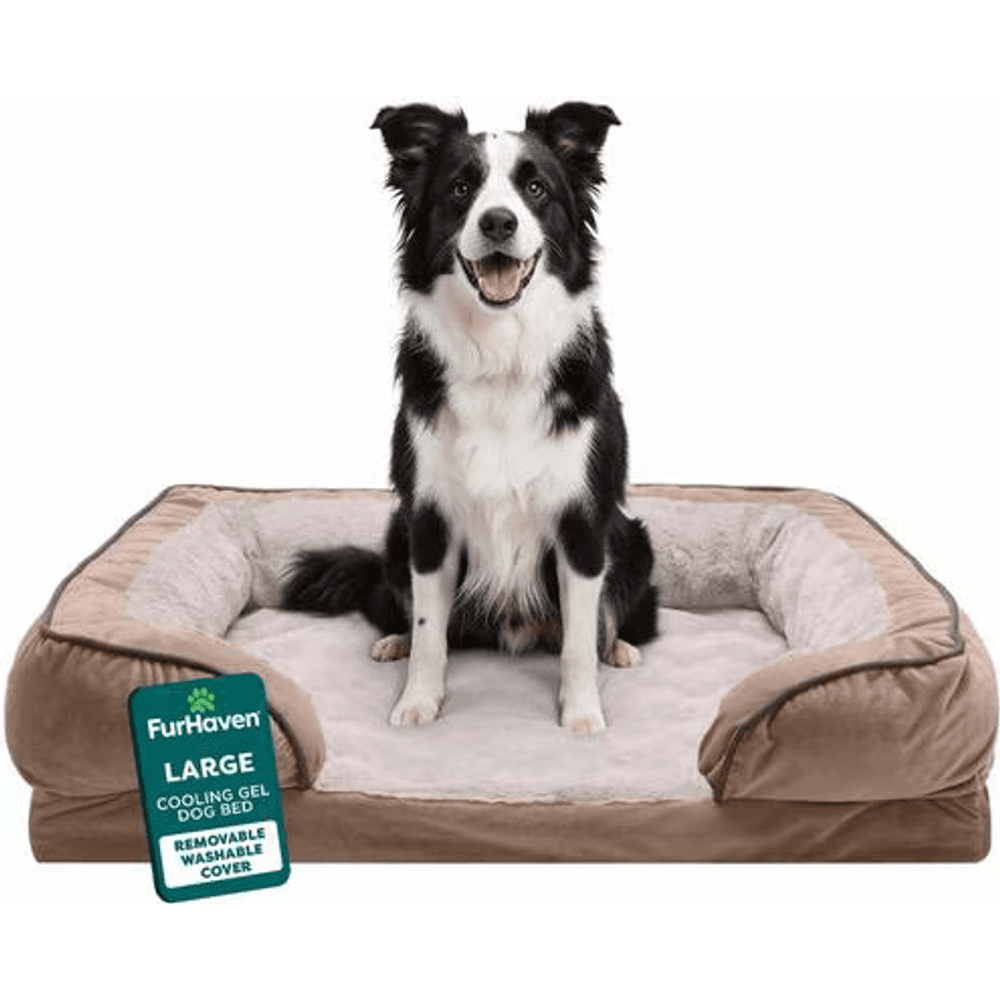
An orthopedic sofa bed with three bolstered sides for dogs who like to rest their head and joints against a cushion. The supportive foam base cradles hips and elbows, a comforting spot for an older or shaky dog to settle.
Petful may earn a commission when you click through to Chewy, at no extra cost to you.
Create a bad-weather version of the routine
Heat, smoke, ice and severe storms can make the usual route unsafe. Prepare indoor scent searches, controlled retrieve games, food puzzles and short skill sessions before they are needed. Several focused ten-minute activities separated by rest may serve the dog better than one chaotic hour indoors.
Weather adaptation does not mean ignoring bathroom needs or conditioning. Choose the safest available windows, carry water and shorten intensity when conditions demand it. Owners in extreme climates should confirm that indoor space, transport and backup care can support an athletic dog for more than a single day.
For routine ear care approved for the dog, one option is the Virbac Epi-Otic Advanced Ear Cleaner for Dogs & Cats, 4-fl oz bottle.
breed history and purpose
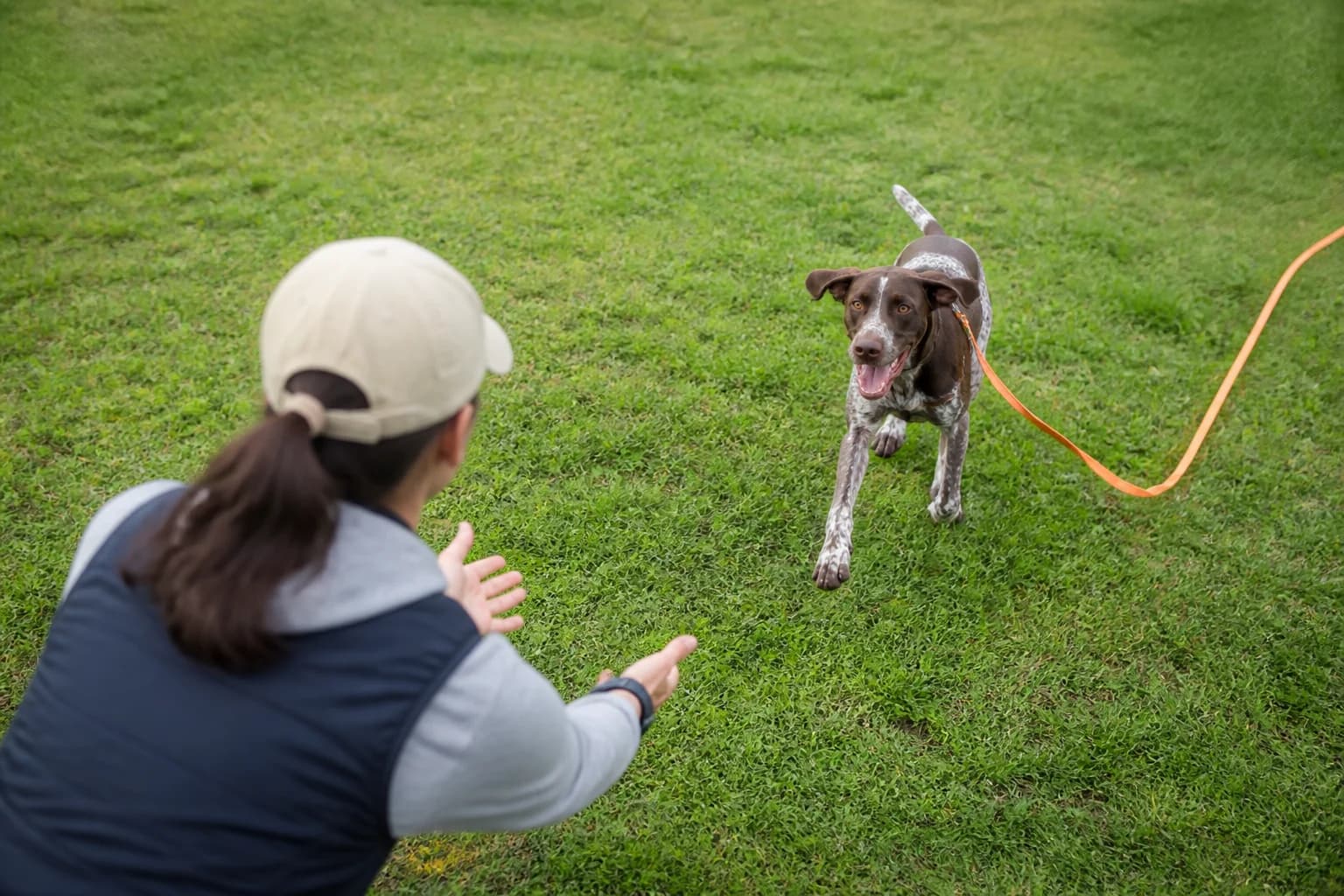
German breeders developed the GSP as a versatile pointing, tracking and retrieving dog rather than a specialist for one task. That history helps explain the modern breed tendency to range, follow scent, carry objects and stay engaged with a handler. It does not prove that one pet will hunt, swim or behave in a particular way.
The versatile gundog background also explains why scent can compete with recall. Start recall practice in easy places, pay well, then add distance and distraction on a long line. Wildlife access, roads and livestock are not appropriate places to test whether training will hold.
- Weekly nails, ears, teeth and skin checks
Adolescence can expose weak management
A puppy that once stayed close may begin ranging farther, reacting to scent and testing access as confidence grows. This is the time to return to long lines, gates and high-value reinforcement, not to interpret imperfect recall as betrayal. Skills must be rebuilt in the new adolescent context.
Physical strength also changes the consequences of jumping, pulling and object stealing. Rehearse calm doorways, equipment handling and trades while the environment is easy. Consistent management through this period protects freedom later and reduces conflict between the dog and household.
Enrichment should match the breed without becoming a gimmick
Scent trails, hidden food, retrieves and simple tracking tasks use behaviors many GSPs enjoy. Rotate activities so novelty remains manageable and the dog does not demand constant elaborate entertainment. Ordinary walks with permission to investigate can be genuinely enriching.
Supervise toys and food devices for chewing risk, frustration and calorie intake. Enrichment should leave the dog satisfied and able to disengage. If a puzzle produces frantic pawing, guarding or ingestion of pieces, change the setup rather than assuming difficulty is automatically beneficial.
Fit equipment by measurement and purpose
A walking harness, collar, crate, bed and vehicle restraint solve different problems. Measure neck, chest, girth and body length and compare with the current maker chart. Check that shoulder movement remains free and that straps do not rub beneath the front legs.
Equipment cannot train the dog by itself. A front attachment may help management while loose-leash skills develop, but it should be introduced carefully and inspected after use. Replace worn stitching, damaged clips and chewed restraint components before failure exposes the dog to traffic or escape.
Food and preventive care belong in the fit test
Athletic appearance can hide gradual weight gain or muscle loss. Feed a complete diet appropriate to life stage, measure portions and learn to feel ribs and observe waist. Routine visits allow the veterinary team to compare body condition, teeth, heart, joints and other findings over time.
The budget should include ordinary care and uncertainty. Parasite risks, vaccines and sport preparation depend on geography and activity. A household that can fund daily exercise gear but not examinations or emergencies has not completed the breed-care plan.
A dog-safe toothbrush option for the weekly care kit is the Virbac C.E.T. Dual-Ended Dog & Cat Toothbrush.
Petful may earn a commission when you click through to Chewy, at no extra cost to you.

care decision checklist
A practical care decision checklist covers exercise time, secure fencing, transport, training support, coat and ear care, food budget and access to veterinary care. The household fit scorecard should also include realistic plans for adolescence, travel, illness and days when outdoor activity must be shortened.
Routine coat care is modest, but nails, ears, teeth, paws and skin still need attention. The best owner system links these checks to a weekly event, records changes and uses cooperative handling so the dog is not suddenly restrained only when something hurts.
- Transportation and backup care
Signals that the current setup is not working
Repeated escape attempts, escalating destruction, inability to rest, conflict around handling or persistent distress when left are information, not proof that the dog is bad. Review unmet needs, sleep, pain, fear, training clarity and the environment. Increase management immediately where safety is involved.
Qualified help should arrive before a bite or serious injury. A veterinarian can assess medical contributors, and a reward-based professional can observe the household pattern. Rehoming through a responsible source or organization may sometimes be kinder than preserving an unsafe mismatch in silence.
A weekly work-rest rhythm
Plan the week as a pattern rather than seven identical maximum-effort days. A longer trail or field session can be followed by easier sniffing, skill work and recovery, while ordinary weekdays still include purposeful movement. This rhythm helps owners notice when excitement is becoming soreness or when several low-activity days are accumulating.
Write the plan around fixed responsibilities first. Commutes, school pickups and medical appointments do not disappear after adoption. Assign backup people or paid care for the vulnerable windows, and ensure they can handle the dog safely. A schedule that works only when one person is healthy and never delayed is too brittle for a decade-long commitment.
What to ask before saying yes
Ask the source how the individual behaves after exercise, around food, during handling, with unfamiliar dogs, when left and in a vehicle. Request examples rather than adjectives. Calm in one foster home or kennel does not guarantee an easy transition, but concrete observations help the family design management from day one.
Then ask every adult in the household the same practical questions. Agreement about sleeping areas, training methods, finances and other pets matters. If answers conflict, resolve them before the dog arrives, when emotions and fatigue make negotiation harder.
The breed profile is a starting point
A GSP description can prepare owners for speed, scent interest, close companionship and regular coat care. It cannot forecast the exact adult energy, sociability or medical future of one puppy. Source records, present behavior and ongoing observation progressively replace general assumptions.
That distinction protects dogs from being excused or condemned by stereotype. Owners can honor the breed's working background while responding to the individual animal who actually lives in the home.
Equipment for exercise, feeding and recovery
For controlled walks, compare the exact chest and girth measurements with the PetSafe Easy Walk Dog Harness, Red/Black, Medium/Large. On busy mornings, measured portions can be organized with the Petlibro Granary WIFI Automatic Cat & Dog Feeder with Camera & 3 Pet Food Desiccant Bags, White, 5-L.
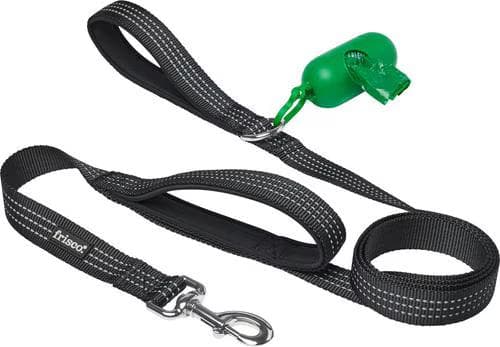
After activity, compare dimensions, support and cover care for the FurHaven Velvet Waves Perfect Comfort Orthopedic Sofa Cat & Dog Bed with Removable Cover, Brownstone, Large. A standard-length training leash option in the current library is the Frisco Traffic Leash with Dual Padded Handles & Poop Bag Dispenser, Black, 6-ft long, 1 count. Fit every item to the measured dog and introduce it with supervision. Equipment can make a sound routine easier, but it cannot supply exercise, teach recall or resolve distress.
Related German Shorthaired Pointer guides
- the puppy sourcing checklist
- the lifetime price worksheet
- the coat-color reference
- the growth and adult-size guide
- german shorthaired pointer temperament training
- do german shorthaired pointers shed
- german shorthaired pointer health lifespan
- best food for german shorthaired pointers
WebVet explains canine body-language signals that help families recognize when an energetic dog wants space or is becoming uncomfortable. Read WebVet's dog body language guide.
Breed structure and history were checked against the AKC profile and the national GSP parent club; the health-planning sections use OFA screening guidance. Read the AKC breed profile beside the GSPCA parent-club material for the official overview and historical purpose.
Frequently asked questions
A GSP can suit an active family that enjoys training and has time for substantial shared exercise. Young dogs are often fast, physical and excitable, so adults should supervise children and teach calm greetings. The individual dog's history and comfort around kids matter more than a broad breed label. Whether a German Shorthaired Pointer is a good family dog depends on the individual and the home. A practical next step is to use the household fit scorecard and confirm a workable work-rest balance for school mornings, visitors, bad weather and backup care.
Potential drawbacks include demanding activity needs, persistent interest in wildlife, energetic adolescence and a tendency to invent trouble when bored. Their small stiff hairs also lodge in fabric despite the easy-looking coat. Homes seeking a quiet, independent companion may find the daily workload frustrating. For a German Shorthaired Pointer, the practical next step is to compare these negatives with an ordinary weekly schedule, including exercise, supervision, training, shedding cleanup and care during absences.
Any dog can show threatening behavior, but being a GSP does not make aggression inevitable. Pain, fear, resource guarding, social history and the immediate trigger should be evaluated. Create distance and obtain veterinary or qualified behavior help after growling, lunging, snapping or biting. If a GSP appears aggressive, the practical next step is safe separation followed by a veterinary check and a reward-based behavior assessment that records the trigger, distance and recovery.
Yes, provided indoor calm is taught rather than expected to appear after a walk. Give the dog appropriate outdoor work, reward resting on a mat and prevent destructive rehearsal during adolescence. A backyard by itself rarely supplies the interaction or mental effort this sporting breed needs. For a German Shorthaired Pointer house dog, the practical next step is a repeatable rhythm of outdoor work, indoor settling practice, protected sleep and management that prevents destructive rehearsal.
Many seek close contact and may lean, curl beside a person or follow family members from room to room. Others prefer a nearby bed after activity. Respect voluntary contact, and have new touch sensitivity checked because discomfort can make an affectionate dog withdraw. To learn whether GSP dogs like to cuddle, let the individual initiate contact and watch for loose posture. A practical next step is offering both a nearby bed and voluntary affection.
Vocal behavior varies. Some GSPs alert to visitors, react to outdoor movement or bark when isolated, while others are comparatively quiet. Reduce predictable triggers, meet exercise and enrichment needs, and reinforce pauses instead of shouting over the dog. When German Shorthaired Pointers bark a lot, the practical next step is a trigger log that separates alerting, excitement and isolation distress, because each pattern needs a different response.

Melissa Smith has been researching and writing about pet behaviors for several years. Her work has been recognized with Certificates of Excellence from both the Dog Writers Association of America and the Cat Writers’ Association. A longtime animal lover, Melissa is a professional pet sitter on Cape Cod through her company, Fresh Start Services.
Sign up for expert-backed reviews and safety alerts all in one place.