English Mastiff Puppies: Care, Feeding and Training
Prepare for an English Mastiff puppy with a realistic care routine, growth-appropriate feeding, positive training, safe socialization and a home that can adapt.
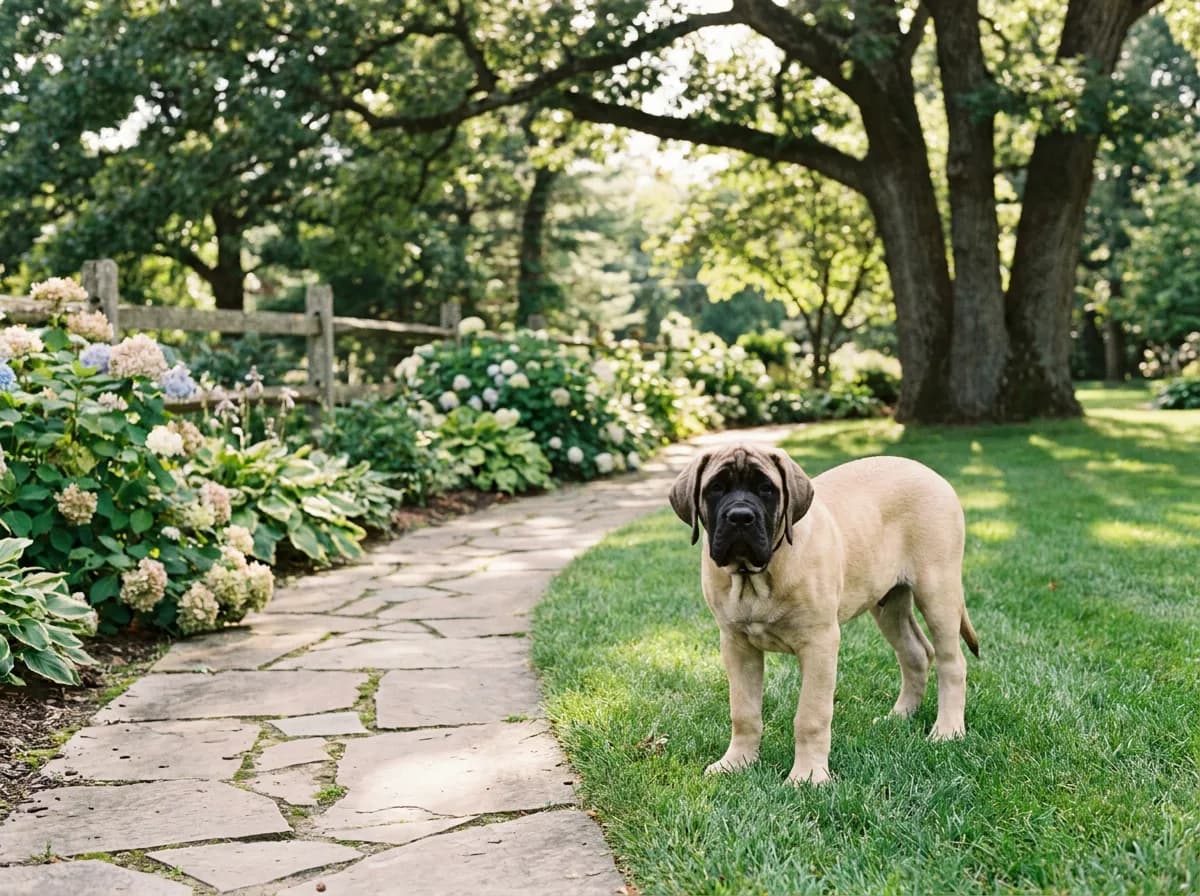
The broad muzzle, black mask and substantial paws are visible in this young dog.
Petful is reader supported. As an affiliate of platforms like Amazon and Chewy, we may earn a commission when you buy through links on this page. There is no extra cost to you.
English Mastiff puppies need a plan for the giant dogs they will become, starting with manageable daily routines while they are still small. Choose a puppy with documented health screening behind it, feed for steady growth, and begin gentle training immediately. Large paws and rapid weight gain do not make a puppy ready for adult exercise or long periods alone.
This guide covers bringing an English Mastiff puppy home and raising it through the first year. The goal is a comfortable, well-managed companion, with food, space, handling skills, and care arrangements that change as the puppy grows.

Sign up for expert-backed reviews and safety alerts all in one place.
Before your English Mastiff puppy comes home
English Mastiffs can be good companions for beginners who have time, suitable space, and training support, but they are a substantial first commitment. A first-time owner needs to plan toilet breaks and socialization, accommodate a giant adult, and get help before physical handling becomes difficult. An easygoing puppy is still learning; it cannot be expected to understand your household rules automatically.
- 1English Mastiff puppies need a realistic daytime and overnight care plan.
- 2Choose a complete growth diet appropriate for large-size dogs and monitor body condition.
- 3Practice calm greetings, loose-leash walking and comfortable handling early.
- 4Update equipment and the home setup as the puppy grows.
Before collection, ask the breeder or rescue for the current food, feeding instructions, vaccination and parasite-care records, veterinary history, and the puppy's familiar routine. Book your own veterinary appointment and ask the clinic what concerns would require an earlier visit. Keep the seller's or rescue's written agreement with the records so you can find it easily.
Make household responsibilities explicit:
- Who handles the first toilet outing and overnight wake-ups?
- Who provides care during the working day?
- Where can the puppy rest without children or other animals disturbing it?
- Who can transport the dog once it is too heavy to lift?
- Which trainer can help if ordinary handling becomes difficult?
Try the planned household routine before the puppy arrives. Walk the route to the toilet area at night, check the gate latches, and decide where food and cleaning supplies will be stored. Then use the weekly growth and equipment check below to keep that routine realistic as the puppy changes. A tightening harness, a gate the puppy can reach over, or a longer gap between caregivers calls for an adjustment before it becomes a repeated problem.

Petful may earn a commission when you click through to Chewy, at no extra cost to you.
Start with the adult dog you can care for
An English Mastiff puppy grows into a very large companion. Mastiffs were bred for guarding roles, and although many adults are calm and affectionate with familiar people, learned responses and discomfort still require sensible management. Being good with a particular family does not mean a dog will welcome every visitor or tolerate any kind of handling.
Read our Mastiff breed guide for adult size, health issues, shedding, lifespan, and the differences between mastiff-type breeds. Mastiffs do shed, and their short coats still require regular cleanup. The hub also explains why an unusually long-lived dog cannot establish which Mastiff breed will live longest for you. Judge the breed's care needs and documented family health history instead of selecting a puppy from a longevity anecdote.
Close companionship can be enjoyable, including a dog that likes resting beside you. Let affection remain comfortable for both of you. A puppy should also learn to rest while you move around the room, and different household members should participate in gentle care. Do not encourage a “one-person only” relationship that makes ordinary handling by anyone else difficult.
Choosing a breeder or rescue
A breeder's promises about healthy parents need documented health screening behind them. The Mastiff Club of America health-testing guidance distinguishes breeding-health screening from a routine examination. For Mastiffs, recommended evaluations include hips, elbows, eyes, and cardiac screening, with other tests discussed in the club's guidance.
Look up the parents' actual results in the OFA database and discuss them with your veterinarian if you need help interpreting them. A CHIC number or a stack of records should begin a conversation about the results, not end it. Ask how the breeder selected the parents, how the puppies are raised, and what support is available if you have questions after going home.
Match the individual puppy to the household
Neither male nor female English Mastiff puppies are automatically the better choice. Adult size can differ, but sex alone does not reliably tell you which puppy will be calmer, easier to train, or better with your children. Ask the person raising the litter what they have observed across ordinary routines, not just during one exciting visitor interaction.
For an adoption, ask what the rescue knows and what remains uncertain. Useful information includes behavior in a foster home, comfort with handling, time spent alone, medical care already provided, and how introductions to other pets have gone. Avoid treating an unknown history as either a guarantee of a problem or proof that everything will be easy.
- Meet the puppy and, when possible, its mother in an appropriate setting.
- Review health and veterinary records before paying.
- Read deposit, return, ownership, and support terms in writing.
- Ask how the puppy has experienced people, surfaces, travel, and gentle handling.
- Be prepared to wait for an appropriate match rather than choosing by availability alone.
Puppy listings and photos can introduce you to a breeder or rescue, but this is not a directory of currently available dogs. Confirm identity, records, conditions, and the actual agreement directly. A low asking price, a striking coat, or unusually large parents does not answer those questions.
Petful may earn a commission when you click through to Chewy, at no extra cost to you.
Puppy price and the cost of growing up
The Mastiff Club of America describes puppy prices as starting around $1,500 and up, depending on factors such as location, pedigree, and breeder costs. That is general club guidance, not a nationwide average or a quote for your puppy. Compare the quality of the evidence and care behind the placement, not just the price.
The Mastiff cost section explains ongoing expenses and an illustrative food-budget calculation. For the puppy year, also plan for repeated equipment sizing, veterinary visits, classes, and care during absences. A collar that fits at collection may not fit long, and a temporary setup may need changing before the dog reaches adulthood.
Keep a replacement allowance separate from the initial shopping list. Ask your clinic, trainer, and prospective caregiver for local prices, and include a way to fund unexpected care. Budgeting for growth is easier when you know which purchases can adjust and which will need replacing.
A home setup that can grow with your puppy
Create a supervised living area with a comfortable resting space, secure barriers, and a simple route to the toilet area. Remove accessible cords, medicines, cleaning products, loose fabric, small objects, and items that could be swallowed. Check the setup from the puppy's height, then look again at the height its head will reach in a few months.

Use a suitable crate or enclosure as part of a gradual comfort routine, with enough room for the puppy to stand normally, turn, and rest comfortably. Reassess it as the dog grows. Follow the manufacturer's instructions for dividers and hardware; improvised restraints or loose fixtures can create hazards.
A Paw Inspired 48-by-60-inch washable pad can protect a designated floor area. Keep it flat and remove it if the puppy tears or swallows pieces. A washable surface is useful for cleanup, but it does not teach the puppy where to toilet or replace the person responsible for taking it out.
Think ahead about movement and transport
Provide secure footing on the route between resting, feeding, and outdoor areas. Plan how you will manage stairs and vehicle access as the puppy becomes heavier; discuss any mobility concerns with your vet. A setup that depends on carrying the dog every time it needs to go outside may soon be impractical.
For the first night, prepare the toilet route, a leash, suitable rewards, and cleaning supplies before bedtime. Keep the environment quiet enough to notice whether the puppy needs to toilet, is uncomfortable, or needs help settling. Respond calmly to its needs rather than assuming every wake-up is a behavior problem.
Feeding for steady giant-breed growth
Choose a complete diet appropriate for growth, including the growth of large-size dogs. AAFCO explains how to read nutritional-adequacy statements. The statement on the specific food is more useful than assuming every product called “puppy food,” “all life stages,” or “adult food” suits a growing Mastiff.
- Ask your vet to confirm that the chosen food is appropriate for growth of large-size dogs. Do not use extra calcium, a homemade supplement mix, or extra calories to push your puppy toward a target weight.
The AKC’s large-breed care guidance explains why calorie density and calcium content matter during growth. Older breed advice sometimes recommends an adult formulation based mainly on protein percentage. Use current life-stage guidance and your veterinarian's assessment of the specific diet instead of making that shortcut.

Petful may earn a commission when you click through to Chewy, at no extra cost to you.
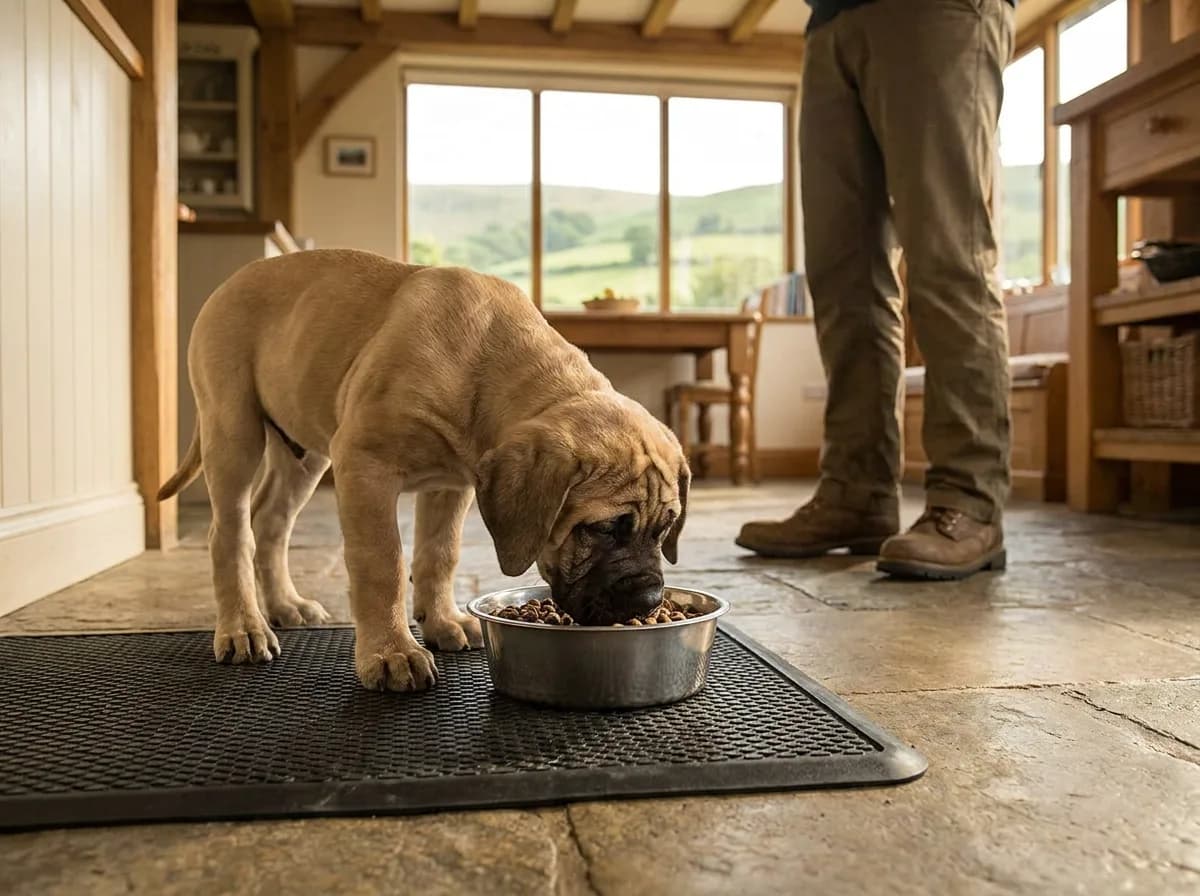
At first, preserve the familiar food and routine unless your veterinarian advises otherwise. If a change is needed, ask how to transition it and what to monitor. Divide the daily amount into an age-appropriate meal schedule agreed with your clinic, and measure portions consistently. Different foods contain different calories per cup, so another owner's scoop count is not a feeding prescription.
Record intake and adjust with evidence
Write down the food name, daily amount, treats, appetite, and any digestive changes. Bring those details to growth checks. If the puppy is gaining too quickly or seems persistently hungry, the useful next step is to review the food and body condition, not automatically double the portion.
Use fresh water and clean bowls throughout the day. Supervise meals when needed, give each pet its own space, and do not repeatedly take food away to “test” the puppy. If the dog stiffens or guards food, get qualified help. For product decisions, start with nutritional suitability and the individual puppy's needs; this guide does not name one food as best for every Mastiff.
Track growth without chasing a weight chart
An English Mastiff puppy growth chart can provide rough context, but it cannot tell you the exact healthy weight your puppy should reach each week. Genetics, sex, age, body condition, and the individual growth pattern all matter. A puppy does not need to catch up to a heavier littermate to be developing appropriately.
| What to review | What to record | What to do next |
|---|---|---|
| Body condition and weight trend | Weight when available and your vet's body-condition guidance | Ask about a persistent change; do not feed toward an internet maximum |
| Food and treats | Exact food, daily amount, appetite and extras | Review portions with your vet as needs change |
| Equipment fit | Collar, harness, resting space and safe gate clearances | Adjust within manufacturer sizing or replace items that no longer fit |
| Movement | Comfort rising, walking and using the normal home route | Report limping, reluctance or pain; simplify unsafe access |
| Handling skills | Comfortable paws, mouth, leash attachment and calm greetings | Practice the smallest successful step and seek help early |
| Daytime care | Toilet patterns, settling and actual time alone | Update the care plan before repeated accidents or distress develop |
This weekly check is an observation framework, not a diagnostic chart. Choose a consistent time to review it and record changes that will help your veterinarian or trainer. A short note such as “harness now tight behind elbows” or “hesitates on kitchen floor” is more actionable than “getting big.”
Mastiffs continue developing after their dramatic early growth. AKC’s breed facts note that full physical and mental maturity may not arrive until around three years. A large adolescent still needs patient teaching, sensible activity, and an environment that supports comfortable movement.
Keep exercise appropriate for development
Offer opportunities for sniffing, gentle play, and short training sessions, with rest between activities. Discuss the individual puppy's activity plan with your vet, especially before sustained running, jumping, or demanding sport. Avoid treating exhaustion as the way to produce good behavior.
Watch the puppy's response during and after activity. Lagging behind, unusual reluctance, limping, or difficulty settling comfortably deserves attention. A dog that looks eager to continue can still need help ending an exciting session; the owner's job is to make sensible choices, not wait for the puppy to set every limit.
Toilet training and a daily routine
Arrange frequent chances to use the chosen toilet area, especially after waking, meals, and active play. Supervise closely enough to notice early signals, and reward the puppy promptly after it finishes in the appropriate place. The goal is a predictable sequence it can learn, not a test of how long it can hold on.

A dual-ended toothbrush with a large and a small head to fit different mouth sizes and reach the back molars where plaque hides. Soft bristles angled for the gumline.
Petful may earn a commission when you click through to Chewy, at no extra cost to you.
Keep the household's method consistent. Use the same route when practical, decide where rewards are stored, and make sure someone takes over when the usual caregiver is busy. Record accidents briefly so you can recognize a pattern and change the schedule rather than punish the puppy after the fact.
- Take the puppy out before starting a distracting household task.
- Give calm attention to the toilet outing rather than turning it into a play session.
- Clean accidents with an appropriate product used according to its label.
- Review supervision and timing when accidents recur.
- Contact your vet for straining, frequent unsuccessful attempts, blood, or a sudden change in habits.
A workday care plan should include actual people and times. Working from home does not automatically provide supervision if meetings keep you away from the puppy for long stretches. Arrange help before that becomes a repeated problem, and have a backup for days when your normal routine changes.
Training manners before your puppy becomes enormous
English Mastiff puppy training should make everyday care easier: approaching when called, walking with a loose leash, settling on a mat, waiting at a doorway, and greeting with four paws on the floor. Start with short sessions in a quiet place, reward a clear success, and add distractions gradually.

The American Veterinary Society of Animal Behavior recommends reward-based training. Physical intimidation is especially unhelpful when you are trying to teach a powerful dog that people and handling are safe. If a behavior is difficult, make the task easier and consider what the puppy needs to succeed.
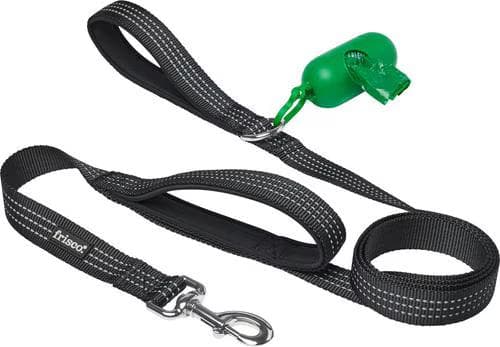
A Frisco traffic leash with dual padded handles is an option for supervised outings once its hardware and weight suit your puppy. Use properly fitted walking equipment, keep the leash comfortable, and practice in a quiet setting first. The close handle can help with positioning, but it is not a correction tool or a replacement for teaching leash manners.
Handle jumping, chewing, and biting calmly
Arrange greetings so the puppy can succeed before it becomes excited. Ask visitors to wait while you manage the space, then reward a calm approach. Do not encourage wrestling or jumping as a joke if those behaviors would be unsafe when the dog is grown.
Provide suitable chew items and supervise their use, replacing anything damaged or small enough to swallow. If the puppy mouths hands, calmly interrupt the interaction and redirect to an appropriate activity or rest when needed. WebVet’s guide to stopping puppy biting explains a practical approach and the signs that deserve professional help.
Pay attention to context. A tired puppy, an uncomfortable puppy, and a puppy overwhelmed by handling do not all need the same response. Repeated hard bites, resource guarding, or escalating distress should prompt a conversation with your veterinarian and a qualified trainer rather than a more forceful technique.
Socialization at your puppy’s pace
Safe, gradual socialization helps the puppy feel comfortable with ordinary experiences without requiring it to greet every person or dog. AVSAB emphasizes safe early socialization, including before the vaccination series is complete when exposure is managed appropriately. Ask your vet which settings and classes are suitable for local disease risks and your puppy's records.

Start with experiences the puppy can observe comfortably: a person walking at a distance, a quiet vehicle, a new household sound at low intensity, or a different safe surface. Pair the experience with something pleasant and allow the puppy to move away. Increase difficulty only when the dog remains relaxed and engaged.
Signs that an experience needs to become easier include:
- Repeated attempts to hide or leave.
- Freezing or refusing to move forward.
- A tense posture and difficulty recovering after the event.
- Refusing food the puppy would normally enjoy in that situation.
Choose calm known dogs and well-managed classes over uncontrolled groups. A puppy does not need a dramatic encounter to learn. When it is worried, more distance and a simpler version of the situation can be more useful than insisting on contact. Seek professional help when fear persists, the puppy cannot recover comfortably, or you cannot keep the situation safe; your veterinarian and a qualified reward-based trainer can help you adjust the plan.
Grooming and cooperative care
Short fur does not remove the need for comfortable handling. Introduce brief touches to paws, ears, and the body, followed by a reward the puppy enjoys. Stop before the puppy becomes overwhelmed and gradually build duration. These small skills will matter when the dog is much larger and needs a nail trim or examination.
For ordinary paw and coat cleanup, Earth Rated unscented grooming wipes are one option to keep near the door. Use them as directed, avoid eyes and sensitive openings, and stop if irritation develops. Wipes do not treat a rash, infection, or persistent odor.
The Virbac C.E.T. dual-ended toothbrush provides two head sizes to consider as your puppy grows. Ask your vet to demonstrate gentle mouth care and use toothpaste intended for dogs. During teething or any period of mouth discomfort, adapt the routine with professional advice rather than forcing a brush into a painful mouth.
Make routine care predictable
Keep sessions brief and give the puppy a clear beginning and end. Practice away from a busy doorway or noisy play session. If it starts avoiding you when equipment appears, reduce the difficulty and rebuild comfortable steps; do not wait until its strength makes restraint the only apparent option.
Puppy coats, colors, and what photos cannot tell you
English Mastiff puppies have fawn, apricot, or brindle coloring with a dark mask. A very dark brindle puppy may look almost black in a photograph; a label such as “reverse brindle” does not establish a different breed. Blue, solid white, and “blue nose” are not additional English Mastiff color varieties in the breed standard. “Rare” color claims and attractive images do not establish health, parentage, temperament, or breeding quality.
A fluffy or long-haired puppy differs from the standard's short coat, but a photograph alone does not explain its ancestry or the reason for the hair length. Ask for documentation and clear natural-light pictures instead of assuming that a coat label proves either a purebred or a mixed-breed dog.
Our Mastiff coat and breed guide explains recognized colors and how the English Mastiff differs from other mastiff-type dogs. Use puppy pictures to understand appearance, then ask for the records and observations that help you make an actual ownership decision. Do not pay a premium solely because a seller presents an unusual color or coat as a guarantee of quality.
The first veterinary visit and when to seek help
Bring the puppy's records, diet details, questions about growth, and any observations from the first days at home. Discuss vaccination and parasite care, body condition, exercise, and the timing of future procedures for the individual dog. A written plan helps the household follow the same advice.
Learn your emergency clinic's location and how to transport the puppy safely. For a Mastiff, it is particularly useful to recognize the possibility of gastric dilatation-volvulus, or bloat. The American College of Veterinary Surgeons describes signs including unproductive retching, abdominal enlargement, restlessness, weakness, and collapse. Suspected bloat needs immediate emergency veterinary care.
Do not wait for an online care schedule to explain a puppy that is suddenly very unwell. Repeated vomiting, marked lethargy, breathing difficulty, or other concerning changes should be assessed promptly. Routine advice about food, toilet training, and settling applies to a puppy that is otherwise well; illness changes the next step.
English Mastiff puppy questions
Do not buy a raised bowl on the assumption that it prevents bloat. Ask your veterinarian what setup suits your puppy; use a stable bowl and comfortable footing, and follow any individual medical advice.
A young puppy needs a care plan with people available for meals, toilet breaks, supervision and appropriate company. Build comfortable brief absences gradually, and arrange help rather than expecting a crate to cover a full workday.
Check equipment fit frequently as the puppy grows. Adjust only within the manufacturer's sizing and fitting instructions, and replace equipment that is too small, damaged or no longer appropriate. Do not wait for rubbing or escape to reveal a problem.

Coreen Saito is a pet writer and longtime shelter volunteer with more than a decade in animal rescue. She covers cat behavior, breed care, and the small, ordinary science of sharing a life with companion animals, with a particular focus on honest takes about the products and decisions that actually matter. At home in Arizona, she's outranked by Mac (a dog with the loudest opinion in the house), Rebel (a cat who governs by quiet authority), and Meri (an orange tabby who runs the late shift and the laundry basket). She writes about all three, plus the rescues that keep coming through her life, at LifeWithMinty.com.
Sign up for expert-backed reviews and safety alerts all in one place.