Scottish Fold Munchkin: The Honest Truth About the "Scottish Kilt" Cat
A Scottish Fold Munchkin, or Scottish Kilt, crosses a Scottish Fold with a Munchkin and stacks two mutations: short legs plus the Fold's osteochondrodysplasia. Here is the honest take on its health, temperament, price, and the kinder alternatives.
Petful is reader supported. As an affiliate of platforms like Amazon and Chewy, we may earn a commission when you buy through links on this page. There is no extra cost to you.
The scottish fold munchkin is a designer cross between a Scottish Fold and a Munchkin, marketed as a "Scottish Kilt" or "mini Scottish Fold," and according to The International Cat Association (TICA) neither the Scottish Fold nor the Munchkin gene it stacks is a cosmetic quirk. Each one is a structural mutation: the Munchkin contributes short legs (a form of dwarfism called chondrodysplasia), and the Scottish Fold contributes folded ears that come from osteochondrodysplasia, a cartilage-and-bone disorder that affects the whole skeleton. Crossing the two does not split the risk between them. It stacks two separate cartilage and bone problems into one very small cat, which is why most veterinarians and welfare bodies discourage the pairing.
- 1A Scottish Fold Munchkin (or "Scottish Kilt") is a Scottish Fold crossed with a Munchkin, not a recognized breed.
- 2It carries TWO inherited mutations at once: Munchkin short-leg chondrodysplasia plus the Scottish Fold's osteochondrodysplasia.
- 3Every folded-ear cat in this cross develops some degree of painful degenerative joint disease (arthritis), and the short legs add their own joint and spine concerns.
- 4They are genuinely sweet, calm, affectionate lap cats, like both parents.
- 5Expect roughly $800 to $4,500-plus from a breeder, and a 11 to 15 year lifespan that often involves lifelong joint care.
- 6The kinder routes are adopting, or choosing a straight-eared, normal-legged cat with the same teddy-bear look.

Sign up for expert-backed reviews and safety alerts all in one place.
What Is a Scottish Fold Munchkin?
A Scottish Fold Munchkin is the kitten you get when a Scottish Fold is bred to a Munchkin. The goal is a cat that has BOTH signature traits at once: the Scottish Fold's small, forward-and-down folded ears and the Munchkin's famously short legs. The result is a low-slung, round-faced, owl-like cat that looks perpetually kitten-sized.
It is important to be clear up front: this is not a stand-alone, registry-recognized breed. It is a crossbreed (a hybrid), and major registries do not award it championship breed status. You will see it sold under several marketing names, but the cat underneath the name is the same two-mutation cross every time.
- The same cross is sold as a Scottish Kilt, a Munchkin Fold, a folded-ear Munchkin, a Scottish Fold Munchkin mix, or loosely as a "mini Scottish Fold." Breeders coin cute names, but none of them make it a recognized breed.
The names: Scottish Kilt, Munchkin Fold, mini Scottish Fold
"Scottish Kilt" is the most common nickname and the one breeders lean on hardest. You will also see "Munchkin Fold" and "folded-ear Munchkin." None of these is an official breed name. They are sales labels for a Scottish Fold x Munchkin cross. Because the cross is not standardized, two "Scottish Kilts" from different catteries can look quite different from each other.
Never Scoop Again® with the Whisker Litter-Robot, the smart self-cleaning automatic litter box. Monitor visits and track weights for better overall care in the Whisker® app. Multi-cat friendly.
Petful may earn a commission when you click through to Whisker, at no extra cost to you.
The Two Stacked Mutations (and Why They Do Not Cancel Out)
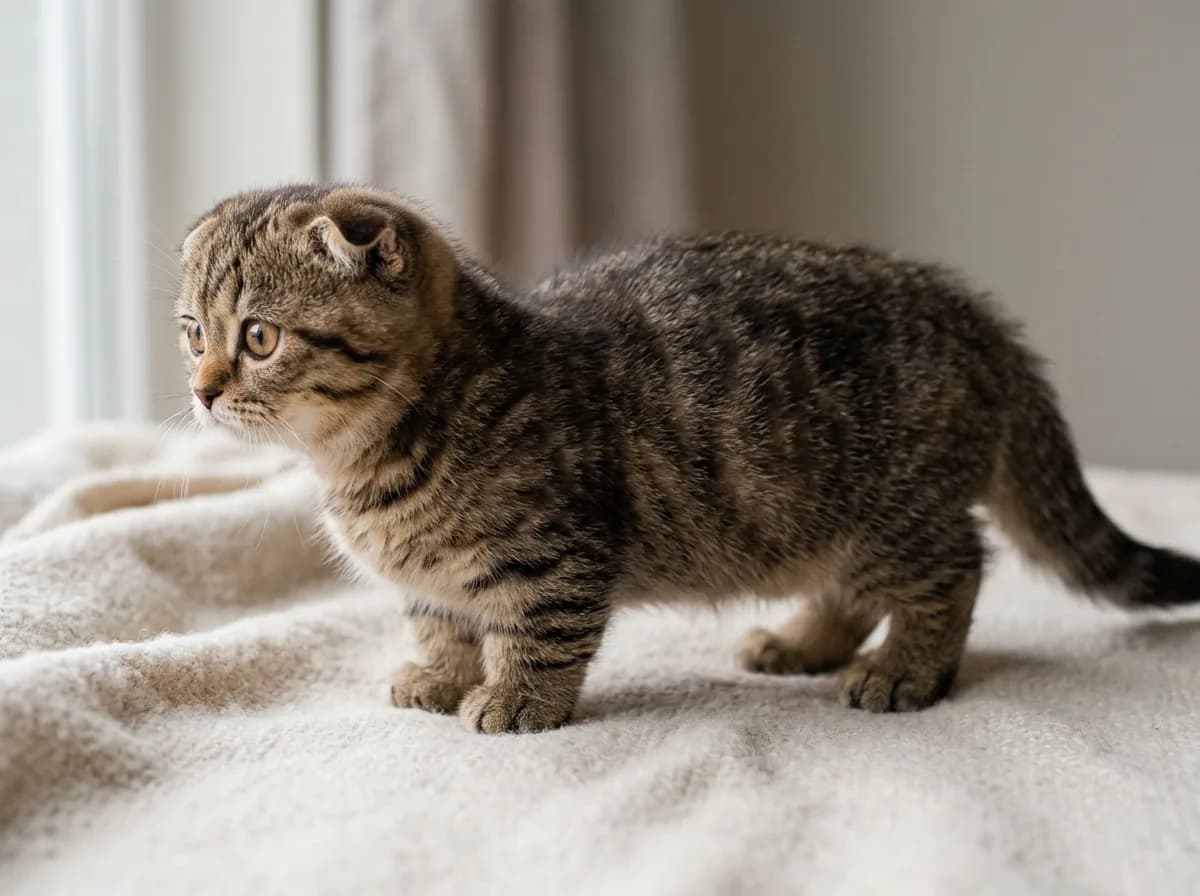
This is the single most important thing to understand about the cross. A Scottish Fold Munchkin is built from two independent genetic mutations, and breeding them together adds the problems together rather than averaging them away.
Mutation one: the Munchkin's short legs (chondrodysplasia)
The Munchkin's short legs come from a dominant gene that causes chondrodysplasia, a form of dwarfism that shortens the long bones of the legs. The Munchkin's spine is generally normal and flexible, and many Munchkins move and play just fine. But the abnormal leg structure can place uneven stress on joints over a lifetime, and the breed is linked to conditions such as lordosis (an inward-curving spine) and pectus excavatum (a sunken chest). Two copies of the Munchkin gene are believed to be lethal before birth, so the trait can never be "doubled up" safely.
Mutation two: the Scottish Fold's ears (osteochondrodysplasia)
The Scottish Fold's folded ears are caused by a dominant gene (often written Fd) that disrupts cartilage. The catch is that the same gene affects cartilage and bone THROUGHOUT the body, not just in the ear. This condition is called osteochondrodysplasia (often abbreviated SFOCD). Because the ear fold and the skeletal disease come from the very same gene, every Scottish Fold with folded ears has osteochondrodysplasia to some degree. It is not a separate risk you might avoid. It is inseparable from the fold itself, and it causes progressive, painful degenerative joint disease.

Compare coverage choices for your pet, then request a quote directly on Lemonade.
- Check a price for your pet
- Review available coverage choices
- See the terms before you decide
Eligibility, waiting periods, limits and exclusions apply.
Petful may earn a commission when you click through to Lemonade, at no extra cost to you.
- Crossing a Munchkin with a Scottish Fold does not halve the health risk. It stacks the Munchkin's short-leg chondrodysplasia on top of the Fold's whole-body osteochondrodysplasia, so a folded-ear Scottish Kilt can face arthritis and joint disease from two directions at once. This is why vets and welfare groups discourage the cross.
What this means in a single litter
Because both genes are dominant and inherited independently, a single litter is a genetic grab bag. Some kittens get folded ears, some get straight ears (these are "Scottish Straight" types), some get short legs, some get normal "non-standard" long legs, and some get a mix. Responsible breeders never pair two folds together (that produces the most severe, early, crippling skeletal disease), and they cannot safely pair two Munchkins either. The most marketed and most expensive kitten, the folded-ear plus short-leg combination, is also the one carrying both mutations at full strength.
What a Scottish Fold Munchkin Looks Like
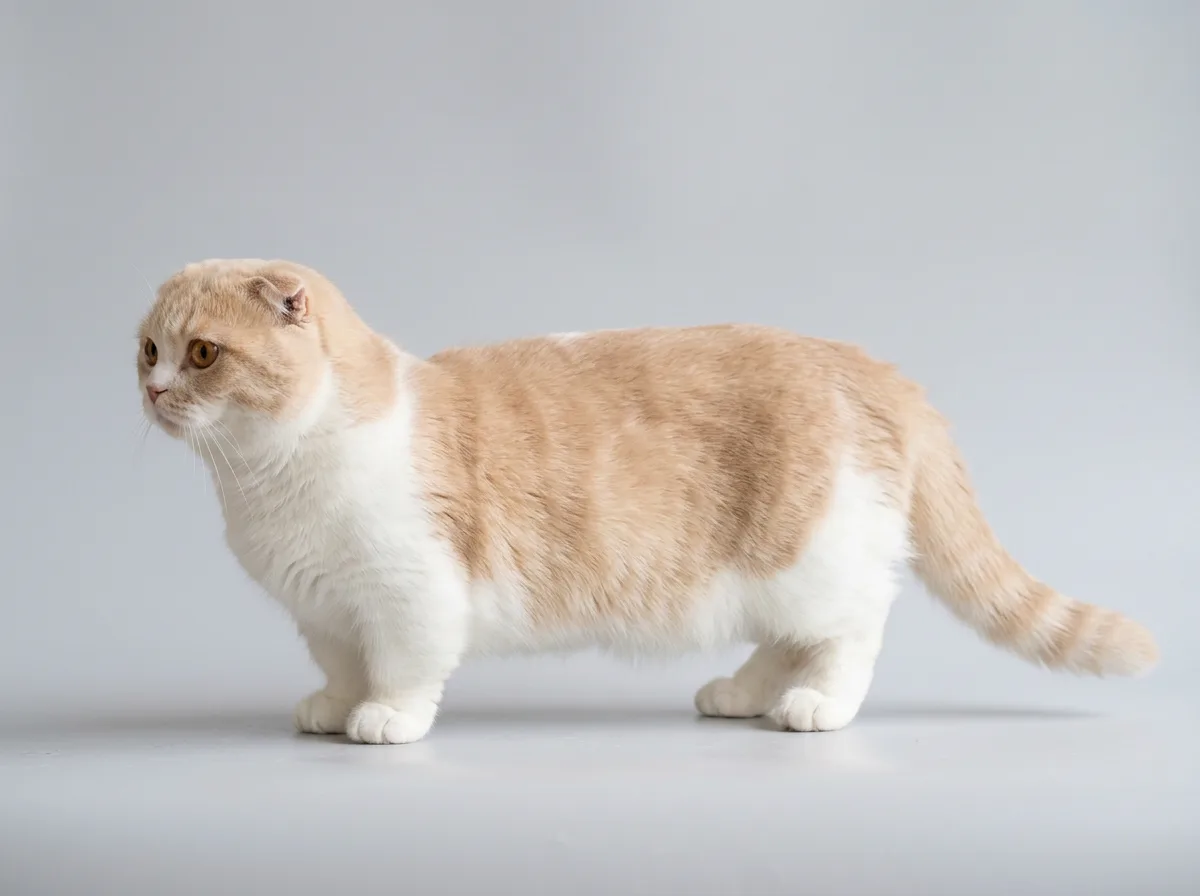
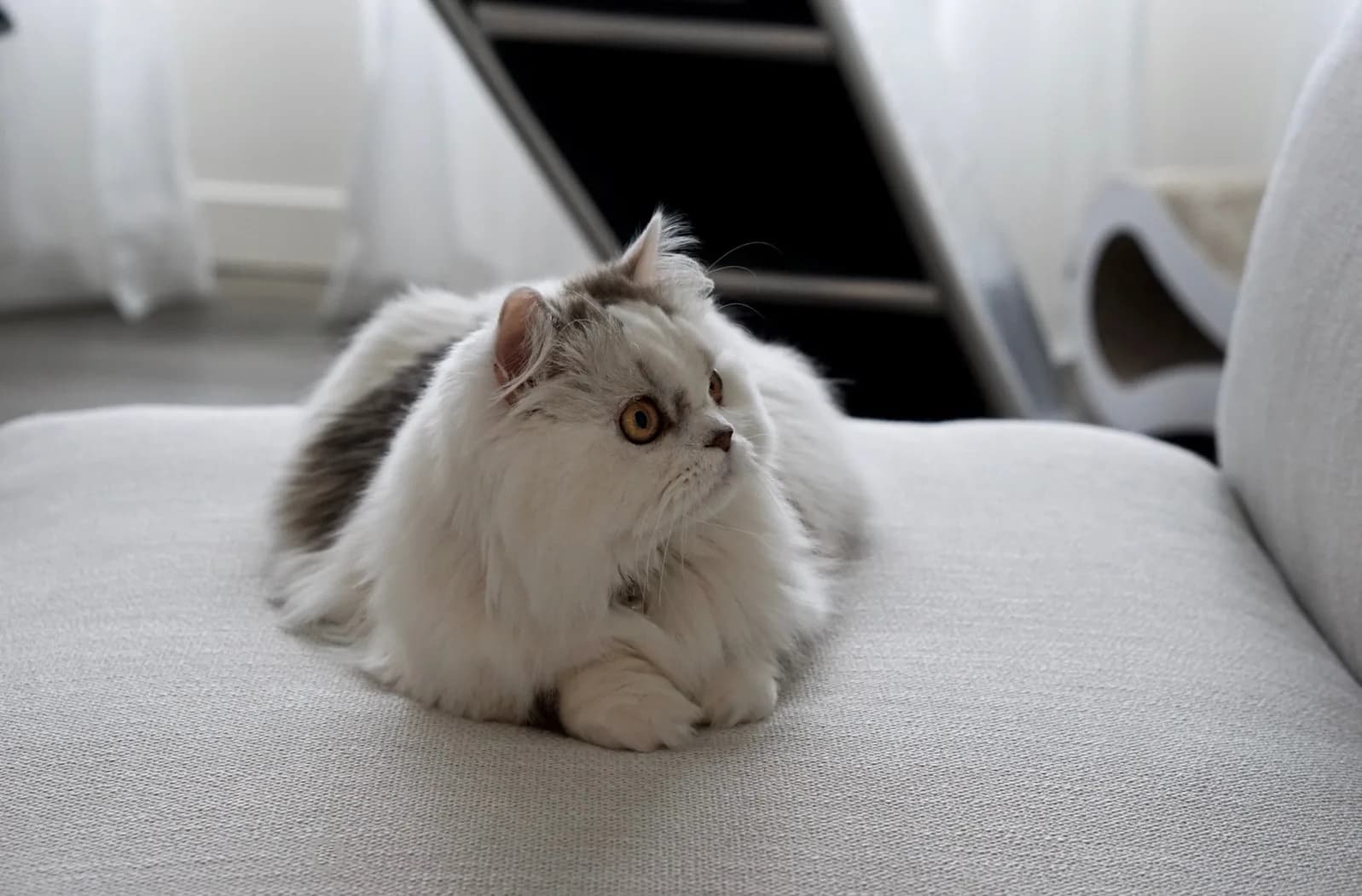
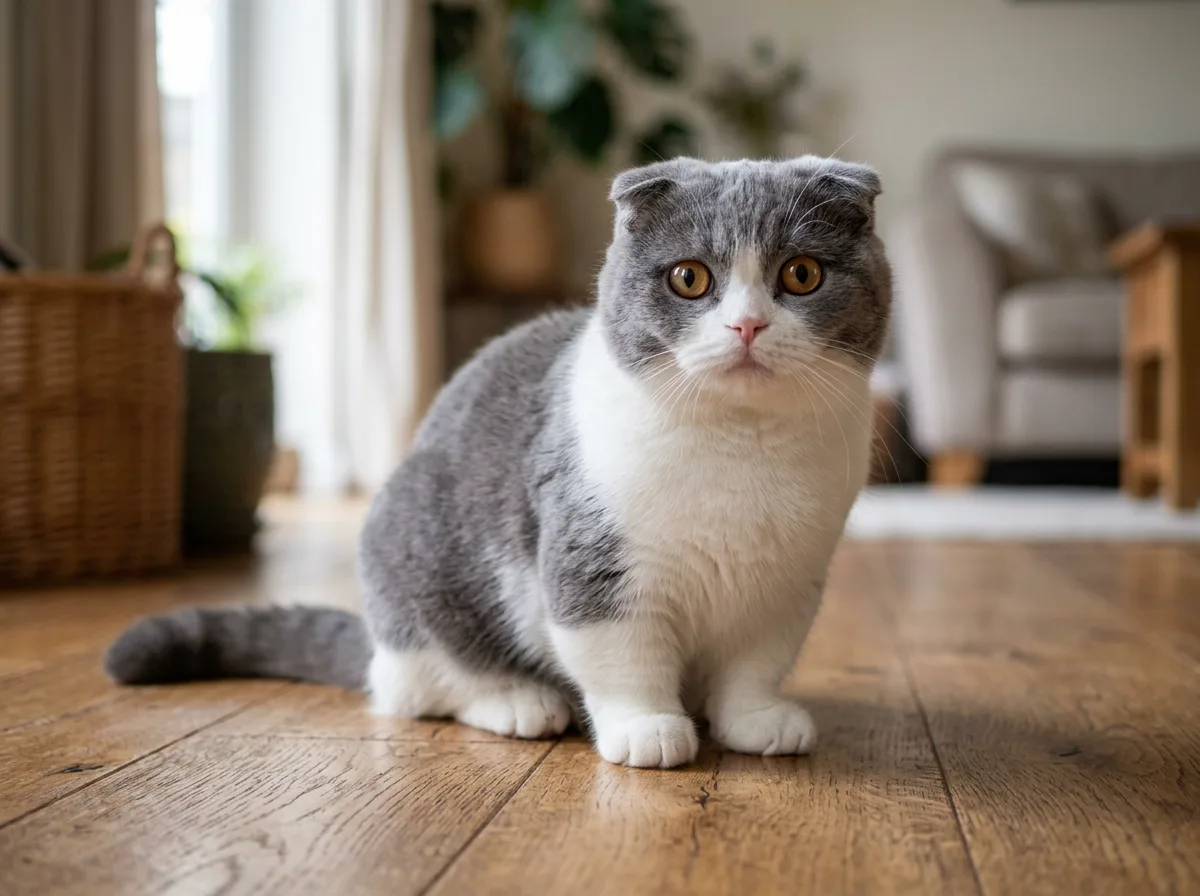
These cats are small, round, and very low to the ground. Expect a compact body on short legs, a round head, big round wide-set eyes, full cheeks, and a short nose. When the ears are folded, they sit flat against the head like a little cap, giving the "owl" or "teddy bear" look the cross is known for.
The coat can be short or semi-long (the long-haired version mirrors the Highland Fold side of the family) and comes in nearly any color or pattern, from solid blue (grey) and white to tabby, tortoiseshell, and calico. Many sit upright on their haunches in the classic "Buddha sit," partly because taking weight off sore joints is more comfortable.
- The upright, belly-out sitting pose is charming, but in folded-ear cats it can also be a comfort posture that takes pressure off aching hocks and knees. If a normally springy cat starts sitting up more, resting more, or hesitating to jump, treat it as a possible pain signal and see your vet.
How big do Scottish Fold Munchkins get?
They stay small. Most weigh roughly 5 to 9 pounds and stand only about 5 to 8 inches tall at the shoulder because of the shortened legs. The short stature is dwarfism from the Munchkin gene, not healthy "miniaturization," so a low body does not mean a daintier, frailer skeleton. It means a normal-massed cat on compromised limbs.
Temperament: Sweet Like Both Parents
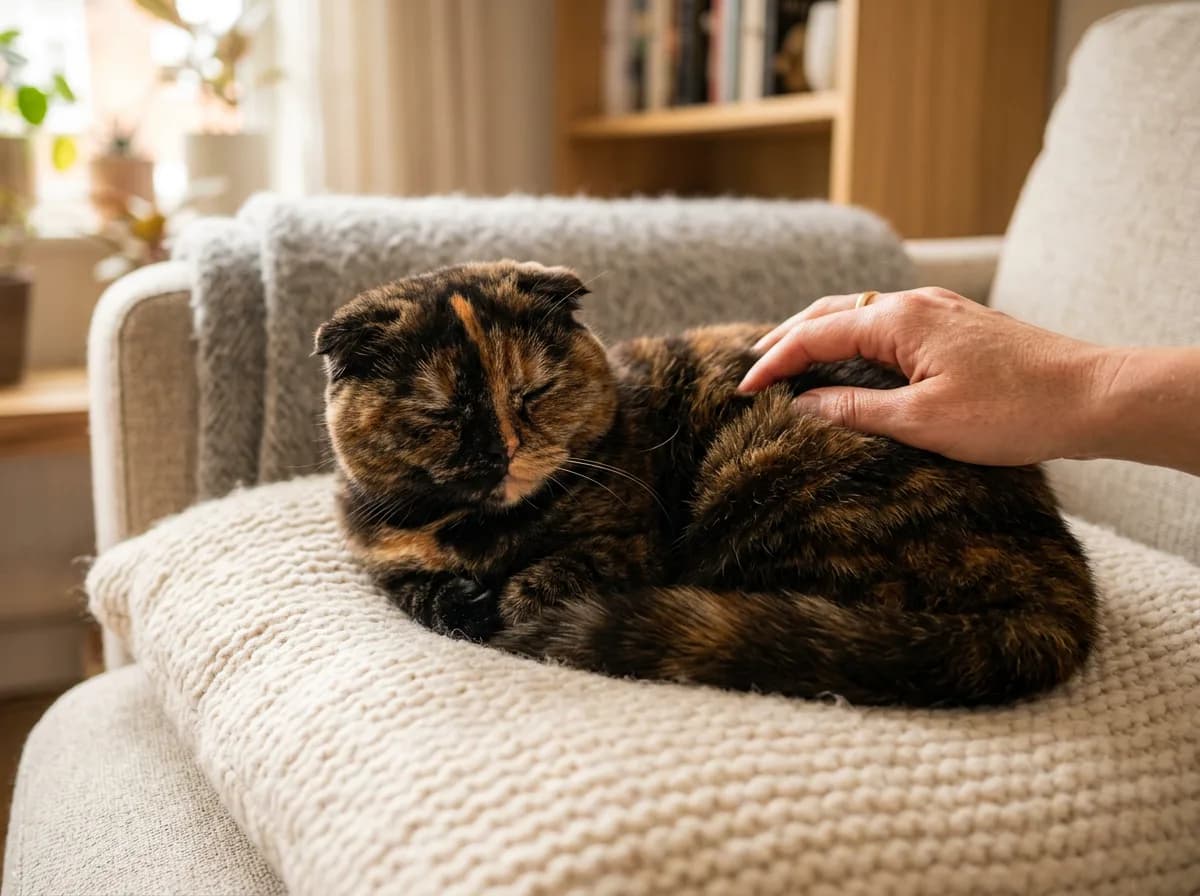
The good news, and it is real, is that the personality is lovely. Both parent breeds are known for being affectionate and people-focused, and the cross inherits that warmth. Scottish Fold Munchkins are typically sweet, gentle, calm, and devoted. They are classic "velcro" lap cats that bond closely with the whole family, follow their people from room to room, and dislike being left alone for long stretches.
They are playful in a gentle way, surprisingly quick despite the short legs, and clever enough to learn games like fetch. Most get along easily with children, dogs, and other cats, and they tend to be quiet, soft-voiced cats rather than demanding ones. A mild stubborn streak is the only common complaint. They are companion animals to the core, thrive on attention, and do best in homes where someone is around often, so they are not a good fit for a household that sits empty for long days.

63-inch multi-level cat tree with scratch posts, hammock, plush perches, and dangling toys. Vertical territory is non-negotiable for high-energy climbing breeds like the Bengal.
Petful may earn a commission when you click through to Chewy, at no extra cost to you.
The Combined Health Risks
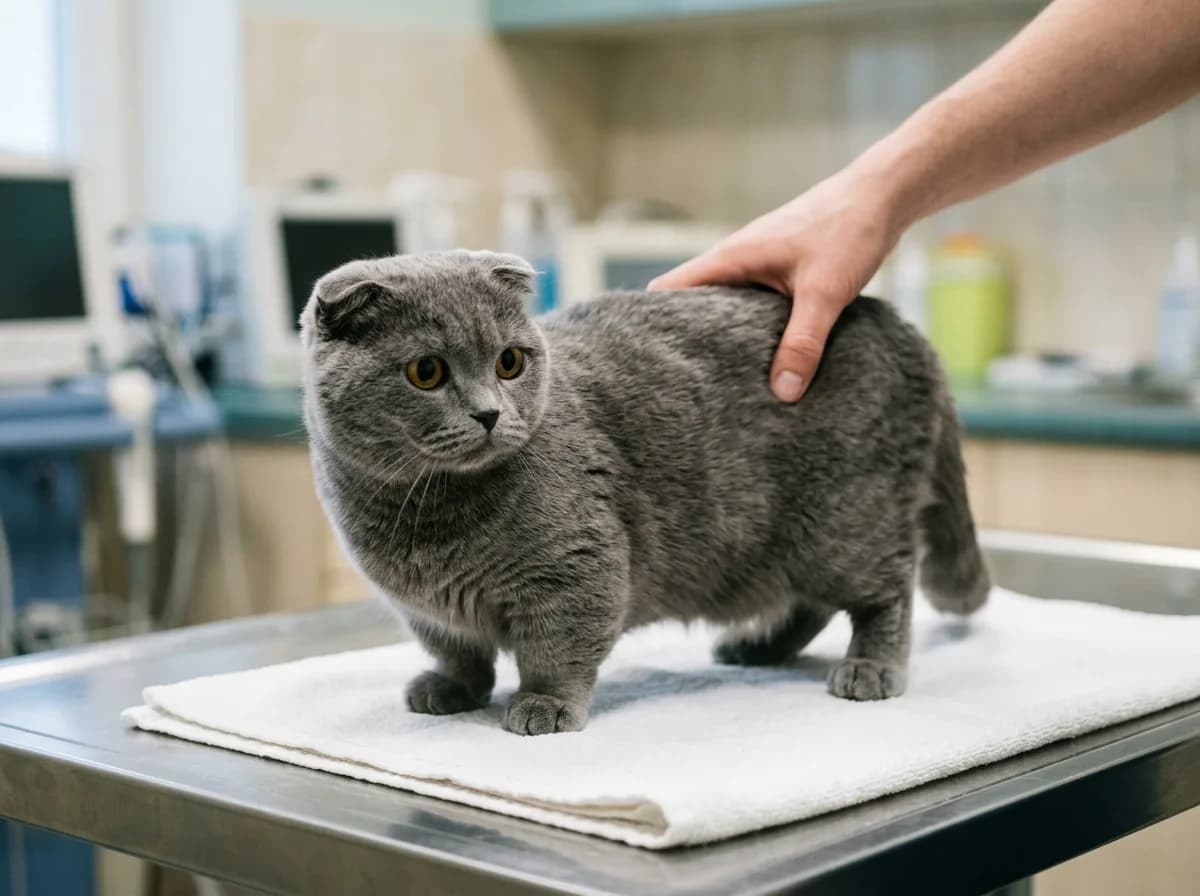
This is where honesty matters most. A Scottish Fold Munchkin is at risk from the health problems of BOTH parent breeds, layered together. The folded ear is the clearest red flag, because it signals the whole-body osteochondrodysplasia that affects every folded cat.
From the Scottish Fold side: osteochondrodysplasia
Every folded-ear cat in this cross carries osteochondrodysplasia and will develop some degree of degenerative joint disease (arthritis). Signs include a stiff or abnormally short, thick, inflexible tail, swollen ankles (hocks), a reluctance to jump or play, a stiff or "bunny-hopping" gait, and in severe cases fused joints and lameness. Signs can appear young, sometimes within the first year, and the disease is progressive and painful for life.
From the Munchkin side: the spine and limbs
On top of that, the short-leg structure brings its own concerns: abnormal stress on the joints, and a predisposition (seen in Munchkins) to lordosis (an inward-curved spine) and pectus excavatum (a sunken chest). Some short-legged cats can also be prone to spinal disc problems. These do not strike every cat, but they raise the odds that this cross will need orthopedic care.
The other inherited conditions
Like purebred Scottish Folds, these cats can also inherit polycystic kidney disease (PKD) and hypertrophic cardiomyopathy (HCM), a serious heart condition, and the folded ear can be a little more prone to wax buildup, so the ears need routine checks. Responsible breeders screen the parents for PKD and HCM, but screening cannot remove the osteochondrodysplasia that is built into the fold.

108-oz stainless steel pet fountain with quiet pump and water-level window. Bengals are notoriously water-obsessed; a flowing fountain encourages hydration and pulls them away from sinks and toilets.
Petful may earn a commission when you click through to Chewy, at no extra cost to you.
- Folded-ear cats are experts at masking discomfort, so an arthritic Scottish Fold Munchkin can look "fine" while hurting. Many need joint supplements, weight control, and veterinary pain relief for life. Assume joint care is part of the deal, not an exception, and have a vet assess mobility regularly.
Are Scottish Fold Munchkins Healthy? An Honest Answer
No, not as a group. The personality is wonderful and an individual cat can be loved and well cared for, but the cross is built on two structural mutations, and the folded-ear version is guaranteed to carry a painful skeletal condition. Calling them "healthy" would be dishonest. The fair statement is that they are affectionate cats predisposed to chronic joint disease, and that good management can give an individual a comfortable life even though the underlying problem cannot be cured.
Price: What a Scottish Fold Munchkin Costs
Scottish Fold Munchkins are expensive and trend-driven, fueled by their viral social-media looks. From a breeder, prices commonly run from about $800 to $4,500 or more, with the folded-ear, short-leg kittens commanding the top of the range because that is the most sought-after (and most genetically loaded) combination. Color, coat length, breeder reputation, and region all push the number around.
| Source / Type | Typical Price | What to Know |
|---|---|---|
| Adoption or rescue | $100 to $300 | Uncommon, but designer crosses do surrender to shelters; the kindest and cheapest route |
| Pet-quality kitten (straight ear or long leg) | $800 to $1,800 | Lower demand than the "double-trait" look, often a healthier choice |
| Premium folded-ear, short-leg kitten | $2,000 to $4,500-plus | The most marketed combination and the one carrying both mutations at full strength |
Whatever you pay up front, budget for the back end too. A cat predisposed to arthritis, and potentially to heart or kidney disease, can mean years of supplements, pain management, dental care, and vet visits. The sticker price is only the beginning of the cost.
- The purchase price is the smallest number you will spend. Plan for joint supplements, weight-management food, possible long-term pain medication, soft bedding, and pet ramps so your cat never has to jump. Pet insurance taken out before any condition appears can soften the lifetime cost.
Where Do They Come From?
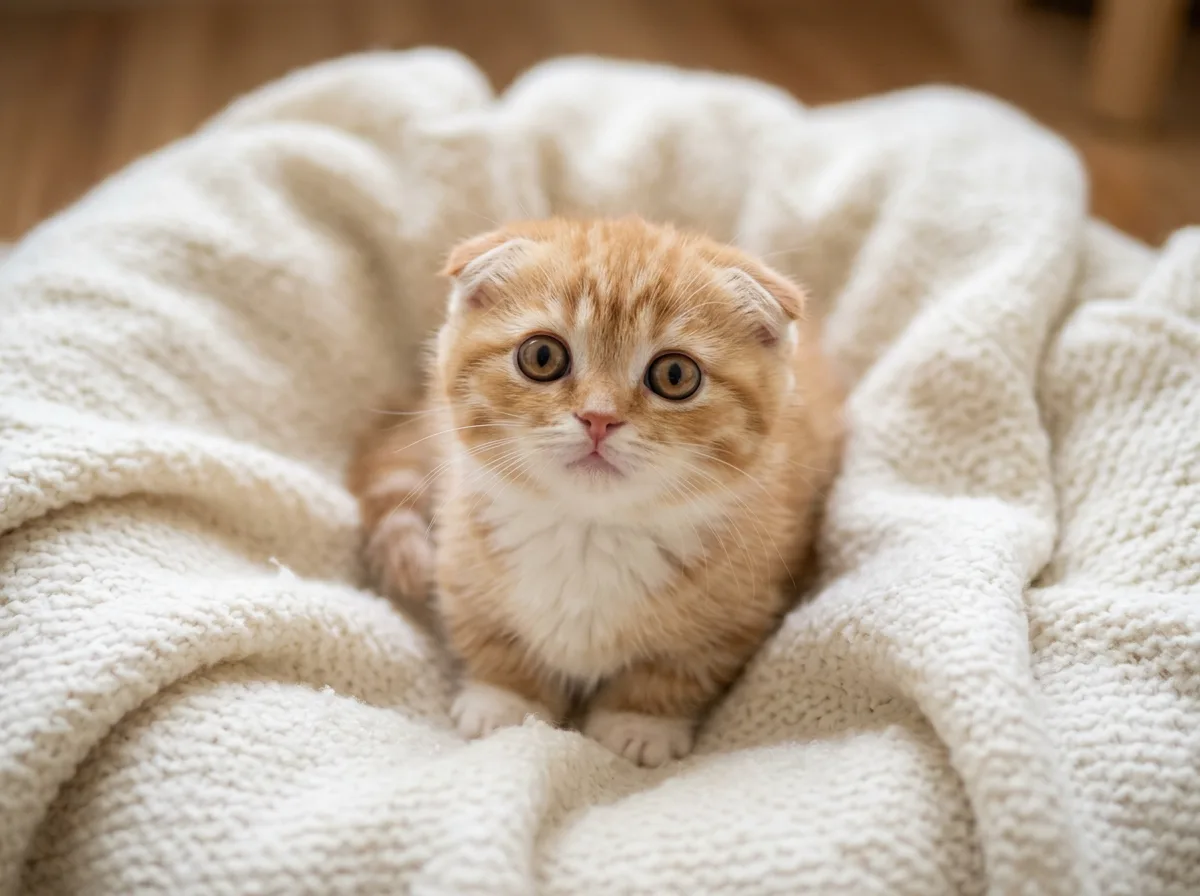
There is no breed registry standing behind the Scottish Fold Munchkin, so they come almost entirely from small specialty catteries that deliberately cross the two breeds, sometimes outcrossing to Persian, Himalayan, or Siamese lines for looks. Demand is driven by Instagram and TikTok, where the tiny, folded-ear, short-legged look goes viral. That popularity is exactly what keeps a welfare-questioned cross in production.
Should You Get a Scottish Fold Munchkin?
Here is the honest steer. If you have fallen for the sweet, round, teddy-bear personality, that temperament is not unique to this cross, and you can get it without stacking two painful mutations into one cat.
We do not recommend deliberately seeking out or commissioning a folded-ear, short-legged kitten, because doing so funds the breeding of a cat that is very likely to live with chronic joint pain. If you already have one, do not feel guilty: give it excellent care, manage its joints proactively with your vet, and it can have a happy life. But if you are choosing now, the kinder options are clear.
- For the round-faced, plush, sweet-natured look without the built-in skeletal disease, consider adopting a cat in need, choosing a straight-eared, normal-legged kitten from a Fold-Straight litter, or looking at the [British Shorthair](https://www.petful.com/cat-breeds/british-shorthair/) or the [Exotic Shorthair](https://www.petful.com/cat-breeds/exotic-shorthairs/). They deliver the cuddly, cobby teddy-bear vibe with normal ears and normal legs.
If you want to understand each parent in depth before deciding, read our full guide to the Munchkin cat and how its short-leg gene works, and our profile of the British Shorthair, the round, plush, straight-eared breed the Scottish Fold is largely built on. For another placid, plush lap cat to compare, our Ragdoll profile is a good companion read.
Frequently Asked Questions
It is a designer crossbreed produced by mating a Scottish Fold with a Munchkin, so the kitten can inherit the Fold's folded ears and the Munchkin's short legs. It is not a registry-recognized breed, and it carries two separate genetic mutations at once.
"Scottish Kilt" is simply the most popular marketing nickname for the Scottish Fold Munchkin cross. The same cat is also sold as a Munchkin Fold, a folded-ear Munchkin, or a "mini Scottish Fold." None of those names makes it an official breed.
One Scottish Fold parent and one Munchkin parent. Because both the folded-ear gene and the short-leg gene are dominant and inherited independently, a single litter can include kittens with folded ears, straight ears, short legs, long legs, or any mix of the four.
Not as a group. Every folded-ear cat in the cross has osteochondrodysplasia, a cartilage-and-bone disorder that causes painful, progressive arthritis, and the short-leg gene adds spine and joint concerns plus risks like lordosis. They can also inherit PKD and HCM. An individual can live comfortably with lifelong management, but the cross is predisposed to chronic joint disease.
From a breeder, expect roughly $800 to $4,500 or more, with folded-ear, short-leg kittens at the top of the range. Adoption, when available, runs about $100 to $300. Factor in lifelong joint and veterinary care on top of the purchase price.
Around 11 to 15 years on average. The bigger issue is quality of life rather than length, because the osteochondrodysplasia from the folded-ear gene means many spend much of that lifespan managing arthritis.
Small. Most weigh about 5 to 9 pounds and stand roughly 5 to 8 inches tall, since the legs are shortened by the Munchkin's dwarfism gene. The low stance is dwarfism, not healthy miniaturization.
A Scottish Fold is defined by folded ears caused by whole-body osteochondrodysplasia, with normal-length legs. A Munchkin is defined by short legs caused by chondrodysplasia, with normal ears. The Scottish Fold Munchkin combines both traits, and both underlying mutations, in one cat.
Most veterinarians and welfare organizations say no. Deliberately combining two structural mutations knowingly produces cats predisposed to painful joint and bone disease, which is why bodies like Cats Protection and International Cat Care discourage breeding the Scottish Fold at all, let alone crossing it with another dwarfism breed.

Coreen Saito is a pet writer and longtime shelter volunteer with more than a decade in animal rescue. She covers cat behavior, breed care, and the small, ordinary science of sharing a life with companion animals, with a particular focus on honest takes about the products and decisions that actually matter. At home in Arizona, she's outranked by Mac (a dog with the loudest opinion in the house), Rebel (a cat who governs by quiet authority), and Meri (an orange tabby who runs the late shift and the laundry basket). She writes about all three, plus the rescues that keep coming through her life, at LifeWithMinty.com.
Sign up for expert-backed reviews and safety alerts all in one place.