Scottish Fold Health Problems: A Vet-Reviewed Guide
Every folded-ear Scottish Fold has osteochondrodysplasia, the same gene that folds the ears causing painful arthritis. A vet-reviewed guide to the signs, the other conditions, diagnosis, management, the bans, and the honest case for a healthier cat.
Petful is reader supported. As an affiliate of platforms like Amazon and Chewy, we may earn a commission when you buy through links on this page. There is no extra cost to you.
The most important of all Scottish Fold health problems is not a risk that some cats happen to get, it is a disease that every single one already has: the same dominant gene that folds a Scottish Fold's ears, known to veterinarians as osteochondrodysplasia, also forms faulty cartilage in the joints throughout the body, causing painful, progressive arthritis that often starts young and is easy to miss. The RSPCA, Cats Protection, International Cat Care, and the British Veterinary Association all agree on the core fact, and so do we: there is no such thing as a folded ear without the skeletal disease that comes with it. This guide explains what that condition is, how to spot the pain a Scottish Fold instinctively hides, the other illnesses the breed is prone to, how vets diagnose and manage it all, and the honest difference between caring well for a Fold you already love and choosing a healthier cat in the first place.
- 1Every Scottish Fold with folded ears has osteochondrodysplasia (SFOCD), a cartilage and bone disorder caused by the same gene that folds the ears.
- 2It causes early, progressive, painful arthritis, most visible in the tail, ankles, and knees, that cats hide extremely well.
- 3The breed is also prone to polycystic kidney disease (PKD), hypertrophic cardiomyopathy (HCM), and ear-wax problems.
- 4There is no cure for the joint disease, but pain relief, joint support, weight control, and a no-jump home can give a Fold a comfortable life.
- 5Major welfare bodies advise against breeding Folds, several countries restrict them, and a healthier look-alike is the straight-eared British Shorthair or a Scottish Straight.

Sign up for expert-backed reviews and safety alerts all in one place.
The One Health Problem Every Scottish Fold Has: Osteochondrodysplasia
Osteochondrodysplasia, often shortened to SFOCD or simply called "Scottish Fold disease," is a genetic disorder of cartilage and bone development. It is not a complication that strikes a few unlucky cats. It is the defining medical fact of the breed. For more, see Petful’s guide to Scottish Fold Munchkin.
The Scottish Fold's signature folded ears are produced by a single dominant gene mutation (linked to the TRPV4 gene). Cartilage is the firm, flexible tissue that shapes the ear, cushions the joints, and guides how bones grow. The fold gene does not politely limit itself to the ear cartilage. It disrupts cartilage everywhere in the body. So the very thing that creates the cute folded ear, defective cartilage, is also quietly damaging the cat's joints and skeleton at the same time.
That is why veterinarians and welfare organizations are blunt about it: if a cat has folded ears, it has osteochondrodysplasia to some degree. WebMD's veterinary reviewers put it plainly, that all Scottish Fold cats with folded ears are affected. The University of California, Davis Veterinary Genetics Laboratory lists the breed's expected health problems as misshapen toes, thickened and inflexible tails, and accelerated, progressive osteoarthritis.
- A Scottish Fold's folded ears are not a separate, harmless cosmetic trait. They are the visible sign of osteochondrodysplasia, a cartilage and bone disorder present in every folded-ear cat. You cannot have the look without the condition.
Why the fold and the disease cannot be separated
People sometimes hope that careful breeding can keep the adorable ears while removing the health problem. It cannot. The ear fold and the skeletal disease come from the exact same mutation. There is no version of the gene that folds the ears without affecting the rest of the cartilage. This is the central reason the breed is so controversial: the trait people pay a premium for is inseparable from a painful, lifelong condition.
The severity varies. Some Folds are visibly crippled as kittens, while others move almost normally for years before arthritis catches up. But "varies in severity" is very different from "some are unaffected." Even a mildly affected Fold carries the disease in its joints.
 Sponsored
Wondering why your cat seems stiff or sore?
Talk to a licensed vet at Dutch over video, often the same day. They can recommend treatment and prescribe it when it's appropriate.
Use code Pets60
Plans start at $12/month · covers up to 5 pets
- Licensed vets in most states
- Rx for 150+ conditions
- 4.7 on Trustpilot
Signs of Joint Disease in a Scottish Fold
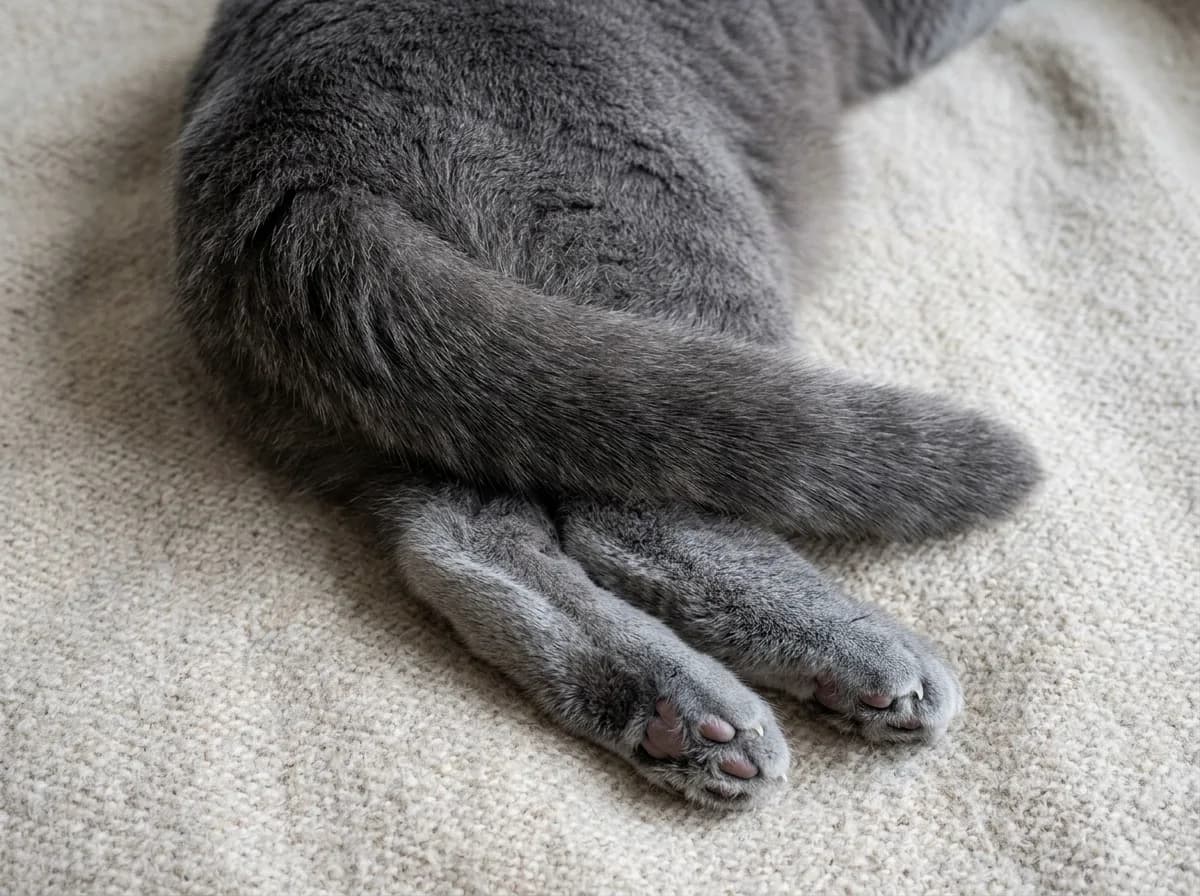
Because the cartilage damage centers on the joints, the clearest warning signs of Scottish Fold health problems show up in how the cat moves. The disease tends to be most visible in the tail, the ankles (hocks), and the knees.
Watch for:
Never Scoop Again® with the Whisker Litter-Robot, the smart self-cleaning automatic litter box. Monitor visits and track weights for better overall care in the Whisker® app. Multi-cat friendly.
Petful may earn a commission when you click through to Whisker, at no extra cost to you.
- A short, abnormally thick, stiff, or inflexible tail that does not curl or move normally
- Reluctance to jump up or down, or hesitating and measuring a jump it used to make easily
- A stiff, stilted, or "bunny-hopping" gait, or a splay-legged stance
- Swollen or enlarged ankles and hocks
- Lameness or limping, sometimes shifting between legs
- Reduced playfulness, more sleeping, and poor grooming (a stiff cat cannot twist to groom)
- In severe cases, fused joints, an inability to walk normally, and a cat that becomes effectively crippled
A crucial and heartbreaking point: a cat that simply seems calm, mellow, or low-energy may not be relaxed at all. Cats Protection warns that what looks like a placid temperament can be the pain itself, a reluctance to move, jump, and play. The "lazy lap cat" reputation of the breed can mask genuine suffering.
- A Scottish Fold sitting quietly, sleeping a lot, or declining to jump may be in pain rather than simply relaxed. Cats hide arthritis exceptionally well. If your Fold has slowed down, assume joint pain until your vet rules it out.
At what age do Scottish Fold health problems start?
The disease is present from birth, because it is genetic, but the timing of visible signs depends on severity. In severely affected cats, especially those with two copies of the fold gene, deformities and lameness can appear within the first few months of life. In more typical cases, owners may notice stiffness, reluctance to jump, or a thickened tail anywhere from young adulthood onward, with arthritis worsening as the cat ages. There is no age at which a folded-ear Scottish Fold is "in the clear," because the underlying cartilage defect was there from the day it was born.
Homozygous vs Heterozygous: Why Two Folds Are Never Bred
The amount of suffering is strongly tied to how many copies of the fold gene a cat inherits.
A cat with one copy of the gene (heterozygous, Fd/fd) has folded ears and osteochondrodysplasia, but typically in a milder, slower form. A cat with two copies (homozygous, Fd/Fd) has the most severe, earliest, and most crippling form of the disease, with pronounced skeletal deformities often visible in kittenhood.
This is the reason responsible breeders never pair two Scottish Folds together. Mating two folded-ear cats can produce homozygous kittens, which are essentially guaranteed severe disease. To avoid that, ethical breeders cross a Fold with a straight-eared cat, so no kitten inherits two copies. The RSPCA notes that in such a cross, about half the kittens are still born with folded ears and are affected to some degree. So even "responsible" Fold breeding still produces cats with the disease. It only avoids the worst, double-dose version. Petful’s guide to Scottish Fold prices breaks down breeder, adoption, and lifetime costs.
- One copy of the fold gene equals folded ears plus a milder form of the joint disease. Two copies equals the most severe, early, crippling form. There is no copy number that gives folded ears and zero disease, which is why no Fold is truly free of osteochondrodysplasia.
Are Scottish Folds in Pain?
Yes. Folded-ear Scottish Folds live with some degree of pain from osteochondrodysplasia, and they often hide it so well that owners do not realize it for years.
This is one of the most searched and most important questions about the breed, and the honest veterinary answer is uncomfortable. The arthritis caused by the disease is genuinely painful, and it is progressive, meaning it gets worse over time. Cats are hardwired to conceal pain (in the wild, showing weakness attracts predators), so a Fold can be quietly aching while still purring, eating, and cuddling. Cats Protection states that the mutation causes a disease which leads to severe pain, even though cats may hide it well from their owners. International Cat Care and the British Veterinary Association have campaigned on exactly this point, that these cats are suffering for their looks and many owners have no idea.
That does not mean every Fold is in agony every moment. Mildly affected cats can have long stretches of comfort, especially with good care. But "are they in pain" is not really a yes-or-no question for this breed. It is a question of how much, how soon, and how well it is managed.
The Other Scottish Fold Health Problems
Osteochondrodysplasia is the headline, but it is not the only condition the breed is prone to. Responsible breeders screen for the genetic ones with DNA and heart testing.

63-inch multi-level cat tree with scratch posts, hammock, plush perches, and dangling toys. Vertical territory is non-negotiable for high-energy climbing breeds like the Bengal.
Petful may earn a commission when you click through to Chewy, at no extra cost to you.
| Condition | What it is | Signs and management |
|---|---|---|
| Osteochondrodysplasia (SFOCD) | A cartilage and bone disorder from the fold gene; present in every folded-ear Fold | Stiff or thickened tail, reluctance to jump, swollen ankles, lameness; no cure, managed with pain relief, joint support, weight control, and a no-jump home |
| Polycystic kidney disease (PKD) | Inherited fluid-filled cysts in the kidneys that slowly destroy kidney function | Increased thirst and urination, weight loss, poor appetite; often appears around age 7 but can be earlier; DNA test available, managed with kidney diet and fluids |
| Hypertrophic cardiomyopathy (HCM) | Inherited thickening of the heart muscle that reduces the heart's ability to pump | Often silent early, then lethargy, fast or labored breathing, appetite loss; screened by echocardiogram, managed with heart medication |
| Ear conditions | The folded ear can trap wax, raising the risk of wax buildup and infection | Head shaking, scratching, odor, discharge; managed with gentle, regular ear checks and cleaning as your vet advises |
| Brachycephalic airway issues (BAOS) | The flatter face some Folds have can narrow the airway and strain breathing | Noisy breathing, snoring, exercise intolerance; flagged by Cats Protection as an added concern in the breed |
Polycystic kidney disease (PKD)
PKD is an inherited disease in which fluid-filled cysts grow in the kidneys and gradually replace healthy tissue, eventually leading to kidney failure. Signs include increased thirst, frequent urination, weight loss, and poor appetite. It often becomes apparent around seven years of age, though it can show up earlier. A DNA test exists, so reputable breeders can screen breeding cats and avoid passing it on. Pet owners should keep up annual checkups so any kidney decline is caught early.
Hypertrophic cardiomyopathy (HCM)
HCM is the most common heart disease in cats, and Scottish Folds are among the breeds with elevated risk. The heart muscle thickens, which makes it harder for the heart to pump blood and can lead to heart failure or sudden clots. It is often silent in the early stages, which is why an annual exam and, where indicated, an echocardiogram matter. Watch for lethargy, fast or labored breathing, and loss of appetite.
SponsoredVet care that's always there
Unlimited video calls and messaging with licensed vets for less than a typical vet visit. One membership covers up to five pets.
Use code Pets60
Plans start at $12/month · covers up to 5 pets
- Licensed vets in most states
- Rx for 150+ conditions
- 4.7 on Trustpilot
Ear care
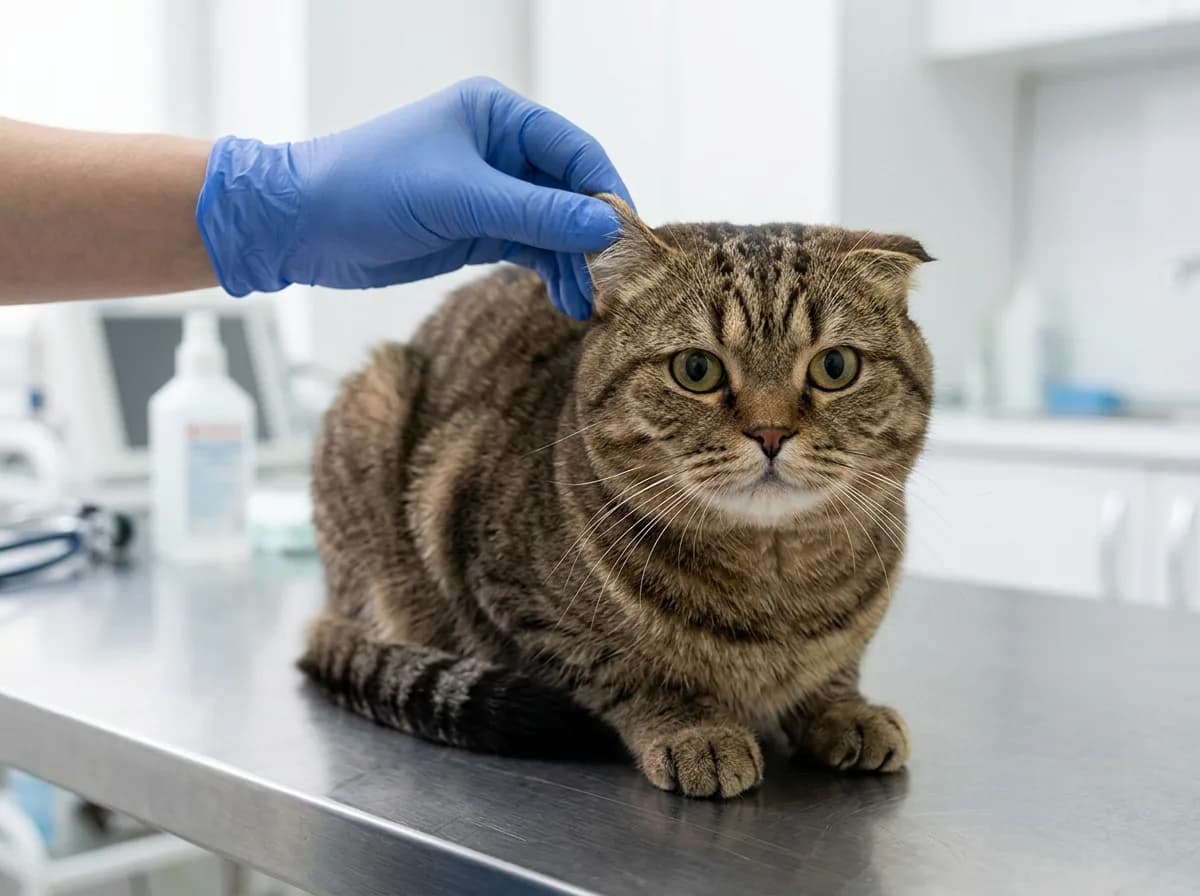
The folded ear is not the runaway infection risk it was once feared to be (that concern is now considered overstated), but the fold can make it slightly harder for air to circulate and easier for wax to accumulate. The sensible approach is routine: check your Fold's ears regularly for wax, redness, odor, or discharge, and clean only as your veterinarian recommends. Do not over-clean, which can cause its own irritation.
How Vets Diagnose and Manage Scottish Fold Joint Disease
There is no cure for osteochondrodysplasia, but it can be managed, and a well-managed Fold can be far more comfortable than an untreated one. The goal is to reduce pain, protect the joints, and keep the cat moving.
Diagnosis
A vet diagnoses the joint disease through a hands-on orthopedic exam and X-rays. Radiographs reveal the telltale changes: abnormal new bone formation around the ankles, knees, and tail vertebrae, narrowed joint spaces, and fusion in advanced cases. Because the breed's status all but guarantees the disease, many vets will assess a Fold's joints proactively rather than waiting for obvious lameness.
Management
Treatment is lifelong and multi-pronged:

108-oz stainless steel pet fountain with quiet pump and water-level window. Bengals are notoriously water-obsessed; a flowing fountain encourages hydration and pulls them away from sinks and toilets.
Petful may earn a commission when you click through to Chewy, at no extra cost to you.
- Pain relief. Veterinary anti-inflammatories and pain medications are the backbone of treatment. They work, but they require care: some long-term painkillers need monitoring to protect the kidneys, which matters even more in a breed also prone to PKD. Never give human pain medication to a cat, as many common ones are toxic.
- Joint support. Joint supplements (such as glucosamine, chondroitin, and omega-3 fatty acids) and newer monoclonal antibody injections for feline arthritis can help support the joints and reduce pain. Your vet will guide the right combination.
- Weight control. Every extra ounce loads already-damaged joints. Keeping a Fold lean is one of the most powerful and cost-free things an owner can do. A healthy weight is genuinely medical here, not cosmetic.
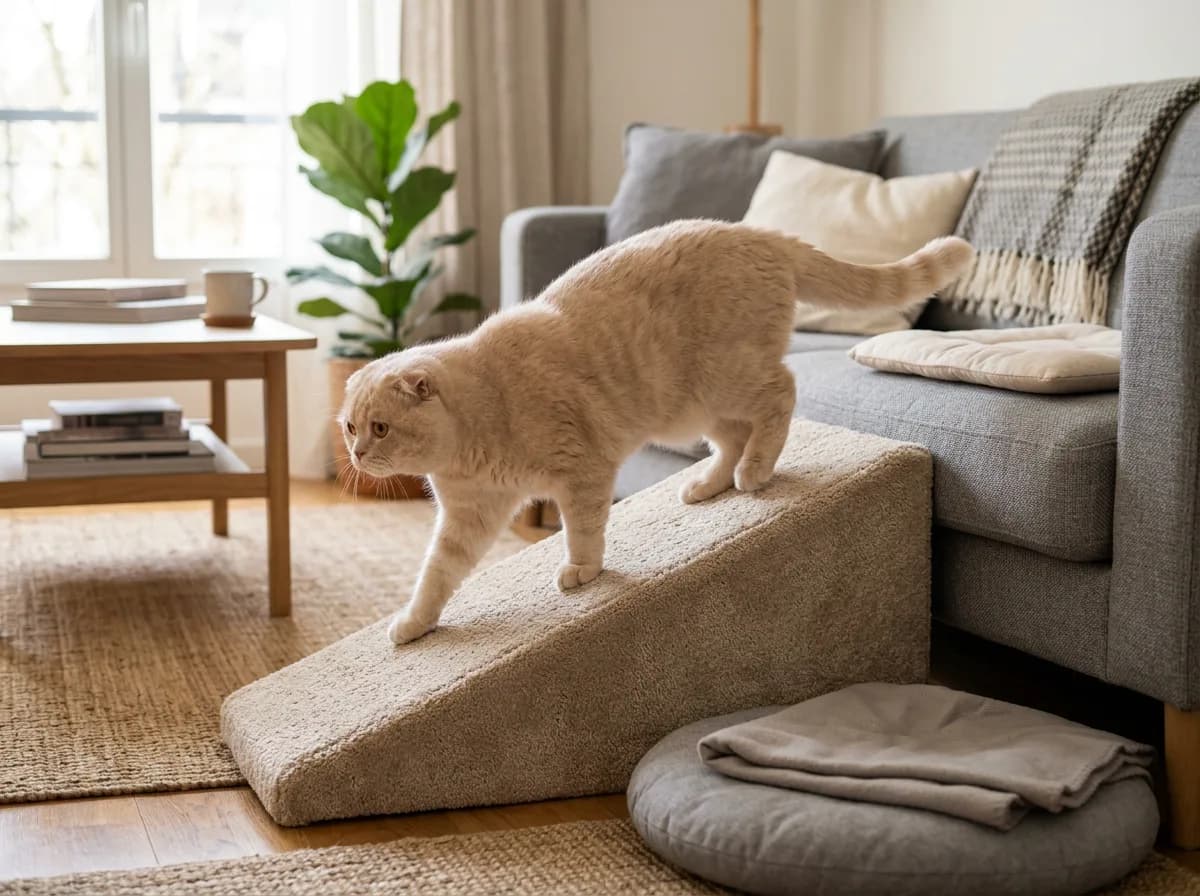
- A no-jump, joint-friendly home. Set the home up so the cat does not have to leap. Use ramps or steps to favorite perches, low-sided litter boxes that are easy to step into, soft padded bedding, and food and water at floor level. Keep claws trimmed and provide good traction so a stiff cat does not slip.
- The hard cases. In severely affected cats with fused, painful joints, even aggressive management may not be enough. In the worst cases, owners and vets face genuinely difficult conversations about quality of life and, sometimes, about whether continued suffering is fair to the cat. This is the part of the breed's reality that the cute photos never show.
- Add pet ramps or steps to the couch and bed, switch to a low-entry litter box, put food and water at floor level, and provide thick soft bedding. Removing the need to jump takes daily strain off arthritic joints and noticeably improves comfort.
The Ethics and the Bans
Because the disease is built into the breed, breeding Scottish Folds is a recognized welfare problem, and the response from veterinary and welfare bodies has been clear.
Cats Protection says it would not recommend getting a Scottish Fold, and notes that in Scotland the commercial breeding of these cats likely breaches the conditions for licensed breeders. The RSPCA does not support breeding Scottish Folds at all, including the "responsible" Fold-to-straight cross, because of the guaranteed risk of painful skeletal disease. The UK's Governing Council of the Cat Fancy (GCCF) will not register the breed. International Cat Care and the British Veterinary Association jointly urge people to choose health over looks and avoid breeds designed for extreme or unusual features.
Several places restrict or ban breeding the cats, including the breed's native Scotland (in practice, through licensing), the Netherlands, Belgium, and Austria. The reasoning is consistent everywhere: it is hard to justify deliberately creating animals that are guaranteed to carry a painful, incurable condition purely for appearance.
- Welfare bodies and several governments restrict Scottish Fold breeding because the folded ear cannot be separated from osteochondrodysplasia. Deliberately producing cats guaranteed to have a painful skeletal disease, just for a look, is the welfare line many have decided not to cross.
You Already Have a Fold vs You Are Thinking of Getting One
These are two very different situations, and they deserve two very different answers.
If you already share your home with a Scottish Fold
Love your cat, and manage the condition well. A Fold can absolutely have a good, affectionate, comfortable life with attentive care. Keep the cat lean, set up a no-jump home, build a relationship with a vet who will monitor the joints, kidneys, and heart, and treat pain proactively rather than waiting for obvious limping. Your cat did not choose its genetics, and a committed owner makes an enormous difference to its quality of life. Pet insurance taken out before any condition is diagnosed can also soften the lifelong cost of joint care.
If you are still deciding whether to buy one
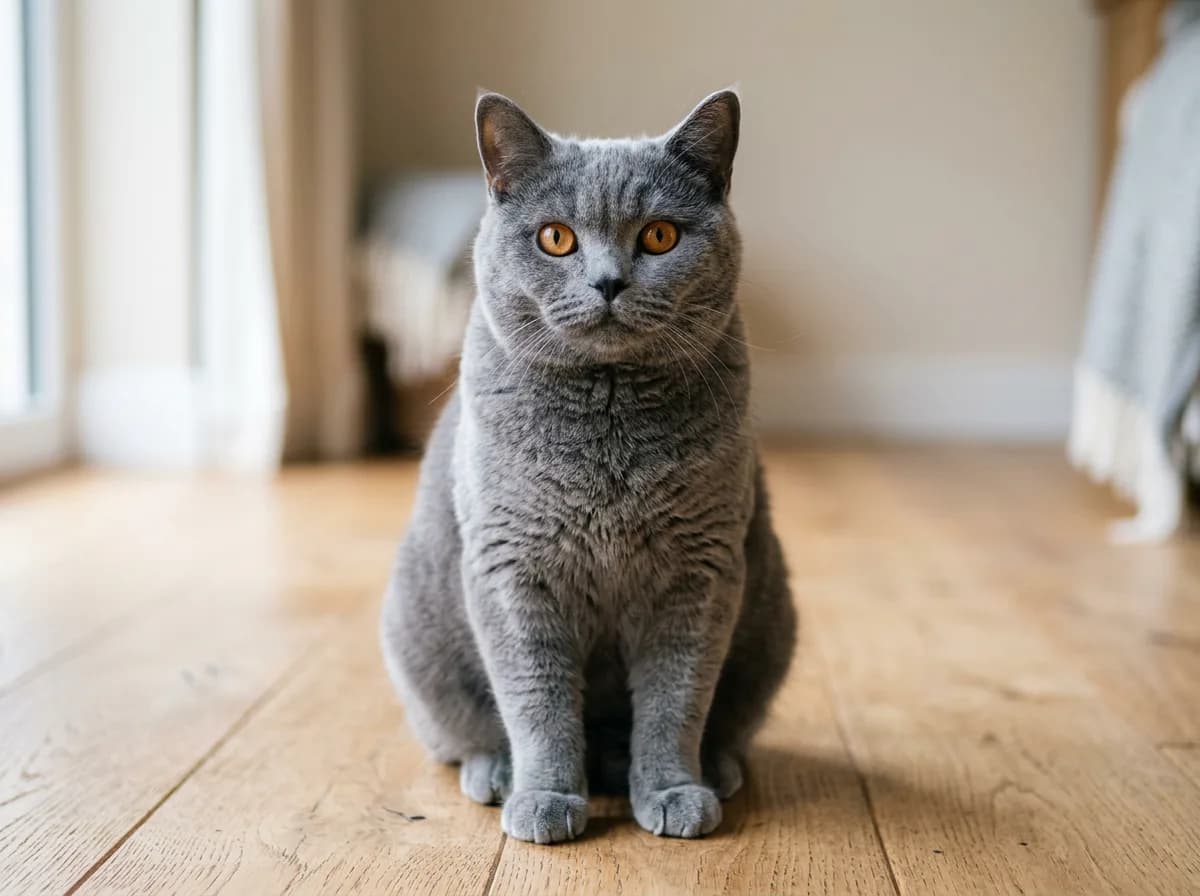
This is where honesty matters most. Buying a Scottish Fold kitten funds the breeding of an animal guaranteed to have a painful condition. If you love the round, plush, teddy-bear look, there are two healthier ways to get it. The first is the British Shorthair, the dense, cobby, round-faced breed the Scottish Fold was largely built on, which has normal straight ears and none of the skeletal disease. The second is a Scottish Straight, a cat from Fold lines that was born with straight ears and therefore does not carry osteochondrodysplasia. Adoption is another route, since Folds and Fold mixes do sometimes turn up in shelters and rescues.
Other round, gentle, plush breeds worth meeting in person include the Exotic Shorthair, which offers the same cobby teddy-bear build, and the placid, affectionate Ragdoll for anyone who mainly wants a devoted lap cat. If your heart is set on the plush, flat-faced look specifically, read up on Persian lifespan and care too, since that breed has its own grooming and brachycephalic needs to weigh.
- If you want the round teddy-bear face without a built-in painful disease, choose a straight-eared British Shorthair or a Scottish Straight, or adopt. Both give you the look without osteochondrodysplasia.
Can a Scottish Fold Live a Normal Life?
A Scottish Fold can live a fairly normal lifespan of roughly 11 to 15 years, but "normal life" deserves a caveat: the bigger issue for this breed is quality of life, not length of life. Many Folds reach old age, but they do so carrying arthritis that needs ongoing management. With good pain control, weight management, a joint-friendly home, and regular vet care, a Fold can be comfortable, playful in a gentle way, and deeply bonded to its family. The length of life is usually achievable. The comfort within that life is the part that depends on you and your vet.
Scottish Fold Health Problems FAQ
Every folded-ear Scottish Fold has osteochondrodysplasia, a cartilage and bone disorder that causes painful, progressive arthritis. The breed is also prone to polycystic kidney disease (PKD), hypertrophic cardiomyopathy (HCM), wax buildup and infection in the folded ears, and in some cats brachycephalic airway issues.
Yes. The same dominant gene that folds the ears causes osteochondrodysplasia, so every Scottish Fold with folded ears has the disease to some degree. Severity varies, but no folded-ear Fold is free of it. Straight-eared littermates (Scottish Straights) do not carry it.
Yes, to varying and often hidden degrees. The arthritis from osteochondrodysplasia is genuinely painful and gets worse over time, and cats instinctively conceal pain, so a Fold can be aching while still purring and cuddling. What looks like a calm, lazy temperament can actually be a reluctance to move because it hurts.
Caring well for a Fold you already have is not cruel, it is responsible, and management makes a real difference to its comfort. The ethical problem is on the breeding and buying side: welfare bodies like the RSPCA, Cats Protection, and International Cat Care advise against breeding Folds because the painful disease is guaranteed by the folded-ear gene.
The disease is present from birth because it is genetic. In severely affected cats, especially those with two copies of the gene, deformities and lameness can show within the first few months. In milder cases, owners may not notice stiffness or a thickened tail until young adulthood or later, with arthritis worsening as the cat ages.
There is no cure, but vets manage it with anti-inflammatory pain relief (monitored to protect the kidneys), joint supplements or arthritis injections, strict weight control, and a no-jump home set up with ramps, low litter boxes, and soft bedding. X-rays help track the disease, and severe cases need difficult quality-of-life decisions.
A Fold can live a fairly normal span of about 11 to 15 years, but it will carry arthritis that needs lifelong management. The real issue is quality of life, not length. With good pain control, weight management, and a joint-friendly home, many Folds stay comfortable and affectionate into old age.
Because the folded ear cannot be separated from osteochondrodysplasia, deliberately breeding the cats means knowingly producing animals guaranteed to have a painful skeletal disease. On that basis, the GCCF will not register them, Scotland restricts breeding through licensing, and the Netherlands, Belgium, and Austria restrict or ban it.
Scottish Folds usually live about 11 to 15 years. Lifespan is affected by their environment, weight, daily care, and any health conditions, but the breed's defining challenge is managing the lifelong joint disease rather than reaching old age.

Coreen Saito is a pet writer and longtime shelter volunteer with more than a decade in animal rescue. She covers cat behavior, breed care, and the small, ordinary science of sharing a life with companion animals, with a particular focus on honest takes about the products and decisions that actually matter. At home in Arizona, she's outranked by Mac (a dog with the loudest opinion in the house), Rebel (a cat who governs by quiet authority), and Meri (an orange tabby who runs the late shift and the laundry basket). She writes about all three, plus the rescues that keep coming through her life, at LifeWithMinty.com.
Sign up for expert-backed reviews and safety alerts all in one place.