Savannah Cat Price: How Much Does a Savannah Cat Cost?
Savannah cat prices range from about $1,000 for later generations to over $20,000 for an F1. Here is the full price-by-generation breakdown, why early generations cost so much, and the real monthly cost of ownership.
Petful is reader supported. As an affiliate of platforms like Amazon and Chewy, we may earn a commission when you buy through links on this page. There is no extra cost to you.
The savannah cat price ranges from roughly $1,000 for a later-generation kitten to more than $20,000 for an early-generation cat, a spread the International Cat Association (TICA) ties directly to how recently a serval sits in the cat's family tree. TICA accepted the savannah as a registered breed in 2001 and granted it championship status for fourth-generation and later cats in 2012, and that pedigree paperwork is a big part of what you are paying for. No other domestic breed carries a sticker price this wide, and almost all of the variation comes down to one number: the percentage of wild African serval in the kitten.
- 1Savannah cat prices run from about $1,000 to over $20,000, set mostly by generation (F1 through F7).
- 2F1 kittens are roughly 50% serval and the most expensive, often $12,000 to $20,000 or more.
- 3Later generations (F4 and beyond) are far more affordable, typically $1,000 to $2,500, and are the only ones with TICA championship status.
- 4Budget another $200 to $600 per month for food, litter, vet care, and insurance once your cat is home.
The good news for most buyers: the savannah you actually want, an affectionate, dog-like, leggy cat that fits ordinary household life, usually lives in the lower-priced later generations. The eye-watering five-figure numbers belong to F1 and F2 cats that come with legal, behavioral, and care demands most families are not set up for. This guide breaks down the price by generation, explains why early generations cost as much as a used car, and lays out the real monthly cost of ownership so you can budget honestly.
If you want the full breed profile, including temperament, size, and lifespan, start with our complete Savannah cat breed guide and use this article to plan the money.

Sign up for expert-backed reviews and safety alerts all in one place.
How Much Does a Savannah Cat Cost?
There is no single savannah cat price, because "savannah cat" covers a sliding scale from a near-wild hybrid to a cat that is functionally a spotted domestic. The market sorts kittens by filial generation, written as F1 through F7, which counts how many generations removed the kitten is from its serval ancestor. The closer to the serval, the higher the price.
Across reputable TICA-registered breeders, the typical 2026 ranges look like this:
| Generation | Approx. Serval Percentage | Typical Price Range |
|---|---|---|
| F1 (one serval parent) | ~50% | $12,000 to $20,000+ |
| F2 (serval grandparent) | ~25% | $4,000 to $9,000 |
| F3 (serval great-grandparent) | ~12% | $1,500 to $4,000 |
| F4 | ~6% | $1,000 to $2,500 |
| F5 to F7 | under 5% | $1,000 to $2,000 |
A few patterns hold across the market. Females usually cost more than males in the early generations, because male savannahs are typically sterile until around the F5 generation, so fertile early-generation females are rarer and more valuable for breeding programs. Show-quality and breeder-quality kittens command a premium over "pet quality" cats sold on a spay/neuter contract. And kittens registered with TICA, health-tested, and properly socialized sit at the top of each range for good reason, which we will get to below.

Never Scoop Again® with the Whisker Litter-Robot, the smart self-cleaning automatic litter box. Monitor visits and track weights for better overall care in the Whisker® app. Multi-cat friendly.
Petful may earn a commission when you click through to Whisker, at no extra cost to you.
- F1 means one parent is a purebred serval. F2 means a serval grandparent, F3 a serval great-grandparent, and so on. Each step back roughly halves the wild blood and lowers both the price and the care demands.
If a price looks too good to be true, treat it as a warning sign rather than a bargain. A "F1 savannah" advertised for $1,500, or any savannah kitten for a few hundred dollars, almost always signals a mislabeled generation, no health testing, no registration, or a scam deposit. The savannah is an expensive cat to produce correctly, and honest breeders price accordingly.
Why Are Savannah Cats So Expensive?
The savannah cat price reflects how genuinely hard these cats are to breed, especially in the early generations. Several factors stack up.
Serval breeding is difficult and risky
Producing an F1 means pairing a wild African serval with a domestic cat. Servals are large, powerful, and selective about mates, and the two animals have different gestation lengths, so successful pairings are uncommon and litters are small. Many attempts fail entirely. Breeders also need permits, secure enclosures, and specialized husbandry just to keep a serval, none of which is cheap. That scarcity of successful F1 litters is the single biggest driver of the high end of the savannah cat price.
Male sterility stretches breeding timelines
Male savannahs are generally infertile through roughly the F4 or F5 generation. That means breeders cannot simply pair two savannahs to make more early-generation cats; they have to keep going back to servals or to fertile females, which keeps supply tight and prices high for F1 to F3 kittens.
Health testing, registration, and care
A responsible breeder invests in genetic screening (for conditions such as pyruvate kinase deficiency and progressive retinal atrophy), TICA registration paperwork, vaccinations, early socialization, and quality nutrition before a kitten ever goes home. Those costs are baked into the price. The gap between a $1,500 backyard kitten and a $4,000 registered F3 is usually exactly this work.
- A suspiciously low savannah cat price often means skipped health testing, no TICA papers, or a mislabeled generation. Hybrid health problems and legal trouble cost far more than the money you saved up front.
Demand and prestige
Savannahs are striking, rare, and heavily featured on social media, and that demand props up prices the way it does for any luxury good. The "exotic" status is part of what people pay for, fairly or not.
What Cat Is Worth $20,000?
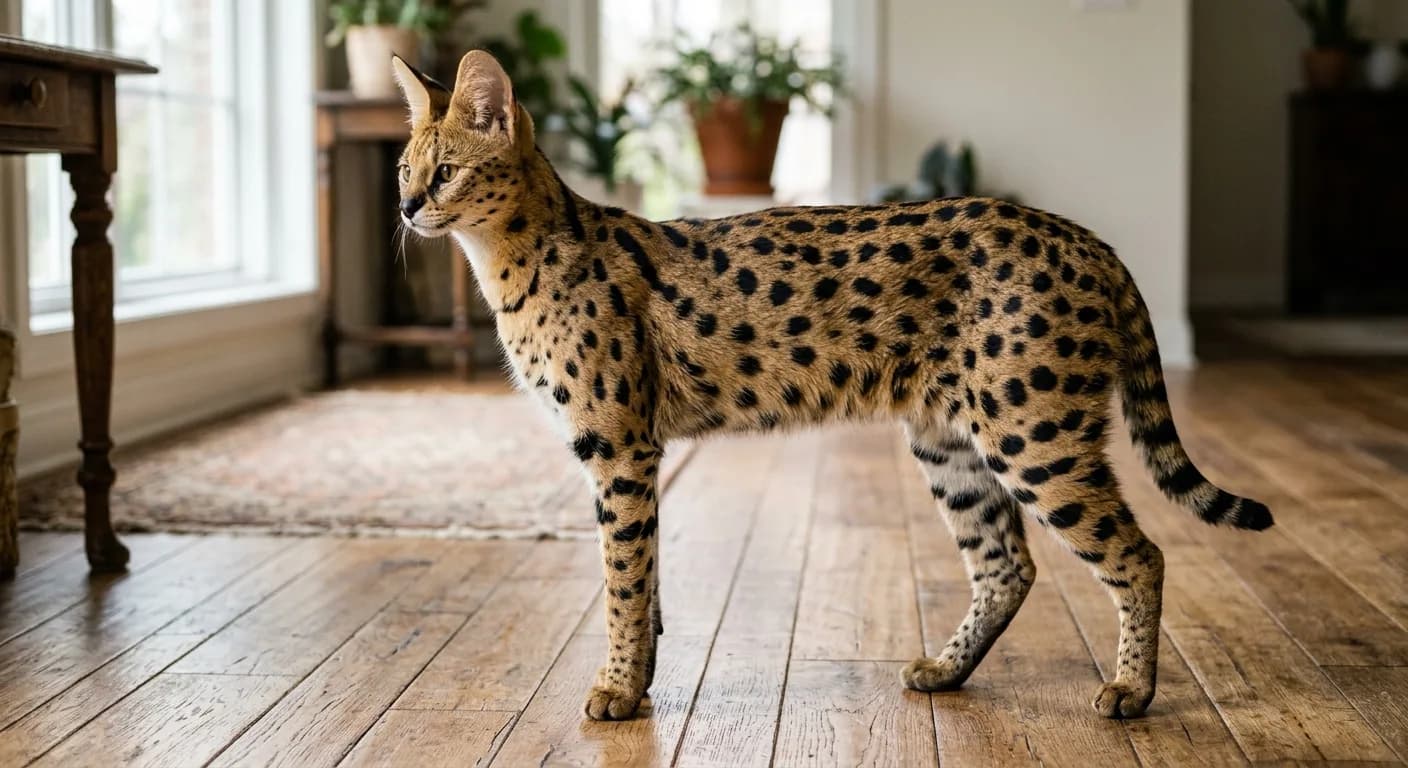
When people ask what cat is worth $20,000, the answer is almost always a top-tier F1 savannah cat, usually a female from a proven bloodline. F1 females sit at the very top of the savannah market because they are both the most serval-like in look and the rarest fertile cats in the breeding world.
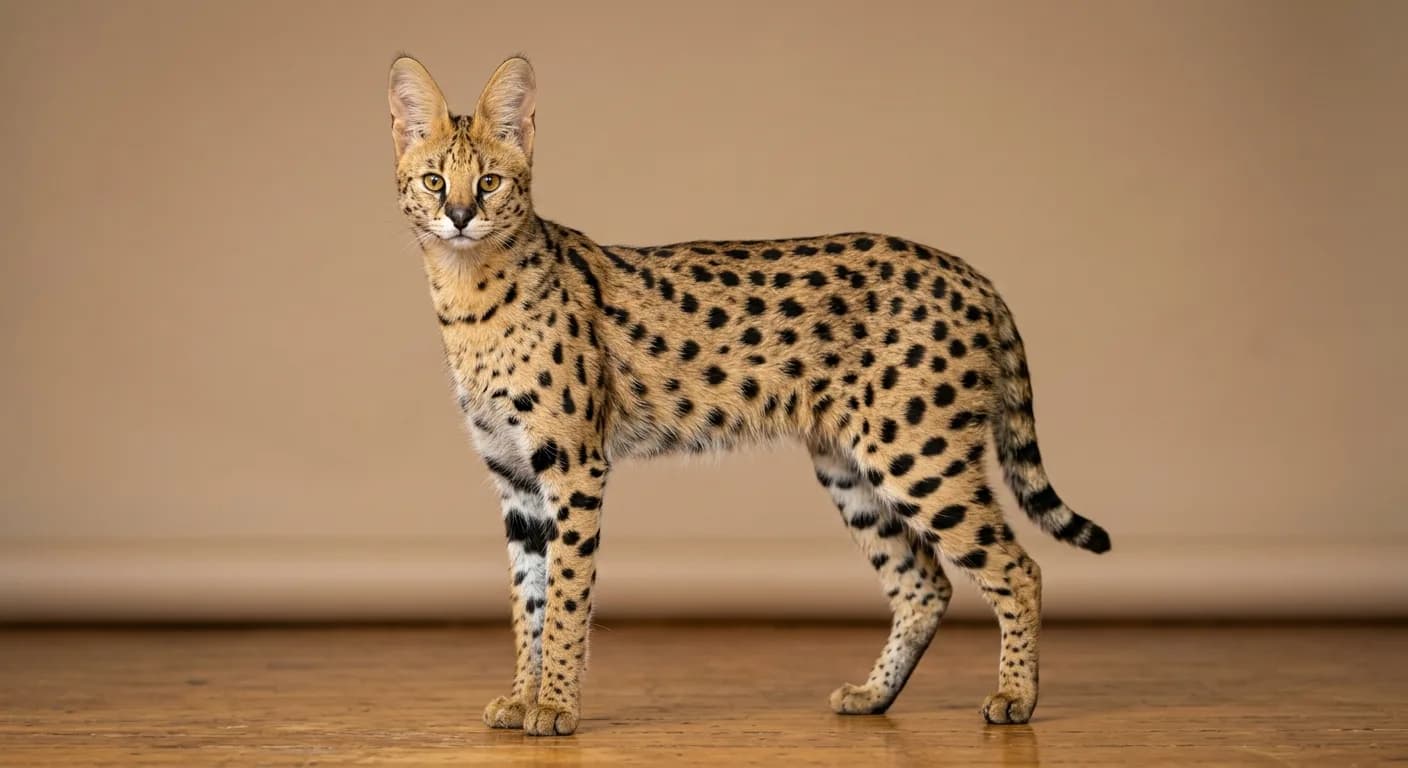
The savannah actually held a Guinness World Record for the tallest domestic cat, which fuels the mystique and the price. A $20,000 cat is buying you maximum serval appearance: a tall, leggy frame, huge ears, and bold spotting that reads as genuinely wild. It is not buying you an easy house pet. F1 cats are intense, demanding, and legally restricted in many places, which is why the people paying $20,000 are typically experienced exotic-cat owners, not first-time cat parents.
- The leggy, spotted, dog-like personality most buyers fall in love with is fully present in F4 and later savannahs at a fraction of the price, with none of the legal headaches. Spend the F1 money on a great later-generation cat plus years of premium care instead.
If you are spending anywhere from a few thousand to over twenty thousand dollars on a Savannah, a free MyPetID profile is a cheap way to protect it, keeping purchase records, generation paperwork, and vet history together with a QR tag for fast recovery.
How Much Is an F1 Savannah Cat?
An F1 savannah cat typically costs between $12,000 and $20,000 or more, with females generally priced higher than males. F1 is the most expensive generation because the kitten has one purebred serval parent, making it roughly 50% serval, the closest you can legally get to a wild cat in a domestic package.

63-inch multi-level cat tree with scratch posts, hammock, plush perches, and dangling toys. Vertical territory is non-negotiable for high-energy climbing breeds like the Bengal.
Petful may earn a commission when you click through to Chewy, at no extra cost to you.
That price reflects everything that makes F1s rare: the difficulty of breeding a serval to a domestic cat, the small litters, the permits and specialized facilities breeders need, and the intense demand for the most serval-like cats. Because male savannahs are sterile this early in the line, fertile F1 females are especially scarce, which pushes their price toward and past the $20,000 mark.
Before you chase an F1, understand what you are signing up for. We cover the full reality in our F1 Savannah cat ownership guide, but the short version is that these are powerful, high-energy cats with strong wild instincts, big space needs, and meaningful legal restrictions. Petful’s guide to are Savannah cats legal has the full breakdown.
- Because early-generation savannahs are close to their wild serval ancestor, many U.S. states and cities regulate or ban them outright, often using generation cutoffs (commonly F4 or F5). Always confirm your state and local laws in writing before buying any early-generation savannah. Penalties can include confiscation of the cat.
The Serval Connection: Why the Wild Parent Matters to Price
Every savannah traces back to the African serval, a medium-sized wild cat with very long legs and oversized ears. The serval is the reason savannahs look the way they do, and it is the reason the early-generation savannah cat price is so high. Understanding the serval also explains why most people should buy a later-generation cat rather than the wild parent itself.
People sometimes shop for a savannah and a pet serval at the same time, assuming they are interchangeable exotic options. They are not. A serval is a wild animal with wild needs, and keeping one is a different undertaking entirely, legally, financially, and ethically. Before anyone considers going closer to the wild end of this spectrum, they should read our honest look at the real risks of keeping a serval cat, which covers the legal, behavioral, and safety realities that breeders selling F1 kittens do not always spell out.
The takeaway for budgeting: the savannah was created specifically so that families could get the serval's exotic look in a cat that fits a normal home. The later the generation, the more that promise holds true, and the lower the price.
- A serval is a wild cat. A savannah is a domestic breed descended from one. The further a savannah is from its serval ancestor (higher F number), the more it behaves like an ordinary house cat, and the less it costs.
True Cost of Owning a Savannah Cat (Monthly and Yearly)
The purchase price is only the start. A savannah is a large, active, long-lived cat, and the recurring savannah cat price after adoption is higher than for an average domestic shorthair. Plan on roughly $200 to $600 per month, depending on your cat's size, health, and your insurance choices.
Here is a realistic monthly breakdown for a single, healthy savannah:

108-oz stainless steel pet fountain with quiet pump and water-level window. Bengals are notoriously water-obsessed; a flowing fountain encourages hydration and pulls them away from sinks and toilets.
Petful may earn a commission when you click through to Chewy, at no extra cost to you.
| Expense | Typical Range | Notes |
|---|---|---|
| High-quality food | $30 to $100 | Large, active cats eat more; many owners feed premium or raw |
| Litter and supplies | $25 to $50 | Big cats use big boxes and more litter |
| Routine vet and meds | $30 to $100 | Wellness, parasite prevention, dental |
| Pet insurance | $20 to $80 | Strongly recommended for a high-value cat |
| Enrichment and toys | $20 to $40 | Savannahs destroy boredom and cheap toys alike |
| Estimated total | $200 to $600 | Before any emergencies or boarding |
One-time setup costs
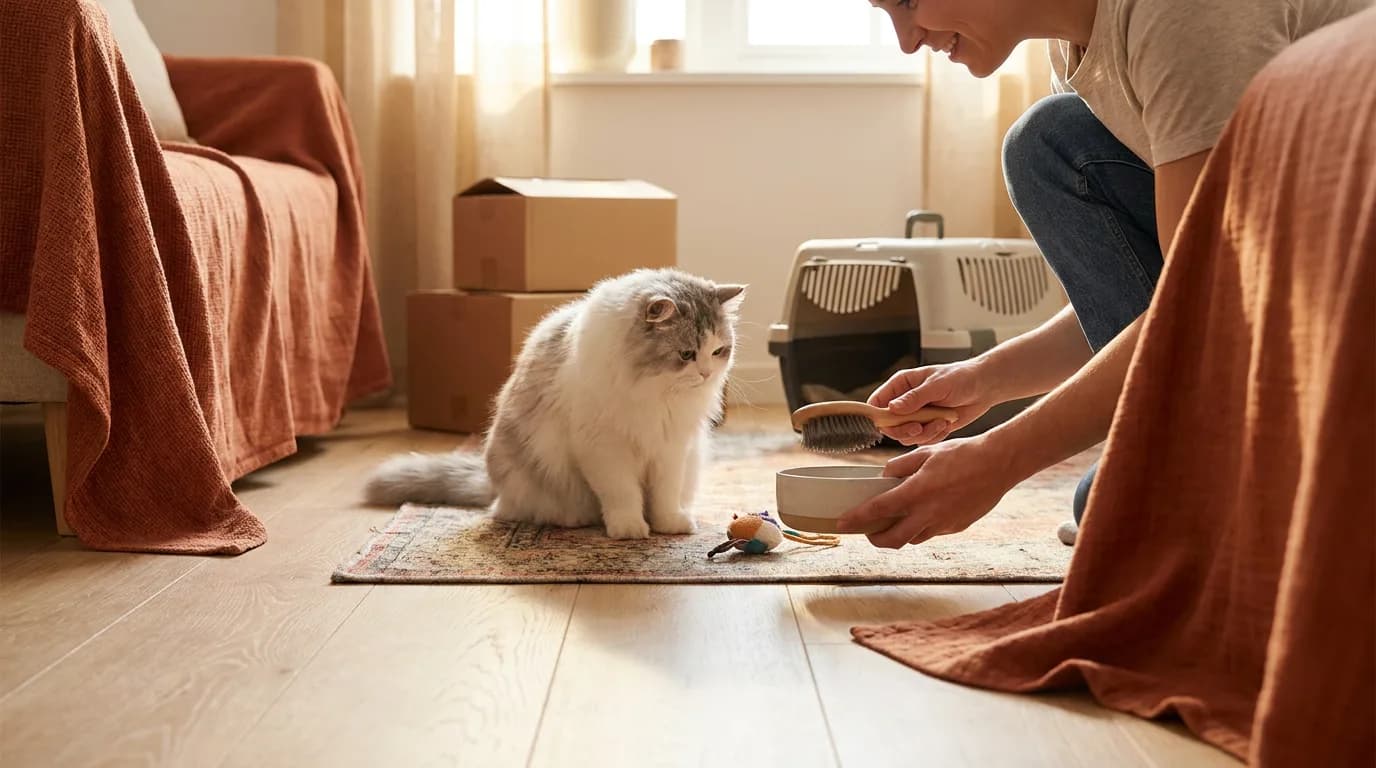
Beyond the kitten itself, expect to spend on getting your home savannah-ready. A tall cat tree, secure leashes and harnesses (many savannahs walk on a leash), sturdy carriers, and high-sided litter boxes add up fast. Initial setup commonly runs $400 to $1,500, and that is before the spay or neuter your breeder contract will likely require if you bought a pet-quality kitten.
Vet care and insurance
Savannahs typically live 12 to 15 years, and sometimes into their late teens, so the lifetime vet bill is substantial. Early generations may also need a vet experienced with hybrids. Because the purchase price is so high, pet insurance is a sensible hedge, and the monthly premium is small next to the cost of replacing or treating a five-figure cat.
- A high-value, escape-artist cat is exactly the kind you do not want to lose. Microchipping plus a visible ID tag is cheap insurance, and many jurisdictions require registration for early-generation hybrids anyway.
Adopting vs. Buying a Savannah Cat
Buying from a breeder is the most common path, but it is not the only one. Savannah-specific rescues and breed-aware shelters do exist, usually rehoming later-generation cats whose owners underestimated the energy and commitment involved. Adoption fees are dramatically lower than breeder prices, often in the $150 to $500 range, sometimes more for a young or early-generation cat.
The trade-off is availability and information. You rarely get a kitten, the generation may be uncertain, and you may not have a full health or behavioral history. For many families, that trade-off is well worth it: you get the savannah look and personality at a fraction of the savannah cat price, and you give a cat that did not work out elsewhere a stable home.
If you do buy from a breeder, vet them hard. A trustworthy breeder is TICA-registered, health-tests their cats, lets you see where the kittens are raised, provides a written contract and health guarantee, and is candid about generation and legal restrictions. Anyone pressuring you with deposits, dodging questions about papers, or quoting prices far below the ranges above should be a hard pass.
How to Budget for a Savannah Cat
Put the numbers together before you fall in love with a kitten photo. A sensible savannah budget has three parts: the purchase price for your chosen generation, a one-time setup fund of $400 to $1,500, and a monthly reserve of $200 to $600 for ongoing care plus an emergency cushion.
For most households, the math points to a later-generation cat. An F5 or F6 savannah at $1,000 to $2,000 gives you the breed's signature look and affectionate, playful temperament, is legal in far more places, and leaves room in the budget for the premium food, enrichment, and insurance that keep this athletic cat healthy. To see exactly what that temperament and size look like in daily life, our Savannah cat breed profile walks through energy level, trainability, and household fit. The serval-adjacent F1 fantasy is real, but it is a specialist's cat with a specialist's budget and legal exposure.
One more cost worth naming: time. Savannahs are intelligent, athletic, and easily bored, and a savannah that is under-exercised becomes a savannah that climbs your curtains, opens cabinets, and turns on faucets. The breed thrives with leash walks, puzzle feeders, tall climbing space, and daily interactive play. That is not a line item on a receipt, but it is the difference between a savannah that justifies its price and one that ends up in a rescue. Factor your available time and energy into the decision as seriously as you factor the dollars.
Whatever generation you choose, confirm three things in writing before money changes hands: the cat's exact generation, its TICA registration and health testing, and the legality of that generation where you live.
A Savannah cat costs roughly $1,000 to over $20,000, depending on generation. Later generations (F4 to F7) usually run $1,000 to $2,500, while early F1 cats commonly cost $12,000 to $20,000 or more. Budget an additional $200 to $600 per month for ongoing care.
Savannah cats are expensive because early generations are hard to breed: pairing a wild serval with a domestic cat produces small, rare litters, males are sterile through about the F4 generation, and reputable breeders invest in permits, genetic health testing, TICA registration, and socialization. All of that is built into the price.
A top-quality F1 Savannah cat, usually a female from a proven bloodline, is the cat most often worth around $20,000. F1 cats are roughly 50% serval, making them the rarest and most serval-like generation, and fertile F1 females are especially scarce.
An F1 Savannah cat typically costs $12,000 to $20,000 or more, with females priced higher than males. F1 is the most expensive generation because the kitten has one purebred serval parent and is about 50% serval, the closest a domestic savannah gets to its wild ancestor.
It depends on generation and location. Many U.S. states and cities restrict or ban early-generation savannahs (often F1 to F4) while allowing later generations. Always confirm your state and local laws in writing before buying, because penalties can include confiscation.
Later-generation savannahs keep much of the breed's signature look, the tall lean body, large ears, and bold spotting, though the effect is usually a bit softer than an F1. For most owners the personality and appearance are well worth the far lower price and easier legal status.

Coreen Saito is a pet writer and longtime shelter volunteer with more than a decade in animal rescue. She covers cat behavior, breed care, and the small, ordinary science of sharing a life with companion animals, with a particular focus on honest takes about the products and decisions that actually matter. At home in Arizona, she's outranked by Mac (a dog with the loudest opinion in the house), Rebel (a cat who governs by quiet authority), and Meri (an orange tabby who runs the late shift and the laundry basket). She writes about all three, plus the rescues that keep coming through her life, at LifeWithMinty.com.
Sign up for expert-backed reviews and safety alerts all in one place.