Russian Blue Personality: Gentle, Loyal, and Reserved
The Russian blue personality is gentle, quiet, and reserved with strangers but intensely devoted to family, often a one-person cat. Here is what this smart, playful, food-obsessed breed is really like to live with, and who it suits best.
Petful is reader supported. As an affiliate of platforms like Amazon and Chewy, we may earn a commission when you buy through links on this page. There is no extra cost to you.
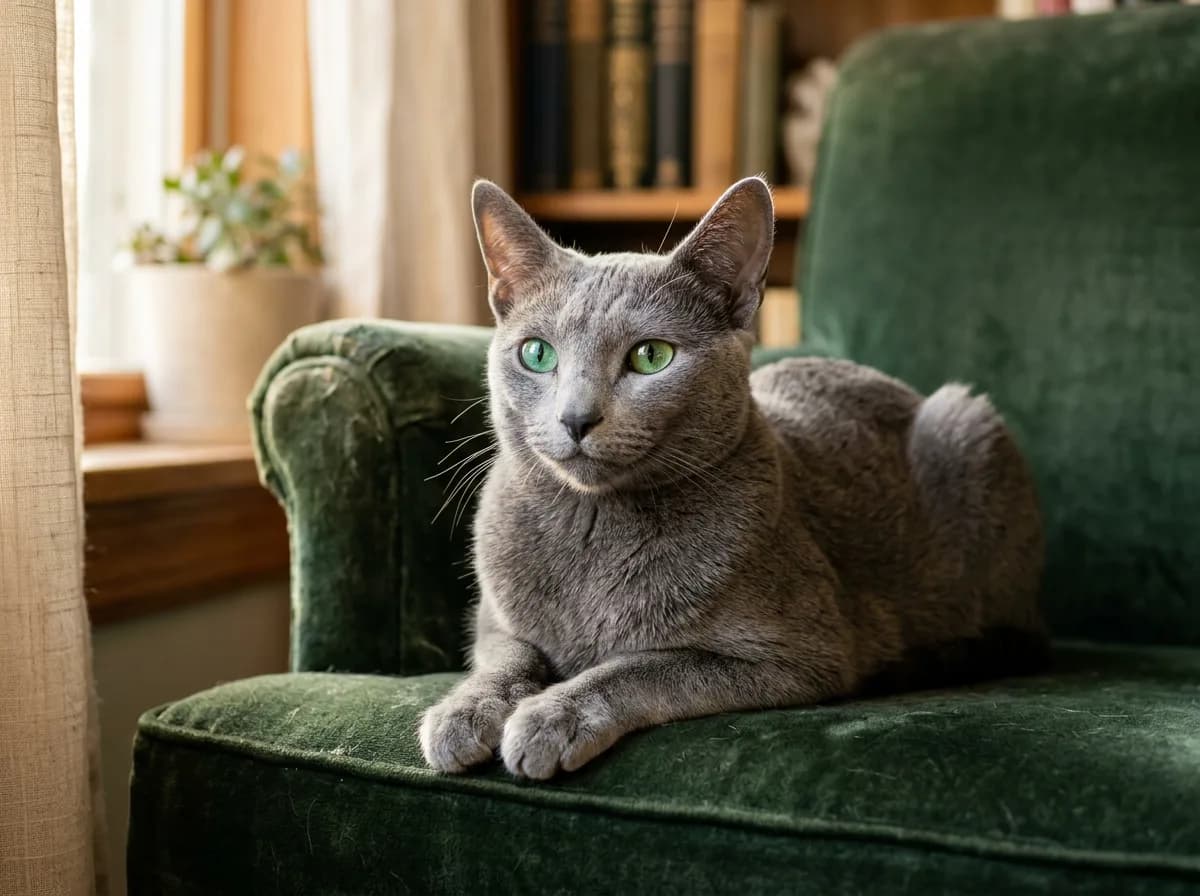
The Cat Fanciers' Association sums up the Russian blue personality in three words that owners echo constantly: gentle, quiet, and intensely devoted, a cat that may take days to trust a houseguest yet will spend years shadowing one chosen person from room to room. The International Cat Association (TICA) describes the breed as "sweet-tempered, loyal," and reserved, and Google's own breed panel tags the Russian blue with six temperament traits: intuitive, devoted, intelligent, sensitive, active, and playful. Put simply, this is a soft-spoken, deeply bonded companion with a hidden goofy streak, not the aloof statue its dignified looks suggest. It just shows that side to family, on its own schedule, and almost never to strangers.
- 1The Russian blue is gentle, quiet, and reserved with strangers but velcro-devoted to its own family, often bonding hardest with one person.
- 2It is highly intelligent and genuinely playful (many learn to fetch) yet calm and well-mannered, not hyperactive.
- 3It thrives on routine, dislikes loud chaos, and is unusually sensitive to its owner's moods.
- 4It is famously food-motivated, which makes portion control the single most important part of its care.
- 5It suits calm homes and busy working owners alike, including many first-time cat parents.

Sign up for expert-backed reviews and safety alerts all in one place.
The Russian Blue Personality in One Snapshot
Before the deep dive, here is the temperament at a glance, drawn from CFA and TICA breed descriptions and the traits Google surfaces for the breed. Use it as a quick gut-check against any grey cat being sold to you as a Russian blue, because temperament is part of the breed standard, not just the coat.
| Trait | What It Looks Like | What It Means for You |
|---|---|---|
| Affection level | Deeply devoted to family, often one-person focused | A true companion cat that wants to be near you, not a decoration |
| With strangers | Shy, cautious, often hides from visitors | Do not expect a social butterfly; give guests time and space |
| Energy | Calm but not lazy, playful in bursts | Daily play, but not a wall-climbing tornado |
| Intelligence | High; learns tricks, fetch, and puzzle toys | Needs mental enrichment or it gets bored |
| Vocal level | Soft-voiced, "converses" mostly about food and attention | Quiet apartment-friendly cat |
| Routine | Loves predictability, dislikes change and chaos | Best in calmer, more stable households |
| Biggest quirk | Food-obsessed | Strict portion control is non-negotiable |
- A genuine Russian blue should act the part, not just look it. CFA and TICA both define the breed as gentle, intelligent, and reserved. A grey kitten that is boisterous, pushy, and instantly friendly with everyone may well be a lovely cat, but those traits lean more domestic shorthair than purebred Russian blue.
Reserved and Shy: The Side Strangers Meet (or Don't)
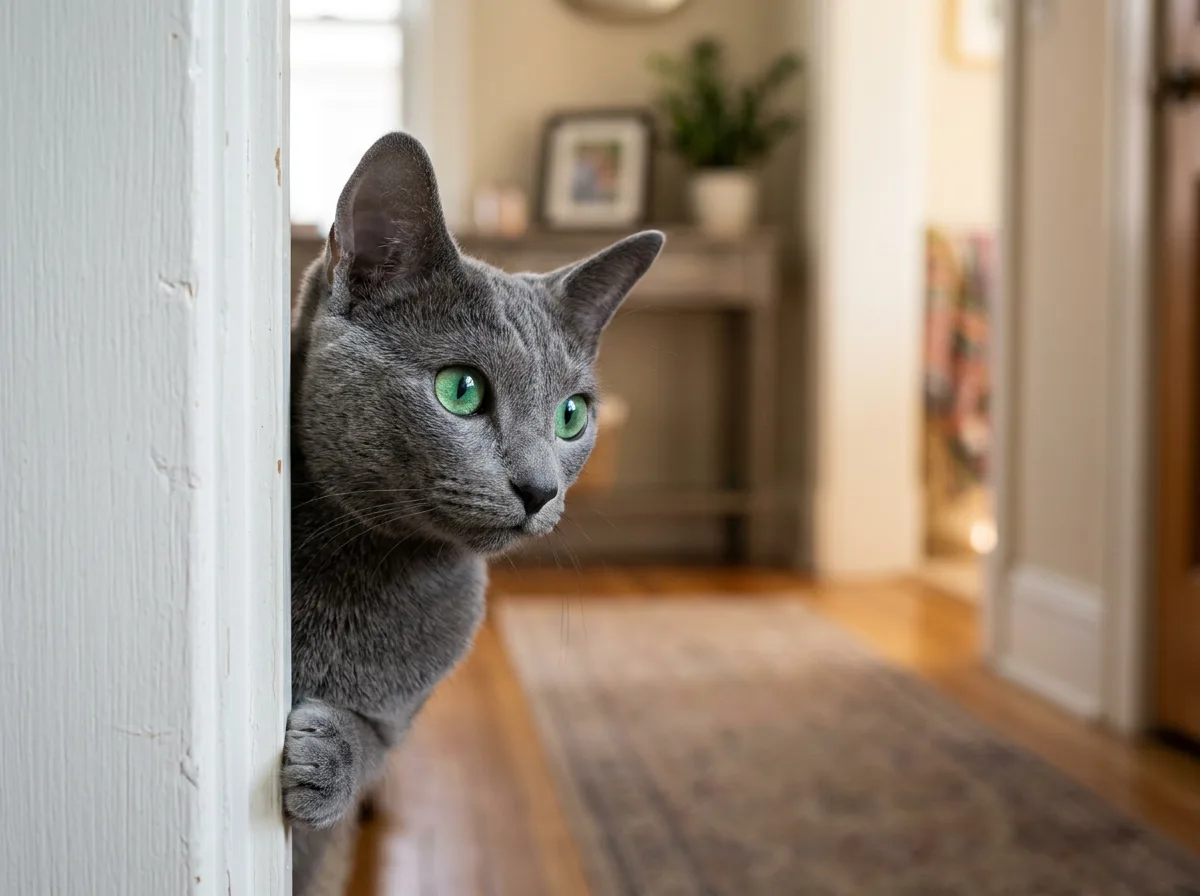
The first thing to understand about the Russian blue personality is that this cat is an introvert. Purina describes the breed as "somewhat aloof with strangers, preferring to observe from a distance and evaluate" before engaging, and that caution is the default setting around anyone outside the household. When the doorbell rings, a Russian blue is far more likely to slip under the bed or onto a high shelf than to trot out to greet your guests. Large gatherings, parties, and noisy unfamiliar crowds are genuinely stressful for them.

Never Scoop Again® with the Whisker Litter-Robot, the smart self-cleaning automatic litter box. Monitor visits and track weights for better overall care in the Whisker® app. Multi-cat friendly.
Petful may earn a commission when you click through to Whisker, at no extra cost to you.
This is not unfriendliness or a bad attitude. It is a sensitive, cautious cat reading a situation it cannot control. Given quiet, time, and no pressure, many Russian blues will eventually emerge to investigate a calm visitor on their own terms. The trade-off is wonderful for the right owner: a cat this discerning with strangers tends to be all the more bonded and demonstrative with the people it has decided to trust.
- New visitors (and new owners) should ignore the cat at first, stay low and quiet, and let curiosity do the work. Chasing, grabbing, or cornering a Russian blue to "say hello" sets the relationship back. Patience is the fastest route to trust with this breed.
Slow to Warm, Then All In
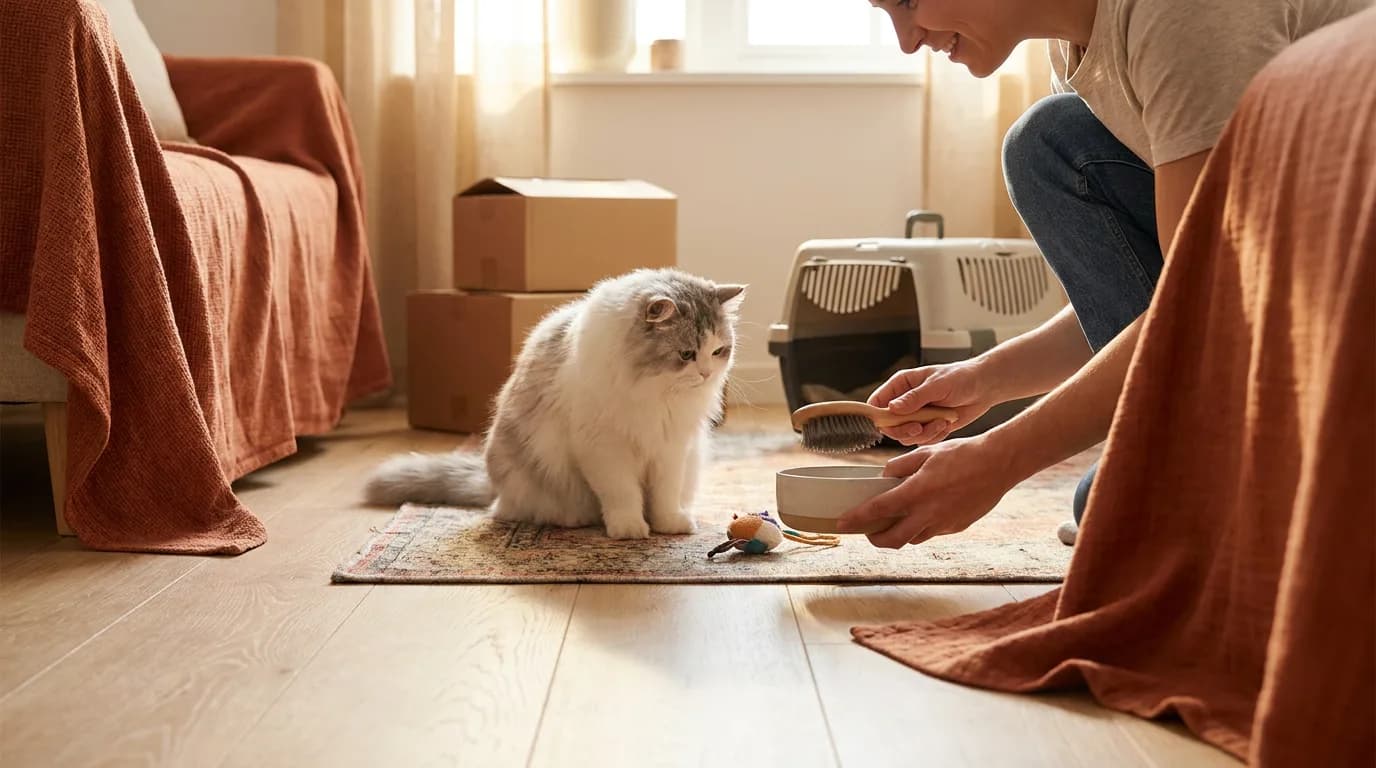
Expect a settling-in period when you first bring a Russian blue home. It is normal for a new Russian blue to spend its first days hiding, eating little, and observing from cover. This caution is exactly why reputable sources stress patience over forcing interaction. Once the cat decides your home is safe and you are its person, the reserved exterior gives way to a remarkably affectionate, follow-you-everywhere companion. The shyness never fully disappears around outsiders, but inside its trusted circle the Russian blue is anything but distant.
Velcro Devotion: Often a One-Person Cat
If the reserved side is what strangers see, devotion is what families live with. Russian blues are classic "shadow" cats. Hill's Pet describes the breed as "a sweet-tempered, loyal cat who will follow her owner everywhere," right down to greeting you at the front door when you come home. They want to be in the same room as their people, supervising from a nearby perch, curling up beside you, and reappearing the moment you sit down.
A defining quirk of the Russian blue personality is the tendency to bond hardest with one particular person. Many Russian blues choose a favorite human and reserve their deepest affection for that individual while remaining warm and friendly with the rest of the household. This one-person leaning is one of the breed's most-loved traits and one of its most-searched, because owners genuinely feel chosen. It does not mean the cat ignores everyone else: a Russian blue that has picked a favorite still lives happily in a full family with children or several adults, it simply has a clear first choice for lap time and sleeping spots.
Crucially, this devotion comes without neediness in the clingy, anxious sense. Russian blues are independent enough to entertain themselves and tolerate a normal workday alone (more on that below). They are loyal companions who want closeness on their own terms, which is a very different thing from a cat that panics the second you leave the room.
Intelligent and Genuinely Playful
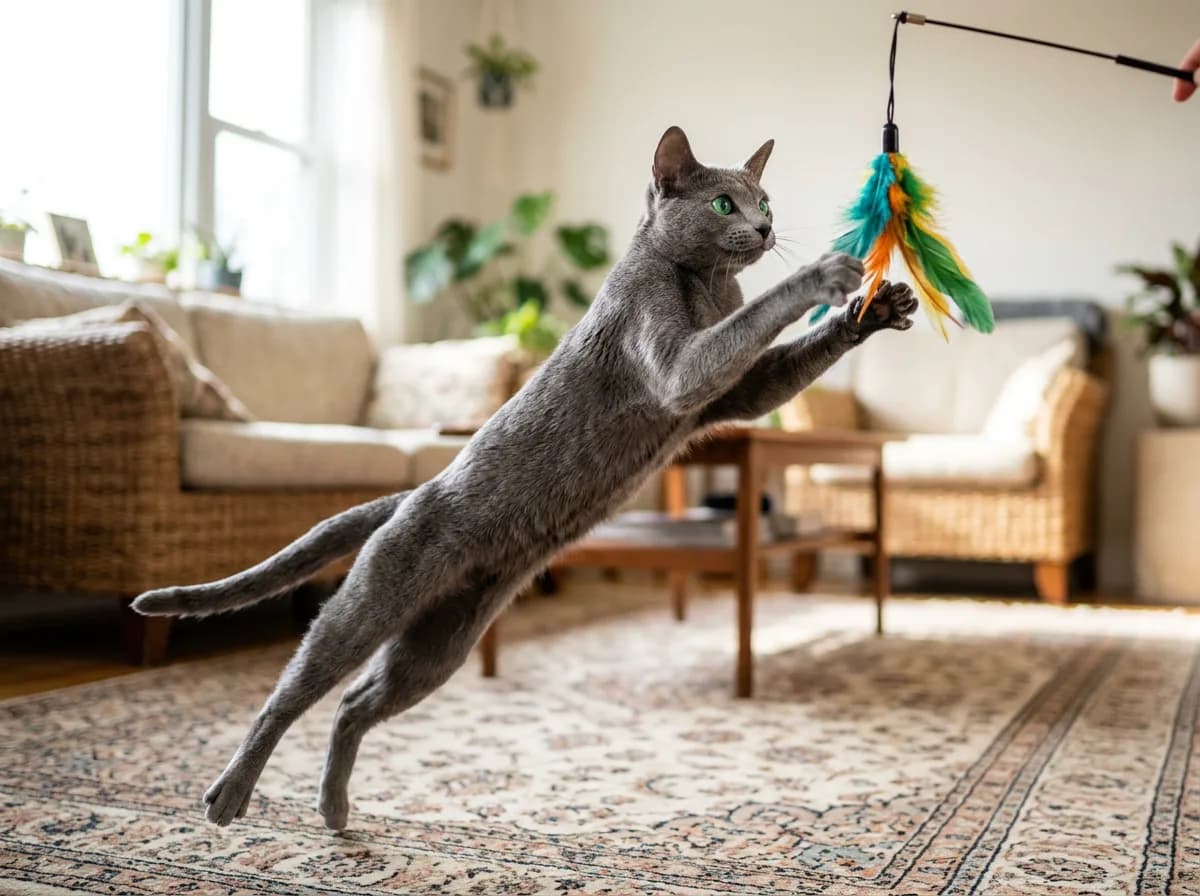
The dignified appearance hides a clever, playful cat. Russian blues are highly intelligent, observant problem-solvers. WebMD notes they "can be taught to play fetch" and are clever enough to figure out how to open doors, cabinets, and puzzle toys. Many Russian blue owners report a cat that genuinely retrieves a thrown toy and brings it back for another round, more like a dog game than typical cat play.
That intelligence needs an outlet. A bored Russian blue can become stressed or invent its own (sometimes mischievous) entertainment, so interactive play and puzzle feeders are not optional extras for this breed. Feather wands, treat-dispensing toys, and short training sessions all land well. The good news is that their cleverness makes them easy to teach: tricks, recall, and even simple commands are within reach for a motivated Russian blue, especially when food is the reward.
- Because Russian blues are smart and food-driven, ten minutes of puzzle feeding or trick training tires them out as much as a wild play session. Rotate a few interactive toys and hide treats around the home to keep that clever brain busy and out of trouble.
Calm but Not Lazy
Here is the balance that makes the breed so livable: Russian blues are playful without being hyperactive. They have real energy and a strong hunting instinct, but they spend it in controlled, thoughtful bursts rather than tearing around the house for hours. ASPCA Pet Insurance captures it as "curious but calm, affectionate but not clingy, and very smart." After a good play session, a Russian blue is happy to settle into a long, dignified nap.
That makes them a great fit for people who want an engaged, interactive cat but not a frantic one. They will play hard when invited, then match your quieter moments by lounging nearby. It is energy you can schedule, which is part of why the breed suits both relaxed homes and busy ones.

63-inch multi-level cat tree with scratch posts, hammock, plush perches, and dangling toys. Vertical territory is non-negotiable for high-energy climbing breeds like the Bengal.
Petful may earn a commission when you click through to Chewy, at no extra cost to you.
Routine-Loving and Sensitive to Chaos
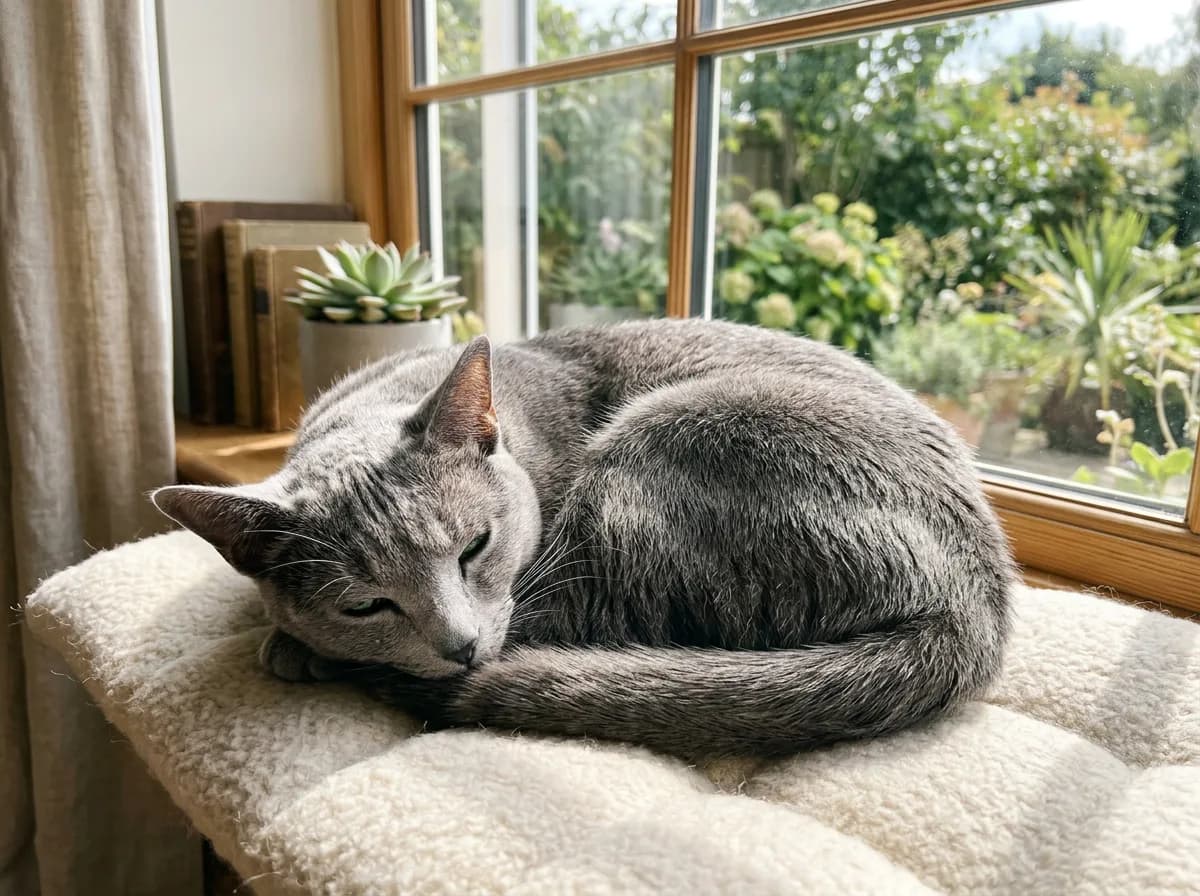
Russian blues are creatures of habit, and this is one of the most practical things to know before bringing one home. The breed does not adapt well to abrupt change, whether that is shifting meal times, rearranged furniture, a chaotic household, or a stream of unfamiliar visitors. A Russian blue notices when the schedule slips, and a soft-voiced cat will let you know it is unhappy about it.
They are also famously particular about cleanliness. Many Russian blues are fastidious about a spotless litter box and may protest (or boycott) a tray they consider dirty. Keep feeding times consistent, the litter box clean, and the home reasonably calm, and you will see this cat at its relaxed, affectionate best.
- Moves, new pets, new babies, and renovations are harder on a Russian blue than on a more easygoing breed. Introduce change slowly, keep the cat's core routine (food, litter, safe spaces) as stable as possible, and give it a quiet retreat. Rushing transitions is the fastest way to trigger hiding or stress behaviors.
Tuned Into Your Moods
One of the most endearing traits in the Russian blue personality is emotional sensitivity. These cats are highly perceptive of their owner's feelings. Owners and breed sources alike describe Russian blues that seem to sense sadness and respond to it, pressing close, patting at a face, or simply staying near when their person is upset. That same sensitivity is the flip side of their dislike of chaos: a cat tuned this finely to the emotional weather of a home naturally prefers that weather to be calm.
The Food Obsession (and Why It Matters)
No honest portrait of the Russian blue personality is complete without the breed's defining vice: it loves to eat. Russian blues are notoriously food-motivated. They will ask for meals repeatedly, lobby hard at the food bowl, and happily overeat if allowed. It is genuinely useful for training (a food-driven cat learns fetch and tricks fast), but it carries a real health cost.
Because the breed combines a big appetite with a calm energy level, Russian blues are prone to obesity, and excess weight is the single biggest practical health risk for the breed. Carrying extra pounds drives knock-on problems like diabetes and joint strain. That is why portion control is the most important job a Russian blue owner has. Measure meals, resist the begging, use part of the daily food ration for training and puzzle feeders, and keep the cat active. Managing that appetite is, in effect, managing the breed's biggest long-term health risk.

108-oz stainless steel pet fountain with quiet pump and water-level window. Bengals are notoriously water-obsessed; a flowing fountain encourages hydration and pulls them away from sinks and toilets.
Petful may earn a commission when you click through to Chewy, at no extra cost to you.
- A Russian blue will act starving even at a healthy weight. Free-feeding this breed is a recipe for obesity and the diabetes and joint problems that follow. Weigh or measure portions, follow your vet's calorie guidance, and treat the persistent food requests as a personality quirk to manage, not a need to satisfy.
Russian Blues With Kids, Dogs, and Other Cats
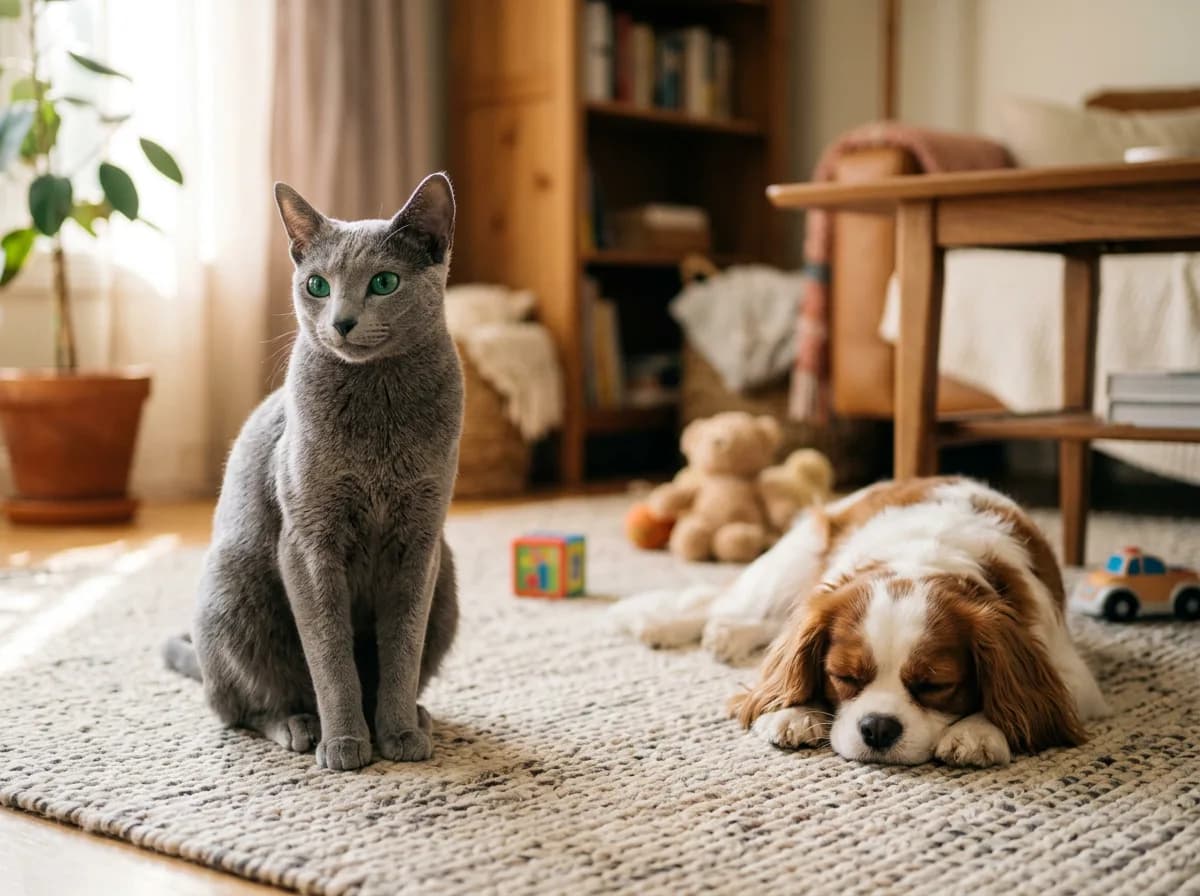
Inside a calm household, the Russian blue is a gracious companion for the whole family. The breed can do well with respectful children and with other pets, including dogs and other cats, particularly when introductions are gradual and the home is not chaotic. The sensitive, routine-loving nature is the key caveat: a Russian blue thrives where kids are taught to be gentle and not to chase, and where new animals are introduced slowly rather than dropped into its space.
- With children: best with older, calmer kids who respect a cat's boundaries. Rambunctious, loud, grabby toddlers are stressful for a sensitive breed, so supervise interactions and give the cat an easy exit.
- With dogs: many Russian blues coexist happily with calm, cat-friendly dogs, especially when raised together. A high-prey-drive or boisterous dog is a harder match.
- With other cats: generally tolerant, particularly with a measured introduction. Their preference for routine means a slow, scent-first introduction beats a sudden face-to-face.
The same care you would take introducing any reserved breed pays off here. For owners weighing a calm, family-friendly alternative, the plush and easygoing British Shorthair is a popular comparison, and the famously laid-back Scottish Fold is another gentle, round-faced choice worth a look.
Good for First-Time Owners and Busy Households
One of the breed's quiet superpowers is how well its personality fits modern life. Russian blues are widely considered a great choice for first-time cat owners and for working people. They are clean, low-maintenance in grooming, soft-voiced rather than loud, and independent enough to handle a normal workday without falling apart. Several breed sources note they "don't mind too much if you are away at work all day" and will happily find a quiet nook to nap in until you return.
For a single professional or a busy family, that combination is ideal: a cat that genuinely bonds and greets you at the door, yet does not demand constant attention or fill the apartment with noise. The main commitments are consistent routine, daily interactive play to satisfy that clever brain, and disciplined portion control. Meet those, and a Russian blue is one of the more forgiving pedigreed cats for a first-timer.
- Beyond temperament, Russian blues are also one of the healthiest, longest-lived pedigreed breeds, commonly reaching 15 to 20 years. For a first-time owner, that means a gentle, manageable personality and, with good weight management, many years of companionship.
Is the Russian Blue Personality Right for You?
The Russian blue is a near-perfect match for some homes and a poor one for others, and temperament is what decides it. This is the cat for you if you want a deeply loyal, gentle, intelligent companion that bonds hard, plays smart, and keeps a quiet, tidy household. It is ideal for calm adults, considerate older children, single professionals, and first-time owners who can commit to routine and portion control.
It is a weaker fit if your home is loud, chaotic, and full of frequent guests or very young children, or if you want an instantly social cat that greets every visitor like a long-lost friend. A Russian blue can adapt to a busier life, but it will always be a sensitive introvert at heart. If you are drawn to the elegant grey-and-green look but want a more outgoing, talkative personality, the Siamese is famously social, while the sturdy, slate-blue Chartreux and the plush, allergy-friendly-reputation Siberian offer other gentle but distinct temperaments to compare.
Gentle, quiet, highly intelligent, and sensitive. Russian blues are reserved and often shy around strangers but deeply devoted to their own family, frequently bonding hardest with one person. They are calm rather than hyperactive yet genuinely playful, love routine, and are notably food-motivated.
Dignified but sweet, not haughty. Around strangers a Russian blue is cautious and may hide, which can read as aloof, but with trusted people it is affectionate, loyal, and quietly playful. Think discerning introvert rather than diva.
Yes, with their own people. Russian blues are loving "shadow" cats that follow their favorite humans around and enjoy closeness, though many prefer to be beside you rather than constantly held. They are affectionate but not anxiously clingy.
It varies by cat. Most enjoy lap time and close contact with the person they trust, but the breed values its independence and many would rather sit next to you than be picked up and restrained. Let the cat set the terms and most will seek you out.
Both, depending on who is in the room. They are shy and reserved with strangers (often hiding from visitors) but warm, friendly, and devoted with their family once they have bonded. The shyness is caution, not unfriendliness.
Often, yes. Many Russian blues form an especially strong bond with one favorite person while staying friendly with the rest of the household. This one-person devotion is one of the breed's most beloved traits.
For the right home, excellent. They are clean, quiet, intelligent, loyal, and among the healthiest, longest-lived breeds. They suit calm households and busy working owners alike, as long as you provide routine, daily play, and strict portion control.
Generally yes, with care. They do well with gentle, respectful older children and with calm, cat-friendly dogs, especially after slow introductions. Their sensitivity means loud, chaotic, or grabby environments are harder on them.
Yes. They are low-maintenance to groom, soft-voiced, independent enough for a workday alone, and forgiving in temperament. The main commitments are keeping a consistent routine, offering daily interactive play, and controlling portions to prevent obesity.
The main downsides are shyness with strangers and stress around chaos or change, a strong dislike of disrupted routines, a clever streak that demands mental stimulation, and a serious food obsession that makes obesity a real risk without disciplined portion control.
Breeds like the Siamese and Sphynx are typically considered the most clingy and attention-demanding. The Russian blue is devoted and follows its person around but is more independent, wanting closeness on its own terms rather than constant contact.

Coreen Saito is a pet writer and longtime shelter volunteer with more than a decade in animal rescue. She covers cat behavior, breed care, and the small, ordinary science of sharing a life with companion animals, with a particular focus on honest takes about the products and decisions that actually matter. At home in Arizona, she's outranked by Mac (a dog with the loudest opinion in the house), Rebel (a cat who governs by quiet authority), and Meri (an orange tabby who runs the late shift and the laundry basket). She writes about all three, plus the rescues that keep coming through her life, at LifeWithMinty.com.
Sign up for expert-backed reviews and safety alerts all in one place.