Is My Grey Cat a Russian Blue Mix? How to Tell for Sure
Wondering if your grey cat is a Russian Blue mix? Most grey cats are domestic shorthairs or mixes, not purebreds. Here are the tells that separate a true Russian Blue from a look-alike, plus what the common mixes look like and cost.
Petful is reader supported. As an affiliate of platforms like Amazon and Chewy, we may earn a commission when you buy through links on this page. There is no extra cost to you.
A Russian Blue mix is what most grey cats actually are, and breed registries back this up: purebred cats make up only about 1 to 2 percent of the cat population, so a grey cat without breeder papers is far more likely to be a domestic shorthair or a Russian Blue mix than a true pedigreed Russian Blue. That does not make your cat any less special. It just means the silver sheen, green eyes, and sweet personality you fell for can come from mixed ancestry, a little Russian Blue in the family tree, or pure coincidence. This guide walks through the exact tells that separate a true Russian Blue from a grey domestic shorthair, what the common mixes look like, and whether a mix inherits the famous temperament and lower-allergen coat.
- 1Most grey cats are domestic shorthairs or Russian Blue mixes, not purebreds.
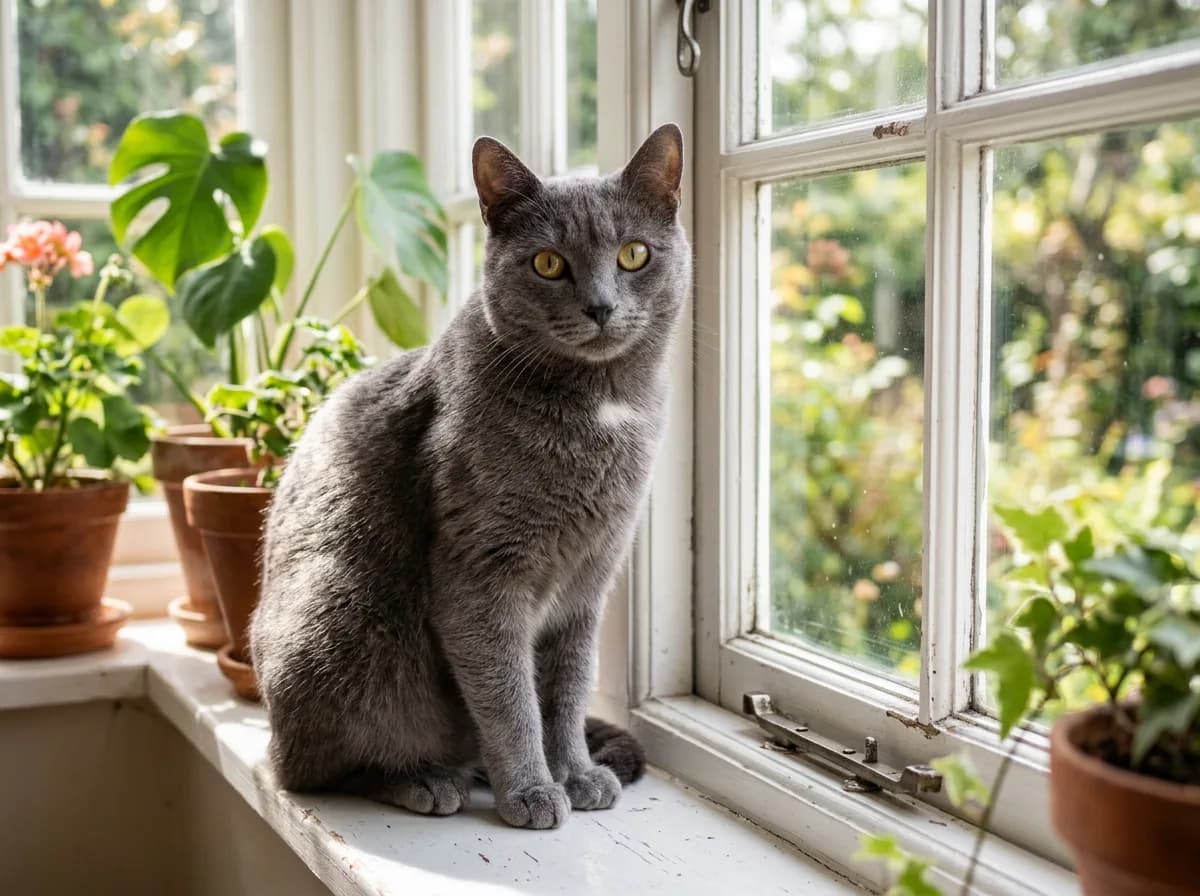
- 2A true Russian Blue has a dense double coat with silver tipping, vivid emerald green eyes, and mauve paw pads.
- 3Yellow or gold eyes and a thin single coat point to a domestic shorthair, not a Russian Blue.
- 4Green eyes alone do not make a cat a Russian Blue.
- 5A DNA test is the only way to confirm breed ancestry in a cat without papers.

Sign up for expert-backed reviews and safety alerts all in one place.
What Is a Russian Blue Mix?
A Russian Blue mix is a cat with one purebred or part Russian Blue parent and one parent of another breed or, far more often, an unknown domestic background. Because the Russian Blue's signature blue-grey color is controlled by a recessive dilute gene that already exists across the general cat population, a kitten can look strikingly "Russian Blue" without carrying much, or any, actual Russian Blue lineage.
That is the single most important thing to understand. The Cat Fanciers' Association (CFA) and The International Cat Association (TICA) only certify a cat as a Russian Blue when it descends from a documented, registered Russian Blue line. A grey shelter cat with a pretty coat is, in registry terms, a domestic shorthair (sometimes informally called a "Blue Domestic Shorthair"), not a Russian Blue, no matter how much it resembles one.
- Breeders use "Russian Blue mix" for a cat with one Russian Blue parent and one of another breed. Shelters often use it loosely for any grey cat with the right look. Without papers or a DNA test, "mix" is usually a best guess based on appearance, not a confirmed pedigree.
Why so many grey cats get called Russian Blues
True purebred Russian Blues are genuinely uncommon. They have small litters, careful breeders, and waitlists. Plain grey domestic cats, by contrast, are everywhere. So when a grey kitten turns up at a shelter with a soft coat and green-ish eyes, "Russian Blue mix" is an easy and flattering label to reach for. It is rarely wrong in spirit (the cat may well share distant ancestry) and rarely provable without testing.
The Tells of a TRUE Russian Blue
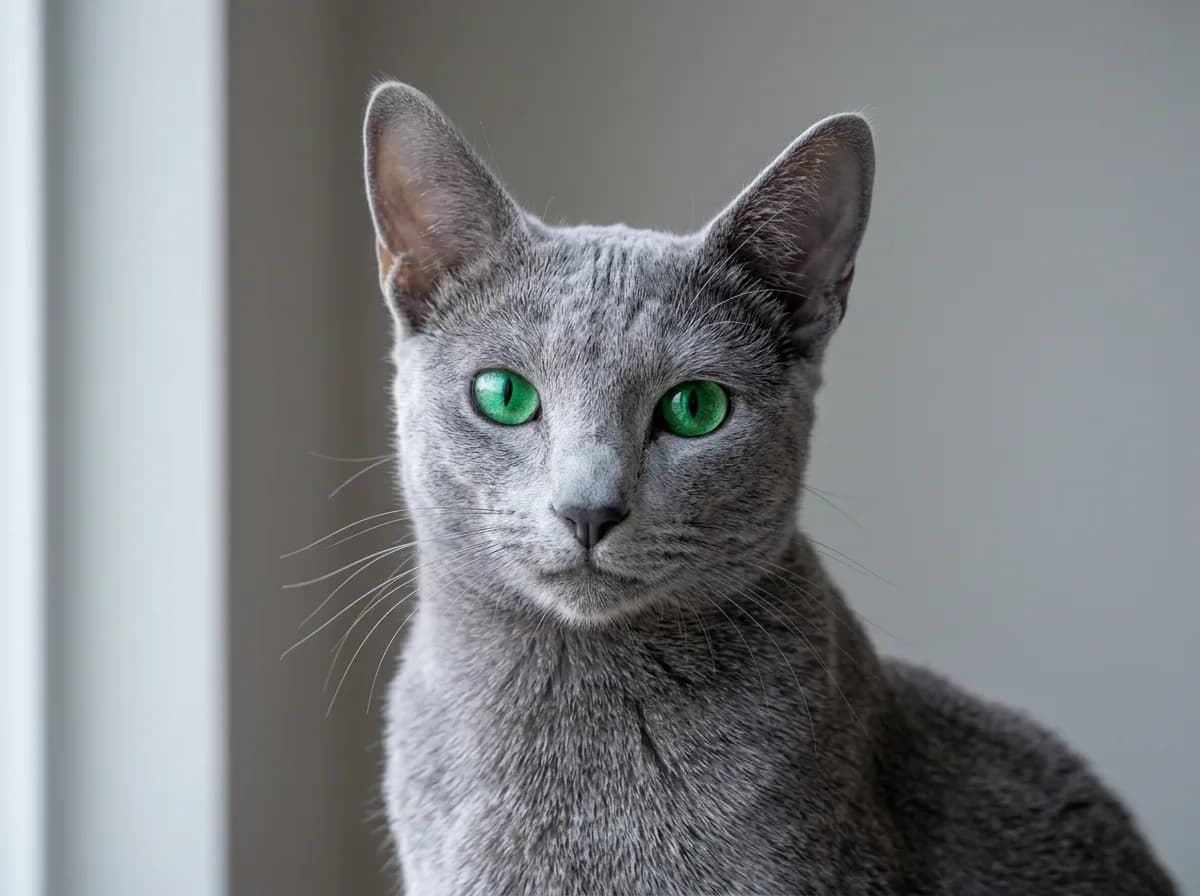
A genuine, breed-standard Russian Blue is not defined by color alone. CFA, TICA, and Wikipedia all describe a specific, narrow set of traits, and a true Russian Blue should show all of them, not just one or two. Use this as your checklist.

Never Scoop Again® with the Whisker Litter-Robot, the smart self-cleaning automatic litter box. Monitor visits and track weights for better overall care in the Whisker® app. Multi-cat friendly.
Petful may earn a commission when you click through to Whisker, at no extra cost to you.
A dense, plush "stand-out" double coat with silver tipping
The Russian Blue's most famous feature is its short, exceptionally dense double coat that stands out from the body rather than lying flat. It is so thick you can trace a pattern in it with your finger and the mark will hold. The guard hairs are tipped in silver, which is what gives the coat its frosted, shimmering sheen as the light moves. A thin, flat, single coat is a strong sign you have a domestic shorthair, not a Russian Blue.
Vivid emerald green eyes
Adult Russian Blues have striking, vivid emerald green eyes. This is one of the most reliable tells. Kittens are born with yellow eyes that gradually turn green as they mature, so a young kitten is harder to judge, but by adulthood the eyes should be a clear, bright green. Yellow, gold, amber, or copper eyes in an adult grey cat point away from a purebred Russian Blue.
Mauve or lavender paw pads (and nose)
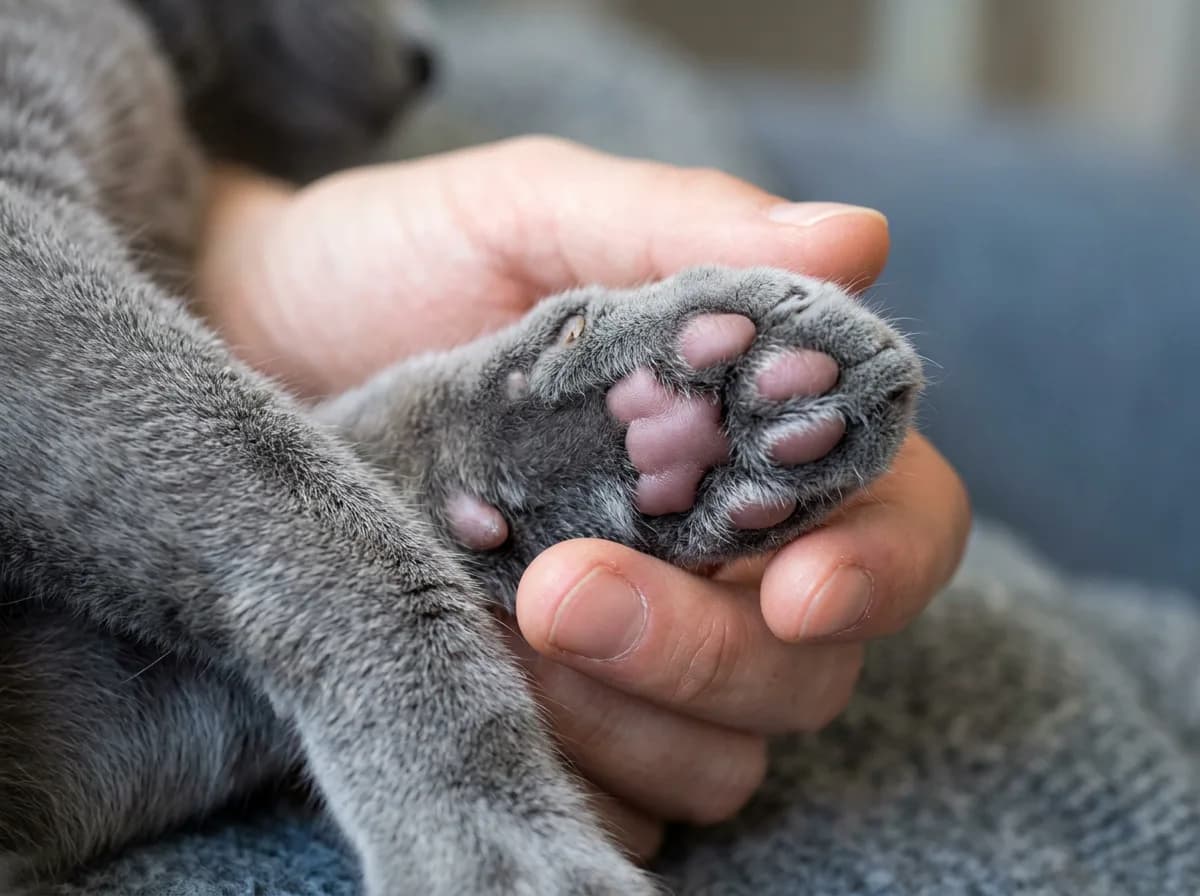
This is the tell most people miss. A true Russian Blue has pinkish lavender to mauve paw pads, and a matching mauve or grey-pink nose. Most grey domestic cats have grey or black paw pads. Flip your cat's paw over and check: mauve pads are a quietly powerful clue in favor of Russian Blue ancestry.
A fine-boned, elegant wedge-shaped body and head
The Russian Blue is medium-sized, long, and elegant, with fine bones and a lean, muscular build (the dense coat makes it look heavier than it is). The head is a smooth wedge with large, wide-set, pointed ears and a subtly upturned mouth that gives the breed its famous "Mona Lisa smile." A round, stocky, heavy-boned grey cat is more likely a British Shorthair type or a domestic mix than a Russian Blue. Other rounder blue breeds like the British Shorthair and the woolly-coated Chartreux are commonly confused with the Russian Blue but have very different body types and eye colors.
Registration papers
For a cat to be a true, confirmed purebred Russian Blue, the breeder should provide registration papers tracing the cat to a recognized Russian Blue line (CFA, TICA, or another major registry). No papers does not mean your cat has no Russian Blue in it, but it does mean you cannot call it a purebred. For more, see Petful’s guide to Russian Blue cat prices.
- Check four things at once: (1) Are the eyes vivid green, not gold? (2) Is the coat dense and "stand-out," not thin and flat? (3) Are the paw pads mauve, not grey or black? (4) Is the body fine-boned and elegant, not round and stocky? Yes to all four means a strong Russian Blue look. Even then, only a DNA test or papers confirm the breed.
True Russian Blue vs Grey Domestic Shorthair vs Russian Blue Mix
Here is the side-by-side that settles most "is my cat a Russian Blue?" questions. A mix often sits in between: it may show the blue coat but carry the gold eyes or single coat of its domestic parent.
| Trait | True Russian Blue | Grey Domestic Shorthair | Russian Blue Mix |
|---|---|---|---|
| Coat | Dense double coat that stands out, silver-tipped sheen | Often a single, flatter coat | Sometimes plush, sometimes single; varies |
| Eye color | Vivid emerald green (adults) | Often yellow, gold, or copper | Green, gold, or in-between; varies |
| Paw pads | Mauve or lavender | Usually grey or black | Mauve or grey; varies |
| Body type | Fine-boned, elegant, wedge head | Any build, often sturdier | Often a blend of both parents |
| Color | Solid blue-grey only (in CFA) | Any color, including grey, tabby, tuxedo | Often blue-grey, may show faint tabby ghost markings |
| Papers | Yes, from a registered line | None | None |
| Confirmed by | Pedigree papers | N/A (it is a mixed cat) | DNA test only |
- A solid Russian Blue should have no visible tabby markings. If your grey cat shows faint stripes on its legs, tail, or forehead in bright light ("ghost tabby" markings), that is a sign of domestic or tabby ancestry. It is common in Russian Blue mixes and rules out a purebred.
Common Russian Blue Mixes and What They Look Like
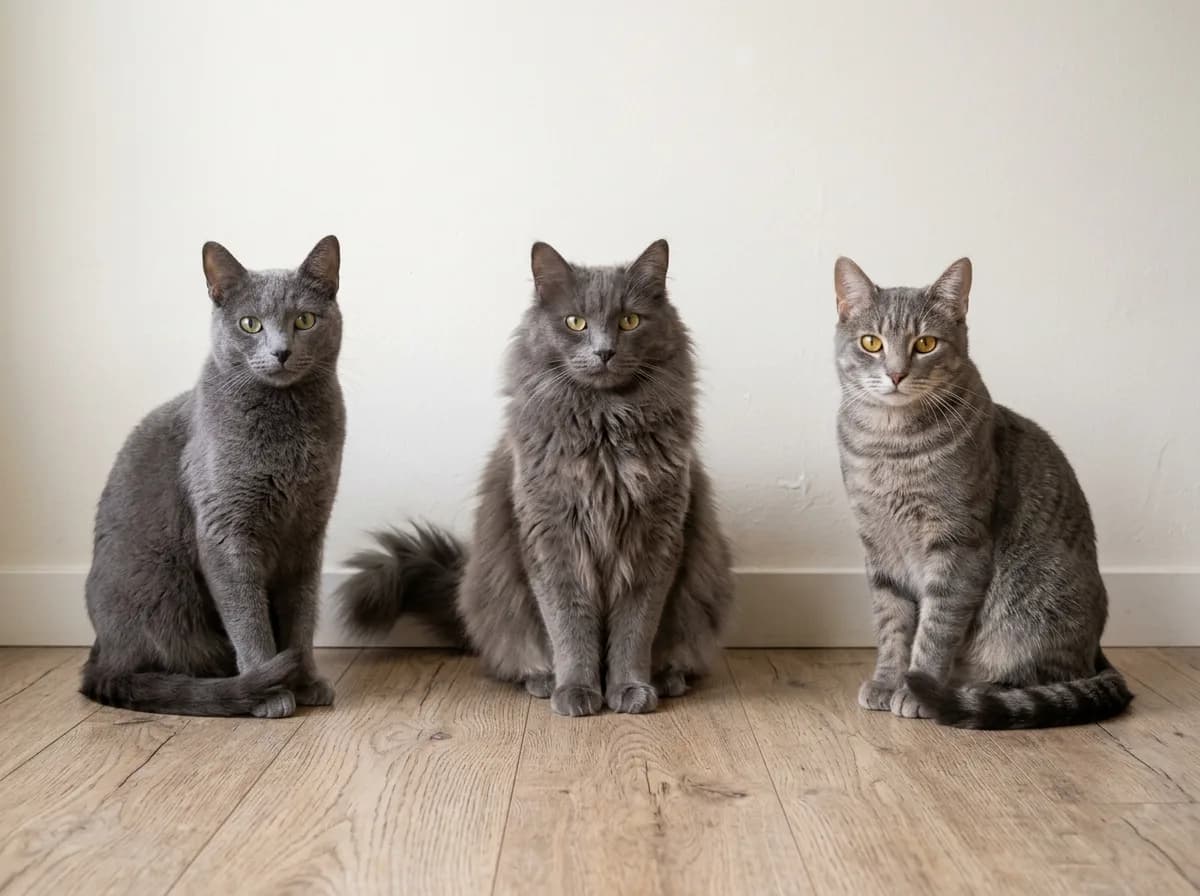
Because the blue coat can pair with almost anything, Russian Blue mixes vary widely. These are the combinations people search for and adopt most often.

63-inch multi-level cat tree with scratch posts, hammock, plush perches, and dangling toys. Vertical territory is non-negotiable for high-energy climbing breeds like the Bengal.
Petful may earn a commission when you click through to Chewy, at no extra cost to you.
Russian Blue x domestic shorthair
This is by far the most common "Russian Blue mix" you will meet, especially from shelters. The result is usually a short-haired grey cat that may have the soft coat and some of the elegance of a Russian Blue, but often carries gold or yellow eyes, a slightly sturdier body, or faint ghost tabby markings. This is the classic "looks like a Russian Blue but probably isn't a purebred" cat.
Russian Blue x Siamese
A Russian Blue Siamese mix is a rarer, more deliberate pairing. The look depends heavily on which parent the kitten favors: some come out solid grey and reserved like the Russian Blue, others show the Siamese's pointed coat pattern (a paler body with darker face, ears, legs, and tail), blue eyes, and a much more vocal, outgoing personality. If your grey cat is unusually talkative and people-demanding, a little Siamese in the mix is a plausible reason.
Russian Blue x Maine Coon
A Russian Blue Maine Coon mix is typically a larger, long-haired grey cat. Expect a fluffier blue-grey coat (longer than a true Russian Blue's), a bigger and more robust frame, and often green eyes with yellow rims. These cats tend to be more sociable and "chatty" than a purebred Russian Blue, leaning toward the Maine Coon's friendly, dog-like temperament.
Russian Blue x tabby
A Russian Blue tabby mix usually shows clear tabby striping over a grey or blue-grey base. Because a purebred Russian Blue is solid by definition, visible, consistent tabby markings (not just faint ghost stripes) are a clear sign of tabby ancestry. These cats are charming and common, just not purebred Russian Blues.
- If you have a long-haired cat with classic Russian Blue coloring and type, it may not be a mix at all. The Nebelung is essentially the long-haired version of the Russian Blue, with the same blue coat, silver tipping, and green eyes in a semi-long coat. A genuinely fluffy "Russian Blue" is often either a Nebelung or a Maine Coon cross.
Do Russian Blue Mixes Inherit the Temperament?
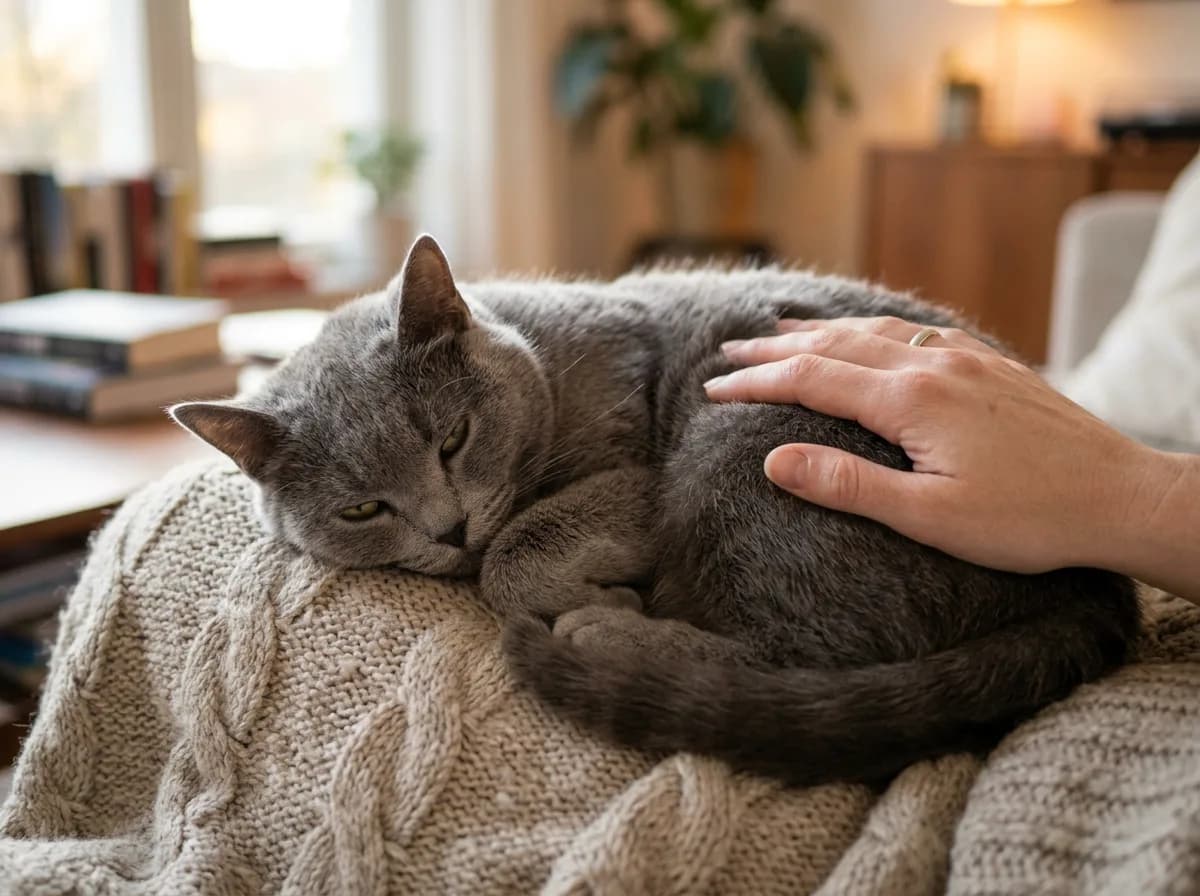
Sometimes, but it is never guaranteed. Purebred Russian Blues are known for being gentle, quiet, intelligent, and reserved with strangers while deeply devoted (often "velcro") to their own family. A mix may inherit some of that, all of it, or very little, depending on the other parent and the individual cat.

108-oz stainless steel pet fountain with quiet pump and water-level window. Bengals are notoriously water-obsessed; a flowing fountain encourages hydration and pulls them away from sinks and toilets.
Petful may earn a commission when you click through to Chewy, at no extra cost to you.
A Russian Blue x domestic shorthair often keeps the calm, sweet nature. A Russian Blue Siamese mix may be far more vocal and demanding. A Russian Blue Maine Coon mix tends to be more outgoing and social. Personality in any cat, purebred or mixed, also comes down to socialization and environment, not just genes. So judge the cat in front of you, not the breed label.
- If you love the Russian Blue's quiet, devoted personality, the good news is you can often find it in a grey shelter mix. Spend time with the actual cat before adopting. A calm, people-bonded grey domestic cat will give you the Russian Blue experience whether or not a DNA test ever confirms the breed.
Can a Russian Blue Mix Be Hypoallergenic?
This is one of the most common reasons people hope their grey cat is a Russian Blue. The honest answer: a mix may be somewhat easier on allergies than the average cat, but it is not reliably hypoallergenic, and neither is a purebred Russian Blue. Petful’s guide to Russian Blue hypoallergenic has the full breakdown.
Purebred Russian Blues have a better-than-average reputation with allergy sufferers for two reasons: several sources report they produce lower levels of the Fel d 1 allergen, and their dense double coat tends to trap dander close to the skin so less is shed into the air. But every cat, including the Russian Blue, produces some Fel d 1 in its saliva and skin, so no cat is truly allergen-free. A mix inherits these traits only partially and unpredictably, so a Russian Blue mix is even less of a sure thing for allergies than a purebred. Breeds like the Siberian are also often cited for the same reduced-allergen reputation, with the same caveats. If allergies are the deciding factor, spend extended time with the specific cat before committing.
Do Russian Blue Mixes Cost Less?
Yes, almost always. A purebred Russian Blue kitten from a reputable, health-testing breeder typically runs from around $500 to $1,500, and show or breeding quality from proven lines can reach $1,500 to $3,000. A Russian Blue mix, by contrast, is usually available through adoption or rescue for roughly $75 to $200, sometimes less, which is one of its biggest appeals.
The price gap exists because the premium on a purebred pays for documented pedigree, health screening of the parents, and the relative rarity of true Russian Blues. A mix gives you much of the look and often much of the charm for a fraction of the price, but without the papers, the predictable type, or the breeder's health guarantees.
- Be cautious with sellers advertising cheap "Russian Blue" or "Russian Blue mix" kittens for sale online. A grey kitten with no parents to view and no registry paperwork is a domestic mix being sold at a markup. For a real purebred, ask to see the registered parents (and their green eyes and double coats). For a mix, adoption through a shelter or rescue is the honest, affordable route.
Should You DNA Test Your Cat?
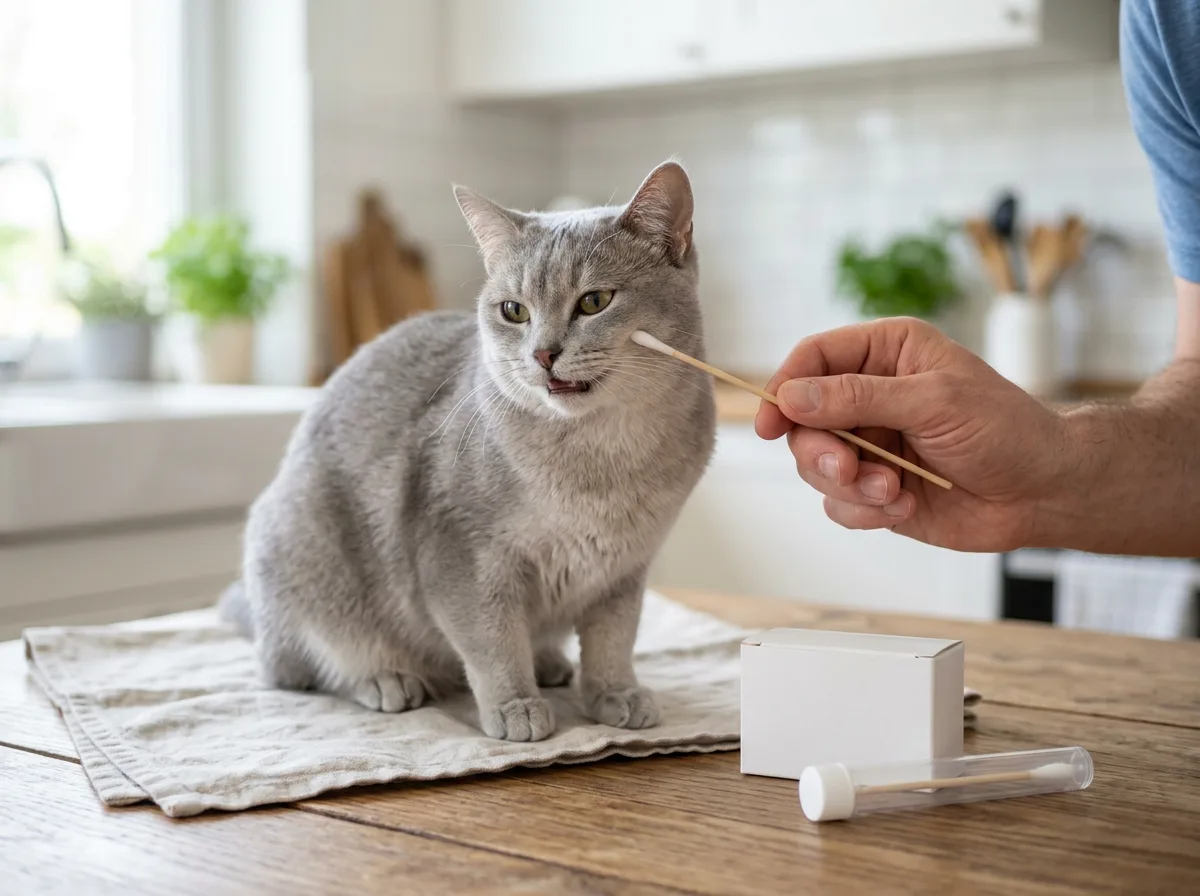
If you genuinely want to know, a feline DNA test is the only way to confirm breed ancestry in a cat without papers. At-home kits (such as Wisdom Panel and Basepaws) analyze a cheek swab and estimate the breed makeup in your cat's background, along with screening for some genetic health risks.
That said, set expectations. A DNA test can estimate breed percentages and flag genetic health markers from a simple cheek swab, but it cannot issue a pedigree or "make" your cat a registered Russian Blue. Only a documented breeding line recognized by CFA or TICA does that. Russian Blue is also a naturally occurring breed that shares ancestry with the broader domestic cat population, so DNA results for grey cats can be ambiguous or show only a small percentage. A test is a fun, informative extra, not a guaranteed "purebred or not" verdict. For most owners, the home trait checklist above answers the practical question well enough.
Are Grey Cats With Green Eyes Always Russian Blue?
No. This is the single biggest myth, so it is worth stating plainly: grey coat plus green eyes does not equal Russian Blue. Plenty of ordinary domestic cats are grey, and plenty of cats of all backgrounds develop green eyes as they mature. Green eyes are one tell among several, and they only point toward a Russian Blue when they appear alongside the dense double coat, the mauve paw pads, the fine-boned wedge body, and ideally papers. A grey cat with green eyes but a thin coat and grey paw pads is almost certainly a handsome domestic shorthair, not a Russian Blue.
Frequently Asked Questions
Look for partial Russian Blue traits combined with signs of other ancestry. A mix may have the blue-grey coat but carry gold or yellow eyes, a single (not double) coat, grey paw pads instead of mauve, faint ghost tabby markings, or a sturdier body. If it shows some but not all of the breed-standard tells and has no papers, "mix" is the best description. A DNA test is the only way to confirm.
Probably not a purebred. Purebred cats are only about 1 to 2 percent of all cats, so a grey cat without breeder papers is most likely a domestic shorthair or a Russian Blue mix. Check for the four key tells: vivid emerald green eyes, a dense stand-out double coat with silver sheen, mauve paw pads, and a fine-boned wedge body. All four together suggest a strong Russian Blue look, but only papers or a DNA test confirm the breed.
A Russian Blue mix is a cat with one Russian Blue parent and one parent of another breed or unknown domestic background. Because the blue-grey color comes from a common recessive dilute gene, a cat can look like a Russian Blue without carrying much true Russian Blue lineage. Shelters also use the term loosely for any grey cat with the right look.
The most commonly confused breeds are the British Shorthair (blue), which is stocky and round with copper or orange eyes, the Chartreux, a stockier French breed with a woolly coat and gold eyes, the Korat, a Thai breed with a heart-shaped face and green eyes, and the Nebelung, which is essentially a long-haired Russian Blue. Plain grey domestic shorthairs are mistaken for Russian Blues most of all.
No. Grey coat plus green eyes does not equal Russian Blue. Many ordinary domestic cats are grey, and cats of all backgrounds can develop green eyes as adults. Green eyes only point to a Russian Blue when combined with the dense double coat, mauve paw pads, and fine-boned wedge body. A grey, green-eyed cat with a thin coat and grey paw pads is almost certainly a domestic shorthair.
Sometimes, but not reliably. Purebred Russian Blues are gentle, quiet, intelligent, and reserved with strangers but devoted to family. A mix may inherit some, all, or little of that depending on the other parent. A Siamese cross is often louder and more demanding; a Maine Coon cross is usually more outgoing. Socialization and environment shape personality as much as genetics, so judge the individual cat.
A Russian Blue mix is usually much cheaper than a purebred. Mixes are commonly available through adoption or rescue for about $75 to $200, while a purebred Russian Blue kitten from a reputable breeder runs roughly $500 to $1,500, and show quality $1,500 to $3,000. The premium on a purebred pays for documented pedigree and parent health testing.
Not reliably. Purebred Russian Blues have a reduced-allergen reputation because they may produce lower Fel d 1 and their dense coat traps dander, but they still produce some allergen and are not truly hypoallergenic. A mix inherits these traits only partially and unpredictably, so it is even less of a sure thing. Anyone with allergies should spend extended time with the specific cat first.
Use the trait checklist, then consider a DNA test. Check the eyes (vivid green in adults), the coat (dense, plush, stand-out, with a silver sheen), the paw pads (mauve or lavender), and the body (fine-boned, elegant, wedge head). The more of these your cat has, the stronger the Russian Blue look. For an actual ancestry estimate, an at-home cat DNA test is the only objective tool, though results for grey cats can be ambiguous.

Coreen Saito is a pet writer and longtime shelter volunteer with more than a decade in animal rescue. She covers cat behavior, breed care, and the small, ordinary science of sharing a life with companion animals, with a particular focus on honest takes about the products and decisions that actually matter. At home in Arizona, she's outranked by Mac (a dog with the loudest opinion in the house), Rebel (a cat who governs by quiet authority), and Meri (an orange tabby who runs the late shift and the laundry basket). She writes about all three, plus the rescues that keep coming through her life, at LifeWithMinty.com.
Sign up for expert-backed reviews and safety alerts all in one place.