Ragdoll Cat Personality: The Affectionate "Puppy Cat" Explained
Discover the full Ragdoll cat personality: the floppy go-limp trait, dog-like "puppy cat" behaviors, affection and lap-cat nature, vocalization, and how they do with kids, dogs, and other cats.
Petful is reader supported. As an affiliate of platforms like Amazon and Chewy, we may earn a commission when you buy through links on this page. There is no extra cost to you.
The Ragdoll cat personality is defined by three words the Cat Fanciers' Association uses in its official breed standard: affectionate, gentle, and placid. The CFA describes Ragdolls as "loving without being demanding," and breeders across all six recognized colors report the same pattern: a large, people-obsessed cat that follows you room to room, flops into your arms, and greets you at the door like a dog. Below, we break down every temperament trait, every "puppy cat" behavior, and the one famous claim about this breed that is mostly true but widely misunderstood.
- 1The Ragdoll temperament is built on affection, docility, and a calm, low-prey-drive disposition that earns the "puppy cat" nickname
- 2Most Ragdolls relax or go limp when held because they trust you, not because of a special anatomical trait. They feel pain normally and need gentle handling
- 3They are intensely people-oriented, dislike being left alone for long stretches, and do best as indoor-only cats
- 4Individual temperament varies by line and upbringing: some Ragdolls are mellow lap cats, others are surprisingly playful and energetic

Sign up for expert-backed reviews and safety alerts all in one place.
What Is the Ragdoll Cat Personality Like?
If you ask ten Ragdoll owners to describe their cat in one sentence, you will hear the same handful of words again and again: sweet, docile, calm, cuddly, and dog-like. This is not marketing. It is the consistent picture painted by breed registries, breeders, and the thousands of owners who post daily in Ragdoll communities. For more, see Petful’s guide to Ragdoll cat prices.
The breed was developed in 1960s California by Ann Baker, who selected specifically for a gentle, relaxed, affectionate temperament. That deliberate selection is why the personality is so predictable today. A well-bred Ragdoll is not a high-strung, aloof cat that hides when guests arrive. It is the cat that walks up to the new person on your couch, climbs into their lap, and falls asleep.
Three core traits define the breed:
Affectionate. Ragdolls bond hard with their humans and want to be near you. They are famous lap cats and will seek out physical contact throughout the day.
Docile and placid. They are even-tempered and slow to anger. Owners routinely describe them as unbothered by noise, chaos, toddlers, and household commotion.
Sociable. They generally welcome people, get along with respectful children, and often live happily alongside dogs and other cats.
For the full picture on size, coat, lifespan, and care alongside temperament, see our complete Ragdoll cat breed profile, which covers everything a prospective owner needs before bringing one home.
The Ragdoll Temperament Traits Table
Different breed registries and vets rate Ragdoll traits slightly differently, but the consensus across the CFA, TICA, and major breed guides lines up closely. Here is an at-a-glance summary of the Ragdoll cat personality, scored on a simple 1-to-5 scale where 5 is the strongest expression of that trait.
Never Scoop Again® with the Whisker Litter-Robot, the smart self-cleaning automatic litter box. Monitor visits and track weights for better overall care in the Whisker® app. Multi-cat friendly.
Petful may earn a commission when you click through to Whisker, at no extra cost to you.
| Trait | Typical Rating (1-5) | What It Means in Daily Life |
|---|---|---|
| Affection toward people | 5 | Constant lap-seeking, following, and cuddling; one of the most loving cat breeds |
| Calmness and docility | 5 | Even-tempered, tolerant of handling, rarely startled or aggressive |
| Good with children | 5 | Patient and gentle with respectful kids; supervise young toddlers |
| Good with dogs and cats | 4 | Usually friendly with cat-savvy dogs and other cats |
| Playfulness | 3 | Enjoys wand toys and fetch in bursts, then returns to lounging |
| Energy level | 2 | Moderate to low; prefers floor level over high climbing |
| Vocalization | 2 | Quiet, soft, chirpy meows; not a loud or chatty breed |
| Independence | 1 | Strongly dislikes being left alone for long periods |
| Prey drive | 2 | Low hunting instinct, part of why they must stay indoors |
- Breed temperament describes the average. Your individual Ragdoll may land higher on energy or playfulness than the chart suggests, especially as a kitten. Meeting the parents and asking the breeder about the line gives you the best read on what to expect.
The "Go Limp" Trait: What Is Actually True
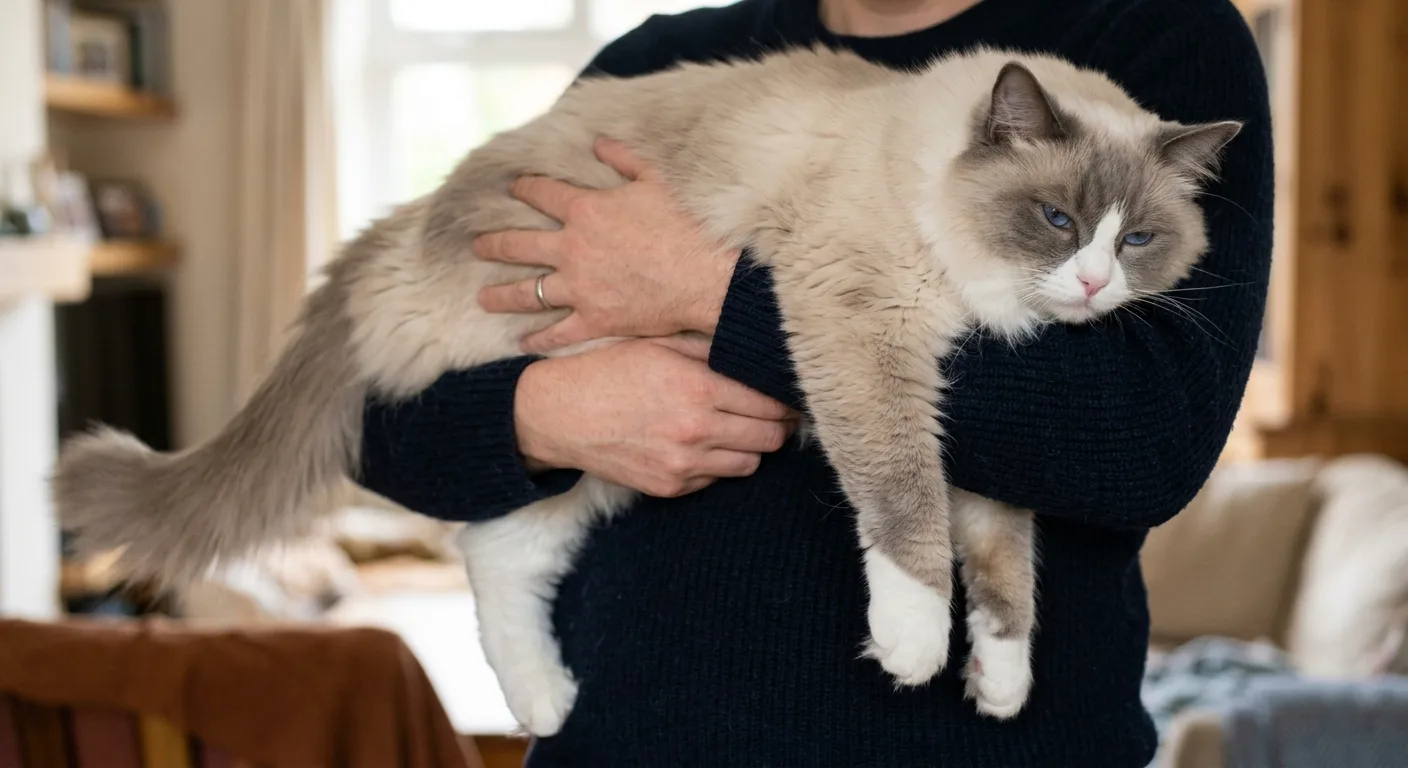
The breed is named for its tendency to go limp and relaxed when picked up, like a child's rag doll. This is the single most famous thing about the Ragdoll cat personality, and it is also the most misunderstood.
Here is the honest version. Many Ragdolls genuinely do relax their bodies and go floppy when you lift or cuddle them. The Spruce Pets describes them as ideal lap cats that "often go limp with pleasure when petted," and owners report this constantly. It is real, and it is charming.
But the floppiness is a behavioral and temperament trait, not a special anatomical one. Some sources, including Hill's Pet Nutrition and Purina UK, push back on the myth that Ragdolls are physically different from other cats. Purina notes plainly that Ragdolls "are not floppy" in any medical sense and "have the same pain threshold as all cats." In other words, a Ragdoll goes limp because it is calm, trusting, and relaxed, not because it cannot feel discomfort or lacks normal muscle tone.
Why this matters: the go-limp reputation has led some people to assume Ragdolls can be handled roughly, dressed up, carried like a stuffed animal, or tolerate anything. They cannot. A Ragdoll feels pain exactly like any cat and deserves the same gentle, supportive handling. The floppiness is a sign of trust you should protect, not exploit.
- A Ragdoll going limp in your arms is showing trust, not invincibility. Always support the back legs and hindquarters when you lift one (they are a large, heavy breed), and teach children to hold them gently and never carry them like a toy.
Why Ragdolls Are Called "Puppy Cats"
The "puppy cat" nickname comes up in nearly every Ragdoll conversation, and it is earned. Ragdolls display a cluster of dog-like behaviors that are unusual in cats:
They follow you everywhere. A Ragdoll will trail you from the kitchen to the bathroom to the bedroom, supervising your day like a little shadow. Owners often describe never being alone in their own home.
They greet you at the door. Come home and there is a good chance your Ragdoll is waiting at the entrance, ready to weave around your ankles and demand attention.
They play fetch. Many Ragdolls will chase a crumpled ball or small toy, bring it back, and drop it for you to throw again. This trainable, interactive play is far more dog than typical cat.
They can learn tricks and their name. Ragdolls are intelligent and respond well to positive reinforcement. With a few treats, many learn to come when called, sit, or perform simple tricks. Some even tolerate harness-and-leash walks.
They want to be involved. Cooking, working, folding laundry: your Ragdoll wants a front-row seat. They are participatory cats, not background decorations.
This dog-like sociability is the heart of why people fall for the breed. If you want a cat that ignores you, a Ragdoll is the wrong choice. If you want a constant companion, it is close to perfect. Their gentle, trainable nature also makes them one of the most beginner-friendly large breeds, a point we expand on in our guide to Ragdoll cat size and what living with a 15-to-20-pound cat actually involves.
Are Ragdolls Affectionate and Cuddly?
Yes, emphatically. Affection is the defining feature of the Ragdoll cat personality, and it is the number one reason people choose the breed.
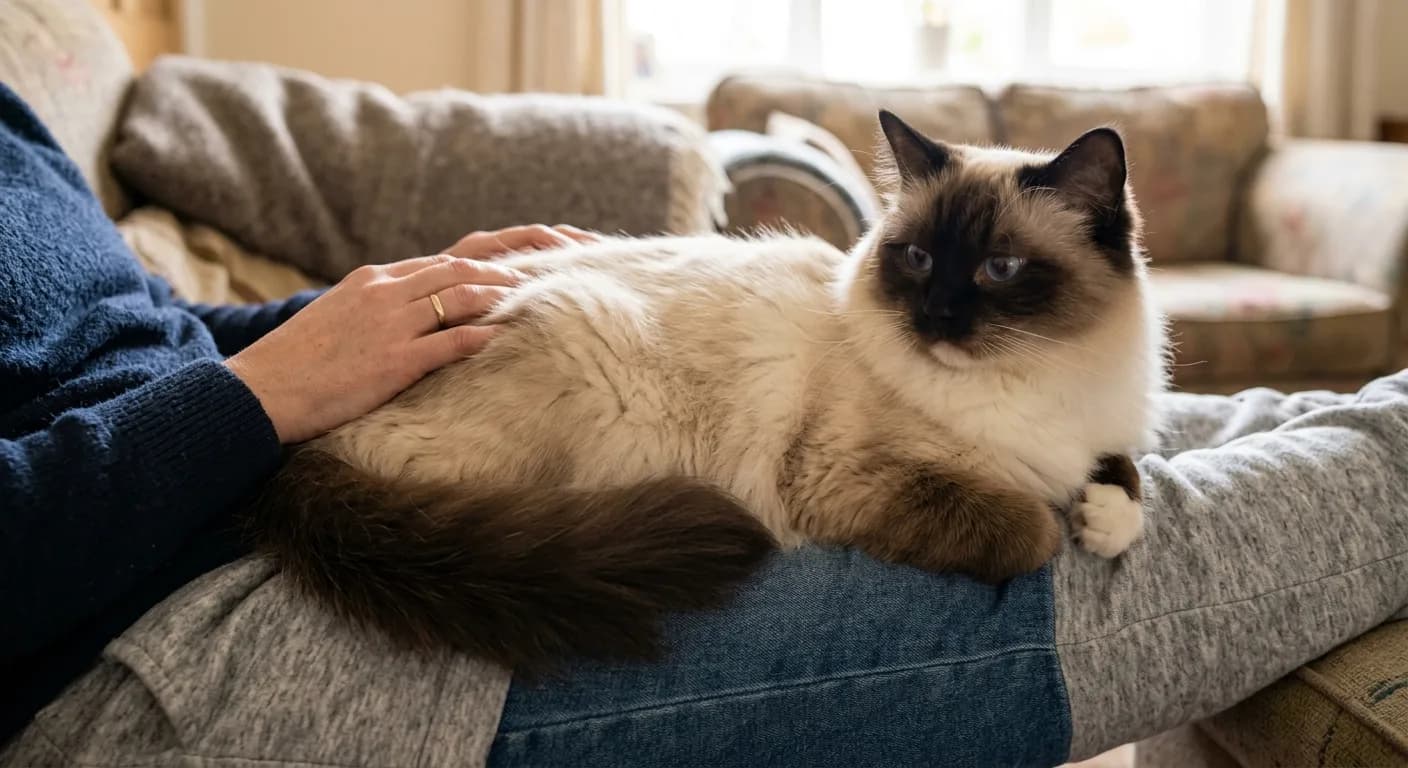
Ragdolls are textbook lap cats. They will curl up on you the moment you sit down, drape across your chest while you read, and follow you to bed at night. The CFA notes that owners describe their Ragdolls as "puppy-like" in devotion. Embrace Pet Insurance calls the breed "exceptionally gentle and affectionate," and that affection is not reserved for one person; Ragdolls typically love the whole family.
A few specifics owners can expect:

63-inch multi-level cat tree with scratch posts, hammock, plush perches, and dangling toys. Vertical territory is non-negotiable for high-energy climbing breeds like the Bengal.
Petful may earn a commission when you click through to Chewy, at no extra cost to you.
- They actively seek physical contact rather than tolerating it.
- They enjoy being held and carried (with proper support).
- Many like to sleep beside or on top of their humans.
- They show affection through closeness and presence, not just brief head-butts.
- The same trait that makes Ragdolls so loving makes them dependent. A cat that needs to be near you constantly is also a cat that struggles when you are gone all day. Affection and separation sensitivity are two sides of the same coin in this breed.
Do Ragdoll Cats Sleep With Their Owners?
Most do, if you let them. Because Ragdolls are so people-oriented and crave closeness, sleeping beside or on their owner at night is extremely common. Owners frequently report their Ragdoll claiming a spot on the bed, tucking against their side, or sleeping on their chest or feet.
This is not universal. Some Ragdolls prefer a nearby cat bed or a warm spot in the same room rather than the bed itself, and a few simply run warmer or cooler and pick their own spot. But the breed's baseline desire to be near its humans means bed-sharing is the norm rather than the exception. If you do not want a cat in your bed, that is a boundary worth setting early with a comfortable alternative bed in the bedroom.
Are Ragdolls Vocal or Quiet?
Ragdolls are on the quiet end of the cat spectrum. They communicate with soft, sweet, chirpy meows rather than the loud, persistent yowling of breeds like the Siamese. You will usually hear a Ragdoll only when it wants something specific: food, attention, or a closed door opened.
That said, "quiet" does not mean silent. A Ragdoll that is lonely, bored, or wants company can absolutely become more vocal, and some individuals are chattier than others. As a rule, though, this is a gentle, low-volume breed well suited to apartments and thin walls.
Ragdoll Behavior With Children, Dogs, and Other Cats
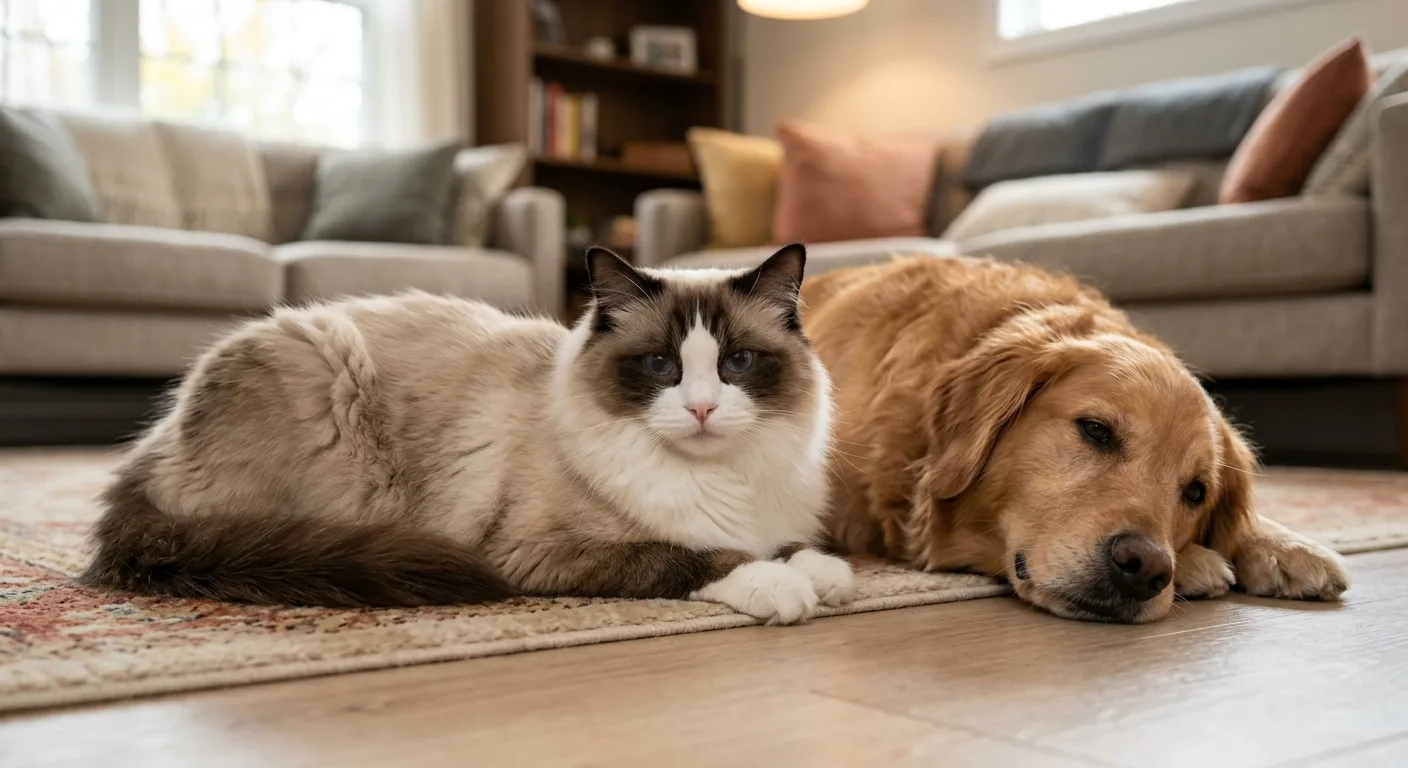
This is where the Ragdoll's placid temperament really shines, and it is a major reason the breed is recommended for families.
With children. Ragdolls are patient and tolerant, rarely scratch or bite, and generally take a child's enthusiasm in stride. They are widely considered one of the best cat breeds for households with kids. The caveat is universal to all cats: young children must be taught to handle the cat gently and respect its space, and toddlers should always be supervised.
With dogs. A Ragdoll will usually befriend a cat-friendly dog. Their low aggression and social nature mean they are more likely to curl up next to the family dog than hiss at it. Introduce them slowly and the two often become close companions.
With other cats. Ragdolls are sociable and frequently do best with a feline friend, especially in homes where the humans are out during the day. Many breeders actively recommend adopting two so they keep each other company.
If you are weighing the Ragdoll against similar gentle giants, our Ragdoll vs Maine Coon comparison breaks down the temperament differences in detail, and our Ragamuffin vs Ragdoll guide covers the close cousin that shares much of the same sweet disposition.

108-oz stainless steel pet fountain with quiet pump and water-level window. Bengals are notoriously water-obsessed; a flowing fountain encourages hydration and pulls them away from sinks and toilets.
Petful may earn a commission when you click through to Chewy, at no extra cost to you.
Are Ragdolls Clingy? Separation and the Need for Company
This is the trade-off buyers must understand. The Ragdoll cat personality is so people-focused that the breed genuinely dislikes being alone. Whether you call it clingy or devoted, the reality is the same: a Ragdoll left by itself for long stretches every day can become lonely, anxious, or depressed.
This is not a cat that does well in a home where everyone is gone twelve hours a day. Ragdolls thrive on companionship and interaction. If your household is empty during work hours, the single best thing you can do is get a second cat so your Ragdoll has a constant companion. Interactive play before and after work, food puzzles, and a window perch also help, but they do not fully replace company.
- If you work long hours away from home and cannot provide a companion animal, a Ragdoll may not be the right breed for your lifestyle. Their deep need for company is the most common source of behavior and stress problems in the breed.
Are Ragdolls Lazy? Energy, Play, and Climbing
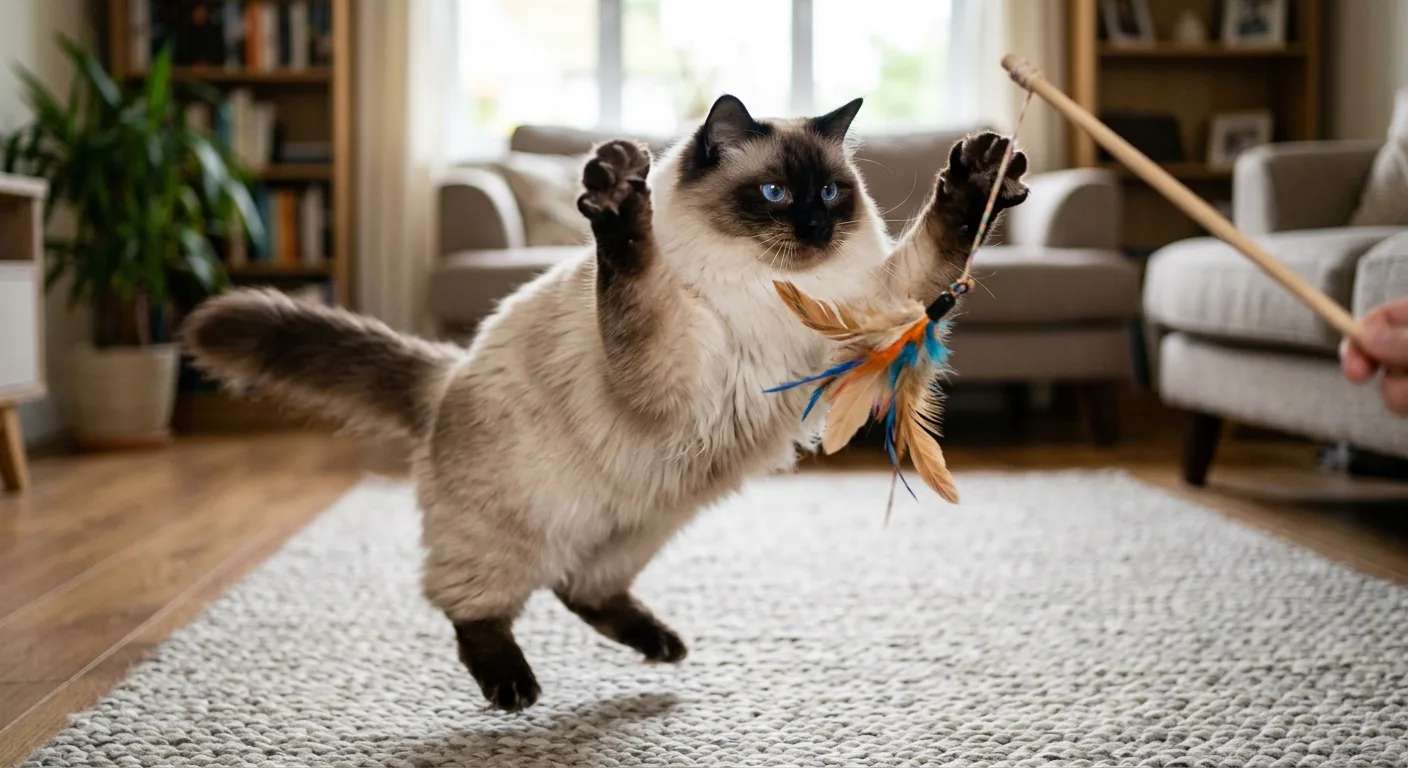
Ragdolls are often called lazy, but "mellow" is more accurate. They have moderate-to-low energy and a relaxed default setting, and they genuinely prefer lounging at floor level to scaling the top of a bookshelf. Unlike many cats, Ragdolls are not natural climbers or high jumpers; you are far more likely to find one stretched out on the couch than perched on the refrigerator.
But mellow is not the same as inert. Ragdolls enjoy short bursts of play, will happily chase a wand toy or fetch a ball, and kittens in particular can be surprisingly energetic and even hyper (a common surprise for owners expecting a couch potato from week one). The pattern is play hard for a few minutes, then collapse into a nap. Their low prey drive and ground-level preference make them well suited to apartments and calm households.
Why Ragdolls Must Be Indoor-Only Cats
The same gentle, trusting temperament that makes Ragdolls wonderful companions makes them dangerous to let outside. A Ragdoll has a low prey drive, little fear of strangers, and no street smarts. It will not reliably flee a threat, defend itself, or avoid a car.
That trusting nature leaves them vulnerable to theft (they are valuable, friendly, and easy to pick up), traffic, predators, and getting lost. Major breed authorities and welfare sources agree: Ragdolls should be kept as indoor cats, with safe enrichment like window perches, a catio, or supervised harness time if you want to give them outdoor stimulation. Their docility is a feature indoors and a liability outdoors.
- Ragdolls are semi-longhaired with a silky, plush coat and minimal undercoat. It mats less than a double coat but still benefits from a brush a couple of times a week, which doubles as bonding time this affection-loving breed adores.
Male vs Female Ragdoll Personality: Is There a Difference?
Prospective owners often ask whether boy or girl Ragdolls have better temperaments. The honest answer: the difference is small, and individual personality and upbringing matter far more than sex.
That said, breeders report some loose tendencies. Males are often described as a little more laid-back, goofy, and lap-loving, and they grow noticeably larger. Females can be slightly more independent and reserved, though still very affectionate by any normal cat standard. Neither sex is clearly "better"; both make loving companions. Choose the individual kitten whose personality clicks with you, not the sex on paper. The shorthaired variants share the same disposition too, which we cover in our shorthair Ragdoll cat guide for anyone who loves the temperament but wants a lower-maintenance coat.
How a Ragdoll Says "I Love You"
Ragdolls are fluent in feline affection, and they show love in ways that are easy to read once you know the signals. A slow blink across the room is a cat kiss. Following you from room to room, sleeping on you, and head-butting or cheek-rubbing against you are all bids for connection. A soft chirp when you walk in, kneading your lap with their paws, and that trademark full-body flop into your arms are all your Ragdoll telling you it feels safe, bonded, and happy. Few breeds are as openly loving, which is exactly why Ragdoll owners tend to become Ragdoll owners for life.
Frequently Asked Questions About Ragdoll Cat Personality
The main downsides are their dislike of being left alone (they can become lonely or anxious without company), their need for indoor-only living, regular coat brushing, and a higher purchase price. Their trusting nature also makes them unsuited to free-roaming outdoors.
Most do. Because Ragdolls are intensely people-oriented and crave closeness, sleeping beside or on top of their owner at night is very common, though some prefer a nearby bed in the same room.
The Ragdoll is widely considered one of the calmest and most docile cat breeds. Registries describe it as placid and even-tempered, alongside other relaxed breeds like the Persian and British Shorthair, making it a top pick for laid-back households.
Yes. Ragdolls have a relaxed, friendly, affectionate personality that makes them ideal family pets. They enjoy human company, seek out attention and strokes, and are often described as empathetic and in tune with their owners' moods.
Neither is clearly better. Males tend to be larger, goofier, and a bit more lap-loving, while females can be slightly more independent. Both are very affectionate, so individual personality matters more than sex.
Their gentle, trusting, low-prey-drive nature leaves them with no street smarts. Outdoors they are vulnerable to theft, traffic, predators, and getting lost, so breed authorities recommend keeping Ragdolls indoors with safe enrichment.
The biggest is separation sensitivity: they do poorly when left alone for long periods and often need a companion animal. Add indoor-only living, twice-weekly grooming, and a notable shedding season as the practical trade-offs.
No, Ragdolls are one of the least aggressive cat breeds. Their placid, docile temperament means they rarely scratch or bite, and they tend to tolerate handling that would annoy other cats. Any biting usually signals fear, pain, or overstimulation rather than a mean streak, so watch for warning signs and handle them gently.
Yes. Ragdolls are intelligent and people-focused, which makes them one of the easier cats to train. With positive reinforcement and treats, many learn to come when called, sit, play fetch, and even walk on a harness. Short, reward-based sessions work best for this eager, food-motivated breed.
The Bottom Line on Ragdoll Temperament
The Ragdoll cat personality is best summed up as a large, affectionate, deeply loyal companion that wants to be part of everything you do. They are calm, gentle, tolerant of children and other pets, quiet, and trainable enough to earn the "puppy cat" name. The famous floppiness is real but it reflects trust, not a special anatomy, so handle them with the same care you would any cat. The one non-negotiable is company: give a Ragdoll the companionship it craves, keep it safely indoors, and you will have one of the most loving cats you can share a home with. For the complete breed picture, start with our full Ragdoll cat breed profile.

Coreen Saito is a pet writer and longtime shelter volunteer with more than a decade in animal rescue. She covers cat behavior, breed care, and the small, ordinary science of sharing a life with companion animals, with a particular focus on honest takes about the products and decisions that actually matter. At home in Arizona, she's outranked by Mac (a dog with the loudest opinion in the house), Rebel (a cat who governs by quiet authority), and Meri (an orange tabby who runs the late shift and the laundry basket). She writes about all three, plus the rescues that keep coming through her life, at LifeWithMinty.com.
Sign up for expert-backed reviews and safety alerts all in one place.