Ragdoll Cat Lifespan: How Long Do Ragdolls Live and Stay Healthy
How long do Ragdoll cats live? Most reach 12-17 years, and many indoor cats with good care live 15 or more. A vet-reviewed look at Ragdoll lifespan, the health conditions that shorten it, and proven ways to add years.
Petful is reader supported. As an affiliate of platforms like Amazon and Chewy, we may earn a commission when you buy through links on this page. There is no extra cost to you.
The typical ragdoll cat lifespan is 12 to 17 years, and UK veterinary data from the RVC VetCompass programme points to an average life expectancy in roughly the 12 to 13 year range, with many cats living considerably longer. Breed registries including the Cat Fanciers' Association (CFA) and The International Cat Association (TICA) describe the Ragdoll as a generally robust, slow-maturing breed, and with indoor living plus attentive care many individuals reach 15 or more, with some reaching 18 to 20 years. This guide, reviewed by veterinarian Dr. Pippa Elliott, covers the real numbers, the breed-specific health conditions that shorten lives, and the evidence-based steps that lengthen them.
- 1Most Ragdolls live 12-17 years, with UK veterinary data pointing to an average around 12 to 13 years and many indoor cats reaching 15-20+
- 2Hypertrophic cardiomyopathy (HCM) linked to the breed-specific MYBPC3 mutation is the heart condition owners most need to screen for
- 3Kidney disease, in the RVC VetCompass data, is a commonly recorded cause of death
- 4Indoor-only living, weight control, dental care, and buying from a health-tested breeder are the four biggest levers on longevity

Sign up for expert-backed reviews and safety alerts all in one place.
How Long Do Ragdoll Cats Live on Average?
Most reputable sources place the average ragdoll cat lifespan between 12 and 17 years. Royal Canin lists 12 to 17 years (averaging 14 to 15), PetMD cites 13 to 18 years, and several breed guides quote 12 to 17. The figure to anchor on, because it comes from primary veterinary records rather than breeder estimates, comes from UK veterinary data from the RVC VetCompass programme: an average life expectancy around 12 to 13 years, with many cats living considerably longer.
That average is encouraging in context. Older mortality research had pegged the Ragdoll noticeably lower, below the roughly 14 years for cats overall at the time. The newer, far larger veterinary data suggests Ragdoll longevity has improved as health testing and indoor care have become standard. Averages also hide the upside: plenty of well-cared-for Ragdolls live into their late teens, and a number of owners report cats reaching 18 to 20 years or beyond.
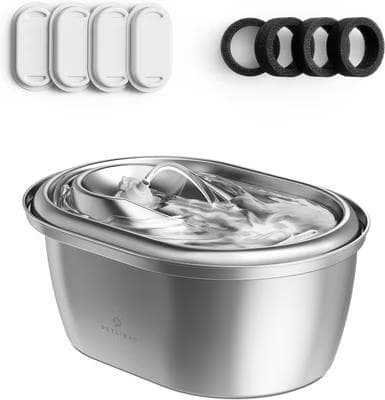
304 food-grade stainless steel pet water fountain, 101 oz. The circulating, filtered water encourages cats to drink more, which supports urinary tract and kidney health.
Petful may earn a commission when you click through to Chewy, at no extra cost to you.
- An average is not a life expectancy promise. It means roughly half of cats live longer and half shorter. A young Ragdoll that clears its first couple of years and is kept indoors has a realistic shot at the upper end of the range.

 Sponsored
Have a health question about your cat?
Talk to a licensed vet at Dutch over video or message, including nights and weekends.
Use code Pets60
Plans start at $12/month · covers up to 5 pets
- Licensed vets in most states
- Rx for 150+ conditions
- 4.7 on Trustpilot
Ragdoll lifespan at a glance
| Metric | Figure | Source or Note |
|---|---|---|
| Average lifespan | 12-17 years | CFA, Royal Canin, PetMD |
| Veterinary average life expectancy | About 12-13 years | RVC VetCompass programme (UK data) |
| Commonly reported upper range | 15-20+ years | Indoor cats with attentive care |
| Age at full maturity | About 4 years | Ragdolls mature slowly |
| Adult weight, males | 15-20 lb (7-9 kg) | Large semi-longhair breed |
| Adult weight, females | 10-15 lb (4.5-7 kg) | Smaller than males |
Do Female Ragdolls Live Longer Than Males?
UK veterinary data points that way, though the gap is not statistically conclusive. Female Ragdolls tended to live somewhat longer than males on average, but the difference was not statistically significant, so it should be read as a soft trend rather than a hard rule. A modest female-longevity edge is common across cats generally, and spaying or neutering, which the vast majority of pet Ragdolls undergo, narrows sex-linked differences further.
Never Scoop Again® with the Whisker Litter-Robot, the smart self-cleaning automatic litter box. Monitor visits and track weights for better overall care in the Whisker® app. Multi-cat friendly.
Petful may earn a commission when you click through to Whisker, at no extra cost to you.
The practical takeaway is not to expect a guaranteed extra two years from a female. It is that sex matters far less to your cat's lifespan than the controllable factors below: whether the cat lives indoors, stays a healthy weight, gets dental care, and comes from HCM-tested parents.
- Across feline mortality research, trauma (road accidents, predator attacks, falls) is a leading cause of death in cats of all ages. Keeping a Ragdoll strictly indoors, or limiting outdoor time to a secure catio or harness, removes most of that risk in one decision.
What Factors Influence a Ragdoll's Lifespan?
Genetics set the ceiling, but day-to-day care decides where in the range a given cat lands. The factors below have the largest evidence-backed impact on the ragdoll cat lifespan.
Indoor versus outdoor living
Indoor-only Ragdolls consistently outlive cats with unsupervised outdoor access. Outdoors exposes a cat to vehicles, fights, infectious disease, parasites, poisons, and predators. The Ragdoll's famously docile, trusting temperament makes it especially poorly suited to fending for itself outside, which is exactly why breed clubs and the CFA recommend keeping Ragdolls indoors. A secure catio, a leash-and-harness routine, or a cat-proofed garden gives enrichment without the mortality risk.
Body weight and nutrition
UK veterinary data from the RVC VetCompass programme commonly records obesity in Ragdolls, and the breed's muscular, big-framed build makes excess weight easy to miss under a plush coat. Carrying extra pounds raises the risk of diabetes, arthritis, and urinary disease, all of which can shorten life. A complete, life-stage-appropriate diet, measured portions instead of free-feeding, and a body-condition check every few weeks are the practical defenses. See our guidance on the best food for Ragdoll cats within the full breed profile.
Veterinary care and early detection
Cats hide illness well, and many of the conditions that limit Ragdoll lifespan (heart disease, kidney disease, dental disease) are far more manageable when caught early. Annual wellness exams for adults, twice-yearly visits for seniors, and baseline bloodwork plus blood-pressure checks turn silent problems into treatable ones. Routine vaccination and parasite control matter too, even for indoor cats.
Breeding and genetics
A Ragdoll's parents matter enormously. Responsible breeders screen breeding cats for hypertrophic cardiomyopathy (by both DNA test and echocardiogram) and for polycystic kidney disease, and they avoid doubling up on known mutations. Cats from untested lines, including many from casual or backyard breeders, carry a higher baseline risk of the inherited diseases covered below.
- Registration papers confirm pedigree, not health. Ask a breeder directly for the parents' HCM DNA results, a recent cardiac echocardiogram, and PKD status. A reputable breeder volunteers this paperwork. If they dodge the question, walk away.
Ragdoll Breed-Specific Health Conditions
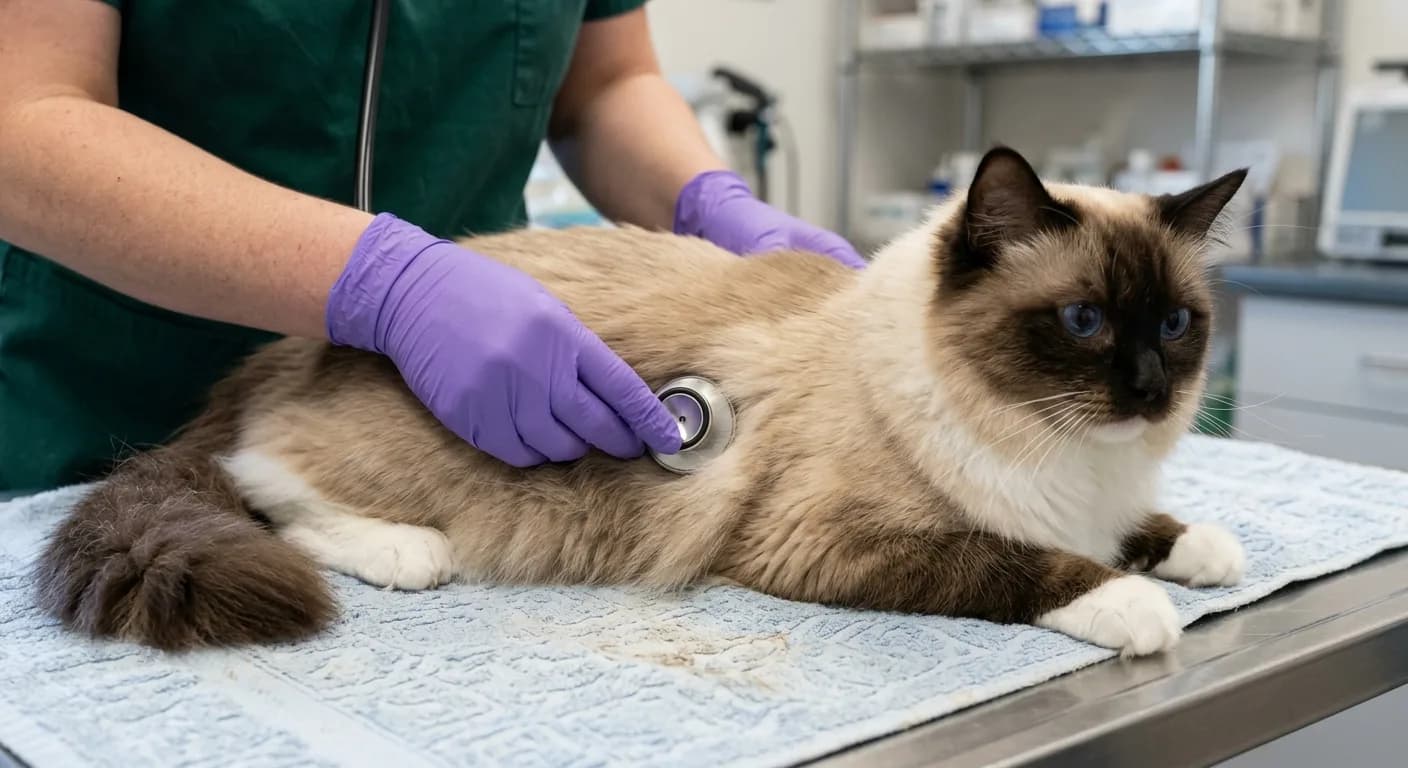
The Ragdoll is considered a generally healthy breed, but like all pedigrees it carries a handful of conditions that disproportionately affect longevity. Understanding them is the difference between a surprise emergency and an early, manageable diagnosis.
Hypertrophic cardiomyopathy (HCM)
Hypertrophic cardiomyopathy, a thickening of the heart muscle that impairs pumping, is the most important breed-specific concern and a leading cause of early death in Ragdolls. The breed carries a recognized genetic risk: researchers (notably Dr. Kate Meurs and colleagues) identified a Ragdoll-specific mutation in the MYBPC3 gene (often called the R820W variant) associated with the disease. Cats can carry one or two copies, and carriers are at increased risk, though not every carrier develops clinical disease and some HCM occurs without the known mutation.
Screening uses two complementary tools. A DNA test identifies whether a cat carries the known MYBPC3 mutation, which is most useful for breeding decisions. An echocardiogram (a heart ultrasound performed by a veterinary cardiologist) actually images the heart muscle and is the gold standard for detecting disease in an individual cat over its lifetime. Because HCM can develop with age, breeders typically repeat echocardiograms periodically rather than testing once. HCM can be silent until it causes heart failure or a clot, so any heart murmur, rapid breathing, or sudden hind-limb weakness warrants urgent veterinary attention.

63-inch multi-level cat tree with scratch posts, hammock, plush perches, and dangling toys. Vertical territory is non-negotiable for high-energy climbing breeds like the Bengal.
Petful may earn a commission when you click through to Chewy, at no extra cost to you.
- A blood clot lodging in the hind legs (saddle thrombus, a known complication of feline HCM) causes sudden pain, cold limbs, and inability to use the back legs. This is a true emergency. Get to a veterinarian or ER immediately.
Polycystic kidney disease (PKD) and chronic kidney disease
Kidney disease looms large in the Ragdoll mortality picture: in UK veterinary data from the RVC VetCompass programme, a kidney disorder is a commonly recorded cause of death. Some of that is age-related chronic kidney disease, which is common in older cats of every breed. A portion can trace to polycystic kidney disease (PKD), an inherited condition (linked to the PKD1 gene, historically most associated with Persians and Persian-outcrossed lines) in which fluid-filled cysts gradually replace healthy kidney tissue. A simple DNA test and ultrasound let breeders screen for it. For owners, the defenses are early detection through senior bloodwork and urine testing, prompt management, and good hydration.
SponsoredVet care that's always there
Unlimited video calls and messaging with licensed vets for less than a typical vet visit. One membership covers up to five pets.
Use code Pets60
Plans start at $12/month · covers up to 5 pets
- Licensed vets in most states
- Rx for 150+ conditions
- 4.7 on Trustpilot
Feline lower urinary tract disease (FLUTD) and bladder stones
Ragdolls are among the breeds prone to feline lower urinary tract disease (FLUTD), an umbrella term for bladder and urethral problems, and to bladder stones (commonly struvite or calcium oxalate). Signs include straining to urinate, frequent small trips to the litter box, blood in the urine, and crying in the box. In male cats a stone or plug can cause a complete urinary blockage, which is life-threatening and demands emergency care. Encouraging water intake, feeding appropriate moisture-rich food, keeping litter boxes pristine, and reducing stress all help lower the risk.
Dental disease
Dental and gum disease is easy to overlook but, per UK veterinary data from the RVC VetCompass programme, ranks among the most commonly diagnosed disorder groups in Ragdolls. Beyond bad breath and tooth loss, chronic oral infection places a burden on the body that can affect overall health and comfort in older age. At-home tooth brushing with a pet-safe paste, dental-friendly diets or treats, and professional cleanings under anesthesia when your veterinarian advises are the proven defenses.
Obesity and digestive (enteropathy) issues
Two more conditions feature among the most common disorders in the research. Enteropathy (digestive and intestinal disease) is commonly reported in Ragdolls, making chronic vomiting, diarrhea, or weight changes worth a vet visit rather than a wait-and-see. Obesity is also commonly recorded, which ties back to the weight management point above and is one of the most preventable longevity risks in the entire list.
| Condition | Why It Matters for Lifespan | Owner Action |
|---|---|---|
| Hypertrophic cardiomyopathy (HCM) | Leading cause of early death; breed-linked MYBPC3 risk | DNA test plus periodic echocardiogram; act on breathing or leg-weakness changes |
| Kidney disease (incl. PKD) | Most common recorded cause of death in study data | Senior bloodwork and urine tests; support hydration |
| FLUTD and bladder stones | Blockage in males is an emergency | Promote water intake; watch litter-box behavior |
| Dental disease | Among the most common disorder groups | Brush teeth; professional cleanings as advised |
| Obesity | Drives diabetes, arthritis, urinary disease | Measured meals; regular body-condition checks |
Ragdoll Life Stages: What to Expect at Each Age
Knowing where your cat sits on the timeline helps you anticipate needs and catch problems early. Ragdolls are famously slow to mature, reaching full size and coat development around four years of age.

108-oz stainless steel pet fountain with quiet pump and water-level window. Bengals are notoriously water-obsessed; a flowing fountain encourages hydration and pulls them away from sinks and toilets.
Petful may earn a commission when you click through to Chewy, at no extra cost to you.
| Life Stage | Age Range | Care Focus |
|---|---|---|
| Kitten | Birth to 1 year | Vaccinations, socialization, growth nutrition |
| Young adult | 1 to 5 years | Still maturing; maintain lean weight, establish dental routine |
| Mature adult | 5 to 10 years | Annual exams; begin watching for early heart and kidney signs |
| Senior | 10 to 15 years | Twice-yearly vet visits; bloodwork, blood pressure, joint support |
| Geriatric | 15+ years | Comfort-focused care, frequent monitoring, diet adjustments |
- Because Ragdolls keep filling out until about age four, a "skinny teenager" phase is normal in young adults. Judge body condition by feel (you should feel ribs under a light layer), not by the calendar, and keep feeding to maintain a lean frame rather than overfeeding a growing cat into adulthood.
How to Help Your Ragdoll Live Longer: Evidence-Based Tips
None of these are exotic. They are the same levers the research keeps pointing back to, and together they meaningfully shift the odds toward the upper end of the ragdoll cat lifespan.
1. Keep your cat indoors (or restrict outdoor time to a secure catio or harness). This removes the trauma and infectious-disease risks that drive much feline mortality.
2. Manage weight relentlessly. Measured meals, no free-feeding, and a body-condition check every few weeks. Obesity is the most preventable risk on the list.
3. Brush the teeth and keep up dental care. Dental disease is the most common disorder in the breed, and it is largely preventable.
4. Screen and monitor the heart. Choose kittens from HCM-tested parents, and ask your veterinarian about baseline cardiac screening, because early HCM is treatable and silent.
5. Do senior bloodwork and blood-pressure checks. Kidney disease and hypertension are common and far more manageable when caught before symptoms appear.
6. Buy from a reputable, health-testing breeder. Insist on parental HCM DNA and echocardiogram results plus PKD status. This single choice lowers the baseline risk of the most serious inherited diseases.
7. Reduce stress and support hydration. A calm environment, clean litter boxes, fresh water (a fountain helps many cats drink more), and enrichment all support urinary and overall health.
For prospective owners weighing the breed, our Ragdoll cat breed profile covers temperament and care in full, while the Ragdoll size guide explains the slow four-year growth curve that affects feeding. Allergy-prone households can read whether the Ragdoll is hypoallergenic before committing. If you are comparing big, long-lived breeds, see how the Maine Coon lifespan stacks up against the Ragdoll's.
- Many of the costliest Ragdoll conditions (HCM management, urinary surgery, kidney care) strike in middle and old age. Setting up pet insurance while the cat is young and healthy, or opening a dedicated savings buffer, means a diagnosis never forces a financial corner to be cut on care.
Frequently Asked Questions About Ragdoll Cat Lifespan
Most Ragdoll cats live 12 to 17 years. UK veterinary data from the RVC VetCompass programme points to an average life expectancy around 12 to 13 years, and many indoor cats with attentive care reach 15 to 20 years or more.
Indoor Ragdolls tend to live at the upper end of the breed range and often reach 15 to 20+ years. Staying indoors removes the trauma, infection, and predator risks that shorten the lives of cats with outdoor access, which is why breed clubs recommend keeping Ragdolls inside.
In UK veterinary data from the RVC VetCompass programme, a kidney disorder is a commonly recorded cause of death. Hypertrophic cardiomyopathy (HCM) is the most significant breed-specific cause of early death, followed by cancer and age-related illness.
The most commonly recorded disorders in Ragdolls include dental disease, digestive or intestinal disease, skin conditions, and obesity. The most serious inherited concerns are hypertrophic cardiomyopathy (HCM) and polycystic kidney disease (PKD).
Keep your cat indoors, maintain a lean body weight with measured meals, brush its teeth and keep up dental care, screen and monitor for heart and kidney disease, and buy from a breeder who health-tests for HCM and PKD. Early detection through regular vet visits is the common thread.
UK veterinary data suggests a slight edge for females on average, but the difference was not statistically significant. Lifestyle factors such as indoor living and weight management influence lifespan far more than sex.
Ragdolls are generally considered senior around 10 to 15 years of age and geriatric at 15 years and older. Because they mature slowly and only reach full size near age four, senior wellness screening (bloodwork and blood pressure) becomes especially valuable from about age 10.
Ragdolls are considered a generally healthy, robust breed, but they are predisposed to hypertrophic cardiomyopathy, kidney disease, urinary issues, and dental disease. Choosing health-tested lines and keeping up preventive veterinary care keeps most of these manageable.
Yes, it is possible. While the typical Ragdoll lifespan is 12 to 17 years, some indoor cats given excellent care, a healthy weight, and health-tested genetics do reach 18 to 20 years. Living to 20 is the exception rather than the rule, but it is a realistic goal for a well-cared-for cat.
There is no official breed-specific longevity record for Ragdolls, but well-documented owner reports describe Ragdolls living to around 19 to 20 years and occasionally beyond. The oldest cat on record of any breed lived to 38, so a Ragdoll reaching its late teens or early twenties is uncommon but believable with indoor living and attentive veterinary care.
The Bottom Line on Ragdoll Lifespan
A typical ragdoll cat lifespan runs 12 to 17 years, with UK veterinary data pointing to an average around 12 to 13 years and a real upside into the late teens or twenties for indoor cats given good care. The biggest threats to that lifespan are largely knowable and partly preventable: hypertrophic cardiomyopathy, kidney disease, urinary problems, and dental disease. By keeping your Ragdoll indoors, managing its weight, staying on top of dental and senior care, and starting with a kitten from health-tested parents, you stack the odds in favor of many happy, floppy years together. As always, work with your own veterinarian on a screening and care plan tailored to your individual cat.

Coreen Saito is a pet writer and longtime shelter volunteer with more than a decade in animal rescue. She covers cat behavior, breed care, and the small, ordinary science of sharing a life with companion animals, with a particular focus on honest takes about the products and decisions that actually matter. At home in Arizona, she's outranked by Mac (a dog with the loudest opinion in the house), Rebel (a cat who governs by quiet authority), and Meri (an orange tabby who runs the late shift and the laundry basket). She writes about all three, plus the rescues that keep coming through her life, at LifeWithMinty.com.
Sign up for expert-backed reviews and safety alerts all in one place.