Korat Cat Breed: Personality, Lifespan & Cost Guide
Meet the Korat cat: Thailand's rare silver-blue good-luck breed. This vet-reviewed profile covers personality, colors, 10-to-15-year lifespan, health, price, and how to tell a Korat from a Russian Blue.

Veterinarian · BVMS, MRCVS

Petful is reader supported. As an affiliate of platforms like Amazon and Chewy, we may earn a commission when you buy through links on this page. There is no extra cost to you.
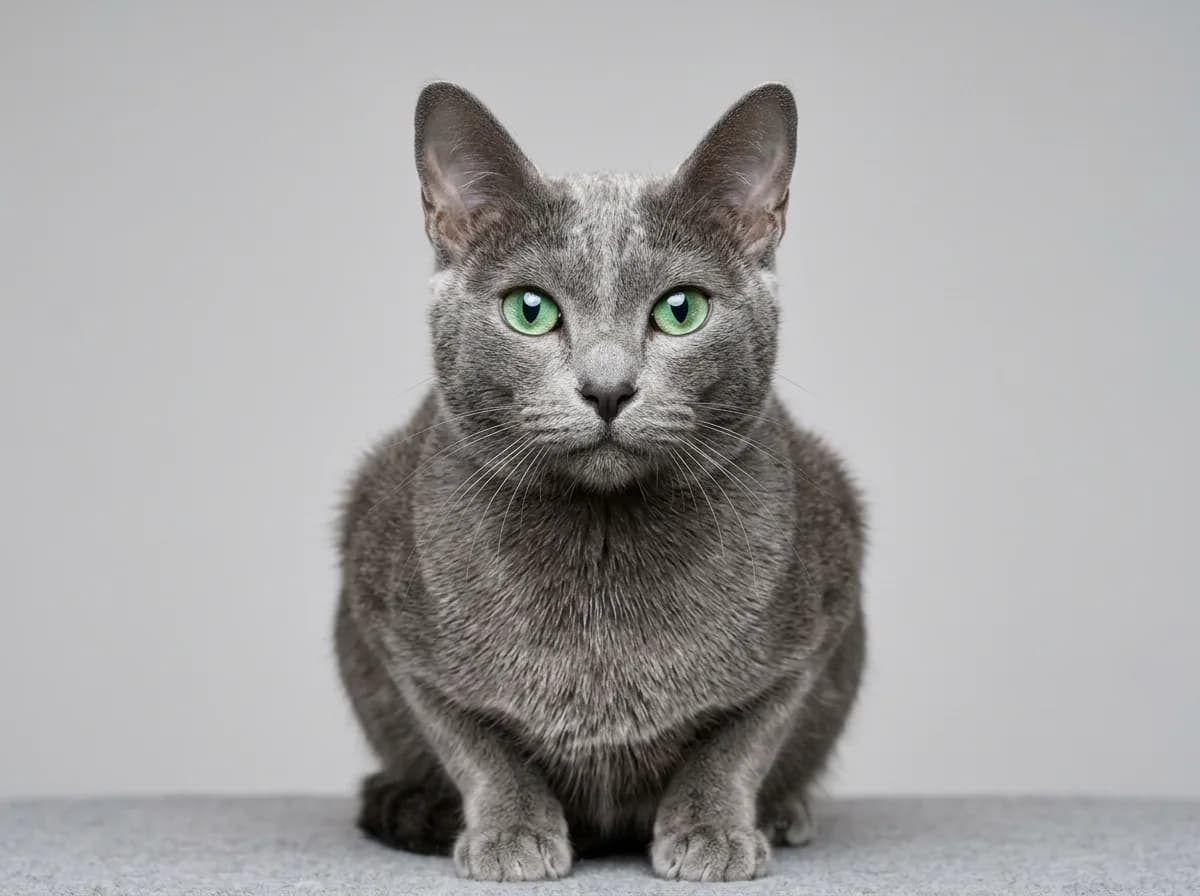
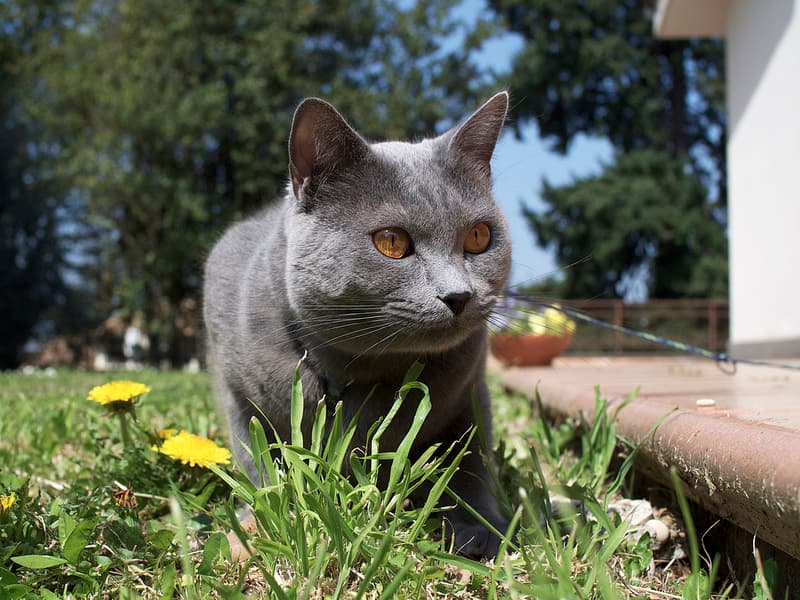
The Korat cat is one of the oldest natural cat breeds in the world, a silver-blue shorthair that has been treasured in Thailand for centuries as a living good-luck charm. If you are weighing the Korat cat breed as a companion, here is the short answer: this is a heart-faced, green-eyed, deeply people-oriented cat that bonds hard with its family, lives a healthy 10 to 15 years (sometimes into the early 20s), and costs roughly $600 to $2,000 from a reputable breeder. Known in its homeland as the Si Sawat, the Korat is famous for a single, close-lying silver-tipped coat that seems to glow, and for eyes so large and luminous green that breeders call them "eyes the color of young rice."
This guide covers everything a prospective owner actually searches for: personality, appearance and colors, the exact way to tell a Korat from a Russian Blue, lifespan and the genetic health tests that matter, real price ranges, and where to find kittens. We have also built a quick-facts table and a head-to-head comparison table that the standard breed write-ups leave out.
- 1The Korat is a natural Thai breed with one color only: a single silver-tipped blue coat and large luminous green eyes (heart-shaped face is the giveaway).
- 2It is intensely people-oriented and bonds closely with one or two favorite humans, so it does best with company rather than long stretches alone.
- 3Lifespan runs 10 to 15 years and beyond; the main inherited concern is GM1 and GM2 gangliosidosis, which a simple DNA test screens out entirely.
- 4Expect to pay roughly $600 to $2,000 for a Korat kitten from a registered breeder; the breed is genuinely uncommon in the United States.

Sign up for expert-backed reviews and safety alerts all in one place.
Korat Cat Quick Facts
Use this at-a-glance table to size up the Korat cat breed before you read the detail below. These figures reflect the breed standard recognized by The Cat Fanciers' Association and TICA.
| Trait | Korat Detail |
|---|---|
| Origin | Thailand (the Khorat region); one of the oldest natural breeds |
| Other names | Si Sawat, Malet, "good luck cat" |
| Lifespan | 10 to 15 years, often longer with good care |
| Weight | 6 to 10 lb (males larger and heavier than they look) |
| Height | 8 to 10 in at the shoulder |
| Coat | Single, short, silver-tipped blue (one color only, no variations) |
| Eyes | Large and luminous, brilliant green in the adult (amber-green in youth) |
| Temperament | Affectionate, intelligent, people-oriented, gently vocal |
| Shedding | Low (single coat, minimal undercoat) |
| Price range | $600 to $2,000 from a reputable breeder |
Korat Cat Personality and Temperament
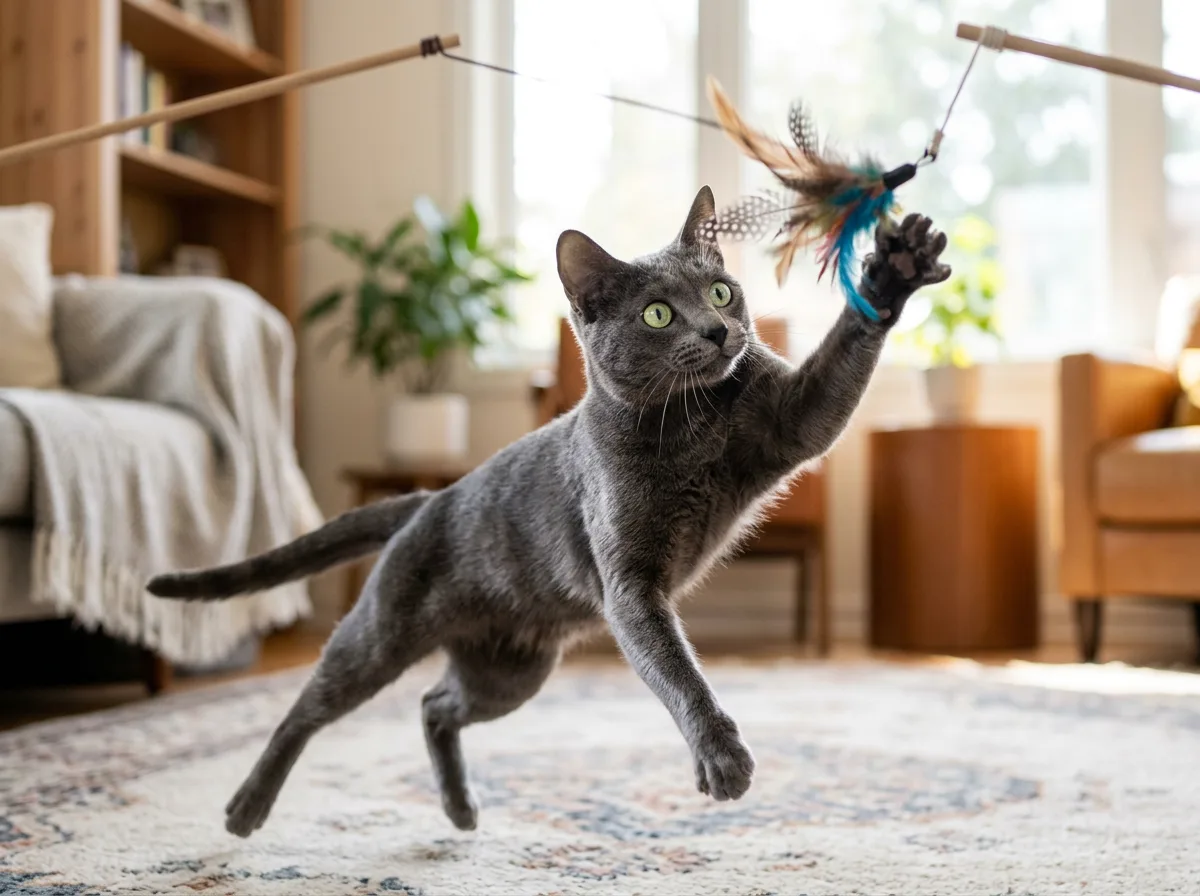
Korat cat personality can be summed up in one word: devoted. These cats form intense, lasting bonds with their people and want to be part of whatever you are doing, following you room to room, supervising your work, and curling against you the moment you sit down. The Korat is affectionate without being needy and clever without being destructive, a combination that makes it a wonderful companion for someone who is home often and wants a cat that truly engages.
Korats are gently vocal rather than loud. They use a soft, expressive range of chirps and trills to ask for attention or comment on the day, and they are quick to learn routines, puzzle feeders, and even simple fetch. They tend to choose a favorite human or two while staying friendly with the wider household. Because they are so socially driven, Korats dislike being left alone for long stretches; a second pet or a companion cat can keep one content when the house is empty.
With children and other animals, a well-socialized Korat is usually patient and adaptable, though its strong-willed streak means it likes to have a say in how things go. Early, gentle introductions and a predictable routine bring out the breed's calm, affectionate best.
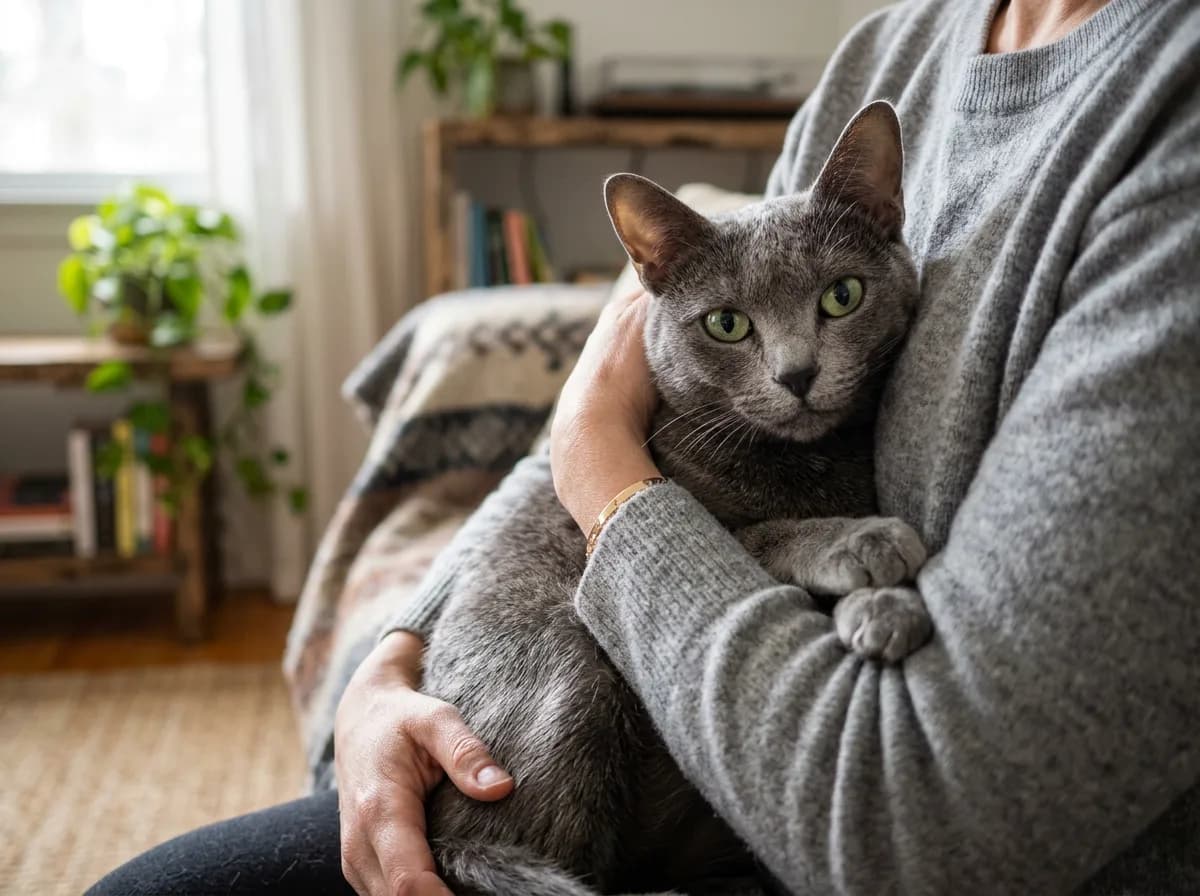
- Most Korats enjoy close contact and will happily settle in your lap or against your shoulder, especially with a person they trust. Like any cat they prefer to choose the moment, so let a Korat come to you and it will reward you with serious cuddle time.
Color-changing crystal litter that flags pH shifts in your cat's urine, an early warning sign of UTIs, kidney issues, and more.
Petful may earn a commission when you click through to Chewy, at no extra cost to you.
Korat Cat Appearance, Colors, and Coat
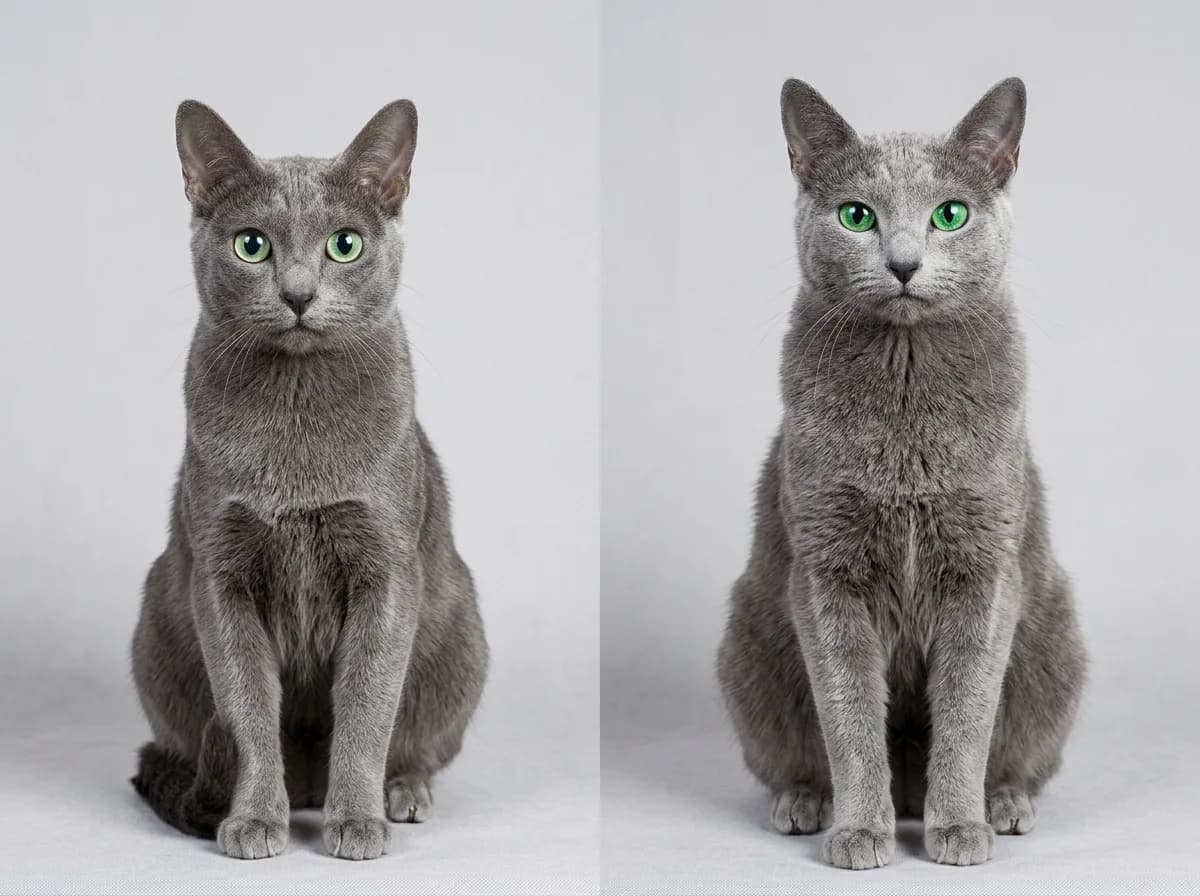
The Korat is a medium-sized cat with a compact, semi-cobby body that is surprisingly muscular and heavy when you pick it up; the breed standard describes it as "unexpectedly heavy." The back curves gently, the legs are well-proportioned, and the overall impression is of a sturdy, athletic cat rather than a delicate one. The signature feature, though, is the face: viewed head-on, a true Korat shows a distinct heart shape, with a broad forehead, wide-set eyes, and a gentle curve down to the chin.
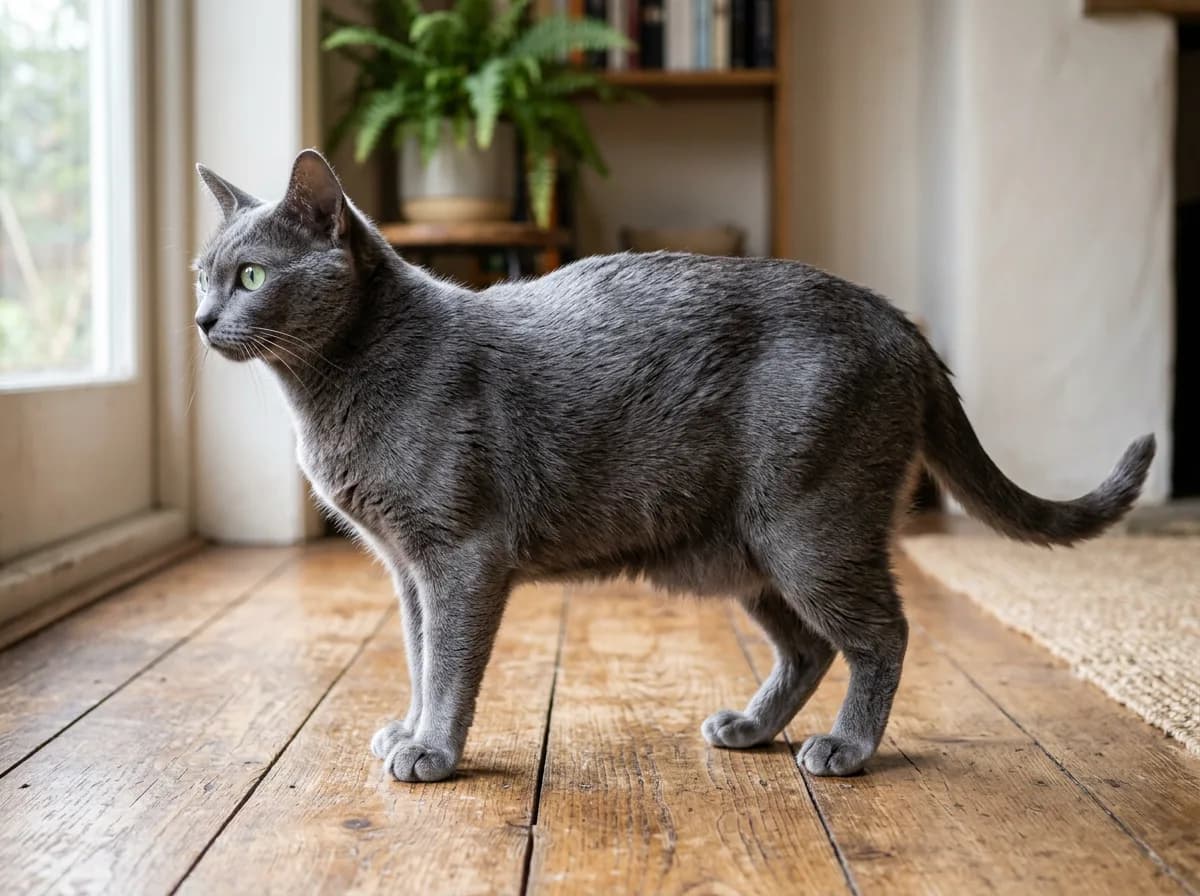
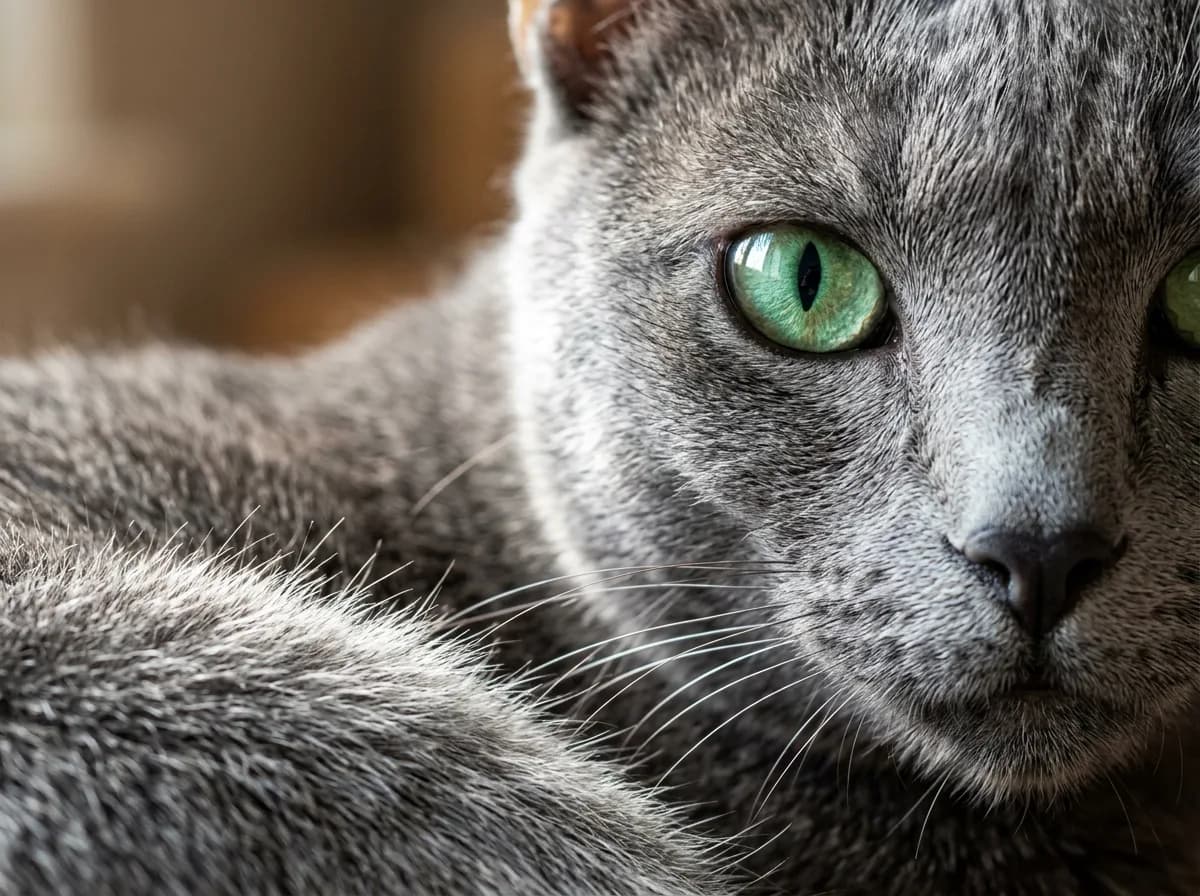
Korat eyes are oversized for the face and set with a slight slant. In kittens and young adults they often look amber or yellow-green, then deepen to a brilliant, luminous green that is fully developed only at two to four years of age. That mature green is one of the breed's defining glories.
What colors do Korat cats come in?
Just one. The Korat comes in a single color: a solid silver-tipped blue. Each hair is blue at the root and tipped with silver, which gives the coat its characteristic halo or sheen, brightest along the muzzle and where the cat moves. There are no tabby markings, no white patches, and no other accepted colors. A blue-grey cat with white spots, a black coat, or a double-thick plush coat is not a show-standard Korat, even if it shares the same family of color. The coat itself is short, fine, single (very little undercoat), and lies close to the body, which keeps shedding low and grooming simple.
Korat Cat vs Russian Blue: How to Tell Them Apart
The single most common question about this breed is how to tell a Korat from a Russian Blue, because both are short-haired blue-grey cats with green eyes. The fastest tells: the Korat has a heart-shaped face and a single, close-lying coat, while the Russian Blue cat breed has a wedge-shaped head and a dense, plush double coat that stands away from the body. The table below lays the differences out side by side.
Petful may earn a commission when you click through to Chewy, at no extra cost to you.
| Feature | Korat | Russian Blue |
|---|---|---|
| Head shape | Heart-shaped, broad forehead | Wedge-shaped, angular |
| Coat type | Single, short, close-lying | Double, dense, plush and stand-off |
| Coat color | Silver-tipped blue only | Blue with bright silver-tipped guard hairs |
| Eye color (adult) | Brilliant luminous green | Vivid green |
| Body | Semi-cobby, muscular, heavy for size | Long, slender, fine-boned |
| Origin | Thailand (natural breed) | Northern Russia (Archangel Isles) |
| Temperament | Devoted, people-oriented, gently vocal | Loyal, reserved with strangers, quiet |
If you are still not sure which blue cat you are looking at, our guides on Russian Blue personality and how to tell a grey cat from a Russian Blue mix walk through the finer points. There is also a third blue breed in the mix: the Chartreux cat breed from France, which is rounder-faced and copper-eyed, and the Russian Blue vs British Shorthair comparison helps if a stockier blue cat has you guessing.
- Look at the cat head-on in good light. A Korat's face narrows to a clear heart shape and the coat lies flat and glossy. A Russian Blue's head reads as a wedge and the coat feels thick and plush, like dense velvet you can run a finger-line through. That single look settles most cases.
Korat Cat Lifespan and Health
How long do Korat cats live? A healthy Korat typically lives 10 to 15 years, and many well-cared-for cats reach their late teens or even early twenties. As a natural breed with a deep gene pool, the Korat is generally robust, but there is one inherited concern every prospective owner should understand.
Korats can carry the genes for GM1 and GM2 gangliosidosis, a pair of inherited neurological storage diseases. Affected kittens lack an enzyme needed to break down certain fats in nerve cells, and the conditions are progressive and fatal in cats that inherit two copies. The good news is decisive: a simple, inexpensive DNA test identifies carriers, and responsible breeders test their breeding cats so that two carriers are never paired. Always ask a breeder for proof of GM1 and GM2 DNA-clear status on both parents; a kitten from tested clear lines is not at risk.
Beyond the gangliosidosis screen, Korats benefit from the same preventive care as any cat: annual wellness exams, routine dental care, parasite prevention, and a weight-appropriate diet. Their low-fat-tolerant metabolism and active nature mean obesity is rarely a problem in a Korat that gets daily play.
For perspective on how blue breeds age, our guide to Russian Blue lifespan covers a closely related longevity profile.
- Request written GM1 and GM2 DNA-clear results for both parents before you reserve a Korat kitten. A reputable breeder will offer this without hesitation. Walk away from anyone who cannot or will not provide it.

108-oz stainless steel pet fountain with quiet pump and water-level window. Bengals are notoriously water-obsessed; a flowing fountain encourages hydration and pulls them away from sinks and toilets.
Petful may earn a commission when you click through to Chewy, at no extra cost to you.
Are Korat Cats Hypoallergenic?
No cat is truly hypoallergenic, and the Korat is no exception. Cat allergies are driven mainly by the Fel d 1 protein in saliva and skin, not by fur length, so no breed is allergen-free. That said, the Korat's single, short, low-shedding coat means it sheds less loose hair and dander into the home than a thick double-coated breed, which some sensitive owners find more manageable. The same single-coat logic applies to the is the Russian Blue hypoallergenic question, where the answer is much the same: lower-shedding, but not allergen-free.
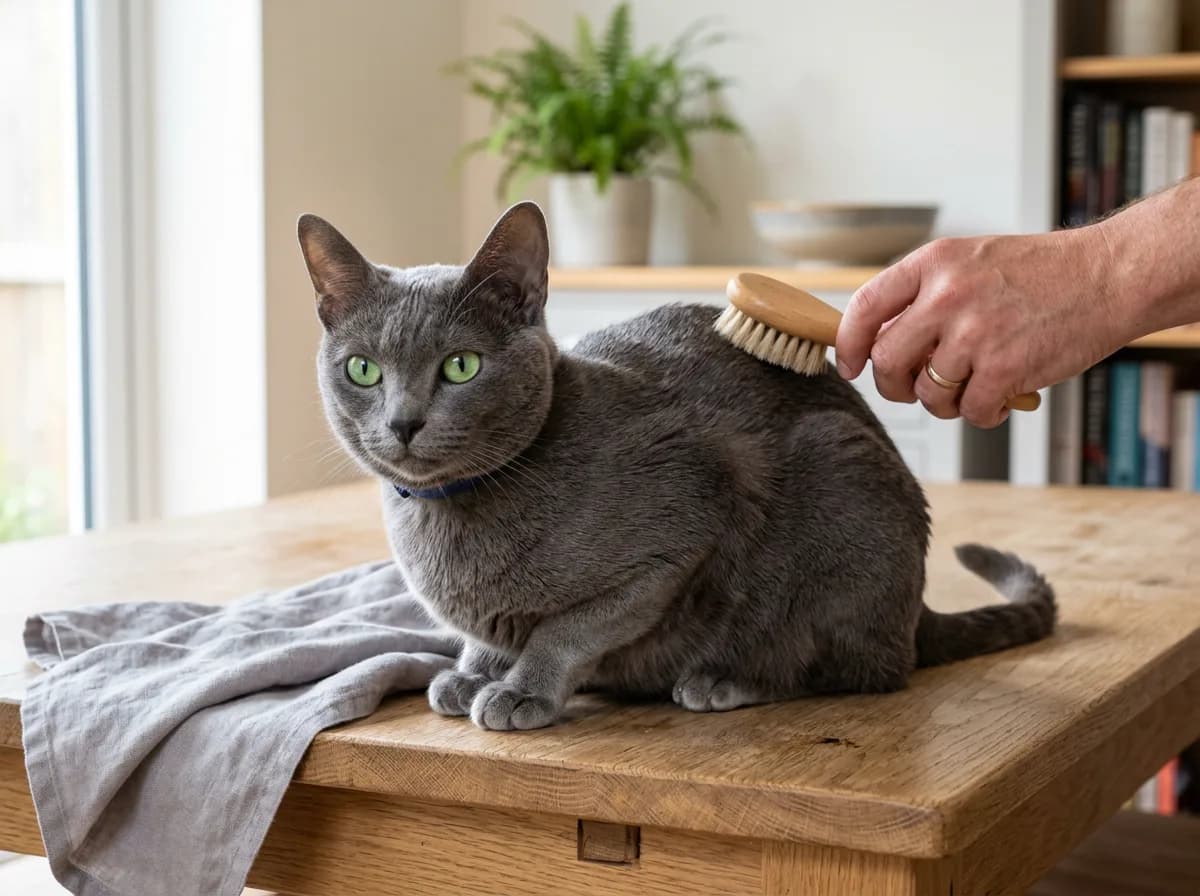
Korats do shed, just modestly. A weekly once-over with a soft brush or a grooming glove removes most loose hair, keeps the silver tipping glossy, and doubles as bonding time. There is no thick undercoat to blow out seasonally, so grooming a Korat is genuinely low-effort.
Korat Cat Price and Cost
How much is a Korat cat? A Korat kitten from a registered, health-testing breeder typically costs between $600 and $2,000 in the United States, with show- or breeding-quality kittens at the top of that range and occasionally beyond. The breed's rarity is the main driver of price: there are relatively few Korat breeders in North America, litters are small, and demand for a genuine Si Sawat outstrips supply. Beyond the purchase price, budget for the ongoing cost of food, litter, preventive veterinary care, and pet insurance, which together typically run a few hundred to over a thousand dollars a year.
| Expense | Typical Range | Notes |
|---|---|---|
| Kitten from a breeder | $600 to $2,000 | Higher for show or breeding quality; rarity drives price |
| Initial setup | $150 to $400 | Carrier, beds, litter box, scratchers, starter food |
| Spay or neuter | $100 to $300 | Often included by the breeder for pet-quality kittens |
| Annual food and litter | $300 to $700 | Quality diet plus litter for a single cat |
| Routine vet care | $200 to $600 per year | Wellness exam, vaccines, dental, parasite prevention |
For a same-family price comparison, our breakdown of Russian Blue cat price shows how another rare blue breed is valued.
Never Scoop Again® with the Whisker Litter-Robot, the smart self-cleaning automatic litter box. Monitor visits and track weights for better overall care in the Whisker® app. Multi-cat friendly.
Petful may earn a commission when you click through to Whisker, at no extra cost to you.
Korat Kittens: Buying, Breeders, and Adoption
Because Korats are uncommon, finding a kitten usually means joining a waitlist with a registered breeder rather than walking into a shelter. Start with the breeder directories maintained by The Cat Fanciers' Association (CFA), TICA, and the Korat Cat Fanciers Association, which list members who follow a code of ethics and DNA-test for gangliosidosis. Expect to fill out an application, talk through your home and lifestyle, and wait for the right litter; a good breeder is screening you as much as you are screening them.
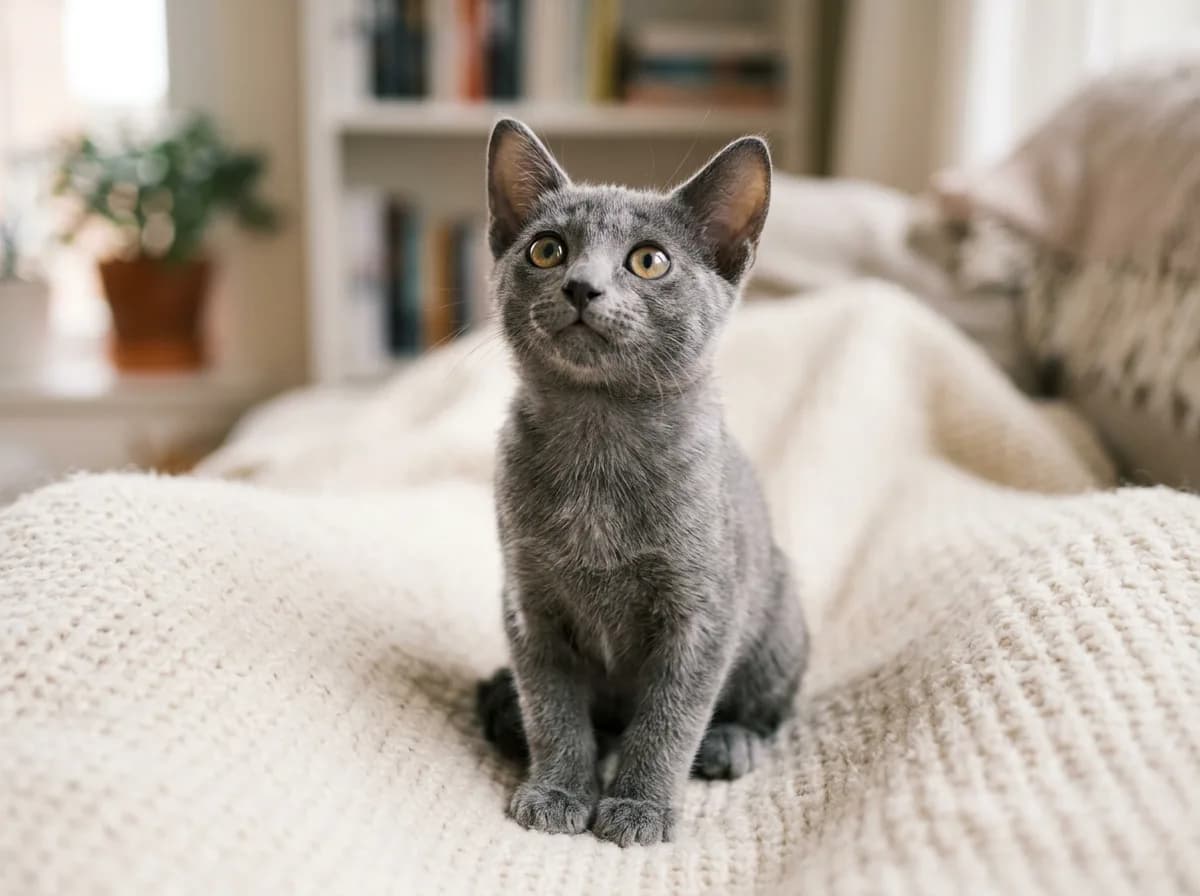
When you visit or video-call a litter, look for kittens raised underfoot in the home, confident and curious, with clear eyes and clean coats. Ask to see GM1 and GM2 DNA-clear results for both parents, a written health guarantee, and proof of early vet care and deworming. Pet-quality kittens are usually sold already spayed or neutered or with a spay/neuter contract.
Adoption is possible but rare. Purebred Korats occasionally turn up in breed-specific rescue or through breeders rehoming a retired adult, so it is worth contacting Korat clubs and asking to be kept in mind. If a blue-grey cat at a shelter steals your heart, that is wonderful; just know that a true pedigree Korat almost always comes through a breeder.
- Three things together confirm the breed: a heart-shaped face, a single silver-tipped blue coat with no white or markings, and large eyes that are (or are becoming) luminous green. Documented pedigree and DNA-clear parents seal it.
Is a Korat Cat Right for You?
A Korat is an outstanding match for someone who wants a deeply affectionate, intelligent companion and can give it company and attention. If you are home often, enjoy an interactive cat that learns tricks and follows you around, and appreciate a low-shedding, low-grooming coat, the Korat will thrive with you. The breed is less suited to households where the cat would be alone for long days with no companion, since Korats can become lonely and stressed without social contact.
There is also a charming cultural footnote that speaks to the Korat's enduring appeal. In Thailand the silver Si Sawat has been given as a wedding gift for centuries to bring prosperity and good fortune, and the breed's striking looks have kept it a favorite of cat lovers and celebrities alike. Bring a Korat home and you are adopting a living piece of that history: a quiet, lucky shadow that will rarely let you out of its sight.
Korat Cat FAQ
Yes. Korats are genuinely uncommon in the United States. There are relatively few breeders, litters are small, and the breed has never been mass-produced, so most prospective owners join a waitlist to get a kitten. That rarity is a big reason the breed commands a higher price than many common cats.
A Korat kitten from a reputable, health-testing breeder is typically worth $600 to $2,000 in the United States, with show- or breeding-quality cats at the upper end. The breed's scarcity and the cost of DNA testing breeding cats both push the value up compared with common shorthairs.
Look for three traits together: a heart-shaped face seen head-on, a single short coat in one color only (silver-tipped blue with no white or markings), and large eyes that are luminous green in the adult. A documented pedigree from a registered breeder and DNA-clear parents confirm it. Without papers, a blue-grey cat is most likely a domestic shorthair or a mix rather than a true Korat.
Most Korats enjoy being held and cuddled, especially by a trusted person. They are highly affectionate, people-oriented cats that seek out lap time and close contact. Like any cat, a Korat prefers to choose the moment, so let it settle in on its own terms and it will happily stay close.
Expect to pay $600 to $2,000 for the kitten itself, plus initial setup costs of roughly $150 to $400 and ongoing yearly costs of several hundred dollars for food, litter, and routine veterinary care. Pet insurance and any health issues add to the lifetime total.
A Korat has a heart-shaped face and a single, close-lying coat, while a Russian Blue has a wedge-shaped head and a dense, plush double coat that stands away from the body. The Korat is semi-cobby and muscular; the Russian Blue is long and fine-boned. Both have green eyes, so head shape and coat density are the most reliable tells.
Korat cats typically live 10 to 15 years, and many reach their late teens or even early twenties with good care. The breed is generally healthy; the main inherited concern, GM1 and GM2 gangliosidosis, is screened out entirely by DNA-testing the parents, so a kitten from tested clear lines is not at risk.
No cat is truly hypoallergenic, including the Korat. Allergies come from the Fel d 1 protein in saliva and skin, not from fur. However, the Korat's single, short, low-shedding coat releases less loose hair and dander than a thick double coat, which some allergy-prone owners find easier to live with.
Yes, but only modestly. Korats have a single short coat with very little undercoat, so they shed far less than double-coated breeds and never blow out a thick seasonal undercoat. A weekly brushing keeps loose hair down and the silver tipping glossy.
Just one. The Korat comes in a single color, a solid silver-tipped blue, where each hair is blue at the root and tipped with silver for a glowing sheen. There are no tabby markings, white patches, or other accepted colors. A blue-grey cat with white or in any other color is not a show-standard Korat.

Kristine Lacoste has been researching dog and cat breeds for nearly a decade and has observed the animals up close at dog shows in both the United States and the United Kingdom. She is the author of the book One Unforgettable Journey, which was named as a finalist for a Maxwell Award from the Dog Writers Association of America, and was host of a weekly pet news segment on the National K-9 Academy Radio Show. In addition, she was the New Orleans coordinator for Dogs on Deployment, a nonprofit that helps military members and their pets, for 3 years. Kristine has researched and written about pet behaviors and care for many years. She holds a bachelor’s degree in psychology, another bachelor’s degree in English and a Master of Business Administration degree.
Veterinarian · BVMS, MRCVS
Dr. Pippa Elliott, BVMS, MRCVS, is a veterinarian with nearly 30 years of experience in companion animal practice. Dr. Elliott earned her Bachelor of Veterinary Medicine and Surgery from the University of Glasgow. She was also designated a Member of the Royal College of Veterinary Surgeons. Married with 2 grown-up kids, Dr. Elliott has a naughty Puggle named Poggle, 3 cats and a bearded dragon.
Sign up for expert-backed reviews and safety alerts all in one place.