Is the Oriental Shorthair Hypoallergenic? The Honest Answer
Oriental Shorthairs are marketed as hypoallergenic, but no cat truly is. This vet-reviewed guide explains the Fel d 1 science, why the breed sheds less allergen, and how to live with one if you have mild allergies.
Petful is reader supported. As an affiliate of platforms like Amazon and Chewy, we may earn a commission when you buy through links on this page. There is no extra cost to you.
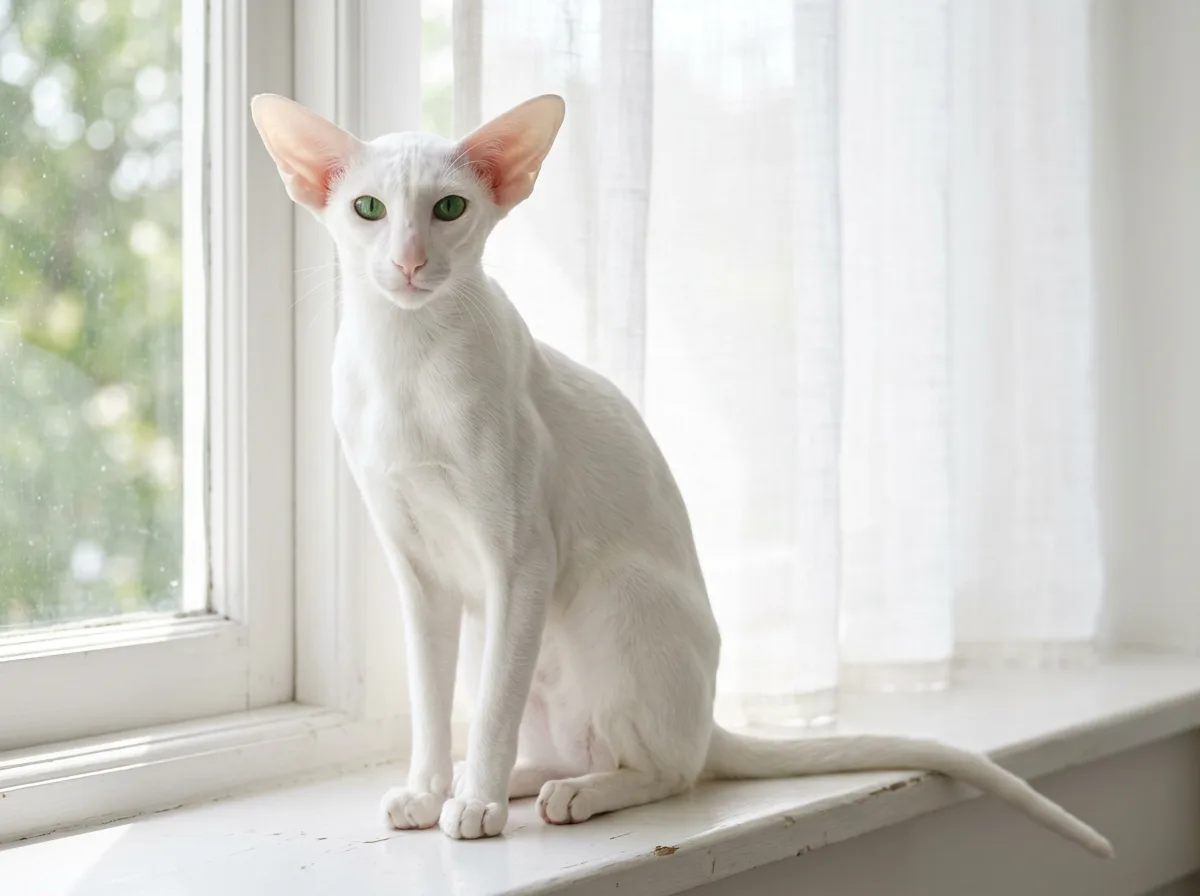
The honest answer is that the oriental shorthair hypoallergenic label is marketing shorthand, not science: no cat is truly hypoallergenic, and the American Academy of Allergy, Asthma and Immunology is clear that every cat produces the Fel d 1 protein that triggers allergies. What the Oriental Shorthair actually offers is a fine, short, single-layer coat with no undercoat that sheds very little, so it spreads less allergen-laden dander around your home. That makes it a reduced-allergen, low-shedding breed that many people with mild cat allergies tolerate better, but it is not allergen-free, and anyone with serious cat allergies should spend real time with an adult Oriental before bringing one home.
- 1No cat is truly hypoallergenic, including the Oriental Shorthair
- 2The allergen is Fel d 1, a protein in saliva and skin (not in hair), so coat length cannot make a cat allergen-free
- 3Orientals get the reputation because their fine, undercoat-free coat sheds little and spreads less dander, not because they make less Fel d 1
- 4Many people with mild allergies tolerate them; people with moderate-to-severe cat allergy usually should not get one
- 5Always meet an adult Oriental in person before committing, and lean on grooming, HEPA filtration, and a no-bedroom rule to keep symptoms down

Sign up for expert-backed reviews and safety alerts all in one place.
The Honest Answer: Reduced-Allergen, Not Allergen-Free
Breeders and allergy blogs love to file the Oriental Shorthair under "hypoallergenic," and you will see the same claim for its close relatives the Siamese and the Balinese. It is a half-truth worth untangling before you fall in love with those giant ears.
"Hypoallergenic" only means "less likely to cause an allergic reaction," not "allergy-proof." No domestic cat meets a true allergen-free standard, because the thing people react to is not fur at all. So the accurate framing for the Oriental Shorthair is reduced-allergen and low-shedding: a cat that many mild allergy sufferers live with comfortably, and that many moderate or severe sufferers still react to. If a source promises you a "100% hypoallergenic" cat, that is a sales pitch, not a fact.
- The prefix "hypo" means "less," not "none." A hypoallergenic breed is one that tends to provoke fewer or milder reactions in some people. It is never a guarantee, and reactions are deeply individual.
The Real Science: Fel d 1 Lives in Saliva and Skin, Not Hair
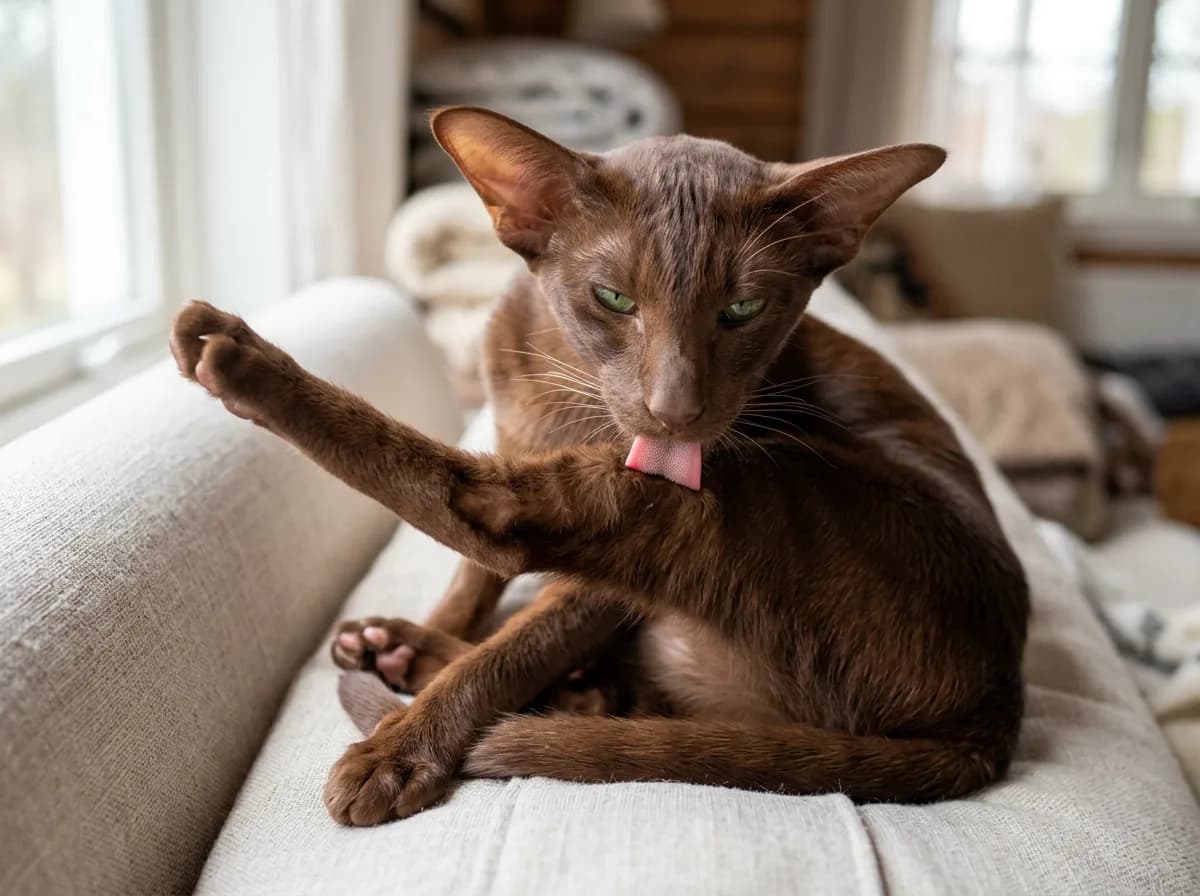
Here is the part most "best cats for allergies" lists skip. The overwhelming majority of cat allergy is driven by a single protein called Fel d 1, produced mainly in a cat's saliva, skin (sebaceous) glands, and to a lesser degree its urine. Cats coat themselves in saliva every time they groom. As that saliva dries, the Fel d 1 flakes off on microscopic skin particles called dander, drifts into the air, and settles on furniture, carpets, and clothing. That airborne dander is what your immune system reacts to.
Because the allergen comes from saliva and skin, the length or amount of a cat's hair does not determine how allergenic it is. This is why even hairless Sphynx cats still trigger allergies, and why shaving a cat does almost nothing to reduce reactions. The fur is just the delivery truck, not the cargo.
Never Scoop Again® with the Whisker Litter-Robot, the smart self-cleaning automatic litter box. Monitor visits and track weights for better overall care in the Whisker® app. Multi-cat friendly.
Petful may earn a commission when you click through to Whisker, at no extra cost to you.
- Because Fel d 1 is made in the skin and saliva, clipping or shaving an Oriental Shorthair does not lower the allergen it produces. It only removes the coat that was helping the cat self-regulate temperature, and it can stress the cat.
Why the Oriental Shorthair Gets the Hypoallergenic Reputation
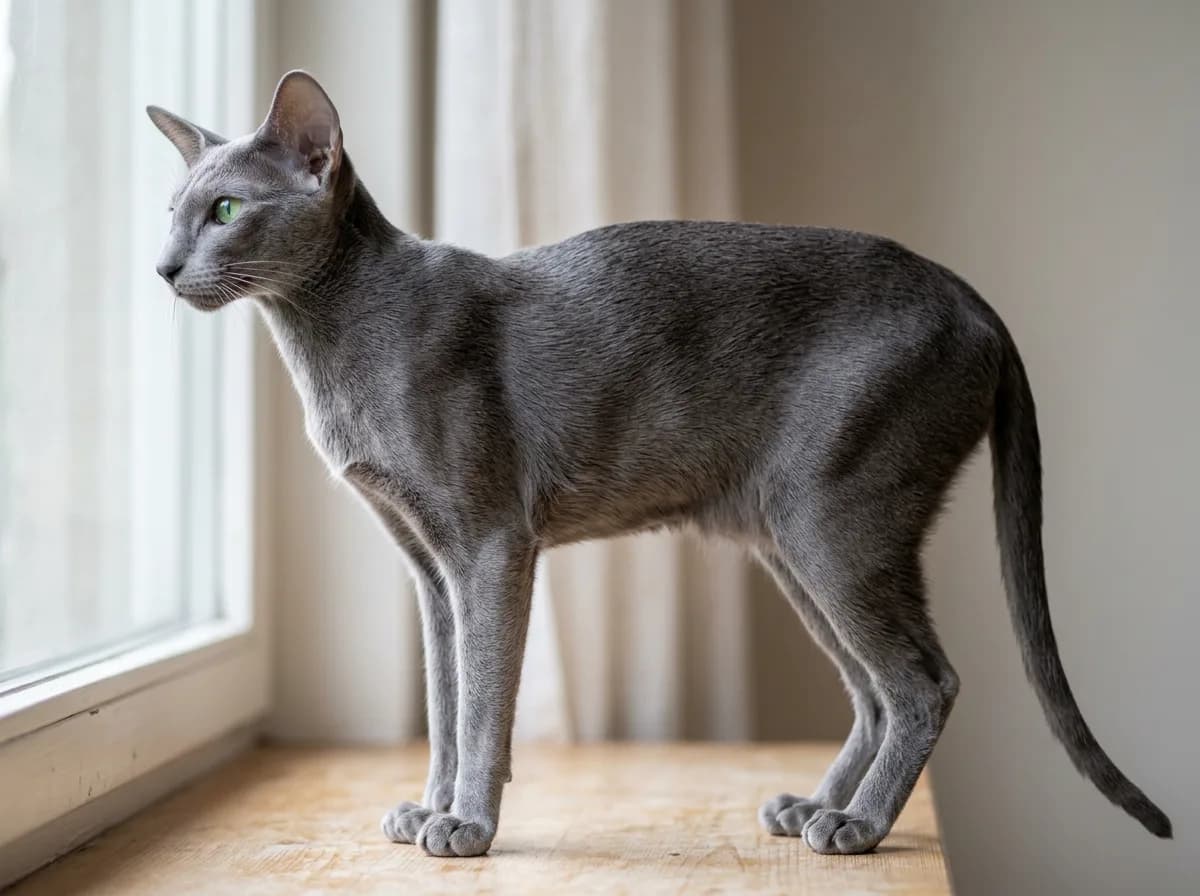
If coat length does not change the allergen, why does the Oriental Shorthair keep showing up on allergy-friendly breed lists? The reputation is real, and it comes down to how the coat manages the allergen it carries, not how much allergen the cat makes.
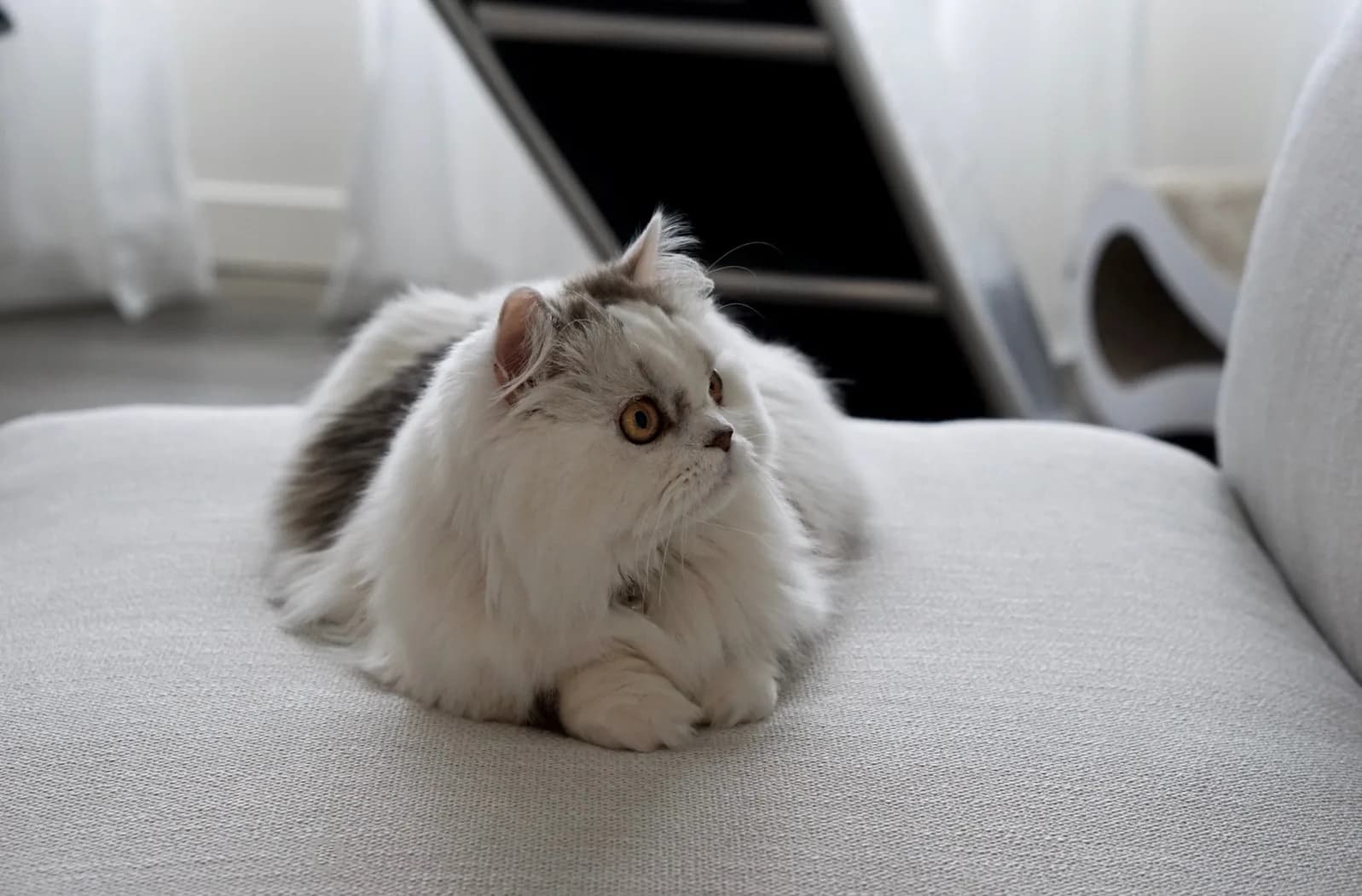
- No undercoat. Unlike a double-coated cat (think a Maine Coon or a Persian), the Oriental has a single, fine, short coat that lies flat against the body. There is no dense, fluffy underlayer to shed in clumps.
- Very low shedding. Less hair leaving the cat means less Fel d 1-coated dander broadcast into your air and onto your couch. Owners typically describe minimal loose hair.
- Less surface to flake. A short, sleek coat holds and releases dried saliva differently than a long, dense one, so day to day there is simply less allergen floating around.
The net effect: the same protein, but less of it spread through your living space. For someone with a mild allergy, that reduced load can be the difference between sniffles and a manageable home. For someone with a strong allergy, it often is not enough.
- Even setting allergies aside, the undercoat-free Oriental coat means less hair on your clothes and furniture and almost no grooming work. A weekly once-over with a rubber grooming mitt is usually all it takes.
Do Oriental Shorthairs Actually Produce Less Fel d 1?
This is where a lot of well-meaning blogs get it wrong, so it is worth being precise. There is no strong scientific evidence that Oriental Shorthairs produce less Fel d 1 than other cats. Their advantage is mechanical (a low-shedding coat that spreads less dander), not biological.
Fel d 1 output actually varies far more by the individual cat, and by factors like sex and neuter status, than by breed. Intact (unneutered) males tend to produce the most Fel d 1; neutered cats and females generally produce less. So a neutered female Oriental may be easier to live with than an intact male of the very same breed, which has nothing to do with the "Oriental" label and everything to do with that specific cat.
- Some breeder and allergy sites state the Oriental Shorthair "naturally produces less Fel d 1." That is not supported by good evidence. Vet-reviewed sources agree the breed simply contains and spreads its allergen better thanks to a low-shedding coat. Judge an individual cat, not the breed name.
How to Live With an Oriental Shorthair If You Have Mild Allergies
If your allergy is mild and you have your heart set on those big-eared good looks, a layered routine can keep symptoms low. No single trick is a silver bullet; stacking several is what works.
Meet an adult cat first (the most important step)
Kittens produce less Fel d 1 than adults, so a kitten can fool you. Before committing, spend a couple of hours with a fully grown Oriental, ideally in the breeder's or owner's home, and see how you react over time. If you can foster first, even better.
Groom and wipe down regularly
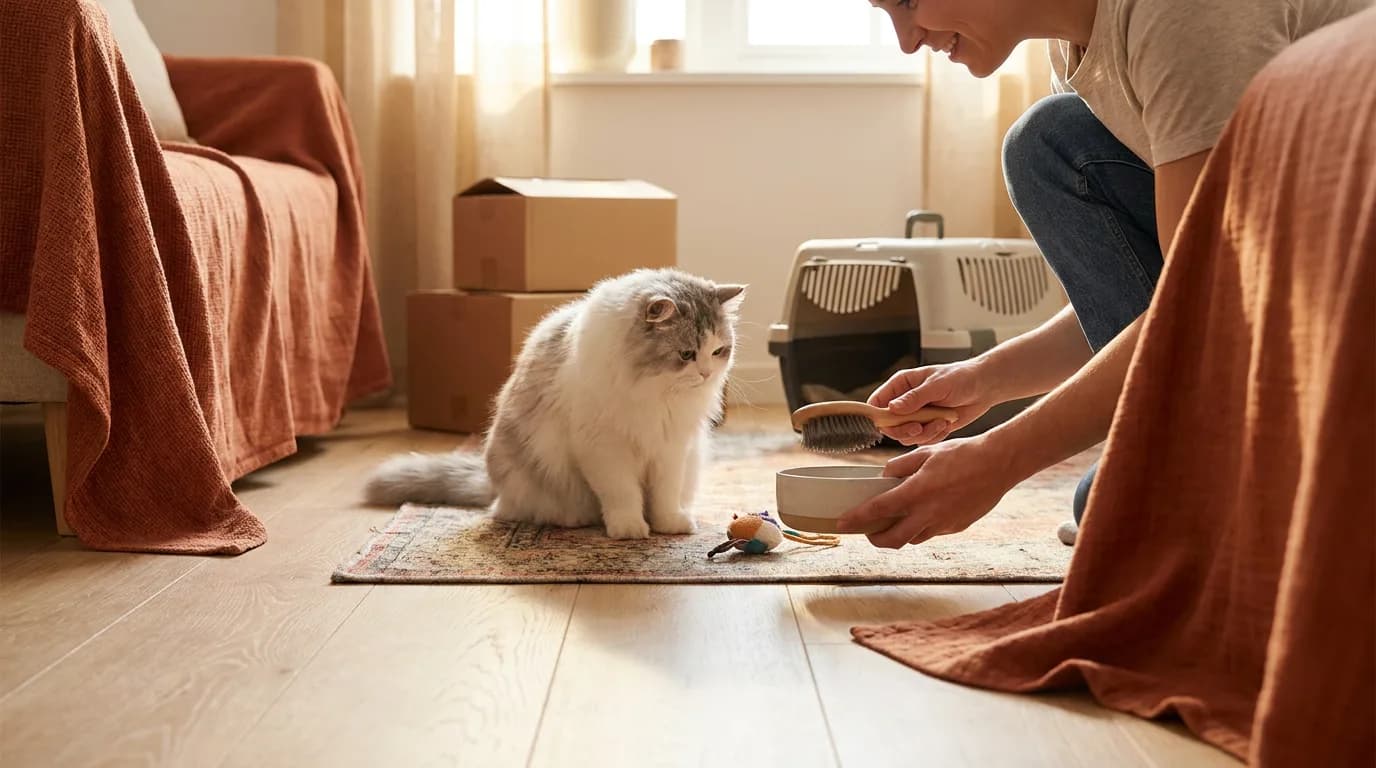
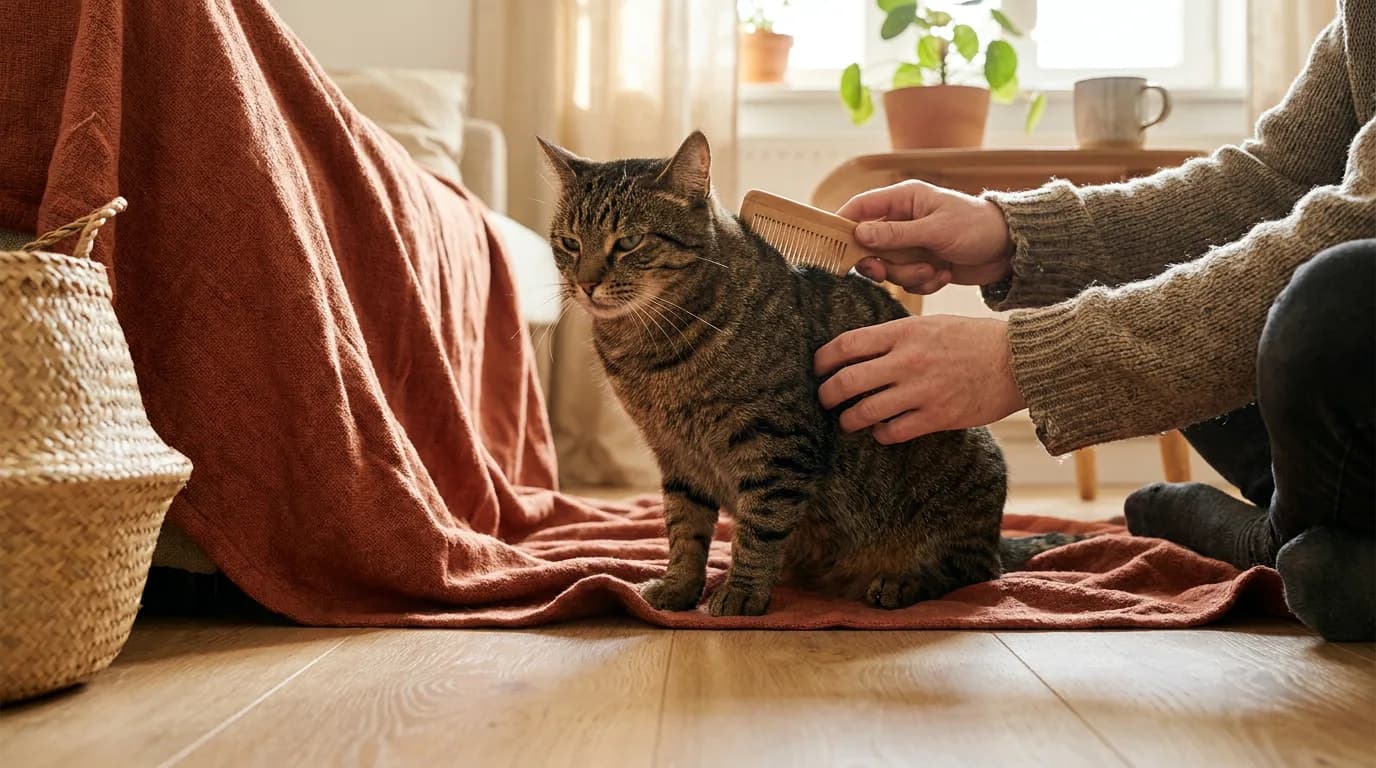
A weekly brush or rubber-mitt session pulls loose, dander-carrying hair off the cat before it lands on you. Wiping the coat with a damp cloth or a vet-approved dander-reducing pet wipe between brushings helps too. If you are the allergic one, have someone else do the brushing, or wear a mask and wash your hands and arms afterward.

63-inch multi-level cat tree with scratch posts, hammock, plush perches, and dangling toys. Vertical territory is non-negotiable for high-energy climbing breeds like the Bengal.
Petful may earn a commission when you click through to Chewy, at no extra cost to you.
Bathe occasionally, gently
An occasional bath can rinse away surface dander and saliva residue. Cats are fastidious self-groomers, so bathe only when needed and use a cat-safe shampoo so you do not dry out the skin (dry, flaky skin means more dander).
Filter and clean the air and surfaces
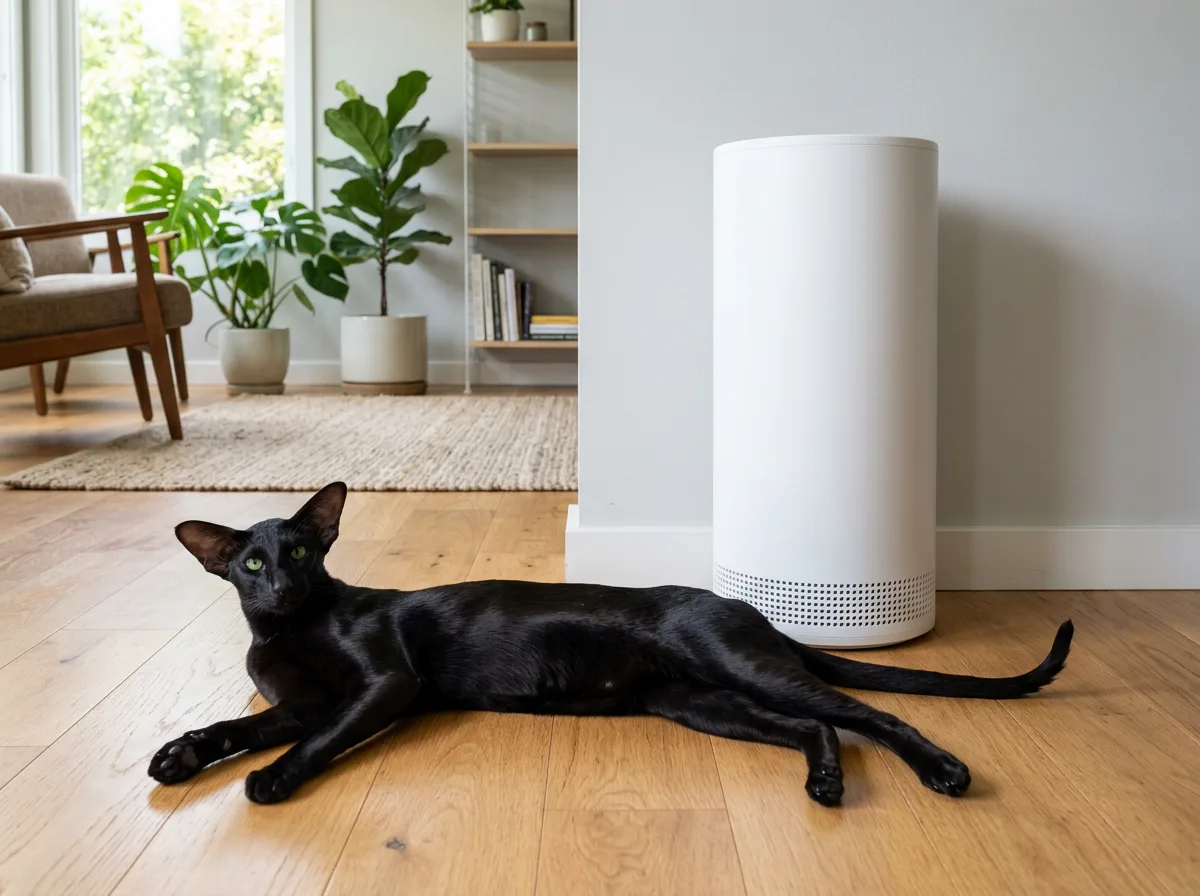
Run a true HEPA air purifier in the rooms where you spend the most time, vacuum with a HEPA-filter vacuum, and wash the cat's bedding weekly in hot water. Hard floors and washable covers trap less allergen than heavy carpet and upholstery.
Enforce a no-bedroom rule
Keep the cat out of your bedroom and off the bed entirely. You spend a third of your life there, so a cat-free, allergen-reduced sleep zone delivers an outsized payoff in symptom control.
Wash your hands and ask about an allergen-reducing diet
Wash your hands after petting and try not to touch your face or eyes first. Ask your vet about cat foods formulated to bind salivary Fel d 1 (for example, Purina Pro Plan LiveClear), which studies show can reduce active allergen on the coat. And talk to a human allergist: antihistamines, nasal sprays, or immunotherapy (allergy shots) treat your side of the equation, which is often the real fix.
- No one tactic solves cat allergy. People who live happily with an Oriental usually combine several: an adult-cat meet-and-greet up front, weekly grooming, a HEPA purifier, a strict no-bedroom rule, and handwashing. Together they cut the allergen load enough to make daily life comfortable.
Allergy-Reduction Strategies: What Helps and How Much
Not every popular tip pulls the same weight. Here is an honest read on the common approaches for an Oriental Shorthair household.

108-oz stainless steel pet fountain with quiet pump and water-level window. Bengals are notoriously water-obsessed; a flowing fountain encourages hydration and pulls them away from sinks and toilets.
Petful may earn a commission when you click through to Chewy, at no extra cost to you.
| Strategy | How it helps | Honest impact |
|---|---|---|
| Meet an adult cat before adopting | Confirms how YOU react to a mature, full-allergen cat | High: the single best predictor |
| Weekly grooming and dander wipes | Removes loose, allergen-coated hair before it spreads | Moderate: real, ongoing help |
| True HEPA air purifier plus HEPA vacuum | Captures airborne Fel d 1 dander | Moderate to high in the rooms you use most |
| No-bedroom rule | Creates a low-allergen sleep zone | High for symptom control, easy to do |
| Occasional gentle baths | Rinses surface saliva and dander off the coat | Low to moderate, and short-lived |
| Allergen-reducing diet (binds salivary Fel d 1) | Lowers active allergen the cat deposits while grooming | Moderate, per manufacturer studies |
| Shaving the cat | Removes fur only, not the allergen source | None: do not bother |
| Human allergy treatment (antihistamines, shots) | Treats your immune response directly | High: often the real solution |
Who Should NOT Get an Oriental Shorthair
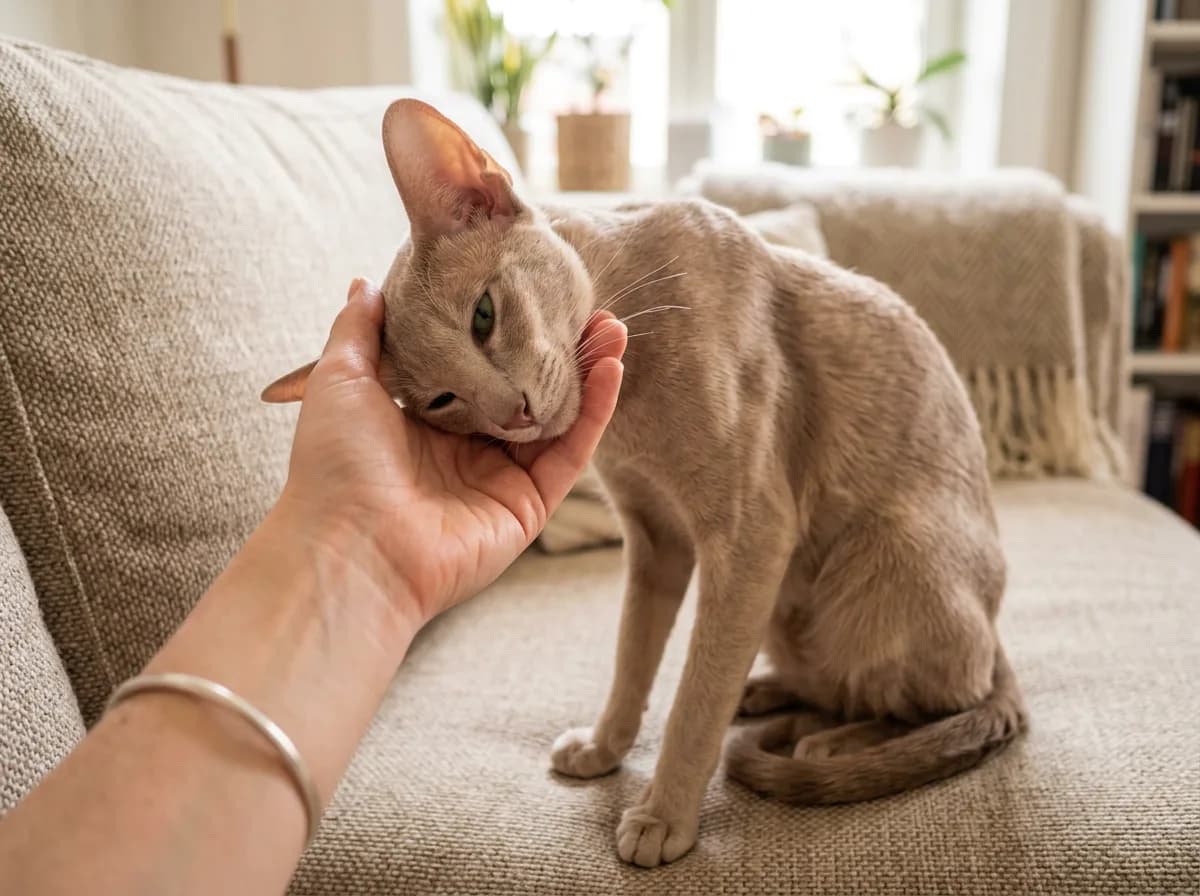
For all the honest reasons above, this breed is the wrong choice for some people, and a vet would rather you know that now than rehome a cat later.
- Anyone with moderate-to-severe cat allergy, or allergic asthma. A reduced-allergen coat does not erase the allergen. If cats reliably set off wheezing, hives, or breathing trouble, the risk is not worth it.
- People who cannot test their reaction first. If you have no way to spend time with an adult Oriental before adopting, you are gambling on your own health.
- Households that cannot keep up the routine. The allergy benefit depends on grooming, cleaning, and air filtration. If that upkeep is not realistic, symptoms will creep back.
- Anyone wanting a quiet, independent cat. This is a separate caution, but worth flagging: Orientals are intensely social, "velcro," and famously vocal (that distinctive raspy "honk"). They are a poor fit for someone gone all day, allergies or not.
- If you have asthma triggered by cats, talk to your physician before getting any cat. Asthma attacks are a medical emergency, and no "hypoallergenic" breed is worth that risk without clear guidance from your own doctor.
How the Oriental Compares to Other "Allergy-Friendly" Cats
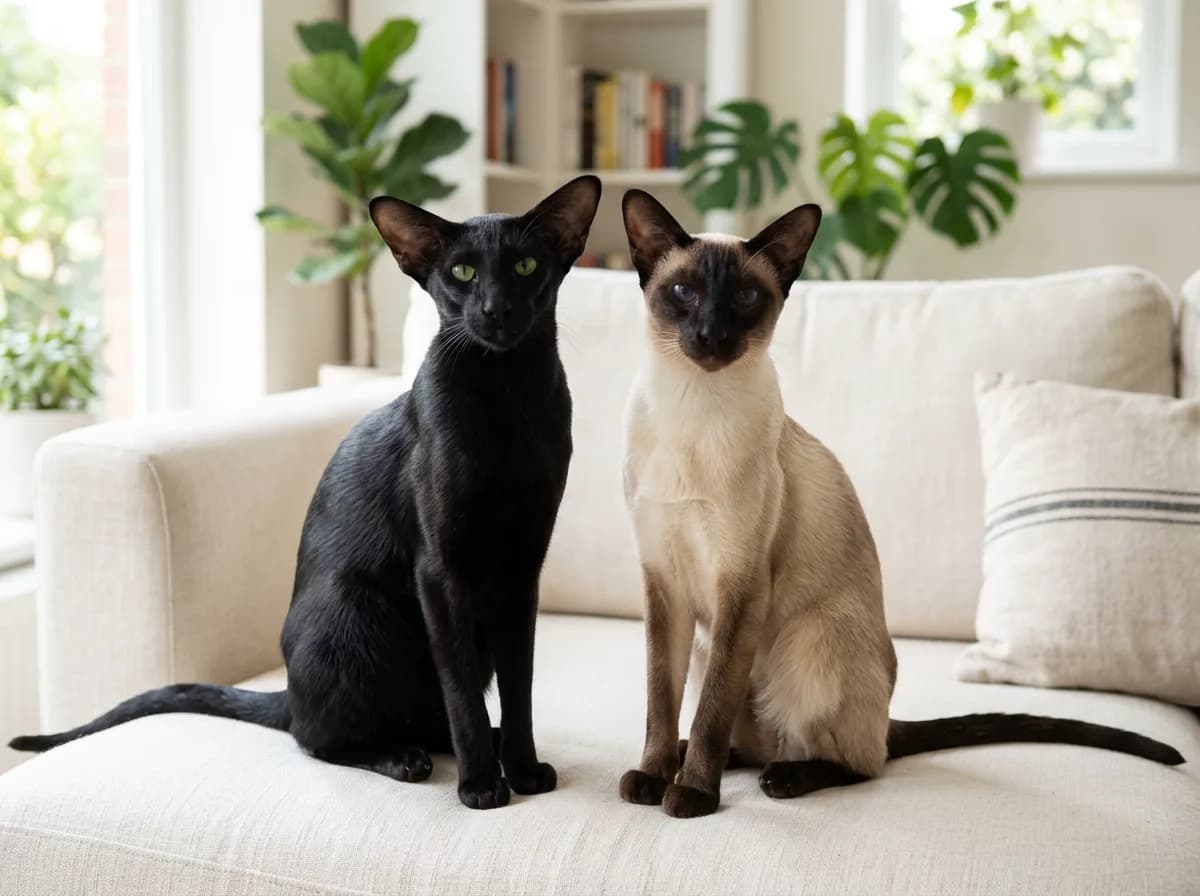
The Oriental Shorthair sits in a well-known cluster of breeds that allergy sufferers gravitate toward. None are allergen-free, but each earns the reputation for a different reason. Its parent breed, the Siamese, shares the same fine, low-shedding single coat and the same honest caveats. The Balinese is the long-haired member of that same Siamese family and, surprisingly, is often tolerated well despite its longer coat, again because it lacks a dense undercoat. The Sphynx earns its allergy reputation from being hairless, yet it still produces Fel d 1 and actually needs regular bathing to manage skin oils. If you are weighing the Oriental against its closest relative, our full Siamese cat breed profile lays out how alike the two truly are.
The takeaway across all of them: pick the individual cat you personally tolerate, not the breed with the best marketing.
Frequently Asked Questions
Not truly. No cat is fully hypoallergenic, because all cats produce the Fel d 1 allergen in their saliva and skin. The Oriental Shorthair is a reduced-allergen, low-shedding breed that many people with mild allergies tolerate well, but it is not allergen-free.
No. They have a fine, short, single coat with no undercoat, so they shed very little and need only a weekly brush or rubber-mitt grooming. Low shedding is the main reason they spread less allergen than heavy double-coated breeds.
They can be a good fit for people with mild cat allergies, because their low-shedding coat spreads less Fel d 1-coated dander. People with moderate-to-severe cat allergies or allergic asthma usually still react and should be cautious. Always meet an adult Oriental in person first.
There is no strong evidence that they produce less Fel d 1 than other cats. Their advantage is mechanical: a low-shedding, undercoat-free coat spreads less allergen around the home. Fel d 1 output varies more by the individual cat, sex, and neuter status than by breed.
No. Every cat, including hairless Sphynx cats, produces Fel d 1 in saliva and skin. Some breeds, like the Oriental Shorthair, Siamese, Balinese, and Siberian, are simply lower-allergen and more tolerable for some people.
Stack several tactics: meet an adult cat before adopting, groom and wipe the coat weekly, run a HEPA air purifier, vacuum and wash bedding often, keep the cat out of your bedroom, wash your hands after petting, ask your vet about an allergen-reducing diet, and treat your own symptoms with an allergist's help.
Heavy double-coated, high-shedding breeds (such as Persians and other long-haired cats), and intact male cats of any breed, tend to spread the most allergen and are usually hardest on allergy sufferers.
No. Fel d 1 is produced in the skin and saliva, not the hair, so shaving removes the coat without lowering the allergen. It can also stress the cat and harm its natural temperature regulation.
The Bottom Line
The Oriental Shorthair is a genuinely good option for people with mild cat allergies, just not for the reason the internet usually gives. It is not that the breed makes less of the allergen; it is that a fine, undercoat-free, low-shedding coat spreads less of it around your home. That distinction matters, because it tells you exactly how to succeed: control the dander with grooming, filtration, and a no-bedroom rule, treat your own allergy with a doctor, and above all, spend time with a grown Oriental before you commit. Do that, and many mild sufferers find they can finally share a home with a cat. Skip it, and "hypoallergenic" becomes a promise no cat can keep.

Coreen Saito is a pet writer and longtime shelter volunteer with more than a decade in animal rescue. She covers cat behavior, breed care, and the small, ordinary science of sharing a life with companion animals, with a particular focus on honest takes about the products and decisions that actually matter. At home in Arizona, she's outranked by Mac (a dog with the loudest opinion in the house), Rebel (a cat who governs by quiet authority), and Meri (an orange tabby who runs the late shift and the laundry basket). She writes about all three, plus the rescues that keep coming through her life, at LifeWithMinty.com.
Sign up for expert-backed reviews and safety alerts all in one place.