Oriental Shorthair Colors: The Complete Guide to All 600+ Looks
Oriental Shorthairs come in 600+ non-pointed colors, more than any other breed. Here is the full color chart and every popular look, from iconic ebony black to white, blue, lavender, cinnamon, tabby, and tortie, plus eye color and rarity.
Petful is reader supported. As an affiliate of platforms like Amazon and Chewy, we may earn a commission when you buy through links on this page. There is no extra cost to you.
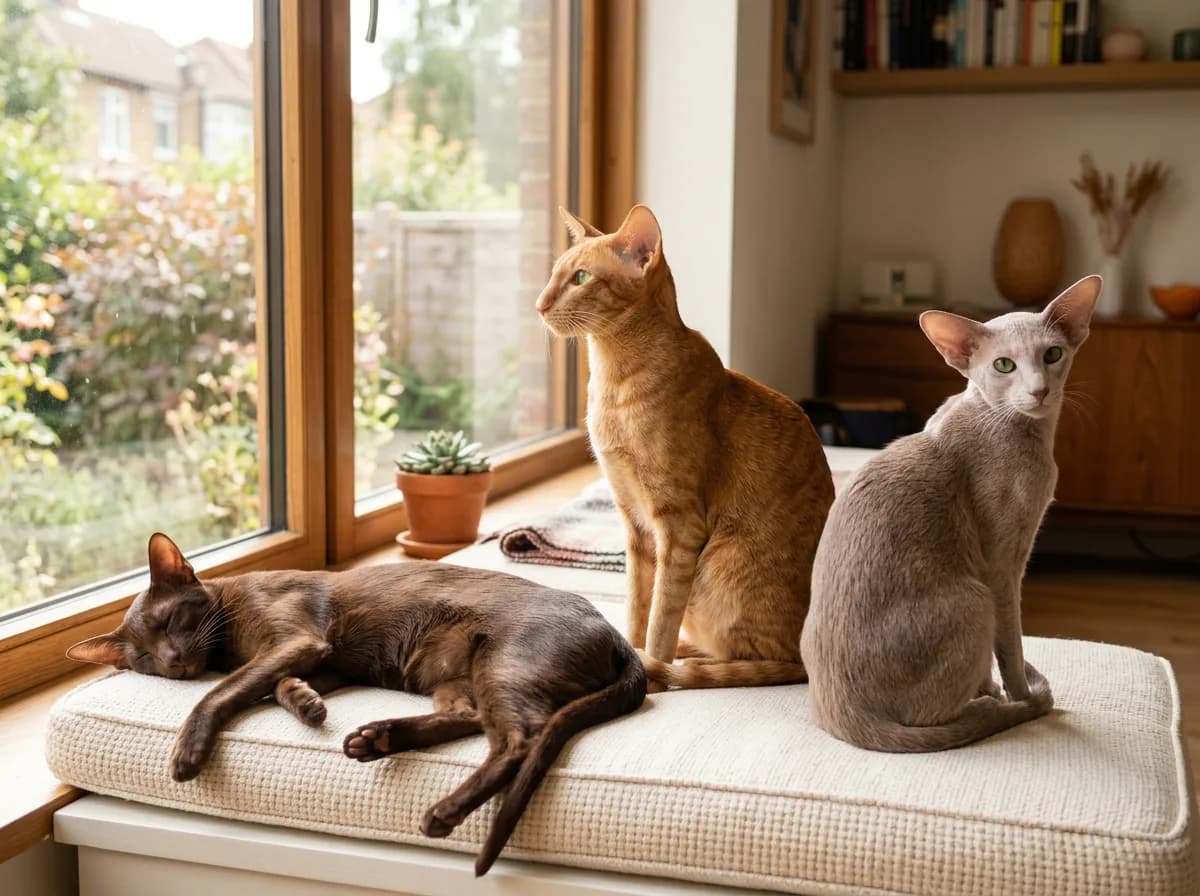
The Cat Fanciers' Association recognizes more than 600 possible Oriental Shorthair colors, pattern, and coat-length combinations, which is why this breed is nicknamed the "Ornamental" and is considered the most colorful cat in the world. Every one of those looks is a NON-pointed color, meaning a solid or patterned coat rather than the pale body and dark "points" of its parent, the Siamese. The iconic and most-searched look is solid black, known in the show ring as ebony, but the palette also runs through white, blue, chocolate, lavender, cinnamon, red, tabby, and tortoiseshell. This guide walks through the full color chart and every popular shade, one section at a time.
- 1The Oriental Shorthair comes in 600+ color and pattern combinations (CFA), all of them non-pointed
- 2Solid black (ebony) is the iconic, most-searched look; white, blue, chocolate, and lavender are other favorites
- 3A pointed (colorpoint) Oriental is, by definition, a Siamese, not an Oriental
- 4Eyes are usually green; white Orientals can be green, blue, or odd-eyed
- 5Color does not affect health, but rare colors can raise the price

Sign up for expert-backed reviews and safety alerts all in one place.
How Many Colors Does an Oriental Shorthair Come In?
The short answer: more than any other cat breed. The Cat Fanciers' Association (CFA) cites "over 600 possible color, pattern, and coat-length combinations" for the Oriental, while The International Cat Association (TICA) currently recognizes 281 distinct colors and calls the breed the "Ornamental" because it has more colors and patterns than any other cat. Whichever registry you go by, the takeaway is the same: this is the rainbow cat.
That huge palette is the whole reason the breed exists. In the 1950s through the 1970s, breeders in Britain and the United States crossed the Siamese with the British Shorthair, the Russian Blue, the Abyssinian, and domestic shorthairs. The goal was to take the elegant Siamese body and head and wrap it in every color a cat coat can produce. The result is a cat that looks like a Siamese in shape but can be solid jet black, snow white, smoke silver, a swirled tortoiseshell, or a striped tabby.
The single most important rule to understand is that all of these are non-pointed colors. The color covers the whole body evenly (in a solid) or in a pattern, rather than concentrating in dark points on the face, ears, legs, and tail. If a kitten in an Oriental litter is born colorpointed, that cat is registered as a Siamese, not an Oriental Shorthair.
- In the show ring, a solid black Oriental Shorthair is called ebony. It is the breed's signature look and the most-searched single color, prized for its sleek, panther-like silhouette and bright green eyes.
The Full Oriental Shorthair Color Chart
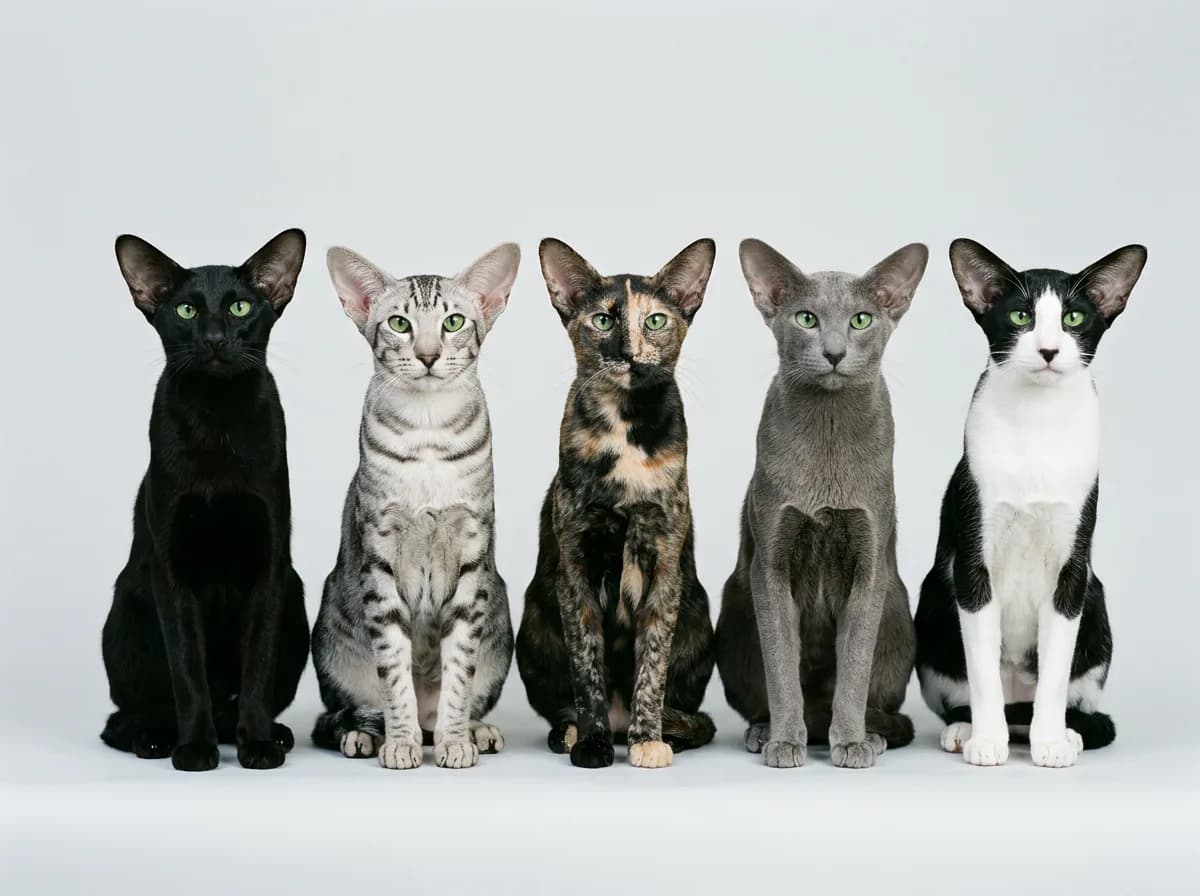
Breeders and registries organize the 600+ looks into a handful of color families. The chart below groups the main ones so you can see how solids, patterns, and white combinations fit together. Within each family, the same base colors (black/ebony, blue, chocolate, lavender, cinnamon, fawn, red, cream) repeat in different patterns, which is how the count climbs into the hundreds.

Never Scoop Again® with the Whisker Litter-Robot, the smart self-cleaning automatic litter box. Monitor visits and track weights for better overall care in the Whisker® app. Multi-cat friendly.
Petful may earn a commission when you click through to Whisker, at no extra cost to you.
| Color Family | What It Looks Like | Example Colors |
|---|---|---|
| Solid | One even color from root to tip, no pattern | Ebony (black), blue, chocolate, lavender, cinnamon, fawn, red, cream, white |
| Tabby | Striped, spotted, or ticked markings in any base color | Classic, mackerel, spotted, ticked, and patched tabby |
| Tortoiseshell and Torbie | Mottled patches of two colors; torbie adds tabby striping | Black tortie, blue-cream, chocolate tortie, plus torbie versions |
| Smoke, Silver, and Shaded | A pale or white undercoat with colored tips | Black smoke, blue smoke, silver tabby, shaded silver |
| Bicolor and Particolor | Any of the above combined with patches of white | Black and white, blue and white, tortie and white |
Black (Ebony) Oriental Shorthair
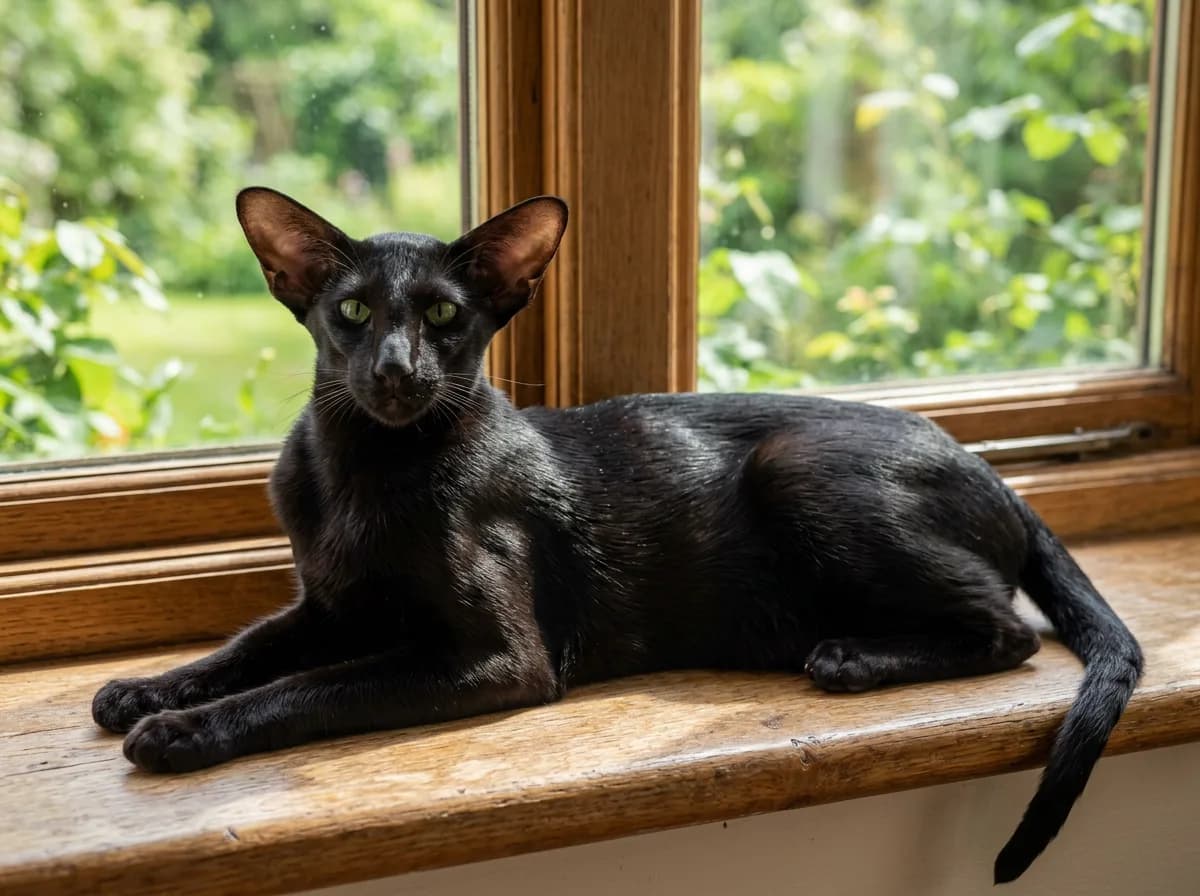
The black Oriental Shorthair, called ebony on a pedigree, is the look most people picture and the one most people search for. A good ebony is solid jet black from root to tip with no rust, no white hairs, and a glossy, close-lying coat that shows off the breed's long, tubular body. Paired with the breed's signature giant ears and bright green eyes, the effect is a sleek, almost vampiric "velvet shadow," which is exactly why black Orientals have a huge following on social media.
Ebony is a solid color, so the whole cat is one shade. It is not rare, but it is so striking on this breed's elegant frame that it stays in constant demand. If you want the classic Oriental Shorthair "panther" look, ebony is it.
White Oriental Shorthair
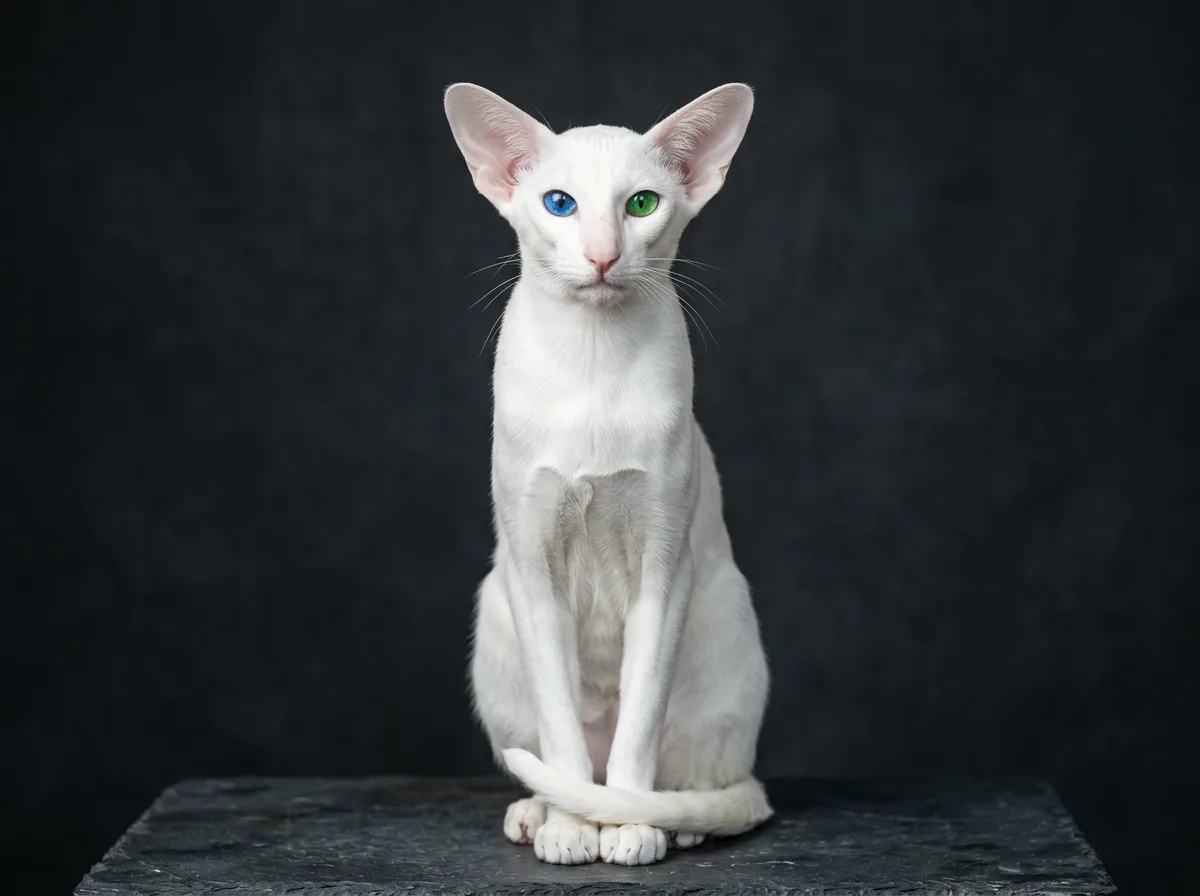
A solid white Oriental Shorthair is pure, even white with no other color anywhere on the coat. White is one of the less common solids, which makes a clean white Oriental a real eye-catcher. The most interesting feature is the eyes: where most Orientals have green eyes, a white Oriental can have green, blue, or odd eyes (one of each). That odd-eyed look (one green and one blue) is especially prized.
White is the one color where eye color genuinely varies, so it is worth seeing photos of the specific cat before you fall in love with a description.
Blue Oriental Shorthair
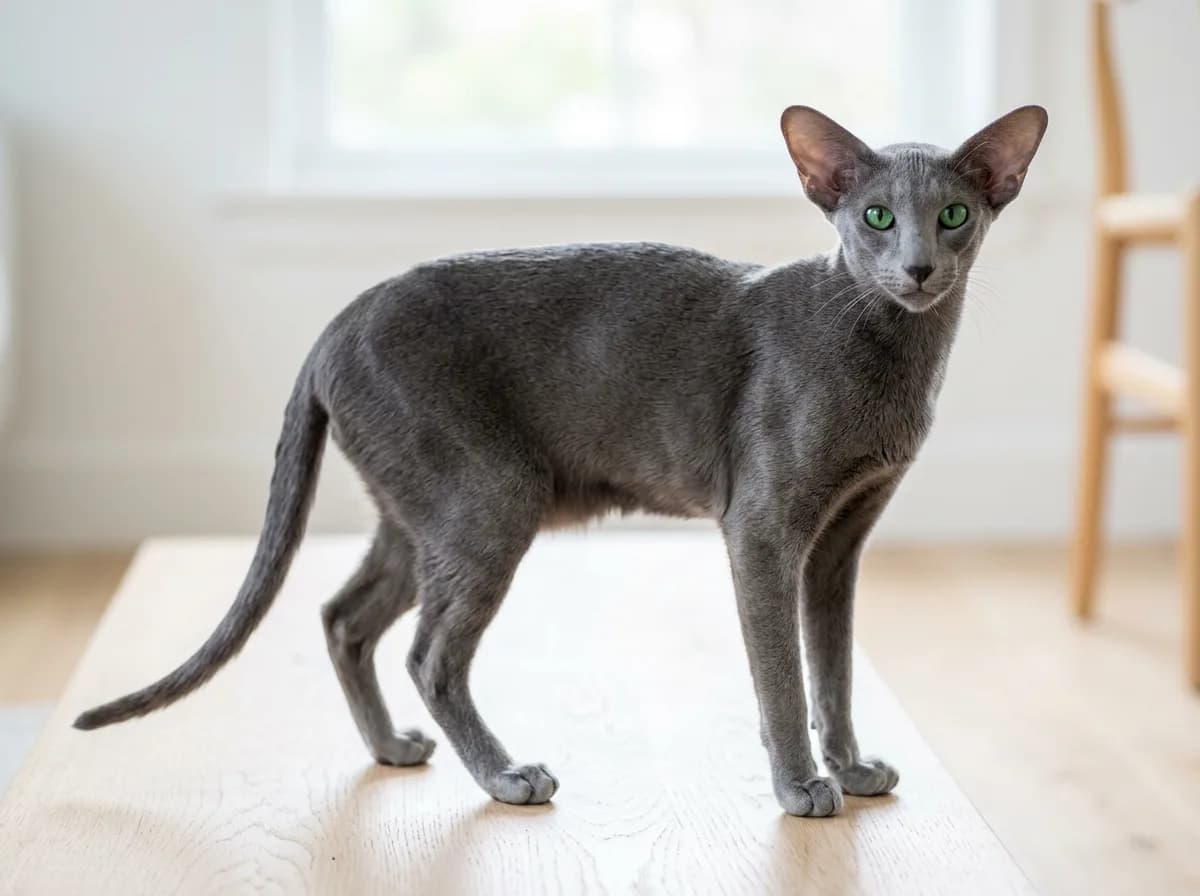
"Blue" in cat terms means a soft, even blue-gray, not a literal blue. A blue Oriental Shorthair has a slate-gray coat with nose leather and paw pads to match, and the same green eyes as most of the breed. Blue is a diluted version of black, so think of it as a softer, smoky cousin of the ebony. It is one of the original recognized solids and remains a popular, easy-to-find choice.
Chocolate (Chestnut) Oriental Shorthair
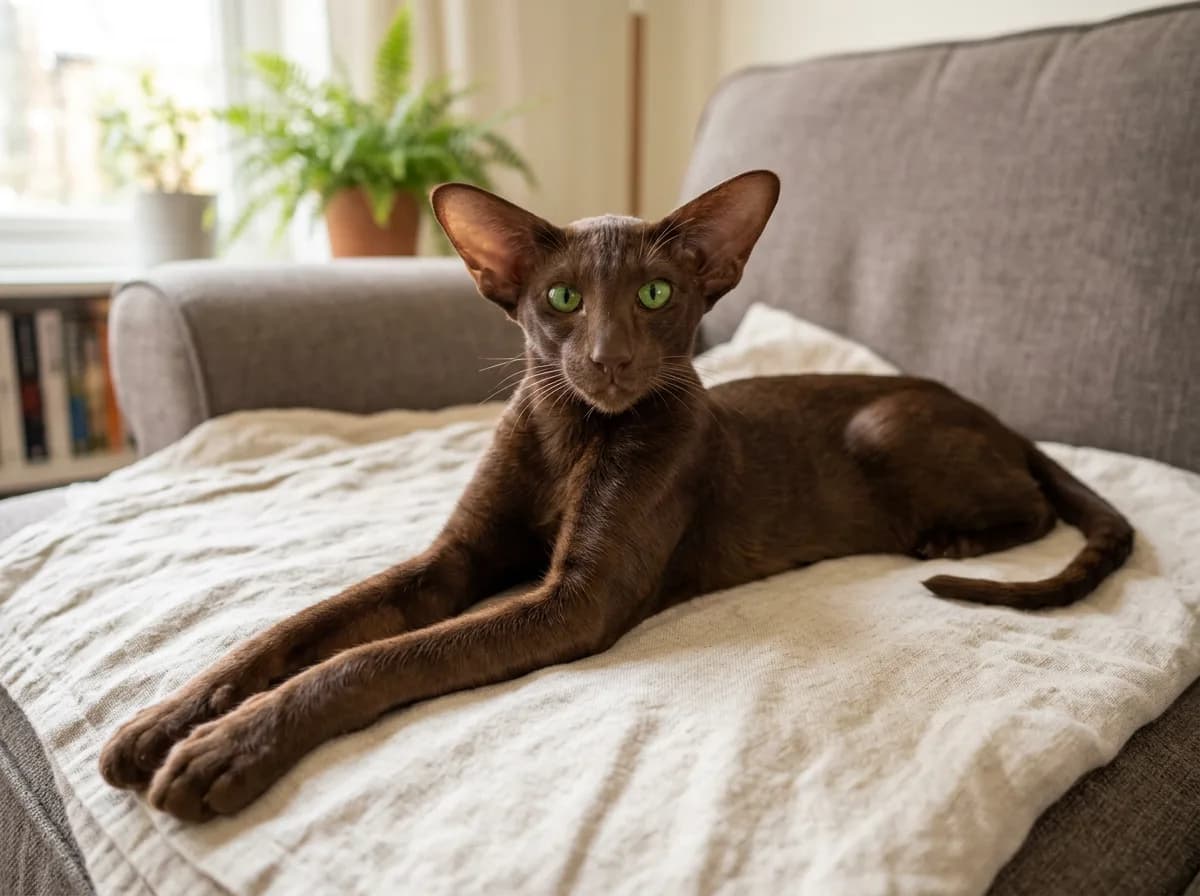
Chocolate, listed by some registries as chestnut, is a warm, rich milk-chocolate brown that covers the whole body evenly. It is one of the very first colors England's Governing Council of the Cat Fancy recognized in the breed, alongside lavender and white. A good chocolate is even and warm-toned all over, with nose and pads in a matching brown and the usual green eyes. It is a long-time favorite for people who want warmth rather than the coolness of black or blue.
Lavender (Lilac) Oriental Shorthair
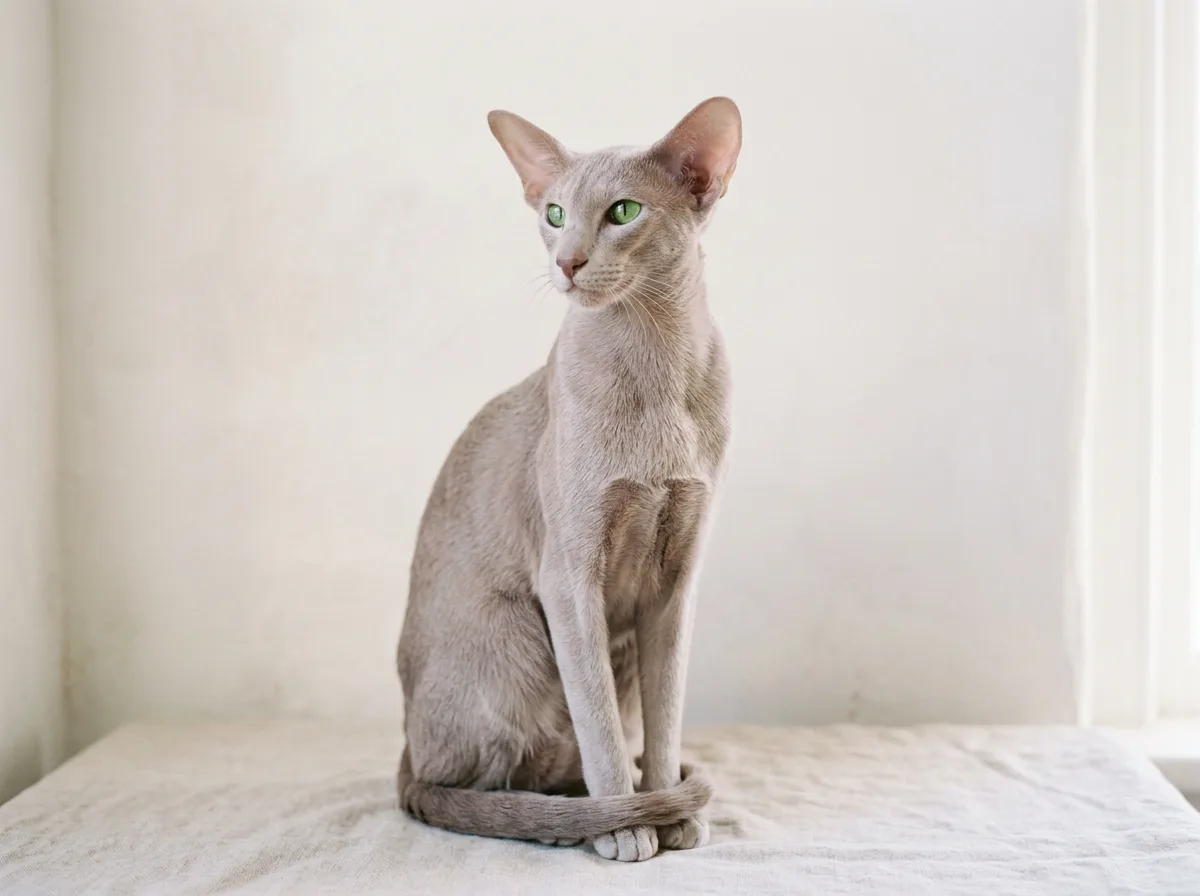
Lavender, also called lilac, is the diluted version of chocolate: a soft, frosty pinkish-gray that looks almost dove-colored in good light. It was one of the founding recognized colors of the breed and remains one of the most sought-after solids because of how unusual and delicate it looks. The coat is pale and even, the nose and pads are a soft lavender-pink, and the eyes are green. If you have seen searches for "oriental shorthair lilac," this is the color they mean.
Cinnamon and Fawn Oriental Shorthair
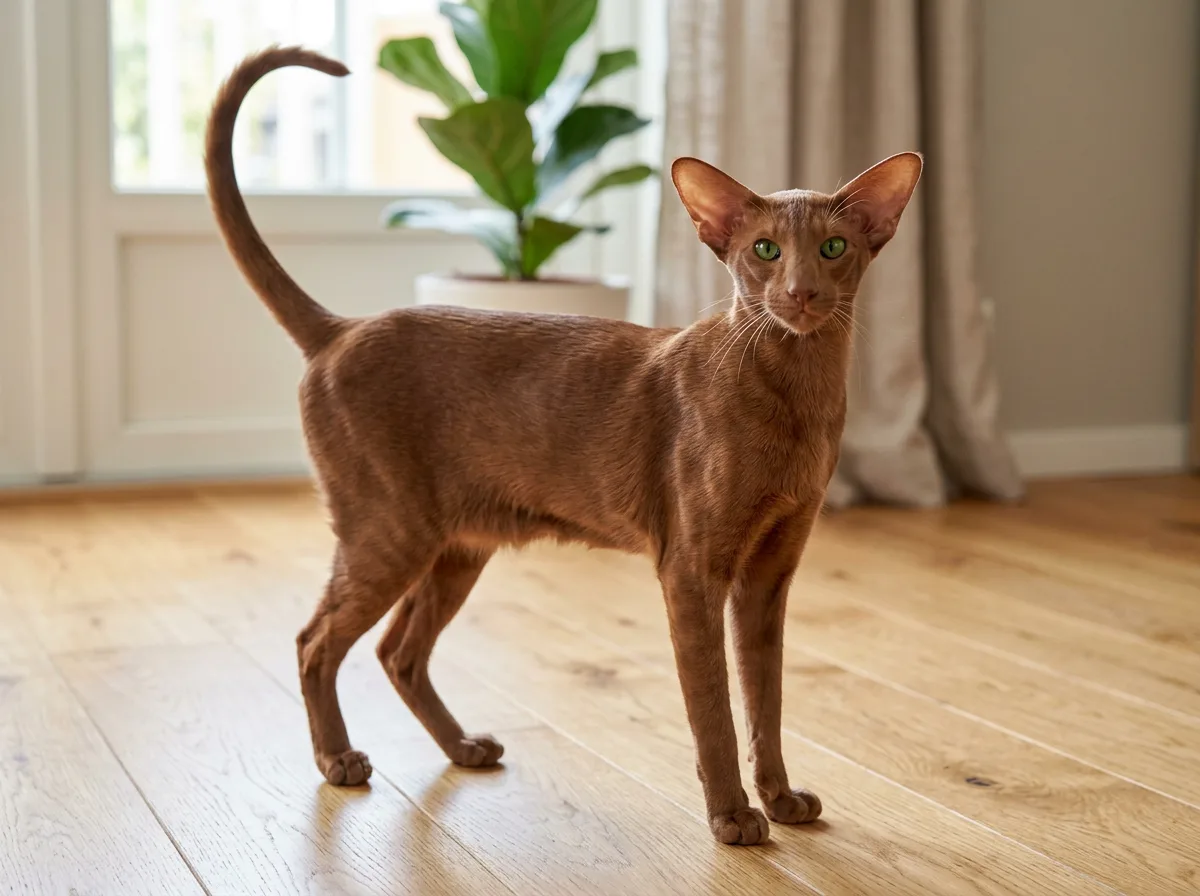
Cinnamon is a light, warm reddish-brown, lighter and more orange-toned than chocolate. Fawn is the diluted version of cinnamon: a pale, muted, mushroom-pink beige. Both are genuinely uncommon colors, and a cinnamon or fawn cat (especially in a ticked-tabby pattern) is considered rare and very sought after by breeders and buyers. These two are great examples of how the Oriental palette goes well beyond the usual black, white, and gray.
Red and Cream Oriental Shorthair
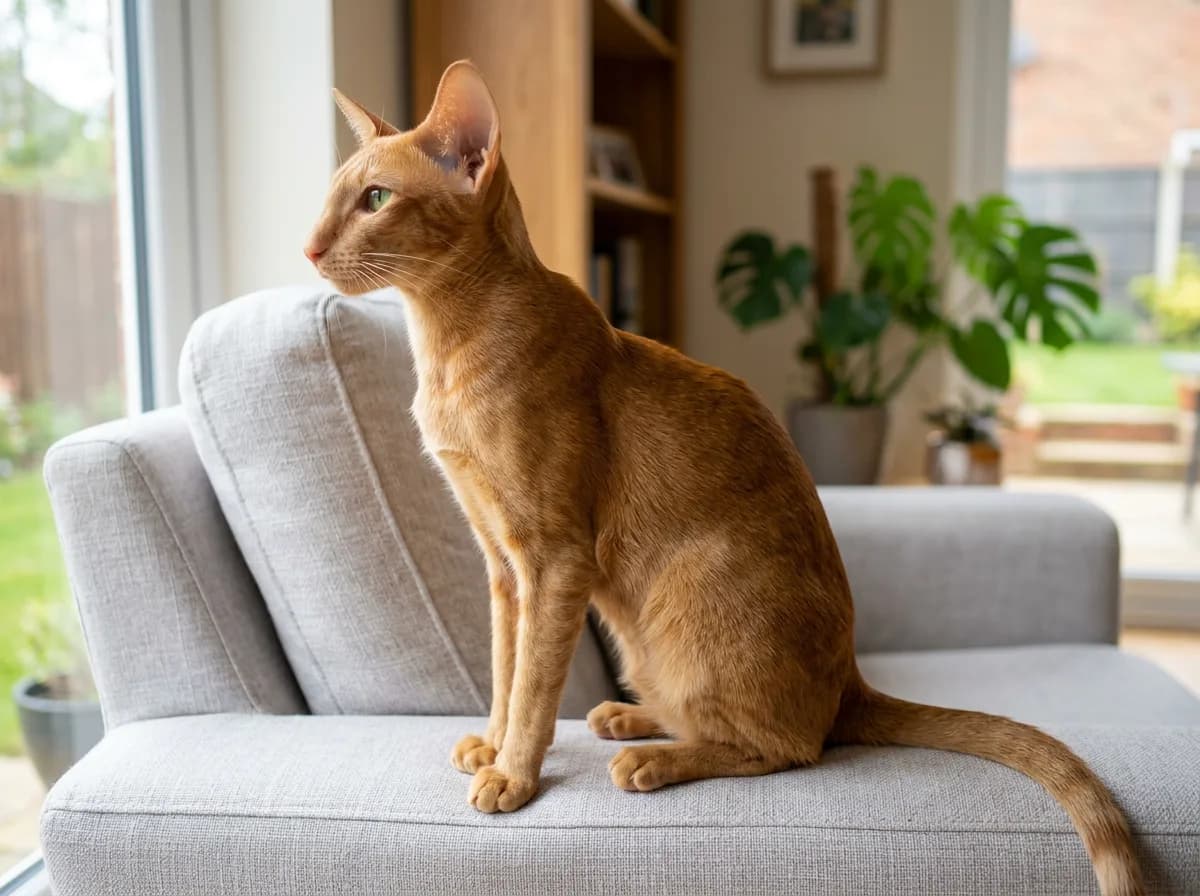
Red is a rich, warm ginger-orange, the same gene that makes orange tabbies, and it is rarely truly solid (most reds show faint tabby ghost markings, which is normal). Cream is the diluted version of red: a soft, pale buttery apricot. Both bring a warm, sunny look to the breed's sleek frame and pair, as usual, with green eyes. Red and cream also form the basis of many tortoiseshell and tabby combinations.
Tabby Oriental Shorthairs
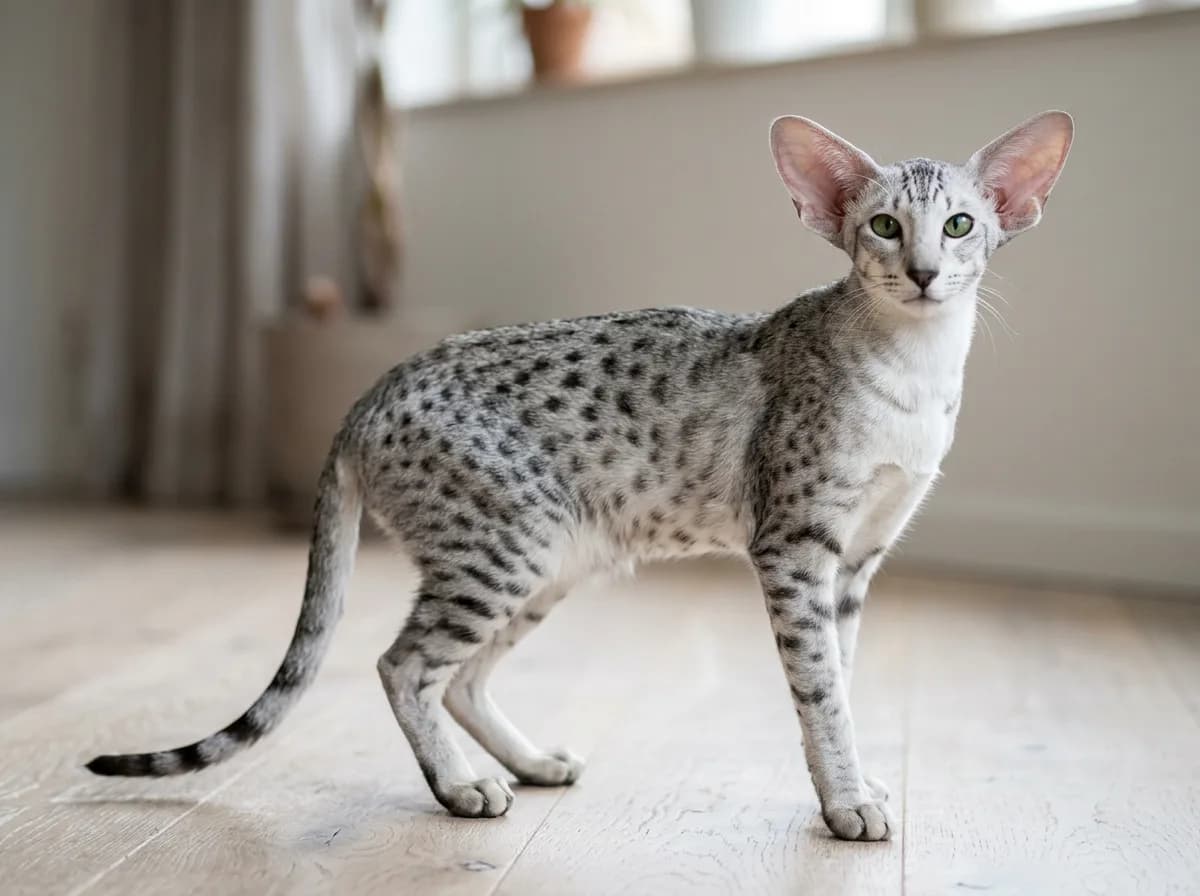
Tabby is a pattern, not a single color, and it is where the Oriental's numbers really explode. Any of the base colors above can appear in a tabby pattern, and there are five recognized tabby patterns:

63-inch multi-level cat tree with scratch posts, hammock, plush perches, and dangling toys. Vertical territory is non-negotiable for high-energy climbing breeds like the Bengal.
Petful may earn a commission when you click through to Chewy, at no extra cost to you.
- Classic tabby: bold swirls and a "bullseye" on the flank
- Mackerel tabby: narrow vertical "tiger" stripes
- Spotted tabby: the stripes break into spots
- Ticked tabby: each hair is banded, giving a speckled, Abyssinian-like look with little patterning on the body
- Patched (torbie) tabby: tabby markings combined with tortoiseshell patches
So a single Oriental can be a "blue spotted tabby" or a "chocolate ticked tabby," and each of those counts as its own recognized color. Silver tabbies (a tabby pattern over a white-silver undercoat) are especially eye-catching.
Tortoiseshell and Torbie Oriental Shorthairs
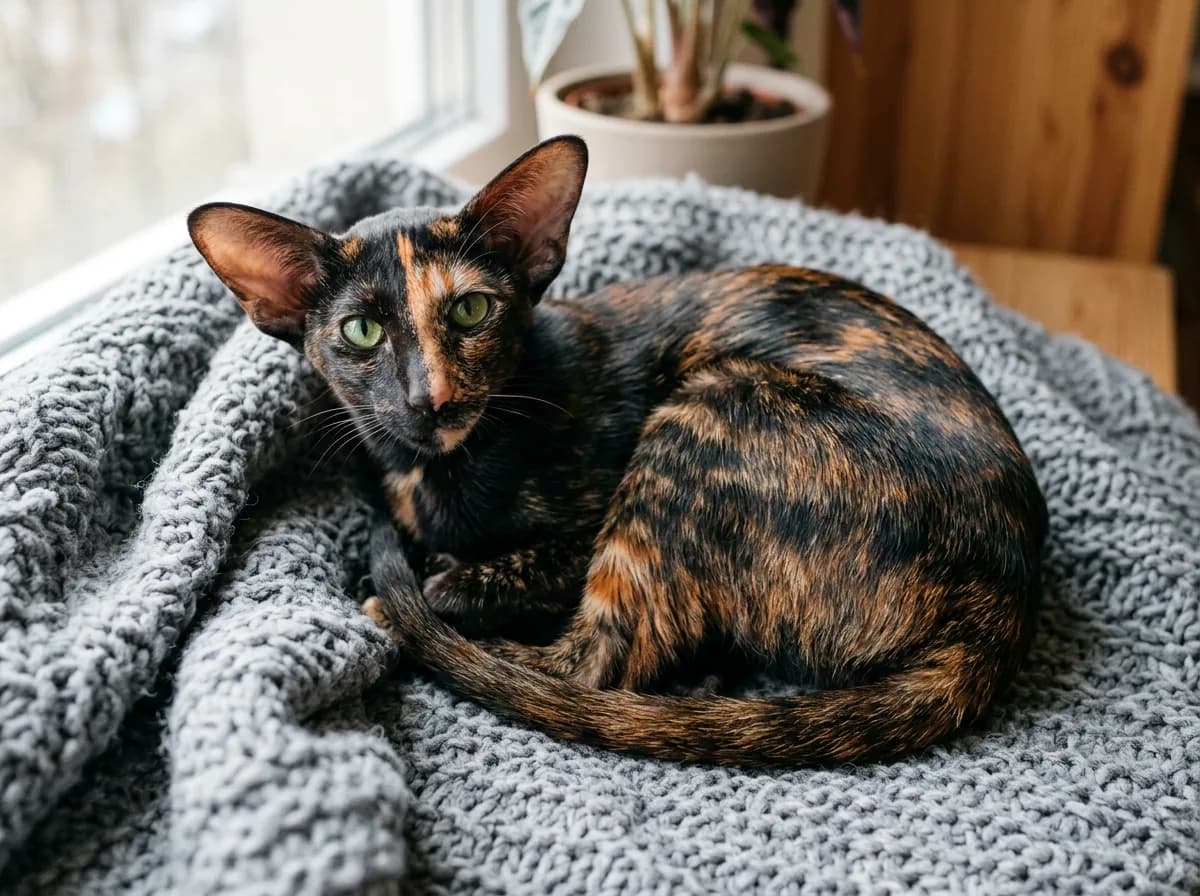
A tortoiseshell Oriental Shorthair wears a mottled, marbled mix of two colors, classically black and red (or their dilutes, blue and cream, which is called "blue-cream"). Because the tortoiseshell pattern is tied to the genetics that produce it, torties are almost always female. A "torbie" (short for tabby tortoiseshell) is a tortie whose patches also carry tabby striping. These swirled, no-two-alike coats are some of the most artistic-looking in the breed.
Smoke, Silver, Shaded, and Bicolor
Three more families round out the palette:

108-oz stainless steel pet fountain with quiet pump and water-level window. Bengals are notoriously water-obsessed; a flowing fountain encourages hydration and pulls them away from sinks and toilets.
Petful may earn a commission when you click through to Chewy, at no extra cost to you.
- Smoke: a solid-looking cat with a white undercoat, so the color appears to shimmer and "smoke" as the cat moves. A black smoke looks black until it shifts and a silvery-white undercoat flashes through.
- Silver and shaded: a white or pale undercoat tipped with color. Shaded silver is one of the rarer, more dramatic looks in the breed.
- Bicolor and particolor: any of the colors or patterns above combined with patches of white. "Oriental shorthair black and white" is a common search, and that bicolor (a tuxedo-style black-and-white Oriental) is exactly what it describes.
- The 600+ figure comes from multiplying a handful of base colors by every pattern (solid, five tabbies, tortie, torbie, smoke, silver, shaded) and then by "with or without white." That is how a breed with roughly eight base colors ends up with hundreds of recognized looks.
Eye Color in Oriental Shorthairs
For nearly every Oriental Shorthair, the eyes are green, and the deeper and clearer the green, the better by show standards (TICA lists green as the preferred eye color). The almond-shaped, slightly slanted green eyes against a sleek coat are a big part of the breed's exotic look.
The one exception is the white Oriental Shorthair, which can have green, blue, or odd eyes (one blue and one green). Blue eyes on any other color usually mean the cat is actually pointed, and a pointed Oriental is a Siamese. So as a rule of thumb: green eyes on a colored or patterned Oriental, and only white Orientals get the blue or odd-eyed option.
- If a colored Oriental Shorthair has blue eyes, it is almost certainly colorpointed, which makes it a Siamese by definition. The exception is the solid white Oriental, which can have blue or odd eyes while still being a true Oriental.
Why a Pointed "Oriental" Is Really a Siamese
This is the single most misunderstood point about the breed, so it is worth being clear. The Oriental Shorthair and the Siamese are the same breed group with the same body, head, giant ears, voice, and personality. The only real difference is color. The Siamese is colorpointed (a pale body with darker points on the face, ears, legs, and tail) and always has blue eyes. The Oriental Shorthair wears the full 600+ palette of solid and patterned non-pointed colors and usually has green eyes. For more, see Petful’s guide to Oriental Shorthair personality.
Because they are so closely related, you can breed a Siamese to an Oriental and get both pointed (Siamese) and non-pointed (Oriental) kittens in the same litter. The pointed ones are registered as Siamese; the rest are Orientals. For a deeper look at the pointed side, see our guide to Siamese cat colors, and the full Siamese breed profile explains the shared ancestry the two breeds come from.
Rarest vs Most Common Colors
The most common, easy-to-find Oriental Shorthair colors are the original solids: ebony (black), blue, chocolate, and the classic tabbies. These show up most often in litters and are what you will see most on breeder pages.
The rarer end of the palette includes cinnamon, fawn, the shaded silvers, and unusual pattern-and-color combinations such as a cinnamon ticked tabby or a fawn cat. Breeders and buyers actively seek these out, so a rare color can mean a longer wait and a higher price. Lavender (lilac) sits in between: it is a founding color but still uncommon enough to be considered special.
- Fawn, cinnamon, shaded silver, and cinnamon-ticked-tabby Orientals are genuinely uncommon and highly sought after, so expect rarer colors to come with a longer wait list and a premium price from a breeder.
Does Color Affect Health or Price?
Coat color does not affect an Oriental Shorthair's health. The breed's known health considerations (such as the heart conditions HCM and DCM, the eye condition progressive retinal atrophy, amyloidosis, and a tendency toward dental disease) are inherited through the Siamese lineage and are unrelated to whether a cat is black, blue, or tortoiseshell. A good breeder screens the parents for HCM and PRA regardless of color.
Color can, however, affect price. A pet-quality Oriental from a reputable breeder typically runs about $600 to $1,500, but a rare color or pattern can push toward the top of that range or beyond. The big price drivers are lineage and show quality, documented health testing, and color rarity. A rare cinnamon or shaded-silver kitten from a proven, health-tested line will simply cost more than a readily available black or blue. For more on what you should expect to pay and why, the breed's cost factors mirror those of its parent breed in our Siamese cat price guide.
- Never let a rare or trendy color talk you past health testing. Ask any breeder for the parents' HCM and PRA results before you put down a deposit. A stunning color on an unscreened line is a bad trade.
Comparing the Oriental's Palette to Related Breeds
The Oriental Shorthair's "any color goes" approach is unusual even among its relatives. The pointed Siamese is limited to its four classic points and a handful of newer ones, all over a pale body with blue eyes. The Balinese, the longhaired member of the Siamese group, is likewise pointed rather than wearing the full Oriental palette. And the ticked-tabby Abyssinian, one of the breeds used to develop the Oriental, contributes that warm ticked coat but in a much narrower color range. Set against those, the Oriental Shorthair really is the network's color showcase.
Frequently Asked Questions About Oriental Shorthair Colors
Oriental Shorthairs come in 600+ color and pattern combinations (per the CFA), all of them non-pointed. The families are solid (ebony/black, blue, chocolate, lavender, cinnamon, fawn, red, cream, white), tabby (classic, mackerel, spotted, ticked, and patched), tortoiseshell and torbie, smoke, silver and shaded, and bicolor (any of these with white).
It depends on the registry. The CFA cites over 600 possible color, pattern, and coat-length combinations, while TICA currently recognizes 281 distinct colors. Either way it is more than any other cat breed, which is why the Oriental is nicknamed the "Ornamental."
A black Oriental Shorthair, called ebony on a pedigree, is a solid jet-black cat with a glossy coat, the breed's signature large ears, and bright green eyes. It is the most iconic and most-searched Oriental color, often described as looking like a sleek little panther.
Yes. A solid white Oriental Shorthair is pure even white and is one of the less common solids. White is the one color where the eyes vary: a white Oriental can have green, blue, or odd eyes (one of each), and the odd-eyed look is especially prized.
Yes. Tabby is a pattern that any base color can carry, and there are five recognized tabby patterns: classic, mackerel, spotted, ticked, and patched (torbie). So a single cat can be a blue spotted tabby or a chocolate ticked tabby, and each counts as its own recognized color.
The rarer end of the palette includes cinnamon, fawn, the shaded silvers, and uncommon combinations such as a cinnamon ticked tabby. These are genuinely hard to find and highly sought after, so they often come with a longer wait list. Ebony, blue, chocolate, and the classic tabbies are the most common.
Color does not affect health, but it can affect price. Rare colors and patterns (cinnamon, fawn, shaded silver) command a premium and a longer wait, while common colors like black and blue are easier to find. The biggest price drivers overall are lineage, show quality, and documented HCM and PRA health testing.
A black (ebony) Oriental Shorthair is priced like other common colors, typically about $600 to $1,500 for a pet-quality kitten from a reputable breeder. Black is in high demand for its looks but is not a rare color, so it does not carry the premium that cinnamon, fawn, or shaded-silver cats can.

Coreen Saito is a pet writer and longtime shelter volunteer with more than a decade in animal rescue. She covers cat behavior, breed care, and the small, ordinary science of sharing a life with companion animals, with a particular focus on honest takes about the products and decisions that actually matter. At home in Arizona, she's outranked by Mac (a dog with the loudest opinion in the house), Rebel (a cat who governs by quiet authority), and Meri (an orange tabby who runs the late shift and the laundry basket). She writes about all three, plus the rescues that keep coming through her life, at LifeWithMinty.com.
Sign up for expert-backed reviews and safety alerts all in one place.