European Shorthair: Identification, Temperament and Care
Understand European Shorthair identity, coat variation, family fit and everyday care without mistaking a familiar-looking domestic cat for a verified pedigree.
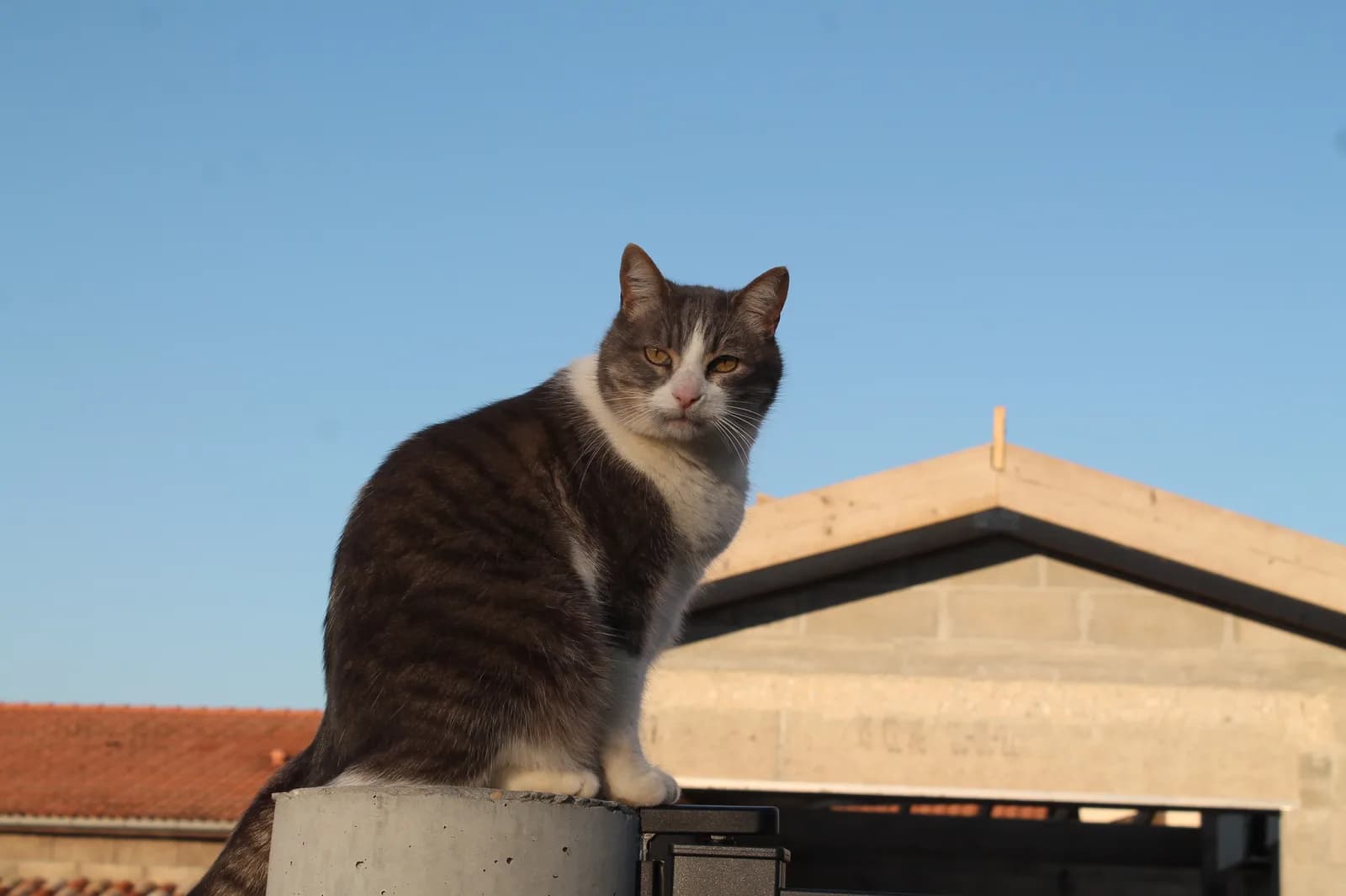
Source-described European Shorthair example. Appearance alone cannot establish pedigree. Photo: Manateknik, CC BY-SA 4.0, resized and converted to WebP.
Petful is reader supported. As an affiliate of platforms like Amazon and Chewy, we may earn a commission when you buy through links on this page. There is no extra cost to you.
The European Shorthair is a sturdy, short-coated breed developed to preserve the character of traditional Nordic cats. Expect a curious, playful companion with a muscular build, a dense glossy coat and a routine that includes regular brushing, interactive play and preventive care.
The name is sometimes used loosely for ordinary European house cats. The identification section below explains the documentary distinction; first, these practical facts help you picture the breed and its everyday needs.

Sign up for expert-backed reviews and safety alerts all in one place.
European Shorthair quick facts
PetMD’s veterinary-reviewed profile gives typical adult measurements of 12–15 pounds and 9–11 inches at the shoulder, plus a 15–20-year lifespan estimate. These are published guide estimates, not limits every healthy cat must meet.
| Feature | Practical reference |
|---|---|
| Origin | European breed with a Nordic preservation history |
| Adult measurements | 12–15 pounds; 9–11 inches at the shoulder |
| Coat | Short, dense, glossy and springy |
| General temperament | Curious, playful and moderately active |
| Lifespan estimate | 15–20 years in the cited veterinary guide |
| Routine | Gentle regular brushing, daily play and individual preventive care |
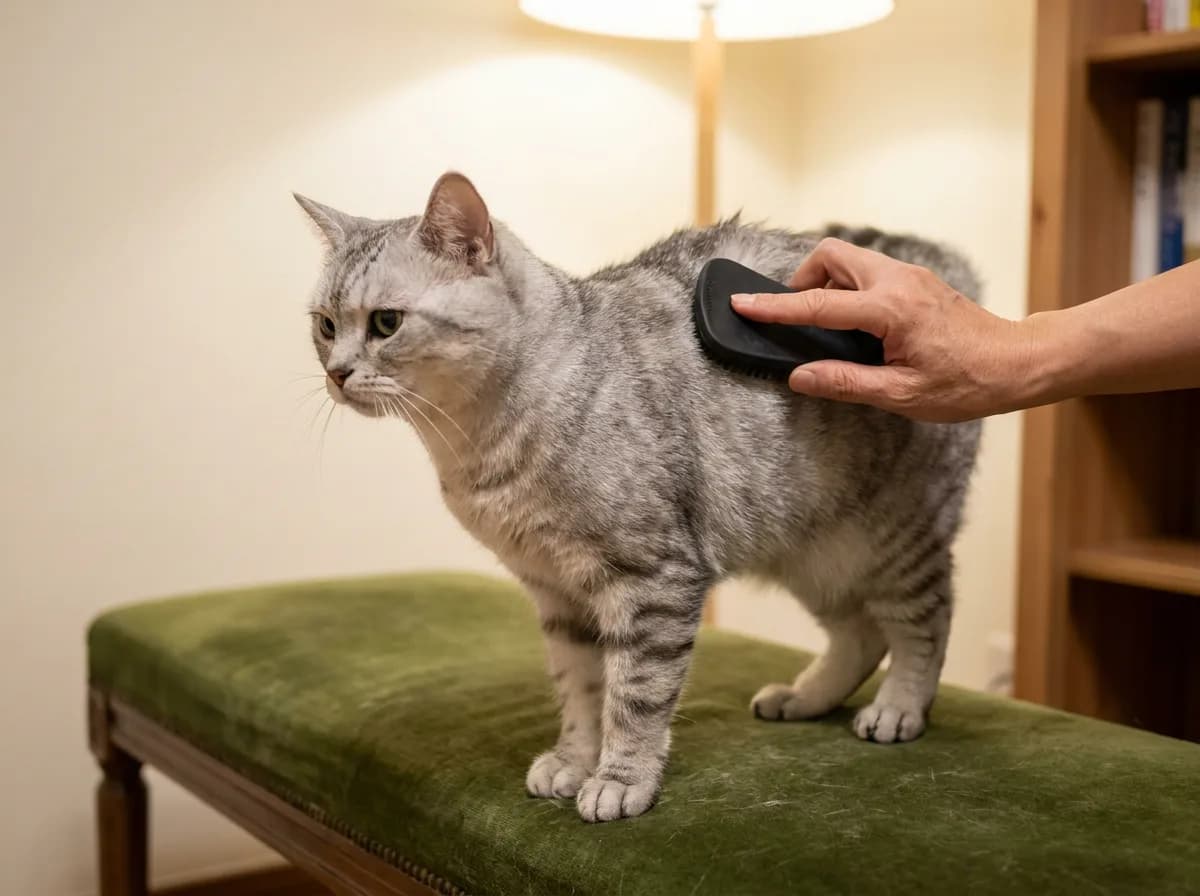
A properly sized cat carrier helps you prepare for veterinary travel. Check the actual dimensions and the cat’s ability to stand, turn and rest comfortably rather than choosing a carrier from a breed-average weight alone. Leave it accessible at home with familiar bedding so it becomes more than a signal for an unfamiliar journey.

Soft-sided travel safety carrier that keeps a stressed cat secure and well-ventilated on the way to the vet, with mesh panels for airflow and a seat-belt loop.
Petful may earn a commission when you click through to Chewy, at no extra cost to you.
The FIFe breed profile traces the organized breed to an early-20th-century effort to preserve original Nordic cats. It describes established examples in 1930s cat books. That history is more specific than the broad story of domestic cats accompanying people across Europe.
Breed identity and family fit
The Fédération Internationale Féline (FIFe) European breed page is a better starting point for breed identity than a resemblance to an online photograph. A breed standard describes the characteristics sought in registered cats. It is not a checklist that turns an unknown cat into a registered European Shorthair.
A domestic shorthair is a descriptive category for a shorthaired cat without a documented breed pedigree. Such a cat can have the same appealing tabby markings, sturdy build or friendly personality. Being a domestic shorthair does not make it less valuable as a companion; it simply changes what you can honestly say about its ancestry.
When someone advertises a European Shorthair kitten, ask which registry issued its pedigree and how those records connect to the kitten. A microchip helps connect records to an animal, but the number alone is not a breed certificate. An ancestry test also should not replace registration documents when a seller makes a pedigree claim.
| Evidence you have | What it can help establish | What it cannot establish alone |
|---|---|---|
| Verifiable pedigree documentation | Recorded ancestry and registry identity | Current health or an ideal temperament |
| Veterinary and microchip records | The individual cat’s identity and care history | Registered breed ancestry without supporting documents |
| Shelter description | A useful description of coat, size and observed behavior | A pedigree inferred from appearance |
| Photograph or coat color | Visible features of that cat | Breed identity, health screening or personality |
Pedigree documentation supports a breed claim. A domestic shorthair can look very similar, so choose a companion for its actual needs and behavior as well as any documented ancestry.
The European Shorthair versus American Shorthair comparison explains the separate breed labels and the domestic-shorthair description. Use that distinction before paying extra for a name the seller cannot substantiate.
The main European Shorthair pros and cons are practical:
- A short coat can make routine grooming manageable, but shedding and allergies still require planning.
- A playful companion can suit an engaged household, but daily interaction and quiet retreats remain necessary.
- A documented pedigree can clarify ancestry, but it cannot guarantee health or personality.
Appearance, coat patterns and identity limits
FIFe describes a medium-to-large, supple, muscular cat with developed cheeks, medium rounded-tip ears and large, slightly slanted round eyes. Its short coat has a dense, glossy, springy texture. Together these features give the European a substantial but agile appearance.
Nail care is a separate handling skill. Introduce touching a paw briefly, reward relaxed behavior and progress gradually. Cat nail clippers should be comfortable for the person using them, and you need to know how to avoid the quick. If you cannot see where to trim or the cat struggles, arrange a demonstration instead of forcing the session.

Compact spring-loaded scissor clippers sized for cats and small dogs, with rounded, easy-grip handles.
Petful may earn a commission when you click through to Chewy, at no extra cost to you.
Coat colors and patterns
Color searches are particularly easy to misinterpret. Orange or ginger describes pigment; tabby describes a pattern. Black and white, gray and white, and orange and white describe combinations. Tuxedo, calico and tortoiseshell are also coat descriptions rather than separate European Shorthair breeds.
The FIFe profile includes black, blue, red, cream, white and tortoiseshell colors, along with specified tabby and silver/smoke patterns. Its white-spotting rules are more precise than “every color is allowed,” so prospective exhibitors should consult the current standard.
| Coat description | What the words describe | Useful identification boundary |
|---|---|---|
| Orange or ginger; black; white; gray or blue | Color terminology | Color alone cannot establish a breed |
| Brown tabby, gray tabby or orange tabby | A tabby pattern combined with color | A tabby is not a separate breed |
| Black and white, gray and white, orange and white | Two-color combinations | Bicolor describes the coat, not ancestry |
| Tuxedo, calico or tortoiseshell | Familiar descriptions of color distribution | Similar coats occur in many domestic cats |
Petful’s guide to tabby cats explains that pattern distinction in more detail. A claimed European Shorthair mix, including a Bengal or Maine Coon mix, needs a credible ancestry history rather than an imaginative label based on its markings.
Adult size and body condition
The 12–15-pound estimate is about 5.4–6.8 kilograms; 9–11 inches is about 23–28 centimeters at the shoulder. Use those figures to picture a sturdy adult, then assess the actual cat. A large-framed lean cat and a smaller-framed overweight cat can weigh the same amount.
Ask your veterinarian to assess body condition and muscle condition alongside weight. At home, monitor whether the cat’s outline changes, whether you can feel its ribs without pressing hard and whether it moves comfortably. A hanging belly fold is not, by itself, a reliable measure of excess body fat.
Kitten growth and adult weight changes
For a kitten, regular weight checks and veterinary visits are more useful than trying to make it reach a breed-average adult weight. WebVet’s kitten-to-adult growth guide explains general growth stages and how they differ from adult weight gain. Feed a complete diet appropriate for growth and avoid restricting a growing kitten because an adult size chart looks smaller. Conversely, do not increase an adult cat’s portions simply because a breed description calls European Shorthairs muscular.
Several short play sessions can be easier to fit into a day than one long burst. Move a toy like prey, allow pauses and give the cat opportunities to catch it. A feather teaser wand can support interactive play, but put string and feather toys away afterward and replace damaged pieces. Supervision matters more than the toy’s breed marketing.

Feathered teaser wand with catnip-stuffed bird. Pairs perfectly with the no-bite training policy: redirect Bengal play drive into a 10-minute interactive session with the wand.
Petful may earn a commission when you click through to Chewy, at no extra cost to you.
Record food portions and treats when you notice weight change. Bring that information to the appointment; it helps distinguish a feeding adjustment from a medical concern. Unplanned weight loss, persistent appetite changes or difficulty moving deserve veterinary attention rather than a change based only on breed advice.
Coat care, shedding and allergies
A short coat still benefits from regular attention. Start with a gentle weekly brushing session, then adjust to how much loose hair you find and how comfortable the cat remains. Seasonal shedding, age and an individual coat can change the routine. Stop if the skin becomes irritated or the cat is distressed.
Choose a tool for the actual coat. A short-hair cat deshedding tool is one option for appropriate coats when used according to its instructions; it is not necessary for every cat and should not be used aggressively. A brush that the cat tolerates gently is more useful than buying the strongest-looking tool. Ask a groomer or veterinarian before trying to remove tight mats or working around sore skin.
Shedding and allergy expectations
Short hair does not mean a cat is hypoallergenic. Cat allergens are not simply a matter of coat length, and individuals differ in how they react to a particular cat. If someone in the household has allergies, discuss a realistic plan with their clinician before adoption. Brushing may help manage loose hair around the home; it cannot promise an allergy-safe household.
Keep an eye on normal self-grooming, too. A cat that suddenly stops grooming, develops a greasy coat or repeatedly licks one area may need a veterinary assessment. Treat a change in grooming as information about the animal, not a failure to live up to its breed reputation.
Daily care and feeding
Food puzzles can make part of a measured meal more interesting. A Catit food tree should begin at an easy setting so the cat can succeed. Count the food used inside it as part of the daily ration. Watch the individual cat: frustration or abandoning meals is a reason to simplify the activity, not to insist that a clever breed should work it out.
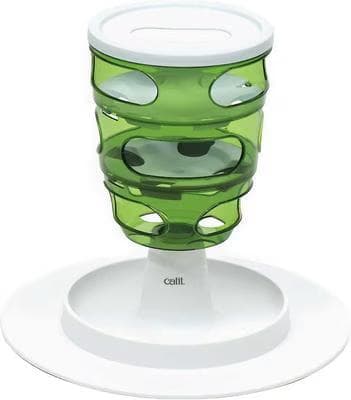
Petful may earn a commission when you click through to Chewy, at no extra cost to you.
European Shorthairs are often described as active and resourceful. Indoors, that translates into opportunities to investigate, scratch, climb where appropriate and play. It does not mean a cat must roam outdoors to be content. Provide safe resting places and let the cat choose when to interact.
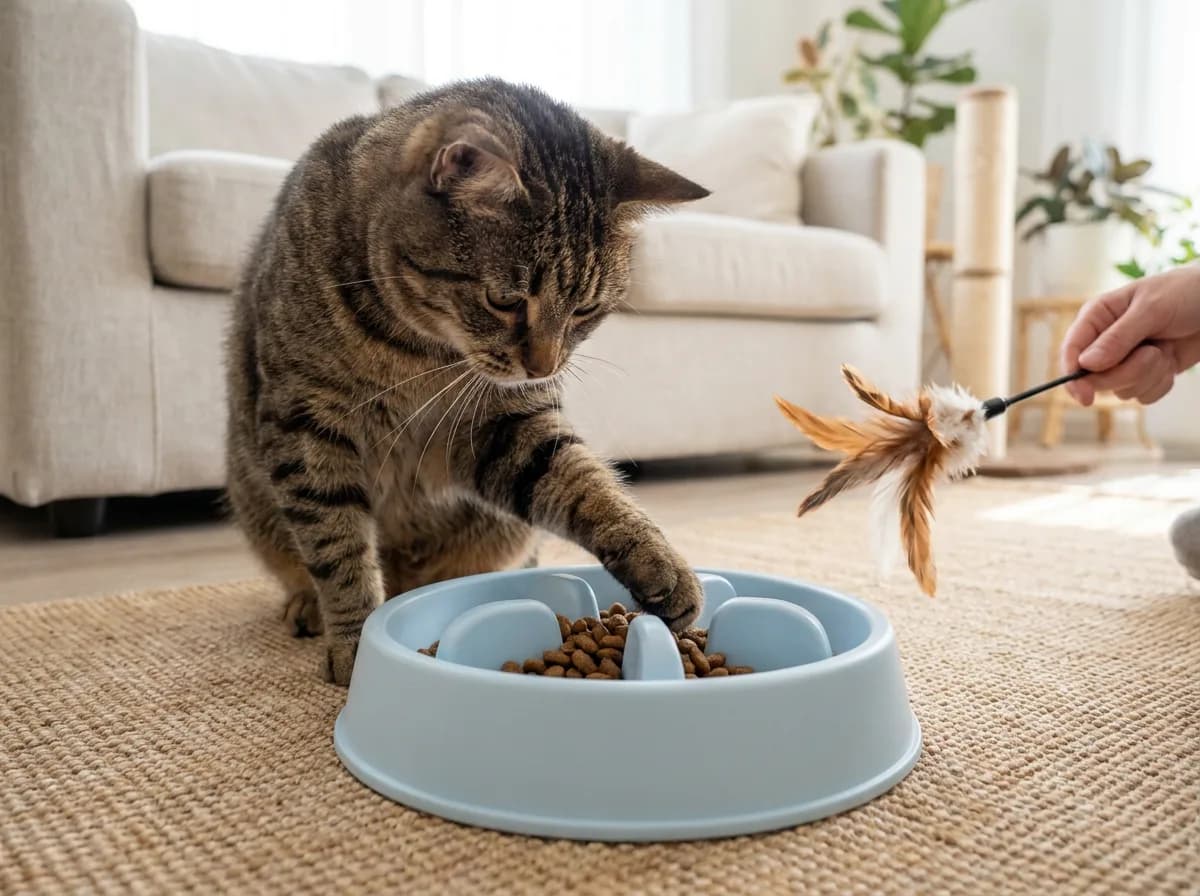
Choose a complete food appropriate for the cat’s life stage and discuss portions with your veterinarian. There is no single European Shorthair food that suits every age, body condition or medical situation. Make changes gradually when advised, and avoid adding supplements solely because a breed page describes a supposed benefit.
| Part of the routine | Practical starting point | What to adjust for the individual |
|---|---|---|
| Daily play | Short interactive sessions with safe toys | Energy, interest and mobility |
| Measured meals | A complete life-stage-appropriate diet | Body condition, age and veterinary advice |
| Grooming | Gentle regular coat checks and brushing | Shedding, comfort and skin condition |
| Resources | Clean litter access, scratching options and quiet resting places | Number of cats and household layout |
In a multi-cat home, spread resources out so one animal cannot guard every route to food or the litter tray. Introduce newcomers gradually rather than expecting a breed known as adaptable to accept an unfamiliar animal immediately. Give children clear rules about leaving a sleeping cat alone and allowing it to leave an interaction.
If a cat seems persistently restless, withdrawn or destructive, review its environment and health rather than assuming it needs another cat. WebVet’s signs an indoor cat may be bored can help you think through enrichment changes. A sudden behavior change should also prompt a conversation with your veterinarian.
Availability and responsible sourcing
In the United States, finding a documented European Shorthair may take more effort than finding an appealing domestic shorthair. Search results can mix registered breeders, generic European house cats and advertisements using a fashionable breed label. Ask what the label means before discussing a deposit.
Evaluate the records and the setting, not just an attractive kitten photograph. Ask about veterinary care, the parents, registration, socialization, the written agreement and what happens if circumstances change. A seller who refuses verifiable information or pressures you to pay immediately has not answered those questions.
Adopting a domestic shorthair is a separate, worthwhile option when your main goal is a compatible companion. An adult cat’s foster history may tell you more about its ordinary behavior than a breed profile can. Whether adopting or buying, plan a quiet arrival space and arrange veterinary follow-up.
How much do European Shorthair cats cost?
There is not enough representative US price evidence here to give a dependable European Shorthair purchase-price average. A figure from a single advertisement would describe that seller’s offer, not the whole market. Ask for a current written quote and confirm whether registration, vaccinations, microchipping, sterilization or transport are included. Then budget separately for equipment, food, litter, routine veterinary care and unexpected expenses. A cheaper purchase does not necessarily mean lower lifetime ownership costs.
Related breed decisions
A European Shorthair vs American Shorthair comparison starts with two separate registered breeds. A European Shorthair vs domestic shorthair comparison instead distinguishes a documented breed from a broad descriptive label. Our European, American and domestic comparison explains both decisions, including coat care and individual fit. A British Shorthair is another separate breed, not an interchangeable name for the European. Tabby describes a pattern rather than a pedigree, so comparing a European Shorthair vs tabby cat is comparing different kinds of labels.
Health, lifespan and evidence limits
A reputation for robustness should never be read as freedom from disease. European Shorthairs still need individual preventive care, dental attention and monitoring for changes in weight, appetite, drinking, elimination or activity. Their breed label cannot substitute for a medical history or examination.
PetMD’s veterinary-reviewed European Shorthair guide discusses general concerns such as dental disease and obesity. Those are useful care priorities, not proof that every European Shorthair will develop them. Ask your veterinarian which screenings and preventive measures fit the cat’s age, health and circumstances.
Discuss dental home care early, including how to introduce handling and a cat-appropriate product. Do not use human toothpaste. Seek advice for bad breath with pain, drooling, difficulty eating or other changes rather than assuming a grooming product can solve a dental problem.
Is my cat a European Shorthair?
A photograph cannot reliably answer that question. A short coat, tabby pattern or European origin may be consistent with many cats, including domestic shorthairs. To substantiate a registered European Shorthair identity, look for verifiable pedigree documentation linked to the individual animal. If those records are unavailable, describe the cat’s visible features and known history without presenting a guess as a fact. Its veterinary care and suitability for your home remain important regardless of the label.
Frequently asked questions
The answer depends on whether you mean documented members of the recognized breed or ordinary shorthaired cats living in Europe. Those are different populations. A registered European Shorthair may be difficult to find outside Europe, while similar-looking domestic cats are common. Check registry information and actual local availability rather than interpreting numerous online cat photos as evidence of a large breeding population. Scarcity also does not verify a seller’s pedigree claim or justify skipping due diligence.
Many breed descriptions characterize them as sociable, playful cats, but individual temperament matters more than the label. Ask how a particular cat behaves with familiar people, visitors and other animals. Some enjoy close contact; others prefer to stay nearby without being picked up. Respect those preferences, provide quiet retreats and use gradual introductions. A friendly reputation does not make a rushed introduction or unwanted handling comfortable for the cat.
PetMD describes a European Shorthair lifespan of 15–20 years. This is a published breed-guide estimate, not a measured promise for an individual cat. Treat any estimated range as general context, not a prediction for your cat or a guarantee attached to a pedigree. Individual health, living conditions and access to veterinary care affect the outlook. The useful action is to maintain preventive care and respond to changes early rather than assume that a cat within a published lifespan range is too young to become ill.

Coreen Saito is a pet writer and longtime shelter volunteer with more than a decade in animal rescue. She covers cat behavior, breed care, and the small, ordinary science of sharing a life with companion animals, with a particular focus on honest takes about the products and decisions that actually matter. At home in Arizona, she's outranked by Mac (a dog with the loudest opinion in the house), Rebel (a cat who governs by quiet authority), and Meri (an orange tabby who runs the late shift and the laundry basket). She writes about all three, plus the rescues that keep coming through her life, at LifeWithMinty.com.
Sign up for expert-backed reviews and safety alerts all in one place.