Birman Cat Colors: Every Shade, Pattern, and Point Explained
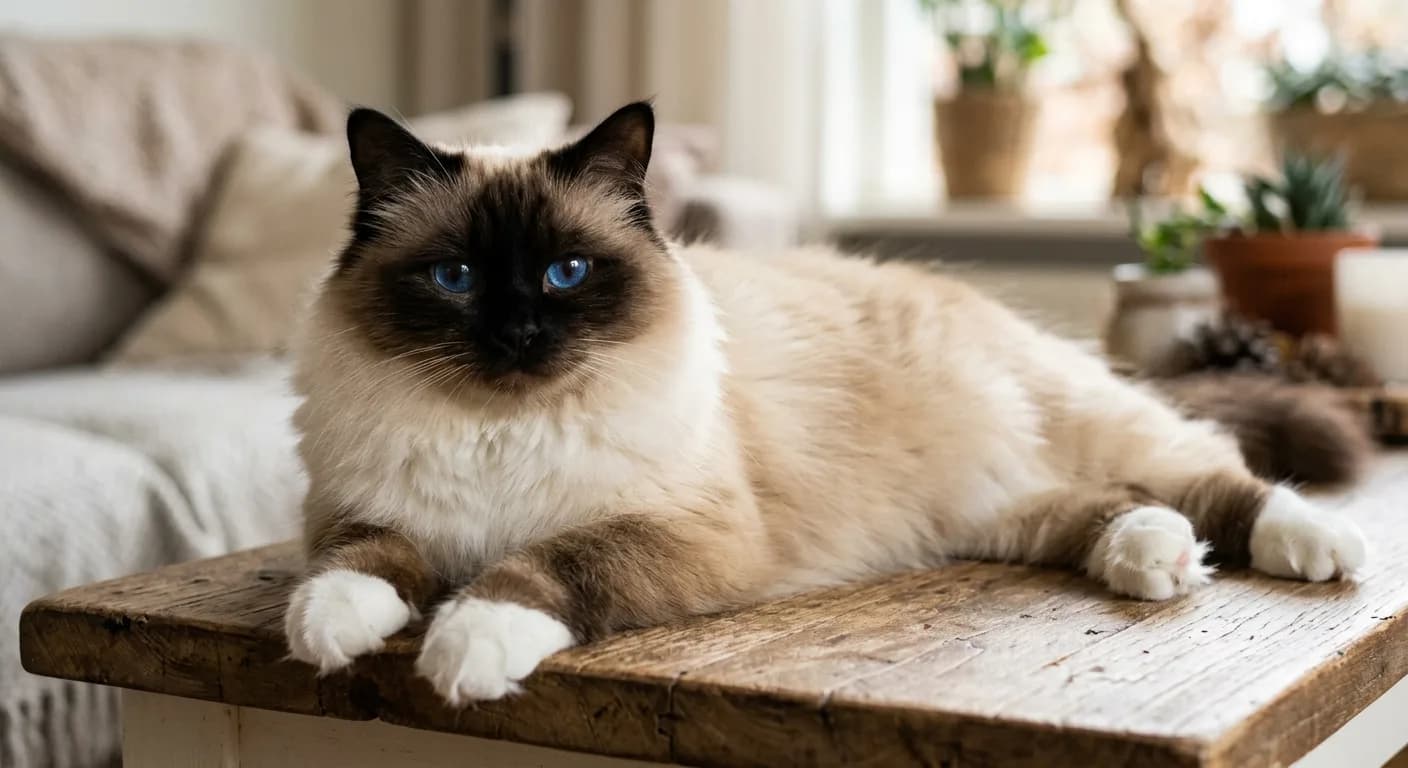
Birman cat colors range from classic seal and blue point to rarer lilac, tortie, and lynx varieties. Every Birman shares the same sapphire-blue eyes and signature white gloves on all four paws, no matter the point color.
Petful is reader supported. As an affiliate of platforms like Amazon and Chewy, we may earn a commission when you buy through links on this page. There is no extra cost to you.
Birman cat colors span a surprisingly wide range: the Cat Fanciers' Association (CFA) officially recognizes four classic solid point colors plus a full suite of tabby (lynx) and tortoiseshell (parti-color) varieties, giving breeders and owners more than a dozen distinct coat possibilities. Every single one shares the breed's signature pure-white gloves on all four paws, deep sapphire-blue eyes, and a silky semi-long coat, which makes each color feel like a fresh interpretation of the same elegant blueprint.
- 1The CFA recognizes 4 classic solid point colors (seal, blue, chocolate, lilac) plus red, cream, tortie, and lynx variants
- 2All Birmans are born pure white; points develop slowly over weeks and continue deepening through adulthood
- 3The white "gloves" and "laces" on all four paws are non-negotiable breed requirements regardless of point color
- 4Eye color is always deep sapphire blue across every Birman color variety
- 5Seal point is the most common; lilac point is considered the rarest of the classic four
- The Birman is often called the "Sacred Cat of Burma." Whether it originated in temple legend or French breeding programs in the early 1900s, today's CFA breed standard covers a palette that now runs well beyond the original four point colors introduced to the West.

Sign up for expert-backed reviews and safety alerts all in one place.
How Colorpoint Genetics Work in Birmans
Birman cats are a colorpoint breed, meaning the same temperature-sensitive genetics that produce Siamese and Himalayan patterns are at work in their coats. The enzyme responsible for pigment production (tyrosinase) is heat-sensitive: at cooler body temperatures, the enzyme activates and deposits color. At the warmer core of the body, it stays dormant and the fur remains pale cream or ivory.
The cooler extremities, where color concentrates, are called "points": the face mask, ears, legs, and tail. In Birmans specifically, an additional layering happens at the paws: a recessive gene produces the characteristic white gloves, which interrupt the normal point pigmentation right at the foot. Breeders prize symmetrical, evenly shaped gloves because misshapen gloves are a disqualifying fault in the show ring.
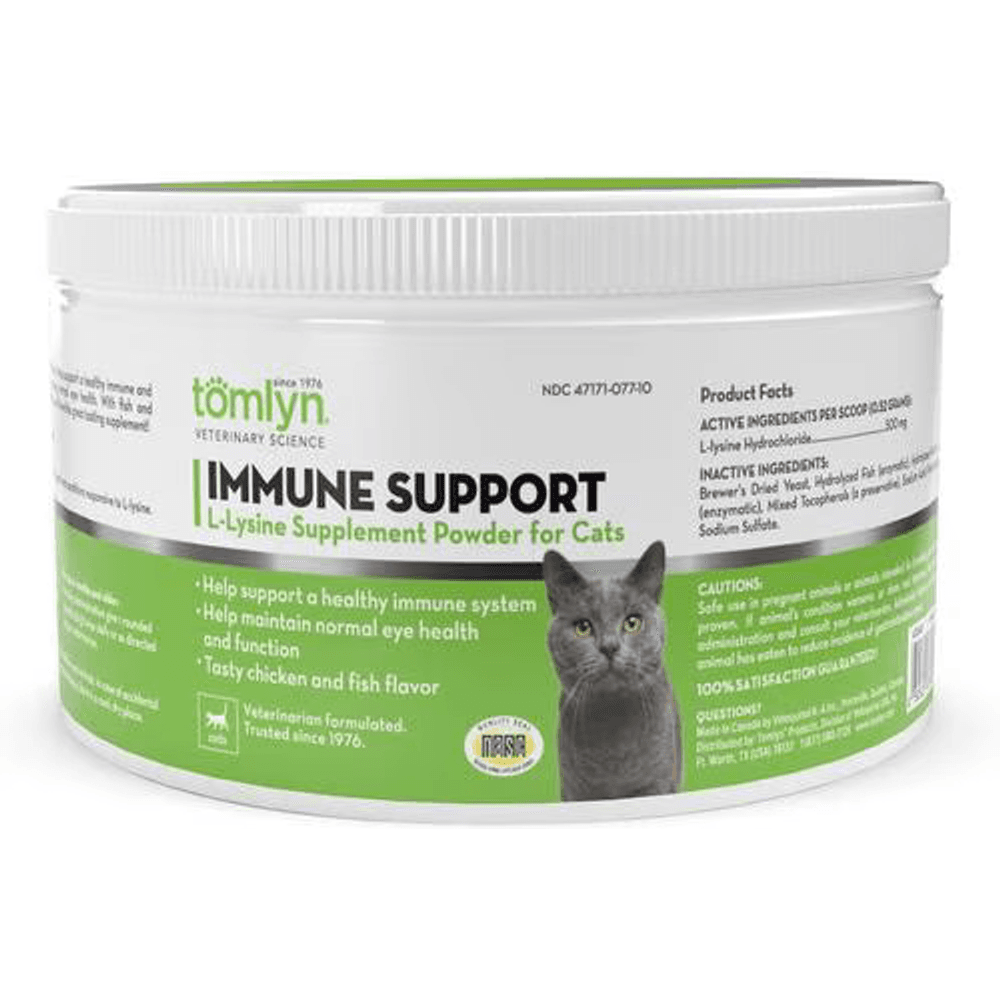
An L-lysine immune-support powder for cats that supports a healthy immune system and normal eye health, the go-to supplement for cats prone to sneezing and upper-respiratory flare-ups linked to feline herpesvirus.
Petful may earn a commission when you click through to Chewy, at no extra cost to you.
Why Birman Kittens Are Born White
Kittens spend gestation in the uniformly warm environment of the womb, which suppresses tyrosinase activity across the entire coat. They are born a creamy off-white with no visible points. Over the first few weeks of life, as the kitten's extremities cool relative to the body core, the point pigment gradually develops. A seal-point kitten may show only faint darkening at the ears by week four; a full, rich mask often takes six months to a year to set properly.
Color deepening does not stop at kittenhood. Most Birmans continue to darken slightly throughout adulthood, and senior cats often display their deepest pigment. This means a photo of your kitten and a photo of the same cat at age eight may look like different color intensities even though the point classification has not changed.
- If color matters to you, ask the breeder to show you both parents. Because Birmans darken with age, the parents' coats are your best predictor of how deeply pigmented your kitten will eventually become.
The Signature White Gloves: Every Color, Every Paw
Before diving into individual colors, the gloves deserve their own spotlight because they apply uniformly across every Birman color variety. No matter the point color, a breed-standard Birman must have:

Never Scoop Again® with the Whisker Litter-Robot, the smart self-cleaning automatic litter box. Monitor visits and track weights for better overall care in the Whisker® app. Multi-cat friendly.
Petful may earn a commission when you click through to Whisker, at no extra cost to you.
- Front paws: Symmetrical white gloves that end in an even line across the top of each paw.
- Back paws: White "laces" that extend up the back of the hock in a V-shape, ideally ending at approximately the mid-point of the hock.
The CFA treats asymmetric, irregular, or missing gloves as serious faults. This white-glove requirement is what visually sets the Birman apart from the similarly colored Himalayan (which has no gloves) and makes every Birman color combination look unmistakably "Birman."
- A Birman without proper white gloves does not meet the breed standard. If you are buying from a breeder for show purposes, ask specifically to see the glove conformation on all four paws before committing.
Birman Color Chart
| Color Name | Point Description | Body Color | Gloves | Rarity |
|---|---|---|---|---|
| Seal Point | Deep seal brown, nearly black | Warm pale fawn to cream | Pure white | Common |
| Blue Point | Slate blue-gray | Bluish white to pale ivory | Pure white | Common |
| Chocolate Point | Warm milk chocolate | Clear ivory | Pure white | Moderate |
| Lilac Point | Frosty gray with pinkish tone | Near white | Pure white | Rare (classic 4) |
| Red (Flame) Point | Deep warm orange-red | Creamy white | Pure white | Moderate |
| Cream Point | Buff cream, pale warm tone | Clear white to cream | Pure white | Moderate |
| Tortie Point | Mottled seal/red or blue/cream patches | Pale cream | Pure white | Uncommon |
| Lynx (Tabby) Point | Striped points with M forehead marking | Pale cream to ivory | Pure white | Uncommon |
The Classic Four: Solid Point Colors
Seal Point: The Original Birman
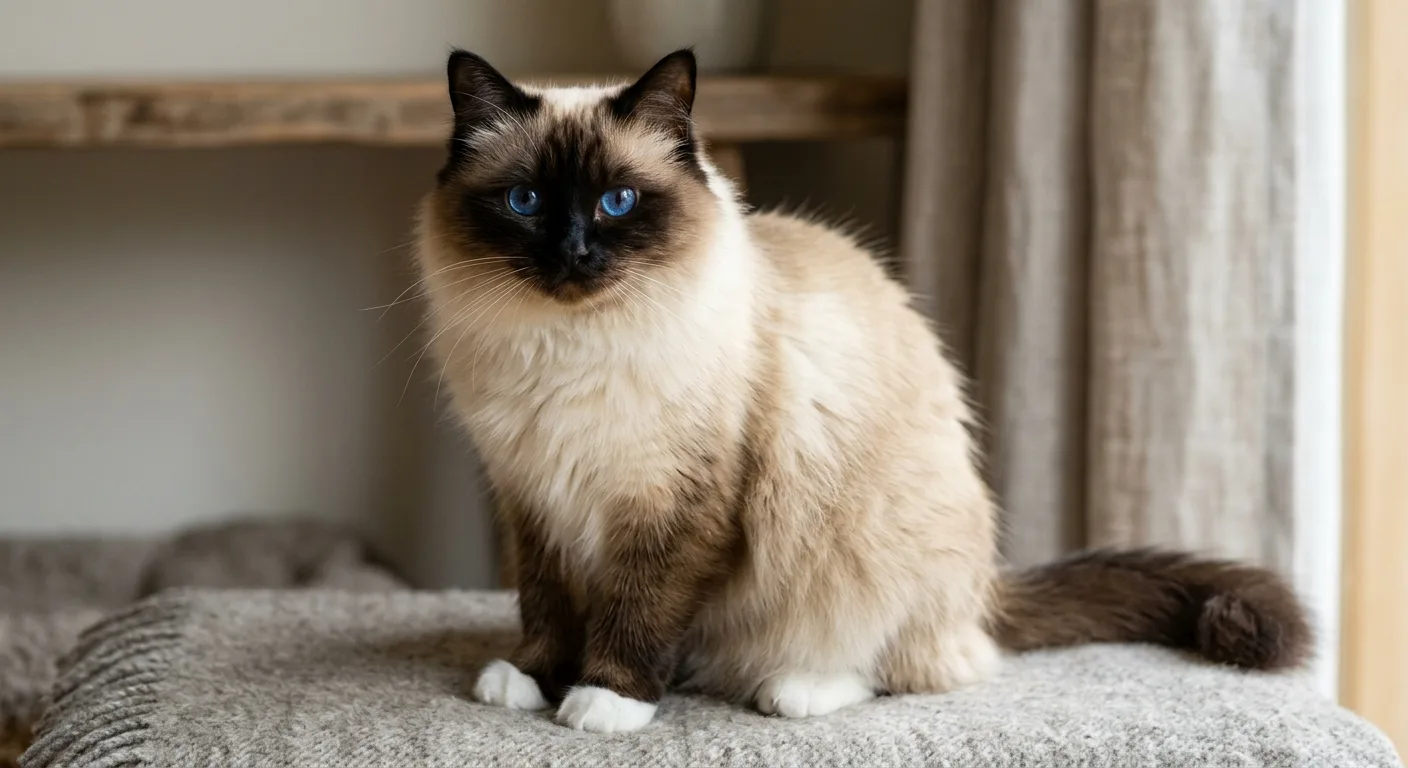
Seal point is the color most people picture when they think "Birman." The CFA standard calls for points of a deep seal brown so dark they can appear nearly black at the mask and ears. The body is a warm pale fawn to cream, notably warmer in tone than the cooler-bodied blue point. Nose leather and paw pads are seal brown.
Seal points are the most common Birman color and historically the first variety to gain widespread Western recognition after French breeders established the breed in the early 20th century. Their deep contrast makes the white gloves visually dramatic.
Blue Point: Cool and Elegant
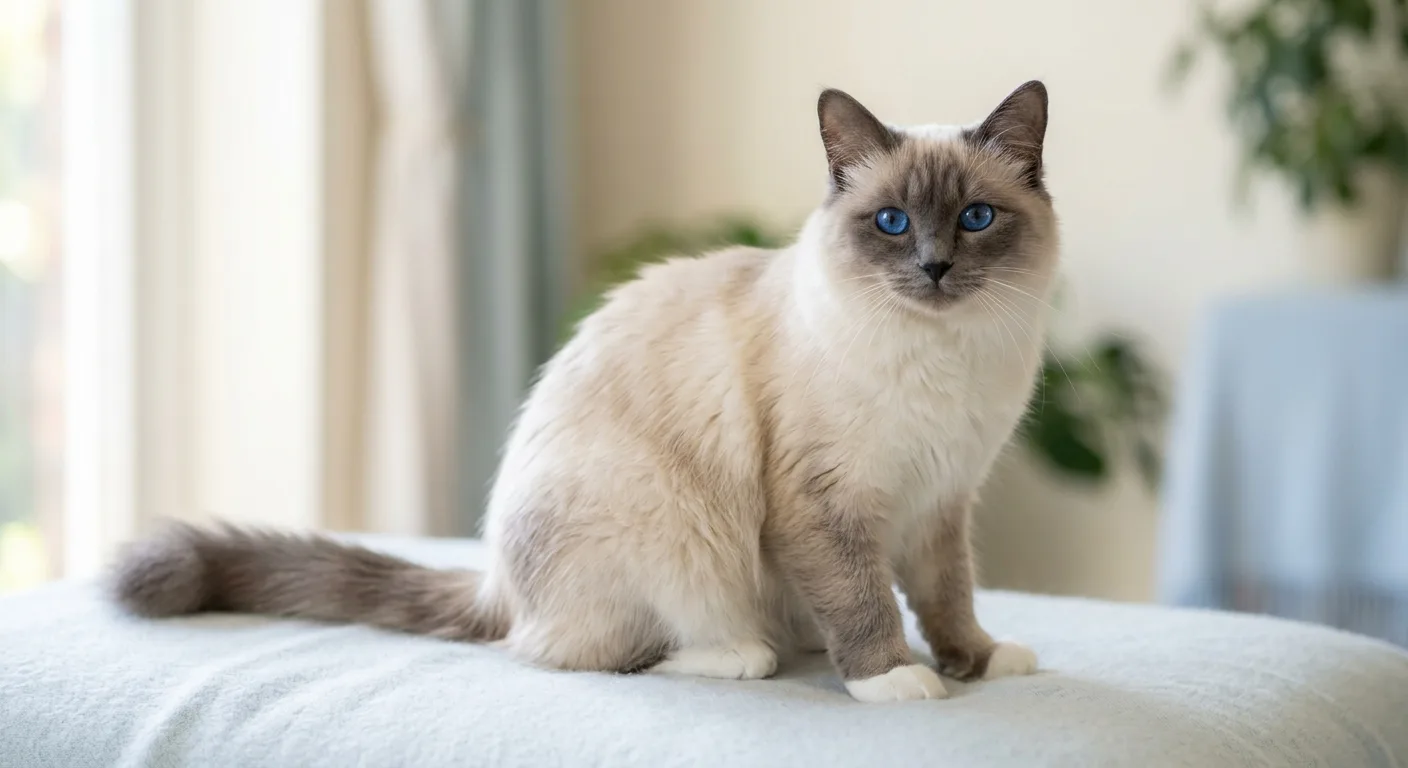
Blue-point Birmans have slate-blue points, a tone often described as smoky or steel gray. The body is the palest of the classic four, running from bluish-white to a very cool pale ivory. Nose leather and paw pads are slate blue. Compared to the warm golden tones of a seal point, the blue point reads as distinctly cooler and more silver-toned overall.
Blue point is one of the two most common Birman colors alongside seal. In the show ring, judges look for good contrast between the slate points and the very pale body, ensuring the white gloves read cleanly against both.
Chocolate Point: Warm and Milk-Sweet
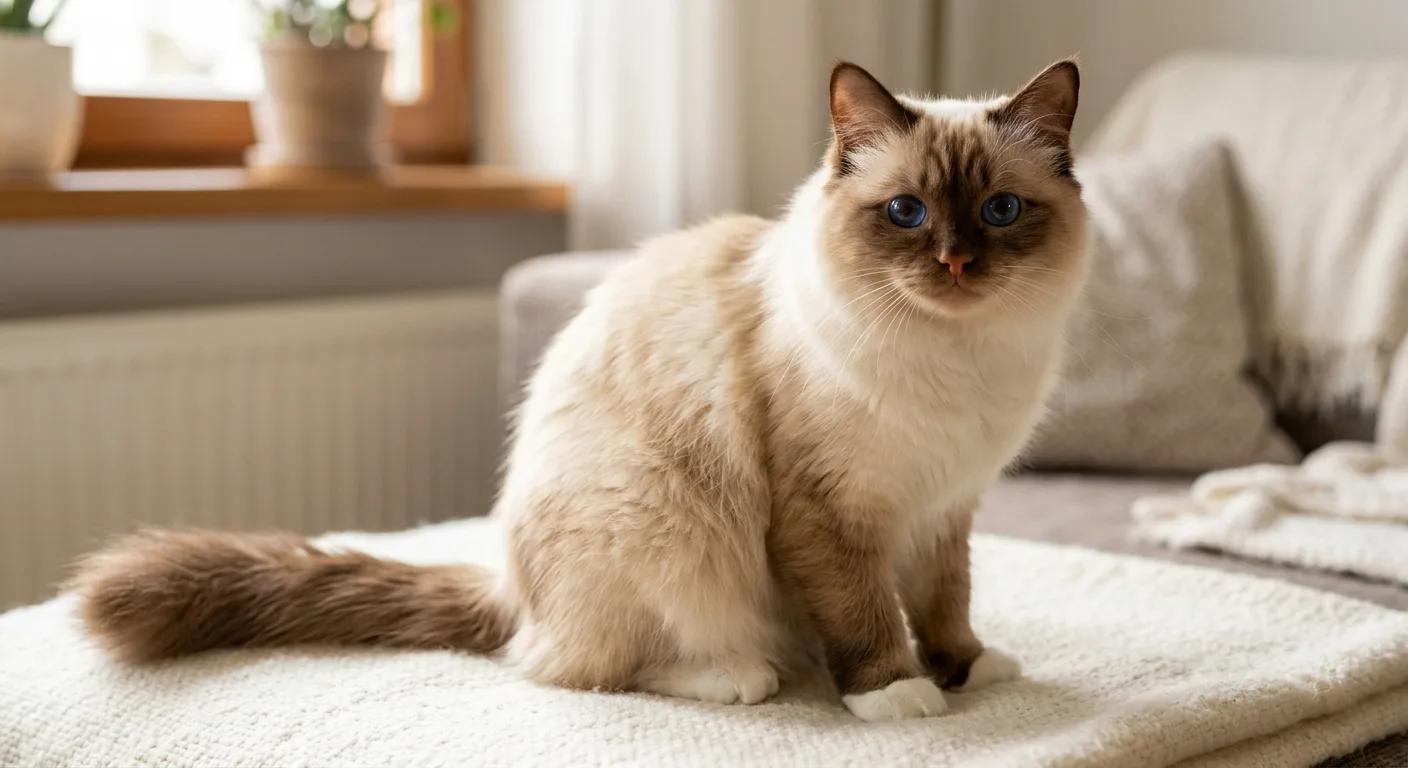
Chocolate-point Birmans carry warm, milk-chocolate-colored points, distinctly warmer and lighter in tone than seal brown. The CFA standard describes the points as "milk-chocolate, warm in tone" to distinguish them from the colder tones that would veer toward a mismarked blue or lilac. The body is clear ivory, and nose leather is cinnamon-pink, giving the face a particularly warm, rosy quality.
Chocolate points are moderately common. Because the difference between a light seal and a chocolate can be subtle in photos, the CFA emphasizes warmth of tone as the key distinguishing factor.
Lilac Point: The Rarest Classic
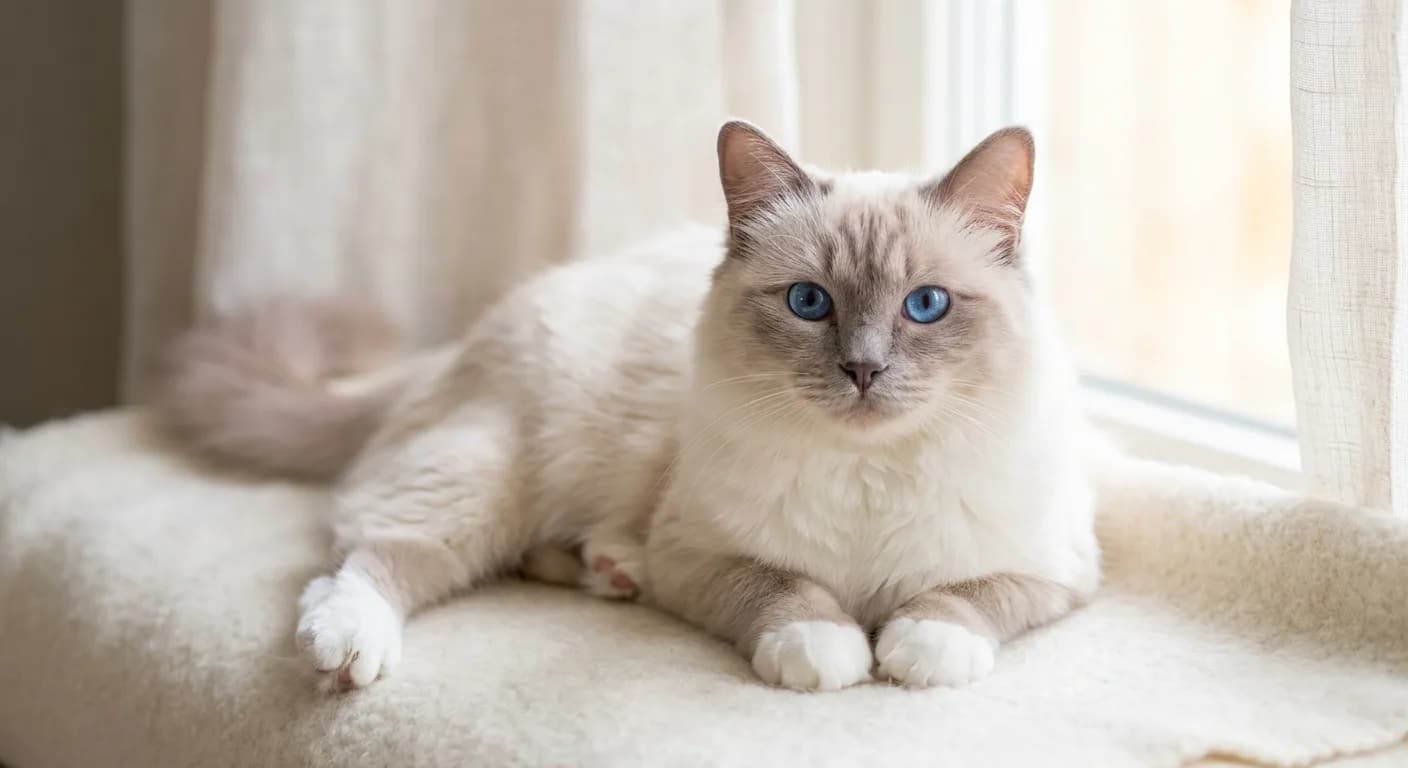
Lilac point (called "frost point" in some registries) is the palest and rarest of the traditional four. Points are a frosty gray with a distinctly pinkish, lavender-like tone, and the body is so pale it can appear almost white in photographs. Nose leather and paw pads are lavender-pink. The overall impression is of a very soft, muted, pastel cat.
Lilac point exists because both parents must carry recessive genes for both blue and chocolate dilution. Breeding for lilac reliably requires a solid understanding of what each parent carries, which is why quality lilac-point Birmans remain harder to find than seal or blue.
- Lilac points have a pinkish-lavender cast that neither blue (cool steel gray) nor chocolate (warm brown) has. If you hold a lilac-point next to a blue-point, the warm pink undertone in the lilac is immediately visible.
The Newer Recognized Varieties
The CFA added several color classes beyond the original four. These varieties follow the same white-glove and blue-eye rules and are shown under their own color class at sanctioned shows.

63-inch multi-level cat tree with scratch posts, hammock, plush perches, and dangling toys. Vertical territory is non-negotiable for high-energy climbing breeds like the Bengal.
Petful may earn a commission when you click through to Chewy, at no extra cost to you.
Red (Flame) Point
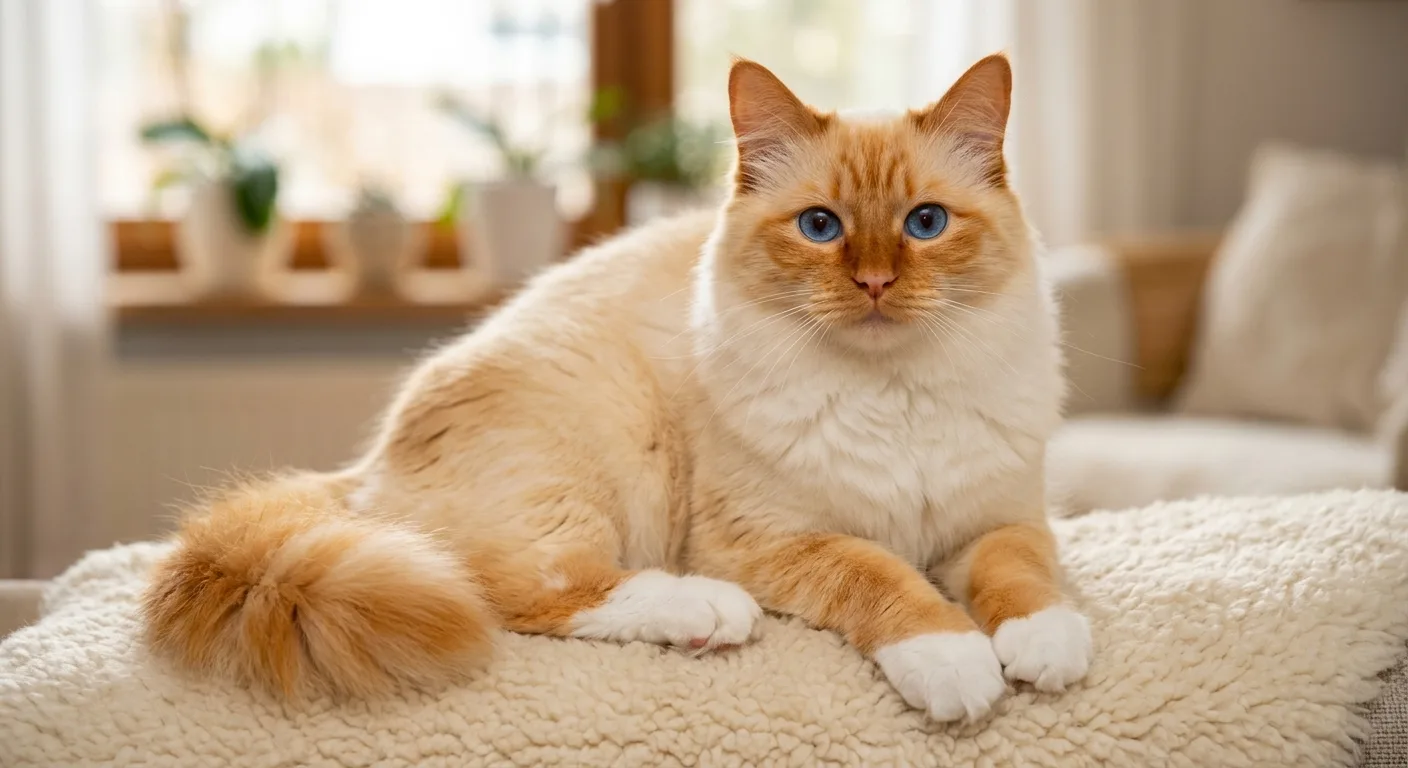
Red-point Birmans, sometimes called flame points, carry deep, warm orange-red points. The body is creamy white. Nose leather and paw pads are bright pink. The red gene is sex-linked, so red-point males are somewhat more common than red-point females, though females exist in tortie form (see below).
Cream Point
Cream is the dilute of red: where red points are a rich orange, cream points are a soft, warm buff. The body is clear white to creamy and the nose leather is flesh pink. Cream-point Birmans are the palest of the newer varieties and can look almost entirely white in low light, with the cream points becoming apparent in bright, direct light.
Tortie Point (Parti-Color)
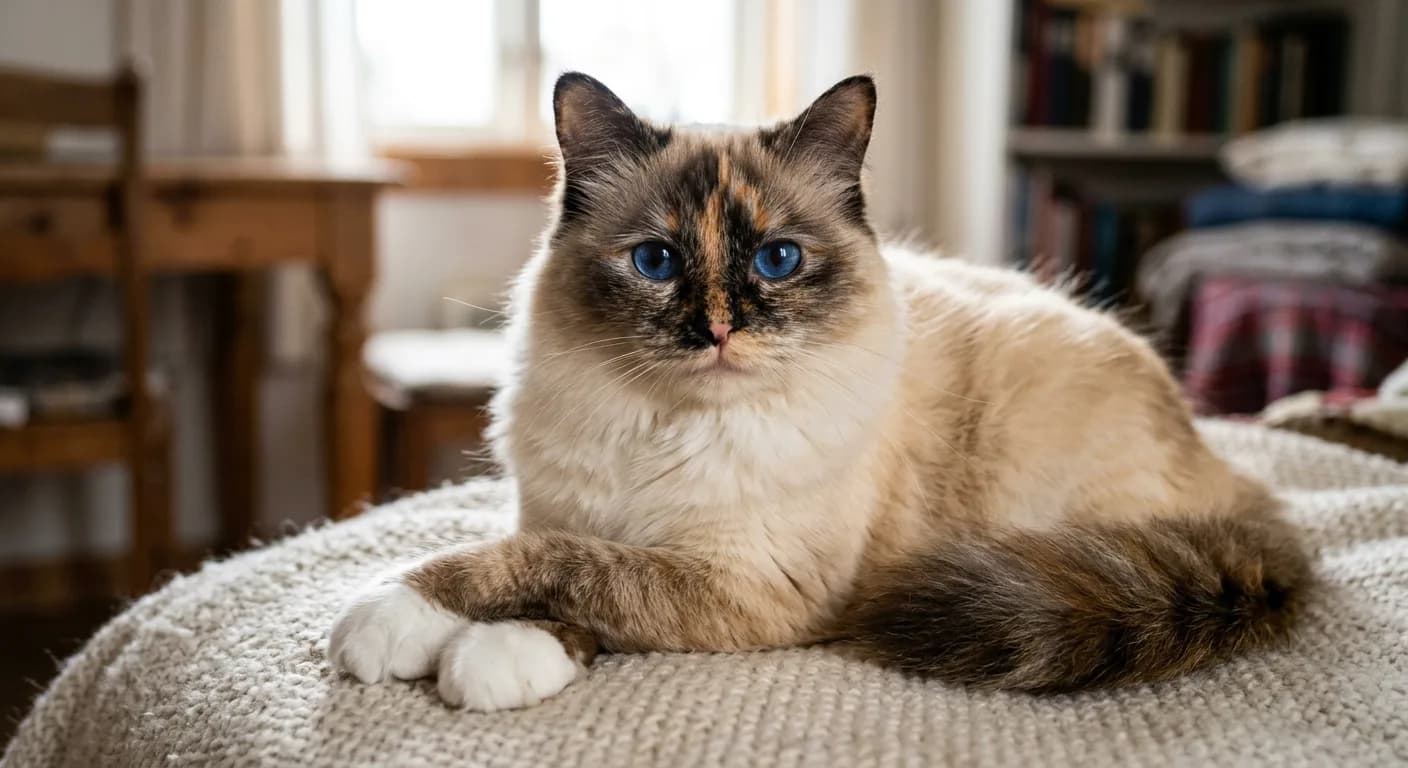
Tortoiseshell-point Birmans, listed under "parti-color" in the CFA standard, have points showing a mottled or patched combination of a base color and red or cream. Recognized varieties include:
- Seal Tortie: Deep seal brown mottled with red
- Blue-Cream: Slate blue mottled with cream
- Chocolate Tortie: Milk chocolate mottled with red
- Lilac Cream: Frosty lilac mottled with cream
Because the red gene is X-linked, tortie-point cats are almost always female. The pattern is essentially non-reproducible in males (with the rare exception of a genetic anomaly). This female exclusivity makes tortie-point Birmans somewhat special in any litter.

108-oz stainless steel pet fountain with quiet pump and water-level window. Bengals are notoriously water-obsessed; a flowing fountain encourages hydration and pulls them away from sinks and toilets.
Petful may earn a commission when you click through to Chewy, at no extra cost to you.
Lynx (Tabby) Point
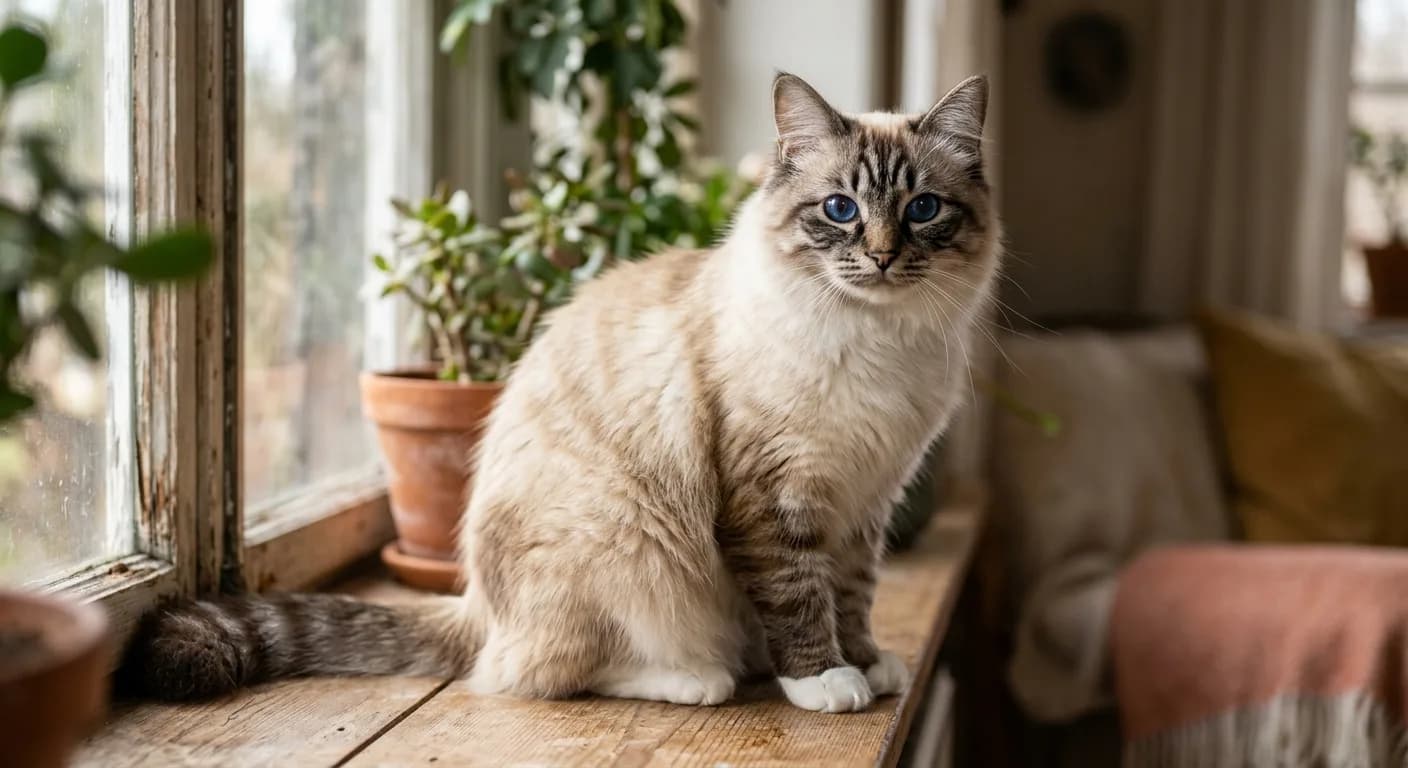
Lynx-point Birmans carry tabby striping restricted to the points. The points show clear, distinct striping rather than a solid color, and the forehead displays the classic tabby "M" marking. Around the eyes, spectacle-like rings of color appear. Legs are horizontally striped and the tail is ringed. The CFA recognizes lynx versions in seal, blue, chocolate, lilac, red, and cream base colors.
Lynx points are particularly striking because the stripes make the points read as more complex and patterned, while the white gloves remain the same crisp white as every other Birman variety.
- The easiest way to identify a lynx point is to look at the tail: if you see horizontal rings of color rather than a uniform dark shade, you are looking at a tabby (lynx) point Birman.
Eye Color: Always Blue
Regardless of point color, every Birman carries deep sapphire-blue eyes. The CFA standard specifies blue with an explicit preference for "deeper and more vivid blue, the better." This uniformity is one of the breed's most recognizable features and directly results from the same colorpoint gene that controls the coat: the cs (Siamese) allele is genetically linked to blue iris pigmentation.
Kittens' eyes are blue at birth, and the color intensifies rather than changing as they mature. If a cat sold as a purebred Birman has green, gold, or any non-blue eye color, the cat does not conform to the standard, regardless of coat quality.
How to Identify Your Birman's Color
When the color is very pale (cream, lilac, or blue), natural daylight makes point identification far easier than indoor lighting. The checklist:
1. Gloves present? If all four paws have white, the cat meets the first test.
2. Check the nose leather. Seal = dark brown. Blue = slate. Chocolate = cinnamon pink. Lilac = lavender pink. Red = bright pink. Cream = flesh pink.
3. Compare point warmth. Warm tones = seal or chocolate. Cool tones = blue or lilac. Orange tone = red or cream.
4. Is there mottling or striping? Mottled = tortie. Striped = lynx point.
For pedigree confirmation, ask your breeder for the registration papers, which will list the official CFA or TICA color code.
- Because Birman coloration is temperature-driven, a cat that is ill (running a fever) or is recovering from surgery on a shaved area will temporarily show lighter coloring until normal temperatures restore the enzyme activity. This is normal and not a sign of color change.
Birman Colors Compared to Similar Breeds
Birman colors closely overlap with Himalayan cat colors and Siamese cat colors because all three breeds share the cs colorpoint gene. The differences are:
- Himalayan: Same point colors, no white gloves, rounder cobby body (Persian build)
- Siamese: Same point colors, no white gloves, very fine bone and extremely social personality
- Birman: Colorpoint with mandatory white gloves and laces, semi-long silky coat, medium-substantial build
If you want the colorpoint pattern with those iconic white-tipped paws, the Birman is the only pedigreed breed that carries it. You can read the full Birman breed profile for a complete look at personality, size, health, and care, and see how Birman cat price varies by color and rarity. Browse the full cat breeds directory if you are still exploring.
FAQ
The CFA recognizes seal point, blue point, chocolate point, and lilac point as the classic solid varieties, plus red (flame) point, cream point, tortoiseshell (parti-color) varieties, and lynx (tabby) point in all base colors. That gives more than a dozen distinct official color classes.
Among the classic four, lilac point is the rarest because it requires both parents to carry recessive genes for blue and chocolate dilution simultaneously. Tortoiseshell-point males are exceptionally rare since the tortie pattern is almost exclusively female.
Seal point is the most common and historically the first Birman color to be standardized in Western breeding programs. Blue point is a close second in frequency.
Yes. White gloves on the front paws and white laces up the back hocks are a mandatory breed requirement across every Birman color variety. A Birman without proper white paw markings does not meet the CFA breed standard, regardless of how beautiful its other features are.
Birman kittens are born white because colorpoint pigment depends on a heat-sensitive enzyme (tyrosinase) that stays inactive at the uniformly warm temperatures inside the womb. Once the kitten is born and its extremities cool relative to its body core, the enzyme activates in those cooler areas and point color gradually develops over weeks and months.
All Birmans have deep sapphire-blue eyes, regardless of coat color. The CFA standard specifically states that deeper and more vivid blue is preferred. This blue eye color is genetically linked to the same colorpoint gene that controls coat pigmentation.
Yes, gradually. Kittens are born white and develop point color slowly over the first several months. Adult Birmans continue to deepen in point intensity throughout their lives, with senior cats typically showing the darkest pigmentation they will ever have. The color class itself (seal, blue, chocolate, etc.) does not change, but the depth and richness of the points increases.
A lynx point Birman is one whose points show tabby striping rather than solid color. The forehead has a classic M marking, the legs show horizontal stripes, and the tail has distinct rings. The CFA recognizes lynx points in seal, blue, chocolate, lilac, red, and cream base colors. All lynx-point Birmans still have the mandatory white gloves and blue eyes.

Coreen Saito is a pet writer and longtime shelter volunteer with more than a decade in animal rescue. She covers cat behavior, breed care, and the small, ordinary science of sharing a life with companion animals, with a particular focus on honest takes about the products and decisions that actually matter. At home in Arizona, she's outranked by Mac (a dog with the loudest opinion in the house), Rebel (a cat who governs by quiet authority), and Meri (an orange tabby who runs the late shift and the laundry basket). She writes about all three, plus the rescues that keep coming through her life, at LifeWithMinty.com.
Sign up for expert-backed reviews and safety alerts all in one place.