Birman Cat Price: What You'll Really Pay in 2026
The birman cat price ranges from $75 at a rescue to $3,500 for show-quality kittens. Most buyers pay $600-2,000 for a pet-quality kitten from a reputable breeder. Full cost breakdown for 2026 inside.
Petful is reader supported. As an affiliate of platforms like Amazon and Chewy, we may earn a commission when you buy through links on this page. There is no extra cost to you.
The birman cat price runs from $75 at a rescue shelter up to $3,500 or more for a show-quality kitten from a championship bloodline. Most buyers land somewhere in the middle: a pet-quality kitten from a reputable TICA or CFA-registered breeder costs $600 to $2,000, with the sweet spot around $900 to $1,400 for a healthy, well-socialized kitten with health guarantees and a pedigree. Show and breeding-quality Birmans with documented lineage command $2,000 to $3,500.
- 1A pet-quality Birman from a registered breeder costs $600-2,000
- 2Show or breeding-quality Birmans run $2,000-3,500
- 3Rescue adoption is $75-200 but availability is very limited
- 4First-year setup costs add $600-1,200 on top of the kitten price
- 5Annual ownership (food, vet, insurance, litter) averages $1,200-1,800 per year

Sign up for expert-backed reviews and safety alerts all in one place.
How Much Does a Birman Cat Cost? Price Tiers at a Glance
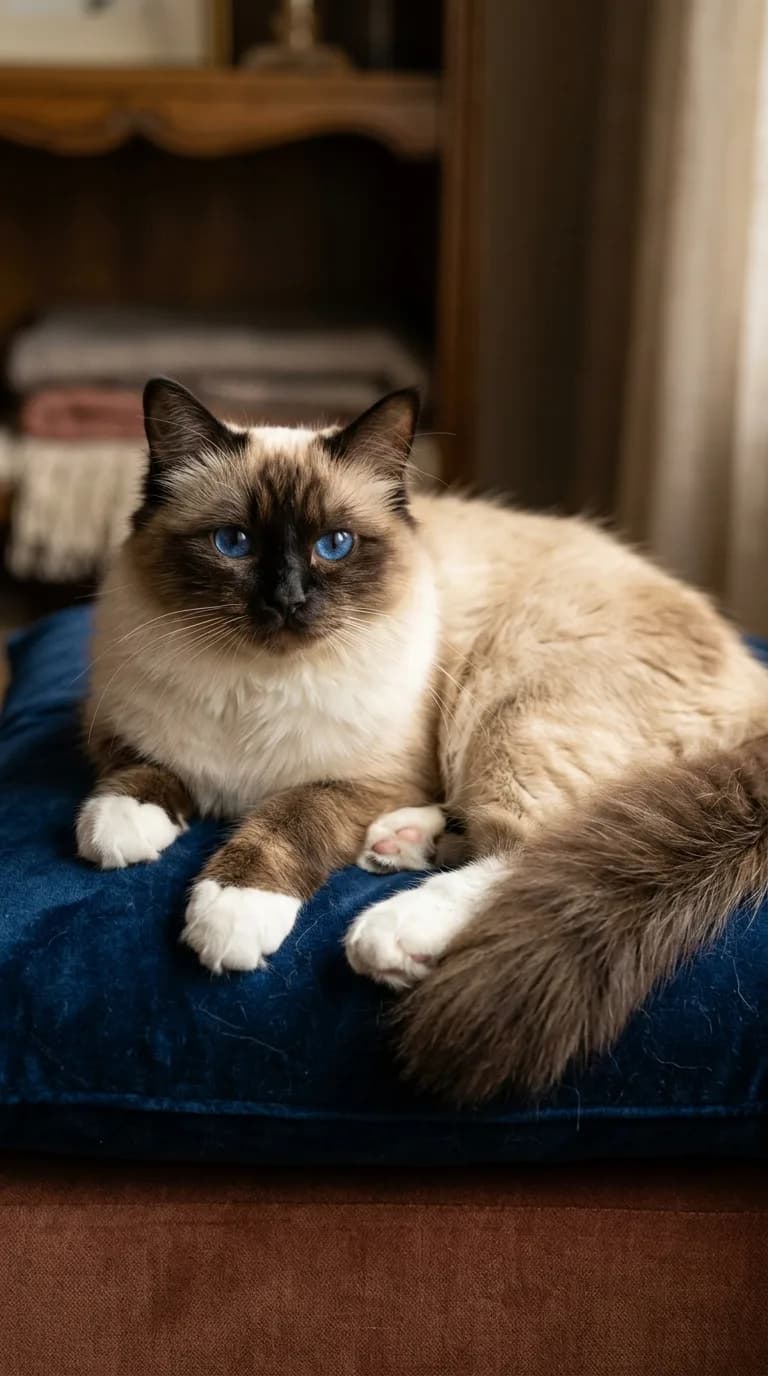
Not every Birman is priced the same. Breeders classify kittens into tiers based on how closely each kitten conforms to the CFA and TICA breed standard, which has one of the most demanding requirements in the fancy: perfectly white, symmetrically placed gloves on all four paws, a silky semi-long coat that resists matting, and deeply colorpointed markings with vivid blue eyes.
| Source | Typical Price Range | What You Get |
|---|---|---|
| Rescue or shelter adoption | $75-200 | Spayed/neutered, vaccinated, microchipped; rare to find |
| Reputable breeder (pet quality) | $600-1,200 | TICA or CFA registered parents, health guarantee, age-appropriate vaccines |
| Reputable breeder (show/pet quality) | $1,200-2,000 | Closer-to-standard gloves and markings, pedigree documentation |
| Show or breeding quality | $2,000-3,500 | Championship bloodline, near-perfect white glove placement, export or stud rights |
- A legitimate Birman breeder can show you registration papers for both parents. If a seller cannot provide this, the kitten may be a mix, a kitten-mill product, or misrepresented as a purebred.
Why Are Birman Cats So Expensive?
Several overlapping factors push the birman cat price above the average domestic cat:
The White Gloves Are Genetically Difficult
The Birman's defining feature, pure-white gloves that end at the toes in a clean, symmetrical line, is governed by the piebald (S) gene. Achieving correct glove placement is one of the most unpredictable results in cat breeding. A kitten with gloves that run too high up the leg (called "gauntlets") or that are uneven is disqualified from show and sold at a lower pet-quality price. Breeders must produce several litters to reliably get show-standard kittens, and that expense is passed on to buyers.
Colorpoint Coat Genetics Add a Second Layer
Birmans carry the colorpoint gene that restricts pigment to the face, ears, tail, and legs while keeping the body cream to golden. CFA and TICA recognize multiple point colors (seal, blue, chocolate, lilac, red, cream, and tortie/lynx variants). Rarer point colors like lilac and cream require carrier-to-carrier breeding, shrinking the pool of eligible stud cats and raising price.
Never Scoop Again® with the Whisker Litter-Robot, the smart self-cleaning automatic litter box. Monitor visits and track weights for better overall care in the Whisker® app. Multi-cat friendly.
Petful may earn a commission when you click through to Whisker, at no extra cost to you.
Breeder Overhead Is High
A responsible Birman breeder in the United States carries costs that include:
- Annual HCM (hypertrophic cardiomyopathy) cardiac screenings for breeding cats
- FeLV/FIV testing before every breeding
- TICA or CFA registration fees ($100+ per litter)
- At least two rounds of core vaccines before the kitten leaves at 12-14 weeks
- Health guarantees backed by written contracts
None of these are optional for ethical breeders. A $500 Birman kitten on Craigslist almost certainly skips all of them.
Geographic Region Affects Price
Birman breeders are concentrated on the coasts and in major metro areas. Buyers in rural states often pay a shipping premium ($200-400 via airline-approved carrier) or travel to the breeder, adding effective cost to the advertised price.
- Responsible Birman breeders do not release kittens before 12 weeks. Early separation increases the risk of behavioral issues and immune deficiency. If a seller offers a 6- or 8-week-old kitten, walk away regardless of price.
Adoption vs. Breeder: Which Is Right for You?
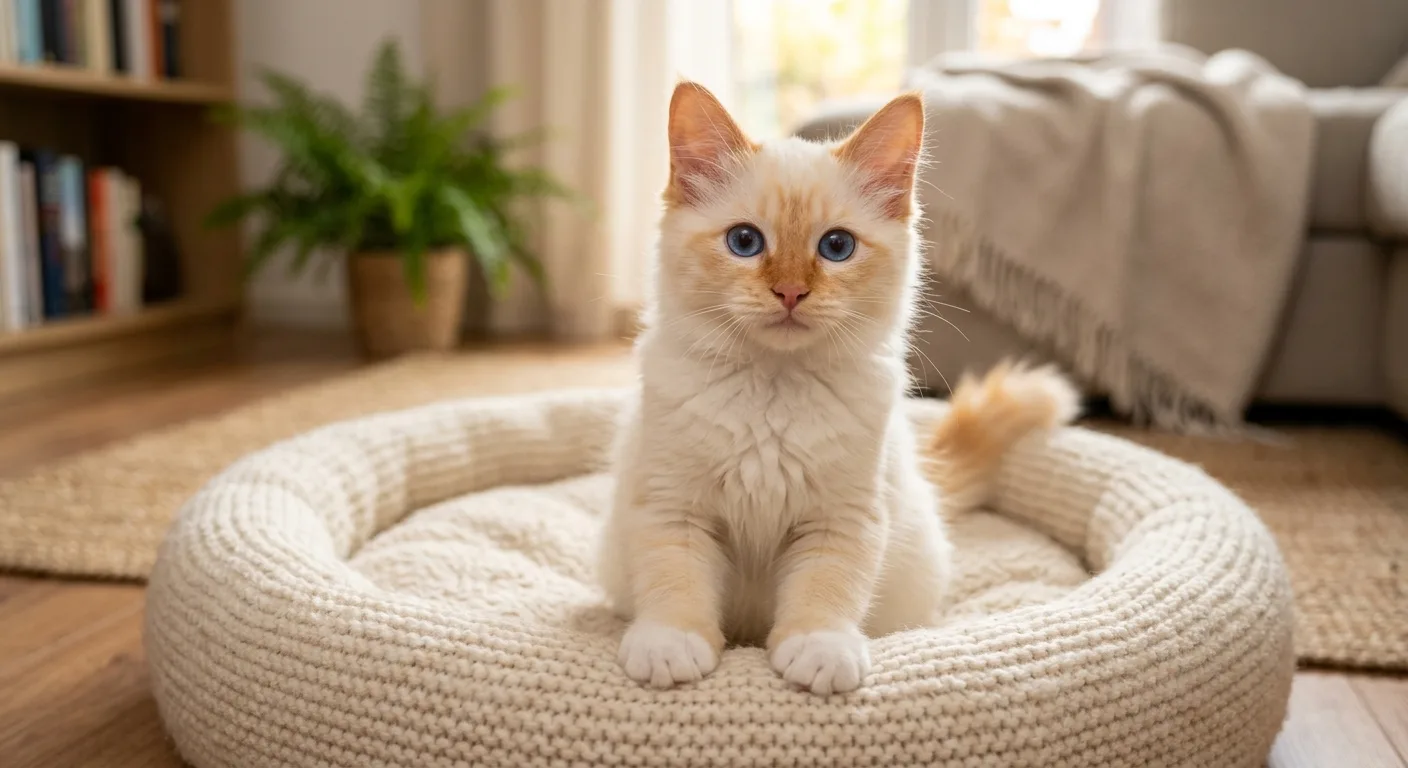
Adopting a Birman from a rescue is a good option if you are patient and flexible on age, color, and timing. Pure Birman rescues are rare because the breed is not common in shelters. Your best options:
- Breed-specific rescues: Organizations like Birman Rescue (US-based) occasionally list adult Birmans at $75-200. Adults are often calmer and more immediately bonded to a new home.
- General cat rescues: Sometimes list "Birman mix" cats that may share the breed's temperament. Prices are typically $50-150.
- Facebook breed groups: Current owners rehoming adult cats due to life changes. Fees vary widely but are often $100-300.
If you want a kitten with documented health, verified lineage, and the characteristic white gloves, a registered breeder is the reliable path. Budget $600 minimum and expect to be placed on a waiting list of 3-12 months for popular breeders.
- The TICA breeder directory (tica.org) and the CFA Breeder Referral page are the two safest starting points. Both organizations require member breeders to agree to ethical codes. Avoid aggregator sites that charge breeders for premium placement regardless of practices.
The Birman cat breed profile goes deeper on temperament, care, and what to expect from life with this breed if you are still deciding whether a Birman fits your household.
One-Time Setup Costs
The kitten price is only part of the first-year bill. Every new cat owner faces a set of startup costs that arrive before or shortly after the cat comes home.
| Item | Low Estimate | High Estimate |
|---|---|---|
| Spay or neuter (if not included) | $200 | $500 |
| Initial vet wellness exam | $50 | $150 |
| Core vaccines (series) | $60 | $120 |
| Microchip (if not included) | $25 | $60 |
| Carrier | $30 | $100 |
| Litter box and litter scoop | $20 | $80 |
| Cat tree or climbing structure | $50 | $250 |
| Scratching post | $20 | $80 |
| Feeding and water bowls | $15 | $60 |
| Grooming brush (semi-long coat) | $15 | $50 |
| Interactive toys (starter set) | $20 | $60 |
| First bag of quality dry or wet food | $25 | $60 |
| One-time totals | $530 | $1,570 |
If your breeder includes spay/neuter, microchip, and the first vaccine round in the kitten price, your setup cost drops significantly toward the low end.

63-inch multi-level cat tree with scratch posts, hammock, plush perches, and dangling toys. Vertical territory is non-negotiable for high-energy climbing breeds like the Bengal.
Petful may earn a commission when you click through to Chewy, at no extra cost to you.
- The Birman's semi-long coat has very little undercoat compared to a Persian or Maine Coon, so it mats less. Weekly brushing with a soft slicker or pin brush keeps it silky. This translates to lower professional grooming costs than many longhaired breeds.
How Much Does It Cost to Own a Birman Per Year?
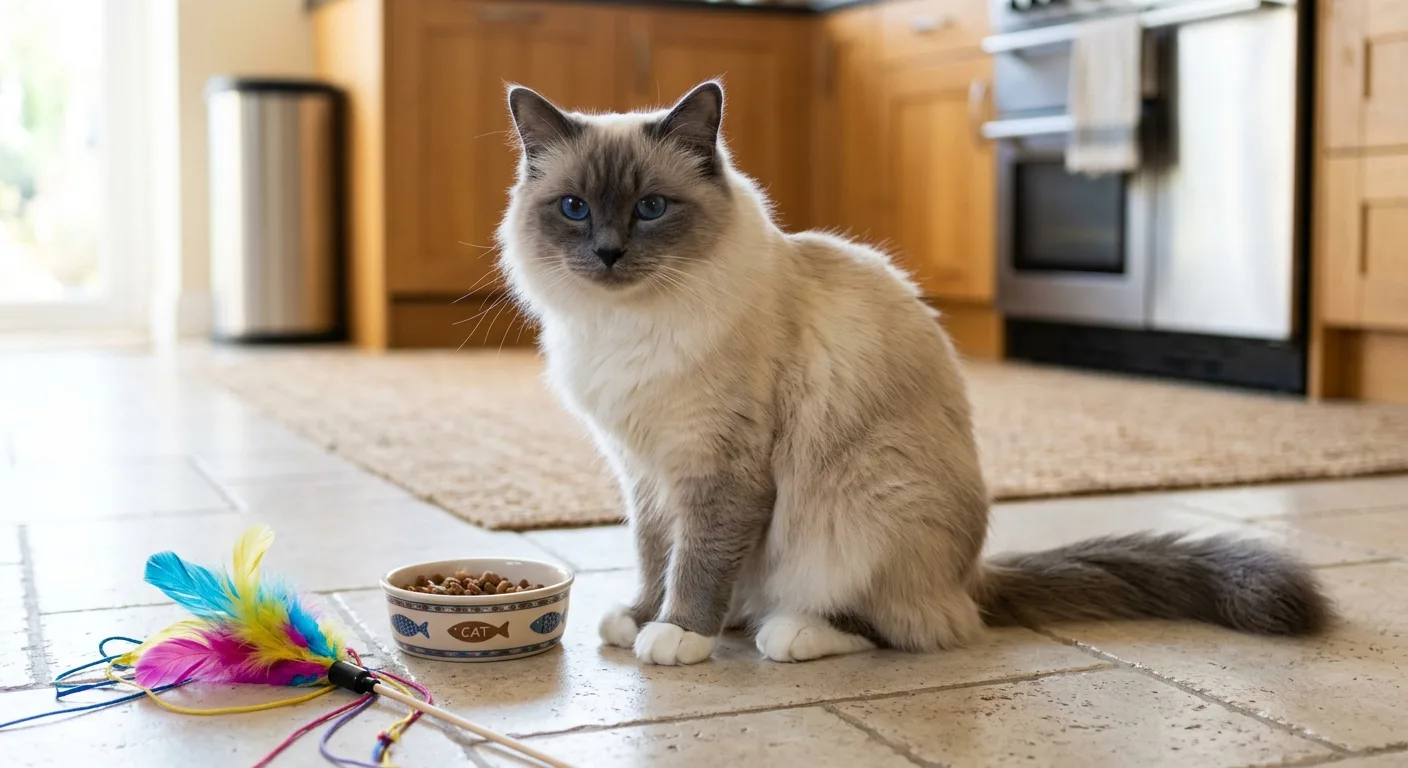
After the first-year setup, annual costs stabilize. Plan for:
| Category | Annual Low | Annual High |
|---|---|---|
| Premium cat food (dry + wet mixed) | $400 | $700 |
| Clumping litter | $120 | $240 |
| Annual wellness vet visit + preventatives | $150 | $350 |
| Dental cleanings (every 1-3 years) | $50 | $200 |
| Pet insurance premium | $200 | $500 |
| Toys and enrichment | $50 | $150 |
| Grooming supplies replenishment | $20 | $60 |
| Annual total | $990 | $2,200 |
The midpoint is roughly $1,500 per year, which works out to about $125 per month. Pet insurance is optional but worth serious consideration given HCM risk (see below).
Do Birmans Have Expensive Health Problems?
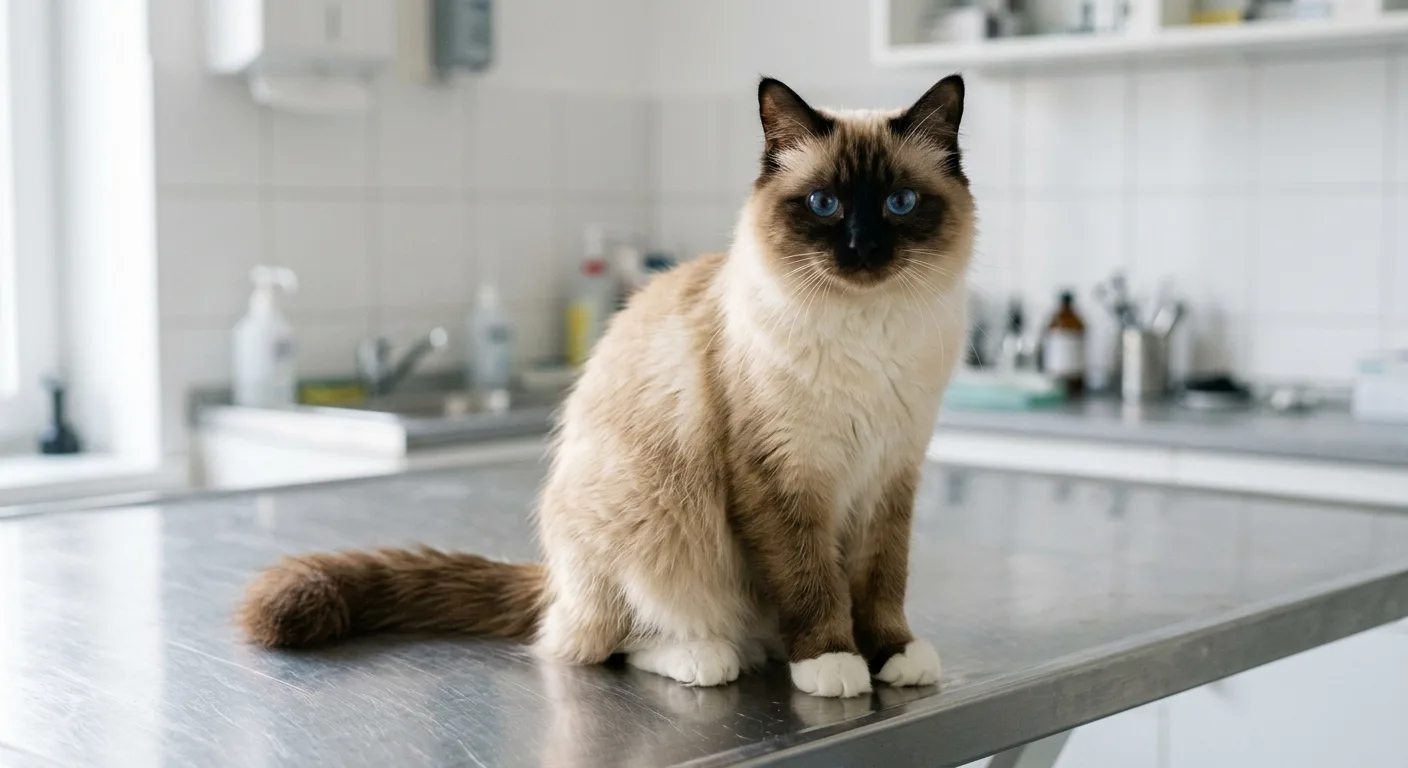
Birmans are generally a hardy breed, but two conditions add a layer of financial planning worth knowing:
Hypertrophic Cardiomyopathy (HCM): The most common inherited heart disease in cats is present across many breeds, and Birmans are not immune. Annual echocardiograms to screen for HCM run $200-400 each. If HCM is diagnosed, medication (typically atenolol or clopidogrel) adds $30-80 per month. A responsible breeder screens their breeding cats annually; ask to see current cardiac clearances before purchasing.
Urinary Tract Issues: Birmans can be predisposed to crystalluria. A prescription urinary diet costs 20-40% more than standard food, averaging $600-900 per year versus $400-700 for a standard premium diet.
- Birmans from unscreened parents carry a meaningfully higher cardiac risk. If your breeder cannot show a current (within 12 months) cardiac echo clearance on both parents, factor annual screening costs into your budget from year one. Pet insurance that covers hereditary conditions helps offset this.
Is a Birman More or Less Expensive Than a Ragdoll?
This is one of the top questions buyers comparing pointed, blue-eyed longhairs ask. Both breeds occupy similar price territory:

108-oz stainless steel pet fountain with quiet pump and water-level window. Bengals are notoriously water-obsessed; a flowing fountain encourages hydration and pulls them away from sinks and toilets.
Petful may earn a commission when you click through to Chewy, at no extra cost to you.
- Birman (pet quality): $600-2,000
- Ragdoll (pet quality): $800-2,500
Ragdolls trend about 15-25% higher on average because the breed commands a larger breeder network, more demand-driven waitlists, and a well-organized marketing ecosystem. Both breeds have comparable annual ownership costs, though Ragdolls are larger (average 12-20 lbs vs. Birman's 8-12 lbs) and eat proportionally more.
For a head-to-head comparison of temperament, size, coat, and price, see the Birman vs. Ragdoll comparison.
What Affects a Birman's Price?
Beyond the basic pet-vs-show tier, these specific variables move the number up or down within a tier:
Point color rarity. Seal and blue point Birmans are the most common and typically priced at the lower end of a breeder's range. Chocolate, lilac, red, and cream points require less common genetics and may cost 10-20% more from the same cattery.
Glove quality. Within pet-quality kittens, breeders often charge more for a kitten whose gloves are nearly show-standard. Perfect symmetry on all four paws with clean termination at the toe line is genuinely rare and priced accordingly.
Breeder reputation and waitlist. A cattery with a grand champion bloodline and a 12-month waitlist charges more than a newer cattery with the same ethics but fewer wins on the show circuit.
Geographic location. West Coast and Northeast breeders tend to charge 10-20% more than Midwestern or Southern breeders, reflecting higher operating costs.
Sex. Female kittens are priced $100-300 higher than males in most catteries because of their breeding potential, even in pet-quality tiers where the buyer agrees to spay.
Coat color variants. Birmans come in many colors and patterns; the Birman cat colors guide details every accepted point color and how rarity translates to price.
- A breeder with a 6-12 month wait list is usually in high demand because their kittens are healthy and correctly bred, not because they are overcharging. A cattery with kittens always available at a steep discount is a sign worth investigating carefully.
Is a Birman a Good Value Cat?
"Value" in cat ownership is about more than the purchase price. Birmans earn high marks across the traits that reduce lifetime cost and frustration:
- Coat care: Weekly brushing suffices. No professional grooming sessions required for most owners.
- Temperament: Birmans are calm, affectionate, and adaptable. They rarely develop the destructive anxiety behaviors that drive cats to scratch furniture, over-groom, or vocalize at night, all of which create indirect costs and stress.
- Activity level: Moderate. They play willingly but do not demand the extreme enrichment of a Bengal or Abyssinian. A cat tree and a rotating toy set cover it.
- Health baseline: With a screened-parent pedigree, most Birmans live 12-16 years with routine care. That per-year amortized cost of the kitten price drops significantly over a long, healthy life.
- Breed registry support: CFA and TICA breeder standards create accountability. If something goes wrong, a registered breeder is contractually bound to their health guarantee.
For buyers who want a deeply bonded, visually striking cat that does not demand constant grooming or extreme enrichment, the Birman delivers strong value relative to its price. Browse the full cat breeds library to compare other pointed and semi-longhaired breeds if you are still narrowing your choice.
- Birman owners frequently describe their cats as "dog-like" in attachment. They follow their person from room to room, greet at the door, and prefer to sleep near (or on) their people. For a single-person household or a family working from home, this temperament trait is a significant lifestyle fit advantage.
FAQ
A Birman kitten from a reputable TICA or CFA-registered breeder costs $600 to $2,000 for pet quality and $2,000 to $3,500 for show or breeding quality. Rescue adoption, when available, runs $75 to $200. Most buyers pay $900 to $1,400 for a healthy pet-quality kitten with a health guarantee.
Three factors drive the price: the piebald gene that governs the breed's defining white gloves is unpredictable, making show-standard glove placement rare; colorpoint genetics require careful pairing that limits litter size; and ethical breeders carry significant overhead including HCM cardiac screenings, TICA or CFA registration, vaccines, and written health guarantees.
Ragdolls tend to run slightly higher, averaging $800 to $2,500 for pet quality versus $600 to $2,000 for a Birman. Both occupy similar price territory, but the Ragdoll has broader mainstream demand that supports higher prices. Annual ownership costs for both breeds are comparable.
Annual costs for a Birman average $1,200 to $1,800, covering premium food ($400-700), litter ($120-240), a yearly vet wellness visit ($150-350), and pet insurance ($200-500). The midpoint works out to roughly $125 per month.
Yes, significantly. Rescue adoption fees of $75 to $200 are far below breeder prices. However, purebred Birmans are uncommon in shelters. You may wait months for an opening, and the available cats are usually adults rather than kittens. Patience and flexibility on age and color make adoption viable.
The main factors are point color rarity (lilac and cream cost more than seal), glove symmetry (near-perfect placement commands a premium within a tier), breeder reputation and waitlist length, geographic region, sex (females run $100-300 more than males), and whether the kitten is pet, show, or breeding quality.
The primary concern is hypertrophic cardiomyopathy (HCM), an inherited heart condition present across many cat breeds. Annual cardiac echoes cost $200-400. If HCM is diagnosed, monthly medication adds $30-80. Birmans can also be prone to urinary crystals, raising food costs to $600-900 per year on a prescription urinary diet. Pet insurance with hereditary-condition coverage is a sound investment.
For most buyers, yes. The coat requires only weekly brushing, the temperament is calm and adaptable, the breed lives 12-16 years with proper care, and the registered-breeder infrastructure provides accountability through health guarantees. Amortized over a 14-year lifespan, a $1,200 kitten costs less than $90 per year before food and vet costs, which is competitive with most pedigreed longhaired breeds.

Coreen Saito is a pet writer and longtime shelter volunteer with more than a decade in animal rescue. She covers cat behavior, breed care, and the small, ordinary science of sharing a life with companion animals, with a particular focus on honest takes about the products and decisions that actually matter. At home in Arizona, she's outranked by Mac (a dog with the loudest opinion in the house), Rebel (a cat who governs by quiet authority), and Meri (an orange tabby who runs the late shift and the laundry basket). She writes about all three, plus the rescues that keep coming through her life, at LifeWithMinty.com.
Sign up for expert-backed reviews and safety alerts all in one place.