Bengal Cat Generations: F1 Through F5 Explained
Bengal generations F1 through F5 differ dramatically in price, behavior, and legality. A buyer's guide to what each generation means and which fits your home.

Petful is reader supported. As an affiliate of platforms like Amazon and Chewy, we may earn a commission when you buy through links on this page. There is no extra cost to you.
- 1Bengal generations (F1-F5+) count how many steps removed a cat is from its wild Asian Leopard Cat ancestor.
- 2F1 is 50% wild; F2 is 25%; F3 is 12.5%; F4 is 6.25%; F5 and later are considered fully domestic.
- 3F1-F3 Bengals often display more wild behaviors: territoriality, distrust of strangers, intense prey drive.
- 4F5+ Bengals (labeled SBT for Stud Book Tradition) are the standard pet Bengal and legal almost everywhere in the US.
- 5Price drops dramatically with each generation: F1 can exceed $20,000; F5+ starts at $1,500.
A Bengal cat generation (F1, F2, F3, F4, F5) tells you how many generations separate a specific Bengal from its wild Asian Leopard Cat ancestor. Understanding Bengal cat generations is essential because it is the single biggest factor in behavior, price, and legality. This guide breaks down what each generation means, what to expect from each, and which is the right fit for pet-owner versus enthusiast buyers.
- Bengal cat generations describe how many breedings removed a Bengal is from its wild Asian Leopard Cat (ALC) ancestor. F1 (or G1) is the direct cross between an ALC and a domestic cat, making the kitten 50 percent wild. F2 is the offspring of an F1 female bred to a domestic male (25 percent wild), F3 is 12.5 percent wild, and F4 onward are considered SBT (Studbook Tradition) Bengals, which TICA accepts as fully domesticated. Bengal cat generations F1 through F3 are called Foundation Cats or Early Generation Bengals; they have unpredictable temperaments, often sterile males, and many states restrict ownership. SBT Bengal cat generations (F4 and beyond) are the household pet standard, blending the wild-cat appearance with reliable domestic behavior.
Understanding Bengal cat generations is essential before buying. The pillar complete Bengal cat breed guide covers temperament across generations, our reputable Bengal cat breeders guide explains why generation matters in breeder vetting, and pricing varies dramatically by generation, see Bengal cat price and lifetime cost breakdown.

Sign up for expert-backed reviews and safety alerts all in one place.
How Do Bengal Cat Generations Work?
"F" stands for "filial generation." The numbering counts the generations from the wild parent:

63-inch multi-level cat tree with scratch posts, hammock, plush perches, and dangling toys. Vertical territory is non-negotiable for high-energy climbing breeds like the Bengal.
Petful may earn a commission when you click through to Chewy, at no extra cost to you.
- F1: first filial: direct child of an Asian Leopard Cat bred to a domestic cat.
- F2: grandchild of the wild parent. F1 × domestic parent.
- F3: great-grandchild. F2 × domestic parent.
- F4: great-great-grandchild. F3 × domestic parent.
- F5+ (SBT): five generations removed from the wild parent. Both parents must be Bengals (Bengal × Bengal). Considered fully domestic by TICA.

A Generation-by-Generation Bengal Cat Generations Comparison
| Gen | % Wild | Legal Status | Temperament | Typical Price |
|---|---|---|---|---|
| F1 | 50% | Heavily restricted; permits in most states | Often wild traits; territorial, spray, one-person | $5,000-$20,000+ |
| F2 | 25% | Restricted in many states | Mixed; often still wary of strangers | $3,000-$5,000 |
| F3 | 12.5% | Restricted in some states | Mostly domestic but may retain intensity | $1,500-$3,000 |
| F4 | 6.25% | Legal almost everywhere | Fully domestic behavior | $1,500-$3,000 |
| F5+ (SBT) | <6.25% | Legal in most US states (banned in Hawaii, NYC, Seattle) | Indistinguishable from domestic | $1,500-$3,000 |
F1 Bengal Cats: The Wild End
Bengal cat generations are formally defined by The International Cat Association (TICA), which only registers Bengals as fully domestic from F4 onward (the SBT designation). The Wikipedia Bengal cat entry documents the historical breeding program and confirms F1, F2, and F3 are considered foundation or early-generation cats with significant ALC heritage.
F1 Bengals are the direct offspring of an Asian Leopard Cat father and a domestic cat mother. They are 50% wild by pedigree. Breeding F1s is highly specialized and legally restricted in much of the US. F1 females are fertile and used to produce F2 kittens; F1 males are almost always sterile (a genetic quirk of the early hybrid generation).
Expected F1 traits:
- Strong territorial behaviors including urine marking (both sexes)

108-oz stainless steel pet fountain with quiet pump and water-level window. Bengals are notoriously water-obsessed; a flowing fountain encourages hydration and pulls them away from sinks and toilets.
Petful may earn a commission when you click through to Chewy, at no extra cost to you.
- Often bonded to one person; wary or hostile to strangers
- Extreme prey drive, not safe with small pets
- Harder to litter train reliably; many F1 owners use outdoor enclosures
- Size on the larger end (12-20 lbs)
- Extremely active and vocal
- F1 Bengals are for experienced exotic-cat owners who can accommodate wild-style behaviors. They are not suitable for families with children, multiple pets, small living spaces, or anyone who wants a normal cat. Many F1 owners eventually surrender their cats because the reality does not match expectations.
What Are F2 Bengal Cat Generations?
When comparing Bengal cat generations, remember that the numeric generation tells you the breeding distance from the wild Asian Leopard Cat, not the cat's temperament guarantee. Two F4 Bengals from different lines can have very different personalities. Reputable breeders disclose Bengal cat generations on the registration paperwork and back it up with TICA verification. If a breeder won't confirm the generation in writing, that's a red flag regardless of price.
F2 Bengals are 25% wild by pedigree. Behavior is more variable than F1, but many F2s still retain meaningful wild traits including territoriality, vocalization, and prey drive. F2s are still restricted in many states. Most F2 owners are experienced enthusiasts who have worked up from F4-F5 Bengals previously.
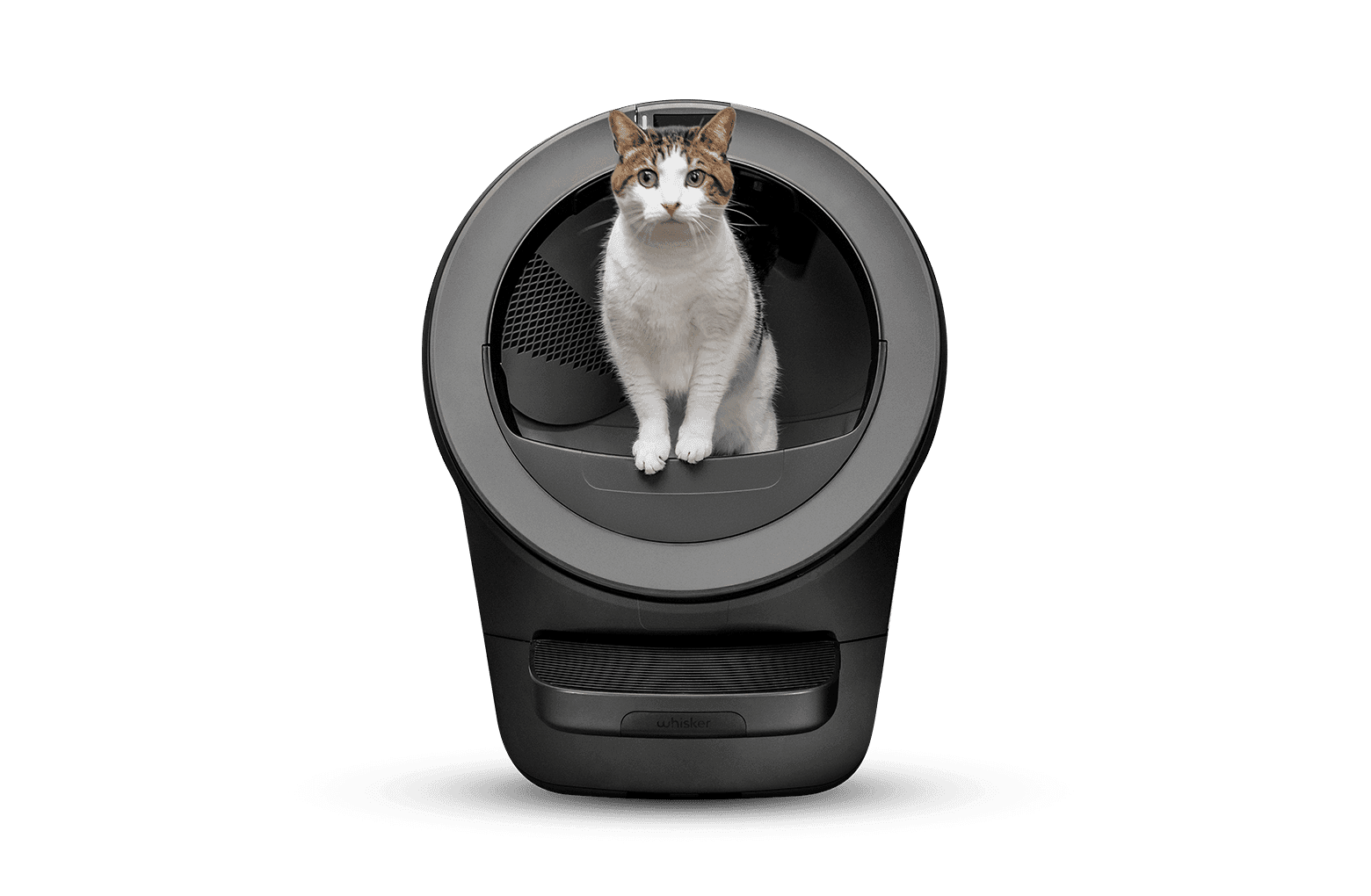
Next-generation Litter-Robot with WasteID, upgraded sensing, and support for up to 5 cats, without the Pro's cameras. Includes the 90-day in-home trial and WhiskerCare warranty.
Petful may earn a commission when you click through to Whisker, at no extra cost to you.
What Are F3 Bengal Cat Generations?
F3 is where behavior begins to consistently resemble domestic cats. At 12.5% wild, F3s are typically trainable, litter-reliable, and compatible with multi-pet homes when socialized well. Still restricted in some states. F3s can be a reasonable choice for experienced Bengal owners looking for a more spirited cat than a standard F5.
F4 Bengal Cats: Nearly Domestic
F4 Bengals are legally considered domestic in most US jurisdictions. At 6.25% wild, behaviors are indistinguishable from F5 Bengals in almost all cases. Price is the same as F5. F4s are a solid choice for pet-owner buyers who happen to find a good F4 litter.
What Are SBT Bengal Cat Generations (F4 and Beyond)?

Feathered teaser wand with catnip-stuffed bird. Pairs perfectly with the no-bite training policy: redirect Bengal play drive into a 10-minute interactive session with the wand.
Petful may earn a commission when you click through to Chewy, at no extra cost to you.
F5 and later Bengals are the standard pet Bengal. TICA designates them "SBT" (Stud Book Tradition), meaning three generations of Bengal × Bengal pairings are documented. SBT Bengals are legal in most US states, though Hawaii and New York City ban all Bengal cats regardless of generation, and Seattle prohibits all hybrid cats by municipal code, are fully domestic in temperament, and are what 95% of Bengal buyers actually get. Prices range $1,500-$3,000 for pet quality. For the full pricing picture, see our Bengal cat price and lifetime cost guide.

Which Bengal Cat Generations Are Right for You?
| Buyer Type | Best Generation | Why |
|---|---|---|
| First-time cat owner | F5+ (SBT) | Predictable domestic behavior; legal everywhere |
| Experienced cat owner wanting intensity | F4 or F5+ | Domestic traits with full Bengal personality |
| Bengal enthusiast with experience | F3 or F4 | More intensity while staying legal in most states |
| Exotic pet specialist | F1 or F2 | Wild traits intact; significant setup required |
| Hawaii, NYC, or Seattle resident | None (illegal) | Hawaii and NYC ban all Bengals regardless of generation. Seattle municipal code 9.25.020 prohibits all hybrid cats. |
How Do You Verify Bengal Cat Generations on Paperwork?
- TICA registration paperwork. Every reputable Bengal breeder registers kittens with TICA and the generation is recorded on the pedigree.
- Five-generation pedigree. Ask for a 5-generation pedigree showing the ancestors. SBT status requires 3 generations of Bengal × Bengal pairings.
- Breeder documentation. A reputable breeder provides this automatically; a seller who cannot or will not is a red flag.
For the full vetting process before buying from any breeder, see our reputable Bengal cat breeder guide. For legal status in your state, check our state-by-state Bengal legality guide.
TICA registration, pedigree documentation, generation proof. Keep everything in one place so you can show it if local animal control ever asks.
Create a free pet recordBengal cat generations also affect insurance, breeder responsibilities, and future resale considerations. Many pet insurance providers exclude or surcharge F1 through F3 Bengals because of the higher behavioral and medical risk profile of early hybrids. Reputable breeders of F1 and F2 Bengals are required to hold exotic animal permits in many states, register their breeding cats with state wildlife agencies, and provide ongoing support to buyers because of the difficulty of placing surrendered early-generation cats. By contrast, F4 and F5+ Bengals are insured, sold, and rehomed under standard domestic cat rules. For broader Bengal personality and care context that applies to all generations, see our complete Bengal cat breed guide and the bonding with a Bengal cat companion piece.
Frequently Asked Questions
F stands for "filial generation": the number of generations removed from the wild Asian Leopard Cat ancestor. F1 is 50% wild (direct child of an ALC), F2 is 25%, F3 is 12.5%, F4 is 6.25%, and F5+ is considered fully domestic.
F1 Bengals are heavily restricted or banned in most US states. Hawaii bans all Bengals. Many other states require a wildlife or exotic pet permit for F1 ownership. Verify your state law before buying an F1.
SBT (Stud Book Tradition) is a TICA designation for Bengals with at least three generations of Bengal × Bengal pairings behind them. An F5 Bengal is usually an SBT because both parents are also Bengals. The terms overlap for pet-quality Bengals.
F1 Bengals typically cost $5,000 to $20,000 or more depending on lineage, breeder, and availability. They are the most expensive Bengal generation. F2s run $3,000-$5,000, and F3 through F5+ run $1,500-$3,000.
Yes. Show-quality rosettes and coat patterns are the result of selective breeding, not generation. Many of the most visually stunning Bengals in show rings are F5 or later SBT cats. Coat quality is independent of generation once you reach F4+.
F1 × F1 pairings are not considered Bengals under TICA standards; the offspring would be registered differently. Additionally, F1 males are almost always sterile, so natural F1 × F1 breeding rarely happens.
The Bottom Line
Generation is the single most important variable to understand before buying a Bengal. For the vast majority of pet owners, F5+ SBT Bengals are the right choice: legal everywhere, fully domestic in behavior, and priced in the standard pet-pedigree range. Early generations (F1-F3) should only be considered by experienced exotic-pet owners who have verified legality and can accommodate wild-style behaviors. For complete breed context, see our full Bengal cat breed guide.

Coreen Saito is a pet writer and longtime shelter volunteer with more than a decade in animal rescue. She covers cat behavior, breed care, and the small, ordinary science of sharing a life with companion animals, with a particular focus on honest takes about the products and decisions that actually matter. At home in Arizona, she's outranked by Mac (a dog with the loudest opinion in the house), Rebel (a cat who governs by quiet authority), and Meri (an orange tabby who runs the late shift and the laundry basket). She writes about all three, plus the rescues that keep coming through her life, at LifeWithMinty.com.
Sign up for expert-backed reviews and safety alerts all in one place.