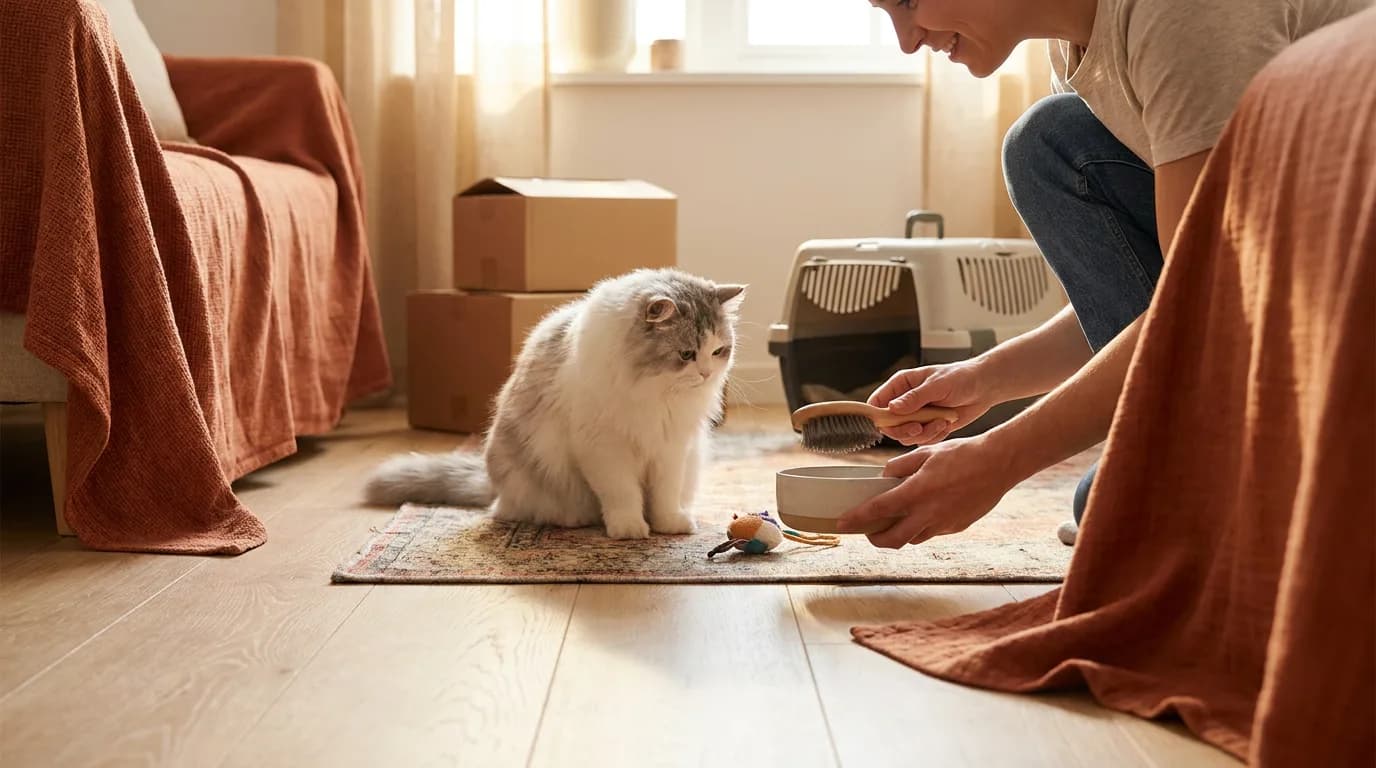
Abyssinian Cat Price: Cost and Lifetime Budget
See a dated Abyssinian price snapshot, compare itemized quotes, and build first-year, annual, emergency, and lifetime cost scenarios with explicit assumptions.

Petful is reader supported. As an affiliate of platforms like Amazon and Chewy, we may earn a commission when you buy through links on this page. There is no extra cost to you.
An Abyssinian cat price is only the first line in the cost of ownership. A complete budget separates acquisition, first-year setup, recurring care, insurance or emergency capacity, travel, and longer-term veterinary needs. It also treats any advertised number as a quote to verify, not proof of pedigree, health, rarity, or responsible seller practices.
As of August 22, 2026, US search results reviewed for this guide showed advertised and editorial breeder ranges from about $500 to more than $3,000, with a commonly cited $900 to $2,000 band. Those figures are a dated market snapshot, not an official national price. Current local written quotes with comparable inclusions are stronger planning evidence.
Petful's Abyssinian cat breed guide covers personality, activity, care, and household fit so the financial decision stays connected to the cat's day-to-day needs.

Sign up for expert-backed reviews and safety alerts all in one place.
Abyssinian Cat Price at a glance
A buyer may encounter a shelter adoption fee, a retired-adult placement fee, a pet-kitten quote, or a higher quote connected to breeding or show terms. Compare the same route, region, date, records, care, and transfer conditions before calling one price high or low. Searchers asking “Abyssinian cat how much?” or looking for “Abyssinian cat cost US” estimates need those assumptions before a number can guide a decision.
The acquisition line should answer two questions: what amount is due, and what verified items or services are included? The lifetime plan should then work even if the acquisition figure changes. This answer-first breed guidance uses clear decision labels and source-aware breed distinctions because local quotes, adoption fees, and editorial estimates answer different questions.
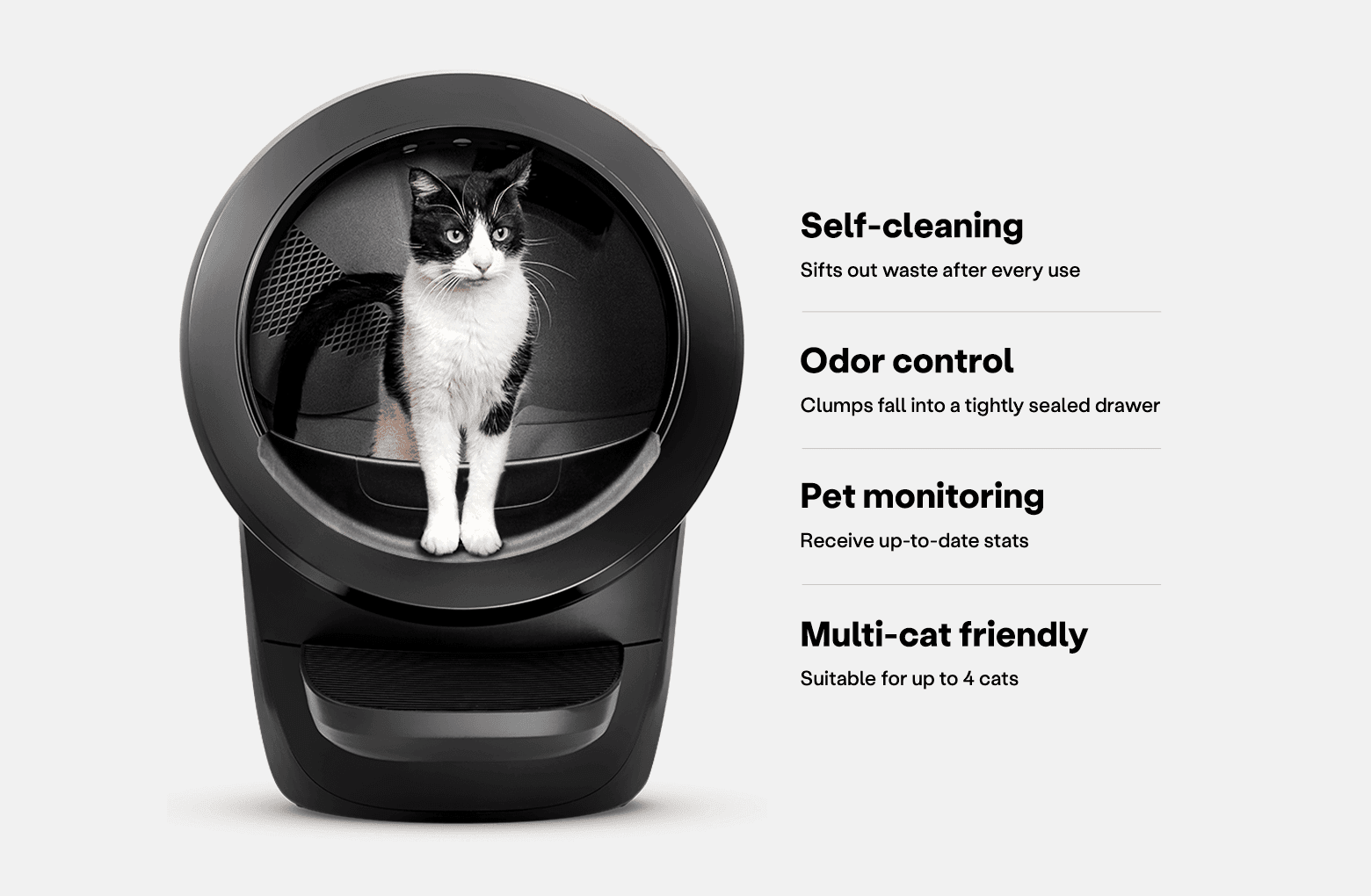
The proven Litter-Robot trusted by 1.8M+ households, with real-time litter and waste tracking in the Whisker app. The established pick if you want Litter-Robot reliability for less.
Petful may earn a commission when you click through to Whisker, at no extra cost to you.
- 1Answer-first breed guidance starts with a dated US planning range, then replaces it with current itemized local quotes
- 2As of August 22, 2026, reviewed US search results placed many Abyssinian breeder quotes roughly between $900 and $2,000, with a wider visible range
- 3A high price does not prove pedigree, health, quality, or responsible practices, and individual cats can vary in their care needs
- 4Plan acquisition, setup, recurring care, travel, insurance, emergencies, and lifetime costs separately
| Cost layer | What belongs in it |
|---|---|
| Acquisition | Verified purchase price, adoption fee, deposit, tax, registration and transport |
| First setup | Carrier, litter resources, feeding and water setup, scratching, climbing, rest and safe toys |
| Routine annual | Food, litter, preventive veterinary care, replacement supplies, grooming and enrichment |
| Risk planning | Insurance premium and deductible or a dedicated emergency reserve and payment plan |
| Variable needs | Dental care, medication, chronic illness, boarding, pet sitting and home modifications |
| Lifetime model | An explicit number of years multiplied by documented annual assumptions, with inflation and major events shown separately |

How much is an Abyssinian cat?
The search evidence behind this guide illustrates why one answer can mislead. Results captured on August 22, 2026 included an editorial estimate of about $900 to $2,000 for a well-bred kitten, a broader general answer of $500 to $1,500 or more, and current seller snippets above $2,000. These sources did not share one methodology or inclusion list.
Use $900 to $2,000 only as an initial 2026 US breeder-planning band, not a promise. A current local quote may fall below or above it. A buyer needs to ask whether the number includes pedigree and registration documents, veterinary services, vaccines, microchip, sterilization terms, pickup or transport, tax, a contract, a return policy, and post-placement support.
Record every quote in the same format:
- Date and seller or organization identity.
- Kitten or adult identifier, age, sex, and documented status.
- Base price or adoption fee.
- Deposit amount, due date, refund conditions, and balance date.
- Included veterinary care and usable records.
- Registration, pedigree, microchip, and transfer documents.
- Pickup, courier, flight, crate, lodging, or mileage costs.
- Tax and any other mandatory charge.
- Return, health, and support terms.
The TICA pet buyer's guide and CFA guidance on buying a pedigreed cat help frame the documentation and seller questions. They do not set a universal price or guarantee a particular transaction.
Put Abyssinian cats for sale in context
An “Abyssinian cat for sale” result may describe a young pet kitten, an adult, breeding rights, a seller bundle, or a copied scam listing. Those are not comparable offers. Record the route and permitted use before comparing price, then separate the cat's price from tax, travel, supplies, or services. If the seller will not itemize the quote, mark it incomplete rather than guessing at its value.
Why Abyssinian prices vary
Quotes can vary with location, current availability, age, seller costs, documentation, included veterinary services, registration status, placement terms, transport, and the purpose allowed by contract. Ranking pages often present one purchase range without assumptions, but a useful comparison names its date, country, placement route, and inclusions. A breeder may also price individual placements differently, so normalize current written quotes before treating their numbers as evidence of the market.
Do not accept “rare color,” “champion bloodline,” or “premium quality” as a complete explanation. Ask what documentary evidence supports the claim and which practical inclusions change the buyer's cost. Color cannot prove ancestry, and a title in a pedigree cannot guarantee one kitten's health or household fit.
Compare assumptions, not just ranges
One competitor range can look precise while hiding its assumptions. Before using any published range, identify its date, country, placement route, included services, and source type. A national editorial estimate cannot tell a buyer what a particular local veterinary clinic, insurer, boarding provider, or seller charges. The useful comparison is a set of current quotes normalized to the same inclusions.
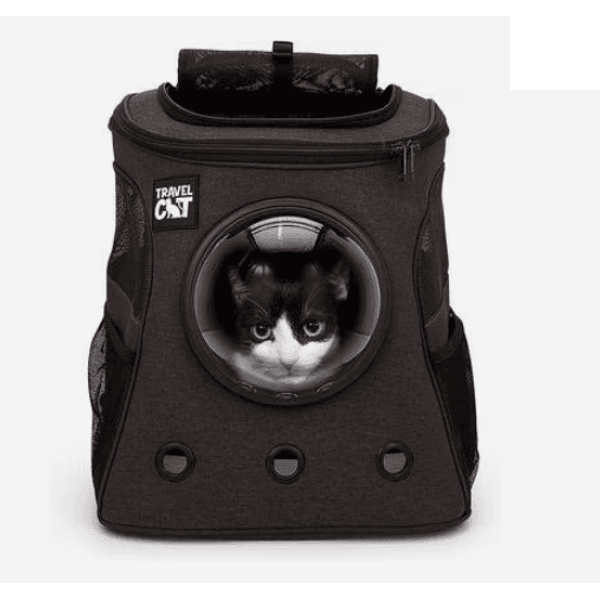
A secure Travel Cat Fat Cat backpack carrier may fill the transport line if its dimensions, ventilation, closures, and weight rating fit the individual. A less expensive hard-sided carrier may be a better fit for some cats. Budget the safety function before choosing a brand.

Petful may earn a commission when you click through to Chewy, at no extra cost to you.
Adoption and retired-adult costs
Adoption fees are often lower than breeder kitten prices, but the word “adoption” covers several paths. A documented pedigreed adult may enter rescue, a breeder may place a retired adult, or a shelter may use Abyssinian as a visual label for a ticked shorthaired cat.
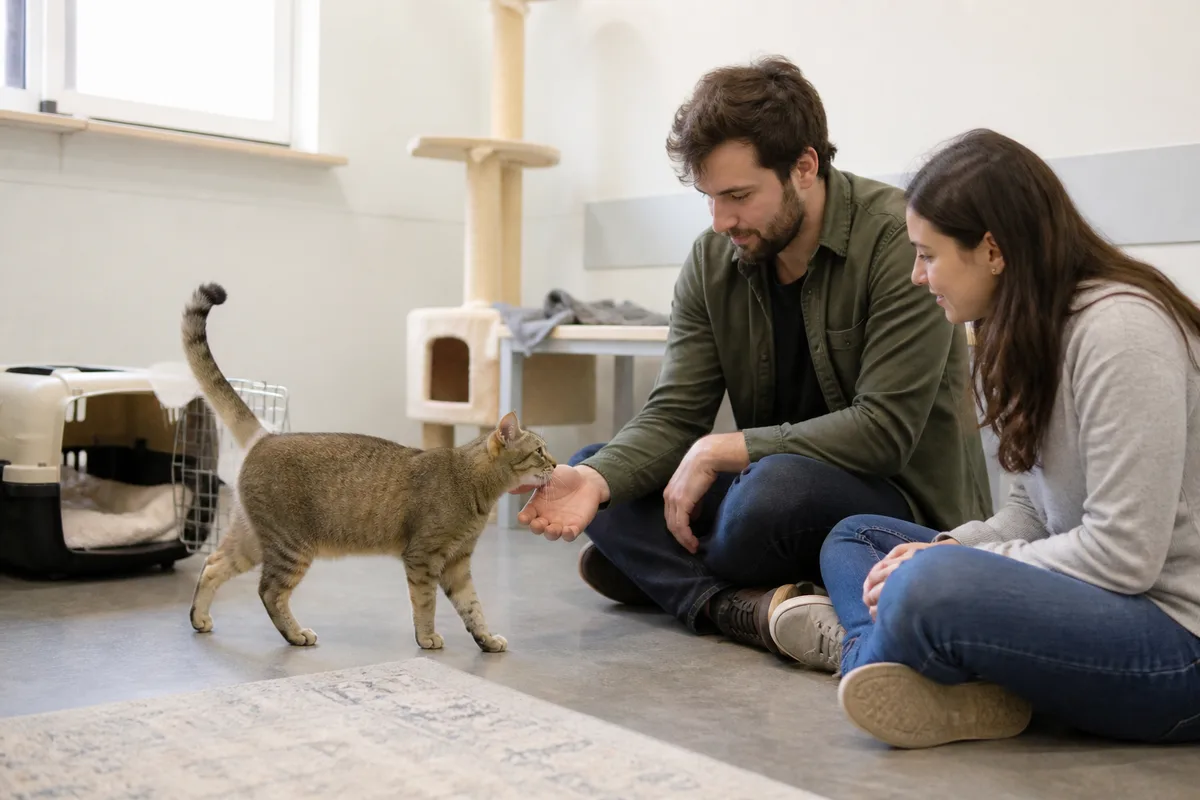
Ask what the fee includes: examination, vaccines, microchip, parasite care, spay or neuter, medication, records, food, or post-adoption support. Do not subtract those services from the first-year budget until the receiving veterinary clinic confirms the records are complete enough to use.
Adult placements can have different initial needs from kittens. An adult may require medication, dental care, diet continuity, a slower introduction, or environmental changes. On the other hand, known adult behavior can make household-fit planning more concrete.
Treat the adoption fee as one line
An adoption fee may bundle services that would otherwise appear in the first-year veterinary or identification budget. Ask for records and confirm what remains due instead of assuming the fee creates a specific savings. Likewise, a low retired-adult placement fee does not predict medical needs, and a higher fee does not establish pedigree or behavior without supporting evidence.
Compare breeder kitten, retired adult, and shelter adoption through the same columns:
- Verified identity and ancestry evidence, if ancestry matters.
- Current health records and next veterinary needs.
- Individual behavior and known history.
- Transfer terms and return support.
- Total travel and setup cost.
- Household fit independent of fee.
First-year Abyssinian budget
The first year combines one-time setup, acquisition, and recurring care. Keep those categories separate so a household can see which costs continue next year.
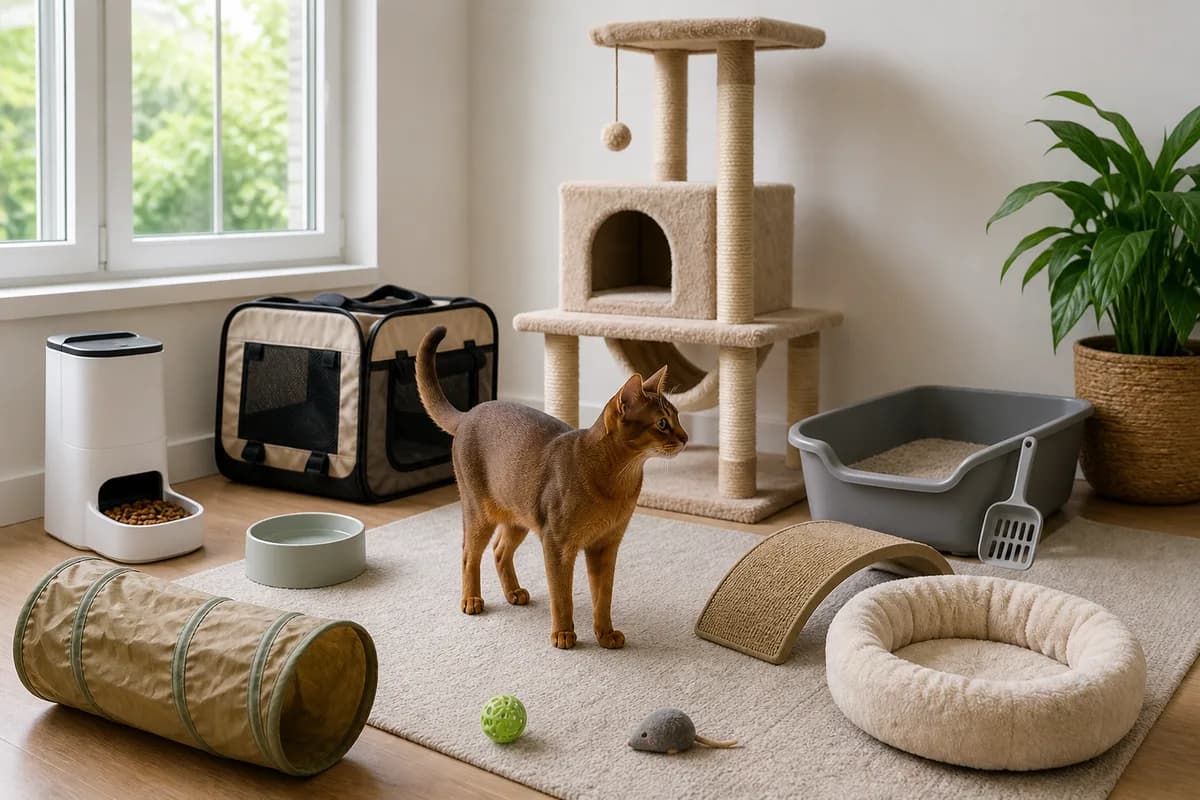
Build the budget with current local quotes rather than a universal package:
- Acquisition: Written purchase price or adoption fee, deposit, tax, pickup, and documents.
- Veterinary start: Examination, remaining vaccines, microchip, sterilization, parasite care, dental needs, and any follow-up.
- Home setup: Litter boxes, scoops, carrier, feeding and water resources, scratching, climbing, rest, and safe toys.
- Recurring year one: Food, litter, routine care, replacement supplies, medication, and enrichment.
- Risk capacity: Insurance premium and deductible or an emergency reserve with a realistic way to pay before reimbursement.
- Travel and care coverage: Mileage, lodging, airline fees, boarding, or pet sitting when applicable.
A Petlibro Granary WIFI automatic feeder can support timed measured dry-food portions, but it is optional equipment. Confirm the cat's food and routine first, and include maintenance and replacement parts if the household chooses automation.
A stable Yaheetech multi-level cat tree can combine climbing, scratching, and rest functions for an active Abyssinian. Measure the available space, check assembly and anchoring needs, and compare the product with less expensive safe ways to create vertical access.
An automatic litter box is another optional convenience. The Litter-Robot 4 can reduce routine scooping, but the household still needs to inspect waste, clean the unit, verify cycles, and keep suitable backup litter access. Include consumables and maintenance in the cost comparison.
Petful may earn a commission when you click through to Chewy, at no extra cost to you.
A practical first-year worksheet
Use four columns: category, expected date, quoted amount, and actual amount. Add a fifth column for evidence, such as a clinic estimate, product page, contract, insurer quote, or prior household receipt.
| Category | Planning question |
|---|---|
| Acquisition | What is the verified amount due, and which documents and services are included? |
| Veterinary start | Which examinations, vaccines, microchip, sterilization, parasite, dental, or follow-up needs remain? |
| Safe transport | Does the cat have a secure size-appropriate carrier, and what does pickup or travel cost? |
| Home setup | Which litter, feeding, water, scratching, climbing, resting, and play resources are actually needed? |
| Recurring care | What will food, litter, routine care, medication, insurance, and replacement supplies cost locally? |
| Contingency | How will the household pay an urgent examination, deductible, emergency visit, or treatment before reimbursement? |
Update the worksheet after the first month with receipts. Remove true one-time purchases from the annual run rate, preserve expected replacement cycles, and raise any line that was understated. A working budget should become more accurate over time.
Separate essential functions from optional equipment
Every purchase should name the function it solves. Secure transport, litter access, food, water, scratching, rest, and appropriate play are functions. A particular backpack, automatic feeder, cat tree, or self-cleaning litter box is one possible implementation. Comparing function first lets a household use simpler safe equipment where appropriate while preserving money for veterinary care and emergencies.
The second Travel Cat backpack carrier reference belongs in that review. If the chosen carrier does not fit safely, do not protect the sunk cost. Replace it and record the true expense.
The second Petlibro automatic feeder link matters only if automation solves a real schedule problem. A bowl and measured scoop may meet the same need at lower cost. The best budget distinguishes essential functions from optional convenience.
Annual and lifetime ownership cost
Lifetime cost is a scenario, not a prediction. The model below uses a 15-year planning horizon from the date the cat comes home, today's dollars, no inflation, and no acquisition or first setup. It is designed to show how assumptions change the outcome.
| Scenario | Explicit assumption and 15-year result |
|---|---|
| Lean plan | $100 per month in recurring supplies plus $500 per year in routine and irregular care equals $1,700 per year, or $25,500 over 15 years |
| Planning case | $175 per month plus $900 per year equals $3,000 per year, or $45,000 over 15 years |
| High-support case | $300 per month plus $1,800 per year equals $5,400 per year, or $81,000 over 15 years |
| Add separately | Acquisition, first setup, inflation, boarding, major emergency or chronic treatment, insurance reimbursement, financing costs, and end-of-life care |
These are Petful planning scenarios, not observed Abyssinian averages. Replace every input with local amounts. A household that spends more on food but less on insurance may reach the same total through a different path. A major emergency can exceed an annual reserve, and a healthy year may use little of it.
Three scenarios, three explicit assumptions
The lean scenario assumes $100 per month for recurring supplies plus $500 per year for routine and irregular care. The planning scenario assumes $175 per month plus $900 per year. The high-support scenario assumes $300 per month plus $1,800 per year. Multiplying each annual total by 15 produces $25,500, $45,000, and $81,000 respectively before acquisition, setup, inflation, major emergencies, and other excluded lines.
These lifetime scenarios are an information-gain tool, not a breed-cost claim. The three-scenario lifetime budget shows which assumption drives the result and lets a reader replace one input at a time. A household could also run 12-year and 18-year horizons, but no horizon predicts an individual cat's lifespan. Keep the spreadsheet dated, preserve the source for every replacement amount, and state what acquisition, inflation, emergencies, reimbursements, and end-of-life care remain outside the total.
Connect lifespan assumptions to risk planning
Petful's Abyssinian health and lifespan guide explains why a population range cannot predict one cat's lifespan or medical needs. Run a longer scenario if the household wants a more conservative planning horizon.
Insurance shifts timing and risk rather than eliminating cost. Compare premium, deductible, reimbursement percentage, annual limit, exclusions, waiting periods, preexisting-condition rules, claim process, and the amount the household must pay upfront. If self-funding, define the emergency reserve target and how quickly it will be replenished.
Stress-test the plan
Run at least two disruptions through the budget: a deductible or urgent examination during the first month, and a travel or care-coverage expense during a later year. The plan should show where the cash comes from without removing routine food, litter, or preventive care. If one disruption empties the entire reserve, the household can delay acquisition, build more capacity, or revise optional setup purchases.

63-inch multi-level cat tree with scratch posts, hammock, plush perches, and dangling toys. Vertical territory is non-negotiable for high-energy climbing breeds like the Bengal.
Petful may earn a commission when you click through to Chewy, at no extra cost to you.
Recurring food, litter and enrichment costs
Track recurring costs per month and irregular care per year. Food changes with calorie needs, package size, diet, waste, and local prices. Litter changes with box count, substrate, cleaning routine, and household size. Toys and scratchers need replacement based on condition, not a calendar alone.
Use a consistent unit
Convert package prices into cost per day or month using the amount the individual cat actually consumes, not the label's largest theoretical serving. Record shipping, tax, discounts, and waste separately. Temporary promotional pricing should not become the permanent baseline unless the household can verify that it will continue.
The second Yaheetech cat tree link fits a replacement-cost review. Inspect platforms, fabric, fasteners, and stability. Repair only according to safe directions, and replace an unsafe structure even if it has not reached the planned date.
The second Litter-Robot 4 link belongs in total-cost comparison. Add compatible litter, liners, filters, cleaning, electricity, parts, and backup litter access rather than comparing only the purchase price.
Travel, boarding and care-coverage costs
Travel costs are easy to omit because they may not occur every month. They can still be material. A household may need a pet sitter, boarding facility, medication visit, veterinary boarding, airline-approved carrier, ground transport, or emergency change of plans.
Price the actual care model before committing to a trip. Ask who will monitor appetite, water, litter, medication, behavior, and home safety. A low daily quote may exclude medication, multiple visits, holidays, additional cats, key pickup, or emergency transport.
Separate acquisition travel from routine care coverage
For acquisition travel, separate the seller's price from mileage, airfare, lodging, ground transportation, carrier, documents, and lost work time. Refuse surprise “refundable” logistics fees that appear only after a deposit. Legitimate travel costs should be itemized and independently understandable.
Build an annual irregular-cost line even when no trip is scheduled. If it is unused, move it to the emergency reserve or next year's care-coverage fund instead of treating it as free spending.
Inflation, replacement and end-of-life planning
The lifetime scenarios above use today's dollars and deliberately exclude inflation. That makes the arithmetic transparent but understates future nominal spending. A household can run a second model that increases annual inputs by a chosen inflation assumption, provided the assumption is labeled rather than presented as a forecast.
Replacement cycles also matter. Carriers, litter boxes, fountains, feeders, scratchers, cat trees, bedding, and toys wear at different rates. Inspect for cracks, exposed wires, loose fasteners, damaged closures, unstable platforms, or surfaces that can no longer be cleaned. Safety determines replacement timing.
End-of-life care is another separate category. Possible costs include examinations, diagnostics, medication, mobility support, special food, in-home services, euthanasia, cremation or burial where legal, and grief support. Planning for these possibilities is not predicting when they will occur. It prevents the base recurring budget from pretending to be complete.
A quarterly budget review
Review the budget every three months during the first year and at least annually after the routine stabilizes. Use receipts and statements, not memory.
Ask:
- Did food, litter, medication, insurance, or preventive-care costs change?
- Which one-time purchase was incorrectly treated as recurring, or vice versa?
- Is the emergency reserve at its target after any withdrawal?
- Has a deductible, exclusion, or reimbursement rule changed?
- Is boarding, sitting, travel, or home repair expected next year?
- Does the cat's age or current health change the veterinary planning horizon?
- Which product needs maintenance or safe replacement?
Update the lean, planning, and high-support scenarios using actual annual spending. The purpose is not to force the household into the lowest case. It is to know which case the current choices resemble and whether cash flow can support it.
What to verify before paying
An Abyssinian cat for sale result belongs in the seller-safety workflow before it belongs in a price comparison. Verify the individual cat live, seller or organization identity, pedigree or transfer records, veterinary documents, contract, payment recipient, and itemized logistics. A low quote cannot excuse missing evidence, and a high quote cannot authenticate it. Stop if the identity changes, the issuer cannot confirm a document, or new fees appear after a deposit.
What to verify before you decide
The dedicated Abyssinian kitten and adoption guide owns seller verification. Price comparison starts only after the kitten, seller or organization, records, and contract are credible.
The FTC's animal and pet scam guidance warns about pressure and invented fees. Verify contact details outside the listing, request live access, reverse-search photos, read documents, and do not pay through gift cards or cryptocurrency.
- Verify documentary records through the registry, veterinary clinic, or organization that issued them. A high or low Abyssinian price cannot establish ancestry, health, quality, rarity, or responsible seller practices, and population estimates are not guarantees about one cat. Pause when live access is refused, records conflict, a deposit is rushed, or new shipping, crate, permit, or insurance fees appear after payment begins.
Use a quote-comparison scorecard:
- Comparable: Same route, region, age, registration status, included care, contract, and transport.
- Incomplete: One or more inclusions or terms are missing and must be clarified.
- Unsafe: Identity conflicts, no live verification, payment pressure, untraceable payment, or fabricated fees.
Do not average unsafe or incomplete quotes into a planning range.
Is this the right choice for your household?
Affordability depends on cash flow and risk capacity, not only the purchase price. A household ready for the acquisition fee but unable to fund routine care, safe transport, a deductible, or urgent treatment is not yet financially ready.
- Household fit factors include stable cash flow, safe space, daily care time, veterinary access, activity support, and emergency capacity
- An itemized budget makes acquisition and recurring costs visible
- Scenario planning avoids pretending one lifetime total is certain
- Adult adoption may lower acquisition cost and provide behavior history
- Individual behavior can vary, and purchase price can distract from larger lifetime costs
- Local quotes and veterinary prices vary substantially
- Insurance still requires premiums, exclusions, and often upfront payment
- Major illness, travel, chronic care, and inflation can exceed a base scenario
Build the plan before placing a deposit. The result may be proceed, choose a different route, increase the reserve, or wait. Each is better than using a persuasive listing as the financial plan.
If the completed plan does not fit current cash flow, change the decision rather than hiding a line. A household can compare an adult adoption route, delay acquisition while building the reserve, choose simpler safe equipment, or revisit insurance and self-funding assumptions. It should not reduce food below nutritional needs, postpone preventive care without veterinary guidance, or rely on credit that has not been evaluated.
Keep acquisition money separate from the emergency reserve. Spending the entire reserve on a kitten because the seller raised the price leaves no capacity for an illness, travel disruption, or equipment replacement during the first weeks. Financial readiness means the household can complete the purchase and still carry the care plan.
Abyssinian Cat Price FAQs
These answers resolve price questions while leaving breeder verification and clinical decisions to their dedicated pages.
Abyssinian cats can be expensive because a pedigreed kitten's price may reflect breeding-program expenses, veterinary care, registration, records, age, location, availability, contract terms, and support. Those factors can help explain a quote, but they do not prove that a seller is responsible or that a kitten is healthy. Request an itemized current quote, verify the kitten and documents independently, and compare offers with the same services and transfer terms.
To budget beyond the purchase price, include an initial veterinary examination, remaining preventive care, a secure carrier, litter and feeding supplies, scratching and climbing resources, food, litter, routine veterinary care, insurance or an emergency reserve, replacement equipment, travel, and care coverage. Costs vary by location and individual need, so use current local quotes and run more than one annual and lifetime scenario instead of relying on a single national total.
An Abyssinian price quote should identify the cat, base price or adoption fee, deposit, payment dates, refund terms, taxes, included veterinary services, registration or pedigree documents, microchip details, sterilization terms, pickup or transport charges, return policy, and post-placement support. Compare quotes only after verifying the seller or organization, the individual cat, the written contract, and the recipient of every payment.

Coreen Saito is a pet writer and longtime shelter volunteer with more than a decade in animal rescue. She covers cat behavior, breed care, and the small, ordinary science of sharing a life with companion animals, with a particular focus on honest takes about the products and decisions that actually matter. At home in Arizona, she's outranked by Mac (a dog with the loudest opinion in the house), Rebel (a cat who governs by quiet authority), and Meri (an orange tabby who runs the late shift and the laundry basket). She writes about all three, plus the rescues that keep coming through her life, at LifeWithMinty.com.
Sign up for expert-backed reviews and safety alerts all in one place.