How to Crate Train an Adult Dog
Crate training an adult dog takes more patience than training a puppy, especially with a rescue. This gentle, step-by-step guide covers picking the crate, building positive associations through food, adding duration safely, and rescue-specific fears.
Petful is reader supported. As an affiliate of platforms like Amazon and Chewy, we may earn a commission when you buy through links on this page. There is no extra cost to you.
Learning how to crate train an adult dog is a slower, gentler project than crate training a puppy, and that is exactly the right expectation to start with. A grown dog, especially a rescue, arrives with a history you cannot fully see. She may have spent years never confined, or she may associate a crate with a shelter kennel, a bad boarding stay, or being left alone. None of that means she cannot learn to love a crate. It just means you move at her pace, reward every small win, and never rush the door.
This guide walks you through the full process step by step, from picking the crate to the first full day home alone. It is built specifically for adult and rescue dogs, so the timelines run longer and the emphasis is squarely on trust rather than speed.
- 1Go slower than you would with a puppy: adult and rescue dogs often need weeks, not days.
- 2Build every association through food and calm, and never use the crate as punishment.
- 3Adult dogs should not be crated more than 4 to 6 hours during the day, per the ASPCA and Humane Society.

Sign up for expert-backed reviews and safety alerts all in one place.
Why Crate Training an Adult Dog Is Worth the Patience
A crate is not a cage when it is introduced correctly. It becomes a den: a small, defensible, predictable space your dog chooses on her own when she wants to rest or decompress. For an adult rescue adjusting to a brand-new home, a quiet retreat can be the single most calming thing you provide in the first month.

Petful may earn a commission when you click through to Chewy, at no extra cost to you.
Beyond comfort, a crate helps with house-training an adult dog who was never fully housebroken, keeps her safe from swallowed shoes and chewed cords while you are out, gives her a secure spot during travel or vet stays, and makes future situations (post-surgery crate rest, a house full of holiday guests) far less stressful because the crate is already a happy place.
The catch is that all of those benefits depend on the introduction. A crate a dog is forced into becomes a trap in her mind. A crate she is invited into becomes a bedroom. Everything below is designed to land you in the second category.
What You Need Before You Start
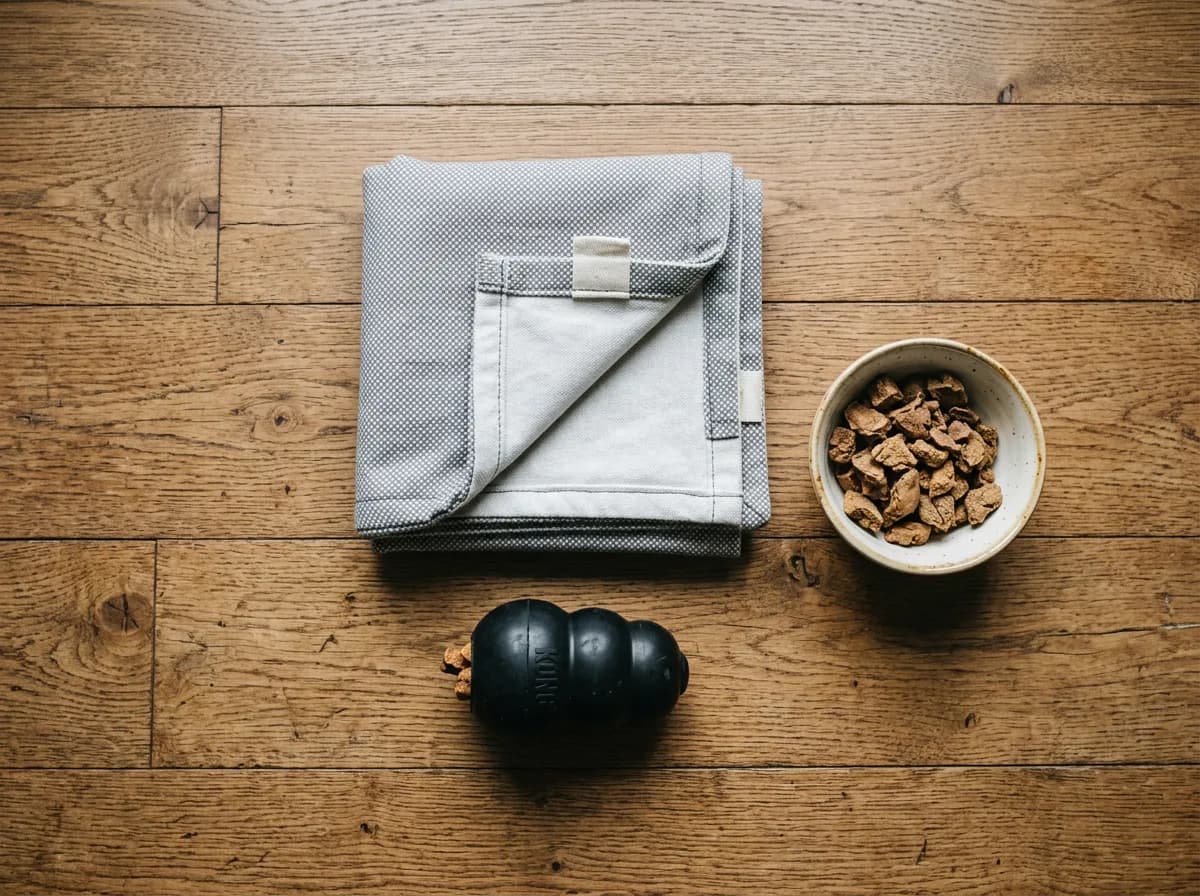
Set yourself up before you ever call your dog over. Scrambling for treats mid-session breaks the calm you are trying to build.
Petful may earn a commission when you click through to Chewy, at no extra cost to you.
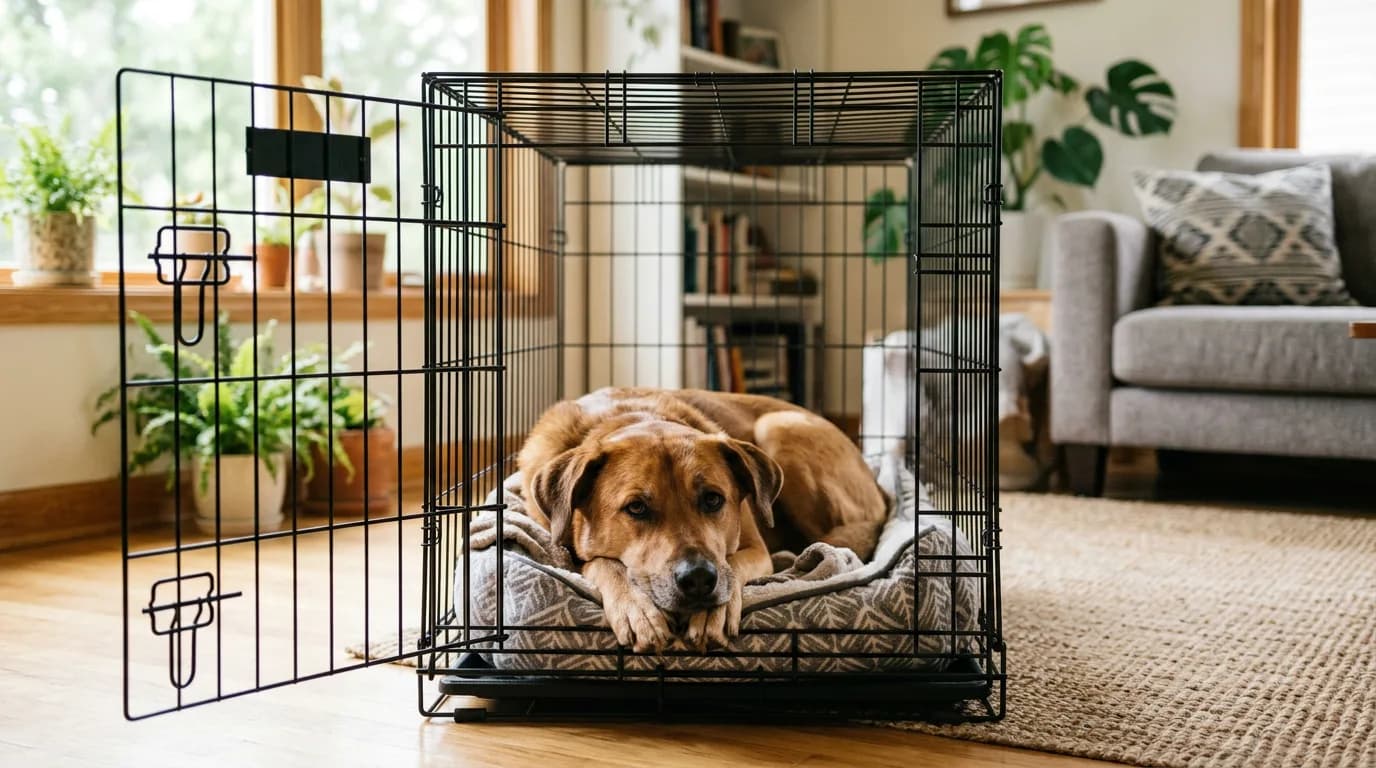
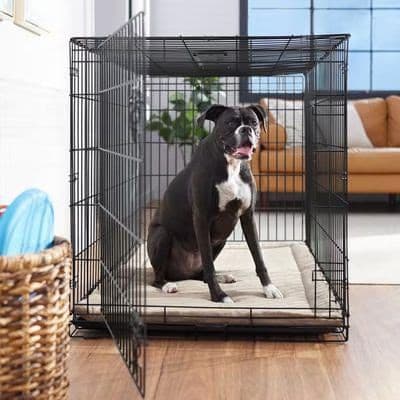
- A correctly sized crate: big enough for your dog to stand fully, turn around, and lie flat on her side. For a rescue whose adult size you already know, measure nose-to-tail-base and add a few inches.
- A washable bed or blanket for the floor of the crate, so the surface is soft and smells like home.
- A generous stash of high-value treats: plain cooked chicken, small cheese cubes, or freeze-dried liver work far better than everyday kibble for this job.
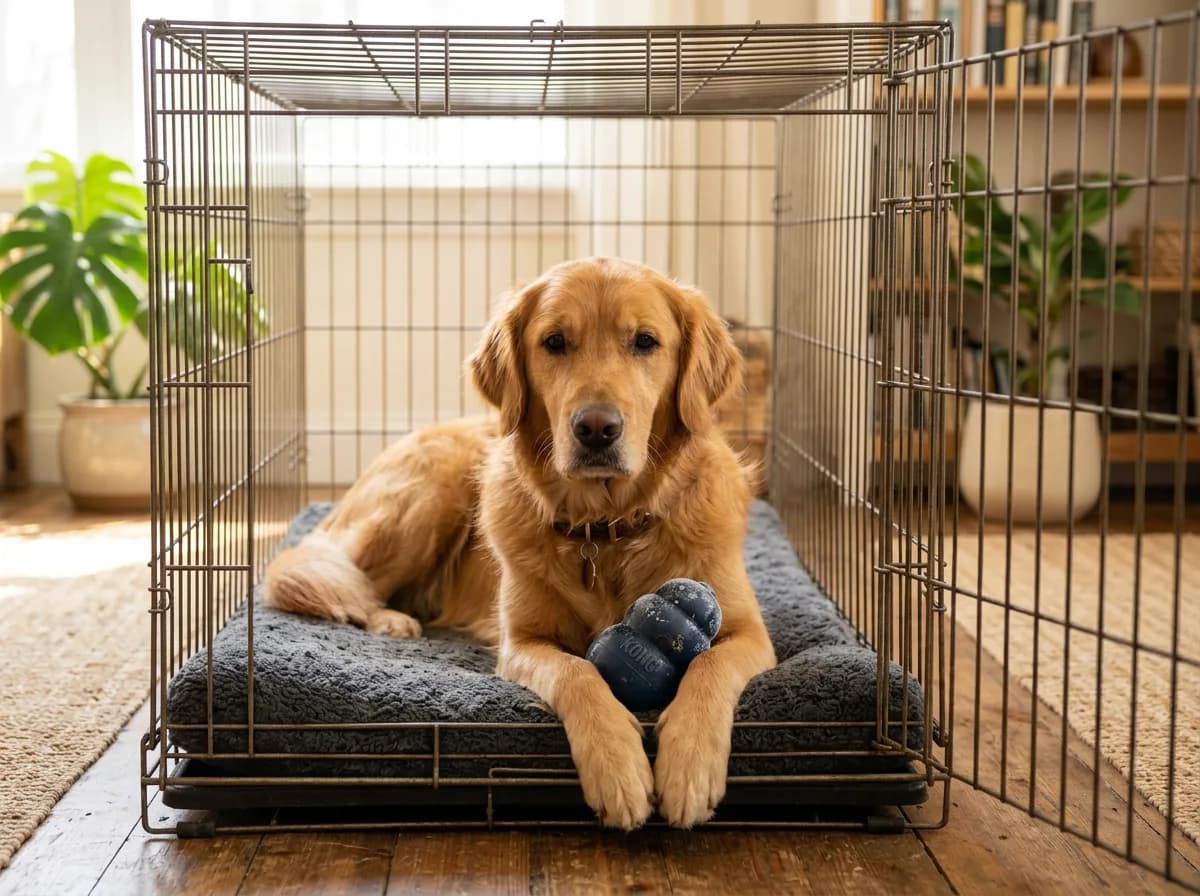
- A stuffable rubber toy (a classic Kong is the standard) you can pack with peanut butter or wet food and freeze.
- A quiet, low-traffic-but-not-isolated corner of a room where the family spends time. Dogs are social; a crate exiled to the basement teaches loneliness, not safety.
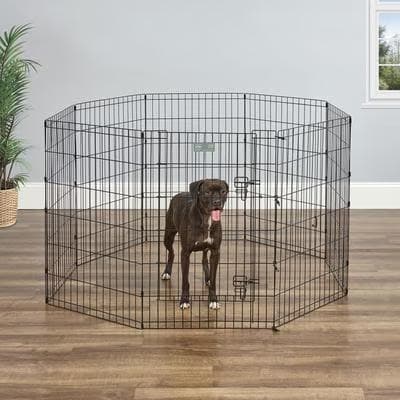
- Wire crates fold flat, offer airflow, and let anxious dogs see out, which suits most adult rescues. Plastic travel crates feel more den-like and enclosed, which can settle a dog who prefers a cave. There is no single right answer: pick for your individual dog and swap if the first choice does not click.
How to Crate Train an Adult Dog Step by Step
The whole method is one idea repeated: make the crate predict good things, then add a little duration, then a little more. Never skip ahead to close the door before your dog is relaxed at the current step. If she balks, you moved too fast; drop back a step and slow down.
Step 1: Introduce the Crate With Zero Pressure
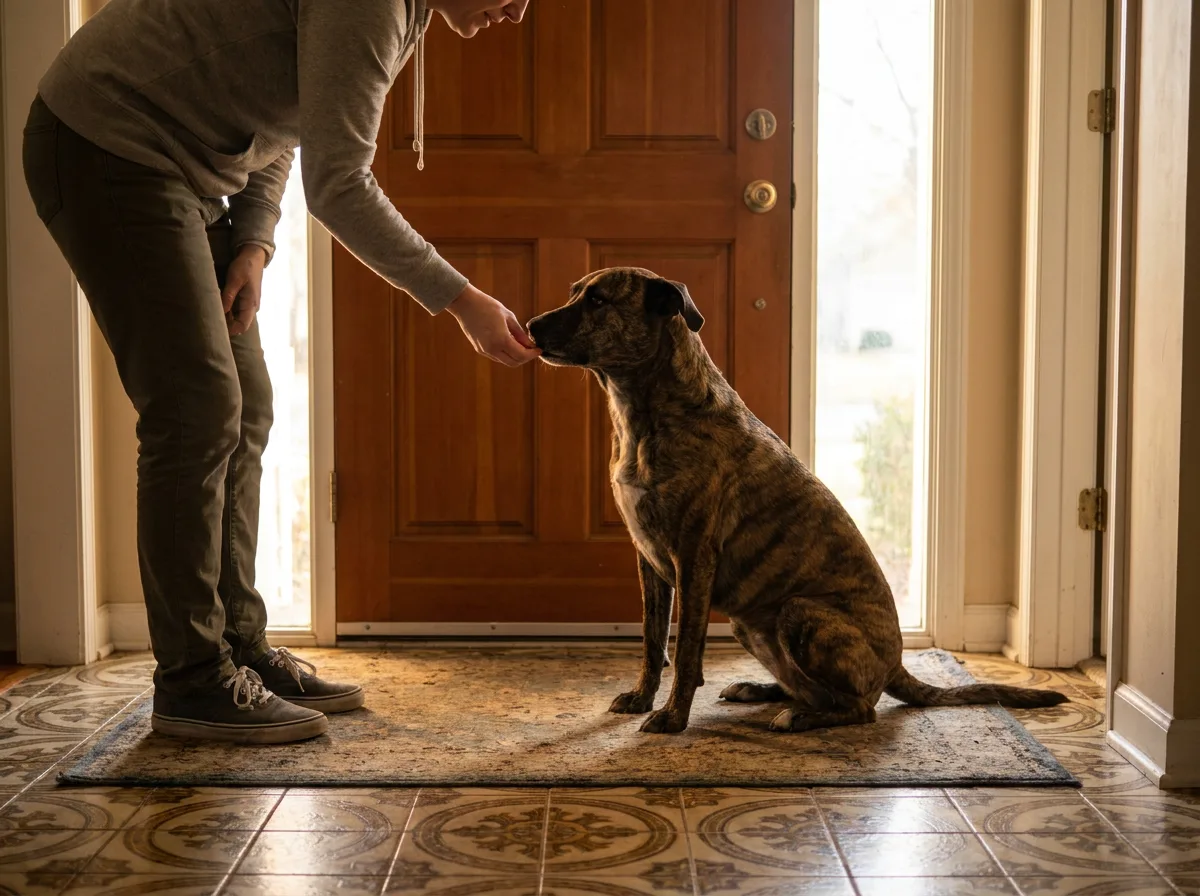
For the first day or two, do nothing but make the crate exist as a good place. Set it up with the door removed or propped fully open so it cannot swing and startle her. Toss a few treats near the entrance, then just inside, then toward the back, and simply let her wander in and out on her own terms. Do not lure, coax, or push. If she only sniffs the doorway on day one, that is a win. Feed a treat every time she looks at or approaches the crate.
Petful may earn a commission when you click through to Chewy, at no extra cost to you.
Step 2: Feed Every Meal Inside
Food is your fastest route to a positive association. Start by placing her bowl at the very front of the crate, just inside the opening. Over several days, move the bowl a little deeper each meal until she is eating comfortably at the back. Once she stands calmly inside to eat, you can gently close the door while she eats and open it the instant she finishes. Build the closed-door time up slowly, meal by meal, until she stays relaxed for a few minutes after the last bite.
Step 3: Add Duration With the Door Closed While You Stay
Now practice short closed-door sessions outside of mealtimes. Cue her in with a treat, close the door, sit right beside the crate, and feed a few treats through the bars over ten to twenty seconds, then open the door before she gets restless. Gradually stretch the time, and start to vary it so it is unpredictable: sometimes ten seconds, sometimes two minutes. Randomizing keeps her from bracing for a long stay every time the latch clicks.
Step 4: Practice Short Absences
Once she rests quietly with the door shut and you nearby, begin stepping away. Close the door, hand her a frozen stuffed Kong, walk out of the room for a minute, and come back calmly. No big greeting on the way out, no big reunion on the way in; low-key comings and goings tell her your leaving is nothing to panic about. Slowly extend how long and how far you go: another room, then the front door, then out to the car and back.

Chicken flavored soft chews that support calm, positive behavior during times of occasional stress like fireworks and storms.
Petful may earn a commission when you click through to Chewy, at no extra cost to you.
Step 5: The First Real Departure
When she can settle for twenty to thirty minutes while you are out of sight, you are ready for a genuine short errand. Exercise her well first so she is ready to rest, leave the frozen stuffed toy, and go. Keep the first few real absences short and build from there. Many adult dogs do best crated for stretches well under the daytime maximum, with a midday break whenever the day runs long.
| Step | What you are building | Typical pace for an adult dog |
|---|---|---|
| Introduce the crate | A neutral-to-good first impression | 1 to 3 days |
| Feed meals inside | Food-driven positive association | 3 to 7 days |
| Duration, door closed, you present | Calm while confined | 1 to 2 weeks |
| Short absences | No panic when you step away | 1 to 2 weeks |
| First real departure | A dog who settles home alone | Several weeks in total |
How Rescue Dogs Are Different
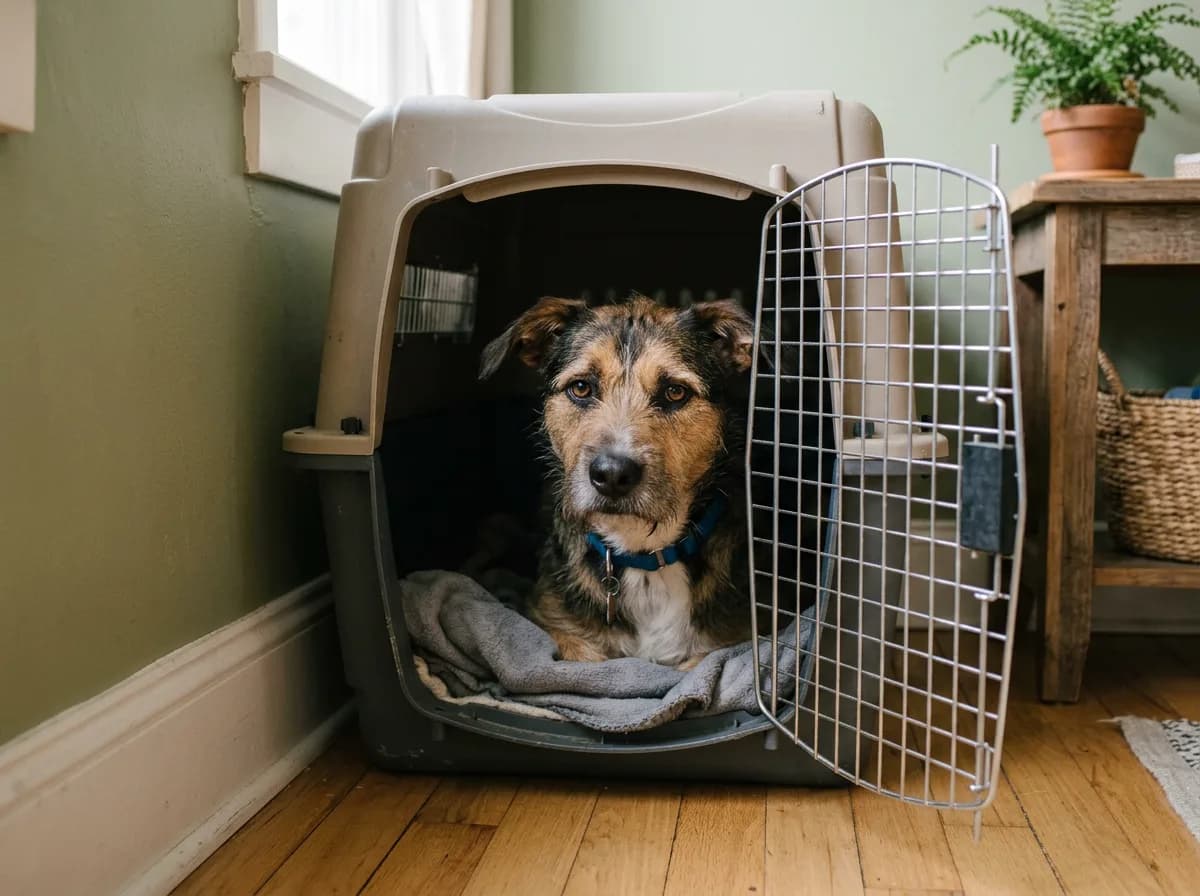
A dog surrendered or pulled from a shelter may carry crate baggage a puppy simply does not have. Some rescues shut down at the sight of a crate because it looks like the kennel run they just left. Give those dogs extra decompression time before you introduce the crate at all: the widely used "3-3-3 rule" (roughly three days to start settling, three weeks to learn the routine, three months to feel at home) is a helpful frame for how long an adult rescue may need to relax into a new environment.
Watch her body language closely and let it set your speed. Loose muscles, soft eyes, and voluntarily walking into the crate mean keep going. A tucked tail, a locked stare, whale eye, panting when it is not hot, or refusing food she normally loves all mean back off and shrink the step. Forcing a frightened rescue into a crate does lasting damage to the trust you are trying to build.

A durable rubber dog toy that can be stuffed with treats and selected by the manufacturer's size guide; supervise use and retire it when damaged.
Petful may earn a commission when you click through to Chewy, at no extra cost to you.
- Rescues settle faster when the day is predictable. Feed, walk, and offer crate time at roughly the same hours each day. A dog who can guess what happens next has far less to feel anxious about, and a calm baseline makes every crate session easier.
Common Crate Training Mistakes to Avoid
Most crate training failures trace back to a short list of avoidable errors. Skip these and you skip most of the trouble.
- Using the crate as punishment. If the crate is where she goes when she is "bad," it will never be a safe place. Keep it strictly positive.
- Moving too fast. Closing the door before your dog is relaxed at the open-door step is the number one cause of crate panic. Duration is earned, not scheduled.
- Crating too long. Adult dogs need to stretch, drink, and relieve themselves; the ASPCA advises against crating an adult dog for more than 4 to 6 hours at a stretch during the day.
- Letting a truly panicked dog "tough it out." Genuine distress is not stubbornness, and ignoring it makes it worse (more on that below).
- Ignoring exercise. A dog with pent-up energy cannot settle. Physical and mental exercise before crating does half the work for you.
When to Call in a Professional
Crate training is a confidence exercise, not an endurance test. If your dog shows extreme distress every time the door closes (relentless barking or howling, heavy drooling, frantic escape attempts, bent bars, broken teeth, or soiling in a house-trained dog) stop and get help. Those are signs of real separation anxiety or confinement phobia, and for those dogs a crate can make the panic worse rather than better.
A veterinarian can rule out pain or a medical driver and, when appropriate, discuss anti-anxiety support, while a certified professional dog trainer or a veterinary behaviorist can build a desensitization plan tailored to your dog. Reaching out early is not a failure; it is the fastest route to a dog who can actually relax.
Frequently Asked Questions
Related on Petful
- Crate Training a Puppy: A Day-by-Day Plan
- Crate Training a Puppy at Night: Survive Night One
- How to Potty Train a Puppy: The Schedule-First Guide
- Puppy Training 101: A Week-by-Week Guide
Yes. Adult and even senior dogs can absolutely be crate trained. It usually takes longer than it does with a puppy because a grown dog may have existing associations to overcome, but with patient, food-driven, positive introductions almost any healthy adult dog can learn to rest calmly in a crate.
The "2-1" idea is a simple pacing guide: for every longer stretch a dog spends crated, give a shorter block of free, active time out of the crate to stretch, drink, and toilet before the next session. For adult dogs the more important number is the daytime ceiling of 4 to 6 hours in the crate at a time.
Expect a few weeks for most adult dogs, and sometimes a couple of months for a fearful rescue. Some confident dogs settle in days. The timeline depends on your dog's past experiences and how consistently you keep sessions short, positive, and unhurried. Rushing the process is the surest way to make it take longer.
The big ones are using the crate as punishment, closing the door before the dog is relaxed at the open-door stage, crating for too many hours at once, ignoring a genuinely panicking dog, and skipping the exercise that helps a dog settle. Avoiding those five errors prevents most crate training setbacks.
No, not in the "ignore all crying" sense. Brief, low-level fussing when a dog is simply testing whether whining opens the door can be waited out for a moment, then rewarded the instant she is quiet. But real distress (frantic barking, drooling, panic) should never be ignored: that means the step was too big, so open the door, shrink the difficulty, and rebuild.
In the crate training context, red-flag behaviors are the signs a dog is truly frightened rather than mildly unsure: frantic escape attempts, heavy panting or drooling when it is not hot, refusing high-value food, whale eye, a tucked tail, or soiling the crate in a house-trained dog. Any of these means back off and, if they persist, consult a trainer or veterinarian.
Dogs show affection and trust through body language: soft relaxed eyes, a loose wagging tail and body, leaning into you, gentle eye contact followed by a blink, and choosing to settle near you. When an adult dog voluntarily walks into her crate and relaxes with the door open, that easy body language is a strong sign she feels safe with you, which is the whole goal of gentle crate training.
The Bottom Line
Crate training an adult dog rewards patience over pressure every single time. Let food and calm do the teaching, read your dog's body language, and treat the crate as a bedroom she is invited into rather than a room she is locked in. Go slower than feels necessary, especially with a rescue, and you will end up with a dog who heads to her crate on her own to unwind. For more on decoding the signals your dog sends along the way, browse our full library of dog behavior and training guides, and if you are still choosing a breed or getting to know a new rescue, our breed profiles dig into the temperament traits that shape how each dog learns.

Coreen Saito is a pet writer and longtime shelter volunteer with more than a decade in animal rescue. She covers cat behavior, breed care, and the small, ordinary science of sharing a life with companion animals, with a particular focus on honest takes about the products and decisions that actually matter. At home in Arizona, she's outranked by Mac (a dog with the loudest opinion in the house), Rebel (a cat who governs by quiet authority), and Meri (an orange tabby who runs the late shift and the laundry basket). She writes about all three, plus the rescues that keep coming through her life, at LifeWithMinty.com.
Sign up for expert-backed reviews and safety alerts all in one place.