Senior Dog Food vs. Adult Dog Food: What Changes and When to Switch
Senior dog food is an adult maintenance food with different choices. Learn what changes in calories, protein, moisture and joint support, when to switch by size, and how to transition an older dog safely.
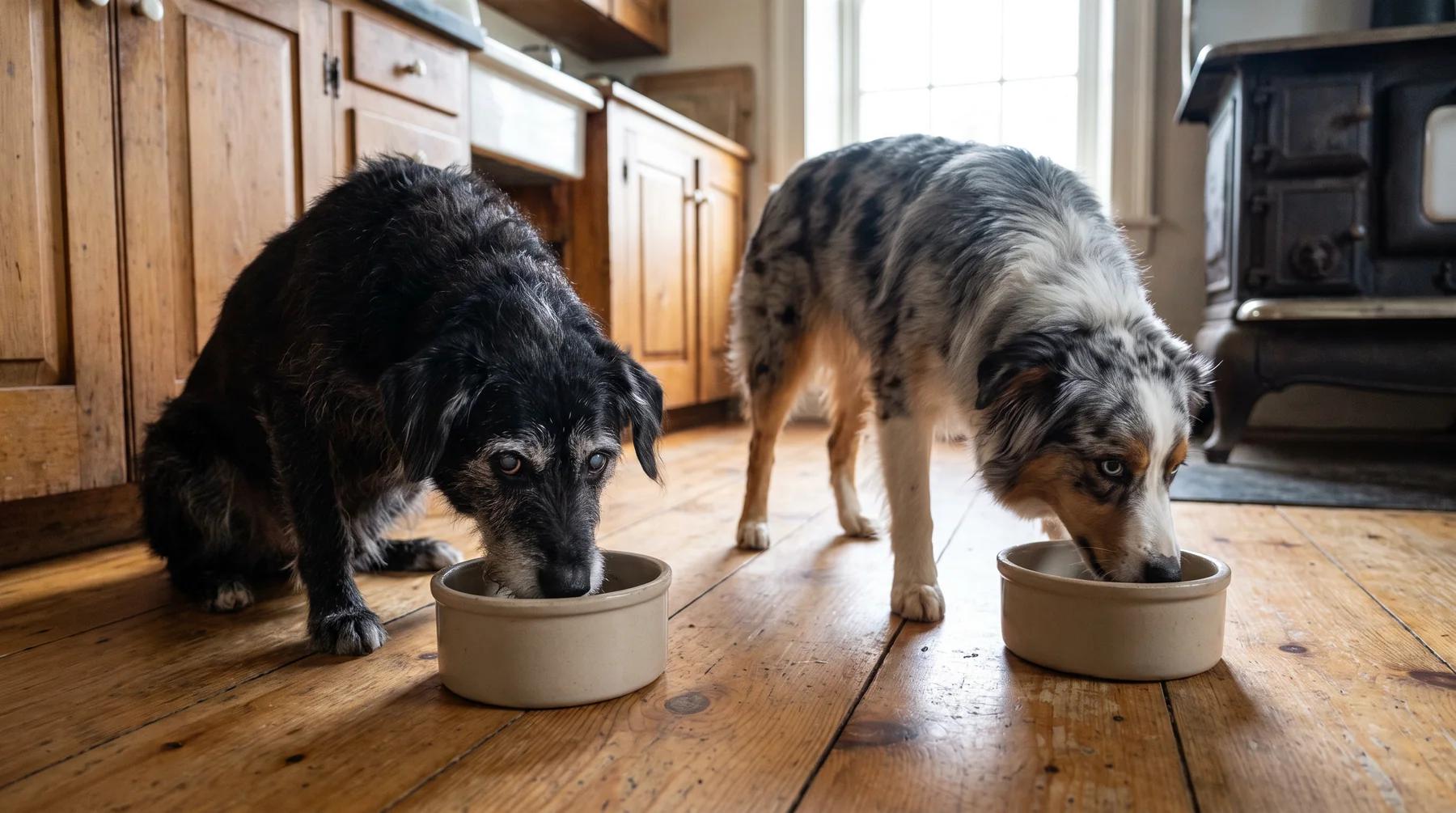
The same kitchen, two life stages: an older dog's needs can drift away from a younger adult's.
Petful is reader supported. As an affiliate of platforms like Amazon and Chewy, we may earn a commission when you buy through links on this page. There is no extra cost to you.
Sponsored by JustFoodForDogs. This article draws on published veterinary and nutrition sources. Petful may earn a commission through links in this article.
Senior dog food sounds like a separate category, but the label rules tell a different story. AAFCO sets nutrient profiles for growth and reproduction and for adult maintenance, and as the Merck Veterinary Manual notes, there is no senior life stage. That means a bag or box marked "senior" is meeting the same adult standard as any other adult food, with its own choices about calories, protein, fat, fiber and texture.
So the real question is not whether your older dog needs a food with the word senior on it. It is whether the food in the bowl still fits the dog in front of you: a body that may be less active, a mouth that may have fewer good teeth, joints that stiffen on cold mornings and a gut that may be more sensitive than it used to be. A fresh adult maintenance recipe such as JustFoodForDogs JustFresh Home-Cooked Chicken can fit many healthy older dogs, and the checks below help you decide.

Sign up for expert-backed reviews and safety alerts all in one place.
What Makes Senior Dog Food Different
- 1There is no senior life stage in the AAFCO nutrient profiles, so every senior formula is really an adult maintenance food with different choices.
- 2Check three things on any label: the adult maintenance statement, the calories per ounce or per cup, and a moisture and texture that suit your dog's teeth.
- 3Switch by size and body condition, not by one birthday: small dogs usually reach their senior years later than large and giant dogs.
- 4Book a senior wellness exam before you change food, then transition over 10 to 14 days.
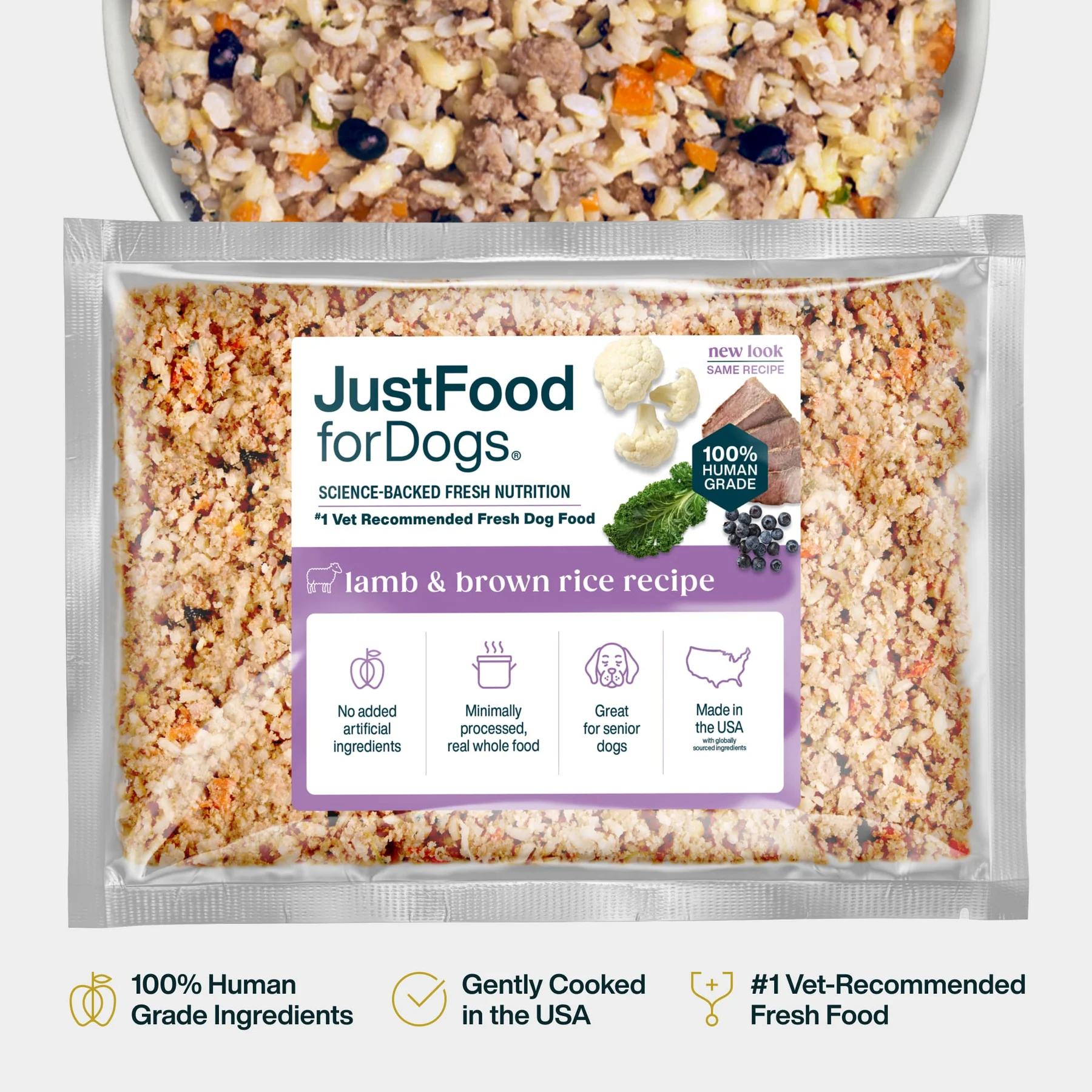
A senior dog diet is not defined by a regulation, so each company decides what "senior" means for its own recipe. In practice, most senior formulas adjust a few levers: fewer calories for dogs that move less, more fiber to help with fullness, added omega-3 fatty acids or glucosamine aimed at joints, and sometimes a softer texture. Some lower protein, which is not what most healthy older dogs need. A well-made adult recipe can do the same job: JustFoodForDogs Lamb & Brown Rice, for example, is an adult maintenance recipe that its maker lists for senior dogs.
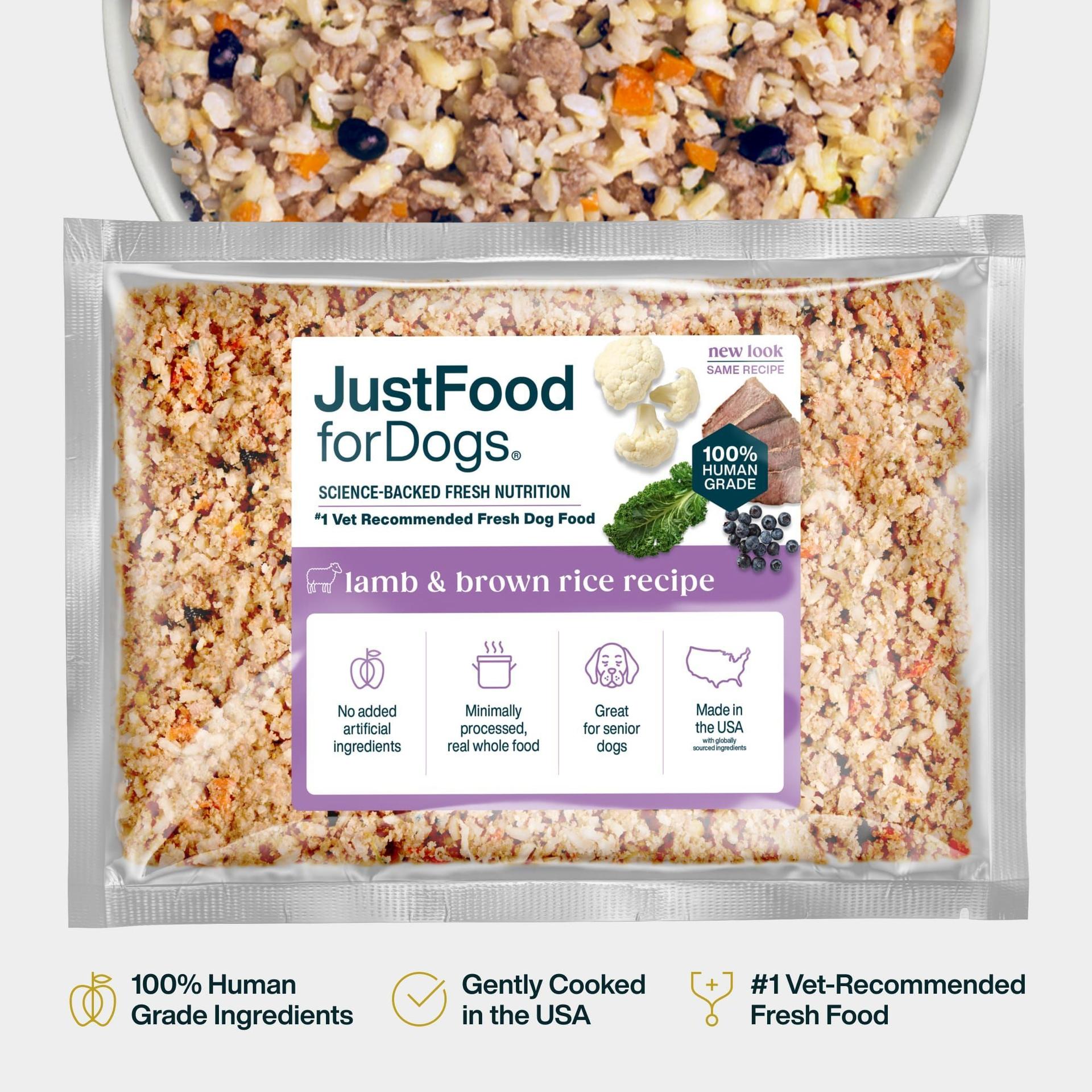
Lamb & Brown Rice is an adult maintenance recipe that JustFoodForDogs lists for senior dogs, picky eaters and adult dogs with smaller appetites. Its label shows 42 kcal ME per ounce, a useful reference point when you compare calorie density.
Petful may earn a commission when you click through to JustFoodForDogs, at no extra cost to you.
The benefits of senior dog food, when they are real, come from those specific choices, not the label. A lower-calorie formula helps a dog that is gaining weight. A softer or moist food helps a dog with dental wear. Joint-focused ingredients can help support an older dog's mobility alongside the plan your veterinarian sets.
Feeding senior dogs well therefore starts with the dog. Weight trend, body condition score, muscle condition, appetite, stool quality, thirst and dental health tell you which levers matter.
Senior vs. Adult Dog Food: What Actually Changes
What is the difference between senior and regular dog food? Legally, very little: there is no senior life stage, so a senior formula is an adult maintenance formula with a different recipe. Senior formulas usually differ in calories, protein, fat and fiber, and some are softer, but you have to read each label to know which changes a given food made.
The comparison below shows the levers that typically move and what to look for on a label.
| Factor | Typical adult maintenance formula | Typical senior formula | What to check on the label |
|---|---|---|---|
| AAFCO statement | Adult maintenance | Adult maintenance (there is no senior profile) | The adult maintenance statement |
| Calories | Set for an average active adult | Often lower for less active dogs | Calories per ounce or per cup |
| Protein | Meets the adult minimum, often well above it | Varies; some lower it, which healthy seniors rarely need | Crude protein minimum |
| Fat | Moderate | Often lower to trim calories | Crude fat minimum and any maximum |
| Moisture | About 10 percent in dry food, much higher in fresh or canned | Same range; softer textures are common | Moisture maximum |
| Joint support | Not usually a focus | Often adds omega-3s or glucosamine | EPA and DHA, glucosamine on the guaranteed analysis |
Joint support is the change most owners notice. Some adult recipes now carry it too: JustFoodForDogs Joint & Skin Support lists glucosamine and EPA and DHA on its label while keeping fat and calories moderate.
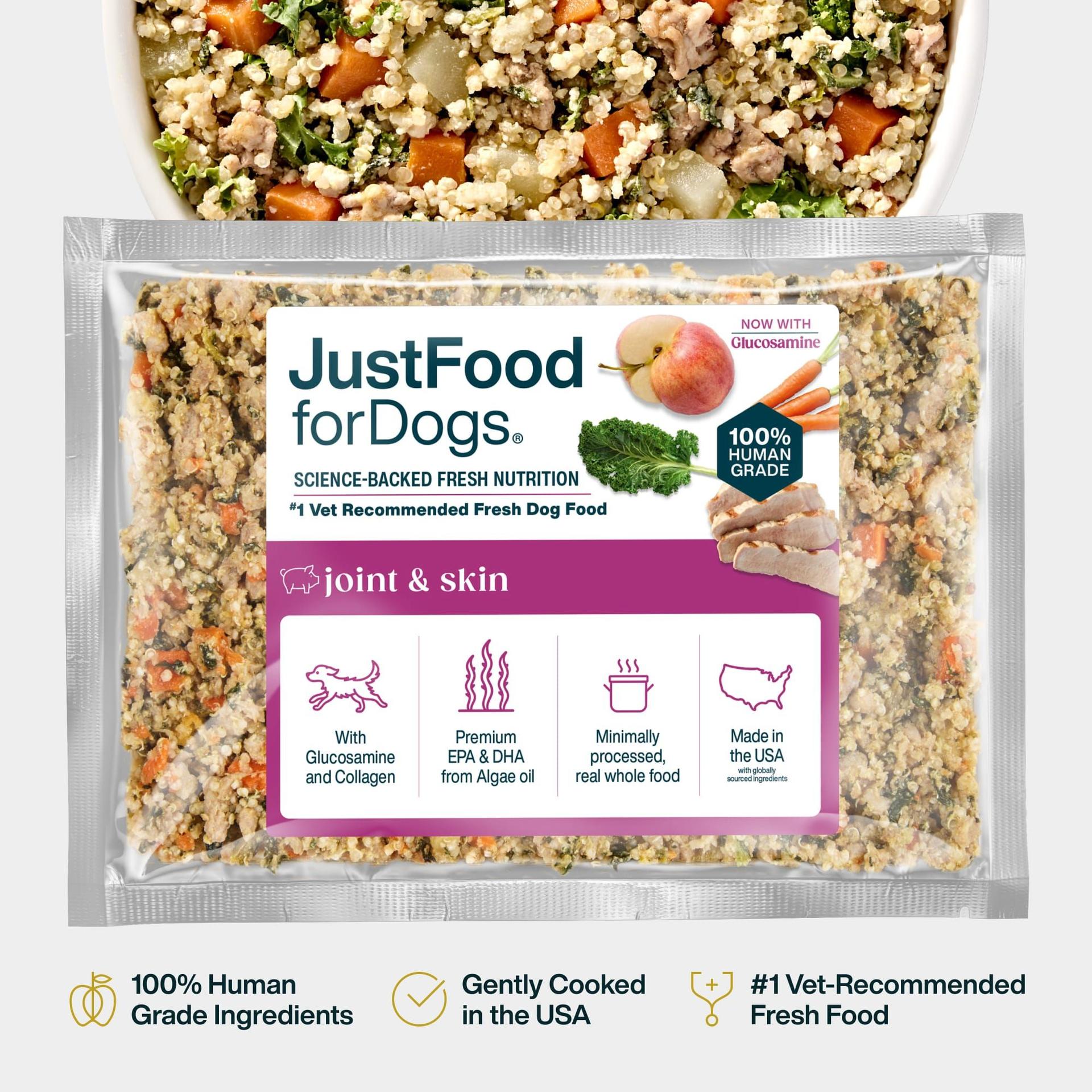
Joint & Skin Support is a lower-fat adult maintenance recipe that JustFoodForDogs formulated to help support joint health and skin. Its label lists glucosamine and EPA and DHA, and it runs 32 kcal ME per ounce for dogs that need fewer calories.
Petful may earn a commission when you click through to JustFoodForDogs, at no extra cost to you.
Is senior dog food necessary? Not always. A healthy older dog at a good weight on a complete adult maintenance formula may not need any change. Is senior dog food softer? Some is, but softness is a texture choice, not a senior requirement; a softened kibble or a moist fresh food helps most when teeth are the problem. Can a senior dog eat puppy food? Puppy foods meet the growth profile and carry more protein, fat, calcium and phosphorus than a healthy older dog needs, so they are not a good everyday choice unless a veterinarian advises extra calories for a dog that is losing weight.
Calories, Protein, and Weight Changes in Older Dogs
Should a senior dog eat less? Many do, because activity drops and muscle mass shrinks with age, so the same portion that kept a five-year-old lean can add pounds at nine. Other older dogs, especially very old ones, start losing weight and need more calories, not fewer. That is why weight and body condition, not age, decide the portion.
For a senior dog that is gaining weight, a lower-calorie diet with moderate fat supports gradual weight loss, but cut calories gradually and keep protein steady. For an older dog that is losing weight, a higher-calorie, highly digestible food helps with weight gain, ideally after a veterinarian rules out a medical cause. What to feed an old dog that is losing weight depends on why: dental pain, nausea, kidney disease, diabetes or cancer can all show up first as weight loss.
- Overweight senior: lower calories per ounce, moderate fat, more fiber for fullness, and smaller measured portions.
- Senior losing weight: a calorie-dense, palatable food, warmed or softened if chewing hurts, plus a veterinary visit.
- Stable, healthy senior: keep a complete adult maintenance diet and recheck weight every month or two.
How much protein for senior dogs is enough? Healthy older dogs generally need at least as much high-quality protein as younger adults to maintain muscle, and restricting protein without a medical reason can speed muscle loss. The best protein for senior dogs is a highly digestible animal source such as chicken, turkey, lamb or fish. The exception is kidney disease, where a veterinarian may prescribe controlled protein and phosphorus; see our guide to low protein diets for dogs with kidney disease for that situation.
The WSAVA Global Nutrition Committee publishes the body condition and muscle condition scoring charts many clinics use, and they are worth learning. For portion help, our guide on how much to feed your dog explains calorie targets, and the JustFoodForDogs feeding calculator suggests a daily amount from your dog's weight and activity so you can adjust portions for lower energy needs. JustFoodForDogs Lamb & Brown Rice is one of the brand's higher-calorie recipes for seniors with small appetites.
When to Switch to Senior Dog Food
There is no single senior age. AAHA's guidelines place a dog's senior years in the last quarter of expected lifespan, so large and giant breeds get there years before small dogs: VCA Animal Hospitals puts giant breeds such as Great Danes at about five or six years and small breeds at 10 to 12. Use the table as a starting point, then let body condition and appetite decide.
| Adult size | Typical adult weight | Approximate senior age |
|---|---|---|
| Small breed dogs | Up to 20 lb | About 10 to 12 years |
| Medium breed dogs | 21 to 50 lb | Estimate: about three quarters of the breed's expected lifespan, between the small and giant ranges |
| Large breed dogs | 51 to 90 lb | Estimate: about three quarters of the breed's expected lifespan, earlier than medium dogs |
| Giant breed dogs | Over 90 lb | About 5 to 6 years |
Should I switch my 8 year old dog to senior food? Only if the dog needs something the current food does not provide. An 8-year-old Labrador that is gaining weight may benefit from fewer calories; an 8-year-old Chihuahua at an ideal weight probably needs no change yet. When should my dog eat senior food? When the signs say so: steady weight gain or loss, a drop in muscle over the spine and hips, dental wear that makes kibble hard to chew, stiffness, or a more sensitive stomach. In short, set switch ages by adult size plus body condition signs, instead of one generic birthday.
Before you change food, book a senior wellness exam. Your veterinarian can check weight, body condition, teeth and joints, and run bloodwork and urine tests that catch kidney or thyroid changes that would change the diet. Our guide to senior dog health checkups explains what that visit covers. If you are still working out the earlier move, see when to switch from puppy food to adult food.
If the change you notice is a touchier stomach, the recipe matters more than any senior label. A low-fat, highly digestible adult food with a short ingredient list is often easier on an older gut, and JustFoodForDogs Sensitive Stomach is a low-fat, limited-ingredient recipe the brand designed for sensitive tummies.
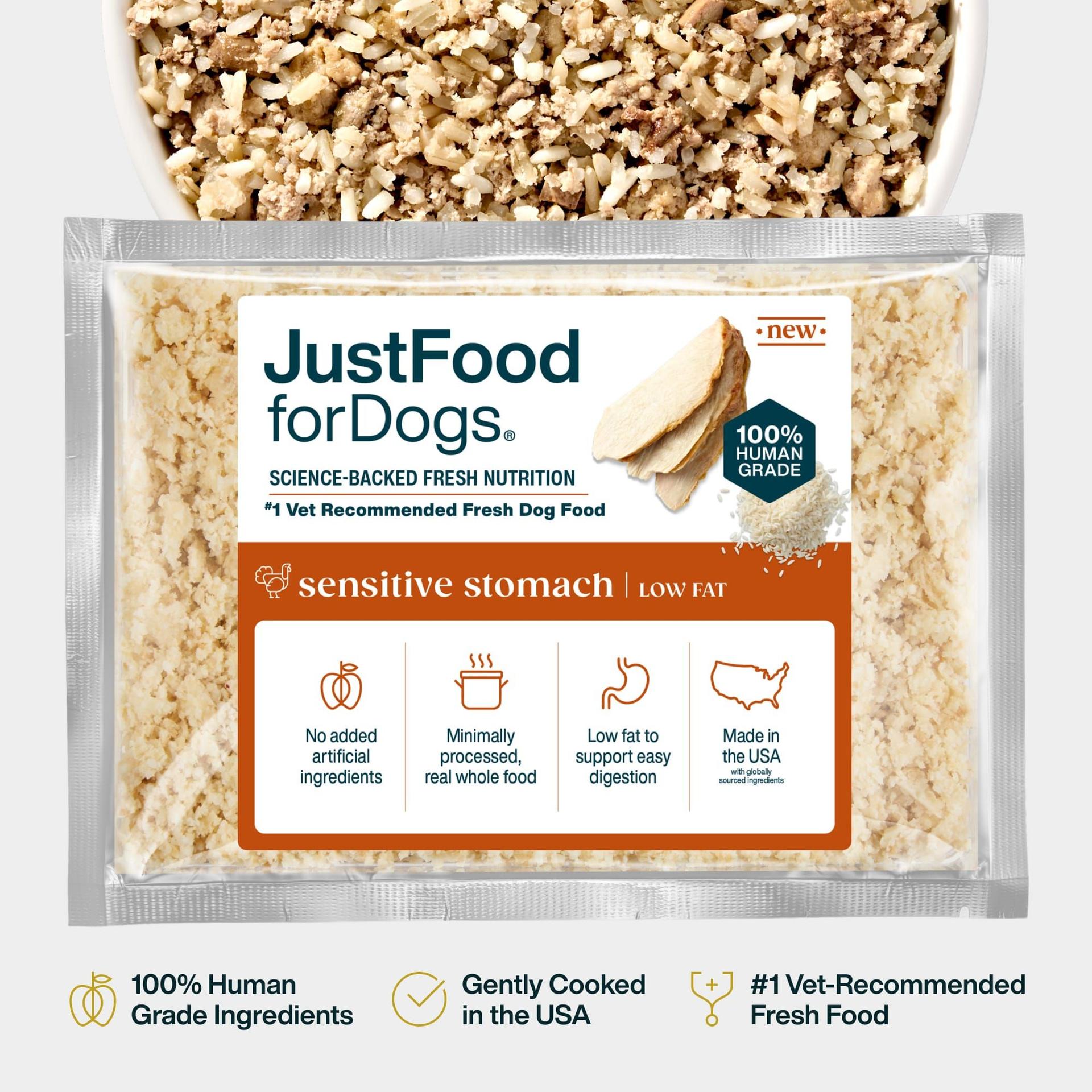
Sensitive Stomach is a low-fat, grain-inclusive turkey and rice recipe that JustFoodForDogs made for dogs with delicate digestion, with natural prebiotics to support a healthy gut. It is formulated to meet AAFCO profiles for adult maintenance.
Petful may earn a commission when you click through to JustFoodForDogs, at no extra cost to you.
How to Switch an Older Dog to a New Food
Older dogs often handle sudden diet changes less well than younger ones, so slow down. JustFoodForDogs publishes a 10-day schedule that moves from 25 percent new food to 100 percent, and it notes that senior dogs and dogs with sensitive stomachs may need closer to 10 to 14 days.
- Days 1 to 3: about 25 percent new food, 75 percent current food.
- Days 4 to 7: half and half.
- Days 8 to 10: about 75 percent new food.
- Day 11 onward: all new food, stretching each step a few days for a senior.
- Plan to transition over 10 to 14 days for an older dog. If stools soften, go back to the last ratio that worked and hold there for a few extra days before moving forward.
Watch stool, appetite and energy through the switch. Soft stool that settles within a day or two is common; diarrhea, vomiting or a dog that refuses food for more than a day needs a call to your veterinarian.
How to Choose the Healthiest Senior Dog Food
What is the healthiest dog food for senior dogs? The one that is complete and balanced for adult maintenance, fits your dog's calorie needs and body condition, and comes in a texture your dog can eat comfortably. Brand rankings cannot judge your dog; three label checks can.
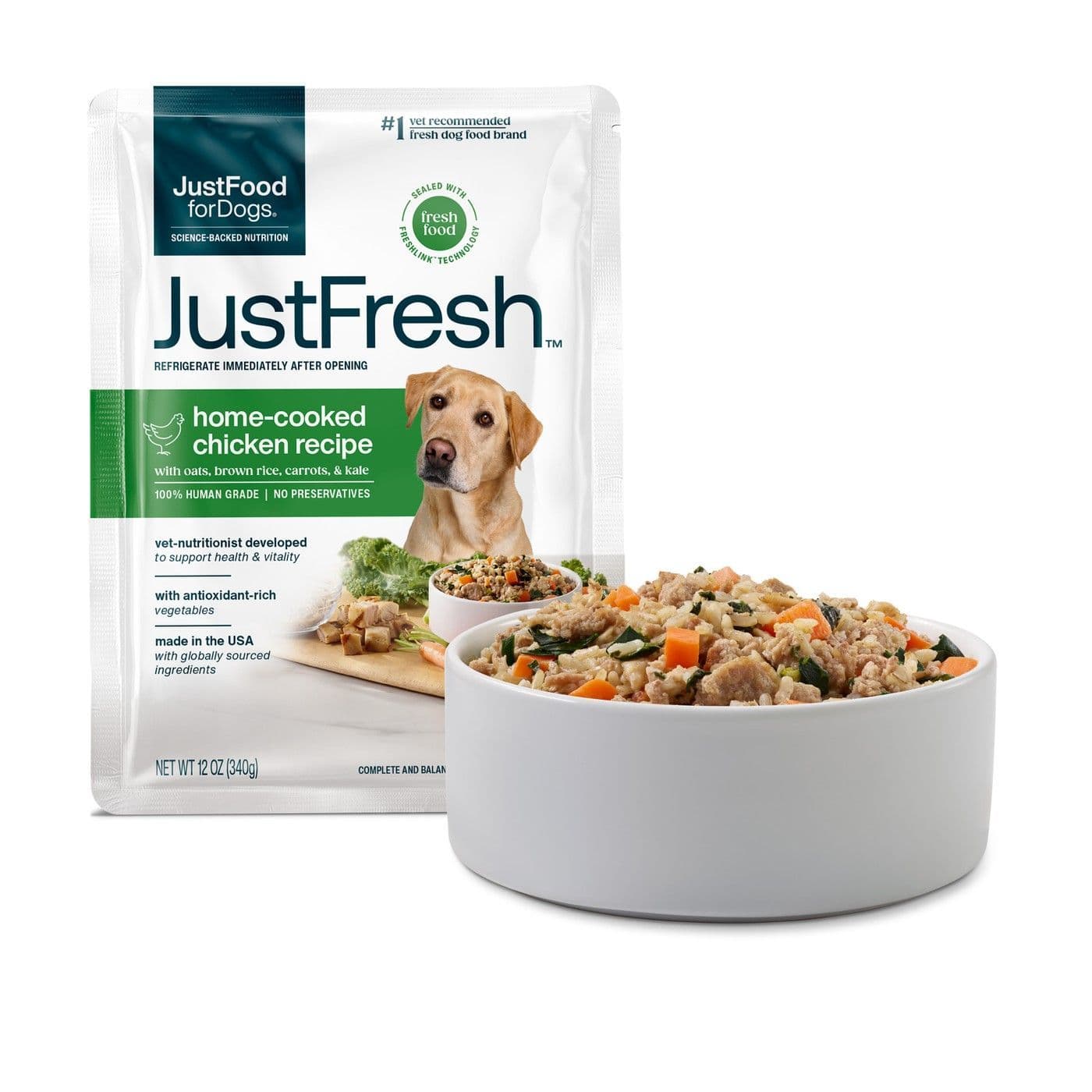
JustFresh Home-Cooked Chicken is a shelf-stable, soft fresh recipe in resealable pouches, formulated to meet AAFCO profiles for adult maintenance. It works as a full meal or a topper for an older dog that has become a fussy eater.
Petful may earn a commission when you click through to JustFoodForDogs, at no extra cost to you.
- Read the adult maintenance statement. Look for "complete and balanced" nutrition for adult maintenance, met either by formulation to AAFCO Dog Food Nutrient Profiles or by AAFCO feeding trials. You can read more about how statements work at AAFCO.
- Compare calories per ounce or per cup. A recommendation means little until you know how many calories a portion delivers.
- Match moisture and texture to teeth and thirst. Fresh, canned and softened foods carry far more water than kibble, which helps dogs with dental wear and dogs that drink little.
Here is that method on a real label. JustFoodForDogs Lamb & Brown Rice states that AAFCO feeding trials substantiate complete and balanced nutrition for maintenance, and its label shows 42 kcal ME per ounce with a 72 percent moisture maximum. JustFoodForDogs Joint & Skin Support is formulated to meet AAFCO Dog Food Nutrient Profiles for maintenance and shows 32 kcal ME per ounce. Same adult standard, very different calorie density: the second suits a senior that needs to trim down, the first a senior that needs to hold weight.
What about all life stages formulas for older dogs? They meet the growth profile as well as adult maintenance, so they must carry the higher minimums for nutrients such as calcium and phosphorus that growing puppies need; for a healthy older dog, an adult maintenance formula is usually the closer fit. A grain-free food is not needed unless a veterinarian identifies a grain allergy, and the FDA has investigated a possible link between some grain-free, legume-heavy diets and heart disease in dogs. A salmon or other fish recipe is a reasonable premium choice if your dog does well on fish. The best choice for your own dog is usually the food your vet has recommended after an exam, not a brand ranking.
Wet, Soft, Dry, or Fresh Food for Older Dogs
Should senior dogs eat wet or dry food? Either can work when the food is complete and balanced and the dog eats it comfortably. Dry food is convenient and easy to measure, and many come in small kibble sizes for small mouths. Wet, canned or fresh food helps when teeth are worn or missing, when appetite is fading, or when a dog drinks too little, because the food itself carries water.
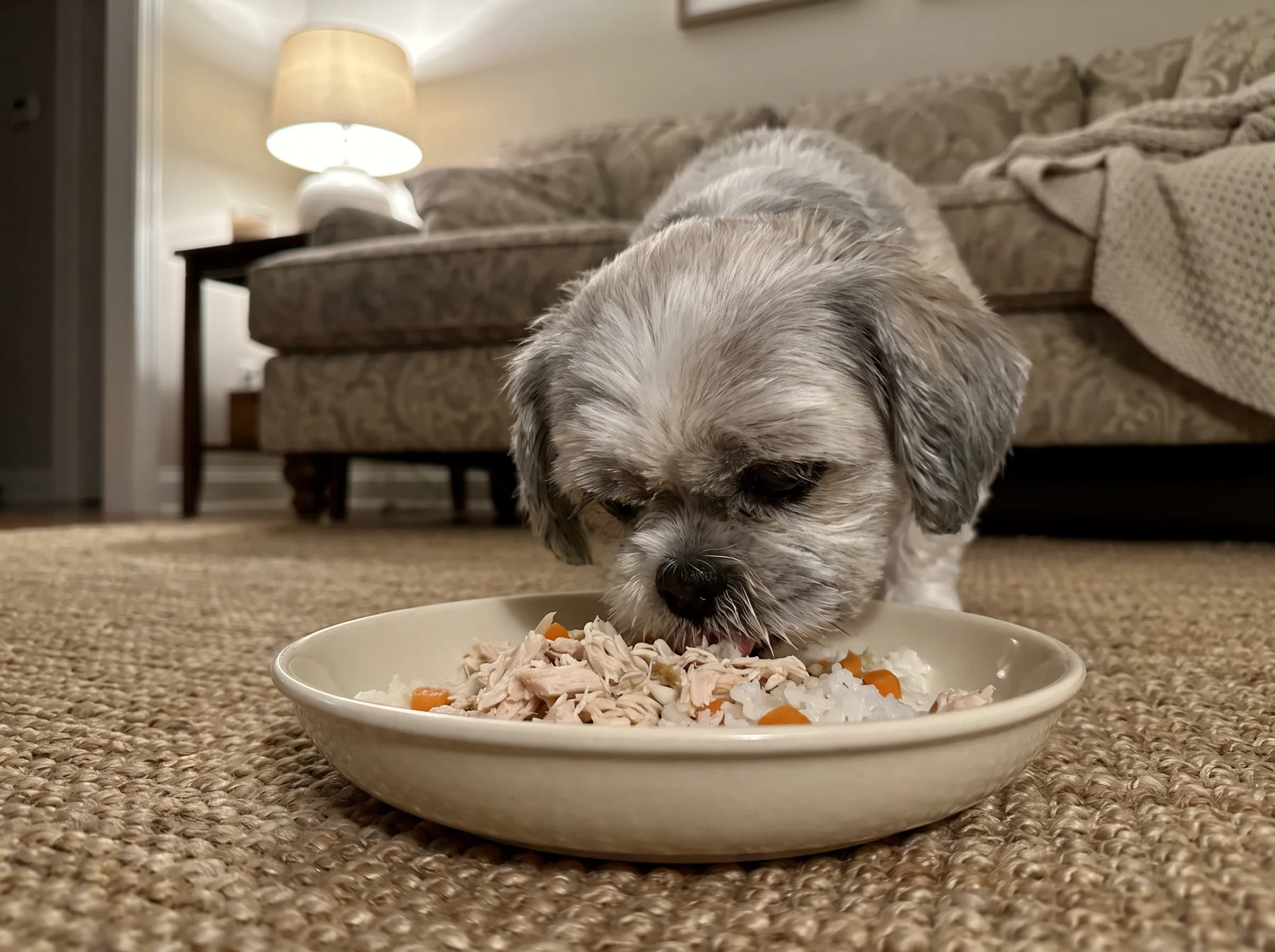
For a dog with bad teeth or no teeth, choose soft or moist food, or soften kibble with warm water for 10 to 15 minutes. For an older dog with a sensitive stomach, choose a low-fat wet food and introduce it slowly. Small breed seniors with bad teeth often do best on soft, small pieces. Dental disease is common in older dogs, so ask your veterinarian about teeth before you blame the food; our guide to dog dental care covers what to watch for.
- Dry kibble: easy to store and measure; choose a small kibble for small dogs and soak it if chewing is hard.
- Canned or wet food: soft, high moisture and often more appealing to fussy seniors.
- Fresh-cooked food: soft, high moisture, made from recognizable whole foods; it needs freezer or fridge space, or a shelf-stable format.
Wet and fresh foods are still judged by the same three checks. A shelf-stable pouch such as JustFoodForDogs JustFresh Home-Cooked Chicken offers a soft, moist option that can be a standalone meal or a topper for a picky senior.
Matching Senior Food to Size, Joints, and Digestion
Size changes the plan. Small breed seniors, such as a senior Shih Tzu, often stay active longer, need more calories per pound and do best with small pieces or soft food. Large senior dogs, such as an aging Labrador Retriever or Golden Retriever, are more prone to weight gain and arthritis, so calorie control matters more for large breeds.
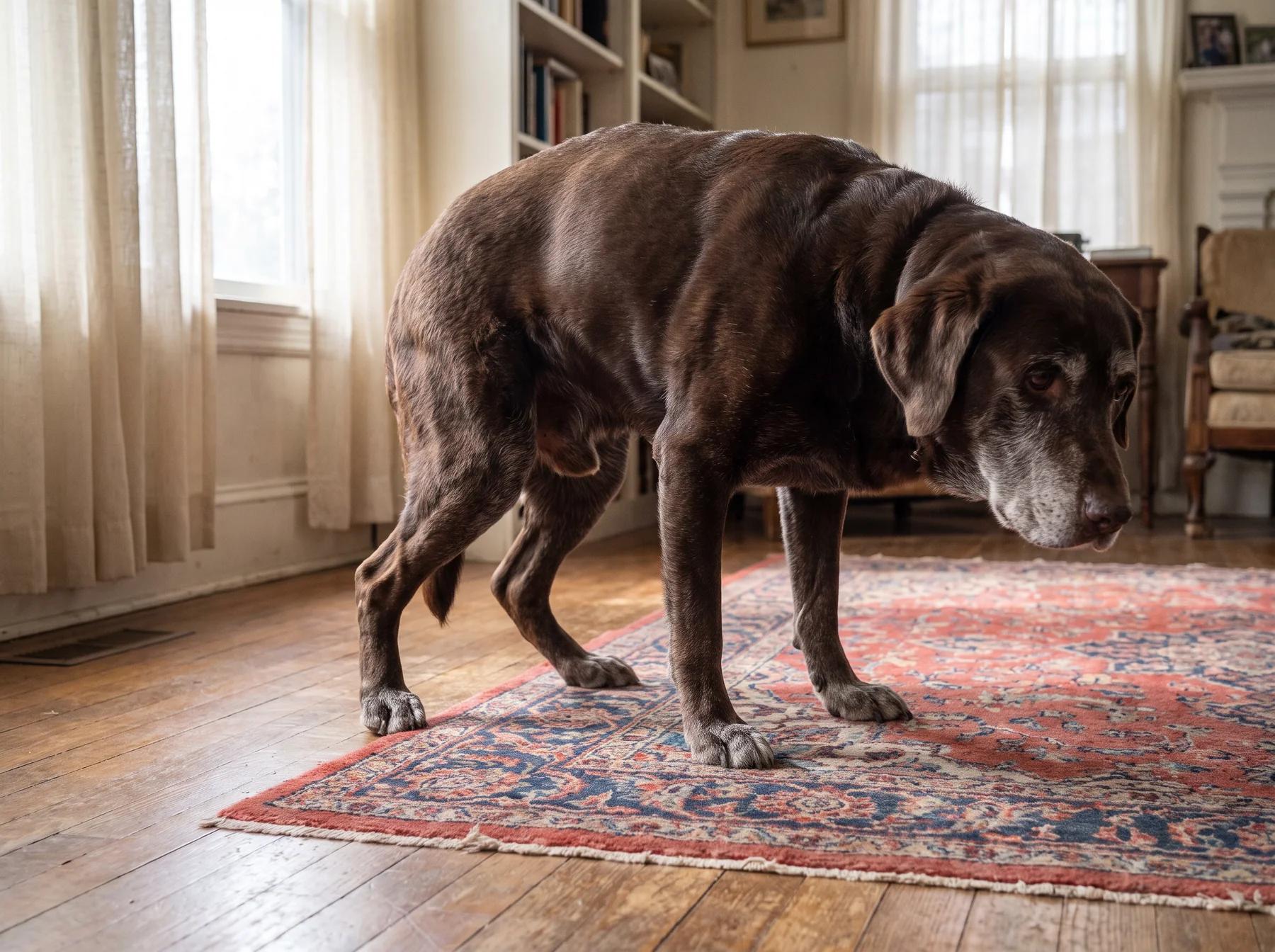
For senior dogs with arthritis, the strongest nutrition lever is keeping them lean, because extra weight loads sore joints. Omega-3 fatty acids EPA and DHA from marine sources can help support joint comfort, and some senior foods add glucosamine, though label amounts are not a treatment dose. JustFoodForDogs Joint & Skin Support combines both on its label in a lower-fat adult recipe.
For a senior dog with a sensitive stomach, look for a low-fat, highly digestible recipe and avoid frequent switching; JustFoodForDogs Sensitive Stomach is one example. Senior dogs with allergies or sensitive skin may need a different protein; choosing a different protein, such as a recipe without chicken, is a decision to make with your veterinarian. Extra fiber can help with fullness and stool quality, but add it gradually.
Fresh-Cooked Food for Senior Dogs: Where JustFoodForDogs Fits
Fresh food appeals to many owners of older dogs because it is soft, moist and made from natural, whole-food ingredients, which can tempt a fading appetite. A fresh recipe still has to pass the same checks: an adult maintenance statement, the right calories per ounce and a texture your dog can manage.
JustFoodForDogs makes its Fresh Frozen recipes with human-grade ingredients in open kitchens, and every recipe in this article is an adult maintenance formula; none carries a senior statement, because no such AAFCO profile exists. JustFoodForDogs Lamb & Brown Rice suits a senior that needs to hold weight, Joint & Skin Support is a lower-calorie recipe with joint-focused ingredients, and Sensitive Stomach is the brand's recipe for delicate digestion. The JustFoodForDogs feeding calculator turns your dog's weight and activity into a daily amount, and the brand's nutrition team includes veterinarians and board-certified specialists. Our sister site WebVet covers JustFoodForDogs for senior dogs in more depth, and Vetstreet has a full guide on how to switch dog food safely.
Senior Dog Food FAQ
Usually not. Because there is no senior life stage, a senior formula still carries an adult maintenance statement, so a healthy younger adult dog can eat it. The catch is calories: a lower-calorie senior recipe can leave an active young dog underfed, so check body condition and adjust portions.
Healthy seniors need at least as much digestible protein as younger adults to maintain muscle mass, so there is no reason to cut protein for age alone. The kidney disease exception is real: if bloodwork shows kidney changes, your veterinarian may recommend controlled protein and phosphorus.
Plain cooked vegetables such as green beans, carrots, pumpkin, zucchini and broccoli are safe in small amounts and add fiber with few calories. Never feed onions and garlic, which damage red blood cells, and check the ASPCA Animal Poison Control list before sharing anything new.
A plain cooked egg, scrambled without butter, oil, salt or seasoning, is a good protein topper for most older dogs. Count it within the treat allowance of about 10 percent of daily calories, and skip it if your veterinarian has your dog on a fat-restricted or protein-controlled diet.
A sudden appetite change in an older dog deserves a veterinary check, since dental pain or nausea often makes dogs picky. If your dog is healthy, a complete and balanced chicken recipe can be the whole meal, which avoids the gaps that come from feeding plain chicken alone.
Unexplained weight loss in an older dog is a reason for a veterinary exam, not just a food change. Muscle loss with age, dental disease, kidney or liver disease, diabetes and cancer can all cause it; once the cause is known, a calorie-dense, easy-to-eat diet can help support weight gain.
Dogs that have reached or passed their breed's expected lifespan are often called geriatric dogs. Small dogs tend to live longer than giant breeds, so very old comes years later for a Chihuahua than for a Great Dane. At that stage, older dog feeding calls for the closest watch on weight, appetite and comfort.

Coreen Saito is a pet writer and longtime shelter volunteer with more than a decade in animal rescue. She covers cat behavior, breed care, and the small, ordinary science of sharing a life with companion animals, with a particular focus on honest takes about the products and decisions that actually matter. At home in Arizona, she's outranked by Mac (a dog with the loudest opinion in the house), Rebel (a cat who governs by quiet authority), and Meri (an orange tabby who runs the late shift and the laundry basket). She writes about all three, plus the rescues that keep coming through her life, at LifeWithMinty.com.
Sign up for expert-backed reviews and safety alerts all in one place.
A Final Word (Disclaimer)
At Petful, our review integrity is paramount; we never exchange special treatment in our reviews for monetary or material rewards.
Nonetheless, when our readers click through to online merchants (including Chewy or Amazon), we receive a referral commission. This supports the running of our free blog, and we appreciate your backing.