Low Protein Dog Food: Which Dogs Need It and Why Protein Quality Matters
Low protein dog food is a medical diet, not a default. See which dogs need it, which should not eat it, how protein sources compare on phosphorus, and the vet step.

BVMS, MRCVS

Low protein diets are usually for dogs with diagnosed kidney or liver disease, not for healthy adults.
Petful is reader supported. As an affiliate of platforms like Amazon and Chewy, we may earn a commission when you buy through links on this page. There is no extra cost to you.
Sponsored by JustFoodForDogs. This article draws on published veterinary and nutrition sources. Petful may earn a commission through links in this article.
Low protein dog food is a medical tool, not a lifestyle upgrade. A veterinarian may recommend it for a dog with chronic kidney disease, certain liver conditions or urate bladder stones. Healthy dogs, puppies and pregnant or nursing dogs should not be on a low protein diet: they need the full amount of protein that a standard complete diet supplies.
When protein is lowered, what is left has to work harder. That is why veterinary nutritionists talk about "less but higher-quality protein": a smaller amount of highly digestible protein, paired with restricted phosphorus, rather than simply the lowest number on a label. One fresh example a veterinarian may suggest is JustFoodForDogs Renal Support Low Protein, a vet support diet formulated to support kidney health and intended for intermittent or supplemental feeding under vet supervision. This guide explains how low protein is measured, which dogs need it, how protein sources compare, and what to ask your vet first.

Sign up for expert-backed reviews and safety alerts all in one place.
What counts as low protein dog food?
Low protein dog food is a diet that supplies noticeably less protein than a standard adult maintenance food, often near or below the AAFCO adult minimum of 18 percent on a dry matter basis. Because fresh, canned and dry foods hold very different amounts of water, the crude protein figure printed on the label only becomes comparable after it is converted to a dry matter basis.
- 1Low protein dog food is for a specific medical need, such as kidney disease, some liver disease or urate stones, and the decision belongs to a veterinarian.
- 2Protein quality matters as much as protein quantity: a restricted diet should use highly digestible protein that supplies essential amino acids with less waste.
- 3Phosphorus restriction is often the more important change for kidney dogs, so read phosphorus alongside protein.
- 4Growing puppies, pregnant or nursing dogs and healthy seniors should not be switched to a low protein diet without a veterinary reason.
The guaranteed analysis on a bag or pack lists crude protein "as fed", meaning in the food with its water still in it. Crude protein is a laboratory estimate based on nitrogen content, so it tells you how much protein is present, not how digestible it is. A kibble listing 18 percent crude protein and a fresh food listing 6 percent can hold a similar share of protein once the water is taken out of the comparison.
For reference, the AAFCO Dog Food Nutrient Profiles set a minimum of 18 percent protein on a dry matter basis for adult maintenance and 22.5 percent for growth and reproduction. Therapeutic low protein diets often sit below the adult figure on purpose, which is one reason they are fed under veterinary direction rather than chosen off a shelf.
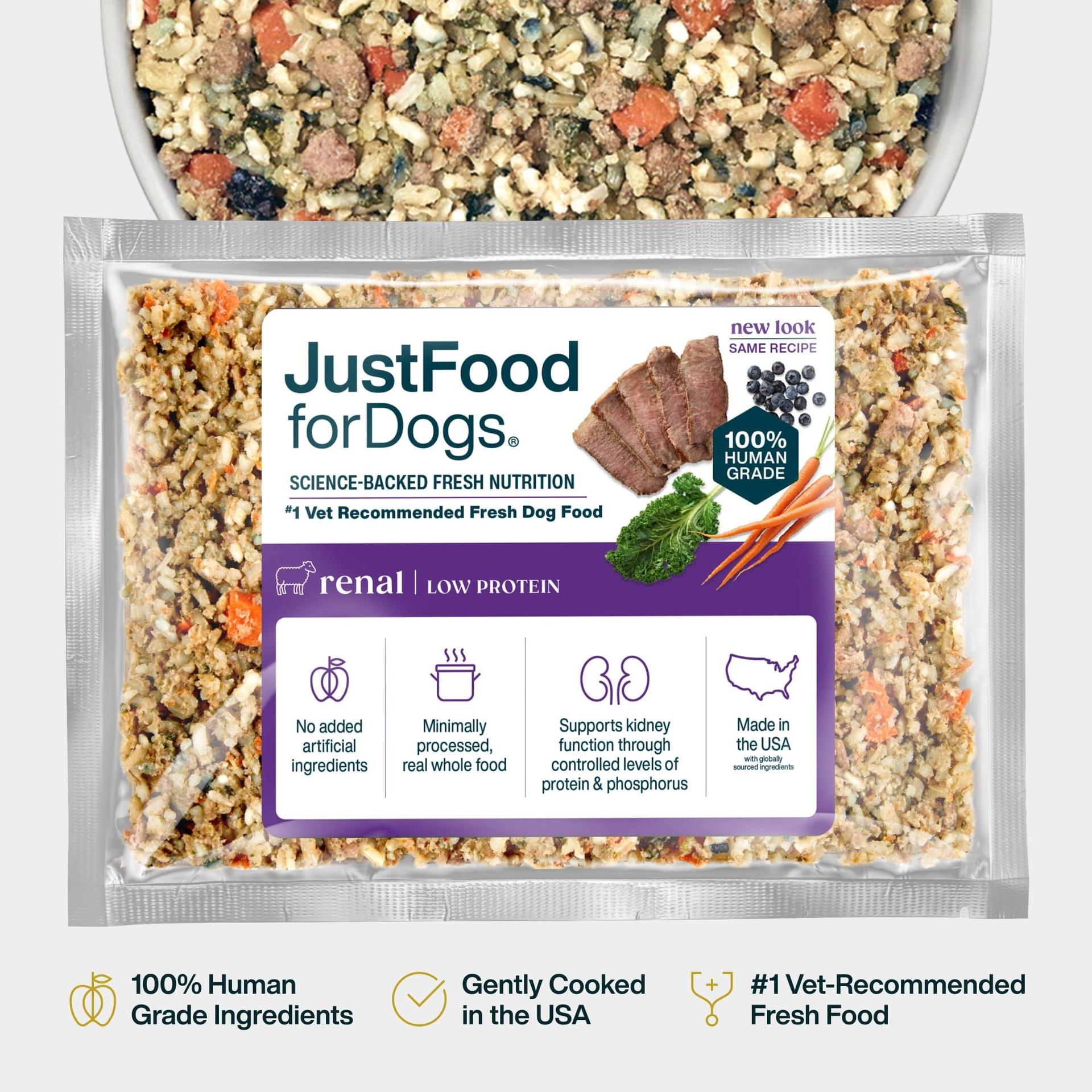
A fresh vet support diet with 4.0 to 6.0 percent crude protein and 0.06 to 0.09 percent phosphorus on the label, intended for intermittent or supplemental feeding under vet supervision. Ask your veterinarian whether it fits your dog's kidney plan.
Petful may earn a commission when you click through to JustFoodForDogs, at no extra cost to you.
A worked dry matter example
Here is a label-range calculation using the JustFoodForDogs Renal Support Low Protein label, which lists crude protein of 4.0 percent minimum and 6.0 percent maximum and moisture of 70 percent maximum.
- Subtract the moisture from 100 to find the dry matter: using the 70 percent moisture maximum, 100 minus 70 leaves at least 30 percent dry matter.
- Divide the as-fed protein by the dry matter: 4.0 divided by 30 is about 13 percent, and 6.0 divided by 30 is 20 percent.
- Compare the result with a dry food's dry matter figure, not its as-fed figure.
So the as-fed protein of 4 to 6 percent works out to roughly 13 to 20 percent on a dry matter basis. These are label minimums and maximums rather than typical values, so treat the result as a range, not an exact measurement. The same method answers the common question of what percentage counts as low protein: compare dry matter figures, or ask your veterinarian for grams of protein per 1,000 calories, a calorie-based measure many veterinary nutritionists prefer.
As an example of a low-protein diet, a kidney diet typically pairs a modest amount of lean meat or egg with a digestible carbohydrate such as rice, plus added fat for calories and a vitamin and mineral blend. It is not simply a grain-free or high-carbohydrate food with less meat. Words such as natural or organic on a label say nothing about whether protein and phosphorus are restricted to a therapeutic level, and treats count too: a low protein treat only fits when the whole day's intake is counted.
Which dogs need low protein dog food?
A veterinarian may recommend a protein-restricted diet when the body struggles to clear the waste products of protein breakdown. The main groups are:
- Dogs with chronic kidney disease. Damaged kidneys clear urea and other nitrogen wastes less efficiently, and the buildup contributes to nausea and poor appetite. Restricting phosphorus and moderating protein are core parts of the diet plan.
- Some dogs with liver disease and portosystemic shunts. When blood bypasses the liver, ammonia from protein digestion can reach the brain and cause hepatic encephalopathy. These dogs may need moderate amounts of highly digestible protein.
- Dogs with urate stones. Dalmatians and dogs with liver shunts can form urate stones, and a veterinarian may recommend a low purine diet with moderately reduced protein.
A common question is whether bladder stones in general call for low protein dog food. Only urate stones are usually linked to protein restriction, because purines come mostly from protein foods such as organ meats. Struvite and calcium oxalate stones are handled with different diet strategies, so the stone type, confirmed by analysis, decides the plan.
Can too much protein cause kidney disease in dogs? The evidence says no for healthy dogs. A review of dietary protein safety in Topics in Companion Animal Medicine concluded that studies have not shown protein to harm healthy kidneys, and that restricting protein in healthy older dogs is unnecessary and can be detrimental. Protein restriction helps a dog whose kidneys are already failing; it does not protect healthy ones.
Not every dog flagged on bloodwork needs a therapeutic diet. A senior dog with normal kidney values, or a dog whose veterinarian is watching a borderline result, may simply stay on a complete adult maintenance food with moderate protein. JustFoodForDogs lists its Lamb & Brown Rice recipe as suited to "Dogs That Need Moderate Protein Levels" and "Senior Dogs", which is a different decision from a kidney diet.
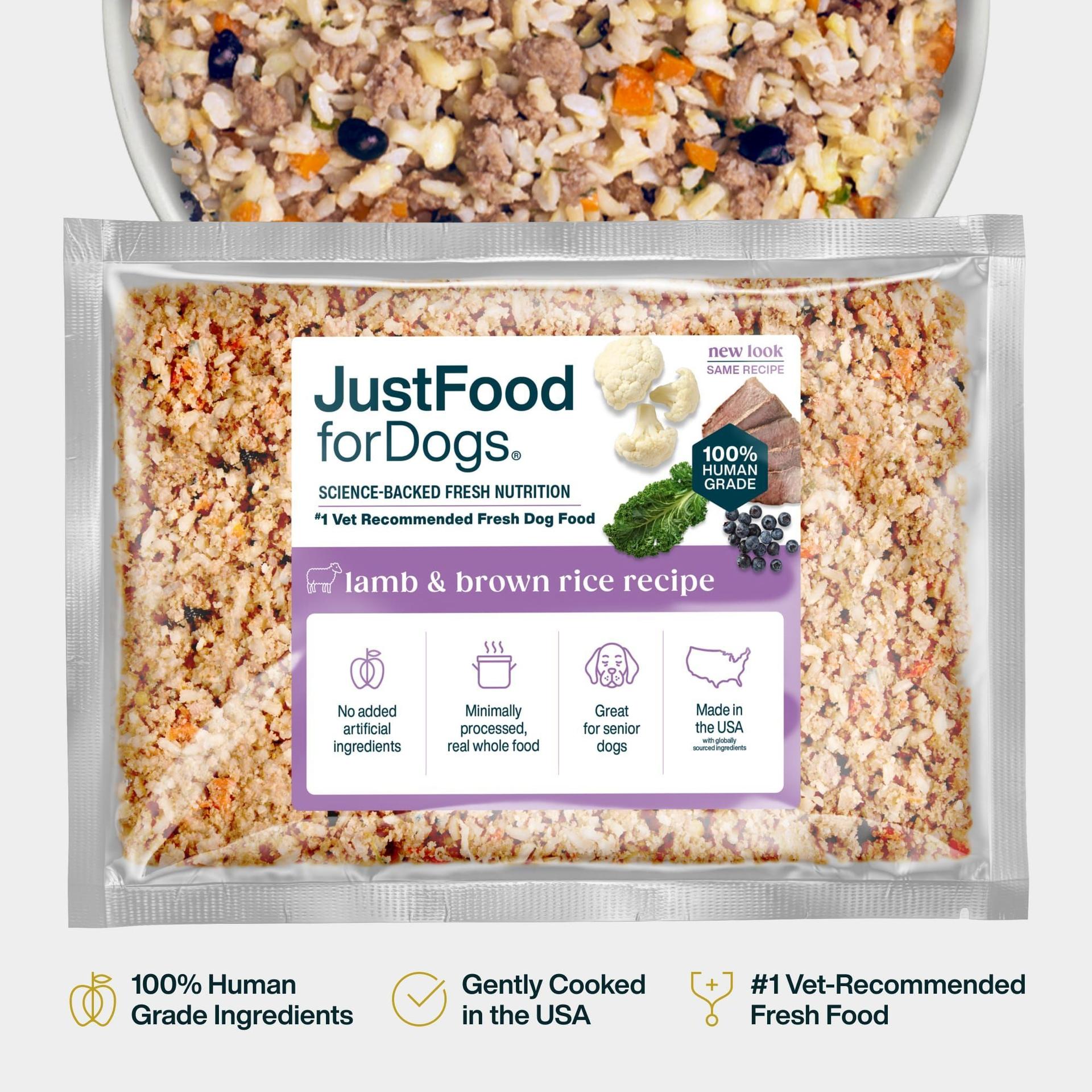
An everyday adult maintenance recipe made with ground lamb and brown rice, listed by JustFoodForDogs for senior dogs and dogs that need moderate protein levels. It is not a kidney diet, so confirm the fit with your veterinarian.
Petful may earn a commission when you click through to JustFoodForDogs, at no extra cost to you.
Vet-recommended low protein diets for dogs with kidney disease
What dog food do vets recommend for kidney disease? In most cases, a therapeutic renal diet: a food built around phosphorus restriction, moderated high-quality protein, added omega-3 fatty acids and extra B vitamins, rather than a store-bought food that is merely low in protein. The International Renal Interest Society (IRIS) treatment guidance advises considering a renal diet in IRIS stage 2 and feeding one in stages 3 and 4, and a stage 1 dog that loses protein in its urine may start one earlier.
Research on dogs with chronic kidney disease supports these renal diets as part of care: in a randomized trial in dogs with chronic kidney failure, dogs with mild to moderate disease fed a renal diet had fewer uremic crises and kidney-related deaths than dogs fed an adult maintenance food. These diets are formulated as a whole rather than by lowering one nutrient. A kidney friendly diet for dogs typically has:
- Restricted phosphorus, the change most closely linked to slower progression.
- Moderate amounts of high-quality protein to limit nitrogen waste without causing muscle loss.
- Added omega-3 fatty acids from fish or algae oils.
- Adjusted sodium and potassium, plus extra B vitamins lost through increased urination.
- Enough calories from fat and carbohydrates so the body does not break down muscle for energy.
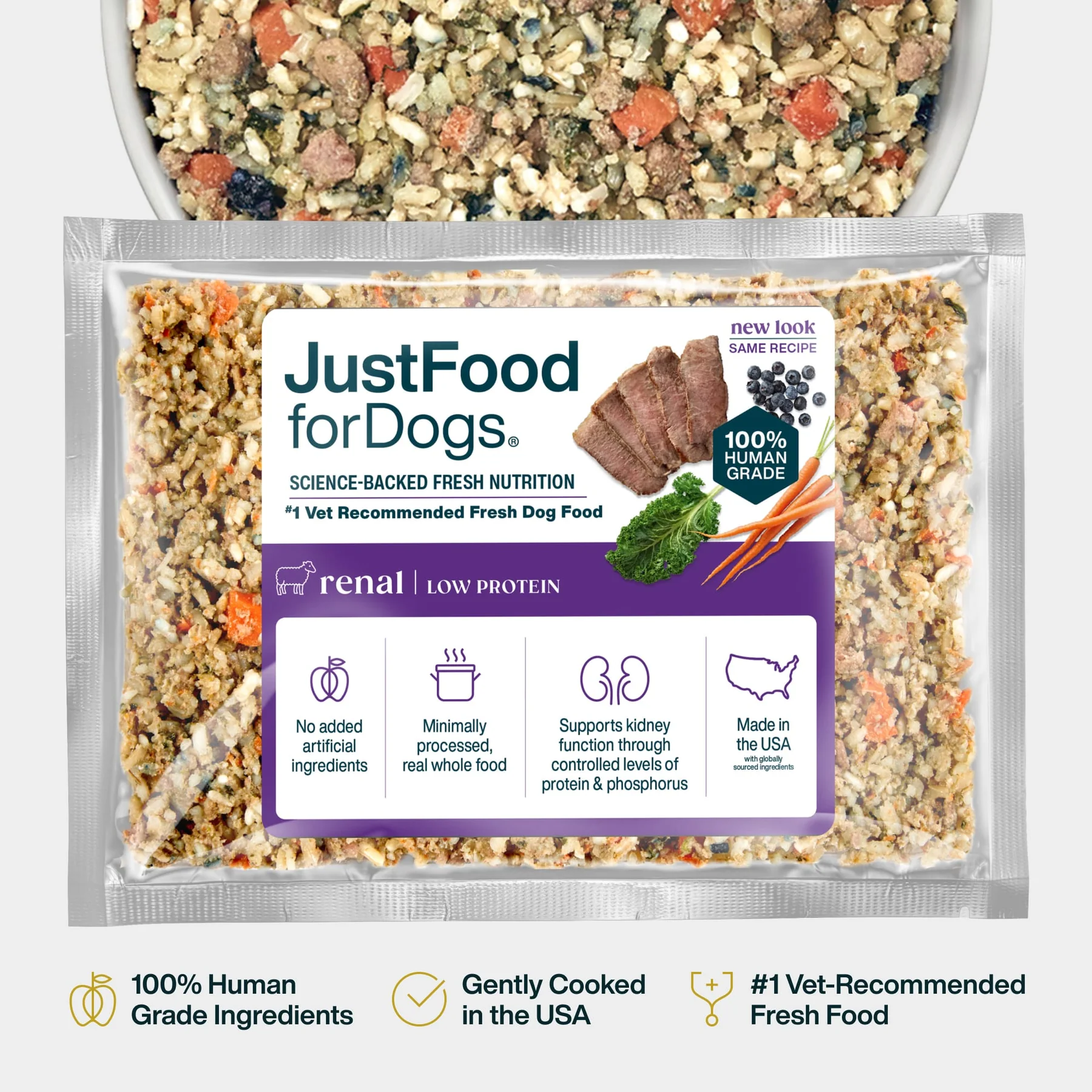
As a fresh example, JustFoodForDogs Renal Support Low Protein lists crude protein of 4.0 to 6.0 percent and phosphorus of 0.06 to 0.09 percent as label minimums and maximums. Its label describes it as a prescription diet "intended for intermittent or supplemental feeding under vet supervision", and JustFoodForDogs asks owners to check with their vet before ordering. That phosphorus restriction, more than the protein number alone, is what makes it a kidney diet.
The best homemade low protein diet for a dog with kidney disease is a recipe a board-certified veterinary nutritionist writes for that dog. Phosphorus, calcium and vitamins are easy to get wrong in home cooking, including slow-cooker recipes, and the homemade section below explains what a balanced recipe needs.
Format is a practical choice once the nutrient targets are met. For a dog with kidney disease, a wet, fresh frozen or dry kidney diet can each fit, and many vets favor moist food because extra water intake helps dogs with weakening kidneys. Our sister site Vetstreet explains the condition itself in its guide to kidney disease in dogs, including signs by IRIS stage.
Why phosphorus matters as much as protein
In chronic kidney disease, phosphorus builds up in the blood as the kidneys lose filtering capacity. High phosphorus drives a hormone response that can further damage the kidneys, and IRIS treatment guidance lists dietary phosphate restriction, through a clinical kidney diet, as the first step in controlling it. That is why a diet low in phosphorus is often the first goal for a kidney dog, with protein moderation second.
Protein and phosphorus travel together in most foods, so restricting protein usually lowers phosphorus too. But protein sources differ: organ meats, bones, dairy and egg yolks carry far more phosphorus per gram of protein than egg whites or lean muscle meat. That is why a renal diet chooses its proteins carefully, favoring high-quality protein that brings little phosphorus with it.
What not to feed a dog with kidney disease? Skip the foods that add phosphorus, salt or toxins:
- Organ meats, bone meal, bones and bone broth made by long simmering, all high in phosphorus.
- Cheese, milk and other dairy in large amounts.
- Processed meats and high-salt treats such as jerky, bacon and deli meat.
- Grapes, raisins and any human food containing xylitol, which can injure kidneys or cause other poisoning.
- Phosphorus-rich additives in some commercial treats, listed as phosphates or phosphoric acid.
What is considered low phosphorus in dog food? Kidney diets generally aim well under the levels found in adult maintenance foods, which the AAFCO profiles set at a minimum of 0.4 percent phosphorus on a dry matter basis. Working the Renal Support label range of 0.06 to 0.09 percent through the same dry matter method gives roughly 0.2 to 0.3 percent.
Low phosphorus vegetables for dogs with kidney disease include green beans, cauliflower, carrots and cabbage, which can add volume without much phosphorus. Toppers and over-the-counter foods sold as low phosphorus vary widely. A non-prescription low phosphorus wet dog food, canned or in a pouch, can still hold more phosphorus than a renal diet, so ask your veterinarian to review the label before adding anything to a kidney dog's bowl. The same check applies to a senior food chosen for an older dog with early kidney changes.
Vet-recommended low protein diets for dogs with liver disease
The liver processes ammonia, a byproduct of protein digestion. When liver function is poor, or when a portosystemic shunt routes blood around the liver, ammonia can build up and cause hepatic encephalopathy, with signs such as confusion, head pressing, wobbling or seizures after meals.
Veterinary thinking on liver diets has changed. Older advice restricted protein sharply, but current guidance, reflected in the Merck Veterinary Manual's guidance on nutrition in hepatic disease, does not restrict protein in most dogs with chronic liver inflammation, because many need as much protein as a healthy dog or more. Restriction is mainly reserved for dogs showing hepatic encephalopathy or with confirmed portosystemic shunting, and even then dairy and quality vegetable proteins such as soy are often preferred over red meat.
Low protein dog food is therefore needed for a narrower group of dogs with liver problems than many owners expect. A veterinarian may recommend it for:
- Dogs with a portosystemic shunt, before or after surgery.
- Dogs with hepatic encephalopathy from advanced liver disease.
- Dogs with copper-associated hepatitis, where copper restriction matters as much as protein.
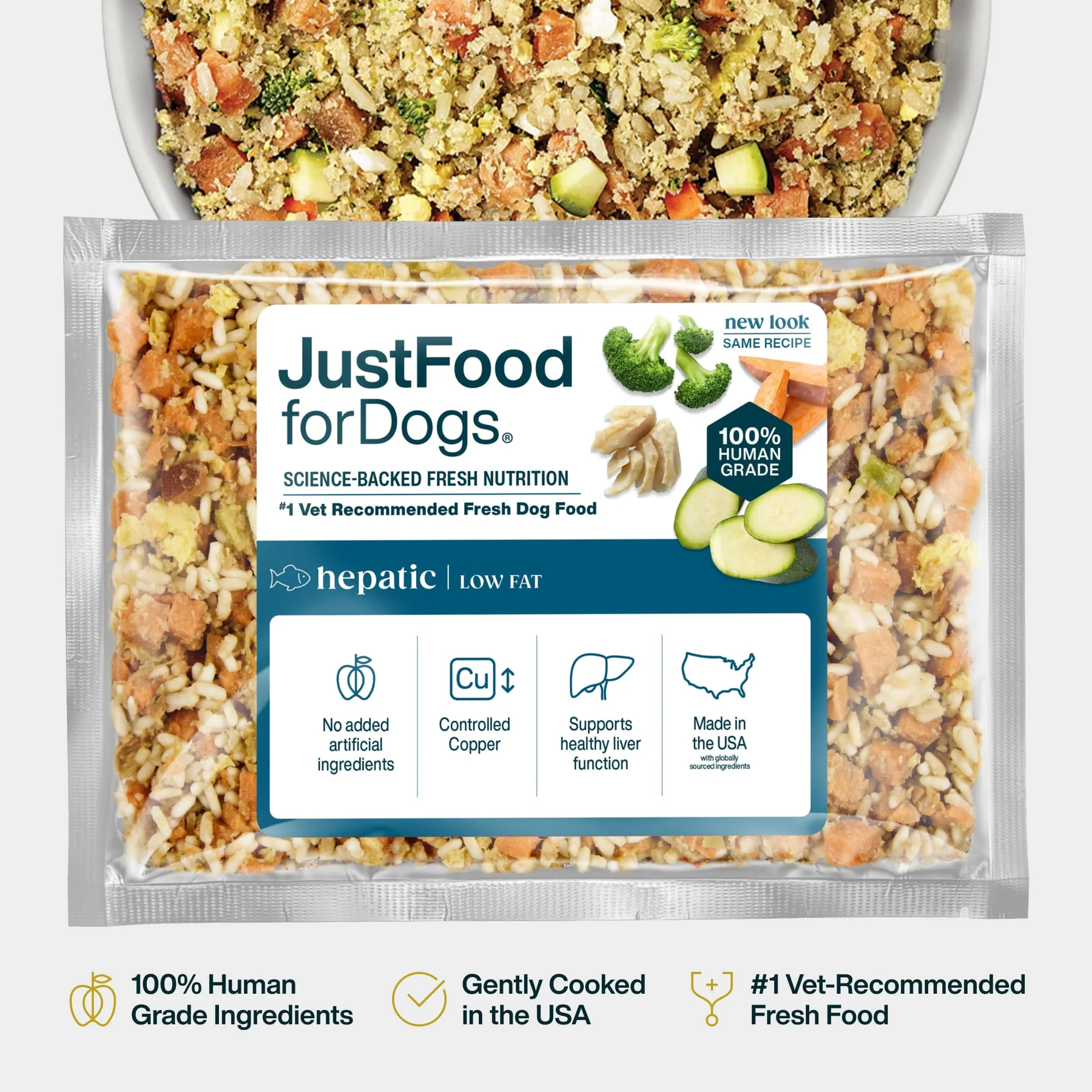
JustFoodForDogs Hepatic Support Low Fat is a fresh vet support diet with crude protein of 3.5 to 6.0 percent, crude fat of 1.0 to 3.0 percent and copper of 1.2 to 1.65 mg per kg as label minimums and maximums. JustFoodForDogs says it is formulated "to support healthy liver function", and like Renal Support it is intended for intermittent or supplemental feeding under vet supervision. Petful's guide to JustFoodForDogs Hepatic Support covers it in depth.
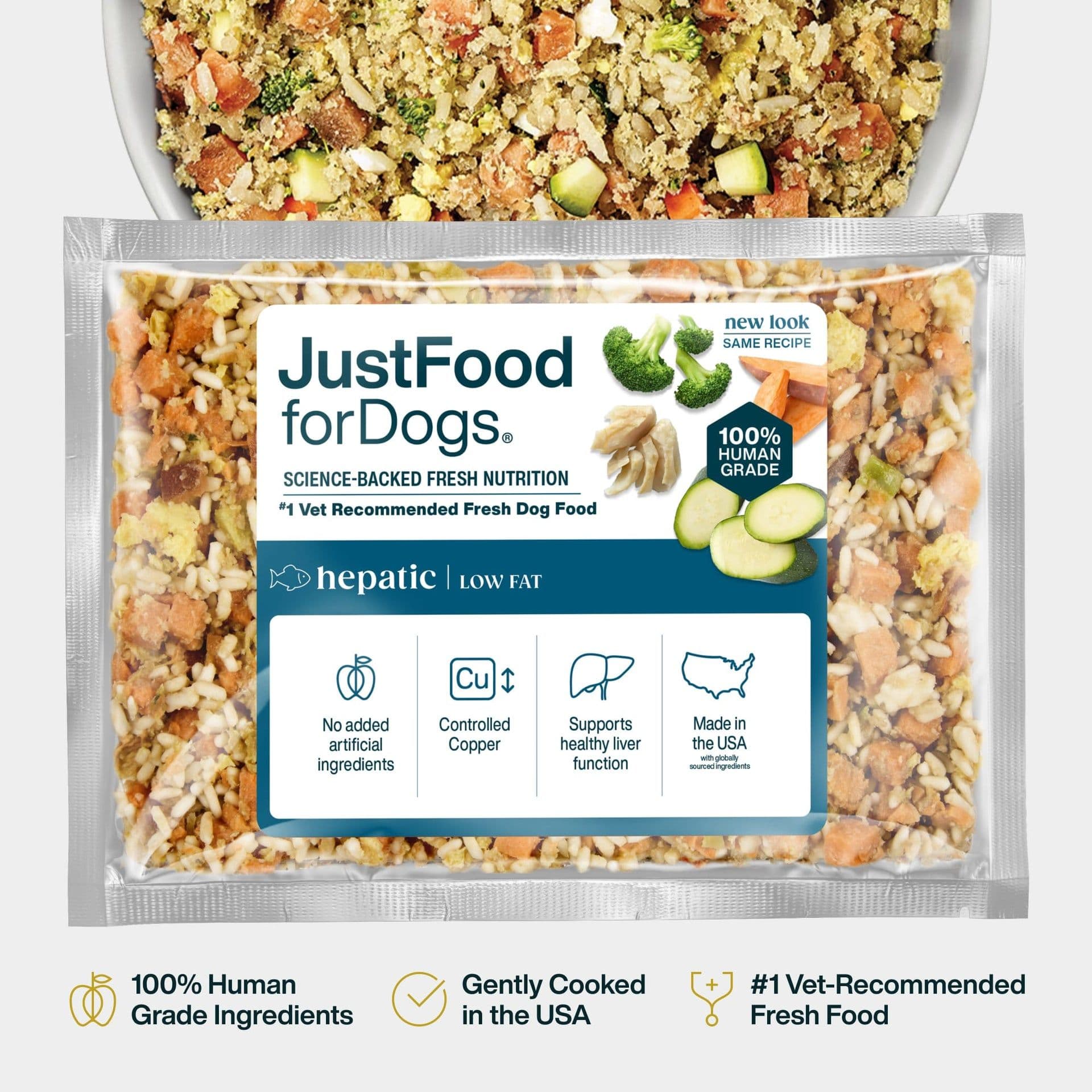
A fresh vet support diet made with sweet potato, rice, egg and Alaska cod, with restricted protein, fat and copper on the label. It is intended for intermittent or supplemental feeding under vet supervision, so review it with your dog's veterinarian.
Petful may earn a commission when you click through to JustFoodForDogs, at no extra cost to you.
When a liver dog also has diarrhea, the question of what to feed changes again: fat level and digestibility matter more, and a veterinarian should rule out other causes. For background on lab results, WebVet explains elevated liver enzymes in dogs and what ALT and ALP values mean.
Wet, canned, dry or fresh formats can all work for a dog with liver disease. A kibble and a canned food are judged on the same nutrient targets, plus palatability, because liver patients often eat poorly. Homemade low-protein recipes for liver disease need the same nutritionist balancing as kidney diets.
Why protein quality matters: comparing protein sources
What is the best protein for a dog with kidney issues? Egg whites lead the list, followed by lean, lower phosphorus meats such as chicken breast, white fish, lean lamb and lean beef. Egg whites supply complete protein with almost no phosphorus, while organ meats, whole dairy and egg yolks carry much more phosphorus for each gram of protein they add.
Protein quality has two parts. Protein digestibility is the share of protein a dog actually absorbs, and biological value describes how well the absorbed amino acids match what the body needs. When the total amount is reduced, every gram has to count, so a restricted diet relies on high-quality protein sources that score well on both.
To rank protein sources by digestibility and phosphorus content, look at both numbers together. The table below orders common protein sources roughly from lowest to highest phosphorus per gram of protein, using approximate values calculated from USDA FoodData Central entries for cooked foods (egg whites listed raw). It is an educational comparison, not a feeding plan.
| Protein source (cooked) | Protein digestibility | Approx. phosphorus per gram of protein | Plain-language note |
|---|---|---|---|
| Egg whites | Very high, reference-quality protein | About 1 to 2 mg | Lowest phosphorus option; often used to stretch protein in kidney diets |
| Chicken breast, skinless | High | About 7 mg | Lean muscle meat with moderate phosphorus |
| White fish such as cod | High | About 6 to 14 mg | Lean and highly digestible; values vary by species |
| Lean lamb | High | About 7 to 8 mg | Moderate phosphorus; used in some renal recipes |
| Lean beef | High | About 8 mg | Moderate phosphorus; fat varies with the cut |
| Cottage cheese and other dairy | High | About 14 mg or more | Useful for some liver dogs; hard cheeses run higher |
| Whole eggs | Very high | About 14 to 16 mg | Excellent protein, but the yolk adds most of the phosphorus |
| Organ meats such as beef liver | High | About 17 mg | Nutrient dense and purine rich; usually limited for kidney and urate dogs |
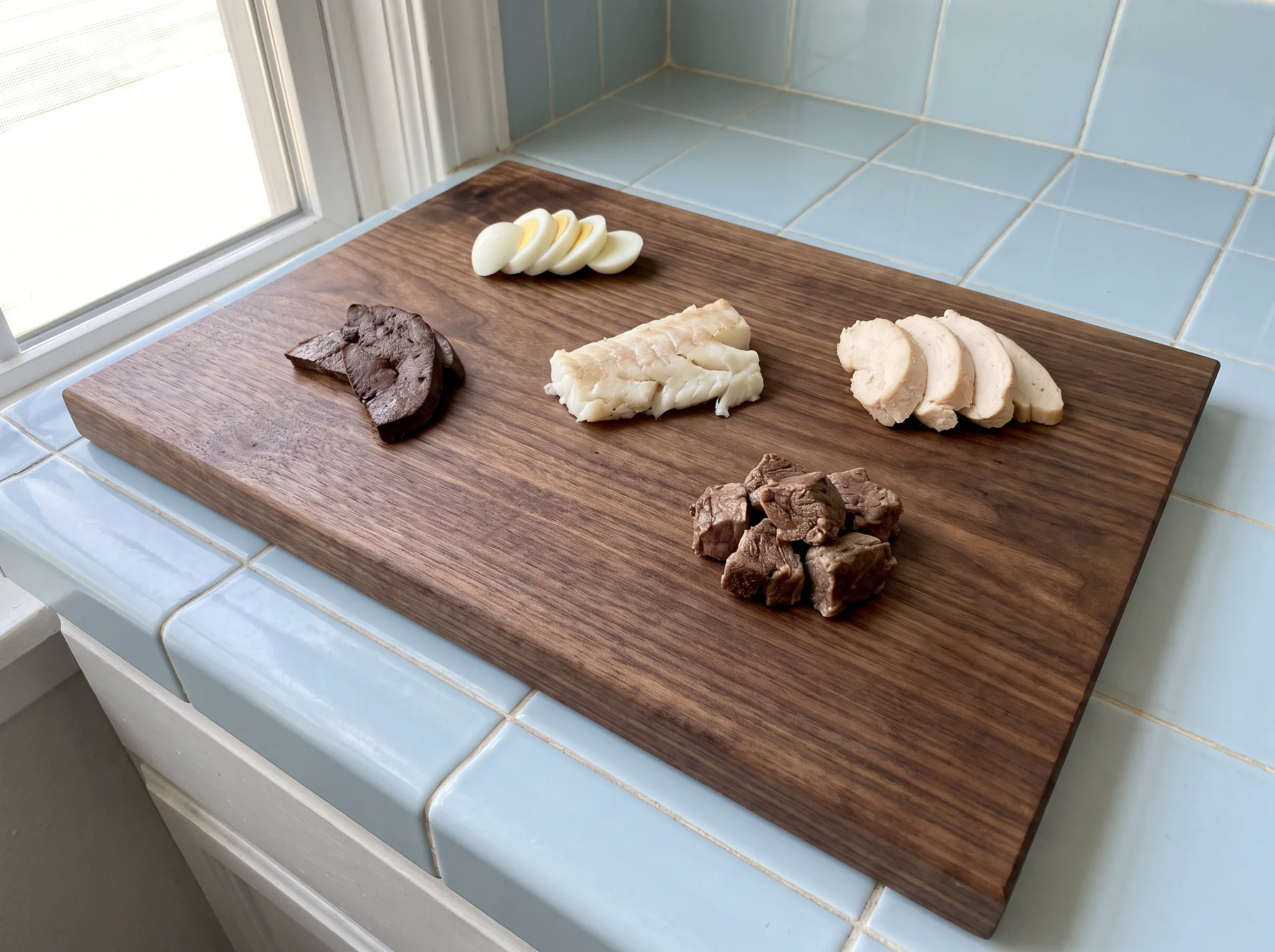
The pattern is useful: protein digestibility is high across cooked animal proteins, so the bigger difference between them is phosphorus per gram of protein. That is the practical meaning of less but higher-quality protein. A veterinarian may pair a smaller amount of meat with egg whites to meet amino acid needs while keeping phosphorus restriction on target, and will adjust for each dog's other conditions, such as a urate stone history or a liver shunt.
Renal Support Low Protein pairs ground lamb with rice, cauliflower and carrots in a fresh vet support recipe with restricted protein and phosphorus. JustFoodForDogs asks owners to check with their vet before ordering.
Petful may earn a commission when you click through to JustFoodForDogs, at no extra cost to you.
The best protein for dogs in general is any complete, digestible animal protein in an amount matched to the dog's life stage. For a healthy dog, that means a complete diet that meets at least the AAFCO protein minimum for its life stage, not a restricted one.
Which dogs should not eat low protein dog food?
Most dogs should not. Protein supplies the amino acids that build muscle, immune cells, enzymes and skin, and a dog that eats too little loses muscle even when its weight looks stable.
- Growing puppies. Puppies need more protein than adults, and AAFCO sets a higher minimum for growth. Low protein dog food for puppies risks poor growth unless a veterinarian directs it for a specific condition, such as a liver shunt.
- Pregnant or nursing dogs. Their protein and calorie needs rise sharply in late pregnancy and lactation.
- Healthy seniors. Older dogs tend to lose muscle and often need as much or more protein than younger adults. Low protein dog food for senior dogs is only appropriate when kidney or liver disease is confirmed.
- Large and giant breeds. A Great Dane puppy needs carefully balanced calcium and calories, not restricted protein, and large breed adults need enough protein to hold muscle mass.
- Active and working dogs. Higher energy output raises protein needs.
- Growing puppies and pregnant or nursing dogs should not eat low protein food unless a veterinarian has diagnosed a condition that requires it. Their bodies are building tissue, and restricting protein can harm growth and milk production.
Is a high protein diet good for dogs? For healthy dogs, a complete diet with ample protein is appropriate, and there is no evidence it damages healthy kidneys. The real dividing line between high and low protein feeding is medical need: restriction is for diagnosed disease, not a longevity plan for a healthy dog.

What can I feed my dog with low protein in mind when bloodwork shows no kidney or liver disease? A complete adult maintenance food with moderate protein usually fits, and JustFoodForDogs offers adult recipes such as Lamb & Brown Rice, which lists moderate protein among its uses. Your veterinarian can confirm the fit from recent bloodwork and a muscle condition score.
Prescription vs non-prescription low protein diets
Prescription low protein dog food, sometimes called a veterinary or therapeutic diet, is formulated to specific nutrient targets for a disease and is sold through or recommended by veterinarians. Over the counter low protein dog food is usually a regular complete food with somewhat lower protein, and it is rarely restricted enough in phosphorus for a kidney dog.
How can I lower my dog's protein levels? Work through your veterinarian in this order:
- Confirm the diagnosis with bloodwork, urinalysis and, for kidney disease, an IRIS stage.
- Ask whether protein, phosphorus, fat or copper is the real target for your dog's condition.
- Choose a therapeutic diet that meets those targets, then switch gradually over about 10 days.
- Recheck bloodwork, weight and muscle condition after the change.
- Therapeutic diets need a veterinary step. JustFoodForDogs asks owners to check with their vet before ordering its vet support diets, and Renal Support Low Protein is intended for intermittent or supplemental feeding under vet supervision.
Many owners would rather buy a kidney diet without a vet prescription, or pick a non-prescription wet food that is simply lower in protein, and skip the clinic visit. Petful's explainer on why vets recommend prescription diets covers why that shortcut can backfire: a food that lowers protein without restricting phosphorus may cost a kidney dog muscle without delivering the main benefit. The same caution applies to a non-prescription diet chosen for a dog with liver disease.
JustFoodForDogs Renal Support Low Protein's label calls it a prescription diet intended for intermittent or supplemental feeding under vet supervision, so the vet conversation comes first.
Wet, dry, and fresh low protein options
What can I feed my dog that is low in protein? The options fall into three formats, and each can work if it meets your veterinarian's nutrient targets:
- Canned or wet food. Low protein canned dog food and soft foods add water to the diet and are often more appealing to dogs with poor appetite.
- Dry food. A low protein dry dog food is convenient and stores easily, but it supplies little water, so encourage drinking.
- Fresh food. Low protein fresh dog food, such as gently cooked frozen recipes, combines moisture with whole-food ingredients.
Fresh frozen meals from JustFoodForDogs are stored in the freezer and thawed in the refrigerator, and the brand's vet support line includes Renal Support Low Protein, fed under vet supervision for dogs with kidney concerns. Its label lists moisture of up to 70 percent, so it also contributes to daily water intake.
Raw and freeze-dried foods are rarely suitable for kidney or liver patients. Raw diets carry bacterial risk, and freeze-dried products are usually high in protein once water is removed. A topper can make a therapeutic diet more appealing, but toppers count toward the day's protein and phosphorus.
Homemade low protein dog food: what to know first
How do I make my own low protein dog food? Start with a recipe written for your dog by a board-certified veterinary nutritionist, who can be found through the ACVIM specialist directory, rather than a recipe from a blog or forum. Homemade low protein dog food recipes are easy to unbalance because cutting meat also cuts minerals and vitamins the dog still needs.
The risk is well documented. A 2013 University of California, Davis analysis of 200 home-prepared dog food recipes found that 95 percent were deficient in at least one essential nutrient, and a study of home-prepared kidney recipes found similar gaps. The UC Davis researchers flagged nutritional deficiencies in homemade dog food involving choline, vitamin D, zinc and vitamin E as especially concerning.
A nutritionally complete homemade recipe for a kidney or liver dog usually includes:
- A measured portion of lean protein, often with egg whites.
- A cooked carbohydrate such as white rice or potato for calories.
- A fat source such as vegetable or fish oil.
- A veterinary-formulated vitamin and mineral supplement in the exact amount prescribed.
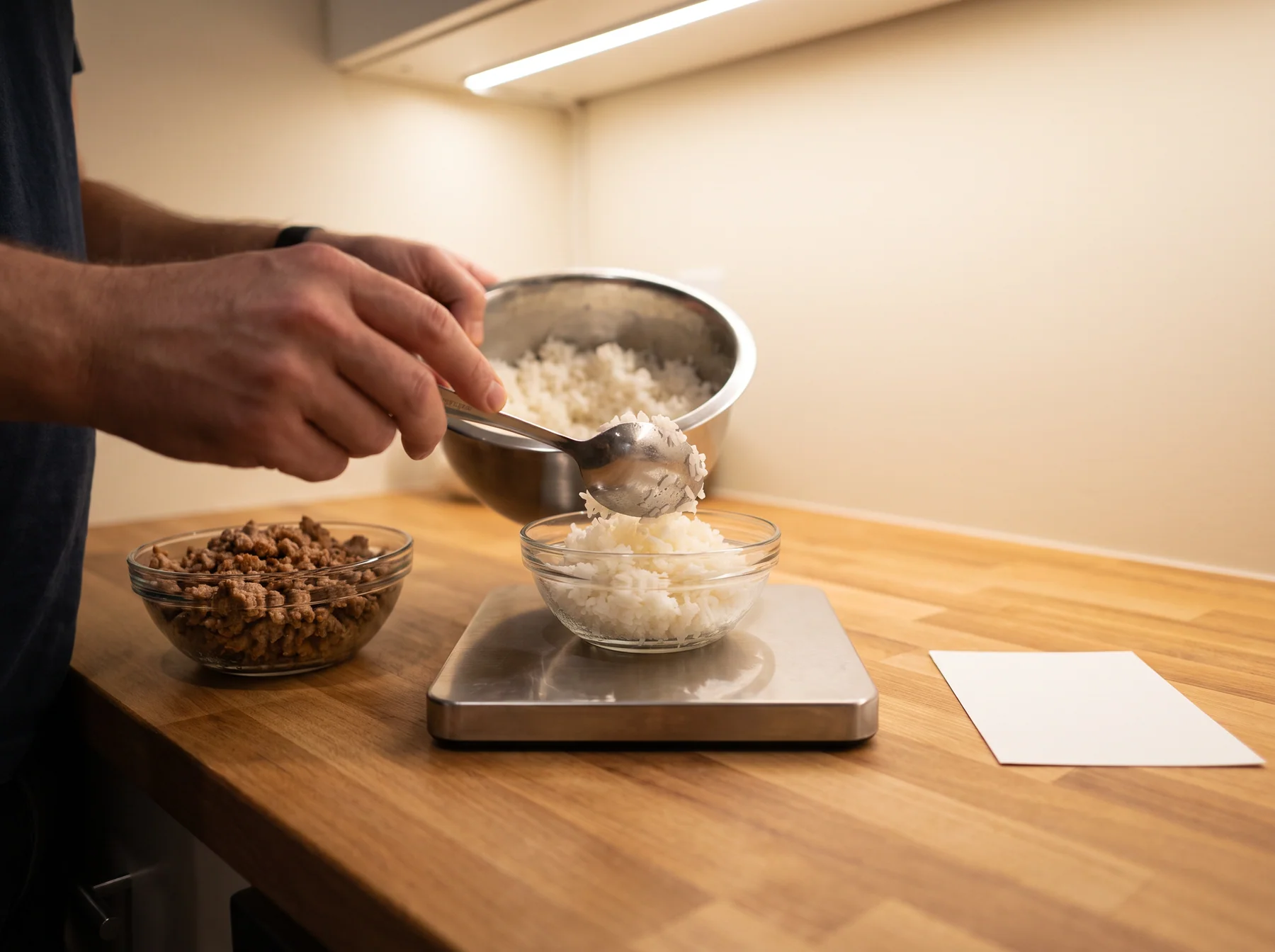
Supplements for homemade dog food are not interchangeable. The best supplements for homemade dog food are the specific balancer products a nutritionist prescribes, because general multivitamins and bone meal can add the very phosphorus a kidney dog needs to avoid. Weigh ingredients on a kitchen scale, cook the same recipe each time, and keep follow-up bloodwork on schedule. A home-cooked recipe for a dog with both kidney disease and a history of pancreatitis needs the same professional formulation, because cutting fat and protein together leaves little room for error.
Owners who prefer not to cook have two prepared routes. A ready-made fresh vet support recipe such as Renal Support Low Protein already has its protein, phosphorus and vitamin levels set and is fed under vet supervision as its label directs, and JustFoodForDogs' veterinary-led custom diet service can build a recipe for one dog after reviewing its veterinarian's records.
When a dog needs both low fat and low protein
Some dogs need both restrictions at once: a dog with kidney disease and a history of pancreatitis, or a liver patient whose veterinarian wants lower fat. This is a narrow group, and a food low in both fat and protein should only be used with veterinary direction because cutting both leaves carbohydrates to supply most of the calories.
Fat is the most concentrated calorie source, so kidney diets often add fat to supply calories while protein is moderated, whereas a dog with pancreatitis needs the opposite on fat. When both apply, a veterinarian weighs which risk is greater.
JustFoodForDogs Hepatic Support Low Fat is one fresh recipe with both restrictions on its label, combining crude protein of 3.5 to 6.0 percent with crude fat of no more than 3.0 percent. A veterinarian may consider it for a dog that needs both; like Renal Support, it is intended for intermittent or supplemental feeding under vet supervision.
Is low protein the same as low fat?
No. Low fat dog food limits fat for dogs with pancreatitis, high blood fats or certain digestive conditions, while low protein food limits protein and usually phosphorus for kidney or liver disease. The two decisions are separate, and most low fat foods, dry or canned, keep protein at a moderate level.
Petful's guide to low fat dog food explains how to compare fat across fresh, wet and dry foods. Using low fat dog food to help a dog lose weight is also a different goal: weight loss is a calorie decision, covered in Petful's weight management feeding guide. For JustFoodForDogs' own example of a lower-fat liver recipe, see Hepatic Support Low Fat and review it with your veterinarian.
Low protein dog food: frequently asked questions
Lean, lower phosphorus meats such as skinless chicken breast, white fish, lean lamb and lean beef are the usual choices, in the amounts a veterinarian sets. Skip organ meats, processed meats and bones, which add phosphorus, purines or salt. Egg whites can stretch a small meat portion with very little added phosphorus.
Plain cooked egg whites are one of the best proteins for kidney dogs because they offer complete protein with almost no phosphorus. Whole scrambled eggs are less ideal, since the phosphorus in yolks is high, and butter, milk or salt should be left out. Ask your veterinarian how much egg fits the daily protein target.
Several companies make therapeutic low protein diets, and the right one depends on your dog's diagnosis. One fresh example is JustFoodForDogs Renal Support Low Protein, a vet support diet with 4.0 to 6.0 percent crude protein on the label that is intended for intermittent or supplemental feeding under vet supervision. Check with your vet before ordering, because a kidney diet also needs restricted phosphorus.
Never add onions and garlic, grapes or raisins, xylitol, macadamia nuts, chocolate or heavily salted foods. For kidney dogs, also avoid bone meal phosphorus sources, bones and organ meats, and do not add a general supplement without your nutritionist's approval.
Processed meats, high-salt treats, cheese, organ meats and bones are among the worst because they add salt, phosphorus or both. Grapes and raisins can injure kidneys directly. Commercial treats that list phosphates in the ingredients are also worth avoiding.
You can cook a balanced recipe written for your dog by a veterinary nutritionist, typically built on lean protein, egg whites, rice or potato, oil and a prescribed supplement. Without that formulation, home-cooked meals tend to miss key nutrients or carry too much phosphorus.
Raw diets are generally not advised for kidney dogs. They carry bacterial risk from organisms such as Salmonella and Listeria, a particular concern for older or immune-compromised dogs, and most raw recipes are high in protein and phosphorus. The AVMA discourages feeding raw animal-source protein to pets.
BVMS, MRCVS
Dr. Pippa Elliott, BVMS, MRCVS, is a veterinarian with nearly 30 years of experience in companion animal practice. Dr. Elliott earned her Bachelor of Veterinary Medicine and Surgery from the University of Glasgow. She was also designated a Member of the Royal College of Veterinary Surgeons. Married with 2 grown-up kids, Dr. Elliott has a naughty Puggle named Poggle, 3 cats and a bearded dragon.
Sign up for expert-backed reviews and safety alerts all in one place.


A Final Word (Disclaimer)
At Petful, our review integrity is paramount; we never exchange special treatment in our reviews for monetary or material rewards.
Nonetheless, when our readers click through to online merchants (including Chewy or Amazon), we receive a referral commission. This supports the running of our free blog, and we appreciate your backing.