JustFoodForDogs Hepatic Support: What to Know About This Vet Support Diet
Learn what the current JustFoodForDogs Hepatic Support label establishes, how veterinarians plan portions and feeding duration, and which questions to ask about treats, supplements, and ongoing use.

BVMS, MRCVS

Petful is reader supported. As an affiliate of platforms like Amazon and Chewy, we may earn a commission when you buy through links on this page. There is no extra cost to you.
Sponsored by JustFoodForDogs. This article analyzes product information and veterinary nutrition sources. Petful may earn a commission through links in this article.
JustFoodForDogs Hepatic Support is a veterinary recipe with a specific role: its current label states that it is intended for intermittent or supplemental feeding under veterinary supervision. Understanding that statement is as important as recognizing the ingredients or comparing its fat content.
For a dog whose veterinarian selects this food, the practical questions are straightforward: How much should you feed, for how long, and what else may your dog eat? This guide explains the current recipe information and how to turn an individual recommendation into a manageable daily routine. It is based on published sources, without hands-on feeding or taste testing.

Sign up for expert-backed reviews and safety alerts all in one place.
What Is JustFoodForDogs Hepatic Support?
“Hepatic” means relating to the liver. Hepatic support for dogs can include nutritional changes within a broader treatment plan. JustFoodForDogs Hepatic Support is one specific veterinary recipe within that category, rather than a general name for every diet used in liver disease.
The current formula includes sweet potato, white rice, eggs, Alaska Pacific cod, broccoli, zucchini, sunflower oil, coconut oil, algae oil, and a nutrient blend. For owners who prefer a prepared meal, having an identified recipe and published nutrient limits makes it possible to discuss the finished food with the treating veterinarian.
- 1The current label specifies intermittent or supplemental feeding under veterinary supervision.
- 2Its stated energy density is 884 kcal/kg; the veterinarian determines the daily calorie target and feeding duration.
- 3Evaluate the exact recipe, current nutrient information, and your dog's diagnosis together.
You can bring the current JFFD Hepatic Support recipe information to your appointment. Ask whether its nutritional characteristics match the particular changes your veterinarian wants to make, rather than assuming that any food with “hepatic” in its name will have the same purpose.
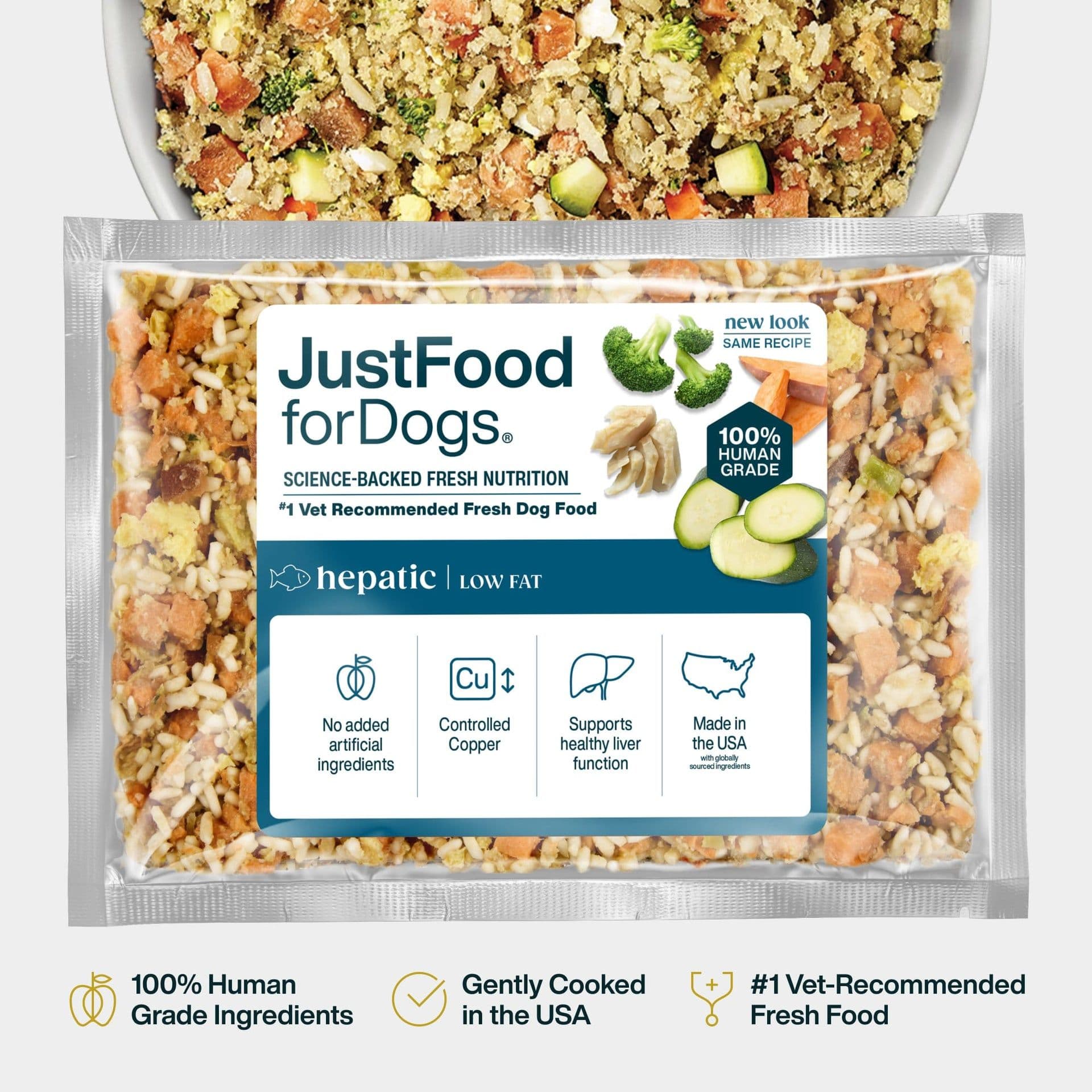
Bring the current Hepatic Support recipe information to your veterinarian to assess its fit for your dog's prescribed plan.
Petful may earn a commission when you click through to JustFoodForDogs, at no extra cost to you.
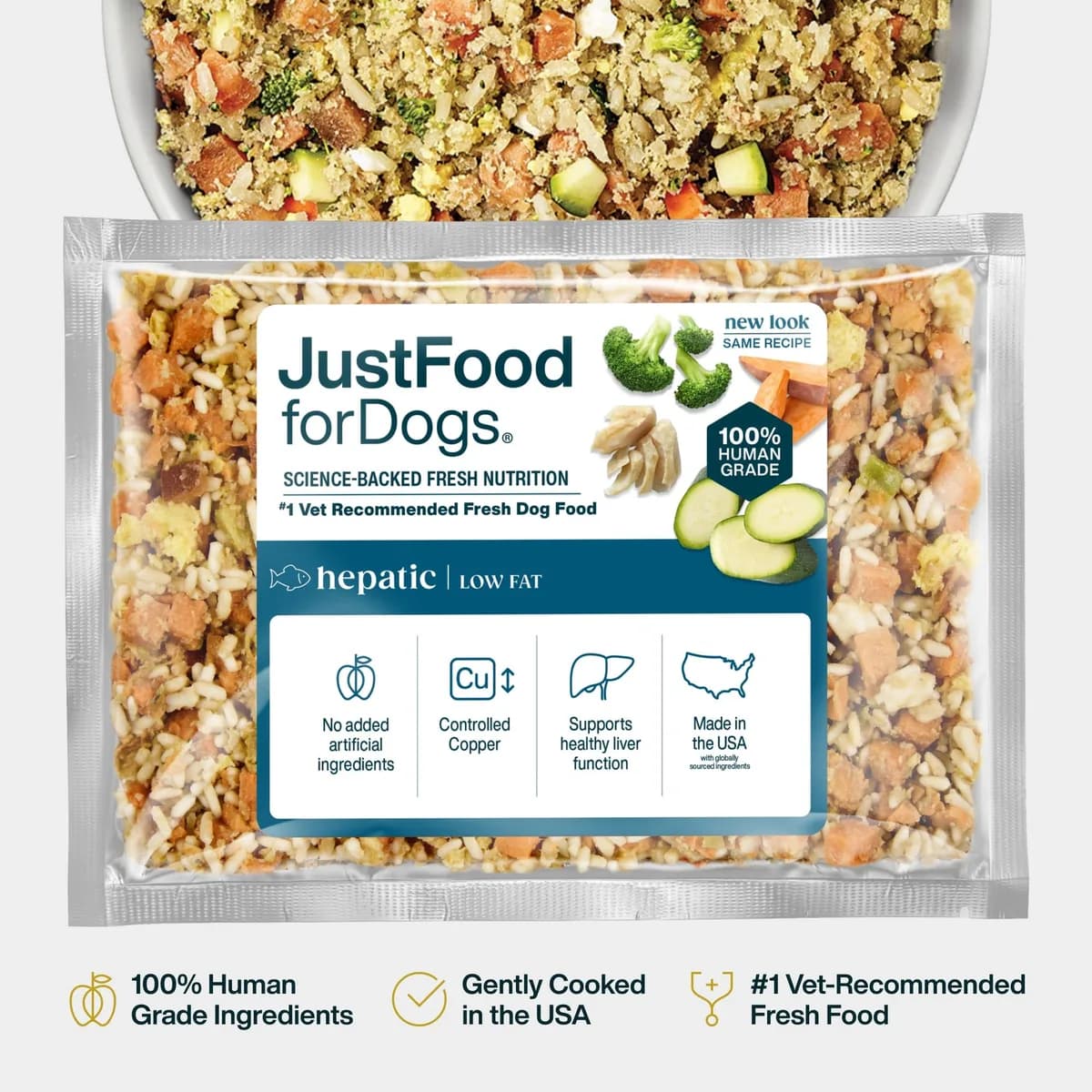
Do vets recommend JustFoodForDogs Hepatic Support?
An individual veterinary recommendation may include this exact recipe when it suits the dog's condition and feeding plan. There is no universal endorsement that makes one food the best hepatic dog food for every patient. A useful recommendation identifies the product, explains the nutritional goal, and includes instructions for using it.
When your veterinarian recommends “a liver diet,” confirm whether they mean this particular product or a different formulation. That small clarification prevents ordering a similarly named food with different nutrient levels or feeding instructions. Our broader JustFoodForDogs dog food review explains the brand's wider range, while the decision here rests on the Hepatic Support label and your dog's needs.
What the Current Hepatic Support Label Says
The current JustFoodForDogs Hepatic Support Low Fat page lists 884 kcal/kg, crude fat at a minimum of 1% and maximum of 3%, and copper at a minimum of 1.2 and maximum of 1.65 mg/kg. These are the current published label figures used in this guide.
Keep the units attached when sharing those numbers. Copper in milligrams per kilogram of food is different from copper expressed per unit of dietary energy. Similarly, a fat percentage in a moisture-containing food cannot be compared directly with a dry-food percentage without accounting for the basis of comparison.
Review Hepatic Support's published fat and copper limits with your veterinarian before selecting the recipe.
Petful may earn a commission when you click through to JustFoodForDogs, at no extra cost to you.

| Label item | Current published information | What it means for the feeding plan |
|---|---|---|
| Feeding statement | Intermittent or supplemental feeding under veterinary supervision | The veterinarian determines how the food fits the overall diet and how long to use it |
| Energy density | 884 kcal/kg | Convert the prescribed food calories into a measured weight |
| Crude fat | Minimum 1%; maximum 3% | These are label limits, not a measured typical value for every serving |
| Copper | Minimum 1.2; maximum 1.65 mg/kg | Compare with the patient's prescribed nutrient plan using matching units |
| Feeding duration | No universal duration follows from these figures | Confirm the review date and criteria for continuing or changing the diet |
| Monitoring | Individual veterinary supervision | Track the agreed observations and attend the planned clinical rechecks |
A minimum and a maximum provide different information. The 1% minimum does not mean that every serving contains exactly 1% fat. The 3% maximum is an upper label limit, not the recipe's stated average. Neither number independently tells you whether the diet meets a particular patient's target.
For closer comparisons, request the information your veterinarian needs, which may include typical nutrient analysis and values expressed on an energy basis. Tufts' nutrient-comparison guidance explains why typical analysis is more useful than treating guaranteed minimums as exact amounts.
- Use current information for the exact recipe you are purchasing.
- Keep percentages, milligrams per kilogram, and calorie-based values clearly identified.
- Ask which nutrient targets matter for your dog's diagnosis.
- Confirm how the feeding statement affects the overall plan.
Older technical guides, saved retailer descriptions, and previous product pages may describe earlier formulations. If their figures differ, ask JFFD to identify the current analysis rather than combining numbers from different versions. This recipe's present feeding statement also does not establish it as a standard complete diet for growing puppies.
Which Dogs May Need a Hepatic Diet?
Choosing dog food for liver disease starts with the diagnosis. The liver performs several functions, and different diseases can create different nutritional priorities. A dog with copper-associated liver disease does not necessarily need the same adjustments as a dog with another liver condition or additional medical problems.
The ACVIM consensus on chronic hepatitis in dogs describes nutritional management within the larger clinical picture. The aim is to address the patient's diagnosis-specific nutritional needs while maintaining appropriate nourishment. A food's name cannot establish which changes are necessary.
For example, Cornell's guidance on copper hepatopathy explains the importance of dietary management when copper accumulation is involved. Treatment may also require medication and ongoing assessment. The diet and medical treatment have complementary roles.
Questions to settle before choosing a hepatic diet
- The diagnosed condition and the reason for changing the diet.
- Whether copper, protein, fat, or another nutritional factor needs particular attention.
- Any additional condition that affects food selection.
- How the veterinarian will assess the dog's response.
If you are asking what you can feed your dog on a hepatic diet, begin with the veterinarian-selected diet and the approved additions. For this particular product, that discussion should include the Hepatic Support feeding limitations and the intended duration of use. A familiar ingredient or another JFFD recipe is not automatically interchangeable with the selected food.
It helps to bring a complete account of current feeding to the appointment: the main diet, treats, chews, table scraps, supplements, and foods used to give medication. An accurate starting picture lets the veterinarian explain what should continue, what should change, and why. Include approximate quantities rather than only product names.
Digestive symptoms deserve their own assessment as well. Our guide to JustFoodForDogs for sensitive stomachs discusses that broader feeding concern. A food chosen for a sensitive stomach and a diet selected for diagnosed liver disease answer different questions, even when some ingredients overlap.
How Your Veterinarian Sets Portions and Feeding Duration
The useful starting point is a prescribed daily calorie target, followed by instructions for how those calories should be supplied. Your veterinarian considers the dog's current condition, weight trend, appetite, and other needs. A standard feeding estimate can help explain arithmetic, but it does not establish the prescription.
Dogs with concurrent fat sensitivity are often managed alongside a liver plan, and WebVet covers vet-recommended diets for dogs with pancreatitis in a separate guide.
If your veterinarian selects Hepatic Support, confirm the prescribed portion and feeding duration before ordering.
Petful may earn a commission when you click through to JustFoodForDogs, at no extra cost to you.
Once the food's allotted calories are known, calculate the portion using grams of food per day = calories assigned to this food ÷ 884 × 1,000.
For arithmetic only, suppose a veterinarian assigns 300 daily calories to Hepatic Support. Dividing 300 by 884 and multiplying by 1,000 gives approximately 339 grams per day. This is an illustrative calculation, not a calorie recommendation for a particular dog and not an instruction to use the food as the entire diet.
The next step is to divide that daily amount according to the prescribed meal schedule. If the agreed plan has two equal meals, the example would supply about 170 grams at each meal. If some food is reserved for rewards or medication, that amount comes from the same daily allocation.

A kitchen scale makes the routine easier to repeat. Place the empty bowl on the scale, zero it, and add the calculated amount. Weighing is particularly useful when more than one person feeds the dog, because different spoonfuls or loosely filled cups can contain different amounts of food.
Ask for a written plan covering:
- The total daily calorie target and the amount assigned to this recipe.
- The daily food weight and number of meals.
- Whether other foods are part of the prescription.
- How to introduce the food and what to do if a meal is missed.
- The planned review date and any requested monitoring.
Duration matters because the nutritional plan can change as the clinical situation changes. An order containing several weeks of food is not itself a recommendation to feed that food for several weeks. Confirm the intended interval before making a large purchase or setting recurring deliveries.
Keep a simple record of food offered, food eaten, and any changes the clinic asks you to watch. Appetite and body-weight trends are useful observations, but they do not replace the tests or examinations selected by the veterinarian. If your dog repeatedly leaves food, report what was actually eaten rather than assuming the calculated amount was consumed.
Continue Hepatic Support according to your veterinarian's instructions, including the amount to feed and when to reassess the plan.
Petful may earn a commission when you click through to JustFoodForDogs, at no extra cost to you.
Treats, Supplements, and Other Foods to Discuss
Extras can be easy to overlook because each individual piece seems small. Within a prescribed diet, their relevance includes both calories and the nutrients the veterinarian is trying to manage. Keep the routine enjoyable by agreeing on suitable rewards and medication foods at the outset.
What foods should a dog with liver disease avoid?
The answer depends on diagnosis-specific restrictions and the prescribed nutrient plan. Avoid introducing unapproved extras that could work against those targets. This is more useful than applying a long universal blacklist to every dog with a liver problem.
When copper restriction is prescribed, for example, the veterinarian may specifically restrict copper-rich foods. In another case, the important issue may be the overall balance of the diet or an additional condition. Bring labels for the foods your dog actually receives so the advice can address real choices.
- Include table scraps and leftovers in the feeding discussion.
- Mention chews and treats given by other household members.
- Check the food used to conceal tablets.
- Ask before replacing part of the prescribed meal with another food.
Should I add a liver supplement to my dog's food?
There is no universal best supplement for every dog with liver disease. A supplement decision should reflect the diagnosis and current treatment, with the treating veterinarian reviewing the exact product, ingredients, and dose. A “liver support” label does not establish that it is appropriate alongside an existing prescription.
The prepared food already contains its own nutrient blend. Adding a general vitamin mixture or another product changes what your dog receives. If a supplement is recommended, record its name and instructions with the feeding plan so everyone in the household follows the same directions.
Can liver treats interfere with a hepatic diet?
For dogs on a hepatic diet, a potential problem with liver treats is adding copper and calories that conflict with the prescribed plan. This is especially relevant when copper restriction is required. A liver treat is an organ-meat food, not a treatment for liver disease; its suitability depends on the ingredient, amount, and individual restrictions.
Follow a restriction when prescribed rather than assuming that a small daily piece is always acceptable. If your veterinarian permits a particular treat, ask for an individual allowance. The relevant questions are what the treat contains, how much your dog receives, and how it fits the complete daily plan.
Which treats can fit a prescribed hepatic diet?
The best treats for a dog with liver problems are veterinarian-approved choices that fit that dog's prescribed nutrient and calorie limits. When copper restriction is prescribed, include treats in that limit. There is no universal treat ranking: choose an approved food and measured allowance that suit the individual feeding plan.
One option to discuss is reserving a small portion of the prescribed food for rewards rather than adding a separate product. That approach still needs to suit the dog's meal plan and the food's handling requirements. Soft food may be convenient for rewards at home but less convenient during a long outing.
Ask the clinic to make the instruction concrete: the approved choice, the allowed amount, and whether to deduct it from meals. “Treats are fine” leaves more room for confusion than a measured daily allowance shared with everyone who feeds the dog.
Planning Orders and Getting Recipe Information
A workable plan includes the practical side of feeding: enough food on hand, suitable storage, and a way to obtain current product information. Once the veterinarian has selected the recipe and daily quantity, use those instructions to decide how much to order and when another delivery will be needed.
For example, estimate the number of feeding days in a pack by dividing its labeled weight in grams by the prescribed grams per day. Keep that calculation separate from the storage limit after thawing or opening. A package may contain more feeding days than it can safely remain refrigerated, particularly when the prescribed portion is small.

Follow the instructions for the exact product supplied, and ask JFFD about any uncertainty before changing the thawing or storage routine. If the packaging or online information appears different from what your veterinarian reviewed, send the clinic a photograph of the current label so the comparison is specific.
JFFD's nutrition consultants can help with product-information questions. Ask them for the current recipe details, available nutrient analysis, package options, and handling instructions. The treating veterinarian remains the person who interprets that information for the dog's condition.
To make an inquiry efficient, have these details ready:
- The full product name and current package information.
- The nutrient values or units your veterinarian has requested.
- The prescribed amount and the expected ordering frequency.
- The specific storage or preparation question you need answered.
Product-information support and custom formulation are distinct services, not extra therapeutic recipes. A nutrition consultant can help you obtain information about an existing food; JFFD's custom prescriptive service involves a separate veterinary referral and formulation process. Clarifying which help you need saves time and keeps ordering questions connected to the established treatment plan.
Frequently Asked Questions
Do not assume that from the product name. Its current statement is for intermittent or supplemental feeding under veterinary supervision. Ask the prescribing veterinarian whether it is intended to be the sole food for a specified period, part of a combined plan, or used in another defined way. Obtain the duration and follow-up instructions together.
No. Liver diagnoses differ, and protein restriction is not appropriate for every patient. The decision belongs within an individual veterinary plan that considers the dog's condition and nutritional needs. Avoid cutting protein by removing ingredients, diluting meals with rice, or switching foods on your own.
A food cannot promise to reverse liver damage. The cause and severity matter, and diet is supportive within diagnosis and medical treatment. Some conditions need specific medication or other interventions alongside nutritional changes. Ask what improvement the veterinarian is looking for and how it will be assessed, rather than judging recovery from food preference alone.
No. A calculator provides an estimate, not a diagnosis or a complete medical feeding plan. Use the prescribed calorie target supplied by your veterinarian and the exact recipe's energy density to understand portions. Confirm any difference between the calculator's suggestion and the clinic's instructions before adjusting the amount.
A veterinarian may consider it when an existing recipe does not meet the dog's combined nutritional requirements. The JFFD custom prescriptive service uses veterinary referral and an individual clinical formulation process. It is a separate service from asking a consultant about an existing recipe's ingredients, ordering, or storage.
BVMS, MRCVS
Dr. Pippa Elliott, BVMS, MRCVS, is a veterinarian with nearly 30 years of experience in companion animal practice. Dr. Elliott earned her Bachelor of Veterinary Medicine and Surgery from the University of Glasgow. She was also designated a Member of the Royal College of Veterinary Surgeons. Married with 2 grown-up kids, Dr. Elliott has a naughty Puggle named Poggle, 3 cats and a bearded dragon.
Sign up for expert-backed reviews and safety alerts all in one place.



A Final Word (Disclaimer)
At Petful, our review integrity is paramount; we never exchange special treatment in our reviews for monetary or material rewards.
Nonetheless, when our readers click through to online merchants (including Chewy or Amazon), we receive a referral commission. This supports the running of our free blog, and we appreciate your backing.