JustFoodForDogs for Sensitive Stomachs: A Gentle-Diet Guide
A veterinarian's guide to JustFoodForDogs for sensitive stomachs: the gentle turkey and rice Sensitive Stomach recipe, the omega-3 rich Fish & Sweet Potato option, and how to transition a digestively delicate dog the right way.

BVMS, MRCVS
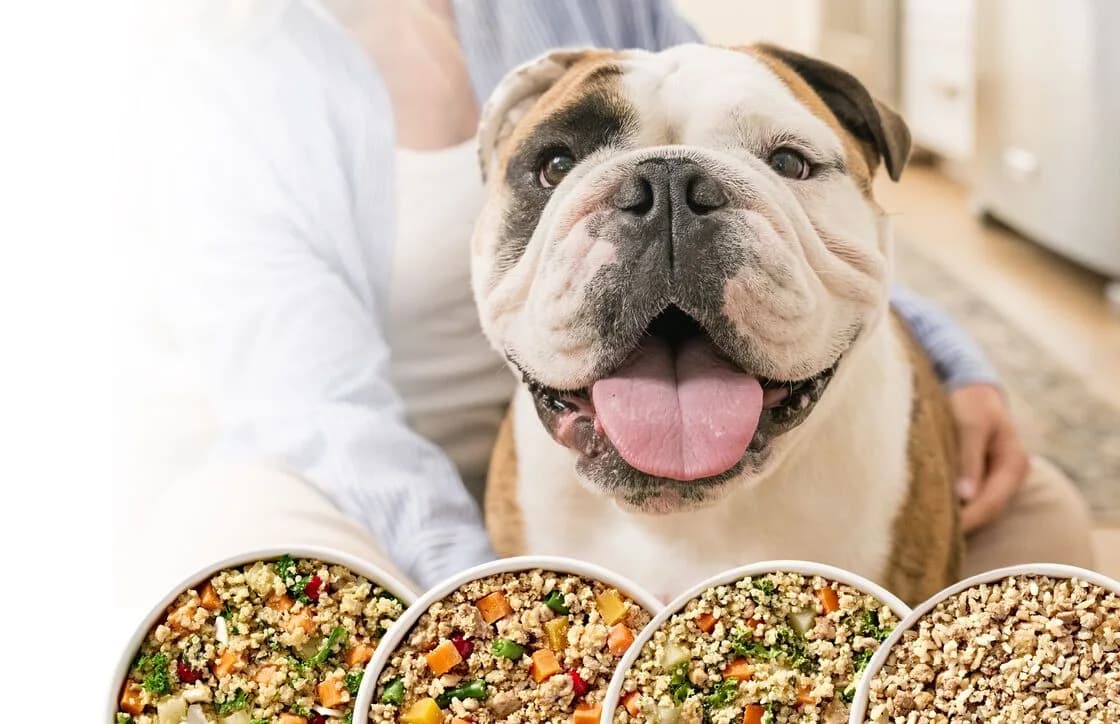
For dogs with sensitive stomachs, what goes in the bowl matters as much as how much. JustFoodForDogs builds targeted recipes for exactly that.
Petful is reader supported. As an affiliate of platforms like Amazon and Chewy, we may earn a commission when you buy through links on this page. There is no extra cost to you.
Every pet parent of a digestively delicate dog knows the 3am routine. The unmistakable sound from the corner of the bedroom, the lights flicking on, the roll of paper towels, and the worried inspection of the carpet. In my experience as a vet, these owners are not looking for miracles. They simply want their dog to feel comfortable after meals.
That is what this guide to JustFoodForDogs for sensitive stomachs is about. We will look at why certain nutritional qualities, like a single protein source, simple digestible carbohydrates, and a low fat profile, can help support digestive comfort, then connect each one to the actual JustFoodForDogs recipes so you and your veterinarian can decide together.
- 1The JustFoodForDogs Sensitive Stomach recipe is a gently cooked, single-protein meal of ground turkey and rice, with a low fat profile (1 to 4 percent crude fat) and no legumes, fillers, by-products, or artificial preservatives.
- 2Many dogs with sensitive stomachs do well on simple, highly digestible diets, because fewer ingredients mean fewer variables for a touchy gut.
- 3Fish & Sweet Potato is the naturally lean, omega-3 rich alternative for dogs with overlapping skin and stomach issues.
- 4Transition over 7 to 10 days at a minimum, and go even slower for sensitive dogs.
- 5Red flags like blood, lethargy, or repeated vomiting call for a vet visit first, not a food change.
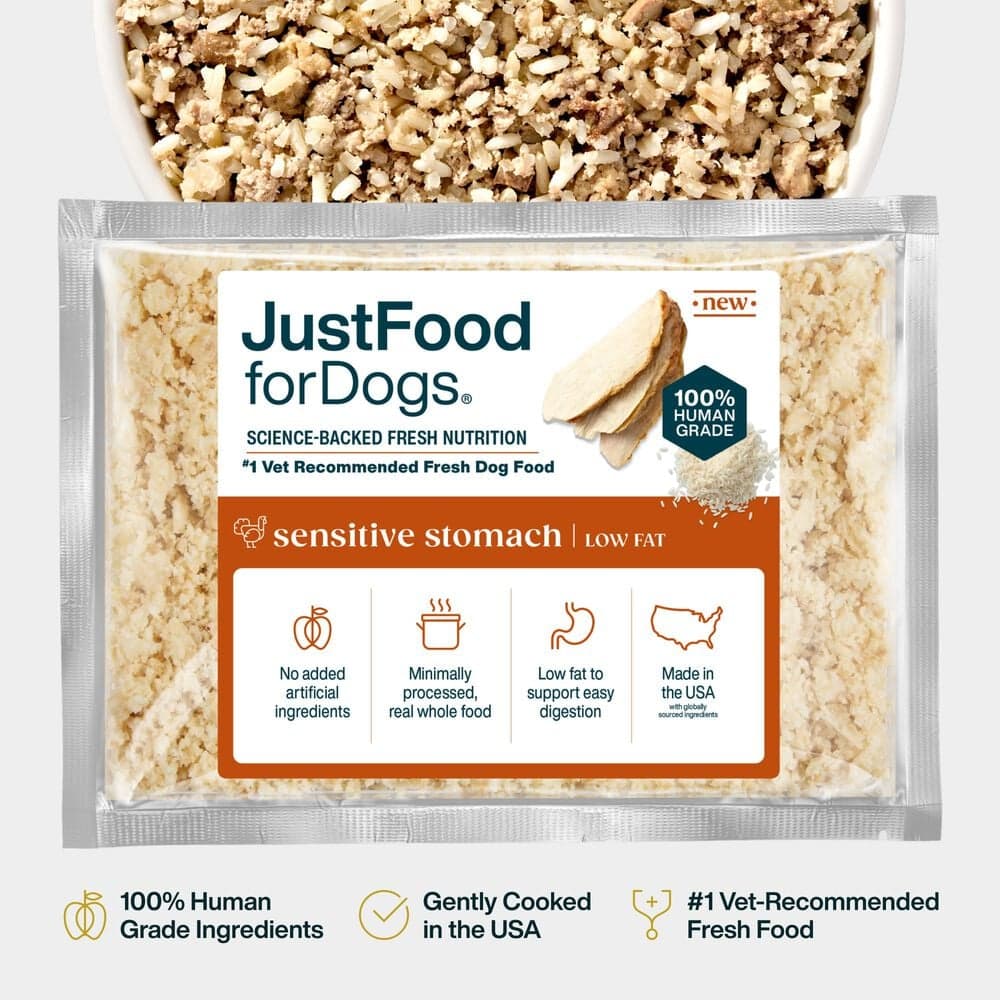
Compare the gentle-diet recipes discussed here with your veterinarian before changing your dog’s food.
- Turkey with white and brown rice
- Gently cooked Fresh Frozen meals
- View the full recipe and feeding guidance
A fresh-food option to discuss with your veterinarian.
Petful may earn a commission when you click through to JustFoodForDogs, at no extra cost to you.

Sign up for expert-backed reviews and safety alerts all in one place.
Signs Your Dog May Have a Sensitive Stomach
"Sensitive stomach" is not a formal diagnosis. It is the shorthand we use for dogs whose digestive systems react to things most dogs shrug off: a new treat, a richer meal, a sudden food change. Common signs include:
- Occasional vomiting or regurgitation, often within a few hours of eating
- Soft stools or intermittent loose stools that come and go
- Excessive gas that could clear a room
- Loud gut gurgling (vets call this borborygmi)
- Lip licking, drooling, or grass eating, which can signal nausea
- A picky or hesitant appetite, especially with new foods
- Stool quality that visibly changes whenever the diet changes
One or two of these signs now and then is common. A consistent pattern is your cue to get curious about the bowl, because food intolerances and food allergies can look very similar from the outside. If you suspect ingredients are the issue, our guide to feeding dogs with food allergies explains how vets tease the two apart.
- Some signs are beyond "sensitive stomach" territory and need professional eyes promptly: blood in vomit or stool, black tarry stools, lethargy or weakness, repeated vomiting within a day, refusing water, a painful or bloated belly, or any vomiting and diarrhea in a puppy or senior dog, since they dehydrate dangerously fast. When in doubt, call. I would always rather see a dog one time too many than one time too late.
Why Diet Matters for Sensitive Stomachs
For a digestively sensitive dog, the qualities of the diet often matter more than the brand on the bag. Four come up again and again.
Digestibility. A sensitive gut does best when it has less work to do. Gently cooking whole ingredients, the way you would cook at home, makes proteins and starches easier to break down than heavily processed alternatives. If the category is new to you, our fresh dog food guide covers the basics.
A short, simple ingredient list. Every ingredient is a variable. A recipe with one protein and one or two carbohydrate sources makes it far easier to work out what agrees with your dog. This is the logic behind veterinary food trials: simplify, observe, adjust. A protein the dog has rarely eaten before, sometimes called a novel protein, can be especially useful here.
Moderate to low fat. Fat slows stomach emptying and asks more of the digestive tract. Plenty of healthy dogs handle rich food just fine, but for sensitive dogs, a lower fat recipe is often simply easier to sit with.
No artificial additives. Artificial colors, flavors, and preservatives add nothing nutritionally, and a sensitive dog's diet has no room for passengers that do not pull their weight.
Abrupt changes in diet are a well-recognized trigger for digestive upset in dogs, and diet plays a central role in digestive comfort. None of this means food alone resolves a medical problem. It means nutrition is one of the most powerful levers you and your vet can adjust together.
The JustFoodForDogs Gentle-Diet Lineup
JustFoodForDogs builds its recipes around exactly the qualities above: whole ingredients, gentle cooking in kitchen style batches, and short ingredient lists. Three options come up most often for sensitive dogs, plus a veterinary line for diagnosed conditions.
Compare the gentle-diet recipes discussed here with your veterinarian before changing your dog’s food.
- Turkey with white and brown rice
- Gently cooked Fresh Frozen meals
- View the full recipe and feeding guidance
A fresh-food option to discuss with your veterinarian.
Petful may earn a commission when you click through to JustFoodForDogs, at no extra cost to you.
The Sensitive Stomach Recipe: A Closer Look
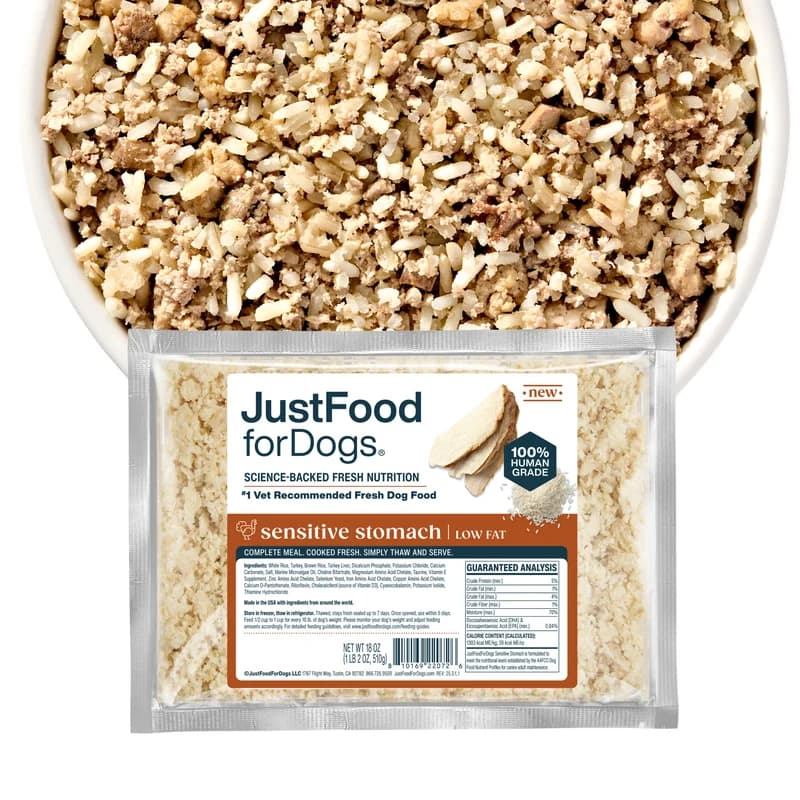
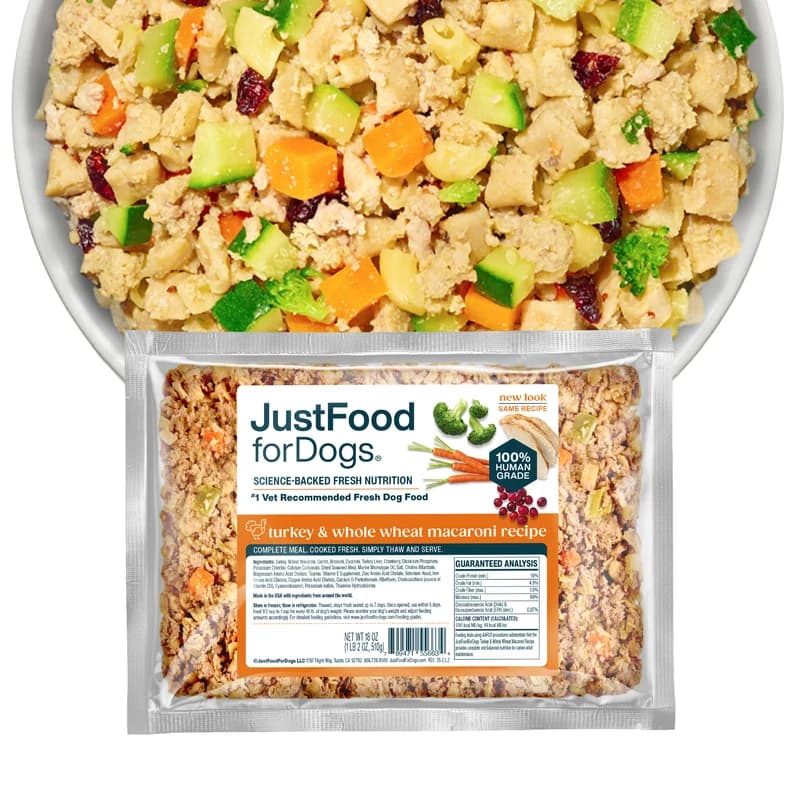
This is the recipe JustFoodForDogs formulated specifically to be gentle on the stomach, and the ingredient list reads like a vet wrote it on a prescription pad: ground turkey, long-grain white rice, long-grain brown rice, turkey liver, omega marine microalgae oil, and a nutrient blend to make it complete and balanced.
Compare the gentle-diet recipes discussed here with your veterinarian before changing your dog’s food.
- Turkey with white and brown rice
- Gently cooked Fresh Frozen meals
- View the full recipe and feeding guidance
A fresh-food option to discuss with your veterinarian.
Petful may earn a commission when you click through to JustFoodForDogs, at no extra cost to you.
Notice what each piece is doing. Turkey, supported by turkey liver, is the single protein source, which keeps the variables down and gives dogs that have reacted to chicken or beef a different option. White rice is one of the most easily digestible grains we can offer a dog, while brown rice contributes dietary fiber to help support healthy digestion. The marine microalgae oil adds omega-3 fatty acids, and taurine is included for heart support.
Just as important is what the recipe leaves out: no chicken, no wheat, no legumes, and no fillers, by-products, artificial additives, preservatives, or added growth hormones. The fat profile is deliberately low, with crude fat between 1 and 4 percent, a meaningful difference for dogs that struggle with richer meals.
In my experience, this style of recipe fits the dog with a long history of grumbly mornings and unpredictable stools. Many dogs with sensitive stomachs do well on a simple turkey and rice diet like this one, fed consistently. As of June 2026, a small box (7.8 pounds of food) runs about $97.99 at full price, with substantial first-order autoship discounts frequently available.
Fish & Sweet Potato: The Omega-3 Option
If your dog's touchy stomach comes with itchy skin or a dull coat, this is the recipe to discuss with your vet. Fish & Sweet Potato is built on white fish, which is a naturally lean protein with naturally occurring omega-3 fatty acids, alongside sweet potatoes, russet potatoes, green beans, broccoli, and flaxseed oil for additional essential fatty acids.
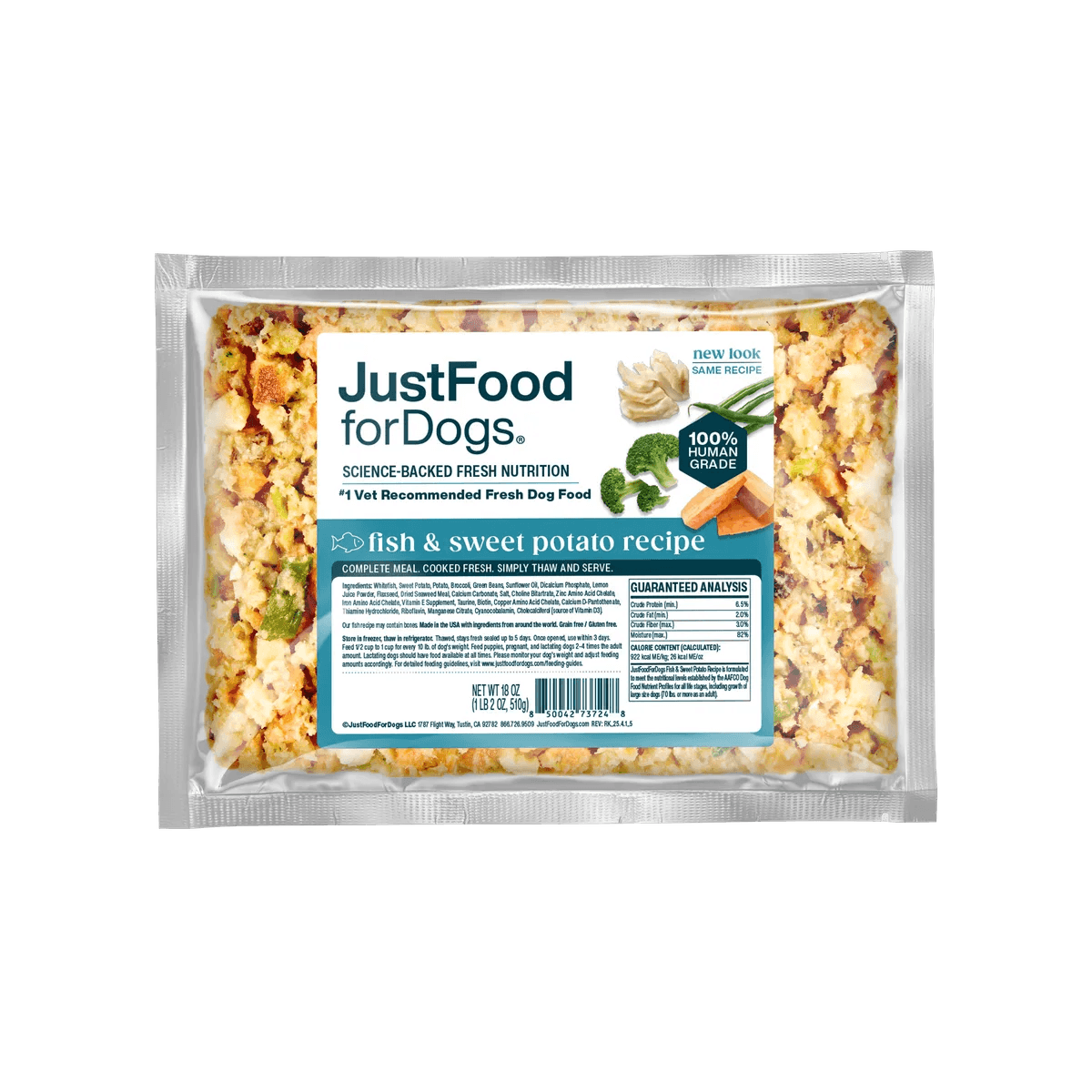
Compare the gentle-diet recipes discussed here with your veterinarian before changing your dog’s food.
- Whitefish with sweet potato
- Fresh Frozen meals with whole-food ingredients
- View the recipe and life-stage guidance
Petful may earn a commission when you click through to JustFoodForDogs, at no extra cost to you.
Many dogs with overlapping skin and stomach issues benefit from omega-3 rich recipes, and fish is also a genuinely novel protein for most dogs, which makes this a useful option when poultry and beef are both under suspicion. The recipe includes seaweed meal as a natural prebiotic to help support gut health. As of June 2026, a small box is priced around $84 before autoship discounts.
The Vet Support Line for Diagnosed Conditions
Finally, a note for dogs whose digestive signs turn out to have a medical cause. JustFoodForDogs makes a Vet Support line, including renal, hepatic, metabolic, and critical care recipes, designed to be fed under veterinary guidance for diagnosed conditions. (Joint & Skin Support is a gentler targeted recipe that does not require veterinary authorization.) These are not foods to self-select; your veterinarian can tell you whether one belongs in the plan.
| Recipe | Protein | Carb | Fat Profile | Best Fit |
|---|---|---|---|---|
| Sensitive Stomach | Ground turkey + turkey liver | White + brown rice | Low (1 to 4% crude fat) | Everyday meals for digestively sensitive dogs |
| Fish & Sweet Potato | White fish | Sweet + russet potatoes | Naturally lean (2% min crude fat) | Dogs with overlapping skin and stomach sensitivities |
| Vet Support diets | Varies by recipe | Varies by recipe | Varies by recipe | Diagnosed conditions, under veterinary guidance |
How to Transition Without Upsetting the Stomach
The single biggest mistake I see with sensitive dogs is a well-meaning owner switching to a gentler food overnight. Even an excellent diet, introduced too fast, can produce exactly the symptoms you were trying to leave behind.
Here is the schedule I give my own clients:
- Days 1 to 2: 25 percent new food, 75 percent current food
- Days 3 to 4: 40 percent new, 60 percent current
- Days 5 to 6: 60 percent new, 40 percent current
- Days 7 to 8: 80 percent new, 20 percent current
- Days 9 to 10: 100 percent new food
Keep everything else constant throughout: same feeding times, same portion total, no new treats, no table scraps. If stools soften at any stage, hold at that ratio for two or three extra days before increasing again. Worsening signs are your cue to pause and call your vet.
- The 7 to 10 day schedule is the minimum, written for average dogs. For a genuinely sensitive dog, stretch it to 14 days or more. There is no prize for finishing the transition quickly, and every setback costs you more days than the slow path would have. When owners tell me a food "did not agree" with their dog, the speed of the switch is the first thing I ask about.
What Vets Recommend for Dogs With Sensitive Stomachs
So what do vets actually recommend for dogs with sensitive stomachs? Speaking as one, the honest answer is a process, not a product.
Step one is ruling out medical causes. Parasites, infections, pancreatitis, and other conditions can all masquerade as a "sensitive stomach." A physical exam, a stool check, and sometimes bloodwork come before any food decisions.
Step two is a structured food trial. Once your dog has a clean bill of health, your vet will usually suggest a simple, highly digestible diet, often one protein and one or two carbohydrate sources, fed exclusively for several weeks. No extras, because a single stolen sandwich can muddy weeks of careful observation.
Step three is changing one variable at a time. Keep a simple diary of meals and stool quality. If things improve on a simple turkey and rice recipe, you have learned something valuable. If they do not, the diary helps your vet decide what to investigate next.
Gently cooked fresh diets fit naturally into this framework. The qualities that make a food trial work, short ingredient lists, high digestibility, and consistent batches, are the same reasons some dogs visibly thrive on fresh food. The key is doing it with your vet rather than around them.
It usually refers to the JustFoodForDogs Sensitive Stomach recipe, a gently cooked fresh frozen meal made from ground turkey, white and brown rice, turkey liver, and omega marine microalgae oil. It is formulated to be gentle on the stomach, with a single protein source, a low fat profile, and no legumes, fillers, or artificial preservatives.
There is no single best food, because every dog reacts differently. Vets generally look for a short ingredient list, a single protein source, easily digestible carbohydrates like white rice, a moderate to low fat profile, and no artificial additives. Many dogs with sensitive stomachs do well on gently cooked fresh recipes with those qualities, identified through a food trial with your vet.
Many veterinarians do recommend it. JustFoodForDogs markets itself as the number one veterinary recommended fresh food, and the company offers a dedicated Vet Support line designed to be fed under veterinary guidance. Your own vet can confirm whether it fits your dog.
Vets typically recommend ruling out medical causes first, then running a structured food trial on a simple, highly digestible diet with a single protein and easily digestible carbohydrates. They also advise transitioning foods slowly, keeping treats and extras consistent, and tracking stool quality so each change teaches you something.
Set patient expectations. Stool quality often starts to settle within 2 to 4 weeks on a new diet, but skin-related changes can take 8 to 12 weeks, and a proper veterinary food trial usually runs at least 8 weeks. If signs worsen at any point, or you see red flags like blood, lethargy, or repeated vomiting, contact your vet promptly instead of waiting it out.
A Calmer Stomach Starts With a Plan
A sensitive stomach rarely turns around because of one dramatic change. It turns around because an owner and a vet make a plan: rule out the medical stuff, simplify the bowl, switch slowly, and watch closely. The JustFoodForDogs gentle-diet lineup gives you well-built tools for that plan, from the turkey and rice Sensitive Stomach recipe to the omega-3 rich Fish & Sweet Potato.
Your dog cannot tell you what is bothering them at 3am. But with a simple, gently cooked diet, a patient transition, and your veterinarian in the loop, many sensitive dogs settle into a comfortable routine. Quieter nights are a very reasonable goal.
BVMS, MRCVS
Dr. Pippa Elliott, BVMS, MRCVS, is a veterinarian with nearly 30 years of experience in companion animal practice. Dr. Elliott earned her Bachelor of Veterinary Medicine and Surgery from the University of Glasgow. She was also designated a Member of the Royal College of Veterinary Surgeons. Married with 2 grown-up kids, Dr. Elliott has a naughty Puggle named Poggle, 3 cats and a bearded dragon.
Sign up for expert-backed reviews and safety alerts all in one place.


A Final Word (Disclaimer)
At Petful, our review integrity is paramount; we never exchange special treatment in our reviews for monetary or material rewards.
Nonetheless, when our readers click through to online merchants (including Chewy or Amazon), we receive a referral commission. This supports the running of our free blog, and we appreciate your backing.