Best Dog Food for Allergies: 9 Vet-Reviewed Picks That Actually Work
The 9 best dog foods for allergies in 2026, vet-reviewed by Dr. Pippa Elliott. Prescription hydrolyzed, fresh, and over-the-counter limited-ingredient options for itchy and food-sensitive dogs.

BVMS, MRCVS
Petful is reader supported. As an affiliate of platforms like Amazon and Chewy, we may earn a commission when you buy through links on this page. There is no extra cost to you.
Petful may earn a commission on purchases made through links in this article, at no extra cost to you. Brand selection is independent.
This product is intended for use under veterinary supervision. Nutritional recommendations should be discussed with your veterinarian to determine the most appropriate diet for your dog's individual needs.
- 1True food allergies are a minority of itchy-dog cases relative to environmental allergies (atopic dermatitis) per the American College of Veterinary Dermatology's educational materials; exact prevalence varies by source and clinical setting.
- 2The seven most commonly reported dog food allergens in published reviews are beef, dairy, chicken, wheat, lamb, soy, and egg (per Mueller et al. 2016; aggregate reporting varies).
- 3Diagnosis requires an 8 to 12-week strict elimination diet trial under veterinary supervision. At-home blood and saliva 'allergy tests' are not validated and should not guide diet changes.
- 4Just Food For Dogs Sensitive Skin (frozen, adult, a wild-caught white fish recipe with skin-supporting omega-3 and omega-6 fatty acids) and the Fish & Sweet Potato recipe (frozen, adults and puppies) are our OTC picks for dogs with food sensitivities: novel-protein, limited-ingredient-style recipes with transparent whole-food ingredients, developed by board-certified veterinary nutritionists. The structure fits how many veterinarians design novel-protein diet trials.
- 5For severe veterinarian-diagnosed food allergies, prescription hydrolyzed protein diets (Purina Pro Plan HA, Hill's z/d, Royal Canin Veterinary Diet Hydrolyzed Protein HP) break proteins into peptides too small for the immune system to recognize.
The best dog food for allergies in 2026 leads with Just Food For Dogs Sensitive Skin (frozen, adult, a wild-caught white fish recipe with skin-supporting omega-3 and omega-6 fatty acids) and the JFFD Fish & Sweet Potato recipe (frozen, adults and puppies) for OTC management of food sensitivities, Purina Pro Plan Veterinary Diets HA Hydrolyzed for severe veterinarian-diagnosed food allergies, and Hill's Prescription Diet Derm Complete for dogs with both food and environmental allergies. The JFFD recipes are vet-nutritionist-developed with transparent whole-food ingredient decks; prescription hydrolyzed kibbles break proteins into peptides too small for the immune system to recognize. The American College of Veterinary Dermatology describes true food allergy as a minority of canine pruritic-skin cases relative to environmental atopic dermatitis (exact prevalence varies by source and clinical setting). Diagnosis requires an 8 to 12-week elimination diet trial under veterinary supervision. Common reported triggers per the Mueller et al. 2016 PubMed-indexed review are beef, dairy, chicken, wheat, and lamb, with soy, egg, corn, and fish less common.
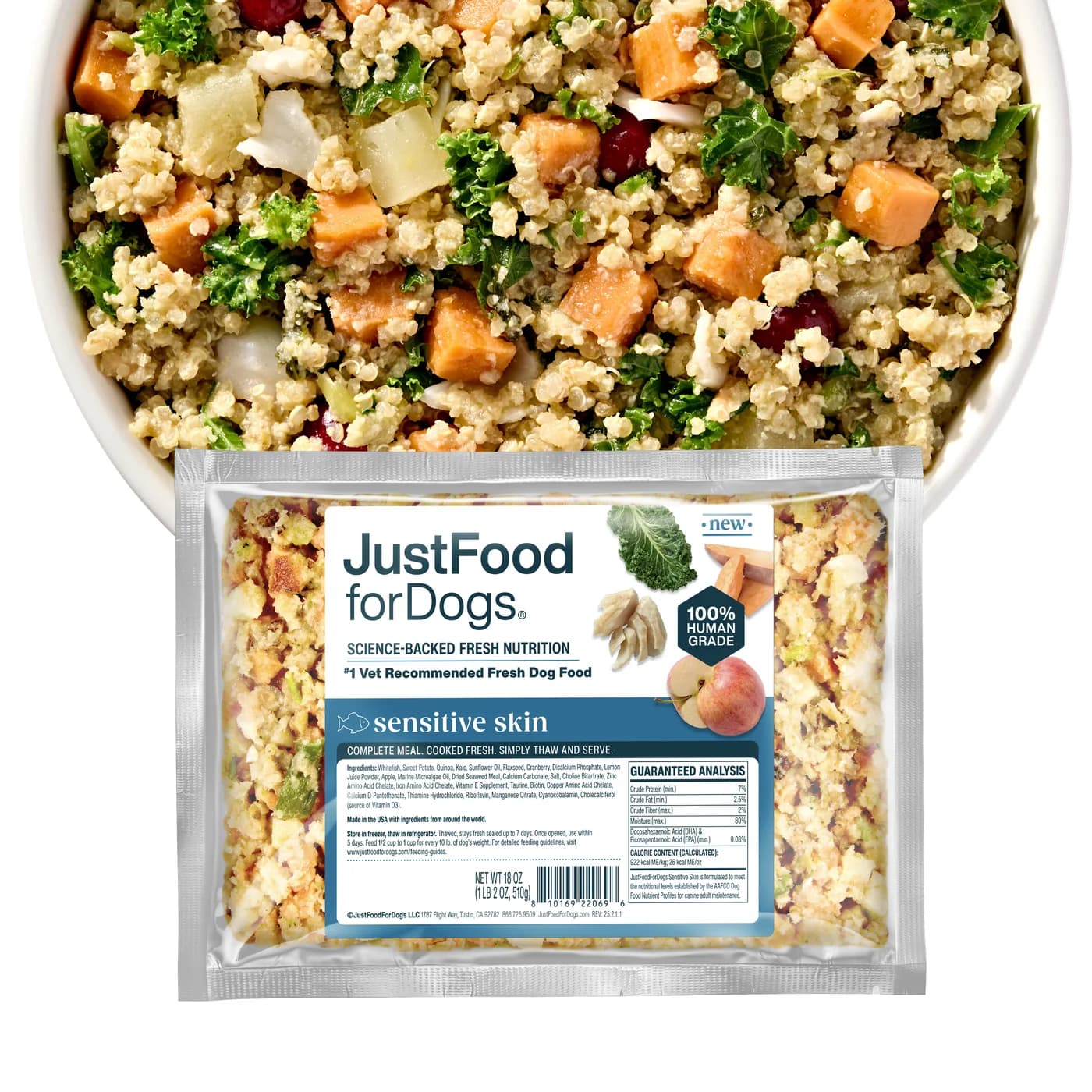
Explore the whitefish Sensitive Skin recipe discussed in this guide, and check its ingredients against your dog’s known triggers.
- Whitefish-based Fresh Frozen recipe
- Made for adult dogs
- Review the full ingredient list with your vet
Choose a recipe around your dog’s known food triggers.
Petful may earn a commission when you click through to JustFoodForDogs, at no extra cost to you.
| Category | Our Pick | Type |
|---|---|---|
| Best Overall for Food Sensitivities | Just Food For Dogs Fish & Sweet Potato | Fresh, OTC |
| Best Hydrolyzed Prescription | Purina Pro Plan HA Hydrolyzed | Rx hydrolyzed |
| Best for Environmental + Food Allergies | Hill's Prescription Diet Derm Complete | Rx hydrolyzed |
| Best for Severe Food Allergies | Royal Canin Veterinary Diet Hydrolyzed Protein HP | Rx hydrolyzed |
| Best OTC Novel-Protein (Fish) | Open Farm Wild-Caught Salmon | OTC LID |
| Best Fresh Subscription LID | The Farmer's Dog Custom Blend | Fresh, OTC |
| Best Budget OTC LID | Natural Balance L.I.D. Sweet Potato & Fish | OTC LID |
| Best Mid-Range OTC LID | Blue Buffalo Basics Skin & Stomach Care | OTC LID |
| Best Grain-Free Done Responsibly | Wellness CORE Grain-Free Whitefish | OTC LID |

Sign up for expert-backed reviews and safety alerts all in one place.
How Do You Know If Your Dog Has a Food Allergy?
True food allergies in dogs are immune reactions to specific protein molecules in the diet. They are diagnosed by exclusion: a strict 8 to 12-week elimination diet trial in which the dog eats only a single novel protein and single carbohydrate the dog has never been exposed to, with zero treats, flavored medications, or table scraps allowed. If symptoms (itchy skin, recurrent ear infections, paw licking, chronic vomiting or diarrhea) resolve on the trial diet and return on a controlled re-challenge, the diagnosis is confirmed.
The majority of itchy dogs in veterinary dermatology practice have environmental allergies (atopic dermatitis) rather than food allergies, per ACVD educational materials. Environmental allergens include pollens, grasses, dust mites, and mold. A dog can have both. The only way to tell the two apart is the elimination diet trial; at-home blood and saliva tests sold direct-to-consumer are not validated against gold-standard diet trials and should not be used to make food decisions.
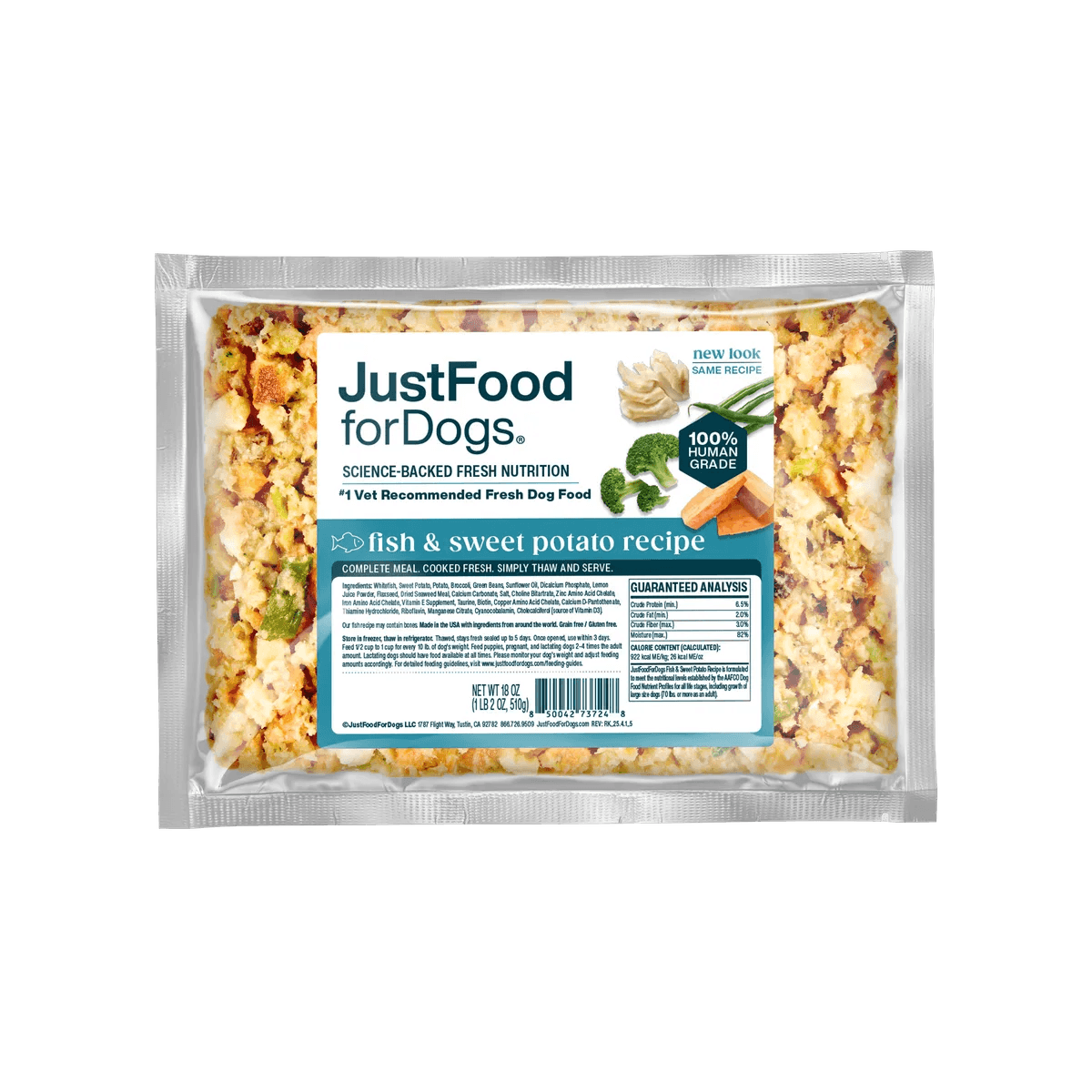
Explore the Fish & Sweet Potato recipe discussed in this guide, and check its ingredients against your dog’s known triggers.
- Whitefish with sweet potato
- Fresh Frozen meals with whole-food ingredients
- View the recipe and life-stage guidance
Petful may earn a commission when you click through to JustFoodForDogs, at no extra cost to you.
What Is the Best Dog Food for Allergies in 2026?
1. Just Food For Dogs Sensitive Skin + Fish & Sweet Potato: Best Overall for Dogs with Food Sensitivities
Just Food For Dogs offers two limited-ingredient OTC recipes our editors recommend for dogs with food-related skin sensitivities: Sensitive Skin (a frozen wild-caught white fish recipe labeled for adult maintenance, enriched with omega-3 and omega-6 fatty acids plus concentrated EPA and DHA to nourish skin and support a healthy coat, built on sweet potato, quinoa, kale, cranberries, and apples) and Fish & Sweet Potato (a frozen white fish recipe with cod, pollock, and haddock plus sweet potato and other limited whole-food ingredients per the JFFD product page, labeled for adults and puppies). Both are formulated by board-certified veterinary nutritionists from USDA-inspected human-grade ingredients, with a transparent whole-food ingredient deck. Both fit the structure many veterinarians use when designing novel-protein elimination diet trials for itchy, skin-reactive dogs.
- Novel-protein, limited-ingredient-style recipes with transparent whole-food ingredients
- Human-grade USDA ingredients you can recognize
- Formulated by board-certified veterinary nutritionists
- Fits the structure many veterinarians use when designing novel-protein diet trials
- Fresh, lightly cooked, no synthetic preservatives
- $3.75 to $7.50 per day for a 30-pound dog (premium price)
- Frozen format requires freezer space and thaw planning
- Two recipe choices may limit rotation for long-term feeding

 Sponsored
Want a vet's take on your dog's skin or coat?
Talk to a licensed vet at Dutch over video, often the same day. They can recommend treatment and prescribe it when it's appropriate.
Use code Pets60
Plans start at $12/month · covers up to 5 pets
- Licensed vets in most states
- Rx for 150+ conditions
- 4.7 on Trustpilot
2. Purina Pro Plan Veterinary Diets HA Hydrolyzed: Best Overall (Prescription)
Purina Pro Plan HA is the prescription hydrolyzed diet many veterinary dermatologists reach for in confirmed food allergy cases. The protein source (soy or chicken liver, depending on the formula) is broken down enzymatically into low-molecular-weight peptides intended to be small enough that the dog's immune system does not mount an allergic response. HA has extensive peer-reviewed clinical literature for hydrolyzed canine diets.
Best for: confirmed food allergies, both during the 8 to 12-week elimination trial and as a long-term maintenance diet.
- Hydrolyzed protein, the gold-standard mechanism for severe allergies
- Backed by extensive veterinary clinical research
- Controlled distribution through veterinarians ensures quality oversight
- Consistent ingredient quality control across batches
- Requires veterinary authorization to purchase
- $4 to $7 per day pricing
- Less palatable than premium fresh foods
- Not suited for dogs with multi-allergen profiles requiring novel proteins
3. Hill's Prescription Diet Derm Complete: Best for Environmental + Food Allergies
Hill's Derm Complete is one of the prescription diets specifically formulated for dogs with both environmental and food sensitivities. Per the Hill's product page, the formula combines hydrolyzed soy with omega-3 fatty acids, vitamin E, and selected phytonutrients intended to support the skin barrier in dogs with atopic dermatitis. It is more expensive than other Rx diets and is appropriate when a dog has overlapping allergy types and a veterinarian-directed trial is underway.
Best for: dogs with both diagnosed food allergies AND atopic dermatitis (a common overlap).
4. Royal Canin Veterinary Diet Hydrolyzed Protein HP: Best for Severe Food Allergies
Royal Canin Veterinary Diet Hydrolyzed Protein HP uses hydrolyzed soy protein and is commonly used for dogs with severe reactivity who failed an elimination trial on other hydrolyzed diets. Royal Canin also offers Hydrolyzed Protein HP and Gastrointestinal Low Fat + Hydrolyzed Protein for diet-responsive enteropathy under veterinary direction; product selection should be made with a veterinary internal-medicine or nutrition specialist.
Best for: severe food allergies, food-responsive gastrointestinal disease, as a third-line hydrolyzed option when the veterinarian recommends a different hydrolysis profile.
Explore the whitefish Sensitive Skin recipe discussed in this guide, and check its ingredients against your dog’s known triggers.
- Whitefish-based Fresh Frozen recipe
- Made for adult dogs
- Review the full ingredient list with your vet
Choose a recipe around your dog’s known food triggers.
Petful may earn a commission when you click through to JustFoodForDogs, at no extra cost to you.
5. Open Farm Wild-Caught Salmon: Best OTC Novel-Protein Kibble
Open Farm Wild-Caught Salmon is a strong over-the-counter limited-ingredient option for owners who prefer not to use a prescription hydrolyzed diet (and after consultation with a veterinarian). The formula uses a single ocean-friendly novel protein (wild salmon), grain-free carbohydrates from sweet potato and pumpkin, and Open Farm's signature ingredient-level traceability (every bag carries a lot code that Open Farm uses to trace the protein source through their supply chain).
Best for: dogs with mild-to-moderate food sensitivities whose owners want an OTC option with sourcing transparency.
6. The Farmer's Dog Custom Blend: Best Fresh Subscription for Allergies
The Farmer's Dog builds a custom recipe profile for each dog at sign-up. For dogs with food sensitivities, owners can select a single-protein recipe (turkey, pork, or beef) with no overlapping common allergens. Recipes are developed by veterinary nutritionists, cooked in USDA human-grade facilities, and shipped frozen in pre-portioned packs. We have detailed pricing breakdowns at how much The Farmer's Dog costs and whether The Farmer's Dog is safe for sensitive dogs.
Best for: dogs with mild sensitivities whose owners want hands-off portion control plus single-protein selection.
7. Natural Balance L.I.D. Sweet Potato & Fish: Best Budget OTC LID
Natural Balance L.I.D. pioneered the commercial limited-ingredient diet category and remains the most accessible OTC LID kibble at typical pet-store pricing. The Sweet Potato & Fish formula uses salmon as a single animal protein and sweet potato as a single carbohydrate, with no chicken, beef, dairy, wheat, soy, or egg. The brand offers multiple novel-protein variants (venison, bison, duck) for rotating dogs.
Best for: budget-conscious owners trying an OTC LID without subscription or premium-brand cost.
8. Blue Buffalo Basics Skin & Stomach Care: Best Mid-Range OTC LID
Blue Buffalo Basics is the mid-range limited-ingredient option. Recipes use a single novel protein (turkey, salmon, duck, or lamb), avoid the most common food allergens, and include Blue Buffalo's signature LifeSource Bits for antioxidant supplementation. The brand does not publicly identify a full-time board-certified veterinary nutritionist on staff (so the brand does not score as well against WSAVA's manufacturer-selection questions as the Big Three, though WSAVA does not certify pet food brands or maintain a compliant-brand list). The Basics line is one of the more reliable OTC limited-ingredient diets in its price tier.
Best for: mid-budget households wanting a step up from grocery-store kibble without prescription cost.
Explore the Fish & Sweet Potato recipe discussed in this guide, and check its ingredients against your dog’s known triggers.
- Whitefish with sweet potato
- Fresh Frozen meals with whole-food ingredients
- View the recipe and life-stage guidance
Petful may earn a commission when you click through to JustFoodForDogs, at no extra cost to you.
9. Wellness CORE Ocean Whitefish, Herring & Salmon: Grain-Free Option (Discuss with Veterinarian Given FDA DCM Investigation)
Wellness CORE Ocean Whitefish, Herring & Salmon is one of the grain-free options for dogs with a confirmed grain sensitivity. Per the current Wellness CORE product page, the recipe includes whitefish, herring meal, whitefish meal, peas, lentils, canola oil, dried ground potatoes, beet pulp, flaxseed, and salmon meal among the primary ingredients. Because the recipe is legume-heavy (peas and lentils), it is one of the ingredient profiles included in the FDA's open investigation into reports of non-hereditary canine dilated cardiomyopathy associated with certain diets, especially diets high in pulses or potatoes (the FDA has stated that adverse-event reports do not establish causality). For dogs with confirmed grain sensitivity (rare in dogs), discuss this product with your veterinarian, particularly for breeds with hereditary DCM risk.
Best for: dogs with veterinarian-confirmed grain sensitivity whose owners want grain-free done responsibly.
- An elimination diet trial works only if it is strict. For 8 to 12 weeks, your dog can eat the trial diet and water only. No treats, no flavored heartworm or NSAID medications, no rawhides, no table scraps, no flavored toothpaste. If symptoms resolve on the trial, your veterinarian will guide a controlled re-challenge with old food to confirm the diagnosis. Start any switch from current food over 7 to 10 days, mixing increasing percentages of the new diet with the old to prevent diet-related gastrointestinal upset.
- The majority of skin issues in dogs trace to environmental allergens rather than food allergens, per ACVD educational materials. Switching to a Limited Ingredient Diet without an elimination trial supervised by your veterinarian rarely resolves true food allergies, and can mask other diagnoses like atopic dermatitis or flea allergy.
 Sponsored
Vet care that's always there
Unlimited video calls and messaging with licensed vets for less than a typical vet visit. One membership covers up to five pets.
Use code Pets60
Plans start at $12/month · covers up to 5 pets
- Licensed vets in most states
- Rx for 150+ conditions
- 4.7 on Trustpilot
How Is a Dog Food Allergy Actually Diagnosed?
The only validated diagnostic tool for canine food allergy is the elimination diet trial followed by controlled re-challenge. The protocol: feed a single novel protein plus single carbohydrate (or a prescription hydrolyzed diet) exclusively for 8 to 12 weeks. If skin and gastrointestinal symptoms resolve, reintroduce the previous diet. If symptoms return within 1 to 2 weeks of re-challenge, the diagnosis of food allergy is confirmed. The American Veterinary Medical Association and the World Small Animal Veterinary Association both endorse this approach.
At-home blood and saliva 'allergy tests' marketed direct-to-consumer have been studied repeatedly and shown to produce results indistinguishable from random in placebo-fed dogs. Do not change your dog's diet based on these tests. Skin (intradermal) allergy testing performed by a veterinary dermatologist is the gold standard for environmental allergens but is not validated for diagnosing food allergies.
What Key Features Should You Look For in a Dog Food for Allergies?
The best dog foods for allergies share four characteristics validated by veterinary dermatologists and the American College of Veterinary Dermatology (ACVD). When evaluating any product label, look for these features in this order.
Hydrolyzed Protein
Hydrolyzed protein is chicken, soy, or other protein broken down enzymatically into peptide fragments small enough that the dog's immune system does not recognize them as allergens. This is the gold-standard mechanism for severe food allergies. Veterinary-prescription hydrolyzed diets (Hill's Prescription Diet z/d, Royal Canin Veterinary Diet Hydrolyzed Protein HP, Purina Pro Plan Veterinary Diets HA) use this approach. Hydrolyzed diets are typically reserved for diagnosed food-allergic dogs because they require veterinary oversight and cost $4 to $7 per day.
Limited Ingredient Diet (LID)
A limited ingredient diet uses a focused, simplified ingredient list (typically a single named animal protein and one or two carbohydrate sources, with minimal additional inclusions) compared to the typical 8 to 12 ingredients in conventional kibble. The reduced ingredient count narrows the field of possible allergens, simplifying the elimination diet protocol. JFFD Fish & Sweet Potato and JFFD Sensitive Skin, Natural Balance L.I.D. Salmon & Sweet Potato, and Blue Buffalo Basics are all standard LID formats. Over-the-counter LIDs work for mild-to-moderate food sensitivities; they do not replace prescription hydrolyzed diets for diagnosed allergies.
Novel Protein
Novel protein refers to a protein source the dog has never eaten before, such as venison, alligator, kangaroo, or duck. Because the immune system has not been exposed, it cannot have developed sensitivity. Novel proteins are most useful for elimination diet trials, where a vet may prescribe a single-protein-and-single-carb regimen for 8 to 12 weeks to identify the trigger. Once the trigger is identified, the dog can typically return to a more conventional diet that excludes that specific protein.
Omega Fatty Acids for Skin Health
Allergies in dogs typically present with itching and skin inflammation rather than gastrointestinal distress. Omega-3 fatty acids (EPA and DHA from fish oil or marine algae) and omega-6 (linoleic acid) are commonly used to support the skin barrier and reduce inflammatory signaling. Dosing varies by source and clinical context; confirm a target dose with your veterinarian for your dog's body weight and any concurrent conditions. Look for foods that explicitly publish omega-3 levels in the guaranteed analysis.
- Prescription hydrolyzed diets (Hill's z/d, Royal Canin Ultamino, Purina Pro Plan HA) are reserved for diagnosed food allergies and require veterinary authorization. Over-the-counter limited-ingredient diets (Just Food For Dogs Fish & Sweet Potato, Natural Balance L.I.D., Blue Buffalo Basics) work for owners managing mild food sensitivities under vet guidance.
What Ingredients Should You Avoid in Dog Food for Allergies?
Avoid any protein your dog has previously eaten regularly. The seven most common food allergens in dogs (in roughly decreasing order) are beef, dairy, chicken, wheat, lamb, soy, and egg. For most dogs, this means a true LID will use fish, venison, rabbit, duck, or kangaroo as the novel protein, paired with sweet potato, pumpkin, or oats as the carbohydrate. Avoid foods listing 'meat' or 'animal protein' without species identification, since unknown protein sources cannot be ruled out as triggers.
Also watch for hidden ingredients in treats, flavored medications, dental chews, and table scraps. A strict elimination trial is meaningless if your dog gets a chicken-flavored Heartgard or a peanut butter Kong. Talk to your veterinarian about switching to unflavored or compounded versions of any chronic medications before starting the trial.
An 8 to 12 week elimination trial only works if it is strict. MyPetID.ai keeps your dog's food log, symptom timeline, and vet notes in one record, so you and your vet can see exactly what was eaten when and what changed.
Start a free pet recordFrequently Asked Questions
JFFD Sensitive Skin (frozen, adult, a wild-caught white fish recipe with skin-supporting omega-3 and omega-6 fatty acids) and JFFD Fish & Sweet Potato (frozen, adults and puppies) are our top OTC picks for dogs with food sensitivities. Both use a single named animal protein with transparent whole-food ingredients, are developed by board-certified veterinary nutritionists, and fit the structure many veterinarians use when designing novel-protein diet trials. For severe veterinarian-diagnosed food allergies, prescription hydrolyzed protein diets (Purina Pro Plan HA, Hill's z/d, Royal Canin Veterinary Diet Hydrolyzed Protein HP) are the standard.
It depends on the cause of the itch. If the itch is from food allergy, switch to a hydrolyzed prescription diet or a strict limited-ingredient diet with a novel protein. If the itch is from environmental allergies (environmental allergy cases substantially outnumber food allergy cases per ACVD educational materials), diet alone will not resolve symptoms; your dog may need a combination approach including Hill's Derm Complete plus veterinary management of the underlying atopic dermatitis.
The seven most common food allergens in dogs are beef, dairy, chicken, wheat, lamb, soy, and egg, in roughly that order. Note that grain (corn, rice, oats) is NOT among the top allergens despite the marketing, grain allergies in dogs are genuinely rare. The most common allergen, beef, is in roughly 35 to 40 percent of confirmed cases.
The '3-day rule' is a myth. An effective elimination diet trial requires 8 to 12 weeks of strict diet adherence before symptoms can be reliably evaluated. Three days is not long enough for inflammatory skin and gastrointestinal symptoms to resolve, even if the diet is correct.
Veterinary dermatologists typically recommend a tiered approach: rule out parasites (fleas, mites), then evaluate for environmental versus food allergy. For environmental, the gold standard is skin (intradermal) testing followed by allergen-specific immunotherapy. For food, an 8 to 12-week elimination diet trial is required. Adjunct therapies include omega-3 supplementation, medicated shampoos, and prescription anti-itch medications like Apoquel or Cytopoint.
Companion educational guides
These deeper educational and clinical companions cover the science behind the buyer's guide above:
- Allergens in Dog Food, the top 9 food allergens for dogs (beef, dairy, chicken, wheat, lamb) with symptoms and elimination protocol
- Food Intolerance in Dogs, how to distinguish food intolerance from a true food allergy, and how to treat each
- Dog Food for Sensitive Stomachs, 9 vet-recommended picks for dogs with chronic digestive sensitivity
Which Dog Food Should You Choose for an Allergic Dog?
The best dog food for allergies in 2026 leads with Just Food For Dogs Sensitive Skin (frozen, adult) and the JFFD Fish & Sweet Potato recipe (frozen, adults and puppies) for OTC management of food sensitivities and the elimination diet trial. Both are developed by board-certified veterinary nutritionists as novel-protein, limited-ingredient options with transparent whole-food ingredients, and fit the structure many veterinarians use when designing novel-protein diet trials. For severe veterinarian-diagnosed cases that fail OTC management, prescription hydrolyzed diets (Purina Pro Plan HA, Hill's Prescription Diet z/d or Derm Complete, Royal Canin Veterinary Diet Hydrolyzed Protein HP) are the most defensive next step under veterinary direction. Whatever you pick, start the transition over 7 to 10 days and be strict with treats, flavored medications, and table scraps. Anything less than total compliance turns an elimination trial into a misleading result.
For a broader look at dog food brands across categories beyond allergies, see our complete guide to the best dog food brands of 2026. For storage and freshness tips that matter especially for limited-ingredient diets (which lack preservatives), see our guide to the best dog food storage containers.
BVMS, MRCVS
Dr. Pippa Elliott, BVMS, MRCVS, is a veterinarian with nearly 30 years of experience in companion animal practice. Dr. Elliott earned her Bachelor of Veterinary Medicine and Surgery from the University of Glasgow. She was also designated a Member of the Royal College of Veterinary Surgeons. Married with 2 grown-up kids, Dr. Elliott has a naughty Puggle named Poggle, 3 cats and a bearded dragon.
Sign up for expert-backed reviews and safety alerts all in one place.