Dog Food Storage Containers: How to Choose and Use the Best
Choose a dog food container that fits the original bag and your daily routine. Compare four practical options, understand capacity claims, and follow clear steps for cleaning, refilling and travel.
Petful is reader supported. As an affiliate of platforms like Amazon and Chewy, we may earn a commission when you buy through links on this page. There is no extra cost to you.
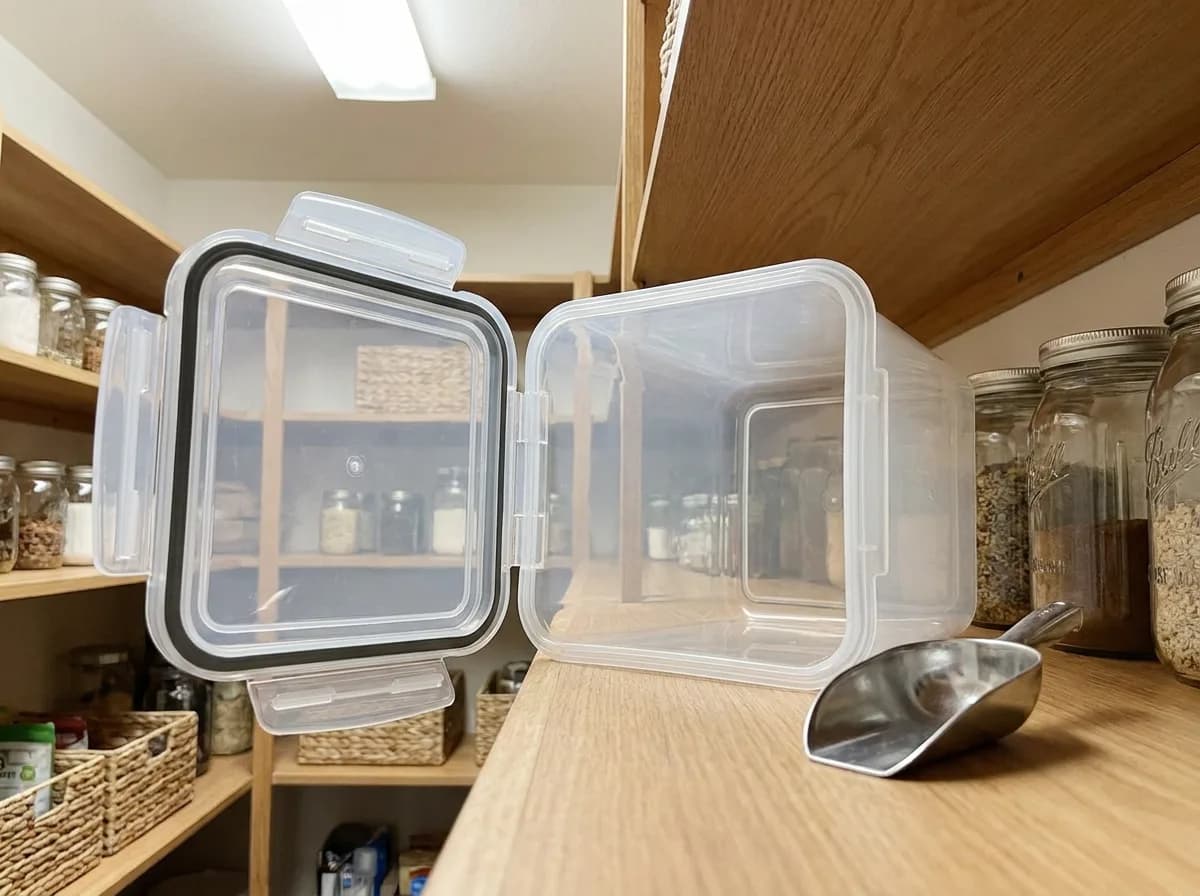
Dog food storage containers work best when they fit the food’s original bag, close securely and are easy to clean. Start with the bag you actually buy and the space where you will keep it. A container’s advertised capacity in pounds does not guarantee that a full bag will fit inside.
The four options below suit different jobs: stackable household storage, separate food and treat compartments, smaller bags, and travel portions. For everyday dry food, the FDA recommends keeping the original packaging, ideally placing the entire bag inside a storage container. That preserves the information you may need if there is a problem with the food. FDA pet food storage guidance

Sign up for expert-backed reviews and safety alerts all in one place.
Dog food storage containers compared
The best dog food container is the one that makes your normal feeding routine easier without creating a storage or cleaning problem. These recommendations compare product specifications and practical fit. They do not establish that one brand keeps every food fresh for a particular number of days.
| Your main need | Product to consider | Check before choosing |
|---|---|---|
| Stackable household storage | Gamma2 Vittles Vault Stackable, 40-lb | Whether your original bag fits through the opening and the container fits your storage space |
| Separate food and treat compartments | IRIS 3-Piece WeatherPro Combo, Clear/Navy, 35-lbs/45-qt | The 45-quart total is divided between a 33-quart bin and a 12-quart bin |
| Compact storage for a smaller bag | Van Ness Pet Food Storage Container, 10-lb | Bag fit and access; this FC10 selection does not include the larger models’ wheels |
| Portable portions for a trip | Kurgo Kibble Carrier, Navy Blue | Trip portions, room to roll the top closed and time to wash and air-dry afterward |
- 1The best dog food container fits the original bag and can be opened, cleaned and dried without difficulty.
- 2Compare the best dog food storage containers by usable compartment size, closure and daily access, not advertised pounds alone.
- 3Choose a travel carrier for portable portions and a household bin for your regular storage location.
| Product choice | Original-bag and capacity check | Main limitation |
|---|---|---|
| Gamma2 Vittles Vault Stackable, 40-lb | Nominal loose-food capacity; confirm bag and opening fit | Food density and retained packaging affect usable capacity |
| IRIS WeatherPro Combo, Clear/Navy, 35-lbs/45-qt | Separate 33-quart and 12-quart compartments | Combined capacity is not the capacity of the lower bin |
| Van Ness FC10, 10-lb | Smaller nominal capacity; check the filled original bag | No wheels on this selected 10-lb model |
| Kurgo Kibble Carrier, Navy Blue | Up to 5 pounds or approximately 20 cups; leave closure space | Flexible travel bag, not a rigid household storage bin |
For stackable household storage: Gamma2 Vittles Vault Stackable, 40-lb
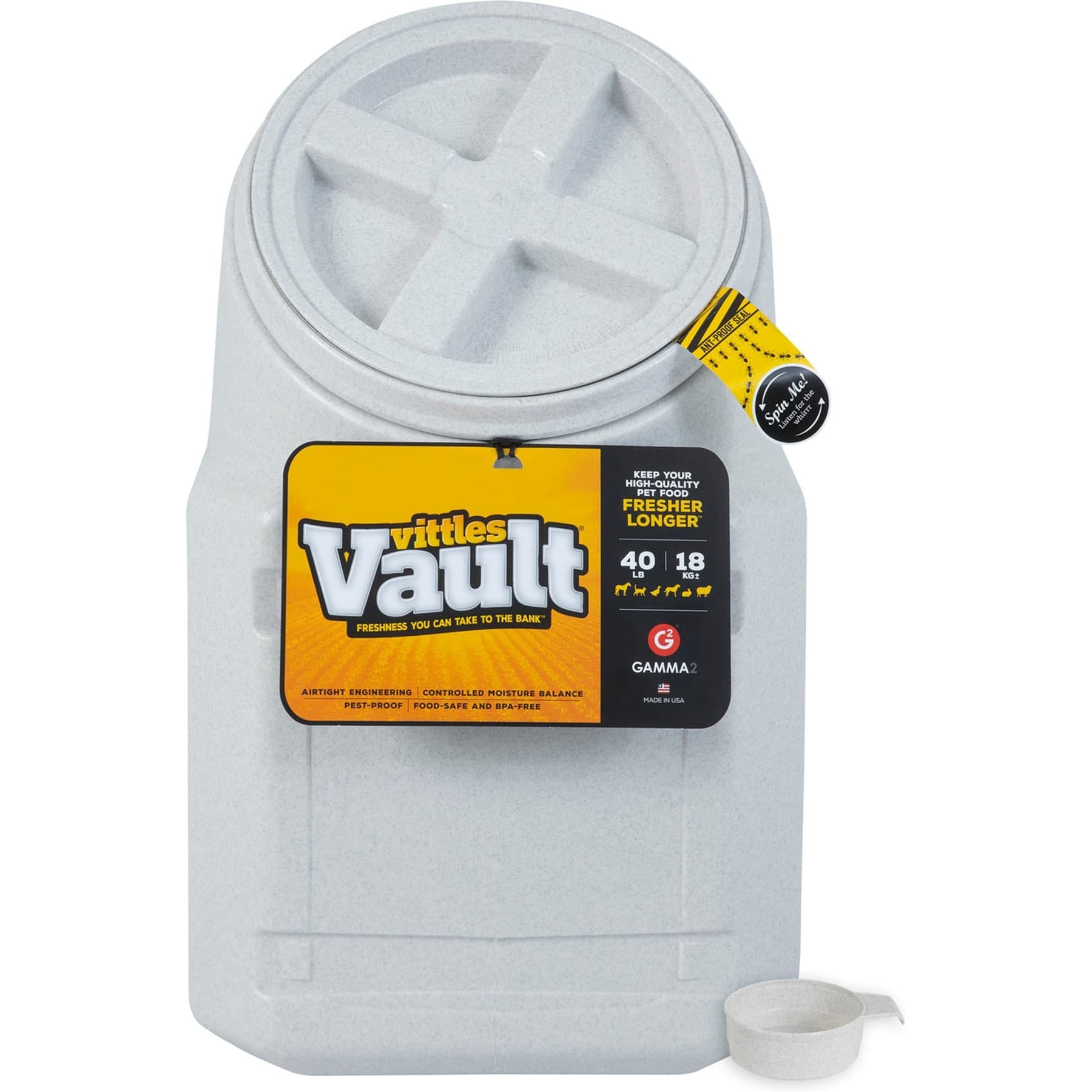
Stackable household storage. Capacity varies with food density; check that your bag and shelf space fit.
Petful may earn a commission when you click through to Chewy, at no extra cost to you.
The 40-pound Gamma2 Vittles Vault Stackable suits a household that wants a rigid container with a threaded lid. The manufacturer describes HDPE construction and double gaskets, while noting that food capacity varies with kibble density. Its stackable shape can help organize a dedicated feeding area. Vittles Vault specifications
The useful question is whether your bag fits the opening while leaving the lid free to close. Also consider whether everyone who feeds your dog can comfortably turn the lid and reach the food.
- Choose it for: a permanent indoor location where stacking is useful.
- Check carefully: original-bag fit, access and the exact capacity variant.
Vittles Vault Outback, Plus and other sizes are not interchangeable listings. Reviews of a 50-pound container may not describe the same shape or opening as this selected 40-pound stackable version.
For separate food and treats: IRIS 3-Piece WeatherPro Combo
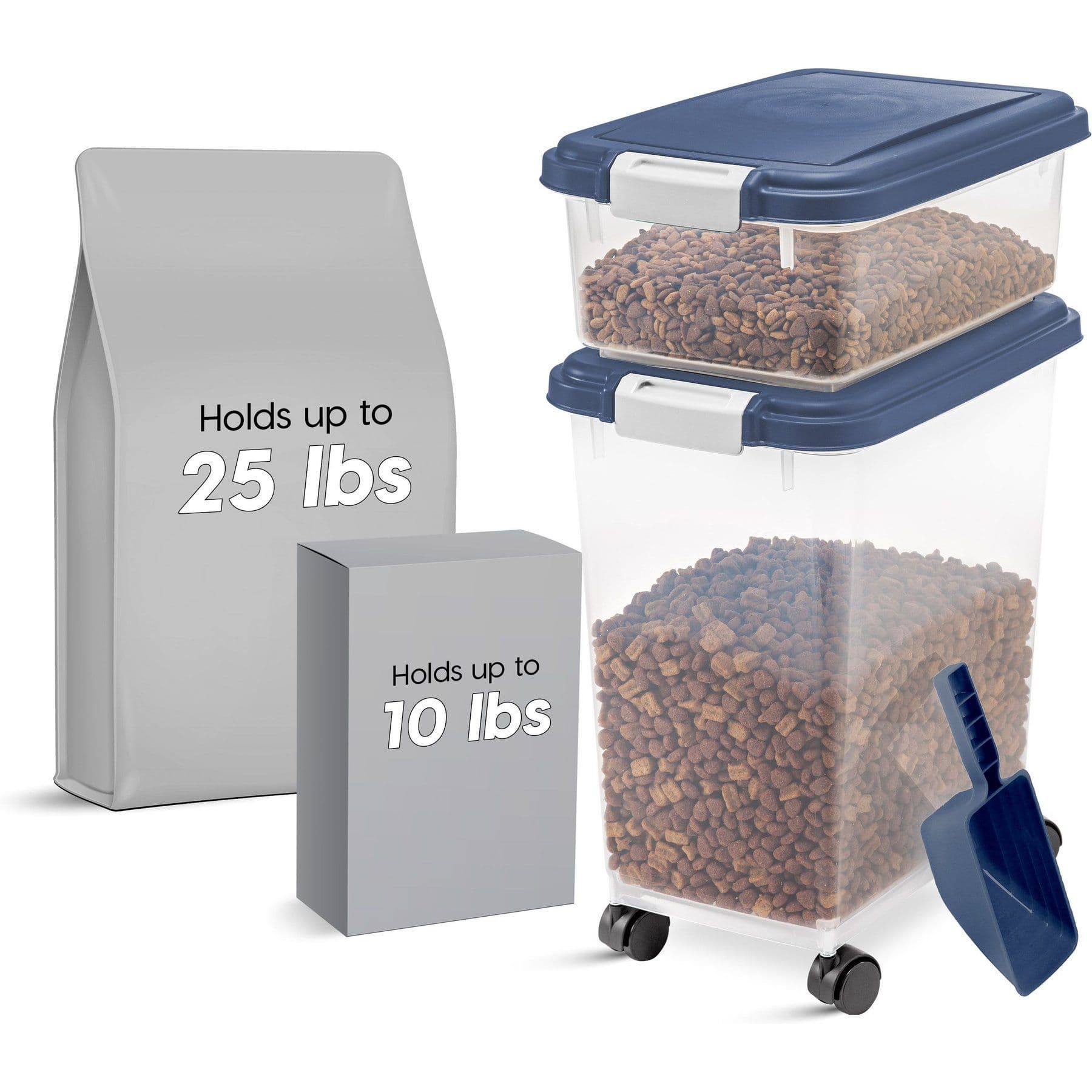
Separate food and treat storage. Total capacity spans two containers; includes scoop and removable casters.
Petful may earn a commission when you click through to Chewy, at no extra cost to you.
The IRIS WeatherPro Combo in Clear/Navy provides a larger lower container, a smaller stacking container, a scoop and removable casters. This selected 45-quart set uses 33-quart and 12-quart compartments. The combined capacity is useful when you want separate places for kibble and treats. IRIS combo specifications
The headline 35-pound capacity does not mean one 35-pound bag will fit into the bottom container. Measure that compartment against the bag you plan to store, and allow space to remove the upper bin when accessing the lower lid.
- Choose it for: two distinct storage jobs within one organized area.
- Check carefully: each compartment’s capacity and the clearance needed to use both.
Other IRIS combinations have different compartment sizes. Match the selected Clear/Navy 35-lbs/45-qt configuration rather than assuming every three-piece set is identical.
For smaller bags: Van Ness Pet Food Storage Container, 10-lb
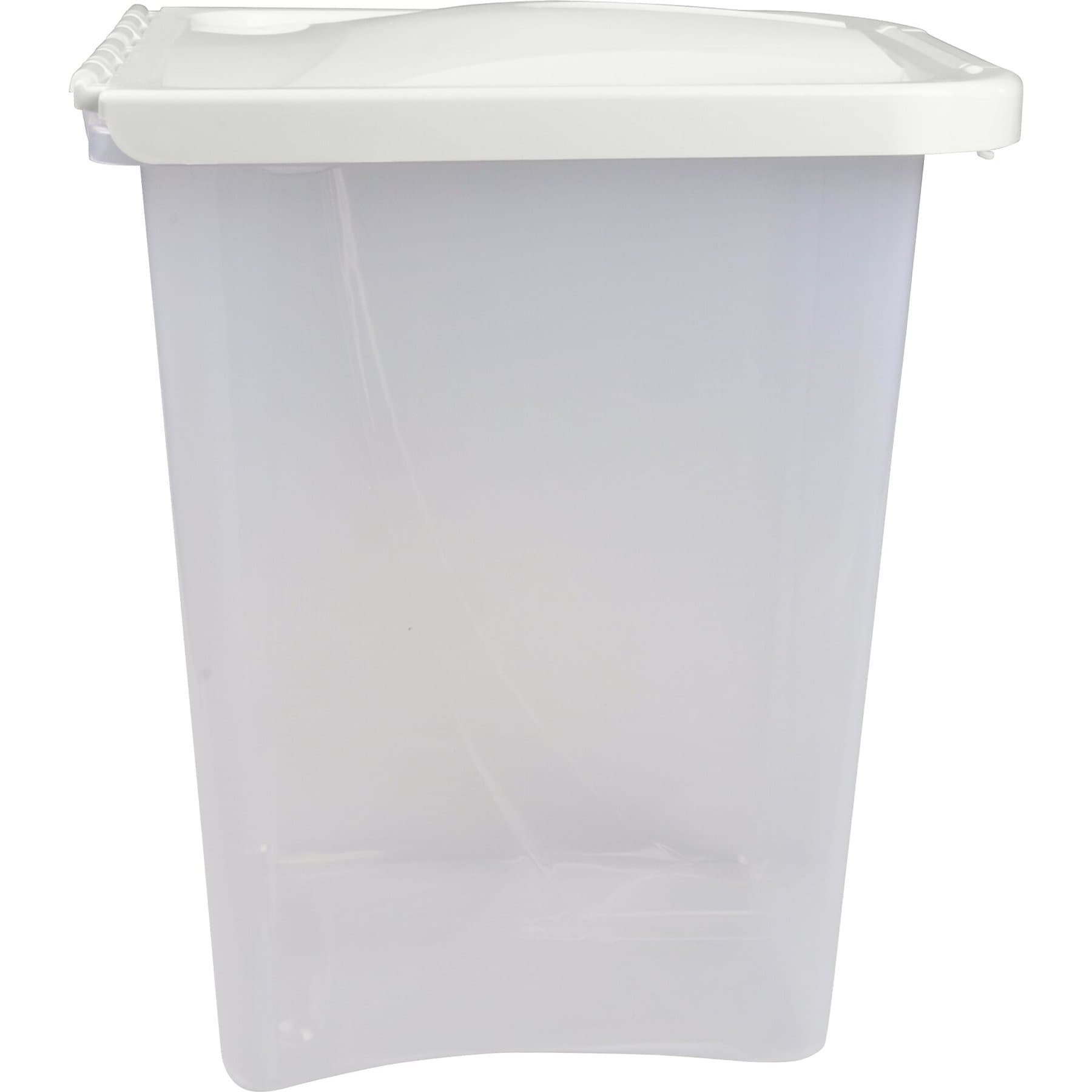
Smaller bags and compact storage. The selected 10-lb model has no wheels.
Petful may earn a commission when you click through to Chewy, at no extra cost to you.
The 10-pound Van Ness Pet Food Storage Container is a straightforward option for a smaller bag or a compact feeding area. The selected model is FC10. Its nominal capacity is more appropriate to modest quantities than a large household bin, although retaining the original bag still requires a fit check.
Van Ness offers several sizes. The wheels associated with larger models should not be assumed to come with this 10-pound version. Van Ness FC10 product details
- Choose it for: smaller purchases and a storage spot that does not require rolling.
- Check carefully: the filled bag’s shape and whether you can reach the bottom.
For a budget-minded purchase, use the linked Chewy listings to compare current prices for sizes that fit your bag, including shipping. Also compare appropriately sized options at your local pet retailer. Avoid paying for capacity or accessories you will not use; a smaller bin is not automatically the cheapest. Compare the total delivered price for the same size and package contents before deciding which retailer offers the better deal.
For travel portions: Kurgo Kibble Carrier, Navy Blue
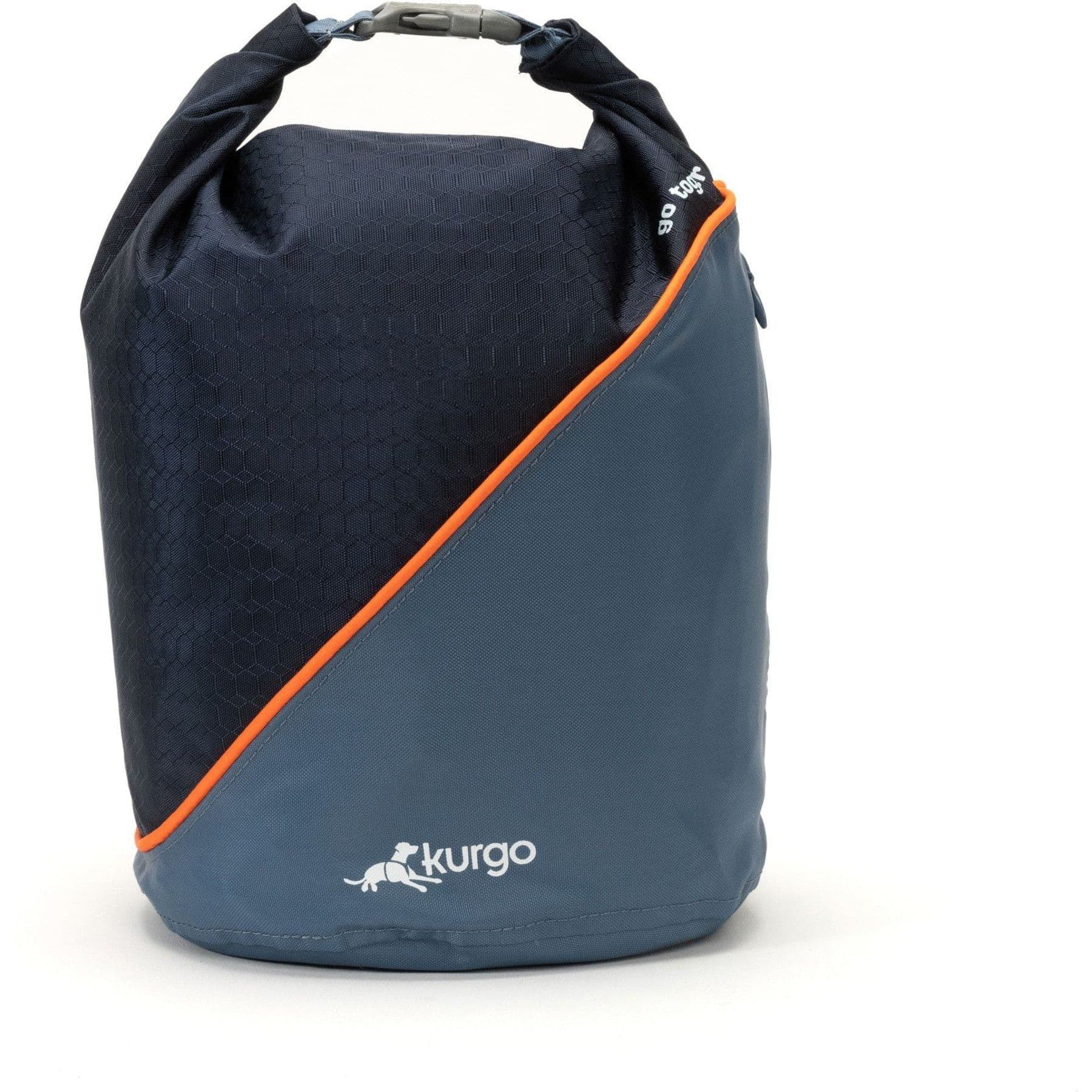
Travel portions. Up to 5 lb/20 cups; roll-top PEVA-lined bag, hand wash and air dry.
Petful may earn a commission when you click through to Chewy, at no extra cost to you.
The Kurgo Kibble Carrier in Navy Blue is a flexible alternative for taking dry food away from home. Kurgo specifies capacity of up to five pounds or approximately 20 cups, a roll-top closure and a PEVA liner. Its care instructions call for hand washing and air drying. Kurgo Kibble Carrier specifications
The roll-top format lets the bag become smaller as you use the contents, but it needs enough empty material at the top to close correctly. Plan portions before packing rather than filling to the rim.
- Choose it for: portable food for an overnight stay or road trip.
- Check carefully: the amount needed, closure space and where the carrier will be stored.
This is a travel bag, not evidence of rodent resistance or a substitute for a secure household storage location.
Choose capacity by the bag and available space
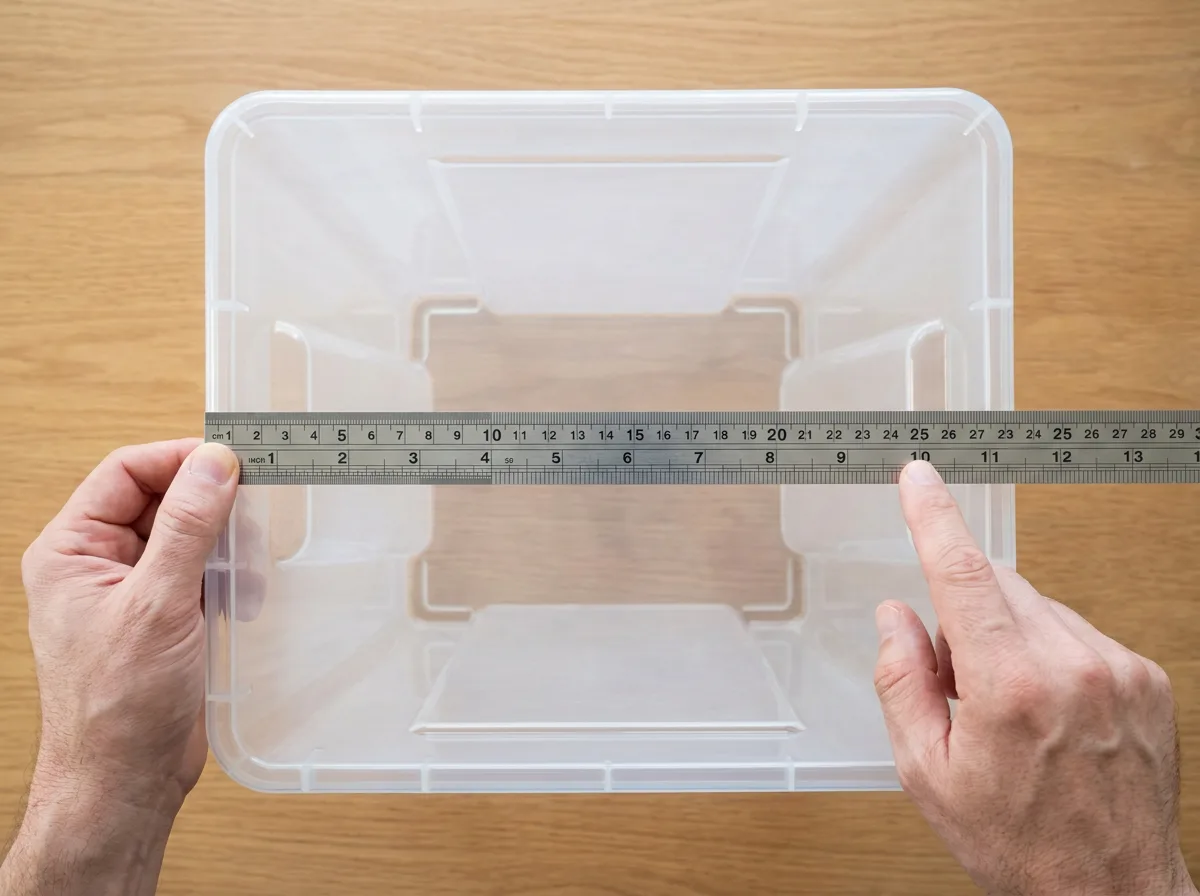
Treat pounds as an estimate, then check the opening
A 25-pound bag of one kibble can occupy a different amount of space than 25 pounds of another. Piece size, shape and food density influence how much fits into a container. Packaging takes up additional room, especially around folded corners and the closed top.
That makes an advertised weight a useful starting point rather than a reliable fit guarantee. A container described as holding 40 pounds of loose food may not accommodate every filled 40-pound bag. Gamma2 explicitly notes density-dependent capacity for its Vittles Vault range. Manufacturer capacity guidance
Use the bag you currently buy to make a short measurement record:
- Measure its widest filled portion without squeezing the contents into an unrealistic shape.
- Measure its depth from front to back.
- Measure its height with the top folded as you normally close it.
- Compare those measurements with the container’s usable interior and opening.
- Leave enough room to insert, remove and close the bag without catching it in the lid.
Exterior dimensions help you place the bin, but they do not tell you its usable interior dimensions. Handles, thick walls, tapered sides and a lid that projects inward can all reduce the space available. When only exterior measurements are published, ask the manufacturer for the opening and interior measurements rather than treating the outside footprint as storage capacity.
Match capacity to your normal purchase, not the largest available bin
A household buying a five-pound bag has a different storage problem from one buying 30 or 50 pounds at a time. Start with the quantity you ordinarily bring home, then account for the package and access. Buying a bigger container does not create a reason to buy a bigger bag.
For smaller purchases, check whether the bag stands securely inside the container or slumps into an awkward position. For larger purchases, consider the weight of the full bin and whether you will ever need to lift it. A container that is manageable when empty may be inconvenient when loaded.
These examples show how to apply the same decision at different sizes:
- Five- to 10-pound purchases: prioritize a useful opening and compact footprint. A deep oversized bin can make a small bag harder to reach.
- 20- to 25-pound purchases: compare the filled bag with the individual compartment, particularly in multi-bin combinations.
- 30- to 40-pound purchases: include lid clearance, loaded weight and the ability to remove the empty bag.
- 50-pound purchases or larger: verify the exact model’s capacity and consider handling before choosing bulk storage.
- A 60- or 100-pound storage claim may describe one large compartment, a combined system or an estimate based on a particular feed. Confirm which compartment must hold your original bag.
Do not assume a large number means the bin fits through your pantry door, can be washed in your sink or can be moved by the person who normally feeds your dog.
Keep combined capacity separate from compartment capacity
The IRIS combination illustrates a common shopping trap: the set’s total is 45 quarts, but the usable spaces are 33 quarts plus 12 quarts. Those separate spaces can serve different foods or treats. They cannot combine into one opening for a single large bag.
Before choosing a multi-bin system, give every compartment a specific job. For example, the larger compartment might hold the dog’s bag of kibble while the upper one holds packaged treats. If your only need is one large bag, a second compartment may add height without solving the fit problem.
Use these checks when comparing capacity labels:
- Combined capacity: the sum of all compartments in the package.
- Individual capacity: the amount available in the compartment that must hold your bag.
- Weight estimate: the manufacturer’s approximate food load, affected by food density.
- Usable bag space: the room remaining after accounting for the original packaging and closure.
Avoid dividing a new bag between compartments simply because the combined total looks sufficient. That creates two places to track and clean and can separate the food from its identifying package. A single appropriately sized compartment may be easier to manage.
Measure the space needed to feed your dog
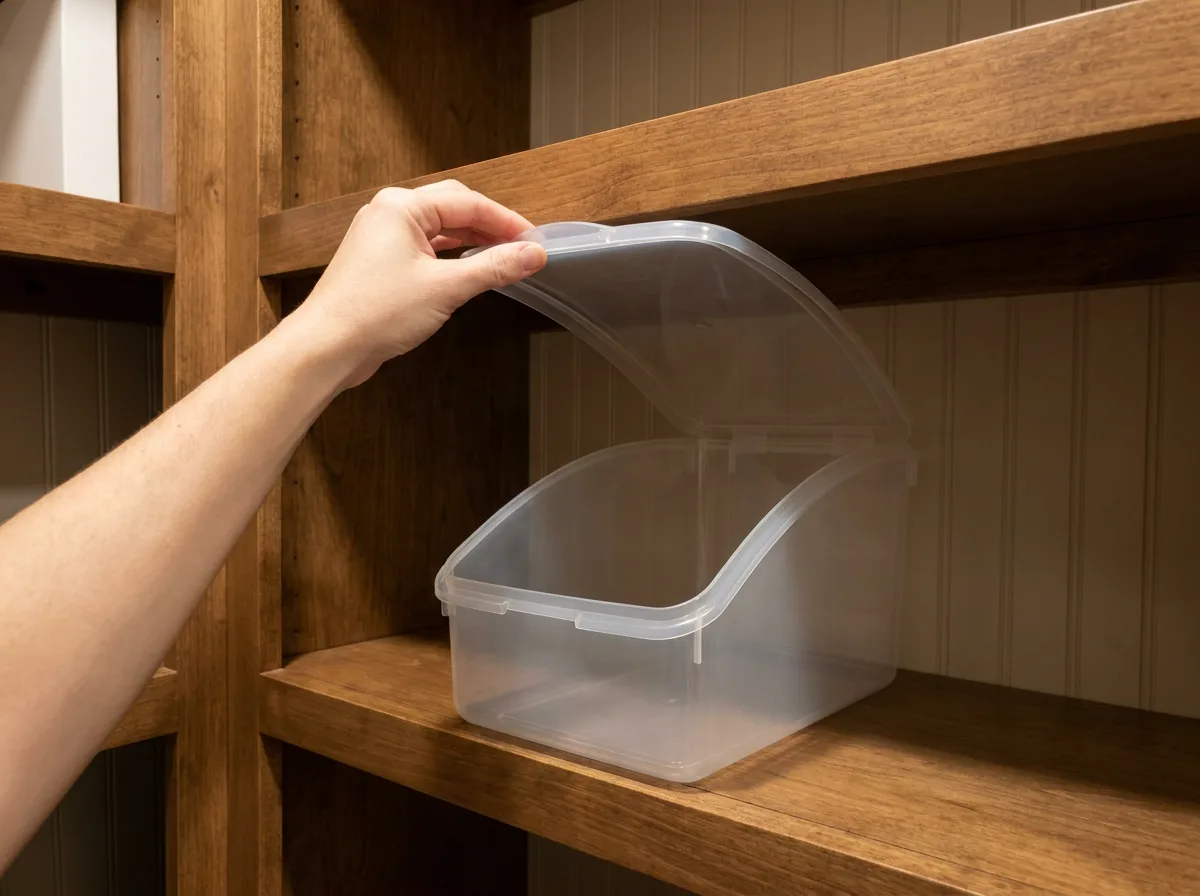
Measure the storage location with the container in use, not just closed. A bin can fit neatly under a shelf and still be impossible to open there. Likewise, a hinged lid can strike a cabinet wall before you have enough room to reach the bag.
Mark the intended footprint with a piece of cardboard or paper before buying. Then stand where you would normally scoop the food. This helps reveal whether an open door, nearby appliance or narrow walkway will make feeding awkward.
Include these access measurements:
- Space above or beside the container for its lid to open fully.
- Room in front to reach the bag and remove a portion.
- Space to lift an upper container off a stacking combination.
- A clear route to move the bin for cleaning.
- Enough cabinet or closet clearance to remove the whole original bag.
A tall, narrow container may save floor space while making the last few meals difficult to reach. A broad, shallow design can improve access but occupy more of the room. Choose the shape around your actual storage location and reach, not only the advertised capacity.
Decide whether stacking or wheels will help
Stackable dog food containers can organize multiple foods, but stacking is useful only when the lower container remains practical to use. Check whether the intended arrangement permits access without lifting a heavy upper bin at every meal. Use the manufacturer’s stacking configuration rather than assuming similar-looking containers will balance safely together.
Rolling pet food storage can help if you need to move a loaded bin out of a pantry. It is less helpful if the route includes stairs, a high threshold or a surface where small casters do not roll freely. The IRIS combo includes removable casters; the selected Van Ness FC10 does not.
For a household with two dogs eating different foods, separate bins may be more useful than one enormous container. Label the outside by dog and food, keep each original bag with its contents, and make the distinction clear enough for another caregiver to follow. Extra capacity should solve a real organization problem.
Check the dispensing mechanism
A dog food storage dispenser introduces another consideration: food must move through its dispensing mechanism. Unless the manufacturer confirms that the original bag can remain in place, assess whether that design fits the storage routine you want. Easy dispensing is not a substitute for accessible cleaning or clear food identification.
Make decorative storage work around the food
A cute or decorative dog food storage container still needs a functional interior. Check the lid, usable opening and cleaning instructions before deciding whether a metal finish or coordinated color will suit your kitchen. An attractive bin that is difficult to open is likely to become an annoying twice-daily task.
Decorative storage can also mean putting a suitable food container inside a cabinet or a larger decorative surround. In that arrangement, measure the inner container first and preserve access to its lid. The outer furniture does not replace the food-contact container or the original bag.
For large decorative bins, pay particular attention to weight and reach. Appearance cannot compensate for a container that is too heavy to clean or too narrow to accept the bag you buy. Choose the practical arrangement first, then select the finish you like.
Compare seals, materials and cleaning access
Judge an airtight container by the entire closure
An airtight dog food storage container relies on several parts working together: the lid, the sealing surface, any gasket and the mechanism that holds everything closed. A latch that clicks does not tell you whether a folded bag or a piece of kibble is preventing contact around the rim.
Different closures also require different motions. A threaded lid must be aligned and turned into position. A snap-lock design needs the lid properly seated before the latch closes. Choose a mechanism that the people feeding your dog can operate comfortably.
Inspect the closure at a normal feeding time:
- Remove crumbs from the rim and sealing surface.
- Make sure the original bag stays below the sealing area.
- Check that a gasket sits in its intended position.
- Close every latch or complete the threaded closure as directed.
- Confirm that the lid is seated evenly rather than tilted.
Manufacturers use terms such as airtight, weather-resistant and pest-resistant to describe intended performance. Those labels do not establish a universal shelf-life extension for every dry food. Follow the food’s storage directions and dates rather than assuming an improved container allows indefinite storage.
Compare the work involved in maintaining the seal
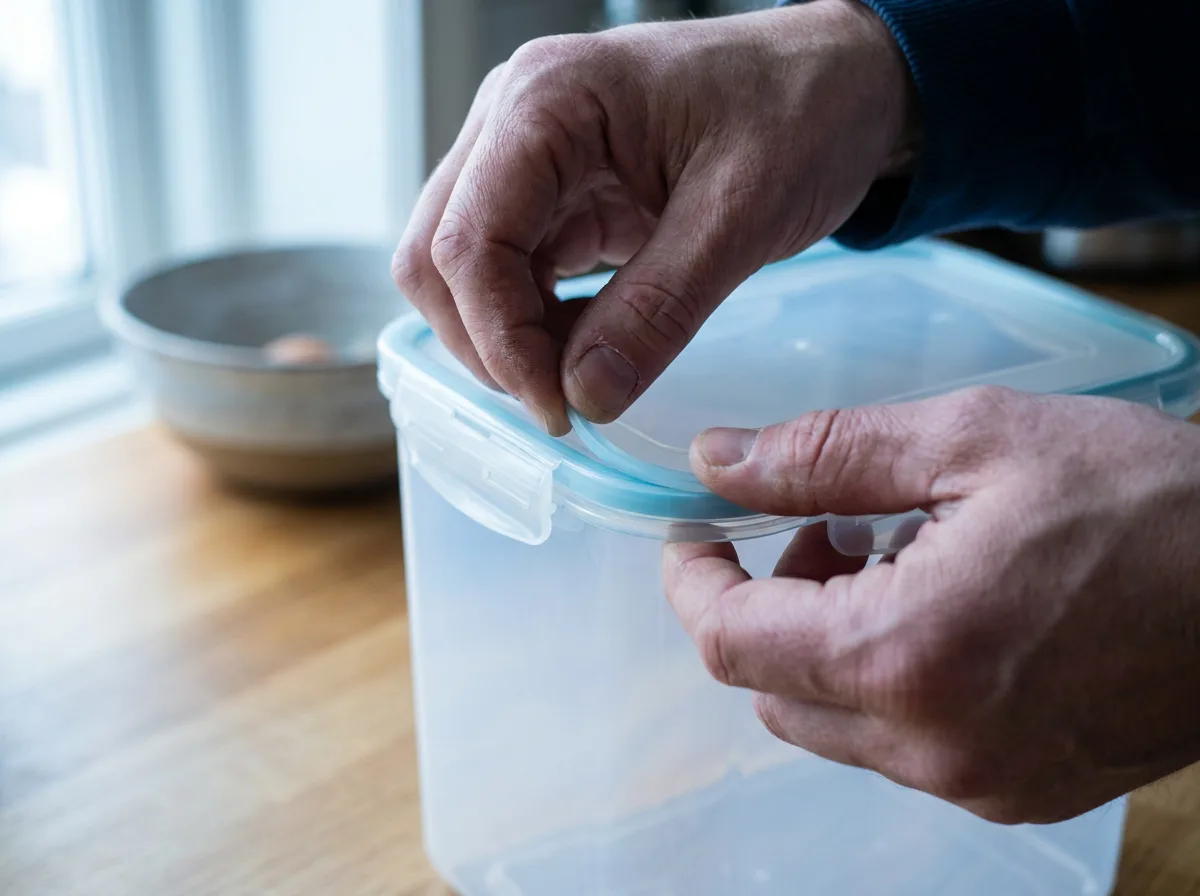
A seal that you can inspect and clean is easier to maintain than one whose grooves are difficult to reach. Look for clear manufacturer instructions explaining how to clean the lid and whether any gasket can be removed. Do not pull out a fixed seal simply because another brand uses a removable one.
The Gamma2 Vittles Vault uses a threaded closure and double gaskets. The IRIS airtight combo uses a sealed lid with snap-lock latches. These mechanisms offer different handling routines; neither makes correct closure or routine cleaning unnecessary. Compare the specific design rather than selecting solely by the word “airtight.” Gamma2 design, IRIS design
Before buying, consider the maintenance details you will face:
- Can you reach the underside of the lid and every corner?
- Is the opening large enough for your hand and cleaning tool?
- Does the manufacturer explain how to clean the seal?
- Can the parts dry separately without trapping water?
- Is a replacement lid or gasket available if a part wears out?
A damaged lid or missing gasket can undermine a container that otherwise looks fine. If the manufacturer does not offer a replacement part, the practical cost of damage may be replacing the whole bin. That is worth considering alongside purchase price.
Plastic, metal and glass each have practical limits
Plastic dog food storage containers are often easier to carry than similarly sized glass options, but material alone does not settle the choice. Look for a product intended for food storage, inspect the interior for damage and follow its cleaning instructions. Do not assume an ordinary household storage tote is suitable for direct contact with food.
BPA-free labeling can answer a specific material question, but it does not tell you whether the lid seals well, the bag fits or the container is easy to clean. A BPA-free pet food storage container still needs the same capacity and care checks as any other bin.
Compare the material around the way you will use it:
- Plastic: consider loaded weight, scratches, lid condition and the manufacturer’s washing instructions.
- Stainless steel or other metal: check the interior, any coating, seams and the lid construction.
- Glass: consider weight, breakage risk and whether you can safely lift and wash the filled size.
- Flexible lined fabric: consider liner condition, seams, closure and the time needed to dry it.
Large metal dog food storage bins may be appealing in a visible kitchen, but the exterior finish says little about the food-contact surface. Check whether the bin has an inner liner and whether the manufacturer intends loose food to touch the interior.
The same principle applies to stainless steel containers with lids. A sturdy body paired with a loose decorative lid is a different storage arrangement from a gasketed container. Assess the entire product, not just the material named in the listing.
Large glass containers require particular care when choosing a location. A heavy filled jar on a high shelf may be awkward to retrieve, and a dropped lid or body can break. For bulk kibble, make sure the format serves the routine rather than choosing glass solely to avoid another material.
- Keep the original packaging with the food. Placing the whole bag inside the container preserves the product name, lot information and best-by date while making each bag easier to identify.
Separate pest resistance from a pest-proof guarantee
A closed container can help keep food contained, but “pest proof” needs more scrutiny than a tight-looking lid. An intact gasket does not prove that an entire product will withstand chewing, and a metal body does not make every hinge, opening or lid resistant to rodents.
For bug-resistant storage, look first at whether the lid closes completely and whether crumbs collect outside the bin. For concerns about mice, consider the whole storage area, including access points and spilled food. A container is one part of managing the situation.
Use a practical inspection rather than relying on a label:
- Check the body, lid and corners for damage.
- Clean spilled kibble and dust from the surrounding area.
- Keep the lid closed between meals.
- Avoid leaving opened treat packages beside a closed food bin.
- Investigate signs of pests instead of assuming the container has solved them.
Do not assume a plastic bin is mouse proof unless the manufacturer supports that claim for the exact product. Similarly, a flexible travel bag should not be treated as protection against animals that can chew through it. If pests have reached food, changing the outer container does not establish that the affected food is suitable to feed.
Check cleaning access before the container comes home
Picture the entire cleaning job. A narrow opening, deep corners or a bulky lid may be difficult to wash in the sink you have available. A large container may need a different cleaning space, but that space must still allow thorough washing, rinsing and drying.
Dishwasher compatibility is product-specific. Do not infer it from the word plastic or from the fact that a smaller kitchen container can go in the dishwasher. Follow the storage manufacturer’s instructions for both the body and the lid.
A useful container should make these tasks realistic:
- Reaching every interior surface.
- Removing food residue without damaging the material.
- Rinsing away the cleaning product.
- Drying the bottom, corners and lid completely.
- Reassembling the closure correctly.
If you cannot comfortably complete those steps, choose a different shape or smaller capacity. Cleaning access is a purchase criterion, not an inconvenience to discover after the first bag.
Keep the original bag and clean between refills
Use the container to support the food’s own storage directions
The best way to store dry dog food is to keep it identified, properly closed and in a suitable environment. The FDA recommends retaining the original bag and, when possible, placing the entire bag inside a container. Keep the product information available rather than treating the outer bin as a replacement label. FDA storage recommendations
The package carries information that a generic “dog food” label cannot provide. The product name, manufacturer, lot number and best-by date help distinguish one food and batch from another. They are especially useful when two foods look similar or when someone else is feeding your dog.
Keep the information connected to the contents:
- Leave the original bag inside the bin when it fits.
- Keep the identifying portion of the package if you must transfer the food.
- Record which container holds which bag.
- Keep separate foods and batches distinguishable.
- Follow any storage instructions printed on the food package.
An outer label can help a caregiver find the right food quickly, but it should supplement the original information. A label saying only “chicken kibble” may not distinguish different recipes, bag sizes or lots from the same manufacturer.
Follow a five-step refill routine
Use the change between bags as the point to reset the storage system. That is easier to remember than an unrelated calendar schedule and helps avoid leaving older food beneath each new refill. The FDA advises washing and thoroughly drying a container before adding new food when food is stored directly inside it. FDA container-cleaning guidance
- Finish or remove the previous bag. Take out the packaging and any loose crumbs. Avoid routinely pouring a new bag over leftovers that remain in the bottom.
- Retain the food’s identification. Keep the original packaging and its lot information available until that food is used. If you transfer food, preserve the identifying package information with it.
- Inspect and clean the container. Check the body, lid and seal for residue or damage. Follow the container manufacturer’s care instructions and wash food-contact surfaces before the next refill.
- Let everything dry completely. Check the bottom, corners, gasket area and lid. Reassemble removable parts only as directed and once dry.
- Load the new bag and close both layers. Place the original bag inside, close the bag according to its instructions, then close the outer container without trapping packaging in the seal.
If an old bag has a small amount left when the new one arrives, you do not need to open both immediately. Keep the unopened replacement stored according to its instructions while you finish the current bag. This makes the changeover easier to track.
When a container is too small for the original bag, resist making an awkward routine permanent. For the next purchase, either select a container that fits the bag or consider whether a smaller food package better suits the household. Cutting off the top or compressing the bag into the seal can defeat the practical benefits of keeping it intact.
Give drying as much attention as washing
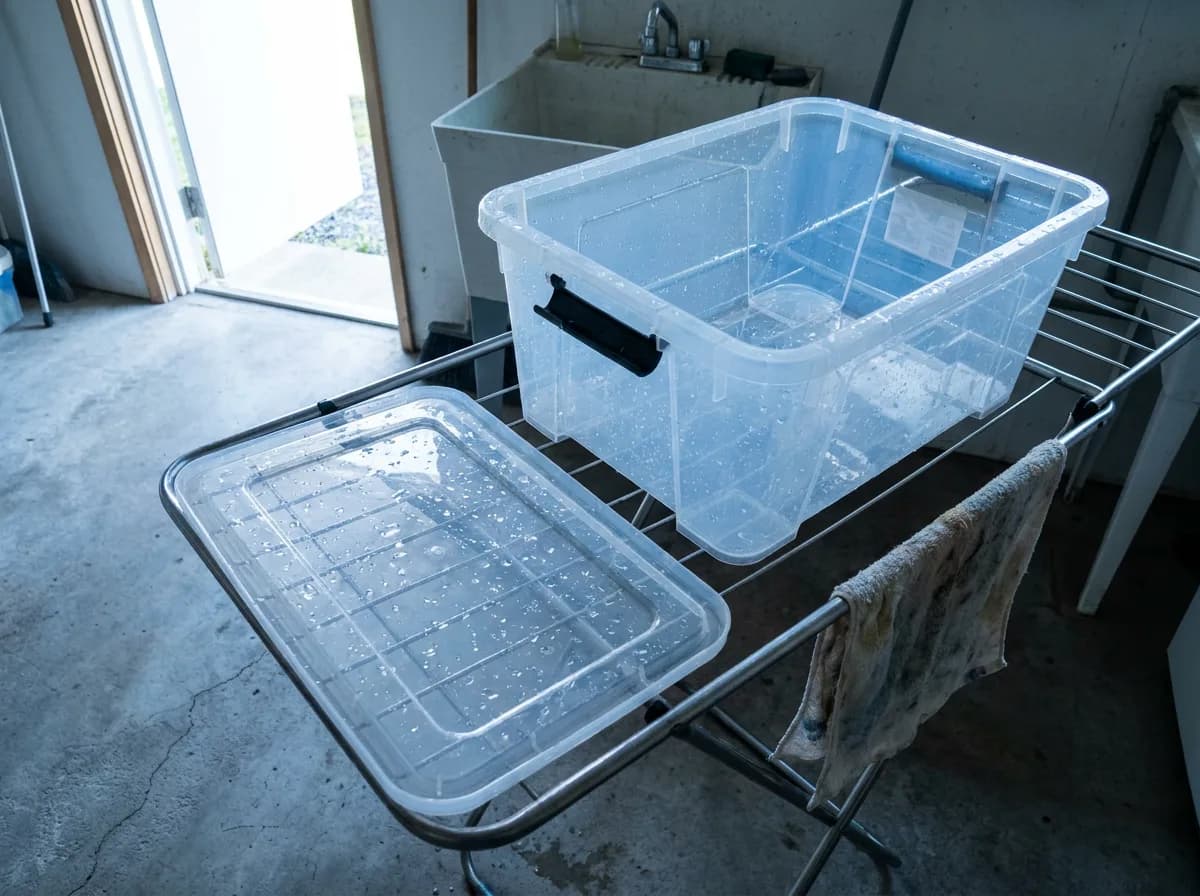
A bin can look clean and still have water trapped beneath a rim or in the lid. Inspect those areas before adding dry food. Allow the body and removable lid to dry in a clean place with enough space around them rather than nesting damp parts together.
The time required depends on the container, room conditions and the number of recesses or removable parts. Do not rely on a universal drying time. Check the surfaces themselves, especially the lowest point and areas that are difficult to see.
Make the changeover easier by planning it before the last meal:
- Wash the container when you can leave it open to dry.
- Keep the replacement bag closed and separate during cleaning.
- Dry the scoop according to its care instructions as well.
- Inspect seals and latches before reassembly.
- Refill only after the container and relevant parts are fully dry.
If a particular shape stays awkward to clean or dry, that is useful feedback for the next purchase. A smaller or wider-opening container may serve you better even if its advertised capacity is lower.
- Recheck fit when you change foods or bag sizes. Combined capacity may span separate compartments, and food density affects advertised pound capacity. Leave room for the original bag and a closure that works freely.
Choose a cool, dry indoor storage location
The FDA advises storing dry pet food and unopened canned food in a cool, dry place below 80 degrees Fahrenheit. For dry dog food storage, that makes location just as important as the container. A tightly closed bin does not regulate the surrounding temperature. FDA temperature guidance
A pantry or another suitable indoor area is often more predictable than a garage, shed or porch. Consider the actual conditions where you live rather than assuming a location stays cool because it is shaded. Also check whether a nearby appliance or sunny window warms the storage area.
Assess the location for four practical needs:
- A temperature consistent with the food’s instructions and FDA guidance.
- Dry conditions without exposure to leaks or splashes.
- Convenient access for closing and cleaning the container.
- Separation from household chemicals and other unsuitable nearby materials.
Outdoor dog food storage deserves particular caution. A weather-resistant container may help with exposure at the container surface, but it does not make a hot outdoor location appropriate. Likewise, calling a bin waterproof does not establish safe food temperatures inside it.
If the garage is the only place a large bin will fit, reconsider the quantity and container size before accepting that arrangement. A smaller indoor storage system may be more useful than a larger one placed in unsuitable conditions.
Keep daily feeding from undoing the storage routine
Once the food is stored properly, a few consistent habits make the system easier to maintain. Close the bag and container after each meal. Keep the scoop clean and dry, and avoid resting it on an unclean surface before returning it to the food area.
The FDA advises washing and drying pet food bowls and scooping utensils after each use. Follow the care instructions for those items, and make sure a wet scoop does not go back into dry food. FDA feeding-item care
For a shared household, make the routine clear enough that another person can follow it:
- Identify the correct food and dog on the outside of the storage area.
- Keep feeding directions available separately from the container’s capacity label.
- Show how the bag and lid close.
- Explain where the clean scoop belongs.
- Make it clear when a new bag has been opened.
Container choice and diet choice are separate decisions. If you are comparing foods themselves, use a guide to dog food brands alongside advice appropriate to your dog. A storage product cannot establish that a particular diet is the right one.
Keep dates and food problems traceable
Do not replace the package’s best-by date with an assumed extension because you bought an airtight bin. Follow the food manufacturer’s instructions for the product, including any guidance after opening. There is no single extra number of days that applies to every food in every storage container.
If the food changes in a way that concerns you, retain the package information while you investigate. Do not pour a questionable remainder into a new bag or mix it with a different food. Keeping the batches separate makes it easier to explain exactly what you have to the manufacturer.
Useful details to have ready include:
- Full product and recipe name.
- Lot or batch information.
- Best-by date.
- When the bag was opened, if known.
- How and where it was stored.
A safe dog food storage container supports this routine through good access, an intact closure and manageable cleaning. Its brand or material does not remove the need to identify the food and respond to a problem.
Pack food for travel
Calculate the trip’s food before choosing a carrier
The best travel dog food container fits the amount you need while staying practical to carry and close. Work from your dog’s normal measured daily portion and the number of days away. Do not treat the carrier’s maximum capacity as a feeding recommendation.
For example, a dog eating two cups per day needs eight cups for four full days. Add any planned contingency portion separately, taking your trip arrangements into account. Then check whether that total fits the carrier while leaving enough room to close it correctly.
Write down the basic packing information:
- The usual daily amount and feeding schedule.
- The number of full and partial days away.
- The total amount to pack.
- Any separate contingency portion.
- The product and batch information that will travel with the food.
This is especially useful when someone else will feed your dog during part of the trip. A full pouch gives little indication of how much constitutes one meal. Clear portions and written directions reduce the need for a sitter to guess.
Choose between an original bag, a rigid container and a flexible pouch
For a short trip, a small original food bag may be the simplest option. It keeps the food and identifying information together and avoids transferring more food than necessary. Check that the package can close securely and will fit within your luggage without being damaged.
A rigid travel container can provide structure when the bag needs protection from other luggage. A flexible reusable pet food storage bag may pack more easily and occupy less space as the food is used. Choose according to how you will transport and access it.
Compare the options by their practical tradeoffs:
- Original package: preserves identification and minimizes repacking, but may need protection within your luggage.
- Rigid container: keeps a defined shape, but occupies that space even when nearly empty.
- Flexible carrier: can reduce in size as food is used, but needs careful closure and suitable storage away from chewing animals.
- Separate meal portions: make caregiver instructions easier, but create more packages to identify and handle.
Whichever format you choose, keep the food dry and follow its storage instructions. A travel label or roll-top closure does not turn ordinary dry food into a product with different temperature requirements.
Pack the carrier without overfilling it
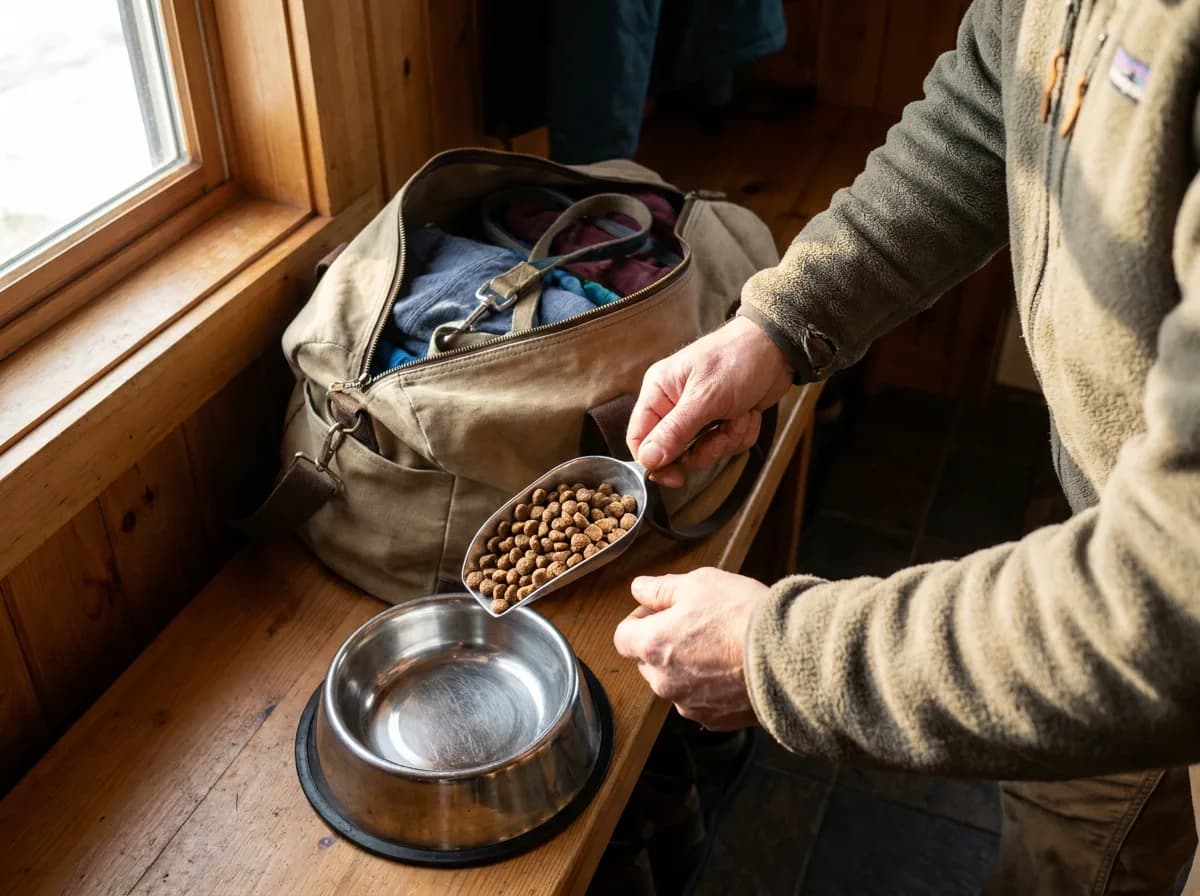
Kurgo rates its Kibble Carrier for up to five pounds or approximately 20 cups. Those are capacity descriptions, not a promise that every five-pound original bag will fit inside or that every food has the same weight per cup. The liner and roll-top design still need room to work. Kurgo capacity and care
Pack the planned amount, smooth the top and close the carrier according to its instructions. If you cannot complete the closure without forcing it, reduce the load or choose a larger arrangement. A pouch filled right to the top may hold the food while open but fail the practical test of closing for transport.
Before leaving, check the finished setup:
- The intended meals fit without preventing proper closure.
- The carrier has no visible liner or seam damage.
- Food identification is easy to find.
- The measuring utensil is clean and dry.
- Feeding directions are available to the person providing meals.
Do not assume a bowl shown beside a carrier is included. Check the exact package contents before packing, and bring the bowl and any measuring utensil your feeding routine requires.
Keep the food identifiable away from home
If the original bag travels with you, keep its identifying panel legible. If you transfer portions, retain the original package and bring a clear record of the product, lot and best-by information. A photo can be useful while traveling, but keep the actual packaging available at home when possible.
For a dog staying with a sitter, add the dog’s name and meal instructions to the travel container. For multiple dogs, make the distinction obvious even if the foods look alike. Separate packages are easier to manage than expecting another person to distinguish similar kibble by appearance.
Keep three kinds of information separate and readable:
- Food identity: brand, recipe and batch details.
- Feeding directions: which dog receives the food and the normal measured portion.
- Trip planning: which portions are intended for which days.
This arrangement also helps you work out what remains when you return. A nearly empty carrier should not automatically be tipped into a newly opened household bag. Preserve the distinction between the travel remainder and any new batch.
Store and clean travel food with the same care as food at home
A parked vehicle can be an unsuitable storage location, even when the carrier itself is closed. Plan where the food will go at your destination and move it to a cool, dry place consistent with its instructions. Avoid treating the trunk or cargo area as a permanent pantry during the trip.
At a campsite or another location with wildlife rules, follow the location’s food-storage requirements. A flexible pet food pouch is not a bear-resistant or animal-proof container. Keep food within the required storage arrangement rather than relying on the travel bag alone.
After the trip, reset the carrier before storing it:
- Remove the remaining food and keep its identity clear.
- Empty crumbs from folds and seams.
- Wash according to the carrier manufacturer’s instructions.
- Allow the liner and closure area to dry completely.
- Inspect the carrier before putting it away for the next trip.
Kurgo specifies hand washing and air drying for the Kibble Carrier. Build that drying time into unpacking rather than leaving a used pouch closed inside luggage. The next trip starts more smoothly when the carrier is clean, dry and ready to hold clearly identified portions.
Questions readers ask
Follow the FDA’s guidance: keep the food in its original bag, ideally placing the whole bag inside a container, so the product name, lot number and best-by date stay with the food. Store it in a cool, dry indoor place below 80 degrees Fahrenheit, close both the bag and the container after every meal, and wash and fully dry the container before each new bag goes in.
Not necessarily. Pound ratings are estimates for loose food and change with kibble size and density; Gamma2 says so directly for the Vittles Vault range. Packaging takes extra room, especially around the folded top. Measure your filled bag’s width, depth and height, then compare them with the container’s usable interior and opening, leaving room to insert and remove the bag and still close the lid.
Airtight describes the closure, not a shelf-life extension. A threaded lid with gaskets (Gamma2) or a snap-lock sealed lid (IRIS) only works when crumbs are off the rim, the bag sits below the sealing surface and the lid seats evenly. Keep following the food’s own storage directions and best-by date; no container gives every dry food an extra number of days.
Use the change between bags as the reset point. The FDA advises washing and thoroughly drying a container before adding new food, so finish or remove the old bag, clear loose crumbs, wash the body, lid and seal according to the manufacturer’s care instructions, and let everything air dry with the parts separated. Check the bottom, corners and gasket area are completely dry before the new bag goes in, and never pour fresh kibble over leftovers in the bottom.
Start with the dog’s measured daily portion times the number of days (two cups a day for four days is eight cups), add a separate contingency portion, then choose the format: the original small bag, a rigid container or a flexible carrier. The Kurgo Kibble Carrier holds up to about five pounds or 20 cups but needs empty material at the top to roll closed. Keep the product and lot information with the food and write down who gets how much.

Amy Tokic is a seasoned editor and writer based in Toronto. She often writes about her adventures in pet ownership, researching products, news and health issues. Amy is obsessed with pets, and publishes content focused on not-so-perfect pets at ThatFlufflingDog.com.
Sign up for expert-backed reviews and safety alerts all in one place.