Best Dog Food for Great Pyrenees: Matching Meals to Size and Activity
Compare fresh meals for Great Pyrenees puppies, household companions, and active guardians using life-stage labels, individual portions, storage needs, and feeding costs.
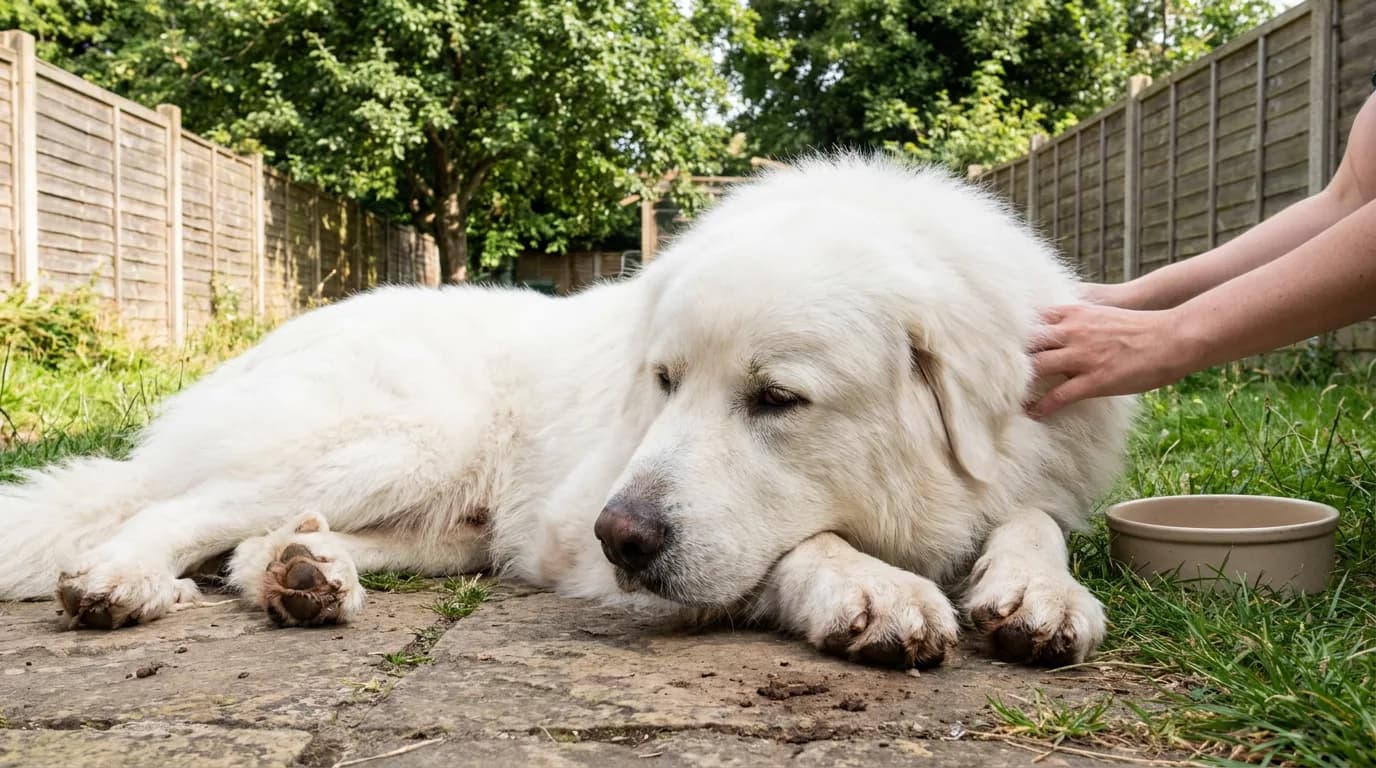
A Great Pyrenees rests in a garden beside its owner.
Petful is reader supported. As an affiliate of platforms like Amazon and Chewy, we may earn a commission when you buy through links on this page. There is no extra cost to you.
This article is sponsored by JustFoodForDogs. Petful maintains editorial control and may earn a commission from qualifying purchases, at no extra cost to you.
The best dog food for Great Pyrenees dogs is a complete recipe suited to the dog's life stage and actual routine. A household companion and a livestock guardian may need different amounts, even when they look similar in size. A thick coat and a working-breed label cannot tell you the right daily calories.
JustFoodForDogs offers useful fresh choices for that individual comparison. Chicken & Rice and Fish & Sweet Potato have all-life-stages statements including large-size growth. Beef & Russet Potato and JustFresh Home-Cooked Chicken are adult-maintenance options. Choosing the eligible recipe first lets you compare meal weight, storage, and cost on a clear basis.
Choose complete daily nutrition with life stage suitability first. Compare companion versus guardian routines using the individual activity allowance, body condition, and measured portions. Large size does not automatically mean the most calorie-dense food or one universal breed serving.

Sign up for expert-backed reviews and safety alerts all in one place.
Feeding a growing Great Pyrenees puppy
A Great Pyrenees puppy needs complete food appropriate for large-size growth. Read the nutritional adequacy statement and its qualifying language, commonly referring to dogs expected to weigh 70 pounds or more as adults. The front-of-package word puppy or a large bowl is not enough information.

The FDA's complete and balanced explanation describes adequacy through AAFCO nutrient profiles or feeding-test procedures. Chicken & Rice and Fish & Sweet Potato include large-size growth in their current statements. Adult-maintenance Beef & Russet Potato and JustFresh Home-Cooked Chicken serve a different life stage.
- Select a complete large-size growth diet for a Great Pyrenees puppy. Adult maintenance is a different label purpose. Reassess the portion as the individual puppy develops rather than feeding for maximum size as quickly as possible.
Plan a puppy schedule and transition
Collect the current food, daily amount, meal times, and recent weight when the puppy joins your household. The AKC puppy feeding timeline describes several small meals for young puppies, generally reducing frequency as they mature. Confirm the individual plan and divide the daily allowance across the agreed meals.
For further early-life context, see Petful's Great Pyrenees puppy guide. Follow product transition guidance and veterinary advice when changing foods. Compare calorie densities so a change of texture does not become an accidental change in energy intake.
Review maturity without growth shortcuts
An adult-only diet should not be used merely to try to slow a puppy's growth. Extra calcium is also not a routine addition to an already complete growth food. The AKC's breed-size puppy nutrition guidance explains the importance of balanced large-breed puppy nutrition.
Ask your veterinarian when the individual dog is ready for adult feeding. With a suitable all-life-stages recipe, that transition may involve a revised amount rather than a different product. A maintenance-only recipe becomes an option when it fits the dog's stage, not simply when the puppy looks large.
Everyday food choices for Great Pyrenees
For a puppy, verify large-size growth suitability on the exact recipe. For a healthy adult, compare appropriate complete foods against the dog's individual needs and the household's ability to serve them consistently. The following recommendations use manufacturer labels and practical feeding fit, rather than hands-on testing or a universal veterinary endorsement.
| Food | Useful fit | Label life stage | Calories per ounce | Practical consideration |
|---|---|---|---|---|
| JustFoodForDogs Chicken & Rice Fresh Frozen | Grain-inclusive fresh food for puppies and adults | All life stages, including large-size growth | 43 | Frozen storage and refrigerator thawing |
| JustFoodForDogs Fish & Sweet Potato Fresh Frozen | A fish-based fresh option | All life stages, including large-size growth | 26 | More food weight for the same calories |
| JustFoodForDogs Beef & Russet Potato Fresh Frozen | A complete fresh adult meal | Adult maintenance | 44 | Keep distinct from puppy growth diets |
| JustFoodForDogs JustFresh Home-Cooked Chicken | Adult feeding with unopened pantry convenience | Adult maintenance | 36 | Refrigerate opened food; use within three days |
Chicken & Rice: a practical growth-eligible starting point
Chicken & Rice offers a complete fresh recipe for growth and adulthood. Its current formulation includes chicken, white and brown rice, and vegetables such as kale. The explicit large-size growth statement makes it a useful option to consider for a Great Pyrenees puppy.
At 43 calories per ounce, it also provides a straightforward basis for planning adult meal weight. A household puppy and mature dog may share a suitable recipe while needing different allowances. Keep those daily amounts separate, even when shopping together.
Consider it for:
- Grain-inclusive fresh feeding.
- Clear puppy growth eligibility.
- A household able to manage frozen storage.
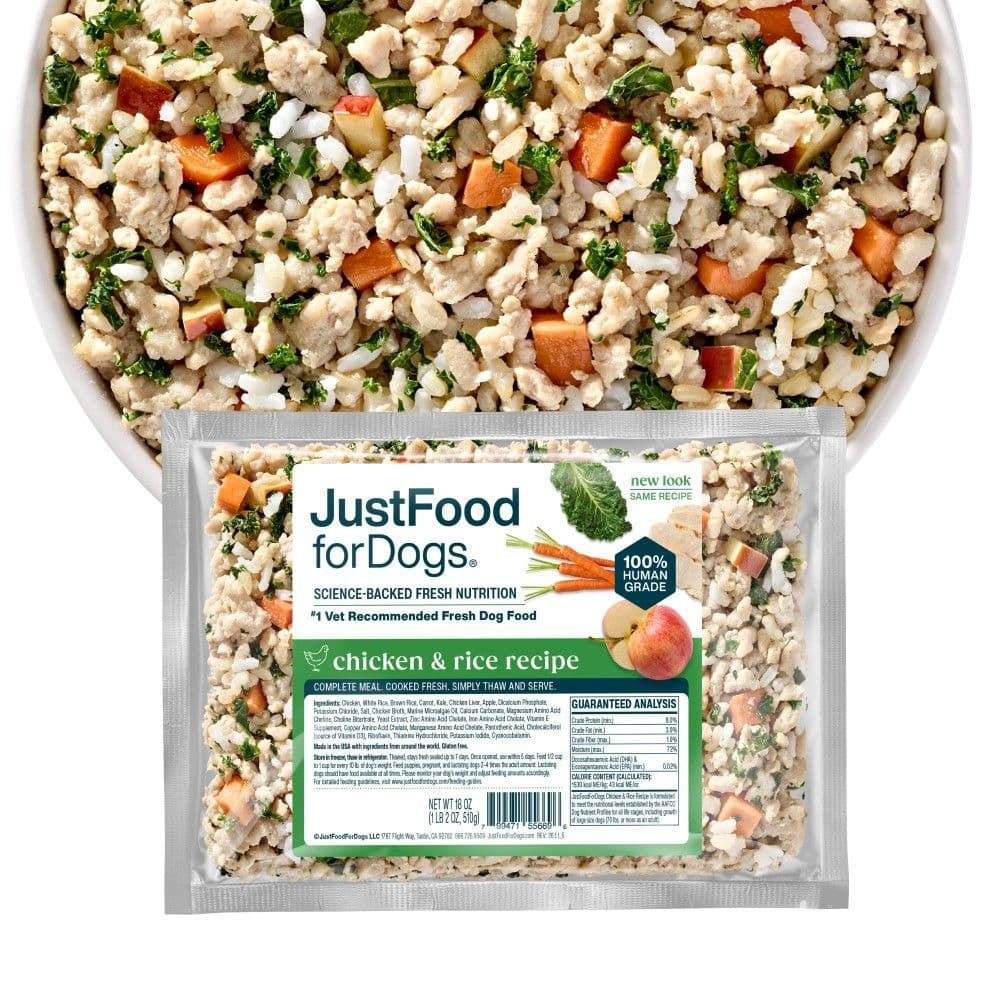
Petful may earn a commission when you click through to JustFoodForDogs, at no extra cost to you.
Fish & Sweet Potato: a distinct fresh-food comparison
Fish & Sweet Potato is another growth-eligible recipe, with 26 calories per ounce. Its fish-based formula and lower calorie density distinguish it from the other foods here. The same calorie allowance requires more ounces, so compare bowl volume and storage quantity before ordering.
This is a recipe and routine choice, not an allergy diagnosis. A Great Pyrenees should not be assumed to need fish, avoid chicken, or eat grain-free food simply because of its breed. Use the individual dog's history and specific veterinary guidance where relevant.
Check:
- The calculated daily ounces.
- The amount used from each package.
- Frozen and refrigerated storage capacity.
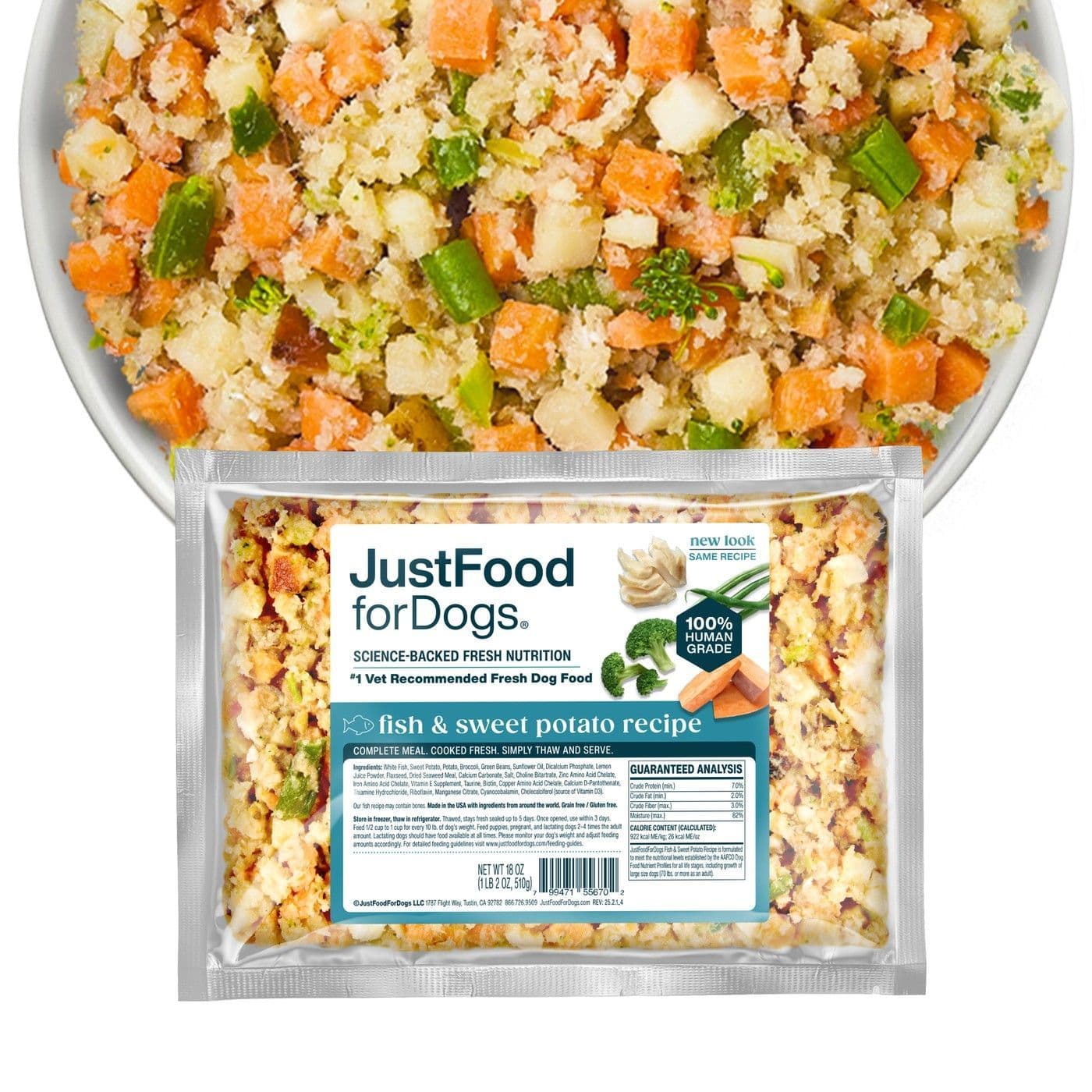
Petful may earn a commission when you click through to JustFoodForDogs, at no extra cost to you.
Beef & Russet Potato: an adult-maintenance fresh meal
Beef & Russet Potato supplies 44 calories per ounce and is formulated for adult maintenance. It can be considered for a mature companion or guardian when the recipe fits the individual dog. The actual activity allowance determines how much is served.
A growing puppy needs its own growth-eligible selection. A puppy becoming physically large does not turn an adult-maintenance recipe into a growth diet. Keep separate foods clearly identified in a multi-dog household.
Useful considerations are:
- Adult life-stage suitability.
- The dog's established feeding history.
- Daily food weight and regular cost.
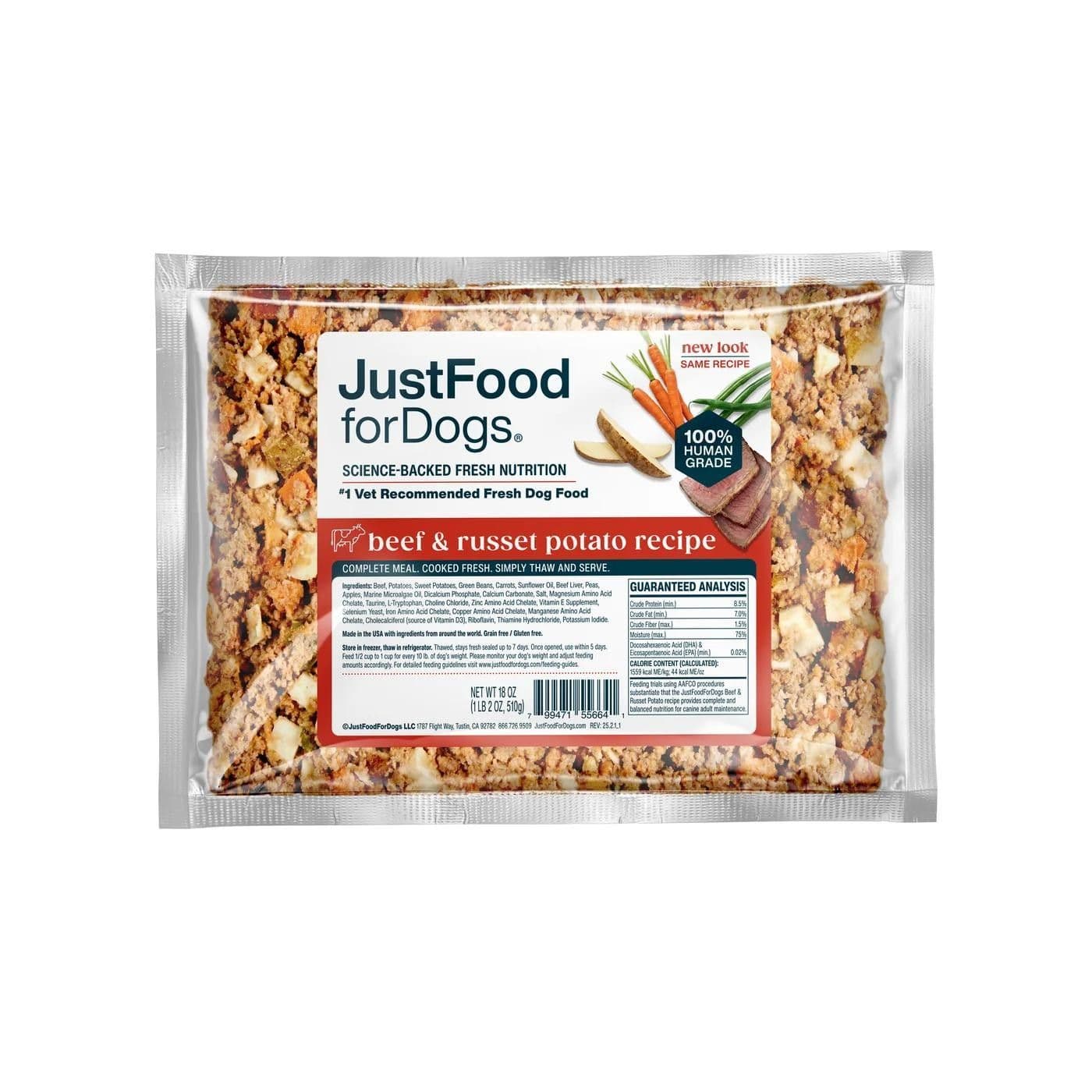
Petful may earn a commission when you click through to JustFoodForDogs, at no extra cost to you.
JustFresh Home-Cooked Chicken: adult pantry convenience
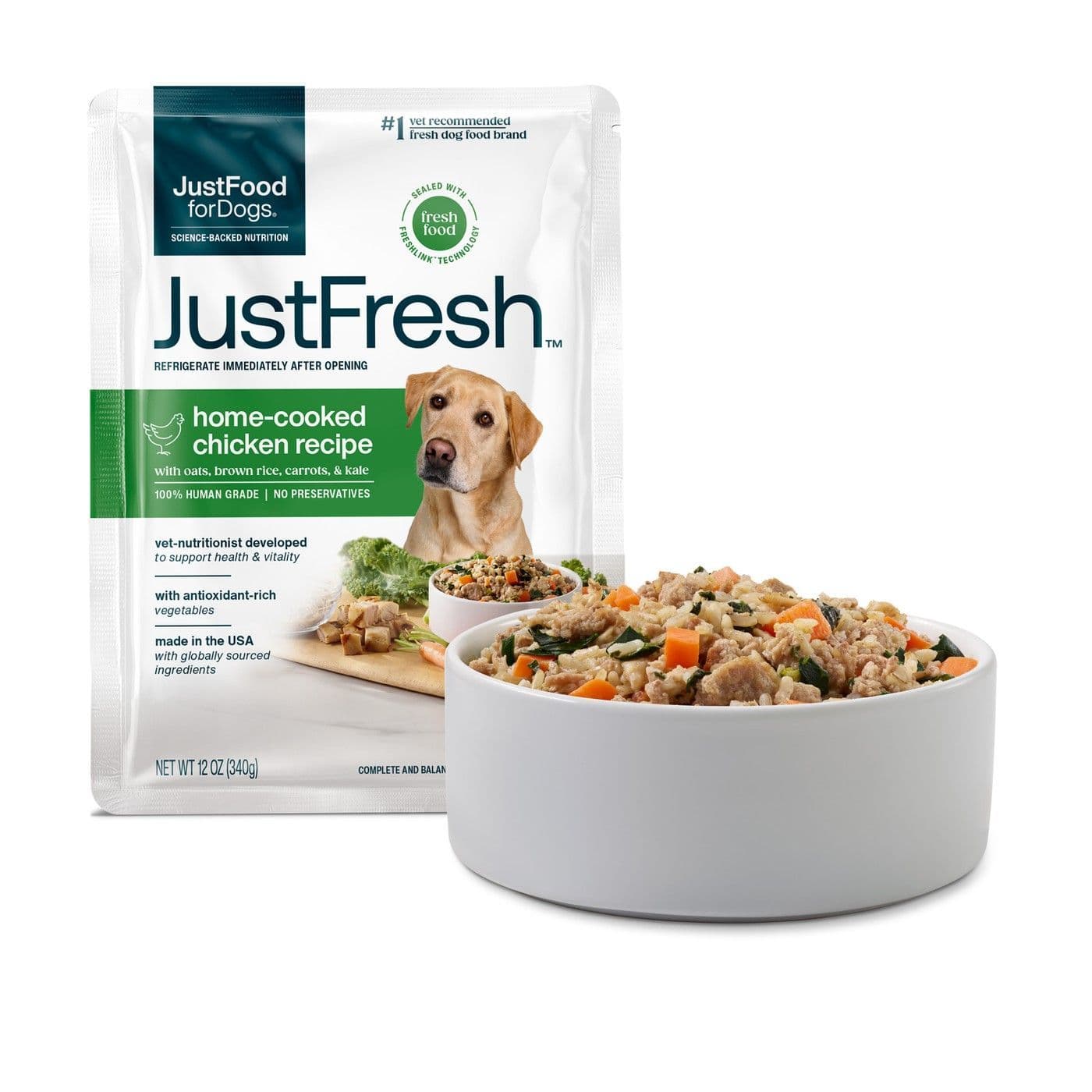
JustFresh Home-Cooked Chicken provides adult-maintenance nutrition at 36 calories per ounce in a shelf-stable unopened format. That can be useful when a large dog's food inventory competes for freezer space. It offers a different storage routine from Fresh Frozen meals.
After opening, refrigerate the food and use it within the manufacturer's three-day period. Pantry convenience does not mean an opened meal can be left outside for a guardian to return to throughout the day. Match handling to the product directions wherever the dog is fed.
Plan for:
- An adult dog's calculated daily amount.
- Suitable storage after opening.
- Consistent serving instructions for every caregiver.
Petful may earn a commission when you click through to JustFoodForDogs, at no extra cost to you.
Body size and coat do not reveal calorie needs
- A Great Pyrenees' dense coat can make a visual estimate of condition unreliable. Use current weight and an appropriate body-condition assessment alongside the feeding history.
The WSAVA nutrition resources include assessment tools your veterinary team can explain and demonstrate.
Petful's Great Pyrenees size and growth guide provides breed context. The feeding decision still belongs to the individual: age, growth status, condition, and actual activity matter more than a large-looking silhouette.
Keep the record concrete:
- Exact food and calories per ounce or kilogram.
- Daily amount actually served.
- Treats, chews, and other additions.
- Current weight and condition trend.
- Changes in the regular activity routine.
If the dog changes weight unexpectedly, investigate rather than repeatedly adding food or swapping recipes. The record helps a veterinary team see what has changed and whether the existing allowance needs review.
Household companions and active guardians
The companion versus guardian distinction is useful only when it describes what the dog actually does. A household pet that takes regular walks and a livestock guardian covering a working property may have different demands. Neither label supplies a calorie target on its own.
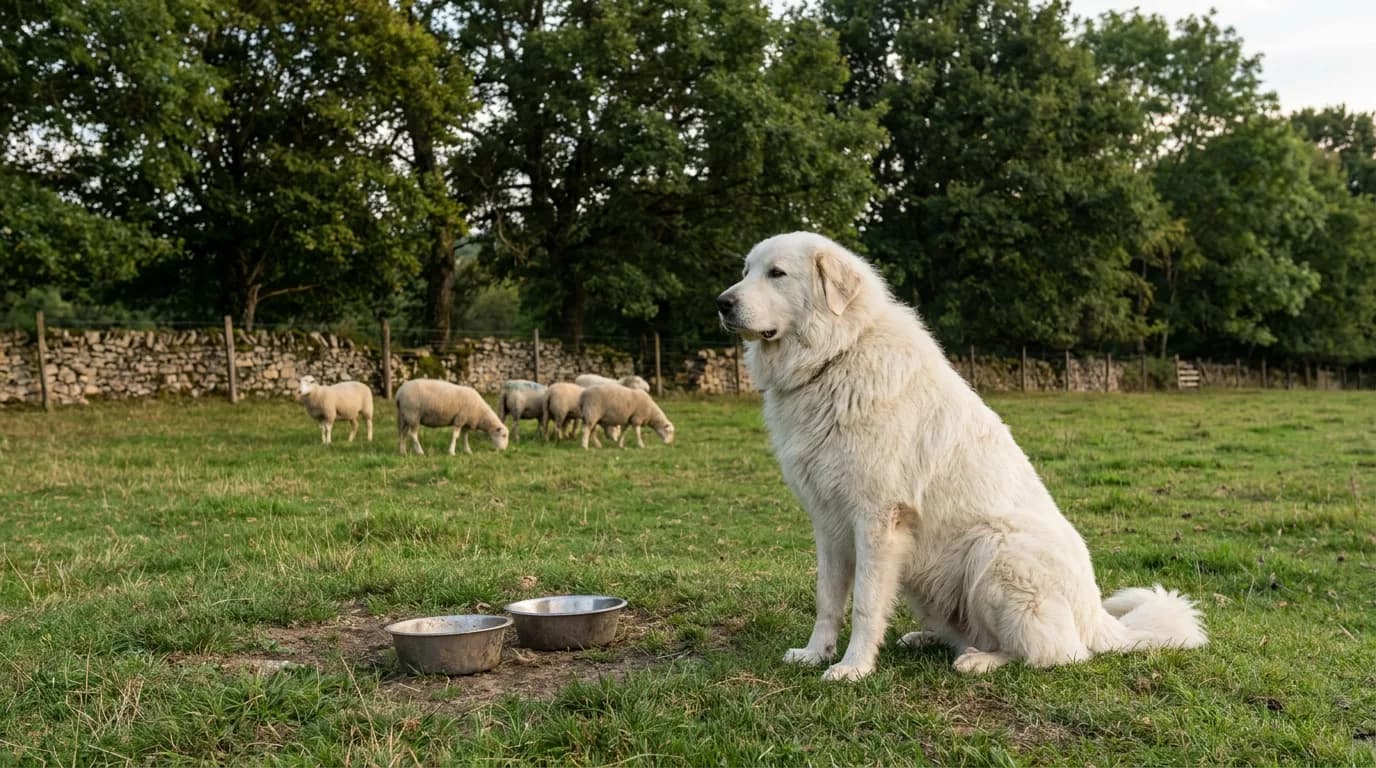
Build the individual activity allowance from the real routine and an assessment of condition. Avoid assigning every companion a low number and every guardian a high number. Age, workload, weather exposure, and sustained changes in activity provide context for reviewing an existing allowance with your veterinary team.
| Planning question | Household companion | Active guardian |
|---|---|---|
| What is the usual routine? | Record walks, play, and quieter periods | Record actual work, movement, and rest |
| What food is consumed? | Include household treats and chews | Include meals and any other accessible food sources |
| How is condition monitored? | Regular weight and body-condition checks | The same checks, even when outdoor work is routine |
| What makes feeding practical? | Household schedule and storage | A consistent accessible feeding place and safe food handling |
Separate a protein percentage from an energy allowance
A food marketed as high protein does not automatically supply the appropriate calories for a working Great Pyrenees. Protein content, energy density, and nutritional adequacy answer different questions. Start with a complete recipe suitable for the dog's life stage, then use the calorie declaration to calculate the serving.
Moisture also affects the percentages printed on labels. A fresh and a dry food should not be ranked by their as-fed protein percentages alone. The FDA describes dry-matter comparison as a way to account for moisture, but even that comparison does not identify one best formula for every dog. Your guardian's actual workload and body condition remain more useful for adjusting the allowance than chasing the largest protein number.
Count extras before adjusting meals
The AAHA nutrition and weight-management guidelines support assessing the whole diet, including treats and other additions. Extras should generally remain within 10 percent of daily calories. Count them before calculating the main meal rather than adding them to an unchanged full allowance.
For either lifestyle, keep one feeding record that everyone uses. A measured meal and a short note about actual consumption are more useful than assuming that a dog working outdoors must need additional food every time it asks.
Describe a working routine accurately
Guardian work does not necessarily mean constant running. Record the pattern you actually observe: time moving around the property, quieter monitoring periods, rest, and any sustained changes in the work. That description is more useful in a nutrition discussion than selecting a high-activity category solely from the breed's traditional role.
For a household companion, describe the same ordinary week. Include regular walks and play as well as quieter periods. The aim is an individual activity allowance that can be reviewed against body condition, rather than two rigid feeding rules labeled pet and working dog.
Bring these observations to a feeding review:
- Whether the amount served is the amount actually eaten.
- Whether other caregivers provide additional food.
- Any change in work, exercise, or time spent resting.
- Recent weight and body-condition observations.
- Whether the current meal volume and schedule are manageable.
Give each dog its own measured meal
On a property with several dogs, a shared feeding area can make individual intake harder to track. Separate measured portions help you identify which dog has eaten which amount. Keep a puppy's growth food distinguishable from an adult's maintenance recipe, even when both dogs have similar coats and use large bowls.
The useful record is simple: food offered, food remaining, and any relevant change in the routine. It gives you a basis for investigating an appetite change without assuming that an empty communal bowl proves every dog received its intended portion. Follow the current food's handling instructions for any uneaten meal.
Portions and food logistics for a large guardian
Once an individual allowance has been established, calculate the main food's daily weight by dividing assigned calories by calories per ounce. Reserve calories for treats or a second food first. This connects recipe selection with a serving that can be measured and repeated.
The following 1,400- and 2,000-calorie examples demonstrate arithmetic only. They are not assigned companion and guardian prescriptions. A particular dog may need an allowance outside these examples, and a puppy needs its own growth assessment.
| Recipe | Calories per ounce | Daily ounces for an assumed 1,400 calories | Daily ounces for an assumed 2,000 calories |
|---|---|---|---|
| Chicken & Rice | 43 | About 32.6 ounces | About 46.5 ounces |
| Fish & Sweet Potato | 26 | About 53.8 ounces | About 76.9 ounces |
| Beef & Russet Potato | 44 | About 31.8 ounces | About 45.5 ounces |
| JustFresh Home-Cooked Chicken | 36 | About 38.9 ounces | About 55.6 ounces |
These figures show why energy density matters to household logistics. Two suitable recipes can require quite different food weights at the same allowance. Do the calculation before deciding how much freezer space or unopened pantry stock the plan requires.
Turn daily portions into an order
At the illustrative 1,400-calorie allowance, Chicken & Rice uses about 228 ounces weekly. Fish & Sweet Potato uses about 377 ounces. At the illustrative 2,000-calorie allowance, those weekly quantities become about 326 and 538 ounces respectively.
Compare those quantities with actual package sizes and storage space. Keep three figures separate: food consumed daily, whole packages purchased, and the amount thawed or opened at one time. A large order does not extend a package's safe opened-use period.
Compare a full fresh plan with a partial fresh plan
An owner may choose complete fresh food for the entire diet or as a defined share alongside another suitable complete food. The appropriate daily allowance remains the common starting point. Decide how many calories each food will provide, then calculate the measured amounts from their separate labels.
For example, half of an assumed 1,400-calorie allowance would assign 700 calories to Chicken & Rice, or about 16.3 ounces daily. The other complete food would supply the remaining 700 calories. Its amount depends on its own calorie density; it should not remain at the previous full-day serving underneath the fresh addition.
This approach lets you compare storage and cost for different workable routines. Count any treats before dividing the main-food calories, and record both products on the feeding note. A topper or treat labeled for supplemental feeding has a different purpose from a complete recipe, so check that distinction before making it a large part of the diet.
Calculate regular food cost
On September 28, 2026, JustFoodForDogs displayed a regular list price of $153.99 for fourteen 18-ounce Chicken & Rice packs and $167.99 for the same 252-ounce Fish & Sweet Potato quantity. These observed prices exclude shipping and tax and are not guaranteed checkout totals.
Using the assumed 1,400-calorie main-food allowance, daily food cost would be about $19.90 for Chicken & Rice and $35.90 for Fish & Sweet Potato. At the assumed 2,000-calorie allowance, the figures would be about $28.42 and $51.28. The difference reflects both price per ounce and the amount providing the same calories.
Before comparing budgets, record:
- The individual allowance and any calories reserved for extras.
- The exact recipe and actual package weight.
- The current regular price, separate from introductory promotions.
- Whole packages required and leftover inventory.
- Shipping, tax, and any other food costs.
Petful's Great Pyrenees cost guide provides wider ownership context. A repeatable feeding calculation helps you update the food budget when the dog's actual routine changes, while keeping suitable complete nutrition at the center of the choice.
Fresh, wet, dry, and homemade feeding options
Food format affects meal volume, texture, and storage. Complete nutrition and life-stage suitability remain the first checks. A cup of dry food and an ounce of fresh food are different units; use the actual calorie declaration to compare servings.
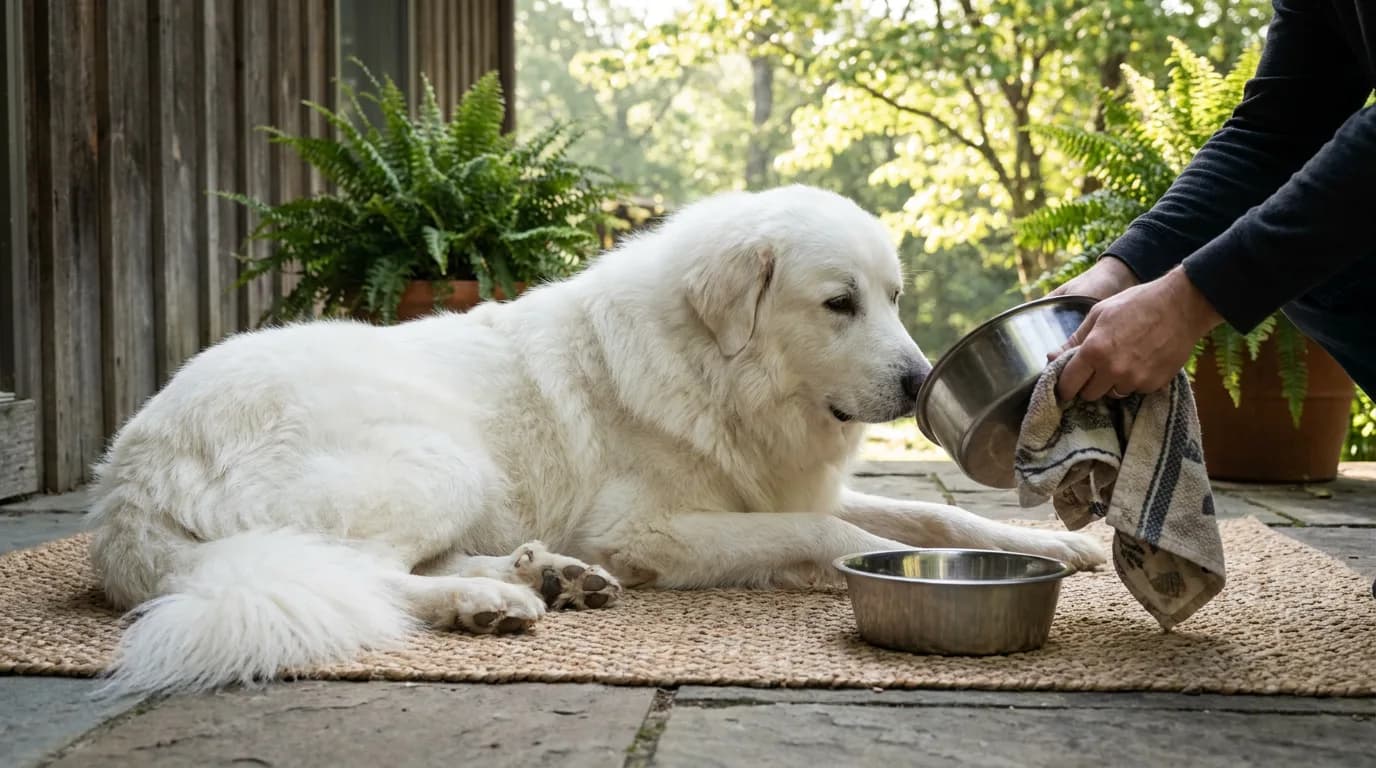
For Fresh Frozen meals, plan freezer storage and refrigerator thawing. For JustFresh Home-Cooked Chicken, the unopened pantry format changes inventory planning while opened food still requires refrigeration. Those are practical choices a household can evaluate without claiming one storage format is nutritionally superior.
Combine complete foods deliberately
If two appropriate complete foods share the diet, assign a portion of daily calories to each and calculate their amounts separately. A full fresh meal added to an unchanged full ration of another food increases total intake. A measured split makes the intended amount visible.
Check whether a product is a complete main food or only a treat or topper. Products intended for supplemental feeding have a different role. Familiar ingredients and appealing texture do not establish a complete daily diet by themselves.
Keep formulation and food safety in view
Homemade meals require an appropriately formulated recipe if they will provide the whole diet. Plain meat and rice are not automatically complete, and a properly balanced recipe may depend on specified supplements and quantities. Follow professional formulation guidance rather than casually substituting ingredients.
Fresh cooked food also differs from raw food. The FDA's raw pet-food guidance discusses microbial risks to pets and people. A guardian's outdoor lifestyle does not remove the need for safe handling and complete nutrition.
For a raw-versus-cooked buying decision, check the raw product's exact nutritional adequacy statement as carefully as the cooked food's. A Great Pyrenees puppy needs large-size growth suitability; unformulated raw meat does not establish that balance. Then compare food handling, daily volume, and storage with a suitable complete cooked option. Chicken & Rice is one growth-eligible cooked example. This provides a practical format comparison without supplying a homemade raw formula.
Frequently asked questions
Yes, when both main-diet foods suit the dog's life stage and the amounts share one calorie allowance. Calculate each food separately; adding a full fresh meal to a full kibble ration changes the total. For a growing Great Pyrenees, check large-size growth suitability for both components.
There is no universal ranking here that fits every Great Pyrenees. A useful veterinary recommendation considers individual nutritional needs, life stage, condition, and the complete balanced formula. Within this comparison, Chicken & Rice and Fish & Sweet Potato provide growth-eligible options, while Beef & Russet Potato and JustFresh Home-Cooked Chicken suit adult maintenance. Ask which criteria apply to your individual dog.
No. Actual activity demands and an appropriate measured food allowance determine the practical fit. A denser recipe supplies the same calories in fewer ounces, which may affect storage and serving convenience. That does not establish that every Great Pyrenees needs it. Compare the individual allowance and complete recipe rather than selecting maximum calories solely because the breed is large.
A dense coat can make visual guesses about condition less reliable. Use a hands-on body-condition assessment demonstrated by your veterinary team and regular weight checks alongside the feeding record. If the intended condition is changing, review the actual amount, extras, and activity. Do not decide that the portion is correct simply because the dog still has a large, fluffy silhouette.
No. A complete home-prepared diet must meet formulated recipe requirements, including specified amounts and any necessary supplements. Unbalanced home mixtures can look appetizing without supplying appropriate nutrition. If you want to cook the entire diet, obtain professional formulation guidance and follow it consistently. A labeled complete fresh meal is a separate option for owners who prefer cooked food with product-specific adequacy information.

Coreen Saito is a pet writer and longtime shelter volunteer with more than a decade in animal rescue. She covers cat behavior, breed care, and the small, ordinary science of sharing a life with companion animals, with a particular focus on honest takes about the products and decisions that actually matter. At home in Arizona, she's outranked by Mac (a dog with the loudest opinion in the house), Rebel (a cat who governs by quiet authority), and Meri (an orange tabby who runs the late shift and the laundry basket). She writes about all three, plus the rescues that keep coming through her life, at LifeWithMinty.com.
Sign up for expert-backed reviews and safety alerts all in one place.
A Final Word (Disclaimer)
At Petful, our review integrity is paramount; we never exchange special treatment in our reviews for monetary or material rewards.
Nonetheless, when our readers click through to online merchants (including Chewy or Amazon), we receive a referral commission. This supports the running of our free blog, and we appreciate your backing.