Dog Car Accessories: Harnesses, Covers, and Travel Gear
Choose dog car accessories by their actual job, from a correctly fitted restraint to washable coverage and water-break supplies. Compare four options without confusing separation with crash protection.
Petful is reader supported. As an affiliate of platforms like Amazon and Chewy, we may earn a commission when you buy through links on this page. There is no extra cost to you.
Petful may earn an affiliate commission from purchases made through links in this article.
The most useful dog car accessories solve different problems: a vehicle harness restrains the dog, a cover protects upholstery, a barrier separates spaces, and a portable bottle supports water breaks. Buying one does not automatically provide the protection of the others.
Start with the dog’s travel position and restraint, then choose the accessories that fit your vehicle and routine. A clean back seat is useful, but it is not evidence of crash protection.

Sign up for expert-backed reviews and safety alerts all in one place.
Choose gear by the problem it solves
Choose dog car accessories by function before comparing colors, storage pockets, or convenience features. For restraint, look at the exact harness model, sizing, installation, and test evidence. For upholstery protection, inspect coverage and belt access. For distraction management, check the barrier’s mounting and limits. For longer trips, make water and rest stops part of the plan.
Pet accessories for cars can look substantial without being designed as crash restraints. A hammock that keeps muddy paws off the bench and a metal barrier that discourages access to the driver still leave a separate restraint decision.
The four choices below serve those distinct jobs. This comparison uses manufacturer information and the available certification record; it is not a hands-on road test or crash test.
- 1Choose dog car accessories for a defined job: restraint, upholstery protection, separation, or stopped-trip care.
- 2Pet accessories for cars are not interchangeable safety systems. A cover or barrier does not establish crash protection for the dog.
| Quick pick | Job | Selected version |
|---|---|---|
| Sleepypod Clickit Sport Plus | Vehicle harness | Jet Black, Medium |
| Kurgo Wander Hammock | Upholstery protection | Black |
| PetSafe Happy Ride Tubular Metal Barrier | Separation and distraction management | Tubular metal barrier |
| Kurgo Gourd H2O | Water during stops | Coastal Blue, 24 oz bottle with detachable bowl |
| Product choice | Primary job | Fit or use check | Main limitation |
|---|---|---|---|
| Sleepypod Clickit Sport Plus, Medium | Vehicle restraint | Match the dog to the current size chart and follow the exact model’s installation directions | Sleepypod reports the Plus model’s certification; the public CPS entry reviewed names Clickit Sport |
| Kurgo Wander Hammock, Black | Seat-cover protection | Cover must rest on the bench; preserve seatbelt and restraint access | Not a suspended platform or a vehicle restraint |
| PetSafe Happy Ride Tubular Metal Barrier | Separate the dog’s area from another part of the cabin | Check the vehicle opening, mounting surfaces, and manufacturer adjustment limits | Containment does not establish crash protection |
| Kurgo Gourd H2O, 24 oz | Portable drinking water | 24-fluid-ounce bottle; detachable 8-fluid-ounce bowl; use during stops | Bottle capacity does not establish enough water for every trip |
Build the kit around the trip you actually take. A dog that returns from muddy walks creates a different cleanup problem from one that rides to appointments on dry days. A vehicle shared with passengers needs accessible buckles and a workable seating arrangement. A long route needs supplies and suitable stopping places, not simply a larger collection of gadgets.
Before buying, write down the problem in one sentence: the dog needs a compatible restraint, mud reaches the bench, the dog tries to enter the driving area, or water is difficult to offer during stops. Then check that the proposed accessory addresses that problem without interfering with the equipment already needed.
Sleepypod Clickit Sport Plus: the restraint choice
Petful may earn a commission when you click through to Chewy, at no extra cost to you.
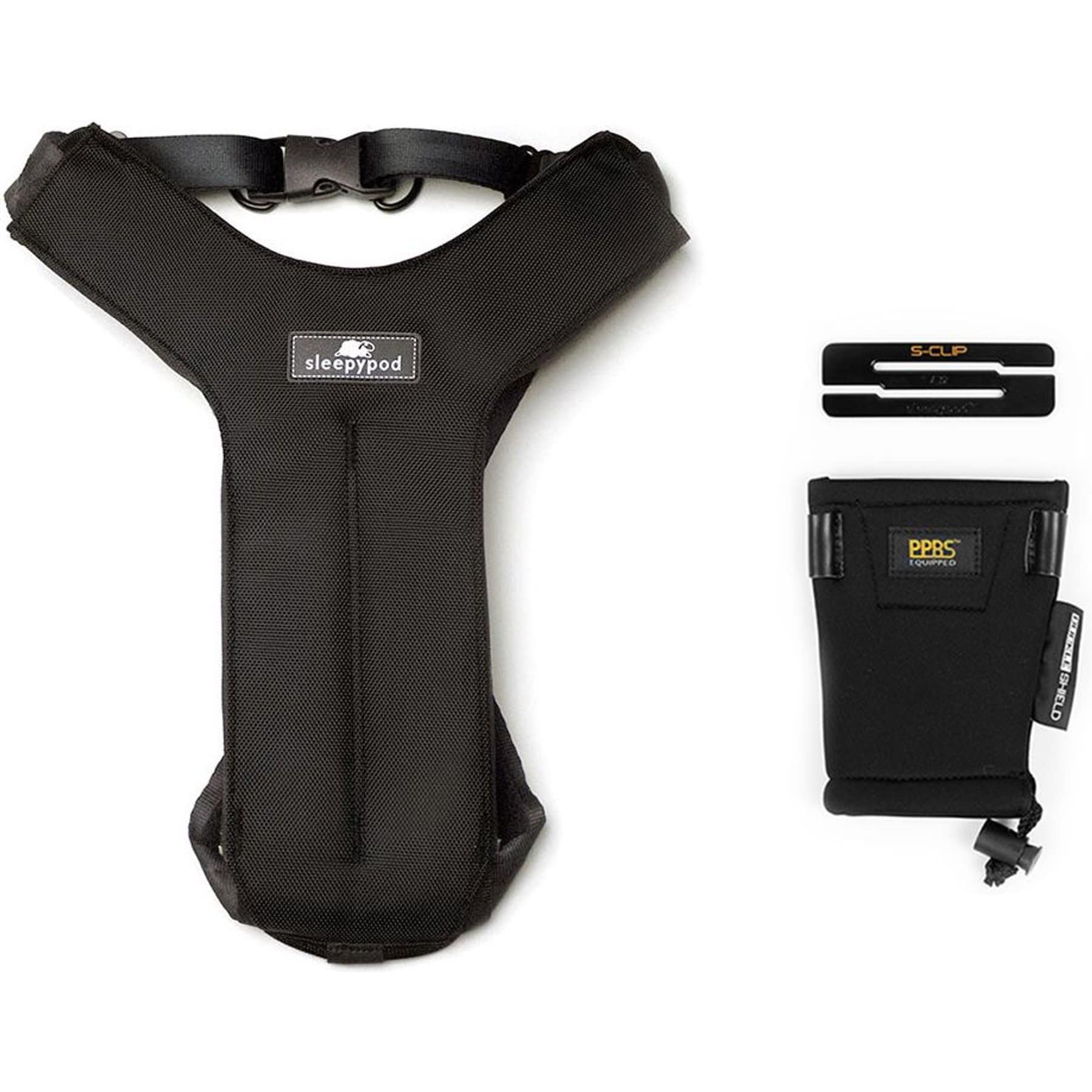
The Sleepypod Clickit Sport Plus in Medium is the harness selected here. Sleepypod describes Sport Plus as having a five-star Center for Pet Safety rating and testing at 30 mph. Its design includes three-point restraint, reflective strips, an S-Clip, and a Buckle Shield.
The public CPS entry reviewed is named Clickit Sport, without “Plus.” Keep those source identities distinct: the Plus statement is attributed to Sleepypod, not presented as a separately confirmed Plus listing. Medium is the selected offer, not a recommendation for every dog. Check measurements and installation before buying.
Kurgo Wander Hammock: protection for the rear bench
Upholstery protection, not a car seat or restraint.
Petful may earn a commission when you click through to Chewy, at no extra cost to you.
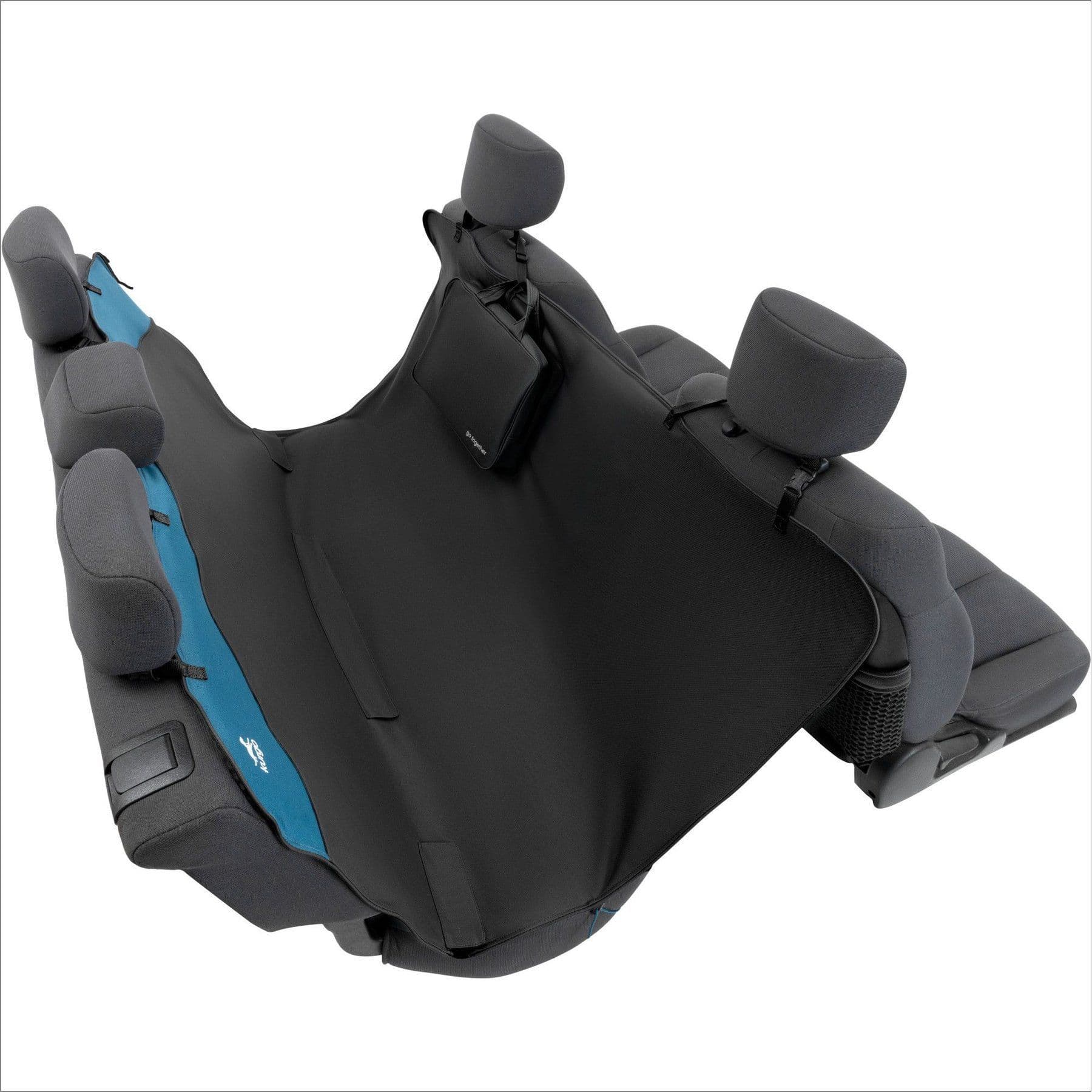
The Kurgo Wander Hammock in Black protects upholstery from the ordinary mess that comes with a dog. Kurgo’s Wander information describes waterproof, stain-resistant material, a center zipper, seatbelt/LATCH openings, Bench Beans, and under-seat paracord.
Its supporting surface is the vehicle’s bench. The Wander instructions require the hammock to rest fully on that seat; it is not a load-bearing bridge across an unsupported gap. Use it for coverage while maintaining the intended restraint setup. Do not substitute features from the separately named Rover Hammock.
PetSafe Happy Ride: a barrier for separation
Separation and distraction management.
Petful may earn a commission when you click through to Chewy, at no extra cost to you.
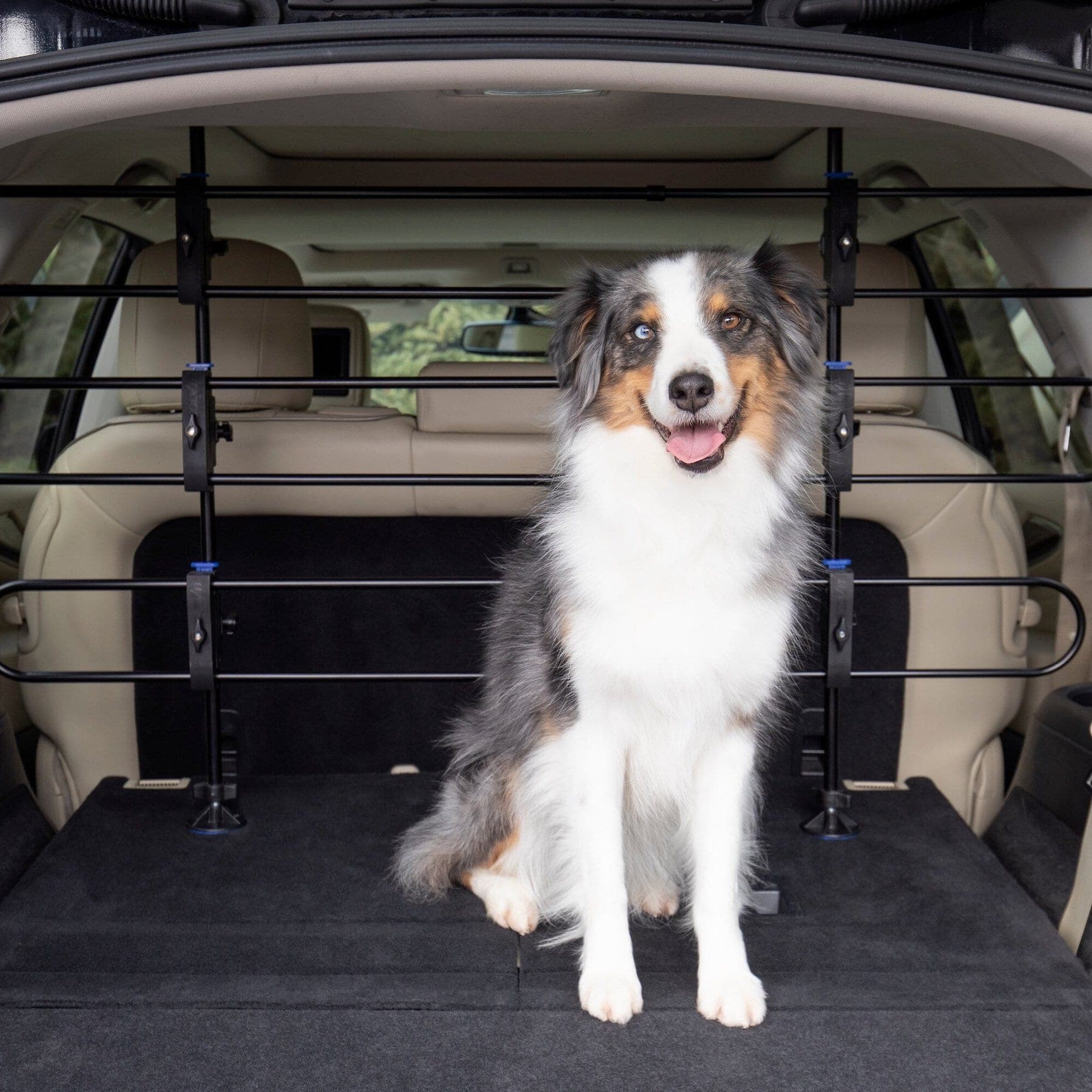
The PetSafe Happy Ride Tubular Metal Dog Barrier is a separation accessory. PetSafe’s product information describes tension mounting, rubberized caps, and adjustable horizontal bars.
Its useful role is helping keep the dog out of another part of the cabin. That can support distraction management, but it does not establish crash protection or replace an appropriate restraint. Measure the intended opening and check the exact product’s installation requirements. A barrier advertised for vehicles is not automatically compatible with every SUV, headliner, seat position, or cargo arrangement.
Kurgo Gourd H2O: water for planned stops
Water during stopped travel breaks.
Petful may earn a commission when you click through to Chewy, at no extra cost to you.
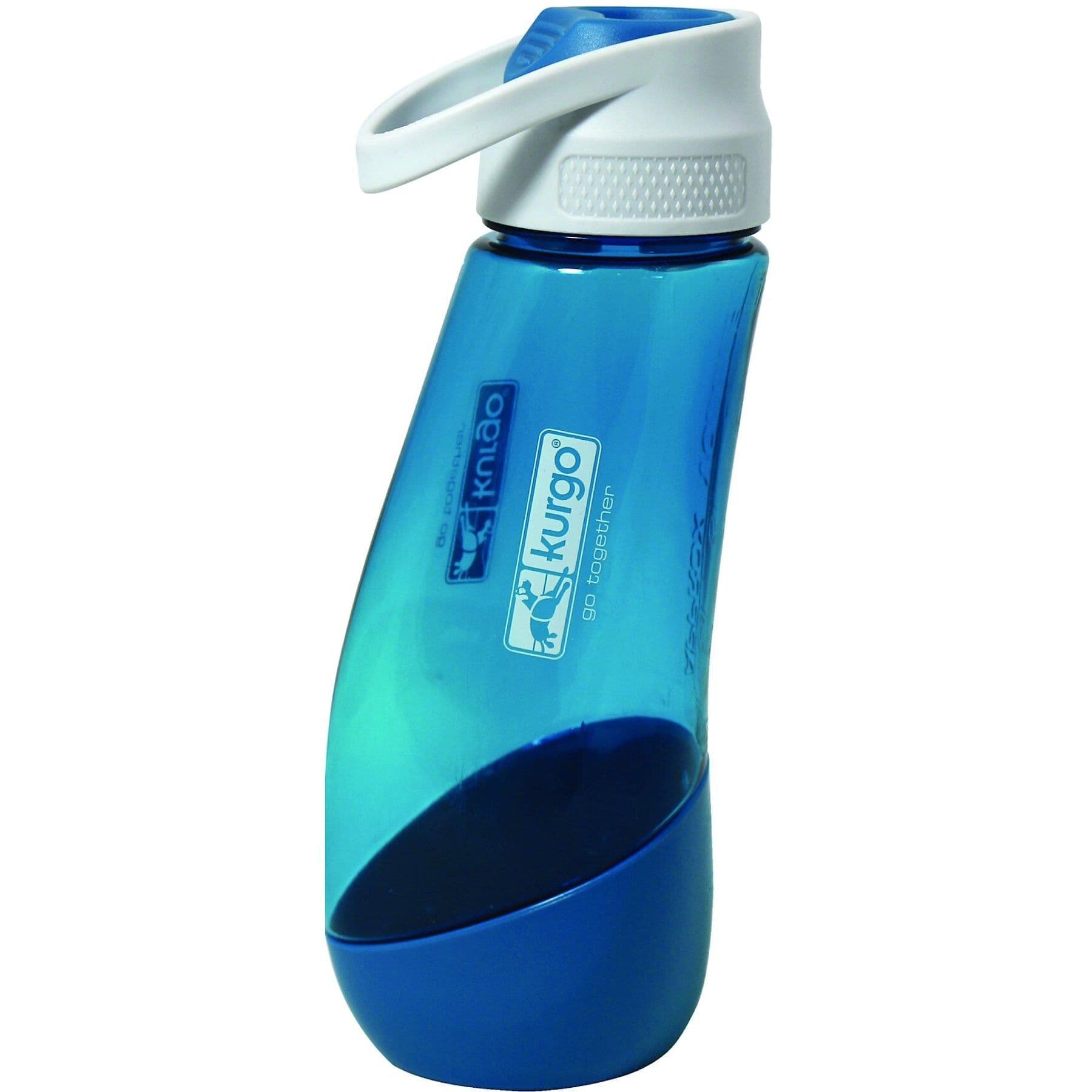
The Kurgo Gourd H2O bottle and bowl combines a 24-fluid-ounce bottle with a detachable 8-fluid-ounce bowl. Kurgo’s product information identifies both capacities and permits top-rack dishwasher cleaning.
This is a practical option for offering water when you stop, especially when a separate bowl is easy to forget. It does not remove the need to pack enough drinking water for the whole outing. Plan refills and any additional supply around the route, weather, and dog rather than assuming one bottle always covers a day’s travel.
Bedding and California travel rules
A dog travel bed, pad, or blanket addresses comfort, not vehicle restraint. Choose bedding that fits the permitted travel arrangement and leaves the restraint installation usable. A large bed that crowds the belt path is not a better fit. Size labels and colors do not establish crash protection.
California dog-car rules depend on the travel arrangement. The California DMV handbook says animals in the back of a pickup or other truck must be properly secured to prevent them from falling, jumping, or being thrown out. It also says leaving animals in a hot vehicle is dangerous and illegal, noting that the interior can heat rapidly even with a window slightly open. These rules do not certify a particular accessory or establish that every product called a dog seatbelt provides crash protection.
Harness fit and vehicle restraint
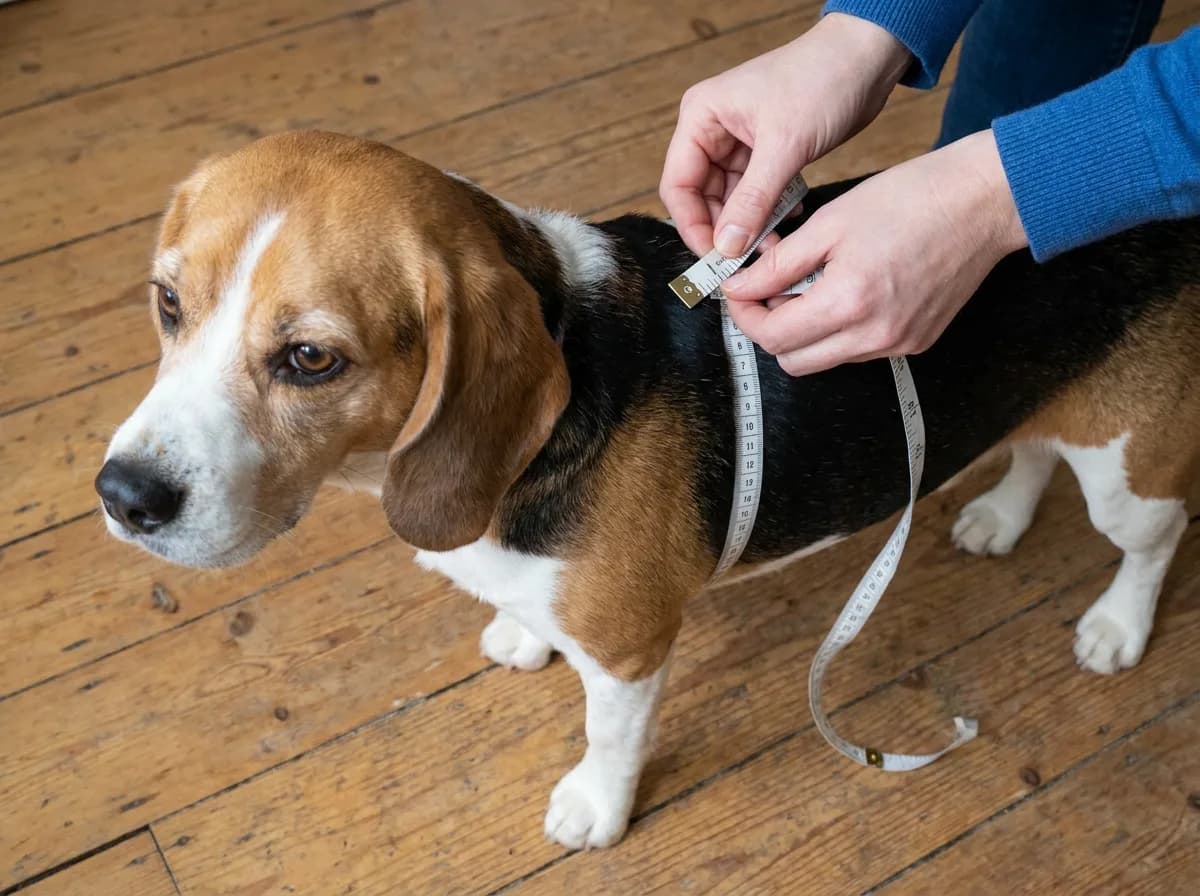
Plan the dog's position in the back seat and confirm that the restraint is intended for that seating position and belt arrangement. A dog harness for car travel needs two kinds of fit: fit on the animal and compatibility with the vehicle installation. A comfortable walking harness is not automatically a tested vehicle restraint. A familiar buckle or headrest attachment does not establish how the complete system performs.
Use the manufacturer’s current measuring instructions rather than choosing from breed alone. Small dogs, broad-chested dogs, and long-bodied dogs can have different proportions even at similar weights. If the measurements fall outside the chart or between uncertain options, resolve sizing before the first trip.
Before departure, check:
- The exact model and size match the instructions you are using.
- The harness is adjusted as the manufacturer specifies.
- The seatbelt follows the required route through the system.
- No cover, cushion, or packed item prevents correct fastening.
- The dog cannot reach the driver through an improvised length of tether.
- The harness, webbing, and hardware show no damage requiring replacement.
Read test claims at the model level
“Crash tested” is a starting point for questions, not a complete description of a result. Ask who conducted the test, which model and sizes were involved, and what installation was used. Do not transfer a result from one product to every harness made by that company. For the selected Sport Plus, Sleepypod makes the five-star CPS and 30 mph testing statements. The public Center for Pet Safety record reviewed names Clickit Sport and lists size-specific qualifications. That record should not be silently relabeled as a separate Sport Plus certificate.
No rating makes correct installation optional or guarantees the outcome of every collision. Keep the instructions available when moving the harness between vehicles. A different rear-belt arrangement or seating position may require a fresh compatibility check. A product photograph cannot confirm that your dog fits the selected size. Compare current measurements with the actual model’s chart and check any body-shape qualifications the manufacturer gives. If your dog is still growing or has changed weight, remeasure rather than relying on the size of its everyday harness.
When you contact a manufacturer about compatibility, have the model name, dog measurements, and vehicle seating position ready. A clear question about the exact arrangement is more useful than asking whether the brand is generally “safe.”
Compare the EzyDog Drive installation and testing claim
The EzyDog Drive dog car harness illustrates why testing claims need model-level scrutiny. EzyDog describes testing at Automotive Safety Engineering, using child-safety and vehicle-interior standards as guides. That is a different evidence statement from Sleepypod’s CPS claim. The Drive instructions route the vehicle seatbelt through the harness’s top handles and explicitly prohibit an additional seatbelt restraint. Compare the exact testing claim, size, and installation before choosing; do not transfer Drive’s evidence to another EzyDog harness or describe it as government approval of a canine restraint.
Keep the restraint arrangement simple
Use the complete system as directed. A walking leash clipped around a headrest is not equivalent to a vehicle harness installation. Nor should an extra extension, generic buckle strap, or collar attachment be assumed compatible because it connects physically.
Check the setup with the vehicle parked. Learn the fitting and release sequence before you need to use it at a busy roadside stop. A cover that hides the buckle or a bag that obstructs access creates a practical problem even if every item is individually useful.
Keep the dog within the vehicle rather than allowing it to hang out of an open window. A window opening or guard is not a restraint. If the dog is unsettled, address the travel routine and seek advice where needed; extra freedom to roam through the cabin does not solve the safety decision. A seatbelt or harness also does not treat motion sickness. If trips repeatedly cause distress or illness, discuss that pattern with your veterinarian instead of shopping for a restraint as though it were a medical treatment.
Hammocks and covers
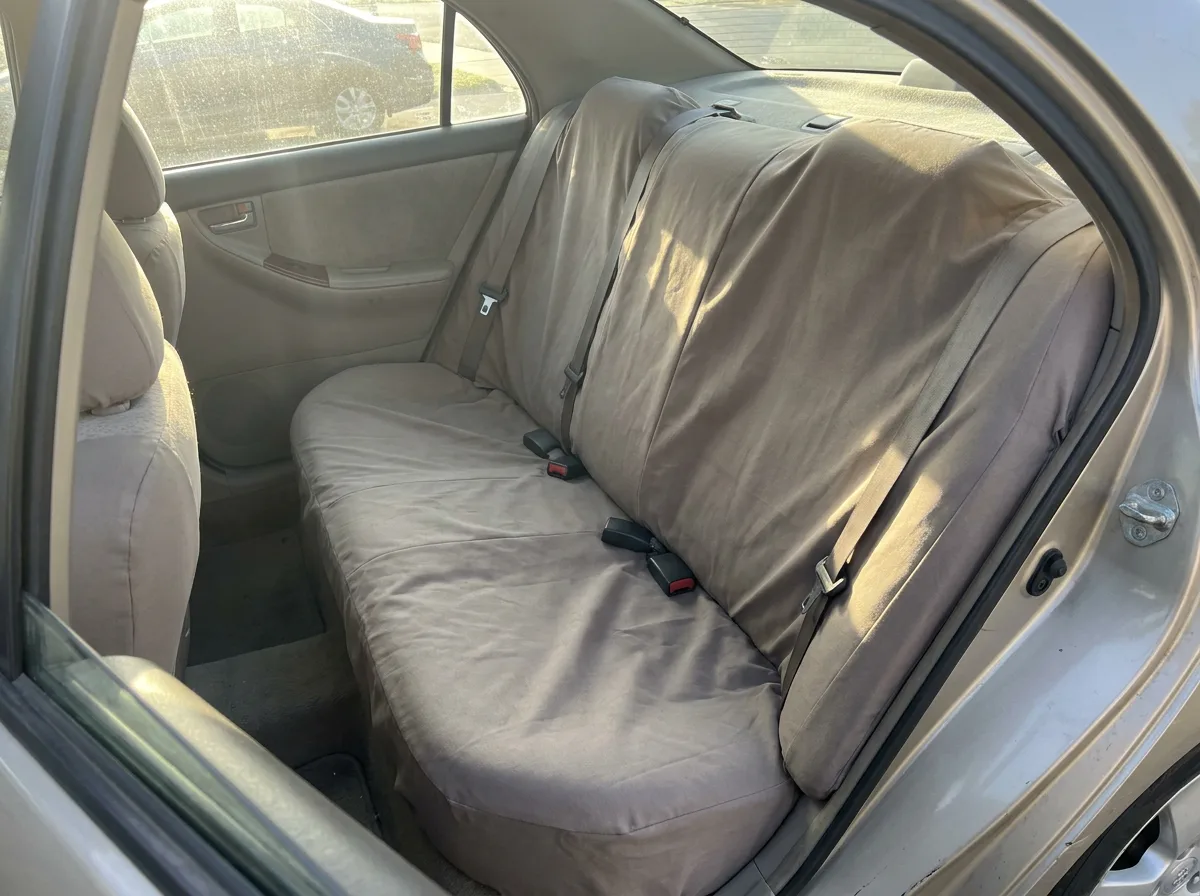
A dog car hammock can make cleanup easier by placing a removable layer between the dog and upholstery. A seat cover, cargo liner, and door protector cover different surfaces, so identify where the mess actually occurs before buying.
For the selected Wander Hammock, the supported bench is part of the intended installation. Fabric spanning the footwell should not be mistaken for an extra floor that carries the dog’s weight. Its job is upholstery protection, while the vehicle restraint performs a different job.
Check the cover in the vehicle before loading the dog:
- Confirm that attachment points fit the headrests and bench arrangement.
- Keep belt buckles and the required restraint path accessible.
- Check that the cover rests where the manufacturer intends it to rest.
- Make sure the dog’s entry route does not pull the cover out of place.
- Test any passenger-sharing or zipper configuration you expect to use.
Match coverage to the surface
A waterproof dog car cover can be useful for muddy or wet outings, but the label does not mean every surrounding surface is protected. Openings, edges, and uncovered doors still need consideration. Check the area your dog can actually reach. If scratches occur on door trim, a bench hammock may leave that problem untouched. Likewise, a rear-bench cover is not automatically a trunk liner. Choose the relevant form of protection without blocking vehicle controls, ventilation, or the restraint installation.
For dog hair, a removable cover reduces how much loose coat reaches the upholstery, but it does not guarantee a hair-free car. Remove loose hair and debris before cleaning the cover, and follow the vehicle manufacturer’s care instructions for carpet and trim. Avoid assuming that one cleaning tool or chemical suits every interior material.
Think about the configuration you use with human passengers as well as the dog. The Wander’s center zipper and seatbelt openings are useful only if they leave the required seating and restraint functions usable in your arrangement. Check that before the first shared trip. Install the restraint and cover together during your parked fitting check. Do not use the hammock’s straps, zipper, or openings as improvised attachment points for the dog. Their presence serves the cover’s installation and access needs; it does not make them part of a tested harness system.
Clean the exact product as directed
The Wander manual provides hand-cleaning and air-drying instructions. Do not transfer a machine-wash claim from another cover or from a similarly named Kurgo model.
A dog-car air freshener masks odor without removing the mess that caused it. Start by removing soiled bedding and debris, then clean the affected cover or interior material according to its care instructions. Avoid choosing fragrance as a substitute for that cleaning routine.
Before reinstalling a cleaned cover:
- Allow it to dry as directed.
- Recheck straps and openings.
- Confirm belt access. A tidy-looking installation can still hide a buckle.
For value, compare the area covered, the way the cover stays in place, and the cleaning routine you can maintain. “Heavy duty” is not a substitute for those details, and a homemade blanket arrangement should not interfere with the dog’s restraint or the vehicle’s required equipment.
Barriers and separation
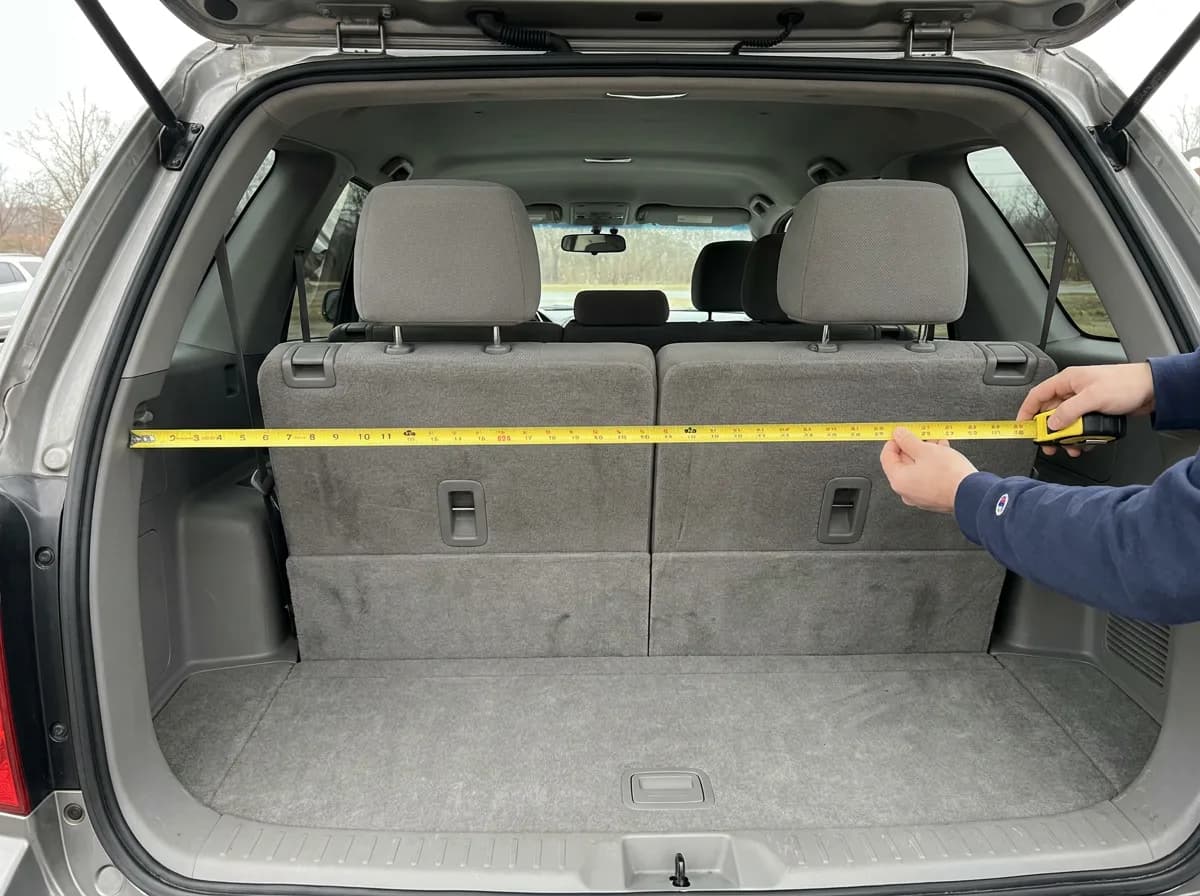
A dog barrier separates spaces. It can help keep a dog from climbing toward the driver, but its presence alone says little about restraint during a collision. This distinction matters especially for large dogs: a substantial-looking metal frame should not be assumed to absorb crash forces.
The selected PetSafe Happy Ride uses tension mounting and adjustable bars. Confirm its current adjustment range and permitted mounting surfaces against the actual vehicle. Measure where the barrier will sit, not only the widest part of the cargo area.
A useful fitting check includes:
- Width and height at the planned installation point.
- The shape and firmness of the surfaces that support the mounts.
- Rear-seat position, recline, and any changes when seats are folded.
- Gaps beside or beneath the barrier.
- Access to the dog, luggage, and the vehicle’s normal controls.
Check the whole arrangement
A barrier that fits an empty SUV may need reassessment once luggage is packed or a rear seat is moved. Keep bags and other loose objects from defeating the separation you intended. Do not assume the barrier also secures luggage unless its instructions establish that use. Inspect the installation as directed and recheck it after removal or adjustment. Rubberized caps and a tension fit are installation features, not proof that every trim surface is an acceptable mounting point.
A window vent or guard is not climate control and does not make it safe to leave a dog in a parked vehicle. The AVMA warns that cars can overheat even in shade or with windows cracked. During travel, keep the dog’s head inside: airborne dirt and debris can injure the eyes, ears, nose, and mouth. Window accessories leave restraint and temperature management as separate responsibilities. If a measurement is close to an adjustment limit, ask the manufacturer about the exact vehicle arrangement before purchase. Photos of the intended mounting area can help explain curved trim, a sloping roof, or an unusual seatback. Do not assume extra padding, a makeshift spacer, or greater tightening will correct a poor fit.
Think about removal, too. If the barrier will regularly come out for passengers or cargo, you need a repeatable installation process and a place to store its components. Convenience should support correct use rather than encourage leaving a partly fitted barrier in place. Avoid improvising a DIY “car fence” from unsecured household materials. A convenient divider can become another loose item if it is not designed and installed for the purpose. If the selected barrier cannot fit correctly, choose another compatible arrangement rather than forcing it into place.
Pack for water breaks and arrival
The best travel kit is accessible when you stop. Put water, the bowl, a leash, waste bags, and cleanup supplies where you can reach them without unloading the entire vehicle. Keep those supplies secured during the drive rather than loose beside the dog.
A practical packing list includes:
- Drinking water, a bowl, and a refill plan.
- A leash ready for every exit from the vehicle.
- Waste bags and a towel for muddy paws.
- Food and medications already included in the dog’s normal travel plan.
- Identification and useful veterinary contact information.
- Any destination supplies needed for settling in.
A travel tote, backpack, or grooming travel case organizes supplies; it does not become an animal carrier because the dog fits inside it. Group brushes and clean towels for arrival, and keep cleaning liquids sealed away from food and water. Keep the packing container’s role separate from the equipment used to transport the animal.
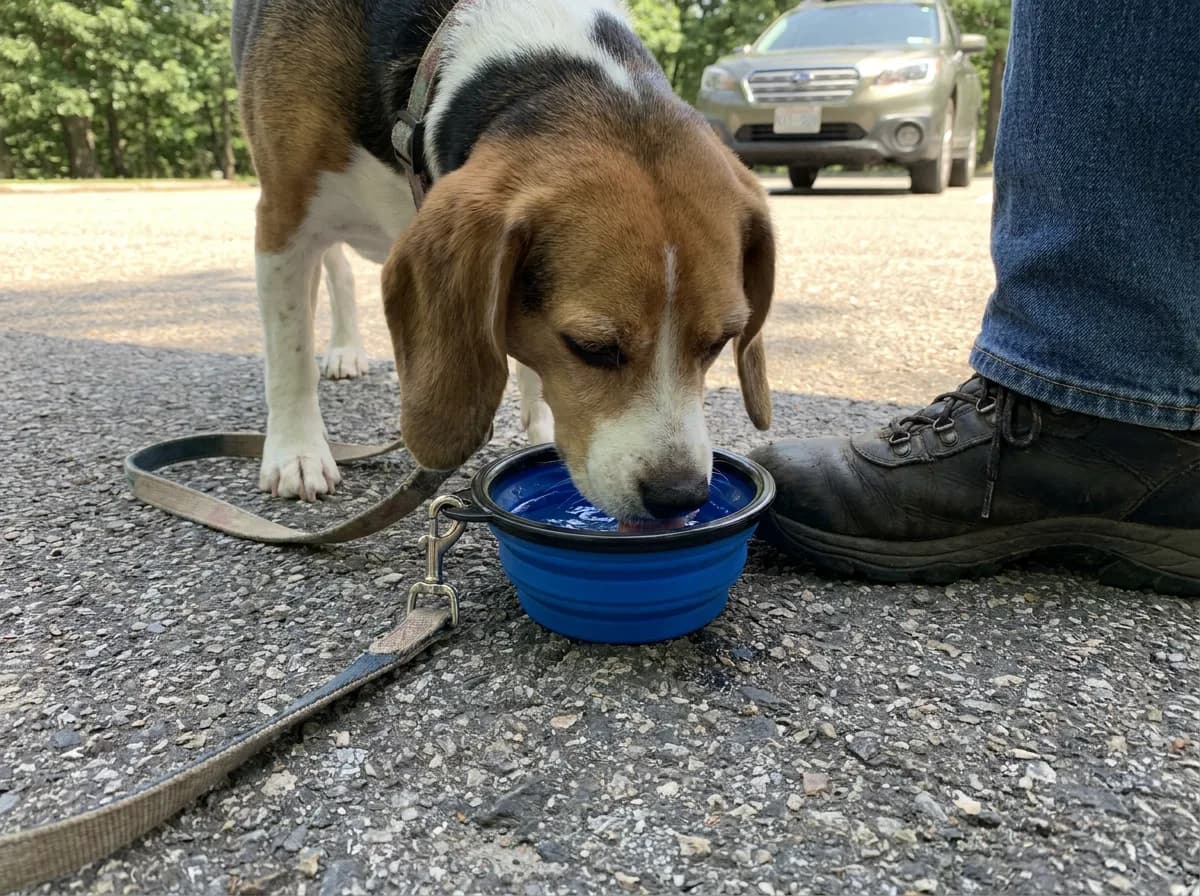
Offer water during a proper stop
The Gourd’s detachable bowl is useful when the vehicle is parked and you can supervise the dog. Its bottle capacity is a packing fact, not a universal hydration allowance. A large dog, a long route, or conditions that require more frequent stops can mean carrying additional water. Plan breaks around the individual dog and journey rather than a rigid accessory-based schedule. Choose somewhere you can exit safely, keep the dog leashed, and offer water away from moving traffic. Refill and clean the bowl as needed instead of treating a portable bottle as a set-and-forget supply.
Do not attempt to manage a drinking dog while driving. A water dispenser or “car bowl” does not make driver distraction acceptable. The point of the accessory is to make a planned break easier.
Pack the water supply so that the first stop does not depend on finding an open shop or a working tap. Check the bottle closure before loading it, keep the bowl clean, and replenish the supply when an appropriate source is available. A detachable bowl is convenient only when it is actually packed with the bottle. For several dogs, consider how you will offer water and manage leashes without crowding a busy rest area. Organizing those steps in advance is more useful than discovering that the bowl is buried beneath luggage while the dogs wait to exit.
Prepare for the dog’s response to travel
For a dog unfamiliar with the car, start with calm practice in a parked vehicle and short, manageable trips before a long journey. Introduce the equipment as part of that routine so that the first complicated installation is not happening during departure for a holiday.
Panting during a car ride can have several explanations. Do not diagnose it from a product review or assume a new cover will make it disappear. If your dog repeatedly appears distressed, drools excessively, vomits, or cannot settle, ask your veterinarian about travel preparation and motion sickness.
Do not give a medication or supplement simply because it is marketed for long car rides. Follow advice for your own dog and arrange it before departure. Restraints, barriers, and water bottles solve equipment problems; they do not replace that individual assessment.
Keep supervision part of the plan
Do not plan errands around leaving the dog unattended in the vehicle. An open window, winter weather, or air conditioning should not be treated as an accessory-based guarantee that the situation is safe.
At each stop, secure the leash before giving the dog an opportunity to exit. Check the ground and nearby traffic, then help the dog leave in a controlled way. On return, restore the restraint and check that water containers and other gear are secured.
Arrival deserves the same care as departure. Keep the leash and essential supplies accessible, identify a suitable place for a break, and unload without allowing the dog to roam through an unfamiliar parking area.
Help your dog enter and leave the car
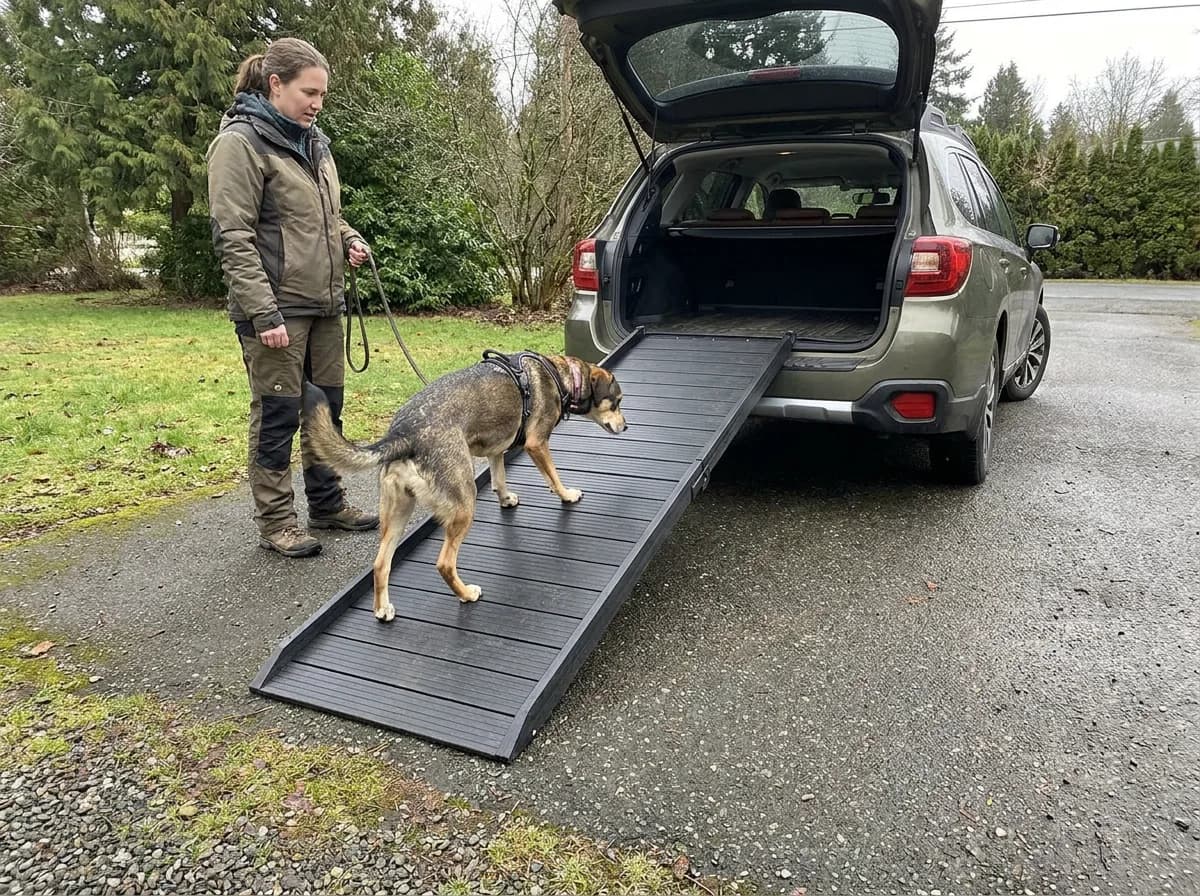
Entry and exit are part of the travel setup. Park on stable, level ground where possible, open the intended door fully, and assess the height and available space before asking the dog to move.
Foldable or collapsible dog stairs and ramps may help when jumping is difficult, but the equipment must fit both the dog and the vehicle. A side-door opening, rear hatch, and high cargo floor present different angles and clearance. Folding compactly does not establish that a ramp is stable in use.
Before using an entry aid, check:
- The manufacturer’s load rating and intended use.
- Stable contact at both ends.
- A walking surface with suitable footing.
- Enough width and clearance for the dog’s movement.
- A secure place to stow the equipment during travel.
Practice gradually with the car parked. Let the dog become familiar with the surface and approach instead of rushing it onto unfamiliar equipment. Keep the route clear of bags and the restraint straps that will be used after entry.
Practice putting the entry aid away as well as using it. You should be able to secure the dog, fold or remove the equipment as directed, and stow it without leaving the dog loose while the door is open. That sequence matters when one person is handling both the dog and the gear.
If the dog seems painful, weak, or unexpectedly reluctant to move, seek advice rather than forcing it to climb. Improvised lifting can also be difficult for both dog and handler. Choose assistance that matches the animal’s needs and your ability to provide it. At the destination, check again. A parking space may offer less room for a side-door ramp than your driveway, and wet or uneven ground changes the footing. Plan the exit before releasing the dog from its travel arrangement.
Carrying and ramp selection
If you need to carry a dog into the car, support the chest and abdomen rather than lifting by the scruff. World Veterinary Service explains that the dog's size may require two people. This is a handling technique, not a substitute for securing the dog once inside the vehicle.
For a specific folding example, Pet Gear lists its Travel Lite Tri-Fold ramp, model TL9371CH, at 71 by 16 by 4 inches and a 200-pound capacity. It has a slip-resistant surface, bottom grippers, and an included safety tether. Match the exact model and instructions to the vehicle opening and available ground space. Pet Gear sells multiple similarly named ramps, so do not transfer one version's dimensions, capacity, or installation details to another.
When a travel crate is the better option
A travel crate may be worth considering when a suitable enclosed arrangement fits the dog and the vehicle better than a harness setup. The comparison needs the crate’s actual dimensions, attachment method, ventilation, access, and evidence for its intended use.
A portable crate is not automatically a crash-tested vehicle crate. Small and large models can also have different installation requirements. Use Petful’s travel dog crate guide for that fuller comparison, then confirm the selected crate works in the vehicle before packing around it.
A custom-built crate still needs appropriate dimensions, attachment, ventilation, and evidence for vehicle use. Being made to fit the cargo area does not itself establish crash protection.
When a ramp earns space
A ramp earns its storage space when it provides a workable entry route that the dog needs and can use. Consider the vehicle opening, available ground space, storage dimensions, and the dog’s mobility before comparing individual designs.
For specific options, see Petful’s guide to choosing a dog ramp for a car. A ramp, folding steps, and lifting assistance are different approaches; choose from the actual entry problem rather than treating any one as a universal travel essential.
Vehicle choice before accessories
Sometimes the limiting factor is the vehicle layout. A restraint that cannot be installed correctly, a cargo area that will not accommodate an appropriate crate, or an inaccessible entry height cannot necessarily be fixed by adding more accessories.
If you are choosing a vehicle, evaluate the dog’s travel position and equipment needs before purchase. Petful’s best vehicle for dogs guide covers that broader decision. Use this accessory comparison once you know the space, belt arrangement, and entry route you need to work with.
Questions readers ask
Start with an appropriate vehicle restraint, then add seat protection or a compatible barrier if those solve a separate problem. Check the exact product’s fit and installation rather than assuming any clip, strap, or headrest attachment provides crash protection. Choose accessories for their stated function and keep the restraint arrangement complete.
Pack drinking water, a bowl, a leash, waste bags, and basic cleanup supplies. Add the food, medications, identification, and destination items needed for the particular trip. Keep gear secured while driving and accessible during stops. A permanently packed bag should still be checked before departure for missing supplies and unsuitable stored items.
Plan for the rear seating area with an appropriate restraint installed according to its instructions, or another suitable vehicle transport arrangement designed for that location. Keep the dog away from the driver. A blanket, barrier, or familiar resting spot does not replace the need to check how the dog is secured.
Some are, and the claim only means something at model level. Sleepypod states that the Clickit Sport Plus has a five-star Center for Pet Safety rating with testing at 30 mph, while the public CPS record reviewed names the Clickit Sport and lists size-specific qualifications; EzyDog describes testing its Drive harness at Automotive Safety Engineering against different standards. Ask who tested which model and size with what installation, and remember that a comfortable walking harness is not a tested vehicle restraint.
No. A barrier separates spaces; it can help keep a dog out of the driving area, but its presence does not establish crash protection, and a substantial metal frame should not be assumed to absorb collision forces. The PetSafe Happy Ride uses tension mounting and adjustable bars, so measure the installation point, confirm the mounting surfaces, recheck after seats fold or luggage goes in, and keep an appropriate restraint for the dog as a separate decision.

Jessica Williams is a content creator, digital marketer, and pet industry expert who is very passionate about the benefits of traveling with dogs. She is best known as the author of the award-winning blog YouDidWhatWithYourWiener.com where she writes about Dachshund health, training, and travel. She holds a master’s in digital communications and offers blog and social media consulting to brands, small businesses, and bloggers through PetTalkMedia and NicheBlogBiz. When she is not working, you can find her hiking, camping, and enjoying the good life with her Husband and two miniature Dachshunds, Otter and Summit. Follow their adventures on Instagram at @youdidwhatwithyourwiener.
Sign up for expert-backed reviews and safety alerts all in one place.